B
OŻENAR
EGULSKA−I
LOW1, P
RZEMYSŁAWK
OWALSKI2, J
ADWIGAB
IERNAT1, R
AFAŁI
LOW1,
H
ALINAG
RAJETA1, E
LIZAL
AMER−Z
ARAWSKA3The Influence of Bioflavonoids from the Radix
of
Scutellaria baicalensis
on Liver Enzymes
and the Antioxidative System in Laboratory Rats
Receiving Diets Containing Fresh or Oxidized Fats
Wpływ bioflawonoidów z korzenia
Scutellaria baicalensis
na aktywność enzymów wątrobowych i antyoksydacyjnych u szczurów
doświadczalnych na diecie z tłuszczami świeżymi i utlenionymi
1Department of Food Science and Nutrition, Silesian Piasts University of Medicine in Wrocław, Poland 2Department of Pathological Anatomy, Silesian Piasts University of Medicine in Wrocław, Poland 3Department of Pharmaceutical Botany, Silesian Piasts University of Medicine in Wrocław, Poland
Adv Clin Exp Med 2007, 16, 6, 725–734 ISSN 1230−025X
ORIGINAL PAPERS
© Copyright by Silesian Piasts University of Medicine in Wrocław
Abstract
Background.The overall daily food intake of humans always includes some oxidized fats which are formed du− ring food preparation. The deleterious effects of oxidation products can be prevented by adding antioxidants to the diet, e.g. bioflavonoids. The aim of this four−week experiment was to assess the hepatoprotective activity of bioflavonoids from Scutellaria baicalensis in Buffalo rats.
Material and Methods. The activities of alanine (ALT) and aspartate (AST) aminotransferases and of alkaline phosphatase (AP) were determined in plasma and histopathological examinations of liver tissue samples were per− formed in 80 male Buffalo rats under conditions of oxidative stress caused by consumed oxidized fats. The anti− oxidative activity of the extract was assessed by determining the activities of dismutase superoxide (SOD) in the red blood cells and glutathione peroxidase (GP) in the blood of rats which had been fed high−fat (15%) and high− −cholesterol (0.5%) diets with or without a 0.05% extract of flavonoids.
Results.A harmful enhanced accumulation of fat was observed in the liver cells of the rats given a diet with ad− ded extract, particularly in the rats with diets containing fresh oil or oxidized lard. In all the groups, the high acti− vity of alkaline phosphatase in the plasma was the result of cholestasis. There was significantly enhanced activity of AP in the serum of the rats on diets with the extract and fresh oil or oxidized lard as the fat source compared with the corresponding controls. Under the experimental conditions, a significant increase in SOD activity in the red blood cells was observed in the groups of rats receiving a diet containing oxidized fats. This was induced by oxidative stress.
Conclusions.These results suggest that supplementation with extract from Scutellaria baicalensis positively ef− fected the antioxidative system in rats given diets with oxidized fats (Adv Clin Exp Med 2007, 16, 6, 725–734).
Key words:bioflavonoids, oxidized fats, SOD, aminotransferases, histopathology, rats.
Streszczenie
Wprowadzenie. Dieta człowieka zawsze zawiera utlenione tłuszcze, które powstają podczas procesów kulinar− nych. Niekorzystnym skutkom produktów utlenienia można przeciwdziałać, dodając do diety antyoksydanty, np. bioflawonoidy.
Cel pracy. Ocena hepatoprotekcyjnej aktywności bioflawonoidów z korzenia Scutellaria baicalensisu szczurów Buffalo.
In recent years there has been increasing inte− rest among many scientists in the properties of na− tural antioxidants occurring in the plant world and their influence on the animal organism. Feeding laboratory animals a diet containing repeatedly re− heated fat led to increased concentrations of free radicals in their organisms [1, 2]. The addition of antioxidants to their diet increases the orga− nism’s level of defense against oxidative stress while at the same time reducing the amount of oxi− dative damage at the cellular level. These substan− ces occur in vegetables, fruit, red wine, tea, and cocoa [3, 4]. They can also be taken in the form of medicinal preparations, such as an extract from the radix of Scutellaria baicalensis, a rich source of bioflavonoids, which are compounds with antioxi− dative properties [5].
Experiments on rats confirmed that feeding animals a diet containing oxidized fats led to detri− mental changes in their organisms [6, 7]. With in− creased aminotransferase activity, damage to the liver has been observed, indicating the potentially harmful effects of oxidized fats. The degree of da− mage to hepatocytes determines the profile of the enzymatic changes in the serum. Among these en− zymes are indicator enzymes, i.e. alanine amino− transferase (ALT) and aspartate aminotransferase (AST), and the excretory enzyme alkaline pho− sphatase (AP). An increase in cell membrane per− meability increases the activity of the cytoplasmic enzymes, while complete disintegration of the cell releases all of the enzymes, including those con− nected to intracellular structures, into the external space. ALT is a cytoplasmic enzymes and AST is connected to cell structures. Under normal condi− tions they are present in the serum in small amo− unts. Their activity in the serum clearly increases when liver cells are damaged.
The aim of this study was to assess the hepato− protective activity of an extract from the radix of
Scutellaria baicalensisby determining the activities
of alanine (ALT) and aspartate (AST) aminotransfe− rases and of alkaline phosphatase (AP) in the pla− sma and by histopathological examination of liver tissue samples. An assessment was also made of the antioxidative activity of the extract by determining the activities of dismutase superoxide (SOD) in red blood cells and glutathione peroxidase (GP) in the blood of laboratory rats which had been fed high−fat (15%) and high−cholesterol (0.5%) diets.
Material and Methods
The study was carried out on 80 male Buffalo rats. Their average initial body mass was 182.4 ± ± 23.4 g and their average body mass at the end of the experiment was 258.3 ± 37.2 g. In the period before the study, all the rats received LSM bree− der’s diet. During the four weeks of the study it− self, the rats were kept in comfortable, appropriate conditions (room temperature and a 12−hour night− −day cycle).
The animals were divided into 8 groups of 10 rats each. An outline of the experiment is given in Tab. 1. Half of the rats (n = 40) were given a diet with a 15% sunflower oil content and the other half (n = 40) a diet with a 15% pork lard content. Within these two super−groups receiving sunflo− wer oil or lard, half (20 rats) had a diet with oxidi− zed fat. Half of the rats eating a diet with fresh fat (10 rats) and half of the rats eating a diet with oxi− dized fat (10 rats) also received an extract from the radix of Scutellaria baicalensis. The supplement amounted to 0.5 g per kg of diet, with the extract having an 80% baicaline content. Ready−made extract “Oxyd” was obtained from Wroclaw’s Herbalist Factory “Herbapol”. The method of its preparation is copyrighted and patented. The rats had unlimited access to food and water. Their food and water intake was monitored every second day. Their body mass was measured once a week.
oksydacyjną aktywność ekstraktu z korzenia tarczycy bajkalskiej, oznaczając aktywność dysmutazy ponadtlenko− wej (SOD) w krwinkach czerwonych i peroksydazy glutationowej (GP) we krwi u szczurów na diecie z 15% zawar− tością tłuszczu, 0,5% zawartością cholesterolu i bez lub z dodatkiem 0,05% ekstraktu z bioflawonoidami.
Wyniki. Obserwowano niekorzystne zmiany polegające na gromadzeniu tłuszczu w komórkach wątroby u szczu− rów na diecie z dodatkiem ekstraktu, zwłaszcza u tych, których dieta zawierała świeży olej lub utleniony smalec. We wszystkich grupach duża aktywność fosfatazy zasadowej świadczyła o cholestazie. Obserwowano statystycz− nie istotne różnice aktywności AP w surowicy szczurów na diecie z dodatkiem ekstraktu oraz świeżego oleju lub utlenionego smalcu, w porównaniu z odpowiednimi grupami kontrolnymi. W warunkach doświadczenia obser− wowano istotny wzrost aktywności SOD w krwinkach czerwonych szczurów na diecie z utlenionymi tłuszczami. Było to spowodowane stresem oksydatywnym.
Wnioski. Uzyskane wyniki sugerują, że suplementacja diety ekstraktem z korzenia tarczycy bajkalskiej wpływa korzystnie na antyoksydacyjny system u szczurów na diecie z tłuszczami utlenionymi (Adv Clin Exp Med 2007, 16, 6, 725–734).
Preparation of
the Experimental Diet
The preparation of the diet involved thorough− ly mixing the main ingredients with a mineral sup− plement and solid and fluid vitamin supplements in hot distilled water to obtain a substance with the consistency of thick dough. This dough was hand− rolled into 2− to 3−cm−long forms of roughly 1 cm in diameter and dried at room temperature. The ro− dent diet was prepared according to the method described in [8].
Each experimental diet contained 15% fresh or oxidized oil or lard and other components as fol− lows: 25.2% casein, 10% grain starch, 5% potato starch, 38.07 sucrose, 5% mineral supplement, 0.5% solid vitamin supplement, 5 g/cm3liquid vi−
tamin supplement, 0.3 g/cm3 vitamin E, 0.05%
cholesterol, and 10% distilled water. A mineral mi− xture with the following composition were used (amount per kg diet): 25.16 g NaH2PO4 ⋅ 2H2O,
2.95 g MgSO4, 1.27 g NaCl, 3.43 g KCl, 0.62 g
FeSO4⋅7H2O, 0.31 g CuSO4⋅5H2O, 0.15 g MnSO4
⋅H2O, 0.50 g ZnCO3, 0.00648 g Na2MoO4⋅2H2O,
0.0003 g KJO3, and 17.5 g CaCO3. A solid vitamin
mixture with the following composition was used (amount per 60 kg diet): 6.60 g inositol, 6.60 g p−aminobenzoic acid, 6.00 g nicotinic acid, 1.32 g riboflavin, 1.32 g pyridoxal, 0.12 g folic acid, 4.08 g d−calcium pantothenate, 1.32 g thiamin, and 0.60 g vitamin K, completed with grain starch to 300 g. The components of the liquid vitamin mi− xture (amount per 60 kg diet) were: 1,200,000 U vitamin A, 132,000 U vitamin D3, and 1.8 mg vita−
min B12, completed with distilled water to 300 cm3.
Diet 1: Diet 3: Diet 5: Diet 7:
control group sunflower oil + extract* oxidized sunflower oil oxidized sunflower oil +
sunflower oil extract*
(Dieta 1: (Dieta 3: (Dieta 5: (Dieta 7:
grupa kontrolna olej słonecznikowy utleniony olej utleniony olej słonecznikowy
olej słonecznikowy) + ekstrakt*) słonecznikowy) + ekstrakt*)
Diet 2: Diet 4: Diet 6: Diet 8:
control group lard + extract* oxidized lard oxidized lard + extract*
lard
(Dieta 2: (Dieta 4: (Dieta 6: (Dieta 8:
grupa kontrolna smalec + ekstrakt utleniony smalec) utleniony smalec + ekstrakt*) smalec)
Table 1.Plan of the experiment Tabela 1.Plan doświadczenia
* Extract from the radix of Scutellaria baicalensis. * Ekstrakt z korzenia tarczycy bajkalskiej.
Type of fat (Rodzaj Fresh lard Oxidized lard Fresh sunflower oil Oxidized sunflower oil Quality tłuszczu) (Świeży smalec) (Utleniony smalec) (Świeży olej (Utleniony olej
indicator słonecznikowy) słonecznikowy)
(Wskaźnik jakości)
Peroxide value [meq O2/kg] 3.4 ±0.01 7.4 ±0.23 7.5 ±0.02 24.1 ±0.01
Anisidine value 1.0 ±0.17 57.6 ±0.42 3.3 ±0.00 127.2 ±0.78
Polar fraction [%] 1.3 42.5 2.1 46.8
Fatty acid type [%]:
saturated acids 43.7 47.9 9.9 14.9
monounsaturated acids 39.5 38.8 18.7 24.4
polyunsaturated acids 13.1 7.6 69.7 56.4
unidentified acids 3.7 5.7 1.7 4.4
Table 2.Fatty acid composition, expressed as the percentage of the total fatty acid content, and the quality indicators for the fresh and oxidized fats added to the rats’ diet
Preparation of the Oxidized
Fats for Use as an Ingredient
of the Diet
Two equal portions of lard and refined sunflo− wer oil were made up. One portion of each was kept fresh while the other was subjected to thermal oxidation. The oxidation process was done at a temperature of 200°C for 35 hours with aeration. The heating temperature and time were chosen ba− sed on Ziombski [9], who studied deep−frying pro− cesses in food production. The heating time was counted from the moment the fat reached 200°C. After the thermal oxidation had run its course, the two portions of fat were cooled, poured into poly− ethylene containers, and stored in a refrigerator at a temperature of +5°C.
The levels of primary and secondary oxidation products were measured, respectively, as the pero− xide and anisidine value in both the fresh and oxidi− zed fats. The polar fractions and the fatty acid com− position (Tab. 2) were also determined. The peroxi− de value permits defining the initial state of the oxidative reactions. High temperatures can speed up the breakdown of peroxides to carbonyl compo− nents, and thus the peroxide value for oxidatively damaged fats may remain at a low level. For this re− ason, in order to establish the actual state of oxida− tion of the fats, it was necessary to calculate the ani− sidine value, which defines the content of aldehydes and ketones, the secondary products of oxidation.
Preparation of the Biological
Material for Analyses
After completion of the feeding stage of the experiment, the rats underwent light ether anesthe− sia and blood was taken directly from their hearts into test tubes containing heparin. After the rats had been sacrificed, their livers were prepared. The livers were rinsed in physiological salt solution, blotted dry, and weighed. Institutional approval for the described animal experiment was obtained.
The Parameters Assessed
from the Biological Material
The activity of glutathione peroxidase (GP) we− re assessed by the kinetic method using a set of Ransel Glutathione Peroxidase reagents from Ran− dox United Kingdom (cat. no. RS 504). This me− thod is based on that of Paglia and Valentine [10]. The activity of dismutase superoxide (SOD) was as− sessed by the kinetic method using a set of Ransod Superoxide−Dismutase reagents from Randox Uni− ted Kingdom (cat. no. SD 125). This method is ba− sed on that of Oyanagui [11]. The activities of GP
and SOD are expressed as U/g Hb. The activities of alanine [12] and aspartate [13] aminotransferases were assessed using kinetic enzymatic diagnostic tests from BioSystems (cat. nos. COD 11562; and COD 11561). The activity of alkaline phosphatase [14] was assessed using enzymatic diagnostic tests from Biochemtest (cat. no. 178152149).
Histopathology
The histopathological examinations were per− formed on liver tissue samples fixed in 10% buffe− red formaldehyde solution. The liver tissue sam− ples were embedded in paraffin, cut into 6−µm sec− tions, and stained with hematoxylin and eosin and with oil red and Sudan III for the presence of fat in the cells.
Statistical Analysis
The normality of the distribution in the exa− mined groups was assessed with the Shapiro− −Wilk’s W test. In case of a lack of a normal di− stribution, logarithmic transformation was ap− plied. The significance of the differences between the average values for the examined groups was assessed using an individual analysis variance (p< 0.05). Levene’s test was used to check indi− vidual variance. All the statistical calculations were done with the STATISTICA 6.0 PL program of StatSoft, Inc., USA.
Results
Analysis of the Quality Indices
of the Fats Added to the Diets
The Effect of the Different Diets
on the Rats’ Development
The influence of the type of diet on the con− sumption and increase in body mass are compared in Tab. 3. Despite the overall balanced intake of the oil−based diet, the increase in the animals’ bo− dy weight varied greatly from group to group. It was significantly lower in the group with a diet containing oxidized oil (15.5 ± 7.6 g/4−weeks/rat). The addition of the extract from the radix ofScu− tellaria baicalensisto the diet containing oxidized oil had a positive influence on the increase in the animals’ body mass, raising it four−fold to 62.0 ± ± 9.5 g /4−weeks/rat. A similar tendency, although to a lesser degree, was observed in the two groups of animals given a diet with fresh oil; there, addi− tion of the extract raised the increase in body mass by 40% compared with the control.
In the groups of animals that were given lard as their source of fats, the level of diet consump− tion and the increase in body mass were compara− ble in all the groups. There was an observable in− fluence of the quality of the lard on the mass of the liver; this organ’s mass was considerably greater in the groups of rats fed oxidized lard than in the control groups. The addition of the Scutellaria ba− icalensisradix extract to the diet, regardless of the quality of the lard, led to a significant increase in the mass of the liver relative to the controls. A si− gnificant increase in liver mass was also found in the group that had oxidized oil as the source of fat. The addition of the extract to the diet with oil only led to an increase in liver mass in the animals re− ceiving the diet with fresh oil.
The energetic value of 100 g of diet was 448.1 kcal. The fraction of the total energetic va− lue of the diet coming from proteins was 22.5%, from carbohydrates 47.5%, and from fats 30%. Ta− king a consumption level of 15 g−diet/day/rat, ha− ving an energetic value of 67.2 kcal, the consump− tion of fat was 2.25 g.
The daily cholesterol intake of 1 rat was 75 mg/15 g of diet containing sunflower oil and 77 mg/15 g of diet containing lard. The difference in the consumption of cholesterol with the diffe− rent types of fats was never higher than 2.7% in the various groups of rats.
Histopathological Assessments
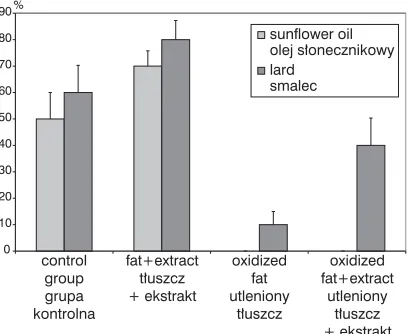
The number of liver cells accumulating fats and the volume of those cells occupied by fats are presented in Figs. 1 and 2. There was an observed differential amount of fat accumulated in the liver cells depending on the type (oil or lard) and quali− ty (fresh or oxidized) of the fat and the presence or
absence of the extract from the radix of Scutellaria baicalensisin the diets of the animals.
The Influence of the Ingredients
of the Diets on the Activities
of Selected Enzymes
The activity of ALT in the plasma of the rats receiving the diet containing oxidized sunflower oil was higher (84.1 ± 14.6 U/l) than in the control group (44.1 ± 12.5 U/l). In the group of rats recei− ving the diet with oxidized sunflower oil and extract, the ALT activity in the plasma was lower (58.9 ± 5.9 U/l) than that in the corresponding con− trol group (84.1 ± 14.6 U/l).
0 10 20 30 40 50 60 70 80 90 100
sunflower oil olej s³onecznikowy lard
smalec
control group grupa kontrolna
fat+extract t³uszcz + ekstrakt
oxidized fat utleniony
t³uszcz
oxidized fat+ extract utleniony
t³uszcz + ekstrakt
%
Fig. 1.The volumes of the liver cells occupied by fat (%) in laboratory rats
Ryc. 1.Objętość komórek wątroby szczurów doświad− czalnych zajętych przez tłuszcz (%)
0 10 20 30 40 50 60 70 80 90
control group grupa kontrolna
fat+extract t³uszcz + ekstrakt
oxidized fat utleniony
t³uszcz
oxidized fat+extract
utleniony t³uszcz + ekstrakt sunflower oil olej s³onecznikowy lard
smalec
%
Fig. 2. The number of liver cells accumulating fat in the laboratory rats
Control (Grupa kontrolna)
Sunflower oil
Lard + extract*
Oxidized Oxidized lard Oxidized Oxidized lard Sunflower oil Lard + extract* (Smalec + sunflower oil (Utleniony sunflower oil + extract* (Olej słoneczni− (Smalec) (Olej słoneczni− ekstrakt*) (Utleniony olej smalec) + extract* (Utleniony kowy)
kowy + ekstrakt*)
słonecznikowy) (Utleniony olej smalec słonecznikowy + ekstrakt*) + ekstrakt*) Diet 1 Diet 2 Diet 3 Diet 4 Diet 5 Diet 6 Diet 7 Diet 8 Diet intake 14.7 ± 1.9 15.0 ± 1.3 15.5 ± 1.9 14.9 ± 1.4 14.1 ± 3.3 16.0 ± 1.1 12.8 ± 2.2 16.5 ± 1.7
(Pobranie diety) [g/day/rat] Weight gain
77.0
±
15.7 a b
87.0 ± 23.6 108.0 ± 14.0 a 82.5 ± 21.9 15.5 ± 7.6 bd 88.5 ± 8.2 62.0 ± 9.5 d 83.0 ± 23.4
(Przyrost masy ciała) [g/4−weeks/rat] Liver mass
3.2
±
0.2 a b
3.2
±
0.2 a b
3.7 ± 0.2 a 3.5 ± 0.2 a 4.2 ± 0.2 b 3.4 ± 0.2 b 4.1 ± 0.6 3.7 ± 0.2
(Masa wątroby) [g/100 g b.m
• .] AL T [U/l] 44.1 ± 12.5 b 40.0 ± 8.6 56.7 ± 9.7 43.7 ± 1 1.4 c 84.1 ± 14.6 bd 46.6 ± 14.8 d 58.9 ± 5.9 d 63.2 ± 10.4 cd X ± SD AST [U/l] 101.6 ± 21.2 97.5 ± 12.3 1 14.7 ± 32.0 83.3 ± 13.8 c 92.1 ± 1 1.1 100.8 ± 21.0 d 97.0 ± 15.1 156.1 ± 39.0 cd X ± SD AP [U/l] 132.8 ± 54.9 a 233.2 ± 24.6 b 247.0 ±
34.2 a c
242.7 ± 35.9 c 207.6 ± 20.1 d 275,3 ± 33,4 bd 165.4 ± 22.4 cd 305.9 ± 27.0 cd X ± SD
SOD [U/g Hb]
1807 ± 354 ab 1860 ± 194 b 2620 ± 283 a 1812 ± 910 c 4386 ± 1213 bd 3809 ± 1030 bd 2770 ± 833 d 2693 ± 825 cd X ± SD GP [U/g Hb] 93.4 ± 8.1 b 82.0 ± 15.8 ab 100.4 ± 21.8 54.4 ± 1 1.3 ac 77.2 ± 6.4 b 1 13.7 ± 8.0 bd 84.5 ± 8.9 78.1 ± 7.5 cd X ± SD T able 3.
The influence of the investigated diets on the consumption and increase in body mass of the rats, on the activities of AL
T
, AST
, AP
in the plasma, and that of SOD in the red blood cells,
and GP
in the blood of laboratory rats
T
abela 3.
Wpływ diet na ich pobranie i przyrost masy ciała szczurów
, na aktywność: AL
T
, AST
, AP
w surowicy
, SOD w krwinkach czerwonych i G
P
we krwi szczurów doswiadczalnych
a – statistically significant dif
ference between 1 and 3 and between 2 and 4.
a – istotna statystycznie różnica między 1 a 3 i m
iędzy 2 a 4.
b – statistically significant dif
ference between 1 and 5 and between 2 and 6.
b – istotna statystycznie różnica między 1 a 5 i m
iędzy 2 a 6.
c – statistically significant dif
ference between 3 and 7 and between 4 and 8.
c – istotna statystycznie różnica między 3 a 7 i m
iędzy 4 a 8.
d – statistically significant dif
ference between 5 and 7 and between 6 and 8.
a – istotna statystycznie różnica między 5 a 7 i m
iędzy 6 a 8.
* Extract from the radix of
Scutellaria baicalensis.
* Ekstrakt z korzenia tarczycy bajkalskiej.
•
Body mass.
•
In the groups of rats receiving the diet contai− ning oxidized lard and the extract, statistically si− gnificantly higher plasma AST activity (156.1 ± ± 39.0 U/l) was found than in the groups of rats re− ceiving the diet with oxidized lard without extract (100.8 ± 21.0 U/l).
The extract caused the AP activity to rise in the plasma of rats on the diet with fresh oil (247.0 ± ± 34.2 U/l) and oxidized lard (305.9 ± 27.0 U/l) versus the respective control groups (132.8 ± 54.9 and 275.3 ± 33.4 U/l). This was reduced in the pla− sma of the rats receiving the diet with oxidized sun− flower oil (207.6 ± 20.1 versus 165.4 ± 22.4 U/l).
In the blood of the rats given diets with oxidi− zed fats and the extract from the radix, the SOD activity was lower than in the rats receiving oxidi− zed fats without the extract. If there was oxidized oil and extract in the diet, the SOD activity in the red blood cells was lower (2770.0 ± 833.6 U/g Hb) than in the controls (4386.8 ± 1213.2 U/g Hb). If there was oxidized lard and extract in the diet, the SOD activity in the red blood cells was lower (2693.2 ± 825.6 U/g Hb) than in the controls (3809.6 ± 1030.8 U/g Hb).
The extract caused GP activity to lower in the blood of the rats on diets with lard. If there was fresh lard in the diet, the GP activity in the blood was lower (54.4 ± 11.3 U/g Hb) than in the con− trols (82.0 ± 15.8 U/g Hb). If there was oxidized lard and extract in the diet, the GP activity in the blood was lower (78.1 ± 7.5 U/g Hb) than in the rats receiving oxidized fats without the extract (113.7 ± 8.0 U/g Hb).
Discussion
The fat used in this study was of average quali− ty as that commonly found in fast−food restaurants. The observed disturbances can abet abnormal liver function. The only group of rats showing an increa− se in the activity of ALT compared with controls was that to which oxidized sunflower oil was given as the source of fat and energy. This could indicate an increase in cell membrane permeability in this group of animals. The quality of the lard did not have any influence on the activity of ALT. In this study, the in− fluence of the extract from the radix of Scutellaria baicalensison the activity of ALT manifested itself as an increase in the activity of this enzyme in the plasma of those animals given a diet with containing sunflower oil or oxidized lard compared with the ap− propriate controls. A positive bioflavonoid action was only observed in the group of rats receiving the diet with oxidized sunflower oil; there, ALT activity in the plasma was lower than in the corresponding control group. In this nutrition experiment, in no
group of rats was the activity of ALT at a level hi− gher than that considered physiological [15].
There were no observed changes (relative to the controls) in the activity of AST (Tab. 3) in the plasma of the animals receiving diets containing oxidized fats. However, bioflavonoids had a clear influence on the activity of this enzyme, although significant changes were only observed in the gro− ups receiving the diet containing oxidized lard. The level of activity of AST detrimentally rose in the plasma of the animals on the diet containing oxidized lard and the extract from the radix of Scu− tellaria baicalensis.
The physiological activity of alkaline pho− sphatase in the plasma of rats is between 16 and 96 U/l [15]. Its activity increases when the outflow of bile is blocked or limited, because under such conditions this enzyme is biosynthesized in hepa− tocytes and moves into the blood. The pathome− chanism of the increased biosynthesis of AP under the influence of cholestasis has yet to be explai− ned. In all the groups of rats in the study, the acti− vity of AP was heightened to a level above physio− logical levels. In this experiment, the quality of the fat in the animals’ diets had an influence on the ac− tivity of AP. A significant increase in the activity of this enzyme compared with its level in the con− trols was observed in the rats receiving diets with oxidized fats, regardless of whether the fat was lard or sunflower oil. This could indicate that oxi− dized fats have a harmful effect on the rat liver. In the serum of the rats fed a diet with fresh oil or oxidized lard, the activity of this enzyme under− went a statistically significant increase under the influence of the extract from the radix of Scutella− ria baicalensis. It was reduced in the plasma of the rats receiving the diet with oxidized sunflower oil. A similar effect was observed in terms of the acti− vity of AP in the plasma of rats when an extract from grapefruit was added to the animals’ diet; the effect was greater with higher doses of the extract [16].
in the rats receiving lard as their source of fat. The type of fat did not have any effect on the activity of glutathion peroxidase under the experimental con− ditions used (control groups 1 and 2).
In studies by other authors, significantly hi− gher activities of the selected anti−oxidative enzy− mes were found in the blood of animals given diets with vegetable fats (sunflower and corn oils) than in those which consumed diets with animal fats (beef and fish fat). These results, along with those obtained in the present study, indicate that vegeta− ble fat consumption has the effect of activating the enzymatic anti−oxidative defense system in rats; these results are also evidence of how the fats con− sumed affect the health of an organism [17].
Under the experimental conditions, a higher ac− tivity of SOD was observed in the red blood cells of animals given diets containing oxidized fats than in those receiving fresh fats in their diet. This was a re− sult of an increase in the activity of SOD under the influence of oxidized fats. Adding the extract from the radix of Scutellaria baicalensisto the diets af− fected the activity of superoxide dismutase. In the blood cells of the rats receiving diets with oxidized lard (diet 8) or oxidized oil (diet 7), there was an ob− servable reduction in the activity of SOD. On the other hand, in the group with fresh sunflower oil in their diet (diet 3), there was higher activity of SOD in the red blood cells than in the controls.
In the blood of rats given a diet with the extract from the radix of Scutellaria baicalensis
and lard, regardless of its quality (diets 4 and 8), there was a reduction in the activity of GP that was statistically significant compared with the controls (diets 2 and 6). There was no such change in the activity of this enzyme observed in the blood of rats eating fodder containing sunflower oil and the extract from the radix of Scutellaria baicalensis
(diet 3) compared with the control group (diet 1). Fatty metamorphosis (steatosis) was observed in the histopathological sections of the rat livers; it was limited to triglyceride storage in the hepatocy− tes. There were no observable changes typical of fatty degeneration: neither cytoplasmic structure degeneration, cell disintegration in the fatty stora− ge zone, fibrosis around the lipid storage cells, nor fat pseudocyst formation. The accumulation of fats was mainly of the microvesicular type. The changes observed in the hepatocytes during fatty metamorphosis varied from small vacuoles of fat which were located on the periphery of the cell, to accumulation in the area near the nucleus, and to filling even the whole cytoplasm. However, there were no hepatocytes with a large single fat vacuo− le displacing the nucleus and cytoplasm to the pe− riphery of the cell. In addition, in the liver there were single cases of very scant changes involving
minor proliferation of the bile duct epithelium and very scant perivascular fibrosis.
According to the international literature, stea− tosis of the liver can be recognized when at least 5% of the fresh liver mass consists of fat. In these cases, fat droplets are easily visible under light mi− croscopic examination. Fatty changes in the form of fat storage can be reversed, but they can also progress to fatty degeneration. The accumulation of lipid substances in the liver to a level greater than 40% of the liver mass can lead to disruptions in that organ’s function. In such situations there is an observable increase in the activity of amino− transferase and alkaline phosphatase in the serum, although there is no clear correlation between the level of fat accumulation in the hepatocytes and an increase in the activity of aminotransferases.
It is also worth noting that there is a very dif− ferentiated level of storage of triglycerides in the liver of an animal on a high−fat diet, depending on the source of the fat. Fat from the diet with sunflo− wer oil was accumulated to a much lesser extent than fat from lard, and in the case of the oxidized oil, no fat was accumulated. Adding the extract from the radix of Scutellaria baicalensisto the diet enhanced the accumulation of fat in the liver cells in all the rats given fresh fats (oil or lard) in their diets. It displayed similar activity in the group of animals fed oxidized lard. In the group of animals receiving the diet with oxidized oil and the extract from the radix of Scutellaria baicalensis, fat was not accumulated in the liver cells at all (Figs. 1 and 2). It is very probable that this fat, during thermal oxidation, underwent polymerization to such a great extent that it could no longer be used as a source of energy by the animals and was not ab− sorbed, but excreted by the organism.
The observed greater accumulation of fat in the cells of the liver under the influence of the extract from the radix of Scutellaria baicalensisis proba− bly an effect of the bile−secretion−enhancing pro− perties of the bioflavonoids contained in the extract. The higher bile content in the digestive sy− stem of the laboratory animals increased the ab− sorption of fresh fats and oxidized lard, but did not have any effect on the absorption of oxidized oil. In pharmacological studies using dogs and rabbits it was shown that a water infusion or an alcohol−ba− sed extract from theScutellaria baicalensis radix increased bile secretion [18]. Sun−Young Park et al. [19] observed differences in the increase in liver mass dependent on the type of bioflavonoids; the increase was greater when the diet contained tannic acid and smaller when rutin was part of the diet.
of dismutase superoxide in the red blood cells. It was higher than in the groups of animals given fodder with fresh fats. This may indicate induced oxidative stress by oxidized fats. The bio− flavonoids contained in the extract from the radix of Scutellaria baicalensis displayed a pro−health activity via a mechanism of increasing the activity of the antioxidative enzyme dismutase superoxide in the group of rats receiving fodder containing fresh plant fats. The biologically active com− pounds contained in the extract from the radix of
Scutellaria baicalensisalso had a harmful effect in the form of their stimulation of increased fat accu− mulation in the liver cells. The accumulation of fat
in the liver was found to occur to varying degrees and depended on the type and the quality of the fat and the presence or absence of bioflavonoids in the diet. The activities of alanine and aspartate amino− transferase in the plasma were within the physio− logical norms and did not indicate liver cell dam− age. However, the high activity of alkaline phos− phatase in the plasma was greater than the values considered physiological in all the studied groups of rats, indicating a state of cholestasis. This was prob− ably brought on by the high−fat diet and was enhanced in groups of rats given fodder with oxi− dized fats and the extract from the radix of
Scutellaria baicalensis.
References
[1] Grootveld M, Atherton M, Sheerin A, Hawkes J, Blake D, Richens T, Silwood Ch, Lynch E, Claxson A: In vivoabsorption, metabolism, and urinary excretion of alpha, beta− unsaturated aldehydes in experimental ani− mals: relevance to the development of cardiovascular diseases by dietary ingestion of thermally stressed polyun− saturated−rich culinary oils. J Clin Invest 1998, 101, 1210–1218.
[2] Klaus E, Keller U, Hirche F, Brandsch C:Thermally oxidized dietary fats increase the susceptibility of rat LDL to lipid peroxidation but not their uptake by macrophages. J Nutr 2003, 133, 2830–2837.
[3] Aherne SA, O’Brien NM:Dietary flavonols: chemistry, food content, and metabolism. Nutrition 2002, 18, 75–81.
[4] Peterson J, Dwyer J:Flavonoids: Dietary occurrence and biochemical activity. Nutr Res 1998, 18, 1995–2018.
[5] Gao Z, Huang K, Yang X, Xu H.:Free radical scavenging and antioxidant activities of flavonoids extracted from the radix of Scutellaria baicalensis Georgi. Biochim Biophys Acta 1999, 1472, 643–650.
[6] Hayam I, Cogan U, Mokady S:Dietary oxidized oil and the activity of antioxidant enzymes and lipoprotein pe− roxidation in rats. Nutr Res 1995, 15, 1037–1044.
[7] Narasimhamurthy K, Vishwamata S, Raina PL:Long term feeding effects of thermally oxidized oils on the erythrocyte fatty acids composition, hematology and histology in rats. Nutr Res 1998, 18, 1245–1259.
[8]Report of the American Institute of Nutrition ad hoc Committee on Standards for Nutritional Studiem, J Nutr 1977, 107, 1340–1348.
[9] Ziombski H:Physical, chemical and nutritional−value changes in heated fats. Part II. Physical and chemical chan− ges developing during thermal oxidation of five selected fats. Roczn PZH 1980, 31, 593–604.
[10] Paglia ED, Valentine WN: Studies on the quantitative and qualitative characterization of erythrocytes glutathio− ne peroxidase. J Lab Clin Med 1967, 70, 158–169.
[11] Oyanagui Y:Reevaluation of assay methods and establishment of kit for superoxide dismutase activity. Anal Bio− chem 1984, 142, 290–296.
[12]IFCC methods for the measurement of catalytic concentration of enzymes. J Clin Chem Clin Biochem 1986, 24, 481–495.
[13]IFCC methods for the measurement of catalytic concentration of enzymes. J Clin Chem Clin Biochem 1986, 24, 497–510.
[14]The Committee on Enzymes of the Scandinavian Society for Clinical Chemistry and Clinical Physiology. Recom− mended method for determination of enzymes in blood. J Clin Lab Invest 1974, 32, 29.
[15] Carpenter JW, Mashima TY, Rupiper DJ:Exotic animals formulary. Pennsylvania: 2001. p. 292.
[16] Juśkiewicz J, Zduńczyk Z, Wróblewska M, Oszmiański J, Hernandez T:The response of rats to feeding with diets containing grapefruit flavonoid extract. Food Res Int 2002, 35, 201–205.
[17] Venkatraman JT, Pinnavaia L:Effects of saturated w−6 and w−3 lipids on activities of enzymes involved in an− tioxidant defense in normal rats. Nutr Res 1998, 18, 341–50.
[18]Chinese Herbal Medicine: Materia Medica. Eastland Press Inc., Seattle, Washington 1993.
[19] Sun−Young P, Song−Hae B, Seon−Min J, Yong−Bok P, Soon−Jae L, Tae−Sook J, Myung−Sook CH:Effect of ru− tin and tanic acid supplements on cholesterol metabolism in rats. Nutr Res 2002, 22, 283–295.
Address for correspondence:
Bożena Regulska−Ilow
Department of Food Science and Nutrition Silesian Piasts University of Medicine Nankiera 1
50−140 Wroclaw Poland
Tel.: +48 71 784 02 09, E−mail: [email protected]
Conflict of interest: None declared Received: 12.10.2007