TEACHER PRACTICE IN TECHNOLOGY INTEGRATION
by
Donna Marie Ledford
A dissertation
submitted in partial fulfillment of the requirements for the degree of Doctor of Education in Educational Technology
Boise State University
© 2016
BOISE STATE UNIVERSITY GRADUATE COLLEGE
DEFENSE COMMITTEE AND FINAL READING APPROVALS
of the dissertation submitted by
Donna Marie Ledford
Dissertation Title: Development of a Professional Learning Framework to Improve Teacher Practice in Technology Integration
Date of Final Oral Examination: 17 March 2016
The following individuals read and discussed the dissertation submitted by student Donna Marie Ledford, and they evaluated her presentation and response to questions during the final oral examination. They found that the student passed the final oral examination.
Ross Perkins, Ph.D. Chair, Supervisory Committee
Kerry Rice, Ed.D. Member, Supervisory Committee
Jesus Trespalacios, Ph.D. Member, Supervisory Committee
iv DEDICATION
This dissertation is dedicated to my husband, Patrick, for his unwavering support during this doctoral journey. Thank you for always going the extra mile and doing whatever it takes for our family while I was pursuing this degree. This work is also dedicated to my kids, Jacob and Payton, who were patient, kind, and encouraging on those many days of researching and writing. Finally, I dedicate this work to my parents, Lonnie and Mary, for instilling in me the power of hard work and continuing education and for your countless hours of help with the grandkids.
v
ACKNOWLEDGEMENTS
I would like to acknowledge Dr. Ross Perkins for his guidance and support during the entire doctoral process. Thank you for advising me and for your commitment to my success and the success of all students in the program. You were always there to answer questions and guide me in a better direction. The quality of the feedback you offer your students is inspiring. I aspire to model the feedback I offer students for improving their work after you in my future work with students and teachers.
I would also like to acknowledge my committee members Dr. Kerry Rice and Dr. Jesús Trespalacios for your time and commitment to my success and to making my work stronger. Your guidance and support is greatly appreciated. I truly only felt support and a desire for my success from the beginning of the doctoral program with the faculty at BSU.
vi ABSTRACT
Technology is now considered a critical component and an integral part of a high-quality education (Ertmer & Ottenbreit-Leftwich, 2010). Teachers must be equipped to handle the transactional relationship and dynamics of integrating technology in the classroom (Mishra & Koehler, 2006). Professional development should be designed and implemented to improve instruction and ensure all students are afforded the opportunity to learn effectively using technology. The problem is that current staff development models designed to help teachers integrate technology into their instruction have not resulted in the effective transformation of instructional practices to utilize technology as part of the teaching and learning process (Holland, 2001; Laferriére, Lamon, & Chan, 2006). The purpose of this design based study is to develop and determine a professional development framework that will impact teachers’ instructional practices toward
vii
framework to plan, revise, and evaluate lessons; peer observation time; individual technology coaching time; small, group differentiated learning time based on teachers’ needs/goals; and support materials/resources as part of each component. This should be accomplished via the provision of providing teachers with ample, structured, consistent, and focused time for professional learning in order to develop teachers’ attitudes, self-efficacy, and knowledge and skills for transformative practice using technology. These components coupled with the provision of ample, structured time for learning have the potential for moving teachers toward more effective technology integration.
viii
TABLE OF CONTENTS
DEDICATION ... iv
ACKNOWLEDGEMENTS ... v
ABSTRACT ... vi
LIST OF TABLES ... xiii
LIST OF FIGURES ... xv
LIST OF ABBREVIATIONS ... xvii
CHAPTER ONE: INTRODUCTION ... 1
Purpose of the Study ... 2
Research Questions ... 3
Significance of the Study ... 3
Context of the Study ... 4
Summary ... 5
CHAPTER TWO: LITERATURE REVIEW ... 6
Technology Integration Frameworks ... 7
Technological Pedagogical Content Knowledge (TPACK) ... 8
Substitution Augmentation Modification Redefinition (SAMR) ... 11
Technology Integration Matrix ... 13
Summary ... 13
A Comparison of the Technology Integration Frameworks ... 14
ix
Factors Impacting Technology Integration ... 19
Evaluation Of Technology Outcomes ... 27
Professional Development in Technology Integration ... 29
Standards For Professional Learning ... 31
A Design Based Professional Learning Framework ... 45
Conclusion ... 45
CHAPTER THREE: METHODOLOGY ... 52
Research Implications ... 52
Theoretical Framework ... 53
Overview of Design Based Research ... 56
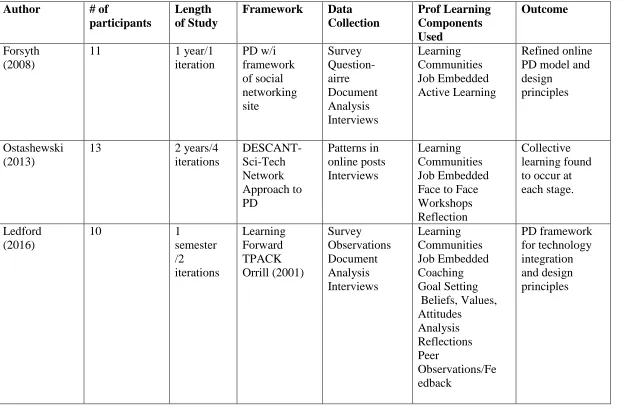
Additional Design Based Studies In Professional Learning ... 58
Methodology ... 62
Description of Learning Context ... 62
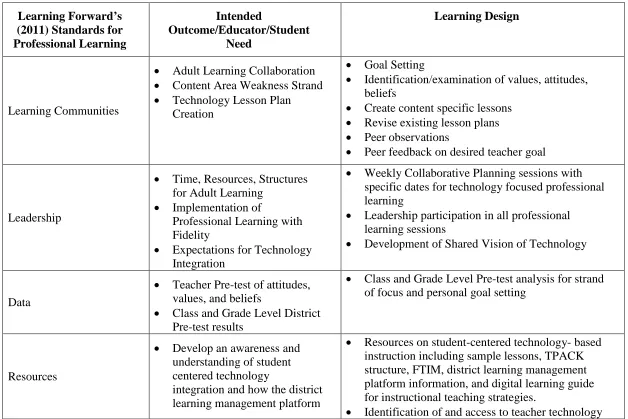
Description of Intervention ... 63
Implementation of Intervention (Iteration 1) ... 70
Implementation of Intervention (Iteration 2) ... 72
Development of Professional Development Framework ... 75
CHAPTER FOUR: DATA COLLECTION ... 76
Iteration 1 ... 76
Sample Characteristics. ... 80
Technology Integration Levels. ... 84
Student Factors... 89
x
Iteration 2 ... 94
Sample Characteristics ... 97
Technology Integration Levels ... 99
Student Factors... 105
Professional Learning ... 106
CHAPTER FIVE: RESEARCH FINDINGS ... 111
Rigor ... 111
Data Synopsis for Areas of Study ... 112
Sample Characteristics ... 113
Technology Integration Levels ... 116
Student Factors... 122
Professional Learning ... 124
Research Sub Question 1 ... 135
What Components of Professional Learning Result in Teachers Engaging Students in Using Technology to Construct Knowledge and Apply It to Authentic Situations? ... 135
Research Sub Question 2 ... 138
What Components Of Professional Learning Result In Changing Teachers’ Beliefs, Attitudes, And Behaviors Toward Technology Integration In The Classroom?... 138
Research Sub Question 3 ... 140
What Components Of Professional Learning Help Teachers Effectively Plan, Implement, And Evaluate Technology Lessons That Take Into Account The Curricular Needs As Well As The Student Needs? ... 140
Research Question ... 141 What Components Of A Professional Learning Framework Are Most
xi
Emphasizes Active Learning, Critical Thinking, Creativity, and
Communication? ... 141
Design Changes ... 144
Design Change 1: More Time And Opportunity For Teacher Learning ... 145
Design Change 2: Lesson Development With Grade Level Planning Using TPACK ... 145
Design Change 3: Support Materials/ Resources Exploration Time ... 146
Design Change 4: Increased Time For Coaching, Modeling, Observations, And Peer Observations ... 146
Design Change 5: Small, Differentiated Learning Groups ... 147
Future Iterations ... 148
Provide Ample Time And Opportunity For Teacher Learning ... 148
Provide Structures For Teacher Reflection ... 150
Consider Outcomes and Evaluation of the Professional Learning ... 151
Design Components ... 152
Practical Outputs ... 152
Scientific Outputs... 153
Limitations of the Study... 155
Areas for Future Research ... 157
REFERENCES ... 159
APPENDIX A ... 171
Electronic Search Information ... 171
APPENDIX B ... 174
xii
APPENDIX C ... 178
The Relationship Between Research Questions and Iteration Guiding Questions ... 178
APPENDIX D ... 181
The Technology Integration Matrix Table of Teacher Descriptors ... 181
APPENDIX E ... 185
The Technology Integration Matrix of Table Student Descriptors ... 185
APPENDIX F... 188
Computer Technology Integration Survey... 188
APPENDIX G ... 192
Interview Protocol: Professional Development for Technology Integration ... 192
APPENDIX H ... 194
Peer Coaching Protocol... 194
APPENDIX I ... 199
Grade Level Planning Examples Using TPACK ... 199
APPENDIX J ... 205
IRB Approval Letter ... 205
APPENDIX K ... 207
xiii
LIST OF TABLES
Table 3.1 A Comparison of Design Based Dissertations on Professional
Learning ... 61
Table 3.2 Matrix of Learning Designs ... 67
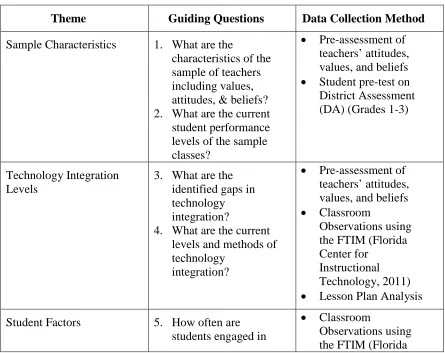
Table 3.3 Iteration 1 Guiding Questions and Data Collection Methods ... 70
Table 3.4 Iteration 2 Guiding Questions and Data Collection Methods ... 72
Table 4.1 Professional Learning Components Iteration 1 ... 79
Table 4.2 Characteristics of Study Participants ... 81
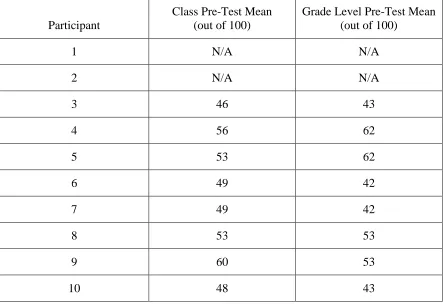
Table 4.3 Participant District Pre-Test and Grade Level District Pre-Test Scores ... 83
Table 4.4 Iteration 1 Classroom Observation Results by Week ... 86
Table 4.5 Iteration 1 Lesson Plan Analysis Results ... 87
Table 4.6 Pre-Assessment Computer Technology Integration Survey Questions with Lowest Mean Scores... 91
Table 4.7 Professional Learning Components Iteration 2 ... 96
Table 4.8 Participant Quarter 1 District Assessment and Grade Level Quarter 1 District Assessment Scores... 97
Table 4.9 Post-Assessment Computer Technology Integration Survey Questions with Lowest Mean ... 98
Table 4.10 Participants’ Pre- and Post-Assessment Survey Mean Scores on the Computer Technology Integration Survey ... 99
Table 4.11 Iteration 2 Classroom Observation Results by Week ... 100
xiv
Table 5.1 Classroom Observations Change from Iteration 1 to Iteration 2 ... 117
Table 5.2 Pre-Assessment Computer Technology Integration Survey Questions with Lowest Mean Scores... 118
Table 5.3 Lesson Plan Changes from Iteration 1 to Iteration 2 ... 120
Table 6.1 Classroom Observations Change from Iteration 1 to Iteration 2 ... 136
Table 6.2 Lesson Plan Changes from Iteration 1 to Iteration 2 ... 137
Table 6.3 Professional Development Components Impacting Teacher Practice Toward Technology Integration Conditional Relationship Guide ... 138
Table 6.4 Professional Development Components Impacting Teacher Practice Toward Technology Integration Reflexive Coding Matrix ... 142
Table 6.5 Iteration 1 Data and Design Changes for Iteration 2 from the Initial Design ... 144
Table A.1 Electronic Search Information for Education Research Complete Database (March 2015) & Education & Information Technology Digital Library Database (May 2015) ... 172
xv
LIST OF FIGURES
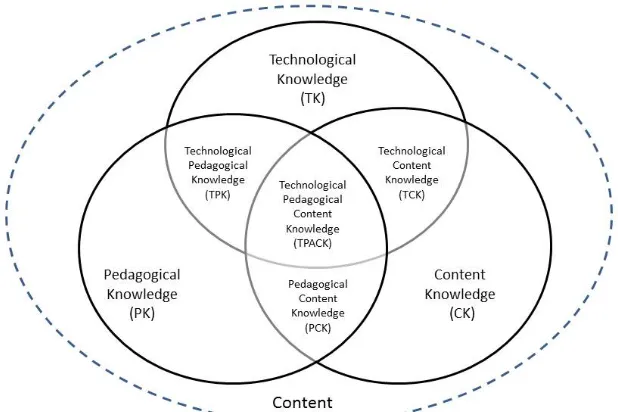
Figure 2.1 TPACK Framework from “What is Technological Pedagogical Content Knowledge,?” by M.J. Koehler and P. Mishra, 2009, Contemporary Issues in Technology and Teacher Education, 9, p. 63. Copyright 2009 by The Association for the Advancement of Computing in Education.
Reprinted with permission. ... 9
Figure 2.2 The SAMR Model of Technology Adoption from “Transformation, Technology, and Education,” by R. R. Puentedura, 2006, Online at: http://hippasus.com/resources/tte/. Copyright 2006 by Hippasus. Reprinted under Creative Commons license... 12
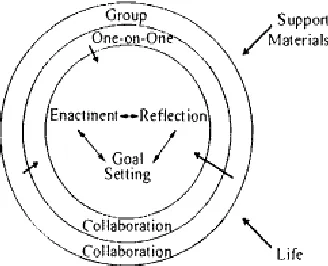
Figure 2.3 Revised Professional Development Framework from “Building Technology-Based Learner-Centered Classrooms: The Evolution of a Professional Development Framework,” by C.H. Orrill, 2001, Educational Technology Research & Development, 49, p. 30. Copyright 2001 by Springer Publishing Company. Reprinted with permission. ... 45
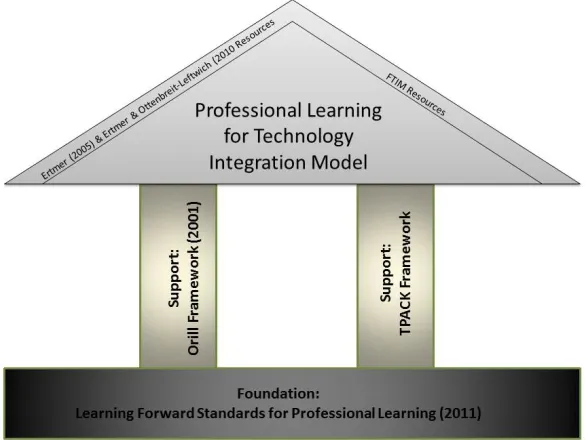
Figure 3.1 Foundation, Support, and Resources for The Professional Learning for Technology Integration Model ... 54
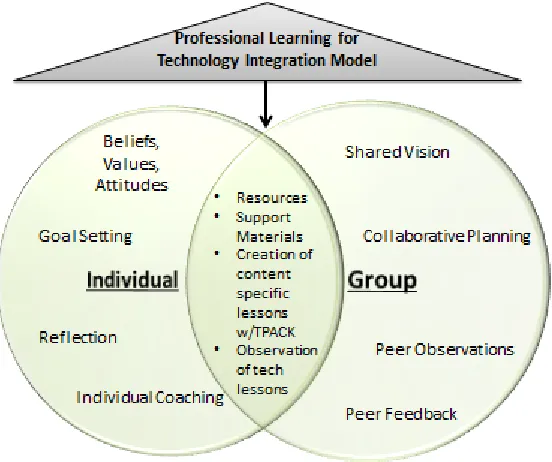
Figure 3.2 The Professional Learning for Technology Integration Model ... 55
Figure 4.1 Percentage of Classroom Observations at each Level of FTIM for Iteration 1. ... 88
Figure 4.2 Percentage of Lesson Plans at each Level of FTIM for Iteration 1 ... 89
Figure 4.3 Iteration 1 Reflection Logs Codes, Subcategories, and Categories. ... 93
Figure 4.4 Professional Learning Design Changes and Learning Targets Iteration 2 ... 95
Figure 4.5 Iteration 2 Reflection Logs’ Codes, Subcategories and Categories. ... 102
Figure 4.6 Percentage of Observations at each Level of FTIM for Iteration 2 ... 103
xvi
Figure 4.8 Iteration 2 Reflection Logs’ Coded Themes, Categories and Sub- categories for: What Components of Professional Learning Are
Impacting Teacher Practice? ... 107
Figure 4.9 Iteration 2 Interviews Coded Theme, Categories, Subcategories for: What Components of Professional Learning Are Impacting Teacher Practice? ... 109
Figure 5.1 Iteration 2 Reflection Logs’ Codes, Subcategories, and Categories ... 122
Figure 6.1 A Professional Learning Model for Technology Integration ... 153
xvii
LIST OF ABBREVIATIONS
DA District Assessments
FTIM Florida Technology Integration Matrix PCK Pedagogical Content Knowledge PLO Professional Learning Opportunity
SAMR Substitution, Augmentation, Modification, Redefinition
TIM Technology Integration Matrix
CHAPTER ONE: INTRODUCTION
Technology is now considered a critical component and an integral part of a high-quality education (Ertmer & Ottenbreit-Leftwich, 2010). Lawless and Pellegrino (2007) state that an understanding of technology is now one of the basic skills of teaching. The single most important factor in determining successful and effective technology
Purpose of the Study
The purpose of this study is to develop and determine a professional development framework that will impact teachers’ instructional practices toward technology
integration and transformative practice that emphasizes active learning, critical thinking, creativity, and communication. Transformative teaching and learning engages students in the work of learning academic standards and skills through the context of solving
relevant problems using technology. Transformative instruction provides purposeful learning for students that can be characterized by the elements of active learning, critical thinking, creativity, and communication. Since these are components of transformative instruction, they should be a focus of professional learning that moves teachers to use these skills and practices with students using technology in their classrooms.
Teachers have little understanding of how technology should be integrated into the classroom and what student centered learning with technology looks like (Chen, 2008). Student centered learning requires constructivist teaching practices and is an essential element for technology integration (Ertmer, Gopalakrishnan, & Ross, 2001). Constructivist teaching practices can be a challenge for teachers (Judson, 2006).
framework that will impact teachers’ instructional practices and move them toward transformative practice using technology.
Research Questions
This study seeks to answer the following research question: 1) What components of a professional learning framework are most effective in moving teachers toward transformative practice emphasizing active learning, critical thinking, creativity, and communication? Components for purposes of this study refer to the types of professional learning activities that result in changing teachers practice (i.e., peer observations,
technology coaching). The research sub questions include: 1) What components of professional learning result in teachers engaging students in using technology to construct knowledge and apply it to authentic situations? 2) What components of professional learning result in changing teachers’ beliefs, attitudes, and behaviors toward technology integration in the classroom? and 3) What components of professional learning help teachers effectively plan, implement, and evaluate technology lessons that take into account curricular and student needs?
Significance of the Study
This study is significant due to the fact that many current professional development models seeking to assist teachers in technology integration have been unsuccessful (Laferriére, Lamon, & Chan, 2006; Lawless & Pellegrino, 2007). Herold (2015) notes that even though technology has increased in classrooms, it has been a challenge getting teachers to change their teaching approach to use technology in a more student centered manner that has students engaged in relevant, authentic learning
components that are recommended by the literature for changing teachers’ practice. However, this study seeks to determine which components change teachers’ practice with regard to using and teaching with technology toward transformative practice by engaging students in learning opportunities that allow for active learning, critical thinking,
creativity, and communication. This research will contribute to the literature by providing a framework for effective professional learning that leads to technology integration by studying which components of professional learning are most impacting teachers’ use of technology with students at high levels of technology integration.
Context of the Study
The stakeholders involved with this research problem include classroom and support teachers in a K-5 elementary school, school administrators, technology coordinators, lead technology innovators, students, and school district instructional technology personnel. The targeted elementary school encompasses grades K-5 of approximately 1,000 students in a suburb of Atlanta, Georgia. The administration has been providing staff development to the teaching staff in an effort to work toward technology integration for the last five years. Personal interactions in the study’s school site indicate that the teachers have been engaged and willing to learn during staff
Summary
This study addresses the problem that current staff development models for technology integration have not resulted in the transformation of teacher practice to utilize technology as an integral part of the teaching and learning process. The development of a professional learning framework using a design based research
approach emerges in this study after two iterations of implementing multiple professional learning components with teachers. The goal of the professional learning is to transform teachers’ instructional practices to use technology in a more student centered manner that has students engaged in relevant, authentic learning experiences and constructing
CHAPTER TWO: LITERATURE REVIEW
A comprehensive review of the literature on the topic of professional learning for technology integration draws from multiple areas. This literature review is organized around a discussion of technology integration and professional development frameworks. First, the technology integration frameworks are explained, and then a comparison of the frameworks is provided within a discussion of constructivist teaching, factors impacting technology integration, teacher change process, and evaluation of technology integration. Finally, a discussion of professional development in technology integration is provided through the lens of a professional development framework that encompasses the literature and one that will guide this study. A review of the research in all of these areas provides a foundation for the design and implementation of professional development model that will result in sustained technology integration in the classroom.
The following keywords were used in an electronic search in the Education Research Complete and EdITLib databases in Spring 2015 to review research for this literature review: professional development for technology integration, teacher
been collected over time in technology integration and teacher professional development were used in the literature review.
Technology Integration Frameworks
Herold (2015) notes that while technology tools have increased in today’s classrooms, there is much evidence indicating that teachers have not transformed the ways they are teaching. Student-centered learning with technology is not consistent and pervasive in our classrooms. When technology is used, it is often not used to support the effective instructional practices demonstrated to impact student learning, and it may include such tasks as completing homework, drill and practice, and completing reports or assignments (Ertmer & Ottenbreit-Leftwich, 2010). Herold reports that teachers
frequently use technology to support traditional instructional strategies which has significant implications for professional development designed to increase teachers’ integration of technology. Most teachers have little understanding of how technology
should be integrated into teaching and learning and what student centered learning with technology looks like (Chen, 2008). Several frameworks for moving teachers toward more student centered levels of technology integration in the classroom are evident in the literature. The Technological Pedagogical Content Knowledge (TPACK), the
Technological Pedagogical Content Knowledge (TPACK)
The Technological Pedagogical Content Knowledge (TPACK) framework has become a focus of recent research and is based on Shulman’s pedagogical content knowledge (PCK) model (1986). Shulman first advanced the concept that teachers’ knowledge includes both pedagogical knowledge as well as content knowledge and notes the intersection of the two types of knowledge resulting in pedagogical content
knowledge (PCK). The TPACK framework adds the technology knowledge component and extends Shulman’s framework to integrate technology into the intersection of pedagogical knowledge and content knowledge of teachers.
The application of the TPACK framework helps teachers address the issues of how one can effectively integrate technology into the curriculum (Chai, Koh, & Tsai, 2013; Kimmons, 2015; Pamuk, Ergun, Cakir, Yilmaz, & Ayas, 2015; Wong, Chai, Zhang, & King, 2015). The TPACK framework indicates that the relationships between technology, pedagogy, and content knowledge must be intertwined in order for
with content and pedagogical knowledge as teachers integrate technology tools and resources that will help students move toward mastery of the content. Koehler, Mishra, and Yahya (2007) note the complexity of teaching with technology as all of these types of knowledge intersect and work together. This type of knowledge is different than that of a content expert, instructional strategies expert, or a technology expert. Baran, Chuang, and Thompson (2011) report that when teachers are able to understand and navigate the intersections between all types of knowledge (technology, pedagogy, and content) they become a different type of expert than one solely in a particular knowledge area. Figure 2.1 provides an illustration of the TPACK framework which demonstrates the intersections of all types of knowledge.
Figure 2.1 TPACK Framework from “What is Technological Pedagogical Content Knowledge,?” by M.J. Koehler and P. Mishra, 2009, Contemporary Issues in Technology and Teacher Education, 9, p. 63. Copyright 2009 by The Association
lessons with technology. The development of TPACK in teachers should be based on four components: 1) the purposes for technology integration in a given subject; 2) an understanding of how students think, learn, and experience technology in the given subject; 3) an understanding of the curriculum standards/materials that integrates
technology into the teaching and learning process for a given subject; and 4) knowledge of instructional strategies for the content (Voogt, Roblin, Tondeur, & van Braak, 2013). Teachers should develop TPACK lessons by beginning with the learning goals based on content standards and then moving to determining the pedagogical approaches to include appropriate assessments. Next, teachers should plan the learning activities in which to engage students and the technology tools and resources needed to achieve the learning goals (Matherson, Wilson, & Wright, 2014).
The TPACK framework is being adopted in the design of teachers’ professional development for technology integration as a structure for teachers to scaffold their understanding as they develop lessons integrating technology, pedagogy and content. (Baran, Chuang, & Thompson, 2011; Matherson, Wilson, & Wright, 2014; Wong, Chai, Zhang, & King, 2015). In addition, Kimmons (2015) reports that TPACK is a useful model for evaluating teachers’ levels of proficiency as they develop in integrating technology into their classrooms.
(2009) note that if these domains cannot clearly be separated and may not be independent, then the TPACK is not valid and should be revised.
Substitution Augmentation Modification Redefinition (SAMR)
Figure 2.2 The SAMR Model of Technology Adoption from “Transformation, Technology, and Education,” by R. R. Puentedura, 2006, Online at:
http://hippasus.com/resources/tte/. Copyright 2006 by Hippasus. Reprinted under Creative Commons license.
The use of technology at the enhancement level shows there is minimal impact on student learning (Keane, Keane, & Blicblau, 2013). The higher levels of SAMR aim at transforming the learning experiences of students (Chou, Block, & Jesness, 2012). The Transformative levels allow for technology to play a large role in both the delivery and mastery of skills as well as content (Tangney & Bray, 2013). Keane, Keane, and Blicbau (2013) propose that the SAMR model be used as teachers plan and develop lessons to improve student outcomes and increase technology integration.
Another argument about the limitations of SAMR comes from Marcovitz and Janiszewski (2015) in which they state that this framework is too focused on technology. They argue that when planning for technology integration the focus should be on
learning.
Technology Integration Matrix
Various states, universities, and other entities have developed Technology Integration Matrices (TIM), which provide a progression of steps teachers may go through as they work toward more effective technology integration. These matrices are descriptive tools that provide for the analysis of instruction and technology. One example is The Florida Technology Integration Matrix (Florida Center for Instructional Technology, 2011), which provides a rubric to assess teachers’ and students’ levels of technology integration toward transformative teaching which emphasizes active learning, critical thinking, creativity, and communication. The matrix provides a description of the levels of technology integration beginning with entry and moving through adoption, adaption, infusion, and transformation. The Florida Technology Integration Matrix (FTIM) of Table of Teacher Descriptors is located in Appendix D and the Table of Student Descriptors is located in Appendix E.
Summary
impact student outcomes all three domains must be intertwined (Baran, Chuang, & Thompson, 2011; Chai, Koh, & Tsai, 2013; Graham, Borup, & Smith, 2012; Kimmons, 2015). Teachers can benefit from actively creating lessons using the TPACK framework. The SAMR model is also noted in the literature as a framework for helping teachers develop lessons that move to the higher levels of transformative practice. Finally,
Technology Integration Matrices (TIM) are descriptive tools that provide for the analysis of instruction and technology using a rubric which can be used in professional learning to plan and evaluate technology integration in the classroom.
A Comparison of the Technology Integration Frameworks
This section of the literature review further expands the TPACK, SAMR, and TIM frameworks and provides a comparison of the frameworks within the major concepts featured in the literature on factors impacting technology integration. The major concepts discussed include constructivist teaching and modeling constructivism in professional development, factors impacting technology integration including external and internal factors, and evaluation of technology outcomes.
Constructivist Teaching
Ertmer (2005) suggests that low level technology uses in the classroom are associated with teacher-centered practices and higher level uses of technology are
student-centered. This aligns with Judson’s (2006) study in which he states that teachers who integrate technology in their classrooms most effectively, typically, have
correlated to constructivist models, and Ertmer, Gopalakrishnan, and Ross (2001) state that exemplary technology teachers only utilize constructivist models during instruction.
In contrast Liu’s (2011) study found that teachers with learner-centered beliefs did not consistently use learner-centered teaching strategies. They utilized lecture based teaching strategies more often as opposed to student centered constructivist strategies when integrating technology. So while teachers may acknowledge that student centered learning is best for students, they do not always use these strategies in their instruction when integrating technology. Liu cites reasons for this discrepancy as being tied to student achievement mandates and other external expectations. However, Kim, Kim , Lee, Spector, and DeMeester (2013) found that teacher beliefs about learning and teacher practices in the classroom were aligned. In addition, teachers’ levels of technology in their study correlated to their beliefs. Ertmer, Ottenbreit-Leftwich, Sadik, Sendurer, and Sendurer (2012) note that there was an assumption that because teachers held student centered beliefs, that these beliefs would be translated into practice when integrating technology. Their study did find alignment between teachers with student centered beliefs and their use of technology to engage students in constructivist learning.
the construction of knowledge is an integral part of the active learning process of constructivism (Boudourides & Bourdourides, 2003).
Constructivist teaching and learning are characterized by hands-on activities in which students construct their own understanding (Keengwe, Onchwari, & Agamba, 2014). In constructivist instructional practices, teachers guide students to create their own learning and understanding by posing problems, asking questions, and providing collaborative opportunities for students (Poelmans & Wessa, 2015). In a constructivist environment students exhibit their understanding after interacting with the learning materials, reflecting on the tasks and information, and working with others (Keengwe, Onchwari, & Agamba, 2014). Poelmans and Wessa (2015) indicate that constructivism elicits critical thinking and deep learning through problem solving opportunities. The responsibility of the learning is placed on the student in constructivist environments and the teacher becomes the facilitator (Keengwe, Onchwari, & Agamba, 2014).
Constructivist teaching practices can be a challenge for teachers, yet it is
necessary when integrating technology in a more student centered manner as this requires teachers to be more of a facilitator as they help students construct their own knowledge (Judson, 2006). Kong and Song (2013) indicate that teachers have difficulty with constructivist practices with technology integration because of the complexity and differences from more traditional instructional practices. In a technology rich
These constructivist practices should engage students in authentic and open learning opportunities that take into account both the curricular needs and the student needs which can be achieved and evaluated, in part, through the use of the various technology integration models or frameworks discussed. The TPACK, SAMR, and TIM frameworks could all being used with teachers to assist them in designing technology lessons using constructivist practices.
Modeling Constructivism in Professional Development
Professional learning that moves teachers to more constructivist teaching styles is an important strategy to enhance technology integration (Baylor & Ritchie, 2002; Ertmer, 2005; Ertmer, Gopalakrishnan, & Ross, 2001). When using the technology integration frameworks for professional development, it is important to remember that effective professional development must engage teachers in active learning opportunities (Hew & Brush, 2007; Keengwe & Onchwari, 2009; Lawless & Pellegrino, 2007). The
professional development itself must be learner-centered to act as a model for teachers to create more learner-centered classrooms while integrating technology (Orrill, 2001). Judson (2006) states that professional development on technology integration should focus on constructivism not merely forcing technology use in the classroom. Using an active, learner-centered, constructivist approach, teachers can construct their own meaning and understanding for new learning which can be more readily applied to the classroom once they experience this approach for themselves (Keengwe & Onchwari, 2009).
aligns with the TPACK model of technology integration (Ertmer & Ottenbreit-Leftwich, 2010; Kopcha, 2010). In Shulman’s (1986) work which TPACK originated from, teacher understanding of content standards is emphasized in order for them to effectively
transform the knowledge into how it will be taught. Richardson, et al. (2008) indicate that combining context, content, and process as part of the professional learning provides a comprehensive and coherent approach for teachers. The use of the TPACK model would provide this opportunity for teachers to integrate context, content, and process as part of technology integration professional development.
as a opposed to a deliverer of content thereby resulting in constructivist practices (Tangney & Bray, 2013).
TIM are descriptive tools that provide for the analysis of instruction and technology using a rubric that indicates a contiuum of levels of teaching and learning with technology. These matrices could be used in professional development like the TPACK and SAMR frameworks to help move teachers toward more constructivist instructional practices. The matrices for teacher and student descriptions such as those found in Appendices D and E from the FTIM could be used to provide a springboard for effective lesson design (Florida Center for Instructional Technology, 2011).
Therefore, all of the technology integration frameworks discussed provide an opportunity for professional developers to model active learning and constructivist practices with teachers as they work to design and implement lessons that integrate technology in a student centered classroom. Moving teachers toward more constructivist teaching and learning practices is an important step toward technology integration. Factors Impacting Technology Integration
One factor affecting technology integration comes from Rogers (2003) Perceived Attributes of Innovations which explains the different rates of adoption of individuals toward a change or innovation. Rogers’ work studies and provides a model for change and describes the characteristics that individuals go through when being asked to adopt something new. The model provides information and guidelines for what attributes could be built into the innovation that would facilitate change for the different levels of
individuals or adopters. Watson (2007) notes the importance of the potential adopters perceptions about change as they are the ones who will be making the decision to adopt or reject the innovation. The first level in Rogers’ Perceived Attributes of Innovations categorization is relative advantage. The relative advantage or perceived improvement over the previous idea is evaluated by the individual. Greater perceived advantages result in faster adoption rates. Second, compatibility with existing values is considered. Third, the level of complexity is evaluated by the individual and innovations that are simple in nature are adopted more quickly. Next, trialability is how individuals may be able to experiment with the innovation on a small scale and in segments determines adoption rates. Finally, observability is how the innovation is seen by others is considered. For example, Rogers notes that individuals are more likely to adopt when they can see results. With regard to technology integration, teachers may be more inclined to use more
technology in their instruction when they can see student ownership in learning and/or student achievement results.
Therefore, for the purposes of this literature review external (first-order) and internal (second-order) factors will be used to categorize the major influences that have been identified in the research as having an impact on technology integration in the classroom. A discussion and comparison of the technology integration frameworks as they relate to each category of factors is included in this section of the literature review.
External (First-Order) Factors
External (first-order) factors impacting technology integration are typically school level factors (Wachira & Keengwe, 2011). Appropriate and consistent access to
technology has been identified as one of the most common external (first-order) factors (Kopcha, 2010; Wade, Rasmussen, & Fox-Turnbull, 2013). Teacher concerns with access include lack of hardware and appropriate software, as well as the lack of computers with internet access (Wachira & Keengwe, 2011). Hsu and Kuan (2013) noted that access to technology includes more than just computers but encompasses projectors and other equipment as well. The lack of availablity of computer labs and/or computer lab time, unreliability related to slow servers and connectivity concerns were also noted (Wachira & Keengwe, 2011). The quality of a school’s infrastructure clearly impacts technology integration in classrooms (Means, 2010).
with peers on technology integrated lessons (Keengwe, Onchwari, & Wachira, 2008; Kopcha, 2010).
Another external (first-order) factor that impacts technology integration is technology support (Eteokleous, 2008; Hew & Brush, 2007; Hsu & Kuan, 2013; Inan & Lowther, 2010; Keengwe, Onchwari, & Wachira, 2008; Wachira & Keengwe, 2011). For example, technology support that is slow to respond to teachers’ needs due to limited human resources is a barrier for teachers integrating technology. In general, the
availability and quality of technology support impacts how often teachers use technology in their classrooms (Inan & Lowther, 2010).
Technology leadership has also been found to be an external factor related to school culture impacting technology integration in schools (Baylor & Ritchie, 2002; Eteokleous, 2008; Keengwe, Onchwari, & Wachira, 2008; Wachira & Keengwe, 2011). The principal’s use of technology and belief that technology can result in transformative practice is an influential factor in teachers’ technology integration (Baylor & Ritchie, 2002). The principal is a facilitator of change and is critically important to moving teachers toward more student centered use of technology. The principal’s leadership helps the teaching staff make connections between technology and the school’s mission and vision (Chang, Chin, & Hsu, 2008). Anthony and Patravanich (2014) stress
principals should be planning and designing professional development for their schools as they should be viewed as technology leaders in their buildings.
The literature has identified multiple external factors that impact teachers’ technology integration. Neither the TPACK framework, the SAMR model, nor TIM include any elements to address the external barriers of appropriate and consistent access to technology, time, and technology support. However, all of the frameworks can be used by technology leaders to address the external barrier of technology leadership and could be utilized by school technology leaders to help define a vision for technology instruction. The TPACK and SAMR models provide leaders with a scaffold to use with teachers to help them plan technology integration lessons. The TPACK model provides more specificity than the SAMR model with regard to leaders assisting teachers with exactly how to plan lessons that integrate content, technology, and effective instructional strategies. TIM can be used by leaders as a tool to help them conduct classroom
observations of teachers and students. The technology integration frameworks provide leaders with relevant tools to support technology integration.
Internal (Second-Order) Factors
Internal (second-order) factors are intrinsic in nature and directly influence teachers’ decisions regarding technology (Eteokleous, 2008). Hsu and Kuan (2013) note that school level factors have some influence on teachers’ decisions to integrate
Ottenbreit-Leftwich (2010) report that beliefs are stronger predictors of behavior than knowledge.
Teacher values, attitudes, and beliefs are critically important and, perhaps, the most influential internal factor of teachers integrating technology into their classrooms (Ertmer, 2005; Ertmer & Ottenbreit-Leftwich, 2010; Fullan & Smith, 1999). Teachers who believe that technology is appropriate and important for student learning will integrate technology at higher levels (Eteokleous, 2008; Inan & Lowther, 2010). Beliefs determine a person’s attitude, and attitude is important for technology integration (Hew & Brush, 2007). These factors are examples of the compatability level in Rogers’ Perceived Attributes of Innovations in which the change is evaluated against teachers’ exisiting values.
Teachers’ core beliefs are difficult to change, and their type of belief (traditional versus constructivist) will determine the types of technology lessons they will most often implement (Ertmer & Ottenbreit-Leftwich, 2010). Teachers’ value beliefs are based on whether or not they believe instructional goals can be achieved using technology (Ertmer & Ottenbreit-Leftwich, 2010). Chen (2008) states that core beliefs are those fundamental beliefs central to one’s belief system, and these are more difficult to change. Core
beliefs, for example, are those guiding beliefs that determine how one behaves. Ertmer (2005) echoes Chen’s discussion on core beliefs adding that staff developers often do not know how to change those beliefs. In addition, Chen reports that teachers also hold pedagogical beliefs which are those educational beliefs about teaching, learning, and students. All of these beliefs should be examined and taken into consideration when working to change teachers’ practice.
Another important consideration related to teachers’values, beliefs and attitudes that impact technology integration is teachers’ lack of openess to change and innovation (Keengwe, Onchwari, & Wachira, 2008; Wachira & Keengwe, 2011). Baylor and Ritchie (2002) note that teachers’ openness to change correlated to their acceptance of technology and willingness to integrate it into teaching and learning. In addition,
Two of the technology integration frameworks can be used to address some of these internal factors of teachers noted in the literature. The TPACK framework provides a structure for teachers to learn how to effectively plan lessons integrating technology, pedagogy, and content knowledge. Engaging teachers in planning lessons using the TPACK framework consistently could potentially impact their beliefs, self-efficacy, and openness to change toward technology integration. However, Chai, Koh, and Tsai (2013) report that while the TPACK framework provides some increase in teachers’ development of technology integration skills, additional time and effort should be dedicated to addressing other factors such as contextual barriers and teachers’ beliefs.
The SAMR model could be used to address the internal factors of teachers in a manner similar to the TPACK framework as teachers engage in lesson planning for technology integration using the SAMR model. Keane, Keane, and Blicbau (2013) suggest that the SAMR model be used as teachers plan and develop lessons to improve student outcomes and increase technology integration. However, the SAMR model provides less specificity for how to plan lessons which may not provide a high level of impact toward change in internal factors of teachers.
However, this tool does not address the internal factors that impact teachers’ technology integration. This tool simply illustrates for teachers where their current levels of
technology integration are and where they need to be without addressing teachers’ beliefs about teaching with technology or their self-efficacy levels with technology. In order to change beliefs, teachers need to engage in multiple activities that challenge their current beliefs (Ertmer & Ottenbreit-Leftwich, 2010).
The TPACK and SAMR models could potentially address the internal factors of teacher beliefs and self-efficacy through consistent and active engagement in lesson design. While TIM provide teachers with an opportunity to see explanations of what teaching and learning with technology looks like, they do not address the internal factors impacting teachers’ technology integration. Therefore, additional professional
development components must be provided for teachers that will address these internal factors if sustained, effective technology integration is to be achieved.
Evaluation Of Technology Outcomes
important in order to truly understand the level of change taking place in the teaching and learning process. Based on the literature, classroom observations and technology usage reports as evaluation components would provide a broader picture of how technology integration is progressing in a school. It is important to note that Hsu and Kuan (2013) state that teacher and student technology usage are different and should be evaluated and considered separately.
While observing teachers and reviewing usage reports will provide a glimpse into the changes in practice taking place in a school, a significant focus on student outcomes and learning should be considered as part of the evaluation process. These outcomes can be measured as part of the specific content based learning target driven professional learning. Baylor and Ritchie (2002) note additional ways that technology integration could be evaluated including the percentage of time that higher other thinking skills were used by students using technology, the percentage of time students were engaged in constructivist uses of technology, and the percentage of time students were engaged in collaborative learning using technology.
Multiple methods should be used to determine the effectiveness of technology integration in classrooms and schools and meaurements other than teacher self-assessments of technology use should be considered.
evaluating technology integration of measuring teachers’ knowledge and skills as discussed by Richardson et al. (2008).
TIM can be utilized to address Richardson et al’s. (2008) second condition of evaluating technology integration of measuring changes in classroom teaching practices. The FTIM (Florida Center for Instructional Technology, 2011), for example, provides a rubric to assess teachers’ and students’ levels of technology integration toward
transformative teaching and learning. The matrix provides a description of the levels of technology integration beginning with entry and moving through adoption, adaptation, infusion, and transformation. The matrix could be used as an evaluative tool during classroom observations to determine the levels of technology integration for teachers and/or schools.
The technology integration frameworks have potential to be used for the
evaluation of technology integration. However, multiple methods of evaluation should be used in order to gain a comprehensive picture of changes in teachers’ knowledge and skills as well as changes in classroom teaching practices.
Professional Development in Technology Integration
development each year. This type of professional development does not meet teachers’ needs and is disconnected from instructional practice (Lawless & Pellegrino, 2007).
The type, amount, and quality of training provided to teachers is identified as a factor impacting technology integration in classrooms (Baek, Jung, & Kim, 2008; Baylor & Ritchie, 2002; Eteokleous, 2008; Hsu & Kuan, 2013). Inan and Lowther (2010) indicate that insufficient professional learning for technology integration is of increasing concern and that professional development is one of the most influential factors in affecting teachers’ techology integration.
As noted previously the TPACK, SAMR, and TIM frameworks have potential use with teachers as professional learning. These frameworks could be used for lesson planning and observations. The TPACK and SAMR models could be used by teachers to help them integrate technology into their instructional strategies as they plan for required content standards. The TIM framework is a tool that could be used during classroom observations to evaluate the level of technology being used in the classroom. However, the literature notes additional components of professional development that should be an integral part of teacher learning which cannot be addressed solely through the use of technology integration frameworks.
The Standards for Professional Learning developed in 2011 by Learning Forward, formerly the National Staff Development Council, provide a framework that
Professional Learning including the school district in which this study takes place. A combination of the Learning Forward framework which includes all key professional development components from the research, the TPACK framework, and the Florida Technology Integration Matrix (Florida Center for Instructional Technology, 2011) form the guiding principles for the professional development design in this study.
Standards For Professional Learning
Learning Forward (2011) contends that all professional development for teachers should be designed around 1) learning communities, 2) leadership, 3) resources, 4) data, 5) learning designs, 6) implementation strategies, and 7) outcomes. This framework provides a structure or organization for all of the components reflected in the literature on professional development and professional development for technology integration. In this section of the literature review each Learning Forward standard is discussed along with how each relates to the professional development research and the technology integration frameworks providing a foundation for the professional development design for this study.
Learning Communities
noted in the literature that develop teacher learning communities toward improving technology integration.
The literature supports the use of learning communities and indicates that an essential component of effective professional development includes peer collaboration (Cooley, 2001; King, 2002; Lawless & Pellegrino, 2007; Matzen & Edmunds, 2007; Orrill, 2001). Collaboration should include discussions with other teachers around using technology for specific content to address student learning targets. These discussions should also include the opportunity to share success stories about technology integration lessons (Ertmer & Ottenbreit-Leftwich, 2010). This is an example of the observability level in Rogers’ (2003) Perceived Attributes of Innovation level. Individuals are more likely to adopt a new innovation when they can see the results and impact of the change. Ertmer also (2005) reports that teachers’ practice is more likely to change if they are involved in collaborative learning and discussions with other teachers as part of professional development.
Several research studies note the importance of teachers working together and collaborating in small peer groups as they learn to effectively integrate technology (Ertmer, 2005; Fullan & Smith, 1999; Hsu & Kuan, 2013; Meyer, Abrami, Wade, & Scherzer, 2011; Richardson, et al., 2008; Wachira & Keengwe, 2011). Inan and Lowther (2010) recommend that teachers work in small collaborative groups based on confidence levels, beliefs, or content areas in order to strengthen teachers’ interactions and
Mentoring or coaching for teaching in the area of technology integration aligns with the research on peer support and is identified as a key strategy for impacting teachers’ professional learning toward technology integration (Ertmer & Ottenbreit-Leftwich, 2010; Richardson, et al. 2008). This strategy provides teachers with someone they can use to talk through ideas or troubleshoot problems. The mentoring strategy also provides teachers a safe environment for risk taking and experimenting with technology which is also identified in the literature as important (Ertmer & Ottenbreit-Leftwich, 2010; Keengwe, Onchwari, & Wachira, 2008; Richardson, et al., 2008). This strategy of mentoring is an example of the trialability level of change according to Rogers’ (2003) Perceived Attributes of Innovation which notes the importance of individuals needing to experiment and practice with the proposed change on a small scale in order to move toward adoption of the innovation or change. The TPACK framework could be used by teachers in learning communities to develop lessons collaboratively through peer
collaboration or coaching. TIM could be used to support the Learning Communities standard through peer observations using the tool to assess levels of technology integration.
Leadership
Leadership is Learning Forward’s (2011) second standard for professional learning. The Leadership standard states that leaders are required who develop capacity for learning and leading, advocate for professional learning, and create support systems including structures if professional learning is to result in improved teacher practice. With regard to technology integration, this standard addresses the external barriers of access, time, support, and leadership as identified by the literature. Leadership can and should address access concerns and support issues in technology. In addition, leadership should provide structures to provide teachers with time for learning to teach and
collaborate with others on technology and a shared vision for technology integration as noted in the literature.
Research indicates that administrative support and leadership are key elements in advancing technology integration in classrooms and schools (Hsu & Kuan, 2013; Means, 2010). When the principal provides clear expectations to teachers regarding the use of technology and support of the practice, it creates a condition for sustained change
A strategy that can promote technology integration and one that falls under leadership is that of a shared vision (Hsu & Sharma, 2010; Laferriére, Hamel, & Searson, 2013; Means, 2010). When teachers are not involved in the decision making process of technology planning, this results in a lack of a common vision toward technology integration (Wachira & Keengwe, 2011). A shared vision among teachers and leaders about technology and technology integration can overcome technology leadership factors and barriers (Baylor & Ritchie, 2002; Hew & Brush, 2007). A clear and shared
instructional vision for where technology integration is leading is important to teachers and can serve as a roadmap for technology integration (Kopcha, 2010). In addition, a shared vision for technology integration gets teachers involved in the decision making process which is a strategy for teacher and school change (Eteokleous, 2008).
As noted earlier in this literature review in the section on external factors impacting technology integation the TPACK framework, the SAMR model, and TIM could all be utilized by school technology leaders to help define a vision for technology instruction. In addition, the frameworks could be used by leaders to lead technology in their schools and to develop leadership capacity among teachers as they plan technology integration lessons. This study reflects leadership advocating for effective professional development for technology integration which is a key component of the Leadership standard from Learning Forward (2011).
Resources
Learning Forward’s (2011) third standard for professional development is
and coordinating by leadership in order for professional learning to result in teacher effectiveness.
Appropriate and consistent access to technology is identified as one of the most common external (first-order) factors that need to be addressed when determining strategies to impact technology integration (Baek, Jung, & Kim, 2008; Hsu & Kuan, 2013; Wachira & Keengwe, 2011; Wade, Rasmussen, & Fox-Turnbull, 2013). Schools must have the appropriate infrastructure and funding plan to provide consistent and appropriate access to teachers in order for technology integration to be successful.
Providing responsive technology support for problems that arise is another key strategy for impacting technology integration in schools (Eteokleous, 2008; Hew & Brush, 2007; Hsu & Kuan, 2013; Inan & Lowther, 2010; Keengwe, Onchwari, & Wachira, 2008; Wachira & Keengwe, 2011). Technology support should be quick to respond to teachers’ needs and readily available for immediate assistance (Inan & Lowther, 2010).
The TPACK, SAMR, and TIM frameworks cannot be used to address the
Learning Forward (2011) professional learning standard of Resources. This standard is a leadership function but is required for effective professional learning to occur. Since the technology integration frameworks cannot effectively address this professional learning standard, it furthers the argument that professional development for technology
Data
Learning Forward’s (2011) professional learning standard on Data states that effective professional learning uses a variety of data sources to plan and evaluate professional development. This aligns with the research noted in the Evaluation of Technology Outcomes section of this literature review in which the literature noted that multiple measures of technology integration were critical in the evaluation of teachers’ knowledge and skills and classroom practices.
Yoon, Duncan, Lee, Scarloss, and Shapley (2007) state that evaluating the gains of student achievement as a result of teacher professional learning is a challenge. Hirsh and Killion (2007) note that professional development that is not carefully planned and designed is not able to produce the intended results. They further report that if it is intended that professional learning be evaluated, then it is more like to achieve results. If the evaluation of professional learning is determined as part of the design versus being an after-thought, it has greater potential to impact student learning (Earley & Porritt, 2014). Yoon, Duncan, Lee, Scarloss, and Shapley indicate that four elements must be considered when evaluating the impact of professional learning on student learning: 1) a rigorous research design; 2) allow for ample professional learning implementation; 3) multiple measures of teacher practice and student learning; and 4) appropriate statistical methods used in the evaluation process.
argue that professional learning should be measured as to its worth (did it have value?), merit (did it meet desired goals?), and impact (did it change teachers’ practice?).
The student achievement impact should be measured as an evaluation of professional learning, thus providing specific student impact information which is identified by Earley and Porritt (2014) as being rare in the evaluaton of professional learning. Yoon, Duncan, Lee, Scarloss, and Shapley’s (2007) work indicate that future professional learning studies should address the direct impact of the professional learning on teachers and the indirect impact on students.
The technology integration frameworks can be used as data sources in the planning and evaluation of professional development. For example, the TIM could be used to determine the current reality of technology integration as a result of teacher observations. This would be a data point that could be used in the planning for
professional learning. Since the standard indicates that multiple data sources should be used, an additional data point could include an indication of the current levels of
teachers’ attitudes, beliefs, and values since the internal factors of teachers highly impact their teaching practices (Ertmer & Ottenbreit-Leftwich, 2010). The TPACK framework could also be used as data points for planning and evaluating professional learning. This framework could be used to analyze lesson plans, for example, to guide the planning and evaluation of technology integration professional development.
Learning Designs
multiple designs that are impactful for teacher professional development including active engagement, modeling, reflection, and feedback. The research on professional
development for technology integration also cites many of the same learning designs as being effective for improving teachers’ practices with technology. The designs should be carefully selected to match the intended outcomes for teachers and students as specified during the development of professional learning.
Active Engagement
Professional development must engage teachers in active learning opportunities (Hew & Brush, 2007; Keengwe & Onchwari, 2009; Lawless & Pellegrino, 2007). The professional development itself must be learner-centered to act as a model for teachers to create more learner-centered classrooms while integrating technology (Orrill, 2001). Judson (2006) states that professional development on technology integration should focus on constructivism not merely forcing technology use in the classroom. Using an active, learner-centered, constructivist approach, teachers can construct their own meaning and understanding for new learning which can be more readily applied to the classroom once they experience this approach for themselves (Keengwe & Onchwari, 2009). This echoes the previous discussion in this literature review on the constructivist teaching factor that impacts technology integration and the importance of modeling constructivist teaching in professional development.
Technology Pedagogy Content Knowledge (TPACK) model of technology integration. All of these elements must be encompassed versus isolated in professional development for technology integration (Ertmer & Ottenbreit-Leftwich, 2010; Hew & Brush, 2007; Mishra & Koehler, 2006). Professional development should be clearly designed around specific content, pedagogy, and technology in order to achieve a change in teachers’ practice. This type of professional development design also yields higher student achievement outcomes (Garet, Porter, Desimone, Birman, & Yoon, 2001; Mishra & Koehler, 2006). Ertmer and Ottenbreit-Leftwich (2010) indicate that professional development should be very specific in how teachers can use strategies to increase student learning. This specificity should also include classroom management strategies as well (Hew & Brush, 2007). However, while specificity is essential, Mishra and Koehler (2006) note that the complex relationships and connections among content knowledge, pedagogy, and technology should also be articulated.
Modeling
pedagogical beliefs for teachers to see (Ertmer, 2005). The FTIM (Florida Center for Instructional Technology, 2011) framework would be an practical tool for teachers to use during observations to determine levels of technology integration in practice.
Reflection
The research also indicates that reflection on instructional practices is the most important factor in teacher change (Clarke & Hollingsworth, 2002; Matzen & Edmunds, 2007). The best models for professional development ensure that teachers are reflective practitioners as they study their actual classroom practices (Holland, 2001; King, 2002). This includes critical reflection and self-examination of beliefs, attitudes, behaviors, and practices (King). Ertmer (2005) recommends that teacher reflection include questioning their own practice as well as the practice of others and articulating assumptions that may be operating.
Strategies to address internal factors impacting technology integration include providing teachers avenues to examine their values, beliefs, and attitudes and to tie these factors into professional learning design (Ertmer & Ottenbreit-Leftwich, 2010; Inan & Lowther, 2010; Zhao, Pugh, Sheldon, & Byers, 2002). For example, Ertmer (2005) states in order for beliefs to be changed they must be made explicit and then training
opportunities that challenge the beliefs should be provided. This can also be achieved by reflecting on one’s practice and questioning the practices of others as part of professional learning toward technology integration.
Ertmer (2005) and Ertmer and Ottenbreit-Leftwich (2010) both note that changes occur when teachers’ confidence is built with successful experiences in small instructional changes prior to moving toward larger changes. This can be achieved by introducing technology to teachers that will meet their immediate needs so they can begin to see successes in their classrooms.
Effective learning designs for professional development in technology integration include active learning opportunities; application of the transactional relationship
between content, pedagogy, and technology; modeling technology integration lessons; reflection on instructional practices; and examination of values, beliefs, and attitudes. These learning designs will be implemented using the TPACK and FTIM (Florida Center for Instructional Technology, 2011) as tools for the learning opportunities in this study.
Implementation Strategies
and observe technology integration lessons from others will assist with moving teachers through the change process toward technology integration.
Professional development should be more than a one time workshop. It should be embedded into the work and practice of the teachers (Clarke & Hollingsworth, 2002; Hirsh & Killion, 2007). Garet, Porter, Desimone, Birman, and Yoon (2001) add that the professional development should be provided during the school day without requiring teachers to stay additional hours. Situated professional learning that allows teachers to study, reflect, and learn about their own classroom is a recommendation for facilitating teacher change (Ertmer & Ottenbreit-Leftwich, 2010). In addition, a systematic approach to professional development that aligns to classroom practice is an important component (Lawless & Pellegrino, 2007).
Many studies indicate that professional learning with follow-up support that is ongoing and sustained over time is a key component to sustained success in changing teachers’ practice (Ertmer & Ottenbreit-Leftwich, 2010; Lawless & Pellegrino, 2007; Matzen & Edmunds, 2007). Ertmer (2005) states that ongoing support helps teachers build self-confidence with technology tools and instructional strategies as they continue to enhance their instruction. In addition, Learning Forward (2011) states that
implementation should provide ongoing and follow-up support and feedback to teachers based on expected behaviors and outcomes.
professional developers the opportunity to give teachers specific levels of support and constructive feedback toward improved performance.
Outcomes
The Learning Forward (2011) Outcomes standard indicates that effective professional learning focuses outcomes on educator performance as well as student learning outcomes. The research on professional development for technology integration aligns with this standard.
Professional development that is results-driven and focused on student outcomes should be clearly articulated to participants (Hirsh & Killion, 2007; Keengwe &
Onchwari, 2009; Lawless & Pellegrino, 2007). When professional development is tied to student learning the results are impactful (Holland, 2001). The outcomes should be tied to specific student learning targets and outcomes so teachers can see the impact of their changing practice on student learning (Ertmer & Ottenbreit-Leftwich, 2010; Keengwe, Onchwari, & Wachira, 2008; Means, 2010; Richardson, et al., 2008).
The Learning Forward (2011) Standards for Professional Learning provide a coherent framework for effective professional learning design. There are some elements of professional development specifically for technology integration that can be addressed through the application of the TPACK and FTIM (Florida Center for Instructional