University of New Orleans University of New Orleans
ScholarWorks@UNO
ScholarWorks@UNO
University of New Orleans Theses and
Dissertations Dissertations and Theses
Summer 8-11-2015
Retaining College Students from the First to Second Year: A Case
Retaining College Students from the First to Second Year: A Case
Study
Study
Cherie T. LaRocca
University of New Orleans, [email protected]
Follow this and additional works at: https://scholarworks.uno.edu/td
Part of the Higher Education Commons
Recommended Citation Recommended Citation
LaRocca, Cherie T., "Retaining College Students from the First to Second Year: A Case Study" (2015). University of New Orleans Theses and Dissertations. 2032.
https://scholarworks.uno.edu/td/2032
This Dissertation is protected by copyright and/or related rights. It has been brought to you by ScholarWorks@UNO with permission from the rights-holder(s). You are free to use this Dissertation in any way that is permitted by the copyright and related rights legislation that applies to your use. For other uses you need to obtain permission from the rights-holder(s) directly, unless additional rights are indicated by a Creative Commons license in the record and/ or on the work itself.
Retaining College Students from the First to Second Year: A Case Study
A Thesis
Submitted to the Graduate Faculty of the University of New Orleans in partial fulfillment of the requirements of the degree of
Doctor of Philosophy of in
Educational Administration
by
Cherie’ Kay Thriffiley LaRocca
B.S. The University of Southern Mississippi, 2006 M.Ed. The University of Southern Mississippi, 2008
Acknowledgments
For years, I have imagined writing this page of my dissertation. Now, as I finally have the opportunity to articulate my appreciation, I am overwhelmed. I realize that this document is not just a product of my hard work and dedication, but the constant support and love of those around me.
To my parents, thank you for instilling in me the drive and work ethic that has proven to push me beyond what I thought was ever imaginable. Thank you for loving me unconditionally.
To my family and friends, thank you for your understanding and for caring about me every step of the way. You all kept me smiling through it all.
To my higher education colleagues, specifically Dr. Kay Maurin, Dr. Regina Leingang, Beth Newell, Dale-Ellen O’Neill, William Takewell, and Wynde Fitts. Thank you for your undying support and never letting me forget that we are in it for the students. You are all such strong professionals and I am lucky to learn from you. I am honored to call you each a friend.
To my committee members, thank you for your guidance, patience, and time. To my chair, Dr. Broadhurst, I don’t think you realize how much you have done for me throughout this process. You never failed to make this dissertation a priority and you were always ready to help me achieve my goals. I am forever grateful to you.
To Granny, you were such an incredibly strong woman, a fire cracker to say the least. You always kept me laughing. Thank you for your wisdom, love, and encouragement.
And lastly, to Joey. No one will ever understand the path that you took with me to get to this point. I always tell you that this dissertation is just as much yours as it is mine, and I truly mean it. You are my everything and I could have never done this without you by my side. I love you.
Table of Contents
List of Tables ... vii
Abstract ... viii
Chapter 1 Introduction ...1
Problem Statement ...1
Literature Base on First-Year Retention Initiatives ...3
Purpose of the Study ...5
Research Question ...6
Methods...6
Gaps in the Research ...8
Chapter 2 Theoretical Frameworks and Review of Pertinent Literature ...9
Theoretical Frameworks ...9
Social Constructivism ...10
Student Retention and Social Constructivism...11
Development of Tinto ...12
Social Constructivism, Tinto, and Student Retention ...14
Review of Pertinent Literature ...15
Student Retention ...15
First-Year Student Retention ...19
Student Retention in Louisiana ...21
Mentoring ...25
Student-Faculty Mentoring ...25
First-Year Student Mentoring ...27
Academic Advising ...29
Literature Summary ...35
Gaps in the Research ...36
Chapter 3 Methods ...38
Research Design...38
Data Collection ...40
Site Selection ...40
Participant Overview ...41
Data Collection Process ...43
Consent ...47
Data Analysis ...47
Verification Procedures ...49
Ethical Considerations ...50
Researcher’s Identity ...51
Chapter 4 Findings ...54
Emerging Themes ...54
Navigating College ...54
College, The Only Option for Success ...55
New Challenges Found On and Off-Campus ...56
The More I Learn, The More I Want to be a Part of It ...59
Easy to Abuse Freedom ...60
College Academics, It Wasn’t What I Was Expecting ...63
Experience with Academic Advisor ...65
That’s All I Know ...65
Advising Process: First to Second Year...66
It’s Strictly Business ...71
One Word ...72
Experience with Success Coach ...73
A Lifesaver...74
We Are Friends ...75
It’s All About Balance ...78
It’s Like Going to the Gym ...80
Building a Foundation...83
One Word ...86
Chapter Summary ...87
Chapter 5 Discussion ...90
Theoretical Framework and Findings ...90
Empirical Findings ...91
Academic Advising ...91
Success Coaching...94
Student Retention ...96
Development of Self ...99
Navigating College Life-Successfully ...101
Implications for Future Practice ...102
Limitations and Future Research ...107
Conclusion ...110
References ...112
Appendix Interview Protocols ...126
Appendix A: One-On-One Interview Protocol ...126
Appendix C: Letter of Consent for Adults ...130
Appendix D: First-Year College Student Retention Preliminary Demographic and Background Questions ...132
Appendix E: Recruitment Correspondence ...133
Appendix F: Flowchart Example ...135
Appendix G: IRB Exemption...136
List of Tables
Table 1: Participant Overview ...43
Table 2: Participation in Interviews ...44
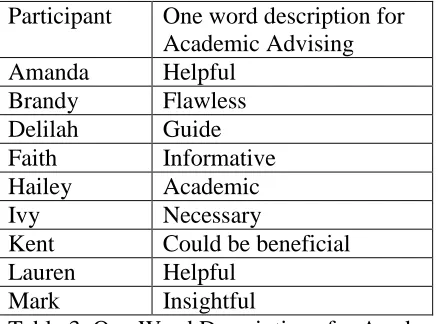
Table 3: One Word Descriptions for Academic Advising ...72
Abstract
First-year student retention has become a national priority for institutions of higher
learning. Since 2004, retention of first-year college students has been on a steady decline. Due
to recent the adoption of the Louisiana Granting Resources and Autonomy for Diplomas
(GRAD) Act, college administrators in Louisiana are determined to increase first-year student
retention, a key performance measure. Of the many factors known to support retention,
student-faculty mentoring relationships are known to have a positive impact on college students’
experiences, including increased first-year student retention. However, there is less known about
the role of academic advising combined with success coaching in retaining first-year college
students. The purpose of this study is to understand first-year college students’ experiences with
academic advising and success coaching. By conducting a case study, the researcher further
understands the retention of first-year college students to the second year at a comprehensive
research public university in Louisiana. The data collected from this study identifies current
practices in first-year student retention to inform the current and future programs and services
provided on campuses for first-year students.
Chapter One
Problem Statement
Despite the extensive research conducted on college student retention and institutions’
efforts to increase retention, the national student retention rate from the first year to the second
year of college has been on a steady decline. According to data collected by American College
Testing (ACT) regarding college student retention and graduation rates, the average percentage
of first-year students attending four-year public institutions that were retained to their second
year by the same institution was 72.2% in 2013. This is a continual decline from 2004 when the
average retention of first-year students to the second year was 73.5% (American College Testing,
2013). Furthermore, college enrollment at four-year public institutions is on the rise and
projected to have continued growth (United States Department of Education, 2012). Taken
together, this dual trend of expanding attendance and decreasing retention rates at four-year
campuses have made retention policies and practices an area of significant effort (Braxton et al.,
2013; Levitz, Noel, & Richter, 1999; Tinto, 2006).
Since the first study on student retention in 1938 (McNeely), there has been an extensive
amount of research conducted on college student retention, particularly first-year college student
retention. Researchers have explored first-year student retention and persistence in terms of
specific student populations and sub-populations (Hurtado & Carter, 1997; Pidcock, Fischer, &
Munsch, 2001; Schudde, 2011), living-learning communities (Hotchkiss, Moore, & Pitts, 2006;
Inkelas & Weisman, 2003; Purdie & Rosser, 2011; Stassen, 2003; Zhao & Kuh, 2004),
freshman/first-year success courses (Feldman & Zimbler, 2011; Goodman & Pascarella, 2006;
Jamelske, 2009; Jessup-Anger, 2011; Schnell & Doetkott, 2003), first-year experience initiatives
first-generation students (Lohfink & Paulsen, 2005; Padgett, Johnson, & Pascarella, 2012; Somers,
Woodhouse, & Cofer, 2004). Regardless of the programs and services that have been examined
above, first-year college student retention is still an area of concern for institutions of higher
learning (Ishler & Upcraft, 2005; Jacobs & Archie, 2008).
Within Louisiana, recent policy changes are affecting state institutions and shifting their
focus to increasing first-year student retention. In 2008, Louisiana legislators began to reduce
state appropriated funds for higher education. As a result, in 2010, the Louisiana State
legislature adopted House Bill 1171(2010) which is known as Louisiana Granting Resources and
Autonomy for Diplomas (GRAD) Act. The GRAD Act allows state institutions to implement
performance base funding in order to offset budget reductions. All of the four-year public
institutions within the University of Louisiana System, Louisiana State University System, and
the Southern University System have entered into the Louisiana GRAD Act six-year
performance agreement. As an initiative in their institutional five-year strategic plan, the
institutions have identified increasing retention to the second fall semester of first-time in
college, full-time, degree seeking students.
Revenues for higher education are linked to student enrollment. In order for institutions
of higher learning to maintain current revenue levels, they must continue to retain students
(Levitz et al., 1999; Lundquist, Spalding, & Landrum, 2002; Nutt, 2003; Rabovsky, 2012). In
the state of Louisiana, in addition to funds provided by institution’s enrollment, performance
base funding contributes to institution’s operating funds. Specifically first-year student retention
rates are directly connected with institutions’ graduation rates and performance base funding.
Institutions in Louisiana must strategize to increase first-year student retention and meet their
The performance based funding autonomy includes an annual increase, up to 10%, in tuition and
mandatory fees until reaching the average in-state tuition level of other Southern Regional
Education Board public institutions. Institutions’ autonomy maybe revoked by Governor Jindal
if performance based measures are not met (Office of the Governor, 2010). In an effort to meet
the performance base measures outlined by the Louisiana GRAD Act, Pelican State University
(PSU) realigned the services of the Office of Enrollment Services as of fall 2013. The Office of
Enrollment Services provides first-year students with a comprehensive enrollment management
experience. Students are able to receive information about enrollment, in addition to support
during their first-year transition. Through the Office of Enrollment Services, first-year students
participate in two retention programs, academic advising and success coaching.
Literature Base on First-Year Retention Initiatives
The focus of this study is a Louisiana public university that has a unique approach to
improving first-year student retention, and implemented academic advising and success coaching
in fall 2013. This study examines two forms of mentoring, academic advising and success
coaching, and determines how college students at a comprehensive research public university in
Louisiana describe their experiences with the reviewed mentoring strategies. Academic advising
and success coaching are both forms of mentoring. Academic advising focuses on the student’s
academic goals and provides support for the student to persist through their course of studies
(Campbell & Nutt, 2008; Nutt, 2003; Young-Jones, Burt, Dixon, & Hawthorne, 2013). Terry
O’Banion (1972/1994) defines the process of academic advising as having five different
components: exploring life goals; exploring vocational goals; discussing the student’s academic
program choice; selecting academic courses; and scheduling of the student’s courses. Academic
must evolve over time until there is an established relationship between the student and the
faculty member (Cuseo, 2005; Drake, 2011; Lau, 2003; Robbins, 2012; Roberts & Styron, 2010).
Success coaches support students in developing their own autonomy through self-reflection,
focusing on their future ambitions, and engaging in the campus culture (Allen & Lester, 2012;
McClellean & Moser, 2011; Robinson & Gahagan, 2010). Success coaching helps the student to
overcome obstacles and transition into their college career (Allen & Lester, 2012; Bettinger &
Baker, 2011; Hoover, 2011; Robinson & Gahagan, 2010). While mentoring relationships can be
between a number of populations, the scope of this study reviews student-faculty relationships.
Students who have relationships with faculty members outside of the classroom develop
their meaning of self (Evans, Forney, & Guido-DiBrito, 1998), have a higher satisfaction with
their college experience (Astin, 1977), and have increased retention (Nagda, Gregerman, Jonides,
von Hippel, & Lerner, 1998). Specifically for first-year students, mentoring by a faculty member
leads to performing higher academically (Campbell & Campbell, 1997; Pascarella, Terenzini, &
Hibel, 1978; Robinson & Gahagan, 2010) and progressing through their course credit
requirements faster than those students that are not experiencing mentoring (Campbell &
Campbell, 1997). More so, student-faculty mentoring allows first-year students to become
integrated to their college culture (Lee, 1999). Long-term retention plans for institutions must
encourage faculty to have interactions with students outside of the classroom (Tinto, 1987). Out
of the classroom relationships between students and faculty members enhance students’
academics and their overall development.
The literature on first-year student retention shows an additional emphasis on academic
advising and student-faculty mentoring. Students’ retention and progression through their
classroom (Campbell & Campbell, 1997; Nagda, et al., 1998; Pascarella et al., 1978). The
following study investigates first-year students’ experiences with academic advising and success
coaching. Recent policy changes in Louisiana affected state institutions and shifted their focus
to increasing first-year student retention. Institutional responses to such policy changes are a key
piece of the context of this study.
Purpose of the Study
The purpose of this study is to understand college students’ experiences with academic
advising and success coaching. The climate of higher education in Louisiana is changing due to
the influence of Louisiana’s GRAD Act. State funding of universities is being drastically
reduced and funds that are needed to offset university budget deficits will depend on institutions’
successfully meeting their GRAD Act performance measures. First-year student retention to the
second year of college is among the performance base measures. Previous research has shown
that student-faculty mentoring relationships have positive impacts on college students’
experience (Jaasma & Koper, 1999; Komarraju, Musulkin, & Bhattacharya, 2010; Nagda et al.,
1998; Pascarella et al., 1978). Students’ satisfaction with their education experience leads to
students feeling a part of their institution (Astin, 1977; Kuh & Hu, 2001) and sense of belonging
to an institution has a positive impact on first-year retention and student persistence is increased
(Jacobs & Archie, 2008; Kuh & Hu, 2001; Morrow, & Ackermann, 2012; O’Keeffe, 2013).
Furthermore, first-year college students participating in faculty mentoring relationships outside
of the classroom have increased retention rates compared to their counterparts who do not have
mentoring relationships with faculty (Pascarella & Terenzini, 1977). However, there is less
research discussing first-year student retention in terms of academic advising combined with
case study, the researcher was able to further understand the retention of first-year college
students to the second year at a comprehensive research public university in Louisiana. This
study addresses the following research question: How do college students describe their
experiences with academic advising and success coaching?
Through a social constructivist lens, Tinto’s Theory of Student Departure (1975) framed
the following study. Prior to the 1970s, student retention was believed to be a reflection of the
individual student’s effort towards academic persistence (Astin, 1977; Spady, 1971; Tinto,
1975). Institutions were not holding their own programs and services accountable for poor
retention (Tinto, 2006). The research conducted in the 1970s changed higher education’s
understanding of student retention. Student retention was now linked to students’ learning
environments which as a result influenced Tinto’s concepts of social and environmental
integration (Tinto, 1975).
Methods
The institution included in this study is referred to by a pseudonym, Pelican State
University (PSU). The Office of Enrollment Services at PSU offers optional one-on-one
bi-monthly success coaching meetings to students, or may require students to participate in this
service by the university if the student demonstrates high need. The student’s success coach
works with the student to succeed in college and to aide in their holistic development. The
student’s success coach works in conjunction with the student’s academic advisor. The
academic advisor is able to provide the student support with their curriculum of study. Both the
student’s academic advisor and success coach are staff members within the Office of Enrollment
Services. The academic advisors and success coaches also teach freshman success seminar
The following study considers first-year college students’ retention to the second year by
exploring students’ academic and social integration to their institution. The researcher studied
students’ academic and social integration by gaining understanding of academic advising and
success coaching. Academic advising and success coaching are forms of mentoring that focus
on students' goals. These goals are all encompassing, whether they are related to a student’s
academic courses, the future of their education, issues that are important to the student, social
transitions, or their transition to college. Tinto’s Theory of Departure (1975) framed the study
by providing insight to the retention of first-year students and further understanding of student
departure.
An instrumental case study approach was used to collect data. Using an instrumental
case study allowed the researcher to conduct an in-depth study of a particular case or cases to
further understand the larger issue (Creswell, 2013; Fraenkel & Wallen, 2003; Glesne, 2011;
Leedy & Ormrod, 2005; Stake, 2000). For the purpose of this study, the “case” was defined as a
retention program at Pelican State University. In order to further understand the problem of
first-year student retention, the researcher asked participants to take part in two, in-depth one-on-one
interviews. Participants have experienced academic advising and success coaching at PSU. The
researcher also collected documents from PSU’s Office of Enrollment Services. Additionally, all
participants completed a demographic questionnaire. Tinto’s Model of Student Departure (1975)
served as the guiding framework in developing interview questions.
The researcher identified any biases pertaining to the topic and bracketed these
experiences before starting research. The researcher had all recorded interview data transcribed
by a third party service, Verbal Ink. The researcher read through all transcriptions to ensure
the researcher added additional comments. The researcher formed codes from the themes that
emerged from the data. Like codes were grouped together to form themes and the researcher
reviewed the themes to identify patterns. The researcher formed the description of the case by
reviewing the data collected through interviews, artifacts and demographic questionnaire. To
understand the complexity of the case the researcher identified key issues that surfaced in the
research. Finally, the researcher defined the meaning of the case and the discoveries from the
research to address the issue of first-year student retention.
Gaps in the Research
Extensive work has been done on first-year college student retention (Feldman &
Zimbler, 2011; Goodman & Pascarella, 2006; Herzog, 2005; Ishler & Upcraft, 2005; Jamelske,
2009; Macken & Bishop, 2009; Noble et al., 2007; Schnell & Doetkott, 2003; Veenstra, 2009).
However, as the climate within higher education changes, so does the college environment that
first-year college students enter. Recent policy changes in Louisiana are affecting state
institutions and narrowing their focus to increasing first-year student retention. There has not
been research discussing first-year student retention in terms of academic advising combined
with success coaching in the climate of budget reductions in the state of Louisiana. The
university included in this study recently implemented an approach to reduce first-year attrition
Chapter Two
Theoretical Frameworks and Review of Pertinent Literature
In order to conduct a comprehensive case study, the following literature review begins
with context of the theoretical frameworks that shape this study, including the frameworks’
relationship to understanding first-year student retention. The theoretical frameworks selected
for this study informed the research on first-year students and their persistence to the second year
of college. Through a social constructivist paradigm, Tinto’s Model of Student Departure (1975)
framed this study. Next, the researcher reviewed the history of student retention and the recent
work on first-year student retention in the areas of academic advising and success coaching.
Finally, the researcher addressed the gaps within the current body of research that are addressed
by the following study. The terms “persistence” and “success” are used interchangeably
throughout the review.
Theoretical Frameworks
The theoretical frameworks included in this study provided insight into first-year student
retention, student departure, and environmental impact on student retention and persistence. The
researcher begins this section by reviewing the paradigm of social constructivism. Social
constructivism is further explored by understanding the paradigm’s relationship to student
retention. Tinto’s Model of Student Departure (1975) provided the framework for the following
study. The researcher reviews the development of Tinto’s Model of Student Departure (1975)
and concluded the theoretical framework section by connecting the paradigm of social
Social Constructivism
A paradigm is a framework that is used to draw hypothesizes about reality. Paradigms
provide guidelines for how to discover reality through questions or through developing a
research study (Glesne, 2011). The paradigm of social constructivism has been applied to many
areas of philosophy and science including leadership (Kezar, Carducci, & Contreras-McGavin,
2006), cognitive development (Kim, 2001; McLeod, 2007), and education (Applefield, Huber, &
Moallem, 2000; Jones & Brader-Araje, 2002; Kim, 2001). Social constructivism was introduced
to education through the work of Lev Vygotsky in 1978 (Jones, & Brader-Araje, 2002). To
develop social constructivism, Vygotsky built upon the previous work of Jean Piaget (Applefield
et al., 2000; Jones & Brader-Araje, 2002; McLeod, 2007; Phillips, 1995).
Jean Piaget (1952) theorized that an individual’s knowledge was the result of one’s innate
knowledge and their role in gaining further knowledge. Piaget believed the social context of an
individual’s environment could add to one’s knowledge or perceptions of reality (Daniels, 2005).
The individual would interpret his or her surroundings to further their own understanding of the
world. Vygotsky agreed with Piaget’s philosophy of learning, but only partially. In addition to
the individual’s role in seeking knowledge, Vygotsky placed an emphasis on knowledge
development through working with others, social environments, and looked at the greater
communities impact on individual’s way of knowing. Vygotsky’s social constructivism is the
belief that knowledge does form through the individual’s experience with their social
environment, particularly the social environment shapes the individual’s experiences (Applefield
et al., 2000; Cole & Wertsch, 1996; Jones & Brader-Araje, 2002; McLeod, 2007; Phillips, 1995).
Vygotsky’s idea of social influences affecting knowledge development led to the creation of
techniques to aid teachers in further enhancing their students’ cognitive development (Applefield
et al., 2000; Jones & Brader-Araje, 2002; Kim, 2001; McLeod, 2007).
Social constructivism is the notion that one’s reality is developed through the
environment in which they are surrounded. It is assumed through this paradigm an individual’s
reality is a subjective experience, because their perception of reality is formed through
experiences and interactions with their surrounding culture (Applefield et al., 2000; Creswell,
2013; Jones & Brader-Araje, 2002; Kezar et al., 2006; Kim, 2001). Through this paradigm it is
believed that one is able to use their independent cognitive thinking in conjunction with the
influences of society to form their individual reality. An individual’s perception is ever-evolving
as external and internal factors that affect one’s perception of the world change as well
(Applefield et al., 2000).
Student Retention and Social Constructivism
The paradigm of social constructivism has a clear connection to studying college student
retention. College student persistence is connected to the student’s learning environment, not
just the student’s knowledge capabilities (Kuh, Cruce, Shoup, Kinzie, & Gonyea, 2008;
Pascarella & Terenzini, 1991; Tinto, 2006). Each student’s college transition is unique and
shaped by his or her own experiences. Environmental factors will affect individual student’s
college persistence. In social constructivism, the environment is important to understand when
studying individuals; the research conducted must include the individuals and their interaction in
the environment in which they are a part (Creswell, 2013; Kezar et al., 2006). The social
constructivist paradigm examines experiences subjectively because the experiences are
Originally, student retention was thought to solely depend on the individual student
(Seidman, 2012). Constructivism only involved an individual’s role in understanding their
reality. As newer research developed, the influence of social environments was integrated into
the understandings of both student retention and social constructivism. As explained previously,
it was the work of Vygotsky who integrated the social aspect into constructivism for education.
Vincent Tinto (1975) introduced social and environmental factors as influences on student
retention through his creation of the Theory of Student Departure.
Development of Tinto
Tinto’s work evolved from Durkheim’s research on the idea of suicide and departure.
Durkheim (1897/1951) conducted research that changed how the world viewed suicide.
Durkheim’s work discovered that suicide should not be looked at as an individual’s decision but
a phenomenon that is influenced by the society that surrounds the individual. In his book Suicide
(1897/1951), Durkheim reviewed the suicide rates in European countries from 1841 until 1858.
He then compared the suicide rates to the general mortality rates from those countries. To
Durkheim (1897/1951), it was obvious that a country’s suicide rate correlated with the societal
events taking place in each country. For example, the start of war, new governmental leadership,
or a revolution all impacted suicide rates in a country (Durkheim, 1897/1951). Through his
studies, Durkheim (1897/1951) developed three categories of suicide: egoistic, altruistic, and
anomic. All three categories of suicide reflect how the individual is socially integrated to
society.
Durkheim’s theory was then applied to college students and their education process by
Spady in 1971. By applying Durkheim’s concept of social integration to higher education,
(1971) considered student retention to be a result of five variables; academic potential, normative
congruence, grade performance, intellectual development and support of friends, in a student’s
social integration to college. Spady’s (1971) Student Dropout Process evaluates the students’
success as social and academic achievement linked with the students’ pre-college experiences.
Students’ pre-college experiences were defined by Spady (1971) as the student’s family
background. The social component that influences student departure from college in Spady’s
(1971) theory can be linked to how Durkheim viewed suicide to be connected to the victim’s
integration to society. The academic achievement in Spady’s (1971) theory can be linked to
Durkheim’s study of rewards from society. Both academic achievement and rewards are
standards by which individuals equate how they “perform” compared to others.
The research conducted in the 1970s changed higher education’s view on student
retention (Astin, 1977; Spady, 1971; Tinto, 1975). Student retention was linked to students’
learning environments, which sparked Tinto’s concepts of social and environmental integration
(Tinto, 1975). Tinto took the work of Durkheim and Spady to develop his Theory of Student
Departure. Tinto’s Theory of Student Departure (1975) is centered on the student’s integration
to their university. Through a longitudinal study, Tinto’s model (1975) examined and focused on
the student’s academic and social integration into the institution while examining the student’s
pre-college characteristics; essentially, how the student acclimates to their environment. The
core concepts identified in Tinto’s Theory of Student Departure are pre-entry attributes, goals or
commitments, institutional experiences, integration, and outcomes (Brunsden, Davies, Shevlin,
& Bracken, 2000). Tinto’s theory makes it clear that it is the student's choice to remain part of
Social Constructivism, Tinto, and Student Retention
Vincent Tinto’s Theory of Student Departure (1975) is directly connected with the
paradigm of social constructivism and first-year student retention. First, Tinto’s theory is
derived from two previous theorists, Durkheim (1897/1951) and Spady (1971), whose theories
integrate the influence of the society. Additionally, in Tinto’s theory, a student will choose to
depart from or persist to the second year of college is based on their college experiences. The
student’s college experience is created by how they perceive the environment which surrounds
them. The student’s choice to progress is influenced by how the student socially constructs the
experience of college. The correlation between choosing departure and the environment in
which the student belongs connects the Theory of Student Departure to social constructivism.
Additional theorists, aside from Tinto, attempted to identify the phenomenon of student
departure (Astin, 1993; Braxton, 2000; Pascarella, 1985). While Tinto’s theory does have
limitations, the gaps in his research have prompted other researchers to further investigate the
issue of student retention. The theory he conceptualized has become influential in designing
additional theories and further understanding college student persistence (Baumgart &
Johnstone, 1977; Braxton, Milem & Sullivan, 2000; Herzog, 2005; Pascarella, Duby, & Iverson,
1983; Pascarella & Terenzini, 1979). However, the integration of Tinto’s Theory of Student
Departure is most appropriate for the current study for two main reasons. First, Tinto’s Theory
of Student Departure (1975) was part of the catalyst that changed the way higher education
viewed student retention. Because of Tinto’s work, student retention is no longer considered to
be the sole responsibility of the student; it now involves the institutions as well. Second,
additional theorists of student departure, Astin (1993) and Braxton (2000), both build their
foundational theory and assimilate Tinto’s concepts to the current study. According to Braxton,
Sullivan, and Johnson (1997), Tinto’s theory has been mentioned in over 400 citations and 170
dissertation studies.
By examining through the lens of social constructivism and Tinto’s Theory of Student
Departure (1975), the researcher identified conclusions for the research question of college
students’ persistence. Specifically, the researcher examined the academic advising and success
coaching provided to students. Academic advising is unique to the student, as they interpret their
experience and process their own perceptions of the event (Christian & Sprinkle, 2013).
Similarly, coaching is founded in constructivism since the experience is unique to the individual
and their interpretation (Griffiths, 2005). By examining first-year student’s persistence to his or
her second year of college and looking at the social and academic integration through academic
advising and success coaching, this study directly correlates with the framework that Tinto
provides in his Theory of Student Departure.
Review of Pertinent Literature
Student Retention
Student retention was not a concern as educators established the first institutions of
higher learning because there were so few students enrolled in college. Instead, institutions of
higher learning were focused on increasing enrollment (Seidman, 2012). However, over time,
political and legislative decisions, such as the G.I. Bill post World War II, directly and indirectly
increased college enrollment (Demetriou & Schmitz-Sciborski, 2011; Seidman, 2012). As
student enrollment and the number of higher education institutions increased, there was a need to
focus on student retention. At its conception, student retention was referred to as “student
States Office of Education. McNeely studied sixty institutions to examine how universities
evaluated student retention, how students’ individual characteristics could influence their
retention, as well as, the reasons students leave college (Seidman, 2012).
Since McNeely’s study in 1938, there has been an extensive amount of research
conducted on college student retention. Retention is a pressing issue for institutions of higher
learning. Researchers, as well as educators, have worked tirelessly to understand the key to
student persistence and retention. From the extensive research, numerous factors have been
identified as being influential to student retention and persistence in higher education. While a
student’s high school grade point average is a consistent predictor of college student success
(Astin, 1997; Camara & Echternacht, 2000; Geiser & Santelices, 2007; Noble & Sawyer, 2002;
Pascarella & Terenzini, 2005) it is not the only variable that should be considered. Students’
retention may be affected by academic and non-academic factors (Pascarella & Terenzini, 1979).
Academic factors, such as ACT test scores and high school grade point average, can be related to
students’ academic performance prior to starting college or academic performance once taking
college courses (Lotkowski, Robbins, & Noeth, 2004). Non-academic factors include those
influences that do not identify with academic factors, including, but not limited to, students’
support, students’ motivation, student engagement to their institution and college culture,
students’ socioeconomic status, and the programs and services offered by institutions
(Lotkowski, et al., 2004).
Academic factors that can influence student retention begin with the academic
preparation students receive at the K-12 education level (Adams, 2011). The current educational
structure creates a disconnect between K-12 and higher education (Boswell, 2000; Hodgkinson,
systems affects students’ college success (Brinkworth, McCann, Mathews & Nordstrom, 2009;
Conley, 2010; Goldrick-Rab, Carter, & Wagner, 2007; Smith & Wertlieb, 2005; Venezia, Kirst,
& Antonio, 2003). The lack of communication between K-12 administrators, higher education
administrators, and policy-makers results in secondary school administrators not fully
understanding what colleges are expecting from students (Hodgkinson, 1999; Miton,
Schmidtlein, Mintrop, MacLellan, & Pitre, 2000; Smith & Wertlieb, 2005; Venzia, Kirst, &
Antonio, 2003). In return, college expectations are not communicated to college seeking
students (Smith & Wertlieb, 2005). The inconsistent levels of pre-college academic rigor and
preparedness are notable through students’ test scores and need for remedial courses (Kirst &
Venezia, 2001; Warburton, Bugarin, & Nunez, 2001). As a result of the disconnect between
K-12 and higher education, not all students are fully prepared to pursue a college degree,
particularly under-represented groups (Goldrick-Rab, Carter, & Wagner, 2007; Hodgkinson,
1999; Hooker & Brand, 2010; McDonough, 2005).
The range of non-academic factors that influence student retention is broad and includes
pre-college factors and factors the student encounters while attending college. Students having
knowledge of the college environment prior to attending college can decrease student attrition.
In order for students to be successful, they need to be knowledgeable of college admission
requirements, costs affiliated with attaining a college education, and commitment required to
earn a college degree (Hooker & Brand, 2010). Particularly, financial difficulties can prohibit
students from completing their degree (Lotkowski et al., 2004; Oseguera & Rhee, 2009;
Thompson & Prieto, 2013).
Additionally, support from family, friends or the institution can assist in retaining
background, college can be a foreign concept. For example, first-generation students encounter
more obstacles concerning family support, degree expectations, and college preparation because
the student is the first within their family to pursue a college degree (Bradbury & Mather, 2009;
Ramos-Sanchez & Nichols, 2007). Support can be given to the student by other members of the
college community. At times, students who make the decision to withdraw from college do not
discuss withdrawing from the institution with an institution official (Hermanowicz, 2004). This
is an indicator of students not feeling connected to their institution. It is important for students to
have contact with an individual affiliated with the institution they are attending. Students finding
faculty members approachable and supportive can aide in retaining students (Lundquist et al.,
2002; Roberts &Styron, 2010).
Engaging students to their college environment can reduce attrition rates. Astin (1977,
1985) showed that student retention was not just related to the student’s experience on -campus
but also the student’s involvement outside of the classroom. Astin (1977, 1985) theorized that a
student’s learning is not limited to the knowledge attained in a classroom or provided by
textbooks but also includes activities such as being involved in student organizations, athletic
involvement, undergraduate research involvement, and student-faculty interaction. Students’
involvement in university activities outside of the classroom can increase students’ retention as
well (Jacobs & Archie, 2008; Koljatic & Kuh, 2001; Kuh et al., 2008; Pascarella & Terenzini,
1991). Institutions can also engage students outside of the classroom by having them live
on-campus (Oseguera & Rhee, 2009).
Retention is an effort of the entire institution (Ishler & Upcraft, 2005). The research
reviewed and the theories of student persistence explain that persistence is influenced by the
Tinto, 1975; Woosley, 2003). Retention research indicates that student retention is no longer just
the responsibility of the student, but instead a partnership between the student’s effort and the
institution’s effort (Hunter, 2006; Ishler & Upcraft, 2005; Tinto, 1999). Institutional support
services for students must be well developed to ensure the support programs will help in
retaining students (Veenstra, 2009). Tinto’s three principles of retention (1993) propose
well-developed guidelines for implementing student persistence initiatives and are as follows:
1. Effective retention programs are committed to the students they serve.
2. Effective retention programs are first and foremost committed to the education of all,
not just some, of their students.
3. Effective retention programs are committed to the development of supportive, social,
and educational communities in which all students are integrated as competent members. A
comprehensive approach must be considered because of the vastcharacteristics that impact
student retention (p.146-148).
Furthermore, Bean & Eaton (2001) recommend that administrators strategically plan
programs and services based on student learning outcomes. Based on retention research, it is
recommended that programs and services aim to develop student’s academic confidence,
autonomy, and optimism towards their collegiate experience (Bean & Eaton, 2001). For
administrators searching to solve the problem of student persistence on their campus, studying
first-year college student retention from their first to second year proved to be an indicator to
students’ overall progression through college and to graduation.
First-Year Student Retention
The first year of college has the highest attrition rates during the student’s college career
interfere with the student successfully completing their first year in college. In 2014, American
College Testing (ACT) reported 27.7% of first-year students attending four-year public
institutions were not retained to their second year in college. Public universities graduated
44.2% of students within five years of the student starting their college career (ACT, 2014). This
may be attributed to the fact that first-year students must overcome transitional challenges and
adversity as they adjust to life as college students (Feldman & Zimbler, 2011; O’Keeffe, 2013;
Schrader & Brown, 2008). Some students entering college have a different idea of college
expectations compared to the reality of college life (Smith & Wertlieb, 2005). First-year
students are more likely to be retained and graduate when expectations for academic success are
communicated clearly in the first year of college (Brinkworth et al., 2009; Tinto, 1999). By
increasing the first to second year retention of students, colleges will increase their overall
number of completers. Programs geared towards first-year students keep students engaged and
students are more likely to persist into their second year (Turner & Thompson, 2014). First-year
students are in need of support as they transition into the academic and social aspects of college
life (Tinto, 1999; Wilcox, Winn, & Fyvie-Gauld, 2005). Freshman success programs were
introduced to higher education as academic courses designed to aid in student success and
retention.
Freshman Success Seminars were first offered in 1882 at Lee College in Kentucky
(Barefoot and Fidler, 1996). Freshman success courses popularity soared when they were
re-introduced to higher education at the University of South Carolina in 1972 (Feldman & Zimbler,
2011). Researchers had 118 students complete pre and post-tests to evaluate the effectiveness of
freshman success programs in regards to (a) increasing the perception of being prepared for
as a student, (d) enhancing knowledge about available campus resources, and (e) enhancing the
perceived level of study skills competence. The data indicated by participating in freshman
success courses, students enhanced their perception of college preparedness, confidence as a
student, knowledge of academic and personal resources on-campus, and study skills efficiency
(Howard & Jones, 2000). Students that participate in first-year success courses are more likely
to persist to the second year of college at the same institution (Feldman & Zimbler, 2011; Kuh et
al., 2008).
In addition to freshman success courses, institutions can provide first-year students added
support outside of the classroom to increase in student retention. Having first-year students live
on-campus instead of in off-campus housing can increase student retention to their second year
(Herzog, 2005). Institutions can add another element to living on-campus by incorporating
living-learning communities to increase first-year retention (Hotchkiss et al., 2005; Noble et al.,
2007; Tinto, 1999). Living-learning communities are designed to link students together for
course work and living (Hotchkiss et al., 2005; Noble et al., 2007; Tinto, 1999). By providing
positive experiences that enhance the student’s self-confidence, institutions are increasing
first-year student retention (Chemers, Hu & Garcia, 2001). Institutions recognize their role in
increasing student retention and have developed strategies to provide continued support and
success for their students. Of these strategies, mentoring and student-faculty relationships have
proven to provide college students the added support needed to matriculate from their first to
second year in college (Turner & Thompson, 2014; Veenstra, 2009).
Student Retention in Louisiana
Within Louisiana, recent policy changes are affecting state institutions and shifting their
state appropriated funds for higher education. According to reports from a New Orleans
newspaper, The Times Picayune, from 2008 until 2012 state funding for higher education in
Louisiana was cut by $650 million dollars (Pope & Adelson, 2013). As a result, in 2010, the
Louisiana State legislature adopted House Bill 1171, known as Louisiana Granting Resources
and Autonomies for Diplomas (GRAD) Act. House Bill 1171 (2010) introduced Louisiana
higher education to performance base funding in order to offset budget reductions. House Bill
1171 (2010) gives institutions the autonomy to create their own performance measures in
addition to meeting the state’s performance measures of progression, retention, and graduation.
The performance based funding autonomy includes an annual increase, up to 10%, in tuition and
mandatory fees until reaching the average in-state tuition level of other Southern Regional
Education Board public institutions.
All of the four-year public institutions within the University of Louisiana System,
Louisiana State University System, and the Southern University System have entered into the
Louisiana GRAD Act six-year performance agreement. As an initiative in their institutional
five-year strategic plan, the institutions have identified increasing retention to the second fall
semester of first-time in college, full-time, degree seeking students.
When initially reviewed, first-year student retention rates may not appear to be an issue
for higher education in Louisiana. In fall 2013, four-year public institutions within Louisiana
had a first-year student retention average of 72.9% (Louisiana Board of Regents, 2013).
Louisiana’s average is above the national average, 72.2%, for four-year institutions reported by
the ACT in 2013. However, first-year retention rates are inconsistent and have shown little
improvement over the last four years (Louisiana Board of Regents, 2012). The Louisiana Board
Over the last five years, the Statewide Student Profile has shown student retention at the same
institution to be inconsistent. From the fall of 2008, the retention percentages have been: 70.2 %
(Louisiana Board of Regents, 2008), 70.7% (Louisiana Board of Regents, 2009), 72.2%
(Louisiana Board of Regents, 2010), 72.4% (Louisiana Board of Regents, 2011), 73.3%
(Louisiana Board of Regents, 2012), and 72.9% (Louisiana Board of Regents, 2013) (Louisiana
Board of Regents). Stagnant first-year retention rates are indicative of Louisiana’s poor
graduation rates.
Graduation rates are directly related to performance based funding for higher education in
the state of Louisiana and to first-year retention rates. In addition to the reductions of state
funds, legislators pushed to adopt the Louisiana GRAD Act because the state of Louisiana’s
college graduation rate was one of the lowest in the South at the time of the policy’s adoption.
According to a press release made by Louisiana Governor Bobby Jindal, “Southern Regional
Education Board (SREB) reports Louisiana’s six-year graduation rate for four-year universities
is 38% compared to the 53% SREB state average – which ranks Louisiana as having the second
worst graduation rate in the South” (Office of the Governor, 2010, p. 1). According to SREB’s
2013 Fact Book on Higher Education, Louisiana’s six-year graduation rate for four-year public
universities in 2012 was 41.8%. While this was an increase from 2010, Louisiana still has the
second worst graduation rate in the South. Besides Louisiana, 2013 six-year graduation rates for
the additional fifteen SREB states include: Alabama (48.4%), Arkansas (40.1%), Delaware
(69.6%), Florida (61.4%), Georgia (52%), Kentucky (47.8%), Maryland (59.5%), Mississippi
(49.7%), North Carolina (59.5%), Oklahoma (47.4%), South Carolina (60%), Tennessee
(47.3%), Texas (49.9%), Virginia (68.8%), and West Virginia (47.2%) (Southern Regional
first-time, full-time student by the following criteria “(1) graduate from the college they first attend;
(2) remain enrolled; or (3) transfer to another college within 150 percent of normal program
time” (SREB, 2013, p. 70). SREB defines 150 percent of normal program time as six years for
most programs (2013). Graduation rates are measured based on first-time, full-time students that
complete his or her degree.
First to second year retention increases student persistence to eventual degree attainment
(Kuh et al., 2008; Woosley, 2003). Levitz, Noel, and Richter (1999) found that college student
attrition rates are reduced by half after completing the first year. The first year of college has the
highest attrition rates during the student’s college career (Herzog, 2005; Ishler & Upcraft, 2005;
Veenstra, 2009). By increasing first-year student retention, a university would in turn increase
its graduation rates (Levitz et al., 1999). Revenues for higher education are linked to student
enrollment. In order for institutions of higher learning to maintain current revenue levels, they
must continue to retain students (Levitz et al., 1999; Lundquist, Spalding, & Landrum, 2002;
Nutt, 2003; Rabovsky, 2012). In the state of Louisiana, financial income is provided not only
through institutional enrollment, but also through performance based funding contributions to a
public institution’s operating funds from the state. Specifically first-year student retention rates
are directly connected with institutions’ graduation rates and performance based funding.
Currently, the state of Louisiana is still reducing the funds allocated for higher education.
In the 2014 fiscal year, higher education state funding in Louisiana was reduced by 17% from
the 2013 fiscal year. This was the largest reduction of state funds for the 2014 fiscal year in
Mentoring
The term mentoring appears in literature dating back to Greek mythology (Anderson,
1995; Bruce, 1995; Crisp & Cruz, 2009; Penner, 2001). Despite the extensive use of mentoring
across various fields, the body of research and literature does not provide a concrete definition of
the term. However, through all of the definitions, there are three main components that can be
used to identify mentoring relationships: “(a) emotional and psychological support, (b) direct
assistance with career and professional development, and (c) role modeling” (Jacobi, 1991, p.
510). In the field of higher education, a comprehensive definition for practice is “Mentors are
colleagues and supervisors who actively provide guidance, support, and opportunities for a
protégé. The functions of a mentor consist of acting as a role model, a consultant/advisor, and a
sponsor” (Schmidt & Wolfe, 2009, p. 372). Mentoring relationships within higher education
settings can be formally established through the university or form naturally between individuals
(Campbell & Campbell, 1997; Lee, 1999).
Mentoring relationships have shown to be beneficial to student’s undergraduate
experience. Formal mentoring programs have been established at institutions of higher learning
to further enhance college students’ experiences particularly by improving student retention rates
(Budge, 2006). Academic mentoring programs emerged as a way to assist students with
navigating the college curriculum. Mentors take on a number of roles (Anderson, 1995; Penner,
2001; Schmidt & Wolfe, 2009) and while mentoring relationships can be between many different
populations, the scope of this study is student-faculty relationships.
Student-faculty mentoring. Mentoring relationships between students and faculty are
beneficial to overall student development. In 1969, Chickering created the Seven Vectors of
college years (Evans et al., 1998). Chickering (1969) acknowledged the importance of students’
environment to their overall individual development of autonomy and purpose. He concluded
that student-faculty relationships, whether extensive or sporadic, would facilitate students’
development. Student-faculty relationships help students develop competence, manage
emotions, move through autonomy towards interdependence, develop mature interpersonal
relationships, establish their identity, develop a purpose and develop their integrity (Evans et al.,
1998). Mentoring relationships between students and faculty lead to the students gaining further
understanding of their individuality and holistic development as outlined by Chickering’s Seven
Vectors.
Institutions of higher learning encourage formal and informal student-faculty mentoring
because of the positive outcomes these relationships have on students’ collegiate experience.
Student-faculty relationships outside of the classroom have been shown to increase students’
motivation (Jaasma & Koper, 1999; Komarraju et al., 2010; Pascarella, 1980). Students that
develop relationships with faculty-staff outside of the classroom are more committed to their
institution and to their education (Kuh & Hu, 2001; Strauss & Volkwein, 2004). Additionally,
students perform higher academically when engaged with a faculty member outside of the
classroom (Anderson, 1995; Pascarella et al., 1978). Academic successes can be linked to
student-faculty relationships with at-risk college students as well (Santos & Reigadas, 2005).
Furthermore, student-faculty mentoring increases student retention to their institution (Kuh &
Hu, 2001; Nagda et al.,1998; Pascarella, 1980; Turner & Thompson, 2014).
Astin’s (1977) longitudinal study was influential in higher education utilizing mentoring.
In fact, out of all the college involvement variables studied by Astin, student-faculty interactions
Specifically, positive student-faculty interactions lead to students being satisfied in their personal
life, academic goals, and college administration (Astin, 1977). Students’ satisfaction with their
education experience leads to students feeling a part of their institution (Astin, 1977; Kuh & Hu,
2001). Further, students’ sense of belonging to an institution has a positive impact on first-year
retention and student persistence is increased (Jacobs & Archie, 2008; Kuh & Hu, 2001;
Morrow, & Ackermann, 2012; O’Keeffe, 2013).
First-year mentoring. Integrating first-year students to their college environment early
is a main key to first-year retention (Woosley, 2003). Universities and colleges have attempted
many different approaches to immerse first-year college students to their academic setting.
Extended orientation programs, first-year seminar classes, and student engagement in
organizations and campus events have all been established as strategies to retain first-year
college students to their second year. Counseling and advising programs are among the lengthy
list of initiatives that have been used to retain first-year students (Barefoot, 2000).
Student-faculty mentoring allows first-year students to become integrated to their college culture (Lee,
1999).
Pascarella & Terenzini (1977) discovered that students’ relationships with faculty and
staff members could influence students’ persistence to his or her second year in college. The
results of the study showed that interactions with faculty or staff were likely to occur with
first-year students and interactions focused on academic or intellectual topics were more influential in
students’ persistence than the conversations that were unrelated to academics. Overall, a
student’s academic performance is the largest indicator in student retention and degree
attainment (Pascarella & Terenzini, 2005). First-year students who have faculty-staff
opposed to those students who do not have mentoring relationships with faculty and staff
(Campbell & Campbell, 1997; Pascarella et al., 1978; Salinitri, 2005). Additionally, first-year
students being mentored by faculty members completed more hours of course credit then those
students not mentored by faculty (Campbell & Campbell, 1997; Salinitri, 2005).
Mentoring has proven to be quite successful for college students and can reach beyond
just helping students assimilate to college academics and can reach beyond student-faculty
mentoring. Stephen F. Austin State University introduced a peer mentoring program that
focused on mentors providing advice to first-year students on how to get involved (Peck, 2011).
The program was structured like peer academic mentoring but focused more so on getting
students involved outside of the classroom. The institution found that of the students who
participated in the peer involvement advising programs were not only more engaged in the
community but the mentoring also increased first-year retention. Of the first-year students
participating in mentoring, 95% were retained to the next semester. In comparison, 86% of the
non-mentored students were retained to the next semester (Peck, 2011).
Unfortunately, students do not take advantage of meeting with faculty outside of the
classroom (Cotten & Wilson, 2006; Kuh & Hu, 2001). Institutions rely on formal relationships
with students and faculty members in order to connect students to their institutions. Formal
mentoring relationships are established by the institutions through mentees being connected to a
specific mentor to achieve specific outcomes (Jacobi, 1991). Formal student-faculty
relationships can refer to the relationship that is developed through institution’s academic
Academic Advising
Academic advising is at the forefront of conversations in higher education (Drake, 2011).
Despite the buzz around the topic, academic advising is not a new concept in the field of higher
education. In 1972, Crookston introduced developmental academic advising as a partnership
between the student and advisor to plan the student’s academic future. Crookston (1972) defined
developmental academic advising as being “…concerned not only with a specific personal or
vocational decision but also with facilitating the student’s rational processes, environmental and
interpersonal interactions, behavior awareness, and problem-solving, decision making, and
evaluation skills” (p.5). While much has changed since 1972, the foundation of providing
students holistic development through academic advising still remains relevant. More recently, a
task force for the National Association of Academic Advising developed a ‘concept’ of
Academic Advising (National Association of Academic Advising, 2006). The concept for
academic advising includes three equal parts: learning outcomes, curriculum, and pedagogy.
Academic advising is more than just course registration.
Academic advising is a form of mentoring that connects the student to the institution and
provides support through the student’s education process (Campbell & Nutt, 2008; Nutt, 2003;
Young-Jones et al., 2013). The Council for the Advancement of Standards (CAS) in Higher
Education (2011) states, “A crucial component of the college experience, academic advising
encourages students to cultivate meaning in their lives, make significant decisions about their
futures, and access intuitional resources” (p.2). Students also recognize the importance of
academic advising as an essential part to their college education (Freeman, 2008). According to
universities were asked to select what they felt was “the most important educational experience”
—the majority of the students identified academic advising (p. 3).
Academic advising is considered the hub of student retention (Nutt, 2003). Not only is
academic advising beneficial for the student in their academic progression, but it has also shown
to increase students’ grade point averages and students’ autonomy towards their academic
studies (Young-Jones et al., 2013). Specifically for first-year students, academic advising should
be a high priority for administrators. Cuseo (2005) explains, “leaving first-year students on their
own to design an educational plan and to select courses relevant to that plan, means that students
completely bypass the advising process, along with its retention-promoting potential” (p. 35).
Researchers recommend that advising occur early within the first year, and first-year students be
required to meet with an advisor prior to registering classes (Johnson & Morgan, 2005).
Academic advisors can provide resources for first-year students as they transition into the college
setting (Young-Jones et al., 2013). It is important that the academic advisors are prepared to
guide students in the right directions to meet their needs (Robbins, 2012). Metzner (1989) found
that even non-quality advising had a greater impact on freshman attrition than if the student
received no advising from the institution. The relationship that fosters between the student and
their advisor during the first-year can be influential throughout the student’s academic tenure
(Young-Jones et al., 2013).
The relationship between the student and the academic advisor is one that involves
contribution from both parties. Both must be engaged and know their roles and responsibilities
(Hunter & White, 2004; McClellan & Moser, 2011). Younger students are inclined to become
dependent on their academic advisors and not take on their responsibilities for their own
are cautious not to assume the student’s responsibilities but instead the advisor should use their
advising time as an opportunity to teach the student (Campbell & Nutt, 2008; Drake, 2011).
Like many aspects of higher education, there is not one approach to academic advising.
The academic advising experience is defined by the student’s interpretation of the experience
(Christian & Sprinkle, 2013). Higher education institutions can strategically prepare to provide a
quality academic advising experience for students. Academic advising should be directly
connected to the institution’s mission (Campbell & Nutt, 2008; McClellan, 2013). An outlined
mission statement should guide the academic advising programs (Hunter & White, 2004).
Furthermore, advisors need to be aware of the campus culture and the students they are advising
(Bigger, 2005; Hunter & White, 2004; O’ Banion, 1994). Johnson & Morgan (2005) refer to
creating a culture where “students and faculty can expect quality advising” (p.17). Quality
advising is not just a formality, but each student is given the time that they need to be assisted
and to develop a relationship with their advisor (Cuseo, 2005; Drake, 2011; Lau, 2003; Robbins,
2012; Roberts & Styron, 2010).
Institutions as well as researchers suggest different ways to reach out to students and
support them through their academic progress. O’Banion (1972/1994) suggests that all students
meet with their advisors at least once a semester. However, additional research suggests that
some students are unaware of the resources that are available to them and do not take advantage
of academic advising (Hunter & White, 2004). For those students who do take advantage of
academic advising, it may be the student’s sole interaction with an institutional administrator
outside of the classroom (Steingass & Sykes, 2008).
Academic advising is an opportunity to teach the student and should be approached in