INSTRUMENT VALIDATION STUDY
by
Amanda L. Bremner
A dissertation
submitted in partial fulfillment of the requirements for the degree of
Doctor of Education in Curriculum and Instruction Boise State University
DEFENSE COMMITTEE AND FINAL READING APPROVALS
of the dissertation submitted by
Amanda L. Bremner
Dissertation Title: Teachers’ Knowledge of Formative Assessment Initial Instrument Validation Study
Date of Final Oral Examination: 17 March 2014
The following individuals read and discussed the dissertation submitted by student Amanda L. Bremner, and they evaluated her presentation and response to questions during the final oral examination. They found that the student passed the final oral examination.
Keith Thiede, Ph.D. Co-Chair, Supervisory Committee Michele Carney, Ph.D. Co-Chair, Supervisory Committee Jonathan Brendefur, Ph.D. Member, Supervisory Committee Richard Osguthorpe, Ph.D. Member, Supervisory Committee Roger Stewart, Ph.D. Member, Supervisory Committee
ACKNOWLEDGEMENTS
I wish to express my thanks to so many amazing people who helped make this goal a reality. It has been an adventuresome process and I am grateful to everyone who has assisted me along the way.
Specific to this culminating document I must sincerely thank Dr. Keith Thiede. I really appreciate all the time and effort you put forth to help me create this dissertation. At times it seemed impossible, but you helped me through every stumbling block. I appreciate your patience during our very long meetings and the hundreds of emails
answering all my questions. Additionally, I’ve come to love data and statistics even more through your tutelage. Likewise, many thanks go to Dr. Jonathan Brendefur, Dr. Michele Carney, Dr. Rich Osguthorpe, and Dr. Roger Stewart. I truly appreciate all your
contributions as committee members. Moreover, your part in my education as professors of my classes and through working on projects with all of you has been invaluable. I have learned much from each one of you that has contributed to increasing my thoughtfulness, skills, and abilities as an educator.
Thank you to Dr. Qiong Fu for helping with the data analysis.
Also, thank you to many wonderful friends for helping me enjoy time not thinking about formative assessment and writing, but also listening to me when I needed to talk about it. Specifically, thank you to Annika. Though our programs are distinctly
different, it has been invaluable to go through this educational process with you. Thank
you to Micah for the endless education discussions over the years that have helped me to examine my beliefs and opinions so that I wanted to continue to learn and seek ways to help all students learn and succeed in school.
I especially want to thank my parents for always telling me I could do anything I wanted to do. Even when they thought I was crazy for leaving my job and moving half-way across the country to be a full-time student, they supported me and helped me to accomplish my goals.
Most of all I am grateful for my Heavenly Father and my Savior Jesus Christ. I truly know “I can do all things through Christ which strengtheneth me.” (Philippians 4:13)
ABSTRACT
Formative assessment research indicates that use of formative assessment positively impacts student achievement. Teachers ought to be provided professional development in formative assessment in order to make it an integral part of their classroom practice. Just as teachers need to assess student knowledge prior to
instruction, teacher knowledge of formative assessment needs to be assessed in order to guide the professional development teachers receive. However, no instrument exists that assesses teacher knowledge of formative assessment. An instrument to assess teacher knowledge of formative assessment was created and piloted. The results of the pilot study indicated the instrument had modest reliability. The instrument was then administered to a large sample (n = 102) and a confirmatory factor analysis was conducted. As a result of the analysis, initial validity was established on an 11 item instrument for use in measuring teachers’ knowledge of formative assessment.
Keywords: formative assessment, validation study
TABLE OF CONTENTS
ACKNOWLEDGEMENTS ... iv
ABSTRACT ... vi
LIST OF FIGURES ... xi
LIST OF TABLES ... xii
CHAPTER ONE: INTRODUCTION ... 1
Introduction ... 1
Background ... 2
Problem Statement ... 4
Purpose of the Study ... 5
Research Questions ... 5
Research Hypotheses ... 6
CHAPTER TWO: REVIEW OF LITERATURE ... 8
Introduction ... 8
Defining Formative Assessment ... 9
Components of Formative Assessment ... 10
Learning Targets ... 10
Monitoring Learning ... 11
Feedback ... 12
Self-Assessment ... 13
Peer-Assessment ... 13
Formative Assessment Professional Development ... 14
Linking Formative Assessment and Student Achievement ... 19
Learning Targets ... 19
Monitoring Learning ... 22
Feedback ... 25
Self-Assessment ... 28
Peer-Assessment ... 29
Why Teacher Knowledge of Formative Assessment Matters ... 33
Available Instruments to Assess Teachers’ Knowledge of Assessment ... 36
Instrument Validation ... 40
Validity ... 40
Reliability ... 43
CHAPTER THREE: METHODOLOGY ... 45
Introduction to Methods ... 45
Instrument Development ... 48
Measures ... 48
Participants ... 56
Data Collection ... 56
Analysis... 57
CHAPTER FOUR: RESULTS ... 60
Preliminary Analysis ... 60
Descriptive Statistics ... 65
Confirmatory Factor Analysis ... 67
Model One First-Order Confirmatory Factor Analysis ... 67
Model Two Second-Order Confirmatory Factor Analysis ... 70
CHAPTER FIVE: DISCUSSION AND CONCLUSIONS ... 72
Discussion ... 72
Review of Results ... 72
Measurement of the Constructs ... 74
Relation Among the Constructs ... 77
Implications... 79
Limitations ... 80
Recommendations for Further Research ... 81
Conclusion ... 83
REFERENCES ... 85
APPENDIX A ... 93
Pilot Instrument 1 ... 93
APPENDIX B ... 100
Pilot Instrument 2 ... 100
APPENDIX C ... 104
Pilot Instrument 3 ... 104
APPENDIX D ... 111
Pilot Instrument 4 ... 111
APPENDIX E ... 118
Pilot Instrument 5 ... 118
APPENDIX F... 126
Teacher Knowledge of Formative Assessment Dissertation Administration Version ... 126
APPENDIX G ... 135
Email Invitation to Teachers to Complete Assessment Instrument ... 135
APPENDIX H ... 140
Items Used in CFA Analyses ... 140
APPENDIX I ... 145
Teacher Knowledge of Formative Assessment Item Explanation Document ... 145
LIST OF FIGURES
Figure 1. Formative Assessment Defined ... 10
Figure 2. Formative Assessment Components Included in Measure of Teacher Knowledge of Formative Assessment ... 47
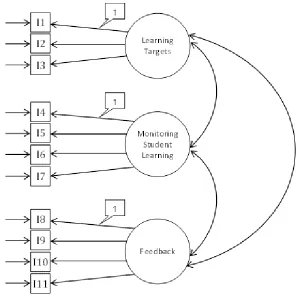
Figure 3. Hypothesized First-Order Confirmatory Factor Analysis Model ... 58
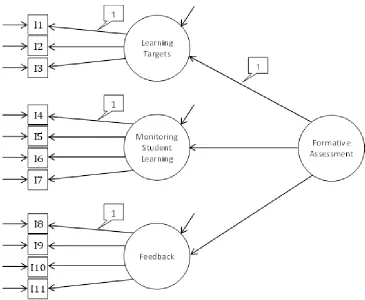
Figure 4. Hypothesized Second-Order Confirmatory Factor Analysis Model ... 59
Figure 5. Hypothesized First-Order Confirmatory Factor Analysis Model ... 67
Figure 6. First-Order Confirmatory Factor Analysis Model with Results ... 69
Figure 7. Hypothesized Second-Order Confirmatory Factor Analysis Model ... 70
LIST OF TABLES
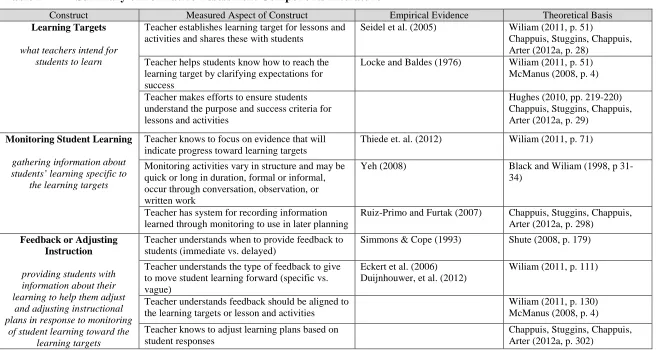
Table 1 Summary of Formative Assessment Components Literature ... 32
Table 2 Learning Target Questions ... 53
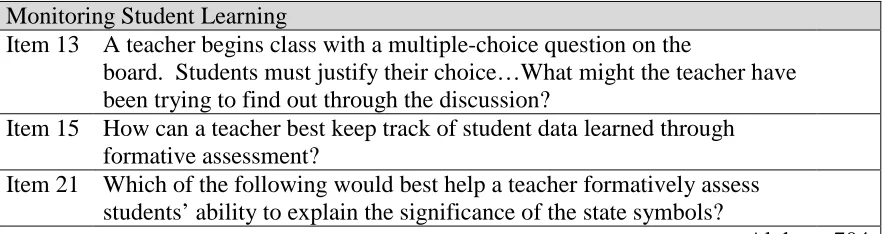
Table 3 Monitoring Student Learning ... 53
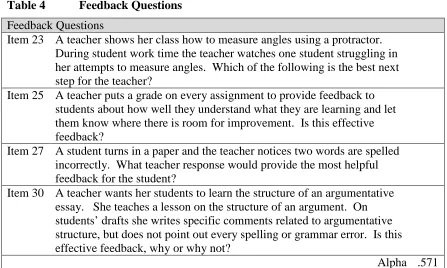
Table 4 Feedback Questions ... 54
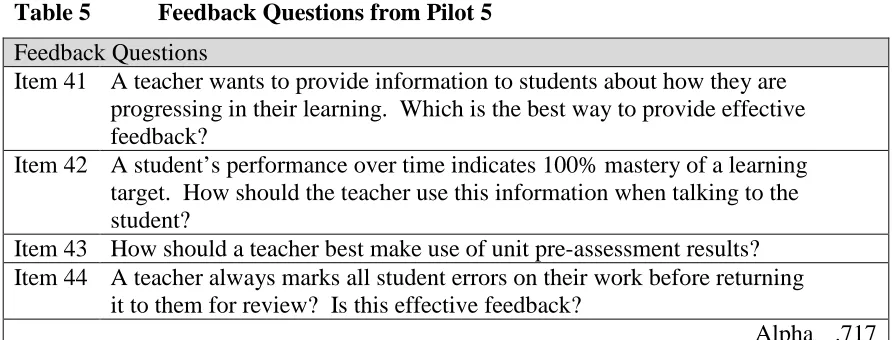
Table 5 Feedback Questions from Pilot 5 ... 55
Table 6 Learning Targets Rotated Component Matrix ... 62
Table 7 Learning Target Questions Extracted from EFA ... 62
Table 8 Monitoring Student Learning Rotated Component Matrix ... 63
Table 9 Monitoring Student Learning Questions Extracted from EFA ... 63
Table 10 Feedback Rotated Component Matrix ... 64
Table 11 Feedback Questions Extracted from EFA ... 65
Table 12 Descriptive Statistics and Bivariate Correlations ... 66
Table 13 CFA Items ... 73
Table 14 Measured Aspects of Each Construct ... 75
CHAPTER ONE: INTRODUCTION
Introduction
Formative assessment has been shown to provide teachers with information needed to move student learning forward (Frohbieter, Greenwald, Stecher, & Schwartz, 2011). Through the use of formative assessment, teachers can come to better understand and know what their students know. Black and Wiliam (1998) reviewed hundreds of formative assessment studies and found typical learning gain effect sizes of .4-.7 in these formative assessment experiments. In addition, Hattie (2009) reported an average effect size of .9 through the use of formative assessment in a synthesis of meta-analyses related to student achievement. Beyond the overall effect of formative assessment on student achievement, components of formative assessment, such as feedback, have demonstrable effect on student achievement as well. When a manageable amount of feedback is provided to students, in a manner that can be used to improve their performance, student achievement gains are evident (Eckert, Dunn, & Ardoin, 2006; Kluger & Denisi, 1996). Sizeable student achievement effects are desirable in education in an effort to help students learn and progress to meet increasingly demanding standards. In order to help teachers make use of the formative assessment learning benefits, teachers need
2
and validate a measure to assess teachers’ knowledge of formative assessment to be used in providing tailored professional development.
Background
Formative assessment is a process or activity planned to obtain information to be used to adjust instruction or learning activities by the teacher and/or student (Popham, 2008). For example, a teacher may plan an activity to determine whether students are able to identify and order the four seasons. The teacher could individually ask students to name the four seasons. Students who successfully name all four are ready to move on to ordering the seasons. The teacher could name a season and the students show which season comes before or after that season. This could be done repeatedly until enough evidence is gathered that indicates to the teacher which students are able to order the seasons and which students are not yet able to order the seasons. Based on these two activities, the teacher may decide to adjust her next lesson or plan small group
instruction. One group might have instruction designed to help students who still need to identify the four seasons. Another group could include an activity to practice ordering the seasons for students who need further practice. For students who have shown mastery of both learning targets, the teacher could have them do an extension activity or may begin instruction based on another learning target. All of this, from planning the learning target to assessing students and adjusting instruction, is part of formative assessment.
students. Learning targets are what the teacher intends for students to learn during a lesson or activity. Teachers need to find ways to make the intended learning clear to students and ensure students understand. Second, teachers must monitor students’ learning. Monitoring student learning involves teachers gathering information about students’ learning specific to the intended learning targets. Teachers can do this, for example, through questioning, observing students while they work, or reviewing students’ submitted work. The goal of monitoring is to see evidence of students’ progress toward the learning target. Third, teachers must provide feedback to students that will help students adjust their learning as needed. Feedback provides students with information about their learning to help them adjust and continue to progress. Feedback can be provided to students individually, in small groups, or to the class as a whole. Feedback also includes teachers adjusting their instructional plans in response to monitoring of student learning toward the learning targets. Self-assessment involves students monitoring their own learning, and peer-assessment is comprised of students providing feedback to one another.
4
teaching unit, so they can plan for students’ learning needs based on information about what students know and still need to learn.
Take for example a teacher who wants to find out how her students solve multi-digit multiplication problems before beginning a unit. She could have the students solve four problems and show their work for each one. When reviewing the students’ work, prior to planning the unit, the teacher may discover that the majority of her class relies on the standard algorithm to solve problems. Through this preassessment the teacher can come to recognize the need to gather more information to see whether students know other ways to solve multi-digit multiplication problems, and choose not to use those methods, or know only the standard algorithm and need instruction in other methods. Additionally, the preassessment may help to identify patterns in the errors students make, which the teacher then can use to group students for instruction. The teacher can use her preassessment to help her plan for instruction, but also to help her know what other information she needs to gather about students, so she can provide targeted instruction based on students’ needs. Continuous monitoring of student learning allows teachers to make adjustments needed to positively impact student achievement.
Problem Statement
Formative assessment has the potential to produce substantial learning gains for students; therefore formative assessment professional development ought to be provided for teachers. Just as it is important to assess student knowledge prior to instruction, assessing teacher knowledge is important to delivering effective professional
professional development. In studies where teachers received formative assessment professional development, teacher practice changed as a result (Harrison, 2005, Kirton, Hallam, Peffers, Robertson, & Stobart, 2007). Teachers developed ways to use
information they learned about students, through formative assessment, in order to help their students achieve intended learning outcomes (Black & Wiliam, 1998; Stiggins & Dufour, 2009; Torrance & Pryor, 2001). It is important for teachers to have accurate knowledge of formative assessment to put it into practice. Assessing teachers’ knowledge of formative assessment will help to ensure the professional development instruction is meeting the needs of the teachers, so they change their practice and are able to use information they learn to help students progress. However, no instruments exist to measure teachers’ knowledge of formative assessment.
Purpose of the Study
The purpose of this study was to develop and provide initial validation of an instrument to measure teachers’ knowledge of formative assessment, which will be used to assist in the creation of more effective professional development. Specifically, the instrument is designed to measure teachers’ knowledge of three components of formative assessment: establishing learning targets, monitoring student progress toward the learning targets, and providing feedback or adjusting instruction.
Research Questions
6
1. Is the Teacher Knowledge of Formative Assessment (TKFA) instrument represented by a factor model that includes the three expected factors of learning targets, monitoring, and feedback?
2. Is there a relationship between the three factors — learning targets, monitoring, and feedback — such that they load onto a larger construct of formative assessment?
Research Hypotheses
The research hypotheses were:
1. The items on the TKFA instrument designed to assess teacher knowledge of sharing and clarifying learning targets will load onto the factor of learning targets.
2. The items on the TKFA instrument designed to assess teacher knowledge of monitoring student learning will load onto the factor of monitoring student learning.
3. The items on the TKFA instrument designed to assess teacher knowledge of providing meaningful feedback to students will load onto the factor of feedback.
4. The three constructs of learning targets, monitoring, and feedback are related to each other but represent independent constructs (i.e., the factor structure is best represented by a first-order factor model).
8
CHAPTER TWO: REVIEW OF LITERATURE
Introduction
Defining Formative Assessment
The term formative assessment was initially used by Benjamin Bloom based on Michael Scriven’s term formative evaluation (Guskey, 2010; Popham, 2008; Scriven, 1967). However, it wasn’t until Black and Wiliam (1998) published their meta-analysis that the term formative assessment became widely used. Black and Wiliam (1998) defined formative assessment “as encompassing all those activities undertaken by teachers and/or by students which provide information to be used as feedback to modify the teaching and learning activities in which they are engaged” (p. 7). In 2006, the Council of Chief State School Officers (CCSSO) clarified this definition: “Formative assessment is a process used by teachers and students during instruction that provides
feedback to adjust on-going teaching and learning to improve students’ achievement of
intended instructional outcomes” (Popham, 2008, p. 5). Though part of the committee
that created the CCSSO definition, Popham desired a more succinct definition and
offered, “Formative assessment is a planned process in which assessment-elicited
evidence of students’ status is used by teachers to adjust their ongoing instructional
procedures or by students to adjust their current learning tactics” (Popham, 2008, p. 6).
All three definitions are quite similar and can be broken down as follows. Formative assessment is:
1. A process or activity,
2. planned to obtain information,
10
Formative assessment can take many forms including, but not limited to, classroom assessments, benchmark and interim assessments, teacher questioning, response cards, and exit passes (Wiliam, 2011).
Components of Formative Assessment
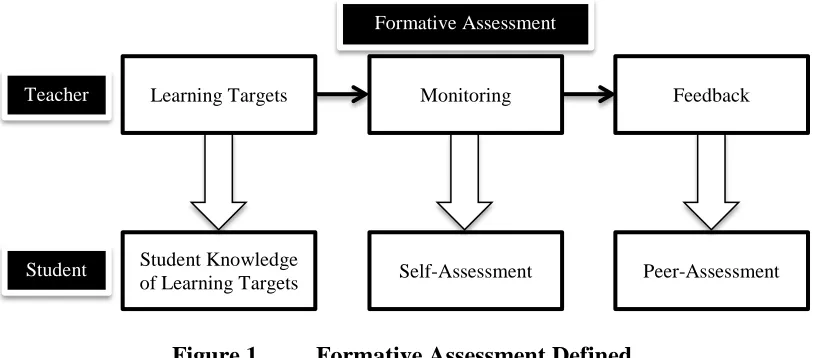
Given the comprehensive nature of formative assessment, many researchers have described its integral components (Chappuis, 2009; McManus, 2008; Wiliam, 2011). These components include: clarifying learning targets, monitoring student learning, providing feedback and adjusting instruction based on monitoring, providing
opportunities for self-assessment, and providing opportunities for peer assessment (see Figure 1). I will describe each below.
Figure 1. Formative Assessment Defined
Learning Targets
A clearly defined learning target provides a vision for teachers as they plan instruction. This vision should be shared with students so that they understand what they are supposed to be learning as well (Seidel, Rimmele, & Prenzel, 2005). Dylan Wiliam, one of the authors of seminal published work regarding the benefits of formative
Learning Targets Monitoring Feedback
Student Knowledge
of Learning Targets Self-Assessment Peer-Assessment
Teacher
Student
assessment (Black & Wiliam, 1998), explained that the first formative assessment strategy is, “Clarifying, sharing and understanding learning intentions and criteria for success” (Wiliam, 2011, p. 46). This is similar to the Assessment Training Institute’s (ATI) first two strategies of assessment for learning (their name for formative
assessment), “1. Provide a clear and understandable vision of the learning target and 2. Use examples and models of strong and weak work” (Chappuis, 2009. p. 12). Not only must a teacher share the learning target, but they must also help students understand how to successfully reach the target. Using models of work clarifies to students what success looks like as well as what it does not look like. The CCSSO formative assessment
collaborative added one more layer to understand the necessity of clear learning targets as an intricate part of formative assessment when they noted that “Learning progressions should clearly articulate the sub-goals of the ultimate learning goal” (McManus, 2008, p. 4). When teachers establish learning targets, sub-goals help to break down the targets for students so that they can work toward those goals in manageable and meaningful ways.
Monitoring Learning
12
describing good teaching practices. Teachers plan and carry out lessons that, in the process of executing the lesson, will allow the teachers to see what their students are learning. Teachers will be able to examine the match between what the students are learning and the learning targets. Monitoring student learning may well be the heart of formative assessment. It is here where teachers gather the information that allows them to understand their students’ learning, what they already know and can do,
misconceptions they may have, and gaps that exist in their understanding and skills. Learning targets are a necessary precursor to monitoring and the next component, feedback, is action taken based on monitoring. Yet it is in monitoring student learning that teachers gather the information that allows them to adjust instruction and continue to help students reach the learning goals. Without accurate monitoring of student learning taking place, the rest of the formative assessment process falls apart. On a cautionary note, though monitoring is central in formative assessment, presumably it cannot stand alone. Unless a teacher does something with the information, it is merely informative rather than formative.
Feedback
Based on what teachers learn about students while monitoring their learning, they provide feedback to students and adjust instruction. Accurate monitoring is essential for effective feedback. Feedback, as used in schools, can be defined as “information
their learning (McManus, 2008). ATI explained this crucial feature, and admonished teachers to, “Offer regular descriptive feedback” (Chappuis, 2009, p. 12). Both the quantity and quality of feedback influences the effectiveness it can have on student learning. It is through feedback that information regarding the student’s performance or understanding is shared in a way that is intended to improve learning (Shute, 2008). Feedback can be provided to students individually, in small groups, or to the class as a whole. Feedback also occurs when teachers modify instructional plans based on student learning needs. This includes creating instructional groups and changing lesson plans and lesson designs in order to meet students’ learning needs. Throughout this study, the term feedback is used to represent both information communicated to students about their performance and adjustments to instruction. Feedback is about teachers using students to drive their instruction rather than strictly content to be covered.
Self-Assessment
Self-assessment allows students to own their learning (Wiliam, 2011). Students should keep track of their learning, share their learning with others, and be self-reflective about their learning in relation to the learning targets (Chappuis, 2009). Self-assessment provides students opportunities to think about what they are learning (McManus, 2008).
Peer-Assessment
14
discussing work is a benefit to each of them as they progress toward the intended learning targets.
Formative Assessment Professional Development
The five components of formative assessment can and should be shared with teachers through professional development. Teacher practice has been shown to change as a result of professional development in and the use of formative assessment (Harrison, 2005; Kirton et al., 2007). Teachers develop ways to use information they learn about students, through formative assessment, to move students’ learning forward (Frohbieter et al., 2011). This practice does not appear to be wide-spread, however. In writing about formative assessment, Shepard (2006) stated, “The ideal assessment practices described here, based on research, are consistent with the practices of particularly adept, expert teachers, but they do not necessarily reflect typical assessment practices. In fact, the majority of practicing teachers have limited knowledge of formative assessment strategies and continue to think about assessment as being primarily for the purpose of grading” (p. 627). Shepard recommends additional research in professional development and teacher learning focused on formative assessment.
ATI offers two-day trainings designed for leaders of professional development. At these trainings, attendees learn assessment for learning (ATI’s term for formative
assessment) strategies for classroom use. The workshop is designed to allow participants to return to their schools and lead others in assessment for learning professional
development.
The professional development begins with general assessment instruction in which the five keys to quality classroom assessment are outlined (Chappuis, Stiggins, Chappuis, & Arter, 2012a). Next, the difference between assessment for learning and assessment of learning (summative assessment) are fleshed out. Seven strategies of assessment for learning are taught to answer three questions: (1) Where am I going? (2) Where am I now? (3) How can I close the gap? The strategies are:
1. Provide students with a clear and understandable vision of the learning target. 2. Use examples and models of strong and weak work.
3. Offer regular descriptive feedback.
4. Teach students to self-assess and set goals.
5. Design lessons to focus on one learning target or aspect of quality at a time. 6. Teach students focused revision.
7. Engage students in self-reflection and let them keep track of and share their learning. (Chappuis, 2009, p. 12)
16
must view formative assessment as a worthwhile process that yields valuable and
actionable information about students' learning. If they do not, formative assessment will be seen as "yet another thing" that is being externally imposed on them” (p. 143).
Without the appropriate attitude, no amount of instruction will yield the positive results possible for students.
The ATI professional development was designed as workshops for teachers, yet the designers do not believe workshops are sufficient. In addition to participating in the workshop portion of the professional development, teachers must commit to examining and changing their practice. Learning teams are recommended for maximum benefit. ATI outlines a long-term time commitment of two or three years to learn and implement assessment for learning in classrooms and five years to develop general assessment literacy district-wide. Effective professional development should lead to lasting change in classroom practice. ATI offers several recommendations for schools to consider before launching into this learning team model of professional development (Chappuis, Stiggins, Chappuis, & Arter, 2012b).
KLT is built around Dylan Wiliam’s five key strategies of formative assessment: 1. Clarifying and sharing learning intentions and criteria for success.
2. Engineering effective classroom discussions, questions, and learning tasks. 3. Providing feedback that moves learners forward.
4. Activating students as instructional resources for one another.
According to the KLT website, these strategies are unified by one big idea, “students and teachers continuously using evidence of learning to adapt what happens in the classroom” (NWEA, 2012).
This program is also designed to train leaders who then train teachers. The leaders go through a two-day professional development. They then train teachers using 16 modules over the course of two years. The five strategies of formative assessment are interwoven in the modules. The program includes teachers setting action plans to try out the components they are learning. I was involved in a research study at a school where teachers were participating in KLT professional development. One teacher equated the action plans to homework. The teachers use the information they learn and try new things in their classroom (Personal communication, January 29, 2013). Another teacher remarked that KLT is making a world of difference, “Slowly but surely becoming part of our minute by minute life” in the classroom (Personal communication, January 29, 2013).
18
and Rick Stiggins. In England, the Mathematics Assessment Resource Project also offers on-line formative assessment professional development modules (MARS, 2012). Similar elements are present in these modules as well.
Professional development in formative assessment is available. The essential elements appear to be commonly promoted. What seems to be lacking is
individualization. Though it may be believed that few teachers implement formative assessment, I have found through working with teachers that most teachers have some level of understanding of it and many teachers attempt to employ formative assessment, to some extent. A key assertion of this study is that formative assessment professional development should take into account present teacher knowledge, understanding, and use of formative assessment and be tailored to fit the needs of the teachers. Torrance and Pryor (2001) used this approach as they created action-research based professional development in formative assessment. They began the professional development by discussing with teachers their ideas and beliefs about learning and assessment and then supported the teachers in investigating their own classroom practice.
From the literature on formative assessment, it becomes apparent that teachers need to have some general assessment knowledge to be able to separate out formative assessment from other assessment types (e.g., summative, interim, diagnostic; Chappuis et al., 2012a). Teachers need an understanding of what formative assessment is and how to implement it. Implementation involves learning objectives, monitoring, feedback, self-assessment, and peer-assessment. The first three elements are critical. Without
learning targets, monitor student progress toward those targets, and provide meaningful feedback to help students move forward.
Linking Formative Assessment and Student Achievement
Many have claimed vast benefits of formative assessment in improving student achievement (Black & Wiliam, 1998; Frohbieter et al., 2011; Fuchs & Fuchs, 1986; Hughes, 2010; Marzano, 2010; Stiggins & Dufour, 2009; Wiliam, Lee, Harrison, & Black, 2004). In Black and Wiliam’s review of hundreds of studies, they found effect sizes of .4-.7 with the use of formative assessment (1998). However, Bennett (2011) questioned the merits of these findings since it was based on studies with a wide range of topics. “That research includes studies related to feedback, student goal orientation, self-perception, peer assessment, self assessment, teacher choice of assessment task, teacher questioning behaviour, teacher use of tests, and mastery learning systems. That collection is simply too diverse to be sensibly combined and summarised by a single, mean effect-size statistic (or range of mean statistics)” (Bennett, 2011, p. 11). In light of Bennett’s contention, I will review studies linking each of the five components to student
achievement.
Learning Targets
20
theory assumes that human action is directed by conscious goals and intentions” (p. 4). It follows that teacher actions will be directed by consciously determined goals. The tasks they set for students, lesson designs and activities within lessons, will be influenced by learning goals. For each lesson delivered and activities planned, a teacher must have a clearly established goal so that both the teacher and the students understand the reason for the lessons and the intended outcome. For example, “students will be able to identify the differences between renewable and nonrenewable resources,” may be set as the learning target for a lesson and the activities within it. The teacher’s actions in the lesson will be directed at teaching renewable and nonrenewable resources in a manner that will enable students to be able to identify the differences between them as an outcome of the lesson. If instead a teacher starts teaching about renewable and nonrenewable resources without a specific focus, students may learn something about such resources but not be able to identify the differences when the lesson and activities conclude. Thus, it is critical for teachers to establish and clearly define learning targets for their teaching.
Although there is little extant literature establishing an empirical link between learning target and student achievement, the literature on goal setting suggests that learning targets should influence achievement. In particular, a robust finding from this literature is that challenging and clearly defined goals lead to better performance (Locke & Latham, 1990). Specifically, difficult goals lead to higher performance than general urging to do one’s best. Difficult goals clearly indicate the behaviors required for success in attaining the goals. Latham and Baldes (1975) conducted a study of logging
in maximizing the total weight of logs they carried. This time series design study led to a substantial increase in performance. Truck drivers were not provided with any incentives or punitive measures as a result of their performance, they were simply given a specific, difficult goal. In a study of chess playing, Campbell and Ilgen (1976) assigned players chess problems of varied difficulties with easy, moderate, and difficult goals. They found performance in the high-goal condition was significantly greater than for the easy or moderate goals. Furthermore, the high difficulty tasks had an additive effect on overall performance. Although these studies did not involve classroom learning, knowing that challenging and specific goals has positive performance effects across many areas (for a meta-analysis, see Locke & Latham, 2002), it follows that this may hold in education as well.
22
students. The researchers administered an I.Q. test to all students at an elementary school. Teachers were told that this test was used to predict intellectual gains. In each of the 18 classes, 20% of the students were randomly selected and teachers were told these students’ scores indicated they would make unusual academic gains during the year. After eight months, school-wide results showed the selected students made significantly greater gains in I.Q. score than the non-selected students. These results suggest teachers’ high expectations for students resulted in higher student achievement growth.
It is through establishing learning goals, and clarifying the expectations for achieving these goals, that the process of formative assessment begins. Teachers’ abilities to monitor student learning, provide feedback, and adjust instruction hinges on learning targets that are clearly defined, challenging, and attainable.
Monitoring Learning
With learning goals in place, teachers must monitor student progress toward those goals. Monitoring occurs through various types of questioning to elicit students’
understanding as well as through all-pupil response techniques (e.g., writing answers on individual whiteboards, thumb checks, and exit tickets). Monitoring student learning is critical because it informs teacher instruction. Teachers need to monitor student learning to know which students are achieving the objectives so those students can be given
activities to challenge them and push their learning even further. Teacher monitoring
leads to identifying which students are struggling so the teacher can plan reteaching and
intervention. Monitoring student learning also leads to identifying student
As with learning targets, there is minimal existing research linking teacher monitoring of student learning to student achievement. However, the literature on metacognitive monitoring provides evidence that, across a number of domains, learning is affected by monitoring accuracy (for a review of this literature, see Dunlosky, Hertzog, Kennedy, Thiede, 2005). For instance, Thiede, Redford, Wiley, and Griffin (2012) compared reading comprehension across seventh and eighth grade students who differed in monitoring accuracy. They found students who more accurately monitored their comprehension made better decisions about which texts to restudy, and this produced higher levels of reading comprehension (see also Thiede, 1999; Thiede, Anderson, & Therriault, 2003).
Effective monitoring of learning is important. Students need to be able to monitor their own learning to help them make better decisions about what to study. So to,
teachers must be able to effectively monitor their students learning in order to make decisions about how to focus instruction. Teachers who are able to accurately monitor their students’ learning will make better decisions on what to reteach and focus classroom instruction on than those teachers who less accurately monitor student learning. Accurate monitoring of student learning should result in improved student learning outcomes.
24
each teacher were completed. The researchers found many instances of teachers using part of the assessment conversation, but not following through. For example, a teacher would ask a question, students responded, and the teacher recognized the response but did not use the information collected. Some of the conversation only went through the first two steps. In classrooms where teachers consistently used the assessment
conversation cycle, student performance was higher.
Frequent testing is another way to gather information about student learning. In a meta-analysis on frequent testing, Bangert-Drowns, Kulik, and Kulik, (1991) reported on the effect sizes from 39 studies involving frequent testing of students. Overall, they found average students who were frequently tested performed better than 59% of the average students who were not frequently tested. In one study, students who were given 23 tests in a 15 week period saw an increase in achievement of .49 standard deviations compared to a control group. In a study of the cost effectiveness of school reforms, Yeh (2008) determined that giving two to five reading and math assessments per week was more effective in raising student achievement than all other 29 comprehensive school reforms he reviewed. Effect sizes of rapid assessment systems were modest (.27 for reading and .39 for math), yet significantly greater than attempts at raising students achievement through class size reduction, high-quality preschool, or other popular reform efforts. Frequent assessing of students, as a way for teachers to monitor student progress related to learning intentions, has a positive impact on student performance.
will be able to adjust instruction and provide feedback aligned with the needs of their students that will help all students achieve desired learning outcomes.
Feedback
As teachers monitor student learning, they need to take action based on what they find out about their students’ learning. Feedback is a response to monitoring. A teacher takes in information and then does something with it. Teachers provide feedback to students all the time. When students answer a question, teachers typically respond by saying something such as “correct” or “that’s not quite right.” Teachers return papers to students with incorrect responses marked and the number correct or percent at the top of the paper. Feedback could also be called ‘response.’ Teachers respond to things students do. This response is often evaluative, as just noted, but it can also be informative and corrective. Informative feedback helps learners to know how they are doing in relation to a learning target. When a student can name examples of renewable and nonrenewable resources, the teacher can inform that student of his/her ability to identify resources and then provide more instruction to move the student toward the learning goal of explaining
the differences. If the student incorrectly identifies resources or inadequately explains the difference, the teacher can help correct the error through questioning or directing the student to review certain materials in order to help the student discover and correct the error for him or herself.
26
on student achievement as .73. Effective classroom feedback can help students develop into self-regulated learners (Butler & Winne, 1995; Labuhn, Zimmerman, & Hasselhorn, 2010), become better at judging their current performance levels and, thus, know what is necessary to help them move forward in their learning (Chappuis, 2009). Eckert et al. (2006) investigated the effects of feedback on elementary students’ oral reading fluency. Struggling readers were given a series of reading probes. For one set, they were told the number of words they read correctly on the previous probe and shown a graph of their reading fluency performance. On another set of probes, the students were told the number of words they read incorrectly and shown a graph of their prior error rate. All students made significant gains in oral reading fluency in at least one of the conditions, with most making improvement in both conditions. Providing students with feedback of their oral reading fluency, both words read correctly and number of errors, led to an increase in overall oral reading fluency.
However, not all feedback improves learning. In a meta-analysis on feedback interventions, Kluger and Denisi (1996) found in one-third of the cases they studied, feedback interventions led to decreased student performance. This occurred when feedback was given that did not allow the learner to use it in a way that closed the gap between where the student was and the goal. Thus, feedback on graded assignments, when students do not have the opportunity to improve their grade, does not help increase learning. Without a chance to modify their work after feedback, students become
four classes, a feedback condition group and feedback control as well as a reflection with feedback condition and feedback-only reflection control, with a 2 (feedback) X 2
(reflection) factorial design. As a course requirement, all of the students completed a writing assignment that comprised 60% of their final grade. In the feedback group, students received feedback from the teacher along with several possible improvement strategies. The feedback control group received feedback, but no improvement suggestions. In the reflection group, students answered a question about how they planned to use the feedback they were given to make improvements on the next draft or final copy of their papers. In the reflection control , students answered a question about how they perceived the feedback. The groups were compared on final draft performance. No main effects were found, but there were significant interaction effects. It appears that the use of feedback or reflection correlated to high performance on the final draft, but feedback and reflection actually lowered performance. With too much feedback, students feel like failures, or feel they are not capable enough to do what is required. Students’ self-efficacy is reduced, which can lead to lower levels of future effort.
28
When teachers provide feedback within the parameters shown to achieve maximum benefit, it has a powerful, positive impact on student achievement.
Self-Assessment
Students are the center of the entire educational process. Formative assessment cannot only be about what the teacher learns about students, it must also include what students can learn about their own learning. Students need to understand what they need to learn, how they are progressing, and what steps need to be taken to achieve identified learning targets. It is through self-assessment that students gather information to monitor their own progress and help determine next steps for their learning. Rather than being passive recipients of learning, students should be active agents in their pursuit of learning.
One method for engaging students in self-assessment is having them track their own learning progress. In fourteen studies, teachers had students track their progress on assessments. All the teachers in the studies taught a second class, with the same content, in which students did not track their progress. Students recorded their score on a chart after each assessment to provide them with a visual representation of their progress. In these studies, the average effect size found from students tracking their own progress was .92 (Marzano, 2010). An important note from the studies is that the assessments charted together must cover the same learning goal since students are tracking their progress toward a specific learning goal.
McDonald and Boud (2003) examined the effects of self-assessment training for 256 high school students. Teachers were taught how to instruct their students in self-assessment. Academic achievement data indicated significant benefits for those who received the self-assessment training with effect sizes from .27 for science to .54 in humanities, compared to those who do not receive the training. Through active involvement in their own assessment, positive student outcomes result.
Peer-Assessment
Peer-assessment is closely tied to self-assessment. It serves as another way for students to understand their own progress in relation to learning goals. Feedback is also closely related, with the feedback occurring student to student rather than teacher to student. Peers assist one another in their attempts to understand material that needs to be learned. They rephrase things for one another, which can aide in clarifying teacher statements (Nicol & Macfarlane‐Dick, 2006). At times, peers take on the role of the teacher and at other times the roll of the one being taught. Acting in a teaching role helps students articulate their own understanding and thus improve their own performance (Liu & Carless, 2006). However, as Black and Wiliam (1998) reported, “It is often difficult to disentangle the peer-assessment activity from other novel activities in work of this kind, and impossible in general to ascribe any reported gains to the assessment component” (p. 29). Nonetheless, it continues to be defined as an essential component of formative assessment, showing a high likeliness of being associated with student learning.
30
large, positive impact of peers working together. In one of these studies, 28 ten and eleven year old students received instruction in a structured system for peer-assisted writing. The students were matched on gender and pre-test scores, and then put in pairs with a more able writer and a less able writer. Other students were matched but not paired to serve as a control group for comparison. Over the course of six weeks, the paired students collaboratively produced five pieces of writing. The control students produced the writing individually. In a comparison of pre and post-treatment writing, all students showed statistically significant improvement in writing. The paired students exhibited statistically significant difference in gains over the non-paired students with the less able writers from the paired group achieving the greatest gains (Yarrow & Topping, 2001).
Additional claimed benefits of peer-assessment are based on cooperative-learning research and the benefits for student achievement associated with that (Wiliam, 2011). In a meta-analysis of peer-assisted learning (PALS) interventions, Rohrbeck, Ginsburg-Block, Fantuzzo, and Miller (2003) found positive effects on student achievement associated with the intervention. Moreover, they determined that the greatest gains in student achievement were made when students selected goals, awards and how to administer those rewards. This shows that autonomy in peer work allows for higher achievement than when the teacher directly manages the peer-learning conditions.
32 Table 1 Summary of Formative Assessment Components Literature
Construct Measured Aspect of Construct Empirical Evidence Theoretical Basis
Learning Targets
what teachers intend for students to learn
Teacher establishes learning target for lessons and activities and shares these with students
Seidel et al. (2005) Wiliam (2011, p. 51)
Chappuis, Stuggins, Chappuis, Arter (2012a, p. 28)
Teacher helps students know how to reach the learning target by clarifying expectations for success
Locke and Baldes (1976) Wiliam (2011, p. 51)
McManus (2008, p. 4)
Teacher makes efforts to ensure students understand the purpose and success criteria for lessons and activities
Hughes (2010, pp. 219-220) Chappuis, Stuggins, Chappuis, Arter (2012a, p. 29)
Monitoring Student Learning
gathering information about students’ learning specific to
the learning targets
Teacher knows to focus on evidence that will indicate progress toward learning targets
Thiede et. al. (2012) Wiliam (2011, p. 71)
Monitoring activities vary in structure and may be quick or long in duration, formal or informal, occur through conversation, observation, or written work
Yeh (2008) Black and Wiliam (1998, p
31-34)
Teacher has system for recording information learned through monitoring to use in later planning
Ruiz-Primo and Furtak (2007) Chappuis, Stuggins, Chappuis,
Arter (2012a, p. 298)
Feedback or Adjusting Instruction
providing students with information about their learning to help them adjust
and adjusting instructional plans in response to monitoring
of student learning toward the learning targets
Teacher understands when to provide feedback to students (immediate vs. delayed)
Simmons & Cope (1993) Shute (2008, p. 179)
Teacher understands the type of feedback to give to move student learning forward (specific vs. vague)
Eckert et al. (2006) Duijnhouwer, et al. (2012)
Wiliam (2011, p. 111)
Teacher understands feedback should be aligned to the learning targets or lesson and activities
Wiliam (2011, p. 130) McManus (2008, p. 4)
Teacher knows to adjust learning plans based on student responses
Why Teacher Knowledge of Formative Assessment Matters
34
noted behavior. On this occasion, she tried to make more academic notes. When I asked her what she learned and how she planned to use the information, she replied that she really did not know what to do with the information she gathered (observation notes, October 9, 2012). If this gap in the teacher’s knowledge had been revealed earlier, instruction and guidance could have been provided as part of the professional
development that would have enabled her to be more successful as she worked to make formative assessment part of her classroom practice.
In addition, ascertaining one’s current knowledge allows for an appropriate level of support to be given. Tobias (1976) describes the interaction between instructional support provided and achievement. He describes a study in which those with low relevant abilities benefited the most from high instructional support, whereas those who began high in ability benefited most from a lower level of support. In fact, high levels of support for those with high knowledge in the area had a diminishing effect on their post-treatment achievement. This suggests that tailoring formative assessment professional development based on teachers’ knowledge is not only helpful for those who have low beginning knowledge, but also essential for teachers who have high beginning
knowledge. There is no reason to provide unnecessary support and instruction to
teachers, particularly if it could interfere with their ability to utilize formative assessment well.
This is not to say that ensuring teachers possess knowledge of formative assessment means they will be proficient users of formative assessment. Learning and use often do not correspond (Bransford, Jeffery, Vye, & Sherwood, 1989). Yet
teachers must possess as well as categories of knowledge that fall within each knowledge area. He identified these knowledge areas as content knowledge, pedagogical content knowledge, and curricular knowledge. In subsequent publications, Shulman (1987) identified seven categories of knowledge teachers need in order to promote student learning. These categories are:
1. Content Knowledge
2. General Pedagogical Knowledge 3. Curriculum Knowledge
4. Pedagogical Content Knowledge
5. Knowledge of Learners and Their Characteristic 6. Knowledge of Educational Contexts
7. Knowledge of Educational Ends, Purposes, and Values.
Shulman (1986, 1987) also promoted assessing teacher knowledge in these broad areas. Tests for teachers must incorporate specialized knowledge teachers must possess to teach content in a way that is understandable for students, rather than only testing if teachers understand the content for themselves.
Teachers’ knowledge of formative assessment falls within Shulman’s category of general pedagogical knowledge. These are the broad principles of teaching that
36
they are in relation to the learning target. Shulman’s work ultimately comes to rest on the importance of pedagogical content knowledge and its role in student learning.
Pedagogical content knowledge merges knowledge of content with general pedagogical knowledge to delineate content knowledge necessary for teaching. Ball, Thames, and Phelps (2008) further developed the conception of pedagogical content knowledge specific to mathematics. Their research indicated subdomains within
pedagogical content knowledge that directly related to knowledge of students, as it relates to students’ understanding of the content, and knowledge of teaching, related to content. While this further development of Shulman’s work is warranted, content-specific
knowledge and its relationship to formative assessment is beyond the scope of this study, which seeks to assess teacher knowledge of the general pedagogical knowledge of formative assessment. An assessment of general teacher formative assessment knowledge has value as a starting place for formative assessment professional
development that is general in scope. It may also prove useful in formative assessment professional development couched within content, but additional study of the interplay between general formative assessment knowledge and pedagogical content knowledge is necessary.
Available Instruments to Assess Teachers’ Knowledge of Assessment
At this point, we must consider how we gather information about teachers’ knowledge of formative assessment and use it to help teacher’s make formative assessment an integral part of their classroom practice. Basically, professional
of course, basing professional development on research-based practices for adult learning and employing an effective professional development model. Yet, there do not seem to be any tools available that help determine teachers’ knowledge of formative assessment. What is currently available includes self-evaluation of formative assessment beliefs and use as well as a general assessment literacy tool. I will briefly describe examples of these instruments.
ATI produced a self-evaluation survey for teachers to complete as part of their assessment for learning professional development. It includes six “I” statements, such as “I use examples of strong and weak work to help students understand key elements of quality response, product or performance” (Chappuis et al., 2012a, p. 51). Teachers rate themselves on a scale from one to five to indicate the frequency that they do each of the statements in their classrooms. In the professional development, these ratings are
graphed for the group and used to determine group strengths and weaknesses in formative assessment use. Similarly, in a study designed to determine Wyoming teachers’
assessment practices, teachers completed an assessment practices questionnaire
38
they use formative or summative assessment, or both, consistently in their classrooms (Gates, 2008).
Similarly, teacher values about formative assessment were investigated by James and Pedder (2006). They interviewed 558 teachers to determine the types of assessments they used in their classrooms and the value they placed on the various assessment types. The purpose of this self-report data was to investigate the link between teachers’ values and their classroom assessment practices. The results indicate that values are not
necessarily manifest in practice. While information about teacher values is helpful when providing professional development, it still does not provide information about what teachers actually know about formative assessment.
Determining teacher knowledge and understanding of formative assessment in some objective manner is needed to guide professional development efforts. Plake (1993) conducted a national survey to measure teachers’ knowledge of assessment. This inventory was based on the 1990 Standards for Teacher Competence in the Educational Assessment of Students (American Federation of Teachers, National Council on
so the developers of the instrument do not recommend making interpretations based on the subscales (Plake, Impara, & Fager, 1993). This instrument will not assist in planning for tailored professional development in formative assessment because the focus is too broad.
Additionally, Mertler, Green, and Campbell (2005) created the Assessment Literacy Inventory based on Plake’s tool. The purpose of this tool was to evaluate preservice teachers’ classroom assessment competency. The test has five classroom assessment related scenarios. Seven items per scenario relate directly to the seven Standards for Teacher Competence in the Educational Assessment of Students. The Classroom Assessment Literacy Inventory (CALI), also based on Plake’s tool, was used to assess preservice and in-service teacher’s assessment literacy (Mertler, 2004). This 35 item tool included five items per standard as well. With this broad assessment focus, these instruments do not provide specific information about teachers’ formative assessment knowledge either.
Formative assessment has been shown to positively impact student achievement. It seems to follow that this instructional resource must become a part of teachers’
40
Instrument Validation
The two goals of an instrument validation study are to establish the validity and reliability of the scales of an instrument (or the instrument as a whole). There are different ways to conceptualize validity and reliability, which I will describe below.
Validity
Validity is a judgment that an instrument measures what it purports to measure. Kane further explained, “Validation involves the evaluation of the proposed
interpretations and uses of measurements” (2006, p. 59). To begin the validation process, a clear statement of the proposed interpretations and uses of the instrument is required. Validation can then be separated into two stages, development and appraisal. This study is focused on the development stage of validation. For the development stage of
validation, Kane (2006) outlined an iterative process to use when developing a test and the interpretive argument. First, the interpretive argument must be outlined and the test plan developed. The interpretive argument specifies how the test scores are intended to be understood and how they are to be used. Second, the test is developed. Third, while developing the test, the inferences and assumptions in the interpretive argument need to be evaluated. If weaknesses in the interpretive argument are exposed, then the first two steps are repeated until satisfied with the fit of the test and interpretive argument (p. 26).
requisite to evaluate the interpretive argument (Kane, 2006, p. 26). This study is concerned with developing and confirming the interpretive argument of the measure to assess teachers’ knowledge of formative assessment and will not extend into appraisal validation of the argument.
In the case of developing a measure of formative assessment, there are five theoretical constructs contained in formative assessment (learning targets, monitoring, feedback, self-assessment, and peer-assessment), three of which are measured by individual scales on the instrument. In addition to Kane’s (2006) proposed
interpretations and uses of measures validation procedures, there are three common methods to establish validity: content validation, criterion-related validation, and
construct validation (Kimberlin & Winterstein, 2008; Messick, 1995; Morgan, Gliner, & Harmon, 2001). I will discuss each of them in order.
Content Validity
42
have a high degree of agreement regarding which items are measuring the different constructs.
Criterion-Related Validity
Criterion validity requires a criterion to use for comparison. For instance, say an instrument existed that measured overall knowledge of formative assessment and this instrument was excessively time consuming to administer. Criterion-related validity would be established by administering this existing instrument and the newly developed instrument and showing the scores are closely related. This may come in the form of predictive validity, using the score to predict performance on another measure that will take place in the future, or concurrent validity, which involves comparing scores on the new measure to scores on another measure taken about the same time. It is important to note that criterion-related validity can only be established if an instrument already exists that measures the desired construct, which is not the case for measuring knowledge of formative assessment.
Construct Validity
The general principles of construct validation provided the foundation for Kane’s interpretation validation method (Kane, 2006). Though he argued that construct
validation methods do not provide clear enough guidelines to evaluate the proposed interpretations and uses of the instrument, construct validation is nonetheless a method used to establish the validity of an instrument. Constructs are theoretically derived objects that cannot be directly observed. Items on a scale are used to measure (or
to infer scores on a construct or latent variable. One way to establish construct validity is to conduct a factor analysis with data collected on the instrument. This factor analysis should show that items designed to measure a construct are highly correlated to one another, and that items measuring different constructs are not highly correlated with one another (or are at least less correlated to one another than items measuring the same construct). A fairly large sample (n = 100) is needed to conduct a factor analysis (Gorsuch, 1983).
Reliability
44
acceptable for most research. However, when test scores are used to make important decisions about individuals, reliability between .90 and .95 is suggested.
In an initial instrument validation study, it is important to establish both validity and reliability. Both are requisite to have a useable instrument. The next section includes the methods used to establish the validity and reliability of the instrument developed to measure teachers’ formative assessment knowledge, which was needed to plan
professional development.
With the definition of formative assessment delineated, inclusive of the
CHAPTER THREE: METHODOLOGY
Introduction to Methods
An instrument to assess teachers’ knowledge of formative assessment was developed with the purpose of using the assessment data to inform professional
development decisions and delivery. When considering what needed to be included, the focus was on utilizing the components of formative assessment developed in the
literature: clarifying learning targets, monitoring student learning, providing feedback and adjusting instruction based on monitoring, providing opportunities for
self-assessment, and providing opportunities for peer assessment. While in the process of developing the instrument, I decided to include items assessing only the first three components. When considering the definition of formative assessment, it is evident that these components comprise the process of formative assessment, which is to obtain and use information. The information can be used by students and teachers (see Figure 1).
It is clear from the literature that learning targets are the starting place for
46
targets. Therefore, the instrument is designed to measure teachers’ knowledge of the need to share learning targets with students and how to make those targets clear to students so students know what they are responsible for learning. In addition, teachers’ personal knowledge of learning targets is content specific. An assessment in this area is too broad. However, knowledge of the importance of establishing learning targets and how to make learning targets known to students is measureable on a general assessment.
Monitoring student learning is the method by which teachers come to understand where their students are in relation to the learning target. Through monitoring, teachers become aware of knowledge and skills gaps and can make plans to address those gaps. Teachers must have awareness of the need and ways to monitor student learning to reveal information about where students are in relation to the learning target.
As teachers monitor students, they provide feedback to students that will help move them forward in their learning or adjust instructional plans in response to student learning needs. These are the critical process components of formative assessment that teachers must know and understand in order to make use of it. These same processes can be used by students because they are users of formative assessment as well.
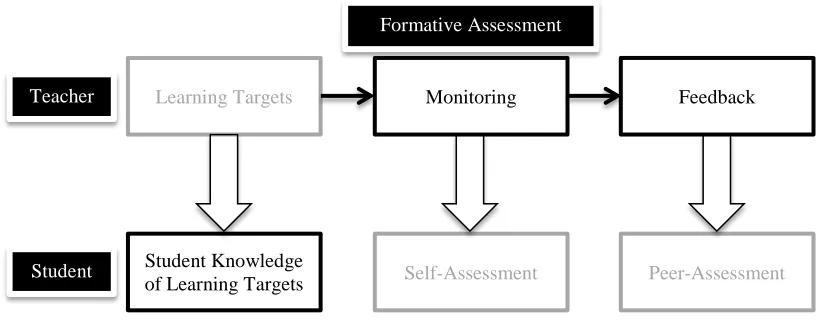
activities in mind, the final version of the instrument includes items to assess the components of teachers ensuring students have knowledge of the learning targets, monitoring student learning, and feedback (see Figure 2). Items were written from the perspective of how they could be useful to inform formative assessment professional development activities. The next section will explain the development process that led to the final version of the instrument.
Figure 2. Formative Assessment Components Included in Measure of Teacher Knowledge of Formative Assessment
An iterative process was used to develop and refine the instrument, and the three sub-scales of clarifying learning targets, monitoring student learning, and providing feedback or adjusting instruction based on monitoring. Items were written and reviewed to establish face validity. They were then administered to teachers to examine the internal-consistency reliability of the sub-scales. It is important to note that the work described below served as preliminary work to construct a measure of formative
assessment knowledge. The purpose of the present work was to confirm the theoretical structure through a confirmatory factor analysis to establish construct validity.
Learning Targets Monitoring Feedback
Student Knowledge
of Learning Targets Self-Assessment Peer-Assessment
Teacher
Student
48
Instrument Development
Measures
This study was designed to develop an instrument that measures teachers’
knowledge of formative assessment. Formative assessment has been defined with several component parts, explained previously. These components are psychological constructs and thus cannot be directly measured (Crocker & Algina, 1986). I sought to do as Crocker and Algina (1986) recommended by developing “a measurement instrument which consists of items representing behaviors that are specific, concrete manifestations of the constuct” (p. 231). Three constructs are included in the instrument. The first is clarifying and sharing learning targets. Teachers must establish and share learning targets with students in a clear, understandable manner. The second is monitoring student learning. Teachers must design lessons and activities in order to elicit evidence of their students’ learning. The third is providing feedback that moves learning forward. A teacher must use what is learned from monitoring to give feedback to students or adjust instruction in order to help students continue to close the gap between current learning and the learning target.
Pilot Instrument 1