EFFECT OF COMPOSITION AND MnS ADDITION ON
MICROSTRUCTURE AND MECHANICAL PROPERTIES OF
POWDER FORGED COPPER STEEL PARTS
Ali Haerian Ardakani
Department of Materials and Metallurgy, Ferdowsi University of Mashhad Mashhad, Iran, [email protected]
Jalil Vahdati Khaki
Department of Materials and Metallurgy, Iran University of Science and Technology Narmak, Tehran, Iran, [email protected]
Hossein Amini Mashhadi
Iranian Academic Center for Education, Culture and Research (ACECR) Iran University of Science and Technology
(Received: December 11, 2002 – Accepted in Revised Form: December 25, 2003)
Abstract
In this work, the effects of carbon content and manganese sulfide addition on the microstructure and mechanical properties of copper steel parts have been studied. Steel powder mixture containing 2%Cu and different graphite contents with and without MnS additions were compacted, sintered and forged to almost full density. Forged samples, with near theoretical densities, were tested for tensile, hardness, impact and fatigue properties. The microstructures of samples were also studied using optical microscope and scanning electron microscope. It was found that increasing the carbon content did not have any significant effect on fatigue properties of samples, but endurance strength was reduced due to addition of MnS. Furthermore, tensile and yield strength increased by increasing carbon content. Additions of manganese sulfide decreased both tensile and yield strengths
but significantly improved theimpact energy and elongation of the products.
Key Words Powder Forging, Copper Steel, Microstructures, Mechanical Properties, MnS Addition
ﻩﺪﻴﻜﭼ
ﻩﺪﻴﻜﭼ
ﻩﺪﻴﻜﭼ
ﻩﺪﻴﻜﭼ
ﺎﺘﺧﺎﺳﺰﻳﺭﻱﻭﺭﺰﻨﮕﻨﻣﺪﻴﻔﻟﻮﺳﻥﺩﻭﺰﻓﺍﻭﻦﺑﺮﻛﻥﺍﺰﻴﻣﺮﻴﺛﺎﺗﻖﻴﻘﺤﺗﻦﻳﺍﺭﺩ
ﺭ ﺕﺎﻌﻄﻗﻲﻜﻴﻧﺎﻜﻣﺹﺍﻮﺧﻭ
ﺭﺍﺩﺲﻣﻱﺩﻻﻮﻓ
ﺖﺳﺍﻩﺪﺷﻪﻌﻟﺎﻄﻣ
. ﺎﺑﻩﺍﺮﻤﻫﻦﻫﺁﺭﺩﻮﭘ ٢
% ﻭﺩﺭﺩﺖﻴﻓﺍﺮﮔﺭﺩﻮﭘﺯﺍﻲﺗﻭﺎﻔﺘﻣﺮﻳﺩﺎﻘﻣﻭﺲﻣ ﺭﺩﻮﭘ
ﺎﺘﻳﺎﻬﻧﻭﻪﺘﺸﮔﻲﺷﻮﺟﻒﺗﺲﭙﺳ ،ﻩﺪﺷﻩﺩﺮﺸﻓﻥﺩﻮﻤﻧﻁﻮﻠﺨﻣﺯﺍﺲﭘ،ﺰﻨﮕﻨﻣﺪﻴﻔﻟﻮﺳﻥﺩﻭﺰﻓﺍ ﺎﺑﻩﺍﺮﻤﻫﺖﻟﺎﺣ
" ﺎﺗ
ﻞﻣﺎﻛﻲﻟﺎﮕﭼﻪﺑ ﻥﺪﻴﺳﺭ ) ﻱﺭﻮﺌﺗ ( ﺪﻧﺪﺷﻱﺮﮕﻨﻫﺁ .
ﺍﻮﺧﻱﺎﻬﺸﻳﺎﻣﺯﺁﺖﺤﺗﻩﺪﺷ ﻱﺮﮕﻨﻫﺁﻱﺎﻫ ﻪﻧﻮﻤﻧ
ﻲﻜﻴﻧﺎﻜﻣ ﺹ
ﺪﻨﺘﻓﺮﮔﺭﺍﺮﻗ،ﻲﺠﻨﺳﻲﺘﺨﺳﻭﻪﺑﺮﺿ،ﻲﮕﺘﺴﺧ،ﺶﺸﻛﻞﻣﺎﺷ
. ﭖﻮﻜﺳﻭﺮﻜﻴﻣﻂﺳﻮﺗﺎﻫﻪﻧﻮﻤﻧﺭﺎﺘﺧﺎﺳﺰﻳﺭﻦﻴﻨﭽﻤﻫ
ﺪﻨﺘﻓﺮﮔﺭﺍﺮﻗﻪﻌﻟﺎﻄﻣﺩﺭﻮﻣ ﻲﻧﻭﺮﺘﻜﻟﺍﭖﻮﻜﺳﻭﺮﻜﻴﻣ ﻂﺳﻮﺗﺰﻴﻧ ﺖﺴﻜﺷ ﻊﻃﺎﻘﻣﺢﻄﺳ ﻭﻱﺭﻮﻧ
.
ﻞﻤﻌﺑﻱﺎﻬﻴﺳﺭﺮﺑﺎﺑ
ﻲﮕﺘﺴﺧﺹﺍﻮﺧﻱﻭﺭ ﻲﻧﺍﺪﻨﭼﺮﻴﺛﺎﺗﻦﺑﺮﻛ ﻥﺍﺰﻴﻣﺶﻳﺍﺰﻓﺍ ﻪﻛﺪﻳﺩﺮﮔﺺﺨﺸﻣﻩﺪﻣﺁ
ﺩﺭﺍﺪﻧ .
ﺪﻴﻔﻟﻮﺳﻥﺩﻭﺰﻓﺍﺎﺑﻲﻟﻭ
ﻲﻣﺍﺪﻴﭘﺶﻫﺎﻛﻲﮕﺘﺴﺧﻡﺎﻜﺤﺘﺳﺍ،ﺰﻨﮕﻨﻣ
ﺪﻨﻛ . ﻡﺎﻜﺤﺘﺳﺍﻭﻢﻴﻠﺴﺗﻡﺎﻜﺤﺘﺳﺍ ﺶﻳﺍﺰﻓﺍﺚﻋﺎﺑﻦﺑﺮﻛﻥﺍﺰﻴﻣﺶﻳﺍﺰﻓﺍﺎﻣﺍ
ﻲﻣﺶﺸﻛ
ﺩﻮﺷ .
ﻲﻣﺮﺘﻣﺍﺭﺎﭘ ﻭﺩﻦﻳﺍ ﺶﻫﺎﻛﺚﻋﺎﺑﺰﻨﮕﻨﻣﺪﻴﻔﻟﻮﺳ ﻥﺩﻭﺰﻓﺍﻪﻜﻨﻳﺍ ﻢﻏﺮﻴﻠﻋﻦﻴﻨﭽﻤﻫ
ﺭﻮﻄﺑﻲﻟﻭ ،ﺩﺩﺮﮔ
ﺏﺬﺟﻱﮊﺮﻧﺍﺩﻮﺒﻬﺑﻪﺑﺮﺠﻨﻣﻲﻬﺟﻮﺗﻞﺑﺎﻗ
ﻲﻣﺎﻫﻪﻧﻮﻤﻧﻝﻮﻃﺩﺎﻳﺩﺯﺍﺪﺻﺭﺩﺶﻳﺍﺰﻓﺍﻭﻪﺑﺮﺿﺶﻳﺎﻣﺯﺁﺭﺩﻩﺪﺷ
ﺩﺩﺮﮔ
.
1. INTRODUCTION
Powder forging of iron-based powders has been the subject of intensive study with the aim of replacing conventionally forged parts, especially those used in automobiles. Hot forging of the
forged material can be superior to that of the conventionally forged one [2]. Presence of as much as 0.1% free pores reduces the UTS of quenched and tempered high alloy material (i.e. P/F 4650), but if oxygen and sulfur content is controlled (less than 0.005% O2 and less than 0.1% S), UTS of over 1800 MPa with 40% elongation of 2 inch tensile specimen may be achieved [3]. However, presence of impurities, especially non-metallic inclusion, can adversely affect mechanical properties [4].
This paper is a part of a research project related to the replacement of pre-alloyed powder containing various alloying elements such as Ni and Mo to replace Astalloy D with the mixture of elemental powder containing graphite and copper for producing the load-bearing parts.
The paper gives an account of study of the effect of various graphite and MnS contents on the fracture behavior and mechanical properties of powder forged copper steel parts.
All specimens were produced in a similar procedure for pre-alloyed part to achieve the real result.
Amongst various standard powder forged (P/F) materials [5], P/F-10Cxx and P/F-11Cxx series (i.e. copper steels) have proved to be suitable materials for load-bearing parts such as cam lobes and connecting rods [6-9]. However, for parts that
need extensive machining after forging and heat treatment, good mach inability is crucial. Addition of soft materials such as manganese sulfide can greatly enhance mach inability of these materials, but it has the disadvantage of reducing the dynamic p r o p e r t i e s t h r o u g h f o r m a t i o n o f s t r e s s concentration sites. The potential for reducing dynamic properties, greatly depends on size, size distribution, and location of these inclusions [4]. Therefore, if these parameters can be controlled properly, mach inability may be improved without sacrificing vital mechanical properties.
2. EXPERIMENTAL PROCEDURES
2.1. Materials
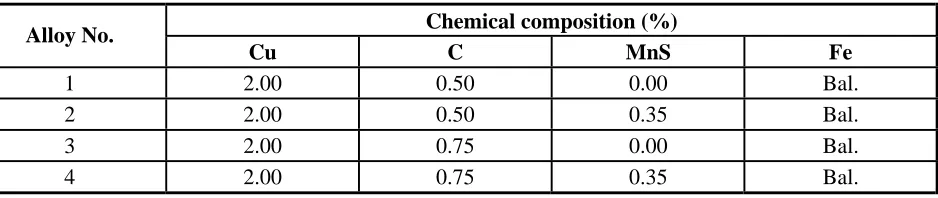
Iranian made iron powder was used as a base for production of 120×30×12 mm forged blanks. This is a water atomized and hydrogen-annealed powder with chemical composition as gi ven in T able 1, and size distribution in Table 2.Four different mixtures with compositions given in Table 3 were prepared by mixing the iron powder with 2% copper and different amounts of graphite and MnS. The characteristics of copper powder are shown in Table 4. The average particle
TABLE 1. Chemical Analysis of the Atomized Iron Steel Powder.
Physical Properties Chemical Analysis
Elements
Type of
Powder
Density
(gr/cm
3)
Row Rate
Sec/50gr
C (Max) Si (Max) Mn (Max) P (Max) S (Max) Cu MoH2
Loss
WPL-200 2.5-2.7 33 0.02 0.05 0.15 0.015 0.015 - - 0.2
TABLE 2. Size Distribution of Powder (Mass Fraction).
Particle Size Distribution
Subsieve (Weight%) Type of
Powder -63 63-100 100-160 160-200
size of MnS was about 5-7 µm. In order to avoid segregation of low-density graphite, copper and MnS were added to iron powder and mixed for 30 minutes before adding graphite. Graphite was used in the form of ultra-fine powder. 0.8% zinc stearate was used as lubricant.
Mixed powders were shaped into blocks and subjected to the sintering and forging regimes described below. Specimens were sintered at 1120ºC in a 75% H2-25%N2 atmosphere for almost
40 minutes.
The specimens, after heating to the forging temperature, (about 1100 ºC) were transferred quickly (in less than seven seconds) into the 450 ton forging press and forged to near-full density with no lateral flow. Finally, samples were cooled very slowly in a protected atmosphere (N2
atmosphere). The emerging samples were at temperatures of around 50 ºC.
2.2.
Specimen Preparation
Each forged blockwas sectioned, cut, and machined to appropriate size for mechanical and microstructure studies.
Mechanical Tests
Hardness Tests: Five Vickers measurements (HV 30) were taken on each specimen. The average of these measurements was recorded as the hardness value of material.
Tensile Tests: tensile tests were carried out on at least two specimens according to ASTM A 370 and the average value recorded as the strength and elongation of the material.
Impact Tests: Charpy V-notch tests were carried out at room temperature on two specimens of each material and the average value recorded as the impact energy of the material. Impact tests were carried out on a 300J impact-testing machine. Fatigue Tests: A bench type rotation-bending fatigue testing machine with a shaft speed 12000 rotations per minute and R value-1 used at room temperature according to the test standard ISO 2740-1973 [4]. Specimens that completed 3×10⁶
TABLE3. Chemical Composition of Starting Powders.
Chemical composition (%) Alloy No.
Cu C MnS Fe
1 2.00 0.50 0.00 Bal.
2 2.00 0.50 0.35 Bal.
3 2.00 0.75 0.00 Bal.
4 2.00 0.75 0.35 Bal.
TABLE 4. Characteristics of Copper Powder.
Characteristic Unit Value
Sieve Analysis ISO 4497
Residue
>63µm % 0.1
>45µm % 0.8
>45µm % 94.1
Apparent Density ISO 3923/2 gr/cm3 1.58
cycles without failure were termed run-out specimens.
Micro structural Studies
Optical Microscopy: Specimens, both after sintering and forging, were sectioned, ground and polished to 0.3-micrometer finish. These specimens were etched and studied with an optical microscope.
Scanning Electron Microscopy (SEM): Fractured surfaces of tensile and impact specimens were examined at ×500 and ×1000 magnifications.
3. RESULTS AND DISCUSSION
Chemical Changes
The chemical analysis of forged powder samples was determined by quantometric analysis. It has been found that there has been average of about 22% carbon loss in the samples (test bars).Density after Forging
Density of the forged materials was measured 7.80±0.02 gr/cm3. Porosity as determined from the randomly chosen specimens was between 0.1 to 0.4%, which is tolerable for most applications.Mechanical Properties
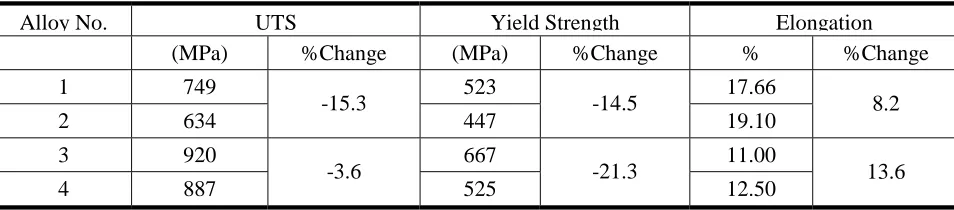
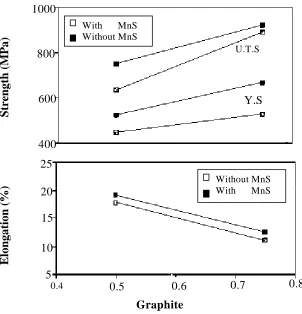
Results of tests for mechanical properties and variations of these properties with respect to the composition are listed in Table 5. Figure 1 shows changes of strength and elongation with carbon content forspecimens with and without MnS. Impact Strength
The Charpy impact value of 3 joules for notched specimen of samples containing 0.5% carbon is rather low, but can be increased to 4 joules by addition of 0.35% MnS.
Hardness
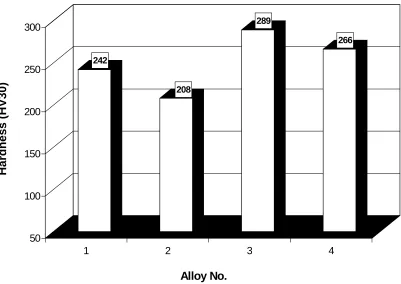
Figure 2 shows the change in hardness due to addition of MnS at both carbon levels. This effect is more clearly shown in Figure 3.
Fatigue Properties
Fatigue properties for three of the four alloys are shown in Figure 4. It is found that increasing carbon content from 0.5% to 0.75% (Alloys 1 and 3) does not have significant effect on the endurance strength.Microstructure
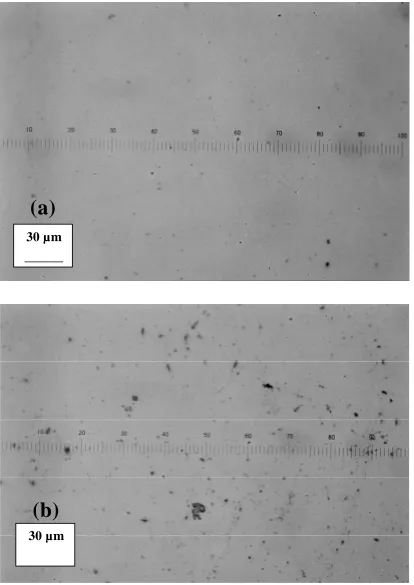
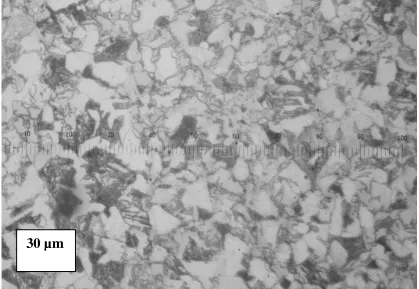
The test bars were subjected to metallographic examinations. The typical unetched microstructure of MnS-free material (Alloy 1) is presented in Figure 5. No porosity is seen at a magnification of ×200 and only a few small inclusions, <10 µ, which are scattered in the structure are observed. The typical microstructure of a test material containing MnS is shown in Figure 5-b. The rather regular dispersion of the fine MnS particles in the forged matrix can be seen in this figure.Figures 6 and 7 show the microstructures of Alloys 1 and 4 etched in Nital reagent, respectively. All materials exhibit a duplex ferrite-pearlite structure in which the percentage of pearlite increases proportional to the carbon content. In addition, it is seen that the presence of
TABLE 5. Mechanical Properties of Alloys used in This Research.
Alloy No. UTS Yield Strength Elongation
(MPa) %Change (MPa) %Change % %Change
1 749 523 17.66
2 634 -15.3 447 -14.5 19.10 8.2
3 920 667 11.00
manganese s u l f i d e h a s n o s i gn i f i c a n t e f f e c t o n t h e microstructure of the copper steel forging.
Fractography
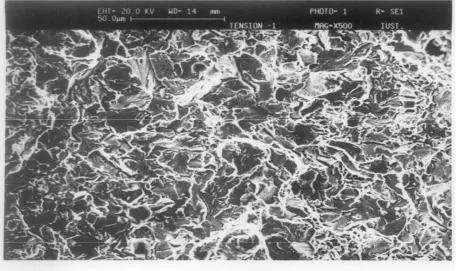
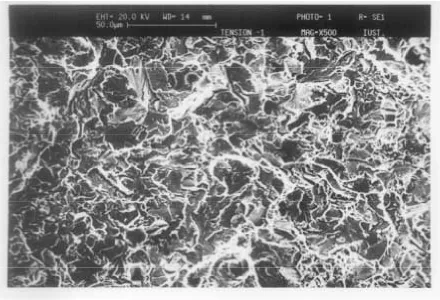
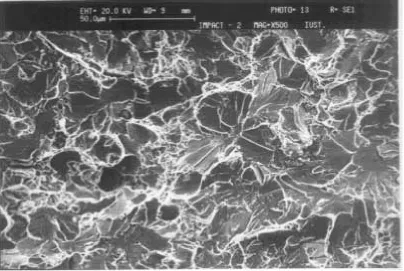
SEM fractographs for tensile test specimens show that different test material under study do not fracture by the same mechanism. The fracture surface of the sulfur-free steel exhibits mainly cleavage with limited ductility (Figure 8). While for a material of similar composition containing sulfur as fine, MnS particles, the fracture surface is characterized by small dimples covering the entire surface (Figure 9). Examination at higher magnification of fracture surface of this material revealed the presence of MnS particles in most of dimples, ass seen in Figure 10.Strain Hardening
The strain-hardening exponent of the samples as calculated fromstress-strain curves varied between 0.26 and 0.43 with little change due to addition of MnS. The exponent is however sensitive to the amount of carbon, being higher for higher carbon contents.
Variation of strain hardening coefficient (K) due to addition of MnS and carbon is shown in Figure 11. Significant increases in K with the addition of MnS-bearing material are observed. It is well known that during machining, manganese sulfide particles coat the tool with a cushioning lubricant layer [11].
Effect of Inclusions
Generally, non-metallic inclusions in steel are divided into two major categories, oxides and sulfides [3]. Sulfide inclusions are less harmful to mechanical properties due to their deformability at working temperature. As a result, addition of MnS particles has been used as a means of improving machinability.St r e n g th Pe rce n t of 1000 800 600 400 25 20 15 10 5
0.5 0.6 0.7 0.8
0.4
With MnS Without MnS
Without MnS With MnS
Y.S
U.T.S
Graphite
Figure 1. Variation of strength and elongation vs. carbon content.
242
208
289
266
50 100 150 200 250 300
Hardness (HV30)
1 2 3 4
Alloy No.
Figure 2. Values of hardness of the forged specimens.
100 150 200 250 300
0.45 0.55 0.65 0.75
Carbon Content
Hardness (HV30) Without MnS
With MnS
Increases in the concentration of MnS in powder metallurgy steels can be accomplished by (I) using a resulfurized steel in the powder making process or (II) by admixing of MnS particulates with the iron/graphite powder mixture prior to compaction. The latter option produces interparticle sulfides. The presence of sulfides along the particle interface can inhibit neck growth during sintering and limit interparticle bonding during any subsequent densification process [12]. Furthermore, a systematic study of all fracture surfaces of impact and fatigue specimens has shown that all fracture initiation sites were related to inclusions.
Random analysis to sample showed almost a constant concentration of oxygen in the test specimens. This may be attributed to the combination of high temperature, coupled rapid transfer times between the controlled-atmosphere induction furnace and forging press.
Impact Energy
Powder forged materials are typically more brittle than their wrought counterparts, mostly due to discontinuities caused by presence of voids and inclusions and in some cases, oxide layers. Furthermore, with respect to the capacity of impact test machine (300J), there was a great scatter in the results of impact test.200 300 400 500 600
1.E+04 1.E+05 1.E+06 1.E+07
N (cycle)
S (MPa)
104
105 106 107 200
300 400 500 600 700
1.E+04 1.E+05 1.E+06 1.E+07
N (cycle)
S (MPa)
104
105
106 107
200 300 400 500
1.E+04 1.E+05 1.E+06 1.E+07
N (cycle)
S (MPa)
104
105
106 107
Figure 4. S-N curve for Alloys 1, 3 and 4 (a, b and c) and Astalloy D (d).
(a)
(b)
30 µm
30 µm
(a)
(b)
However, it is found that the MnS-free specimens had a great value of absorbed energy in this test. It seems that it is related to the MnS particles, since this phase is more ductile than the matrix; the impact energy of specimens 2 and 4 are greater than that of 1 and 3. It is obvious that specimens 2 and 1 had greater impact energy than 3 and 4 due to the lower amounts of carbon, and hence more ductile matrix.
Hardness
Porosity affects on forged powder mat er i al s, significantly. It has been shown that a 1% increase in porosity is equivalent to the presence of 10% soft phase [10]. On the other hand, as it can be seen from Figures 4 and 5, with an increase with the graphite content, hardness of the specimens is increases, but the presence of MnS particles reduces the values of hardness due to the softness of the sulfide particles.Fatigue Strength
As crack nucleation at theinclusions (MnS particles)/matrix interface becomes easier, the ability of a metal to undergo cyclic plastic deformation decreases. Thus, as the number of inclusions increase, it is possible that multiple cracks form, join together, and reach critical size quickly. It is found from Figure 4 that the change of carbon content from 0.5% to 0.75% does not have significant effect on the fatigue strength, but as noted before, MnS particles act as the nucleation site for propagation of cracks. Carbon content, however, does not have similar effect, i.e. it increases the hardness due to deformation of more pearlite phase. This change of carbon content slightly increases the fatigue strength.
Fractography
As noted before, formation of dimples due to the presence of MnS particles are responsible for ductile or brittle modes of failure of the test specimens. On the other hand, these particles change the fracture mechanisms of the30 µm
30 µm
Figure 7. Microstructure of Alloy 4 (Fe-2%Cu-0.75%C-0.35%MnS).
material. In the sulfur-free material, the fracture is initiated by decohesion at ferrite-Cementite interface and propagates mainly by cleavage. However, in presence of dispersed fine MnS particles, stresses concentrate at the particles to nucleate voids, which cause the rupture of material. In other words, admix MnS particles act as void initiation sites and considerable void growth takes places at the inclusion site prior to the subsequent ductile failure of the regions between MnS particles. For example, in the fatigue fracture surfaces cracks were often seen to initiate at sulfide inclusions and to propagate radially (Figure 12).
4. CONCLUSIONS
Powder forged copper steel of two nominal composition of 2% copper, 0.5% and 0.75%
carbon, with and without 0.35% MnS additions, exhibits properties that introduce them as a highly valuable engineering material for automotive components. Such materials, which have tensile strength in the range of 634 to 920 MPa, yield strength of 447 to 667 MPa and tensile elongation of 11% to 19% with hardness of 208 to 280 HV30, are also characterized by an outstanding fatigue behavior and good forgeability.
The work reported in this paper outlined other advantages of these alloys as follows:
1. Increasing carbon content from 0.50% to 0.75% does not significantly change fatigue properties in copper steel powder forged materials.
2. Addition of 0.35% MnS reduces dynamic properties due to the increased number of nucleation sites which facilitate the crack formation. In other words, MnS inclusions act as primary void nucleation sites.
Figure 10. Fracture surface of Alloy 2.
500 1000 1500 2000
0.3 0.35 0.4 0.45 0.5 0.55 0.6 0.65 0.7 0.75 0.8
with MnS
without MnS
Graphite
K (
M
pa
)
Figure 11. Variation of the strain-hardening coefficient, K, due to addition of MnS at different graphite levels.
K
(MP
a
3. Addition of 0.35% MnS to copper P/F steels reduces both yield and ultimate tensile strength, but increases the ductility. For example, yield strength for 0.75% carbon material reduces as much as 21% due to the addition of 0.35% MnS. However, the ductility improves about 50%.
4. Crack initiation is observed to occur at the surface or subsurface inclusions in materials with relatively large inclusions and weak bonding between the inclusions and matrix.
5. It seems that the addition of 0.35% MnS has not a significant effect on strain hardening exponent, however, the machinability improves, perhaps due to provision of voids at MnS-metal interface.
5. ACKNOWLEDGEMENTS
The authors would like to thank Dr. Arvand Executive Manager of MPM and Dr. Simchi, of the Department of Materials Science and Technology, of Sharif University of Technology for their assistance with various aspects of this study.
6. REFERENCES
1. Brown, G. T. and Steed, J. A., “The Fatigue Performance
of Some C.R Made by Powder Forging”, Powder
Metallurgy, Vol. 16, (1973), No. 32, 405.
2. James, W. B., “Powder Forging”, Reviews in Particulate
Materials, (1994), Vol. 2.
3. Mashl, S. J. and Smith, D. W., “Properties of Powder
Forged Steels Containing Admixed MnS”, International
Journal of Powder Metallurgy, Vol. 28, No. 3, (1992), 279.
4. Asteed, J., “The Effects of Iron Powder Contamination
on Properties of Powder Forged Low Alloy Steel”,
Powder Metallurgy, Vol. 18, No. 35, (1975), 201.
5. James, B., Michael, W., McDermott, J. and Powell, R.
A., “Powder Forging”, In Forming and Forging, Vol. 14,
3rd Printing, ASM HAND Book, Hoeganaes Corporation,
(1993).
6. Weber, M., “Comparison of Advanced Procedures and
Economics for Production of Connecting Rods”, Powder
Metallurgy International, Vol. 25, No. 3, (1993), 125. 7. Haerian, A. and Farshidianfar, A., “Optimization of
Connecting Rod using Finite Element Method for
Powder Forging”, 3rd Annual Conference of
Association of Mechanical Engineers of Iran, Amirkabir University, (May 1995), 679.
8. Chernenkoff, R. A., Hall, D. W., Mocarski, S., “Material
Characterization of Powder Forged Copper Steels”,
Technical Paper 910155, Society of Automotive Engineering, SAE Transactions Section 5, (1991), 87. 9. Bhambari, A. and Pease III, L. F., “Mechanical
Properties of P/F Connecting Rod Materials”, Modern Development in Powder Metallurgy, Vol. 18, Edited by P. U. Gummeson and D. A. Gustafson, Metal Powder Industries Federation, Princeton, NJ, (1988), 155. 10. Simchi, H. and Yuzbashizadeh, H., “Production of
Automobile Parts”, 2nd Conference of Metallurgical
Engineering Association, Sharif University of Technology, (1997), 337.
11. “Pyron Develops MnS Additive to Improve Machinability”, Metal Powder Report (MPR), (November 1996), 18.
12. Seefelt, J. L., Smith, D. W. and Machmeire, P. M.,