Copyright © 2011 Medicina Sportiva
EVIDENCE-BASED RESISTANCE TRAINING
RECOMMENDATIONS
James Fisher1(A,E,F),James Steele1(E,F), Stewart Bruce-Low1(E,F), Dave Smith2(A,E,F)
1SouthamptonSolent University, UK 2Manchester Metropolitan University, UK
Abstract
Resistance training produces an array of health benefits, as well as the potential to promote muscular adaptations of strength, size, power and endurance. The American College of Sports Medicine (ACSM) regularly publish a position stand making recommendations for optimal achievement of the desired training goals. However, the most recent position stand (as well as previous ones) has come under heavy criticism for misrepresentation of research, lack of evidence and author bias. Therefore this paper proposes a set of scientifically rigorous resistance training guidelines, reviewing and summarising the relevant research for the purpose of proposing more logical, evidence-based training advice.
We recommend that appreciably the same muscular strength and endurance adaptations can be attained by perform-ing a sperform-ingle set of ~8-12 repetitions to momentary muscular failure, at a repetition duration that maintains muscular tension throughout the entire range of motion, for most major muscle groups once or twice each week. All resistance types (e.g. free-weights, resistance machines, bodyweight, etc.) show potential for increases in strength, with no significant difference between them, although resistance machines appear to pose a lower risk of injury.
There is a lack of evidence to suggest that balance from free weights or use of unstable surfaces shows any transfer-ence to sporting improvement, and explosive movements are also not recommended as they present a high injury risk and no greater benefit than slow, controlled weight training. Finally, we consider genetic factors in relation to body type and growth potential.
Key words: muscular strength, bodybuilding, intensity, genetic
Introduction
It is now widely recognized that resistance training can be of great value, not only for athletes, but also for all those interested in optimizing health and longevity. The health benefits associated with resistance training include: decreased gastrointestinal transit time (reduc-ing the risk of colon cancer) [1]; increased rest(reduc-ing metabolic rate [2]; improved glucose metabolism [3]; improved blood-lipid profiles [4, 5]; reduced resting blood pressure [6, 7]; improved bone mineral density [8]; pain and discomfort reduction for those suffer-ing from arthritis [9]; decreased lower back pain [10, 11]; enhanced flexibility [12], and improved maximal aerobic capacity [13].
For those involved in sport, resistance training can ‘prehabilitate’, i.e. prevent potential injuries through strengthening joints, muscles, tendons, bones, and ligaments. Enhancing the attributes associated with physical performance, e.g., endurance, strength, power, speed and vertical jump, is possible with ap-propriate resistance training methods [14].
The American College of Sports Medicine (ACSM) [15], through their publication Medicine and Science in Sports and Exercise (MSSE), publish a position stand with guidelines for the recommended training for enhancing physiological strength and fitness (both
car-diorespiratory and muscular) in trained and untrained persons. However, the latest [15], and previous [16, 17] position stands have received heavy criticisms for misrepresentation of research and essentially research bias [18, 19].
guidelines for resistance training for healthy asymp-tomatic adults looking to improve muscular strength and fitness, as well as dispelling myths, discussing other points of general interest and suggesting areas for future research. We should clarify that older adults (undefined by ACSM [15]) and clinical populations are not considered within the present article and might be better suited to alternative methods. Specifically, the following issues will be considered and summarized:
• Intensity, Load & Repetition Range • Resistance Types
• Repetition duration
• Volume of Exercise, Frequency and Periodization • Genetic Factors and Their Implications
Intensity, Load & Repetition Range
Intensity
One of the most important considerations within resistance training is that of intensity [20, 21]. How-ever, as with all terms used in the scientific literature, it is crucial that the term is defined and operationalized in a logical and meaningful way. The general use of the term in the strength training literature, including the ACSM position stand, is as a reference to the load used. For example, and typically, Willardson and Bur-kett [22] and Fry [23] suggest that it is a common term
for percentage of 1 repetition maximum (%1RM). We
propose that ‘intensity’, in the truest sense, is the level of effort applied to a given load, defined as the number of repetitions performed in relation to the number possible. Of course it is logical that this definition permits only one accurate measure of intensity, that of 100%; when the participant can perform no more repetitions with a given resistance. Based on this, we can perhaps define ‘momentary muscular failure’ as the inability to perform any more concentric contractions, without significant change to posture or repetition duration, against a given resistance. We accept that effort of a participant would vary in relation to load and repetitions; however, these factors do not combine to constitute an accurate expression of ‘intensity’. In
fact this expression of %RM is exactly what it is and
nothing more: a training load given as a percentage of repetition maximum as opposed to a measure of inten-sity or effort. The problem with such a definition is the lack of any consideration of how hard the individual is working during the exercise. The definition incor-rectly implies that two persons performing the same
number of repetitions at a given %1RM have worked
at an identical relative effort. This is, of course, not necessarily the case. For example, Hoeger et al. [24,
25] and Shimano et al. [26] reported 1RM values and respective RMs for given %1RMs for male and female,
trained and untrained participants. Their data show large variations in the number of repetitions possible
for the same %1RM between participants. Indeed,
Douris et al. [27] reported that participants with a higher percentage of type-II muscle fibers were able to perform fewer repetitions than those with a lower
percentage of type-II fibers, with 70%1RM.
The knowledge of a person’s 1RM at a given exercise
(without the addition of knowledge of their fiber-type) does not provide any accurate basis for prediction of how many repetitions that person can perform at any
given %1RM.This is an important issue given that so
much emphasis is placed on training intensity in the strength training literature, which is puzzling given that the research evidence does not support the view
that training with a relatively high % of 1RM is impor -tant for strength development (see Carpinelli, 2008, for a thorough review of this issue [28]). For instance, according to the accepted definition of intensity, if one individual performs an exercise with a weight of
80% of 1RM, and performs one easy repetition with
that weight, this person is training more ‘intensely’ than another individual who performs a hard set to
momentary muscular failure with 79% of their 1RM.
Clearly this is nonsensical. Therefore, when intensity is referred to within this article we are referring to the percentage of momentary muscular effort being
exerted, not %1RM, and we would suggest for con -sistency and accuracy in the literature, other authors follow suit.
Momentary Muscular Failure
Willardson [29] suggested that training to momen-tary muscular failure may provide greater stimulation to the higher threshold fast-twitch motor units, which are capable of producing the greatest increases in strength and hypertrophy. Thus, training to momen-tary muscular failure is theoretically more beneficial simply because doing so would ensure recruitment of as many motor units and muscle fibers as possible. A common misconception is that heavy weights are required to stimulate muscular growth, but Carpinelli [28] pointed out that this ‘heavier-is-better’ principle is simply unsubstantiated by research. The evidence shows that lower threshold motor units in the form of type I slow-twitch, or type IIa fast-twitch muscle fibers are recruited first, and as these motor units are fatigued so the higher threshold motor units of type IIx fast-twitch fibers are recruited [28, 29]. The final
rep-etition of a true RM set would be a maximal voluntary
contraction due to the effort and recruitment required
as a RM means no further repetitions are possible [28]
(irrespective of the number of previously completed
repetitions). However, unless performing a 1RM, this
would not be the maximal force possible, simply the
maximal force of the fatigued muscle. Perhaps the
to adapt to the training, it is not the %1RM that is the
primary factor but rather the requirement to train to momentary muscular failure [28].
Willardson [29] reviewed this concept and in do-ing so highlighted one of the main issues; that little research has directly addressed the concept of train-ing to momentarymuscular failure whilst accurately controlling for other variables such as load, volume
and frequency. Given that it is essential to control for
these factors to produce meaningful data only studies that have done so have been considered herein.
Rodney et al. [30] reported significantly greater
gains (41.2% to 19.7%) in dynamic strength when training to muscular failure compared to submaximal sets of exercise. Similarly, Schott et al. [31] reported significantly greater gains in isometric strength when training to failure compared to stopping the exercise short of failure (24.9kg to 14.3kg) and Drinkwater et al. [32] reported significantly greater dynamic strength gains (9.5% to 5%), and also peak power for a bench press throw exercise when training to muscular failure compared to not training to failure (40.8W/10.6% to 25W/6.8%). These studies varied in the number of sets and number of repetitions completed. From a single set of 6 repetitions [30] to 4 sets of 6 repetitions [32] and 4 sets of 30 second isometric muscle action [31] but each study reported that training to momentary muscular failure produced significantly better results. Other studies reported no significant difference between training to momentary muscular failure and training submaximally [33, 34]. Izquierdo et al. [34] measured training 2 x/weekfor 45-60 minutes over 16 weeks, and Folland et al. [33] considered training leg extensions 3 x/weekover 9 weeks. Notably Folland et al. [2002] reported no significant difference in strength increase between a training time of around 7 minutes (to failure) and 25 minutes (not to failure), suggesting that the same strength gains could be achieved in ap-proximately 30% of the time by training to momentary muscular failure.
The evidence suggests that individuals should be encouraged to train to momentary muscular failure, as this appears to maximize muscle fiber recruitment and, according to most of the research to date, will maximize gains in strength and power.
RPE
An alternative method of measuring intensity is
that of the Borg ‘Rating of Perceived Exertion’ Scale (RPE; 35) or a derivative. Adaptations of the RPE scale
have been used in various size scales considering both overall (O) and active muscle (AM) effort for different loads [36–43]. However, it seems logical that training to momentary muscular failure would elicit a higher exertion or effort level than training submaximally, irrespective of load, thus questioning the efficacy of
RPE during resistance training. Gearhardt Jnr. et al. [37, 38] reported significantly lower RPE values for participants performing 15 repetitions at 30% 1RM
compared to those performing 5 repetitions at 90%
1RM. However, it is questionable how these efforts
were able to keep the total workload equal between groups. The earlier section discussing intensity, along with the aforementioned research by Hoeger et al. [25] and Shimano et al. [26], suggests that 5 repetitions
at 90% of 1RM is closer to maximal possible repeti -tions (and thus equates to a higher intensity) than 15
repetitions at 30% of 1RM. This is the most common
methodological flaw in such studies; the apparent as-sumption that load x repetitions = intensity. This, as noted earlier, is a fallacy.
In fact, all of these studies are probably report-ing the same results; perceived exertion increases the closer a participant trains to his or her maximal intensity, irrespective of the load used. To accurately measure a participant’s perceived exertion when
training at a given %1RM, a more logical study design
would involve performing repetitions to momentary muscular failure. The value of such a study would be
to determine whether there is variation in RPE based
around the number of repetitions completed
preced-ing a maximum voluntary contraction (MVC), or the
exercise performed based on the muscle mass involved. Shimano, et al. [26] considered exactly this and reported no significant difference comparing 60%,
80% and 90% 1RM for bench press and biceps curl
for trained and untrained participants. However the
authors did report a significantly higher RPE for 60% 1RM for the squat exercise when compared to 80% and 90% 1RM, suggesting that a higher load does not
correlate with a greater effort. The authors gave no explanation for this result; they simply concluded that when exercises and repetitions are completed to mus-cular failure, intensity is similar. They concluded that
the use of an RPE scale in resistance training might not
be beneficial. We concur and reiterate that individuals should simply be encouraged to train to momentary muscular failure to maximize results.
Load and Repetition Range
Research has considered ranges from 2RM through to 100-150RM and found no significant difference in
strength improvements between the results [44–48], with only one exception; Campos et al. [49] reported a
signifi-cantly greater improvement in 1RM for the squat and leg
press exercises for previously untrained male participants
performing 3-5RM compared to 9-11RM, over 8 weeks
of training. However, the authors reported no significant difference in change in muscle cross-sectional area, or muscle fiber-type, and could not provide any rationale as to why these differences might have occurred.
Interestingly the ACSM position stand [15] claimed that maximal strength gains are obtained training with
loads of between 1-6RM. However, it is apparent from
the above data as well as recent comprehensive reviews of the literature that the research findings to date do not
support the ACSM’s conclusion [19, 50]. Given that dif -ferent repetition ranges do not appear to dif-ferentially affect strength gains perhaps other health related
ben-efits should be considered. Research appears to suggest
that to increase bone mineral density (BMD) training
loads need to be 80%1RM or greater [51]. Vincent and Braith [51] compared training at 50%1RM (~13reps) to training at 80%1RM (~8 reps). Whilst they reported
almost identical strength gains, the higher load group produced significantly greater increases in BMD.
We, therefore, reiterate our earlier suggestion [50]
that a moderate repetition range (~8-12 repetitions) may
be best to increase BMD. The lighter weights suggested herein may produce a lower injury risk than the heavier weights necessitated by the ACSM’s recommendations. The loads required under the ACSM’s guidance will impose greater force on muscles and connective tissues. However, more research is required to confirm this hypothesis. There may also be more favourable ranges depending on the individual’s predominant fiber-type in
the relevant muscle. For example, Jones [52] suggested
that persons dominant in fast twitch muscle fibers might obtain better results performing fewer repetitions with a greater resistance, whilst persons dominant in slower twitch muscle fiber-type might obtain better results performing a greater number of repetitions and lighter resistance. Based on this hypothesis Darden [53] offered a rule of thumb protocol to determine optimal1 repetition
ranges for different exercises and/or persons, claiming that it is a rough gauge of muscle fiber-type. However, the usefulness of this method has not been tested empirically and we therefore suggest that future research should test these methods and associated hypotheses.
Muscular Endurance
We can consider two definitions of muscular en-durance as being absolute; the number of repetitions
performed at a given resistance, and relative; the number
of repetitions performed at a given %1RM [18, 54]. For example, a pre training 1RM of 100kg might produce
10 repetitions at an absolute value of 70kg, which is also
the relative value of 70%1RM. However, after a training regime where the 1RM has improved to 120kg, a par -ticipant will almost certainly be capable of greater than 10 repetitions at the absolute value of 70kg, but likely still only produce a maximum of 10 repetitions at the
relative value of 70% 1RM (now 84kg). This example shows an increase in maximal strength (1RM) leading to
an increase in absolute muscular endurance, i.e., an in-crease in number of repetitions at the fixed submaximal
weight. Research supports this concept [55]. However,
the research does not support the idea that the same is true of relative loads, but rather that similar maximal repetitions are possible [55, 56].
The ACSM [15] stated that when training for muscu-lar endurance, persons should use light-moderate loads
(40-60% 1RM) and perform high repetitions (>15) us -ing short rest periods (<90s). They repeat citations from their 2002 position stand [57, 54] which were heavily criticized for conclusions that were not supported by their data [18]. The only study that appears to support the ACSM’s position is that of Campos et al. [49] who
reported significantly higher repetitions at 60% 1RM for
3 lower body exercises for participants training at higher
repetitions (20-28RM) compared to low (3-5RM), and moderate (9-11RM). In contrast, other studies do not
support the hypothesis that higher repetition schemes are more effective in increasing muscular endurance. Anderson and Kearney [57] examined the effects of 3 different training protocols on muscular endurance (measured by the number of bench press repetitions
participants could perform with 27.23 kg). Participants were divided into low repetition (3 sets of 6-8 RM), me
-dium repetition (2 sets of 30-40 RM) and high repetition (1 set of 100-150 RM) groups, each training 3 x week
for 9 weeks. No significant between-group differences in improvements in muscular endurance were found. Stone and Coulter [54] examined the effects of 3
train-ing protocols (3x6-8 RM, 2x15-20 RM, and 1x30-40 RM) on the muscular endurance of untrained females,
each of whom trained 3 x week for 9 weeks. Again, no significant between-group post-test differences in muscular endurance were found.
Summary:
• Percentage RM denotes the load trained with, rather
than effort or intensity.
• Only one accurate measure of intensity is possible,
that of maximal effort, 100% intensity or repetition
max (RM).
1 The term ‘optimal’ herein is defined as ‘the best attainable or most favourable with regard to maximally enhancing muscular strength, within the context
• Research does not unequivocally support the supe -riority of a particular repetition range for enhancing any aspect of muscle function.
• Training to maximal effort, or ‘momentary mus -cular failure’, is necessary to recruit all the possible motor units and muscle fibers.
Resistance2 Types
A recent review article [58] identifies several types of resistance. One type is constant resistance, e.g. free weights (although it is worth noting that whilst the mass of a dumbbell or barbell remains constant, the resistance or torque applied to the muscular system itself varies as lever length changes throughout a range of movement). Other types described are variable; e.g. resistance machines (where the resistance is system-atically varied according to a cam or series of cables, pulleys or linkage leverage chains), accommodating; e.g. hydraulics (where resistance is proportional to force applied), and pneumatic (which compresses air as the form of resistance). It is beyond the scope of this article to explore the biomechanical advantages and disadvantages of resistance types. However as some authors have claimed that certain types of equipment are more effective for enhancing strength it is impor-tant for us to examine the evidence relating to such claims. For example, the ACSM [15] has argued that free weights are better than machines for enhancing strength, whereas others have claimed that variable resistance machines are more effective [59]. It is noteworthy that much research has compared one training method against another but only performed pre and post-testing on each respective method [e.g. 60, 61]. In this case, without a cross-over testing ele-ment such a design clearly favours the group training on the equipment on which they will be tested as they will be more skilled at using the equipment in question. Therefore, research following such a design has been excluded from our consideration.
Many studies have also used EMG to interpret
muscle activation or force production, most notably free weights and resistance machines [62, 63], stable and unstable surfaces [64] and vibration training [65-67], each of which are examined herein. However, the
limitations of attempting to accurately use EMG data
to interpret activation or muscular force production include (but are not restricted to): crosstalk (readings from synergist muscles) depth of active motor units from surface electrode, amplitude related to motor units and muscle fiber-types, variable firing rates, muscle-fiber length, velocity and contraction type
[68-74]. Possibly most problematic is the fact that, although
in general there is a positive relationship between
force production and EMG activity, the relationship
is often not linear, particularly in large muscles such as the biceps and deltoid, and particularly so at high
muscle activation levels [75, 76]. Therefore, EMG is
very limited in what it can tell us regarding the merits of different equipment or exercises. With this in mind
and since EMG data gives no guidance as to optimal training benefits, research considering EMG data has
been excluded from this article. However, we explore findings below from studies providing an unbiased test of different types of equipment using muscular performance measures.
Free Weights and Machines
Research has reported no significant difference in
strength gains between groups training on resistance machines and undertaking free weight exercises [77-79]. Other research has utilized a leg extension machine but compared variable to constant resistance (by switching between a cam and a circular disc), once again reporting no significant difference in the strength increases between groups [80]. Despite this the ACSM [15] suggest that free weights have an ad-vantage over resistance machines due to purported greater neural activation. The ACSM [15] cite a single reference to support their statement which found the only significant difference to be in the activation of
the anterior and medial deltoid at 60% of 1RM be -tween a free weight and machine bench press exercise.
However, this article uses EMG to measure activa -tion which, as clarified previously, does not permit conclusions to be made regarding the effectiveness of the exercise. The authors also reported no significant difference for other muscle groups or at heavier loads [81], something the ACSM failed to mention. As such this recommendation by the ACSM is indicative of a bias towards free-weight resistance forms, which is not justified by the scientific evidence.
Interestingly, Schwanbeck et al. [62] found that the
8RM for a Smith machine squat was 14-23kg heavier
than for a free weight squat. Whilst further research is necessary, this could indicate that force production is diminished where balance is required. That is, where there is a need for balance the muscle fibers likely fa-tigue performing the skill of balancing the load rather than contracting against the resistance.
Hydraulic, Pneumatic and other resistance forms
Research has also compared groups training with
free-weights and hydraulic equipment and reported no significant difference between strength improvements
2 Resistance in this case can best be described as ‘force acting against muscular contraction’. In the context of an eccentric contraction where the resistance
for each group [82]. However, Hunter and Culpepper [83] reported greater gains in isokinetic leg exten-sion strength in participants limbs trained with fixed mass (free-weight) resistance compared to hydraulic resistance. It is perhaps worth noting that a failure of hydraulic exercise to provide eccentric resistance [84] could be a factor inhibiting strength production.
Other studies have considered the use of pneumatic machines, although many articles have used it as a method of testing [84, 85] or training [86] without any direct comparison to other training methods. Obviously further research is warranted within this area to be more conclusive regarding its use. Finally,
Dorgo, King and Rice [87] reported no significant
difference in muscular strength and muscular endur-ance improvements between groups training with free-weights and manual (partner applied) resistance. Overall, therefore, the extent of the research does not support one training modality over another, it seems only to reflect our existing knowledge that a muscle fiber does not recognize a difference between types of resistance; it simply contracts, or it does not.
Based on the research presented, choice of resis-tance type appears a personal preference. However, we should also consider the health and safety element associated with resistance training. Kerr, Collins and Comstock [88] revealed statistics around weight train-ing related injuries. Their data showed that between 1990 and 2007 of the estimated 970, 801 Emergency Department visits in the USA associated with weight training, 90.4% of these were free weight related. In addition, persons using free weights sustained a greater proportion of fractures/dislocations (23.6%), com-pared to machine based resistance (9.7%). Of course we cannot make assumptions as to what proportion of people training with free weights or machines these data represent, or the training experience of those per-sons suffering injury. However, the statistics would still suggest that the use of free weights presents a greater potential risk of injury than machine based resistance.
For persons with a finite time resource it might also be worth considering the additional time required to load and unload a barbell, compared to repositioning a pin in a weight stack, or selecting a resistance from a dial.
Vibration Training
Due to the growing popularity of vibration
train-ing (VT) or whole-body vibration (WBV), a review
article such as this would not be complete without the consideration of such equipment. The theory behind the efficacy of vibration training is related to the fact that Force = Mass x Acceleration (where typically mass would be increased by external resistance requiring a greater force to be applied). Cardinale and Bosco
[89] suggested that VT can affect the acceleration
aspect of this equation to between 3.5 and 15g [where g represents the Earth’s gravitational pull (9.81m.s-2)]
This in turn would increase the force requirement and muscle-fiber recruitment.
VT has been considered in the areas of power [90,
91], and recovery [92] amongst others. However, in the present article it shall be considered only in relation to the ability to chronically improve strength. Our
litera-ture search found no articles directly comparing WBV
against resistance training, though many considered the effectiveness of resistance training with or without
the inclusion of WBV. Ronnestad [93, 94] reported no significant differences in 1RM improvements in the
squat exercise when comparing 5 weeks of training with or without a vibration platform. Moran et al.
[66] and Luo et al. [95] also reported no significant
difference in strength improvements when consider-ing a dynamic bicep curl and leg extensor exercises, respectively with and without direct vibration. Indeed a review by Nordlund and Thorstensson [96] reported no significant differences between groups training
with or without the addition of WBV.
Roelants et al. [97] compared WBV training against
a general fitness program that included cardiovascu-lar and resistance exercise, in untrained females, and reported no significant difference between groups in isometric and isokinetic strength improvements. The authors also reported that neither group made significant changes to body weight, percentage body fat, or skin-fold thickness over the 3 x/week, 24 week program. However, the researchers did not match training intensity or training volume, limiting the conclusions that can be drawn from the study.
The research to date appears not to support the
use of VT for improving strength to a greater extent than resistance training alone. However, Liebermann
and Issurin [98] reported significantly lower ratings of perceived exertion with identical absolute values when a vibration stimulus was applied through the
resistance. Other literature suggests that should WBV
be used, vertical vibrating platforms rather than os-cillating platforms, as well as higher frequencies and larger amplitudes appear to catalyse more favourable adaptations [99, 100]. We conclude by suggesting that while at present the literature suggests that there is
little benefit to incorporating WBV training, there is
significant scope for future research within this area. As an additional note, whilst no data exists
regard-ing injuries directly associated with WBV trainregard-ing, Jordan et al [101] provided an overview of the area and
considered the physiological hazards associated with exposure to vibration. The authors noted the impor-tance of pre-screening and suggested that frequencies, amplitudes and durations should be carefully consid-ered and managed throughout a training protocol.
undertaken it is done with the same caution as other forms of resistance exercise.
The issue of specificity
In their position stand [15], the ACSM argued that free weights are preferable to machines for athletes’ strength training because the former can mimic bet-ter the movement patbet-terns involved in sporting skills. Surprisingly for such an important claim, the authors provided no research evidence to substantiate it. There is no evidence that skill development is aided by the performance of resistance exercises that bear some superficial resemblance to skills performed on the sports field. Skill enhancement is highly specific, with little correlation between the performances of different skills, even when they appear very similar. For example, Drowatzky and Zuccato [102] showed that the correlations between performances on dif-ferent (superficially very similar) balance tasks were extremely low and non-significant. They concluded that there is no such thing as a general phenomenon called ‘balance’. Instead, there are many different bal-ancing skills, and because an individual is good at one type of balancing task it does not follow that he or she will be good at a different balancing task.
Not only is the transfer between superficially similar motor tasks quite low, but the performance of tasks in training that are similar (but not identical) to those used in actual performance can lead to negative transfer and a concomitant decrease in performance on the criterion task. For example, Mount [103] ex-amined the effect of learning a dart throwing skill in two different body positions (sitting on a chair and reclining on a table). Not only was performance poorer after switching position compared to remaining in the same position, but performance after practice in the alternate position was poorer than after no practice.
Therefore, the often-made claim that free weights are superior to machines because they improve athletes’ balance, or that Olympic lifting might enhance sport-ing performance due to the forceful extension of the hips, knees and ankles [104] is simply not supported by the motor learning research. The balance involved in free weight exercises is specific to that task and will not aid the athlete unless he or she is a competitive weight lifter, when of course such lifts will need to be practised. Indeed research has shown that the transfer effects of weight training at different loads, velocities and movement patterns are limited [105]. Interestingly, in spite of this, Brewer [104] suggests “when training to enhance sports performance....train the movements, not the muscles”, and attempts to make analogies of move-ment patterns between Olympic lifts and rugby, cricket, judo, tennis and javelin (amongst others).
However, Brewer [104] appears to be offering bad advice as performing exercises that mimic a specific
skill with resistance added may interfere with the performance of the relevant skill by altering the ath-lete’s movement pattern. For example, Montoya et al. [106] found that the use of a heavily weighted baseball bat for practice actually reduced the velocity of the swing when using the normally weighted bat. This is hardly surprising as it is impossible to swing a heavily weighted bat as fast as a normal bat, and therefore by slowing the movement down in this manner the athlete is effectively learning to swing the bat more slowly, and will change the mechanics of the swing accordingly. Therefore, movements that mimic the performance of a sports skill with added resistance should be avoided.
Core Stability and Stable/Unstable Surfaces
Kibler, Press and Sciascia [107] and Akuthota et
al. [108], detail core stability exercise principles and athletic function, and define core stability as “proximal stability for distal mobility”,i.e., a strong core provides a solid base for the movement and forces generated by the limbs.This is supported by literature that shows
significant contraction (up to 30% MVC) of core
muscles such as the transverse abdominis prior to limb contraction/movement [109-112]. This supports the need for core strength and stability in both day to day activity and for potentially enhancing sporting performance and injury prevention.
Whilst the use of unstable surfaces to train these core muscles has been documented [113] it should be recognized that they are not essential [114]. In fact Behm and Anderson [115] consider the use of unilat-eral exercises and cite research that shows greater ac-tivation of the trunk muscles with unilateral shoulder and chest press actions [116]. The benefit of unilateral exercise as opposed to alternating movements is that the removal of the contralateral dumbbell eliminates the counter balance effect, requiring the core muscles to stabilize the torso. A practical example of this might be the lateral raise performed with one dumbbell; shoulder abduction shifts the center of mass (poten-tially outside the base of support depending on weight and lever length) forcing the opposing obliques, as well as other core muscles, to contract to retain the upright position of the torso.
potentially biased testing methods [120]. For example Kibele and Behm [120] adopted a standing knee ex-tension as their test of strength, which would clearly incorporate a degree of core stability to produce force throughout the contracting limb. More realistically, an isometric test would accurately measure the force of the knee extensors without overly recruiting the core musculature due to seating and restraints [cf. 28].
As stated in the preceding section, balance is a non-transferable skill [102], and as suggested by Willard-son [121] “performing resistance exercises on unstable equipment will make an individual more proficient at performing resistance exercises on unstable equipment but may not enhance the performance of sports skills”. There is no evidence that supports any form of bal-ance transference between performing exercises on unstable surfaces to any other movement pattern or
skill, whether sporting or otherwise. Indeed, Leder -man [122] discusses specificity and transference citing studies that have failed to show any strength or balance improvements in training on unstable surfaces, other than enhanced strength/balance on that exact unstable surface. We should also consider the aforementioned study by Schwanbeck et al. [62], and the possibility that fatigue occurs earlier in a set where muscle fibers are recruited for balance rather than directed against the resistance.
Therefore, not only is there no significant differ-ence in strength increases from training on stable and unstable surfaces, but there is also no evidence (or even a coherent theoretical rationale) for suggesting that weight training on unstable surfaces could enhance performance of specific sporting skills.
Summary:
• The evidence does not support the superiority of
one particular form of resistance for gaining muscle strength, power or endurance. Therefore, it appears that how one trains is much more important than the equipment used.
• Ultimately, choice of equipment should be dictated
by personal preference, convenience and one’s at-titude to risk. However, machines appear to offer a much lower likelihood of injury than free weights and are thus preferable from a safety perspective.
• Athletes should avoid exercises that attempt to
mimic the performance of a skill with added resis-tance as this may detrimentally affect the movement pattern of the skill resulting in a less efficacious performance.
• The use of resistance training for enhanced func -tion and sporting performance should be based on muscular strength adaptations, and not neuromus-cular patterns including balance, which shows no transference.
Repetition Duration
Another area of interest is that of repetition du-ration, incorrectly referred to by the ACSM [15] as velocity. Carpinelli et al. [18] discuss this misapplica-Carpinelli et al. [18] discuss this misapplica-[18] discuss this misapplica-tion, considering the time for concentric and eccentric contraction as repetition duration, whereas velocity is an expression of º/s or radians/s for rotary movement, or cm/s for linear movement. The ACSM [15] appear to suggest that shorter repetition durations are more favourable stating “fast velocities have been shown to be more effective for enhanced muscular performance capacities (e.g. number of repetitions performed, work and power output, and volume)” citing Lachance and Hortobagyi [123] and Morrissey et al. [124]. In reality this is simply declaring that a greater number of repeti-tions can be performed when exercising more quickly, and is further supported by Sakamoto and Sinclair [125] with the bench press exercise. However, the present article, and by our understanding the ACSM’s position stand [15], are focused on training methods; that is, what will stimulate physiological enhance-ments, rather than optimize a one-off performance.
The ACSM [15] continues by recommending that untrained individuals use slow and moderate rep-etition durations, and trained individuals include a continuum from slow to fast repetition durations for enhancing muscular strength, with no explanation as to why there might be a need to differ between these groups. Indeed, the position stand [15] also refers to Olympic lifting and other ballistic (fast movement) ex-ercises as beneficial in improving sports performance, notably vertical jump and sprint times.
However, Johnston [126] considered force pro -duction in a case study, reporting little difference in forces generated or experienced where movement was performed at repetition durations that main-tained muscular tension (including 10:10, 5:5, and 2:4 (concentric:eccentric)). Nevertheless, when attempt-ing to move the load explosively forces increased by as much as 45% initially but then decreased by 85% for the majority of the repetition. This is likely due to the excess force provided to overcome the inertia being so great that momentum carries the weight through the
rest of the range of motion. Johnston [126] suggested
in a larger proportion of muscle fibers, potentially stimulating greater growth and strength/power gains. This probably also explains the above-noted findings that a greater number of repetitions can be performed using shorter repetition durations: as the required muscle force and resultant fatigue are lower, suggest-ing exercises are simply easier than when performed at longer repetition durations.
Comprehensive reviews of this area of research have reported that resistance training at shorter repeti-tion durarepeti-tions produced no greater strength or power increases than training at longer repetition durations [18, 129]. The latter study also considered the ap-plication of Olympic lifting and plyometric exercises concluding that there is no evidence to suggest that these techniques can enhance strength and/or sport-ing performance (includsport-ing vertical jump and sprint) to any greater degree than traditional weight training
methods. Also, Bruce-Low and Smith [129] specifically
considered the risk of injury from ballistic exercises, reporting some disturbing statistics suggesting that ex-plosive lifting such as that involved in performing the Olympic lifts can cause injuries to the wrist, shoulder, elbow and lumbar region. For example, Crockett et al. [130] reported a case study of an NCAA Division 1 basketball player who having trained on a jumping machine was side-lined due to a sacral stress fracture. The authors concluded that this was likely caused by the very high biomechanical loads placed through the spine in the course of both the jumping and the landing motion. Bentley et al. [131] reported ground reaction
forces (GRF) for different repetition durations of a
squat exercise, reporting significantly higher values for shorter repetition duration (1s descent: 1s ascent), compared to medium (3:1) and longer repetition du-rations (4:2). They also reported significantly higher values for medium (3:1) when compared to slow (4:2) repetition durations. Of course, any ground reaction forces measured are also being transferred through the joints of the body placing unnecessary stress on
supporting tissues. Bruce-Low and Smith [129] con -cluded that, particularly given that one of the key aims of strength training in athletes is to reduce injury risk, training modalities involving high impact forces or short repetition duration have no place in the strength and conditioning of athletes unless there is a direct requirement to perform the skill of Olympic lifting.
Summary:
• Exercises should be performed at a repetition dura -tion that maintains muscular tension throughout the entire range of motion.
• Olympic lifting, plyometric and ballistic exercises
remove tension from the muscle and apply greater forces through joints and associated tissues causing a greater potential for injury.
Volume of Exercise, Frequency and Periodization The primary, on-going debate regarding the re-quired volume of exercise for strength relates to the recommended number of sets. The ACSM [15] cited a meta-analysis [132, 133] suggesting that the largest effect sizes (ES) for strength increases with athletes occurred when performing 8 sets per muscle group. Carpinelli [19] considered this meta-analysis, critiz-ing the authors for the inclusion of studies that failed to meet their own criteria. In addition their conclu-sions were unsupported as there were no significant differences between the ES of the different training volumes. In fact, most research to date suggests that there is no significant difference in strength increases between performing single or multiple set programs [51, 134-137). For example, Carpinelli and Otto [134] found that single sets produced similar results in 33 out of 35 studies they reviewed.
Contrary to this evidence, Krieger [138] published a meta-analysis concluding that “2-3 sets per exercise are associated with 46% greater strength gains than 1 set, in both trained and untrained subjects”. However, Krieger [138] included a study by Kraemer [139] that had previ-ously received heavy criticism by Winett [136] due to methodological inadequacies, as well as articles where groups had not trained to momentary muscular failure
[140]. Readers should be wary of meta-analyses that
attempt to consider an assortment of differing research and provide a single conclusive statement, as Krieger [138] appears to have done. Indeed, meta-analyses within this debate [132, 133, 141, 142] have been criti-cized for their absence of scientific process [137].
The assertion that multiple sets are superior to single sets has therefore been made despite the absence of evidence to support this claim. It should also be noted that the number of sets recommended by the ACSM appears arbitrary. One might conclude from observation of data from the cited meta-analysis that more sets in fact result in reduced gains until the arbitrary number 8 is reached, as no continuum in effect size is demon-strated [132, 133]. Carpinelli [19] has commented on this meta-analysis similarly explaining that the data do not support a dose-response relationship between num-ber of sets and strength gains. Indeed, the vast majority of research studies show that performance of multiple sets of resistance exercise yield no greater gains than single sets performed to momentary muscular failure and therefore are not as time and energy effective. In-terestingly there seems to be no research that focuses specifically upon variation in the number of exercises per muscle group. However, there is certainly major scope for well-controlled studies examining this area.
Frequency
of conditioning, recovery ability, number of muscle groups trained per workout and exercise selection. They stated that novice individuals should train the entire body 2-3 x/weekwhilst intermediates should train 3x/weekif total body, or 4 x/weekif using a split routine (they do not clarify a training period or other definition for transition from novice to intermediate). In fact a plethora of research, reviewed by Carpinelli
et al. [18] and Smith and Bruce-Low [51] suggests
that there is little or no difference between training 1, 2 or 3 x/weekfor both trained and untrained persons. The ACSM [15] cited Hoffman et al. [143] as sug-gesting American football players train 4-5 x/week, but they fail to clarify that training groups in this study were not matched for total weekly volume of sets or repetitions. In fact the 4 and 5 x/weekgroups in this study performed less total weekly training than the 3 and 6 x/weekgroups, which might suggest that it was not so much the frequency of training but perhaps the reduced volume that allowed their physiological development. The authors failed to consider this in their interpretation of the results.
The ACSM [15] later commented that advanced weight lifters and bodybuilders should use high fre-quency training of 4-6 sessions per week, and that with the inclusion of split (and double-split) routines, this might increase to 8-12 training sessions per week (citing as many as 18 sessions per week for Olympic weightlifters). However, a study by Hakkinen et al. [144] which the ACSM [15] used to support the ef-fectiveness of double-split routines (training twice per day) only considered acute hormonal response and did not record or report on chronic strength adaptations. Their reference for Olympic weightlifters training up to 18 sessions per week is a book by Zatsiorsky and Kraemer [145] and as such should be considered an observation rather than an evidence-based recom-mendation.
The ACSM [17] have previously received criticism for high volume recommendations by Carpinelli et al. [18] who calculated that Hakkinen and Kallinen’s [146] protocol of 14 sets for each muscle group (gen-erally divided over two daily sessions, performed 3 x/week), amounted to 21 hours per week (including recommended rest intervals between sets). Of course this is both unnecessary and unrealistic for most individuals especially those with athletic/sporting commitments, as these 21 hours of weight training will be in addition to their sports practice and any other conditioning training they need to do, as well as rest and recovery. Even if such a high training volume was optimal, something that the research clearly does not substantiate, it is completely unrealistic to suggest that athletes spend such a large amount of time engaged in only one part of their preparatory activity for their sport. Such a training volume appears to leave little
time and energy for skill development and other as-pects of training, even for professional athletes, not to mention amateurs who may also have a full time job and/or study commitments and a family to look after, among other essential daily activities. And what of the individual who is not a competitive athlete but wishes to optimize strength and/or muscle mass for cosmetic and/or health reasons? Such an individual would have to be extraordinarily highly motivated to sustain such a high volume of weight training, as well as free of any of the other normal commitments in life that would preclude such a training regimen.
In contrast to the ACSM’s suggestions an evidence-based recommendation is that appreciably the same strength gains can be obtained by working each muscle once or, at the most twice per week. We would also urge both trainers and trainees, whatever their experience, to closely monitor progress in their workouts and in-vestigate their optimal individual training frequency using any recommendations as merely a guide.
Variation and Periodization
Periodization can be defined as “the cycling of specificity, intensity, and volume of training to achieve peak levels of performance for the most important competitions” [147]. The ACSM [15] considered this concept of variation, discussing typical models; linear
(LP); reverse linear (RLP) and undulating periodized routines. LP is characterized by ‘high initial training
volume and low intensity, and progressed by decreas-ing volume and increasdecreas-ing intensity’ [15]. The reverse
is true of RLP, whereas daily and weekly undulating periodization (DUP and WUP respectively) vary the
load and repetitions either each workout or each week.
Finally flexible non-linear periodization (FNL) and autoregulatory progressive resistance exercise (APRE)
attempt to consider whether a person is physically and psychologically rested and best prepared to train. Interestingly the previously noted questionable definition of intensity reappears within this literature on this topic. For example the ACSM’s description of
LP could be interpreted to mean that either
• individuals start a phase of periodization train -ing submaximally, and increase intensity towards training to momentary muscular failure, or
• individuals should gradually increase their load
and decrease their training volume (presumably training to momentary muscular failure through-out).
Based on research considering the efficacy of LP
where participants have trained to muscular failure [148, 149] it seems likely that the second example can be assumed and it is simply the volume being decreased as the load increases (as opposed to the incorrectly stated intensity). Indeed, McNamara and
a person who is not best prepared to train “is given a workout that utilizes lighter weights and that is less in-tense”. Since the authors then prescribed RM workouts to each participant we can, once again assume a simple misuse of the term intensity, and recognize that their
FNL workouts simply varied the load and repetitions
rather than the intensity.
Of course evidence (given earlier) shows that train-ing to momentary muscular failure produces more favourable muscular adaptations. However, the research surrounding periodization is at best inconclusive as to which model might be optimal. Buford et al. [151] reported no significant differences between strength
increases from LP, DUP, or WUP protocols, a finding confirmed by other studies [149, 152]. In contrast, Rhea et al. [153] reported that DUP produced significantly greater strength increases than LP. Monteiro et al. [148] found non-linear periodization to be more productive
than LP, whereas, Mann et al. [154] reported that APRE produced significantly greater improvements than LP
in both muscular strength and endurance.
Based on the current lack of clear evidence it is
dif-ficult to suggest an evidence-based guideline. Recent research considering APRE [154] and FNL periodiza -tion [150] would appear to support the logical inclu-sion of physiological and psychological factors. Both of these models consider the ‘readiness’ of the participant by gauging their level of mental and physical fatigue.
Persons should also consider delayed onset muscle
soreness (DOMS) which is common in both recre-ational trainers and elite athletes between 24 and 72 hours post exercise [155]. Whilst further detail is be-yond the scope of this article, we should consider that DOMS has been shown to cause reductions in strength, power, and flexibility, all of which would hinder athletic performance (see 155 for a review). This makes the high volume training recommendations of the ACSM seem particularly unrealistic for team sport athletes training during the competitive season, as heavy weight training in the days immediately prior to matches would likely have a negative effect on performance, and immediately following matches such training would likely hinder re-covery. Therefore, it is difficult to see how such athletes could fit in the 20+ hours of weight training per week that is recommended.
The elements discussed above are obviously impor-tant for variation in training routines and frequency as well as providing motivation and mental stimulation, as opposed to following a pre-determined plan. More research examining recovery and its relationship to other sporting physiological parameters is needed on this issue to enable a truly evidence-based approach to be adopted.
Summary:
• A single set performed to momentary muscular
failure can produce appreciably the same gains as
multiple sets in muscle function. Training most major muscle groups once or twice per week is sufficient to attain strength gains equal to that of training at a greater frequency.
• No periodized plan or workout schedule is neces -sarily most favorable, but rather physical and mental readiness for each workout is important.
Genetic Factors and Their Implications
Carter and Heath [156] recognized 3 distinctly different body shapes; endomorph (a higher propor-tion of body fat, and generally being ‘round’ in shape), mesomorph (a higher proportion of muscle mass and generally being ‘square’ shape) and ectomorph (a decreased body mass in relation to surface area, and generally ‘skinny’ shape). Somatotypes are well recognized in exercise physiology text books [157, 158]. However they are almost never mentioned in strength training textbooks, magazines, and not within the ACSM position stand [15].
Other genetic factors have all been found to ac-count for inter-participant variability in muscle strength or size, including myostatin (an “anti-growth” genotype, inhibiting muscular development) [159,
160], and Interleukin-15 (IL-15). Research suggests the genetic variation in the IL-15RA (receptor- gene) is
a significant moderator of muscle mass in response to resistance training [161]. Furthermore other genotypes include ciliary neurotrophic factor (CNTF), where
the G/G and G/A genotypes have shown significantly
greater muscular strength compared with the A/A homozygotes [162]. There is also alpha-actinin-3
(ACTN3), where the R577X genotype is generally as -sociated with muscle function, contractile properties and strength/power athletes [163] and could modulate responsiveness to training [164]. In addition, an-giotensin converting enzyme (ACE) is important, as here the D-allele appears to positively affect muscular strength following resistance training [165]. Stewart
and Rittweger [166] provide a more comprehensive
review of molecular regulators and genetic influences, and suggest that these genetic effects likely account for 80-90% of the variation in muscular strength and cross-sectional area within the research.
Whilst further discussion of these genetic mecha-nisms is far beyond the scope of this article, it also seems somewhat redundant to discuss elements that are beyond the exerciser’s control, which is perhaps a reason as to why they are so commonly overlooked. However, their importance is undeniable because they will predominantly dictate how much muscular strength and size can be developed to a far greater degree than training type. For example on a more
simplified level Van Etten, Verstappen and Westerterp
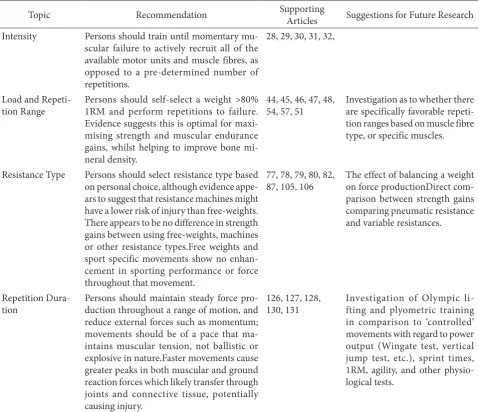
Table 1. Evidence for Resistance Training Recommendations
Topic Recommendation Supporting
Articles Suggestions for Future Research Intensity Persons should train until momentary mu
-scular failure to actively recruit all of the available motor units and muscle fibres, as opposed to a pre-determined number of repetitions.
28, 29, 30, 31, 32,
Load and Repeti
-tion Range Persons should self-select a weight >80% 1RM and perform repetitions to failure. Evidence suggests this is optimal for maxi-mising strength and muscular endurance gains, whilst helping to improve bone mi-neral density.
44, 45, 46, 47, 48, 54, 57, 51
Investigation as to whether there are specifically favorable repeti-tion ranges based on muscle fibre type, or specific muscles.
Resistance Type Persons should select resistance type based on personal choice, although evidence appe-ars to suggest that resistance machines might have a lower risk of injury than free-weights. There appears to be no difference in strength gains between using free-weights, machines or other resistance types.Free weights and sport specific movements show no enhan-cement in sporting performance or force throughout that movement.
77, 78, 79, 80, 82, 87, 105, 106
The effect of balancing a weight on force productionDirect com-parison between strength gains comparing pneumatic resistance and variable resistances.
Repetition Dura -tion
Persons should maintain steady force pro -duction throughout a range of motion, and reduce external forces such as momentum; movements should be of a pace that ma-intains muscular tension, not ballistic or explosive in nature.Faster movements cause greater peaks in both muscular and ground reaction forces which likely transfer through joints and connective tissue, potentially causing injury.
126, 127, 128, 130, 131
Investigation of Olympic li-fting and plyometric training in comparison to ‘controlled’ movements with regard to power output (Wingate test, vertical jump test, etc.), sprint times, 1RM, agility, and other physio -logical tests.
training, where an ectomorphic group recorded no significant differences having followed an identical training routine. Therefore, it appears that those who are naturally lean and muscular to start with, can gain strength and size to a much greater degree than naturally ‘skinny’ individuals.
The genetic factors above are very important to consider here because persons such as weightlifting or bodybuilding champions with impressive strength or size and most likely the very good genetic pre-disposition for building such, often work as coaches and personal trainers and will be called upon to offer training advice to the less genetically gifted. They may do so based on their experiences that yielded positive results. However, anyone with less suitable genetics will almost certainly not attain the same levels of muscular strength or size regardless of training program. In the same sense whilst many athletes, trainers, or body-builders will judge their training a success because of their progression in size, strength or other physiologi-cal attributes, it may still be that an alternative training program would have yielded even better results.
Conclusion
Topic Recommendation Supporting
Articles Suggestions for Future Research Volume of Exerci
-se, Frequency and Periodization
Persons can obtain appreciably the same strength gains by performing only a single set of each exercise 1 x / 2 x week, compared to higher volume workouts.Persons should train when they feel physically and mentally ready to do so. Both physical and mental fatigue have the potential to negatively affect a workout and/or muscular growth and development.No specific periodized routine is unequivocally supported within the literature.
18, 19, 51, 134, 135, 136, 137, 143, 149, 150, 151, 152, 154
Genetics Persons should consider their somatotype and that their genetics will dictate their mu-scular growth and development. Previous success with a routine is not evidence that it is optimal, genetic differences might dictate interpersonal differences in volume and frequency.
156, 157, 158, 159, 160, 161, 162, 163, 164, 165, 166, 167
Greater investigation into how genotype affects muscular growth and development.
research findings, focusing on optimal improvements for themselves or their clients.
References
1. Koffler K, Menkes A, Redmond A, et al. Strength training accelerates gastrointestinal transit in middle-aged and older men. Med Sci Sports Exerc 1992; 24: 415-9.
2. Campbell W, Crim M, Young C, et al. Increased energy requ-irements and changes in body composition with resistance training in older adults. Am J Clin Nutr 1994; 60: 167-75. 3. Hurley B. Does strength training improve health status?
Strength Cond J 1994; 16: 7-13.
4. Stone M, Blessing D, Byrd R, et al. Physiological effects of a short term resistive training program on middle-aged untra-ined men. Nat Strength Cond Assoc J 1982; 4: 16-20. 5. Hurley B, Hagberg J, Goldberg A, et al. Resistance training
can reduce coronary risk factors without altering VO2 max or percent body fat. Med Sci Sports Exerc 1988; 20: 150-4. 6. Harris KA, Holly RG. Physiological responses to circuit weight
training in borderline hypertensive subjects. Med Sci Sports Exerc 1987; 19: 246-52.
7. Colliander EB, Tesch PA. Blood pressure in resistance trained athletes. Can J Appl Sport Sci 1988; 13: 31-4.
8. Menkes A, Mazel S, Redmond A, et al. Strength training incre -ases regional bone mineral density and bone remodelling in middle-aged and older Men. J Appl Physiol 1993; 74: 2478-84. 9. Rall LC, Meydani SN, Kehayias JJ, et al. The effect of pro -gressive resistance training in rheumatoid arthritis: increased strength without changes in energy balance or body compo-sition. Arthritis Rheum 1996; 39: 415-26.
10. Nelson BW, O’Reilly E, Miller M, et al. The clinical effects of intensive specific exercise on chronic low back pain: A con-trolled study of 895 consecutive patients with 1-year follow up. Orthopedics 1995; 18: 971-81.
11. Risch S, Nowell N, Pollock M, et al. Lumbar strengthening in chronic low back pain patients. Spine 1993; 18: 232-8. 12. Westcott W. Keeping Fit. Nautilus 1995; 4: 50-7.
13. Messier SP, Dill ME. Alterations in strength and maximum oxygen consumption consequent to nautilus circuit weight training. Res Q Exerc Sport 1985; 56: 345-51.
14. Stone, MH. Muscle conditioning and muscle injuries. Med Sci Sports Exerc 1990; 22: 457-62.
15. Ratamess NA, Alvar BA, Evetoch [sic] TK, et al. Progression models in resistance training for healthy adults. Med Sci Sports Exerc 2009; 41: 687-708.
16. Pollock ML, Gaesser GA, Butcher JD, et al. The recommended quantity and quality of exercise for developing and mainta-ining cardiorespiratory and muscular fitness, and flexibility in healthy adults. Med Sci Sports Exerc 1998; 30: 975-91. 17. Kraemer WJ, Adams K, Cafarelli E, et al. Progression models
in resistance training for healthy adults. Med Sci Sports Exerc 2002; 34: 364-80.
18. Carpinelli R, Otto RM, Winett RA. A critical analysis of the ACSM position stand on resistance training: insufficient evidence to support recommended training protocols. J Exerc Physiol 2004; 7: 1-60.
19. Carpinelli R. Challenging the American College of Sports Medicine 2009 position stand on resistance training. Med Sport 2009; 13: 131-7.
20. Kraemer WJ, Fleck SJ, Deschenes M. A review: factors in exercise prescription of resistance training. Strength Cond J 1988; 10: 36-41.
21. Tan B. Manipulating resistance training program variables to optimize maximum strength in men: a review. J Strength Cond Res 1999; 13: 289-304.
22. Willardson JM, Burkett LN. The effect of different rest inte -rvals between sets on volume components and strength gains. J Strength Cond Res 2008; 22: 146-52.
23. Fry AC. The role of resistance exercise intensity on muscle fibre adaptations. Sports Med 2004; 34: 663-79.
24. Hoeger WW, Barette, SL, Hale DF, et al. Relationship between repetitions and selected percentages of one repetition maxi-mum. J Appl Sport Sci Res 1987; 1: 11-3.
25. Hoeger WWK, Hopkins DR, Barette SL, et al. Relationship between repetitions and selected percentages of one repetition maximum: a comparison between untrained and trained males and females. J Strength Cond Res 1990; 4: 46-54. 26. Shimano T, Kraemer WJ, Spiering BA, et al. Relationship
between the number of repetitions and selected percentages of one repetition maximum in free weight exercises in trained and untrained men. J Strength Cond Res 2006; 20: 819-23. 27. Douris PC, White BP, Cullen RR, et al. The relationship
between maximal repetition performance and muscle fibre type as estimated by non-invasive technique in the quadriceps of untrained women. J Strength Cond Res 2006; 20: 699-703. 28. Carpinelli R. The size principle and a critical analysis of
the unsubstantiated Heavier-is-better recommendation for resistance training. J Exer Sci Fit 2008; 6: 67-86 .