www.ijpes.com
International Journal of Psychology and Educational
Studies
Motivation and Self-Regulated Learning: A Multivariate Multilevel
Analysis
Wondimu Ahmed
University of Akron, Ohio, USA
ARTICLE INFO ABSTRACT
Article History: Received 12.07.2017 Received in revised form 22.08.2017
Accepted 28.09.2017 Available online 30.09.2017
This study investigated the relationship between motivation and self-regulated learning (SRL) in a nationally representative sample of 5245, 15-year-old students in the USA. A multivariate multilevel analysis was conducted to examine the role of three motivational variables (self-efficacy, intrinsic value & instrumental value) in predicting three SRL strategies (memorization, elaboration & control). The results showed that compared to self-efficacy, intrinsic value and instrumental value of math were stronger predictors of memorization, elaboration and control strategies. None of the motivational variables had a stronger effect on one strategy than the other. The findings suggest that the development of self-regulatory skills in math can be greatly enhanced by helping students develop positive value of and realistic expectancy for success in math.
© 2017 IJPES. All rights reserved Keywords:1
Motivation, Self-regulated learning, Multilevel multivariate analysis, Mathematics
1. Introduction
Self-regulated learning is one of key determinants of academic achievement. Evidence shows that students who regulate their learning perform better in school than those who do not engage in such self-regulation (Dent & Koenka, 2016; Hattie & Donoghue, 2016). Despite the importance of self-regulated learning (SRL), a large number of students do not engage in self-regulation of learning (Pintrich & Zusho, 2002; Zimmerman, 2008). Why do some students engage in SRL while others fail to do so? This question has garnered a great deal of attention among researchers. Consequently, there has been an increased emphasis on examining the motivational precursors of SRL (see Schunk & Zimmermann, 2008; Zimmerman, 2011). In the past two decades, a number of studies have investigated the roles of a variety of motivational variables (e.g., attributions, goal orientations, self-efficacy, intrinsic motivation, achievement value) in SRL (for an overview see Zimmerman & Schunk, 2008). SRL is a complex concept that comprises multiple components that are correlated (Sitzsmann & Ely, 2011; Zimmerman & Martinez-Pons, 1990). Despite the multifaceted nature of SRL, previous studies that examined the associations between motivation and SRL utilized a univariate approach. Such an approach makes it difficult to simultaneously investigate differential effects of motivation on multiple SRL components. Thus, our knowledge of how different motivational variables influence various components of SRL is limited. To fill this gap, this study examined the differential effects of self-efficacy, intrinsic value and instrumental value on three SRL strategies in mathematics in a nationally representative sample of 15-year old students in the USA based on data obtained from the 2003 Program for International Student Assessment (PISA).
1 Corresponding author’s address:The LeBron James Family Foundation College of Education, University of Akron, Ohio, USA Telephone:(330) 972-6771
e-mail:[email protected]
http://dx.doi.org/10.17220/ijpes.2017.03.001
1.1.Self-regulated Learning
Self-regulated learning refers to “the self-directive processes through which learners transform their mental abilities into academic skills” (Zimmerman & Labuhn, 2012, p. 399). SRL involves setting realistic learning goals, selecting effective learning strategies, monitoring and evaluating one’s progress towards goals. An important aspect of SRL is the use of various learning strategies to regulate one’s learning (Bjork, Dunlosky & Kornell, 2013; Dent & Koenka, 2016; Pintrich, 1999; Zimmernam, 2008). Although a variety of learning strategies exist (Bjork, et al., 2013; Hattie & Donoghue, 2016) the current study focuses on three of these strategies: memorization (rehearsal), elaboration and control (meta-cognitive) strategies. These categories of strategies are considered to be important components of SRL (Artlet, Baumert, Julius-McElvany & Peschar, 2003; Pintrich, 1999). Both memorization and elaboration strategies are commonly combined together to form cognitive strategies (Pintrich, 1999). Memorization strategies involve repeating to-be-learned information over and over again. Memorization strategies help in familiarizing the learner with the concepts and terms of to-be-learned material. Some specific techniques of memorization strategy include highlighting and underlining text. Although memorization strategies do not mirror deeper level of processing, they help learners to focus and select relevant information (Bjork et al., 2013; Pintrich, 1999; Weinstein & Mayer, 1986; Weinstein, Acee &Jung, 2011). Elaboration strategies reflect deeper level processing of to-be-learned material. Elaborative strategies such as paraphrasing and making an analogy help in connecting to-be-learned information with prior knowledge (Weinstein, et al., 2011).
Control or meta-cognitive strategies refer to planning, monitoring and regulation of cognition and behavior (e.g., Corno, 2005; Pintrich, 1999; Zimmerman & Labuhn, 2012). Self-regulated learners plan a course of action by setting goals, monitoring their progress towards the goals and evaluating their performance relative to the goals (Zimmerman & Labuhn, 2012). Planning involves, among others, setting goals for studying to-be-learned information, identifying learning strategies as well as task analysis. These activities help in activating prior knowledge thereby making processing of information easier. The next logical step after planning is performing. During performance, monitoring of learning becomes a crucial phase of SRL. During monitoring, self-regulated learners check their understanding against self-set standards by using variety of technique such as self-testing and self-explanations (Bjork et al., 2013). An important role of monitoring is making learners vigilant to obstacles to reaching self-set goals thereby triggering evaluation of strategies in terms of effectiveness (Bjork et al., 2013; Zimmerman, 2011). Overall, although the uses of both cognitive and meta-cognitive strategies have been proven to be important for learning and achievement (Dent & Koenka, 2016; Pintrich, 1999; Zimmernam, 2008), many students fail to use such strategies (Bjork et al., 2013).
1.2.Motivation and self-regulated learning
association between self-efficacy and use of memorization strategies (see Crede & Philips, 2012), those using adolescent samples did not find significant associations between the two variables (Beger & Karabenick, 2011). One potential argument is that self-efficacy is a stronger predictor of deeper level strategies such as elaboration than superficial strategies such as memorization (Sins, van Joolingen, Savelsbergh & van Hout-Wolters, 2008). With regard to elaboration and control strategies, regardless of the strength of the associations, studies show that self-efficacy beliefs are positively correlated with both strategies (see Pajares, 2008; Pintrich, 1999). Most of these studies also examined the relative effects of task value.
According to Eccles (2009) task value reflects students’ reasons for engagement in a task. Students may value tasks or domains such as math, out of enjoyment (i.e., intrinsic value) or for its instrumental roles to achieve future goals (i.e., instrumental/utility value) or for its consistency with one’s identity (i.e., attainment value). The current study considers only intrinsic value and instrumental value due to availability of such variables in PISA 2003 data. While intrinsic value is similar to interest (Renninger, 2010) and intrinsic motivation (Ryan & Deci, 2000), instrumental value is akin to identified form of extrinsic motivation (Ryan & Deci, 2000). Although there are some subtle differences between these different labels, because of their intellectual roots, they refer to whether individuals engage in a task for intrinsic or instrumental reasons (Wigfield & Cambria, 2010). According to Wigfield, Hoa and Klauda (2008) the two components of value are hypothesized to have differential effects on self-regulation. Wigfield et al (2008) argued that if students pursue an activity as means to an end (i.e., instrumental value) they would not fully engage in self-regulation as when they “value the activity intrinsically” (p189). An implication of this hypothesis is that students who value a domain for instrumental reasons are likely to use superficial strategies such as memorization than deep and meta-cognitive strategies. Although this may be true, much of the research in support of the role of task value comes from studies that examined composite task value (i.e., composite of intrinsic, utility and attainment values) Thus, we do not know the differential roles of intrinsic vs. instrumental value in predicting SRL strategies (Wigfield, et al., 2008). Nevertheless, a number of studies that investigated the relations between composite task value and various self-regulation strategies found that student who attach value to a task are more likely to report the use of cognitive and meta-cognitive strategies learning strategies in that particular task (e.g., Berger & Karabenick, 2011; Pintrich & DeGroot, 1990; Wolters & Pintrich, 1998). Although Berger and Karabenick’s (2011) did not investigate the relative effects of task value across the memorization, elaboration and control; the correlations reported in their study (based on wave I data) show that task value has stronger association with elaboration and control (meta-cognition) than memorization. This suggests that intrinsic value and utility value may be differentially associated with the three strategies considered in the current study.
Although the studies outlined above have increased our knowledge base on the role of motivation in SRL, a number of issues remain unresolved. First, although SRL is conceptualized as multivariate concept, previous research has mainly focused on different SRL strategies separately. SRL strategies are moderately correlated (Sitzsmann & Ely, 2011; Zimmerman & Martinez-Pons, 1990) and ignoring this fact leads to imprecise parameter estimates and type I error (Snijder & Bosker, 2012). Second, although there is evidence on the correlations between motivational variables and SRL strategies (Berger & Karabenick, 2011; Wolters & Pintrich, 1998), we know little about the relative effects of different motivational variables on different learning strategies in the same model. Moreover, because previous research has focused on composite measures of task value, we know little about the differential role of the components of task value (i.e., intrinsic value & instrumental value) in SRL (Wigfield et al., 2008). Understanding whether motivation effects differ by the SRL strategies has both practical and theoretical significance. Practically, interventions that target a specific SRL strategy might choose to focus on a specific motivational variable. Theoretically, knowledge of differential motivational effects on SRL outcomes helps in refining SRL theories in such a way that modifications to the motivational aspects of the theories can be made.
1.3.The Present Study
by SRL strategies (e.g., Do the effects of self-efficacy differ across memorization, elaboration and control?). Although there is no strong empirical basis to form specific hypotheses, based on the correlations reported in Berger and Karabenick (2011), self-efficacy would be stronger predictor of elaboration and control than it is of memorization. Based on Wigfield et al’s (2008) hypothesis, we expected that the effect of instrumental value would be stronger for memorization than for elaboration and control strategies but the effect of intrinsic value would be stronger for elaboration and control strategies than for memorization strategies. (3) Do the effects of the motivational variables on a specific SRL strategy differ from each other (e.g., Do the effects of self-efficacy on elaboration differ from that of the effects of intrinsic value and instrumental value on the same outcome?). Based on evidence reported in several studies (e.g., Berger & Karabenick, 2011; Wolters & Pintrich, 1998), the expectation was that the effects of self-efficacy in general would be weaker than the effects of intrinsic and instrumental value on the three SRL strategies. With regard to the two task value components, it was hypothesized that instrumental value would be a stronger predictor of memorization but a weaker predictor of elaboration and control than intrinsic value. These hypotheses were tested using a multivariate multilevel analysis that allows estimation of such comparison while controlling for correlations among the outcome variables.
2. Method
2.1. Data Source and Sample
The data for the current study come from the Program for International Student Assessment (PISA 2003) data set for USA. PISA assesses performance of 15-year-old students in three-core domains (i.e., reading, math and science) tri-annually. The focal subjects change every three years. The 2003 PISA cycle focused on math. PISA uses a two-stage stratified sampling procedure in which minimum of 150 schools are randomly sampled in each participating country from which 35 15-year-olds are randomly selected (OECD, 2004). This ensures to obtain a nationally representative sample of this age group. The US sample consisted of 274 schools and 5456 fifteen-year-old students. The participants were 49.8 girls, 3.1% Asian, 15.5% Black, 16.7% Hispanic, 57.3% White, and 4.7% ‘other’ racial/ethnic groups.
2.2. Measures
2.2.1. Motivational variables
2.2.1.1. Self-efficacy. Six items were used to assess students’ level of self-efficacy. The students were asked to rate their level of confidence in doing six math tasks on a scale of 1 (not at all confident) to 4 (very confident) (α = .88). An example item reads: “Calculating how much cheaper a TV would be after a 30% discount” 2.2.1.2. Intrinsic value. The intrinsic value measure consisted of 4 items (α = .92) pertaining to students’ interest in and enjoyment of mathematics. The items were rated on a 4-point scale 1(strongly disagree) to 4 (strongly agree). An example item reads: “I do mathematics because I enjoy it”
2.2.1.3. Instrumental Value. The students’ instrumental value of math was captured using four items (α = .89) that focused on the extent to which they were encouraged to learn by external rewards such as good job prospects. The items were rated on a 4-point scale 1(strongly disagree) to 4 (strongly agree). An example item reads: “Learning mathematics is worthwhile for me because it will improve my career prospects”.
2.2.2. Self-Regulated learning strategies
2.2.2.3. Control strategies. Five items (α = .81) were used to assess students’ use of meta-cognitive strategies. The items were rated on a 4-point scale 1(strongly disagree) to 4 (strongly agree). An example item reads: “When I study for a mathematics test, I try to figure out the most important parts to learn”.
2.2.3. Socio-economic status (SES)
PISA’s index for SES was derived from three sources: the highest occupational status of either parent, highest educational level of either parent in years of education, and the index of family/home possessions (OECD, 2004). In the current study, SES was standardized with a mean of ‘0’ and a standard deviation of ‘1’.
2.3. Analytic strategy
A multivariate multilevel analysis (MVMLA) was used to compare the relative effects of the three motivational variables on the three SRL strategies. MVMLA is a multilevel model with multiple outcome variables nested within upper level units. In the current study, the three SRL strategies at level 1 are nested with individual students at level 2, who in turn are nested within their schools at level 3. An important advantage of using of MVMLA is that it helps in comparing the relative effects of individual predictors. In addition, MVMLA provides more powerful test of specific effects for single dependent variables than univaraite analysis due to relatively smaller standard errors (Hox, 2010; Park, Pituch, Kim, Chung, & Dodd, 2015; Snijders & Bosker, 2012). In this study, two models were specified: an unconditional model (i.e., only the three SRL variables with no explanatory variables) and a conditional model that included the three motivational variables and the control variables. The conditional multivariate multilevel equation used in this study can be written as follows:
y1jk = β0jk +β1ijk + β2ijk + β3ijk + β5ijk + β5ijk
β0jk = β0 + v0j +u0jk
y2jk = β0jk +β1ijk + β2ijk + β3ijk + β5ijk + β5ijk
β1jk = β1 + v1j +u1jk
y3jk = β0jk +β1ijk + β2ijk + β3ijk + β5ijk + β5ijk
β2jk = β2 + v2j +u2jk
�𝑣𝑣𝑣𝑣0𝑘𝑘1𝑘𝑘 𝑣𝑣2𝑘𝑘
� ∽ 𝑁𝑁(0,Ωv):Ωv=� 𝜎𝜎𝑣𝑣𝑣𝑣2 𝜎𝜎𝑣𝑣01 𝜎𝜎𝑣𝑣12 𝜎𝜎𝑣𝑣02 𝜎𝜎𝑣𝑣12 𝜎𝜎𝑣𝑣22
�
�𝑢𝑢𝑢𝑢1𝑗𝑗𝑘𝑘0𝑗𝑗𝑘𝑘 𝑢𝑢2𝑗𝑗𝑘𝑘
� ∽ 𝑁𝑁(0,Ωu):Ωu=� 𝜎𝜎𝑢𝑢𝑣𝑣2 𝜎𝜎𝑢𝑢01 𝜎𝜎𝑢𝑢12 𝜎𝜎𝑢𝑢02 𝜎𝜎𝑢𝑢12 𝜎𝜎𝑢𝑢22
�
Where y1jk , y2jkand y3jk represent memorization, elaboration and control strategies respectively, β1jk – β3jk
represent the motivational predictors and β4jk and β5jk represent, gender and SES, respectively. In the variance–covariance matrixes, the diagonal elements represent the variances and the off-diagonal elements capture the covariance among the random effects.
3. Results
Descriptive statistics and correlations among study variables are presented in Table 1. The correlation results indicate that the motivational variables are significantly correlated with the three learning strategies. Whereas SES is positively associated with memorization and control strategies, its association with elaboration was negative and non-significant.
Table 1. Means, Standard Deviations and Correlations Among the Study Variables
Mean SD 1 2 3 4 5 6 7
1 Self-efficacy 3.13 .56
2 Intrinsic value 2.29 .74 .35**
3 Instrumental Value 3.01 .68 .36** .60**
4 Memorization 2.73 .52 .31** .45** .41**
5 Elaboration 2.61 .57 .27** .46** .39** .58**
6 Control 2.93 .50 .33** .39** .40** .68** .57**
7 SES .00 1 .32** -.01 .05** .05** -.02 .10**
Note: ** p < .01.
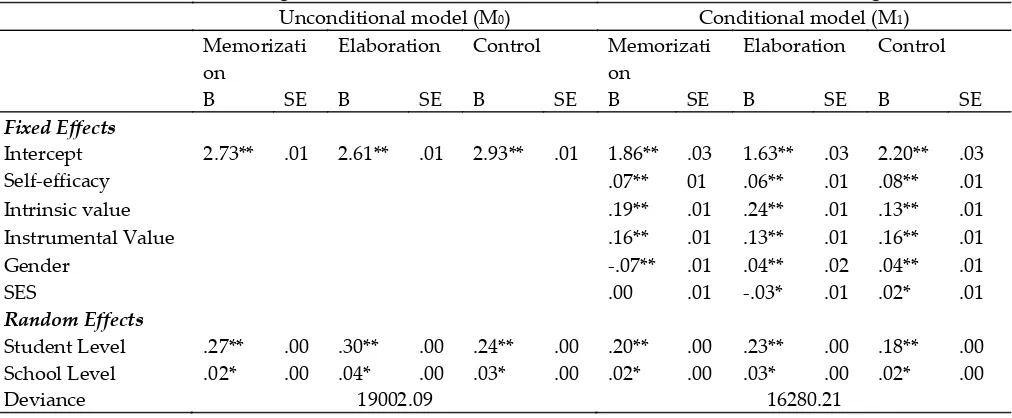
Table 2. Multivariate Multilevel Regression Estimates of the Effects of Motivational Variables on SRL Strategies
Unconditional model (M0) Conditional model (M1)
Memorizati
on Elaboration Control Memorization Elaboration Control
B SE B SE B SE B SE B SE B SE
Fixed Effects
Intercept 2.73** .01 2.61** .01 2.93** .01 1.86** .03 1.63** .03 2.20** .03
Self-efficacy .07** 01 .06** .01 .08** .01
Intrinsic value .19** .01 .24** .01 .13** .01
Instrumental Value .16** .01 .13** .01 .16** .01
Gender -.07** .01 .04** .02 .04** .01
SES .00 .01 -.03* .01 .02* .01
Random Effects
Student Level .27** .00 .30** .00 .24** .00 .20** .00 .23** .00 .18** .00
School Level .02* .00 .04* .00 .03* .00 .02* .00 .03* .00 .02* .00
Deviance 19002.09 16280.21
Note: * p < .05; ** p < .01.
The second research question involved examining the extent to which the effects of the motivational variables differed by SRL strategies. To answer this research question, the effects of each motivational variable on the SRL strategies was compared using Post-hoc coefficient comparison tests. These post-hoc analyses showed that the effects of each of the motivational variables did not significantly differ by the SRL strategies. For instance, effect of self-efficacy on memorization does not differ from its effect on elaboration (Z = .74, p = .24) or control strategies (Z = -.74, p = .24). This suggests that the effects of the motivational predictors are invariant across the SRL outcomes.
The third goal of this study was to examine whether the effects of the motivational variables on a specific SRL strategy use differ from each other. Post-hoc analyses compared whether the effect of a motivational variable on one SRL strategy is stronger or weaker than on another SRL strategy. The results indicated that compared to self-efficacy, both intrinsic value (Z = 2.67, p < .05) and instrumental value (Z = 2.00, p < .05) were stronger predictors of memorization strategy. The effect of instrumental value was stronger than that of self-efficacy for elaboration (Z = 2.01, p < .05) and control strategies (Z = 4.02, p < .05). Intrinsic value and instrumental value effects differed only when predicting elaboration such that intrinsic value was stronger (Z = 2.67, p < .05). Overall, the results show that achievement value, whether intrinsic or extrinsic appear to be stronger than self-efficacy in predicting SRL strategies.
5. Discussion
Self-regulated learning is an important predictor of academic outcomes (Dent & Koenka, 2016; Hattie & Donoghue, 2016). Thus, understanding what motivates students to engage in self-regulation has become an important issue that has received a great deal of attention among researchers (see Schunk & Zimmermann, 2008; Zimmerman, 2011). This study sought to contribute to this growing body of literature by examining the contribution of three important motivational variables (i.e., self-efficacy, intrinsic value & instrumental value) to SRL in a nationally representative sample of 15-year old students. The study examined the unique as well as the differential effects of these motivational variables. The findings showed that self-efficacy, intrinsic value and instrumental value each contribute uniquely to prediction of the SRL strategies. The results also showed that the effects of the motivational variables differ from each other to some extent.
previous findings (e.g., Lee, Lee & Bong, 2014; Pintrich, 1999; Wolters & Pintrich, 1998; Zimmerman, 2002) self-efficacy predicted the three SRL strategies assessed in the current study. Students who thought they were capable of learning mathematics were more likely to report the use of memorization, elaboration and control strategies. In addition, both intrinsic value and instrumental value significantly predicted the three SRL strategies. These results are consistent with other studies that found significant associations between the SRL strategies and composite task value (e.g., Berger & Karabenick, 2011; Pintrich, 1999; Wolters & Pintrich, 1998) or interest (Lee, et al., 2014). The findings suggest that students may not engage self-regulation if they are not interested in or do not perceive the instrumental value of the task (Zimmerman, 2011). Compared with self-efficacy, students’ perception of value of academic subjects has been given little attention in the self-regulation literature (Wigfield et al., 2008). This study demonstrated that at least two task value components identified by Eccles (2009) appear to be uniquely associated with SRL.
The second goal of this study was to examine whether the effects of motivation vary across SRL outcomes. Although no empirical studies have examined the issue, several scholars suggested that the effects of self-efficacy and achievement value might differ by SRL strategies such that the effects would be stronger for elaboration and control than for memorization (Pintrich, 1999). The findings of the current study suggest that the motivational variables appear to be equally important for each of the strategies. The effect of self-efficacy on memorization is not significantly different from its effects on elaboration and control strategies. Contrary to Wigfield et al’s (2008) hypothesis, the effects of intrinsic value and instrumental value on the three strategies did not significantly differ from each other.
The third goal of the study was to examine the differential effects of the motivational variables across each of the SRL strategies. The findings revealed that compared to self-efficacy, both intrinsic value and instrumental value appear to be stronger predictors of SRL strategies. The effects of intrinsic value and instrumental value on memorization were stronger than that of self-efficacy. The effect of instrumental value was stronger than that of self-efficacy for elaboration and control strategies. The stronger effects of the two value components indicate that student’s selection and use of strategies might depend more on on their purpose than their confidence in their ability. However, comparison between intrinsic and instrumental value effects showed only the effect of intrinsic value on elaboration was stronger than that of the of the effect of instrumental value. The interpretation of the findings of the current study should be made in light of the following limitations. First, both SRL and motivation variables were self-reported. Although the current study focus was on the aptitude of SRL (Winne & Perry, 2000), fine grained analysis of motivation and SRL require different methods than just self-reports. Trace studies and video based observation might capture the dynamics of motivation and self-regulation in action (Zimmerman, 2008). Thus, future research should utilize such innovative methods to examine the dynamics of motivation and self-regulation components. Second, although this study is based on the theoretical proposition that motivation plays an important role in SRL, the cross-sectional deign of the PISA data does not allow to derive any conclusion that purports a causal precedence in terms of time. What limited longitudinal studies available suggest the primacy of motivation (see Berger & Karabenick, 2011). Finally, this study showed that three motivational variables are important predictors of SRL even after controlling for SES and gender. Nevertheless, the motivational constructs included in the study are limited to only three variables. Other variables such as achievement goals, attributions, goal setting and future time perspective are not discussed in relative terms (See Schunk, Meece & Pintrich, 2013; Schunk & Zimmerman, 2008). Although future research should examine the differential role of these motivational variables, the three constructs used in the current study are among the most useful educational psychology constructs that are used in international educational assessments (Marsh, Abduljabbar, Abu-Hilal, Morin, Abdelfattah, Leung & Parker, 2013).
representative sample, this study contributes to the knowledge base on the role of motivation in self-regulated learning. In conclusion, the findings of the study suggest we need to take correlations among SRL strategies when examining impact of motivation. This is particularly important for interventions that target motivation to enhance self-regulated learning.
References
Artlet, C., Baumert, J., Julius-McElvany, N., & Peschar, J. (2003). Learners for Life. Student Approaches to Learning. Results from PISA 2000.
Berger, J. L., & Karabenick, S. A. (2011). Motivation and students’ use of learning strategies: Evidence of unidirectional effects in mathematics classrooms. Learning and Instruction, 21(3), 416-428. doi:10.1016/j.learninstruc.2010.06.002
Bjork, R. A., Dunlosky, J., & Kornell, N. (2013). Self-regulated learning: Beliefs, techniques, and illusions. Annual Review of Psychology, 64, 417-444. doi:10.1146/annurev-psych-113011-143823
Boekaerts, M. (2010). Motivation and self-regulation: two close friends. In T. Urdan, & S. A. Karabenick (Eds.), Advances in motivation and achievement. The next decade of research in motivation and achievement, 16B, 73-112, London: Emerald.
Dent, A. L., & Koenka, A. C. (2016). The relation between self-regulated learning and academic achievement across childhood and adolescence: a meta-analysis. Educational Psychology Review, 28, 428-474. doi:10.1007/s10648-015-9320-8
Dinsmore, D. L., Alexander, P. A., & Loughlin, S. M. (2008). Focusing the conceptual lens on metacognition, self-regulation, and self-regulated learning. Educational Psychology Review, 20, 391-409. doi:10.1007/s10648-008-9083-6
Eccles, J. (2009). Who am I and what am I going to do with my life? Personal and collective identities as motivators of action. Educational Psychologist, 44(2), 78-89. doi:10.1080/00461520902832368
Hattie, J. A., & Donoghue, G. M. (2016). Learning strategies: a synthesis and conceptual model. Npj/Science of Learning, 1, 1-13. doi:10.1038/npjscilearn.2016.13
Hox, J. (2010). Multilevel analysis: Techniques and applications (2nd ed.). New York, NY: Routledge.
Lee, W., Lee, M. J., & Bong, M. (2014). Testing interest and self-efficacy as predictors of academic self-regulation and achievement. Contemporary Educational Psychology, 39(2), 86-99. doi:10.1016/j.cedpsych.2014.02.002
Marsh, H. W., Abduljabbar, A. S., Abu-Hilal, M. M., Morin, A. J., Abdelfattah, F., Leung, K. C., & Parker, P. (2013). Factorial, convergent, and discriminant validity of TIMSS math and science motivation measures: A comparison of Arab and Anglo-Saxon countries. Journal of Educational Psychology, 105(1), 108-118. doi:10.1037/a0029907
Organization for Economic Co-operation and Development. (2004). Learning for tomorrow’s world: First results from PISA 2003. Paris: Author.
Park, R., Pituch, K. A., Kim, J., Chung, H., & Dodd, B. G. (2015). Comparing the performance of multivariate multilevel modeling to traditional analyses with complete and incomplete data. Methodology, 11, 100– 109. doi:10.1027/1614-2241/a000096
Paternoster, R., Brame, R., Mazerolle, P., & Piquero, A. (1998). Using the correct statistical test for the equality of regression coefficients. Criminology, 36(4), 859-866. doi:10.1111/j.1745-9125.1998.tb01268.x
Pintrich, P. R., & DeGroot, E. V. (1990). Motivational and self-regulated learning components of classroom academic performance. Journal of Educational Psychology, 82(1), 33-40. doi:10.1037//0022-0663.82.1.33 Pintrich, P. R., & Zusho, A. (2002). The development of academic self-regulation: the role of cognitive and
motivational factors. In A. Wigfield, & J. S. Eccles (Eds.), Development of achievement motivation (pp. 249–284). San Diego: Academic Press.
Rasbash, J., Charlton, C., Browne, W.J., Healy, M. and Cameron, B. (2009) MLwiN Version 2.1. Centre for Multilevel Modelling, University of Bristol.
Ryan, R. M., & Deci, E. L. (2000). Intrinsic and extrinsic motivations: Classic definitions and new directions. Contemporary educational psychology, 25(1), 54-67. doi:10.1006/ceps.1999.1020
Schunk, D.H. Meece J.L., & Pintrich, P. R. (2013). Motivation in education: Theory, research, and applications (4th Ed.). Englewood Cliffs, NJ: Prentice Hall Merrill.
Schunk, D. H., & Zimmerman, B. J. (2008). Motivation and self-regulated learning: Theory, research, and applications. Mahwah, NJ: Lawrence Erlbaum.
Sins, P. H., van Joolingen, W. R., Savelsbergh, E. R., & van Hout-Wolters, B. (2008). Motivation and performance within a collaborative computer-based modeling task: Relations between students’ achievement goal orientation, self-efficacy, cognitive processing, and achievement. Contemporary Educational Psychology, 33(1), 58-77. doi:10.1016/j.cedpsych.2006.12.004
Sitzmann, T., & Ely, K. (2011). A meta-analysis of self-regulated learning in work-related training and educational attainment: what we know and where we need to go. Psychological Bulletin, 137(3), 421. doi:10.1037/a0022777
Snijders, T. A. B., & Bosker, R. J. (2012). Multilevel analysis: An introduction to basic and advanced multilevel modeling (2nd ed.). London, England: Sage.
Weinstein, C. E., Acee, T. W., & Jung, J. (2011). Self-regulation and learning strategies. New Directions for Teaching and Learning, 126, 45-53. doi:10.1016/b978-012109890-2/50051-2
Weinstein, C. E., & Mayer, R. E. (1986). The teaching of learning strategies. In M. C. Wittrock (Ed.), Handbook of research on teaching (3rd ed.). (pp. 315-327) New York: Macmillan.
Wigfield, A., & Cambria, J. (2010). Expectancy-value theory: retrospective and prospective. In T. Urdan, & S. A. Karabenick (Eds.), Advances in motivation and achievement. The next decade of research in motivation and achievement, 16A (pp. 35-70). London: Emerald.
Wigfield, A., Hoa, L. W., & Klauda, S. L. (2008). The role of achievement values in the regulation of achievement behaviors. In D. H. Schunk, & B. J. Zimmerman (Eds.), Motivation and self-regulated learning: Theory, research, and applications (pp. 169-195). New York: Erlbaum.
Winne, P. H., & Perry, N. E. (2000). Measuring self-regulated learning. In M. Boekaerts, P. R. Pintrich, & M. Zeidner (Eds.), Handbook of self-regulation (pp.531-599). San Diego, CA: Academic.
Wolters, C. A., & Pintrich, P. R. (1998). Contextual differences in student motivation and self-regulated learning in mathematics, English, and social studies classrooms. Instructional science, 26(1-2), 27-47. doi:10.1007/978-94-017-2243-8_6
Zimmerman, B. J. (2011). Motivational sources and outcomes of self- regulated learning and performance. In B. J. Zimmerman & D. H. Schunk (Eds.), Handbook of self-regulation of learning and performance (pp. 49–64). New York, NY: Routledge.
Zimmerman, B. J. (2008). Investigating self-regulation and motivation: historical background, methodological developments, and future prospects. American Educational Research Journal, 45(1), 166-183. doi:10.3102/0002831207312909
Zimmerman, B. J., & Martinez-Pons, M. (1990). Student differences in self-regulated learning: Relating grade, sex, and giftedness to self-efficacy and strategy use. Journal of Educational Psychology, 82(1), 51. doi:10.1037//0022-0663.82.1.51