R E S E A R C H A R T I C L E
Open Access
Primate-specific evolution of noncoding element
insertion into
PLA2G4C
and human preterm birth
Jevon Plunkett
1,2, Scott Doniger
3, Thomas Morgan
1,4, Ritva Haataja
5, Mikko Hallman
5, Hilkka Puttonen
6,
Ramkumar Menon
7,8, Edward Kuczynski
9, Errol Norwitz
9, Victoria Snegovskikh
9, Aarno Palotie
10,11,12,13,
Leena Peltonen
10,11,12, Vineta Fellman
14,15, Emily A DeFranco
16, Bimal P Chaudhari
17, John Oates
18,
Olivier Boutaud
18, Tracy L McGregor
1, Jude J McElroy
1, Kari Teramo
6, Ingrid Borecki
19, Justin C Fay
20,
Louis J Muglia
1,21*Abstract
Background:The onset of birth in humans, like other apes, differs from non-primate mammals in its endocrine
physiology. We hypothesize that higher primate-specific gene evolution may lead to these differences and target genes involved in human preterm birth, an area of global health significance.
Methods:We performed a comparative genomics screen of highly conserved noncoding elements and identified
PLA2G4C, a phospholipase A isoform involved in prostaglandin biosynthesis as human accelerated. To examine whether this gene demonstrating primate-specific evolution was associated with birth timing, we genotyped and analyzed 8 common single nucleotide polymorphisms (SNPs) inPLA2G4Cin US Hispanic (n = 73 preterm, 292 control), US White (n = 147 preterm, 157 control) and US Black (n = 79 preterm, 166 control) mothers.
Results:Detailed structural and phylogenic analysis ofPLA2G4Csuggested a short genomic element within the
gene duplicated from a paralogous highly conserved element on chromosome 1 specifically in primates. SNPs rs8110925 and rs2307276 in US Hispanics and rs11564620 in US Whites were significant after correcting for multiple tests (p < 0.006). Additionally, rs11564620 (Thr360Pro) was associated with increased metabolite levels of the prostaglandin thromboxane in healthy individuals (p = 0.02), suggesting this variant may affectPLA2G4C activity.
Conclusions:Our findings suggest that variation inPLA2G4Cmay influence preterm birth risk by increasing levels
of prostaglandins, which are known to regulate labor.
Background
A growing body of evidence supports genetic influences on preterm birth risk; however, few genes have been consistently associated with the disorder [1,2]. Investiga-tors have typically focused on candidate genes selected based on predicted parturition physiology; however, this approach may be limited by the divergence in physiolo-gical mechanisms between humans and model organ-isms that have been typically studied. For example, while a rapid decline in progesterone plays a prominent role in initiating parturition in rodents and sheep, this
signal does not seem to precede human labor [3]. Other parturition-related traits, such as placental morphology and source of progesterone, also differ importantly in humans compared to model organisms typically studied and may limit what generalizations can be made [3].
Differences in parturition physiology between apes, including humans, and other mammals may have devel-oped in response to uniquely human adaptations includ-ing relatively large human head size and narrow birth canal cross-sectional area [4]. Genes involved in parturi-tion likely have evolved differentially along the human and/or higher primate phylogenetic lineages to decrease the length of gestation and alleviate the complications arising from such cephalopelvic constraints. As a result, the set of genes rapidly evolving on the human and/or
* Correspondence: [email protected]
1
Department of Pediatrics, Vanderbilt University School of Medicine, Nashville, TN 37232, USA
Full list of author information is available at the end of the article
In addition to nucleotide substitution, genomic rear-rangements account for a substantial portion of genomic divergence among species. For example, Frazer et al. [6] and Wetterbom et al. [7] observed insertions and dele-tions frequently when comparing genome sequences among humans, chimpanzees and other primate species. Moreover, such rearrangements may account for a lar-ger fraction of genomic divergence than nucleotide sub-stitutions [7]. Rearrangements can lead to loss or acquisition of exons, splice sites and promoters, facilitat-ing differences in expression patterns, such as those observed for transcript variants of CHRM3andSFTPB with differing transposable element insertion events [8,9]. Hence, genomic rearrangement may contribute to rapid evolution along the human and/or higher primate lineages in response to unique physiological constraints.
We hypothesized that genes with genomic rearrange-ments departing from the ancestral state and occurring on the human and/or higher primate lineages may play important roles in birth timing and preterm delivery. Thus, we investigated association with preterm birth for common variants in a gene,PLA2G4C, which is expressed in the uterus [10] and involved in prostaglandin synthesis, suggesting a potential role in parturition, and in which we have identified a primate-specific insertion.
Results
Evolutionary history of a primate-specificPLA2G4C noncoding element
We identified genes showing evidence of rapid evolution along the human lineage, based on evidence from a comparative genomic screen of highly conserved non-coding elements as previously described [5]. Among the rapidly evolving genes emerging from our noncoding screen,PLA2G4Cwas identified as the most statistically significant human-lineage accelerated gene (p = 2.2 × 10⁻⁷, significant at 10% False Discovery Rate threshold) that was also included in a list of preterm birth candi-date genes [11]. Because the reported deletion of
PLA2G4C in cattle [12] contrasted with its presence in
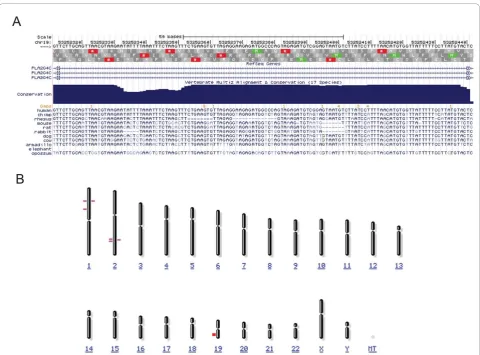
the 17-way MultiZ alignments [13] used to identify the gene as rapidly evolving (Figure 1A), we examined the history of this region in greater depth. We compared sequence surrounding the 130 base pair (bp) highly
chance alone) = 5x10 ; Figure 1B). Subsequent analysis showed that the MultiZ alignments that we used in our comparative genomics screen had misaligned the human chromosome 19 element with sequences in other mam-mals which were orthologous to human chromosome 1. When appropriate alignments were examined, we observed that the human chromosome 19 element was nearly identical in higher primate species (chimpanzee, gorilla, orangutan, macaque) examined, but absent in syntenic sequences in lower primates (lemur, bushbaby, tarsier) and other mammalian species. Chromosome 1 elements from higher primates are more similar to lower primates and other mammalian species than chro-mosome 19 elements (Figure 2). The chrochro-mosome 1 ele-ment occurs in the 5’untranslated region ofRNF11, a gene involved in inflammatory signaling (UniProt KB) in mouse. Thus, a duplication of chromosome 1 noncoding element to chromosome 19 likely occurred before the last common ancestor between apes and macaque. A phylogenetic tree of coding sequences for PLA2G4C fol-lows the expected mammalian phylogeny (Figure 3), suggesting that the duplication did not include coding sequences. Together these results suggest that neither element would qualify as rapidly evolving along the human lineage due to nucleotide substitution, but the chromosome 19 element may represent a primate-speci-fic change meriting further study.
Association with preterm birth
showed actual power for detection at p < 0.05 (not cor-recting for multiple tests) ranging from 51-86%, and p < 0.006 (adjusting for 8 comparisons) ranging from 22 -62% depending upon high risk allele frequency (Addi-tional file 2 Table S2). The results from these analyses include two SNPs, rs8110925 and rs2307276, in the US Hispanics and one in the US Whites, rs11564620, that were significant after correcting for 8 tests (p < 0.006). Prior to constructing a meta-analysis, we performed a test for homogeneity across the three populations for each of these three SNPs. Two SNPs, rs8110925 and rs2307276, showed significant heterogeneity, implying population-specific effects. The heterogeneity p-value for rs11564620, in contrast, was not significant (p = 0.21), so we performed a formal meta-analysis across populations. In this circumstance, the test for overall effect across populations resulted in p = 0.02 (Figure 4). Given the relatively limited number of studies and subjects, we
went on to gain additional biological support by measur-ing prostaglandin levels (see below).
Additionally, 2, 3 and 4 SNP haplotypes containing SNPs rs8110925 and rs2307276 were significant in the US His-panics after correcting for 18 haplotype comparisons (p < 0.003), although not more significant than single SNP association findings (Additional file 3 Table S3, S4). 2 SNP haplotypes containing rs11564620 were moder-ately significant (p < 0.05) in US Whites (Additional file 3 Table S3, Additional file 4 Table S4). Linkage disequili-brium (LD) among SNPs rs8110925, rs2307276, and rs11564620 was very low (r2< 0.1) in the three popula-tions studied (Additional file 5 Figure S1), suggesting multiple independent associations were observed.
Association with prostaglandin concentrations
To test the potential functional effect of associated
PLA2G4C variants on prostaglandin metabolism, we
compared levels of metabolites of prostaglandin E2 (PGE), prostaglandin I2 (PGI) and thromboxane (11-DTXB2) among genotype classes for associated SNPs rs8110925, rs2307276, and rs11564620 in healthy indivi-duals using a two-sided Wald test (Additional file 6 Table S5). We hypothesized that these variants, particu-larly the coding region variant, would be associated with altered prostaglandin levels independent of pregnancy status. Of note, rs11564620, a nonsynonymous coding polymorphism, is associated with 11-DTXB2 levels (p = 0.04) despite the limited sample size available. The minor allele of rs11564620, present at approximately 10% frequency in US Whites, is associated with both risk for preterm birth and higher 11-DTXB2 levels (Wilcoxon one-sided p = 0.02; Figure 5).
Discussion
Comparative genomic analysis is an attractive method for identifying genetic variation among species that may correlate with inter-specific phenotypic variation in fun-damental processes such as parturition. Through such an analysis, we have identified a noncoding element in
intron 14 of PLA2G4Con chromosome 19 representing
a primate-specific change involving amplification and subsequent divergence but without increased nucleotide substitution. Having identifiedPLA2G4Cas a candidate gene, we proposed that this duplicated element repre-sents a primate-specific change with a potential regula-tory role in human parturition.
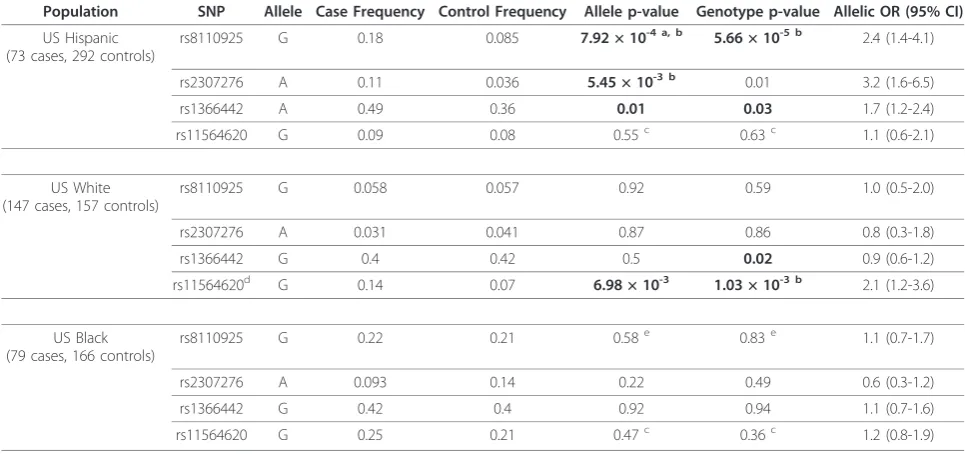
We then tested our hypothesis by case-control asso-ciation studies of preterm birth in several genetically diverse populations. Single SNP and haplotype associa-tion results implicated the role of SNPs rs8110925, rs2307276, and rs11564620 in preterm birth risk (Table 1 and Additional file 3 Table S3). The asso-ciated SNPs are located in an 8 kilobase (kb) region of
Opposum TShrew31 Alpaca31 Dolphin31 Megabat31 Microbat31 Dog Tshrew-C Squirrel31 TShrew-B KRat31 KRat-B KRat-A Cow Horse Hedgehog31 Shrew31 HTenrec31 Hyrax31 Tarsier-A Pika31 Sloth31 Armadill31 Tarsier31 Mouse Rat GuinyPig31 Rabbit31 Rabbit GuineaPig Rat Mouse Tarsier_A Armadillo Sloth Pika Tarsier_B Hyrax Tenrec Shrew Hedgehog Horse Cow KangarooRat_A KangarooRat_C KangarooRat_B TreeShrew_A Squirrel TreeShrew_B Dog Microbat Megabat Dolphin Alpaca TreeShrew_C Opposum
Figure 2Phylogeny with sequences homologous to human chromosomes 19 noncoding element. Species name followed by a number indicates from which chromosome the sequence is derived or by a letter indicates that multiple copies homologous to the human chromosome 19 noncoding element were identified for that species. Sequences from lower primates and other mammalian species are more similar to higher primate sequences orthologous to human chromosome 1noncoding element (indicated in blue) than sequences orthologous to human chromosome 19 noncoding element (indicated in red). A duplication of chromosome 1 noncoding element to chromosome 19 likely occurred before the last common ancestor between apes and macaque.
Gorilla Human Chimp Orangutan Macaque TreeShrew Tarsier HTenrec Hyrax Pika Rabbit GuineaPig Squirrel KRat Rat Mouse OpposumB OpposumA PlatypusB PlatypusA AnoleB AnoleA ZebrafishC ZebrafishDZebrafish_C Zebrafish_D Anole_A Anole_B Platypus_A Platypus_B Oppossum_A Oppossum_B Mouse Rat KangarooRat Squirrel GuineaPig Rabbit Pika Hyrax Tenrec Tarsier TreeShrew Macaque Orangutan Chimpanzee Human Gorilla
the 3’end of PLA2G4C, near the genomic element of interest (Figure 6), but show little LD with each other (Additional file 5 Figure S1) or other SNPs in
PLA2G4C documented in the International HapMap
Project database [17]. Of note, Polyphen [18] and SIFT [19] programs predict rs11564620, a nonsynonymous polymorphism in exon 13 resulting in a change in amino acid 360 from threonine to proline, to be possi-bly damaging to the protein structure (using protein sequence NP_003697 for PLA2G4C). This 8 kb region also includes coding sequence for aspartic acid 385, one of the three amino acids that make up the putative active site of the enzyme [20], such that the proline substitution may alter the active site’s physical confor-mation. Supporting the potential functional effect of
rs11564620, this polymorphism is associated with 11-DTXB2 levels in healthy individuals (p = 0.02; Figure 5), with proline allele carriers having elevated thromboxane metabolite levels, compared to threonine homozygotes. Further suggesting functional importance of rs11564620, this SNP is also significantly associated (p < 0.0001) with altered expression of NFATC2IP, a factor regulating cytokine expression in T cells located on chromosome 16 in quantitative trait databases for CEU populations http://scan.bsd.uchicago.edu/newin-terface/about.html. Last, the evidence of modest devia-tion (p = 0.04) from Hardy-Weinberg Equilibrium in the control US White population suggests that this variant may be under selection consistent with our hypothesis of selective pressure on genes involved in human parturition.
PLA2G4Cencodes cytosolic phospholipase A2 gamma,
which hydrolizes phospholipids from the cellular mem-brane to form free arachidonic acid, from which prosta-glandins, including prostaglandins D, E, F, I2 (also known as prostacyclin), and thromboxane A2 are gener-ated. Prostaglandins play an important role in parturi-tion. Pharmacologically, prostaglandins are used to induce abortion, for cervical ripening, and labor induc-tion and drugs inhibiting prostaglandin synthesis are successful in preventing preterm labor [21]. Levels of prostaglandins, including thromboxane A2, are elevated in pregnant compared to non-pregnant women, and in late (36 weeks) compared to early (20, 30 weeks) gesta-tion [22], suggesting a link between prostaglandin abun-dance and parturition timing. Prostaglandins may facilitate labor by several mechanisms. These hormones are known uterotonic agents and also promote luteolysis and the onset of labor in species that exhibit progester-one withdrawal prior to birth [23]. Prostaglandins may also facilitate delivery by affecting placenta function, since thromboxane A2 induces platelet aggregation and acts as a vasoconstrictor [22]. Hence, higher prostaglan-din levels than expected may initiate parturition prema-turely and lead to preterm delivery.
Figure 4Meta-analysis for US Hispanic, US White and US Black SNP association results for rs11564620.
AA AC
−
10
1
2
Boxplot of Thromboxane Z−value versus rs11564620 genotype
rs11564620 genotype
T
h
rom
b
o
x
ane Z
−
score
Median -0.20
Median 1.10
p=0.02
The PLA2G4C enzyme is the only cytosolic phospholi-pase A2 family member that is constitutively associated with the cellular membrane, the site of prostaglandin synthesis, rather than translocating to the membrane in response to calcium signaling [10]. Hence, dysregulation
ofPLA2G4Cmay alter prostaglandins levels independent
of other parturition signals, such as oxytocin [24], that act via intracellular calcium signaling. For example, rs11564620 may contribute to a conformational change in the enzyme’s active site, rendering it more active than
usual and leading to increased synthesis of prostaglandins, as demonstrated by our observation of higher levels of thromboxane A2 in minor allele carriers for this poly-morphism. Moreover, multiple splice isoforms of
PLA2G4Cexist, differing in transcript length, presence of
certain exons and overlapping exons with different bound-aries (AceView, NCBI, http://www.ncbi.nlm.nih.gov/IEB/ Research/Acembly/). As a result, variation inPLA2G4C may contribute to differences in tissue-specific expression
or relative abundance of various PLA2G4C isoforms,
potentially altering function. Further study of the region encompassing these SNPs, including the genomic element of interest, is needed to examine the mechanism by which variation inPLA2G4Cinfluences birth timing.
Specialization within multi-gene families, like the large phospholipase A2 gene family, can create individualized functions among paralogous genes. For example,
PLA2G4Chas a continuous association with the cellular
membrane, unlike other phospholipase A2 genes, poten-tially differentiating its role in prostaglandin synthesis from those of other family members. Genomic variation, such as the element insertion observed in PLA2G4C, may contribute to gene specialization, as demonstrated
by divergence in PLA2G4C expression patterns in
humans versus mice, who lack the element insertion
and express PLA2G4Conly in ovary and oocytes[25].
Specialized genes are potentially better therapeutic
(147 cases, 157 controls)
rs2307276 A 0.031 0.041 0.87 0.86 0.8 (0.3-1.8)
rs1366442 G 0.4 0.42 0.5 0.02 0.9 (0.6-1.2)
rs11564620d G 0.14 0.07 6.98 × 10⁻³ 1.03 × 10⁻³ b 2.1 (1.2-3.6)
US Black (79 cases, 166 controls)
rs8110925 G 0.22 0.21 0.58e 0.83e 1.1 (0.7-1.7)
rs2307276 A 0.093 0.14 0.22 0.49 0.6 (0.3-1.2)
rs1366442 G 0.42 0.4 0.92 0.94 1.1 (0.7-1.6)
rs11564620 G 0.25 0.21 0.47c 0.36c 1.2 (0.8-1.9)
a
Bolded numbers indicate p-value <0.05. b
Marker significant correcting for 8 tests (p < 0.006). c
Same allele trends in same direction as US Whites. d
p = 0.04 for deviation from Hardy-Weinberg Equilibrium. e
Same allele trends in same direction as US Hispanics.
17 16 15 14 13 12 11 10 9 8 7 6 5 4 3 2 1
rs9226 rs1
1564650
rs2307281 rs1529479 rs81
10925
rs2307276 rs1
1564620
rs7251954 rs1
168556
rs156631 rs251684 rs1653554 rs2307279
rs1366442
targets than gene products with multiple roles within cell, since pharmaceutically targeting such genes may lead to fewer side effects. As a result,PLA2G4C may be a useful target for designing novel therapies to prolong pregnancy and reduce the incidence of preterm birth.
Conclusions
A higher primate-specific noncoding element insertion into intron 14 of the phospholipase A2 gene PLA2G4C was identified, demonstrating the gene’s rapid evolution along the higher primate lineage by genomic rearrange-ment. Results from our genetic analysis suggest common variation inPLA2G4Cinfluences preterm birth risk. One of the variants associated with preterm birth is a nonsy-nonymous coding polymorphism, rs11564620, predicted to be potentially altering protein structure. This coding polymorphism is also associated with thromboxane levels, suggesting that genetic variation in PLA2G4C may increase risk for preterm birth by increasing levels of prostaglandins, which are known to regulate labor. By examining rapid evolution along human and higher pri-mate lineages by genomic rearrangement, we have iden-tified a novel gene associated with preterm birth. This approach can be readily applied to other traits differing among humans and/or higher primates and other spe-cies to aid in gene discovery.
Methods
Genomic alignments to investigate evolutionary history ofPLA2G4C
Noting the deletion of PLA2G4C reported in the
Taurine Cattle genome [12] contrasted with its presence in the 17-way MultiZ alignments [13] we used to iden-tify the gene as rapidly evolving (analysis conducted Spring 2007 and presented in detail in (Plunkett J, Doni-ger S, Orabona G, Morgan T, Haataja R, Hallman M, Puttonen H, Menon R, Kuczynski E, Norwitz E et al: Evolutionary history ofFSHRin human predicts role in birth time, submitted)), we examined the history of this region in greater depth. We extracted sequence sur-rounding the 130 bp highly conserved noncoding ele-ment (human chromosome 19: 48,560,500 -48,560,630; hg19 genome build) which largely contributed to our
designation of PLA2G4C as rapid evolving along the
human lineage. A BLASTN search of the element revealed highly identical conserved noncoding elements on human chromosomes 1 (87% identity) and 2 (85% identity) (Figure 1B). We compared the human chromo-some 19 and chromochromo-some 1 sequences to 31 eutherian mammalian genomes using Ensembl Genomic ments (accessed September 2009), and ClustalW align-ment, and to specific primate genomes using BLASTN searches of human, chimpanzee, gorilla, orangutan, macaque, and bushbaby genomes (accessed September
2009). We then reconstructed history of the element by creating phylogenies using maximum likelihood with sequences homologous to the human chromosome 19 element (Figure 2) and coding sequences homologous to humanPLA2G4C(Figure 3).
Human subjects
Study subjects were enrolled for genetic analysis by methods approved by Institutional Review Boards/Ethics Committees at each participating institution. Informed consent was obtained for all participants. Mothers with preterm birth were included if the birth was sponta-neous (non-iatrogenic), singleton, had no obvious preci-pitating stimulus (trauma, infection, drug use), and was less than 37 weeks (Yale University; New York Univer-sity) or 36 weeks (Centennial Hospital, Nashville, TN) of completed gestation. Control mothers were included if they had delivered two or more children at 37 weeks or later spontaneously. Healthy volunteers were recruited at Vanderbilt University for studies of prostaglandin metabolism. DNA from blood or saliva was prepared by standard methods. Race/ethnicity was assigned by self-report. All specimens were linked with demographic and medical data abstracted from maternal/neonatal records. DNA from blood or saliva was prepared by standard methods. Maternal age did not differ between cases and controls in the different populations (27.3 y vs. 28.4 y, p = 0.10 US White; 25.3 y vs. 25.2 y, p = 0.88 US Black; 26.0 y vs. 25.0 y, p = 0.20 US Hispanic).
Prostaglandin metabolite levels
For individuals enrolled in the prostaglandin study, urine was collected by standard methods. Levels of the urinary metabolites of prostaglandin E (PGE), prosta-glandin I (PGI) and thromboxane (11-DTXB2) were quantified by mass spectrometry and normalized to creatinine levels, an indicator of renal function, in 44 healthy control individuals of Black, Hispanic or White race (median age 29, 60% male, 77% White).
Genotyping
We genotyped 14 SNPs spanning the PLA2G4Cgene
Sequenom iPLEX massARRAY technology (Sequenom, San Diego, CA).
Data Analysis
Data cleaning and analysis was performed with Whole-genome Association Study Pipeline (WASP) [28] and PLINK [29]. We excluded individuals based on geno-typing quality (< 90% call rate) and SNPs based on the following criteria: not in Hardy-Weinberg Equilibrium in controls (p < 0.001 c2 test), <90% genotype call rate, MAF < 0.01). Linkage disequilibrium among SNPs tested was determined using the Haploview pro-gram [26]. We chose this Hardy-Weinberg threshold for two reasons. First, we hypothesize this locus is under selective pressure which could result in some deviation from HWE in the control population. Sec-ond, samples with p < 0.001 also had low genotype call rates, suggesting genotyping error, while those with p > 0.001 had high call rates. For significant SNPs, the Hardy-Weinberg deviation was greater than 0.05 unless otherwise indicated. We corrected for mul-tiple testing using the simpleM method [30], which estimates the number of independent tests, given the LD relationships among SNPs, used to obtain a Bon-ferroni-corrected critical value.
Our analysis considered preterm birth affection status (i.e. delivery <37 weeks) as a binary trait, comparing fre-quencies between case and control groups of alleles and genotypes byc2 test. Sliding windows of 2,3 and 4 SNP haplotypes also were compared between cases and con-trols [29]. Meta-analysis of data for significant SNPs was done using the Mantel-Haenszel method, after success-fully passing the test of homogeneity.
To test the potential functional effect of associated
PLA2G4C variants on prostaglandin metabolism, we
examined the levels of PGE, PGI, and 11-DTXB2, stan-dardized to normal distributions (μ= 0,s= 1), as quan-titative traits. A Wald test was performed to compare the mean phenotype between different allele or genotype classes for associated SNPs. We also tested whether rs11564620 risk-allele carriers had higher prostaglandin levels than noncarriers, by comparing the 11-DTXB2 value distribution among genotype classes with box
haplotypes in thePLA2G4Cgene region tested across 3 independent US populations. Table S3 - Case-control association results for 2, 3 and 4 SNP haplotypes in thePLA2G4Cgene region.
Additional file 4: Frequency of 2, 3, and 4 SNP haplotypes across each population studied. Table S4 Specific frequency information for the haplotypes in each population.
Additional file 5: Linkage disequilibrium among SNPs tested in
PLA2G4C. Figure S1 - Panel A: US Hispanics. Panel B: US Whites. Panel C: US Blacks. Panel D: HapMap MEX reference population. Panel E: HapMap CEU reference population. Panel F: HapMap YRI reference population.
Additional file 6: Association results for associated SNPs (p≤0.01) in thePLA2G4Cgene region for the quantitative phenotypes of PGE, PGI, and TXB2 metabolite levels examined in healthy individuals (n = 44). Table S5 Association results for those SNPs that were significantly associated (p≤0.01) in thePLA2G4Cgene region with preterm birth examining the quantitative phenotypes of prostaglandin metabolite levels examined in healthy individuals.
Acknowledgements
We thank Cara Sutcliffe and Rachel Wiseman in the DNA Resources Core at Vanderbilt University Medical Center for their assistance with genotyping. This work was supported by grants from the Children’s Discovery Institute at Washington University School of Medicine and St. Louis Children’s Hospital awarded to JF and LJM and from the March of Dimes awarded to LJM and EN. This research was also supported by T32 GM081739 from the National Institute of General Medical Science and the Mr. and Mrs. Spencer T. Olin Fellowship for Women in Graduate Study at Washington University in St. Louis awarded to JP, a grant from the Sigrid Juselius Foundation awarded to MH, a grant from the Signe and Ane Gyllenberg foundation to VF and grants from the Academy of Finland to RH and MH. TM was supported by a Turner-Hazinski grant award from Vanderbilt University.
Author details 1
Department of Pediatrics, Vanderbilt University School of Medicine, Nashville, TN 37232, USA.2Human and Statistic Genetics Program,
Washington University School of Medicine, St. Louis, MO 63110, USA.
3Computational Biology Program, Washington University School of Medicine,
St. Louis, MO 63108, USA.4Center for Human Genetics Research, Vanderbilt
University School of Medicine, Nashville, TN 37232, USA.5Institute of Clinical
Medicine, Department of Pediatrics, University of Oulu, Oulu 90014, Finland.
6
Departments of Obstetrics and Gynecology, University Central Hospital, Helsinki 00290, Finland.7The Perinatal Research Center, Nashville, TN 37203. 8
Department of Epidemiology, Rollins School of Public Health, Emory University, Atlanta, GA, 30322, USA.9Department of Obstetrics, Gynecology,
and Reproductive Sciences, Yale University School of Medicine, New Haven, CT 06520, USA.10Biomedicum Helsinki Research Program in Molecular
Medicine, University of Helsinki, Helsinki 00290, Finland.11The Finnish Genome Center, University of Helsinki, Helsinki 00290, Finland.12The Broad
Institute of MIT and Harvard, Cambridge, Massachusetts 02142, USA.
13Wellcome Trust Sanger Institute, Cambridge CB10 1SA, UK.14Department
of Pediatrics, Lund University, Lund 22185, Sweden.15Department of
University School of Medicine, St. Louis, MO 63110, USA.18Division of Clinical
Pharmacology, Vanderbilt University School of Medicine, Vanderbilt University, Nashville, TN 37232, USA.19Division of Statistical Genomics, Washington University School of Medicine, St. Louis, MO 63108, USA.
20
Department of Genetics and Center for Genome Sciences, Washington University School of Medicine, St. Louis, MO 63108, USA.21Department of
Molecular Physiology and Biophysics, Vanderbilt University School of Medicine, and Vanderbilt Kennedy Center for Human Development, Vanderbilt University, Nashville, TN 37232, USA.
Authors’contributions
JP, SD, TM, JO, OB, JF and LM designed research; RH, MH, HP, RM, EK, EN, VS, AP, LP, VF, ED, BC, JO, OB, KT and LJM contributed new reagents/analytic tools; JP, SD, GO performed research; JP, SD, JJM, TLM, TM, OB, JF and LJM analyzed data; and JP, MH, EO, JO, KT, IB, JF, TM, and LJM wrote the paper. All authors read and approved the final manuscript.
Received: 22 July 2010 Accepted: 24 December 2010 Published: 24 December 2010
References
1. Chaudhari BP, Plunkett J, Ratajczak CK, Shen TT, DeFranco EA, Muglia LJ: The genetics of birth timing: insights into a fundamental component of human development.Clin Genet2008,74(6):493-501.
2. Plunkett J, Muglia LJ:Genetic contributions to preterm birth: Implications from epidemiological and genetic association studies.Ann Med2008, 40(3):167-179.
3. Mitchell BF, Taggart MJ:Are animal models relevant to key aspects of human parturition?Am J Physiol Regul Integr Comp Physiol2009,297(3): R525-545.
4. Rosenberg K, Trevathan W:Birth, obstetrics and human evolution.BJOG
2002,109(11):1199-1206.
5. Fay JC, Wyckoff GJ, Wu CI:Positive and negative selection on the human genome.Genetics2001,158(3):1227-1234.
6. Frazer KA, Chen X, Hinds DA, Pant PV, Patil N, Cox DR:Genomic DNA insertions and deletions occur frequently between humans and nonhuman primates.Genome Res2003,13(3):341-346.
7. Wetterbom A, Sevov M, Cavelier L, Bergstrom TF:Comparative genomic analysis of human and chimpanzee indicates a key role for indels in primate evolution.J Mol Evol2006,63(5):682-690.
8. Huh JW, Kim YH, Lee SR, Kim H, Kim DS, Kim HS, Kang HS, Chang KT:Gain of new exons and promoters by lineage-specific transposable elements-integration and conservation event on CHRM3 gene.Mol Cells2009, 28(2):111-117.
9. Lee JR, Huh JW, Kim DS, Ha HS, Ahn K, Kim YJ, Chang KT, Kim HS:Lineage specific evolutionary events on SFTPB gene: Alu recombination-mediated deletion (ARMD), exonization, and alternative splicing events.
Gene2009,435(1-2):29-35.
10. Tithof PK, Roberts MP, Guan W, Elgayyar M, Godkin JD:Distinct phospholipase A2 enzymes regulate prostaglandin E2 and F2alpha production by bovine endometrial epithelial cells.Reprod Biol Endocrinol
2007,5:16.
11. Committee on Understanding Premature Birth and Assuring Healthy Outcomes:Preterm Birth: Causes, Consequences, and Prevention. Washington, D.C.: The National Academies Press; 2006.
12. Elsik CG, Tellam RL, Worley KC, Gibbs RA, Muzny DM, Weinstock GM, Adelson DL, Eichler EE, Elnitski L, Guigo R,et al:The genome sequence of taurine cattle: a window to ruminant biology and evolution.Science
2009,324(5926):522-528.
13. Blanchette M, Kent WJ, Riemer C, Elnitski L, Smit AF, Roskin KM, Baertsch R, Rosenbloom K, Clawson H, Green ED,et al:Aligning multiple genomic sequences with the threaded blockset aligner.Genome Res2004, 14(4):708-715.
14. Kistka ZA, DeFranco EA, Ligthart L, Willemsen G, Plunkett J, Muglia LJ, Boomsma DI:Heritability of parturition timing: an extended twin design analysis.Am J Obstet Gynecol2008,199(1), 43 e41 45.
15. Plunkett J, Feitosa MF, Trusgnich M, Wangler MF, Palomar L, Kistka ZA, DeFranco EA, Shen TT, Stormo AE, Puttonen H,et al:Mother’s genome or maternally-inherited genes acting in the fetus influence gestational age in familial preterm birth.Hum Hered2009,68(3):209-219.
16. Wilcox AJ, Skaerven R, Lie RT:Familial patterns of preterm delivery: maternal and fetal contributions.Am J Epidemiol2008,167(4):474-479. 17. The International HapMap Consortium:A second generation human
haplotype map of over 3.1 million SNPs.Nature2007,449(7164):851-861. 18. Ramensky V, Bork P, Sunyaev S:Human non-synonymous SNPs: server
and survey.Nucleic Acids Research2002,30(17):3894-3900. 19. Ng PC, Henikoff S:SIFT: predicting amino acid changes that affect
protein function.Nucleic Acids Research2003,31(13):3812-3814. 20. Underwood KW, Song C, Kriz RW, Chang XJ, Knopf JL, Lin LL:A novel
calcium-independent phospholipase A2, cPLA2-gamma, that is prenylated and contains homology to cPLA2.J Biol Chem1998, 273(34):21926-21932.
21. Khan AH, Carson RJ, Nelson SM:Prostaglandins in labor–a translational approach.Front Biosci2008,13:5794-5809.
22. Hayashi M, Inoue T, Hoshimoto K, Hirabayashi H, Negishi H, Ohkura T:The levels of five markers of hemostasis and endothelial status at different stages of normotensive pregnancy.Acta Obstet Gynecol Scand2002, 81(3):208-213.
23. Gross G, Imamura T, Vogt SK, Wozniak DF, Nelson DM, Sadovsky Y, Muglia LJ:Inhibition of cyclooxygenase-2 prevents inflammation-mediated preterm labor in the mouse.Am J Physiol Regul Integr Comp Physiol2000,278(6):R1415-1423.
24. Burns PD, Mendes JO Jr, Yemm RS, Clay CM, Nelson SE, Hayes SH, Silvia WJ: Cellular mechanisms by which oxytocin mediates ovine endometrial prostaglandin F2alpha synthesis: role of G(i) proteins and mitogen-activated protein kinases.Biol Reprod2001,65(4):1150-1155.
25. Vitale A, Perlin J, Leonelli L, Herr J, Wright P, Digilio L, Coonrod S:Mouse cPLA2[gamma], a novel oocyte and early embryo-abundant phospholipase A2 gamma-like protein, is targeted to the nuclear envelope during germinal vesicle breakdown.Developmental Biology
2005,282(2):374-384.
26. Barrett JC, Fry B, Maller J, Daly MJ:Haploview: analysis and visualization of LD and haplotype maps.Bioinformatics2005,21(2):263-265.
27. Gabriel SB, Schaffner SF, Nguyen H, Moore JM, Roy J, Blumenstiel B, Higgins J, DeFelice M, Lochner A, Faggart M,et al:The structure of haplotype blocks in the human genome.Science2002, 296(5576):2225-2229.
28. Hafler DA, Compston A, Sawcer S, Lander ES, Daly MJ, De Jager PL, de Bakker PI, Gabriel SB, Mirel DB, Ivinson AJ,et al:Risk alleles for multiple sclerosis identified by a genomewide study.N Engl J Med2007, 357(9):851-862.
29. Purcell S, Neale B, Todd-Brown K, Thomas L, Ferreira MA, Bender D, Maller J, Sklar P, de Bakker PI, Daly MJ,et al:PLINK: a tool set for whole-genome association and population-based linkage analyses.Am J Hum Genet
2007,81(3):559-575.
30. Gao X, Becker LC, Becker DM, Starmer JD, Province MA:Avoiding the high Bonferroni penalty in genome-wide association studies.Genet Epidemiol
2009,34(1):100-105.
31. R Development Core Team:R: A language and environment for statistical computing.R Foundation for Statistical Computing; 2009.
Pre-publication history
The pre-publication history for this paper can be accessed here: http://www.biomedcentral.com/1755-8794/3/62/prepub
doi:10.1186/1755-8794-3-62