BioMed Central
Page 1 of 17 (page number not for citation purposes)
Harm Reduction Journal
Open Access
Research
Integrated programs for women with substance use issues and their
children: a qualitative meta-synthesis of processes and outcomes
Wendy Sword*
1, Susan Jack
1, Alison Niccols
2, Karen Milligan
3,
Joanna Henderson
4and Lehana Thabane
5Address: 1School of Nursing, McMaster University, Hamilton, Ontario, Canada, 2Department of Psychiatry and Behavioural Neurosciences,
McMaster University, Hamilton, Ontario, Canada, 3Psychology and Research, Integra, Toronto, Ontario, Canada, 4Child, Youth & Family Program,
Centre for Addiction and Mental Health, Toronto, Ontario, Canada and 5Department of Clinical Epidemiology and Biostatistics, McMaster
University, Hamilton, Ontario, Canada
Email: Wendy Sword* - [email protected]; Susan Jack - [email protected]; Alison Niccols - [email protected];
Karen Milligan - [email protected]; Joanna Henderson - [email protected]; Lehana Thabane - [email protected] * Corresponding author
Abstract
Background: There is a need for services that effectively and comprehensively address the complex needs of women with substance use issues and their children. A growing body of literature supports the relevance of integrated treatment programs that offer a wide range of services in centralized settings. Quantitative studies suggest that these programs are associated with positive outcomes. A qualitative meta-synthesis was conducted to provide insight into the processes that contribute to recovery in integrated programs and women's perceptions of benefits for themselves and their children.
Methods: A comprehensive search of published and unpublished literature to August 2009 was carried out for narrative reports of women's experiences and perceptions of integrated treatment programs. Eligibility for inclusion in the meta-synthesis was determined using defined criteria. Quality assessment was then conducted. Qualitative data and interpretations were extracted from studies of adequate quality, and were synthesized using a systematic and iterative process to create themes and overarching concepts.
Results: A total of 15 documents were included in the meta-synthesis. Women experienced a number of psychosocial processes during treatment that played a role in their recovery and contributed to favourable outcomes. These included: development of a sense of self; development of personal agency; giving and receiving of social support; engagement with program staff; self-disclosure of challenges, feelings, and past experiences; recognizing patterns of destructive behaviour; and goal setting. A final process, the motivating presence of children, sustained women in their recovery journeys. Perceived outcomes included benefits for maternal and child well-being, and enhanced parenting capacity.
Conclusion: A number of distinct but interconnected processes emerged as being important to women's addiction recovery. Women experienced individual growth and transformative learning that led to a higher quality of life and improved interactions with their children. The findings support the need for programs to adopt practices that focus on improving maternal health and social functioning in an environment characterized by empowerment, safety, and connections. Women's relationships with their children require particular attention as positive parenting practices and family relationships can alter predispositions toward substance use later in life, thereby impacting favourably on the cycle of addiction and dysfunctional parenting.
Published: 20 November 2009
Harm Reduction Journal 2009, 6:32 doi:10.1186/1477-7517-6-32
Received: 4 September 2009 Accepted: 20 November 2009
This article is available from: http://www.harmreductionjournal.com/content/6/1/32
© 2009 Sword et al; licensee BioMed Central Ltd.
Harm Reduction Journal 2009, 6:32 http://www.harmreductionjournal.com/content/6/1/32
Page 2 of 17 (page number not for citation purposes)
Background
The human and economic costs of substance use are con-siderable [1,2]. Although rates of substance use generally are lower for women than for men [3-5], the physical and mental health consequences can be more profound for women [6]. Women who use alcohol and illicit drugs are at particular risk for hepatitis C and HIV infection, and are more likely to have psychiatric co-morbidity and multi-morbidity [7]. In addition, substance use during preg-nancy and while mothering has negative consequences for children, including risk for prematurity, impaired physi-cal growth and development, physiphysi-cal and mental health problems, and development of substance use problems [8-11].
There is a need for services that effectively and compre-hensively address the complex needs of women with sub-stance use issues and their children. In addition to experiencing physical and mental health problems, these women often have personal histories of exposure to phys-ical and sexual abuse and other relationship problems, negative or inadequate social support systems, inadequate income, unemployment, unstable housing, and involve-ment with the criminal justice system [12-14]. Conners and colleagues [9] suggested that an accumulation of these postnatal environmental risk conditions combined with prenatal substance exposure results in increased childhood vulnerability to poor outcomes. As these authors note, the issues mothers face can "limit their abil-ity to provide for their child's physical and/or emotional needs" (p. 90). Maternal substance use has been associ-ated with limited parenting capacity and an increased like-lihood that children are exposed to maltreatment, including neglect [8,15-17], factors that have negative developmental sequelae for children. Children of women with substance use issues are further compromised because they have limited opportunities to develop the social skills and relationships that can help to buffer against risk [9].
Historically there have been separate delivery systems to meet the diverse needs of women with substance use issues and their children. However, there is a growing body of literature reporting on integrated treatment pro-grams that offer a wide range of services (e.g., addictions treatment, parent/parenting counseling, service linkages, and children's programming) in centralized settings for both women and children. These programs have primarily taken two forms: residential and outpatient. Intended treatment length can vary but generally ranges from 12 to 18 months in both types of programs.
Studies that have examined the effectiveness of integrated intervention programs suggest positive outcomes for women and children, including reduced substance use
and improved mental health, parenting, and child devel-opment outcomes [18,19]. However, the quality of the studies is variable and much of the quantitative research is limited by small sample sizes. This has resulted in inade-quate statistical power and an inability to identify moder-ators of treatment impact.
In a systematic review of 38 studies on substance abuse treatment for women, Ashley, Marsden, and Brady [20] examined specific components of treatment programs and their association with outcomes. Programs with pre-natal care or childcare were associated with better out-comes. Orwin, Francisco, and Bernichol [21] conducted a meta-analysis of studies on the effects of substance abuse treatment programs for women on their substance use, maternal well-being, and pregnancy outcomes. Findings suggested that enhancing women-only treatment pro-grams with prenatal care or therapeutic childcare added value above and beyond the effects of standard women-only programs. In recent meta-analyses of the effective-ness of integrated programs for women with substance use issues and their children, we found positive impacts on length of stay, maternal substance use, maternal men-tal health, and birth outcomes (unpublished data).
While many quantitative studies have examined the effec-tiveness of integrated treatment programs, there also is a developing body of qualitative and mixed methods litera-ture that encompasses studies conducted to describe the experiences and perceptions of pregnant women and mothers with young children who participate in such pro-grams. As it is important to develop a better-informed understanding of the experiences of participating in inte-grated treatment programs from women's perspectives, a synthesis of these qualitative data is required.
Harm Reduction Journal 2009, 6:32 http://www.harmreductionjournal.com/content/6/1/32
Page 3 of 17 (page number not for citation purposes)
describes the approach to, and findings of, a qualitative meta-synthesis of findings from women who participated in integrated treatment programs.
The purpose of the qualitative meta-synthesis was to bring individual, high-quality qualitative studies together through a process of comparison, translation, and synthe-sis of original findings [23]. The specific research ques-tions guiding this meta-synthesis were: 1) What psychosocial processes occur in treatment that contribute to favourable outcomes? and 2) What are the perceived outcomes of integrated intervention programs for women with substance use issues and their children? The research was approved by the Hamilton Health Sciences/McMaster University Faculty of Health Sciences Research Ethics Board.
Methods
Search Strategy
A comprehensive and systematic literature search for stud-ies of outcomes and processes associated with integrated intervention programs for women with substance use issues and their children was conducted simultaneously for a quantitative analysis and the qualitative meta-synthesis. The initial search captured literature published up to August 2007. We used three main strategies to iden-tify outcome studies of intervention programs for women with substance abuse issues and their children: online bibliographic database searches; checking printed sources; and requests to researchers [24,25]. First, we searched rel-evant bibliographic databases (PsycINFO, MedLine, PubMed, Web of Science, EMBASE, Proquest Disserta-tions, Sociological Abstracts, and CINAHL) for studies published in English, using the terms substance use/ abuse, addiction, alcoholism, intervention, treatment, therapeutic, rehabilitation, women, child, mother, infant, mental health, parenting, prenatal, singly and in combi-nation.
Secondly, we examined reference lists of retrieved articles for potentially relevant documents. In addition, we man-ually searched relevant journals in the area (Journal of Substance Abuse Treatment, Journal of Substance Use, Substance Use and Misuse, Journal of Psychoactive Drugs, Addiction, Journal of Drug Issues, The International nal of the Addictions, Addictive Behaviors, and the Jour-nal of Substance Abuse). Documents that appeared to be relevant on the basis of titles or abstracts were retrieved.
Finally, we searched for fugitive data (e.g., technical reports, unpublished data). All researchers identified through these searches, as well as researchers presenting at relevant conferences identified using Google and Cross Currents (Upcoming Events), were contacted by email to request any relevant published or unpublished data. Of
the 200 researchers identified and emailed, 48% responded and 28 additional studies were identified. In total, 327 studies were retrieved (319 from literature searches and 28 through other forms of searching) and coded for eligibility. A hand-review of all retrieved studies resulted in the identification of 42 papers that included a report of narrative findings from a single qualitative or mixed methods study. The search was updated to capture any research published between the time of the initial search and August 2009, which yielded another three studies with narrative findings.
Inclusion/Exclusion Criteria
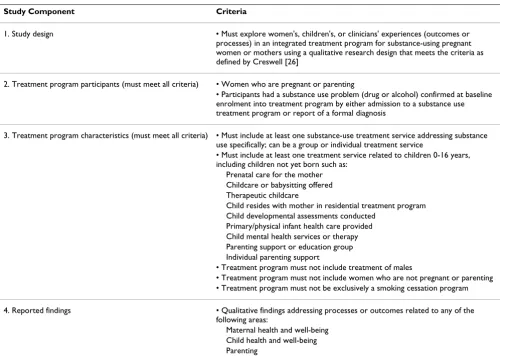
Inclusion and exclusion criteria were developed specifi-cally for the purposes of the meta-analysis and meta-syn-thesis. Studies had to have explicitly and appropriately defined the study design, the population being served, the intervention and its components, and outcomes or, in the case of qualitative research, processes that contributed to outcomes. Table 1 lists the inclusion criteria used to deter-mine eligibility for the qualitative meta-synthesis. For the purposes of this work, Creswell's [26] definition of quali-tative research was used:
Qualitative research is an inquiry process of under-standing based on distinct methodological traditions of inquiry that explore a social or human problem. The researcher builds a complex, holistic picture, ana-lyzes word, reports detailed views of informants, and conducts the study in a natural setting (p. 15).
Two of the authors (WS, SJ) with experience in qualitative research independently reviewed each research report for inclusion in the meta-synthesis. They then met to discuss their individual assessments; when a discrepancy occurred, discussion continued until consensus was met. In the end, 17 of the 45 documents were determined to have met the inclusion criteria. These 17 reports repre-sented 14 distinct qualitative studies, with three reports discussing findings of one study [27-29] and two reports based on another single study [30,31].
Quality Assessment
Harm Reduction Journal 2009, 6:32 http://www.harmreductionjournal.com/content/6/1/32
Page 4 of 17 (page number not for citation purposes)
implications of the research. The "Notes on the use of the methodology checklist" provided as an accompaniment to the checklist was consulted throughout the rating proc-ess. A summative rating was given based on whether all or most of the criteria were fulfilled (++), some of the criteria were fulfilled (+), or few or no criteria were fulfilled (-). The reviewers agreed that documents that met 10 or more of the 13 criteria would be assigned a ++ rating, those that met 4 to 9 criteria a + rating, and those that met 0 to 3 cri-teria a - rating. Because guidelines for using the methodol-ogy checklist for qualitative studies state that the latter rating implies a study is weak, we decided to exclude stud-ies with this rating from the meta-synthesis.
The two authors who determined inclusion appropriate-ness also independently reviewed and rated each docu-ment for study quality. There was agreedocu-ment that 7 of the 17 documents met all or most of the criteria (++), 8 met some criteria (+), and 2 met few or no criteria (-). There was disagreement on only one document in that one reviewer rated it ++ and the other reviewer +. As such, 15
reports (representing 12 studies) were deemed to be of adequate quality for inclusion in the meta-synthesis.
Synthesis Approach
We focused on data that pertained to psychosocial process that contributed to recovery and, secondly, to perceived outcomes for women and their children. Textual data that represented authors' findings and interpretations as well as verbatim data from study participants were extracted. These data were copied into Word documents, which were then imported into QSR International's NVivo7 program.
Thematic analysis of data was conducted using the approach suggested by Atkins et al. [36]. We first arranged the documents in chronological order, starting with the oldest. This allowed the meta-synthesis to capture devel-opments in knowledge related to integrated programs for women with substance use issues and their children over the 14-year span of the studies. We then created a prelim-inary grid to display themes and concepts within each study under broad headings that reflected the purpose of the meta-synthesis: processes and outcomes.
Table 1: Inclusion Criteria
Study Component Criteria
1. Study design • Must explore women's, children's, or clinicians' experiences (outcomes or
processes) in an integrated treatment program for substance-using pregnant women or mothers using a qualitative research design that meets the criteria as defined by Creswell [26]
2. Treatment program participants (must meet all criteria) • Women who are pregnant or parenting
• Participants had a substance use problem (drug or alcohol) confirmed at baseline enrolment into treatment program by either admission to a substance use treatment program or report of a formal diagnosis
3. Treatment program characteristics (must meet all criteria) • Must include at least one substance-use treatment service addressing substance use specifically; can be a group or individual treatment service
• Must include at least one treatment service related to children 0-16 years, including children not yet born such as:
Prenatal care for the mother Childcare or babysitting offered Therapeutic childcare
Child resides with mother in residential treatment program Child developmental assessments conducted
Primary/physical infant health care provided Child mental health services or therapy Parenting support or education group Individual parenting support
• Treatment program must not include treatment of males
• Treatment program must not include women who are not pregnant or parenting • Treatment program must not be exclusively a smoking cessation program
4. Reported findings • Qualitative findings addressing processes or outcomes related to any of the
following areas:
Harm Reduction Journal 2009, 6:32 http://www.harmreductionjournal.com/content/6/1/32
Page 5 of 17 (page number not for citation purposes)
The lead author independently analyzed the data from all documents while the second author analyzed the data from half the documents, specifically, alternate docu-ments from the chronological list. Themes became increasingly refined through reciprocal translation, that is, the translation of studies into one another by comparing the themes and concepts in one account with those in oth-ers [36]. The conceptualization of ideas was further refined as the analysis proceeded using an iterative approach. That is, as new ideas emerged, articles that pre-viously had been analyzed were reviewed a second time to look for instances of these ideas and to ensure consistency in the approach to coding.
The two lead authors met to discuss their findings part way through the analysis to discuss themes arising from the reciprocal translation. Much of the discussion focused on comparing and contrasting the more abstract analyti-cal themes related to processes. After another period of independent coding of remaining documents, these authors met a second time to reach consensus on themes, which had become more refined and interpretive in nature. A higher order or synthesized translation was achieved.
Results
Characteristics of Included Studies
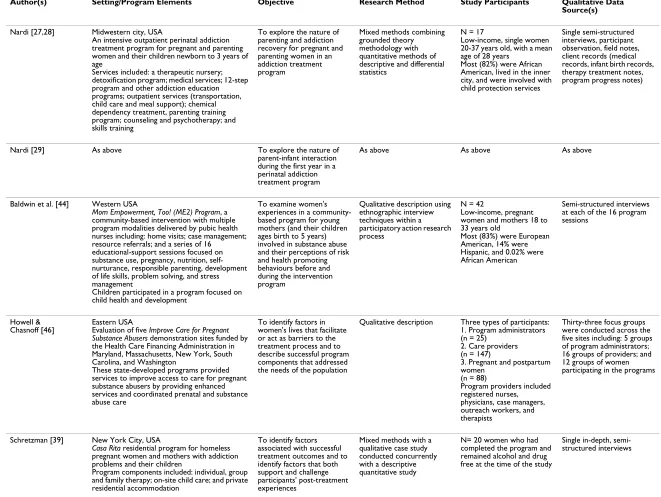
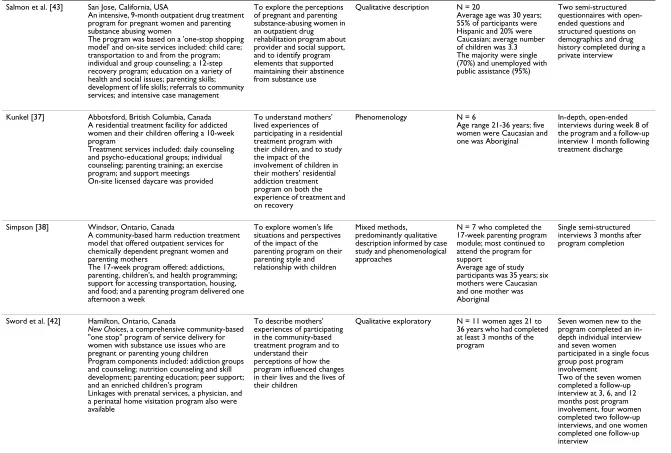
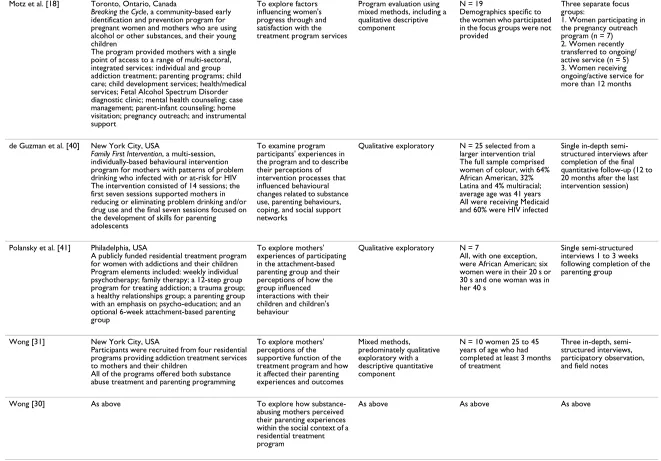
The characteristics of the studies included in the meta-syn-thesis are presented in Table 2. Two of the reports were masters dissertations [37,38], two were doctoral disserta-tions [27,39], and one [18] was a Special Supplement published in the Journal of FAS International. The other documents were journal articles, with two of these report-ing on Nardi's dissertation research [28,29]. All of the studies were conducted in North America (eight in the United States and four in Canada). Most used a qualitative descriptive design and collected data using semi-struc-tured face-to-face interviews. Six studies gathered data in whole or in part from women who had completed an inte-grated treatment program [37-42], and thus were posi-tioned to report on outcomes perceived to be attributable to program participation.
Processes
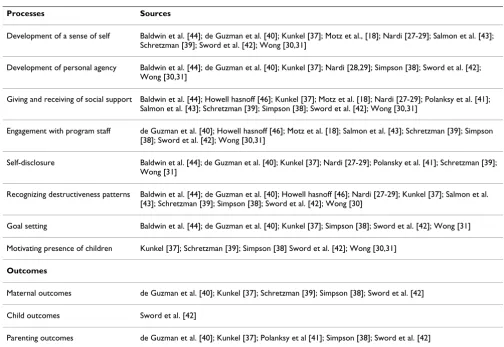
Women experienced a number of psychosocial processes during treatment that played a role in their recovery and contributed to favourable outcomes. These processes included: development of a sense of self; development of personal agency; giving and receiving of social support; engagement with program staff; self-disclosure of chal-lenges, feelings and past experiences; recognizing patterns of destructive behaviour; and goal setting. A final process, the motivating presence of children, sustained women in their journey to recovery. The sources of these process themes are shown in Table 3.
Development of a Sense of Self
One commonly identified process that emerged as part of addiction recovery and was first reported by Nardi [27-29] was development of a sense of self. This included develop-ment of a sense of self-worth, self-identity, and self as a partner in a relationship.
Nardi's [27-29] research revealed an increasing sense of self-worth during program involvement. As she noted [27], women "began to see themselves as persons who were changing and who deserved help" (p. 138). Women in this study also began to recognize they had strengths and needed to build on these strengths to improve their lives. Salmon, Joseph, Saylor, and Mann [43] commented on women's developing self-worth in relation to being "a better person when off drugs" (p. 243). Similarly, Kunkel [37] described how women's sense of personal worth developed in parallel with the desire for recovery and real-ization that they "don't even need drugs" (p. 79). While Kunkel found that women began to see themselves as hav-ing value independent of their children, women also described having value because they had children and because they were valuable to their children. Consistent with this notion of self-worth as a mother was the finding of another study that women started to value not just themselves but their parental selves in particular [31].
As women moved through the recovery process, Nardi [27] remarked that they began to form "an identity as a coherent, separate self" (p. 139). Wong [31] likewise com-mented on the development of self-identity in that women showed "an emerging ability to separate their own needs from those of others" (p. 127). At the same time, she noted that women developed an ability to inte-grate different aspects of self, including self as an addict, mother, woman, and daughter. As one woman in this study said, "If I didn't admit that I did have a drug prob-lem then I wouldn't be a mother to my son" (p. 128) [31].
Another transformation that impacted self-identity was that women developed greater awareness of their children and their maternal roles [27-29]. Wong [31] remarked on women's developing maternal empathy and the ability to more easily identify with children's needs and emotions. As a result of an enhanced maternal identity, women not only became more conscious of responding to their dren's needs, but also were able to bond with their chil-dren and began to view them more positively [27-29,31]. Through the development of a positive parental self-con-cept women became motivated to learn parenting skills and overcome psychological barriers to parenting [31].
Harm Reduction Journal 2 009, 6 :32 http://w ww.h armreductio njou rnal.com/content/6/1/3 2 Pa
ge 6 of
1
7
(page number not for citation purposes)
Table 2: Study Characteristics
Author(s) Setting/Program Elements Objective Research Method Study Participants Qualitative Data Source(s)
Nardi [27,28] Midwestern city, USA
An intensive outpatient perinatal addiction treatment program for pregnant and parenting women and their children newborn to 3 years of age
Services included: a therapeutic nursery; detoxification program; medical services; 12-step program and other addiction education programs; outpatient services (transportation, child care and meal support); chemical dependency treatment, parenting training program; counseling and psychotherapy; and skills training
To explore the nature of parenting and addiction recovery for pregnant and parenting women in an addiction treatment program
Mixed methods combining grounded theory methodology with quantitative methods of descriptive and differential statistics
N = 17
Low-income, single women 20-37 years old, with a mean age of 28 years
Most (82%) were African American, lived in the inner city, and were involved with child protection services
Single semi-structured interviews, participant observation, field notes, client records (medical records, infant birth records, therapy treatment notes, program progress notes)
Nardi [29] As above To explore the nature of parent-infant interaction during the first year in a perinatal addiction treatment program
As above As above As above
Baldwin et al. [44] Western USA
Mom Empowerment, Too! (ME2) Program, a community-based intervention with multiple program modalities delivered by pubic health nurses including: home visits; case management; resource referrals; and a series of 16
educational-support sessions focused on substance use, pregnancy, nutrition, self-nurturance, responsible parenting, development of life skills, problem solving, and stress management
Children participated in a program focused on child health and development
To examine women's experiences in a community-based program for young mothers (and their children ages birth to 5 years) involved in substance abuse and their perceptions of risk and health promoting behaviours before and during the intervention program
Qualitative description using ethnographic interview techniques within a participatory action research process
N = 42
Low-income, pregnant women and mothers 18 to 33 years old
Most (83%) were European American, 14% were Hispanic, and 0.02% were African American
Semi-structured interviews at each of the 16 program sessions
Howell & Chasnoff [46]
Eastern USA
Evaluation of five Improve Care for Pregnant Substance Abusers demonstration sites funded by the Health Care Financing Administration in Maryland, Massachusetts, New York, South Carolina, and Washington
These state-developed programs provided services to improve access to care for pregnant substance abusers by providing enhanced services and coordinated prenatal and substance abuse care
To identify factors in women's lives that facilitate or act as barriers to the treatment process and to describe successful program components that addressed the needs of the population
Qualitative description Three types of participants: 1. Program administrators (n = 25)
2. Care providers (n = 147)
3. Pregnant and postpartum women
(n = 88)
Program providers included registered nurses, physicians, case managers, outreach workers, and therapists
Thirty-three focus groups were conducted across the five sites including: 5 groups of program administrators; 16 groups of providers; and 12 groups of women participating in the programs
Schretzman [39] New York City, USA
Casa Rita residential program for homeless pregnant women and mothers with addiction problems and their children
Program components included: individual, group and family therapy; on-site child care; and private residential accommodation
To identify factors associated with successful treatment outcomes and to identify factors that both support and challenge participants' post-treatment experiences
Mixed methods with a qualitative case study conducted concurrently with a descriptive quantitative study
N= 20 women who had completed the program and remained alcohol and drug free at the time of the study
Harm Reduction Journal
2
009,
6
:32
http://w
ww.h
armreductio
njou
rnal.com/content/6/1/3
2
Pa
ge 7 of
1
7
(page number not for citation purposes)
Salmon et al. [43] San Jose, California, USA
An intensive, 9-month outpatient drug treatment program for pregnant women and parenting substance abusing women
The program was based on a 'one-stop shopping model' and on-site services included: child care; transportation to and from the program; individual and group counseling; a 12-step recovery program; education on a variety of health and social issues; parenting skills; development of life skills; referrals to community services; and intensive case management
To explore the perceptions of pregnant and parenting substance-abusing women in an outpatient drug rehabilitation program about provider and social support, and to identify program elements that supported maintaining their abstinence from substance use
Qualitative description N = 20
Average age was 30 years; 55% of participants were Hispanic and 20% were Caucasian; average number of children was 3.3 The majority were single (70%) and unemployed with public assistance (95%)
Two semi-structured questionnaires with open-ended questions and structured questions on demographics and drug history completed during a private interview
Kunkel [37] Abbotsford, British Columbia, Canada A residential treatment facility for addicted women and their children offering a 10-week program
Treatment services included: daily counseling and psycho-educational groups; individual counseling; parenting training; an exercise program; and support meetings
On-site licensed daycare was provided
To understand mothers' lived experiences of participating in a residential treatment program with their children, and to study the impact of the involvement of children in their mothers' residential addiction treatment program on both the experience of treatment and on recovery
Phenomenology N = 6
Age range 21-36 years; five women were Caucasian and one was Aboriginal
In-depth, open-ended interviews during week 8 of the program and a follow-up interview 1 month following treatment discharge
Simpson [38] Windsor, Ontario, Canada
A community-based harm reduction treatment model that offered outpatient services for chemically dependent pregnant women and parenting mothers
The 17-week program offered: addictions, parenting, children's, and health programming; support for accessing transportation, housing, and food; and a parenting program delivered one afternoon a week
To explore women's life situations and perspectives of the impact of the parenting program on their parenting style and relationship with children
Mixed methods, predominantly qualitative description informed by case study and phenomenological approaches
N = 7 who completed the 17-week parenting program module; most continued to attend the program for support
Average age of study participants was 35 years; six mothers were Caucasian and one mother was Aboriginal
Single semi-structured interviews 3 months after program completion
Sword et al. [42] Hamilton, Ontario, Canada
New Choices, a comprehensive community-based "one stop" program of service delivery for women with substance use issues who are pregnant or parenting young children
Program components included: addiction groups and counseling; nutrition counseling and skill development; parenting education; peer support; and an enriched children's program
Linkages with prenatal services, a physician, and a perinatal home visitation program also were available
To describe mothers' experiences of participating in the community-based treatment program and to understand their perceptions of how the program influenced changes in their lives and the lives of their children
Qualitative exploratory N = 11 women ages 21 to 36 years who had completed at least 3 months of the program
Seven women new to the program completed an in-depth individual interview and seven women participated in a single focus group post program involvement
Two of the seven women completed a follow-up interview at 3, 6, and 12 months post program involvement, four women completed two follow-up interviews, and one women completed one follow-up interview
Harm Reduction Journal
2
009,
6
:32
http://w
ww.h
armreductio
njou
rnal.com/content/6/1/3
2
Pa
ge 8 of
1
7
(page number not for citation purposes)
Motz et al. [18] Toronto, Ontario, Canada
Breaking the Cycle, a community-based early identification and prevention program for pregnant women and mothers who are using alcohol or other substances, and their young children
The program provided mothers with a single point of access to a range of multi-sectoral, integrated services: individual and group addiction treatment; parenting programs; child care; child development services; health/medical services; Fetal Alcohol Spectrum Disorder diagnostic clinic; mental health counseling; case management; parent-infant counseling; home visitation; pregnancy outreach; and instrumental support
To explore factors influencing women's progress through and satisfaction with the treatment program services
Program evaluation using mixed methods, including a qualitative descriptive component
N = 19
Demographics specific to the women who participated in the focus groups were not provided
Three separate focus groups:
1. Women participating in the pregnancy outreach program (n = 7) 2. Women recently transferred to ongoing/ active service (n = 5) 3. Women receiving ongoing/active service for more than 12 months
de Guzman et al. [40] New York City, USA
Family First Intervention, a multi-session, individually-based behavioural intervention program for mothers with patterns of problem drinking who infected with or at-risk for HIV The intervention consisted of 14 sessions; the first seven sessions supported mothers in reducing or eliminating problem drinking and/or drug use and the final seven sessions focused on the development of skills for parenting adolescents
To examine program participants' experiences in the program and to describe their perceptions of intervention processes that influenced behavioural changes related to substance use, parenting behaviours, coping, and social support networks
Qualitative exploratory N = 25 selected from a larger intervention trial The full sample comprised women of colour, with 64% African American, 32% Latina and 4% multiracial; average age was 41 years All were receiving Medicaid and 60% were HIV infected
Single in-depth semi-structured interviews after completion of the final quantitative follow-up (12 to 20 months after the last intervention session)
Polansky et al. [41] Philadelphia, USA
A publicly funded residential treatment program for women with addictions and their children Program elements included: weekly individual psychotherapy; family therapy; a 12-step group program for treating addiction; a trauma group; a healthy relationships group; a parenting group with an emphasis on psycho-education; and an optional 6-week attachment-based parenting group
To explore mothers' experiences of participating in the attachment-based parenting group and their perceptions of how the group influenced interactions with their children and children's behaviour
Qualitative exploratory N = 7
All, with one exception, were African American; six women were in their 20 s or 30 s and one woman was in her 40 s
Single semi-structured interviews 1 to 3 weeks following completion of the parenting group
Wong [31] New York City, USA
Participants were recruited from four residential programs providing addiction treatment services to mothers and their children
All of the programs offered both substance abuse treatment and parenting programming
To explore mothers' perceptions of the supportive function of the treatment program and how it affected their parenting experiences and outcomes
Mixed methods, predominately qualitative exploratory with a descriptive quantitative component
N = 10 women 25 to 45 years of age who had completed at least 3 months of treatment
Three in-depth, semi-structured interviews, participatory observation, and field notes
Wong [30] As above To explore how substance-abusing mothers perceived their parenting experiences within the social context of a residential treatment program
As above As above As above
Harm Reduction Journal 2009, 6:32 http://www.harmreductionjournal.com/content/6/1/32
Page 9 of 17 (page number not for citation purposes)
children enabled them to connect with others and to build relationships. They began to see themselves as part-ners in a parent-child relationship [27-29]. Ultimately, women experienced improved relationships with their children and an enhanced parental self-concept and parenting [31]. Women in Schreztman's [39] study reported that relationships with their children were important to staying sober.
Women also developed a capacity for healthy relation-ships and a sense of self as a partner in relationrelation-ships with friends, partners, family members, program staff, and other program participants [27-30]. Baldwin, Rawlings, Marshall, Conger and Abbott [44] commented that women discovered "the importance of developing trust-ing relationships and positive friendships" (p. 381), which women noted required that they first trust them-selves. In addition to an ability to trust others, some stud-ies revealed other factors that may be important in developing capacity for relationships. For instance, de Guzman and colleagues [40] found that women devel-oped the ability to identify and express their needs to
oth-ers while Wong [31] reported that women developed the capacity to form partnerships with others to pursue mutual goals.
Group interaction and discussion were instrumental to self-development. Interactions with other mothers facili-tated maternal self-awareness through role modeling, dis-cussion, and positive feedback [27-29]. Group discussion also fostered self-examination of lives and choices and, ultimately, self-discovery in a safe environment [27-31,42]. Additionally, the encouragement of group mem-bers was important to the building of self-esteem and maintaining faith in one's ability to be successful in achieving goals [18,42].
Development of Personal Agency
Women experienced development of personal agency during program involvement. As defined by Smith and col-leagues [45], personal agency is the capacity to achieve desired outcomes on one's own behalf through ability, choices, perseverance or planning. Women overcame powerlessness [30,31] and began to discover "their own Table 3: Summary of Sources for Process Themes and Outcomes
Processes Sources
Development of a sense of self Baldwin et al. [44]; de Guzman et al. [40]; Kunkel [37]; Motz et al., [18]; Nardi [27-29]; Salmon et al. [43]; Schretzman [39]; Sword et al. [42]; Wong [30,31]
Development of personal agency Baldwin et al. [44]; de Guzman et al. [40]; Kunkel [37]; Nardi [28,29]; Simpson [38]; Sword et al. [42]; Wong [30,31]
Giving and receiving of social support Baldwin et al. [44]; Howell hasnoff [46]; Kunkel [37]; Motz et al. [18]; Nardi [27-29]; Polanksy et al. [41]; Salmon et al. [43]; Schretzman [39]; Simpson [38]; Sword et al. [42]; Wong [30,31]
Engagement with program staff de Guzman et al. [40]; Howell hasnoff [46]; Motz et al. [18]; Salmon et al. [43]; Schretzman [39]; Simpson [38]; Sword et al. [42]; Wong [30,31]
Self-disclosure Baldwin et al. [44]; de Guzman et al. [40]; Kunkel [37]; Nardi [27-29]; Polansky et al. [41]; Schretzman [39]; Wong [31]
Recognizing destructiveness patterns Baldwin et al. [44]; de Guzman et al. [40]; Howell hasnoff [46]; Nardi [27-29]; Kunkel [37]; Salmon et al. [43]; Schretzman [39]; Simpson [38]; Sword et al. [42]; Wong [30]
Goal setting Baldwin et al. [44]; de Guzman et al. [40]; Kunkel [37]; Simpson [38]; Sword et al. [42]; Wong [31]
Motivating presence of children Kunkel [37]; Schretzman [39]; Simpson [38] Sword et al. [42]; Wong [30,31]
Outcomes
Maternal outcomes de Guzman et al. [40]; Kunkel [37]; Schretzman [39]; Simpson [38]; Sword et al. [42]
Child outcomes Sword et al. [42]
Harm Reduction Journal 2009, 6:32 http://www.harmreductionjournal.com/content/6/1/32
Page 10 of 17 (page number not for citation purposes)
agency, power and growth" (p. 381) [44]. Recognition of strengths and having a sense of control contributed to improved self-esteem, self-worth, and confidence [31,42,44].
Development of personal agency fostered capacity for change. Women developed a willingness to accept per-sonal responsibility for change, recognizing that they were the only ones who could regain control over their lives [37,42,44]. Women commented specifically on their capacity to decrease substance use and resist the urge to relapse, and on their confidence in being able to over-come their weaknesses and stay sober [37,42]. An impor-tant aspect of change in substance use was the development of alternative coping skills, such as relaxa-tion techniques, to replace substance use as a coping mechanism [28,29,40,42]. Recognizing cues to relapse enabled women to plan in advance for confronting risks through the use of substitute coping responses [28,29,38].
Giving and Receiving of Social Support
Many of the studies highlighted the giving and receiving of social support as being instrumental to women's recovery. Nardi [28] described this support as being "embedded in the interpersonal interactions that took place at the pro-gram, and occurred in a feedback loop of give-and-take among women" (p. 85). Others similarly described the interactional nature of social support that occurred within treatment groups [18,23,37,38,43,44]. Wong [30] com-mented that past experiences created ambivalence about seeking support, such that women had to learn "to trust the support at their own pace" (p. 167). The nature of the social support received within program groups might ulti-mately have enabled women to accept help without resentment, obligation, and pressure that can cause addi-tional stress [27-29]. Moreover, some studies reported that the support often served to lessen or buffer women's multiple stressors [30,31,43].
Through interaction, women were afforded the opportu-nity to understand and work through their problems while being provided support and encouragement [30,31,46]. Positive relational experiences instilled confi-dence in their ability to be successful in the recovery proc-ess and enhanced perceptions of self and others [30,42]. Women also gave and received feedback and advice to one another [38,43]. In some instances, they learned from each other through role modeling of parental behaviour and sharing experiences [18,27,29]. Women ultimately felt that others respected and cared for them [38,39]. The ability to mobilize the support of others suggests that in addition to developing personal agency, women also developed interpersonal agency [45].
The importance of social support being provided by oth-ers with a shared past is noteworthy. Within the group programs women felt safe and were able to talk with oth-ers who had similar experiences without being judged or manipulated [18,27-29,31,38,39,42,43]. In turn, they came to trust others [37,38,44]. Women were comfortable sharing their past and being open about their experiences because they felt understood and could provide under-standing to others [18,38,41,42].
Listening to the stories of women who were improving their lives gave women encouragement and a sense of hope [42]. Motivation for recovery also was prompted by hearing stories of women who had lost custody of their children [18,37]. Finally, the relationships with other women in similar situations decreased feelings of isola-tion and disconnecisola-tion and, in some instances, genuine friendships developed [18,31,38,42].
Engagement with Program Staff
Engagement with staff emerged as a process that was central to women's participation in the programs and behaviour change. The non-judgmental approach of staff and attributes such as compassion, honesty, empathy, and respect facilitated the development of therapeutic rela-tionships [18,31,38-40,42]. These characteristics often were perceived to create a caring, safe, and supportive environment for recovery [31,39,43]. Additionally, feel-ing understood "as a whole person, and not just as a sub-stance user" was important to women (p. 53) [18].
A non-directing approach by staff was important. Women valued being assisted to understand their problems and what contributed to them, and to identify strategies to address them [43,46]. They also appreciated being able to set their own agendas at their own pace, being provided treatment options, and being supported in their choices and decisions [18,42]. The ability of staff to listen also was significant to women in that it not only promoted under-standing and facilitated problem solving, but also con-veyed respect [18,31,39,43].
Harm Reduction Journal 2009, 6:32 http://www.harmreductionjournal.com/content/6/1/32
Page 11 of 17 (page number not for citation purposes)
Two studies reported on children's engagement with staff. Sword and colleagues [42] noted that women commented favourably on the staff's interaction with children and that children felt comfortable in the program while the report by Motz and colleagues [18] included a mother's remark about her daughter's closeness to a therapist and how she looked forward to seeing her. Valuing children's relation-ships with staff may be attributed, in part, to women's developing awareness of children's needs.
Self-disclosure
The nature of the relationship with group participants and staff facilitated self-disclosure, which was an important component of the recovery process [39]. As reported by de Guzman and colleagues [40], "women freely shared the challenges they faced with alcohol and drug use, free of judgment" (p. 1259). Schretzman [39] and Polansky and colleagues [41] similarly commented that women were able to open up, and felt comfortable sharing their feel-ings and their past in a safe environment. As such, they were able to be honest with themselves and others [31,38].
Through self-disclosure, women were able to confront the past. Often this revolved around women's relationships with their mothers and the painful experiences of aban-donment, neglect, and abuse [27-29,31,39,41,44]. Aware-ness of the negative impact of such relationships provided insight into parenting and fostered a more positive approach to parenting their own children [37,41].
Recognizing Destructiveness Patterns
Another process fundamental to change and recovery was
recognizing destructiveness patterns. Women were enabled to examine their lives and choices [27-29], and often began to recognize the extent of their substance use problem only after encountering women with similar difficulties and hearing their stories [37,42]. They developed aware-ness not only of the impact of their drug or alcohol use on themselves and their body, but also the impact of other choices such as staying in abusive relationships and con-tinuing contact with others with substance use issues [27-29,43,44]. Moreover, women became cognizant of the effects of their choices on their children [27-29,38,40]. While acknowledgement of the effect of substance use on their children promoted women's continued participa-tion in program activities, they also had to overcome asso-ciated feelings of guilt and anxiety [30,31,38].
Given the negative influence of others who use sub-stances, it was important that women had the opportunity to develop and maintain relationships with sober peers [39]. Such individuals served as motivating role models and sources of emotional support [39,46]. Women's
con-nectedness with sober peers contributed to feeling cared for and assisted women in maintaining sobriety [39].
Goal Setting
An activity undertaken with the support of program staff that contributed to treatment success was goal setting. It was important that women's goals were realistic, and staff played a role in determining the appropriateness of goals in relation to the program's resources, time frame, and purpose as well as in relation to women's specific needs [40]. Goal setting was motivating for women and pro-vided a means to prove to themselves that they could accomplish something meaningful [44]. Both the setting of and achieving of goals gave women a sense of pride and accomplishment [40]. Reviewing women's goals and progress towards them at the outset of each program ses-sion allowed for goals to be revised as women's needs and circumstance changed [40].
While personal goals were variable, women often entered treatment wanting to become better parents and to estab-lish their parental role [30,31,37,38]. An important goal for many women was maintaining or regaining custody of their children [38,42]. In situations where children were under the protection of child welfare, women were moti-vated by the possibility of their children being returned to them [38].
Motivating Presence of Children
A major finding of Schretzman's study was the impor-tance of having children present during treatment in that it helped sustain women's motivation in their recovery process [39]. Other research similarly noted the value of children's presence as a motivating influence [30,31,37,38,42], which is not surprising given the cen-trality of motherhood to women's identity and recovery. As Kunkel [37] commented, "Children's presence in treat-ment provides women with security and comfort in their role as parents and in their recovery" (p. 69). Wong also commented on the emotional support afforded women simply by having children in program [31]. In addition, their presence often contributed to an awareness of the urgency of dealing with recovery issues [39].
Harm Reduction Journal 2009, 6:32 http://www.harmreductionjournal.com/content/6/1/32
Page 12 of 17 (page number not for citation purposes)
with children, which was emotionally satisfying to women [31,42].
Outcomes
Perceived outcomes of participating in an integrated inter-vention program included: a maintained sense of per-sonal agency; improvements in perper-sonal well-being; sustained sobriety or decreased substance use; establish-ment of positive social support networks; greater insight into self, others, and relationships; increased access to community services; and a more positive approach to pro-fessional relationships. Women also perceived that their capacity for parenting was enhanced in that they reported increased knowledge, skills, and confidence. They also identified improved maternal-child communication and relationships. Studies included in this meta-analysis did not explore women's perceptions of child health out-comes, with the exception of the study by Sword and col-leagues in which women reported that program involvement had a positive impact on their children's behaviour and development [42]. The sources of specific outcome findings are shown in Table 3.
Maternal Outcomes
A sense of personal agency reportedly was maintained post-treatment. Women commented on their increased sense of control and confidence [42], and how they exer-cised personal power in making careful choices about with whom they associated and in enforcing boundaries in relationships [37]. As reported by Kunkel [37], they also demonstrated a "pro-active" approach to life that enabled them to continue with recovery activities and life goals (p. 61). Women were able to sustain sobriety or their decreased substance use, often with the assistance of an existing social network of sober friends or new support networks of substance-free associations [38,39,42], and exercised the self-discipline required for successful recov-ery [37].
Women experienced improved personal well-being and a readjustment of priorities in that they were more content with self and life, and had learned to relax and enjoy life and their successes [37]. Sword and colleagues [42] com-mented on women's employment readiness, which ena-bled them to achieve goals related to obtaining one's own pay cheque. In addition, women had greater insight into their strengths and weakness, and increased awareness of people and relationships [37]. It was noted that women had enhanced access to other services to benefit them-selves and their children post-program [40,42]. Kunkel [37] importantly observed that women had a more posi-tive approach to professional relationships and entered them with a "spirit of cooperation" (p. 61).
Child Outcomes
The study by Sword and colleagues [42] was the only one to comment on child outcomes. Women observed that program involvement had a positive impact on children's behaviour and development, including their motor, social, and language skills.
Parenting Outcomes
A number of studies reported enhanced capacity for parenting as an outcome of program involvement. Women gained increased knowledge about parenting and learned new parenting skills, which they willingly applied at home with their children [38,42]. They became knowl-edgeable about specific strategies, such as the use of rewards, and how to use positive discipline techniques [38,42]. Women also learned the importance of verbal communication [38,40,41]. In particular, as reported by Polansky and colleagues [41], they came to appreciate the use of communication as an alternative to physical pun-ishment, and its value in teaching and guiding children and in strengthening emotional bonds. In addition, women gained awareness of the importance of listening to their children [40,41].
Through involvement in treatment programs, women developed increased understanding of children, their behaviour, and their needs [38,40,42]. Simpson [38] commented specifically on women's awareness of chil-dren's emotional needs. The enhanced understanding of children strengthened maternal relationships with them [42]. Women also described more positive engagement with their children [37,38,40]. This included involvement in day-to-day activities at home, such as having dinner or watching a movie together, and attending children's games as well as finding services to help children with their issues [38,40].
Finally, women developed increased confidence in parenting and a positive identification with their parent-ing role [38]. As one woman in Simpson's [38] study said, "I can see how my perspective has changed in that I don't have to be a perfect mother in order to be a good mother...that every day doesn't have to be perfect" (p. 94).
Discussion
Harm Reduction Journal 2009, 6:32 http://www.harmreductionjournal.com/content/6/1/32
Page 13 of 17 (page number not for citation purposes)
unfolds along a continuum, leading to a higher quality of life [47,48].
Through involvement in programs, women developed an enhanced sense of self. Development of a sense of self-worth is notable as women with substance use issues tend to have low levels of self-esteem [49] and pregnant women and mothers, in particular, experience stigma that negatively impacts their self-worth [50,51]. Along with an improved self-worth, the development of a non-addict identity is an important aspect of recovery [52,53]. Moth-ers with substance use issues often experience difficulties in developing a maternal identity, which is related to lim-ited care giving experience, a focus on one's own needs for recovery, and addressing only the non-emotional needs of children [49]. The meta-synthesis revealed that integrated treatment programs support women in defining self in other roles, including self as mother.
As part of the recovery process, and related to the develop-ment of a non-addict identify, women also developed a capacity for relationships with their children and with others internal and external to the treatment program. This is an important aspect of recovery because women who use substances often have histories of physical, sex-ual or emotional abuse as children [54,55]. These histo-ries, along with socioeconomic circumstances and characteristics of drug-exposed children, can negatively affect parenting practices [56]. In addition, women with substance use issues often continue to experience abuse beyond childhood [55], which may negatively impact their abilities to engage in adult relationships.
Another finding of the meta-sythesis was that women developed personal agency through integrated treatment program involvement. Other first person accounts simi-larly describe people in recovery as active agents of change in their lives rather than passive recipients of services [48]. This cognitive resource plays an important role in promot-ing healthy behaviours, includpromot-ing continued abstinence [57]. As reflected in the findings of the meta-synthesis, an aspect of developing personal agency in recovery is learn-ing and belearn-ing able to implement adaptive coplearn-ing strate-gies as alternatives to substance to cope with stress [47]. The lives of women with substance use issues tend to be characterized by chronic life stress related to issues such as abuse and traumatization, single parenting, inadequate income, family or social problems, health problems, and removal of children from the home [49,58]. Because stress can trigger relapse, adaptive coping strategies are key resources that promote maintenance of recovery [47,59].
The finding that women experienced the giving and receiving of social support within integrated treatment programs is noteworthy as women who use substances
often experience social isolation and limited social sup-port [49,60]. Social supsup-port, including that of peers and helping professionals, is a key resource in recovery [47,48,61,62]. As suggested by the meta-synthesis find-ings, social support may act to buffer against stress, a notion espoused by Tucker and colleagues [63] who found that women with greater social support reported less substance use. It is essential that women have social support systems that are constructive and provide support without enabling drug use [64]. Moreover, as noted by Kellogg and Kreek [52], a constructive social setting ena-bles women to develop relational or interpersonal aspects of their self-identity, a component of self-development that emerged in the meta-synthesis.
Getting women to engage and participate in recovery activities is a first step to treatment retention and longer-term outcomes [38,65]. Because staff members are key actors in this process [65], the finding that women engaged with program staff is important. Therapeutic rela-tionships were characterized by acceptance, a non-judg-mental attitude, openness, empathy, and respect. In a recent study, stronger therapeutic engagement, specifi-cally program participation and rapport with staff, was found to be associated with higher treatment motivation and readiness and to better psychosocial functioning (e.g., higher self-esteem, self-efficacy, decision making, social consciousness) [66].
Therapeutic engagement with staff and the support of women with shared experiences facilitated self-disclosure of histories of neglect and abuse and substance use-related issues. In a study of women in recovery, "breaking the silence" by discussing abuse experiences assisted them in reshaping their sense of self and connecting to others [67]. Altering one's concept of self and committing to a newly established sense of identify was seen as integral to the process of recovery. Women in this study also reported that they began to understand their behaviour patterns, which enabled them to take action.
shel-Harm Reduction Journal 2009, 6:32 http://www.harmreductionjournal.com/content/6/1/32
Page 14 of 17 (page number not for citation purposes)
ter, they progressed to more complex long-term goals [68].
Goal setting was another theme that emerged from the meta-synthesis. The ability to engage in future-oriented, goal-directed behaviour is central to the recovery process in substance use treatment [52]. Programs that are sup-portive and goal-directed demonstrate improved treat-ment participation and better outcomes [52,69]. The need for women to act in a consistent self-directed manner to achieve goals underscores the importance of personal agency [52].
The qualitative meta-synthesis highlighted the motivating presence of children for women to remain in integrated treatment programs. The meta-analysis of quantitative studies of integrated treatment programs we conducted (unpublished data) revealed that, relative to non-inte-grated programs, having children present increases client engagement, possibly because pregnancy-, parenting-, and child-related services increase maternal motivation to actively engage and remain in treatment [42]. Creamer and McMurtrie [70] commented that women in treatment often have difficulty or are unwilling to separate them-selves from their role as mother to focus exclusively on their own needs. They, too, identified that children can be motivators for staying in treatment. Moreover, because mothering can build self-esteem [70], the presence of chil-dren also contributes to women's development of sense of self.
The findings regarding outcomes are consistent with pre-vious reviews and meta-analyses of quantitative studies in supporting the effectiveness of integrated programs in improving maternal engagement, substance use, and well-being. This qualitative meta-synthesis also identified pos-itive outcomes of integrated programs for parenting knowledge, skills, and confidence, as well as child devel-opment and behaviour and the parent-child relationship. The lack of attention to child outcomes is an important omission of the qualitative studies conducted to date, especially given that integrated programs are designed to meet the needs of women and their children.
Strengths of this meta-synthesis include the use of: a sys-tematic and comprehensive search strategy; criteria that were congruent with the defined purposes of the synthesis to make inclusion decisions; and a quality assessment checklist developed by the National Institute for Health and Clinical Excellence (NICE) [33]. Several of the studies were determined to be of high quality, and lower rankings tended to represent an absence of information (e.g. research methods unclear, study limitations not reported, inadequate discussion of study limitations) rather than explicit methodological inadequacies. Details about
themes and verbatim quotes were extracted from the doc-uments. These data were then synthesized using a system-atic and iterative process to create high-order constructs or themes that reflected women's experiences. Finally, two of the authors independently determined whether reports met inclusion criteria, assessed quality, and analyzed the extracted data, with decisions made by consensus when there were differences. While we anticipated that conduct-ing a thematic analysis of the studies in chronological order would capture developments in knowledge, we found no discernable developmental patterns. This most likely is related to the wide diversity in study aims and research methods.
The main limitation of this meta-synthesis is that it relied on data derived predominantly from simple qualitative descriptive studies. Within the hierarchy of qualitative dence [71], descriptive studies are a weaker type of evi-dence compared to conceptual studies or generalizable qualitative studies conducted using more theoretical approaches such as grounded theory or phenomenology. Descriptive studies can confirm and describe characteris-tics of a phenomenon within a specific population and highlight context-specific issues, but may have limited transferability to contexts outside of the original study and limited utility for evidence-informed practice and policy development. While it has been argued that it is inappropriate to synthesize the findings of qualitative studies that have been carried out in diverse contexts and to generalize across studies, qualitative meta-syntheses can produce new understandings through conceptual development of shared meanings or generative mecha-nisms [22,72].
Conclusion
The process findings of the meta-synthesis support the need for programs to adopt "wellness-oriented practices" that improve personal health and social functioning [47,73]. Given the importance of a positive sense of self, inner strength, and social support in fostering these out-comes [73], the notion of a "healing environment" char-acterized by empowerment, safety, and connections becomes salient [50]. Covington [50] suggested that con-nections with treatment staff that are empathic, respectful, and compassionate contribute to the development of con-nections among program participants through modeling of similar behaviours. Such growth-promoting relation-ships with helping professionals and peers have been identified as having a key role in women's recovery and highlight the need to adopt a relational model of treat-ment [50,51,70].
relation-Harm Reduction Journal 2009, 6:32 http://www.harmreductionjournal.com/content/6/1/32
Page 15 of 17 (page number not for citation purposes)
ships developed within the treatment context [50,51]. Given women with substance use issues often have expe-rienced multiple "disconnections" in their lives, including neglectful or abusive parenting, failed relationships, and experiences of violence in adulthood, it is important that they are assisted in developing healthy relationships with others [51,62]. In addition to building relational skills, interactions within the group can contribute to the devel-opment of a non-addict identity [52] and also support transformative learning, which is an effective model for the recovery process [74].
The phases of transformative learning are congruent with many of the process findings of the qualitative meta-syn-thesis. An initial step of transformative learning is self-reflection during which an individual tries to make mean-ing of one's life and experiences [74]. Involvement with others is essential for learning to continue as "rational dis-course" provides opportunity to listen to the opinions and experiences of others, prompting recognition of a shared process of transformation and exploration of options [74]. Acquisition of knowledge and skill to implement plans, planning of a course of action, and trying out new roles are other integral components that lead to action and ultimately maintenance and reintegration phases [74]. Because transformational learning can be painful [74], it is important that it occur in the context of a safe, supportive environment.
Women's relationships with their children need particular attention. Programs should provide support for the parenting role through a number of strategies, including: providing assistance in gaining insight into personal expe-riences with dysfunctional parenting and their influences on current parenting [49]; education on child behaviour and development [49]; opportunity to discuss the effect of substance use on children [49]; and practice of communi-cation and discipline techniques [75]. As suggested by this meta-synthesis, having children present in the treatment program is highly motivating, and facilitates the develop-ment of parenting skills and the reestablishdevelop-ment of rela-tionships with children. Positive parenting practices and enhanced family relationships influence healthy child outcomes and alter predispositions toward negative behaviours, thereby playing a significant role in breaking the cycle of addiction and dysfunctional parenting [49,75,76].
Competing interests
The authors declare that they have no competing interests.
Authors' contributions
All authors contributed to the original study design. WS and SJ conducted the relevance and quality assessment, extracted data, carried out the thematic analysis, and
pre-pared the draft of the manuscript. All authors read and approved the final manuscript.
Acknowledgements
This work was funded by the Canadian Institutes of Health Research (CIHR). Dr. Jack was supported by a CIHR New Investigator Personnel Award. Thank you to Ainsley Smith for her assistance with the literature retrieval and preparation of the manuscript.
References
1. Single E, Robson L, Xie XD, Rehm J: The economic costs of alco-hol, tobacco and illicit drugs in Canada, 1992. Addiction 1998,
93:991-1006.
2. Single E, Rehm J, Robson L, Van Troung M: The relative risks and etiologic fractions of different causes of death and disease attributable to alcohol, tobacco and illicit drug use in Can-ada. CMAJ 2000, 162:1669-1675.
3. Roe S, Man L: Drug misuse declared: Findings from the 2005/06 British Crime Survey, Home Office Statistical Bulletin 15/06 London, HMSO; 2006.
4. Statistics Canada: Table 105-1100 - Mental health and well-being profile, Canadian Community Health Survey (CCHS), by age group and sex, Can-ada and provinces, occasional, CANSIM (database) 2002.
5. Substance Abuse and Mental Health Services Administration: Results from the 2006 National Survey on Drug Use and Health: national findings
2007 [http://oas.samhsa.gov/nsduh/2k6nsduh/2k6Results.pdf]. Office of Applied Studies, NSDUH Series H-32, DHHS Publication No. SMA 07-4293. Rockville, MD
6. Simpson M, McNulty J: Different needs: women's drug use and treatment in the UK. Int J Drug Policy 2008, 19:169-175. 7. Castel S, Rush B, Urbanoski K, Toneatto T: Overlap of clusters of
psychiatric symptoms among clients of a comprehensive addiction treatment service. Psychol Addict Behav 2006, 20:28-35. 8. Barnard M, McKeganey N: The impact of parental problem drug use on children: what is the problem and what can be done to help? Addiction 2004, 99:552-559.
9. Conners NA, Bokony P, Whiteside-Mansell L, Bradley RH, Liu J:
Addressing the treatment needs of children affected by maternal addiction: challenges and solutions. Eval Program Plann 2004, 27:241-247.
10. Covington CY, Nordstrom-Klee B, Ager J, Sokol R, Delaney-Black V:
Birth to age 7 growth of children prenatally exposed to drugs. Neurotoxicol Teratol 2002, 24:489-496.
11. Dew PC, Guillory VJ, Okah FA, Cai J, Hoff GL: The effect of health compromising behaviors on preterm births. Matern Child Health J 2007, 11:227-233.
12. Brown VL, Riley MA: Social support, drug use, and employment among low-income women. Am J Drug Alcohol Ab 2005,
31:203-223.
13. Pirard S, Sharon E, Kang SK, Angarita GA, Gastfriend DR: Preva-lence of physical and sexual abuse among substance abuse patients and impact on treatment outcomes. Drug Alcohol Depen 2005, 78:57-64.
14. Powis B, Gossop M, Bury C, Payne K, Griffiths P: Drug-using moth-ers: social, psychological and substance use problems of women opiate users with children. Drug Alcohol Rev 2000,
19:171-180.
15. Ammerman RT, Kolko DJ, Kirisci L, Blackson TC, Dawes MA: Child abuse potential in parents with histories of substance use dis-order. Child Abuse Neglect 1999, 23:1225-1238.
16. Magura S, Laudet AB: Parental substance abuse and child mal-treatment: review and implications for intervention. Child Youth Serv Rev 1996, 18:193-220.
17. Suchman NE, Luthar SS: Maternal addiction, child maladjust-ment and socio-demographic risks: implications for parent-ing behaviors. Addiction 2000, 95:1417-1428.
18. Motz M, Leslie M, Pepler DJ, Moore TJ, Freeman PA: Breaking the Cycle: measures of progress 1995-2005. J FAS Int 2006, 4(Sup-plement):1-138.
19. Niccols A, Sword W: "New Choices" for substance-using moth-ers and their children: preliminary evaluation. J Subst Use