
Complete genome sequence of
ammonia oxidizing bacterium adapted to low ammonium
concentrations
Annette Bollmann1*, Christopher J. Sedlacek1, Jeanette Norton2, Hendrikus J. Laanbroek3, Yuichi Suwa4, Lisa Y. Stein5, Martin G. Klotz6, Daniel Arp7, Luis Sayavedra-Soto7, Megan Lu8, David Bruce8, Chris Detter8, Roxanne Tapia8, James Han9, Tanja Woyke9, Susan M. Lu-cas9, Sam Pitluck9, Len Pennacchio9, Matt Nolan9, Miriam L. Land10, Marcel Huntemann9, Shweta Deshpande9, Cliff Han8, Amy Chen9, Nikos Kyrpides9, Konstantinos Mavromatis9, Victor Markowitz9, Ernest Szeto9, Natalia Ivanova9, Natalia Mikhailova9, Ioanna Pagani9, Amrita Pati9, Lin Peters9, Galina Ovchinnikova9, and Lynne A. Goodwin8
1 Miami University, Oxford, Ohio, USA 2 Utah State University, Logan, Utah, USA
3 Netherlands Institute for Ecology, Wageningen, The Netherlands 4 Chuo University, Tokyo, Japan
5 University of Alberta, Edmonton, Alberta, Canada
6 University of North Carolina, Charlotte, North Carolina, USA 7 Oregon State University, Corvallis, Oregon, USA
8 Los Alamos National Laboratory, Bioscience Division, Los Alamos, New Mexico, USA 9 DOE Joint Genome Institute, Walnut Creek, California, USA
10 Oak Ridge National Laboratory, Oak Ridge, Tennessee, USA * Corresponding author: Annette Bollmann ([email protected])
Keywords
trogen cycle, freshwater, oligotrophic
to the fam
the first step of nitrification, an important process in the global nitrogen cycle ultimately re-sulting in the production of nitrate terest because it is adapted to low ammonium and can be found in freshwater environments around the world. The 3,783,444-bp chromosome with a total of 3,553 protein coding genes and 44 RNA genes was sequenced by the DOE-Joint Genome Institute Program CSP 2006.
Introduction
monia-oxidizer. The genus name rived from nitrosus (Latin: nitrous) and monad (Greek: a unit) meaning nitrite producing unit.
from freshwater sediment [1]. Closely related strains can be found in freshwater environments around the world [2-6]. Other cies have been isolated from freshwater and ma-rine systems, wastewater treatments plants and soils [7,8]. The genome sequence of
betaproteobacterial ammonia oxidizers that has been completed by DOE-Joint Genome Institute (CP002876.1) [9-12]. Here we present summary classification and a set of features for
plete genome sequence and annotation.
Classification and features
Fourteen species with valid published names are
currently assigned to the
19]. Besides these described species, many un-described isolates are available [7,20-22]. These strains were isolated from freshwater, marine sys-tems, wastewater and soils, share the traits of aer-obic chemolithoautotrophic metabolism using am-monia as an electron donor, and carbon dioxide as carbon source (Table 1).
cultures since then, being transferred to fresh me-dium approximately once per month. The strain has not been deposited in a culture collection, but can be obtained from A.B. upon request. Based on 16S rRNA gene sequences, the strains most closely
related t
and
quence identity (Figure 1). The sequence of the single 16S rRNA gene copy in the genome of
from the previously published 16S rRNA gene se-quence (AJ621026), both of which are insertions into the whole genome sequence.
Growth studies show that
has a chemolithoautotrophic metabolism using ammonia as energy source producing nitrite. The strain is strictly aerobic and fixing carbon autotrophically from carbon dioxide via the Calvin
cycle [37].
ammonium concentrations and has been isolated after enrichment in continuous culture under ammonium-limited conditions [1]. Further
exper-iments showed that
able to grow and outcompete
[38] and has Ks and Km values for ammonium
low-er than othlow-er ammonia-oxidizing bactlow-eria [Bollmann unpublished].
Figure 1. Phylogenetic tree showing the position of
strains within the family. cause the whole genome of this strain became recently available [12]. The tree was constructed from 1,272 aligned characters of the 16S rRNA gene sequence under the maximum likelihood criterion and rooted in ac-cordance with a current taxonomy using the software package MEGA [35]. Numbers adjacent to the branches are support values from 1,000 ML bootstrap replicates (left) and from 1,000 maximum parsimony bootstrap replicates (right) if larger than 60% [35]. Strains with whole genome sequencing projects registered in GOLD
[36] are shown in red and the published in red-bold:
Table 1. Classification and general features o
MIGS ID Property Term Evidence code
Domai TAS [24]
Phylum TAS [25]
Clas TAS [26,27]
Current classification Order TAS [27,28]
Fam TAS [27,29]
Genus TAS [13,30-32]
Species IDA
Type strain Is79 IDA
Gram stain negative NAS
Cell shape rod-shaped, short NAS
Motility not reported
Sporulation none NAS
Temperature range mesophile NAS
Optimum temperature not reported
Salinity < 50mM NaCl, very sensitive to salt TAS [1,33]
MIGS-22 Oxygen requirement aerobic TAS [1]
Carbon source carbon dioxide TAS [1]
Energy source ammonia TAS [1]
Energy metabolism chemolithoautotroph TAS [1]
MIGS-23 Isolation and growth conditions
Isolation after enrichment in chemostat under low substrate concentrations, adapted to low
ammonium concentrations in the medium TAS [1]
MIGS-6 Habitat freshwater TAS [1]
MIGS-15 Biotic relationship free-living NAS
MIGS-14 Pathogenicity None NAS
Biosafety level 1 TAS [34]
Isolation freshwater sediment TAS [1]
MIGS-4 Geographic location Lake Drontermeer (Netherlands) TAS [1]
MIGS-4.1 Latitude 52°58’N NAS
MIGS-4.2 Longitude 5°50’E NAS
MIGS-4.3 Depth 0.5 m (root zone in the littoral zone of the lake) TAS [1]
MIGS-4.4 Altitude around sea level TAS [1]
MIGS-5 Sample collection time Fall 1997 TAS [1]
Evidence codes – IDA: Inferred from Direct Assay (first time in publication); TAS: Traceable Author Statement (i.e. a direct report exists in the literature); NAS: Non-traceable Author Statement (i.e. not directly observed for living, iso-lated sample, but based on a generally accepted property for the species, or anecdotal evidence). These evidence codes are from a living isolate by one of the authors or an expert mentioned in the acknowledgements.
Genome sequencing and annotation
Genome project history
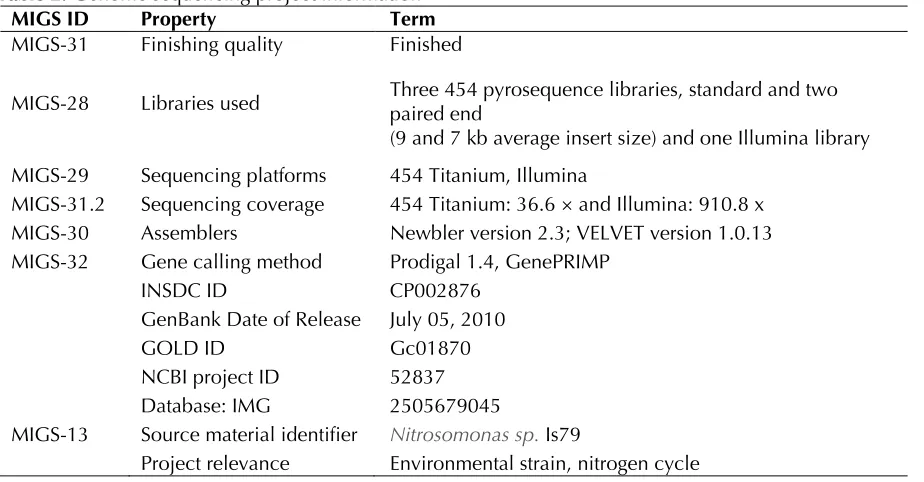
The organism was selected for sequencing as part of DOE-JGI program CSP 2006 because it is adapted to growth at low ammonium concentra-tions. The genome sequence is deposited in the Genome OnLine Database [36] and the complete genome is deposited in GenBank. Sequencing, fin-ishing and annotation were performed by DOE-Joint Genome Institute (JGI). A summary of the project information is shown in Table 2.
Growth conditions and DNA isolation
The strai
Table 2. Genome sequencing project information
MIGS ID Property Term
MIGS-31 Finishing quality Finished
MIGS-28 Libraries used Three 454 pyrosequence libraries, standard and two paired end (9 and 7 kb average insert size) and one Illumina library MIGS-29 Sequencing platforms 454 Titanium, Illumina
MIGS-31.2 Sequencing coverage 454 Titanium: 36.6 × and Illumina: 910.8 x MIGS-30 Assemblers Newbler version 2.3; VELVET version 1.0.13 MIGS-32 Gene calling method Prodigal 1.4, GenePRIMP
INSDC ID CP002876
GenBank Date of Release July 05, 2010
GOLD ID Gc01870
NCBI project ID 52837 Database: IMG 2505679045
MIGS-13 Source material identifier
Project relevance Environmental strain, nitrogen cycle
Genome sequencing and assembly
The draft genome of
generated at the DOE Joint Genome Institute (JGI) using a combination of Illumina [40] and 454 technologies [41]. For the genome, we constructed and sequenced an Illumina GAii shotgun library which generated 46,913,976 reads totaling 3,565.5 Mb, a 454 Titanium standard library which generated 252,425 reads and 2 paired end 454 libraries with an average insert size of 7 kb, and 9 kb which generated 401,484 reads totaling 173.6 Mb of 454 data. All general aspects of li-brary construction and sequencing performed at the JGI can be found at the JGI website [42]. The initial draft assembly contained 250 contigs in 3 scaffolds. The 454 Titanium standard data and the 454 paired end data were assembled together with Newbler, version 2.3-Prerelease-6/30/2009. The Newbler consensus sequences were computa-tionally shredded into 2 kb overlapping fake reads (shreds). Illumina sequencing data were assem-bled with VELVET, version 1.0.13 [43] and the consensus sequence were computationally shred-ded into 1.5kb overlapping fake reads (shreds). We integrated the 454 Newbler consensus shreds, the Illumina VELVET consensus shreds and the read pairs in the 454 paired end library using par-allel phrap, version SPS – 4.24 (High Performance Software, LLC). The software Consed [44-46] was used in the following finishing process. Illumina data were used to correct potential base errors and increase the consensus quality using the
software Polisher developed at JGI [Lapidus, un-published]. Possible mis-assemblies were correct-ed using gapResolution [Han, unpublishcorrect-ed], Dupfinisher [47] or sequencing cloned bridging PCR fragments with subcloning. Gaps between contigs were closed by editing in Consed, by PCR and by Bubble PCR [Cheng, unpublished] primer walks. A total of 667 additional reactions were necessary to close gaps and to raise the quality of the finished sequence. The total size of the ge-nome is 3,783,444 bp and the final assembly is based on 138.9 Mb of 454 draft data, which pro-vide an average 36.6 coverage of the genome and 3,461Mb of Illumina draft data, which provide av-erage 910.8× covav-erage of the genome.
Genome annotation
Genome properties
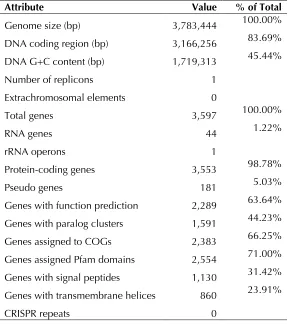
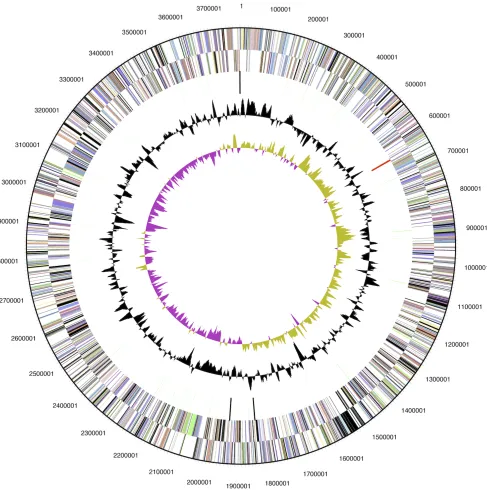
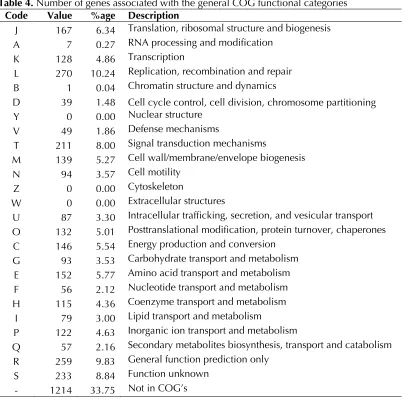
The genome consists of a 3,783,444-bp long chromosome; the largest of all sequenced and published betaproteobacterial ammonia oxidizers [9-12]. The genome has a GC content of 45.4%. The genome contained 3,597 predicted genes of which 3,553 were protein-coding genes, 44 RNAs, and 181 pseudogenes (Figure 2). The majority of the protein-coding genes (63.64%) were assigned a putative function while the remaining ones were annotated as hypothetical proteins (Table 3). The distribution of genes into COGs functional catego-ries is presented in Table 4.
Insights from the genome sequence
Ammonia monooxygenase
The ammonia monooxygenase encodes the first enzyme in the oxidation of ammonia to nitrite via hydroxylamine [37]. Three amoCAB operons can be detected in the genome of Is79 (Figure 3) and downstream of two of these
operons the hypothetical genes (amoE and amoD [55]) were identified. The genome of
of the amoC gene. The copper resistance genes, copC and copD were not detected downstream of any of the amoCAB operons as it was identified in all other described betaproteobacterial ammonia oxidizers [9-12,56].
Hydroxylamine oxidoreductase
The hydroxylamine oxidoreductase (HAO) is the second enzyme in ammonia oxidation, catalyzing the oxidation of hydroxylamine to nitrite [37]. As all other betaproteobacterial ammonia oxidizers,
hao operons consisting of the genes haoA encod-ing the octaheme cytochrome c protein subunit that forms the functional HAO complex, haoB en-coding an uncharacterized gene product, cycA en-coding cytochrome c554, and cycB encoding the quinone reductase, cytochrome cM552.
Table 3. Genome statistics
Attribute Value % of Total
Genome size (bp) 3,783,444 100.00%
DNA coding region (bp) 3,166,256 83.69% DNA G+C content (bp) 1,719,313 45.44%
Number of replicons 1
Extrachromosomal elements 0
Total genes 3,597 100.00%
RNA genes 44 1.22%
rRNA operons 1
Protein-coding genes 3,553 98.78%
Pseudo genes 181 5.03%
Genes with function prediction 2,289 63.64% Genes with paralog clusters 1,591 44.23% Genes assigned to COGs 2,383 66.25% Genes assigned Pfam domains 2,554 71.00% Genes with signal peptides 1,130 31.42% Genes with transmembrane helices 860 23.91%
Figure 2. Graphical map of the genome. From the outside to the center: Genes on forward strand and Genes on reverse strand (color by COG categories), RNA genes (tRNAs green, rRNAs red, other RNAs black), GC content, GC skew.
Nitrogen oxide metabolism
A copper-containing nitrite reductase (nirK) was
detected in the genome of
As detected in N. multiformis and AL212, the nirK gene exists as a singleton in the genome, which is in contrast to its position in the
genomes of
nirK is a member of a conserved multigene cluster (Table 5) [9-12,56].
The nitrite or nitric oxide responsive transcription factor nsrR [57] is missing in the genome of
Is79, indicating that
sponse mechanisms to nitrite and nitric oxide
Table 4. Number of genes associated with the general COG functional categories Code Value %age Description
J 167 6.34 Translation, ribosomal structure and biogenesis A 7 0.27 RNA processing and modification
K 128 4.86 Transcription
L 270 10.24 Replication, recombination and repair B 1 0.04 Chromatin structure and dynamics
D 39 1.48 Cell cycle control, cell division, chromosome partitioning Y 0 0.00 Nuclear structure
V 49 1.86 Defense mechanisms
T 211 8.00 Signal transduction mechanisms
M 139 5.27 Cell wall/membrane/envelope biogenesis N 94 3.57 Cell motility
Z 0 0.00 Cytoskeleton
W 0 0.00 Extracellular structures
U 87 3.30 Intracellular trafficking, secretion, and vesicular transport O 132 5.01 Posttranslational modification, protein turnover, chaperones C 146 5.54 Energy production and conversion
G 93 3.53 Carbohydrate transport and metabolism E 152 5.77 Amino acid transport and metabolism F 56 2.12 Nucleotide transport and metabolism H 115 4.36 Coenzyme transport and metabolism
I 79 3.00 Lipid transport and metabolism
P 122 4.63 Inorganic ion transport and metabolism
Q 57 2.16 Secondary metabolites biosynthesis, transport and catabolism R 259 9.83 General function prediction only
S 233 8.84 Function unknown - 1214 33.75 Not in COG’s
Genes encoding enzymes for nitric oxide reduction to nitrous oxide (norCBQD) were found in all betaproteobacterial ammonia oxidizers except
again i
genomes of most chemolithotrophic ammonia oxi-dizers encoding additional inventory implicated in nitric oxide detoxification to prevent nitrosative stress (cytochrome P460, cytochrome c
′
-beta [58];) (Table 5) were also identified in the genome
ing sNOR were absent. Based on these results it is
very likely that
nitrosative stress caused by nitric oxide [59]. In
addition, it is likely tha
not reduce nitric oxide to nitrous oxide via nitrifier denitrification [60], but may use an alternate path-way as demonstrated for the nitrifying
methanotroph,
Bath [61,62].
Finally and in contrast to all other betaproteobacterial ammonia oxidizers, the gene encoding the red copper protein nitrosocyanin [63] was not identified in the genome of
the absence of this gene may have on the
metabo-lism of
of the protein itself is still elusive.
Ammonia transporter
The gene encoding an ammonia transporter (amtB type) was detected in the genome of
Figure 3. Organization of the amo gene clusters in the genome o
Table 5. Presence and absence of genes involved in nitrogen oxide metabolism based on [9-12]
Genes NE* Neut* Nmul* NAl212* Nit79A3*
Nitrite reductase nirK + + + + 2335
Nitrogen sensitive transcriptional regulator nsrR + + - - -
Nitric oxide reductase norCBQD + + + + -
Nitric oxide detoxification
Heme-copper nitric oxide reductase norSY-senC-orf1 + + + - -
Cytochrome c′-beta cytS + + + + 0363
Cytochrome P460 cytL + + - + 1628
Nitrosocyanin ncyA + + + + -
*NE: N.europaea; Neut: N.eutropha; Nmul: N.multiformis; NAL212
Urease
The enzyme urease is responsible for hydrolyzing urea to yield ammonium and carbon dioxide, thereby increasing the substrates for N and C as-similation in the cytoplasm. While the genome of
coding urea hydrolase (ureABCDEFJ) [64]; the genes encoding biotin-containing urea carbox-ylase and the putative allophanate hydrolase were detected. It has been suggested that the products of these genes convert urea to ammonium and carbon dioxide while consuming metabolic energy
(ATP). Incubation of
presence of urea did not result in the production of nitrite [Sedlacek and Bollmann, unpublished] indicating that urea was not degraded, and that expression of these genes might be regulated through a network controlled by the energy status of the cell.
Hydrogenase
The genome of
of the putative [NiFe] hydrogenase-encoding genes found in the genome of N. multiformis [11]. However, one of the hypothetical proteins is miss-ing, and the genes are scattered over the genome instead of being members of single gene cluster as in N. multiformis [11].
Carbon dioxide fixation
As observed in all ammonia-oxidizing bacteria,
Calvin cycle involving the main enzyme RuBisCO
(Ribulose-1,5-bisphosphate carboxylase
oxygenase). The genomes of
and
copies of the RuBisCO operon (Figure 4). One copy belongs to form IA (green-like) RuBisCO and is closely related to the RuBisCO in
IC (red-like) RuBisCO and is closely related to the enzyme in N. multiformis (Figure 4). The form A RuBisCO is not associated with the genes for the
carboxysome as i
RuBisCO copies differ in their kinetic properties.
ity for carbon dioxide than organisms with RuBisCO form IC [65]. Therefore it is very likely that ammonia oxidizers with two different gene copies of the RuBisCO gene have a higher flexibil-ity with respect to the carbon dioxide availabilflexibil-ity in the environment.
Other genes of interest
When comparing the genome of Is79 with the other available genomes of betaproteobacterial ammonia oxidizers, several genes and operons were detected that were miss-ing in or unique to the investigated strain.
Potassium transporters
The genomes of N.
multiformis a
genes phaABCDEFG for a NADH driven potassium (cation) proton antiporter. While this potassium transporter was not detected in the genome of
affinity ATP driven potassium transporter
(kdpABC) were found. These three genes encoding
the potassium transporter ATPase (Nit79A3_1970-1972) were upstream of an osmosensitive signal transduction histidine kinase (kdpD) and a two component transcriptional regulator (kdpE). The kdp operon encodes an inducible high affinity po-tassium transport system that will be expressed under potassium deficiency [66,67].
concentrations and oligotrophic conditions. The presence of this high affinity transport system could be an adaptation to low ion strength envi-ronments.
Iron transport
The genome of
high number of different kinds of iron transport-ers [9] and all other genomes including
transporters. In addition a low affinity iron permease was detected in the genome of
zyme has been characterized well in
Saccharomy-ces cerevisiae and is involved in transport of iron,
copper and zinc [68]. These authors discuss the possibility that the high affinity transport systems are active under limiting conditions, while the iron permease becomes active under non-limiting con-ditions. The enzyme might have the same function
i
Conclusion
The genome of
betaproteobacterial ammonia oxidizer genome sequenced to date. The genome shows differences in gene content when compared to other betaproteobacterial ammonia oxidizers, some of which might have importance for the adaptation to low environmental ammonia concentrations. We believe that the study of this inventory – miss-ing or unique - will help to elucidate the adapta-tion of ammonia oxidizers to oligotrophic envi-ronments.
Acknowledgements
This research was funded by a grant of the Department of Energy Joint Genome Institute (DOE-JGI) Community Sequencing Program 2006 to JMN. The work conducted by the U.S. Department of Energy Joint Genome Insti-tute is supported by the Office of Science of the U.S.
Department of Energy under Contract No. DE-AC02-05CH11231. The collaborative project was supported by NSF Research Coordination Network grant 0541797 (Nitrification Network).
References
1. Bollmann A, Laanbroek HJ. Continuous culture enrichments of ammonia-oxidizing bacteria at low ammonium concentrations. FEMS Microbiol Ecol 2001; 37:211-221.
2. Chen GY, Qiu SL, Zhou YY. Diversity and abun-dance of ammonia-oxidizing bacteria in eu-trophic and oligoeu-trophic basins of a shallow Chi-nese lake (Lake Donghu). Res Microbiol 2009;
160:173-178
3. Coci M, Bodelier PLE, Laanbroek HJ. Epiphyton
as a niche for ammonia-oxidizing bacteria: De-tailed comparison with benthic and pelagic com-partments in shallow freshwater lakes. Appl
Envi-ron Microbiol 2008; 74:1963-1971 4. de Bie M, Speksnijder A, Kowalchuk G,
Schuurman T, Zwart G, Stephen J, Diekmann O, Laanbroek HJ. Shifts in the dominant populations of ammonia-oxidizing beta-subclass
ary. Aquat Microb Ecol 2001; 23:225-236.
5. Herrmann M, Saunders AM, Schramm A. Effect of lake trophic status and rooted macrophytes on community composition and abundance of am-monia-oxidizing prokaryotes in freshwater sedi-ments. Appl Environ Microbiol 2009; 75 :3127-3136
6. Speksnijder AG, Kowalchuk G, Roest K, Laanbroek HJ. Recovery of 16S rDNA sequence group from freshwater habi-tats. Syst Appl Microbiol 1998; 21:321-330
7. Koops HP, Purkhold U, Pommerening-Roeser A, Timmermann G, Wagner M. The lithoautotrophic Ammonia-oxidizing bacteria. The Prokaryotes
2006; 5:778-811
8. Kowalchuk GA, Stephen J. Ammonia-oxidizing bacteria: A model for molecular microbial ecolo-gy. Annu Rev Microbiol 2001; 55:485-529
9. Chain P, Lamerdin J, Larimer F, Regala W, Lao V,
Land M, Hauser L, Hooper A, Klotz M, Norton J,
et al. Complete genome sequence of the ammo-nia-oxidizing bacterium and obligate
chemolithoautotrJ
Bacteriol 2003; 185:2759-2773
10. Stein LY, Arp DJ, Berube PM, Chain PSG, Hauser L, Jetten MSM, Klotz MG, Larimer FW, Norton JM, op den Camp H, et al. Whole-genome analy-sis of the ammonia-oxidizing bacterium,
niche adaptation. Environ Microbiol 2007;
9:2993-3007
11. Norton JM, Klotz MG, Stein LY, Arp DJ, Bottomley PJ, Chain PSG, Hauser LJ, Land ML, Larimer FW, Shin MW, et al. Complete genome sequence of nia-oxidizing bacterium from the soil environ-ment. Appl Environ Microbiol 2008; 74 :3559-3572
12. Suwa Y, Norton J, Bollmann A, Klotz MG, Stein
LY, Laanbroek HJ, Arp DJ, Goodwin JA, Chertkov O, Held B, et al. Genome sequence of
oxidizing bacterium sensitive to high levels of ammonia. J Bacteriol 2011; 193:5047-5048 13. Winogradsky S. Contributions a la morphologie
des organisms de la nitrification. Arch Sci Biol St. Petersburg 1892; 1:87-137.
14. Winogradsky S, Winogradski H. Etudes sur la microbiologie du sol. VII: Nouvelles recherches sur les organisms de la nitrification. Ann Inst Pas-teur (Paris) 1933.
15. Koops H, Boettcher B, Moeller U, Pommerening-Roeser A, Stehr G. Classification of 8 new species of Ammonia-oxidizing sp-nov. J Gen Microbiol 1991; 137:1689-1699. 16. Watson SW, Graham L, Remsen C, Valois F. A
lobular Ammonia-oxidizing Bacterium
Arch
Mikrobiol 1971; 76:183-203
17. Watson SW. Reisolation of Winogradsky and H Winogradsky 1933. Arch Mikrobiol 1971; 75:179-188 18. Harms H, Koops H, Wehrmann H.
Ammonia-oxidizing Bacterium, Nitrosovibrio tenuis nov-gen nov-sp. Arch Mikrobiol 1976; 108:105-111. 19. Jones R, Morita R, Koops HP, Watson S. A new
marine Ammonium-oxidizing Bacterium,
sp-nov. Can J
Microbiol 1988; 34:1122-1128.
20. Aakra A, Utaker JB, Pommerening Roeser A, Koops HP, Nes IF. Detailed phylogeny of ammo-nia-oxidizing bacteria determined by rDNA se-quences and DNA homology values. Int J Syst Evol Microbiol 2001; 51:2021-2030 21. Suwa Y, Imamura Y, Suzuki T, Tashiro T,
Urushigawa Y. Ammonia-oxidizing different sensitivities to (NH4)(2)SO4 in activated sludges. Water Res 1994; 28:1523-1532.
22. Suwa Y, Sumino T, Noto K. Phylogenetic relation-ships of activated sludge isolates of ammonia oxi-dizers with different sensitivities to ammonium sulfate. J Gen Appl Microbiol 1997; 43:373-379 23. Field D, Garrity G, Gray T, Morrison N, Selengut
Nat Biotechnol 2008; 26:541-547
24. Woese CR, Kandler O, Wheelis ML. Towards a natural system of organisms: proposal for the
do-mainsEucarya.Proc Natl
Acad Sci USA 1990; 87:4576-4579 25. Garrity GM, Bell JA, Lilburn T. Phylum XIV.
In: Brenner DJ, Krieg
NR, Staley JT, Garrity GM (eds), Bergey’s Manual of Systematic Bacteriology, second edition, Vol. 2, Part B, Springer, New York, 2005, p. 1. 26. Garrity GM, Bell JA, Lilburn T. Class II.
In: Brenner DJ,
Krieg NR, Staley JT, Garrity GM (eds), Bergey’s Manual of Systematic Bacteriology, second edi-tion, Vol. 2, Part C, Springer, New York, 2005, p. 575.
27. Validation List No. 107. List of new names and new combinations previously effectively, but not validly, published. Int J Syst Evol Microbiol 2006;
56:1-6
28. Garrity GM, Bell JA, Lilburn T. Order V.
In: Brenner DJ, Krieg
NR, Staley JT, Garrity GM (eds), Bergey’s Manual of Systematic Bacteriology, second edition, Vol. 2, Part C, Springer, New York, 2005, p. 863. 29. Garrity GM, Bell JA, Lilburn T. Family I.
Nitrosomonadacaea fam. nov. In: Brenner DJ, Krieg NR, Staley JT, Garrity GM (eds), Bergey’s Manual of Systematic Bacteriology, second edi-tion, Vol. 2, Part C, Springer, New York, 2005, p. 864.
30. Skerman VBD, McGowan V, Sneath PHA. Ap-proved Lists of Bacterial Names. Int J Syst Bacteriol 1980; 30:225-420.
31. Watson SW. Genus IV
Winogradsky 1892, 127; Nom. cons. Opin. 23, Jud. Comm. 1958, 169. In: Buchanan RE, Gib-bons NE (eds), Bergey's Manual of Determinative Bacteriology, Eighth Edition, The Williams and Wilkins Co., Baltimore, 1974, p. 453-454. 32. Judicial Commission. Opinion 23. Rejection of
the Generic Names Nitromonas Winogradsky 1890 and Nitromonas Orla-Jensen 1909, Conser-vation of the Generic Names Winogradsky 1892, 1892, and the Designation of the Type Species of these Genera. Int Bull Bacteriol Nomencl Taxon
1958; 8:169-170.
33. Koops HP. Pommerening_Röser, A. Distribution and ecophysiology of the nitrifying bacteria em-phasizing cultured species. FEMS Microbiol Ecol
2011; 37:1-9.
34. Classification of groups. www.baua.de TRBA 466.
35. Tamura K, Peterson D, Peterson N, Stecher G, Nei M, Kumar S. MEGA5: Molecular Evolutionary Genetics Analysis using Maximum Likelihood, Evolutionary Distance and Maximum Parsimony Methods. Mol Biol Evol 2011; 28:2731-2739
36. Pagani I, Liolios K, Jansson J, Chen IMA,
Smirnova T, Nosrat B, Markowitz VM, Kyrpides NC. The Genomes OnLine Database (GOLD) v.4: status of genomic and metagenomic projects and their associated metadata. Nucleic Acids Res
2012; 40:D571
37. Arp D, Sayavedra-Soto L, Hommes N. Molecular biology and biochemistry of ammonia oxidation byArch Microbiol 2002;
178:250-255
38. Bollmann A, Bar-Gilissen M, Laanbroek HJ.
Growth at low ammonium concentrations and starvation response as potential factors involved in niche differentiation among
ammonia-oxidizing bacteria. Appl Environ Microbiol 2002;
68:4751-4757
39. Bollmann A, French E, Laanbroek HJ. Isolation, cultivation and characterization of ammonia-oxidizing ammonium concentrations. In: Klotz MG (ed), Methods in Enzymology, Academic press, 2005, p 55-88.
40. Bennett S. Solexa Ltd. Pharmacogenomics 2004;
5:433-438
41. Margulies M, Egholm M, Altman WE, Attiya S,
Bader JS, Bemben LA, Berka J, Braverman MS, Chen YJ, Chen Z, et al. Genome sequencing in microfabricated high-density picolitre reactors.
Nature 2005; 437:376-380 42. DOE Joint Genome Institute.
43. Zerbino DR, Birney E. Velvet: algorithms for de novo short read assembly using de Bruijn graphs.
Genome Res 2008; 18:821-829 44. Ewing B, Hillier L, Wendl MC, Green P.
Base-calling of automated sequencer traces using phred. I. Accuracy assessment. Genome Res
1998; 8:175-185
45. Ewing B, Green P. Bacalling of automated se-quencer traces using phred. II. Error probabilities.
Genome Res 1998; 8:186-194
46. Gordon D, Abajian C, Green P. Consed: a graph-ical tool for sequence finishing. Genome Res
1998; 8:195-202
47. Han C, Chain PSG. Finishing repeat regions au-tomatically with Dupfinisher CSREA Press. In Arabnia AR, Valafar H, editors. Proceedings of the 2006 international conference on bioinformatics and computational biology; 2006 June 26-29; p141-146
48. Hyatt D, Chen GL, Locasio PF, Land ML, Larimer FW, Hauser LJ. Prodigal: Procaryotic gene recog-nition and translation site identification. BMC Bio-informatics 2010; 11:119
49. Pati A, Ivanova N, Mikhailova N, Ovchinikova G,
Hooper SD, Lykidis A, Kyrpides NC. GenePRIMP: A Gene Prediction Improvement Pipeline for mi-crobial genomes. Nat Methods 2010; 7:455-457 50. Lowe TM, Eddy SR. tRNAscan-SE: a program for
improved detection of transfer RNA genes in ge-nomic sequence. Nucleic Acids Res 1997;
25:955-964
51. Lagesen K, Hallin PF, Rodland E, Staerfeld HH, Rognes R, Ussery DW. RNAmmer: consistent an-notation of rRNA genes in genomic sequences.
Nucleic Acids Res 2007; 35:3100-3108
52. Griffiths-Jones S, Bateman A, Marshall M, Khanna A, Eddy SR. Rfam: an RNA family database. Nu-cleic Acids Res 2003; 31:439-441
53. Krogh A, Larsson B, von Heijne G, Sonnhammer ELL. Predicting transmembrane protein topology with a hidden Markov model: application to complete genome. J Mol Biol 2001; 305:567-580
54. Bendtsen JD, Nielsen H, von Heijne G, Brunak S.
Improved prediction of signal peptides: Signal IP
3.0. J Mol Biol 2004; 340:783-795 55. El-Sheikh AF, Poret-Peterson AT, Klotz MG.
Char-acterization of two new genes, amoR and amoD, in the amo operon of the marine ammonia
oxi-dizerAppl
Environ Microbiol 2008; 74:312-318 56. Arp DJ, Chain PSG, Klotz MG. The impact of
ge-nome analyses on our understanding of ammo-nia-oxidizing bacteria. Annu Rev Microbiol 2007;
61:503-528
57. Beaumont HJ, Lens S, Reijnders W, Westerhoff H, van Spanning R. Expression of nitrite reductase in
NsrR, a novel
nitrite-sensitive transcription repressor. Mol Microbiol 2004; 54:148-158
58. Elmore BO, Bergmann DJ, Klotz MG, Hooper AB. Cytochromes P460 and c'-beta; a new family of high-spin cytochromes c. FEBS Lett 2007;
581:911-916
59. Klotz MG, Stein LY. Genomics of
Ammonia-oxidizing tion. In: Ward BB, Arp DJ, Klotz MG (eds), Nitri-fication, ASM Press, 2011, p 57-94.
60. Stein LY. Heterotrophic Nitrification and Nitrifier Denitrification. In: Ward BB, Arp DJ, Klotz MG
(eds), Nitrification, ASM Press, 2011, p 95-116. 61. Campbell MA, Nyerges G, Kozlowski JA,
Poret-Peterson AT, Stein LY, Klotz MG. Model of the molecular basis for hydroxylamine oxidation and nitrous oxide production in methanotrophic bac-teria. FEMS Microbiol Lett 2011; 322:82-89
62. Poret-Peterson AT, Graham JE, Gulledge J, Klotz MG. Transcription of nitrification genes by the methane-oxidizing bacterium, ISME J 2008; 2:1213-1220 63. Arciero DM, Pierce B, Hendrich M, Hooper A.
Nitrosocyanin, a red cupredoxin-like protein from Biochemistry 2002;
41:1703-1709
64. Koper TE, El-Sheikh AF, Norton JM, Klotz MG. Urease-encoding genes in ammonia-oxidizing bacteria. Appl Environ Microbiol 2004; 70 :2342-2348
65. Badger MR, Bek EJ. Multiple RUBISCO forms in lation to CO2 acquisition by the CBB cycle. J Exp Bot 2008; 59:1525-1541
66. Alahari A, Ballal A, Apte SK. Regulation of potas-sium-dependent Kdp-ATPase expression in the ni-trogen-fixing cyanobacterium
J Bacteriol 2001; 183:5778-5781
67. Altendorf K, Siebers A, Epstein W. The KDP ATPase ofAnn N Y Acad Sci
1992; 671:228-243
68. Hassett R, Dix DR, Eide DJ, Kosman DJ. The Fe(II) permease Fet4p functions as a low affinity copper transporter and supports normal copper trafficking in Saccharomyces cerevisiae.Biochem J 2000;
351:477-484
![Figure 1. Phylogenetic tree showing the position of cause the whole genome of this strain became recently available [12]](https://thumb-us.123doks.com/thumbv2/123dok_us/702670.2068030/2.612.70.540.269.612/figure-phylogenetic-showing-position-genome-strain-recently-available.webp)
![Table 1. Classification and general features of Nitrosomonas sp. Is79 according to the MIGS recommendations [23]](https://thumb-us.123doks.com/thumbv2/123dok_us/702670.2068030/3.612.66.552.64.502/table-classification-general-features-nitrosomonas-according-migs-recommendations.webp)

![Figure 4. Phylogenetic tree of betaproteobacterial ammonia oxidizers inferred using the Maximum Likelihood cri-terion using the software package MEGA [35] based on the protein sequence of the large subunit of the RuBisCO (cbbL)](https://thumb-us.123doks.com/thumbv2/123dok_us/702670.2068030/9.612.57.557.513.646/phylogenetic-betaproteobacterial-oxidizers-inferred-maximum-likelihood-software-rubisco.webp)
