Issues and Ideas in Education Vol. 2, No. 2 September 2014 pp. 247–254 DOI: 10.15415/iie.2014.22018
Functioning of School Management Committee in
Rural Elementary School: A Case Study
Sarat Kumar rOut
Department of Education, ravenshaw university, Cuttack, Odisha-753003, India
Email: [email protected]
received: may 8, 2014| revised: July 19, 2014| accepted: July 22, 2014
Published online: September 25, 2014
the author(s) 2014. this article is published with open access at www.chitkara.edu.in/publications
Abstract: this paper intends to explore the role of School management Committees (SmCs) in rural elementary schools pertaining to the different variables under investigation, e.g. enrollment, utilization of allotted funds and development of infrastructures. Balikhand Primary School situated at Purusottampur Grampanchayat, Simulia Block, Balasore District was selected for case study. the paper highlights the functioning of SmC in this school and reveals many facts pertaining to the different areas under study that have important implications for the major stakeholders of Elementary Education. the study revealed that the SmC discharged its role actively for achieving universal enrollment by checking the attendance and absenteeism of the learners. It also showed interest in developing the infrastructures by communicating the authorities regarding different avenues of infrastructures and the SmC had utilized the allotted funds in proper means so as to develop the system.
Keywords: School management Committee, rural Elementary School, universal Enrollment
1. BACKdRop
rout, S.K. teacher association (Pta) and School management Committee (SmC). among these committees, SmC is one of the important committee working in elementary school system. SmC has very crucial role in actualizing the goals of right to Education act-2009 (rtE). It has a very good nick to transform the existing system of education, characterized by multiple demand of globalization, the defective system of functionaries and different stake holders. SmC works towards revitalizing a well-functioning school system through its positive plan of action and a needful constructive dialogue with other stake holders. Its major roles or functions are to develop the quality of teaching, proper utilization of fund that are provided by the Government, implementation of different schemes devised by the State as well as Central Government, to create awareness regarding health among the children, to provide sanitation facilities, to develop school infrastructure etc. mishra (1989) revealed that parent teacher associations should be activated to maintain discipline of the school. Sachchidananda (1989) found that the dropout at the elementary stage was heavy and increased over the years, the various factors responsible for the poor performance of elementary education are low enrolment, high dropout, poverty of rural families, lack of the teachers’ commitment to their duties, lack of effective supervision and rampant corruption in the supervisory cadres. Sarma, et.al (1991) found that seventy one percent of teachers considered guardians’ lack of co-operation as serious problems of primary education, sixty four percent teachers and headmasters considered irregularity in attendance of learners as a major problem. Yadav (1991) found that teachers fault for not meeting their parents for discussing their difficulties. mohapatra (1991) revealed that teachers didn’t bother to keep contact with the guardians. Sarma (1992) found that parents’ unawareness of the importance of education is the cause of non-enrolment and non-retention and guardian’s non-cooperation or unawareness in the context of the teacher guardian relationship was another problem for non-enrollment.
By going through these literatures, the investigators were very much anxious to know the role played by SmCs that operate in rural areas of Odisha. Because problems of non-enrolment and non-retention of children, lack of learning readiness, dropout and lack of proper environment and infrastructures are the major obstructs of elementary education in rural areas of the State. Hence, the investigators conducted the study on “Functioning of SmC in rural Elementary School”.
2. oBjECtivE oF thE Study
Functioning of School management Committee in rural Elementary School: a Case Study attendance, utilization of allotted funds and extension/development of physical
infrastructure.
3. MEthodology
the investigators have adopted case study method to study the functioning of school management committee towards achieving the quality of education in rural elementary school.
4. thE CASE And KEy inFoRMAntS within thE CASE
Balikhand Primary School situated at Purusottampur Grampanchayat, Simulia Block, Balasore District is considered as the case for the study. all the SmC members, the headmaster and the students of the School were taken into consideration for collection of relevant data.
5. toolS And tEChniquES uSEd
the tools of the present study were: Interview schedule for SmC members, Interview schedule for headmaster, focus group discussion for students and documentary analysis; developed by the investigators to elicit views/ opinions from the target groups to know the smooth functioning of SmC in rural elementary school and their participation with the School. Interview schedules prepared for the Headmaster and SmC members were developed to collect data about four dimensions viz. Students’ Enrolment, attendance of students, teaching learning process and Infrastructure of school.
6. pRoCEduRE oF dAtA CollECtion
the investigators had personally collected all the data relating to the present study “Functioning of SmC in rural Elementary School.” the investigators collected data from all the SmC members of the school by the help of interview schedule. Similarly, they collected data from one headmaster and conducted one focus group discussion (FGD) with students in the school with the help of interview schedule and FGD guidelines respectively.
7. tEChniquES oF dAtA AnAlySiS
rout, S.K. 8. RESultS
the results pertaining to functioning of SmC in rural elementary school, with reference to universal enrollment, utilization of allotted funds and extension/ development of physical infrastructure are presented as follows:
8.1 the Case: Balikhand primary School
location: the school is situated in Purusottampur Grampanchayat, Simulia Block in Balasore district.
table 1 depicts that out of 135 students; class-I consisting of 35, 33 number of students constitute class-II, class-III consists of 26, 21 students constitute for class-IV and class-V consists of 20 students.
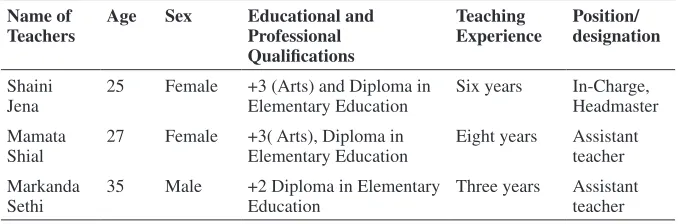
table 2 shows that there are only three teachers for five classes.
Table 1: Class wise Enrollment Strength of Students
Class Class-I Class-II Class-III Class-IV Class-V total
no. of Students 35 33 26 21 20 135
Table 2: Strength of Teachers
name of
teachers Age Sex Educational and professional qualifications
teaching
Experience position/designation
Shaini
Jena 25 Female +3 (arts) and Diploma in Elementary Education Six years In-Charge, Headmaster mamata
Shial 27 Female +3( arts), Diploma in Elementary Education Eight years assistant teacher markanda
Sethi 35 male +2 Diploma in Elementary Education three years assistant teacher
Functioning of School management Committee in rural Elementary School: a Case Study Dhupal (Student representative), Jayanta mishra (Educationist), rebati Sutar
(SmC member), Sukanti Sethi (SmC member), Karuna Kar Sahoo (SmC member), Sabita Behera (SmC member), Gitanjali Shial (SmC member), anita Sahoo (SmC member).
10. EnRolMEnt
Cent percent (100%) of the SmC members expressed that all the children in the age group of 6-14 have been enrolled in the school particularly from that locality. Further; queries from the students during focus group discussion revealed that community members and teachers were regularly monitoring/ tracking the attendance in the school and subsequently communicating with parents of the child. Furthermore, there is hike of enrolment percent from previous year and cent percent (100%) of SmC members responded that enrolment ratio has been increased from previous year i.e. ten to fifteen students were added to the previous year strength of all classes.
10.1 Attendance
Cent percent (100%) of the SmC members expressed that they are familiar with students’ strength of the school and further, information regarding monitoring of regular attendance of students in class. about sixty percent (60%) of SmC members reported that they have monitored attendance of students in a class. they take steps for the students those were not regularly attending the classes; by conversation with parents, interaction with concerned students and neighbours. Similarly, very less number (40%) of SmC members remarked that they couldn’t monitor regular attendance of students in class because they had no time to spend for monitoring regular attendance of students in class. therefore they had handed over the responsibilities to the chairperson to monitor regular attendance of students in class.
Further, regarding information about causes of students’ absence; Cent percent (100%) of SmC members expressed that they tried to know the causes of students’ absence. In this connection, one SmC member stated that “Students are not coming to school because of domestic responsibilities and Table 3
year Class-i Class-ii Class-iii Class-iv Class-v total
no. of Students
2014 35 33 26 21 20 135
rout, S.K. helping the parents in their household work”. another SmC member stated that “some students are not coming to school because of their personal problems”. However, interaction with students during focus group discussion reflected that SmC members and teachers were vigilant over the students’ absenteeism.
11. tEAChing-lEARning pRoCESS
Cent percent (100%) of SmC members expressed that they asked the children regarding their difficulties in learning. Further, data regarding the headmaster’s invitation to community members to the school revealed that all SmC members viewed that the headmaster invited community members to the school to deliver speech or share experiences. all the SmC members reported that the school organized study or fieldtrip to nearby museum. Similarly cent percent of SmC members opined that the school prepared students for participation in various competitions and exhibitions. all the students detailed that the teachers make efforts to understand their problem; paying individual attentions to all categories of learners, use of various approaches for clarifying doubts during the interaction in the class. the teachers also provide extra time conversation with the students those face problem in classroom.
12. inFRAStRuCtuRE AvAilABility
Functioning of School management Committee in rural Elementary School: a Case Study to the school. the SmC members reported that they invest money towards
the school building, repairing, purchasing of t.L.m and utensils. all the SmC members also opined that they have met their higher authorities and informed the authority in written format for the development of infrastructure system. all the SmC members stated that they assist school in complimenting government efforts in the provision of equipment facilities and funds; they also help the head of the school in developing the school. Similarly, they also co-operate school in dealing with students’ disciplinary problem and cent percent (100%) of SmC members opined that they have made efforts to discuss the problems with government officials for immediate action.
13. Major Findings
these major findings related to the Functioning of SmC are as follows: all the children between the age group of six to fourteen have been (i)
enrolled in the elementary school. Community members and teachers were regularly monitoring the absenteeism of students. all most all the SmC members try to know the causes of students’ absent.
all the SmC members asked the children about their difficulties in (ii)
learning. the headmaster invites community members to the school to deliver speech or sharing of experiences. all the SmC members agreed upon that the school has been preparing students for participation in various competitions and exhibitions.
all the SmC members and students were not satisfied with the infrastructure (iii)
of the school. the SmC members have reported that the school had no separate sanitation facilities for boys and girls. But the school had proper water supply facilities. all the SmC members have taken measures to extend the existing infrastructure of the school.
most of the SmC members expressed that lack of adequate number of (iv)
teachers was the main hindrance for quality elementary education in the school. the fund provided by Government was properly utilized for the development of the school but that was not sufficient towards to meet the demand of the school. all the SmC members expressed that they have tried to discuss the problems with the government.
14. iMpliCAtionS oF thE Study
SmC members should be well aware about their roles and responsibilities. (i)
rout, S.K. Govt. and other committees for successful attainment of uEE. Hindrances in the way of uEE should be eradicated by the Government.
more number training programmes should be provided to the members of (ii)
SmC in their locality. meetings of SmC members should be on regular basis. SmC members have to take the responsibility towards regularity of teachers as well as students. role of SmC in promoting universal Primary Education in rural areas should be extended.
Girl students should get more facilities from the schools in order to attract (iii)
them and to minimize the girl drop outs. Special provision like scholarship should be given to the SC and St students. Government should provide sufficient number of teachers to the school for making the education process a successful one.
REFEREnCES
mishra, N. (1989). Development of a programme of the primary education for Odisha with special reference to the costal district i.e. Puri, Cuttack and Balasore.Ph.D (Edu). utkaluniversity.In NCErt (1992), Fifth survey of Research in Education, Vol- II, New Delhi, pp. 1147-1148.
mohapatra, t. (1991).Problems of secondary school teachers: a comparative study of government and private school teachers, Ph.D, Soc. utkaluniversity.In NCErt (1992), Fifth survey of Research inEducation, Vol- II, New Delhi, pp.1185-1186. Palanivelu, S. P. (1992). Development of education in S.m.S.V. Higher secondary school,
m Phil, (Edu).alagappauniversity.In NCErt (1992), Fifth survey of Research inEducation, Vol- II, New Delhi, p.1188.
Sachchidananda (1989). Disparities in elementary education: a case study in Bihar, independent study. Patna: a. N. Sinha Institute of social studies,In NCErt (1992), Fifth survey of Research inEducation, Vol- II, New Delhi, p. 1159.
Sarma, et.al (1991).Identification of the problem of primary education, independent study. Jorhat: State institute of Education; In NCErt (1992), Fifth survey of Research in Education, Vol- II, New Delhi, pp.1159-1160.
Sarma, N. (1992). a study of the problems of non- enrolment and non-retention of the children of tea garden labours with special reference to the district of Sibsagar (undivided), Independent study. Jorhat: State institute of Education; In NCErt (1992), Fifth survey of Research inEducation, Vol- II, New Delhi, pp.1162- 1163. Yadav, B.S. (1991). a study of the causal factors of dropout among the social- economically
deprived elementary school studentsinHariyana: Ph.D, Edu. Kurukshetra university; In NCErt (1992).Fifth survey of Research inEducation, Vol- II, New Delhi, pp.1167-1168.