ASSoCiAtE EditorS
Richard M. Burton (Point of View Articles), The Fuqua School of Business, Duke University, United States Dorthe Døjbak Håkonsson (Translational Articles), Aarhus University, Denmark
Samina Karim (Research Articles), Boston University, United States Peter Klaas (Translational Articles), Aarhus University, Denmark Phanish Puranam (Research Articles), INSEAD, Singapore
Metin Sengul (Point of View Articles), Carroll School of Management, Boston College, United States
EditoriAl BoArd
Linda Argote, Carnegie Mellon University, United States Carliss Baldwin, Harvard Business School
Michael Beer, Harvard Business School, United States
Julian Birkinshaw, London Business School, United Kingdom Magnus Broundal, VELUX A/S, Denmark
Anne Bøllingtoft, Aarhus University, Denmark
Laura B. Cardinal, C. T. Bauer College of Business, University of Houston, United States Timothy N. Carroll, University of South Carolina, United States
Joe Cheng, Australian School of Business, University of New South Wales, Australia Lex Donaldson, University of New South Wales, Australia
Diem Ho, IBM, France
George P. Huber, University of Texas, United States
Sirkka Jarvenpaa, University of Texas, USA and Aalto University, Finland Thorbjørn Knudsen, University of Southern Denmark, Denmark
Tobias Kretschmer, Ludwig-Maximilians-Universität München, Germany
Kristina Lauche, Nijmegen School of Management, Radboud University Nijmegen, Netherlands Christopher Lettl, Vienna University, Austria
Zhiang John Lin, University of Texas at Dallas, United States John A. Mathews, Macquarie University, MGSM, Australia
Raymond E. Miles, University of California, Berkeley, United States Georges Romme, Eindhoven University of Technology, Netherlands Henk W. Volberda, Erasmus University, Netherlands
Charles Williams, Bocconi University, Italy
EditoriAl offiCE
Marianne Sejthen, Aarhus University, Denmark
Journal of Organization Design ISSN: 2245-408X
rESEArCh ArtiClES
Organization Theory and the Changing Nature of Science ...1-16 By Jonathon N. Cummings and Sara Kiesler
Will Organization Design Be Affected By Big Data?...17-26 By Giles Slinger and Rupert Morrison
Untangling the Ambidexterity Dilemma though Big Data Analytics ...27-37 By Tor Bøe-Lillegraven
trAnSlAtionAl ArtiClE
Fit - The Key to Organizational Design ...38-45 By Lex Donaldson and Greg Joffe
CASE Study
1 Journal of Organization Design
JOD, 3(3): 1-16 (2014)
DOI: 10.7146/jod.18596
the ChangIng nature Of
SCIenCe
JOnathOn n. Cummings • sara Kiesler
abstract: Dramatic changes in the practice of scientific research over the past half century, including trends towards working in teams and on large projects, as well as geographically distributed and interdisciplinary collaboration, have created opportunities and challenges for scientists. Some of the newer ways of doing science create opportunities and challenges for organization theory. We describe how applying organization theory to science can enhance our knowledge of research organizations and raise questions for theories of coordination, social identity, the knowledge-based view of the firm, social networks, organizational learning, and absorptive capacity. We argue that an organizational perspective on science is critical to understanding the sources of technological innovation, making national policy on R&D investment, and designing successful 21st-century research organizations.
Keywords: Organization theory, social studies of science, interdisciplinary collaboration,
distributed work, research policy
Since 1901, Nobel Prize committees have honored eminent individuals for their scientific achievements. Stars will always be important in science, but by current trends, few will succeed singlehandedly. In the last few decades, science increasingly has become an effort performed by organizations. Evidence of this change can be seen in the growing number of co-authored scientific papers (Wuchty, Jones, & Uzzi, 2007) and papers published by large groups (Newman, 2001). Growing co-authorship reflects not merely a change in norms regarding collaboration and credit, but that teams now conduct most research. Science teams and projects within universities are the most prevalent form of research, but they also exist in large numbers in other organizations, including industrial laboratories, nonprofit research institutes, scientific alliances, online consortia, and government agencies such as NASA and NIH. A growing number of projects are large and geographically distributed, involving scientists nationally or globally. The NIH Clinical and Translational Science Consortium, the DARPA Grand Challenge, and the NSF Network for Earthquake Engineering Simulation (NEES) exemplify large, distributed team-based research organizations. In 2014, the U.S. spent more than $3 billion to help maintain the International Space Station, which not only supports astronomy and physics but also the biological sciences (e.g., researchers found that salmonella bacteria become more virulent in space). The size and complexity of research teams, and the increasing policy, social, and economic importance of science-based innovation, led us to consider how organization theory might be applied and developed in the burgeoning domain of science.
study the scientific research process and its organizational context as a wellspring of our economic, health, and social systems. Is it a problem of representation? Do organizational scholars assume that computer scientists are chiefly techies sitting in front of a computer, or that biologists are individual bench scientists working with microarrays in the lab? If so, the field of organization theory is missing an important opportunity to understand what is really going on – the large increases in collaborative work, new organizational structures, virtual communities, and innovative approaches such as crowdsourcing (Wood et al., 2011) are changing the nature of teamwork and creating new types of alliances and partnerships among researchers. We argue that researchers should embrace science as an appropriate domain for applying and examining organization theory.
In putting together an agenda for applying organization theory to science, we address how the changing nature of science intersects with a variety of organizational theories. An organizational approach to understanding science has some overlap with an organizational approach to understanding law, medicine, or business, but there are significant differences in how science is organized. The overarching goal of discovery in science differs from that of law (justice), medicine (healing people), or business (making money). The underlying mechanisms that support scientific work also differ. In science, the dominant funding model is the grant or research contract. Publicly funded and not-for-profit institutions, and managers within companies, decide which projects to support, and distribute money to research organizations. In law, medicine, and business, funding arises from an exchange with customers for a product or service. This is not to say that science lacks business goals. On the contrary, historians of science have long noted the potential of user-inspired basic research – for example, “Pasteur’s Quadrant” in which Louis Pasteur discovered through basic research, among many other things, a method that can be used for causing milk not to spoil, now referred to as pasteurization (Stokes, 1997). The commercialization of science, and in particular the blurred intersection between public and private science (Colyvas & Powell, 2006), has received increased attention in the organizational literature (Feldman et al., 2002; Gittleman, 2007). However, other important and emerging topics related to the organization of science have been neglected such as how scientists collaborate with one another, how virtual scientific projects are organized, and how interdisciplinary learning occurs within and across research institutions.
In 1966, Donald Pelz and Frank Andrews published an influential book titled Scientists in Organizations: Productive Climates for Research and Development. they argued that the outcomes of research were determined, in part, by the working environment of the laboratories in which scientists worked. They developed the concept of “productive climate,” referring to a stimulating rather than inhibiting local environment for scientific progress, and showed how it impacted the productivity of university researchers. Pelz and Andrews (1966) studied research collaborations within single laboratories and institutions, where researchers knew one another personally. It is not clear how productive climates would operate when researchers collaborate across institutional boundaries with colleagues they might not have met face-to-face. Theories of the knowledge-based view, coordination, and social networks suggest that research managers and collaborators will experience greater coordination costs in collaborations with others in different locations and will have difficultly integrating the knowledge and expertise needed to be effective (Boh et al., 2007; Cummings & Kiesler, 2007; Walsh & Maloney, 2007). However, in a climate of economic constraints on research and ever-increasing costs, such collaborations are common.
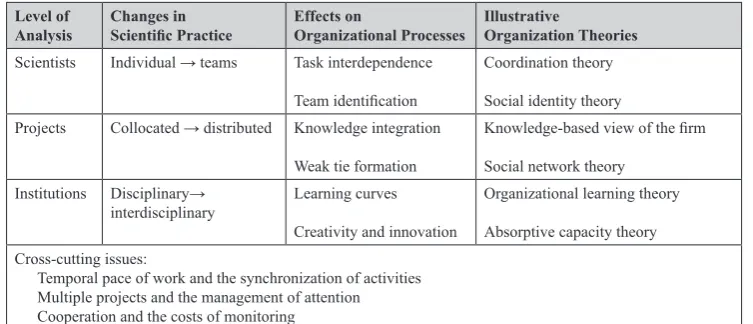
table 1. Changing nature of science and its implications for organization theory
level of
analysis Changes in Scientific Practice effects on Organizational Processes illustrative Organization theories
Scientists Individual → teams task interdependence
Team identification
Coordination theory
Social identity theory Projects Collocated → distributed Knowledge integration
Weak tie formation
Knowledge-based view of the firm
Social network theory Institutions Disciplinary→
interdisciplinary Learning curves Creativity and innovation
Organizational learning theory
Absorptive capacity theory Cross-cutting issues:
Temporal pace of work and the synchronization of activities Multiple projects and the management of attention Cooperation and the costs of monitoring
Changing nature OF sCienCe
It is difficult not to notice that scientific research is changing. Worldwide, there has been increasing technological innovation and development of complex computer-based methods and tools that necessitate the interaction and fusion of different technical disciplines and expertise (Gibbons et al., 1994). These changes have caused a rise in the significance of interdisciplinarity and team collaboration. For instance, advances in computational biology have depended on collaborations in computer modeling, statistics, and genetics. During the same period, and not without its detractors (e.g., Alberts, 1984), the need to share expensive research resources, to manage huge amounts of information, and to overcome disciplinary “silos” to solve social problems, has pushed science policy towards externally generated priorities (Inselt et al., 2004). Those goals have led to a tighter meshing of research with government-funded social missions, and a closer relationship between basic research and industrial application (Llerena & Meyer-Kranmer, 2003). To meet these priorities, agencies in the U.S., Europe, and Asia have sponsored a wide range of large research projects such as the European Large Hadron Collider to investigate particle physics, the multinational Antarctic Drilling project to investigate climate change, and the Human Genome project to investigate human DNA (Collins, Morgan, & Patrinos, 2003). Networks of relationships still motivate many interpersonal collaborations (Blau & Scott, 1962; Tichy, 1981), but these new investments, and the increasingly rapid application of science and technology to products and services in agriculture, finance, energy, health care, transportation, and entertainment have increased the size of the science enterprise, its costs, political prominence, and structural complexity.
As teams and project-based research organizations have begun to dominate production in science, scientific work has changed as well. Since Kraut, Galegher, and Egido (1987) published their original study of research collaborations that showed how personal relationships facilitated effective task completion and the importance of proximity for informal communication, scientific teams have grown larger and more dispersed across institutions and disciplines (Corley, Boardman, & Bozeman, 2006; Metzger & Zare, 1999; Olson, Zimmerman, & Bos, 2007). R&D labs are now spread across continents (Gassmann & Zedtwitz, 1999), open source software projects have contributors from around the world (von Hippel & von Krogh, 2003), and so-called “collaboratories” have formalized institutional alliances and have encouraged scientists in many geographic locations and fields to share common resources (Finholt & Olson, 1997; Kouzes, Myers, & Wulf, 1996).
Superconducting Super Collider, fail. Unfortunately, the evaluation of research programs has been ad hoc (Luukkonen, 1998). New organizational forms emerging in science present fascinating questions for organizational scholars. For example, how do traditional incentive structures built around tenure clash or adapt to new interdisciplinary imperatives? When ties are weak and spread over nations, how do teams find just the right expertise at a cost they can afford? To what extent can the open source movement facilitate scientific progress across institutional and disciplinary boundaries? How do new ways of publishing and presenting findings challenge the dominance of top journals and the traditions of peer review and self-policing of scientific quality?
As we noted, research on how science is organized is not new. It can be found especially in the literatures on the sociology of science and industrial organization. The journal, Social Studies of Science, publishes papers on the politics of science, epistemology of science, ethical issues, and social roles and processes. Research Policy publishes studies of organization relevant to government and R&D policy. Much of the work in industrial organization examines macro-level processes such as the relationship of investments in R&D to GNP. An emerging field of “scientometrics” (with its own journal by the same name) has contributed new methods, including types of network analyses, for understanding the spread of knowledge. Examinations of new organizational forms in science are beginning to emerge (e.g., Chompalov, Genuth, & Shrum, 2002). Yet by contrast with other domains and topics, changes in scientific practice and their impact on research organizations have been neglected by most organizational scholars. Nature, Science, and biotech news outlets have published commentaries on issues in the organization of science, such as the purported glut of postdocs (Philippidis, 2013). Problems like these should be of interest to those who study organizations, but so far, have not.
more scientists are team scientists
Research collaboration, also referred to as “team science” (National Academies, 2014), involves the cooperative teamwork of researchers to achieve a common goal of producing new scientific knowledge (Katz & Martin, 1997; Kraut, Galegher, & Egido, 1987; Stokols et al., 2008). Classic studies show that a few fields, such as physics and astronomy, have long depended on team science and were transformed in mid-twentieth century from “little science” to “big science” due to the complexity and cost of their equipment and infrastructure (de Solla Price, 1963). Division of labor also increased as professors took on graduate students, post-docs, and technicians to expand the scope of their work (Hagstrom, 1964). These changes now apply to most fields of science.
The change from individuals to teams, and from smaller to larger teams has benefits and costs. Teams benefit from more people to share the work and to solve problems, and more experts to contribute. One expert’s departure is unlikely to doom an entire project. Larger groups experience many efficiencies of scale over smaller groups. Technologies and practices adopted or created by a few members can be readily used or copied by other members. Working with others can increase scientists’ own expertise. Despite these benefits of scientific teams, there are costs. More people generally implies more layers of decision making. More people also means a greater need for planning – meetings, calendars, managers, committees, and staff to manage workflow and resources. Research sponsors and employer organizations also demand greater accountability for larger projects with bigger budgets and more control over the activities of participants, that is, bureaucratization (Weber, 1968). Bureaucratization involves more rules, reports, and oversight. In our research on large scientific teams (Cummings & Kiesler, 2007), researchers told vivid stories about lengthy institutional review board (IRB) procedures, detailed budgeting, frequent requests for progress reports, and arcane rules for equipment purchases that increase the administrative costs of research.
tighter coupling among tasks, complicating coordination. Coordination theory (Malone & Crowston, 1994; Van de Ven, Delbecq, & Koenig, 1976) provides an approach to the study of coordination processes within organizations. It has been used to suggest coordination improvements in project work (Crowston, 1997) and to evaluate factors that change coordination costs (Boh et al., 2007; Cummings & Kiesler, 2007; Olson & Olson, 2000). In large scientific teams, coordination costs may be exacerbated because division of labor, task specialization, and bureaucratic rules may be unsuited for some parts of the work. Science ultimately is a creative activity in which transformative discoveries can require changing goals, collaborators, or tasks midstream, each of which poses coordination challenges.
Coordination theory offers a productive lens for studying these challenges in scientific organizations and for advancing theory as well. The theory might help us understand the tradeoffs between formal organization, which rationalizes workflow and resources, versus creativity, which may not be readily rationalized. At what point do large organized projects, with their many strings that tie people together and coordinate work, sacrifice creative advances in research?
Another organizational process relevant to the shift from individuals to teams is team identification, in which members feel part of a social entity larger than themselves or their close associates. Scientists who work on a team can come to feel part of a community, making social identity theory (Hogg & Terry, 2000; Tajfel & Turner, 1986) potentially applicable to this process. Social identity theory generates a number of predictions relevant to scientific team attachment and success. For instance, the theory predicts that researchers who identify with a scientific project or team will see membership as comparatively interchangeable and will be less likely to leave if a favorite local colleague leaves (Turner, 1985).
Although topics such as team size and diversity (Cummings et al., 2013) and team stability and change (Guimera et al., 2005) are of great importance in science policy, these and other topics addressed by social identity theory need further development in the context of science. Social identify theory also could help clarify policy debates. For instance, “grand challenges” and other innovation contests that involve specific goals and competition with other scientific teams are increasingly popular in sciences ranging from agriculture to biometrics to computing (Boudreau, Lacetera, & Lakhani, 2011). Some have argued that team competitions (and other targeted initiatives) are inefficient and cause scientists to overemphasize short-term wins over long-term scientific progress (Dasgupta & David, 1994). We suggest that applying social identity theory to scientific organizations would improve not just the sophistication of science policy but extensions and boundary conditions of the theory.
More Research Projects Are Distributed, Geographically and Institutionally
Along with an increase in size, research projects are also becoming more distributed geographically and institutionally (Jones, Wuchty, & Uzzi, 2008). New computer-based communication technologies, especially, have made multi-institutional collaborations notably easier than was true when distant collaborators had to travel to each others’ labs and meet at research conferences. Researchers and their sponsors have taken advantage of this technological change. Investigators at institutions or departments specializing in one topic or technique seek colleagues located at other institutions, and networks of scientists cooperate and share news and know-how in their fields. Funding organizations, which need to satisfy many stakeholders, have an interest in supporting a diverse research portfolio, and have developed mechanisms for supporting multi-institutional collaborative projects. A new organizational form, exemplified in the open source model of software development (von Hippel & von Krogh, 2003) and adopted for research on a wide range of topics, such as personality measurement, machine translation, operations management, and protein interactions, involves investigators who work within an entirely virtual organization.
or outright conflict (Cramton, 2001), inconsistent procedures across locations (Curtis et al., 1988), and splinter groups (O’Leary & Mortensen, 2010). Dispersed projects also may grow larger as experts are added. The benefits of obtaining new expertise may be offset by costs associated with dispersion and larger size.
Organization theorists will recognize in these issues the considerable attention in recent years to the problem of how organizations can share and integrate knowledge. according to the knowledge-based view of the firm (Grant, 1996; Kogut & Zander, 1992), integrating the expertise of employees is a critical process in modern knowledge organizations, research organizations being in this category. Success depends on how those organizations combine their expertise, especially through teamwork and learning within teams (Grant, 1996; Teece, 1998). The knowledge-based view has implications for the extent to which organizations acquire expertise externally, establish boundaries, exchange tacit versus explicit knowledge, and utilize resources (Lepak & Snell, 1999). However, with recent exceptions (e.g., Boh et al., 2007), knowledge-based view research has been characterized by a high level of abstraction (Priem & Butler, 2001). Studying research organizations from the lens of the knowledge-based view could improve the empirical basis of this framework and help understand its tradeoffs. For example, we might ask how distributed scientific teams integrate knowledge when learning is mostly local but collaboration is mostly non-local. Scientific organizations offer an opportunity to apply the knowledge-based view in a context of great policy importance and to compare how the framework performs outside for-profit organizations.
another recognizable organizational process in distributed teams is the role of weak ties in finding and recruiting experts and exchanging critical information (Granovetter, 1973; Hansen, 1999). Although researchers typically have extensive social networks that foster collaboration, they need to develop sufficient experience with one another to conduct research and co-author scientific papers. When research collaborations are distributed across institutions, investigators have to figure out how to best nurture those collaborations. Investigators need to balance meetings with local colleagues and students while at the same time managing meetings and other activities across institutions. The challenges to effective knowledge sharing across institutions are exacerbated further, for example, if one university follows a semester schedule while another follows a quarter schedule, or if one university has hurdles for evaluating intellectual property (e.g., a technology transfer office) while another has no hurdles.
Recent advances in social network theory identify mechanisms, such as homophily and reciprocity (Monge & Contractor, 2003), that apply to processes scientists use to form and sustain collaborations. However, we still lack detailed information on how dispersion affects collaboration through network ties, how local relationships compete with distant ones, and how researchers make tradeoffs regarding whether to collaborate with local versus distant colleagues (Bozeman & Corley, 2004). Interesting questions for organization scientists include why dispersed teams, on average, tend to be less efficient than collocated teams, and how to understand the role of leadership, resource allocation, and incentives in virtual organizations made up of weak ties (Ahuja & Carley, 1999).
Science Is More Interdisciplinary
have struggled to accommodate interdisciplinary science (Rhoten & Parker, 2004). How can universities learn not merely to adapt to interdisciplinary work but to embrace it?
As with team science and distributed science, there are benefits and costs to interdisciplinary science. The value of interdisciplinary research to innovations in products and services has often been cited. For instance, the video recorder emerged from advances in control theory, magnetic and recording materials, and electronics (Schmoch et al., 1996). Other important discoveries based on interdisciplinary research include DNA, radar, and manned space flight. Nonetheless, a National Academies (2004: 1) report on interdisciplinary research claimed, “Despite the apparent benefits of interdisciplinary research, researchers interested in pursuing it often face daunting obstacles and disincentives. Some of them take the form of personal communication or ‘culture’ barriers; others are related to the tradition in academic institutions of organizing research and teaching activities by discipline-based departments – a tradition that is commonly mirrored in funding organizations, professional societies, and journals.” Given such obstacles, universities may be slow, or even resistant, to change in spite of shifts toward interdisciplinary science.
Large projects typically display a mix of formal and informal organizational structures (March & Simon, 1958). They are created with formal administrative hierarchies and division of labor that frame goals and how work will be accomplished but evolve informally. Cultures within disciplines can clash across disciplines, sometimes creating silos and mistrust. Scientists sometimes initiate competing collaborations with multiple goals and objectives (Newman, 2001). A network of social scientists in the U.K. working within genetics projects have stimulated debate on topics such as animal-human hybrid embryos, raising some hackles, but they have also created links across fields. For instance, within the large Barcode of Life project, they mediated between groups using specialized methods, such as public health officials and the larger project, which needs global standards for genetic bar-coding (Macilwain, 2009).
Organization theorists familiar with organizational learning theory (Argote, 1999; Huber, 1991; March 1991) will recognize such situations. Although some organizational learning researchers have studied interdisciplinary learning in teams (e.g., Edmondson, 2003) and learning in distributed work (e.g., Lakhani & von Hippel, 2003), little is known about how (and if) universities create values, procedures, and structures wherein interdisciplinary science is central. Llerena and Meyer-Krahmer (2003) argue that external forces are increasing the incentives for this change, but organizational scholars rarely study these issues, although they often swirl around them in their own universities (Vural, Dahlander, & George, 2013). We believe there are interesting questions here for organization theorists. Is interdisciplinary work inherently more diverse, innovative, and risky, making organizational structures that support the cognitive and social aspects of the work more fragile (Paletz & Schunn, 2010)? What are the tradeoffs between exploitation and exploration (March, 1991), and what are their impacts on learning? Do the power asymmetries inherent in research organizations with junior and senior investigators inhibit or facilitate learning (Van der Vegt et al., 2010)?
CrOss-Cutting issues
We have described how science is changing for scientists, the teams in which they work, and for universities and research institutions. We now highlight three cross-cutting issues apparent in the shift from individuals to teams, collocated to distributed work, and disciplinary to interdisciplinary research: (1) the increased temporal pace of work and pressures on synchronization of activities, (2) an increase in multiple projects affecting the management of attention, and (3) a greater need for cooperation, increasing the costs of monitoring.
Temporal Pace of Work and the Synchronization of Activities
Scientific work today, like other academic pursuits, is not a leisurely occupation. Aside from their regular duties in teaching and departmental activities, researchers face looming proposal cutoff dates and conference deadlines, websites to keep up to date, urgent queries from the press, progress and final reports, site visits, meetings, telephone and online conferences, and demanding travel schedules. Although some of what scientists do can be accomplished asynchronously, other critical work such as handling sudden resource or personnel crises, completing difficult analyses, getting help on a technique, or co-authoring a paper or proposal under deadline, requires synchronous planning, analysis, and discussion with others.
As the number of people in a team increases, member deadlines compete with one another, making synchronization more difficult. Distributed projects complicate deadlines further due to time zone differences and travel distances. Some globally distributed teams have to reserve a single daylight hour in which everyone is awake to discuss the work. Interdisciplinary science is a source of even more pressure because different disciplines run on different conference and publication time schedules. One of the authors was recently invited to an interdisciplinary program committee meeting, which had to be rescheduled twice to avoid conflicts with disciplinary conferences (of which the planners were unaware).
Organization theorists have long studied the temporal pace of work, including teams (Waller, Zellmer-Bruhn, & Giambatista, 2002) and organizations (Orlikowski & Yates, 2002). a generalization from this work is that teams and organizations use time to synchronize work and decision making, but time has psychological and social meaning well beyond the fixing of routines. In science, these routines and meanings are complex and challenging (Jackson et al., 2011). Scientists have been at the forefront of adopting technologies such as fast Internet access, smartphones, portable computing, and applications such as shared calendars, online voting, and instant messaging. These technologies have dramatically altered how scientists use their time and the technologies themselves. On the one hand, time seems more fungible since people can do more things at once (drive and talk by cell phone), but they also pack more activities into a given space of time (go through their email while at meetings). Because of their adoption of these new practices, scientific teams and organizations would seem to be prime places to study questions such as how researchers synchronize activities with individuals and groups.
Multiple Projects and the Management of Attention
engage in internal learning activities (Bresman, 2010). In the context of science teams it would be interesting to know how external attention, as well as competing activities, affect productivity and member relationships. We expect that the management of attention would be further complicated by how much members vary in their level of commitment to the team (e.g., core versus peripheral members).
Having multiple task responsibilities and roles puts a premium on attention, including decisions about the allocation of people to projects and tasks (Ocasio, 1997). These decisions grow even more complex with the trend to create geographically distributed work arrangements, distributed collaborations, and organizations with multiple sites, each housing experts specializing in one or more facets of work (Becker, 2001). Although there has been considerable scholarly research on the management of expertise and attention within work teams (Polzer, Milton, & Swann, 2002), researchers have paid surprisingly little attention to the management of expertise and multiple task activities across distributed organizational and team environments (cf. Grinter, Herbsleb, & Perry, 1999). Many questions arise in the context of multiple-project work. For instance, what organizational strategy addresses the best structuring of expertise, attention, and workload in multiple project environments (Marks et al., 2005)? How do scientists regularize communication, prioritize tasks, and plan (or fail to plan) for expected and unexpected events? How do variations in the geographic and temporal distribution of work affect these decisions? Will new collaboration technologies help or make worse the trend in which scientists assume more tasks and join more projects?
Cooperation and the Costs of Monitoring
As the size of scientific teams continues to grow, as members are spread across a greater number of institutions, and as more disciplines are brought together to solve scientific problems, the need for cooperation among scientists intensifies. Researchers, who traditionally might have only needed to cooperate with members of their own labs, must now weigh the responsibility of cooperating with other labs and organizations in order to effectively achieve their scientific goals. Cooperation raises issues of trust and the costs of monitoring (Rousseau, Sitkin, Burt, & Camerer, 1998). Trust helps researchers organize their work and execute it successfully (McEvily, Perrone, & Zaheer, 2003), but working in large, geographically distributed, and/ or multidisciplinary projects increases people’s vulnerability and dependence on trust. Their perceptions of risk may inhibit their willingness to collaborate (Mayer, Davis, & Schoorman, 1995). As a way to mitigate the uncertainty associated with collaborating with people across institutions and disciplines, researchers are likely to spend more time monitoring what others are doing. the costs of monitoring are likely to increase as more cooperation is required in larger and more complex projects.
One interesting question that arises in the context of science is: to what extent does swift trust occur in distributed, interdisciplinary research projects (Jarvenpaa & Leidner, 1999)? Do members of these projects jump right into a large-scale collaboration, viewing distant colleagues benignly? Scientists who trust other participants are likely to experience lower costs of monitoring because they can focus on the work rather than on what others are doing. However, if the stakes are high, scientists may feel the need to verify the quality of the work and the progress made by other participants, and the costs of monitoring others could impede their efficiency on the task.
A related question for organization theorists interested in cooperation is how divergent incentives drive behavior in scientific collaborations. Incentives can differ within and across people and teams. For instance, there are different incentives for faculty with tenure compared to faculty without tenure, faculty who are on “hard” money hiring lines rather than “soft” money hiring lines, faculty with greater obligations to publish rather than to teach, and so on. Incentive differences can influence who is willing to join scientific projects and the cooperative behavior of those who do join. The willingness to cooperate and the amount of monitoring that researchers engage in should vary as a function of their position within the incentive structure of their organizations.
For instance, the Global Seismographic Network is an open access project to monitor all seismic vibrations on Earth with high fidelity. Although science and scientists value objectivity, politically based funding and national differences, as well as value-laden social behavior, can affect such research projects (Easterby-Smith & Malina, 1999). For instance, researchers from more hierarchical and consensus-valuing Asian cultures may be more inclined to discuss issues fully with peers but to debate superiors less than their american colleagues. Thus far, little research has focused on answering questions about the influence of cross-cultural processes in scientific organizations.
Finally, Murray and O’Mahoney (2007) discuss the different rewards for sharing information and building on others’ ideas within distinct fields, institutions, and communities. For instance, in the life sciences, researchers from academia and industry publish in venues with different implications for access (Murray & Stern, 2007). We believe their arguments for studying cumulative innovation are consistent with our call for applying organization theory to science. Just as there is variation in incentive structures across corporations engaged in science-based innovation (e.g., publishing, patenting, licensing), incentive structures for innovation vary across centers, institutes, universities, government laboratories, and other research organizations engaged in science. We need to gain a more systematic and empirically based understanding of these incentive structures to understand how they lead to more or less innovation.
DisCussiOn
Science has undergone major organizational changes over the past century and has embraced new ways of structuring incentives (e.g., million dollar prizes), collaborative relationships (e.g., virtual scientific networks), project governance (e.g., open source projects), scientific participation (e.g., citizen science), and knowledge dissemination (e.g., publicly accessible journals). These changes exemplify innovations in organizing that have both intended and unintended consequences, with implications for organization theorists, managers, and policy makers. For instance, the scientific value and efficiency of team science over solo science is so often taken for granted today that funding agencies, such as the U.S. National Science Foundation and E.U. Framework Programme, increasingly announce grant programs that require multi-investigator proposals. To pursue these projects, lead scientists must identify investigators who will be willing to participate, possibly at the expense of their personal research programs. They impel everyone to spend more time organizing proposals, getting to know other investigators involved, and otherwise shifting their attention towards larger scientific efforts.
Suppose one million dollars is available to address a particular scientific project. Is it always better to fund four investigators on the project rather than one investigator? Four investigators are likely to be more productive than one investigator, but this choice will have other unintended effects – on researchers (e.g., splitting budgets four ways may mean each researcher has to write more grants to cover his or her graduate students, lab, technicians, summer salary, and so forth, and thus spends more time writing proposals) and on the organization (e.g., faculty are led to write more proposals, but not necessarily with others in their own organization, thus they may increasingly look outside for collaborations). Perverse incentives arise as well (e.g., faculty hire post-docs so that they do not have to spend their research budgets on graduate tuition, even though their own departments rely on such graduate tuition payments). Organization theorists whose expertise is the organizational dimensions of coordination and group identity will find such phenomena a rich domain for study.
research organizations participate in more virtual organizations, the boundary between the established organization and the new virtual organization becomes blurred in terms of how knowledge is controlled and appropriated. For instance, if the virtual organization becomes the focal organization for the two scientists in California in terms of sharing expertise and contributing new ideas, it is possible that the research organization in California will hire four scientists like those found in Illinois and New York to take advantage of their expertise. The knowledge-based view and social network theory may provide insight into the tradeoff between “making” (i.e., all scientists reside in a single research organization with informal ties outside) and “buying” (i.e., scientists in one research organization have a formal virtual organization with other scientists). By taking into account the costs of integrating expertise arising from the geographic dispersion of knowledge (likely higher for a formal virtual organization) and the weak tie benefits arising from having collaborators in different locations (likely higher for a single research organization with informal ties), organizational theorists could assess when making versus buying is preferred for a research organization. Down the road, the risk for research organizations relying too much on distributed science could be that they unintentionally increase the costs of integrating expertise because the virtual organization is outside the control of the research organization. Furthermore, the organization may incidentally reduce weak tie benefits because the virtual organization becomes a competitor and does not bring knowledge and new ideas back into the organization. Interdisciplinary science presents an interesting domain for understanding how organizations evolve. All scientific disciplines that exist today were, at some point in history, something else. For instance, biochemistry, with many departments of its own today, is an intersection of biology and chemistry that was once considered undesirable territory for biology and chemistry departments. for research organizations that reside at the edge of formal organizational boundaries, there is uncertainty regarding the best approach to advance their agendas. Aside from dealing with institutional challenges such as existing departmental structures, research organizations seeking to bring investigators from different disciplines together must evaluate how to compose their organizations in a productive way. For example, bioinformatics combines biologists, medical scientists, and computer and information scientists. Often the proportions of each field represented are an unplanned consequence of who was unhappy in his or her “real” department and who was tempted by the chance to do something different (or any of a number of other individually based motivations). Organizational learning theory and absorptive capacity theory might help us better understand how interdisciplinary research organizations evolve, taking into account the learning costs associated with cross-discipline understanding, and the capacity benefits associated with assimilating outside ideas that are related to the task at hand.
Beyond policy, there are practical applications of organization theory for scientists who manage large, distributed, and/or interdisciplinary projects in research organizations. As several principal investigators of these kinds of projects have noted to us in interviews, most scientists are not trained in management or leadership, despite how important it is (Avolio et al., 2009). As a result, scientists often learn to manage and lead through trial and error, rather than through instruction about issues commonly found in the groups literature on how to best assemble a team, resolve conflict when it arises, and interface with external stakeholders. There are also practical applications for administrators of research organizations, such as provosts and deans, who are in a position to define the structure of organizational units. For example, drawing on organization theory, administers can make tradeoffs based on whether functional structures (e.g., organization with disciplinary departments), divisional structures (e.g., organization with interdisciplinary centers focused on different phenomena), or matrix structures (e.g., organization with institutes that cross disciplines by phenomena) provide the right mix of coordination and control (Burton, DeSanctis, & Obel, 2006).
COnClusiOn
Organization theory can contribute significantly to a better understanding of the world of science and technology through the application of theory to research organizations, and would itself profit from this work through the extension and redirection of existing theory. Organization theory would also gain insights from the many pioneering organizational structures, experiments in organizing, new ways of managing, and innovative applications of technology that one can find across the sciences today.
Acknowledgements: The development of ideas for this article was supported through grants from the National Science Foundation (OCI-0838367 and SBE-0830254 to Duke University, and OCI-0838385 and SBE-0830306 to Carnegie Mellon University). For feedback on early drafts of this article, we thank Richard Burton, Henrik Bresman, Michael O’Leary, Kathleen Smith, and participants at the 2011 Atlanta Conference on Science and Innovation Policy.
reFerenCes
Ahuja M, Carley K. 1999. Network structures in virtual organizations. Organization Science 10(6): 741-757.
Alberts BM. 1984. Limits to growth: In biology, small science is good science. Cell 41: 337-328.
Argote L. 1999. Organizational Learning: Creating, Retaining, and Transferring Knowledge. Kluwer Academic Publishers, Norwell, MA.
Avolio B, Reichard R, Hannah S, Wallumbwa F, Chan A. 2009. A meta-analytic review of leadership impact research: Experimental and quasi-experimental studies. Leadership Quarterly 20: 764-784.
Becker MC. 2001. Managing dispersed knowledge: Organizational problems, managerial strategies and their effectiveness. Journal of Management Studies 38: 1037-1051.
Blau P, Scott W. 1962. Formal Organizations: A Comparative Approach. Chandler, San Francisco, CA.
Boh W-F, Ren Y, Kiesler S, Bussjaeger R. 2007. Expertise and collaboration in the geographically dispersed organization. Organization Science 18: 595-612.
Boudreau K, Lacetera N, Lakhani K. 2011. Incentives and problem uncertainty in innovation contests: an empirical analysis. Management Science 57(5): 843–863.
Bozeman B, Corley E. 2004. Scientists’ collaboration strategies: Implications for scientific and technical human capital. Research Policy 33: 599-616.
Bresman H. 2010. External learning activities and team performance: A multimethod field study. Organization Science 21: 81-96.
Burton RM, DeSanctis G, Obel B. 2006. Organizational Design: A Step-by-Step Approach. Cambridge University Press, Cambridge, MA.
Cohen W, Levinthal D. 1990. Absorptive capacity: A new perspective on learning and innovation. Administrative Science Quarterly 35: 128-152.
Collins F, Morgan M, Patrinos A. 2003. The Human Genome Project: Lessons from large-scale biology. Science 300: 286-290.
Colyvas J, Powell W. 2006. Roads to institutionalization: The remaking of boundaries between public and private science. Research in Organizational Behavior 21: 305-353. Corley E, Boardman C, Bozeman B. 2006. Design and the management of multi-institutional
research collaborations: theoretical implications from two case studies. Research Policy 35: 975-993.
Cramton CD. 2001. the mutual knowledge problem and its consequences in geographically dispersed teams. Organization Science 12: 346-371.
Crowston K. 1997. A coordination theory approach to organizational process design. Organization Science 8: 157-175.
Cummings JN, Haas MR. 2012. So many teams, so little time: Time allocation matters in geographically dispersed teams. Journal of Organizational Behavior 33(3): 316-341. Cummings JN, Kiesler S. 2007. Coordination costs and project outcomes in multi-university
collaborations. Research Policy 36(10): 1620-1634.
Cummings JN, Kiesler S, Zadeh R, Balakrishnan A. 2013. Group heterogeneity increases the risks of large group size: A longitudinal study of productivity in research groups. Psychological Science 24(6): 880-890.
Curtis B, Krasner H, Iscoe N. 1988. A field study of the software design process for large systems. Communications of the ACM 31(11): 1268-1287.
Dasgupta P, David PA. 1994. Towards a new economics of science. Research Policy 23: 487-521.
de Solla Price DJ. 1963. Little Science, Big Science. Columbia University Press, New York, ny.
edmonson a. 2003. Speaking up in the operating room: how team leaders promote learning in interdisciplinary action teams. Journal of Management Studies 40: 1419-1452.
Easterby-Smith M, Malina D. 1999. Cross-cultural collaborative research: Toward reflexivity. Academy of Management Journal 42: 76-86.
Feldman M, Feller I, Bercovitz J, Burton RM. 2002. Equity and the technology transfer strategies of American research universities. Management Science 48(1): 105-121. Finholt T, Olson G. 1997. From laboratories to collaboratories: A new organizational form
for scientific collaboration. Psychological Science 8(1): 28-36.
Gittleman M. 2007. Does geography matter for science-based firms? Epistemic communities and the geography of research and patenting in biotechnology. Organization Science 18: 724-741.
Gassmann O, von Zedtwitz M. 1999. New concepts and trends in international R&D organization. Research Policy 28: 231-250.
Gibbons M, Limoges C, Nowotny H, Schwartzman S, Scott P, Trow M. 1994. The New Production of Knowledge. Sage, London, U.K.
Gonzalez VM, Mark G. 2004. Constant, constant, multi-tasking craziness: Managing multiple working spheres. In Proceedings of the SIGCHI Conference on Human Factors in Computing Systems (Vienna, Austria, April 24-29, 2004).
Granovetter M. 1973. The strength of weak ties. American Journal of Sociology 78: 1360-1380.
Grant RM. 1996. Toward a knowledge-based theory of the firm. Strategic Management Journal 17: 109-122.
Grinter RE, Herbsleb JD, Perry DW. 1999. The geography of coordination: Dealing with distance in r&D work. Proceedings of SIGGROUP Conference on Supporting Group Work GROUP ‘99: 306-315. ACM Press, New York, NY.
Guimera R, Uzzi B, Spiro J, Amaral L. 2005. Team assembly mechanisms determine collaboration network structure and team performance. Science 308(5722): 697-702. Hagstrom W. 1964. Traditional and modern forms of scientific teamwork. Administrative
Science Quarterly 9: 241-264.
across organization subunits. Administrative Science Quarterly 44: 82-111.
Herbsleb J, Mockus A, Finholt T, Grinter R. 2000. Distance, dependencies, and delay in a global collaboration. Proceedings of the 2000 ACM Conference on Computer Supported Cooperative Work: 319-328, Philadelphia, PA.
Hogg MA, Terry DJ. 2000. Social identity and self-categorization processes in organizational contexts. Academy of Management Review 25: 121-140.
huber g. 1991. Organizational learning: the contributing processes and the literatures. Organization Science 2(1): 88-115.
Hudson JM, Christensen J, Kellogg WA, Erickson T. 2002. I’d be overwhelmed, but it’s just one more thing to do: Availability and interruption in research management. In Proceedings of the SIGCHI Conference on Human Factors in Computing Systems (April 20-25, 2002). Inselt TR, Volkow ND, Landis SC, Li T-K, Battey JF, Jr., Sieving P. 2004. Limits to growth:
Why neuroscience needs large-scale science. Nature Neuroscience 7: 426-427.
Jackson SJ, Ribes D, Buyuktur A, Bowker G. 2011. Collaborative rhythm: Temporal dissonance and alignment in collaborative scientific work. Proceedings of the ACM Conference on Computer Supported Cooperative Work. ACM Press, New York, NY. Jarvenpaa S, Leidner D. 1999. Communication and trust in global virtual teams. Organization
Science 10(6): 791-815.
Jones B, Wuchty S, Uzzi B. 2008. Multi-university research teams: Shifting impact, geography, and stratification in science. Science 322: 1259-1262.
Katz J, Martin B. 1997. What is research collaboration? Research Policy 26: 1-18.
Kogut B, Zander U. 1992. Knowledge of the firm, combinative capabilities, and the replication of technology. Organization Science 3: 383-397.
Kouzes R, Myers J, Wulf W. 1996. Collaboratories: Doing science on the Internet. IEEE Computer 29: 40-46.
Kraut R, Galegher J, Egido C. 1987. Relationships and tasks in scientific research collaboration. Human-Computer Interaction 3: 31-58.
Lakhani KR, von Hippel E. 2003. How open source software works: “Free” user-to-user assistance. Research Policy 32: 923-943.
Lepak D, Snell S. 1999. The human resource architecture: Toward a theory of human capital allocation and development. Academy of Management Review 24(1): 31-48.
Leroy S. 2009. Why is it so hard to do my work? The challenge of attention residue when switching between work tasks. Organizational Behavior and Human Decision Processes 109: 168-181.
Llerena P, Meyer-Krahmer F. 2003. Interdisciplinary research and the organization of the university: General challenges and a case study. In A. Geuna, A. Salter, and W. Steinmuller (eds.), Science and Innovation: Rethinking the Rationales for Funding and Governance. Edward Elgar Publishing, Northampton, MA.
Luukkonen T. 1998. The difficulties in assessing the impact of EU framework programmes. Research Policy 27: 599-610.
Macilwain C. 2009. genetics: Watching science at work. Nature 462: 840-842.
Malone T, Crowston K. 1994. The interdisciplinary study of coordination. ACM Computing Surveys 26: 87-119.
March J. 1991. Exploration and exploitation in organizational learning. Organization Science 2: 71-87.
March J, Simon HA. 1958. Organizations. Wiley, New York, NY.
Marks M, DeChurch L, Mathieu J, Panzer F, Alonso A. 2005. Teamwork in multi-team systems. Journal of Applied Psychology 90(5): 964-971.
Mayer R, Davis J, Schoorman F. 1995. An integrative model of organizational trust. Academy of Management Review 20(3): 709-734.
McEvily B, Perrone V, Zaheer A. 2003. Trust as an organizing principle. Organization Science 14(1): 91-103.
Metzger N, Zare R. 1999. Interdisciplinary research: From belief to reality. Science 283: 642-643.
Moon JY, Sproull L. 2002. Essence of distributed work: The case of the Linux kernel. In Pamela Hinds and Sara Kiesler (eds.), Distributed Work: 381-404. The MIT Press, Cambridge, MA.
Murray F, O’Mahony S. 2007. Exploring the foundations of cumulative innovation: Implications for organization science. Organization Science 18(6): 1006-1021.
Murray F, Stern S. 2007. Do formal intellectual property rights hinder the free flow of scientific knowledge?: An empirical test of the anti-commons hypothesis. Journal of Economic Behavior and Organization 63(4): 648-687.
national academies. 2004. Facilitating Interdisciplinary Research. national academies Press, Washington, DC. http://newton.nap.edu/catalog/11153.html.
national academies. 2014. Science of Team Science. National Academies Press, Washington, DC. http://sites.nationalacademies.org/dbasse/bbcss/currentprojects/dbasse_080231. Newman M. 2001. The structure of scientific collaboration networks. Proceedings of the
National Academy of Sciences 98(2): 404-409.
Ocasio W. 1997. Towards an attention-based view of the firm. Strategic Management Journal 18: 187–206.
O’Leary M, Mortensen M. 2010. Go (con)figure: Subgroups, imbalance, and isolates in geographically dispersed teams. Organization Science 21: 115-131.
Olson GM, Olson J. 2000. Distance matters. Human-Computer Interaction 15: 139-179. Olson GM, Zimmerman A, Bos ND. 2007. Science on the Internet. The MIT Press,
Cambridge, MA.
Orlikowski WJ, Yates J. 2002. It’s about time: Temporal structuring in organizations. Organization Science 13: 684-700.
Paletz S, Schunn C. 2010. A social-cognitive framework of multidisciplinary team innovation. Topics in Cognitive Science 2: 73-95.
Pelz D, Andrews F. 1966. Scientists in Organizations: Productive Climates for Research and Development. Wiley, New York, NY.
Philippidis A. 2013. Ph.D.s need not apply: Will the glut of docs and postdocs ever shrink? Genetic Engineering & Biotechnology News 33(19): 6-7.
Polzer JT, Milton LP, Swann WB, Jr. 2002. Capitalizing on diversity: Interpersonal congruence in small work groups. Administrative Science Quarterly 47: 296-324.
Priem RL, Butler J. 2001. Is the resource-based “view” a useful perspective for strategic management research? Academy of Management Review 26: 22-40.
Puranam P, Raveendram M, Knudsen T. 2012. Organization design: The epistemic interdependence perspective. Academy of Management Review 37(3): 419-440.
Rhoten D, Parker A. 2004. Risks and rewards of an interdisciplinary research path. Science 306: 2046.
Rousseau D, Sitkin S, Burt R, Camerer C. 1998. Not so different after all: A cross-discipline view of trust. Academy of Management Review 23(3): 393-404.
Schmoch U, Hinze S, Jackel G, Kirsch N, Meyer-Krahmer F, Munt G. 1996. The role of the scientific community in the generation of technology. In G. Reger and U. Schmoch (eds.), Organisation of Science and Technology at the Watershed: 3–138. Physica-Verlag, Heidelberg, Germany.
Stokes D. 1997. Pasteur’s Quadrant: Basic Science and Technological Innovation. Brookings Institution Press, Washington, DC.
Stokols D, Hall K, Taylor B, Moser R. 2008. The science of team science: Overview of the field and introduction to the supplement. American Journal of Preventive Medicine 35(2S): 77-89.
Tajfel H, Turner JC. 1986. The social identity theory of intergroup behaviour. In S. Worchel and W.G. Austin (eds.), Psychology of Intergroup Relations: 7-24. Nelson-Hall, Chicago, IL.
teece D. 1998. research directions for knowledge management. California Management Review 40(3): 289-292.
Proceedings of the ACM Conference on Computer Supported Cooperative Work: 223-226. ACM Press. New York, NY.
Turner JC. 1985. Social categorization and the self-concept: A social cognitive theory of group behavior. In E.J. Lawler (ed.), Advances in Group Processes: Theory and Research: 2: 77-122. JAI Press, Greenwich, CT.
Van der Vegt G, de Jong S, Bunderson JS, Molleman E. 2010. Power asymmetry and learning in teams: the moderating role of performance feedback. Organization Science 21 (2): 347-361.
Van de Ven A, Delbecq A, Koenig R. 1976. Determinants of coordination modes within organizations. American Sociological Review 41: 322-338.
van Leeuwen T, Tijssen R. 2000. Interdisciplinary dynamics of modern science: Analysis of cross-disciplinary citation flows. Research Evaluation 9(3): 183-187.
von Hippel E, von Krogh G. 2003. Open source software and the “private-collective” innovation model: Issues for organization science. Organization Science 14: 209-223. Vural M, Dahlander L, George G. 2013. Collaborative benefits and coordination costs:
Learning and capability development in science. Strategic Entrepreneurship Journal 7(2): 122-137.
Waller MJ, Zellmer-Bruhn M, Giambatista RC. 2002. Watching the clock: Group pacing behavior under dynamic deadlines. Academy of Management Journal 45: 1046-1055. Walsh JP, Maloney NG. 2007. Collaboration structure, communication media, and problems
in scientific work teams. Journal of Computer-Mediated Communication 12(2): 712-732. Weber M. 1968. Economy and Society. G. Roth and C. Wittich (eds). Bedminister Press, New
York, NY.
Wood C, Sullivan B, Iliff M, Fink D, Kellig S. 2011. eBird: Engaging birders in science and conservation. PLoS Biology 9(12): e1001220.
Wuchty S, Jones B, Uzzi B. 2007. The increasing dominance of teams in production of knowledge. Science 316: 1036-1039.
JOnathOn n. Cummings
Associate Professor of Management Duke University
E-mail: [email protected]
sara Kiesler
Hilman Professor of Computer Science and Human-Computer Interaction Carnegie Mellon University
17 Journal of Organization Design
JOD, 3(3): 17-26 (2014)
DOI: 10.7146/jod.9729
BE AFFECTED BY BIG DATA?
Giles slinGer • rupert MOrrisOn
Abstract: Computing power and analytical methods allow us to create, collate, and analyze
more data than ever before. When datasets are unusually large in volume, velocity, and variety, they are referred to as “big data.” Some observers have suggested that in order to cope with big data (a) organizational structures will need to change and (b) the processes used to design organizations will be different. In this article, we differentiate big data from relatively slow-moving, linked people data. We argue that big data will change organizational structures as organizations pursue the opportunities presented by big data. The processes by which organizations are designed, however, will be relatively unaffected by big data. Instead, organization design processes will be more affected by the complex links found in people data.
Keywords: Organization design, big data, organizational structure, organization design
process
We participated in the Big Data and Organization Design conference in Paris, May 2013, as representatives of Concentra, our consulting firm which specializes in design, data analytics, and technology. Many speakers at the conference discussed the various impacts of big data, defined as “high-volume, -variety, and -velocity information assets that demand cost-effective, innovative forms of information processing for enhanced insight and decision making” (Laney, 2001). With respect to business organizations, big data allows more accurate customer segmentation in marketing. In health care, big data supports more targeted diagnosis and treatment. In employee recruiting, big data allows employers to screen more accurately. In the supply chain, big data reduces inventory wastage. And big data promises to alter the shape of organizations in many as yet unknown ways.
At the enterprise level, Galbraith (2012) proposes that big data will change organization structure, as large multinational firms will restructure to add a (fifth) structural dimension. Some new functions will engage in big data operations, which will distinguish themselves from the rest of the organization, just as the previous four structural emphases divided the organization according to (1) functions, (2) product divisions, (3) international units, and (4) customer segments. Big data will also change roles and power structures (Galbraith, 2014).
At the moment, big data is a promising technological innovation that may affect many business models. Is it really a step change, however, in its effects on how organizations are structured? Further, is big data going to change the processes by which we design organizations? Based on our experience from working with clients on organization design projects, we believe that big data will affect how organizations are structured more than how they are designed. In this article, we explore three propositions:
1. Organizations will be restructured to take advantage of big data opportunities. 2. Processes of organization design are unlikely to change because of big data.
OrGAniZAtiOns Will Be restruCtureD BeCAuse OF
BiG DAtA
This proposition looks like an open-and-shut case – organizations are already restructuring to deal with big data. Galbraith (2014) discussed the example of Proctor & Gamble, which has created “control towers” to maintain continuously updated control of its supply chain. He also highlighted Amazon, which says it wants to be the world’s most customer-centric organization, mostly by understanding its customers’ data in great depth. And he described Nike, which created its Nike Digital Sports division in 2010, putting sensors in shoes, clothes, and watchbands, and setting up virtual athletics communities.
Why should companies restructure themselves to deal with big data? Resource allocation becomes much more flexible in organizations that can apply big data. With visibility of demand levels and supply volumes, they find it easier to move people, capital, and other resources across sites, functions, roles, and positions. For example, a theme park can reallocate staff quickly to busy areas, or a supermarket can respond rapidly to forecasts of changing weather conditions. Today, we find it normal that a supermarket chain should seek detailed insights on the impact that weather conditions have in different store locations and at different times on customers’ behavior. Yet analyses as recent as Starr-McCluer (2000) could find only modest impact of weather on sales. Such an analysis seems almost to be from a different era because data available at that time was only available in aggregated forms. Starr-McCluer’s data sources, for example, were average monthly temperature data across the whole of the U.S. and average monthly sales data across ten types of retail operations. This compares with modern sales data, which are minute-by-minute, and modern weather metrics, which are hour-by-hour, both types of data allowing for real-time analytics and decision-making.
It is clear that the volume and granularity of big data opens up possibilities that have never previously existed to track the supply chain and customer-company interaction. That will mean opportunities to deliver better services which, in turn, will require different kinds of organizational structures. Interestingly, Galbraith (2012) argues that this will also generate new tensions, and the most successful organizations will be those that manage the conflicts of direction and interest that will inevitably arise from having up to five different structural emphases in the business. Galbraith’s (2012) observation echoes that of McAfee and Brynjolfsson (2012), who point out that big data will alter the sources of influence in the organization. The location of decisions will change, for example, as HiPPOs (the “Highest Paid People in the Organization”) find that they need to allow their judgment-based decision-making to be modified, and at times overruled, by data-driven insights.
prOCesses OF OrGAniZAtiOn DesiGn Are unliKelY
tO CHAnGe BeCAuse OF BiG DAtA
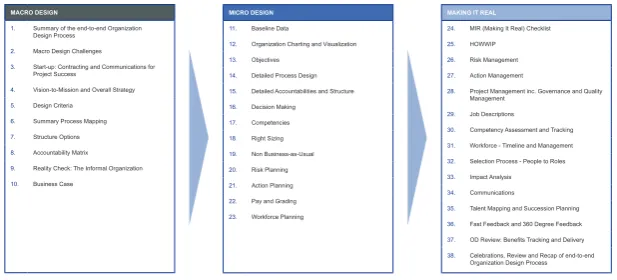
Proposition 2 is much harder to affirm than Proposition 1. The overall process of organization design is typically described in stages, moving from the outside in: (a) environmental (external) analysis, (b) definition of the organization’s purpose and mission, (c) assessment of the existing organization (internal analysis), (d) detailed design, and (e) implementation and review. An example of the overall design process is shown in Figure 1.
MACRO DESIGN
1. Summary of the end-to-end Organization Design Process
2. Macro Design Challenges
3. Start-up: Contracting and Communications for Project Success
4. Vision-to-Mission and Overall Strategy
5. Design Criteria
6. Summary Process Mapping
7. Structure Options
8. Accountability Matrix
9. Reality Check: The Informal Organization
10. Business Case
MICRO DESIGN
11. Baseline Data
12. Organization Charting and Visualization
13. Objectives
14. Detailed Process Design
15. Detailed Accountabilities and Structure
16. Decision Making
17. Competencies
18. Right Sizing
19. Non Business-as-Usual
20. Risk Planning
21. Action Planning
22. Pay and Grading
23. Workforce Planning
MAKING IT REAL
24. MIR (Making It Real) Checklist
25. HOWWIP
26. Risk Management
27. Action Management
28. Project Management inc. Governance and Quality Management
29. Job Descriptions
30. Competency Assessment and Tracking
31. Workforce - Timeline and Management
32. Selection Process - People to Roles
33. Impact Analysis
34. Communications
35. Talent Mapping and Succession Planning
36. Fast Feedback and 360 Degree Feedback
37. OD Review: Benefits Tracking and Delivery
38. Celebrations, Review and Recap of end-to-end Organization Design Process
Will the processes of organization design, as illustrated in Figure 1, change as a result of big data? Our firm has asked many academics and businesspeople how they think big data will change the process of designing organizations. A few predictions have emerged – crowd-sourcing of ideas for process change (a new source of data), data-mining CV or LinkedIn text for information on competencies (a new use of unstructured data), fast adjustment of organizational objectives in response to changing market conditions (a new use of high-velocity data) – but no clear patterns are evident. Therefore, we gathered examples of big data’s impact that we could find in the literature and assessed whether each one would change the structure of organizations or the process of designing organizations (see Table 1).
table 1. How Big Data Affects Organizational Structure and Design Process
What Makes
it Big data? example Change Organizational structure?
Change Design
process? Comments
Volume of
data Crowdsourcing of ideas for change in products or processes Potentially by altering the products or services provided
No Data mostly used for product and service re-design. Could indirectly impact the shape of organization needed, e.g., Sainsbury’s: (a) Colleague Feedback panel has 3000 members; (b) “Tell Justin” gave >30,000 ideas during 2006–2010.1
Variety of data Data on behavior, capabilities, personality profile, performance, absence, ENPS, NPS, mood, text, image data, etc.
Yes—could affect allocation of people to roles
Does not affect the method for designing roles
Many data types used historically for individual performance assessment and development are now available for analytics of large groups.
Velocity of
data (1) Staffing in response to changing external demand levels
Yes—alters the number of roles in the organization continuously
No—the structures are designed in the same way
The organization does not have to restructure itself formally. It uses a more effective right-sizing process to allocate staff where needed.
Velocity of
data (2) Internal fast feedback, as opposed to annual surveys No—is about quality control, not structural change Faster data— if linked to structures, clients or skills—can make responses more rapid but not different in type
Monthly data on management performance allows more rapid intervention. Fast feedback can help the organization respond to managers’ training needs, but does not affect the organization structure.
Velocity of
data (3) Ability to respond in real time to customer needs or security issues Only if organization needs new structures to respond No—the design process is unchanged
Structural change required only if organization cannot “increase its clock speed” through current structural forms.
1
Our conclusion, based on assessing examples from the literature, is that the conventional big data factors (volume, variety, velocity) will affect how organizations are structured but not the process by which they are designed. To support this assertion, we documented the sizes of the largest datasets that Concentra has used in its various organization design projects (see Table 2). It is notable that the “macro” design stage – which is often the focus of organization design theory – generally uses smaller datasets. It is only for the very largest organizations, and for very detailed feedback or planning, that dataset sizes are larger than a million data points. Larger datasets occur in the “micro” design and implementation stages when the organization is making detailed evaluations of accountabilities, objectives, decisions, and competencies associated with individual employees.