116
Valencia-Quintana R, et al. Assessment of genotoxicity of Lannate-90® and its plant and animal metabolites in human lymphocyte culture Arh Hig Rada Toksikol 2016;67:116-125Original article DOI: 10.1515/aiht-2016-67-2763
Assessment of genotoxicity of Lannate-90
®and its plant
and animal metabolites in human lymphocyte cultures
Rafael Valencia-Quintana
1, Sandra Gómez-Arroyo
2, Juana Sánchez-Alarcón
1, Mirta Milić
6, José
Luis Gómez Olivares
4, Stefan M. Waliszewski
5, Josefina Cortés-Eslava
2, Rafael
Villalobos-Pietrini
3, and María Elena Calderón-Segura
2Laboratorio “Rafael Villalobos-Pietrini” de Toxicología Genómica y Química Ambiental, Facultad de Agrobiología,
Universidad Autónoma de Tlaxcala, Tlaxcala1, Laboratorio de Genotoxicología Ambiental2, Laboratorio de
Mutagénesis Ambiental3, Centro de Ciencias de la Atmósfera, Universidad Nacional Autónoma de México, Ciudad
Universitaria, Coyoacán, Departamento de Ciencias de la Salud, Universidad Autónoma Metropolitana-Iztapalapa4,
Centro de Investigaciones Biomédicas, Universidad Veracruzana, Veracruz5, Institute for Medical Research and
Occupational Health, Mutagenesis Unit, Zagreb, Croatia6
[Received in December 2015; CrossChecked in December 2015; Accepted in May 2016]
This study evaluated direct and metabolic genotoxic effects caused by Lannate-90®, a methomyl-based formulation (90 %
active ingredient), in human lymphocyte cultures using sister chromatid exchange assay (SCE). Two processes were used
for the plant promutagens evaluation: in vivo activation, applying the insecticide systemically in plants for 4 h and subsequently adding plant metabolites containing extracts to lymphocyte cultures; and in vitro activation, where the insecticide was incubated with Vicia faba S10 mix plus human lymphocyte culture. Direct treatment with the insecticide
significantly increased SCE frequency in human lymphocytes (250-750 mg L-1), with cellular death observed at 1000 mg L-1
concentration. Using the extracts of Vicia faba treated with Lannate-90® to treat human lymphocytes, a dose-response
relationship was observed. In lymphocyte cultures treated directly with the insecticide for 2 h, a negative response was
obtained. When S10 mix was added, SCE frequency did not change significantly. Meanwhile, a mixture of S9 mammalian
metabolic mix and Lannate-90® increased the SCE frequency, with an observed concentration-dependent response.
Although Lannate-90® induced cellular death at the highest concentrations, it did not cause a delay in cell proliferation
in any of the treatments, confirming its genotoxic action. This study is one of the first to evaluate and compare the direct
effect of Lannate-90® in two bioassays, animal and vegetal, and the effect of plant and animal metabolism on its genotoxic
potential.
KEY WORDS: animal metabolism; carbamate insecticides; cellular proliferation kinetics; plant metabolism; replication index; sister chromatid exchange
Despite the beneficial effects associated with the use of
agrochemicals in agriculture and households, many of these products could be potentially hazardous because of their extensive use (1). Among various types of agrochemicals, large quantities of carbamates are particularly applied to different crops. These pesticides have produced inconclusive results in mutagenicity tests according to different cytogenetic end-points evaluated or the pesticide assessed (2).
Lannate-90® is a methyl carbamate insecticide in which
the active ingredient is methomyl. Methomyl
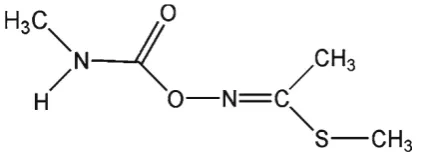
(S-methyl-N-(methylcarbamoyloxy)thioacetimidate; CAS
16752-77-5; Fig. 1) is an oxime carbamate insecticide that controls a broad spectrum of arthropods. This contact insecticide exerts rapid knockdown effects on insects and acts as an ovicide, larvicide and adulticide. Methomyl was first
introduced by E.I. du Pont de Nemours in 1966 (3). In 1978, the US Environmental Protection Agency classified it as a
restricted-use pesticide (4). Like other carbamates, its main action is through the inhibition of acetylcholinesterase
(AChE) activity, resulting in nerve and/or tissue failure and possible cell death. Due to these findings, methomyl was classified as ''highly hazardous'' (class 1B) according to the WHO (5) classification.
In relation to genotoxicity, methomyl has been evaluated with different biological tests. Negative results have been observed in the majority of these tests, particularly in those detecting gene mutation, as in bacteria with or without metabolic activation (6-10), Drosophila (11-13), and cultured cells (6, 14). However, positive results have been reported in yeast (15). Additionally, methomyl induced micronuclei formation in mice (16), and elevated levels of
sister chromatid exchange (SCE) and chromosomal aberrations (CA) in mice and cultured cells (17-20). As for
plants, Vicia faba root tips also demonstrated elevated levels
of CA (21, 22). Drosophila S2, HeLa, and HEK293 cells
Correspondence to: Sandra Gómez-Arroyo, Laboratorio de Genotoxicología
showed significantly higher DNA damage and apoptosis
after treatment (3). Methomyl did not induce carcinogenic activity in rats (23) or dogs (24). Teratogenic effects were also not observed in pregnant rats or rabbits (24).
Besides the concentration of insecticides and time
period in which cells and their genetic material are exposed to the insecticide action (3), genotoxic and carcinogenic risks of insecticides also depend on the complexity of insecticide compounds, since sometimes they can stimulate a toxic effect with their presence or during/after biotransformation in a plant/animal organism. Also, the metabolites of pesticides produced by plants and animals can act as promutagens, which is why it is necessary to evaluate not only the chemical itself but also the plant/ animal metabolites produced after exposure to insecticides in order to determine their genotoxic risks to human health. When working on human lymphocyte cultures, it is necessary to accompany these with S9 rat liver enzymatic fraction in order to obtain data on those metabolites that would normally be found after biotransformation of a chemical in the human body. In case of plant exposure,
Vicia faba is considered to be a good plant system for
mutagenic studies since it can metabolise the studied pesticide and form metabolically active compounds. As such, it is a sensitive and effective plant to study the effects of pesticide metabolites on genome stability measured by
the SCE assay either in the plant or on other cell lines with
promutagen extracts (25-27).
Although the genotoxic effect of methomyl alone is rather known, genotoxicity of Lannate-90® as a commercial
methomyl-based formulation needs to be explained in more detail, since it is one of the carbamate pesticides most widely used in Mexico due to its broad spectrum of action in all three stages of pest development.
One of the assays commonly used not only as an indicator of genotoxic effects in cells but also as a biomarker
of exposure and repair is the SCE assay. SCE involves
reciprocal exchanges of chromatid segments that occur at low levels in untreated cells, but their frequency increases substantially following exposure to DNA-damaging agents.
SCEs are primarily formed through homologous
recombination, an error-free type of DNA repair. Due to
the differential labelling of SCEs, achieved by the incorporation of base analog 5′-bromodeoxyuridine (BrdU)
in a cell culture during semiconservative DNA replication, these exchanges can be visualised in second-division metaphase cells whose further division was stopped by spindle inhibitor (e.g. colchicine) in order to accumulate
and non-mammalian systems. When cells are exposed to a test substance, it is recommended to use appropriate metabolic activation systems together with the test, since
metabolites can cause a higher frequency of SCE (28).
The aim of this study was to examine a possible genotoxic effect of Lannate-90® (measured as SCE
frequency) caused directly to human lymphocyte cultures.
Moreover, we wanted to examine the influence of the in vivo and in vitro transformation metabolites of Lannate-90®
retrieved from the treated Vicia faba plant in a lymphocyte culture. Likewise, plant and animal metabolites were induced in vitro by S10 mix and S9 metabolic lymphocyte
activation to estimate their influence on genotoxic effects,
cell-cycle progression and proliferation measured as a
proportion of the first (M1), second (M2), and third (M3)
metaphases as well as the replication index ratio (RI).
MATERIALS AND METHODS
Chemicals
RPMI medium 1640 with L-glutamine and phytohemagglutinin were purchased from Gibco, of Mexico; Lannate-90®-WD (methomyl CAS number
16752-77-5) was provided by Dupont of Mexico. The following
chemicals were purchased from Sigma Chemical, St. Louis MO, USA: mitomycin C (MMC, CAS number 50-07-7), cyclophosphamide (CAS number 6055-19-2), bromodeoxyuridine (BrdU, CAS number 59-14-3), Giemsa (CAS number 51811-82), ethanol (purity 99.2 %, CAS number 6415-5), methanol (purity 99.8 %, CAS number 6756-1), acetic acid (purity 99.7 %, CAS number
5323-26-45), sodium phosphate monobasic (NaH2PO4, CAS number
7558-80-7), sodium phosphate dibasic (Na2HPO4, CAS
number 7758-79-4) and sodium chloride (NaCl, CAS number 7647-14-5). Colchicine (CAS number 64-86-8) and potassium chloride (KCl, CAS number 222425) were
purchased from Merck of Mexico.
Direct treatments, without the metabolic activation of human lymphocyte cultures
Whole blood samples were used separately in different experiments. Samples were taken from three healthy donors, male non-smokers and non-drinkers, with an average age of 30 years. Donors did not use any medications in the last 6 months before sampling, and did not undergo any radiation/diagnostic treatment in the same period. This study was performed in accordance with the principles stated in the Declaration of Helsinki. All participants were acquainted with the content of the study, accepted the idea of taking part in it, and they subsequently signed an informed consent form.
118
Valencia-Quintana R, et al. Assessment of genotoxicity of Lannate-90® and its plant and animal metabolites in human lymphocyte culture Arh Hig Rada Toksikol 2016;67:116-125variability was negligible in response to the mitogens, culture conditions or blood samples themselves, as
suggested by Morgan and Crossen (29), and Speit et al.
(30).
Two experiments were carried out for each treatment using 3 mL of RPMI medium 1640 with L-glutamine and 0.2 mL of phytohemagglutinin added to 0.5 mL of a healthy
donor's blood in a culture flask.
The cultures were incubated at 37 °C for 72 h. After 24 h, BrdU was added to the culture medium at a final concentration of 5 μg mL-1. In the experiments without
metabolic activation, the cultures were directly exposed to 50, 100, 250, 500, 750, and 1000 mg L-1 of Lannate-90®.
Mitomycin C (400 ng mL-1) was used as a positive
control. Lannate-90® was dissolved in sterilised distilled
water. The negative control was handled under the same experimental conditions, but lymphocytes were treated with the same amount of distilled water. Preliminary experiments were used to identify optimal concentrations of Lannate-90®
that did not cause cellular death.
The cultures were incubated for additional 48 h at 37 °C,
and 0.1 mL of colchicine (5 µM) was applied to the cultures 2 h before harvesting. Metaphase cells were harvested by
centrifugation, treated with 0.075 M KCl for 20 min, and fixed in methanol-acetic acid (3:1).
Slides were stained using the fluorescence-plus-Giemsa technique (31). In addition to the study of SCE, a BrdU
differential staining technique was used to estimate the effect of Lannate-90® on cell replication. According to the
OECD guideline, it is enough to analyse 25 well-spread
metaphases per culture and treatment.
For the evaluation of cytokinetics, the proportion of the M1, M2, and M3 metaphases was obtained from 100
consecutive mitotic cells for each treatment, and the RI was calculated as follows: RI = 1M1 + 2M2 + 3M3/100 (32). To
avoid bias, the slides were scored blindly.
Treatments with metabolic activation
In vivo activation. Treatment of human lymphocyte cultures
with extracts of Vicia faba roots exposed to Lannate-90®
Vicia faba (var. minor) seeds were germinated between
two cotton layers soaked in tap water. When primary roots reached a length of 4-6 cm, they were immersed in Lannate-90® at 500, 1000, 1500, 2000, and 2500 mg L-1 in
a water solution at 20 °C in the dark. The concentrations
were chosen based on preliminary experiments that examined the phytotoxicity of the insecticide. The positive control roots were exposed to 3600 mg L-1 of ethanol
(0.1 M) for 4 h at 20 °C. Ethanol is a promutagen in Vicia faba and increases the SCE frequency (27, 33-35). The
negative control was handled under the same experimental conditions, but the roots of Vicia faba were immersed in distilled water alone to obtain the S10 fraction.
After the treatment, the roots were rinsed three times with distilled water and cut at approximately 2 cm from the primary root tips. The roots were macerated and homogenised
at 4 °C in 0.1 M sodium-phosphate buffer, pH 7.4. The ratio
of the buffer solution in millilitres (2.0-2.5) to the fresh weight of root cuttings in grams (2.0-2.5) was 1:1 (26). Homogenised roots were centrifuged for 15 min at 10000 x g at 4 °C. The supernatant was sterilised using Millipore filters (0.45 μm pore size) and immediately used to treat
human lymphocytes in culture. The total protein concentration in these extracts was determined using the
Bio-Rad method (35). Protein concentration was fairly
constant from one experiment to the other, with values
between 5.0-5.9 μg μL-1.
In vitro activation. Treatment using in vitro promutagen
activation by Vicia faba S10 mix
Lymphocytes cultured for 48 h were exposed to
Lannate-90® at 500, 1000, 1500, 2000, and 2500 mg L-1
(concentrations chosen in preliminary experiments) for 2 h
in the dark at 37 °C with and without the S10 mix (cultures
were stationary for one hour and were then gently shaken for another hour). After the treatment, the cells were rinsed twice in 0.9 % sodium chloride and incubated for 24 h in
RPMI medium containing BrdU at a final concentration of 5 μg mL-1. Colchicine (0.1 mL, 5 μM) was added 70 h after
the start of the culture, and the same harvesting and staining procedures were performed as described above.
The metabolic activation system with the S10 mixture was prepared from the microsomal S10 fraction at a 1:9
ratio (v/v) with following compounds: 8 mM MgCl2,
3.3 mM KCl, 5 M glucose-6 phosphate, 4 mM NADP and
NAD, and 0.1 M Na2HPO4-NaH2PO4 at pH 7.4. The 48 h
cultures were incubated for 2 h at 37 °C with 500 μL of the
activation system and several concentrations of the insecticide. 3600 mg L-1 ethanol (0.1 M) was used as a
positive control (26-27, 33, 35).
In vitro activation. Treatment using in vitro promutagen activation mammalian S9 mix
The commercial form (Mol Tox, from Molecular Toxicology Inc USA) of the rat liver microsomal S9 fraction was prepared according to Ames et al. (36) and Frantz and Malling (37). The S9 mixture was prepared with 1 mL of S9 extract and NADPH generator system containing sterile
cofactors of 0.2 mL (0.4 M) MgCl2, 5 mL of pH 7.4
phosphate buffer (0.2 M Na2HPO4 and NaH2PO4), 3.35 mL
of distilled water, 0.4 mL of NADP (0.1 M) and 0.05 mL of glucose-6-phosphate (1 M); all of the reagents were
freshly prepared. Similarly to direct treatments, BrdU at a final concentration of 5 μg mL-1 was added after 24 h, and
500 µL of the S9 mixture and Lannate-90® were added 48 h
containing 100 µL of BrdU. The positive control was 50 µL (40 µM) cyclophosphamide (CP) with S9, and the negative control was 50 µL CP (40 µM) without S9.
Statistical analysis
To quantify the SCE frequencies, twenty five metaphase
cells at the second division were scored for each concentration. Two experiments were performed, and the
results obtained were compared using the Student's t-test.
SCEs were statistically analysed using the ANOVA assay to determine significant differences among the treated groups. When a significant F value (p<0.0001) was found,
a Newman-Keuls multiple comparison test was applied to
identify groups with significant differences at p<0.001 when
compared with controls. A chi squared (c2) test was used
for RI. The parts of decomposed c2 were used to compare
the values of M1, M2, and M3.
RESULTS
Direct treatments without the metabolic activation of human lymphocyte cultures
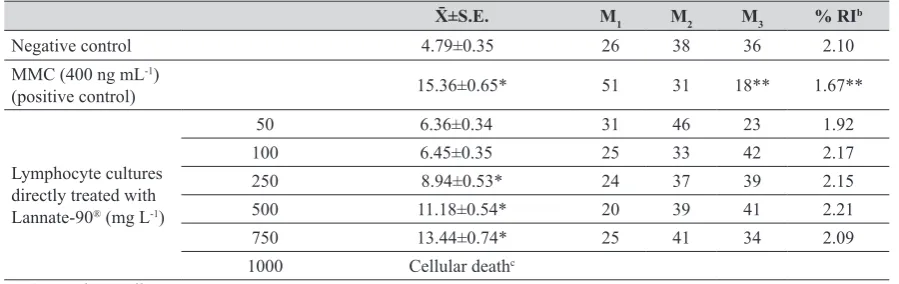
Table 1 shows the averages of two experiments in which Lannate-90® was added directly to human lymphocyte
cultures. Low concentrations of the insecticide did not
induce significant differences between the SCE frequencies
and the negative control. Meanwhile, a concentration-dependent relationship was observed starting at 250 mg L-1
and up to 750 mg mL-1; 1000 mg L-1 caused cell death. Cell
kinetics and the RI are also listed in Table 1, no significant
differences were found.
the SCE frequency, cell kinetics and RI with the positive control MMC (Table 1).
Treatments with metabolic activation
In vivo activation. Treatment of human lymphocyte cultures
with extracts of Vicia faba roots exposed to Lannate-90®
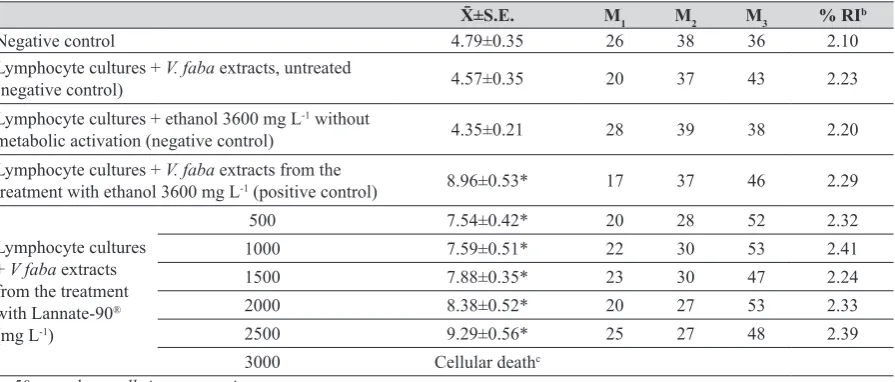
The extracts from untreated roots (negative control) did
not increase the SCE frequency (Table 2).
When ethanol was added directly to lymphocyte
cultures, the SCE frequency was not significantly affected (negative control); however, significant differences were
obtained with root extracts treated with the same concentration of ethanol (positive control).
The in vivo activation by S10 Vicia faba is shown in
Table 2. When root extracts were first treated for 4 h with
the insecticide, and were then applied to lymphocyte
cultures for 48 h, an increase in the SCE frequency was
observed for all concentrations of Lannate-90® metabolites.
The transformed Lannate-90®, contained in the Vicia faba root extracts that were applied to lymphocyte cultures,
did not produce significant effects on either cell kinetics or
RI (Table 2).
In vitro activation. Lannate-90® treatment with in vitro
promutagen activation by mammalian S9 mix and Vicia
faba S10 mix
As shown in Table 3, when Lannate-90® was applied
directly to lymphocyte cultures for 2 h, non-significantly different SCE frequencies compared to control values were
obtained. Meanwhile, when the S9 metabolic fraction was added, a positive concentration-dependent relationship was
observed. However, non-significantly different higher SCE
frequencies were also obtained when the S10 metabolic
Table 1 Sister chromatid exchanges induction and effects on cell kinetics (M1, M2 and M3 cells) and replication index (RI) by direct treatments of Lannate-90® in human lymphocyte culturesa
X̄±S.E. M1 M2 M3 % RIb
Negative control 4.79±0.35 26 38 36 2.10
MMC (400 ng mL-1)
(positive control) 15.36±0.65* 51 31 18** 1.67**
Lymphocyte cultures directly treated with Lannate-90® (mg L-1)
50 6.36±0.34 31 46 23 1.92
100 6.45±0.35 25 33 42 2.17
250 8.94±0.53* 24 37 39 2.15
500 11.18±0.54* 20 39 41 2.21
750 13.44±0.74* 25 41 34 2.09
1000 Cellular deathc
an=50 metaphase cells in two experiments. b Replication index, n=100 consecutive metaphases. c Stimulated cells were not observed.
*Significant differences among controls and each treated group were obtained by analysis of variance F=57.83, p value is <0.0001,
and therefore a Newman-Keuls multiple comparison test was applied p<0.001.
120
Valencia-Quintana R, et al. Assessment of genotoxicity of Lannate-90® and its plant and animal metabolites in human lymphocyte culture Arh Hig Rada Toksikol 2016;67:116-125fraction was added. Significant differences in the SCE
frequency were observed in the positive controls, which
were cyclophosphamide (CP) addition to the S9 mammalian
metabolic fraction and ethanol addition to the S10 Vicia faba metabolic fraction. Again, no significant effect was
seen in either cell kinetics or RI changes, whether after direct treatment or treatment together with S9 or S10 mix.
DISCUSSION
Carbamates are part of a large group of synthetic
pesticides generally used in agriculture as insecticides, fungicides, herbicides, nematicides or sprout inhibitors (39). Many carbamates cause genotoxicity (3). Up to now, their genotoxicity, including DNA damage, micronucleus (MN)
frequency, elevated levels of CA, SCE, and effects on plant
systems and mammalian cells have been evaluated under
in vitro and in vivo conditions (20, 22, 40, 41).
On the other hand, diverse studies about genotoxic and/ or cytotoxic effects obtained with pure and commercial formulations of diverse pesticides indicate that commercial formulations may contain additional unsafe xenobiotics supporting the importance of evaluating not only the active principle but also the commercial formulation, which in fact constitutes the real hazard from agrochemicals (42-51).
Methomyl is a carbamate insecticide that has shown genotoxic effects under in vitro and in vivo conditions; it has induced elevated MN frequency in human blood
lymphocytes (52) and CA in agricultural (53) and
greenhouse exposed workers (54). Its commercial formulation, Lannate®, has also demonstrated genotoxicity
in previous studies. Lannate-20® induced a significant
increase in the number of sex-linked recessive lethal (55)
and CA in mice germ cells including polyploidy and sex
univalent (56). Lannate-25® had a higher clastogenic
activity than pure methomyl in vivo (16) and in vitro (18).
With Lannate-90®, elevated levels of CA and SCE were
found in Vicia faba root tips (22, 40).
Based on all these studies, genotoxicity of Lannate-90®
insecticide has already been demonstrated, but not much is
known about its metabolic compounds and their influence
on plant/animal organisms. The aim of this study was to examine the influence of Lannate-90®, a formulated
carbamate insecticide (90 % methomyl), on a possible
genotoxic effect (measured as SCE frequency) caused in
human lymphocyte cultures at a wide range of concentrations, chosen on the basis of no cell-toxicity induction. Although the evaluated concentrations of Lannate-90® in this study
are expected to be rare in the environment, perhaps only
observed when specific events occur (e.g. direct application),
we cannot rule out the possibility that organisms and occupationally exposed human workers could be exposed accidentally to such high concentrations. We also need to point out that plants are exposed to those concentrations, and in Mexico the registered uses of methomyl based on labels or label translations provided by the manufacturer go up to 1500-12000 mg L-1 for wheat, barley, maize,
sorghum, alfalfa, pea, asparagus, potato, onion, cauliflower,
broccoli, beans, lettuce, pepper, cotton, cucumber, cabbage, peanut, apple, grape, citrus, melon, watermelon, strawberry, tomato (57). We also need to underscore that methomyl at these concentrations is not used only in Mexico, but it is registered for use as a pesticide to control a large variety of chewing and sucking insects on a wide range of crops in many countries.
Table 2 Sister chromatid exchanges induction and effects on cell kinetics (M1, M2 and M3 cells) and replication index (RI) by Lannate-90®
with in vivo metabolic activation by Vicia faba in human lymphocyte culturesa
X̄±S.E. M1 M2 M3 % RIb
Negative control 4.79±0.35 26 38 36 2.10
Lymphocyte cultures + V. faba extracts, untreated
(negative control) 4.57±0.35 20 37 43 2.23
Lymphocyte cultures + ethanol 3600 mg L-1 without
metabolic activation (negative control) 4.35±0.21 28 39 38 2.20
Lymphocyte cultures + V. faba extracts from the
treatment with ethanol 3600 mg L-1 (positive control) 8.96±0.53* 17 37 46 2.29
Lymphocyte cultures + V faba extracts from the treatment with Lannate-90® (mg L-1)
500 7.54±0.42* 20 28 52 2.32
1000 7.59±0.51* 22 30 53 2.41
1500 7.88±0.35* 23 30 47 2.24
2000 8.38±0.52* 20 27 53 2.33
2500 9.29±0.56* 25 27 48 2.39
3000 Cellular deathc
an=50 metaphase cells in two experiments. b Replication index, n=100 consecutive metaphases. c Stimulated cells were not observed.
*Significant differences among controls and each treated group were obtained by analysis of variance F=19.84, p value is <0.0001,
behaviour of the in vivo-obtained plant metabolites of Lannate-90® retrieved from the treated Vicia faba plant
towards lymphocytes and of the in vitro-induced plant and animal metabolites in respect of the same end point: human lymphocytes using S10 mix from Vicia faba and S9 fraction for metabolic activation. The objective was to estimate
their influence on genotoxic effects, cell-cycle progression
and proliferation measured as a proportion of the M1, M2,
and M3 metaphases as well as the RI ratio.
When meristematic cells of Vicia faba were treated with Lannate-90®, chromatid type aberrations were observed
(22). Regarding the type of aberrations produced, Lannate-90® can be considered an S-dependent agent that
produces clastogenic effects mainly due to its alkylating
groups (22). This is in agreement with the findings of
Gómez-Arroyo et al. (58) who concluded that the carbamate
herbicide molinate in Vicia faba is an S-dependent agent.
Since SCE is an S-dependent event (59, 60), this type of agent is expected to be an efficient SCE inducer. This fact
was confirmed in other studies since treatments of meristematic root cells of Vicia faba with Lannate-90®
significantly increased SCE frequency, with a
concentration-dependent effect (40).
Bolognesi et al. (16) have observed that in vivo
methomyl treatments caused indirect damage of DNA through the formation of active oxygen species. The same authors observed a dose-dependent increase in DNA adducts with Lannate-25® commercial formulation, while negative
results were obtained with pure methomyl. The induction of OH8dG by methomyl suggests that DNA oxidative
damage could account for the induction of single strand breaks and implies that this insecticide can act indirectly through the formation of hydroxyl radicals, responsible for DNA strand breaks (61). The formation of OH8dG is
considered to be a relevant factor for DNA damage and potential genotoxic and carcinogenic effects due to reactive oxygen species (62). The negative results generally obtained with gene mutation assays, together with the positive results from the test of chromosome damage, as in this study, are also consistent with an indirect mode of action of Lannate-90®.
Bonatti et al. (18), found a dose-related increase in MN
frequency with both methomyl and Lannate-25®. However,
a higher proportion of MN was induced by Lannate-25, indicating a relatively stronger clastogenic activity of the technical product. A major difference between the pure and the technical product was that Lannate-25®, but not
methomyl, was able to induce DNA damage in the alkaline
elution assay and oxidative damage in the HPLC-EC assay.
Direct treatments with Lannate-90® in lymphocyte
cultures for 48 h induced a significant increase in SCE
frequency starting at 250 mg L-1, and a
concentration-dependent response was observed. These results are in agreement with the data obtained with Lannate-25® (18) in
a study on CA in lymphocyte cultures where authors
Table 3
Sister chr
omatid exchanges induction and effects on cell kinetics (M
1
, M
2
and M
3
cells) and r
eplication index (RI) by Lannate-90
® without and with
in vitro
animal and
plant metabolic activation in human lymphocyte cultur
es
a
Concentration
W
ithout metabolic activation
W
ith S9 animal metabolic activation
W
ith S10 plant metabolic activation
SCE/
Metaphase ̄X
±S.E.
Metaphases M
1
M2 M3
RI
b
SCE / metaphase
X
̄±S.E.
Metaphases M
1 M2 M3 RI b SCE/metaphase X ̄±S.E.
Metaphases M
1 M2 M3 RI b Control 4.98±0.30
42 39 19
1.77
5.86±0.34
41 38 21
1.80
4.84±0.31
48 38 14
1.66
Cyclophosphamide
6.59±0.34
43 39 18
1.75
41.19±2.14*
40 40 20
1.80
7.40±0.34
50 33 17
1.67
Ethanol
6.01
±0.35
47 39 14
1.67
7.96
±0.47
48 37 15
1.67
9.10
±0.25*
44 35 17
1.77 Lanate-90 ® (mg L -1) 500 6.94 ±0.44
42 42 16
1.74
8.41
±0.54
40 33 27
1.87
7.16
±0.38
46 32 22
1.76
1000
7.20
±0.48
39 36 25
1.86
9.82
±0.40
47 39 14
1.67
6.94
±0.38
50 34 16
1.66
1500
6.67
±0.34
40 38 22
1.82
13.78
±0.39*
45 36 19
1.74
5.46
±0.29
46 32 22
1.76
2000
6.50
±0.39
43 37 20
1.77
14.07±0.98*
46 36 19
1.73
5.96±0.28
46 30 24
1.78
2500
8.52±0.37
43 38 19
1.75
16.75±2.21*
49 31 20
1.71
6.78
±0.81
50 36 14
1.64
an=50 metaphase cells in two experiments; bReplication index, n=100 consecutive metaphases
*Significant differ ences among contr ols and each treated gr oup wer e obtained by analysis of variance; F=94.37, p
value is <0.0001, and ther
efor
e a Newman-Keuls multiple
comparison test was applied
p
<0.001; **Significant with
c
2, p
122
Valencia-Quintana R, et al. Assessment of genotoxicity of Lannate-90® and its plant and animal metabolites in human lymphocyte culture Arh Hig Rada Toksikol 2016;67:116-125agent(s) might be present in the technical formulate (18).
The possibility of oxidative damage as a causative factor for genotoxicity of Lannate-90® has some support in the
experimental evidence of the enzyme-inhibiting activities
of different methyl carbamate pesticides. Enzymes involved
in the defence against harmful oxygen species, such as superoxide dismutase, catalase, and glutathione transferase, are inhibited by these pesticides (67).
Finally, our results highlight that rounded knowledge of the toxic effect/s of the active ingredient of a pesticide
is not enough in biomonitoring studies and agrochemical/s'
toxic effect/s should be evaluated according to its/their commercial formulation available on the market. Furthermore, the deleterious effect/s of the excipient/s present within the commercial formulation should neither be discarded nor underestimated. The components of pesticide formulations used as wettable powders usually consist of the carrier, mineral clays, surface active agents, and other ingredients such as stabilisers and dyers. The presence of surface-active agents could increase the genotoxic activity of the active ingredient, favouring the amount of active metabolites at critical cellular targets (16). Metabolic transformation has been shown to have a great impact on pesticide genotoxicity. Therefore, pesticide constituents and metabolites should also be investigated for genotoxic effects in further studies on active ingredients.
CONCLUSIONS
Many carbamate pesticides produce genotoxic effects and long-term exposure of humans to this chemical could produce genetic damage. This study indicates Lannate-90®'s
ability to induce genotoxic damage by increasing SCE
frequency in human lymphocytes in direct treatments. This highlights the environmental risk of this commercial formulation. Our observations were in agreement with the classification proposed by the WHO for a potential deleterious effect of methomyl.
This study is one of the first to evaluate and compare
not only the direct effect of Lannate-90® but also the effect
of plant and animal drug metabolism on its genotoxic potential.
The results also confirmed that Lannate-90® is able to
exert genotoxic and/or cytotoxic effects on human lymphocytes in a culture, with or without the presence of microsomal metabolic S9 or S10 fractions during cultivation. Thus, the non-consistent results reported so far by different research groups about the deleterious effects of methomyl could be attributed to the ability to convert this type of pesticide into its carbamate derivatives by different cellular systems employed. Then, it could be assumed that the deleterious effect induced by this insecticide on these bioassays is committed to the pesticide itself or to any metabolite/s or any other sub-products generated during the treatment period.
observed a dose-dependent increase of chromatid-type and total aberrations. However, our results were not in
agreement with the SCE results from that study since we
have found a significant increase only at the highest concentrations tested.
No significant differences were found in cell cycle
kinetics and the RI in cells treated with Lannate-90®. Our
results were in agreement with those of Wei et al. (19) who
observed that the rate of cell proliferation in CHO cells treated with methomyl was not significantly altered.
When the extracts obtained from the Vicia faba roots treated for 4 h with different concentrations of the insecticide were applied to lymphocyte cultures, a positive response was obtained in all cases. The products gained from the in vivo transformation by Vicia faba of Lannate-90®
applied to the lymphocyte cultures were capable of
increasing the SCE frequency, which means that this
compound acted directly and indirectly. Additionally, the toxicity diminished with plant metabolism, indicating the possibility that some detoxification mechanisms were involved. Direct treatment with 1000 mg L-1 of Lannate-90®
induced cell death, but much higher concentrations (3000 mg L-1) of the insecticide were required to cause cell
death when cells were treated with Vicia faba extracts. This is in agreement with Gómez-Arroyo et al. (63) and Cortés-Eslava et al. (64).
Comparing both plant activation systems, in vivo and
in vitro, significant SCE frequencies were only observed
under in vivo conditions, and these differences could be related to the exposure time of lymphocytes and/or to active metabolites. In the in vivo activation experiments, the
treatments lasted for 48 h, while the exposure lasted only
for 2 h for the in vitro activation. The latter time period may
not have been sufficient for the cells to metabolise the
insecticides or this may have been due to the enzyme inactivation because direct contact of the insecticides with
the S10 fraction could have inhibited the insecticides'
metabolism.
In plant metabolism, peroxidases are among the most important enzymes involved in the oxidative transformation of xenobiotics (65). Peroxidases catalyse two categories of oxidative reactions in plant cells; the peroxidative reaction requiring H2O2 and the oxidative reaction using molecular
oxygen (66). Calderón-Segura et al. (34) described the phytotoxic effect of the thiocarbamic herbicide butylate in
Vicia faba.
Furthermore, 2 h of treatment with Lannate-90® and the
mammalian S9 fraction activated the insecticide. A
significant concentration-dependent relationship of SCE
frequencies was obtained at concentrations starting at 1500 mg L-1, but cell cycle kinetics and the RI were not
affected. Direct treatment for 2 h showed no significant
exerts both genotoxicity and cytotoxicity in human lymphocytes. The hypothesis that coformulants and impurities may play a role in technical grade methomyl-induced genotoxicity should be taken into account.
Acknowledgements
The authors would like to thank Ana Rosa Flores Márquez for technical assistance, Pietro Villalobos for
editing the tables, Claudio Amescua assistance in editing,
and Rafael A. Valencia-Sánchez for language editing.
REFERENCES
1. Soloneski S, Larramendy ML. Sister chromatid exchanges
and chromosomal aberrations in Chinese hamster ovary (CHO-K1) cells treated with the insecticide pirimicarb. J
Hazad Mater 2010;174:410-5. doi: 10.1016/j.
jhazmat.2009.09.068
2. World Health Organization and Food and Agriculture Organization (WHO-FAO). Pesticides residues in food. FAO plant production and protection paper. Rome: WHO-FAO; 2004.
3. Guanggang X, Diqiu L, Jianzhong Y, Jingmin G, Huifeng Z, Mingan S, Limimg T. Carbamate insecticide methomyl
confers cytotoxicity through DNA damage induction. Food
Chem Toxicol 2013;53:352-8. doi: 10.1016/j.fct.2012.12.020
4. Van Scoy AR, Yue M, Deng X, Tjeerdema RS. Environmental fate and toxicology of methomyl. Environ Contam Toxicol 2013;222:93-109. doi: 10.1007/978-1-4614-4717-7_3
5. World Health Organization (WHO). The WHO Recommended
Classification of Pesticides by Hazard and Guidelines to Classification, 2009 [displayed 5 April 2016]. Available at http://www.who.int/ipcs/publications/pesticides_ hazard_2009.pdf
6. Simmon VF, Newell GW. In vitro mutagenic studies of twenty pesticides. In: Abstracts of papers for the Fifteenth Annual
Meeting of the Society of Toxicology; 14-18 March 1976.
Atlanta, Georgia.Toxicol Appl Pharmacol 1976;37:109. 7. Simmon VF, Mitchell D, Jorgenson T. Evaluation of selected
pesticides as chemical mutagens in vitro and in vivo studies.
US EPA, Rep. EPA-600/1-77-028, 1977 [displayed 5 April 2016]. Available at http://nepis.epa.gov/Exe/ZyPDF.cgi/
9100SHSP.PDF?Dockey=9100SHSP.PDF
8. Blevins RD, Lee M, Regan JD. Mutagenicity screening of
five methyl carbamate insecticides and their nitroso derivatives using mutants of Salmonella typhimurium LT2. Mutat Res 1977;56:1-6. doi: 10.1016/0027-5107(77)90234-2
9. Blevins RD, Lijinksy W, Regan JD. Nitrosated methylcarbamate insecticides. Effect on the DNA of human
cells. Mutat Res 1977;44:1-7. doi: 10.1016/0027-5107(77)90109-9
10. Moriya M, Otha T, Watanabe K, Miyazawa T, Kato K, Shirasu
Y. Further mutagenicity studies on pesticides in bacterial reversion assay systems. Mutat Res 1983;116:185-216. doi: 10.1016/0165-1218(83)90059-9
11. Gopalan HNB, Njagi GDE. Mutagenicity testing of
pesticides. III. Drosophila: recessive sex-linked lethal.
Genetics 1981;97(Supplement):S44.
USEPA, EPA-600/1-81-017, 1981 [displayed 5 April 2016]. Available at http://nepis.epa.gov/Exe/ZyPDF.cgi/910097A4.
PDF?Dockey=910097A4.PDF
13. Sandhu SS, Waters MD, Simmon VF, Mortelmans KE, Mitchel AD, Jorgenson T, Jones DCL, Valencia R, Stack F. Evaluation of the genotoxic potential of certain pesticides used in Pakistan. Basic Life Sci 1985;34:185-219. doi: 10.1007/978-1-4684-4976-1_14
14. Wojciechowski JP, Kaur P, Sabharwal PS. Induction of ouabain resistance in V-79 cells by four carbamate
insecticides. Environ Res 1982;29:48-53. doi: 10.1016/0013-9351(82)90005-6
15. Guerzoni ME, Del Cupolo L. [Mutagenic activity of pesticides, in Italian]. Riv Sci Tecnol Alimenti Nutr Um
1976;6:161-5. PMID: 788121
16. Bolognesi C, Peluso M, Degan P, Rabboni R, Munnia A,
Abbondandolo A. Genotoxic effects of the carbamate insecticide methomyl. II. In vivo studies with pure compound
and the technical formulation “Lannate 25”. Environ Mol Mutagen 1994;24:235-42. doi: 10.1002/em.2850240313
17. Debuyst B, Van Larebeke N. Induction of sister-chromatid
exchanges in human lymphocytes by aldicarb, thiofanox and
methomyl. Mutat Res 1983;113:242-3. doi: 10.1016/0165-1161(83)90047-X
18. Bonatti S, Bolognesi C, Degan P, Abbondandolo A.
Genotoxic effects of the carbamate insecticide methomyl. I. In vitro studies with pure compound and the technical
formulation “Lannate 25”. Environ Mol Mutagen 1994;23:306-11. doi: 10.1002/em.2850230408
19. Wei LY, Chao JS, Hong CC. Assessment of ability of
propoxur, methomyl, and aldicarb, three carbamate insecticides, to induce micronuclei in vitro cultured Chinese
hamster ovary cells and in vivo in BALB/c mice. Environ Mol Mutagen 1997;29:386-93. doi: 10.1002/(SICI)1098-2280(1997)29:4<386::AID-EM7>3.0.CO;2-8
20. Lin CM, Wei LY, Wang TC. The delayed genotoxic effect of
N-nitroso N-propoxur insecticide in mammalian cells. Food
Chem Toxicol 2007;45:928-34. doi: 10.1016/j.fct.2006.11.015
21. Njagi GDE, Gopalan HNB. Mutagenicity testing of herbicides, fungicides and insecticides. I. Chromosome
aberrations in Vicia faba. Cytologia 1981;46:169-72. doi: 10.1508/ cytologia.46.169
22. Valencia-Quintana R, Gómez-Arroyo S, Villalobos-Pietrini
R. Cytological effects of some carbamate insecticides. I.
Methomyl and oxamyl in Vicia faba. Rev Int Contam
Ambient 1993;9:65-9.
23. Kaplan AM, Sherman H. Toxicity studies with methyl
N-[[(methylamino)carbonyl]oxy]-ethanimidothioate. Toxicol
Appl Pharmacol 1977;40:1-17. doi:
10.1016/0041-008X(77)90110-7
24. Baron RL. Carbamate insecticides. In: Hayes WJ, Laws ER
Jr, editors. Handbook of pesticide toxicology. Vol. 3. New
York: Academic Press; 1991. p. 1125-89.
25. Takehisa S, Kanaya N. A comparison of Vicia faba-root S10 and rat liver S9 activation of ethanol, maleic hydrazide and cyclophosphamide as measured by sister chromatid exchange
induction in Chinese hamster ovary cells. Mutat Res 1983;124:145-51. doi: 10.1016/0165-1218(83)90174-X
26. Takehisa S, Kanaya N, Rieger R. An assay based on the
124
Valencia-Quintana R, et al. Assessment of genotoxicity of Lannate-90® and its plant and animal metabolites in human lymphocyte culture Arh Hig Rada Toksikol 2016;67:116-125ovary cells. Mutat Res 1988;197:195-205. doi: 10.1016/0027-5107(88)90093-0
27. Gómez-Arroyo S, Calderón-Segura ME, Villalobos-Pietrini
R. Sister chromatid exchange in human lymphocytes induced by propoxur following plant activation by Vicia faba. Environ Mol Mutagen 1995;26:324-30. doi: 10.1002/em.2850260408 28. Organisation for Economic Cooperation and Development
(OECD). OECD Guidelines for the Testing of Chemicals,
Section 4. Test No. 479: Genetic Toxicology: In vitro Sister
Chromatid Exchange Assay in Mammalian Cells. Paris: OECD Publishing; 1986.
29. Morgan WF, Crossen PE. Factors influencing
sister-chromatid exchange rate in cultured human lymphocyte.
Mutat Res 1981;81:395-402. doi: 10.1016/0027-5107(81)90126-3
30. Speit G, Düring R, Mehnert K. Variations in the frequency of sister chromatid exchange in repeated human lymphocyte
cultures. Hum Genet 1986;72:179-81. doi: 10.1007/ BF00283943
31. Perry P, Wolff S. New Giemsa method for the differential
staining of sister chromatids. Nature (London) 1974;258:156-8. doi: 10.1038/251156a0
32. Lamberti L, Bigatti Ponzetto P, Ardito G. Cell kinetics and
sister-chromatid-exchange frequency in human lymphocytes.
Mutat Res 1983;120:193-9. doi: 10.1016/0165-7992(83)90163-X
33. Gómez-Arroyo S, Calderón-Segura ME, Villalobos-Pietrini R. Biomonitoring of pesticides by plant metabolism: an assay
base on the induction of sister-chromatid exchanges in human lymphocyte cultures by promutagen activation of Vicia faba. In: Butterworth FM, Gunatilaka A, Gonsebatt ME, editors. Biomonitors and biomarkers as indicators of environmental change. Vol. 2. New York: Plenum Press; 2000. p. 439-55.
34. Calderón-Segura ME, Gómez-Arroyo S, Villalobos-Pietrini R, Espinosa-Ramírez M. In vivo and in vitro promutagen activation by Vicia faba of thiocarbamate herbicides molinate and butylate to products inducing sister chromatid exchanges
in human lymphocyte cultures. Mutat Res 1999;438:81-8. doi: 10.1016/S1383-5718(98)00152-1
35. Flores-Maya S, Gómez-Arroyo S, Calderón-Segura ME, Villalobos-Pietrini R, Waliszewski SM, de la Cruz GL.
Promutagen activation of triazine herbicides metribuzin and ametryn through Vicia faba metabolism inducing sister chromatid exchanges in human lymphocytes in vitro and in V. faba root tip meristems. Toxicol In Vitro 2005;19:243-51. doi: 10.1016/j.tiv.2004.09.002
36. Bradford MM. A rapid and sensitive method for the
quantitation of microgram quantities of proteins utilizing the
principle of protein-dye binding. Anal Biochem
1976;72:248-54. doi: 10.1006/abio.1976.9999
37. Ames BN, McCann J, Yamasaki E. Methods for detecting
carcinogens and mutagens with the Salmonella mammalian-microsome mutagenicity test. Mutat Res 1975;31:347-64. doi: 10.1016/0165-1161(75)90046-1
38. Frantz CN, Malling HV. The quantitative microsomal mutagenesis assay. Mutat Res 1975;31:365-80. doi:
10.1016/0165-1161(75)90047-3
39. World Health Organization (WHO). Carbamate Pesticides: A General Introduction. Environmental Health Criteria 64, 1986 [displayed 5 April 2016]. Available at http://www.
inchem.org/documents/ehc/ehc/ehc64.htm
40. Valencia-Quintana R, Juárez-Santacruz L,
Delgado-Rodríguez A, Sánchez-Alarcón J. Cytological effect of some
carbamate insecticides. II. Induction of sister chromatid exchanges in Vicia faba by lannate-90. Rev Int Contam Ambient 1998;14:49-53 [displayed 5 April 2016]. Available
at http://www.atmosfera.unam.mx/editorial/rica/acervo/
vol_14_1/6.pdf
41. Valencia-Quintana R, Sánchez-Alarcón J, Gómez-Arroyo S,
Cortés-Eslava J, Waliszewski SM, Fernández S,
Villalobos-Pietrini. [Genotoxicidad de plaguicidas en sistemas vegetales,
in Spanish]. Rev Int Contam Ambient 2013;29:133-57.
42. Costa C, Silvari V, Melchini A, Catania S, Heffron JJ, Trovato
A, De Pasquale R. Genotoxicity of imidacloprid in relation to metabolic activation and composition of the commercial product. Mutat Res 2009;672:40-4. doi: 10.1016/j.
mrgentox.2008.09. 018
43. Padula G, Ponzinibbio MV, Picco S, Seoane A. Assessment of the adverse effects of the acaricide amitraz: in vitro evaluation of genotoxicity. Toxicol Mech Methods
2012;22:657-61. doi: 10.3109/15376516.2012.666683
44. Nikoloff N, Escobar L, Soloneski S, Larramendy ML. Comparative study of cytotoxic and genotoxic effects induced
by herbicide S-metolachlor and its commercial formulation Twin Pack Gold® in human hepatoma (HepG2) cells. Food
Chem Toxicol 2013;62:777-81. doi: 10.1016/j.fct.2013.10.015
45. Nikoloff N, Natale GS, Marino D, Soloneski S, Larramendy ML. Flurochloridone-based herbicides induced genotoxicity effects on Rhinella arenarum tadpoles (Anura: Bufonidae). Ecotoxicol Environ Saf 2014;100:275-81. doi: 10.1016/j.
ecoenv.2013. 10.021
46. Yadav SS. Toxic and genotoxic effects of Roundup on
tadpoles of the Indian skittering frog (Euflictis cyanophlyctis) in the presence and absence of predator stress. Aquat Toxicol
2013;132-133:1-8. doi: 10.1016/j.aquatox.2013.01.016
47. Pérez DJ, Lukaszewicz G, Menone ML, V Amé M, Camadro EL. Genetic and biochemical biomarkers in the macrophyte Bidens laevis L. exposed to a commercial formulation of
endosulfan. Environ Toxicol 2014;29:1063-71. doi: 10.1002/ tox.21836
48. Pérez-Iglesias JM, Ruiz de Arcaute C, Nikoloff N, Dury L,
Soloneski S, Natale GS, Larramendy ML. The genotoxic effects of the imidacloprid-based insecticide formulation Glacoxan Imida on Montevideo tree frog Hypsiboas pulchellus tadpoles (Anura, Hylidae). Ecotoxicol Environ
Saf 2014;104:120-6. doi: 10.1016/j.ecoenv. 2014.03.002 49. Ruiz de Arcaute C, Soloneski S, Larramendy ML. Evaluation
of the genotoxicity of a herbicide formulation containing 3,6-dichloro-2-metoxybenzoic acid (dicamba) in circulating
blood cells of the tropical fish Cnesterodon decemmaculatus. Mutat Res 2014;773:1-8. doi: 10.1016/j.mrgentox.2014.08.001
50. Rasgele PG, Muranli FD, Kekeçoğlu M. Assessment of the
genotoxicity of propineb in mice bone marrow cells using
micronucleus assay. Cytol Genet 2014;48:233-7. doi:
10.3103/S0095452714040045
51. Ramos-Chavez LA, Sordo M, Calderon-Aranda E, Castañeda-Saucedo E, Ostrosky-Wegman P, Moreno-Godinez ME. A permethrin/allethrin mixture induces genotoxicity and cytotoxicity in human peripheral blood
lymphocytes. J Toxicol Environ Health A 2015;78:7-14. doi: 10.1080/15287394.2015.956025
52. Falck GC, Hirvonen A, Scarpato R, Saarikoski ST, Migliore
Oxidative damage to DNA during aging:
8-Hidroxy-2’-deoxyguanosine in rat organ DNA and urine. Proc Natl Acad
Sci USA 1990;87:4533-7. doi: 10.1073/pnas.87.12.4533
62. Ames BN, Gold LS. Endogenous mutagens and the causes
of aging and cancer. Mutat Res 1991;250:3-16. doi: 10.1016/0027-5107(91)90157-J
63. Gómez-Arroyo S, Cortés-Eslava J, Villalobos-Pietrini R, Calderón-Segura ME, Flores-Márquez AR, Espinosa-Aguirre
JJ. Differential mutagenic response of Salmonella typhimurium to the plant-metabolized organophosphorus insecticides, phoxim and azinphos methyl. Toxicol In Vitro 2007;21:950-5. doi: 10.1016/j.tiv.2007.01.027
64. Cortés-Eslava J, Gómez-Arroyo S, Arenas-Huertero F, Flores-Maya S, Díaz-Hernández ME, Calderón-Segura ME, Valencia-Quintana R, Espinosa-Aguirre JJ,
Villalobos-Pietrini R. The role of plant metabolism in the mutagenic and cytotoxic effects of four organophosphorus insecticides in Salmonella typhimurium and in human cell lines.
Chemosphere 2013;92:1117-25. doi: 10.1016/j.chemosphere. 2013.01.058
65. Gentile JM, Plewa MJ. The use of cell-free systems in plant
activation studies. Mutat Res 1988;197:173-82. doi: 10.1016/0027-5107(88)90091-7
66. Lamoureux GL, Frear DS. Pesticide metabolism in higher plants: in vitro enzyme studies. In: Paulson DG, Frear DS,
Marks EP, editors. Xenobiotic metabolism: in vitro methods.
Washington DC: American Chemical Society; 1979. p. 77-128.
67. Rannug A, Rannug U. Enzyme inhibition as a possible
mechanism of the mutagenicity of dithiocarbamic acid derivatives in Salmonella typhimurium. Chem Biol Interact 1984;49:329-40. doi: 10.1016/0009-2797(84)90106-6
Procjena genotoksičnosti insekticida Lannate-90® i njegovih biljnih i životinjskih metabolita u kulturi ljudskih
limfocita
Korištenjem testa izmjena sestrinskih kromatida (eng. Sister Chromatide Exchange Assay – SCE) u kulturama ljudskih
limfocita ispitivani su izravni i metabolički genotoksični učinci insekticida Lannate-90®, formulacije koja se temelji na
metomilu (90 % aktivni sastojak). Za procjenu biljnih promutagena provedena su dva postupka: in vivo aktivacija, kod
koje se insekticid četiri sata sustavno primjenjivao na biljci, a potom su kulturama limfocita dodani biljni metaboliti s
ekstraktom, i aktivacija in vitro, kod koje je insekticid inkubiran mješavinom S10 biljke Vicia faba i kulturom ljudskih
limfocita. Izravno tretiranje insekticidom značajno je povećalo učestalost SCE-a u ljudskim limfocitima (250-750 mg L-1),
a stanična smrt uočena je pri koncentraciji od 1000 mg L-1. Nakon tretiranja ljudskih limfocita ekstraktima biljke Vicia faba koji su tretirani insekticidom Lannate-90®, primijećen je odnos između doze i učinka. Kod kultura limfocita koje su
dva sata bile izravno tretirane insekticidom primijećen je negativan odgovor. Kada je dodana S10 mješavina za metaboličku aktivaciju, učestalost SCE-a nije se značajnije promijenila. Naspram tomu, metabolička mješavina S9 za kultivirane
stanice sisavaca i Lannate-90® povećali su učestalost SCE-a, uz zamijećen koncentracijski ovisan odgovor. Premda je
Lannate-90® inducirao staničnu smrt pri najvišim koncentracijama, nije uzrokovao zastoj stanične proliferacije ni u jednom
postupku, čime se potvrđuje njegovo genotoksično djelovanje. Ovo je ispitivanje među prvima kojim se procjenjivao i uspoređivao izravan učinak insekticida Lannate-90® u dvama biološkim testovima, životinjskom i biljnom, te učinak
biljnog i životinjskog metabolizma na njegov genotoksični potencijal.
KLJUČNE RIJEČI: izmjena sestrinskih kromatida; karbamatni insekticidi; kinetika stanične diobe; metabolizam biljaka; metabolizam životinja; replikacijski indeks
exposed greenhouse workers. Mutat Res 1999;441:225-37.
doi: 10.1016/S1383-5718(99)00051-0
53. Carbonell E, Valbuena A, Xamena N, Creus A, Marcos R.
Temporary variations in chromosomal aberrations in a group of agricultural workers exposed to pesticides. Mutat Res
1995;344:127-34. doi: 10.1016/0165-1218(95)00051-8
54. Lander BF, Knudsen LE, Gamborg MO, Järventaus H, Norppa H. Chromosome aberrations in pesticide-exposed greenhouse workers. Scand J Work Environ Health
2000;26:436-42. doi: 10.5271/sjweh.565
55. Hemavathy KC, Krishnamurthy NB. Mutagenicity studies
in Drosophila melanogaster with Lannate 20. Mutat Res
1987;191:41-3. doi: 10.1016/0165-7992(87)90168-0
56. Hemavathy KC, Krishnamurthy NB. Evaluation of Lannate 20, a carbamate pesticide, in germ cells of male mice. Environ Res 1987;42:362-5. doi: 10.1016/S0013-9351(87)80201-3
57. FAO. Methomyl (094). AGP - M - List of Pesticide Evaluated by JMPR and JMPS, 2001 [displayed 5 April 2016]. Available
at http://www.fao.org/agriculture/crops/thematic-sitemap/ theme/pests/lpe/lpe-m/en/
58. Gómez-Arroyo S, Rodríguez-Madrid L, Villalobos-Pietrini
R. Chromosomal alterations induced by the thiocarbamate
herbicide molinate (ordram) in Vicia faba. Rev Int Contam Ambient 1992;8:77-80. [displayed 5 April 2016]. Available
at http://www.revistascca.unam.mx/rica/index.php/rica/
article/viewFile/29847/27755
59. Wolff S, Bodycote J, Painter RB. Sister chromatid exchange induced in Chinese hamster cells by UV irradiation of
different stages of the cell cycle: the necessity for cells to
pass through S. Mutat Res 1974;25:73-81. doi:
10.1016/0027-5107(74)90220-6