Journal of Computing and Security
Multicollision Attack on a Recently Proposed Hash Function
vMDC-2
Zahra Zolfaghari
a, Hamid Asadollahi
a, Nasour Bagheri
a,∗aDepartment of Electrical Engineering, Shahid Rajaee Teacher Training University, Tehran, Iran
A R T I C L E I N F O.
Article history:
Received:10 December 2016
Revised:10 December 2017
Accepted:31 January 2018
Published Online:01 April 2018
Keywords:
DBL Compression Function, Iterated Hash Function, Multicollision Attack, Collision Attack.
A B S T R A C T
In this paper, we describe an attack on a new double block length hash function which was proposed as a variant of MDC-2 and MDC-4. The vMDC-2 compression function is based on two calls to a block cipher that compresses a 3n-bit string to a 2n-bit one. This attack is based on the Joux’s multicollision attack, where we show that an adversary wins finding collision game by requesting 270 queries forn= 128-bit block cipher that is much less than the
complexity of birthday attack.
c
2016 JComSec. All rights reserved.
1
Introduction
Hash function maps from the set of binary sequence of arbitrary length to the set of binary sequences of fixed length. Hash functions are used widely in dig-ital signatures and message authentication codes.In practice, it is not easy to construct a cryptographic function with an input of variable size. So, hash func-tions can be used in iterated mode that makes use of compression functions. Compression functions are the cryptographic primitives which compress fixed length input messages to the fixed length output val-ues. Merkle-Damg˚ard (MD) design [1, 2] is used for building an iterated hash function.
There exist two ways for constructing compression function, construction based on block cipher or from scratch. The topic of this paper is about the construc-tions which are based on block ciphers. The sixty-four methods of building a compression function mode from block ciphers have been proposed by Preneel, Go-vaerts and Vandewalle (PGV) [3] that twelve of them are secured against collision and (second) preimage
∗ Corresponding author.
Email addresses:[email protected](Z. Zolfaghari),
[email protected](H. Asadollahi),
[email protected](N. Bagheri)
ISSN: 2322-4460 c2016 JComSec. All rights reserved.
attacks. The compression functions that has the out-put length as same as the outout-put length of underlying block cipher, are called single block length (SBL) com-pression functions. Some comcom-pression functions are called Multi block length compression functions that the output length of them is larger than the output length of the block cipher. The double block length (DBL) compression functions is a kind of multi block length compression functions which maps long string to 2n-bit ones.
Hash functions are used widely in digital signatures and message authentication codes.Each cryptographic hash function should be secure against generic at-tacks such as collision attack. Due to Merkle-Damg˚ard (MD) design [1, 2] theorem, if the length of input is included in the padding procedure and the IV is fixed, the hash function is collision resistant if the compres-sion function is collicompres-sion resistant. However, Joux [4] and Biham [5] proposed respectively multicollision at-tack and the multi-block differential on MD5, SHA-0 and SHA-1 which proved that the security of a hash function is not just rely on collision resistant compres-sion function, but also is depended on the resistant of structure against collision attacks.
cryptographic hash which is a variant of MDC-2,4 with higher efficiency-rate including a satisfactory col-lision security bound. The scheme is a compression function which can be used in Merkle-Damg˚ard (MD) design approach to settle a hash function that follows the construction of MDC-2 and MDC-4 which are double block length hash functions. A double block length hash function uses an n-bit block cipher as the building block and out puts 2n-bit string as output.
The proposed scheme requires two calls of blockci-pher under single iteration of encryption. Addition-ally, it has double key scheduling and it’s operational mode is parallel. The efficiency-rate (r) of the pro-posed scheme isr≈1 and covers some weakness of
MDC-2,4 such as symmetric property. The authors proposed a collision security bound with complexity
q= 2125.84 for the compression function without
an-alyzing the collision resistance of the construction when it builds up to a hash function with iteration of compression functions.
Here we provide a collision attack on vMDC-2 hash function based on Joux multi collision attack which finds a collision beyond the birthday bound. The attack makes no non-standard assumptions on the underlying block cipher. Applying the attack to the vMDC-2 hash function withe.g., a 128-bit block cipher the attack has complexity about 270 which shows
that unless the compression function of vMDC-2 is collision resistant up to 2125.84but the iterated hash
function made by this compression function is much more vulnerable to this kind of collision attack.
In this paper, we focus on the special DBL scheme with the compression function which hash a 3n-bit string to 2n-bit string and can make two calls to a block cipher of 2n-bit key andn-bit block. Tandem-DM [7]and ABREAST-Tandem-DM are based on two calls to the same (2n, n) block ciphers which have been proposed for about two decades. If we consider 128-bit block ci-pher, the best collision and preimage security bounds for ABREAST-DM are 2124.42and 2246queries
respec-tively. For the same block ciphers, the best collision and preimage security bounds for Tandem-DM are 2120.87[8] and 2246queries respectively.For two differ-ent and independdiffer-ent (2n, n) block ciphers Hirose [9] presented a class of DBL hash functions with rate 1/2 which has collision and preimage security bounds for a 128-bit block cipher, 2124.55and 2251queries
re-spectively. Fleischmann et al.[10] proposed a DBL constructions known as Weimar-DM for which has collision and preimage security bounds, 2126.23 and
2252.5. MDC-2 and MDC-4 have been presented in a
patent by Brachtl et al over 20 years. The collision and preimage security bounds for MDC-2 and MDC-4 are bothO(2n). Recently, Mazumderet al. [6] proposed
a variant of MDC-2, 4 with efficiency rater= 0.999 and collision security boundq= 2125.84that has some
weaknesses. In following sections, we are describing the attack on proposed scheme by Mazumderet al.. Table 1 gives a comparison on MDC-2,4 and vMDC compression function and hash function collision and preimage security/attack bounds which shows this scheme is not only less secure than MDC-2 and MDC-4 but its collision finding complexity doesn’t even reach to their collision security bound .
Outline. Section 2 introduces definitions. Some
Technical details of the proposed scheme are given in Section 2.2. In Section 3 we provide an attack on VMDC-2 scheme. Section 4 concludes the paper.
2
Preliminaries
The collision attack presented in this article makes use of Joux’s multicollision attack.
2.1 Joux’s Multicollision Attack
Joux [4] proposed an efficient attack on iterated hash function which is the most amazing results in the study of generic hash functions. An iterated hash function begins from Initial Values. Then, a different compres-sion function is applied to the original message in each chain, and the final state of all the chains gets fixed as n-bit output. Joux presented how to make a 2k-multicollision (i.e., The hash function maps all of 2k different messages to the same hash value) by requestingk2n/2 queries to prove that multi chains compression functions are not more secure than a sin-gle chain. The complexity of 2k-multicollision is only slightly larger than the 2n/2expected complexity for
birthday paradox to find a pairwise collision in the underlying compression function, and much smaller than the 2k2n expected complexity of finding such a multicollision in a random non-iterated hash func-tion.Joux’s attack first finds a pair of message locks
m0
1andm11that collide under the compression
func-tionf when starting from the IV,i.e.,f(IV, m0 1) =
f(IV, m1
1) =h1. The attack now proceeds by finding
a new pair of message blocksm0
2andm12that collide
under the compression functionf when starting from the intermediate hashh1. If we carry on this
proce-durektimes, we can end up with a set containing 2k messagesM =mi1
1m
i2
2...m
ik
k|ij0,1which all hash to the same value under the iterated hash functionFf . The cost of building the multicollision in an iterated hash function is simplyktimes the cost of finding a single collision in the underlying compression function
Table 1. Comparison of MDC-2,4 and vMDC Compression and Hash Functions Collision and Preimage Security/attack Bounds.
Primitive Collision Preimage
Security Attack Security Attack
fM DC−2 O(2n/2)(triv) O(2n/2)(triv) O(2n)(triv) O(2n)(triv)
MDC-2 O(23n/5)[11] O(2n/n) [12] O(2n)(triv) O(2n) [12]
fM DC−4 O(2n/2)(triv) O(2n/2)(triv) O(2n)(triv) O(2n)(triv)
MDC-4 O(25n/8)[13, 14] O(2n)(triv) O(2n) (triv) O(2n)[13, 14]
fvM DC−2 O(2n/
√
12)[6] O(2n)(triv) O(2n)(triv) O(2n)(triv) vMDC-2 O(2n/2)(triv) O(n22n/2)(Our attack) O(2n)(triv) O(22n)(triv)
1 i
a bi1
i
a
i
b
n
2n 2n
n
2 1
0,1 n
i
m
l
E Er
0,1n
i
l m 0,1
n i
l m
c
c
i
x
y
iFigure 1. vMDC-2 Construction (A Variant of MDC-2,4)
2.2 Description of vMDC-2 Construction
Usually, there are two methods for increasing efficiency-rate. The first is using three calls of blockci-pher. The second is using a pair of chaining values which are containing message in the two blockciphers. Such kind of these methods are used in MDC-2, MDC-4 and variant of MDC-2. Mazumderet al. [6] presented a construction that came from the con-struction of MDC-2 and MDC-4. In proposed scheme, two chaining values are used as input and message is common for two block ciphers which compresses 4nbits into 2nbits. Some changes are presented in the proposed scheme such as each block cipher uses one constant bit 0 and 1 as one bit of the key for the considered scheme. Figure. 1
Definition 1. letE be a block cipher that is taken from a set of Ideal Block Cipher with k-bit key and n-bit block length that El,r = {0,1}k × {0,1}n →
{0,1}n. Edbl = {0,1}k × {0,1}2n → {0,1}2n is de-fined as a double block length (dbl) cipher and paral-lel calling of two independent block ciphers ofEl, Er such that, [6]
xi =El,(mikc)(ai−1⊕l(mi)) (1)
yi=Er,(mikc)(bi−1⊕l(mi)) (2)
Where mi ∈ {0,1}2n−1,(a, b, x, y) ∈ {0,1}n and
l(mi) = lsb of mi ∈ {0,1}n, c = 1. Thus, the final output isfE(ai, bi) where:
ai=xi⊕(ai−1⊕l(mi))⊕c (3)
bi =yi⊕(bi−1⊕l(mi))⊕c (4)
Definition 2. letfE={0,1}k× {0,1}2n→ {0,1}2n be a blockcipher based compression function such as (ai, bi, mi) = f(ai, bi, mi), where, ai ∈ {0,1}n, bi ∈
{0,1}n ,m
i ∈ {0,1}2n−1, andci ∈ {0,1}. Therefore,
fE contains ideal block cipher (E) such as: [6]
(
ai=fl(ai−1⊕l(mi), mikc)⊕(ai−1⊕l(mi))⊕c←
El(ai−1⊕l(mi), mikc)⊕(ai−1⊕l(mi))⊕c
)
(5)
(
bi=fr(bi−1⊕l(mi), mikc)⊕(bi−1⊕l(mi))⊕c←
Er(bi−1⊕l(mi), mikc)⊕(bi−1⊕l(mi))⊕c
)
(6)
3
The Multicollision Attack
� �, � �, … , � �� ��, ��
� , �
� , � �
� , �
� �
��
Left pipe
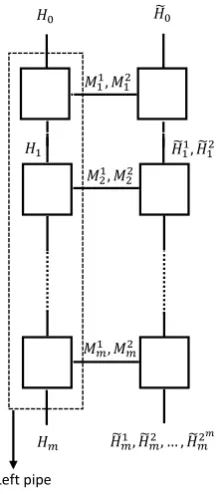
Figure 2. The Generalized vMDC-2 Construction
pipe. Without loss of generality we use Joux attack to find Multicollision on the left pipe and finalize the attack by computing the probability and complexity of finding collision fromm-ouputs of right pipe with single output of left pipe.So the attack is as follows:
First, we assume that the construction is composed of two independent pipes similar to Figure 2, then our attack follows this procedure:
(1) Let considerH0,H˜0as an initial chaining value
of hash function.
(2) find two different messages and setH1in such
a way that
H1=f(H0, M11) =f(H0, , M12) (7)
Note that concurrently two outputs are gen-erated in the right pipe.
(3) forifrom 2 tomrepeat step 2 by considering the output of each round as an input for next round, such that
H2=f(H1, M21) =f(H1, , M22) (8)
Hi=f(Hi−1, Mi1) =f(Hi−1, , Mi2) (9) (4) continue up to roundmand output 2mvalues For each round with 2n/2we can find a collision then by
Joux’s attack we can find 2m.2n/2collisions bym2n/2 queries. On the other pipe we have ˜Hm1H˜m2,. . .,H˜m2m
as the outputs which according to Birthday paradox we can have a collision by more than 2n/2 outputs,
then:
if 2m= 2n/2⇒collisionf ound⇒m=n/2 (10) If we setn= 128 then form= 64 we have found a collision bym2n/2= 64(264) = 270by probability of
1/2.
Thus for an= 128 bit block the adversary could find a collision in 270queries with probability 0.5 for
the hash function.
4
Conclusion
In this paper we presented the first collision attack on the vMDC-2 construction proposed by Mazumderet al. [6] having time complexity much less than a birth-day attack. The attack applies to other constructions similar to vMDC-2, and does not rely on weaknesses of the underlying block cipher. We proposed multi-collision attack for finding multi-collision’s game with time complexityO(n/2×2n/2) which finds a collision for
this hash function in time complexity of 270.
Acknowledgements
This work was supported by Shahid Rajaee Teacher Training University.
References
[1] Ralph C. Merkle. One Way Hash Functions and DES. InAdvances in Cryptology — CRYPTO’ 89 Proceedings, pages 428–446. Springer New York, 1990. ISBN 978-0-387-34805-6. doi:10.1007/0-387-34805-0 40.
[2] Ivan Bjerre Damg˚ard. A Design Principle for Hash Functions. In Advances in Cryptol-ogy — CRYPTO’ 89 Proceedings, pages 416–427. Springer New York, 1990. ISBN 978-0-387-34805-6. doi:10.1007/0-387-34805-0 39.
[3] Bart Preneel, Ren´e Govaerts, and Joos Vande-walle. Hash functions based on block ciphers: a synthetic approach. InAdvances in Cryptology — CRYPTO’ 93, pages 368–378, Berlin, Heidelberg, 1994. Springer Berlin Heidelberg. ISBN 978-3-540-48329-8. doi:10.1007/3-540-48329-2 31. [4] Antoine Joux. Multicollisions in Iterated Hash
Functions. Application to Cascaded Construc-tions. In Advances in Cryptology – CRYPTO 2004, pages 306–316. Springer Berlin Heidelberg, 2004. ISBN 978-3-540-28628-8. doi:10.1007/978-3-540-28628-8 19.
Ad-vances in Cryptology – EUROCRYPT 2005, pages 36–57. Springer Berlin Heidelberg, 2005. ISBN 978-3-540-32055-5. doi:10.1007/11426639 3. [6] Rashed Mazumder, Atsuko Miyaji, and Chunhua
Su. An Efficient Construction of a Compression Function for Cryptographic Hash. InAvailability, Reliability, and Security in Information Systems, pages 124–140. Springer International Publishing, 2016. ISBN 978-3-319-45507-5. doi:10.1007/978-3-319-45507-5 9.
[7] Xucjia Lai and James L. Massey. Hash Func-tions Based on Block Ciphers. In Advances in Cryptology — EUROCRYPT’ 92, pages 55–70, Berlin, Heidelberg, 1993. Springer Berlin Heidel-berg. ISBN 978-3-540-47555-2. doi:10.1007/3-540-47555-9 5.
[8] Jooyoung Lee, Martijn Stam, and John Stein-berger. The Collision Security of Tandem-DM in the Ideal Cipher Model. InAdvances in Cryp-tology – CRYPTO 2011, pages 561–577. Springer Berlin Heidelberg, 2011. ISBN 978-3-642-22792-9. doi:10.1007/978-3-642-22792-9 32.
[9] Shoichi Hirose. Some Plausible Constructions of Double-Block-Length Hash Functions. In Fast Software Encryption, pages 210–225, Berlin, Hei-delberg, 2006. Springer Berlin Heidelberg. ISBN 978-3-540-36598-3. doi:10.1007/11799313 14. [10] Ewan Fleischmann, Christian Forler, Stefan
Lucks, and Jakob Wenzel. Weimar-DM: A Highly Secure Double-Length Compression Function. In
Information Security and Privacy, pages 152–165, Berlin, Heidelberg, 2012. Springer Berlin Heidel-berg. ISBN 978-3-642-31448-3. doi:10.1007/978-3-642-31448-3 12.
[11] John P. Steinberger. The Collision Intractabil-ity of MDC-2 in the Ideal-Cipher Model. In Moni Naor, editor,Advances in Cryptology - EU-ROCRYPT 2007, pages 34–51. Springer Berlin Heidelberg, 2007. ISBN 978-3-540-72540-4. doi:10.1007/978-3-540-72540-4 3.
[12] Lars R. Knudsen, Florian Mendel, Christian Rechberger, and Søren S. Thomsen. Cryptanal-ysis of MDC-2. In Advances in Cryptology
-EUROCRYPT 2009, pages 106–120. Springer
Berlin Heidelberg, 2009. ISBN 978-3-642-01001-9. doi:10.1007/978-3-642-01001-9 6.
[13] Bart Mennink. On the collision and preimage security of MDC-4 in the ideal cipher model.
Designs, Codes and Cryptography, 73(1):121–150, Oct 2014. ISSN 1573-7586. doi:10.1007/s10623-013-9813-8.
[14] Ewan Fleischmann, Christian Forler, and Stefan Lucks. The Collision Security of MDC-4. In
Progress in Cryptology - AFRICACRYPT 2012, pages 252–269. Springer Berlin Heidelberg, 2012. ISBN 978-3-642-31410-0.
doi:10.1007/978-3-642-31410-0 16.
Zahra Zolfaghariholds a M.Sc. in Commu-nication Systems from Electrical Engineering Department, Shahid Rajaee Teacher Training University, Tehran, Iran. Her research interest includes cryptology and network security.
Hamid Asadollahiholds a M.Sc. in Commu-nication Systems from Electrical Engineering Department, Shahid Rajaee Teacher Training University, Tehran, Iran. His research interest includes cryptology and network security.