(12)INTERNATIONAL APPLICATION PUBLISHED UNDER THE PATENT COOPERATION TREATY (PCT) (19)World Intellectual Property Organization
International Bureau
(10)International Publication Number (43)International Publication Date
17June 2010 (17.06.2010)
WO 2010/066703
A2
(51) International Patent Classification: (81) Designated States (unlessotherwise indicated, for every C12N 15/82 (2006.01) C12P 7/64 (2006.01) kind of national protection available): AE, AG, AL, AM, C12N 9/02 (2006.01) AOlH 5/00 (2006.01) AO, AT, AU, AZ, BA, BB, BG, BH, BR, BW, BY, BZ,
C12N 15/53 (2006.01) CA, CH, CL, CN, CO, CR, CU, CZ,DE, DK, DM, DO,
DZ, EC, EE, EG, ES, FI, GB, GD, GE, GH, GM, GT, (21) International ApplicationNumber: HN, HR, HU,ID,IL,IN, IS, JP,KE, KG, KM, KN,KP,
PCT/EP2009/066569 KR, KZ,
LA,LC, LK, LR, LS, LT,LU,LY, MA, MD, (22) International FilingDate: ME, MG, MK, MN, MW, MX, MY, MZ, NA, NG, NI, 8 December 2009 (08.12.2009) NO, NZ, OM, PE, PG,PH, PL,PT,RO, RS, RU,SC, SD, SE, SG, SK, SL, SM,ST, SV, SY,TJ,TM,TN, TR,TT, (25) FilingLanguage: English TZ, UA, UG, US, UZ, VC, VN, ZA, ZM, ZW.
(26) Publication Language: English (84) Designated States (unlessotherwise indicated, for every (30) PriorityData: kind of regional protection available): ARIPO (BW, GH, 08171520.3 12December 2008 (12.12.2008) EP GM, KE, LS, MW, MZ, NA,SD, SL, SZ, TZ,UG, ZM, 0915 1937.1 3 February 2009 (03.02.2009) EP ZW), Eurasian (AM, AZ, BY, KG, KZ, MD, RU, TJ,
TM), European (AT, BE, BG, CH, CY, CZ, DE, DK, EE, (71) Applicants (forall designated States except US): BASF ES, FI, FR, GB, GR, HR, HU, IE, IS, IT, LT, LU, LV,
PLANT SCIENCE GMBH [DE/DE]; ., 67056 Lud- MC, MK, MT, NL, NO, PL, PT, RO, SE, SI, SK, SM,
wigshafen (DE). SENGER, Toralf [DE/DE]; Em- TR), OAPI (BF, BJ, CF,CG, CI,CM, GA, GN,GQ,GW, mendinger Weg 7, 69126 Heidelberg (DE). BAUER, ML, MR, NE,SN, TD, TG).
Jorg [DE/DE]; Maxburgstrasse 6, 67117 Limburgerhof
(DE). Published:
— without international search report andtobe republished (72) Inventor;and
upon receipt of that report (Rule48.2(g)) (75) Inventor/Applicant (for US only): NAPIER, Johnathan
A. [GB/GB]; The Wilderness, Butchers Lane, Preston — withsequence listing part of description (Rule5 .2(a)) Hertfordshire SG47TR (GB).
(74) Agent: DICK, Alexander; Herzog Fiesser & Partner,
Bad Kreuznacher Str. 27-29, 68309 Mannheim (DE).
(54) Title: DESATURASES AND PROCESS FOR THE PRODUCTION OF POLYUNSATURATED FATTY ACIDS IN TRANSGENIC ORGANISMS
(57)Abstract: The present invention relatestopolynucleotides from Cochliobolus heterostrophus C5, Cyanothece sp.CCYOl 10,
Mycocentrospora acerina and Hyaloperonospora parasitica, which code for desaturases and which can be employed for the recom bi nant production of polyunsaturated fattyacids. The invention furthermore relates tovectors, host cells and transgenic nonhu-man organisms which comprise the polynucleotides according to the invention, andto the polypeptides encoded by thepolynu
cleotides. The invention furthermore relatestoantibodies against the polypeptides according tothe invention. Finally, theinven
Desaturases and processfor the production of polyunsaturated fatty acids intransgenic
organisms
Description
The present invention relates topolynucleotides from Cochliobolus heterostrophus C5,
Cyanothecesp. CCY0110, Mycocentrospora acerina and Hyaloperonospora parasitica,
which code for desaturases and which can be employed for the recombinant
production of polyunsaturated fatty acids. The invention furthermore relates tovectors,
host cells and transgenic nonhuman organisms which comprise the polynucleotides
according to the invention, and to the polypeptides encoded by the polynucleotides.
The invention furthermore relates toantibodies against the polypeptides according to
the invention. Finally, the invention also relates to production processes for the
polyunsaturated fatty acids andfor oil, lipid andfatty acid compositions and totheir use
asdrugs, cosmetics, foodstuffs, feedstuffs, preferably fish food, or food supplements.
Fatty acids and triacylglycerides have a multiplicity of applications in the food industry,
in animal nutrition, in cosmetics and inthe pharmacological sector. Depending on
whether they arefree saturated or unsaturated fatty acids or else triacylglycerides with
an elevated content of saturated or unsaturated fatty acids, they are suitable for very
different applications. Polyunsaturated fatty acids such as linoleic acid and linolenic
acid are essential for mammals, since they cannot be produced by the latter
themselves. Polyunsaturated ω3-fatty acids and ω6-fatty acids are therefore an
important constituent inanimal and human nutrition.
Polyunsaturated long-chain ω3-fatty acids such as eicosapentaenoic acid (= EPA,
C20:5∆5'8'1 1'14'17) or docosahexaenoic acid (= DHA, C22:6∆4 710 13 16 19) are important
components in human nutrition owing totheir various roles inhealth aspects, including
the development of the child brain, the functionality of the eyes, the synthesis of
hormones and other signal substances, andthe prevention of cardiovascular disorders,
cancer and diabetes (Poulos, A Lipids 30:1-14, 1995; Horrocks, LA and Yeo YK
Pharmacol Res 40:21 1-225, 1999). This is why there is a demand for the production of
ω3-fatty acids, which are preferentially found in fish oils, to the food is particularly important. Thus, for example, polyunsaturated fatty acids such as docosahexaenoic
acid (= DHA, C22:6∆4 710 13 16 19) or eicosapentaenoic acid (= EPA, C20:5∆5 1 4 7) are
added to infant formula to improve the nutritional value. The unsaturated fatty acid
DHA is said tohave a positive effect onthe development and maintenance of brain
functions.
Hereinbelow, polyunsaturated fatty acids are referred to as PUFA, PUFAs,LCPUFA or
LCPUFAs (polyunsaturated fatty acids, PUFA, long-chain polyunsaturated fatty acids,
LCPUFA) .
The variousfatty acids andtriglycerides aremainly obtained from microorganisms such
as Mortierella and Schizochytrium or from oil-producing plants such as soybean,
oilseed rape, algae such asCrypthecodinium or Phaeodactylum and other organisms,
where they areobtained, asa rule, in theform of their triacylglycerides (=triglycerides
= triglycerols). However, theycan alsobeobtained fromanimals, such as, for example,
fish. The free fatty acids are advantageously prepared by hydrolysis. Very long-chain
polyunsaturated fatty acids such a s DHA, EPA, arachidonic acid (= ARA,
C20:4∆5'8'1 1 4) , dihomo-γ-linolenic acid (C20:3∆8 1M)or docosapentaenoic acid (DPA,
C22:5∆7'10'13'16'19) are not synthesized in oil crops such as oilseed rape, soybean,
sunflower or safflower. Conventional natural sources of these fatty acids arefish such
asherring, salmon, sardine, redfish, eel, carp, trout, halibut, mackerel, zander or tuna,
oralgae.
Depending on the intended use, oils with saturated or unsaturated fatty acids are
preferred. In human nutrition, for example, lipids with unsaturated fatty acids,
specifically polyunsaturated fatty acids, are preferred. The polyunsaturated ω3-fatty
acidsare saidtohavea positive effectonthe cholesterol level inthe blood andthus on
the possibility of preventing heart disease. The risk of heart disease, a stroke or
hypertension can bereduced markedly by adding these ω3-fatty acids to food. Also, ω3-fatty acids have a positive effect on inflammatory, specifically on chronically
inflammatory, processes in association with immunological diseases such as
foodstuffs, or are employed in medicaments. ω6-Fatty acids such as arachidonic acid
tend tohave a negative effect onthese disorders in connection with these rheumatic
diseases onaccount of ourusual dietary intake.
ω3- and ω6-fatty acids are precursors of tissue hormones, known aseicosanoids, such
asthe prostaglandins, which are derived from dihomo-γ-linolenic acid, arachidonic acid
and eicosapentaenoic acid, and of the thromboxanes and leukotrienes, which are
derived from arachidonic acid and eicosapentaenoic acid. Eicosanoids which are
formed from ω6-fatty acids (known asthe PG2 series) generally promote inflammatory
reactions, while eicosanoids from ω3-fatty acids (known asthe PG3 series) have little
orno proinflammatory effect.
Owing totheir positive characteristics, there has been no lack of attempts inthe pastto
make available genes which are involved inthe synthesis of fatty acids or triglycerides
for the production of oils invarious organisms with a modified content of unsaturated
fatty acids. Thus, W O91/13972 and its US equivalent describe a ∆9-desaturase.
WO 93/11245 claims a ∆15-desaturase and WO94/115 16 a ∆12-desaturase. Further
desaturases are described, for example, in EP-A-O 550 162, W O 94/18337, WO
97/30582, WO 97/21 340, WO95/18222, EP-A-O 794 250, Stukey etal., J . Biol.
Chem., 265, 1990: 20144-20149, Wada et al., Nature 347, 1990: 200-203 orHuang et
al., Lipids 34, 1999: 649-659. However, the biochemical characterization of the various
desaturases hasbeen insufficient todate since the enzymes, being membrane-bound
proteins, present great difficulty intheir isolation and characterization (McKeon et al.,
Methods in Enzymol. 7 1, 1981: 12141-12147, Wang etal., Plant Physiol. Biochem.,
26, 1988: 777-792). A s a rule, membrane-bound desaturases are characterized by
being introduced into a suitable organism which is subsequently analyzed for enzyme
activity by analyzing the starting materials and the products. ∆6-Desaturases are
described i n W O 93/06712, US5,614,393, WO 96/21022, WO 00/21557 and
WO 99/27111. Their application for production intransgenic organisms is described, for
example, in WO 98/46763, WO 98/46764 and WO 98/46765. In this context, the
expression of various desaturases and the formation of polyunsaturated fatty acids is
also described and claimed; see, for example, WO 99/64616 or WO 98/46776. As
polyunsaturated fatty acids, it must be notedthat the expression of a single desaturase
asdescribed to date has only resulted in low contents of unsaturated fatty acids/lipids
such as, for example, γ-linolenic acid and stearidonic acid. Moreover, a mixture of ω
3-and ω6-fatty acids was obtained, asarule.
Especially suitable microorganisms for the production of PUFAs are microalgae such
a s Phaeodactylum tricornutum, Porphiridium species, Thraustochytrium species,
Schizochytrium species or Crypthecodinium species, ciliates such as Stylonychia or
Colpidium, fungae such as Mortierella, Entomophthora or Mucor and/or mosses such
as Physcomitrella, preferably Physcomitrella patens, Ceratodon and Marchantia (R.
Vazhappilly & F.Chen (1998) Botanica Marina 4 1: 553-558; K .Totani & K .Oba (1987)
Lipids 22: 1060-1062; M .Akimoto et al. (1998) Appl. Biochemistry and Biotechnology
73: 269-278). Strain selection has resulted in the development of a number of mutant
strains of the microorganisms in question which produce a series of desirable
compounds including PUFAs. However, the mutation and selection of strains with an
improved production of a particular molecule such as the polyunsaturated fatty acids is
a time-consuming and difficult process. This is why recombinant methodsas described
above are preferred whenever possible. However, only limited amounts of the desired
polyunsaturated fatty acids such as DPA, EPA or ARA can be produced with the aid of
the abovementioned microorganisms. Moreover, depending onthe microorganism
used, these are generally generated asfatty acid mixtures of, for example, EPA, DPA
andARA.
A variety of synthetic pathways is being discussed for the synthesis of arachidonic acid,
eicosapentaenoic acid (EPA)and docosahexaenoic acid (DHA). Thus, EPA or DHAare
produced in marine bacteria such as Vibrio sp. or Shewanella sp. via the polyketide
pathway (Yu, R . et al. Lipids 35:1061-1064, 2000; Takeyama, H . et al. Microbiology
143:2725-2731,1997).
A n alternative strategy is the alternating activity of desaturases and elongases (Zank,
T.K. et al. Plant Journal 3 1:255-268, 2002; Sakuradani, E . et al. Gene 238:445-453,
1999). A modification of the pathway described in Zank et al. and in Sakuradani et al.
Sprecher synthesis pathway (Sprecher 2000, Biochim. Biophys. Acta 1486:219-231) in
mammals. Instead of the ∆4-desaturation, a further elongation step is effected here to
give C24, followed by a further ∆6-desaturation and finally β-oxidation to give the C22
chain length. What is known a s the Sprecher synthesis pathway is, however, not
suitable for the production in plants and microorganisms since the regulatory
mechanisms are not yet known.
Depending o n their desaturation pattern, the polyunsaturated fatty acids can be divided
into two large classes, viz. ω6- o r ω3-fatty acids, which differ with regard to their
metabolic and functional activities. The starting material for the ω6-metabolic pathway
is the fatty acid linoleic acid (18:2∆9 2) , while the ω3-pathway proceeds via linolenic
acid (18:3∆9'12'15) . Linolenic acid is formed by the activity of a ∆15-desaturase (Tocher
et al. 1998, Prog. Lipid Res. 37, 73-1 17; Domergue et al. 2002, Eur. J . Biochem. 269,
4105-41 13).
Mammals, and thus also humans, have no corresponding desaturase activity (∆12- and
∆15-desaturase) and must take up these fatty acids (essential fatty acids) via food.
Starting with these precursors, the physiologically important polyunsaturated fatty acids
arachidonic acid (= ARA, 20:4∆5'8'1 1'14) , a n ω6-fatty acid, and the two ω3-fatty acids
eicosapentaenoic acid (= EPA, 20:5∆5'8 1'14'17) and docosahexaenoic acid (DHA,
22:6∆4'7'10'13'17'19) are synthesized via the sequence of desaturase and elongase
reactions. The application of ω3-fatty acids shows the therapeutic activity described
above in the treatment of cardiovascular diseases (Shimikawa 2001 , World Rev. Nutr.
Diet. 88, 100-108), inflammations (Calder 2002, Proc. Nutr. Soc. 6 1, 345-358) and
arthritis (Cleland and James 2000, J . Rheumatol. 27, 2305-2307).
Higher plants comprise polyunsaturated fatty acids such a s linoleic acid (C18:2) and
linolenic acid (C18:3). ARA, EPA and DHA are not found at all in the seed oil of higher
plants, o r only in miniscule amounts (E. Ucciani: Nouveau Dictionnaire des Huiles
Vegetales [New Dictionary of Vegetable Oils]. Technique & Documentation - Lavoisier,
1995. ISBN: 2-7430-0009-0). However, the production of LCPUFAs in higher plants
(preferably in oil crops such as oilseed rape, linseed, sunflower and soybeans) would
animal nutrition and pharmaceutical purposes might be obtained economically. A
potential route isvia recombinant methods, where genes which code for enzymes of
the biosynthesis of LCPUFAs are introduced and expressed into oil crops. These
genes code for, for example, ∆6-desaturases, ∆6-elongases, ∆5-desaturases or ∆
4-desaturases. These genes can advantageously be isolated from microorganisms and
lower plants which produce LCPUFAs and incorporate them in the membranes or
triacylglycerides. Thus, it has already been possible to isolate ∆6-desaturase genes
from the moss Physcomitrella patens and ∆6-elongase genes from P. patens and from
the nematode C . elegans. (Zank, T.K. et al. Plant Journal 3 1:255-268, 2002, Beaudoin
et al. Biochem Soc Trans 28 :661-663, 2000).
The first transgenic plants which comprise and express genes coding for LCPUFA
biosynthesis enzymes and which produce LCPUFAs were described for example, in
DE-A-102 19 203 (process for the production of polyunsaturated fatty acids in plants).
However, these plants produce LCPU FAs i n amounts which require further
optimization for processing the oils which are present inthe plants.
To ensure the enrichment of food and of feed with these polyunsaturated fatty acids,
there is therefore a great need for means and measures for a simple, inexpensive
process for the production of these polyunsaturated fatty acids, specifically in
eukaryotic systems.
The object on which the present invention is based is the provision of such means and
measures. This object is achieved by the embodiments which are described in the
patent claims and hereinbelow.
The present invention thus relates to a polynucleotide comprising a nucleic acid
sequence selected from the group consisting of:
(a) nucleic acid sequence as shown inany of SEQ ID No. 1, 2 ,8 , 9 , 15, 16, 50or5 1;
(b) nucleic acid sequence which codes for a polypeptide which features an amino
(c) nucleic acid sequence which has at least 70% identity to one of the nucleicacid
sequences of (a) or (b), and which codes for a polypeptide with a desaturase
activity; and
(d) nucleic acid sequence for a fragment of a nucleic acid of(a), (b) or(c), wherein
thefragment codes for a polypeptide with a desaturase activity.
The class of the ω6-fatty acids is based onthe ω6-fatty acid linoleic acid (18:2∆9,12),
while the class of the ω3-fatty acids is based on the (3-fatty acid linolenic acid
(18:3(9,12,15); see Figure 1. These two fatty acids are the substrates for the synthesis
of long-chain (6-and (3-PUFAs, respectively. The increase of the content inthesefatty
acids according tothe genes which are introduced leads to an increase of the content
in long-chain-PUFAs.
The present invention provides polynucleotide sequences which lead to an increase of
the substrates 18:2(9,12 and 18:3(9,12,15, respectively. There have been identified
polynucleotide sequences which code for enzymes with (12-desaturase activity, with
(12- and (15-desaturase activity, with (15-desaturase activity or with (3-desaturase
activity.
According to the invention, the term "polynucleotide" refers to polynucleotides which
comprise nucleic acid sequences which code for polypeptides with desaturase activity.
The desaturase activities are preferably required for the biosynthesis of lipids or fatty
acids. Especially preferably, they take the form of the following desaturase activities:
∆12-desaturase, ∆15-desaturase, ∆12- and ∆15-desaturase or omega-3-desaturase
activity. The desaturases are preferably involved in the synthesis of polyunsaturated
fatty acids (PUFAs) and especially preferably in the synthesis of long-chain PUFAs
(LCPUFAs). Suitable detection systems for these desaturase activities are described in
the examples or in W O 2005/083053. The desaturase activities according to the
invention especially preferably have substrate specificities and/or conversion rates
which are comparable to those of the respective homologous desaturase enzymes
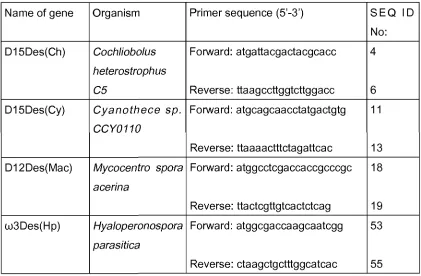
infestans. The specific polynucleotides according t o the invention, i.e. the
polynucleotides with a nucleic acid sequence as shown in SEQ ID No.: 1,2 , 8 , 9 , 15 ,
16, 50 or 5 1 have been obtained from Cochliobolus heterostrophus C5, Cyanothece
sp. CCY01 10 , Polaromonas sp. JS666, Prochlorococcus marinus str. MIT 9313 ,
Synechococcus sp. PCC 7335, Mycocentrospora acerina or Hyaloperonospora
parasitica.
In particular, the nucleic acid sequences according to SEQ ID No. 1 and 2 originate
from Cochliobolusheterostrophus C5, the nucleic acid sequences according toSEQ ID
No. 8 and 9 from Cyanothece sp. CCY0110, the nucleic acid sequences according to
SEQ ID No. 15 and 16from Mycocentrospora acerina and the nucleic acid sequences
according to SEQ ID No. 50 and 5 1from Hyaloperonospora parasitica. SEQ ID No. 1,
8and 50 aregenomic sequences, SEQ ID No. 15 isan mRNA transcript, while SEQID
No. 2 , 9 , 16 and 5 1 arecoding sequences (cds). SEQ ID No. 3 , 10, 17and 52 show the
corresponding amino acidsequences.
Thus, polynucleotides according tothe invention areespecially preferred:
Polynucleotides which code for a polypeptide with ∆15-desaturase activity and which
comprise (i) a nucleic acid sequence as shown in SEQ ID No. 1 or2 ,(ii) a nucleic acid
sequence which codes for a polypeptide as shown in SEQ ID No. 3 , (iii) a nucleic acid
sequence which has at least 70% identity toone of the nucleic acid sequences of (i) or
(ii), o r (iv) a nucleic acid sequence for a fragment of a nucleic acid of (i), (ii) or (iii),
where the fragment codes for a polypeptide with a∆15-desaturase activity.
Polynucleotides which code for a polypeptide with ∆15-desaturase activity and which
comprise (i) a nucleic acid sequence asshown inSEQ ID No. 8 or9 ,(ii) a nucleic acid
sequence which codes for a polypeptide as shown inSEQ ID No. 10, (iii) a nucleic acid
sequence which has at least 70% identity toone of the nucleic acid sequences of (i) or
(ii), or (iv) a nucleic acid sequence for a fragment of a nucleic acid of (i), (ii) or (iii),
where the fragment codes for a polypeptide with a∆15-desaturase activity.
comprise (i) a nucleic acid sequence as shown in SEQ ID No. 15 or 16, (ii) a nucleic
acid sequence which codes for a polypeptide as shown inSEQ ID No. 17, (iii) a nucleic
acid sequence which has at least 70% identity to one of the nucleic acid sequences of
(i) or (ii), or (iv) a nucleic acid sequence for a fragment of a nucleic acid of (i), (ii) or(iii),
where the fragment codes for a polypeptide with a∆12-desaturase activity.
Polynucleotides which code for a polypeptide with ω3-desaturase activity and which
comprise (i) a nucleic acid sequence as shown in SEQ ID No. 50 or 5 1, (ii) a nucleic
acid sequence which codes for a polypeptide as shown inSEQ ID No. 52, (iii) a nucleic
acid sequence which has at least 70% identity to one of the nucleic acid sequences of
(i) or (ii), or (iv) a nucleic acid sequence for a fragment of a nucleic acid of (i), (ii) or (iii),
where the fragment codes for a polypeptide with aω3-desaturase activity.
The term "delta-12-desaturase (or ∆-12-desaturase or d-12-desaturase or d12-Des or
d12Des)" or "delta-12-desaturase (or∆-12-desaturase or d-12-desaturase or d12-Des
or d12Des) activity" as used in the present context refers to a n enzyme with the
enzymatic function for dehydrogenating C18-fatty acids which are already
dehydrogenated on the C atom 9-10. Here, the C atoms C12 and C13 are
dehydrogenated in each case one hydrogen atom, giving rise to a double bond
between these two C atoms.
The term "delta-15-desaturase (or ∆-15-desaturase or d-15-desaturase or d15-Des or
d15Des)" or "delta-15-desaturase (or∆-15-desaturase or d-15-desaturase or d15-Des
o rd 15Des) activity" as used in the present context refers to an enzyme with the
enzymatic function for dehydrogenating C 18- and/or C20-fatty acids which are
dehydrogenated on the C atoms 6-7, 8-9, 9-10, 12-13 and/or 13-14. Here, the C atoms
C15-16 and/or C 17-18 are dehydrogenated in each case one hydrogen atom, giving
rise toa double bond between the two C atoms.
The term "delta-12- and delta-15-desaturase (or ∆-12- and ∆-15-desaturase or as
written hereinabove)" o r "delta-12- and delta-15-desaturase (or ∆-12- and ∆
-15-desaturase or as written hereinabove) activity" as used inthe present context refers to
an enzyme with the enzymatic function for dehydrogenating C18- and/or C20-fatty
acids which are dehydrogenated on the C atoms 6-7, 8-9, 9-10 and/or 13-14. Here, the
hydrogen atom, giving rise toa double bond betweenthe two C atoms.
The term "omega-3-desaturase (or (3-desaturase or (3-Des or (3Des or omega3 Des or o3Des) " or "omega-3-desaturase (or (3-desaturase or (3-Des or (3Des or omega3 Des
or o3Des) activity" as used in the present context refers to an enzyme with the enzymatic function for the dehydrogenation of C18-, C20-and/or C22-fatty acids which
are dehydrogenated onthe C atoms4-5, 5-6, 6-7, 8-9, 9-10, 13-14and/or 16-17. Here,
the C atoms C 15-16 and/or C 17-18 and/or C 19-20 are dehydrogenated by in each
caseone hydrogen atom, giving risetoa double bond between thetwo C atoms.
Desaturases according tothe invention especially preferably feature, in succession, the
desaturase motif 1 "GX10HX3HX13GX9PX3WX3H" (SEQ ID No. 46), the desaturase
motif 2 "PX1 4(H/Q)H " (SEQ ID No.47) and either the desaturase motif 3
"HX2HHX5PXY" (SEQ ID No.48) or the desaturase motif 4 "HX2HHX6PXY" (SEQ ID No. 49), where X stands for any amino acid. Whether it is a∆12-, ∆15- or
omega3-desaturase can be deduced from the amino acid at the variable position 16 of the
desaturase motif 2 ( H or Q): Q = glutamine is indicative of putative ∆12-desaturases,
H = histidine isindicative of ∆15-or omega3-desaturases.
In this context, the polynucleotide sequences or the peptide sequences according to
the invention preferably originate from the abovementioned organisms.
It is clear that, inthe light of the degeneracy of the genetic code, the abovementioned
specific sequences canalso bemodified, where the modified polynucleotides stillcode
for polypeptides with anamino acid sequence asshownin any of SEQ ID No. 3 ,10, 17
or52 and which have the abovementioned desaturase activities.
The term "polynucleotide" also comprises variants of the abovementioned specific
polynucleotides. These may take the form of homologous, orthologous or paralogous
sequences. Such variants comprise nucleic acid sequences which feature at leastone
base substitution, one base addition or one base deletion, it being intended that the
variants still code for a polypeptide with the abovementioned biological activity of the
respective starting sequence. Variants comprise polynucleotides which are capable of
hybridization with the abovementioned polynucleotides, preferably under stringent
conditions. Especially preferred stringent conditions are known to the skilled worker
and can befound in Current Protocols in Molecular Biology, John Wiley & Sons, N .Y.
(1989), 6.3.1-6.3.6. A preferred example of stringent hybridization conditions are
preferably 500C , 55°C, 600C and most preferably at 62°C, followed by one or more
wash steps in 0.1 x SSC, 0.1% SDS at 50 to 65°C, preferably 55 to 65°C even more
preferably at 60 to 65°C. The skilled worker knows that these hybridization conditions
differ as a function of the type of nucleic acid and, for example when organic solvents
are present, with regard to the temperature and the buffer concentration. Under
"standard hybridization conditions", the temperature differs as a function of the type of
nucleic acid between 42°C and 58°C inaqueous buffer with a concentration of from 0.1
to 5 x SSC (pH 7.2). If organic solvent is present in the abovementioned buffer, for
example 50% formamide, the temperature under standard conditions is approximately
42°C. The hybridization conditions for DNA:DNA hybrids are preferably for example 0.1
x SSC and 200C to 45°C, preferably between 300C and 45°C. The hybridization
conditions for DNA:RNA hybrids are preferably for example 0.1 x SSC and 300C to
55°C, preferably between 45°C and 55°C. The abovementioned hybridization
temperatures are determined for example for a nucleic acid of approximately 100 bp (=
base pairs) in length and a G + C content of 50% in the absence of formamide. The
skilled worker knows how to determine the hybridization conditions required with the
aid of textbooks, such as the one mentioned hereinabove, o r from the following
textbooks: Sambrook et al., "Molecular Cloning", Cold Spring Harbor Laboratory, 1989;
Hames and Higgins (eds.) 1985, "Nucleic Acids Hybridization: A Practical Approach",
IRL Press at Oxford University Press, Oxford; Brown (ed.) 1991, "Essential Molecular
Biology: A Practical Approach", IRL Press at Oxford University Press, Oxford. As an
alternative, variants of the specific polynucleotides according to the invention may also
be provided by polymerase chain reaction (PCR)-based methods. To this end, it is
possible first to derive primers from conserved sequences (for example sequences
which code for functional domains inthe polypeptide). Conserved sequences can be
determined by sequence comparisons with polynucleotides which code for
polypeptides with a similar activity. The template used may be DNA or cDNA from
bacteria, fungi, plants or animals. DNA fragments obtained by PCR can be used for
screening suitable genomic libraries or cDNA libraries in order to - if required - isolate
the complete open reading frame of the polynucleotide and to determine it by
sequencing. Preferred variants comprise polynucleotides which comprise a nucleic acid
sequence with at least 50%, at least 55%, at least 60%, at least 65%, at least 70%, at
85%, at least86%, at least87%, at least88%, at least89%, at least 90%, atleast9 1% ,
at least 92%, at least 93%, at least 94%, at least 95%, at least 96%, at least 97%, at
least 98% or at least 99% (or a different percentage than mentioned herein) identity
with one of the abovementioned specific nucleic acid sequences and codes for a
polypeptide with the respective biological activity. Equally preferably comprised are
polynucleotides which comprise nucleic acid sequences which code for a polypeptide
with an amino acid sequence with at least 50%, at least 55%, at least 60%, at least
65%, at least70%, at least75%, at least80%, at least8 1% ,at least82%, at least83%,
at least 84%, at least 85%, at least 86%, at least 87%, at least 88%, at least 89%, at
least90%, at least9 1% ,at least 92%, atleast 93%, at least94%, at least 95%, at least
96%, at least 97%, at least 98% or at least 99% (or a different percentage than
mentioned herein) identity with one of the abovementioned specific amino acid
sequences and where the polypeptide has the respective biological activity of the
starting sequence.
The percentage of identical nucleotides or amino acids preferably relates t o a
sequence segment of at least 50% of the sequences tobe compared, and especially
preferably over the entire length of the sequences to be compared. A multiplicity of
programs which implement algorithms for such comparisons are described inthe prior
art and commercially available. In particular, reference maybemade tothe algorithms
of Needleman and Wunsch or Smith and Waterman, which give particularly reliable
results. These algorithms can preferably be implemented by the following programs:
PiIeUp (J. MoI. Evolution., 25, 351-360, 1987, Higgins 1989, CABIOS, 5 : 151-153),
Gapand BestFit (Needleman and Wunsch (J. MoI. Biol. 48; 443-453 (1970) and Smith
and Waterman (Adv. Appl. Math. 2 ;482-489(1981))), as part of the GCG software
(Genetics Computer Group, 575 Science Drive, Madison, Wisconsin, USA 53711,
1991). For the purposes of the present invention, itis especially preferredtodetermine
the percentage (%) of the sequence identity with the GAP program over the entire
sequence, with the following set parameters: Gap Weight: 50, Length Weight: 3 ,
Average Match: 10.000 andAverage Mismatch: 0.000.
A polynucleotide which only comprises a fragment of the abovementioned nucleic acid
the fragment codes for a polypeptide which features the biological activity of the
starting sequence, or of the polypeptide which the latter codes for. Polypeptides which
are encoded by such polynucleotides therefore comprise, or consist of, domains of the
abovementioned specific polypeptides (starting polypeptides) which confer the
biological activity. A fragment for the purposes of the invention preferably comprises at
least 50, at least 100, at least 250 o r at least 500 consecutive nucleotides of the
abovementioned specific sequences or codes for an amino acid sequence comprising
at least 20, at least 30, at least 50, at least 80, at least 100 or at least 150 consecutive
amino acids of one of the abovementioned specific amino acid sequences, and confers
biological activity, preferably desaturase activity, as described above.
The polynucleotide variants according to the invention preferably feature at least 10%,
at least 20%, at least 30%, at least 40%, at least 50%, at least 60%, at least 70%, at
least 80% or at least 90% of the respective biological activity of the polypeptide which
i s encoded by the starting sequence. That is to say the polypeptides which are
encoded by the polynucleotides according t o the invention can participate in the
metabolism of compounds required for the synthesis of fatty acids, fatty acid esters
such as diacylglycerides and/or triacylglycerides inan organism, preferably ina plant or
plant cell, o r can participate in the transport of molecules across membranes, which
means Ciβ- ,C20- orC22-carbon chains inthe fatty acid molecule with double bonds at at
least two, advantageously three, four, five or six positions.
The polynucleotides according to the invention either comprise the abovementioned
specific nucleic acid sequences o r consist of them. That is t o say, that the
polynucleotides according to the invention may, in principle, also comprise further
nucleotides. These may preferably be 3'- or 5'-untranslated regions of the genomic
nucleic acid sequence. They preferably consist of at least 100, 200 or 500 nucleotides
at the 5 ' terminus and of at least 20, 50 or 100 nucleotides at the 3' terminus of the
coding region. Further polynucleotides which comprise additional nucleic acid
sequences are those which code for fusion proteins. Such fusion proteins can code for
further polypeptides or polypeptide portions, in addition to the abovementioned
polypeptides. The additional polypeptide or polypeptide portion may take the form of
polypeptides which may act as expression markers (green, yellow, red, blue
fluorescent proteins, alkaline phosphatase and others) or so-called "tags" as labels or
as an aid for purification (for example FLAG tags, 6-histidine tags, MYC tags and
others).
Polynucleotide variants can be isolated from different natural or artificial sources. For
example,theycan begenerated artificially by in-vitro orin-vivo mutagenesis. Homologs
or orthologs of the specific sequences can beobtained from a wide range of animals,
plants and microorganisms. They are preferably obtained from algae. Algae such as
Isochrysis, Euglena or Crypthecodinium, algae/diatoms such as Thalassiosira,
Phaeodactylum or Thraustochytrium, Pythium, mosses such as Physcomitrella,
preferably Physcomitrella patens or Ceratodon are preferred, very especially preferred
are the algae of the genus Euglena or the diatoms of the class Oomycota such asthe
genera Pythium or Phytophtora or fungi such as Postia placenta or Microdochium
nivale, or from the division Zygomycota from the genera Rhizopus, Aspergillus,
Thraustochytrium, Phytophthora, Entomophthora, Mucor or Mortierella. The
polynucleotides can also be obtained from plants, preferably from the family
Selaginellaceae, such as Selaginella moellendorffii, or from higher plants such as
Primulaceae such as Aleuritia, Calendula stellata, Osteospermum spinescens or
Osteospermum hyoseroides, bacteria such as Shewanella, cyanobacteria such as
Synechococcus, yeasts or animals such as nematodes, for example Caenorhabditis,
molluses, insects or fish. The polynucleotide variants are also preferably derived from
ananimal from the order vertebrates. Especially preferably, the polynucleotides are
derivedfrom the class Vertebrata; Euteleostomi, Actinopterygii; Neopterygii; Teleostei;
Euteleostei, Protacanthopterygii, Salmoniformes; Salmonidae or Oncorhynchus and,
very especially preferably, from the order Salmoniformes such as the family
Salmonidae, such as the genus Salmo, for example from the genera and species
Oncorhynchus mykiss, Trutta trutta or Salmo trutta fario. Here, the polynucleotides
according to the invention can be isolated by means of standard techniques of
molecular biology and of the sequence information provided herein.Also, it is possible,
with the aid of comparative algorithms, to identifyfor example a homologous sequence
or homologous, conserved sequence regions at the DNA or amino acid level. These
as, for example, those described in Sambrook et al., Molecular Cloning: A Laboratory
Manual. 2nd Ed., Cold Spring Harbor Laboratory, Cold Spring Harbor Laboratory
Press, Cold Spring Harbor, NY, 1989) for isolating further nucleic acid sequences
which are useful in the process. Moreover, it is possible to isolate polynucleotides or
fragments thereof by means of polymerase chain reaction (PCR), where
oligonucleotide primers which are based on this sequence or parts thereof are
employed (for example, a nucleic acid molecule comprising the complete sequence or
part thereofcan beisolated by polymerasechain reaction using oligonucleotide primers
which have been generated onthe basis of this same sequence). For example, it is
possible to isolate mRNA from cells (for example by the guanidinium thiocyanate
extractive method by Chirgwin et al. (1979) Biochemistry 18:5294-5299), and cDNA
can be generated by means of reverse transcriptase (for example Moloney MLV
reverse transcriptase, obtainable from Gibco/BRL, Bethesda, MD, or AMV reverse
transcriptase, obtainable from Seikagaku America, Inc., St.Petersburg, FL). Synthetic
oligonucleotide primers for the amplification by means of polymerase chain reaction
can be generated on the basisof the polynucleotide and amino acid sequences shown
inthe SEQ ID numbers (SEQ ID NR:). A nucleicacid according tothe invention can be
amplified using cDNA or, alternatively, genomic DNA as the template and suitable
oligonucleotide primers, following standard PCR amplification techniques. The nucleic
acid amplified thus can becloned intoa suitable vector and characterized by means of
DNA sequence analysis. Oligonucleotides which correspond to a desaturase
nucleotide sequence can be generated by standard synthetic methods, for example
using anautomatic DNA synthesizer.
The polynucleotides according to the invention can either be provided in the form of
isolated polynucleotides (i.e. isolatedfrom theirnatural origin, for example the genomic
locus) orelse in genetically modified form (i.e. the polynucleotides may also bepresent
at their natural genetic locus, but, in such a case, must be genetically modified). A n
isolated polynucleotide preferably comprises less than 5 kb, 4 kb, 3 kb, 2 kb, 1 kb,
0.5 kbor0.1 kbof nucleicacid sequence which occurs naturallyinits environment. The
polynucleotide according to the invention may be present as a single-stranded or
double-stranded nucleicacid molecule and may take the form of genomic DNA, cDNA
DNA. The polynucleotides according to the invention comprise all orientations of the
sequences shown in the SEQ ID numbers, i.e. also complementary strands and
reverse, or reverse-complementary, orientations. The term furthermore also comprises
chemically modified nucleic acids, such as the naturally occurring methylated DNA
molecules, or artificial nucleic acids, for example biotinylated nucleic acids.
The invention also comprises oligonucleotides of at least 15 bp, preferably at least
20 bp, at least 25 bp, at least 30 bp, at least 35 bp or at least 50 bp, which are capable
of specifically hybridizing under stringent conditions with one of the abovementioned
polynucleotides. The oligonucleotides may consist of DNA o r RNA o r both. Such
oligonucleotides can be employed as primers for the PCR, as expression-inhibitory
antisense oligonucleotides, for RNA interference (RNAi) approaches o r for
chimeroplastic or genoplastic approaches. RNAi methods are described for example in
Fire et al., Nature (1998) 391:806-81 1; Fire, Trends Genet. 15, 358-363 (1999); Sharp,
RNA interference 2001 . Genes Dev. 15,485-490 (2001); Hammond et al. Nature Rev.
Genet. 2 , 1110-1119 (2001) ;Tuschl, Chem. Biochem. 2 , 239-245 (2001) ;Hamilton et
al., Science 286, 950-952 ( 1999); Hammond et al., Nature 404, 293-296 (2000);
Zamore et al., Cell 10 1, 25-33 (2000); Bernstein et al., Nature 409, 363-366 (2001);
Elbashir et al., Genes Dev. 15 , 188-200 (2001 ) ;W O 01/29058; W O 99/3261 9 ; o r
Elbashir et al., 2001 Nature 4 11: 494-498 and serve for inhibiting gene expression by
degrading the mRNA. Chimeroplastic o r genoplastic approaches serve the in-vivo
modification (for example the introduction of point mutations) into genes at their
endogenous loci. Corresponding methods are disclosed in US5,565,350, US5,756,325,
US5,871 ,984, US5,731 ,181, US5,795,972, US6,573,046, US6,21 1,351, US6,586,184,
US6,271 ,360 and US6,479,292.
Advantageously, ithas emerged that the polynucleotides according to the invention can
be employed particularly efficiently for the recombinant production of polyunsaturated
fatty acids in host cells and in transgenic organisms. In particular, the polypeptides
which are encoded by the polynucleotides according to the invention and which have
∆12-desaturase, ∆15-desaturase, ∆12- and ∆15-desaturase o r omega-3-desaturase
activity are capable of converting Cis-, C20- and C22-fattyacids with one, two, three, four
three
double
bonds
such
as
Ci8
: i (
9,
C18: 2 (
9,
12or
ci8 : 3
(
6, 9,
12,
polyunsaturated
C20-fatty
acids with three
or four double
bonds
such a s C20 : 3 ( 8 , 1 1 , 1 4 , C20 : 4 ( 5 , 8 , 1 1 , 1 4 o r C20 :4(8,11,14,17 orpolyunsaturated C22-fatty acids with four or five double bonds such as
C22:4(7,10,13,16 or C22:5(7,10,13,16,19. Especially preferably, the polynucleotide and
amino acid sequences according to the invention lead to an increase inthe
18:2(9,12-or 18:3(9,12 ,15-fatty acids. Figure 1 shows where these desaturases according tothe
invention engage in the biosynthesis of long-chain polyunsaturated fatty acids and/or
how theycan be usedfor producing these fatty acids.
In this context, it is especially preferred to employ the ∆6-desaturase encoded by the
polynucleotide sequence with SEQ ID No. 22 (dθDes(Pir)), the ∆6-elongase encoded
by the polynucleotide sequence with SEQ ID No. 3 1 (d6Elo(Pp)), the ∆5-desaturase
encoded by the polynucleotide sequence with SEQ ID No. 25 (d5Des(Tc)), the ∆
15-elongase encoded by the polynucleotide sequence with SEQ ID No. 34 (d5Des(Ot)),
the ∆14-desaturase encoded by the polynucleotide sequence with SEQ ID No.37
(d4Des(Tc)), the ∆6-elongase encoded by the polynucleotide sequence with SEQ ID
No. 40 (d6Elo(Tp)), the ∆6-desaturase encoded by the polynucleotide sequence with
SEQ ID No. 4 1 (d6Des(Tc)) with one or more of the desaturases according to the
invention in order to synthesize long-chain polyunsaturated fatty acids; see in this
context WO2006/100241. Alternatively, it was also possible toemploy a ∆9-elongase
and a ∆8-desaturase instead of the abovementioned ∆6-desaturase and the ∆
6-elongase as described inWO2004/057001 . Depending onthe fatty acidwhich is to be
prepared, it is possible to coexpress, in the host cells or transgenic organisms
described hereinbelow, orto use inthe methods according tothe invention, a variety of
combinations of the polynucleotides according t o the invention with the
abovementioned desaturases or elongases. Especially preferred combinations for the
production of eicosapentaenoic acid are shown in tables 5 and 8 and for
docosahexaenoic acid in table 6 hereinbelow. For example, it is possible to use a∆
12-desaturase, ∆15-desaturase, ∆12- and ∆15-desaturase, or omega-3-desaturase
according to the invention, alone or ina suitable combination (for example a ∆
12-desaturase and a ∆15-desaturase), together with dθDes(Pir) and/or d6Des(Ot),
d6Elo(Pp), d5Des(Tc) and ω3Des(Pi) for the production of EPA. Equally, a ∆
according to the invention, alone orin a suitable combination, can be used together
with d Des(Pir) and/or d6Des(Ot), d6Elo(Pp), d5Des(Tc), ω3Des(Pi), d5Elo(Ot),
d4Des(Tc)for the production of docosahexaenoicacid.
Preferably, it is the fatty acids in phospholipids or CoA fatty acid esters which are
desaturated, advantageously inthe CoA fatty acid esters. Thus, a simple, inexpensive
production of these polyunsaturated fatty acids is possible, specifically in eukaryotic
systems. The unsaturated fatty acids produced by means of the polynucleotides
according t o the invention can then be formulated as oil, lipid and fatty acid
compositions and can beemployed ina suitable manner.
The present invention furthermore relates to a vector which comprises the
polynucleotide according tothe invention.
The term "vector" refers to a nucleic acid molecule which is capable of transporting
another nucleic acid molecule, such as the polynucleotides according tothe invention,
to which it is bound. One type of vector is a plasmid, a circular double-stranded DNA
loop into which additional DNA segments can be ligated. A further type of vector is a
viral vector, it being possible for additional DNA segments tobe ligated into the viral
genome. Certain vectors are capable of autonomous replication ina host cell into
which they have been introduced (for example bacterial vectors with bacterial
replication origin). Other vectors are advantageously integrated into the genome of a
host cell when they are introduced into the host cell, and thus replicate together with
the host genome. Moreover, certain vectors can govern the expression of genes with
which theyare inoperable linkage. These vectors are referredtointhe presentcontext
as expression vectors. Usually, expression vectors which are suitable for DNA
recombination techniques take the form of plasmids. In the present description,
"plasmid" and "vector" can be used exchangeably since the plasmid is the form of
vector which is most frequently used. However, the invention is also intended to
comprise other forms of expression vectors, such asviral vectors, which exert similar
functions. Furthermore, the term "vector" is also intended to comprise other vectors
with which the skilled worker isfamiliar, suchas phages, viruses suchas SV40, CMV,
DNA, artificial chromosomes. Finally, the term also comprises constructs for the
targeted , i.e. homologous, recombination, or the heterologous insertion of
polynucleotides.
Vectors can be introduced into prokaryotic and eukaryotic cells via conventional
transformation or transfection techniques. The terms "transformation" and
"transfection", conjugation and transduction, as used in the present context, are
intended to comprise a multiplicity of methods known inthe priorartfor the introduction
of foreign nucleicacid (for example DNA) into a hostcell, including calcium phosphate
or calcium chloride coprecipitation, DEAE-dextran-mediated transfection, lipofection,
natural competence, chemically mediated transfer, electroporation or particle
bombardment. Suitable methods for the transformation or transfection of host cells,
including plant cells, can befound in Sambrook et al. (Molecular Cloning: A Laboratory
Manual., 2nd ed., Cold Spring Harbor Laboratory, Cold Spring Harbor Laboratory
Press, Cold Spring Harbor, NY,1989) and other laboratory textbooks such asMethods
in Molecular Biology, 1995,Vol. 44,Agrobacterium protocols, Ed.: Gartland and Davey,
Humana Press,Totowa, New Jersey.
Suitable cloning vectors are generally known to the skilled worker. In particular, they
include vectors which can replicate in microbial systems, that is mainly vectors which
ensure efficient cloning in yeasts or fungi and which make possible the stable
transformation of plants. Those which must be mentioned are in particular various
binary and cointegrated vector systems which are suitable for the T-DNA-mediated
transformation. Such vector systems are, asa rule, characterized inthat they comprise
at least the vir genes, which are required for the agrobacterium-mediated
transformation, and theT-DNA-bordering sequences (T-DNAborder). Preferably, these
vector systems also comprise further cis-regulatory regions such as promoters and
terminators and/or selection markers, by means of which suitably transformed
organisms can beidentified. While inthe case of cointegrated vector systems vir genes
and T-DNA sequences are arranged onthe samevector, binary systems are based on
at leasttwo vectors, one of which bears vir genes, but no T-DNA, and the other bears
T-DNA, but no vir gene. As a result, the last-mentioned vectors are relatively small,
vectors include vectors from the pBIB-HYG series, the pPZP series, the pBecks series
and the pGreen series. Preferably used according to the invention are Bin19, pB1101,
pBinAR, pGPTV and pCAMBIA. A n overview of binary vectors and their use isfound in
Hellens et al, Trends in Plant Science (2000) 5 ,446-451 . The vectors with the inserted
polynucleotides according to the invention can be propagated stably under selective
conditions in microorganisms, in particular Escherichia coli and Agrobacterium
tumefaciens, and make possible a transfer of heterologous DNA into plants o r
microorganisms. The polynucleotides according to the invention can be introduced into
organisms such as microorganisms or plants by means of the cloning vectors and thus
used for transforming plants. Vectors which are suitable for this purpose are published
in: Plant Molecular Biology and Biotechnology (CRC Press, Boca Raton, Florida),
chapter 6/7, p . 71-1 19 (1993); F.F. White, Vectors for Gene Transfer in Higher Plants;
in: Transgenic Plants, vol. 1, Engineering and Utilization, eds.: Kung and R . Wu,
Academic Press, 1993, 15-38; B . Jenes et al., Techniques for Gene Transfer, in:
Transgenic Plants, vol. 1, Engineering and Utilization, eds.: Kung and R .Wu,
Academic Press ( 1993), 128-143; Potrykus, Annu. Rev. Plant Physiol. Plant Molec.
Biol. 42 (1991), 205-225.
The vector is preferably an expression vector. The polynucleotide is present in the
expression vector according to the invention in operative (i.e. functional) linkage with
an expression control sequence. The expression control sequence together with the
polynucleotide and optionally further sequence elements of the vector is also referred
to as the expression cassette. The expression control sequence ensures that, after
transformation or transfection into a host cell, the polynucleotide can be expressed.
The expression control sequence to be used preferably comprises cis-regulatory
elements such as promoter and/or enhancer nucleic acid sequences, which are
recognized by the transcription machinery of the host cells. The term furthermore
comprises other expression control elements, for example polyadenylation signals and
RNA-stabilizing sequences. These regulatory sequences are described for example in
Goeddel: Gene Expression Technology: Methods in Enzymology 185, Academic Press,
San Diego, CA (1990) or see: Gruber and Crosby, in: Methods in Plant Molecular
Biology and Biotechnology, CRC Press, Boca Raton, Florida, eds.: Glick and
sequences comprise those which govern the constitutive expression of a nucleotide
sequence in many types of host cells, and those which govern the direct expression of
the nucleotide sequence only in certain host cells under certain conditions. The skilled
worker knows that the design of the expression vector may depend on factors such as
the choice of the host cell to be transformed, the extent of the expression of the desired
protein and the like. The polynucleotides according to the invention may be present in
one or more copies inthe expression cassette orinthe expression vector according to
the invention (for example in the form of several expression cassettes). Here, the
regulatory sequences or factors can preferably have a positive effect on the gene
expression of the introduced genes, as described above, and thereby increase it. Thus,
it is possible to enhance the regulatory elements advantageously at the transcription
level by using strong transcription signals such as promoters and/or "enhancers".
Besides, it is also possible to enhance the translation, for example by improving the
mRNA stability. Further expression control sequences within the meaning of the
present invention are translation terminators at the 3' end of the polynucleotides to be
translated. A n example which can be used here isthe OCS1 terminator. Asinthe case
of the promoters, a different terminator sequence should be used for each
polynucleotide to be expressed.
Preferred expression control sequences or regulatory sequences are present in
promoters such as the cos, tac, trp, tet, trp-tet, Ipp, lac, Ipp-lac, laclq, T7, T5, T3, gal,
trc, ara, SP6, λ-PR or λ-PL promoters and are advantageously employed in
Gram-negative bacteria. Further advantageous regulatory sequences are, for example,
present in the Gram-positive promoters amy and SPO2, in the yeast or fungal
promoters ADC1 , MFa, AC, P-60, CYC1 , GAPDH, TEF, rp28, ADH or in the plant
promoters CaMV/35S [Franck et al., Cell 2 1(1980) 285-294], PRP1 [Ward et al., Plant.
MoI. Biol. 22 ( 1993)], SSU, OCS, Iib4, usp, STLS1 , B33, nos o r in the ubiquitin or
phaseolin promoter. Advantageous inthis context are also inducible promoters, such
as the promoters described in EP-A-O 388 186 (benzenesulfonamide-inducible), Plant
J .2 , 1992:397-404 (Gatz et al., tetracycline-inducible), EP-A-O 335 528 (abscisic
acid-inducible) or WO 93/21334 (ethanol- or cyclohexenol-acid-inducible). Further suitable plant
promoters are the cytosolic FBPase promoter or the ST-LSI promoter of potato
phosphoribosyl-pyrophosphate amidotransferase promoter (Genbank Accession No. U87999) or the
node-specific promoter described in EP-A-O 249 676. Especially advantageous
promoters are promoters which make possible the expression intissues which are
involved in the biosynthesis of fatty acids. Very especially advantageous are
seed-specific promoters, such as the USP promoter, but also other promoters such as the
LeB4, DC3, phaseolin or napin promoter. Further especially advantageous promoters
are seed-specific promoters which can be used for monocotyledonous or
dicotyledonous plants and which are described in US 5,608,152 (oilseed rape napin
promoter), WO 98/45461 (Arobidopsis oleosin promoter), US 5,504,200 (Phaseolus
vulgaris phaseolin promoter), W O 91/13980 (Brassica Bce4 promoter), by Baeumlein
et al., Plant J., 2 , 2 , 1992:233-239 (LeB4 promoter from a legume), these promoters
being suitable for dicots. Examples of promoters which are suitable for monocots are
the barley lpt-2 o r lpt-1 promoter (WO 95/1 5389 and W O 95/23230), the barley
hordein promoter and other suitable promoters described inW O 99/16890. In principle,
it is possible to use all natural promoters together with their regulatory sequences, such
as those mentioned above, as expression control sequences. It is also possible to use
synthetic promoters, either in addition or alone, in particular when they mediate
seed-specific expression, as described, for example, inWO 99/16890.
In order to achieve a particularly high PUFA content, especially in transgenic plants,
the polynucleotides of the present invention should preferably be expressed inoil crops
in a seed-specific manner. To this end, seed-specific promoters can be used, or those
promoters which are active in the embryo and/or in the endosperm. In principle,
seed-specific promoters can be isolated both from dicotyledonous and from
monocotyledonous plants. Advantageous preferred promoters are listed hereinbelow:
USP (= unknown seed protein) and vicilin (Vicia faba) [Baumlein e t al., MoI.
Gen Genet., 1991, 225(3)], napin (oilseed rape) [US 5,608,152], acyl carrier protein
(oilseed rape) [US 5,315,001 and WO 92/18634], oleosin (Arabidopsis thaliana)
[WO 98/45461 and W O 93/2021 6], phaseolin (Phaseolus vulgaris) [US 5,504,200],
Bce4 [WO 91/1 3980], legumines B4 (LegB4 promoter) [Baumlein et al., Plant J., 2,2,
1992], Lpt2 and Ipt1 (barley) [WO 95/15389 and WO 95/23230], seed-specific
promoters from rice, maize and wheat [WO 99/16890], Amy32b, Amy 6-6 and aleurain
phosphoenol pyruvate carboxylase (soybean) [JP 06/62870], ADR12-2 (soybean)
[WO 98/08962], isocitrate lyase (oilseed rape) [US 5,689,040] or α-amylase (barley)
[EP781 849].
Plant gene expression can also be facilitated via a chemically inducible promoter (see
a review in Gatz 1997, Annu. Rev. Plant Physiol. Plant MoI. Biol., 48:89-108).
Chemically inducible promoters are particularly suitable when it is desired that gene
expression should take place in a time-specific manner. Examples of such promoters
are a salicylic acid-inducible promoter (WO95/19443), a tetracycline-inducible
promoter (Gatz et al. (1992) Plant J . 2 , 397-404) and an ethanol-inducible promoter.
To ensure stable integration of the various biosynthesis genes into the transgenic plant
over a plurality of generations, each of the polynucleotides according to the invention
should be expressed under the control of a separate promoter, preferably a promoter
which differs from the other promoters, since repeating sequence motifs can lead to
instability of the T-DNA, or to recombination events. In this context, the expression
cassette is advantageously constructed in such a way that a promoter is followed by a
suitable cleavage site (advantageously in a polylinker) for insertion of the nucleic acid
to be expressed and, if appropriate, a terminator is then positioned behind the
polylinker. This sequence is repeated several times, preferably three, four or five times,
so that up to five genes can be combined in one construct and introduced into the
transgenic plant inorder to be expressed. Advantageously, the sequence is repeated
upto three times. To express the nucleic acid sequences, the latter are inserted behind
the promoter via a suitable cleavage site, for example i n the polylinker.
Advantageously, each nucleic acid sequence has its own promoter and, if appropriate,
its own terminator. Such advantageous constructs are disclosed, for example, in DE
101 02337 or DE 101 02 338. However, it is alsopossible to insert a plurality of nucleic
acid sequences behind a promoter and, if appropriate, infront of a terminator. Here,
the insertion site, or the sequence, of the inserted nucleic acids in the expression
cassette is not of critical importance, that is to say a nucleic acid sequence can be
inserted at the first o r last position in the cassette without its expression being
substantially influenced thereby. Advantageously, different promoters such as, for
the expression cassette. However, it is also possible to use only one type of promoter
inthe cassette. This, however, may lead to undesired recombination events.
The recombinant expression vectors used can be designed for the expression in
prokaryotic or eukaryotic cells. This is advantageous since intermediate steps of the
vector construction are frequently carried out in microorganisms for the sake of
simplicity. For example, the ∆12-desaturase, ∆15-desaturase, ∆12- and ∆
15-desaturases, ω3-desaturase, ∆6-desaturase, ∆6-elongase, ∆9-elongase, ∆
8-desaturase, ∆5-desaturase, ∆5-elongase and/or ∆4-desaturase genes can be
expressed in bacterial cells, insect cells (using Baculovirus expression vectors), yeast
and other fungal cells (see Romanos, M .A., et al. (1992) "Foreign gene expression in
yeast: a review", Yeast 8:423-488; van den Hondel, C.A.M.J.J., et al. (1991)
"Heterologous gene expression infilamentous fungi", in: More Gene Manipulations in
Fungi, J .W . Bennet & L .L . Lasure, Eds., pp.396-428: Academic Press: San Diego; and
van den Hondel, C.A.M.J.J., & Punt, PJ. (1991) "Gene transfer systems and vector
development for filamentous fungi, in: Applied Molecular Genetics of Fungi, Peberdy,
J .F., et al., Eds., pp. 1-28, Cambridge University Press: Cambridge), algae (Falciatore
et al., 1999, Marine Biotechnology.1 , 3:239-251), ciliates of the types: Holotrichia,
Peritrichia, Spirotrichia, Suctoria, Tetrahymena, Paramecium, Colpidium, Glaucoma,
Platyophrya, Potomacus, Desaturapseudocohnilembus, Euplotes, Engelmaniella and
Stylonychia, in particular of the genus Stylonychia lemnae, using vectors in a
transformation method as described inWO 98/01572 and, preferably, incells of m ulti
cellular plants (see Schmidt, R . and Willmitzer, L . (1988) "High efficiency
Agrobacterium tumefaciens-mediated transformation of Arabidopsis thaliana leaf and
cotyledon explants" Plant Cell Rep.:583-586; Plant Molecular Biology and Biotechno
logy, C Press, Boca Raton, Florida, Chapter 6/7, pp. 71-1 19 (1993); F.F. White,
B .Jenes et al., Techniques for Gene Transfer, in: Transgenic Plants, Vol. 1,
Engineering and Utilization, Eds.: Kung and R .Wu, Academic Press (1993), 128-43;
Potrykus, Annu. Rev. Plant Physiol. Plant Molec. Biol. 42 (1991), 205-225 (and
references cited therein)). Suitable host cells are furthermore discussed in Goeddel,
Gene Expression Technology: Methods in Enzymology 185, Academic Press, San
Diego, CA ( 1990). As a n alternative, the recombinant expression vector can be
sequences and T7-polymerase.
In most cases, the expression of proteins in prokaryotes involves the use of vectors
comprising constitutive o r inducible promoters which govern the expression of fusion o r
nonfusion proteins. Typical fusion expression vectors are, inter alia, pGEX (Pharmacia
Biotech Inc; Smith, D.B., and Johnson, K.S. (1988) Gene 67:31-40), pMAL (New
England Biolabs, Beverly, MA) and pRIT5 (Pharmacia, Piscataway, NJ), where
glutathione S-transferase (GST), maltose-E-binding protein and protein A , respectively,
are fused with the recombinant target protein. Examples of suitable inducible nonfusion
E . coli expression vectors are, inter alia, pTrc (Amann et al. (1988) Gene 69:301-315)
and pET 11d (Studier et al., Gene Expression Technology: Methods in Enzymology
185, Academic Press, San Diego, California (1990) 60-89). The target gene expression
from the vector pTrc is based o n the transcription from a hybrid trp-lac fusion promoter
by the host RNA polymerase. The target gene expression from the vector pET 11d is
based o n the transcription of a T7-gn10-lac fusion promoter, which is mediated by a
viral RNA polymerase (T7 gn1), which is coexpressed. This viral polymerase is
provided by the host strains BL21 (DE3) o r HMS174 (DE3) from a resident λ
-prophagene which harbors a T7 gn1 gene under the transcriptional control of the lacUV
5 promoter. Other vectors which are suitable for prokaryotic organisms are known to
the skilled worker, these vectors are, for example in E . coli pLG338, pACYC1 84, the
pBR series such as pBR322, the pUC series such as pUC18 o r pUC1 9 , the M 113mp
series, pKC30, pRep4, pHS1 , pHS2, pPLc236, pMBL24, pLG200, pUR290, plN-1111
13-B 1, λgt11 o r pBdCI, in Streptomyces plJ101 , plJ364, plJ702 o r plJ361 , in Bacillus
pUB1 10, pC194 o r pBD214, in Corynebacterium pSA77 o r pAJ667.
In a further embodiment, the expression vector is a yeast expression vector. Examples
of vectors for expression in the yeast S . cerevisiae comprise pYeDesaturased (Baldari
et al. ( 1987) Embo J . 6:229-234), pMFa (Kurjan and Herskowitz ( 1982) Cell
30:933-943), pJRY88 (Schultz e t al. ( 1987) Gene 54:1 13-123) and pYES2 (Invitrogen
Corporation, San Diego, CA). Vectors and processes for the construction of vectors
which are suitable for use in other fungi, such as the filamentous fungi, comprise those
which are described in detail in: van den Hondel, C.A.M.J.J., & Punt, P.J. (1991) "Gene
Genetics of fungi, J .F. Peberdy et al., Ed., pp. 1-28, Cambridge University Press:
Cambridge, orin: More Gene Manipulations in Fungi [J.W. Bennet & L .L . Lasure, Eds.,
pp. 396-428: Academic Press: San Diego]. Further suitable yeast vectors are, for
example, pAG-1,YEp6, YEp13 or pEMBLYe23.
Asanalternative, the polynucleotides of the present inventioncan also beexpressed in
insect cells using Baculovirus expression vectors. Baculovirus vectors which are
available for the expression of proteins in cultured insect cells (for example Sf9 cells)
comprise the pAc series (Smith et al. (1983) MoI. Cell Biol.. 3:2156-2165) and the pVL
series (Lucklow and Summers ( 1989) Virology 170:31-39).
Preferred plant expression vectors comprise those which are described in detail in:
Becker, D., Kemper, E., Schell, J., and Masterson, R .(1992) "New plant binary vectors
with selectable markers located proximal to the left border", Plant MoI. Biol. 20:1
195-1197; and Bevan, M .W.( 1984) "Binary Agrobacterium vectors for plant transformation",
Nucl. Acids Res. 12:871 1-8721; Vectors for Gene Transfer in Higher Plants; in:
Transgenic Plants, Vol. 1, Engineering and Utilization, Eds.: Kung and R . Wu,
Academic Press, 1993, p .15-38. A plant expression cassette preferably comprises
expression control sequences which are capable of governing the expression of genes
in plant cells and which are linked operably so that each sequence can fulfill its
function, such as transcriptional termination, for example polyadenylation signals.
Preferred polyadenylation signals are those which are derived from Agrobacterium
tumefaciens T-DNA, such as gene 3 of the T iplasmid pTiACH (Gielen et al., EMBO
J .3(1984) 835 et seq.), which is known asoctopine synthase, or functional equivalents
thereof, but all other terminators which are functionally active in plants are also
suitable. Since plant gene expression isvery often not limited totranscriptional levels, a
plant expression cassette preferably comprises other sequences which are linked
operably, such as translation enhancers, for example the overdrive sequence, which
comprises the tobacco mosaic virus 5'-untranslated leader sequence, which increases
the protein/RNA ratio (Gallie et al., 1987, Nucl. Acids Research 15:8693-871 1). A s
described above, plant gene expression must be linked operably with a suitable
promoter which triggers gene expression with the correct timing orin a cell- or
J . 8 (1989) 2195-2202), such as those which are derived from plant viruses, such as
35S CAMV (Franck et al., Cell 2 1 (1980) 285-294), 19S CaMV (see also US 5352605
and WO 84/02913), or plant promoters, such as the promoter of the small Rubisco
subunit, which is described in US4,962,028. Other preferred sequences for use in
operable linkage in plant gene expression cassettes are targeting sequences, which
are required for steering the gene product into its corresponding cell compartment (see
a review in Kermode, Crit. Rev. Plant Sci. 15, 4 (1996) 285-423 and references cited
therein), for example into the vacuole, into the nucleus, all types of plastids, such as
amyloplasts, chloroplasts, chromoplasts, the extracellular space, the mitochondria, the
endoplasmic reticulum, oil bodies, peroxisomes and other compartments of plant cells.
A s described above, plant gene expression can also be facilitated via a chemically
inducible promoter (see review inGatz 1997, Annu. Rev. Plant Physiol. Plant MoI. Biol.,
48:89-108). Chemically inducible promoters are particularly suitable when it is desired
that the gene expression takes place in a time-specific manner. Examples of such
promoters are a salicylic-acid-inducible promoter (WO95/19443), a
tetracyclin-inducible promoter (Gatz et al. (1992) Plant J . 2 , 397-404) and an ethanol-inducible
promoter. Promoters which respond to biotic or abiotic stress conditions are also
suitable, for example the pathogen-induced PRP1 gene promoter (Ward et al., Plant.
MoI. Biol. 2 2 ( 1993) 361-366), the heat-inducible tomato hspδO promoter (US
5,187,267), the chill-inducible potato alpha-amylase promoter (WO 96/12814) or the
wound-inducible pinll promoter (EP-A-O 375 091).
Especially preferred are those promoters which bring about the gene expression in
tissues and organs inwhich the biosynthesis of fatty acids, lipids and oils takes place,
in seed cells, such as the cells of the endosperm and of the developing embryo.
Suitable promoters are the oilseed rape napin gene promoter (US 5,608,152), the Vicia
faba USP promoter (Baeumlein et al., MoI Gen Genet, 1991 , 225 (3):459-67), the
Arabidopsis oleosin promoter (WO 98/45461 ) , the Phaseolus vulgaris phaseolin
promoter (US 5,504,200), the Brassica Bce4 promoter (WO 91/13980) or the legumine
B4 promoter (LeB4; Baeumlein et al., 1992, Plant Journal, 2 (2):233-9), and promoters
which bring about the seed-specific expression in monocotyledonous plants such as