Development of a Consumer Satisfaction Based
Model for the Provision of Sustainable Rural
Water Supply in Malawi
Submitted by
Peter Andy MATIPWIRI
A thesis submitted in partial fulfilment of the requirements of The University of Bolton for the degree of Doctor of Philosophy
1
***
I dedicate this work to our Holy Mother, Mary the Mother of Christ our Saviour ***
“Hail Mary, full of grace the Lord is with you, blessed are you among women and blessed is the fruit of your womb Jesus. Hail Mary mother of God, pray for us sinners, now and at
1
Abstract
The overall aim of the current research is to develop a consumer satisfaction based practice framework for stimulation of consumer practices essential for sustainability of rural water supply. This is achieved in the current research by identification of sustainability structural pillars essential for supporting performance of rural water supply service level indicators. It involves identification of root causes of problems that fail the sustainability pillars, developing solutions and strategies for increasing consumer satisfaction and sustainability.
Findings from rural water supply sustainability research have shown that consumers’ behaviour is important for sustainability of rural water supply. However, existing knowledge regarding consumer behaviour and rural water supply sustainability is weak and sketchy.
In line with the current debate on universal access to water and sanitation as a human right across the globe and more specifically, the debate on the high percentages of people not having access to safe water in right quantities and within an acceptable distance; including the deadly consequences of having no access to safe drinking water, the current research sets to explore whether focusing on consumer satisfaction can stimulate positive consumer behaviour which is needed for rural water supply sustainability.
Drawing upon findings from rural water sustainability studies among them Montgomery et al., (2009) and Ungwe (2015) and customer satisfaction studies from Oliver (1999) and others, the current research examines the behaviour benefits of consumer satisfaction on rural water supply sustainability. Thirteen factors are found to be root causes of sustainability failure and eighteen solutions have been developed to manage rural water sustainability. Six strategies for improving performance of service level indicators have been developed in the current research.
Using a mixed methods approach for data collection and analysis, the current research used a survey method (n=384), and semi-structured interviews through focus group discussion (n=24) and twelve key informant interviews in a ten cases multiple case study to collect data. This was done with the aim to investigate and understand underlying problems behind low consumer satisfaction and poor borehole rural water supply systems sustainability. Boreholes are a predominant source of safe water in rural areas of Malawi.
2
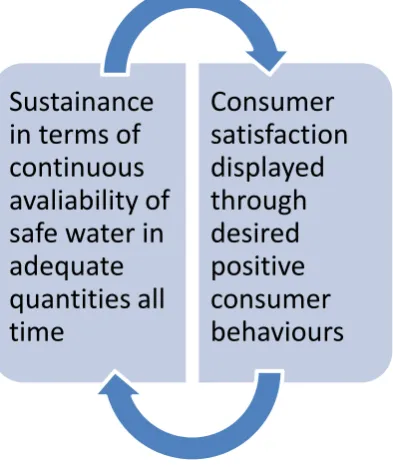
improving consumer satisfaction is good because consumer satisfaction is a statistical predictor of consumer behaviour and that the more satisfied the consumers is, the more likely the consumer will display desired behaviours for rural water sustainability.
3
Acknowledgements
I would like to thank my director of studies Professor Danny Morton for his help, advice and continuous encouragement throughout the current research. Many thanks go to the University of Bolton staff for providing me with the necessary administrative arrangements and online resources that helped in this research work. I am greatly indebted to Dr. Felix Maulidi of Lilongwe University of Agriculture and Natural Resources in Malawi for his dedication to help, reading through every bit of this thesis and providing guidance on every piece of the current research, spending his time for me, am very grateful to him. I would like to thank Mr. Christopher Banda who helped in organizing research assistants and all the field work. I would like to thank all my PhD professors, Malawi Institute of Management staff and fellow PhD students who gave valuable critique during the first and second conference presentations that made me believe again in the current research.
I would like to express my gratitude and indebtedness to my lovely wife Beatrice, she understood and comforted me through this journey. She gave me the love I needed, she encouraged me and assured me of how resources would be found to complete my PhD. Every day she touched my head and prayed for me. She asked me to set the education bar for our children and that also was tough than this PhD journey. She is the right partner and my best friend!
I am so indebted to PBM Construction Company Limited and PBM Consultants who funded my PhD studies and indeed the current research work without them this could not have been possible.
I am so grateful to my mother Lydia Matipwiri who first taught me the value of learning. I am indebted to my children Paul, Carissa, Divine and Gianna who always asked when I will finish my PhD. I am not sure of why they asked, was it to see the certificate? Was it to see a father who is a PhD holder? But all in all their questions challenged me to move on, their questions were tougher than going through the PhD journey…they made sure that I don’t fail along the way.
4
Declaration
5
Table of Contents
Abstract ... 1
Acknowledgements ... 3
Declaration ... 4
Table of Contents ... 5
List of Tables ... 10
List of Photos ... 11
List of Figures ... 12
List of Boxes ... 13
List of Abbreviations ... 14
CHAPTER 1: BACKGROUND TO THE CURRENT RESEARCH ... 16
1.0 Introduction and Overview ... 16
1.1 Purpose of the Current Research ... 21
1.2 The Problem Statement ... 21
1.3 The Research Problem ... 27
1.4 Aims of the Current Research ... 28
1.5 Research Objectives ... 28
1.6 The Rationale of the Current Research ... 29
1.7 Motivation for This Research ... 31
1.8 Research Methodology ... 33
1.9 Research Focus and Boundaries ... 35
1.9.1 Positioning of the Thesis ... 35
1.9.2 Applicability of the Framework ... 36
1.9.3 Holistic Approach ... 36
1.9.4 Thesis Structure ... 36
1.10 Conclusion ... 37
CHAPTER 2: LITERATURE REVIEW ... 38
2.1 Introduction and Overview ... 38
2.2 The Traditional Approach of Providing Rural Water Supply ... 39
2.2.1 Issues Affecting Traditional Rural Water Supply Approaches ... 42
2.2.2 Community Management Model... 42
2.2.3 Private Management Model ... 45
6
2.3 Rural Water Supply Facility Management ... 51
2.4 Rural water supply sustainability ... 52
2.4.1 Sustainability Defined ... 53
2.4.2 Rural Water Supply Sustainability Defined ... 53
2.4.3 Studies on Sustainable Rural Water Supply ... 55
2.4.4 Rural Water Supply Sustainability Frameworks ... 58
2.5 Challenges Hindering Attainment of a Sustainable Rural Water Supply System ... 64
2.5.1 Overcoming the Challenges: A Social Perspective ... 68
2.5.2 Overcoming the Challenges: A Business Perspective ... 69
2.6 Developing a Satisfaction Based Framework for Rural Water Supply Sustainability... 74
2.7 Synopsis of Theoretical Background ... 75
2.8 Research Questions ... 76
2.9 Dimensions of a Sustainable Rural Water Supply System ... 79
2.10 The Consumer Satisfaction Based Rural Water Supply Framework ... 82
2.11 Research Proposition ... 83
2.12 Research Questions ... 84
2.13 Conclusion ... 84
CHAPTER 3: RESEARCH METHODOLOGY ... 85
3.0 Introduction and overview... 85
3.1 Research: Goal and Questions ... 85
3.2 Philosophical Assumptions ... 87
3.2.1 Interpretive Research Paradigm ... 90
3.2.2 Positivist Research Paradigm ... 90
3.2.3 Pragmatist Research Paradigm ... 91
3.3 Determination of Research Methodology ... 91
3.3.1 Quantitative /Fixed Designs ... 92
3.3.2 Qualitative/Flexible Designs ... 92
3.3.3 Mixed-Methods Design ... 92
3.4 Research Design ... 94
3.5 Research Methods ... 97
3.5.1 Action Research ... 97
3.5.2 Ethnography ... 97
3.5.3 Grounded Theory ... 98
7
3.5.5 Survey ... 100
3.6 Sampling ... 103
3.6.1 Description of Sample ... 105
3.6.2. Sample Size ... 105
3.7 Understanding Consumer Satisfaction Measurements ... 109
3.8 Quantitative Data Collection ... 112
3.8.1 Data Collection Procedure ... 112
3.9 The Qualitative Aspect of the Current Research ... 113
3.9.1 Method of Data Collection and Interview Guide Development ... 114
3.9.2 Qualitative Sampling ... 116
3.9.3 Focus Group Discussions ... 117
3.9.4 Method of Analysis: Thematic Analysis ... 118
3.9.5 Root Cause Analysis ... 120
3.10 Quality Assurance ... 120
3.11 Ethical Considerations ... 121
3.12 Data Analysis ... 122
3.13 Conclusion ... 123
CHAPTER 4: RESEARCH FINDINGS ... 124
4.0 Introduction and Overview ... 124
4.1 Analysis Strategy ... 124
4.2 Quantitative Approach ... 125
4.2.1 Data Analysis Procedure ... 125
4.2.2 Statistical Tests Employed within the Current Research ... 125
4.3 Qualitative Approach ... 128
4.3.1 Data Included Within the Qualitative Analysis ... 128
4.3.2 Analysis Strategy ... 130
4.3.3 Analytic Process ... 131
4.3.4 Interviewees’ Profiles ... 132
4.3.5 Qualitative Results ... 132
4.4 General Survey Findings ... 133
4.4.1 Social Economic Characteristics of Respondents ... 133
4.4.2 Demographics and Situation Analysis of the Case Studies ... 136
4.5 Roles of the consumers ... 138
8
4.7 Determinants of Consumer Dissatisfaction In Rural Water Supply ... 147
4.7.1 The Hydrogeological Pillar of Borehole Rural Water Supply System ... 149
4.7.1.1. Root Cause #1: Ground Water Over Abstraction (RC1) ... 151
4.7.1.2 Root Cause #2: Impact of Climate Change (RC2) ... 152
4.7.1.3 Root Cause #3: Poor Protection of the Catchment (RC3) ... 154
4.7.1.4 Root Cause#4: Poor Geophysical Survey (RC4) ... 154
4.7.1.5 Root Cause #5: Lack of Consultative Borehole Location Processes (RC5) ... 156
4.7.1.6 Root Cause #6: Poor Construction (RC6) ... 157
4.7.2 The Design and Construction Pillar of Borehole Rural Water Supply System ... 159
4.7.2.1 Root Cause#1: Increased Population (RC7) ... 160
4.7.2.2 Root Cause #2: Poor Construction (RC6) ... 161
4.7.3 The Water Quality Pillar of a Borehole Rural Water Supply System ... 162
4.7.3.1 Root Cause # 1: Inappropriate Latrine and Water Point Distance (RC8) ... 164
4.7.3.2 Root Cause # 2: Poor Construction (RC6) ... 165
4.7.4 The Technical Capacity Pillar of a Borehole Rural Water Supply System ... 166
4.7.4.1 Root Cause #1: Poor Access to Spare Parts (RC9) ... 167
4.7.4.2 Root Cause #2: Lack of Training for Water Point Committees to Conduct Efficient OMM (RC10)- ... 168
4.7.4.3 Root Cause #3: Inadequate Funding for Borehole OMM (RC11) ... 169
4.7.5 The Financial Capacity Pillar of Borehole Rural Water Supply System ... 170
4.7.5.1 Root Cause #1: Lack of Creative Ways of Fundraising (RC12) ... 171
4.7.6 The Management Pillar of Borehole Rural Water Supply System ... 171
4.7.6.1 Root Cause #1: Absence of Trained Water Point Committee (RC13) ... 172
4.8 The Six Strategies for Sustaining Rural Water Supply Sustainability Pillars ... 172
4.9 Enabling Environment Factors for Rural Water Supply Sustainability ... 177
4.9 Impact of Consumer Satisfaction and Dissatisfaction on Consumers’ Behavior ... 181
4.10 Summary ... 188
CHAPTER 5: DISCUSSION AND FRAMEWORK DEVELOPMENT ... 189
5.1 Introduction and Overview ... 189
5.2 Research Questions ... 189
5.3 The roles of consumer in rural water supply ... 189
5.4 Supporting Pillars of a Sustainable Rural Water Supply. ... 191
5.5 Determinants of Consumer Dissatisfaction ... 191
9
5.7 Customer Satisfaction Based Framework for Rural Water Supply Sustainability. ... 195
5.8 Enabling Environment Factors for Framework Implementation ... 200
5.9 Summary ... 200
CHAPTER 6: CONCLUSIONS ... 202
6.0 Introduction ... 202
6.1 The Consumer Satisfaction Based Model for Rural Water Supply Sustainability ... 202
6.2 Accomplishments of Research Objectives ... 205
6.3 Contributions of the Research ... 207
6.4 Implications for Policy ... 209
6.5 Validity of Findings ... 209
6.6 Limitations and Directions for Future Research ... 210
6.7 Conclusions ... 211
REFERENCES: ... 212
APPENDICES ... 240
APPENDIX 1: Survey Questionnaire – water users questionnaire ... 240
APPENDIX 2: Interview Guide ... 248
APPENDIX 3: Notes during familiarization of data ... 249
10
List of Tables
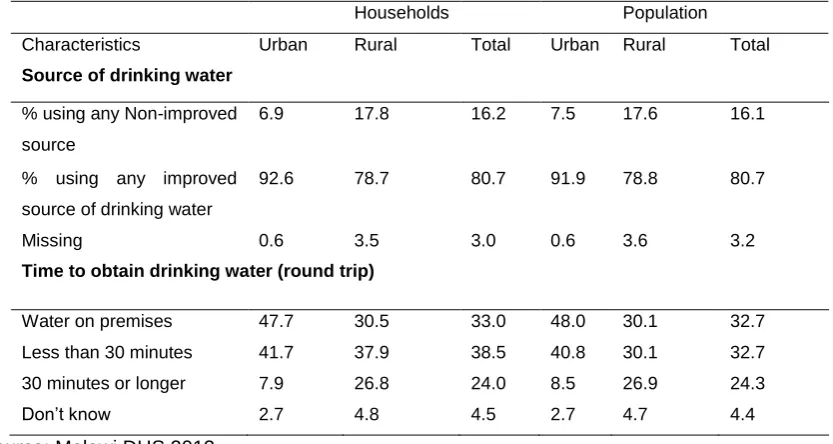
Table 1: Percent distribution of households and population by source of drinking water
and time to obtain drinking water ... 23
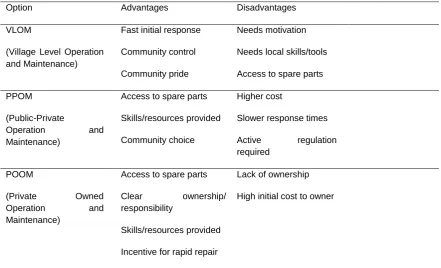
Table 2: Advantages and disadvantages of various options of rural water supply management models. ... 50
Table 3: Critical issues of sustainability in different project phases (Lockwood, 2004) ... 66
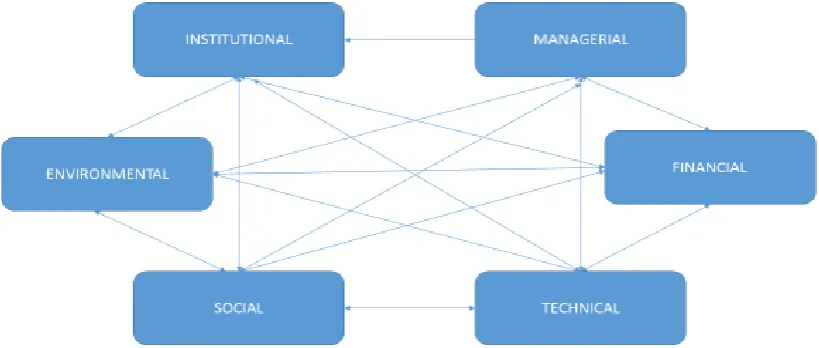
Table 4: Categories of Factors that Affect or Can Easily Affect Sustainability of Water Supply Services in Malawi ... 80
Table 5: Advantages of Mixed Methods Approach ... 94
Table 6: The Current Research Sampling Frame (Quantitative Component) ... 108
Table 7: Socio demographic characteristics of the sample ... 133
Table 8: Comparison of service level indicators and consumer satisfaction with rural water supply. ... 136
Table 9: Analysing Consumer Unwillingness from Customer Satisfaction Lens ... 146
Table 10: Failing Pillars that Affect Sustainability of the Research Case Studies ... 147
Table 11 Relationship of Pillars, Immediate Problems, Strategies, Root causes and Solutions ... 180
Table 12: The Relationship Between Consumer Satisfaction and Water Supply Break Down Frequency... 183
Table 13: Relationship Between Satisfaction and Down Time Period of the Water Point ... 185
11
List of Photos
Photo 1: Child drawing water at a borehole in one of the research areas in Malawi ... 19 Photo 2: Photo of women collecting water from unsafe water source in Ntcheu District in Malawi-photo taken 7/7/2016 ... 22 Photo 3: Abandoned borehole in one of the research areas with broken bricks dumped on it ... 26 Photo 4: The researcher Peter Matipwiri (far right) in a discussion with Water Point
12
List of Figures
Figure 1. Factors effecting sustainability ... 58
Figure 2: Outcomes of Community Motivated from Rural Water Supply Sustainability Framework ... 59
Figure 3. The sustainability chain ... 60
Figure 4: Rural water supply service quality performance and Consumer behavior relationship ... 69
Figure 5: Satisfaction-loyalty framework ... 73
Figure 6: Current Research Theoretical Background ... 76
Figure 7: Conceptual framework of a sustainable rural water supply system ... 78
Figure 8: Research Design Process for the Current Research ... 96
Figure 9: Summarised Methodological Approach of the Current Research ... 103
Figure 10 : Mixed Methods Design ... 104
Figure 11 Map showing sampled locations under Current Research ... 107
Figure 12: The Reality Tree of Drinking Water Supply ... 148
Figure 13: Root Causes of Inadequate Availability of Ground Water ... 150
Figure 14: Reality tree of factors that affect capability of the infrastructure to produce water ... 160
Figure 15: Relationship of factors that affect production of quality safe drinking water ... 163
Figure 16: Factors Affecting Technical Capacity Pillar of Sustainability. ... 167
Figure 17: Relationship of the Enabling Environment Factors with Strategies and Solutions ... 178
Figure 18: Proportion of Satisfied Consumer in Relation to Frequency of Break downs . 184 Figure 19: Proportion of Satisfied Consumers in Relation to Down Time Period of the Water Point ... 186
Figure 20: Logical Framework for Sustainability of Rural Water Supply ... 197
13
List of Boxes
Box 1: Why does it take more time to fix a water supply problem at the borehole than the
recommended 48 hours? ... 137
Box 2: Why does the borehole rural water supply break down more often? ... 137
Box 3: Why do rural water supply boreholes don’t have an active management system. ... 138
Box 4: Quotations that Support Provision of Financial Resources as a Role of the Consumer ... 139
Box 5: Quotations Supporting Execution of Various Water Point Assignments as a Role of the Consumer ... 140
Box 6: Quotations supporting Proper Operation of the Water System as a Role of the Consumer ... 140
Box 7: Quotations on Roles of the Water Point Management Committee ... 141
Box 8: The Most Critical Role of the Rural Water Supply Consumer ... 143
Box 9: Quotations Substantiating Motivation of the Consumer as Key for Sustainability of a BRWSS ... 144
Box 10: Quotations Presenting Why Consumers are Unwilling to Operate, Maintain and Manage a BRWSS ... 145
Box 11: Factors Affecting Availability of Ground Water ... 149
Box 12: Factors that affected capacity of the borehole to provide adequate water ... 159
Box 13: Factors Affecting Quality of Production Water from Boreholes ... 163
Box 14: Factors that Affect Capacity to Operate, Maintain and Manage the Borehole ... 166
Box 15: Factors Contributing to Failing Financial Capacity Pillar of Sustainability ... 170
14
List of Abbreviations
ADP Area Development Programme
ANOVA Analysis of Variance
CM Community Members
CM Community Management
DEHO District Environmental Health Officer
DFID Development Fund for International Development
DHS District Health Survey
DPD District Planning Department
DS Desired State
EA Enumeration Areas
HSA Health Surveillance Assistant
IPs Immediate Problems
IRs Immediate Results
IS Immediate Solution
LC Learning Centre
MDG Millennium Development Goals
MWASH Malawi Water Sanitation and Hygiene
NGO Non-Governmental Organizations
NSO National Statistical Office
NSO National Statistics Office
O&M Operation and Maintenance
OMM Operation, Maintenance and Management
15
POOM Private Owned Operation and Maintenance
POOM Private Ownership Operation and Maintenance
PPOM Public Private Operation and Maintenance
PPOM Public Private Operation and Maintenance
PPP Public Private Partnerships
PSU Primary Sampling Unit
Sn Strategy(n)
SAD Single Approach Designs
SAR Southern Africa Region
SAT Satisfaction Acceptable Targets
SLPIs Service Level Performance Indicators
SPSS Statistical Package for Social Scientists
UN United Nations
UNDP United Nations Development Programme
VLOM Village Level Operation and Maintenance
VLOM Village Level Operation and Maintenance
WAS Water Assurance Scheme
WASH Water Sanitation and Hygiene
WEDC Water, Engineering, and Development Centre
WPC Water Point Committee
WSP Water and Sanitation Programme
WSS Water Supply and Sanitation
WVI World Vision International
16
CHAPTER 1: BACKGROUND TO THE CURRENT RESEARCH
“Sometimes we focus so much on the big number that we fail to see human tragedies that underline each statistic. If 90 school buses filled with kindergartners were to crash every day, with no survivors, the world would take notice. But this is precisely what happens every single day because of poor water, sanitation and hygiene”.
Sanjay Wijesekera (UNICEF)
1.0 Introduction and Overview
Access to safe and sufficient water is a basic human need and is essential for human wellbeing (UN, 2006). Everyone needs safe drinking water yet most rural poor people today, particularly in less developed countries do not have access to safe water. Many rural poor people especially in sub Saharan Africa who had access to safe drinking water from protected water sources are either going back to the unprotected water sources or are walking longer distances to access safe water elsewhere because their protected water source is now not functional, mostly affected by such situations are children, the chronically sick, the aged and people with disability (Lockwood, 2004). In fact the situation justifies Harvey and Reed’s assertion that, in terms of boreholes sustainability “a non-functioning hand pump is a stark symbol of unfulfilled expectations and unchanging poverty‟ (Harvey and Reed, 2004: 84).
The overall aim of the current research is to develop a consumer satisfaction based practice framework that would assist in stimulating consumer practices or behaviours essential for sustainability of rural water supply. This is achieved by identification of problem root causes of consumer dissatisfaction and evaluating means used in other scenarios in curbing consumer dissatisfaction and hence triggering display of desired consumer behaviours for sustainability of rural water supply. Improving the sustenance of community water supply has a number of merits: It ensures the ongoing provision of a service that is fundamental to improving life and health, enables water users to live a life of dignity (Adigun & Bamidele, 2013).
17
Globally by 2015 better progress had been achieved on improving access to safe water as now 91% of the global population uses an improved water source from 76% in 1990. The number of people who lack access dropped from 700 million to 663 million in 2015 (UN Water, 2015).
Five developing regions met the MDG drinking water target, but Caucasus and Central Asia, Northern Africa, Oceania and sub Saharan Africa did not. What is common is that the least developed countries did not meet the MDG water access target despite that 42% of their population gained access to improved water sources in 2015 since 1990. Nearly half of the people using unimproved drinking water sources live in sub-Saharan Africa, while one fifth live in southern Asia (UNICEF & WHO, 2015). Even though some of the global and regional situations seems impressive but still 663 Million people are at risk of health, social and economic vulnerability due of lack of access to safe water hence the onset of the SDG global action for all.
According to UN Water (2015) there are seventeen Sustainable Development Goals (SDG) and goal six contains six targets on outcomes across the entire water cycle, and two targets on the means of implementing the outcome Targets. The seventeen Sustainable Development Goals are as follows:
Goal 1: End poverty in all its forms everywhere
Goal 2: End hunger, achieve food security and improved nutrition and promote sustainable agriculture
Goal 3: Ensure health lives and promote well-being for all at all ages
Goal 4: Ensure inclusive and equitable education and promote lifelong learning opportunities for all.
Goal 5: Achieve gender equality and empower all women and girls
Goal 6: Ensure availability and sustainable management of water and sanitation to all Goal 7: Ensure access to affordable, reliable, sustainable and modern energy for all Goal 8: Promote sustained, inclusive and sustainable economic growth, full and productive employment and decent work for all
Goal 9: Build resilient infrastructure, promote inclusive and sustainable industrialization and foster innovation
Goal 10: Reduce inequality within and among countries
Goal 11: Make cities and human settlements inclusive, safe, resilient and sustainable Goal 12: Ensure sustainable consumption and production patterns
18
Goal 14: Conserve and sustainably use the oceans seas and marine resources for sustainable development.
Goal 15: Protect, restore and promote sustainable use of terrestrial ecosystems, sustainably manage forests, combat desertification, halt and reverse land degradation and halt biodiversity loss
Goal 16: Promote peaceful and inclusive societies for sustainable development, provide access to justice for all and build effective and accountable and inclusive institutions at all levels.
Goal 17: Strengthen the means of implementation and revitalize the global partnership for sustainable development.
The Goal #6 is about water, sanitation and hygiene and to be more specific this goal has six targets as follows:
a) 6.1 By 2030, achieve universal and equitable access to safe and affordable drinking water for all.
b) 6.2 By 2030, achieve access to adequate and equitable sanitation and hygiene for all and end open defecation, paying special attention to the needs of women and girls and those in vulnerable situations.
c) 6.3 By 2030, improve water quality by reducing pollution, eliminating dumping and minimizing release of hazardous chemicals and materials having the proportion of untreated wastewater and substantially increasing recycling and safe reuse globally. d) 6.4 By 2030, substantially increase water use efficiency across all sectors and ensure sustainable withdraws and supply fresh water to address water scarcity and substantially reduce the number of people suffering from water scarcity.
e) 6.5 By 2030, implement integrated water resources management at all levels, including through transboundary cooperation as appropriate.
f) 6.6 By 2020, protect and restore water related ecosystems, including mountains, forests, wetlands, rivers, aquifers and lakes
a. 6.6a - By 2030, expand international cooperation and capacity building support to developing countries in water and sanitation related activities and programs, including water harvesting, desalination, water efficiency, wastewater treatment, recycling and reuse technologies.
19
SDG Target 6.1 and 6.2 build on the MDG target on drinking water and basic sanitation, providing continuity while expanding their scope and refining definitions. SDG Target 6.3 to 6.6 address the broader water context that was not explicitly included in the MDG framework, but whose importance was acknowledged at the Rio+20 conference, such as water quality and waste water management, water scarcity and use efficiency, integrated water resources management, and the protection and restoration of water-related
ecosystems. SDG Target 6.6a and 6.6b acknowledge the importance of an enabling environment, addressing the means of implementation and aiming for international cooperation, capacity-building and the participation of local communities in water and sanitation management.
With water at the very core of sustainable development, SDG #6 does not only have strong linkages to all of the other SDGs but it also underpins them; meeting SDG #6 on water, sanitation and hygiene would go a long way towards achieving much of the 2030 agenda (UN Water, 2015).
The current research is designed to improve sustainable access to safe drinking water by developing a consumer focused water supply model. The model will stimulate increase in desired rural water consumer behaviours essential for sustainable operation and management of rural water supply. The researcher anticipates that with increased positive rural water consumer behaviour then a reduction on non-functionality incidences of rural
20
water supply will be achieved, and thus contributing to progress towards universal access to safe drinking water by 20130 (SDG #6).
According to UNDP-WSP (2006), rural water system functional sustainability largely depends on the willingness of users to provide the necessary time, effort, money and labour to keep the system functioning; in other words ownership and self-reliance, now in a way agreeing with Nieves (1980) assertion that service providers are failing to capture interest of the users. UNDP- WSP (2006) says that willingness may be affected by other socio-economic factors such as income level, ethnic homogeneity, or the willingness of villagers to work together. Nieves (1980) says that willingness will largely depend on consumer satisfaction with the service, usually compared to the previous water source in a community.
Literature, overwhelmingly identifies non-functionality of water facilities on the beneficiaries’1 failure to manage, operate and maintain the water facility. The literature
shows that poor consumer willingness to manage water facilities is the major reason for unsustainability of rural water supply (Carter et al, 1999). The overarching question now is why this is the case when everyone including the consumer acknowledges the fact that “water is life”. To the researcher lack of willingness to manage the water facilities is synonymous to low consumer perceived value received from these facilities, and this phenomenon emanates from customer satisfaction concepts.
Customer satisfaction is understood as a consumer’s perceived value received from a product or service provider during his/her transactional or on-going relationships (Heskett et al., 1997) and can be an outcome or a process (Ying et al., 2009). According to Oliver (1997) the process oriented customer satisfaction examines whether the whole process of consumption experience achieves an expected result or not. This view looks at the entire consumption processes and finds a specific process that might lead to customer satisfaction. An outcome oriented consumer usually compares the performance or value of the product with their expectations of it.
The researcher has adopted both the satisfaction process oriented approach and the outcome oriented approach to conceptualise the entire research work; that is defining the specific process that leads to consumer satisfaction (in other ways understanding and managing the problem root causes of consumer dissatisfaction) in rural water supply which hypothetically is supposed to be an antecedent to consumer loyalty (Mittal et al., 1988); and
21
that this loyalty should be displayed by behaviours essential for rural water supply sustainability.The researcher completes the process by looking at the water in terms of quality, quantity and its continuous availability, this motivates the consumer to own the water facility and take care of it.
1.1 Purpose of the Current Research
The researcher believes that the SDG #6 is fit to be a global minimum standard that should be applied to everyone-regardless of income quintile, gender, location, age or grouping and this is the direction of the whole purpose of the current research.
The current research is purposed to fill the existing knowledge gap on lack of practical models of approach that stimulate desired consumer behaviours for sustainability of rural water supply. This purpose will be achieved by developing a consumer satisfaction based practical model that both rural water supply service providers and communities themselves can adopt for provision of sustainable rural water supply. This is as a result of review of the extant literature that shows that no specific study has tackled issues of customer satisfaction in the rural water supply sector in Malawi.
1.2 The Problem Statement
About 663 million people still remain without access to safe water across the globe; and in many areas in sub Saharan Africa progress towards Millennium Development Goal (MDGs) was not continuous (WHO/UNICEF, 2008). In Malawi, almost 2.3 million people did not have access to safe drinking water in 2008 (Malawi Government, 2008) and the situation is worse when it is considered that about 24.3% of the Malawian population take more than 30 minutes to collect water.
The significance of such a big population spending many hours collecting water result in many lost economic hours. In the Malawi case considering the statistical overview presented in this thesis then almost 3.3 million hours2 that could otherwise be spent
unlocking potential – unlocking education, work opportunities and improved health for women, children and families in Malawi are lost every day collecting water.
As if the situation is not bad enough, almost 30% of safe water points are not functional at every point in time due to poor operation and maintenance (O&M) (Pritchard et al., 2007).
22
This translates to massive work that political leaders, academia, donors, governments, experts and researchers have to do in ensuring that all people have continuous access to safe and adequate water supply.
SDG #6 target 6.1 and 6.2 particularly tackle the problem of lack of access to safe drinking water as a global issue, in fact before SDGs the MDG target 7c aimed to halve the proportion of people without sustainable access to safe drinking water by 2015 (Cronin A., Breslin N., Gibson J., and Pedley S., 2006). According to the WHO/UNICEF JMP (2012) report, the challenge is tough in Sub Saharan Africa where many rural dwellers and the poor miss out on improved access to safe drinking water and sanitation, worse still it is in the same sub Saharan Africa where the burden of poor water supply falls most heavily on girls and women (Harvey et al., 2007).
Sub-Saharan Africa has the highest proportion of poor people in the world, with 63% of its population living in the rural areas (World Bank, 2013). The region has the world's fastest growing population with a 2.3% annual growth rate leading to increased pressure on various natural resources including water (Bordalo and Savva Bordalo, 2007). In fact about twenty two (22) African countries, including Malawi, fail to provide adequate and safe drinking water to almost half of their population (Pritchard et al., 2007) after considering non functionality of existing water systems.
23
acceptable and that people (including all Malawians) have sustained adequate water supply that would have meaningful impact in their lives.
The Malawi Population and Housing Census conducted in 2008, indicated that almost 2.3 million people in Malawi out of the total population of about 13.1 million that time, did not have access to safe drinking water as they drink from unprotected sources (Malawi Government, 2008). This situation overtime has not improved because the MDG end line survey (2014) indicates that almost 14% of Malawians do not have access to safe water. Meaning even after six years still around 2.4 million people still don’t have access to safe drinking water in Malawi. This situation if not handled properly is very likely going to cause a huge disease burden as well as affect the social economic growth of the people of Malawi. This statistical situation is worsened when time taken to collect water is taken into consideration; about 24.3% of the Malawian population take more than 30 minutes to collect water in most commonly a 20 litters bucket (Mkandawire, 2008).
Households Population
Characteristics Urban Rural Total Urban Rural Total
Source of drinking water
% using any Non-improved source
6.9 17.8 16.2 7.5 17.6 16.1
% using any improved source of drinking water
92.6 78.7 80.7 91.9 78.8 80.7
Missing 0.6 3.5 3.0 0.6 3.6 3.2
Time to obtain drinking water (round trip)
Water on premises 47.7 30.5 33.0 48.0 30.1 32.7
Less than 30 minutes 41.7 37.9 38.5 40.8 30.1 32.7
30 minutes or longer 7.9 26.8 24.0 8.5 26.9 24.3
Don’t know 2.7 4.8 4.5 2.7 4.7 4.4
Source: Malawi DHS 2012.
24
et al., (2009) that a large percentage of non-functional water supply wells and unused latrines are the stark marker of poor operation and maintenance and that is proof of unsustainable services.
Several global studies have witnessed the unsustainable picture of rural water supply, especially in developing countries. Vanderslice and Briscoe (1993), mentioned that one in every four rural water supplies in developing countries do not work and that in some countries the construction of new facilities does not even keep pace with the failure of existing ones meaning a number of water and sanitation programmes in developing countries have not “continued to work overtime” (Carter et al., 1999). The primary reason for these high failure rates, and hence low sustainability, is insufficient attention to operation and maintenance of the pump (Harvey & Reed, 2004).
The tremendous investment in rural water supply during the decade had resulted, inter alia, in a tremendous increase in the number of broken down, poorly functioning, and little used water supply systems (Kleemeier, 2000) signifying lack of a sustainability focus in the investment. Carter (2005) reported that in Africa approximately 250000 hand pumps were installed, out of which only less than one half was operational. Water supply become non-operational within a few years of implementation and soon the next rehabilitation or water development project begins (Harvey & Reed, 2004).
The lack of functional water supply and sanitation services are alarming globally but worse in the developing world. The majority of the people who do not have access to improved drinking water supply; are from developing regions and most of them (84%) live in rural areas (WHO, 2010).
The impact of this challenge is very devastating, globally around 10% of total burden of diseases are related to unsafe water, sanitation and hygiene costing about 3.6 million lives annually (Pruss-Ustun et al., 2008). Economically World Bank (2008) estimates that the total effects of diarrheal diseases and associated malnutrition cost low income governments like Malawi up to 9% of their annual gross domestic product. At any moment, half of the developing world’s population suffers from diseases associated in one way or the other with inadequate water supply and sanitation services and more than half of hospital beds in the world are filled with people suffering from water related diseases (WHO, 2009).
25
rural areas (Sutton, 2004). Haysom (2006) surveyed 7000 wells and boreholes in Tanzania and found only 55% of those boreholes not in operation. Department of Public Health Engineering (DPHE) and JICA (2008), studied 120 village piped water supply schemes in Bangladesh to assess operational status of the systems, which showed only 48% of the schemes functioning during the survey, whereas, 13% and 39% were partially functional and non-functional respectively. Therefore, irrespective of technical options, non-functionality of a huge number of water supply systems fades the sustainability of the rural water supply.
Non functionality of improved water sources increases the threat to efforts towards universal water access as a human right. Many African individual country statistics on functionality of water points support this assertion. For instance, the percentage of non-functional water points in Tanzania and Swaziland is about 41%, 48% in Sierra Leone, 30% in Ghana 15% in Kenya and 40% in Liberia. In Malawi about 50% of water points are not working. These worrying statistics are referenced in various water mapping exercises that these countries carried out between the years of 2007 and 2012 (Matipwiri, 2013) and hence the challenge towards universal water access.
Considering this overwhelming water point non functionality pragmatic evidence and considering amount of resources most countries in Africa are investing in water access (UNICEF, 2006) including investments from governments, development partners and non-governmental organisations; it is clear that progress towards universal water access is being frustrated by water point non-functionality.
Although official figures show Malawi to have around 86% water supply coverage (MDG End line Survey, 2014), the number of people with reliable access is far lower. Many hand pumps are broken, leaving no choice but to go back to unsafe water sources. It has been estimated that on the average, one in three rural water facilities needs rehabilitation, and for a significant number of countries, the proportion increases to almost one in two water points as is found in Nigeria, Tanzania, Madagascar, Malawi, and the Democratic Republic of Congo (World Bank, 2010a).
26
breakdown in past six months otherwise the remaining 51% of boreholes faced numerous breakdown challenges. The situation depicted in table (1) is still present in 2012 and the scenario of photo 2 is still common in 2016 (Ref Table 1 & Photo 2 of Chapter one) all after the delivery time specified in the Malawi water policy.
In Malawi, as in many developing countries, one of the major strategies to achieve these goals was to install protected water sources, such as boreholes and protected shallow wells, and this is in addition to rehabilitating non-functional ones (Wright et al., 2004). The Malawi strategy seems not to tackle issues of rural water sustainability from quality of service and customer satisfaction point of view as is done in urban setting but rather it focuses more on increasing access through construction of new infrastructure and rehabilitating of defunct water points (Malawi Government, 2008a).
Water points not functionality can be traced as far as 2005 and beyond when a published report on water point mapping in Malawi showed no progress at all as 40% of all water points installed were not operational (Wella, 2005). This is a big threat to achieving universal safe water access. The current water policy approach in Malawi can mean meeting water access targets but it is at the expense of its sustainability aspects. It is a point of concern to the researcher as it means nothing meeting MDGs targets in 2015 if by 2016 most of the water points built towards reaching this target will have fallen into disrepair as presented in photo 3 below:
27
To a larger extent Carter (2005) and Harvey (2011) agrees that there is a problem with functional sustainability of rural water supply and the major cause is poor operation and maintenance. Montgomery et al., (2009) too confirm this fact by stating that the large percentage of non-functioning wells in sub Saharan Africa is a stark marker of inadequate operation and maintenance and lack of sustainability service. Actually Nieves (1980) precisely narrowed that down further to failure in capturing human interest as a contributing factor.
Previous studies identified the beneficiary who is the consumer as the most important character in management and operation of rural water facility (Montgomery et al., 2009; Carter, 2005). It is through this that consumer intentions and behaviours towards sustaining the water facility are coming out as vital for rural water supply. However literature fails to bring out triggers of this desired behaviour including what motivates the consumer to manage the facility.
It is this therefore time for sector practitioners, governments, researchers etc. (Montgomery et. al., (2009) to broaden their scope in coming up with practical promising practices that would improve sustainability of rural water supply by looking at stimulants of positive behaviour towards rural water supply sustainability.
According to Carter (2005) and Montgomery et al., (2009) research in rural water sustainability has not been exhaustive as it has failed to develop practical models of approach that implementing agencies, donors, funders, government etc. would utilise in order to achieve sustainability of rural water supplies. The current research fills that gap because the anticipated framework will be practical and readily easy to use. The current research is envisaged to capture consumer interest in sustaining the water supply system.
1.3 The Research Problem
Going through literature it is clear that many models have been developed with an assumption that consumers are responsible to sustain the rural water supply. Ironically even though with full acknowledgement that “water is life”, almost 30-40% of water points are broken down and not attended to. This situation necessitates an approach that will induce the desired behaviours from the consumer for sustainability of rural water supplies and that is the research problem of the current research:
28
In the commercial sector, literature has adequate evidence that customer satisfaction has the potential of stimulating customer positive intentions and behaviour on services and products (Oliver, 1999). This is an opportunity that can be borrowed and used in the rural water supply industry.
Using a process oriented approach for measuring satisfaction; the current research looks at how positive behaviour can be stimulated from a consumer satisfaction point of view. The current research will identify triggers for consumer satisfaction in rural water supply. This will enable the researcher determine how the triggers (later referred to as rural water supply sustainability pillars) impact consumer overall satisfaction in rural water supply in Malawi. The researcher will also analyse impact of consumer satisfaction as a stimulant of consumer behaviours in rural water supply.
The solution to the research problem has the following two major components;
1) Identifying the root causes of consumers’ dissatisfaction and its significant impact on consumer positive behaviour for rural water supply sustainability.
2) Developing a framework for enhancing consumer satisfaction for functional sustainability of rural water supply.
1.4 Aims of the Current Research
The overall aims of the current research are to:
1) Identify the root causes of consumer dissatisfaction with borehole rural water supply systems.
2) Assess means of managing the root causes.
3) Develop a practical framework for stimulating desired consumer behaviour for improving functional sustainability of rural water supply.
1.5 Research Objectives
The overall aim of the current research is to provide a solution to the research problem by
“developing a practical framework for stimulating desired consumer behaviour for improving functional sustainability of rural water supply”.
29
1) To establish the role of consumer in rural water supply sustainability success; 2) To identify pillars of a sustainable rural water supply;
3) To establish factors behind rural water supply consumers’ dissatisfaction or satisfaction;
4) To determine how the factors behind consumer dissatisfaction could be managed for sustainability of rural water supply
5) To develop a framework for enhancing consumer satisfaction with rural water supply in Malawi.
1.6 The Rationale of the Current Research
The most important aspects of a service to be sustainable are in two folds; 1) the users should be satisfied with the service (Argarwal and Rathod, 2006; Pinto and Slevin, 1994) and; 2) The service providers expectations should be realized (Al—Tmeemy, 2011). In Malawi 34% of consumers are dissatisfied with their water sources (Anscombe, 2011) and averagely 27.5% of boreholes are abandoned. These statistics coincidentally tally with the 30-40% non-functionality rates in literature meaning the larger the non-functionality rate the higher the chances of borehole abandonment. Anscombe (2011) tries to connect satisfaction and borehole functionality by suggesting that there is need to provide consumers with better products that satisfy them and increase their ownership of the facilities.
Low yield according to Anscombe (2011) is attributed to shallow drilling depth, poor borehole citing and wrong drilling method and has a bearing on consumer satisfaction suggesting that there exists reasons behind consumer dissatisfaction and that consumer dissatisfaction has consequences that may affect consumer willingness to support the water system. Anscombe (2011) suggest that when users are not motivated to repair their water points due to whatever reasons then it is these boreholes that tend to break down even more frequently. In fact Anscombe (2011) concludes that of the 30% of non-functional water points are due to unmotivated and unsatisfied users.
30
Issues surrounding failure to supply safe drinking water are too many and non-functionality of the facilities is just one of them. Literature overwhelmingly claims this to be as a result of lack of community participation and ownership. Community participation or management is an action or behaviour expected of the rural water consumer and it emanates from the consumer’s intention to participate or manage. Issues of individual behaviour are complex as they differ from culture to culture. Because of these cultural differences research findings from one culture may not hold true in another culture (Moustahas, 1994) justifying relevance of contextualisation of the current research to Malawian context in a more specific manner.
In short, as noted by Skinner and others, the main recurring problems with rural water facilities are the lack of technical and financial capacity to maintain assets. This situation leads to rapid deterioration of rural water supply facilities to a point where they are no longer able to provide the intended service, and people reluctantly revert to surface water sources (World Bank, 2010a; Skinner, 2009; Mba and Kwankye, 2007).
The whole concept of comparing actual service to perceived service is what is referred to as satisfaction (Oliver, 1997). Satisfaction is not a strange terminology in marketing literature and many studies in marketing have attempted to predict customer’s intention and behaviour with their products from a customer satisfaction point of view (Oliver, 1997). The current research borrows that approach and intends to analyse the consumers` level of acceptance and ownership including motivation to manage water facility from a consumer satisfaction point of view.
The emerging link between consumer satisfaction and willingness to sustain rural water supplies as presented by UNDP- WSP (2006) brings forth the need to analyse consumer satisfaction as an integral component of the formula for management of rural water supply. It is therefore important to understand its determinants and its measurable impact on rural water supply. The UNDP- WSP (2006) underscores the fact that consumers should be self-reliant by willing to give up their valued resources in exchange for a service. The researcher believes that the “how” question of this paradox can only be solved through a scientific research that systematically considers consumer satisfaction as a component of rural water supply sustainability.
31
water facility that significantly contribute to the overall satisfaction of a consumer (Anderson and Sullivan, 1993). This will enable the service providers to focus their level of effort in improving processes that evidently increase consumer satisfaction with rural water services there by justifying “value for money and effort” towards rural water supply functional sustainability.
1.7 Motivation for This Research
Montgomery et al. (2009) observed that countries like Malawi with poor levels of sustainability but high coverage of access to water, offer cause for concern because investments in the current infrastructure may be squandered by services that quickly fall into disrepair. Furthermore, the high proportion of the population reported to be served may dissuade donors from investing in these countries, when in fact, more resources, alongside a more sustainable focus for action, are required. Malawi in particular needs a “more sustainable focus for action” for the rural water supplies which can only happen through research work like the current.
According to Harvey (2008) the most common theme that has been laid out in poverty reduction strategy papers and national strategies for different countries for sustainability of water supplies is community management, yet it has failed to deliver satisfactory levels of sustainability meaning focusing on community management alone is not a solution to rural water supply sustainability. Researching on what underlies the human interest to efficiently and effectively operate and manage a water supply system in rural areas motivates the researcher to undertake the current research.
Functional sustainability has been a focus of many researchers in the water supply industry including being a focus of discussion during global UN forums (UN, 2003; Carter et al. 1999); researchers conclude that lack of sustainability is largely caused by poor community participation and public acceptance which affects continuous functionality of water supplies. This creates two painful scenarios for the researcher to reconcile; one scenario is where the consumer is well aware of the health benefits of using safe drinking water from protected sources and the other scenario is where the same consumer is not willing to sustain the safe water supply facility that sustains his or her life. Solving the circumstances surrounding this paradox motivates the researcher to carry out the current research and unearth the root causes.
32
faces of children. According to UNICEF, globally, an estimated 2000 children under age of five die every day due to water related illnesses. Sanjay Wijesekera, the global head of UNICEF WASH programme said “Sometimes we focus so much on the big number, that
we fail to see human tragedies that underline each statistic. If 90 school buses filled with kindergartners were to crash every day, with no survivors, the world would take notice. But this is precisely what happens every single day because of poor water, sanitation and hygiene”. According to the WHO/UNICEF JMP report (2012), 760,000 under-five aged children died in 2011 alone due to poor access to safe water; a figure that the researcher says is too big and a tragedy. These deaths of children especially in areas where safe water is not accessed because the water source is not functional are totally unacceptable to the researcher. It hurts the researcher when innocent children die from preventable diseases especially deaths that can be avoided through access and utilization of safe water; this motivates the researcher more to conduct the current research.
A policy report named “off track, on track” by Water Aid on progress towards 2015 MDGs on water and sanitation suggest and advocate for doubling global aid flows to water, sanitation and hygiene; that meant releasing an additional US$10 billion per year in the run up to 2015 and beyond (Wella, 2005). This investment would be heavily affected if functional sustainability of the water facilities will not be managed effectively and efficiently necessitating cutting edge solutions on water supplies sustainability now than latter. The advocated US$10 billion investment in the water sector is huge and it will be disappointing to see holes (boreholes) punched up everywhere on earth and yet not providing the safe water to the communities they were meant to serve because they are not functional. This motivates the researcher in finding solutions to this life threatening problem.
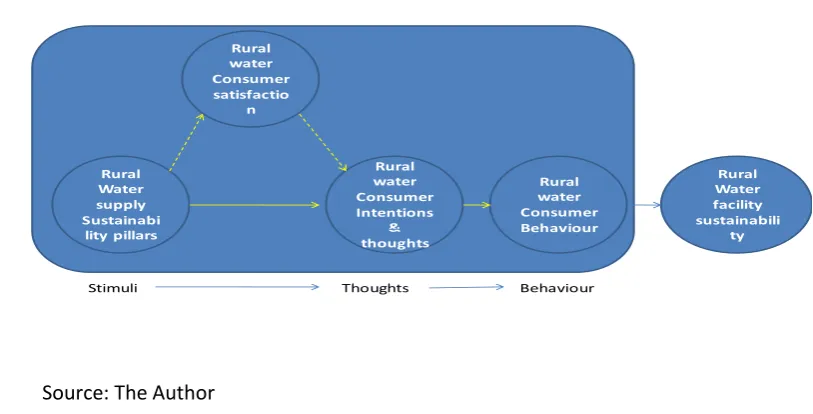
The researcher is motivated to understand elements or factors that significantly contribute to overall satisfaction of the rural water supply consumer to the point of motivating the consumer to positively behave towards sustainability of a water facility. The researcher is also motivated to establish the strength of the relationship between consumer satisfaction and functional sustainability of rural water supplies. The researcher understanding of the problem from a cognitive behavioural point of view assists in knowing that some kind of stimuli (external factor) that triggers a thought process in the consumer leads into a behaviour that can be instrumental in rural water sustainability and discovering that motivates the researcher to conduct the current research.
33
filling in the gap that exist in literature; and that is the non-existence of a practice framework that stimulates positive consumer behaviours that are essential for sustainability of a water facility.
1.8 Research Methodology
The current research builds on existing marketing research on impact of satisfaction on consumer intentions and behaviour. It is conducted in the context of consumer –process- product relationship in the rural water supply industry. The current research uses a mixed methods approach by combining some aspects a quantitative and qualitative inquiry based on a pragmatist phenomenon.
Adoption of a mixed methods approach is very appropriate for the current research as it addresses the research questions without taking a predetermined stand (Feilzer, 2010). This is particularly true for impact of satisfaction on loyalty (Oliver, 1997). Satisfaction researchers have never developed an instrument that claims universal applicability rather satisfaction instruments have historically been created and validated for specified products, services, industries and companies (Oliver, 1997) meaning there is always room for flexibility when issues on satisfaction are being researched on, a stand usually adopted by pragmatists.
The researcher is not restricted by the research philosophical stand but rather is flexible to choose a particular stand depending on the nature of the research questions; purely of a pragmatist stand. In the current research; in order to best tackle some research questions a qualitative approach was adopted for those specific questions nevertheless other general qualitative questions were also asked on other research questions to help in the discussion stage only. Qualitative research explores attitudes, behaviour and experiences through such methods as interviews or focus groups. It attempts to get an in-depth opinion from participants as it is attitudes, behaviour and experiences which are important to best answer such research question (Strauss & Corbin, 1990).
34
researcher studies multiple cases to understand the similarities and differences in the cases (Jack, 2008; Stake, 1995). In fact according to Baxter and Jack (2008) the evidence that is generated from a multiple case study is strong and reliable.
Saunders et al. (2007) argue that where possible reasons for a particular relationship is sought between variables and where the objective is to produce models of these relationships then survey strategy can be used. Survey strategy is usually associated with deductive approach which is the quantitative component of the current research. It is most frequently used to answer who, what, where, how many and how much questions which is in agreement with the research questions of the current research. Some research questions being exploratory in nature, it is accepted that surveys be used as a strategy for the quantitative data collection phase (Saunders et al, 2007).
Survey strategy often used structured questionnaires administered to a sample for data collection; the data allows for easy comparison (Saunders et al. 2007). According to Saunders et al. (2007) questionnaires are better at gathering subjective measures such as user satisfaction of the system being studied. The current research administered a structured questionnaire to water users in sampled areas across the country, the areas are called Area Development Programs (ADP) which are impact areas for World Vision International work, this was appropriate for the current research because the researcher had intended to make use of findings from the current research to influence future programming of World Vision in the sector.
Cross-sectional data collection time zone is adopted in the current research. This is adopted due to the time constraint nature of the current research. Previous cross sectional studies by their way of design could not empirically validate behaviour consequences of satisfaction. Instead, attitudinal loyalty was taken as a proxy for behaviour loyalty (See Bolton 1999 for an exception). Unlike other studies conducted on consumer behaviour, the current research will examine behaviour or practice and intentions for the past 12 months from the time of administering the questionnaire which renders a cross sectional study just as appropriate in determining link between consumer satisfaction and behaviour.
35
1.9 Research Focus and Boundaries
This section of the introduction chapter presents the research landscape by providing a brief overview of the research focus. Considering that sustainability is global and broad, this section gives the reader the right lenses of understanding the current research.
1.9.1 Positioning of the Thesis
The current research work focuses on establishing the extent various rural water supply sustainability factors impact consumers’ overall satisfaction. It also establishes the extent consumers’ overall satisfaction impacts functional sustainability of a water supply facility.
In the current research, critical satisfaction antecedents that impact on sustainability are identified and a scientifically accepted satisfaction based framework for managing rural water supply sustainability is developed. The current research will identify pillars of sustainable rural water systems; in the current research pillars are the fundamental principles for establishing a sustainable rural water supply. The fundamental principles are aimed to be practical and presented in a way that service providers can use in practice when rolling out rural water projects. Unsustainability state being experienced in Malawi is a result of failing sustainability pillars and the current research unearths the problems and proposes solutions for managing them. The current research also brings in the consumer satisfaction component in rural water sustainability. Consumer satisfaction is relatively new in the subject area but can help conducting rural water supply business differently. The researcher mission is simple “change the rural water supply end user from being a beneficiary to being a customer” and see how sustainable rural water supply is going to be.
The current research focuses on consumer satisfaction as an antecedent to appropriate intention and behaviour for managing rural water supply sustainability whilst holding other variables constant. It is possible that other moderating factors have an influence on behaviour of consumers like literacy levels, culture etc. but that has been presented as an area for further research. The current research is appropriate considering that satisfaction as a discipline is in its early stages of research in rural water supply in Malawi.
36
1.9.2 Applicability of the Framework
The framework for enhancing consumer satisfaction in rural water supply approaches will address the subject of consumer satisfaction management in rural water supply. It will create an opportunity of strategic focus to service providers that are looking at improving consumer satisfaction as well as wanting to address rural water supply sustainability. Service providers will be able to priorities some specific components of rural water supply that are found to significantly improve consumer satisfaction and sustainability by using the current research framework there by attaining “value for money and effort”.
The framework is applicable to rural water supplies like boreholes, some elements of course including the general approach may be applicable to rural piped water systems and mechanized rural water systems that are community managed. The framework might not be wholesomely adopted for urban water supply as some components may not be appropriate for urban water supply.
1.9.3 Holistic Approach
The current research is guided by the unifying study done by Montgomery et al. (2009) that developed components for sustainability of rural water supplies. These sustainability pillars are identified through a deep analysis of literature. The identified pillars are individually tested to understand how they impact overall consumer satisfaction.
1.9.4 Thesis Structure
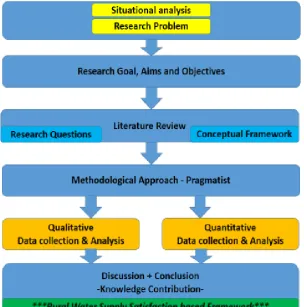
The current research followed a process that starts from formulation of research problem, goal and objectives to literature review, development of a hypothetical satisfaction rural water supply sustainability conceptual map and specific questions. The third chapter is on research methodology and sample selection; fourth, fifth and sixth chapters are on data analysis, presentation of findings, critical discussions, conclusion and framework development, then further research work.
37
map is developed based on literature review and research questions are formulated for the current research.
Chapter three provides arguments for selection of the research approach and method for data collection. A brief discussion of the research population is presented and a criterion for determining the sample is discussed.
Both qualitative and quantitative research findings are analysed and presented in chapter four. Using statistical package for social scientists, relationships between variables are established and presented. Through a thematic analysis specific themes that provide answers to research question are identified and analysed.
Chapter five discusses results that are presented in chapter four. In chapter five results are discussed and evaluated against current rural water sustainability and satisfaction literature presented in chapter two. This chapter is designed to assess if the five objectives of the current research have been achieved.
Conclusions to the current research are presented in chapter six and it is in chapter six where a framework of enhancing consumer satisfaction for functional sustainability of water supply is constructed. The framework is intended to define a systematic implementation process that enhances consumer satisfaction and consequently address issues around low sustainability of rural water supply. Contributions to the emerging discipline of rural water supply management is done with limitations outlined. Directions for further research are also presented as a growth area of satisfaction research in rural water supply.
Copies of the research questionnaire instruments are presented in appendices.
1.10 Conclusion
38
CHAPTER 2: LITERATURE REVIEW
2.1 Introduction and Overview
This chapter presents a critical review of literature on rural water supply and its thematic sustainability components. It provides the reader with an up-to-date account and discussion of the various research findings in rural water supply sustainability and customer satisfaction. It further discusses critical points of the current state of knowledge in rural water supply; it looks at various aspects of research including models and practices so far published in this field and provides their synthesis. This literature review generally seeks to present a summary of the important works done in this field of research, including its theoretical and methodological contributions. It is through this literature review that gaps identified and research are developed for the current research.
The introduction section of the literature review chapter introduces to the reader the most inspiring authors of the researcher. The introduced authors have extensively researched on rural water supply sustainability and argued on approaches key for sustainability of rural water supply which are a backbone of the current research.
The first section of the chapter concludes by reviewing the traditional approach of rural water supply for the reader to appreciate the current practice and its short falls. This section of the literature review chapter presents challenges of the traditional approach more specifically on operation and maintenance and connects it to the various initiatives taking place in the sector as a means to providing solutions to the problems.
The second section of the chapter focuses on sustainability; it starts by defining sustainability then presents specific studies on sustainable rural water supply sustainability. The later areas of this section of literature review chapter brings out issues affecting sustainability and sheds light on efforts being undertaken to solve those problems which includes frameworks and management models. This section of the literature review chapter assisted the researcher in identifying sustainability pillars/factors of a rural water supply thereby enabling the process of crafting the conceptual framework of the current research.