Sushila Saini
Amity Inst. Of Pharmacy, Amity University, Noida Email: [email protected]
Address for correspondence
Access this article online www.japer.in
Recent development in Penetration Enhancers and Techniques in
Transdermal Drug Delivery System
INTRODUCTION
Transdermal drug delivery system is convenient route
for the delivery of drugs having short biological half
life. Transdermal drug delivery is based on absorption
of drugs into the skin after topical application.
Transdermal patches are pharmaceutical preparation
of varying sizes containing one or more active
ingredients that when applied to skin deliver drug
directly into systemic circulation after passing
through skin barrier.1
Penetration enhancers are the substances used to
increase permeation of skin mucosa. Penetration
enhancer increases the absorption of penetrant
through the skin which is also known as absorption
promoter or absorption enhancers. Penetration
enhancers used to increase the permeability of drug
through skin.
Ideal Properties of Penetration Enhancers2
1. These materials should be non toxic, non
irritating, pharmacologically inert, non allergic.
2. It should be compatible with drug and excipients.
3. It should have no pharmacological activity within
body.
4. It should be cosmetically acceptable.
5. It should be odorless, tasteless, colorless and
inexpensive and have good solvent properties.
6. It should be chemically and physically stable.
7. Duration of action should be both predictable
and reproducible and work rapidly.
8. It should be tested in research laboratories.
Uses of Penetration Enhancers3, 4
1. It is used to increase the delivery of ionizable
drugs. Example: timolol maleate etc.
2. To deliver the impermeable drugs. Example:
heparin etc.
3. To maintain level in blood.
4. To improve the efficacy of less potent drugs with
higher dose. Example: oxymorphane.
5. To deliver the drugs having high molecular
weight like peptide and hormones.
6. To decrease lag time of transdermal drug
delivery system.
Merits of Penetration Enhancers5 Review
ReviewReview
Review ArticleArticleArticle Article
Transdermal route is the most convenient route for the delivery of drug having short biological half life and poorly soluble drugs. This route provides many advantages over other routes as avoiding first pass hepatic metabolism, decrease side effects, GI effects and increased bioavailability. There is a limitation of this route that is difficulty of permeation of drug through the skin. The skin, in particular stratum corneum provides protective barrier that prevents the loss of physiologically essential substances and provide resistance to penetration and it is the rate limiting step in percutaneous absorption. So, various Penetration Enhancers have been used to promote the percutaneous absorption of a number of drugs. Several research studies have been done in transdermal permeation studies using various enhancers for several drug moieties. This review highlights the detailed role of penetration enhancers and describes the classification of different penetration enhancers with their mechanism of action and properties. This review also focuses on the Novel Penetration Enhancers and the various factors to be taken into consideration for selection of new penetration enhancers for improving bioavailability of transdermal drug delivery system.
Keywords: Penetration enhancers, Novel enhancers, stratum corneum,
Percutaneous absorption.
ABSTRACT ABSTRACT ABSTRACT ABSTRACT
Sushila Saini*, Shikha Baghel Chauhan, S.S. Agrawal
Amity Institute of Pharmacy, Amity University, Noida, Uttar Pradesh, India
1. Most drugs penetrate at rates sufficiently high for
therapeutic efficiency by using penetration
enhancers.
2. It is useful for unabsorbable drugs to facilitate
their absorption through skin.
3. It can improve transdermal absorption of topical
preparation.
4. They having no adverse effect on skin.
5. These may be non toxic materials.
6. These do not affect zero order skin permeation
profile of skin.
7. The terpenes like limonene in propylene glycol
solution are effective penetration enhancer for
cytotoxic drugs.
8. It also acts as rate limiting factor.
Demerits of Penetration Enhancers6
1. The effective concentration varies from drug to
drug.
2. The uses of different penetration enhancer with
various concentrations are restricted completely.
3. Physicochemical properties of enhancers are also
affecting the side effects in the body.
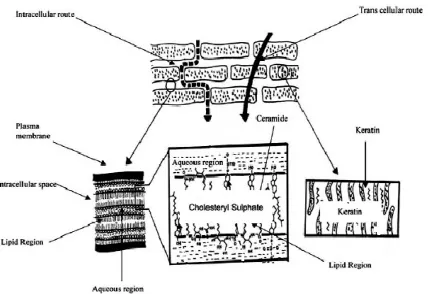
Pathway of Transdermal Permeation5
Permeation occur by diffusion via
1. Transdermal permeation through the stratum
corneum.
2. Intercellular permeation through stratum
corneum.
3. Transappendaged permeation via hair follicle,
sebaceous and sweat glands.
Figure 1: Pathway of transdermal permeation6
Fig 2: Structure of skin6
MECHANISM OF ACTION OF PENETRATION
ENHANCERS3, 4
Different Penetration Enhancers have different
mechanism of action. The miscibility and solution
properties of enhancers can be responsible for
enhanced transdermal delivery of water soluble
drugs. Mechanisms for penetration enhancement of oil
soluble drugs are due to partial leaching of epidermal
lipids by this improvement of drug permeation
through skin. To increase penetration of lipophilic
compounds for this necessary to modify partitioning
characteristics at the stratum corneum viable tissue
interface. This may be possible by combining a
penetration enhancer with a co-solvent. Some
enhancers cause keratin to swell and leach out
essential structural material from the stratum
corneum thus reducing the diffusional resistance and
increasing the permeability.
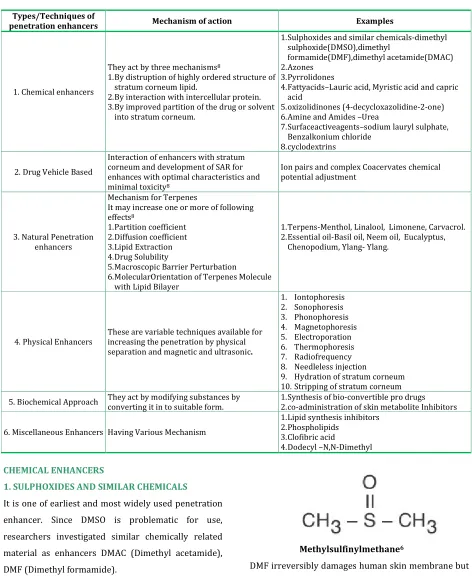
TABLE 1: CLASSIFICATION OF PENETRATION ENHANCERS AND TECHNIQUES
Types/Techniques of
penetration enhancers Mechanism of action Examples
1. Chemical enhancers
They act by three mechanisms8
1.By distruption of highly ordered structure of stratum corneum lipid.
2.By interaction with intercellular protein. 3.By improved partition of the drug or solvent
into stratum corneum.
1.Sulphoxides and similar chemicals-dimethyl sulphoxide(DMSO),dimethyl
formamide(DMF),dimethyl acetamide(DMAC) 2.Azones
3.Pyrrolidones
4.Fattyacids–Lauric acid, Myristic acid and capric acid
5.oxizolidinones (4-decycloxazolidine-2-one) 6.Amine and Amides –Urea
7.Surfaceactiveagents–sodium lauryl sulphate, Benzalkonium chloride
8.cyclodextrins
2. Drug Vehicle Based
Interaction of enhancers with stratum corneum and development of SAR for enhances with optimal characteristics and minimal toxicity8
Ion pairs and complex Coacervates chemical potential adjustment
3. Natural Penetration enhancers
Mechanism for Terpenes
It may increase one or more of following effects8
1.Partition coefficient 2.Diffusion coefficient 3.Lipid Extraction 4.Drug Solubility
5.Macroscopic Barrier Perturbation
6.MolecularOrientation of Terpenes Molecule with Lipid Bilayer
1.Terpens-Menthol, Linalool, Limonene, Carvacrol. 2.Essential oil-Basil oil, Neem oil, Eucalyptus,
Chenopodium, Ylang- Ylang.
4. Physical Enhancers
These are variable techniques available for increasing the penetration by physical separation and magnetic and ultrasonic.
1. Iontophoresis 2. Sonophoresis 3. Phonophoresis 4. Magnetophoresis 5. Electroporation
6. Thermophoresis
7. Radiofrequency 8. Needleless injection
9. Hydration of stratum corneum 10.Stripping of stratum corneum
5. Biochemical Approach They act by modifying substances by converting it in to suitable form.
1.Synthesis of bio-convertible pro drugs 2.co-administration of skin metabolite Inhibitors
6. Miscellaneous Enhancers Having Various Mechanism
1.Lipid synthesis inhibitors 2.Phospholipids
3.Clofibric acid
4.Dodecyl –N,N-Dimethyl
CHEMICAL ENHANCERS
1. SULPHOXIDES AND SIMILAR CHEMICALS
It is one of earliest and most widely used penetration
enhancer. Since DMSO is problematic for use,
researchers investigated similar chemically related
material as enhancers DMAC (Dimethyl acetamide),
DMF (Dimethyl formamide).
Mechanism of Sulphoxide Penetration enhancer are
widely used to denature protein and on application to
human skin has been shown to change the
intercellular keratin configuration, from helical to beta
sheet.
Methylsulfinylmethane6
DMF irreversibly damages human skin membrane but
has been found in vivo to promote the bioavailability
of betamethasone-17-benzoate as measured by
vasoconstrictor assay.9
Azone6
It is highly lipophilic material. It enhances skin
transport of variety of drugs including steroids,
antibiotic and antiviral agents. It is effective at low
concentration between 0.1-5% but more often
between 1- 3%. Azone molecules may exist dispersed
within the barrier lipoid or separate domains within
the Bilayer9. When Azone was used in combination
with PG, the flux of methotrexate and Piroxicam
increased significantly. Azone is the most effective
penetration enhancer for low molecular weight
heparin across human skin as compared with
terpenes. The order of enhancing power of enhancers
laurocapram > nerolidol>eucalyptol.10
3. PYRROLIDONES
2-Pyrrolidone6
It is used to generate reservoirs within skin
membrane. Such a reservoir effect offers a potential
for sustained release of a permeant from the stratum
corneum over extended time periods.
N-Methyl-2-Pyrrolidone (NMP) widely used to enhance skin
absorption of many drugs example insulin and
ibuprofen and Flurbiprofen. NMP enhanced
permeation of anti-inflammatory drugs like
ketoprofen.2-Pyrrolidone and NMP were assessed in
enhancing topical bioavailability of
betamethasone-17-benzoate using Dimethylisosorbide (DMI) as
standard solvent.2-Pyrrolidone enhances
Transdermal permeation of caffeine.9
4. FATTY ACIDS AND ESTERS
It has been seen that unsaturated fatty acids are more
effective than saturated fatty acids. Fatty acids having
greater enhancing effect on lipophilic drugs. Oleic acid
is mono-unsaturated fatty acid increase the
permeation of lipophilic drugs through skin and
buccal mucosa by transdermal cellular pathway. It is
an effective enhancer for Piroxicam.11 Lauric acid used
in propylene glycol enhanced the delivery of highly
lipophilic antiestrogen9. It increases flux of many
drugs examples are salicylic acid 28 folds and
5-flurouracil flux 56 folds. Myristic acid in combination
PG increased permeation of Oxymorphane. In
organophosphate poisoning, a patch of Propionic acid
and Oleic acid produced greater transdermal delivery
of Physostigmine than Propionic acid alone.10
5. OXAZOLIDINONES
1, 3-oxazolidin-2-one6
Oxazolidinones have ability to localize
co-administrated drug in skin layer. The structural
features are related to sphingosine and ceramide
lipids which are naturally found in upper skin layers11.
Oxazolidinones such as 4-decyloxazolidin-2-one has
been reported to localize the delivery of many active
6. AMINES AND AMIDES
Cyclic Urea is biodegradable and non toxic molecule.
Enhancement occurs by both hydrophilic activity and
lipid disruption. Urea used as hydrating agent in
dermatology for the treatment of neurodermatitis and
other hyperkeratotic skin conditions.9
7. SURFACE ACTIVE AGENTS
Surface active agents are added to formulation to
solubilize lipophilic active ingredients. So, they can
solubilize the lipids within stratum corneum.
Function by adsorption at interfaces and thus interact
with biological membrane contributing to overall
penetration enhancement of compounds.9
Three types of surface active agents are12
Cationic surfactant- Benzalkonium chloride, Cetyltrimethyl Ammonium bromide.
Nonionic surfactant- dodecyl betaine. Anionic surfactant- Sodium lauryl sulphate.
Function of Anionic and Cationic surfactant are they
swell the stratum corneum and interact with
intercellular keratin.
Surfactants are low to moderate molecular weight
compounds which contain one hydrophobic part,
which is readily soluble in oil but sparingly soluble or
insoluble in water, and one hydrophilic part, which is
sparingly soluble or insoluble in oil but readily soluble
in water.
8. CYCLODEXTRINS
These compounds form complexes with lipophilic
drugs. Alone are less effective as penetration enhancer
than combined with fatty acid and propylene glycol.9
DRUG VEHICLE BASED
It is based on drug selection, eutectic system, vesicles,
particles, Prodrug and chemical potential of drug.
1. Ion pairs and Complex Coacervates
It involves adding of oppositely charged species to a
charged drug, formation of an ion pair in which
charges are neutralized so that complex can partition
into and permeate through the stratum corneum.13
2. Drug selection
Drug should be selected as it fits in criteria of
transdermal delivery. Prodrug approach enhances the
drug permeation through skin.
There are certain criteria of drug selection as14
Aqueous solubility > 1mg/ml Lipophillicity 10<ko/w<1000
Molecular weight <500 Daltons
PH of aqueous saturated solution-5-9
Dose deliverable <10mg/day
NATURAL PENETRATION ENHANCERS
Essential oils, Terpenes and Terpenoids15
Chemical structure of Terpenes and Terpenoids
consist of number of repeated isoprene (C5H8) units
which is used to classify terpenes.
Monoterpenes - have two isoprene units. Sesquiterpenes –have three isoprene units. Diterpenes-have four isoprene units.
Terpenes and Terpenoids are constituted of volatile oil.
Terpenes are compounds comprising of only Carbon, Hydrogen and Oxygen alone.
Eucalyptus, Chenopodium, Ylang-Ylang are effective
penetration enhancers for 5-flouorouracil.
1. Cineole-It is Monoterpenoid. It is also known as1, Cineol, 1, cineole, Limonene oxide, Cajeputol, 1,
8-epoxy-p-methane, 1,8-oxido-p-me-thane, eucalyptol
etc. It is used in suppository form for the treatment of
respiratory ailments. It is also used as flavoring agent.
It is used in Cosmetic, Mouthwash and Cough
suppressant.
2. Eugenol-It isslightly soluble in water and soluble in organic solvents. It is a member of ally benzene
class of chemical compounds. It is extracted from
essential oils especially from nutmeg, clove oil,
cinnamon and bay leaf. It reduces the ability to feel
and react to painful stimulation.
3. D-Limonene-It is extracted from rinds of citrus fruits. It has two grades which are called food grade
and technical grade.
upper respiratory tract decongestant. It is obtained
from flowering tops of Mentha piperita. It is used as an
enhancer for transdermal delivery of variety of drugs
including caffeine, hydrocortisone, and Propranolol
hydrochloride.
PHYSICAL ENHANCERS15
There are numerous physical methods are used for
penetration enhancers
1. Iontophoresis
It was developed to facilitate the delivery of ionized
solute, with inherently low partition coefficients due
to their charged states, across tissue membranes. The
techniques involves the application of a small electric
current to a drug reservoir on the surface of the skin,
with the same charged electrode as the solute of
interest placed together to produce a repulsion effect
that effectively drives the solute molecules away from
the electrode and in to skin.
2. Sonophoresis
It is the application of ultrasound to enhance the
percutaneous drug delivery. The effect of ultrasound
on tissue is either thermal or non thermal with the
non thermal cavitations effect thought to be the most
important in its application to drug delivery.
3. Magnetophoresis
It Consist of magnetic nanoparticles wrapped by a
phospholipids Bilayer which can be applied for drug
delivery systems. It acts as an external driving force to
enhance drug delivery across the skin.
4. Thermal energy
Thermal energy when applied to skin, cause increased
skin permeability. Heating during topical application
of a drug dilates penetration pathway in the skin and
increase kinetic energy and movement of particles in
the treated area which facilitates drug absorption.
5. Electoporation
It involves the application of short, high voltage pulses
to skin. The Mechanism by formation of transient
pores due to electric pulses that subsequently allow
the passage of Macromolecule from outside of the cell
to the intracellular space.
6. Hydration of stratum, corneum
Permeability varies according to skin condition.
Hydrated skin is more permeable than dry skin.
Hydration of skin reduces resistance by loosening the
packaging of layers of stratum corneum.
MISCELLANEOUS ENHANCERS10
1. Clofibric Acid
The best enhancement of hydrocortisone-21 acetate
and betamethasone-17-valerate was observed with
Clofibric acid octyl amide when applied 1 hr prior to
each steroid. Amide analogues are generally more
effective than ester derivatives of the same carbon
chain length.
2. Phospholipids
Phosphatidyl Choline derivatives promoted the
percutaneous penetration of erythromycin. Six
phosphatidyl glycerol derivatives (PGE [from egg
yolk], PGS [from soyabean], dimyristyl phosphatidyl
glycerol [DMPG], dipalmityl phosphatidyl glycerol
[DPPG], distearyl phosphatidyl glycerol [DSPG],
dioleyl phosphatidyl glycerol [DOPG] derivatives); five
phosphatidyl Choline (PC) derivatives (PCS [from
soyabean], PCE [from egg yolk], dioleyl PC [DOPC],
dilinoleoyl PC [DLPC], hydrogenated PC [HPC]); and
two phosphatidyl ethanolamine derivatives were
studied using indomethacin.
3. Lipid synthesis inhibitors
It enhances the delivery of some drugs like Lidocaine
and caffeine Fatty acid synthesis inhibitors like
5-(tetradecyloxy)-2-furancarboxylic acid (TOFA) and
the cholesterol synthesis inhibitors fluvastatin (FLU)
or cholesterol sulfate (CS) delay the recovery of
barrier damage produced by prior application of
penetration enhancers like DMSO, acetone, and the
like.
NOVEL PENETRATION ENHANCERS
Numerous class of novel compounds have been
including soft enhancement for percutaneous
absorption (SEPA), for example, 2 N-nonyl-1,3-
dioxolanes, N-acetyle prolinate esters (such as pentyl-
and octyl-N-acetyle prolinate), alkyldiloxanes
(e.g.,1-Alkyl-3-b-Dglucopyranosyl-1,1,3,3-tetramethyl
disiloxanes), transcarbam(such as
5-
(dodecyloxycarbonyl)pentylammonium-5-(dodecyloxycarbonyl)pentylcarbamate),iminosulfuran
e (like
N-hexyl,N-benzoyl-S,S-dimethylimino-sulfuranes), capsaicin derivatives (e.g., Nonivamide),
cinnamene compounds (such as cinnamic acid,
Cinnamaldehyde etc), terpenes (like clove and basil
oil) and synergistic combination of penetration
enhancers (SCOPE).16
EXAMPLES OF NOVEL NATURAL PENETRATION
ENHANCERS
BASIL OIL
It is the natural penetration enhancer. It is used to
enhance the permeability of drug across the skin. It is
used as Antibacterial, Antioxidant, and Diuretic.
Mechanism act by extraction of lipids from stratum corneum as well as by loosening the H-bonds between
ceramide subsequently leading to fluidization of lipid
layer.17
Research Studies
These articles were cited that Basil oil used as skin
penetration enhancer for transdermal delivery of
Labetolol Hydrochloride. Basil oil is used as a
potential enhancer with reference to Camphor,
Geraniol, Thymol and Clove oil. It concludes that Basil
oil produced the maximum enhancement over neat
vehicle among all enhancers. Activation energies for
Labetolol Hydrochloride Permeation in water, Vehicle
per se and in presence of 5% w/v Basil oil were found
to be 23.16,18.71,10.98 kcal/mole respectively.
Lowering of activation energies in presence of Basil oil
suggest creation of new polar pathways in skin for
enhanced permeation of Labetolol Hydrochloride.18
Basil oil used for the improvement in bioavailability of
transdermally applied Flurbiprofen. It concludes that
bioavailability of transdermal Flurbiprofen using basil
oil with reference to orally administered Flurbiprofen
in albino rats is found to increased by 2.97,3.80 and
5.56 times.19
Basil oil used to develop transdermal gel of naproxen
containing Basil oil as a natural penetration enhancer
for improved penetration of Naproxen.
CLOVE OIL
It is a natural penetration enhancer. It is used to
enhance the permeability of drug across the skin. It is
used safely in food, beverages, and toothpaste. It is
also used as Antiseptic and Analgesic.
Research Studies
These articles were cited that Evaluated skin
permeation effect of clove oil in rabbits and compare
in vitro absorption and in vivo permeation using
ibuprofen. It concludes that after using Clove oil the
permeation rate enhanced was 7.3.19
Clove oil used as penetration enhancer in formulation
and evaluation of antiarthritic herbal preparation
(ointment).20
CAPSAICIN
It is used as penetration enhancer to increase the
permeability of drug across the skin. Topical Capsaicin
formulations are used for pain management.
Mechanism- several mechanism are involved. These include receptor inactivation, block of voltage
activated calcium channels, intracellular accumulation
of ions leading to osmotic changes and activation of
proteolytic enzymes processes. Systemic and Topical
capsaicin produces a reversible antinociceptive and
anti-inflammatory action after an initial undesirable
algesic effect. Capsaicin analogues, such as olvanil,
have similar properties with minimal initial pungency.
Systemic capsaicin produces antinociception by
activating capsaicin receptors on afferent nerve
terminals in the spinal cord. Spinal neurotransmission
is subsequently blocked by a prolonged inactivation of
sensory neurotransmitter release. Local or topical
application of capsaicin blocks C-fiber conduction and
nerve endings. These mechanisms account for
localized antinociception and the reduction of
neurogenic inflammation respectively.21
Research Studies
These articles were cited that In vitro study was
conducted to investigate the changes of indomethacin
transdermal permeation pretreated by Capsaicin and
Nonivamide, two compounds chemically similar to
Azone. Both enhanced the Flux of indomethacin across
nude mouse skin. Better effect was obtained by the
combination with capsaicin than Nonivamide.
Investigate the penetration properties of naproxen
and the enhancer activity of capsaicin. The effect of
capsaicin was compared with well known enhancer
Azone; Different amounts of chosen enhancers were
applied to the skin surface before the experiment.
Commercially available naproxen gel formulation and
an alternative formulation containing 3 % capsaicin
were also studied and results were compared.
Penetrations were found to be increased when the
skin was treated with Azone and capsaicin. It was
found that capsaicin caused some alterations on
stratum corneum layer of the skin like Azone
therefore it was observed that capsaicin caused an
enhanced penetration of naproxen through human
skin. It concludes that capsaicin was found to be a
quite capable enhancer for skin penetration of drugs
like the well-known enhancer, Azone.22 A high
concentration Capsaicin 8% patch was recently
approved in the EU and USA.A single 60 min
application in patients with neuropathic pain
produced effective pain relief for up to 12 weeks.
Advantages of using capsaicin patch include patient
compliances, longer duration of action. Mechanism of
action of patch of capsaicin has been ascribed to
depletion of Substance P. Topical capsaicin acts in the
skin to attenuate cutaneous hypersensitivity and
reduce pain by a process as Defunctionalization of
nociceptor fibers. It suggests that the utility of Topical
capsaicin may extend beyond peripheral
neuropathies.23
EXAMPLES OF NOVEL SYNTHETIC PENETRATION
ENHANCERS
Cinnamene Compounds
Research Studies
This article was cited that the Cinnamene compounds,
cinnamic acid, Cinnamaldehyde and cinnamic alcohol
were used as penetration enhancers for transdermal
delivery of the ligustrazine hydrochloride. The effects
and mechanism of penetration promotes on the in
vitro percutaneous absorption of ligustrazine
hydrochloride through porcine dorsal skin. It
concludes that the penetration of ligustrazine
hydrochloride by cinnamic acid was the greatest.24
EDOTA (ETHYL (3, 7-DIMETHYL OCTYL THIO)
ACETATE) AND DOP (3, 7 DIMETHYL OCTYL
PROPIONATE)
Research Studies
This article was cited that the penetration-enhancing
effect of the new enhancers were compared with THG
and Azone in vitro using rat skin in modified
Franz-type diffusion cells. 5-Fluorouracil (5-FU), a
hydrophilic drug with poor skin permeability was
used as a model permeant. Skin samples were
pretreated with pare liquid enhancers for 12 h.
EDOTA and DOP interacted with the skin rapidly (<2
h), and the duration of action is at least 24 h.
Significant differences were found in the flux values of
5-FU; EDOTA and DOP enhanced the permeability of
the drug about 6-fold and 11-fold respectively.
Increased partition coefficient and diffusion
coefficient values were obtained by these enhancers.
It concludes that the amount of EDOTA and DOP in the
skin, especially in the stratum corneum, may be
related to their penetration-enhancing effect.25
CONCLUSION
Skin penetration enhancers are rapidly using
technique for the permeation of drugs through the
skin by transdermal drug delivery system. Penetration
enhancers plays critical role in development of
improves the bioavailability and efficacy of drugs. It
helps in achieving therapeutic dose of drug through
the skin. Different approaches are applied like
physical enhancers, chemical enhancers, natural
enhancers etc. These approaches are very useful for
the drugs having low permeable property, low soluble
drugs and for the drugs having short biological half
life.
REFERENCES
1. Sharma A, Saini S: Transdermal drug delivery
system. International Journal of Research in
Pharmaceutical and Biomedical Science 2013;
4:286-291.
2. Jaydatt KJ, Sreenivas SA: Review on chemical
permeation enhancer used in Transdermal drug
delivery system. International Journal of Science
Innovation and Discoveries 2012; 2:204-217.
3. Dua K: Penetration enhancer for Transdermal drug
delivery system A tale of the under skin travelers.
Advances in natural and applied sciences2009;
1:95-101.
4. Bharkatiya M: Skin penetration enhancement
techniques. J Young Pharmacists 2009; 1:110-115.
5. Pathan I B, Setty CM: Chemical penetration
enhancers for Transdermal drug delivery systems.
Tropical Journal of Pharmaceutical Research 2009;
2:173-179.
6. Goswami DS, Uppal N, Goyal S, Mehta N, and Gupta
AK: Permeation enhancers for Transdermal drug
delivery system from Natural and Synthetic source.
Journal of Biomedical and Pharmaceutical Research
2013; 1:19-29.
7. Hather AE Benson: Transdermal drug delivery
penetration enhancement techniques. Current Drug
Delivery 2005; 2:23-33.
8. Chaudhary H, Rana AC, Saini S, Singh G: Effect of
chemical penetration enhancer on skin permeation.
International Research journal of Pharmacy 2011;
12:120-123.
9. Sharma GN, Jyotsana S, Avinash K et al: Penetration
enhancement of Medical agents. International
Research Journal of Pharmacy 2012; 3:82-88.
10. Sinha VR, Kaur MP: Permeation enhancers for
Transdermal drug delivery. Drug Development and
Industrial Pharmacy 2000; 11:1131-1140.
11. Singla V, Saini S, Singh G, and Rana AC et al:
Penetration enhancer A novel strategy for enhancing
Transdermal drug delivery. International Research
Journal of Pharmacy2011; 12:32-36.
12. Bhatia K, Iti Som, Yasir M et al: Status of surfactant as
penetration enhancer in Transdermal drug delivery.
Journal of Pharmacy and Bioallied Science 2012;
1:2-9.
13. Patel H J, Darshan G T, Anand K B, Dushyant A S:
Penetration enhancer for Transdermal drug delivery
system. International Journal of pharmaceutics and
cosmetology 2011; 1:68-80.
14. Dhamecha DL, Rathi AA, Saifee M et al: Drug Vechicle
based approaches of penetration enhancement.
International Journal of Pharmacy and
Pharmaceutical Science 2009; 1:24-45.
15. Mathur V, Satrawala Y, and Rajput MS: Physical and
Chemical penetration enhancers in Transdermal
drug delivery system. Asia Pharmaceutics 2010;
4:173-183.
16. Parhi R et al: Novel penetration enhancer for skin
application. Pub Med 2012; 2:219-230.
17. Amin S et al: Mechanism of in vitro percutaneous
absorption enhancement of Carvedilol by
penetration enhancer. Pharm Dev Technol 2008;
6:533-539.
18. Jain R, Aqil, Mohammed; Ahad, Abdul; Ali, Asgar;
Khar, Roop K: Basil oil is a promising skin
penetration enhancer for Transdermal delivery of
Labetolol hydrochloride. Drug development and
industry pharmacy 2008; 4:384-389.
19. Aggarwal G, Kumar A, Kumar SLH:Use of volatile oils
terpenes constituents and vegetable oil for the
enhancement of skin permeation for Transdermal
drug delivery system.IJAPN2012; 3:206-212.
20. Mehta NJ: Development and evaluation of
antiarthritic herbal ointment. Research Journal of
Pharmaceutical biological and chemical 2013;
4:221-228.
21. Dray A: Mechanism of action of Capsaicin like
molecule on sensory neurons. Pub Med.
22. Fang JY, Chun Feng, Yang et al: Capsaicin and
Nonivamide as novel skin permeation enhancer for
Indomethacin. Pub Med.
23. P Anand, K Bley: Topical Capsaicin for pain
of action of new high concentration capsaicin 8%
patch. PMCID 2011; 4:490-502.
24. Zhang, Chun F, Yang et al: Effect of Cinnamene
enhancers on Transdermal delivery of Ligustrazine
hydrochloride. European Journal of Pharmaceutics
and Biopharmaceutics 2007; 2:413-419.
25. Hanif, Muhammad R, Qineng et al: Synthesis and
effect of two new penetration enhancers on the
Transdermal delivery of 5-Fuorouracil through
excised rat skin. Chemical and Pharmaceutical
Bulletin 1998; 9:1428-1431.
How to cite this article: Sushila Saini*, Shikha Baghel
Chauhan, S.S. Agrawal; Recent development in Penetration Enhancers and Techniques in Transdermal Drug Delivery System; J. Adv. Pharm. Edu. & Res. 2014: 4(1): 31-40.