Vol.7 (2017) No. 2
ISSN: 2088-5334
Assessing the Determinants of Cloud Computing Services for Utilizing
Health Information Systems: A Case Study
Ahmed Meri Kadhum
#*and Mohamad Khatim Hasan
##Center for Artificial Intelligence and Technology, Faculty of Information Science and Technology,
Universiti Kebangsaan Malaysia, 43600 Bangi, Selangor, Malaysia. E-mail: *[email protected]
Abstract— Health information systems refer to the utilization of IT-related systems to capture, store, manage, or transmit information
related to the health of individuals or the activities within the health sector. Utilizing cloud services in the healthcare sector is a flexible solution to improve the performance of an organization as it can provide numerous features such as self-service, ubiquitous network access, resource pooling, rapid elasticity, and pay-per-use pattern. A preliminary study was conducted in the Iraqi public healthcare sector to obtain preliminary data acquisition about the current situation of IT and to determine the key factors associated with the utilization of cloud computing to foster current health information systems. During the study, a total of 30 technicians and physicians from four hospitals in Iraq were invited for interview in which the researcher directed questions in a semi-structured form. The findings of the investigation concluded the key determinant factors; these include factors related to the environmental structure such as software, hardware, cost, network, and training. Other factors that were found related to the system such as compatibility, complexity, data security, and privacy. These two aspects were found to influence personal factors related to the behavioural control and confirmation to utilize cloud computing services in this sector.
Keywords— Health information system; cloud computing; cloud services; healthcare; health informatics; preliminary study;
qualitative interview; Iraq
I. INTRODUCTION
Healthcare systems are mostly used in the health sectors to provide adequate support for public services, teaching, and research activities. The application of effective computing within healthcare sectors makes it possible for health professionals to manage and monitor patients’ health records [1]. It is utilized in hospitals, homes, and relevant organizations in most developed countries. In addition, the purpose of healthcare services is to accommodate public needs including certain guidelines for drugs, food, and safety policies to sustain a healthy environment in different geographical regions.
With this in mind, previous studies have advised about the potential of emerging technologies in improving healthcare service practices by giving more opportunities to perform activities essential for prevention, detection, tracking, and treatment of disease [2]. Thus, information technology (IT) acts as the main antecedent for providing sufficient medical services for the healthcare sector.
Current consideration of IT solutions such as electronic health systems has brought considerable benefits to healthcare organizations especially in solving common
errors as well as providing an agile technique of accessing and processing a large volume of patient’s facts along with protecting their health records and providing sufficient storage spaces [3].
Successful healthcare interoperability in the public sectors is mostly associated with the ability of the service to provide a platform for data sharing among users, processes, procedures, and policies [4].
As a result of the advent of agile IT infrastructure and continuous innovation of various smart electronic devices, the concern of interoperability between these systems and prevailing healthcare systems have already been raised. On the other hand, limited usage of patient-related information during decision-making and ineffective communication among patient care associates also lead to the occurrence of extreme medical errors which decrease the quality of healthcare services, in developing countries in particular [5].
Despite these concerns, there are several challenges that are still facing the latest electronic health-related systems with regards to cost, online connectivity, client assistant, and tragedy recovery [6].
With the recent advances in IT, cloud computing can provide an alternative way to access and manage health
records based on the use of software applications that exist online for multiple users via the Internet. In addition, cloud computing is becoming increasingly popular as a way to deliver low-cost or free applications anywhere on the Internet.
The National Institute of Standards and Technology (NIST) define the Cloud computing as a model for enabling convenient, on-demand network access to a shared pool of configurable computing resources (e.g., networks, servers, storage, applications, and services) that can be rapidly provisioned and released with minimal management effort or service provider interaction [7].
More significantly, the cloud services offered by an organization can free it from the responsibility to develop and keep large-scale IT systems; therefore, the organization can focus on its core business procedures and put into action the promoting applications to provide reasonable competitive advantages [8], [9]. Table 1 shows some advantages and disadvantages of cloud computing that must be taken into consideration.
TABLE I
CLOUD COMPUTING ADVANTAGES AND DISADVANTAGES [10]
In addition, cloud computing consists of shared computing services that can be accessed via the internet [11]. It also offers exceptional features such as self-service,
ubiquitous network access, resource pooling, rapid elasticity, and pay-per-use pattern.
Indeed, cloud computing provides several compelling features that make it attractive to business owners, as shown below [11]:
No up-front investment: It uses a pay-as-you-go pricing model. No infrastructure investment needed by the service provider to start getting benefit from cloud computing. It simply rents the cloud resources according to its own needs and pays for the usage.
Lowering operating cost: Resources in a cloud environment can be rapidly de-allocated and allocated on demand. So that, a service provider does not need to provision capacities according to the peak load. This provides huge savings since resources can be released to save on operating costs when service demand is low.
Highly scalable: Infrastructure providers data centers pool a lot of resources and make them easily accessible. A service provider can expand its service easily to large scales in order to handle the rapid increase in service demands.
Easy access: cloud services are generally web-based. Therefore, It is easily accessible using a variety of devices with Internet connections. These devices may be desktop PCs, laptop computers, cell phones and PDAs.
Reducing maintenance expenses and business risks: The outsourcing of the service infrastructure to the clouds allow a service provider shifts its business risks (for example hardware failures) to infrastructure providers, who often have better expertise and are better equipped for managing these risks. In addition, a service provider can cut down the hardware maintenance and the staff training costs.
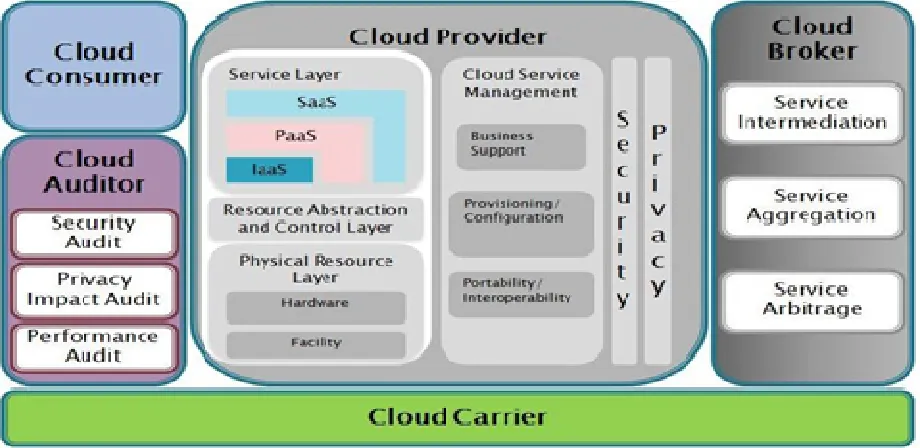
Moreover, it helps in enhancing the current practices of service delivery based on the type of services as those shown in Fig. 1, which can be categorized into:
A. Software as a Service (SaaS)
Providing an application that can be accessed via the web browser or by using specific applications that offered by the cloud providers. The most popular providers are:
• Google: Google Docs, Gmail, Google Talk and
Cloud Computing Advantages Cloud Computing
Disadvantage
Cost Savings Lack of Control
Scalability/Flexibility Dependency
Reliability Risk
Maintenance Essentially need an Internet
connection
Minimize licensing new software Migration Issue
Innovation Lack of Standards
Multiple Users at same time Continuously Evolving
Fig. 1 Architecture of cloud computing (source: HPCWire, 2016)
Google Calendar
• Salesforce.com: CRM
• NetSuite: SuitCloud
B. Platform as a Service (PaaS)
This service provides the user with a platform that used for developing, designing, testing and hosting. The most popular providers are:
• Google: Google app platform
• VMware: vCloud platform
• Salesforce.com: force.com platform
• Microsoft: Microsoft Azure platform
• IBM: Blue cloud computing platform
C. Infrastructure as a Service (IaaS): It allows the user to
access the underlying infrastructure via virtual machines, and this gave the user more flexibility than PaaS. The most popular examples are:
• Amazon: Elastic Compute Cloud (EC2) and cloud storage S3
• VMware: Vblocks
• 3Tera: AppLogic
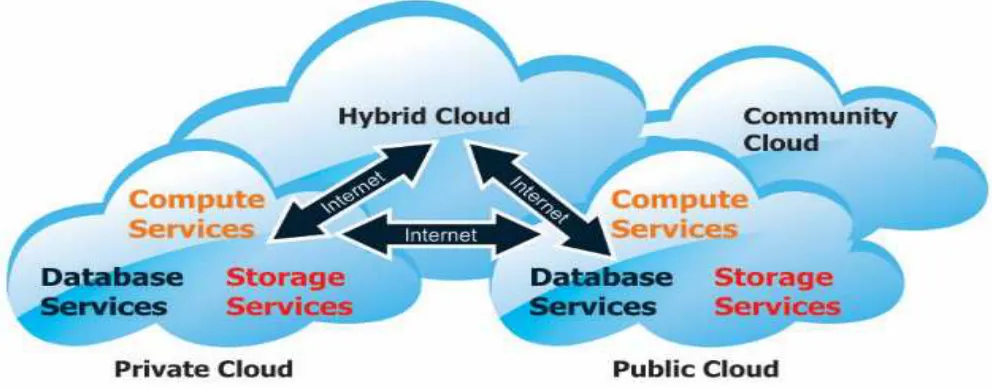
These services offered by different types of clouds [12]:
Public clouds: A cloud in which service providers offer
their resources as services to the general public. It offers several benefits to service providers; these include no initial investment on infrastructure and shift the risks to the providers’ infrastructure. Nevertheless, public clouds lack fine-grained control over data, network and security settings, which hampers their effectiveness in many business scenarios.
Private clouds: Also called internal clouds, these clouds
are designed for exclusive use in a single organization. A private cloud can be built and managed by the organization itself or by external providers. It has a very high degree of control over reliability, performance, and security. However, they are often criticized for being similar to traditional proprietary server farms and do not provide benefits such as no up-front capital costs.
Hybrid clouds: It is a combination of public and private
cloud models that tries to cover the limitations of each approach. In a hybrid cloud, part of the service infrastructure runs in public clouds while the remaining part runs in private clouds. Hybrid clouds give more flexibility than both private and public clouds. They provide tighter control and more security over application data compared to the use of public clouds. The designers may give more attention when designing a hybrid cloud for splitting between private and public cloud components.
Virtual Private Cloud: An alternative solution to
addressing the limitations of both private and public clouds. A VPC is a platform running on top of public clouds. The most important difference is that VPC allows the service provider to design their own security settings such as firewall rules and network topology. VPC does not only virtualize applications and servers, but also the underlying network communication. In addition, VPC provides a seamless transition from a proprietary service infrastructure to a cloud-based infrastructure, owing to the virtualized network layer. Fig. 2 shows different cloud deployment models.
There are some technologies that cloud computing may be compared with as it shared some aspects of the cloud computing, such as:
1) Grid Computing: It is a distributed computing
paradigm that has the ability to coordinate networked resources in order to achieve a certain computational objective. The first development of Grid computing was driven by scientific applications which are usually computationally intensive. The similarity between cloud computing and Grid computing is that it also employs distributed resources in order to achieve application level objectives. In addition, cloud computing can leverage virtualization technologies at multiple levels (application and hardware platform) to realize dynamic resource provisioning and resource sharing.
2) Utility Computing: Utility computing represents the
model of providing resources on-demand and charging customers based on usage rather than a flat rate. Cloud computing can be perceived as a realization of utility
Fig. 2 Types of cloud computing deployment models (source: Ngeleki, 2017)
computing. It adopts a utility-based pricing scheme entirely for economic reasons. With on-demand resource provisioning and utility-based pricing, service providers can truly maximize resource utilization and minimize their operating costs.
3) Virtualization: This technology can abstract away the
details of hardware and provides virtualized resources for the high-level applications. A virtualized server is also called a virtual machine (VM). Virtualization is the base of cloud computing, as it provides the capability of pooling computing resources from clusters of servers and dynamically assigning or reassigning virtual resources to applications on-demand.
4) Autonomic Computing: Originally innovated by IBM
in 2001, the main aspect was to build computing systems that are capable of self-management, i.e. reacting to internal and external observations without human intervention. The main goal of autonomic computing is to overcome the management complexity of current computer systems. Although cloud computing exhibits certain autonomic features such as automatic resource provisioning, its objective is to lower the resource cost rather than to reduce system complexity.
In summary, cloud computing leverages virtualization technology to achieve the goal of providing computing resources as a utility. It shares certain aspects with grid computing and autonomic computing but differs from them in other aspects. Therefore, it offers unique benefits and imposes distinctive challenges to meet its requirements.
After defining all aspects, characteristics, services and deployment models of cloud computing, we can now judge the extent of the importance of using cloud computing services for the healthcare sector.
The application of cloud in this context can offer a remarkable advantage in the healthcare sector. Cloud services can be viewed as a group of service solutions depending on the cloud processing which consists of managing and processing health records in a distributed health environment [13].
Nowadays, utilizing cloud services in the healthcare sector is a flexible solution to improve the performance and competitiveness of an organization. However, Supplying novel ways of delivering as well as applying and processing services is a must be, there appears that there is a limited understanding of the low utilization of these services in developing countries [14].
This can be reasoned to the dynamic configuration of cloud computing which offers a utility computing that includes different functionalities that are commonly used to manage organization data in a distributed, ubiquitous, and pervasive methods supporting several platforms, systems, and applications at independent locations.
From the literature, it can be noticed that most studies on cloud computing within an organization focus on the application of SaaS that is offered to public and private healthcare sectors. PaaS is more associated with the engineering of the software to run these services, while IaaS is related to the visualization of platform infrastructure.
In Iraq, it is critical for decision makers to decide the effectiveness of technology utilization in the healthcare
sectors. This is due to the lack of evidence about the integrity of IT in healthcare sectors [15].
Despite the touted advantages of this new technology, Al Hilfi et al. [16] stated that the adoption of up-to-date IT solutions had not been sufficiently addressed. Other reasons were mainly associated with the disruptive of technology, which was viewed to be not within the level of maturity, lack of industry-specific conformity to standards, and had a high level of related risk and costs [11], [17], [18].
Furthermore, Al Hilfi et al. [16] asserted that the current healthcare system in Iraq is still facing numerous challenges to recover from the loss of health workers and political interference.
They highlighted the needs for efforts to reinforce the quality of data as it moves up the chain from facility to Ministry of Health based on the following reasons:
• Health facilities are unevenly distributed to meet the country’s health needs.
• Healthcare financing and the role of private healthcare are the future issues in the health sector, which are currently being addressed tentatively. From this, it can be noticed that the utilization of health information systems and services in Iraq has rarely been considered. Thus, cloud computing can be utilized in order to provide a reliable service in managing and maintaining healthcare records. However, understanding of IT hardware and software needed for effective utilization of cloud services is yet to be explored. The reasons why this research is devoted to the application of cloud services are due to the high software cost, complexity, and inflexibility issues of traditional electronic healthcare records.
Therefore, these play a key role in raising the necessity for utilizing low-cost service that offers the healthcare sectors a flexible way to manage and maintain health data remotely. In addition, public healthcare sectors in Iraq are dependent on their own computing infrastructure. Thus, the data resides on-premises and thus makes it under environmental and human threats altogether.
Since this work focuses more on the services that cloud computing can offer to the Iraqi public healthcare sectors, SaaS begin to be recognized in this environment in which it is deployed based on service deployment models, each of them serves certain needs. Thus, this study emphasizes the role of these models in providing the public or industry group in a shared context. Nevertheless, organizational consideration of cloud model deployment relies on the sensitivity of the data and management requirements.
With this in mind, some efforts have been taken by the Ministry of Health in Iraq to deploy specific cloud models to promote health-related practices in different sectors. This includes re-engineering the way the patient and other health data are stored and thus allow healthcare professionals to access and interpret patients' conditions [19] effectively.
There are some obstacles in identifying the current needs of healthcare sectors to accommodate technologies such as distributed and grid computing [20]. Lack of understanding of the healthcare status to deploy these technologies makes it difficult to handle the utilization of new healthcare systems in terms of dynamicity, scaling, and low cost. Furthermore, the current situation in Iraq makes it more difficult to adapt certain technology without prior examination on its
suitability in the context of usage. In addition, the healthcare records of public hospitals in Iraq contain different types of data that continue to increase in volume, velocity, and variety progressively. This has resulted in some major issues to the public healthcare sectors from two perspectives, data complexity and low IT integrity.
Therefore, managing and maintaining these health records are essential to healthcare institutions. As such, ensuring successful utilization of cloud computing in healthcare context, however, needs careful attention to a number of factors from different perspectives which may include technical factors of IT, characteristics of the organization that introduce the technology, and the response of individuals within the organization to the new technological tools [11], [21], [22], [23], [24].
Therefore, this study aims to conduct a preliminary study to determine the key factors associated with the utilization of cloud computing to foster the current health information systems in Iraq.
II. MATERIAL AND METHOD
A preliminary study was conducted in the Iraqi healthcare sector during the period of December 2015 until March 2016 in order to obtain the preliminary data of the current situation of IT and to determine the key factors associated with the utilization of cloud computing to foster current health information systems. A case study research was adopted to investigate a phenomenon in depth and within real-life context [25]. To study the phenomena deeper, semi-structured SKYPETM interviews were conducted to make the interviews flexible and to allow the respondents to raise aspects that the researcher may not have thought about prior to the interviews.
A. Population and Sampling:
The target population for this study will be obtained from the public healthcare sectors in Iraq situated in Baghdad Governorate. The reason for this selection is due to the functionality and reliability of adapted technology as compared to the other state of Iraq. There are approximately 39 hospitals in Baghdad. However, only four general hospitals will be chosen for this study.
These hospitals are situated in Baghdad. The reason for choosing these hospitals is due to the capacity and capability of these hospitals in offering different healthcare aids, and these hospitals are considered as the main hospitals with high-end IT facilities. The sample hospitals are chosen based on the recommendation of the state healthcare director in Baghdad through a filtering process in terms of the number of beds, physicians, patients, medical cases, and available technicians.
The selections of these hospitals were based on the focus of the research study, which pertained to physicians and technicians who are familiar with the use of technology. The selection process resulted in four public hospitals whereas other hospitals were eliminated because these hospitals were out of the scope of this study from the perspective of time and resources. Physicians and technicians in these hospitals are aware of cloud services.
A total of 15 technicians and 15 physicians were interviewed through SKYPETM in which the researcher directed questions in a semi-structured form.
The age range of the interviewees was between 26 and 44 years old, 4 of them were females, and the other 26 were males, and the experience of using current technologies was between 2 to 3 years.
B. The Interview:
Qualitative research method has been chosen to gather information in a social context that focuses on the way people interpret and make sense of their experience [26]. The main source of evidence for the strategy of the case study is an interview, as interview studies the problem in depth and in specific details [25]. The researchers constructed fourteen questions to be a guide for the interviews. The researchers focused on open-ended questions because these types of questions allow the interviewees to give more information about the situation [27].
The interview questions were constructed based on the concern of the Ministry of health in Iraq regarding the utilization of cloud computing services for health information systems in hospitals. The questions were constructed based on the highlights provided by two hospital managers. They helped the researchers to indicate the main aspects related to the structural, system, and individual dimensions. The items developed based on the managers’ highlights were validated by another two experts from the same hospitals. This was necessary to ensure the consistency of the questions was in accordance with the present study goals. The details of the questions can be found in Appendix A.
III.RESULTS AND DISCUSSION
It is important to mention that content analysis method was used to analyse qualitative data deduced from the interviewees. The content analysis is a qualitative research technique that has been widely used to analyse written, oral or visual communication messages and can be defined as a systematic and replicable technique for compressing many words of text into fewer content categories based on explicit rules of coding [28], [29].
The interview results showed that the interviewees pose a negative perception of the effectiveness of current technologies in managing and maintaining a large volume of health records in a timely manner. They also acknowledge the lack of access to effective computing to help health professionals to perform multiple activities related to sharing and retrieving records.
In addition, some of them perceived that the available health information systems do not ensure the privacy and security of these records since it all deals with basic authentication. With this in mind, interviewees asserted that the current use of available technology negatively impacts their confirmation to fully utilize health information systems. This is due to the limitations of the available hardware and software recourses to generalize the use of health information systems. This includes the complexity to share health data across distributed network. In addition, the majority of the interviewees declared that the current health
information systems do not fulfil their needs; which was the reason for the low expectations of having a successful utilization of these technologies with current environmental settings.
They stated that the environmental structure, including hardware and cost of equipment, are the main factors in limiting their usage of health information systems. In addition, the researchers further explored whether the current health management systems meet their expectations in managing and monitoring healthcare records. They stated that the current system does not provide sufficient functionalities in ensuring records’ privacy and security.
On the other hand, the interviewees found that the current systems are basically used to store and retrieve basic health records such as patients’ information, medical conditions, treatments, etc. This kind of data is not well communicated among the healthcare members in which the use of paper-based is still practiced. Interviewees’ experience in using these technologies ranges between two and three years. The reason was clarified by them when majority stated that technology utilization in the healthcare sectors is still in its fancy stage which causes less use of health information systems. To overcome this problem, excessive training on the access and use of technology are required. However, they have lack training programs as they stated that there are not enough training programs provided for them on these aspects.
On the other hand, it was found that the interviewees’ perception about the use of cloud computing services and its impact on Iraqi healthcare in delivering sufficient services was positive. They stated that cloud computing services could offer a better platform especially in tackling the current sharing and monitoring problems regarding health records among different health professionals in Iraq. However, controlling the process involved in the use of cloud services in the Iraqi context was found to be the main reason for not considering such utilization, which was reasoned by several environmental factors. These include the lack of current infrastructure in providing necessary tools operate such systems. Furthermore, they all think that cloud computing services can improve current healthcare services from the standard data management perspectives.
In order to gain richer insights into the key factors that could impact the utilization of SaaS, technicians have demonstrated several concerns with regards to the compatibility of current cloud services to process healthcare data and its appropriateness to accommodate the services of these components. In addition, they also highlighted other concerns related to the security and privacy of the data in which the current system is a lack in doing so. As for the policy, the interviewees thought that the current policy is not fully projected to promote full utilization of cloud services through which standard management of information is carried out instead of collaboration data management. This is mostly indicated by the amount allocated to purchase equipment, provide enough training programs, and subscribe to the latest backup technologies. After all, the researchers wondered whether the current technology is good enough to handle the volume and density of health records. The interview response showed that the current health information systems utilized are limited to the basic
management of health records which do not comply with the actual capacity and the needs of healthcare sectors. The interviewees also declared the lack of providing sufficient technical assistant to solve server related issues. Current technology also does not provide recommendations on how to handle or troubleshoot serious problems. The interviewees also listed the main antecedents that may hinder cloud utilization in Iraqi healthcare sectors. They revealed that most of the factors were based on the issues and views mentioned above.
As a conclusion to the information gathered from the interviewees, it can be concluded that a number of factors that must be considered including the factors related to the environmental structure in term of software modularity,
hardware modularity, cost effectiveness, network, and training. Other factors identified are related to the system,
in term of compatibility, complexity, data security and
privacy. These two aspects were found to influence personal
factors related to the behavioural control and confirmation to utilize cloud computing services in the Iraqi healthcare sectors. After listing these factors, the researchers emailed the interviewees a rating form to indicate the factors that they mostly agreed upon. Table 1 shows the result of the agreement for each factor; each number reflect the agreed interviewees upon the extracted factor out of the 30 participants.
TABLE II
AGREEMENT ON THE EXTRACTED VARIABLES
Environmental Structure
Factor Agreed
Cost effectiveness 27 Hardware Modularity 25 Software Modularity 26 Network connectivity 28 Training 27
System Factors
Compatibility 27 Complexity 26 Security 28 Privacy 27
Individual Factors
Confirmation 23 Behavioural Control 26
IV.CONCLUSION
The main goal of this paper was to investigate the key factors associated with the utilization of cloud computing in fostering the current health information systems in Iraq. The study described the current situation and the issues faced by these systems regarding cloud computing utilization.
Hardware modularity, software modularity, cost effectiveness, network, and training are the main environmental structure factors that influence the utilization of cloud computing in the healthcare sector. In addition, some factors related to the system such as compatibility, complexity, data security, and privacy. These two aspects were found to influence personal factors related to the behavioural control and confirmation. From the results, it can be concluded that majority of the interviewees agreed
with these factors that they pose a remarkable impact on the current utilization of cloud computing services in health information systems. The results presented are the preliminary information for a wider study.
This study also investigated the current situation of using cloud computing services in the public healthcare sector in Iraq. Also, to prepare these facilities for the main study that will be the next stage to solve the current issues of using cloud computing services in these facilities.
ACKNOWLEDGMENT
We gratefully thanks the Faculty of Information Science and Technology, Universiti Kebangsaan Malaysia for the fund provided under the Fundamental Research Grant Scheme FRGS/1/2013/ICT07/UKM/02/4 to carry out this research.
REFERENCES
[1] J. Walker, E. Pan, D. Johnston, J. Adler-Milstein, D. W. Bates, and B. Middleton, “The value of health care information exchange and interoperability.,” Health affairs, vol. 24, no. W5, 2005.
[2] B. E. Dixon, J. J. McGowan, and G. D. Cravens, “Knowledge sharing using codification and collaboration technologies to improve health care: lessons from the public sector,” Knowledge Management Research & Practice, vol. 7, no. 3, pp. 249–259, Sep. 2009. [3] F. Barbarito, F. Pinciroli, J. Mason, S. Marceglia, L. Mazzola, and S.
Bonacina, “Implementing standards for the interoperability among healthcare providers in the public regionalized Healthcare Information System of the Lombardy Region,” Journal of biomedical informatics, vol. 45, no. 4, pp. 736–745, 2012.
[4] V. Stantchev, R. Colomo-palacios, and M. Niedermayer, “Cloud Computing Based Systems for Healthcare,” The Scientific World Journal, vol. 2014, no. e692619, pp. 2–4, 2014.
[5] L. Griebel et al., “A scoping review of cloud computing in healthcare.,” BMC medical informatics and decision making, vol. 15, no. 17, p. 17, 2015.
[6] S. N. Kasthurirathne, B. Mamlin, H. Kumara, G. Grieve, and P. Biondich, “Enabling Better Interoperability for HealthCare: Lessons in Developing a Standards Based Application Programing Interface for Electronic Medical Record Systems,” Journal of medical systems, vol. 39, no. 11, 2015.
[7] P. Mell and T. Grance, “The NIST definition of cloud computing,” NIST special publication, vol. 145, p. 7, 2011.
[8] G. Feuerlicht, “Next generation SOA: Can SOA survive cloud computing?,” Advances in Intelligent Web Mastering-2, vol. 67 AISC, pp. 19–29, 2010.
[9] W. N. Hussein, R. Sulaiman, and A. K. Hamzah, “E-business and cloud computing awareness for Malaysian SMEs: A recommendation from academic and industry perspectives,” in International Conference on Research and Innovation in Information Systems (ICRIIS), 2013, pp. 180–185.
[10] A. Abdollahzadehgan, M. M. Gohary, A. Razak, C. Hussin, and M. Amini, “The Organizational Critical Success Factors for Adopting Cloud Computing in SMEs,” Journal of Information Systems Research and Innovation (JISRI), vol. 4, no. 1, pp. 67–74, 2013. [11] T. Oliveira, M. Thomas, and M. Espadanal, “Assessing the
determinants of cloud computing adoption: An analysis of the manufacturing and services sectors,” Information & Management, vol. 51, no. 5, pp. 497–510, 2014.
[12] Q. Zhang, L. Cheng, and R. Boutaba, “Cloud computing : state-of-the-art and research challenges,” Journal of internet services and applications, vol. 1, no.1, pp. 7–18, 2010.
[13] N. Sultan, “Making use of cloud computing for healthcare provision: Opportunities and challenges,” International Journal of Information Management, vol. 34, no. 2, pp. 177–184, 2014.
[14] S. P. Ahuja, S. Mani, and J. Zambrano, “A Survey of the State of Cloud Computing in Healthcare,” Network and Communication Technologies, vol. 1, no. 2, pp. 12–19, 2012.
[15] M. Akunjee and A. Ali, “Healthcare under sanctions in Iraq: an elective experience.,” Medicine, conflict and survival, vol. 18, no. 3, pp. 249–57, 2002.
[16] T. K. Al Hilfi, R. Lafta, and G. Burnham, “Health services in Iraq,” The Lancet, vol. 381, no. 9870, pp. 939–948, 2013.
[17] K. Bhattacharya, “Interview with Douglas J. King on ‘the impact of virtualization and cloud computing on IT service management,’” Business & Information Systems Engineering, vol. 3, no. 1, pp. 49–56, 2011.
[18] H. P. Borgman, B. Bahli, H. Heier, and F. Schewski, “Cloudrise: Exploring cloud computing adoption and governance with the TOE framework,” 46th Hawaii International Conference on System Sciences (HICSS), pp. 4425–4435, 2013.
[19] J. E. Zeber, P. H. Noel, M. J. Pugh, L. A. Copeland, and M. L. Parchman, “Family perceptions of post-deployment healthcare needs of Iraq/Afghanistan military personnel,” Mental health in family medicine, vol. 7, no. 3, pp. 135–143, 2010.
[20] J. Hammad, “Factors influencing physicians’ perceptions: Examining the factors that influence physicians’ perceptions toward electronic medical record ( EMR ) acceptance,” A thesis Submitted to the Graduate Faculty of University of Maryland University College in partial fulfilment of the requirements for the degree of doctor of management, University of Maryland University College, 2015. [21] M. M. Yusof and K. A. B. D. Aziz, “Evaluation of organizational
readiness in information systems adoption : A case study,” Asia-Pacific Journal of Information Technology and Multimedia, vol. 4, no. 2, pp. 69–86, 2015.
[22] M. M. Yusof, “A case study evaluation of a Critical Care Information System adoption using the socio-technical and fit approach,” International journal of medical informatics, vol. 84, no. 7, pp. 486– 499, 2015.
[23] A. K. Hamzah, R. Sulaiman, and W. N. Hussein, “A review on IT outsourcing approach and a proposed IT outsourcing model for Malaysian SMEs in e-Business adoption,” International Conference on Research and Innovation in Information Systems (ICRIIS), 2013, pp. 521–526.
[24] F. Herzallah and M. Mukhtar, “The Impact of Percieved Usefulness , Ease of Use and Trust on Managers ’ Acceptance of e-Commerce Services in Small and Medium-Sized Enterprises ( SMEs ) in Palestine,” International Journal on Advanced Science, Engineering and Information Technology, vol. 6, no. 6, pp. 922–929, 2016. [25] R. Yin, Case study research: Design and methods. 2013.
[26] J. Ritchie, J. Lewis, C. Nicholls, and R. Ormston, Qualitative research practice: A guide for social science students and researchers. SAGE Publications Ltd, 2013.
[27] S. a Jacob and S. P. Furgerson, “Writing interview protocols and conducting interviews : Tips for students new to the field of qualitative research,” The Qualitative Report, vol. 17, no. 42, pp. 1– 10, 2012.
[28] M. Zammani and R. Razali, “An Empirical Study of Information Security Management Success Factors,” International Journal on Advanced Science, Engineering and Information Technology, vol. 6, no. 6, pp. 904–913, 2016.
[29] S. Stemler, “An Overview of Content Analysis,” The Marketing review, vol. 3, no. 4, pp. 479–498, 2003.
[30] HPCWire, “Cloud computing services architecture,” HPCWire, 2016. [Online].Available:
http://www.hpcwire.com/2013/06/28/nist_s_security_reference_archi tecture_for_the_cloud-first_initiative/. [Accessed: 26-Mar-2016]. [31] “Types of cloud computing deployment models.” [Online]. Available:
http://ngeleki.blogspot.com/2014/03/what-is-cloud-computing.html. [Accessed: 27-Jan-2017].
APPENDIX A
This section presents the interview questions used to interview the participants.
Q1 : How current technologies help you in managing health records?
Q2 : How the current use of available technology impacts your usage of health information systems?
Q3 : Were your objectives achieved with the current technologies?
Q4 : Did the current health management systems work well as you expected?
Q5 : How much experience have you had using these technologies before this term?
Q6 : In your view, how the use of these technologies impacts the Iraq healthcare ability in delivering sufficient services?
Q7 : What types of activities and assistance you need when using health information systems hosted on the server? Q8 : Do you think that cloud computing can improve the
current healthcare service?
Q9 : In your opinion, what are the key factors that could impact the utilization of SaaS?
Q10: Do you think that current healthcare policy for sharing and securing health data is fully towards cloud’s utilization in Iraq?
Q11: Did you receive enough training to operate and set cloud services?
Q12: Do you think that the integrity of current technology is good enough to handle volume and density of health records?
Q13: Do you have access to the online resources in a timely manner?
Q14: Can you list the main antecedents that may hinder cloud utilization in the Iraqi healthcare sectors?