R E S E A R C H A R T I C L E
Open Access
A mediation model of mindfulness and
decentering: sequential psychological constructs
or one and the same?
Judith Gecht
1,2*, Ramona Kessel
1, Thomas Forkmann
1, Siegfried Gauggel
1, Barbara Drueke
1, Anne Scherer
1and Verena Mainz
1Abstract
Background:Mindfulness and decentering are closely related processes both assumed to promote well-being. While some researchers claim that mindfulness and decentering can be clearly differentiated others suggest to use these concepts interchangeably. The precise relation between mindfulness and decentering remains unclear and therefore the present study aims to determine the relation between mindfulness and decentering.
Methods:In a structural equation modeling framework, a mediation model was tested among a sample group of 495 university students (average age 20.8 years, 30.3% female).
Results:The identified model shows an acceptable fit to the data and illustrates the role of decentering as a mediator of the relationship between mindfulness and depressive symptoms by complementary mediation and indirect-only mediation.
Conclusion:The present results cannot sustain previous research, which converted mindfulness and decentering into one single variable. Rather the data suggests to treat mindfulness and decentering as two separable concepts and to regard decentering as an important working mechanism of mindfulness.
Keywords:Mindfulness, Decentering, Mechanism of change, Multiple mediation modeling, Structural equation modeling
Background
Mindfulness and its cultivation through the practice of meditation originated from ancient Eastern psychology and contemplative traditions, e.g., Buddhism, (Brown and Ryan 2003; Keng et al. 2011; Martin 1997). In these traditions, where conscious attention and awareness are actively cultivated, mindfulness meditation is described as a way of reducing mental suffering and encouraging the development of positive qualities, such as awareness, insight, and compassion (Kabat-Zinn 1990). Although mindfulness is an attribute of consciousness long believed to promote well-being, the incorporation of secular forms of mindfulness practice into contemporary Western medical and mental health care settings is quite recent
(Baer 2010; Brown and Ryan 2003). In the past decades, traditional mindfulness meditation practices have been adapted and incorporated into several psychological interventions that are now widely available: e.g., Mind-fulness-Based Stress-Reduction (MBSR; Kabat-Zinn 1982; Kabat-Zinn 1990), Dialectical Behavioral Therapy (DBT; Linehan 1993a; Linehan 1993b), Acceptance and Commit-ment Therapy (ACT; Hayes et al. 1999), Metacognitive Therapy (MCT; Wells 2000), or Mindfulness-Based Cognitive Therapy (MBCT; Segal et al. 2002).
In these contemporary Western interventions, the most commonly cited definition of mindfulness refers to mindfulness as the awareness that arises through“paying attention in a particular way: on purpose, in the present moment, and non-judgmentally”(Kabat-Zinn 1994, p. 4). Generally, based on this definition, mindfulness has been operationalized as a cognitive process of self-regulation of attention from a particular orientation towards one’s experience (Bishop et al. 2004). While“self-regulation of * Correspondence:[email protected]
1Department of Medical Psychology and Medical Sociology, RWTH Aachen
University, Pauwelsstr. 19, 52074 Aachen, Germany
2Institute of Psychology, RWTH Aachen University, Jägerstr. 17-19, 52066 Aachen,
Germany
attention” refers to a non-elaborative observation and present-centered awareness of internal and external phenomena,“particular orientation”concerns an accepting attitude that people hold toward their thoughts and emotions, while experiencing these without maladaptive thought patterns like rumination (Bishop et al. 2004). These attributes of mindfulness are regarded as potentially effective antidotes against common forms of psychological distress because specific forms of self-focused attention can heighten or maintain psychopathology (Hayes and Feldman 2004), e.g., rumination (Nolen-Hoeksema 1991). Other modes of awareness lead to a more adaptive self-focused style, e.g., self-attentiveness motivated by curiosity (Trapnell and Campbell 1999).
However, even if the salutary effects of mindfulness-based interventions are widely accepted and their effect-iveness has been demonstrated in numerous studies in clinical and non-clinical samples (Brown et al. 2007; Grossman et al. 2004; Keng et al. 2011), the underlying working mechanism by which the beneficial impact of mindfulness comes about seems less well understood. Shapiro and colleagues (2006) proposed a model of the mechanism of mindfulness and how mindfulness training may lead to positive outcomes, e.g., psychological symptom reduction. In their model they proposed that by cultivating mindfulness a shift in people’s perspective toward their inner experiences, i.e., their thoughts and emotions, is facilitated. They describe this shift as a change in relation to perceived mental and emotional experiences, which they term reperceiving, respectively, referring to it as decentering (Safran and Segal 1990; Shapiro et al. 2006). Decentering, then, is proposed to mediate the effect of mindfulness on subsequent mechanisms, e.g., values clari-fication or cognitive, emotional, and behavioral flexibility, which finally result in health benefits or may also be regarded as outcomes in themselves. In line with this model, several other authors suggested that mindfulness training increases metacognitive awareness, which has been defined as the ability to“reperceive”or to“decenter” from one’s thoughts and emotions (Bieling et al. 2012; Hargus et al. 2010; Orzech et al. 2009; Segal et al. 2002; Teasdale et al. 2002). The concept of decentering enables people to distance and disidentify themselves from the contents of their conscious thoughts and emotions (Safran and Segal 1990). By this, they gain a sense of mastery over their thoughts and emotions and feel able to perceive them as transient mental events, rather than to identify with them or to believe that thoughts and emotions are accurate reflections of the self or the reality (Safran and Segal 1990). It has been suggested, that a decentered per-spective increases the range and adaptability of responses to both a stimulus cue and one’s impulse to react to that cue. Consequently, situational cues and responses can be addressed more consciously rather than to merely react to
them in terms of habit or overlearned responses (Brown et al. 2007; Chambers et al. 2009; Shapiro et al. 2006; Teasdale et al. 1995). Accordingly, it is assumed that decentering enables people to alter the awareness of the relationship to as well as the frequency of their thoughts, which in turn improves people’s capacity to differentiate between an objective reality and a personally construed reality (Chambers et al. 2009; Safran and Segal 1990; Shapiro et al. 2006; Teasdale et al. 2000).
In the context of mood disorders, the decentered view of depression-related thoughts may enable individuals to prevent the escalation of or even reduce negative thinking patterns, e.g., rumination, and may offer some protection against relapse of major depression (Fresco et al. 2007b; Teasdale 1999). Consistent with the model of Shapiro and colleagues (Shapiro et al. 2006) it has been shown previously that training mindfulness enables individuals (1) to notice depressogenic thoughts and (2) to respond to them by redirecting attention to other aspects of the present moment, such as breathing, and in turn to dis-engage from depressive ruminative processes (Teasdale et al. 1995). The reduction in ruminative thinking that is predicted to occur with the adoption of a decentered perspective might explain why mindfulness training reduces the risk of relapse in recurrent major depression (Ramel et al. 2004; Teasdale et al. 2000; Teasdale et al. 2002). Moreover, recent studies also indicate that during MBCT a greater capacity to decenter may be fostered, which might protect against suicidal ideation and predict depres-sive symptoms at a 6-months follow-up (Bieling et al. 2012; Hargus et al. 2010).
to convert mindfulness and decentering into one single variable and to refer to them as one concept because the two variables represent two highly overlapping constructs (Carmody et al. 2009). In both studies, however, mindful-ness and decentering were negatively correlated with good psychological well-being. Another approach to discuss the relationship of mindfulness and decentering was proposed by Wells and colleagues (Wells and Matthews 1994; Wells 2005) who introduced the concept of “detached mindfulness”. Detached mindfulness is referred to as a particular form of mindfulness that is made of different components. These components include, among others, characteristics of mindfulness, e.g., attentional detachment, as well as of decentering, e.g., comprehension of thoughts as events and not as facts (Wells 2005). Incorporating these features, detached mindfulness is antithetical to dysfunctional patterns of cognition like, e.g., perseverative thinking styles in the form of rumination.
From the above it may be apparent that mindfulness and decentering are closely related processes both be-lieved to play a key role in accounting for the benefits of mindfulness-based interventions. However, the precise relation between mindfulness and decentering remains unclear because in the literature competing results have been reported. On the one hand, research has provided evidence that the two concepts can be clearly differentiated and arranged within a chain of sequential psychological processes (Hayes-Skelton and Graham 2013; Shapiro et al. 2006) wherein decentering represents a working mechanism, respectively, a mediator of mindfulness. On the other hand, some researchers claim that mindfulness and decentering refer to the same underlying concept and may be used interchangeably as it was shown in the study by Carmody and colleagues (2009). It is possible that the differences between these studies are due to distinct methodological procedures applied in the studies, e.g., different statistical approaches to mediation analysis or the operationalization of mindfulness and decentering.
The aim of the present research is to clarify the competing presumptions concerning the relationship between decentering and mindfulness. Expanding on for-mer research in which mindfulness and decentering were treated as rather one-dimensional constructs (Carmody et al. 2009; Hayes-Skelton and Graham 2013), this study pays particular attention to the different facets of mind-fulness and decentering and their underlying relationships. Because of this, we will try to elucidate specific aspects in the relationship between the two constructs in order to clarify, which subcomponents of mindfulness and decen-tering can be referred to as congruent and which of them can be clearly distinguished. In the context of a multiple mediation framework, combined with advanced strategies to estimate the magnitude of the mediated effect for each path in the mediation model (Fairchild et al. 2009), we
aim to identify whether aspects of decentering influence the effect of mindfulness on symptoms of depression. More specifically, in the present study we will investigate whether (a) decentering mediates the salutary effect of mindfulness on symptoms of depression or whether (b) the effect of decentering and mindfulness is congruent, because the concepts share enough variance with each other as to conclude that they are one and the same. We will relate the effects of both variables to symptoms of depression because the effects of decentering were most often investigated in relation to this syndrome.
Methods
Study design and sample
To investigate the hypothesized relationships between mindfulness, decentering, and depressive symptoms, a cross-sectional questionnaire-based study among a mixed sample of undergraduate university students was con-ducted. The questionnaires were filled out anonymously in the context of university lectures. Before the start of the lecture a questionnaire was handed out to every student entering the lecture hall. The students returned the completed questionnaires directly after the lecture when leaving the lecture hall. By this procedure we were able to ensure that all eligible students had the possibility to participate in the study as well as to check the response rate. Students were informed about the content of the research project and participated voluntarily. For their participation the students received a small token. The study procedures were approved by the local ethics committee of the Medical faculty of RWTH Aachen University (EK148/11). The present study is a secondary analysis of data published elsewhere (Gecht et al. 2014).
Self-report measures Mindfulness
“never or very rarely true”(1) to“always or almost always true” (5). A mean score per scale is calculated ranging from 1 to 5, with higher scores indicating the presence of more mindful skills. Internal consistencies, indicated by Cronbach’s alpha, for the different subscales range from .70 for AWA to .82 for DES in the present study.
Decentering
The German version of the Experiences Questionnaire (EQ-D; Gecht et al. 2014), originally developed by Fresco and colleagues (2007a), was used to measure the partici-pants’capacity to decenter. The EQ-D encompasses two subdimensions of decentering: Accepting Self-Perception (ASP; 4 items, e.g.,“I am able to accept myself as I am”) and Distanced Perspective (DP; 4 items, e.g.,“I can separ-ate myself from my thoughts and feelings”). Responses are indicated on a 5-point Likert-scale ranging from “never” (0) to “all the time” (4). Per subscale, total scores are calculated that can range from 0 to 16, with higher scores indicating a greater capacity to decenter. The EQ-D shows generalizability across both genders and different age groups, and preliminary results support its construct valid-ity. In a previous report (Gecht et al. 2014), the construct reliabilities for both decentering factors exceeded the threshold for good fit of≥.70 (Hair et al. 2010, p. 709).
Depression
The Rasch-based Depression Screening (DESC; Forkmann et al. 2009; Forkmann et al. 2010) was developed as an one-dimensional measure to screen for depression in patients suffering from mental and somatic disorders. The 10 items of the DESC refer to the last two weeks. Participants are asked to indicate how often they expe-rienced each symptom on a 5-point Likert-scale ranging from“never”(0) to“always”(4) with higher scores indi-cating more symptoms of depression and total scores of≥12 suggesting the presence of a depressive episode (Forkmann et al. 2009; Vehren et al. 2013).
Procedure Data analysis
Descriptive statistics for the study sample and the study variables were calculated with SPSS 20 (IBM 2011). A t-test in combination with the Bonferroni correction was run in order to examine the mean values of the study variables for statistically significant differences. By inspecting the Pearson’s correlation coefficients, r, the relationships between mindfulness and decentering factors were examined. Correlations between mindful-ness and decentering variables exceeding the value of .80 indicate that one should refer to them as a single factor (Bühner 2011).
In order to estimate the paths in the mediation model, a multiple mediation analysis (MacKinnon et al. 2007)
was performed in a structural equation modeling (SEM) context using Mplus® Version 6 (Muthén and Muthén 2010). SEM is a multivariate technique that combines the properties of factor analysis, regression analysis, and path analysis. SEM can estimate complex model structures while accounting for multiple influences, which may simul-taneously affect the outcome variable (Hair et al. 2010). In mediation analysis, different hypothesized associations between variables are dissected into components in order to reveal a possible causality. Although causal inferences cannot be established definitely in correlation analysis, mediation analysis can provide evidence that one path is more probable than another (Shrout and Bolger 2002).
The different effect-size measures are calculated using the SPSS macro provided by Fairchild and colleagues (2009).
Model fit
In the multiple-mediator model, the mediators Accepting Self-Perception and Distanced Perspective were allowed to covary, as were the residual variances of the independ-ent mindfulness factors. Preacher and Hayes (2008) have recommended that residuals associated with the mediators be permitted to covary, because fixing these parameters to zero would imply that any covariance among the decentering factors is completely due to the effects of the mindfulness factors. The appropriateness of the mediation model was assessed with global goodness-of-fit indices. These fit indices portray the degree to which the proposed model adequately represents the empirical associations. Three indices were employed: the Root-Mean Square Error of Approximation (RMSEA), the Bentler Compara-tive Fit Index (CFI), and the Tucker-Lewis Index (TLI). RMSEA-values≤.07 in combination with a value for CFI or TLI≥.90 suggest an acceptable model fit (Hair et al., 2010). Additional support for the identified RMSEA-value would be evidenced by a 90% confidence interval (CI) of the RMSEA including the .05-value and not exceeding an upper limit of .10 (Brown 2006).
Quantification of the effects in the mediation model
one mindfulness subscale on depressive symptoms and its corresponding specific indirect effects.
The different effects and their corresponding 95% CIs were calculated with Mplusbecause of its capability to estimate both total and specific indirect effects for multiple mediator models, using bootstrapping and providing bias-corrected (BC) 95% CIs (Preacher and Hayes 2008). Simulation research (Fritz and MacKinnon 2007; MacKinnon et al. 2002; MacKinnon et al. 2004; Williams and MacKinnon 2008) has shown that BC bootstrapping is a more valid and powerful method for testing intervening variable effects than the“causal steps approach” (Baron and Kenny 1986) and the “Sobel test” (Sobel 1982). Bootstrapping is a resampling method, which is conducted by randomly sampling, with replace-ment, cases from the original sample ofNobservations so that a new sample ofNobservations is build. With every bootstrap draw, sample statistics, such as direct and indirect effects, are calculated. Upon completion of the bootstrapping process, the distribution of these estimates function as an empirical approximation of the sampling distribution of the indirect effect. In the present study, the number of bootstrap draws specified was 5,000 as recom-mended by Hayes (2009). Based on the size of the esti-mates of the different effects, their corresponding BC 95% CIs can be generated: if zero is not between the lower and upper bound, the effect is not zero with 95% confidence.
Classifying the type of mediation and R2effect sizes for the mediated effects
Based on the identified effects, obtained by the method recommended by Preacher and Hayes (2008) as described above, Zhao and colleagues (2010) provide a step-by-step procedure for classifying the type of mediation and inter-preting the implications of the findings. In the first step, the indirect effect (Mi) is inspected for significance to determine whether mediation (in case of significance) or non-mediation (in case of non-significance) is present. In the second step, in order to classify the type of mediation or non-mediation, it is determined whether the direct effect of the respective mindfulness subscale (Xi) on depression symptoms (Y) is significant. By this approach three patterns consistent with mediation, i.e., 1 to 3, and two patterns consistent with non-mediation, i.e., 4 and 5, can be identified (Zhao et al. 2010):
1. Complementary mediation: the indirect effect and the direct effect are both significant and the multiplication of their coefficients is positive. 2. Competitive mediation: the indirect effect and the
direct effect are both significant and the multiplication of their coefficients is negative. 3. Indirect-only mediation: the indirect effect is
significant, but the direct effect is not.
4. Direct-only non-mediation: the indirect effect is not significant, but the direct effect is.
5. No-effect non-mediation: neither the direct effect nor the indirect effect is significant.
The practical utility of the hypothesized mediators in a model is identified by estimating effect-size measures that compare the magnitude of different effects in the model. Recently, Fairchild and colleagues (2009) have introduced a measure of the effect-size that reflects the proportion of the variance inYexplained by the indirect effect. They propose differentR2effect-size measures for the inspection of the relative contribution of individual paths in the mediation model, as well as the unique variance in an outcome variableYthat is explained by a mediated effect, R2med. The R2med provides information
about the extent to which X predicts a variance in M, which subsequently predicts a variance in Y, thus the variance in the dependent variable Y explained by the independent variable X, and the mediator M variable together. Hence, the mediated effect, R2med, contains
information about the practical significance of the overall mediation relation. Because the computation of R2med is
based on estimating differences between the individual components of the mediation model it is possible to obtain negative values for R2med. Such a negative value
of the R2med estimate would point to the presence of a
suppression effect: the variance in the outcome variable predicted by a pair or a group of variables may be reduced as compared to a prediction from either variable alone (Preacher and Kelley 2011).
Dividing R2medby the overall R2, i.e., R2Y, MX, estimates
the effect-ratio, which represents the proportion of the total effect of X on Y that is mediated by M. Further-more, component r2 measures for mediation comple-ment the results from theR2med. These are referred to as
partial correlations, namely,r2XY .M, as the squared partial
correlation ofYand X,partialed for the influence of the mediator M, and r2MY .X representing the squared
par-tialed correlation ofYandM,partialed forX.
Results
Sample descriptive data
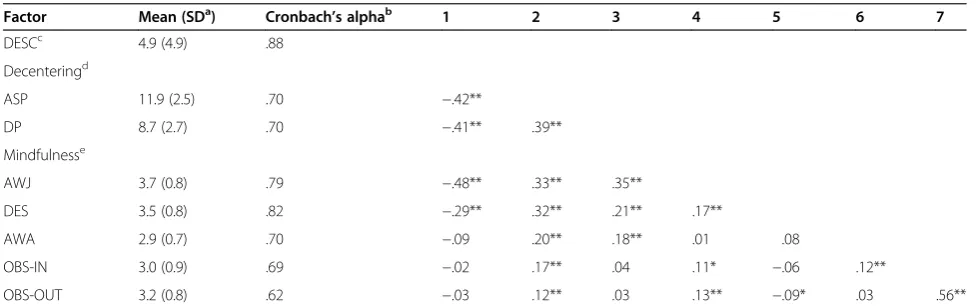
the results of our study, regarding sample descriptive data, have been communicated to the professor, who gave us the opportunity to collect the data in his lectures and who is responsible for the students in question. Furthermore, all students were informed that within the RWTH Aachen University Hospital the “Center for Mental Health for Undergraduate and Postgraduate Students (ZPG)” gives students the possibility to ask for support if they suffer from emotional crisis or psychological problems. Regard-ing the ethnical background, most participants were Caucasian. Only eight students (1.6%) indicated that they do not to speak German as their first language and that they have lived in Germany for less than 5 years. Based on the Mahalanobis distance statistic (Kline 2011) none of these participants was identified as an outlier on any of the variables in the mediation model. Table 1 displays the descriptive data for the study variables and the correlation matrix between the examined variables.
Regarding decentering, participants reported to engage more in Accepting Self-Perception (mean = 11.9, stand-ard deviation (SD)= 2.5) than in Distanced Perspective (mean = 8.7,SD= 2.7). Related to mindfulness, participants reported mainly to engage in Accepting without Judg-ment (mean = 3.7, SD= 0.8) and less in Accepting with Awareness (mean = 2.9, SD= 0.7) or Observing of in-ternal phenomena (mean = 3.0,SD= 0.9). Results of the Bonferroni adjusted t-test revealed significant differences (p< .001) for all studied variables besides for the compari-son between Accepting without Judgment and Observing of internal phenomena (p= .144). The strongest correla-tions between the decentering and the mindfulness factors were found for Distanced Perspective and Accepting without Judgment (r= .35), followed by Accepting Self-Perception and Accepting without Judgment (r= .33). The two decentering factors were correlated with r= .39 while the strongest correlation between mindfulness factors
was found for the two Observing factors (r= .56). All these correlations were significant atα≤.01.
Procedure Model fit
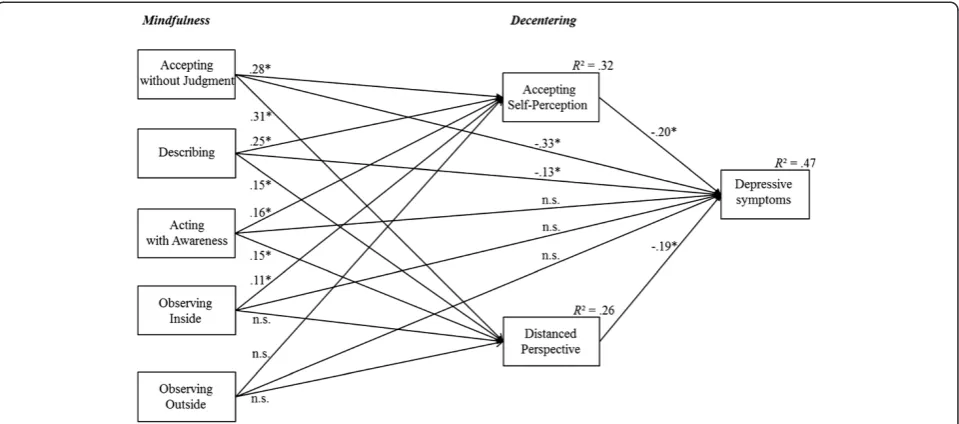
The mediation model displayed in Figure 1 showed an acceptable fit to the empirical data according to mea-sures of the global fit. The RMSEA equaled to .042 with a corresponding 90% CI, ranging from .038 to .046. The CFI was .914 and the TLI was .904. The total explained variance in depression scores by accounting for all used variables in the model equaled to .47. The variance explained in Accepting Self-Perception and Distanced Perspective by the mindfulness factors was .32 and .26, respectively.
Quantification of the effects in the mediation model
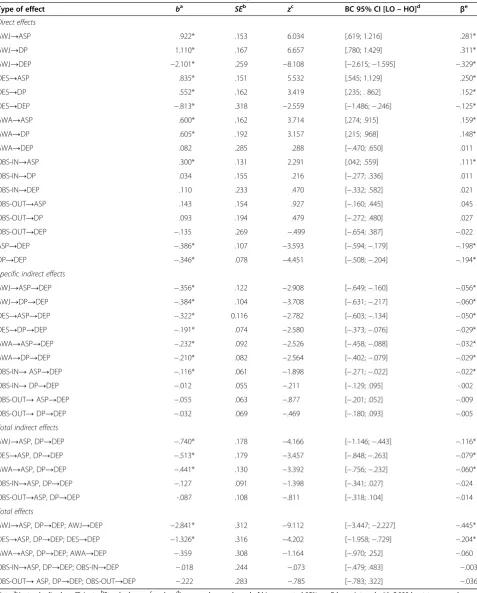
The unstandardized direct, specific indirect, total indirect, and total effects along with their corresponding standard error and z-scores are shown in Table 2. For reasons of comparability, the standardized effects are also included in the last column of Table 2. Figure 1 visualizes the standardized direct effects.
Accepting without Judgment and Describing showed significant direct, specific indirect, total indirect, and total effects (all p< .05). In contrast, related to Acting with Awareness and Observing of internal phenomena several differences among the various effects were found. Acting with Awareness displayed significant specific indirect effects, total indirect effects and direct effects on Accepting Self-Perception and Distanced Perspective (all p< .05), whereas non-significant scores were found for the direct effect on symptoms of depression and the total effect. Regarding Observing of internal phenom-ena, significant effects were only found for the direct effect on Accepting Self-Perception and the specific
Table 1 Descriptive statistics for the study variables
Factor Mean (SDa) Cronbach’s alphab 1 2 3 4 5 6 7
DESCc 4.9 (4.9) .88
Decenteringd
ASP 11.9 (2.5) .70 −.42**
DP 8.7 (2.7) .70 −.41** .39**
Mindfulnesse
AWJ 3.7 (0.8) .79 −.48** .33** .35**
DES 3.5 (0.8) .82 −.29** .32** .21** .17**
AWA 2.9 (0.7) .70 −.09 .20** .18** .01 .08
OBS-IN 3.0 (0.9) .69 −.02 .17** .04 .11* −.06 .12**
OBS-OUT 3.2 (0.8) .62 −.03 .12** .03 .13** −.09* .03 .56**
Note.a
SD: standard deviation;b
reliability estimation;c
DESC: Rasch-based Depression Screening (Forkmann et al. 2009);d
EQ-D (Gecht et al. 2014): ASP = Accepting Self-Perception; DP = Distanced Perspective;e
indirect effect on depressive symptoms via Accepting Self-Perception (all p< .05). No significant effects were found for Observing of external phenomena. Both direct effects of the mediators Accepting Self-Perception and Distanced Perspective on depressive symptoms were significant (p< .05).
Accepting without Judgment showed the largest total effect (β=−.445). Among the direct effects, the largest ef-fects were found for Accepting without Judgment on depression scores (β=−.329), for Accepting Self-Perception (β= .281), and for Distanced Perspective (β= .311). The specific indirect effects were strongest for Accepting without Judgment via Distanced Perspective on depres-sive symptoms (β=−.060) and the total indirect effect was most strongly represented by Accepting without Judgment (β=−.116).
Classifying the type of mediation and R2effect sizes for the mediated effects
Applying the step-by-step procedure recommended by Zhao and colleagues (2010) complementary mediation, indirect-only mediation, and no-effect non-mediation were identified. Complementary mediation was revealed for Describing and Accepting without Judgment via both decentering factors and for the specific indirect as well as for the total indirect effects. Indirect-only mediation was established for Acting with Awareness as specific indirect effect through both decentering factors as well as for the total indirect effect. Observing of internal phe-nomena showed indirect-only mediation for the specific indirect effect through Accepting Self-Perception. No-effect non-mediation was identified for the specific indirect effect of Observing of internal phenomena via Distanced
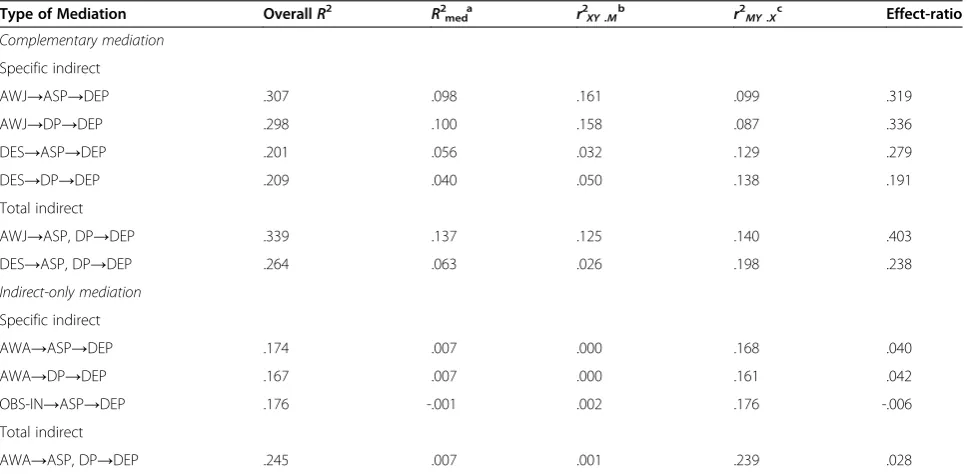
Perspective, for Observing of external phenomena via both decentering variables, and for the total indirect effect of both observation variables. Table 3 displays comple-mentary and indirect-only mediation for the different specific indirect and total indirect effects along with the correspondingR2effect-sizes.
Complementary mediation The specific indirect effects of Accepting without Judgment and Accepting Self-Perception as well as Distanced Perspective accounted each for approximately 30% of the variance in depressive symptoms. The proportion of variance in depression scores that was explained by the mediated effects equaled nearly 10% via Accepting Self-Perception as well as Distanced Perspective. This indicated that 10% of the variance of Accepting without Judgment in explaining depressive symptoms was attributable to the indirect effects via Accepting Self-Perception, respectively Distanced Perspec-tive. The proportion of variance in depressive symptoms explained by the partialed effect of Accepting without Judg-ment, and thus the sole contribution of Accepting without Judgment without the influence of decentering, equaled nearly 16%. In turn, partialed effects of Accepting Self-Perception and Distanced Perspective, besides the effects of Accepting without Judgment, accounted for 10% in de-pression scores. Overall, the estimation of the effect-ratio revealed that the mediated effect accounted for 32% (.098/ .307 for Accepting Self-Perception) to 34% (.100/.298 for Distanced Perspective) of the explained variance.
Regarding the indirect specific effect of Describing via Accepting Self-Perception, the R2med value of .056
Table 2 Unstandardized estimates b and standardized effectsβin the mediation model
Type of effect ba SEb zc BC 95% CI [LO–HO]d βe
Direct effects
AWJ→ASP .922* .153 6.034 [.619; 1.216] .281*
AWJ→DP 1.110* .167 6.657 [.780; 1.429] .311*
AWJ→DEP −2.101* .259 −8.108 [−2.615;−1.595] −.329*
DES→ASP .835* .151 5.532 [.545; 1.129] .250*
DES→DP .552* .162 3.419 [.235; . 862] .152*
DES→DEP −.813* .318 −2.559 [−1.486;−.246] −.125*
AWA→ASP .600* .162 3.714 [.274; .915] .159*
AWA→DP .605* .192 3.157 [.215; .968] .148*
AWA→DEP .082 .285 .288 [−.470; .650] .011
OBS-IN→ASP .300* .131 2.291 [.042; .559] .111*
OBS-IN→DP .034 .155 .216 [−.277; .336] .011
OBS-IN→DEP .110 .233 .470 [−.332; .582] .021
OBS-OUT→ASP .143 .154 .927 [−.160; .445] .045
OBS-OUT→DP .093 .194 .479 [−.272; .480] .027
OBS-OUT→DEP −.135 .269 −.499 [−.654; .387] −.022
ASP→DEP −.386* .107 −3.593 [−.594;−.179] −.198*
DP→DEP −.346* .078 −4.451 [−.508;−.204] −.194*
Specific indirect effects
AWJ→ASP→DEP −.356* .122 −2.908 [−.649;−.160] −.056*
AWJ→DP→DEP −.384* .104 −3.708 [−.631;−.217] −.060*
DES→ASP→DEP −.322* 0.116 −2.782 [−.603;−.134] −.050*
DES→DP→DEP −.191* .074 −2.580 [−.373;−.076] −.029*
AWA→ASP→DEP −.232* .092 −2.526 [−.458;−.088] −.032*
AWA→DP→DEP −.210* .082 −2.564 [−.402;−.079] −.029*
OBS-IN→ASP→DEP −.116* .061 −1.898 [−.271;−.022] −.022*
OBS-IN→DP→DEP −.012 .055 −.211 [−.129; .095] -.002
OBS-OUT→ASP→DEP −.055 .063 −.877 [−.201; .052] −.009
OBS-OUT→DP→DEP −.032 .069 −.469 [−.180; .093] −.005
Total indirect effects
AWJ→ASP, DP→DEP −.740* .178 −4.166 [−1.146;−.443] −.116*
DES→ASP, DP→DEP −.513* .179 −3.457 [−.848;−.263] −.079*
AWA→ASP, DP→DEP −.441* .130 −3.392 [−.756;−.232] −.060*
OBS-IN→ASP, DP→DEP −.127 .091 −1.398 [−.341; .027] −.024
OBS-OUT→ASP, DP→DEP -.087 .108 −.811 [−.318; .104] −.014
Total effects
AWJ→ASP, DP→DEP; AWJ→DEP −2.841* .312 −9.112 [−3.447;−2.227] −.445*
DES→ASP, DP→DEP; DES→DEP −1.326* .316 −4.202 [−1.958;−.729] −.204*
AWA→ASP, DP→DEP; AWA→DEP −.359 .308 −1.164 [−.970; .252] −.060
OBS-IN→ASP, DP→DEP; OBS-IN→DEP −.018 .244 −.073 [−.479; .483] −.003
OBS-OUT→ASP, DP→DEP; OBS-OUT→DEP −.222 .283 −.785 [−.783; .322] −.036
Note.a
Unstandardized coefficients;b
Standard error;cz -value;d
Lower and upper bound of bias-corrected 95% confidence interval with 5,000 bootstrap samples; e
Considering that approximately 20% (overall R2= .201) of the participants’ depression scores was explained, it followed that 27.9% (.056/.201) of the explained variance in the model was due to the mediated effect, respectively due to the introduction of Accepting Self-Perception into the relation of Describing and depression scores. For the mediation by Distanced Perspective, it was revealed that from the variance in depression 4% was attributable to the common variance of Describing and Distanced Perspec-tive. Overall, 20.9% was explained, pointing out that 19.1% (.040/.209) of the explained variance in depression scores was attributable to the common variance of Describing and Distanced Perspective.
Overall, the total indirect effect of Accepting without Judgment and both decentering variables together ex-plained approximately 34% of the variance in depressive symptoms. The R2med value of .137 indicated that nearly
14% of the variance in the depression score was attribut-able to the indirect effect. It followed that 40.3% (.137/ .339) of the explained variance in the model was due to the mediated effect, respectively due to the introduction of the decentering factors into the relation of Accepting without Judgment and depression scores. Describing and the total indirect effect from both decentering variables together explained 26.4% of the variance in depression scores, while the proportion of variance that was attrib-utable to the mediated effect amounted to 6.3%, indicat-ing that 23.8% (.063/.264) of the explained variance was accounted for by the mediated effect.
Inspecting the contribution of the individual effects, among the complementary mediation the weakest paths were identified for Describing on depressive symptoms, partialed for the total effect of the mediating variables (r2XY .M= .026). The strongest effect was obtained for the
total effect of the mediating variables, partialed for the influence of Describing (r2MY .X= .198). Regarding the
specific indirect effects, the weakest effect was found for Describing on depressive symptoms (r2XY .M= .032) and
the strongest path was identified for Accepting without Judgment on depressive symptoms (r2XY .M= .161), both
partialed for the influence of Accepting Self-Perception.
Indirect-only mediation The total indirect effect of Acting with Awareness explained 24.5% of the overall variance in depressive symptoms, from which less than 1% was due to the mediated effect, leading to an effect-ratio of .028 (.007/.245). The correlation of Acting with Awareness with depressive symptoms partialed for the effect of the mediators was .001 while the correlations of the mediators with depressive symptoms partialed for the effect of Acting with Awareness equaled .239.
An examination of the individual contributions of the component paths indicated that regarding the specific effects the weakest path in the model was found for the relation between Acting with Awareness and depressive symptoms partialed for Accepting Self-Perception as well as for Distanced Perspective (r2XY .M= .000, respectively).
The strongest path in the model was represented by the
Table 3 Classification of the mediation and R2effect-size measures
Type of Mediation OverallR2 R2meda r2XY .Mb r2MY .Xc Effect-ratio
Complementary mediation
Specific indirect
AWJ→ASP→DEP .307 .098 .161 .099 .319
AWJ→DP→DEP .298 .100 .158 .087 .336
DES→ASP→DEP .201 .056 .032 .129 .279
DES→DP→DEP .209 .040 .050 .138 .191
Total indirect
AWJ→ASP, DP→DEP .339 .137 .125 .140 .403
DES→ASP, DP→DEP .264 .063 .026 .198 .238
Indirect-only mediation
Specific indirect
AWA→ASP→DEP .174 .007 .000 .168 .040
AWA→DP→DEP .167 .007 .000 .161 .042
OBS-IN→ASP→DEP .176 -.001 .002 .176 -.006
Total indirect
AWA→ASP, DP→DEP .245 .007 .001 .239 .028
Note.a
Variance explained by the mediated effect;b
squared partial correlation of Y and X partialed for mediator M;c
relation between Accepting Self-Perception on depressive symptoms partialed for the influence of Observing of internal phenomena (r2MY ..X= .176). Among the total
indirect effects, the weakest paths were found for Acting with Awareness partialed for the mediating variables (r2XY .M= .001, respectively), while the effects of the
medi-ating variables together were strongest when partialed for Acting with Awareness (r2MY ..X= .239).
Discussion
The main motivation of the present study was to investigate whether decentering and mindfulness are two concepts referring to the same underlying construct as proposed by Carmody and colleagues (2009) or whether they reflect two distinct concepts as emphasized by other authors (Hayes-Skelton and Graham 2013; Shapiro et al. 2006). The present analysis did not reveal any correlation exceed-ing the critical value of .80 between a mindfulness skill and the capacity to decenter, which would be necessary to conclude that mindfulness and decentering share enough variance as to refer to them as indicators of the same underlying construct and to aggregate them into a single variable (Bühner 2011). Furthermore, all mindfulness skills together explain 32% of the variance in Accepting Self-Perception and 26% of the variance in Distanced Perspective. The common variance of decentering and depressive symptoms without the influence of mindfulness ranges from 9% up to 24%. These findings imply that the present data cannot support previous research referring to decentering and mindfulness as one single construct (Carmody et al. 2009). Instead, the present findings yield evidence for supporting the hypothesis that decentering and mindfulness represent two separate concepts and furthermore that decentering mediates the relationship between mindfulness skills and the severity of depressive symptoms (Shapiro et al., 2006). Additionally, the fact that decentering and mindfulness were identified to be two different constructs is underpinning the notion that detached mindfulness (Wells 2005) is a multifaceted construct consisting of distinguishable and interrelated components. In the present model, 47% of the variance in depression scores is explained by mindfulness and decentering variables together. Taking into account Shapiro and colleagues’ (2006) suggestion that decentering is only one of the working mechanisms through which mindful-ness excerpts its effect on depressive symptoms, decenter-ing is shown in the present study to be an important factor in transmitting the beneficial effects of mindfulness.
The present study also yields the important result that none of the mindfulness skills has an influence on depres-sive symptoms without the influence of decentering, exem-plified by the absence of direct-only non-mediation. In contrast, complementary and indirect-only mediation were identified, indicating that the effect of mindfulness
on depressive symptoms is mediated by the influence of decentering. This finding suggests that we have to regard decentering as a working mechanism of mindfulness.
By identifying complementary mediation in the present study, it was shown that even if no exclusive effect of mindfulness on depressive symptoms can be found, the combined effect of decentering and mindfulness on depressive symptoms has an important contribution. Accepting without Judgment and Describing exert their influence on depressive symptoms through two distinct pathways: directly from the respective mindfulness skill itself and indirectly through decentering. This result indi-cates that decentering seems to be an important mediator for the relationship between depressive symptoms and the ability to be non-judgmental about one’s present-moment experiences (AWJ) as well as to describe and label observed thoughts and feelings (DES). The influence of Accepting without Judgment on depressive symptoms seems to be stronger than the influence of Describing as indicated by stronger indirect and direct effects of Accepting without Judgment. While the effect of Accept-ing without Judgment is stronger related to depressive symptoms than to the decentering variables, it is the other way around for Describing, which is stronger related to decentering than to symptoms of depression. The effect– ratios that are higher for Accepting without Judgment than for Describing also underline this result. These results point toward regarding decentering as a stron-ger mediator for the effects of people’s ability to accept present-moment experiences non-judgmentally (AWJ) than for the effects of the ability to label thoughts and emotions (DES).
mediated effect was below 1% for Acting with Awareness and Observing of internal phenomena and that the cor-responding effect-ratios were also very low. However, effect-ratios are less informative for indirect-only mediation because the direct effect of the independent variable is per definition non-significant and therefore small (Zhao et al. 2010), following that most of the variance in the dependent variable is explained by the mediating variable alone. There-fore, it is advised to refer to the overallR2for drawing con-clusions about the magnitude of the mediation effect. In the present study, the associations underlying this measure are all of comparable magnitude. This indicates that both decentering variables mediate the effects of Acting with Awareness and the Observation of inner experiences on depressive symptoms equally strong, i.e., around 17% of the variance in depressive symptoms is explained by the mediation.
Inspecting the component r2measures as well as the direct effects, specific relationships between the different variables in the mediation model can be interpreted uniquely. This information helps to improve the under-standing of the relationship between mindfulness, decen-tering, and depressive symptoms. In general, mindfulness and decentering were positively correlated with each other. Regarding the relations between mindfulness skills and decentering with symptoms of depression negative associations were identified. Interestingly, positive, but however not significant, direct effects were found for focusing with awareness on one’s current activity (AWA) and paying careful attention to inner phenom-ena (OBS-IN) on depression. Further inspection of the component paths reveals that the strongest links in the model are those paths, which include the skill to accept present-moment experiences without judgment (AWJ), both directly and indirectly via decentering. This means, participants, who were more able to refrain from the evaluation of present-moment experience (AWJ), show lower scores on the depression measure. At the same time, they have a more accepting attitude toward them-selves (ASP) and refer to their thoughts and feelings from an objective perspective (DP). The weakest links in the model are those relations, which include the observation of external phenomena (OBS-OUT) followed by the ob-servation of internal phenomena (OBS-IN). Examination of theR2medvalue for the specific indirect path of
Observ-ing of internal phenomena via AcceptObserv-ing Self-Perception on depression reveals a negative value, which suggests that a suppression effect may be present. However, the direct effect of the observation of internal phenomena (OBS-IN) on depression was not significant and, therefore, competi-tive mediation was not established, which could have supported the presence of suppression. Instead, no-effect non-mediation was identified for the specific indirect effect of Observing of internal phenomena via Distanced
Perspective, for Observing of external phenomena via both decentering variables, and for the total indirect effect of both observation variables. The non-significance among the observation factors could arise due to a power prob-lem, which hinders the detection of significant effects on the side of the observing subscales. These subscales are only composed of three indicators each and show low reli-ability coefficients accordingly. In previous research, the dimensionality of the observing subscale has also shown an inconsequent item structure. While in the original KIMS one observing subscale was identified (Baer et al. 2004), a later analysis in a German sample revealed a two dimensional construct, i.e. observing of internal and external phenomena (Hoefling et al., 2011).
With regard to previous research, which treated mind-fulness and decentering one-dimensionally and combined them into one single variable (Carmody et al. 2009), disagreeing results were obtained in the present study. These may be due to different methodological approaches in the investigation of the research task. Whereas in the study by Carmody and colleagues (2009) researchers applied the Baron and Kenny (1986) causal steps approach to mediation, the present study focused on testing medi-ation effects simultaneously in a structural equmedi-ation frame-work, which is more susceptible to detect effects (Preacher and Hayes 2008). Furthermore, Carmody and colleagues (2009) aggregated the different aspects of mindfulness into one variable, whereas in the present analysis mindfulness was measured multidimensionally. Nevertheless, there is growing evidence in favor that the underlying factor struc-ture is rather multidimensional (Baer et al. 2004; Baer et al. 2006; Hoefling et al. 2011). This multidimensionality has also been demonstrated in the present study by pointing out that the several components of mindfulness have a dif-ferential impact on decentering as well as on depression and, therefore, can be treated as distinct dimensions.
Limitations and future research
suggest investigating the mediation model in a clinical sample in future studies regarding the importance of mindfulness and decentering for good mental health. Therefore, it should be clarified whether the relationship between mindfulness and decentering is different within a clinical, e.g., depressive, sample compared to a healthy one. A second limitation related to the generalization of the present findings to other populations refers to the composition of the present study sample of higher edu-cated and mainly Caucasian younger adults. Accordingly, the present study should be replicated within a different, e.g., older sample with mixed socio-economic status and composed of participants with varying ethnical back-grounds. Furthermore, prospective longitudinal studies might include mindfulness meditation practices into their settings in order to investigate the association between practicing mindfulness and the development of different mindfulness skills in relation to the development of better decentering abilities.
In the present mediation analysis, we have explored only one of the proposed working mechanisms of mind-fulness, namely decentering. Thus, future investigations should clarify the associations between depression, mind-fulness, decentering, and the additional mechanisms of change, e.g., values clarification, as proposed by Shapiro and colleagues (2006). Another conceptual consideration relates to the concept of detached mindfulness (Wells 2005). It would be interesting to investigate how this specific form of mindfulness fits into the multidimen-sional description of mindfulness. More precisely, which particular dimension of mindfulness can be elucidated by the concept of detached mindfulness and which role does decentering play within this context.
Conclusion
In conclusion, the present data cannot support research converting decentering and mindfulness into one single factor, but rather suggests to treat them as two separable but related concepts. Specifically, decentering seems to act as a mediator delivering the salutary effects of mindfulness meditation practices on the severity of depressive symp-toms. It was shown that Accepting without Judgment and Describing of observed phenomena both influence the depression severity directly, but that these two mindfulness skills also exert their influence on depression via the path-way of decentering. Furthermore, no direct relationships of Acting with Awareness and the Observation of internal phenomena on depressive symptoms could be demon-strated, but their effect has been shown to be delivered indirectly by the mediator decentering.
Competing interests
The authors declare that they have no competing interests.
Authors’contribution
JG conceived the study and its design and made substantial contributions to the acquisition, analysis and interpretation of the data and the writing of the manuscript. RK contributed to the acquisition of data and drafting of the manuscript. TF, SG, and VM have been involved in data collection, drafting of the manuscript and revising it critically for important intellectual content. SG has also given final approval of the version to be published. BD participated in data analysis interpretation. AS has been involved in data collection. All authors read and approved the final manuscript.
Acknowledgments
This research project was supported by the START-program of the Faculty of Medicine, RWTH Aachen University (grant number 691201). The funding source was not involved in the conduct of the research. The study procedures were approved by the local ethics committee of the Medical faculty of RWTH Aachen University (EK148/11).
Received: 1 April 2014 Accepted: 30 June 2014 Published: 7 July 2014
References
Baer, R. (2010).Assessing mindfulness and acceptance processes in clients: illuminating the theory and practice of change. Oakland, CA: Context Press. Baer, R, Smith, G, & Allen, K. (2004). Assessment of mindfulness by self-report: The
Kentucky Inventory of Mindfulness Skills.Assessment, 11(3), 191–206. Baer, R, Smith, G, Hopkins, J, Krietemeyer, J, & Toney, L. (2006). Using self-report
assessment methods to explore facets of mindfulness.Assessment, 13(1), 27–45. Baron, R, & Kenny, D. (1986). The moderator-mediator variable distinction in social
psychological research: Conceptual, strategic, and statistical considerations. Journal of Personality and Social Psychology, 51(6), 1173–1182.
Bieling, P, Hawley, L, Bloch, R, Corcoran, K, Levitan, R, Young, L, MacQueen, G, & Segal, Z. (2012). Treatment-specific changes in decentering following mindfulness-based cognitive therapy versus antidepressant medication or placebo for prevention of depressive relapse.Journal of Consulting and Clinical Psychology, 80(3), 365–372.
Bishop, S, Lau, M, Shapiro, S, Carlson, L, Anderson, N, Carmody, J, Segal, Z, Abbey, S, Speca, M, Velting, D, & Devin, G. (2004). Mindfulness: A proposed operational definition.Clinical Psychology: Science & Practice, 11(3), 230–241. Brown, K, & Ryan, R. (2003). The benefits of being present: Mindfulness and its
role in psychological well-being.Journal of Personality and Social Psychology, 84(4), 822–848.
Brown, K, Ryan, R, & Creswell, J. (2007). Mindfulness: theoretical foundations and evidence for its salutary effects.Psychological Inquiry, 18(4), 211–237. Brown, T. (2006).Confirmatory factor analysis. New York: The Guilford Press. Bühner, M. (2011).Einführung in die Test- und Fragebogenkonstruktion. Pearson
Studium: München.
Carmody, J, Baer, R, Lykins, L, & Olendzki, N. (2009). An empirical study of the mechanisms of mindfulness in a mindfulness-based stress reduction program. Journal of Clinical Psychology, 65(6), 613–626.
Chambers, R, Gullone, E, & Allen, N. (2009). Mindful emotion regulation: An integrative review.Clinical Psychology Review, 29, 560–572.
Fairchild, A, MacKinnon, D, Taborga, M, & Taylor, A. (2009).R2effect-size measures for mediation analysis.Behavior Research Methods, 41(2), 486–498.
Forkmann, T, Boecker, M, Wirtz, M, Eberle, N, Westhofen, M, Schauerte, P, Mischke, K, Kircher, T, Gauggel, S, & Norra, C. (2009). Development and validation of the Rasch-based Depression Screening (DESC) using Rasch analysis and struc-tural equation modelling.Journal of Behavior Therapy and Experimental Psych-iatry, 40, 468–478.
Forkmann, T, Boecker, M, Wirtz, M, Glaesmer, H, Brähler, E, Norra, C, & Gauggel, S. (2010). Validation of the Rasch-based Depression Screening in a large scale German general population sample.Health and Quality of Life Outcomes, 8 (105), doi:10.1186/1477-7525-8-105.
Fresco, D, Moore, M, Dulmen, M, Segal, Z, Ma, S, Teasdale, J, & Williams, JMG. (2007a). Initial psychometric properties of the Experiences Questionnaire: validation of a self-report measure of decentering.Behavior Therapy, 38(3), 234–246. Fresco, D, Segal, Z, Buis, T, & Kennedy, S. (2007b). Relationship of posttreatment
decentering and cognitive reactivity to relapse in major depression.Journal of Consulting and Clinical Psychology, 75(3), 447–455.
Gecht, J, Kessel, R, Mainz, V, Gauggel, S, Drueke, B, Scherer, A, & Forkmann, T. (2014). Measuring decentering in self-reports: psychometric properties of the Experiences Questionnaire in a German sample.Psychotherapy Research, 24(1), 67–79.
Grossman, P, Niemann, L, Schmidt, S, & Walach, H. (2004). Mindfulness-based stress reduction and health benefits: a meta-analysis.Journal of Psychosomatic Research, 57, 35–43.
Hair, J, Black, W, Babin, B, & Anderson, R. (2010).Multivariate data analysis. A global perspective. (7 ed.) Upper Saddle River. New Jersey: Prentice Hall. Hargus, E, Crane, C, Barnhofer, T, & Williams, J. (2010). Effects of mindfulness on
meta-awareness and specificity of describing prodromal symptoms in suicidal depression.Emotion, 10(1), 34–42.
Hayes, A. (2009). Beyond Baron and Kenny: Statistical mediation analysis in the new millennium.Communication Monographs, 76(7), 408–420.
Hayes, A, & Feldman, G. (2004). Clarifying the construct of mindfulness in the context of emotion regulation and the process of change in therapy.Clinical Psychology: Science and Practice, 11(3), 255–262.
Hayes, S, Strohsahl, K, & Wilson, K. (1999).Acceptance and commitment therapy: an experiential approach to behavior change. New York: The Guilford Press. Hayes-Skelton, S, & Graham, J. (2013). Decentering as a common link among
mindfulness, cognitive reappraisal, and social anxiety.Behavioural and Cognitive Psychotherapy, 41(3), 317–328.
Hoefling, V, Stroehle, G, Michalak, J, & Heidenreich, T. (2011). A Short Version of the Kentucky Inventory of Mindfulness Skills.Journal of Clinical Psychology, 67, 1–7. IBM. (2011).SPSS Statistics (Version 20) [Computer software]. NY: Somers. Kabat-Zinn, J. (1982). An outpatient program in behavioral medicine for chronic
pain patients based on the practice of mindfulness meditation: theoretical considerations and preliminary results.General Hospital Psychiatry, 4(1), 33–47. Kabat-Zinn, J. (1990).Full catastrophe living: using the wisdom of your body and
mind to face stress, pain, and illness. New York: Delacourt.
Kabat-Zinn, J. (1994).Wherever you go, there you are. New York: Hyperion. Keng, S-L, Smoski, M, & Robins, C. (2011). Effects of mindfulness on psychological
health: a review of empirical studies.Clinical Psychology Review, 3, 1041–1056. Kline, R. (2011).Principles and practice of structural equation modeling(3rd ed.).
New York: The Guilford Press.
Linehan, M. (1993a).Cognitive-behavioral treatment of borderline personality order. New York: Guilford Press.
Linehan, M. (1993b).Skills training manual for treating borderline personality order. New York: Guilford Press.
MacKinnon, D, Fairchild, A, & Fritz, M. (2007). Mediation analysis.Annual Review of Psychology, 58, 593–614.
MacKinnon, D, Lockwood, C, Hoffman, J, West, S, & Sheets, V. (2002). A comparison of methods to test mediation and other intervening variable effects.Psychological Methods, 7(1), 83–104.
MacKinnon, D, Lockwood, C, & Williams, J. (2004). Confidence limits for the indirect effect: Distribution of the product and resampling methods. Multivariate Behavioral Research, 39(1), 99–128.
Martin, J. (1997). Mindfulness: a proposed common factor.Journal of Psychotherapy Integration, 7(4), 291–312.
Muthén, L, & Muthén, B. (2010).Mplus Version 6 [Computer software]. Muthén & Muthén: Los Angeles, CA.
Nolen-Hoeksema, S. (1991). Responses to depression and their effects on the duration of depressive episodes.Journal of Abnormal Psychology, 100(4), 569–582. Orzech, K, Shapiro, S, Brown, K, & McKay, M. (2009). Intensive mindfulness
training-related changes in cognitive and emotional experience.The Journal of Positive Psychology, 4(3), 212–222.
Preacher, K, & Hayes, A. (2008). Asymptotic and resampling strategies for assessing and comparing indirect effects in multiple mediator models. Behavior Research Methods, 40(3), 879–891.
Preacher, K, & Kelley, K. (2011). Effect size measures for mediation models: quantitative strategies for communicating indirect effects.Psychological Methods, 16(2), 93–115.
Ramel, W, Goldin, P, Carmona, P, & McQuaid, J. (2004). The effects of mindfulness meditation on cognitive processes and affect in patients with past depression.Cognitive Therapy and Research, 28(4), 433–455.
Safran, J, & Segal, Z. (1990).Interpersonal process in cognitive therapy. New York: Basic Books.
Segal, Z, Williams, J, & Teasdale, J. (2002).Mindfulness-based cognitive therapy for depression: a new approach to preventing relapse. New York: The Guildford Press. Shapiro, S, Carlson, L, Astin, J, & Freedman, B. (2006). Mechanisms of mindfulness.
Journal of Clinical Psychology, 62(3), 373–386.
Shrout, P, & Bolger, N. (2002). Mediation in experimental and nonexperimental studies: new procedures and recommendations.Psychological Methods, 7(4), 422–445.
Sobel, M. (1982). Asymptotic confidence intervals for indirect effects in structural equation models.Sociological Methodology, 13, 290–312.
Teasdale, J. (1999). Emotional processing, three modes of mind and the prevention of relapse in depression.Behaviour Research and Therapy, 37(Suppl 1), 53–77. Teasdale, J, Moore, R, Hayhurst, H, Pope, M, Williams, S, & Segal, Z. (2002).
Metacognitive awareness and prevention of relapse in depression: empirical evidence.Journal of Consulting and Clinical Psychology, 70(2), 275–287. Teasdale, J, Segal, Z, & Williams, J. (1995). How does cognitive therapy prevent
depressive relapse and why should attentional control (mindfulness) training help?Behaviour Research and Therapy, 33(1), 25–39.
Teasdale, J, Segal, Z, Williams, J, Ridgeway, V, Soulsby, J, & Lau, M. (2000). Prevention of relapse/recurrence in major depression by mindfulness-based cognitive therapy.Journal of Consulting and Clinical Psychology, 68(4), 615–623. Trapnell, P, & Campbell, J. (1999). Private self-consciousness and the five-factor
model of personality: Distinguishing rumination from reflection.Journal of Personality and Social Psychology, 76(2), 284–304.
Vehren, T, Boecker, M, Norra, C, Wirtz, M, Gauggel, S, & Forkmann, T. (2013). Cross-sectional validation of the Rasch-based Depression Screening (DESC) in a mixed sample of patients with mental and somatic diseases.Comprehensive Psychiatry, 54(7), 1082–1089.
Wells, A. (2000).Emotional disorders & metacognition: innovative cognitive therapy. Chichester, UK: Wiley.
Wells, A. (2005). Detached mindfulness in cognitive therapy: a metacognitive analysis and ten techniques.Journal of Rational-Emotive & Cognitive-Behavior Therapy, 23(4), 337–355.
Wells, A, & Matthews, G. (1994).Attention and emotion: a clinical perspective. Hove (UK): Lawrence Erlbaum.
Williams, J, & MacKinnon, D. (2008). Resampling and distribution of the product methods for testing indirect effects in complex models.Structural Equation Modeling, 15(1), 23–51.
Zhao, X, Lynch, J, & Chen, Q. (2010). Reconsidering Baron and Kenny: Myths and truths about mediation analysis.Journal of Consumer Research, 37, 197–206.
doi:10.1186/2050-7283-2-18
Cite this article as:Gechtet al.:A mediation model of mindfulness and decentering: sequential psychological constructs or one and the same?
BMC Psychology20142:18.
Submit your next manuscript to BioMed Central and take full advantage of:
• Convenient online submission
• Thorough peer review
• No space constraints or color figure charges
• Immediate publication on acceptance
• Inclusion in PubMed, CAS, Scopus and Google Scholar
• Research which is freely available for redistribution