Boys’ Reading Commission 2012
A review of existing research conducted
to underpin the Commission
Christina Clark
with support from David Burke
National Literacy Trust
2012
This report is the property of the National Literacy Trust and is protected by copyright law.
The National Literacy Trust will consider requests to use extracts or data from this publication provided that you:
• Acknowledge that the content is the work of the National Literacy Trust and provide appropriate references in any publications or accompanying publicity;
• Anonymise all data to protect the identity of any individual or organisation;
• State that any views expressed are yours and not necessarily those of the National Literacy Trust.
© National Literacy Trust Boys’ Reading Commission 2012: Overview of the evidence 2012
3
Table of contents
Tables and figures ... 3Boys’ Reading Commission – Background ... 4
Summary of findings... 4
The scale of the problem in the UK ... 6
Reading attainment ... 6
Historical dimension ... 9
International situation ... 10
Beyond schooling ... 10
The issue is not just an attainment one... 10
Boys do not enjoy reading as much as girls... 11
Boys do not read as much as girls ... 11
Boys enjoy reading different materials ... 12
Girls have more positive attitudes to reading than boys ... 13
Girls are more likely to see themselves as readers ... 14
Boys are less likely to use reading resources than girls ... 15
To sum up... 16
Why are boys falling behind?... 16
Perceived cultural norms ... 17
Reading isn’t cool ... 17
Boys’ reading interests aren’t honoured at school or by publishers... 17
Fewer (male) reading role models for boys... 18
Lack of male reading role models in school due to feminine work force... 19
Assessment favours girls... 20
Literacy in the home ... 20
Individual factors ... 21
What can be done/is being done to redress the issue ... 23
Going forward... 28
Tables and figures
Figure 1: Key Stage 1 (age seven) – reading attainment at expected level (achieving Level 2 and above) 1998–2011... 7Figure 2: Key Stage 2 (age 11) – English attainment at expected level (achieving Level 4 and above) 1998–2011 ... 8
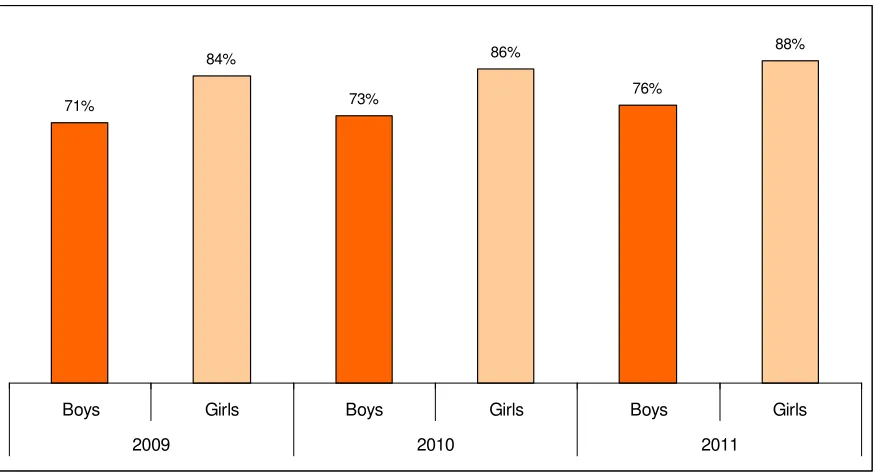
Figure 3: Key Stage 3 (age 13) – English attainment at expected level (achieving Level 5 and above) 2009–11 ... 9
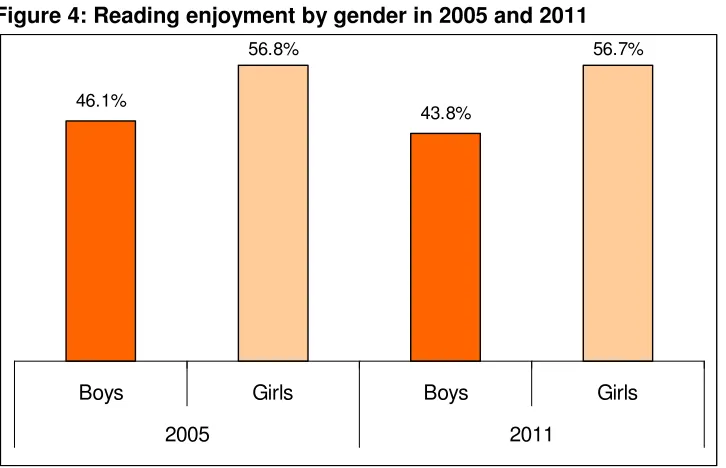
Figure 4: Reading enjoyment by gender in 2005 and 2011... 11
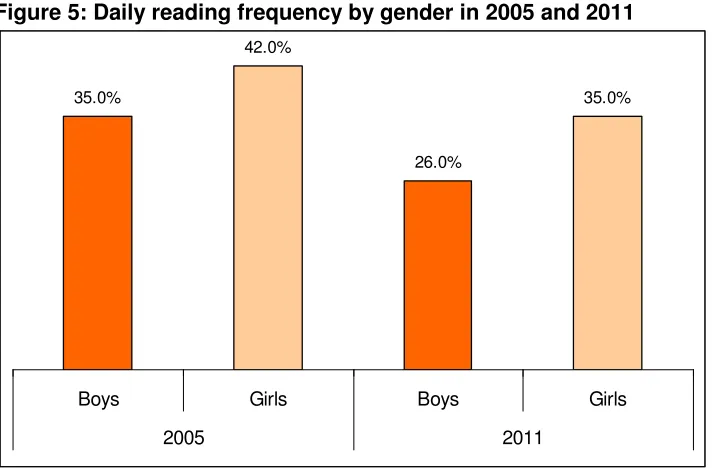
Figure 5: Daily reading frequency by gender in 2005 and 2011 ... 12
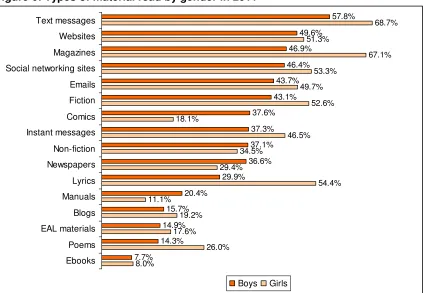
Figure 6: Types of material read by gender in 2011... 13
Figure 7: Attitudes towards reading by gender in 2011 ... 13
Boys’ Reading Commission – Background
The gender gap has been a hotly debated issue, both nationally and internationally. In 2000, the then Department for Education and Schools commissioned a four-year study into raising boys’ achievement1. The commission worked with over 60 primary, secondary and special schools in England to identify and evaluate the strategies highlighted to be particularly beneficial in
motivating boys2.
This short report outlines information that has come to light in recent years. The evidence comes from three sources: the views of practitioners from a survey of 226 UK schools on the issue; the academic and policy perspectives from secondary sources; and the views of young people from National Literacy Trust’s surveys of young people themselves - with the latter forming the backbone of this paper.
This brief review was prepared to inform the Commission’s initial discussions and guide them in their subsequent investigation and evidence gathering. It sets out evidence for the following three main areas of the Commission’s remit:
• The scale of the problem: in what areas are boys struggling, emerging trends for the UK • Why boys are falling behind: the impact of boys’ attitudes towards literacy and their
reading behaviours
• Successful approaches: examples of how boys’ literacy has been effectively supported For the final report, including additional evidence from expert witnesses as well as
recommendations, see www.literacytrust.org.uk/boys
Summary of findings
The scale of the problem with boys’ literacy in the UK
• Girls outperform boys on all National Curriculum reading tests. At age seven, the gap between boys and girls reaching the expected level in reading is 7 percentage points. At age 11 the gap widens slightly to 8 percentage points (for reading), increasing further to 12 percentage points at age 14 (for English). At GCSE level, the gap between boys and girls achieving A* to C in English GCSE is 14 percentage points.
• Girls enjoy reading more, they do it more often, they hold more positive attitudes towards reading and they seek out more reading opportunities (e.g. library visits) than boys. Our data show that the gender gap in reading enjoyment and reading frequency is widening. This is also backed up by international comparison studies.
Why boys are falling behind
• 226 practitioners responded to our survey on boys’ reading to inform the Commission in January/February 2012. 76% told us that boys did not do as well in reading as girls in their school/setting and 82% have strategies in place to support boys’ reading, despite the absence of a national framework in this area.
• A variety of reasons were given for the gap between boys and girls, including:
o Peer pressure exerts a negative influence on boys who don’t see reading as
‘cool’
o Boys’ reading interests clash with more feminine curriculum texts
1
http://www-rba.educ.cam.ac.uk/
2
© National Literacy Trust Boys’ Reading Commission 2012: Overview of the evidence 2012
5
o Male reading role models are absent in their peer group and at homeo A largely female school workforce impacts on boys’ perceptions of reading and
their reading behaviour
o Girls are favoured by assessment
o Boys have more active learning styles that are less compatible with literacy
(Successful) approaches
• When practitioners were asked in our survey what would make the biggest difference in raising boys’ achievement, most of the solutions offered mirror the (above) perceived needs of boys. For example, the majority of practitioners mentioned that:
o engaging their interest would make the greatest difference, including making
reading purposeful and combining it with more appropriate texts or linking it with technology to spark boys’ interests
o a more supportive home environment and more fathers reading are things that
could be done to lift boys’ reading achievement
o more male reading models per se would be a huge benefit to boys
• These themes are again picked up when practitioners are asked about the types of strategies that they currently have in place, which include:
o buying in a variety of stock for boys
o running reading challenges/competitions/raising aspirations. o themed work linked to books, also often including play o role models - male author visits/older children
o having silent reading time/environmental reading settings like dens or reading
circles
o non-fiction displays linked to books o specific reading schemes
o reading and acting out a wide range of books and plays o class visits to library
o involving parents o staff training
o validating/encouraging appreciation of different types of text, e.g. comics
• We also conducted eight interviews with schools that reported that they do not have experience of a gender gap to find out how they are successfully supporting boys’ reading. Strategies have included descriptions of school libraries as ”retail” spaces that give the customer what they need and a reason to come back; lessons on choosing books that give extra support to boys; and encouraging ”dads and lads” to read together.
The scale of the problem in the UK
76% of 226 schools in the UK told us in a recent survey3 that boys in their school did not do as well in reading as girls. This section outlines the evidence for a gender gap in reading
attainment. However, it also shows that the gender gap goes beyond attainment and extends into other aspects, such as reading enjoyment, reading behaviour, reading choices and attitudes towards reading.
Reading attainment
Girls outperform boys on all National Curriculum reading tests, with differences being apparent from early on. Girls achieve at a higher level than boys according to Early Years Foundation Stage (EYFS) learning goals4, with a higher proportion of girls than boys working securely within each of its 13 assessment scales. In 2011, there was a gap of 11 percentage points between boys and girls achievement in reading at age five (71% of boys working securely within level for age vs. 82% of girls).
These differences continue to be present throughout the rest of their schooling. At age 7 (Key Stage 1) in 2011, 89% of girls achieved the expected level in reading compared with 82% of boys5. Between 2010 and 2011, the achievement gap between boys and girls decreased from 8 percentage points to 7 percentage points; this was because the achievement of boys increased by 1 percentage point compared to 2010 while girls’ achievement remained the same.
Figure 1 (overleaf) shows KS1 attainment results from 1998 to the present and illustrates that
although both boys’ and girls’ attainment at KS1 showed large increases between 1998 and 2000 (coinciding with the introduction and implementation of the national strategies), they have remained relatively static since then. Similarly, the gap between boys and girls has remained relatively constant at around an 8 or 9 percentage point difference.
Similarly, 88% of girls achieved the expected level in reading at Key Stage 2 (aged 11) compared with 80% of boys6. Figure 2 (p. 8), which outlines attainment in reading between 1998 and 2011, shows that at age 11 the gap between boys and girls in reading has remained relatively stable for the past few years.
3
The survey was conducted online between mid January to mid February 2012.
4
http://www.education.gov.uk/rsgateway/DB/SFR/s001033/sfr28-2011v2.pdf
5
http://www.education.gov.uk/rsgateway/DB/SFR/s001022/sfr22-2011v2.pdf
6
Figure 1: Key Stage 1 (age seven) – reading attainment at expected level (achieving Level 2 and above) 1998–2011
75% 85%
77% 86%
79% 88%
80% 88%
80% 88%
80% 89%
81% 89%
81% 89%
80% 89%
80% 88%
80% 88%
80% 88%
81% 89%
82% 89%
Boys Girls Boys Girls Boys Girls Boys Girls Boys Girls Boys Girls Boys Girls Boys Girls Boys Girls Boys Girls Boys Girls Boys Girls Boys Girls Boys Girls
Figure 2: Key Stage 2 (age 11) – Reading attainment at expected level (achieving Level 4 and above) 1998–2011
64% 79%
75%
82% 80% 86% 78% 85% 77% 83% 78% 84% 79% 87% 82% 87% 79% 87% 81% 87% 83% 90% 82% 89% 80% 87% 80% 88% B o y s G ir ls B o y s G ir ls B o y s G ir ls B o y s G ir ls B o y s G ir ls B o y s G ir ls B o y s G ir ls B o y s G ir ls B o y s G ir ls B o y s G ir ls B o y s G ir ls B o y s G ir ls B o y s G ir ls B o y s G ir ls
At age 14, girls continue to do better in English compared with boys (see Figure 3 for the percentage of pupils achieving Level 5 or above in 20117 through Key Stage 3 teacher
[image:9.595.75.513.134.370.2]assessments). Figure 3 also shows that the gap between boys and girls has narrowed slightly to 12 percentage points compared to 13 percentage points in the two preceding years.
Figure 3: Key Stage 3 (age 13) – English attainment at expected level (achieving Level 5 and above) 2009–11
71%
84%
73%
86%
76%
88%
Boys Girls Boys Girls Boys Girls
2009 2010 2011
Finally, at GCSE level 58.7% boys and 72.5% girls achieved A+ to C in English in 20118; both of these percentages are up slightly from 2010 but the gap has remained stable. The gap between girls and boys receiving grades A* to A across all subjects is now at its widest since the top grade was introduced in 1994 - 26.5% of girls achieved A*to A compared to 19.8% of boys.
Historical dimension
During the 1970s and 1980s, a major concern in education in the UK and elsewhere was the consistent underperformance of girls in maths and science. While these issues seem to have been successfully addressed – girls’ performances in these subjects now matches and even exceeds that of boys – concerns have now shifted to the underperformance of boys in reading and English.
However, Gorard (2001) disputed the fact that boys have ever attained higher grades than girls in compulsory education at any time over the past 25 years. Analysing the gaps in entry and performance of school leavers obtaining five or more A* to C grades at GCSE or O level from 1974 to 1998, Gorard showed that a similar proportion of boys and girls achieved these grades in the period 1974 to 1987, with girls performing marginally better than boys. The gap then increased in favour of girls between 1987 and 1989, a period which coincided with the introduction of the National Curriculum.
Smith (20039) reanalysed the data at the subject level and found that the most pronounced trend appeared in English, where the gap between the sexes has hardly changed since the early 1970s and where the gap, at the time of the publication of her findings, was the smallest since the early 1980s.
7
http://www.education.gov.uk/rsgateway/DB/SFR/s001018/sfr18-2011v2.pdf
8
http://www.guardian.co.uk/news/datablog/2011/aug/25/gcse-results-2011-exam-breakdown - data embedded
9
More recently, Liz Twist and Marian Sainsbury (2009) have highlighted a gap in literacy-based subjects across the curriculum, with some evidence indicating that a gap has existed in the UK for at least the last 60 years10.
International situation
Girls outperforming boys is not just an issue for the UK; far from it. International comparisons of 10-year-olds (PIRLS11) and 15-year-olds (PISA12) show that girls do better in reading
assessments than boys across all of the OECD countries assessed in the two surveys.
Encouragingly, the latest PISA results from 2009 showed that the gender gap is relatively small in the UK compared with other countries (only Chile and the Netherlands had smaller
differences in assessments between boys and girls) and that the gap has narrowed slightly since the 2006 PISA survey. A similar narrowing of the gender gap has also been reported by the 2006 PIRLS survey of 10-year-olds.
However, these international comparisons do not include most African and many Asian
countries. The UNESCO Institute for Statistics reports that, globally, about 5% more male 15 to 24-year-olds are able to read, and that 61% of young people who cannot read are women13. In its 2011 Census, the Indian Government reported that 14% more men than women could read. Nonetheless, since the 1991 census, the proportion of women who can read has been growing at a higher rate than the proportion of men14.
Beyond schooling
While boys tend to underperform during their school years compared with girls, girls are more likely to be NEETs (not in education, employment or training) in their early twenties (for a discussion of the correlates of being NEET please see Perry and Francis, 201015). In terms of 19 to 24-year-olds, 25.2% of girls were NEET in Q3 of 2011 compared with 18% of boys16.
However, more girls than boys graduate from university and graduate with a first or upper second17.
The issue is not just an attainment one
Girls not only outperform boys on attainment tests. This section briefly shows that girls are more engaged with reading than boys and that it would be prudent to not just focus on attainment alone.
10
Liz Twist & Marian Sainsbury (2009): Girl friendly? Investigating the gender gap in national reading tests at age 11, Educational Research, 51:2, p 284
11
http://www.nfer.ac.uk/nfer/publications/PRN01/PRN01.pdf p 23
12
http://www.nfer.ac.uk/nfer/publications/NPDZ01/NPDZ01.pdf p22
13
UNESCO Institute for Statistics, Factsheet on Adult and Youth Literacy, p 1 <http://www.uis.unesco.org/FactSheets/Documents/FS16-2011-Literacy-EN.pdf>
14
Government of India, Provisional Population Totals - India, p 103 <http://censusindia.gov.in/2011-prov-results/data_files/india/Final%20PPT%202011_chapter6.pdf> accessed 4 April 2012
15
http://www.thersa.org/__data/assets/pdf_file/0019/367003/RSA-Social-Justice-paper.pdf
16
http://www.education.gov.uk/researchandstatistics/statistics/a00199328/dfe-neet-statistics-quarterly-brief-quarter-3-2011
17
© National Literacy Trust Boys’ Reading Commission 2012: Overview of the evidence 2012
11
Boys do not enjoy reading as much as girls
Our 2011 survey of nearly 21,000 8 to 16-year-olds showed that boys are not only more likely than girls to struggle with reading but they are also more likely to only enjoy reading a bit or not at all (56.2% vs. 43.3%)18. This gap in reading enjoyment is corroborated by numerous other studies that all show that boys enjoy reading less than girls19. PISA (200920) also showed that across OECD countries, just over half of 15-year-old boys (52%) said that they read for enjoyment compared with nearly three-quarters of girls (73%).
While the gap between boys and girls has narrowed slightly in terms of their reading attainment, comparisons with our data from 200521 (see Figure 4) show that there has been a widening of the gap in the proportion of boys and girls who enjoy reading very much and quite a lot. This is due to boys enjoying reading less now than they did in 2005. In 2005, the percentage point difference between boys and girls was 10.7, which increased to 12.9 percentage points in 2011.
[image:11.595.74.437.300.534.2]This trend is also evidenced internationally. PISA (200922) found that girls not only greatly outnumber boys in terms of their reading enjoyment but also that the gap between boys and girls at age 15 has widened between 2000 and 2009, roughly by three percentage points across the OECD area. Just as with our data, the widening of the gender gap is largely due to a greater decline in levels of enjoyment in boys than in girls.
Figure 4: Reading enjoyment by gender in 2005 and 2011
46.1%
56.8%
43.8%
56.7%
Boys Girls Boys Girls
2005 2011
Boys do not read as much as girls
Perhaps as a result of them not enjoying reading as much, boys also do not read as frequently as girls. In 2011, 35% of girls said that they read outside of class every day compared with 26% of boys23. The percentages from our survey are significantly lower than those of other surveys.
18
Clark, C. (2012 forthcoming) Young people’s reading in 2011: Findings from the National Literacy Trust annual survey (to be published online in August 2012, http://www.literacytrust.org.uk/research/nlt_research)
19
(e.g. Hodgson, 2008: http://www.nfer.ac.uk/nfer/PRE_PDF_Files/08_40_04.pdf; PISA, OECD 2010
http://www.oecd-ilibrary.org/docserver/download/fulltext/9810131ec030.pdf?expires=1326973051&id=id&accname=guest&checksum=9F9AD240AD 1410DBAC32E28EE9F31E80
20
http://www.oecd.org/dataoecd/34/50/48624701.pdf. Please note that the PISA question is a combined reading enjoyment and reading frequency question, which might account for the different proportions of boys and girls who say that they enjoy reading compared with our survey.
21
http://www.literacytrust.org.uk/assets/0000/0577/Reading_Connects_Survey_2005.pdf
22
http://www.oecd.org/dataoecd/34/50/48624701.pdf
23
For example, PISA 2009 found that across OECD countries around two-thirds of 15-year-old students reported that they read for enjoyment on a daily basis24.
Comparisons with our data from 200525 show that again the gap between daily reading amongst boys and girls has widened slightly from a 7 percentage point difference in 2005 to a 9
[image:12.595.74.433.148.383.2]percentage point difference in 2011 (see Figure 5). While levels of daily reading have dropped for both boys and girls, boys have seen a bigger decline.
Figure 5: Daily reading frequency by gender in 2005 and 2011
35.0%
42.0%
26.0%
35.0%
Boys Girls Boys Girls
2005 2011
Again, this finding is consistent with other studies (e.g. PISA 200926), which reported that the percentage of students who said they read for enjoyment daily at age 15 dropped in
the majority of OECD countries between 2000 and 2009.
Boys enjoy reading different materials
Another common finding is that boys enjoy reading different things to girls (e.g. PISA 2009). Across OECD countries, girls are twice as likely as boys to read fiction for enjoyment. Girls are also more likely than boys to read magazines, while more boys than girls read newspapers and comic books27.
Findings from our 2011 survey confirmed those gender differentiations in reading choices28.
Figure 6 shows that more girls than boys say that they read text messages, magazines,
messages on social networking sites, emails, fiction, instant messages, lyrics and poems. By contrast, more boys than girls read comics, newspapers and manuals.
Within the genre of fiction, differences also exist. Research conducted on behalf of WHSmith (Coles & Hall, 200229) showed that girls were significantly more likely than boys to read adventure, horror/ghost, romance/relationship and animal-related books, while boys were significantly more likely than girls to read science fiction/fantasy, sports-related and war/spy- related books. Boys also read more comics, joke books and humorous fiction than girls. We found very similar relationships within our 2005 survey30.
24
http://www.oecd.org/dataoecd/34/50/48624701.pdf. Please note that reading frequency in PISA is assessed differently from the way we ask the question, which will account for the discrepancy in findings.
25
http://www.literacytrust.org.uk/assets/0000/0577/Reading_Connects_Survey_2005.pdf
26
http://www.oecd.org/dataoecd/34/50/48624701.pdf
27
http://www.oecd.org/dataoecd/34/50/48624701.pdf
28
Clark, C. (2012 forthcoming) Young people’s reading in 2011: Findings from the National Literacy Trust annual survey (to be published online in August 2012, http://www.literacytrust.org.uk/research/nlt_research)
29
Hall, C. and Coles, M. (1999). Children’s reading choices. London: Routledge.
30
© National Literacy Trust Boys’ Reading Commission 2012: Overview of the evidence 2012
[image:13.595.76.501.55.348.2]13
Figure 6: Types of material read by gender in 201157.8% 49.6% 46.9% 46.4% 43.7% 43.1% 37.6% 37.3% 37.1% 36.6% 29.9% 20.4% 15.7% 14.9% 14.3% 7.7% 68.7% 51.3% 67.1% 53.3% 49.7% 52.6% 18.1% 46.5% 34.5% 29.4% 54.4% 11.1% 19.2% 17.6% 26.0% 8.0% Text messages Websites Magazines
Social networking sites
Emails Fiction Comics Instant messages Non-fiction Newspapers Lyrics Manuals Blogs EAL materials Poems Ebooks Boys Girls
Girls have more positive attitudes to reading than boys
[image:13.595.73.534.487.734.2]In line with numerous other studies (e.g. Clark and Douglas, 2011; Clark and Foster, 2005; Twist et al., 2007; PISA, 2009) girls also tend to think more positively about reading than boys.
Figure 7 shows that girls are more likely than boys to agree with the statement that reading is
cool and are less likely than boys to agree with statements that they only read when they have to and that they prefer watching TV to reading31.
Figure 7: Attitudes towards reading by gender in 2011
74.7% 62.2% 31.6% 29.9% 29.8% 29.3% 18.6% 17.9% 78.1% 45.5% 21.4% 23.1% 37.1% 25.2% 16.1% 11.7% The more I read, the better I become
I prefer watching TV to reading
I only read when I have to
I cannot find things to read that interest me
Reading is cool
I do not read as well as other pupils in my class
I would be embarrassed if my friends saw me read
Reading is more for girls than boys
Boys Girls
31
Figure 8: Attitudes towards reading by gender in 2005 and 2011
39.2%
34.0%
21.3%
30.2%
26.6%
14.0%
29.9%
29.3%
17.9%
23.1%
25.2%
11.7% I cannot find things to
read that interest me
I do not read as well as other pupils in my
class
Reading is more for girls than boys
Boys 2005 Girls 2005 Boys 2011 Girls 2011
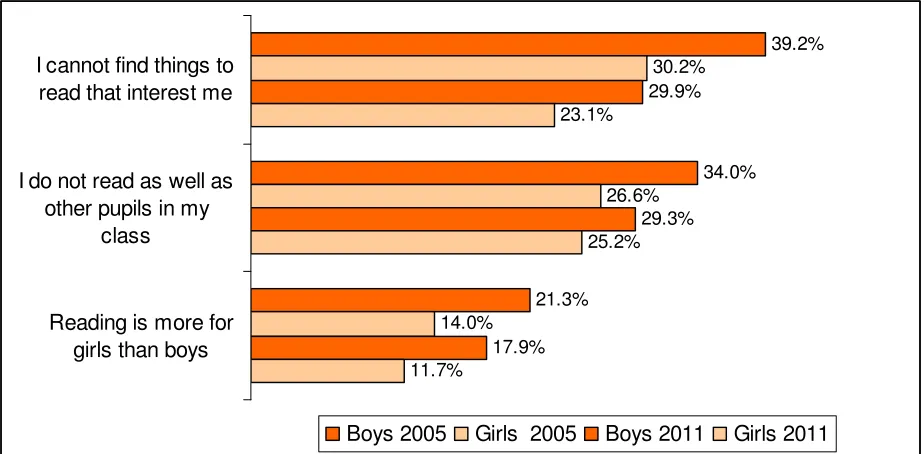
Comparisons with 2005 are more tricky as our attitudinal questions have changed slightly over the past 6 years. Figure 8 (above) outlines the three attitudinal statements that have remained constant and shows that the gender gap in these attitudes seems to have narrowed slightly in 2011 compared with 2005. For example, in 2005 there was a 9 percentage point difference between boys and girls who agreed that they cannot find things to read that interest them. In 2011, this gap narrowed to a 6.8 percentage point difference. Similarly, in 2005 there was a 7.4 percentage point difference between boys and girls who agreed that they do not read as well as other pupils in their class. In 2011 this gap narrowed to a 4.1 percentage point difference, largely because of a greater decrease in girls agreeing with this statement in 2011.
Girls are more likely to see themselves as readers
Research has shown that a pupil’s academic self-concept has an important impact on
attainment, with pupils who have a more positive academic self-image doing better in reading and mathematics (Sammon et al., 200832). Our own research (2008 and 201233) has found similarly profound relationships between young people’s perception of themselves as readers and their wider reading behaviour, with young people who see themselves as readers enjoying reading more, reading more often, reading more widely and thinking more positively about reading than young people who do not define themselves as readers.
In line with some previous studies (e.g. Lynch, 200234), our recent annual literacy survey conducted in 2011 has also shown that there is a strong relationship between young people’s perception of themselves as readers and their reading attainment35. Young people who see themselves as readers are more likely to read at or above the expected level for their age compared with young people who do not see themselves as readers, with three times as many readers reading above the expected level for their age compared with young people who do not see themselves as readers (21% vs. 8%). Conversely, only 7% of young people who see themselves as readers read below the expected level for their age compared with four times as many (26.7%) young people who do not consider themselves to be readers.
32
http://eprints.ioe.ac.uk/5294/1/EPPE3-112008relationships.pdf
33
http://www.literacytrust.org.uk/assets/0000/0558/Self-perceptions_as_readers_2008.pdf; 2012 report is forthcoming
34
http://onlinelibrary.wiley.com/doi/10.1111/1467-9817.00158/abstract
35
© National Literacy Trust Boys’ Reading Commission 2012: Overview of the evidence 2012
15
However, our research also shows that girls are more likely than boys to view themselves as readers, with 69.4% of girls saying that they are a reader compared with 59.9% of boys. A quarter of boys (25.1%) said that they are not a reader (15% were not sure) compared with a sixth of girls (15.6%; 15% were not sure).
Whether boys and girls see themselves as readers has a powerful impact on their wider reading but even boys who regard themselves as readers differ from their girl equivalent. For example, 66.3% of boys who see themselves as readers enjoy reading either very much or quite a lot compared with only 3.3% of boys who do not see themselves as readers. However, even boys who see themselves as readers enjoy reading less than girls; 75.5% of girls who see
themselves as readers enjoy reading either very much or quite a lot compared with 4.8% of girls who do not see themselves as readers.
Similarly, boys who see themselves as readers are considerably more likely to be reading every day compared with boys who do not regard themselves to be readers (39.3% vs. 5.4%). Again, even boys who see themselves as readers read on a daily basis less often than girls who see themselves as readers (46.6%). 7.2% of girls who do not see themselves as readers say that they read daily.
Boys are less likely to use reading resources than girls
Our survey of over 17,000 young people in 2009 showed that nearly half (47.8%) said that they do not use public libraries at all36. Our figure of library usage (or rather non-usage) closely approximates that found in international surveys. For example, PISA (200937) reported that 51% of 15-year-olds in England said that they never visit a library to borrow books for schoolwork and 58% never visit a library to borrow books to read for pleasure (both of these were higher than the OECD average of 34% and 48% respectively). However, these proportions are significantly lower than data from the DCMS “Taking part” survey, which includes information about 5 to 10-year-olds as well as 11 to 15-year-olds. According to DCMS figures, in 2010/11, 75.6% of children had visited a library in the last 12 months; this has remained unchanged since 2008/09.
In line with DCMS data, however, our 2009 survey showed that girls were marginally but significantly more likely to use the public library compared with boys (38.7% vs. 49.2% respectively). This gender divide in library use extends into adulthood, with women being significantly more likely than men to use the library (DCMS, 201138).
When those who do not use their local library were asked in our survey to indicate the reasons why (from a list of ten possibilities), boys generally thought about public libraries more
negatively than girls, with significantly more boys saying that they do not use one because it has no interesting books, it has no materials other than books, they do not think it is a friendly space and it does not have enough computers. Boys were also more led by the behaviour of their friends, with more boys than girls saying that they do not use a public library because their friends do not go.
What happens in libraries doesn’t generalise to other cultural institutions. In 2010/11, most children (98.6%) had engaged with the arts in the last year39. In 2008/09, a greater proportion of 5 to 10-year-old girls (98.4%) than boys (96.1%) had engaged with the arts in the previous year. In 2010/11, the difference between boys and girls no longer existed, largely due to a rise in the percentage of boys engaging with the arts.
36
http://www.literacytrust.org.uk/assets/0000/7424/Public_libraries_literacy_2011.pdf
37
http://www.nfer.ac.uk/nfer/publications/NPDZ01/NPDZ01.pdf
38
http://www.culture.gov.uk/images/research/taking-part-Y6-child-adult-report.pdf)
39
Boys aged 5 to 10 were more likely to say in 2010/11 that they have visited a museum in the past year compared with girls of the same age (69% vs. 66.2%; DCMS 201140). Interestingly, this gap reverses in older children, with girls aged 11 to 15 being more likely to say that they have visited a museum in the past year compared with boys of the same age (62.9% vs. 58.6%).
Findings from our 2011 survey show boys are not only less likely to use the library but that boys (79.7%) are also less likely to say that they have been given a book as a present than girls (85.3%)41. Boys are also less likely than girls to say that they have been to a bookshop (75.8% vs. 82.2%).
Finally, our study into book ownership42 found that girls are more likely than boys to say that they have their own books, with 7 in 10 girls compared with 6 in 10 boys saying that they have books of their own.
Overall, boys are consistently less likely than girls to either seek out reading opportunities or to be given reading opportunities in the home (book gifts, books at home). However, these reading opportunities have been shown43 to be related not only to greater enjoyment and greater
reading frequency but also to be associated with greater reading attainment. By virtue of not engaging with such opportunities as often, boys are not reaping the benefits that these might bring.
To sum up
To sum up, girls not only do better in attainment tests than boys but they are also more likely than boys to enjoy reading, to read more frequently, to think more positively about reading and to see themselves as readers. Girls are also more likely to use their local and school library and to say that they have books of their own. The following section explores some practitioners’ views as to why that might be.
Why are boys falling behind?
The evidence outlined in this section comes largely from our recent survey of 226 schools in which we asked practitioners about their experience of boys’ literacy. As part of the survey we asked practitioners who had experience of a gender gap why they thought there was a gap. We were given a plethora of reasons, which give focus to this section. Practitioners’ experiences are supported by evidence from young people themselves as well as the wider literature.
The reasons practitioners suggested can be subsumed under three categories: perceived cultural norms, family life and individual factors.
40
Child engagement statistical worksheet: http://www.culture.gov.uk/publications/8398.aspx
41
Clark, C. and Picton, I. (2012 forthcoming) Young people’s reading and the importance of family support: Findings from the National Literacy Trust annual survey 2011 (to be published online at http://www.literacytrust.org.uk/research/nlt_research)
42
Clark and Poulson (2011) http://www.literacytrust.org.uk/assets/0001/1394/Book_ownership_2011.pdf
43
© National Literacy Trust Boys’ Reading Commission 2012: Overview of the evidence 2012
17
Perceived cultural norms
Reading isn’t cool
One of most commonly mentioned reasons as to why boys read less and do less well in reading than girls relates to the ‘coolness’ of reading. Illustrative quotes from our survey are:
Reading is associated with being a nerd and is very feminised - potential barrier. Because it is more 'cool' for girls to read
Boys let the fact that reading isn't perceived as 'cool' put them off from doing these things.
Peer pressure continues to influence the way boys define their identity – geeky/ nerdy/ boffin are all terms that are used to ridicule boys that read or are known to read. Films, T.V. and advertising have been somewhat responsible for pedalling this attitude. Peer pressure from boys means they do not want to be seen as good or interested readers.
Indeed, findings from our 2011 annual literacy survey show that boys (29.2%) are more likely than girls (20.2%) to disagree with the statement that reading is cool44.
Not only are boys less likely to see reading as cool, reading also evokes different emotions in them.
Girls are more likely than boys to say that reading makes them feel calm (66.4% vs. 55.5%) and happy (48% vs. 36.3%). By contrast, boys are more likely than girls to say that reading makes them feel bored (33.5% vs. 24.9%), while a small proportion of boys also feel that reading makes them stressed (9.2% vs. 7.7%).
Interestingly, girls who do not consider themselves to be readers say that they feel more stressed by reading than boys who do not consider themselves to be readers (20.9% vs. 17.9%).
Girls in general are also more likely than boys to view readers in a positive light. For example, more girls than boys say that a reader is happy (46.4% vs. 39.8%), clever (70% vs. 60.8%) and someone who will do well in life (65.5% vs. 54%). Boys, on the other hand, are more likely than girls to believe that a reader is boring (18% vs. 12.7%) and a geek (22.3% vs. 18.5%)45.
Girls who do not see themselves as readers are, however, more likely to believe that a reader is geeky compared with boys who do not see themselves as readers (37.7% vs 34.9%).
Boys’ reading interests aren’t honoured at school or by publishers
As we highlighted earlier, boys and girls choose to read different materials outside of class. Yet many practitioners felt that one of the reasons why boys underachieve in reading is because their reading choices are not respected in school. For example, some practitioners said;
I find that boys, if given the incentive to read books that interest them, are just as enthusiastic as girls.
44
Clark, C. (2012 forthcoming) Young people’s reading in 2011: Findings from the National Literacy Trust annual survey (to be published online in August 2012, http://www.literacytrust.org.uk/research/nlt_research)
45
I think this is due to boys turning off from reading at secondary school and curriculum texts not lending themselves to boys' interests. I also feel that libraries are often too heavily stocked with fiction books.
… find that boys are just as easily stimulated into reading if they are led to it in an interesting, structured manner, with books that are relevant and exciting to them.
The educational importance of engaging interest and providing choice should not be
underestimated. For example, it is widely accepted in educational circles that providing students with choice and control over their reading material enhances their involvement with and
enjoyment of reading. More generally, choice has been linked to increased educational outcomes, such as greater levels of intrinsic motivation, greater persistence, better
performance, more positive effect and higher satisfaction. For more information see our paper on reading choice and interest46.
Some practitioners also felt that this lack of interesting materials is the result of the publishing industry, which is often seen as catering more to girls’ interests than boys’. For example, one respondent felt that;
For the past few years the mass of popular published material has been aimed at girls, e.g. dark romances. The boys’ books have been add-ons to long running series, often started years ago, e.g. Cherub, Darren Shan, etc. before this present generation were choosing reads. A few years ago when these series were new boys were some of my best readers.
Fewer (male) reading role models for boys
Many of the responses also mentioned the importance of male role models in relation to reading, saying for instance:
More positive role models including male role models within schools and families
Male role models in early years – dads coming in to read in schools
Positive reading role models in schools and throughout every aspect of their life where possible
Indeed, when we explored the issue of reading role models in a survey in 200947 we found that both boys and girls rated their immediate family as very important people who inspire them to read. We also found that a significantly greater percentage of girls than boys said that their friends at school were very important in inspiring them to read. By contrast, a significantly greater proportion of boys than girls said that sportspersons, religious figures, politicians and cool kids at school inspire them to read more. When asked how their role model could inspire them to read, significantly more girls than boys said that they could suggest reading materials or be seen reading themselves.
Yet many young people do not have such reading role models at home. However, our data from our 2011 annual literacy survey also indicate that boys report more reading activity in the home than girls48. For example, when asked whether they see their mother and father read, boys were slightly more likely than girls to say that they see their mother (41.2% vs. 38.4%) as well as their father (24.3% vs. 22.4%) read a lot. Conversely, girls seem to be slightly more likely than boys
46
http://www.literacytrust.org.uk/assets/0000/0541/Interesting_choice_2008.pdf
47
http://www.literacytrust.org.uk/assets/0000/0403/Role_models_2009.pdf
48
© National Literacy Trust Boys’ Reading Commission 2012: Overview of the evidence 2012
19
to say that they never see their father read at all (34.2% vs. 31.6%). Similarly, boys who read below the level expected for their age are slightly more likely than girls of the same reading level to say that they see their mother (and to a lesser extent, their father) read a lot. Overall, a greater proportion of both boys and girls who read above the level expected for their age say that they see their mother and their father read a lot compared with those who read below the expected level; slightly more boys than girls agreed with this statement.
Although not unequivocal (see following section), there is some evidence that fathers have a more important role to play in boys’ reading than mothers do (e.g. Mullan, 201049). Mullan (2010) also found that boys who see their father read for 30 minutes a day read more than boys who never saw their father read.
Lack of male reading role models in school due to feminine work force
Some respondents felt quite strongly that boys are being disadvantaged because of a lack of male reading role models in schools. For example, one respondent felt that:
Girls are generally more comfortable with the reading culture; being seen with a book, being good at reading and enjoying reading. Unfortunately, reading may be perceived as a stereotypical pastime owing to the fact that many primary and English teachers are female.
The frequent assumption is that predominantly female staff at school benefits girls. While oftentimes hotly debated, the actual evidence that a female workforce disadvantages boys is not unequivocal. For example, Ammermüller and Dolton50 (2006) found that at age 13, boys do slightly better at maths when they have a male maths teacher, while girls do slightly better in English when they have a female English teacher. However, these differences were not present at age nine.
Other researchers fail to find such a link (e.g. Driessen, 200751). Research (e.g. Bricheno and Thornton, 200752) shows that pupils attach little importance to their teacher’s gender. A US study (Ehrenberg, Goldhaber & Brewer, 1995; but also see Dee, 200553) that matched teachers and students by gender and ethnicity showed that teachers’ gender and ethnic background had little effect on educational attainment. Similar findings were also made by Carrington, Tymms and Merrell (2005) in England who showed that a teacher’s gender was unrelated to children’s educational attainment or attitudinal outlook, nor was there any indication that male teachers were particularly beneficial for boys or female teachers for girls. Also, taking into account bias both in terms of the study subject as well as teachers’ gender over a four-year period,
Neugebauer and colleagues54 (2010) found no evidence that a same-sex teacher offers any advantage; neither for boys nor girls.
However, while there may or may not be a benefit from a same-sex teacher, there is some evidence that teachers mark work of pupils from their own gender higher than they mark the work of the opposite gender (Quazad and Page, 201155). Given that the workforce in schools is primarily female (85-90% of teachers in primary schools are said to be female), the
repercussions for boys are obvious if these findings are replicated and substantiated.
49
Mullan, K. (2010). Families that read: A time diary analysis of young people's and parents' reading. Journal of Research in Reading, 33(4), 414-430
50
Ammermüller, A. & Dolton, P. (2006): Pupil-Teacher Gender Interaction Effects on Scholastic Outcomes in England and the USA, ZEW Discussion Paper No. 06-600.
51
Driessen, G. (2007): “The feminization of primary education: effects of teachers’ sex on pupil achievement, attitudes and behaviour”, International Review of Education 53, 183-203.
52
Bricheno, P. & Thornton, M. (2007). Role model, hero or champion? Children’s views concerning role models. Educational Research, 49, 383-396.
53
Ehrenberg, R.G., Goldhaber, D.D. & Brewer, D.J. (1995). Do teachers’ race, gender, and ethnicity matter? Evidence from the National Education Longitudinal Study of 1988. Industrial and Labor Relations Review, 48, 547-561. and Dee, T.S. (2005). A teacher like me: Does race, ethnicity or gender matter? Paper presented to the AERA 2005 conference. Montreal.
54
http://www.mzes.uni-mannheim.de/publications/wp/wp-133.pdf
55
Assessment favours girls
Finally, another argument that often surfaces in cultural discussions of boys’ underachievement in reading is that girls do better because the tests used favour girls. In April 2007, The Times
reportedthat “the apparent underachievement by boys in school tests is a distortion caused by a feminised examination system”, based on research at Durham University56. How could the exam system be favouring one gender over another? The answer may partly lie in the nature of the tests, which tend to be of an essay type in English. This, according to some research, favours girls more than boys as girls' preferred style of written response is said to be “extended, reflective composition”, while boys prefer “more often episodic, factual and focusing on
commentative detail”57. Or, according to an Ofsted review of research: “Boys do better on 125 choice papers, whatever the subject”58.
However, others argue that such a focus is too simplistic. The Ofsted review cautioned that the popular assumption that girls do better in coursework may stem from syllabus choice, and there may also be a tendency to mark boys and girls differently because of teachers’
gender-stereotypic perceptions.
Gemma Moss developed this argument in her research observing boys and girls in schools. She argues that the literacy curriculum creates expectations of boys and girls by placing them in ability groups, and assigning them particular types or levels of text. Generally, girls and boys react, in different ways, which might be seen as aligning with gender. Moss claims that solving the problem means “finding new ways of helping children themselves reconcile and resolve the dilemmas the literacy curriculum sets them”59.
Whatever the possible reasons, the arguments about assessment need to be put into a wider context. Firstly, school examinations are not the only type of assessment that impact on our lives. The higher achievement of girls at school does not seem necessarily to translate into success in the labour market60. But it should also be acknowledged that assessments are intended to be discriminatory and it is unrealistic to suppose that different groups will always achieve the same results: the question we ask must be “is the assessment biased?” rather than “how do we ensure that boys and girls achieve equal results?”
Literacy in the home
Another host of possible reasons for the gender gap in reading relates to factors in the home, with some practitioners arguing that:
Also children are very influenced by what they see their parents doing and there is a tendency to identify with the same gender. So if male role models are usually out working and when they are present are indulging in something other than reading, this may have an effect on their motivation to read.
Most of the boys don't have male role models at home showing that reading is a useful skill. They link it with education, which is increasingly a female-dominated environment. Because it takes longer to engage in a book rather than the internet, computer games or social networking, they lose their 'reading stamina' and if they are not encouraged to read at home, they don't see the need to keep up their reading skills.
56
http://www.timesonline.co.uk/tol/news/uk/education/article1695510.ece
57
Cited in Gallagher, A.M., A review of research evidence on the apparent underachievement of boys, (Statistics and Research Branch, Department of Education Northern Ireland, 1997) Page 2
58
Cited inArnot, Madeleine and Phipps, Alison (2004) Gender and Education in the UK, Faculty of Education, University of Cambridge, England, UK.
59
Moss, Gemma, Literacy and Gender: Researching Texts, Contexts and Readers, p199
60
Salisbury, Jane, Gareth Rees and Stephen Gorard, ‘Accounting for the Differential Attainment of Boys and Girls at School’ in
© National Literacy Trust Boys’ Reading Commission 2012: Overview of the evidence 2012
21
Indeed, parents are the first educators and have a pivotal role to play, not only in the early years but also when their child is in secondary school. Lynch (2002) found that mothers had stronger beliefs than fathers in their ability to help improve boys’ reading achievement61.
Children learn from watching and as a result what parents do can have a great impact on what their children are likely to do as they grow up. Parents are the most important reading role models for children and young people. 72% of young people say that their mother is their most important role model for reading and 62% say it is their father62.
The importance of parents as reading role models is evidenced by the fact that children of high frequency readers are far more likely to read for fun every day than children whose parents are not high frequency readers. The Kids and Family Reading Report (200663) found that 53% of children whose parents are high frequency readers are reading books for fun every day; however, among children whose parents are low frequency readers (reading 2 to 3 times a month or less), only 15% read for fun daily. Parents who are high frequency readers are more likely to see themselves as responsible for encouraging their children to read than parents who are low-frequency readers (60% compared to 46%).
Yet, our 2011 data of nearly 21,000 young people show that a greater proportion of boys than girls say that they never talk about what they are reading with their family (25.6% vs. 19.3%64). There is also some evidence to suggest that parents differently encourage boys and girls to read. Both boys and girls are more likely to report encouragement to read from their mother than their father. However, a slightly larger proportion of boys (19.3%) than girls (15.5%) say that they do not get any encouragement to read from their mother or their father (boys 34.7%; girls 32.6%).
Individual factors
A very common reason given by practitioners as to why boys do not do well in reading has to do with their activity level and their inability to sit still for long enough. For example:
Boys find reading a solitary exercise and don't enjoy staying still.
Boys… still want to engage with more physical activities and reading is a static activity. In the early years girls seem to sit and play at the table more readily than boys, who seem more active generally and less inclined to sit for long periods.
Also, practitioners often feel that girls are developmentally favoured compared with boys, with girls being perceived to mature more quickly, to be able to concentrate more and for longer periods and to persevere more.
Girls will be willing to sit still and concentrate for longer.
Boys’ levels of concentration seem worse.
Girls seem to have better concentration and are not easily distracted.
Girls’ behaviour tends to be better and they seem to be more mature. The maturity allows them to realise the importance of school and education a lot earlier than boys. Girls have been generally more focused, more compliant and more mature.
61
http://onlinelibrary.wiley.com/doi/10.1111/1467-9817.00158/abstract
62
http://www.literacytrust.org.uk/assets/0000/0403/Role_models_2009.pdf
63
http://www.scholastic.com/aboutscholastic/news/reading_survey_press_call_2.pdf also see http://anatomiteca.com/wp-content/uploads/2011/05/2010_KFRR.pdf
64
This is often combined with talk about learning styles:
Boys are more active learners and, in the early years especially, are happier to be outside building and constructing and playing physically.
Among academics, there is little agreement about what learning styles are, and whether or not they are useful to assist pedagogy. Indeed, there are countless theories which claim to be able to identify generalised character differences between boys and girls. Academic research
relating these to education considers issues like brain differences between boys and girls; boys’ disregard for authority and academic work or achievement; differences in attitudes to work or goals; girls’ supposed increased maturity and reflecting strategies; differences in interactions with teachers; and issues to do with identity, such as a culture of ‘laddishness’65.
Since the 1970s, the idea has developed that people have preferred learning styles, and some researchers try to generalise that boys and girls have distinct preferences. There are a variety of different definitions of ‘learning styles’ but most models describe about four different types of learners, and consider that most people will usually adopt two of these styles66.
There are various common stereotypes about boys’ and girls’ preferred learning styles, just as there are about the way they play and interact more generally. For instance, “classroom evaluation studies reveal that boys prefer active learning and are bored more easily than girls, having lower levels of concentration and weaker organisational skills (WSSA/OHMCI 1996; OHMCI 1997)”67.
And learning styles are frequently related to other aspects of children’s sociability:
Girls [were seen as having] increased maturity and more effective learning strategies (Boaler, 1997; Gipps, 1996), with the emphasis on collaboration, talk and sharing (Askew & Ross, 1988; Fennema, 1996), whilst boys were seen neither as competitive nor as team players, unwilling to collaborate to learn (Barker, 1997), and less inclined to use cooperative talk and discussion to aid and support their own learning (Gipps,1996)68.
Policy recommendations relating to learning styles have a tendency to rely on matching teaching styles to learning styles: “Many of the school-based strategies for addressing boys’ underachievement have relied heavily on boys’ learning styles”69. However, some studies claim that the classroom environment itself is simply unsuitable for boys’ preferred learning styles: “Being a boy, with all its qualities of noisiness, risk and adventure, does not mesh very well with what teachers expect of children who are in classrooms (West, 1999)”70.
The focus on matching teaching to learning styles, based on gender, may therefore be too narrow. Other proposed solutions to tackle this mis-match tend to involve treating pupils more individually. For instance: “Of vital importance in this area is engaging boys in dialogue about how they learn, as well as ensuring that a balanced approach is incorporated in the classroom. It is not just about simply stereotypically labelling all boys as kinaesthetic learners and
attempting to teach them all that way”71.
65
Younger, Mike, Molly Warrington and others, Raising Boys’ Achievement, HMSO 2005, page 17-8
66
For example, see Cassidy, Simon, 'Learning styles: an overview of theories models and measures', Educational Psychology, 24.4, 2004 and Pritchard, Alan M., Ways of learning: learning theories and learning styles in the classroom (David Fulton, 2006)
67
Salisbury, Jane, Gareth Rees and Stephen Gorard, ‘Accounting for the Differential Attainment of Boys and Girls at School’ in
School Leadership & Management, 1999 (19.4) pp403-426. P408
68
RBA, Cambridge, pp17-8
69
Lloyd, Trefor, Boys’ Underachievement in Schools: a literature review (Centre for Young Men’s Studies, 2011) P39
70
Shelton, Fiona, Too Cool for School? Why are our boys not achieving? <
http://www.grimus.or.at/helden/outcome/United%20Kingdom_english_final_version1.pdf > accessed 18 February 2012, part 6
71
© National Literacy Trust Boys’ Reading Commission 2012: Overview of the evidence 2012
23
What can be done/is being done to redress the issue
Having outlined the scale of the problem and having highlighted the manifold reasons often given by practitioners and other sources for a gender gap, we now turn towards the measures that can be/have been taken to address the problem in practice.
Younger and Warrington72 found that successful strategies in schools could be divided into four different categories:
•Pedagogic: classroom-based approaches centred on teaching and learning •Individual: essentially a focus on target-setting and mentoring
•Organisational: ways of organising learning at the whole school level
•Sociocultural: approaches which attempt to create an environment for learning
where key boys and girls feel able to work with, rather than against, the aims and aspirations of the school
81.6% of respondents in our recent survey said that they currently have strategies in place to address boys’ underachievement in reading. 48.9% also said that they have strategies in place for a diverse group of boys. When asked what would make the most difference in raising boys’ achievement, most of the solutions offered align directly with the perceived needs of boys.
For example, the majority of practitioners mentioned that engaging their interest would make the most difference, including making reading purposeful and combining it with more appropriate texts or linking it with technology to spark boys’ interest. To illustrate this, some respondents said:
Work from their interests no matter how banal, specialist, disgusting or undesirable. Curiosity is curiosity and a child's intellect cannot grow if it is not exercised. We used to look down on comics and now we are only too pleased if a child takes the time to read one!
Choice – ensuring that you have the stock to cover a wide range of interests makes the whole process easier. How can you encourage boys to read if you haven't considered their interests?
Individual interest in each person to find out the whys and wherefores and then being able to encourage what is it they want.
Finding out their interests and encouraging reading using these interests. Promoting reading for pleasure throughout school as well – in every lesson. The strategy needs to be a whole-school strategy and consistent.
Getting them motivated and interested in what they are doing, but most importantly, they seem to NEED to know what is the purpose of any task, i.e. what will be the end product and how will they benefit from it?
Allowing boys to follow their interests and linking books to modern technology – using the PlayStation, Xbox and Wii to capture what it is they want to read about. Topics that interest them and non-fiction. Making reading cool!
More interactive tools such as iPads would make a big difference as they would engage the boys.
72
In addition to interest, respondents felt that a more supportive home environment and more fathers reading are things that could be done to lift boys’ reading achievement. For example, some respondents suggested:
Families recognising the importance of reading to and reading with their boys.
Better involvement of parents in encouraging reading for both sexes, but especially for boys. School can only do so much, if there is no culture of book loving and reading at home.
Parents have to become more involved. Start reading themselves, if they don't already do so. Show an interest in what their children read.
Encouraging the parents’ interest in reading books. Building a bedtime story into a routine – if children see someone special to them enjoying books they are more likely to join in (whether it be a parent, sibling, peer or key person).
A parental programme to introduce a love of reading and reasonable expectations from parents. Some parents expect their boys to be able to read the books sent home from school as soon as they start school. As if being in a classroom has magically transferred reading ability to them in the first week. The parents get frustrated and cross with the child who then does not wish to do this activity ever again.
Dads, men reading with boys. Having good role models.
Them seeing their fathers (males in family) reading – enjoying it and using it for many purposes.
Generally, respondents felt that more male reading models per se would be a huge benefit to boys:
Getting more 'free' willing male personalities and quality male authors to come to schools and preach the importance of reading; most 'celebrities' are very hard to
source/expensive, and basically not willing to put their heads above the parapet. In this day and age, secondary school male students need all the persuasion they can be given, and schools, National Literacy Trust, parents/carers must and can do their part. More male celebs would be a very excellent and enthusiastic way forward.
Seeing popular male teachers and role models reading
More positive role models including male role models within schools and families.
Some respondents also felt that the foundations need to be laid early:
That a reading scheme is started at an early age with reading out loud, reading a wide range of things from comics to reading online. Reading can be the most important skill they need for the future so it is vital to get them started early.
From an early age - role models at home and at school - shared reading. Media and PR shift - teen 'idols' receive media exposure as avid readers (fantasy wish!) Subsidised visits to school of authors who write books aimed at boys.
© National Literacy Trust Boys’ Reading Commission 2012: Overview of the evidence 2012
25
Good role modelling – books at home, parents reading to themselves as well as to the child. A good variety of resources catering for the individual child's interest.
These themes are again picked up when practitioners are asked about the types of strategies that they currently have in place, which include:
• Buying in a variety/certain stock for boys
• Running reading challenges/competitions/raising aspirations. Often linked to play, e.g. following instructions on treasure hunt
• Themed work linked to books, also often including play • Role models - male author visits/older children, etc
• Having silent reading time/environmental reading settings, like dens/reading circles • Non-fiction displays linked to books
• Specific schemes, e.g. BRP, RWInc, ECaR, Renaissance reading scheme, etc • Reading and acting out a wide range of books and plays
• Class visits to library • Involving parents • Staff training
• Validating/encouraging appreciation of different types of text, e.g. comics • Reading to them
• Additional lessons/support
In April 2012 we interviewed eight schools that reported in our practitioner survey that they don’t have experience of a gender gap. Here are two case studies, based on those interviews, that illustrate some of those approaches outlined in more detail and which highlight just how
Case Study 1
Literacy coordinator Rachel Scully of Long Cross Primary School in Bristol
“Long Cross Primary opened in 2010, since its launch there has been no visible gender gap.
As literacy coordinator I analyse all attainment in English throughout the whole school. The attainment between boys and girls really varies from year to year. In the last year at Key Stage 2 82% of boys were on track but only 75% of girls were on target. However, in the previous year girls were outperforming boys.
Last year:
KS4 73% boys on track and 62% girls reaching the target grade KS3 90% girls on target and 79% boys reaching the target grade
[SATs results to be sent]
There is no gender gap at intake, although both boys and girls have extremely low grades initially. Writing seems to cause more problems in boys than girls, but boys tend to be very happy to read from the beginning of school.
Long Cross takes a personal approach to all pupils, not just boys. We interview all pupils yearly to find out what they would like to cover, and so tailor the teaching to cover
specific topics. Last year, both boys and girls commented that they’d like to know more about aeroplanes, so English focused on fiction and non-fiction about flying and planes.
I think the reason for the lack of gender gap might be to do with the kinds of personalities within the school. Our girls are actually very tomboyish so we’re able to use the same topics to engage with both boys and girls.
We also work hard to engage with parents. Last year, ‘parents’ mornings’ were launched. Parents and children come in before school to read together for an hour. Although there was some success, the attendance of the sessions was very low. I think CRB checks put off parents.
Ultimately, I think that a focus on boys is useful for the school as a whole as the topics for boys engage with underachieving girls too. Male role models are also particularly
important to get boys enthused, especially if they’re sports related - like the local football coach coming to talk or read to them. Other practical ideas like competitions and Premier League reading challenges have all had a great impact on capturing the boys’
© National Literacy Trust Boys’ Reading Commission 2012: Overview of the evidence 2012
27
Case Study 2Linda Coleman, Learning Resource Centre Manager at Pent Valley Technology College
“If you speak to most people working in school libraries, it’s very evident that it is girls who read rather than boys and girls that come into the library. But in our case it is boys, particularly in the younger years.
I think the way I run the school library means a gender gap is less likely to develop. I believe going into a school library should be like going into a clothes shop – potential customers need to find what they’re looking for or be given the advice they need or they won’t keep coming back. At the beginning of school Year 7s are introduced to the library area so they feel comfortable with it. In my previous school boys didn’t come into the library – it was seen as a geek’s space – but here boys come in; I don’t know whether it’s because we’ve got 45 computers in the room but it is seen as a cool place to be. I think if you get them into the library in the first place, you’ve got them. You can engage them and find out what they like and then they start to borrow books and move to an ever-greater variety of reads.
I’m very lucky to have a budget to say to students, ‘What would you like me to buy you?’ Whether it’s Where’s Wally or Harry Potter or any bestselling new book, if you can give them what they want they come back for more. Boys seem to be ones that ask for specific books; girls have a clearer idea of what they would like to read initially while boys are most attracted by covers to start with. Boys often have quite specific interests, for example boxing; they also love biographies: Michael Jackson, Muhammad Ali, footballers. I don’t know very much about footballers but I engage in conversations with the boys to find out more so I can get books they will read rather than being prescriptive. We do have all the classics and curriculum-based books but there is no point in me buying a lot of books I think I should, that won’t get read.
We support boys with lessons on choosing books and we play a library game. I set out five books from each genre and ask pupils to rate ‘blurbs’, covers and the start of the books. We also suggest that you don’t have to keep reading a book you are not enjoying (the word ‘boring’ comes up a lot), and that you can stop and read something else, which is what adults borrowing books from the library will do. I think teaching how to choose books is important for supporting boys’ literacy as girls are much better at finding their own books – they have very set ideas but boys will wander about and will say they don’t know what they are looking for.
We work closely with the community: feeder primary schools come into the school and we do ‘ready to read’ sessions with them. It is very difficult to get families to read with kids at secondary age – most parents will have work commitments by this age so it is difficult to get parents to come in during school hours or after school. About once a term we will hold something for parents to attend such as an open evening. We don’t currently send advice home to parents about encouraging reading for pleasure but parents can access the library catalogue and see what their children are reading and what they have reviewed.
Going forward
This document has set out the preliminary evidence from a variety of sources to help support and shape the forthcoming commission. The commission then explored some of the pertinent issues in more detail and sought further evidence from literacy experts and practitioners to help address the issue of why there is a gender gap and what works to address it in greater depth.