school girls’ trunk muscles electrical activity
Ahmad Ebrahimi Atri1, Nahid Khoshraftar Yazdi2, Seid Hossein Hosseini3, Samaneh Mahdavi Moghadam4
Abstract
Various methods for educational devices carrying, have different effects on student physical pain perception and muscles, skeletal, cardio vascular, respiratory and metabolism performances. So this research is conducted to review the school common bags carrying (hand bag, shoulder bag and backpack) on elementary school girl students body muscles electrical activity. This research subjects are selected (one school randomly) from hamedan city elementary grade girl students. Their body muscles electrical activities include: spine erectro muscle(ES), rectus abdominis (RA) bilateral, are recorded for each student by using EMG unit after carrying each one of these bags that weight about 10 percent of their body weight for 15 minutes on treedmile with a speed of 1/1 m/s and one minute standing. Finding showed that shoulder bag carrying result in dissimilar activities of left and right parts of two ES, RA muscles. Hand bag carrying results in increasing this dissimilarity in left and right parts of RA, ES muscles, so that EMG activity level in RA, ES muscles opposite direction increased sighificantly and it reduced significantly in the other direction. During backpack carrying EMG activity of RA muscle is reduced in a significant and dissimilar wayand it reduces in a significant and similar way in ES muscle. As result backpack carrying in comparison to the hand bag and shoulder bag lead to similar more and activity less.
Keywords: Electrical Activity, Student, School, Muscles
Journal of Research & Health
Social Development & Health Promotion Research Center
Vol. 4, No.4, Winter 2014 Pages: 863-870
Original Article
1. PhD in Exercise Physiology, Physical Education Department, Ferdowsi University of Mashhad, Mashhad, Iran
2. PhD Sports Medicine, Physical Education Department, Ferdowsi University of Mashhad, Mashhad, Iran
3. PhD Student in Biomechanics Sporting, Hamedan Bou Ali Sina University Sports Biomechanics Doctoral Student and Faculty Member at Persian Gulf University, Bushehr, Iran
4. Correspondence to: MSc Student Reform Movement and Pathology, School of Physical Education University of Mashhad, Mashhad, Iran
Tel/Fax: +98 51 57221818 Email: [email protected]
Received: 29 Sep 2012 Accepted: 22 Jun 2013
How to cite this article: Ebrahimi Atri A, Khoshraftar Yazdi N, Hosseini S H, Mahdavi Moghadam S. The effect of common school bags on elementary school girls’ trunk muscles electrical activity.
J Research Health2014; 4(4): 863-870.
Introduction
People have to carry things in different ways in their daily lives. Correct way of carrying things should be attended to because inappropriate methods of carrying heavy things lead to physical complications and skeletal deformations. Children and adolescents do a wide variety of physical activities during their development of which carrying heavy school bags is one of the most important [2]. Until the end of puberty period at about age of 19,
muscles, ligaments and bones of the students are still within the process of development and physical growth, and between the ages of 6 and 14 years they are extremely sensitive and prone to more injury [3].
knapsack double backpack or double case– front-back backpack, shoulder bag, hand bag and wheel bag. Figure1 shows examples of the types of bags used for carrying the school equipment. Studies have shown that different methods of carrying school equipment have different effects on the perception of physical pain and performance of musculoskeletal, cardiovascular, and respiratory systems, and body metabolism in the students. A decrease in strength of the involved muscles and early physical exhaustion in children [6,7], pain in various parts of the spine [8,9,10], increase of respiratory rate [11], increase in blood pressure and oxygen consumption when carrying a variety of school bags [12,13,14] prove this claim. Carrying loads in adults has been studied extensively; however, few studies have been done on carrying loads in children and adolescents, [2]. The few studies conducted on a variety of parameters of carrying loads in students including the position of the load [15], weight [16], walking speed [17], level of walking [18], walking on the stair [19], the design and appearance, [20], the design and weight [21] have been conducted from biomechanical and physiological aspects; however, few studies have compared different methods of carrying school equipment in terms of myoelectrical and pathological aspects. Hosseini et al. investigated the electeromyographical changes of the body muscles in elementary school boys, and concluded that backpack minimizes the imbalance of muscular activities and accordingly the pressure resulted from carrying school bags. They studied three kinds of common school bags (backpacks, handbags and shoulder bags) in elementary school boys. This study followed the model used by Hossain et al. (1388). However, the bags studied in this research include: backpack, shoulder bag and handbag which are used more commonly among the students [4].
There are differences in the study groups, muscles, and bags in these studies. Furthermore, there are few studies on elementary girl students, and girls’ physical changes are different from boys’ at this age. There are reports suggesting
that the pain and pressure resulting from girls’ school bags is more than those of boys, girls’ physical activity especially in our country is much less than that of the boys due to the social, cultural and special limitations. Because girl students’ health entails future health of our society, we intended to do a research on the effect of carrying school bags on EMG activity of trunk muscles in elementary girl students.
Method
weight limit for student bags. Examples various bags are filled with books and other school supplies by the researchers.
Figure 1. Examples of handbag (right), shoulder bag (middle) and backpack (left)
Exercise protocol was defined as walking on a treadmill (150 - MED, COSMED, ROME, Italy) on a flat surface (no tilt) at the speed of 1.1 meter per second [32] for 15 min [4]. Each sample performed four tests: 1- walking with
Figure 1 EMG activity of the left and right ES muscle while carrying school bag
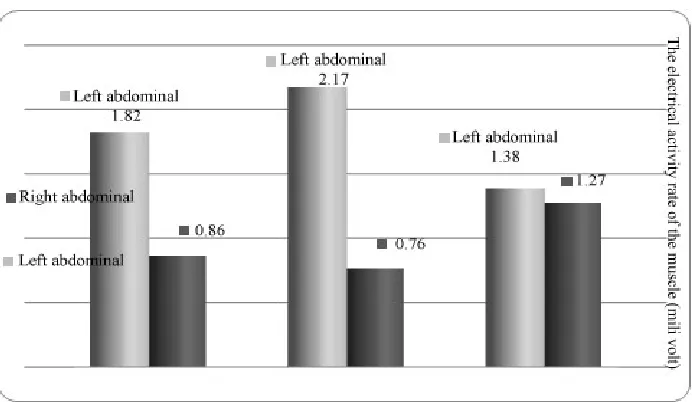
Figure 2 EMG activity of the left and right RA muscle while carrying school bag
no bag as a control-walking with backpack-walking and carrying a shoulder bag-backpack-walking and carrying handbag. Order of testing was randomized, and each student performed only one of the four tests per day. Immediately after 15 min of carrying each bag, the participants stood straight with feet as wide as shoulders (distance between the right and left acromion processes) [33], and EMG activity of trunk muscles were recorded for one minute [32]. After 15 minutes, walking without bag was
muscles was determined by the researchers and marked. (Lumbar ES muscle: In the space between the L4/L5, 2-cm away from the midline on both the left and right sides or 3 cm away from spinous process of L3 [4]. RA muscle: The superior aspect of the anterior surface of sacrom, 2 cm away from the midline from both sides and 3 cm higher than umblicus) [4]. Then the electrodes were placed on the designated areas with electrolyte glue. The electrodes were made of mercury chloride and were placed on the abdominal muscles Direction of the electrodes was adjusted parallel to the muscle fibers. EMG activity of ES and RA muscles in both left and right sides of the body, immediately after the each test was recorded for one min in a static condition using 8-channel electromyography (ME300P8, Electronics LTD, Finland Muscle EMG Tester). Signals activated were normalized by the normalization reference. So the no bag status of each student (100 ) was considered as a reference and all other conditions were expressed as a percentage of the reference state. The signal booster built-in EMG set automatically amplified the recorded signals. The descriptive and inferential statistics were used to describe and analyze the data. Variables are described using descriptive statistics such as mean and standard deviation. To compare mean values of EMG between different tests, inferential statistics including analysis of variance (ANOVA) was used. Wherever a significant difference was observed between the different tests, the Bonferroni test was used to determine the significance level (significance level of 0.05). Also, in order to assess and compare the EMG activity between the left and right sides of each muscle and the consistency or lack of consistency between these two activities, the independent t-test was used.
Results
Participants' anthropometric characteristic measurements including the height, weight and BMI are shown in Table1.
Table1Participants' anthropometric characteristics Statistical index Range M±SD
Age (year) 9-11 9.75±0.71
Weight (kg) 34-40 37.17-1.91
Height (cm) 137-149 143.7±3.67
BMI ( ) 18.6±21.25 20.27±0.79
of comparative results between the two sides was P=0.009.The results showed that there were significant differences between the EMG activity of the left and right sides of RA muscles during carrying a backpack (P=0.009). So the activity of the right and left RA was asymmetric during carrying a backpack and rate of the activity of the left was more than the right side of the muscle. The mean EMG activity of the right and left RA muscle during carrying a shoulder bag were respectively 0.7645 and 2.1720, and the significance level of comparative results between the two sides was P=0.001. So the activity of the right and left RA was asymmetric during carrying a shoulder bag. The results showed that during carrying a handbag and a shoulder bag on the right side of the body, level of EMG activity in the RA muscle was significantly increased on left side and significantly decreased on the right side (P = 0.001).
Figure 2. EMG activity of the left side and right side of the RA muscle during carrying school bags
Discussion
Carrying a backpack leads to a significant reduction in EMG activity in ES and RA muscles than other carrying other bags. This part of the research is consistent with the results of Motmans et al. [4], Hosseini et al. [6]. They also reported the reduction of muscle activity during carrying a backpack. It can be attributed to the position of the bag on the back and near the center of the body rather than a shoulder bag and handbag. The lower is the distance between the load and the body's center of gravity, the less EMG activity of trunk muscles is expected [6]. During carrying a backpack, this distance is less than that during carrying a handbag or a shoulder bag. However, the ES muscle activity of the left and right parts reduces symmetrically and that of the left and right parts of RA muscle decreased asymmetrically. This finding is consistent with previous results [6,34,35]. They also observed asymmetry between the activity of left and right parts of RA muscle. However, they reported the activity of right part more
side flexion in the carrier side of the bag [36] whose final outcome may be imbalanced gait biomechanics [36,38]. Biomechanical changes in gait may lead to imbalance pressure on the muscles of both sides of the body. Moreover, longer distance between the load and body's center of gravity causes greater EMG activity of trunk muscles. [6] This distance is much greater when carrying a shoulder bag than when carrying a backpack.
Pasko et al. in 1997, Huang et al. in 2011, the Institute of Work and Health of Bern University for America in their research found that carrying a shoulder bag and backpack caused the shoulder to move up and the shoulder to deviate lateral deviation of the backbone. And most of postural changes of adolescence is when students carry school bags with one strap and or use a sport sack or backpacks with one strap [36,39]. Gong et al in 2010 after comparison of plantar pressure in the mode of stand and walk, while carrying different kinds of bags, have found a significant difference in plantar pressure of the left and right sides with the weight of 5 kg while carrying KULEYE SHANEYI, and understood that occurrence of muscular- skeleton disorder when walking with shoulder carrying backpacks heavier than 5 Kg was due to excessive use of the muscles of the opposite side [37]. Thus, the disparate activities of muscles when carrying a shoulder bag with the resulting changes in the long term may be harmful.
In this research, carrying handbag led to the maximum electrical activity in all the studied muscles and the greatest difference between the activity of the muscles of the right and left ES, RA, so that the EMG activity on the opposite side of the bag in the ES and RA muscles increased significantly and in the concordant side it decreased significantly. The results are consistent with the results of Hossaini et al. [4]. They also have observed the highest difference between the right and left ES and RA muscles when carrying handbag. On the cause of these changes, it can be said that similar to a shoulder bag, carrying hand bags as well leads to lateral flexion of the trunk, but with more intensity.
These changes lead to strain on muscles on the opposite side of the bag [36]. Also the distance between the bag location and the body center of gravity in the state of carrying handbag is at the maximum possible distance. Mutemnz et al. have reported that more distance causes more EMG activity of trunk muscles [6]. Thus, the highest EMG activity in ES and RA muscles during carrying a bag is reasonable.
Conclusion
Generally, the results of the present study showed that backpack, in comparison to the other bags, minimized the muscle pressure created as the result of carrying school supplies by the students because carrying this bag did not disturb the consistency and proportionality between the activity of the muscles of the left and right parts of the spine. After that, shoulder bag and handbag respectively apply the largest muscle tension on the body. And asymmetry of left and right muscle activity during carrying the bag may lead to early fatigue of students and may interfere in rhythm and the process of walking.
Acknowledgments
This research was conducted as a master's thesis in Ferdowsi University of Mashhad in close collaboration with the Bu-Ali Sina University in Hamedan. Hereby, appreciation is owed to the Research Board in Ferdowsi University of Mashhad and Bu-Ali Sina University and all participants and partners, especially Dr. Seyed Hosseini Hosseini, devotedly helped at all stages of the research.
Contributions Study design: AEA
Data collection and analysis: SHH, SMM Manuscript preparation: SMM, NKHY
Conflict of Interest
References
1. Hosieni SH, Daneshmandi H, Rahmani Nia F. The effect of backpack weight on cardio-vascular and respi-ratory changes in adolescent students. journal of sport medicene2010; 1(5): 23. [In Persian]
2. Rateau MR. Use of backpacks in children and adoles-cents a potential contributor of back pain. Orthopedic Nursing2004; 23(2): 101-05.
3. Hayvood KM. Growth and movement development in long life. Tehran. Samt ; 2003. [In Persian]
4. Hosseini H, Dastmanesh S, Daneshmandi H. The changes of electromyography students trunk muscles when school common bags caring. journal of Sport Medicense2010; 2 (5):22. [In Persian]
5. Hosseini H, Daneshmandi H, Rahmani-Nia F. The effect of 3 ergonomic models of different school bags in students. Journal of Olympics2010; 17(3): 47. [In Persian] 6. Motmans RR, Tomlow S, Vissers D. Trunk muscles activity in different modes of carrying schoolbags. Ergo-nomics2006;10; 49(2): 127-38.
7. Piscione J, Gamet D. Effect of mechanical compression due to load carrying on shoulder muscle fatigue during sustained isometric arm abduction: an electromyographic study. Eur J Appl Physiol2006; 97(5): 573-81.
8. Negrini S, Carabalona R. Backpacks on! school children’s perceptions of load, associations with back pain and factors determining the load. Spine 2002; 27: 187-95.
9. Puckree T, Silal SP, Lin J. School bag carriage and pain in school children. Disabil Rehabil2004; 26(1): 54-9. 10. Lai J, Jones A. The effect of shoulder-girdle loading by a school bag on lung volumes in Chinese primary school children. Early Hum Dev2001; 62(1): 79-86. 11. Hong Y, Brueggemann GP. Changes in gait patterns in 10-year-old boys with increasing loads when walking on a treadmill. Gait Posture2000; 11(3): 254-59. 12. Kilbom A, Wilson J, Corlett EN. Measurement and assessment of dynamic work. Evaluation of human work, London, Taylor & Francis 1990; 520-41.
13. Holewijn M., Physiological strain due to load carrying. Eur J Appl Physiol Occup Physiol1990; 61(3-4): 237-45.
14. Singh T, Koh M. Effects of backpack load position on spatiotemporal parameters and trunk forward lean.
Gait posture2009; 29(1): 49-53.
15. Stanford ChF, Francis P, Chambers H, et al. Changes in upper body and arm kinematics while carrying symmetrical and assymetrical backpack loads. Motion Analysis Laboratory, Children’s Hospital, California. journal of spain2002;610-13 .
16. Wang YT, Pascoe DD, Weimar W. Evaluation of backpack load during walking. Ergonomics2001; 44(9): 858-69.
17. Hong Y, Cheung CK. Gait and posture responses to backpack load during level walking in children. Gait Posture2003; 17(1): 28-33
18. Hong Y, and Li JX. Influence of load and carrying methods on gait phase and ground reactions in children’s stair walking. Gait Posture2005; 22(1): 63-8.
19. Mackie HW, Legg SJ ,Beadle J, Hedderley D. Comparison of four different backpacks intended for school use. Appl Ergon2003; 34(3): 257-64.
20. Sherry, DJ. Children and backpack: load and design selection based on physiological effects, Arizona State University2001; 21: 1-6.
21. Hong Y, Li JX, Wong AS, Robinson PD. Effects of load carriage on heart rate, blood pressure and energy expenditure in children. Ergonomics2000; 439(6): 717-27.
22. Moore MJ, White GL, Moore DL. Association of relative backpack weight with reported pain, pain sites, medical utilization, and lost school time in children and adolescents. J Sch Health2007; 77(5): 232-9 23. Siambanes D, Martinez JW, Butler EW, Haider T. Influence of school backpacks on adolescent back pain. J Pediatr Orthop2004; 24(2): 211-7.
24. Sheir-Neiss GI, Kruse RW, Rahman T, Jacobson LP, Pelli JA. The association of backpack use and back pain in adolescents. Spine2003; 28(9): 922-30.
25. Korovessis P,Koureas G,Zacharatos S,Papaziis Z. Backpacks, back pain, sagittal spinal curves and trunk alignment in adolescents: a logistic and multinomial logistic analysis. Spine2005; 30(2): 247-55.
26. Puckree T, Silal SP, Lin J. School bag carriage and pain in school children. Disabil Rehabil2004; 26(1): 54-59. 27. Navuluri N, Navuluri RB. Study on the relationship between backpack use and back and neck pain among adolescents. Nurs Health Sci2006; 8(4): 208-15. 28. Skaggs DL, Early SD, D’Ambra P, Tolo VT, Kay RM. Back pain and backpacks in school children. J Pediatr Orthop2006; 26(3): 358-63.
29. Whittfield JK, Legg SJ, Hedderley DI. The weight and use of school bags in New Zealand secondary schools. Ergonomics2001; 44(9): 819-24.
30. Daneshmandi H, Isa-nejad A, Noraste A. The effect of bench hight on students trunk muscles EMG changes when sit down. Research of Sport sciences
2009; 6(19): 127-41. [In Persian]
31. Voll H, Klimt F. Strain in children caused by schoolbags. Offentl Gesundheitswes1997; 39(7) :369-78.
and fatigue in children. J Electromyogr Kinesiol2008; 18(6): 990-6.
33. Piscione J, Gamet D. Effect of mechanical compression due to load carrying on shoulder muscle fatigue during sustained isometric arm abduction: an electromyographic study. Eur J Appl Physiol2006; 97: 573-81.
34. Al-Khabbaz YS, Shimada T, Hasegawa M. The effect of back pack heaviness on trunk-lower extremity muscle activities and trunk posture. Gait Posture2008; 28(2): 297-302.
35. Hosseini H, Amirian S,Dastmanesh M, Khoori M,Abdolmohamadi A. The effect of backpack loading with different weights on erectro spine and rectus abdominise muscles electromyography activity in elementary school students. Journal of Olympices 2011; 25(11): 50. [In Persian]
36. Pascoe DD, Pascoe, DE, Wang YT, Shin DM, Kim CK. Influence of carrying book bags on gait cycle and posture of youths. Ergonomics1997; 40(6): 631-41.
37. Gong W ,Lee SB, Kim B . The comparison of pres-sure of the feet in stance and gait by the types of bags. Physical Therapy Science2010; 22(3): 255-58.
38. Hong Y, Li JX. Influence of load and carrying meth-ods on gait phase and ground reactions in children’s stair walking. Gait Posture 2005; 22(1): 63-8 .