*Corresponding author:Sankara Pitchaiah Podila
ISSN: 0976-3031
Research Article
KNOWING SELF-A SOLUTION FOR PERSONAL AND GLOBAL CHALLENGES
Sankara Pitchaiah Podila
Psychologist and Professor of Geology, Acharya Nagarjuna University, Andhra Pradesh, India
DOI: http://dx.doi.org/10.24327/ijrsr.2019.1002.3147
ARTICLE INFO ABSTRACT
The value deterioration and human attitude become a threat to the human society. Day by day unrest and insecurity growing and the planet may become not suitable for leading a happy and peaceful life in the future. Unless, there is a change in situation, the human world may be extinct and the prediction that the Era ends shortly become true. To save the mankind, it is a need of hour to think of a solution to change the human attitude positively. For proper personal goal setting one shall have the knowledge regarding the Science of human body, the relation between the Emotions and health and Life skills. Proper personal goal setting, itself, save the mankind from personal and global challenges.
INTRODUCTION
Nature has been creating disasters, like earthquakes, tsunamis, cyclones, floods, etc. In addition to these, mankind has been contributing to some other challenges, ex., Negative human attitude, climate change, nuclear wars, value deterioration. Sankara Pitchaiah (2019 a) explained various manmade challenges and proposed a model for their solution. He stated that the human attitude is a biggest manmade global challenge. Unless there is a change in human attitude, it is difficult to implement the solutions for reducing the impact of the global challenges. He felt that human attitude can be changed by creating awareness about the Science of human body, the relation between Emotions and health and teaching Life skills. Sankara Pitchaiah (2019b) presented these aspects in a nut shell and discussed their role in personal goal setting, which will solve the global challenges.
In this paper, the author elaborated the above three aspects and discussed in detail.
Know yourself
Self awareness helps a person to choose a right goal and to lead a happy and peaceful life.
When we focus our attention on ourselves, we evaluate and compare our current behavior to our internal standards and values. We become self-conscious as objective evaluators of
ourselves. Various intrapersonalstates are intensified by self-awareness, and people sometimes try to reduce or escape from unwanted behavior.
The knowledge about the following aspects is a solution for personal and global challenges.
1. Science of the Human body 2. Emotions and Health and 3. Life skills
Here, These are Explained in Detail
Science of the Human Body
It is presented under the following heads:
Some facts about Humans Human body and Electricity Which controls Human Beings? Cause and Effect
How to understand the nature? Influence of Negative Attitudes
Some Facts about Humans
Read the Following Facts about Us
1. At the time of birth we had no choice to choose our parents, family members, relations, friends, physique, health, wealth, intelligence, height, weight or else.
International Journal of
Recent Scientific
Research
International Journal of Recent Scientific Research
Vol. 10, Issue, 02(C), pp. 30889-30898, February, 2019
Copyright © Sankara Pitchaiah Podila, 2019, this is an open-access article distributed under the terms of the Creative Commons Attribution License, which permits unrestricted use, distribution and reproduction in any medium, provided the original work is properly cited.
DOI: 10.24327/IJRSR CODEN: IJRSFP (USA)
Article History:
Received 4th November, 2018 Received in revised form 25th December, 2018
Accepted 18th January, 2018 Published online 28th February, 2019
Key Words:
2. Our body is given freely with five senses, mind and creative will (Buddhi) etc.
3. Heart beat, Respiration and digestion are involuntary. These are not in our hands.
4. In the day to day life, life events/incidents such as accidents, meeting strangers, rain etc. not in our hands. 5. Result of any activity is not in our hands.
6. Natural agents (Ex., Rivers, glaciers, wind patterns), Natural disasters (Ex., Cyclones, earthquakes, floods), Planetary motions not in our hands.
7. Death is not in our hands.
8. We have not created the nature and its components, including oxygen, on which humans, animals, plants depend for survival.
9. It is evident that we was not bringing any at the time of birth and not taking away at the time of death.
10. If the nature does not protect us, no survival for us. For ex. If skin has no reaction to fire our body may burn without our notice.
11. We have neither created, nor distributed the natural resources among the world countries, just utilizing for our development.
12. Nature has been maintaining the hydrological cycle and providing drinking water.
13. We are not awarding rewards or punishments in our life.
Let us Think, Whether it is Science or Philosophy.
After knowing the scientific facts about our body let us know its structure and significance.
The Human body is a living super computer. It is studied by health professionals, physiologists, anatomists, psychologists and by artists to assist them in their work. Physically, the body comprises of head, trunk, and limbs. Our body parts (organs) are made of cells, and the cells with molecules and the molecules with atoms. The Human body contains about 10 trillion (1013) cells, the fundamental unit of life. Their sizes vary in between 1 and 100 μm. The diameter of an atom ranges from 0.1 to 0.5 nm.
Atom
The atom is a basic unit of matter that consists of a dense central nucleus surrounded by a cloud of negatively charged electrons. The nucleus contains one or more protons and may also contain neutrons. Protons have a positive charged and neutrons have no charge at all.
The flow of electrons is electricity. Electric fields are created by differences in voltage: Magnetic fields are created when electric current flows. Water plays a prominent role and a drop of water contains 5.4*107 atoms. It means millions of atoms present in our body and generating electromagnetic energy. So we can define our body as a machine working based on the electromagnetic forces and the life processes are dependent of this force. For example;
Food digestion requires electromagnetic force Mixing of oxygen into blood is due to magnetism Nervous system utilizing electricity for the transmission
of signals
Mind is the steering wheel of the human body, operated by human personality.
Human body and Electricity
Harun Yahya (2007), had written an excellent book with a title ‘The Miracle of Electricity’ (For details, visit www. harunyahya. Com). According to him;
There are practically no non-electrical systems in the human body.
Without electrical energy, our bodies would be unable to function.
Our bodies are equipped with bio-electrical cables, known as nerves, millions of meters in length. Information is transported along these cables at a speed approaching that of light.
All nerve fibers have electrical charges. The electricity outside the fiber is positively charged and the inside is negatively charged.
Positively charged ions enter the nerve sheath while negative ions move to the exterior of the nerve fiber, thus setting up an electrical current. As a result, the relevant muscle or organ functions.
Nerves interpenetrating our bodies consist of hundreds, and sometimes, thousands of nerve cells called “neurons.”
We can compare a neuron to an electrical switch that goes on or off. Neurons receive signals from neighboring neurons and transmit to adjacent neuron. All neurons contain, short fibers known as dendrites,
which carry electrical signals, and a long fiber known as axon that carries signals for long distances.
Every cell is like a miniaturized battery. Surrounding the cell is a liquid rich in potassium, and the inside is full of liquid high in sodium. If two mined, they react and electricity emerges as a side product.
The electricity in our cells is carried by ions. During the movement of ions, cells produce electricity.
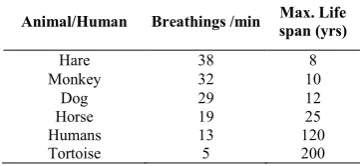
There is a direct link between the number of breaths / minute and length of life span (Table 1).
Table 1 Relation between Breathing and Life Span
Animal/Human Breathings /min Max. Life
span (yrs)
Hare 38 8
Monkey 32 10
Dog 29 12
Horse 19 25
Humans 13 120
Tortoise 5 200
Which controls the human beings?
After knowing our limitations, we should think about the power/energy that controls our lives.
1. If birth, death and related aspects are not in our hands, which one is controlling human life?
2. Most of the people answering the God or the Nature or some Power.
3. If so, whether it has biased nature? The Answer is ‘should not be’ as we were in the middle of the nature, where all its components were scientifically proved. 4. On what basis it has been deciding day to day events in
5. What is the cause for different physique and personalities?
Cause and Effect
Without cause, nothing will happen in the nature or in our lives (Table 2), of course, it may not be possible in some cases.
How to understand the nature?
By activating our body naturally, we can understand the nature. For this, yoga is useful and it is briefly explained here.
Yoga, is a group of physical, mental (meditation), and spiritual practices or disciplines which originated in ancient India (Wikipedia). Physical yoga helps to keep the body healthy and mental yoga useful to achieve balance emotions and to g et al l-round positive development in our body. Meditation also improves analytical abilities to understand the link between the human body and the nature.
Benefits of Physical Yoga
Rameswar Pal et al., (2018) (https://indian express. Com) were made the subjects to practice yoga for one hour everyday for three months. The research study, focused not only on the brain, but comparative studies were conducted on hypertension, blood pressure, heart rate, and stress. According to the researchers, a brain develops till the age of 20-30. After that, development of the brain halts and after 40 years, its slow degeneration starts. Researchers found that the blood pressure, which was recorded at 122/69 in the age group of 20-29 before yoga reduced to 119/after doing yoga.
Similarly, the blood pressure, which was 134/84 among the respondents (40-50) came down to 124/79 after yoga. Cortisol, which is a stress hormone released by the adrenal glands and helps the body deal with stressful situations, was 68.5 percent in the age group of 20-29 which declined to 47.4 after the exercise. The cortisol level which was 95 before yoga reduced to 72.7 after three months of yoga in the group 40-50 years. Further, dopamine and serotonin levels which effectively improve motivation, focus, mood and instill positivity were found to have improved in all the groups after yoga.
Benefits of Mental Yoga (Meditation)
Meditation means concentrating on something. It may be on breathing or on a picture or on some work. The best way is to meditate on breathing, as it is directly linked with heart beat.
Voluminous literature was piled up on the benefits of meditation. The various benefits of meditation are;
Decreased Stress (Remmers et al., 2016)
Enhanced Ability to Deal with Illness (Zernicke et al., 2016)
Decreased depressive symptoms (PowellHarvard Staff Writer, 2018)
For cancer patients (Heeter and Rebecca, 2018) Improved Academic Success (Bennett & Dorjee, 2016) Buffer against Bullying and Depression (Zhou et al.,
2017)
Provide Support and Boost Resilience (Coholic & Eys, 2016)
Advantages of Integrating Mindfulness in the Workplace (Gallant, 2016)
Reduced Word-Related stress and Psychological Distress (Bartlett et al., 2016)
Decreasing Turnover and Burnout (Taylor and Millear, 2016)
Explaining Neuroplasticity (Honan, 2017)
Influence of Negative Attitudes
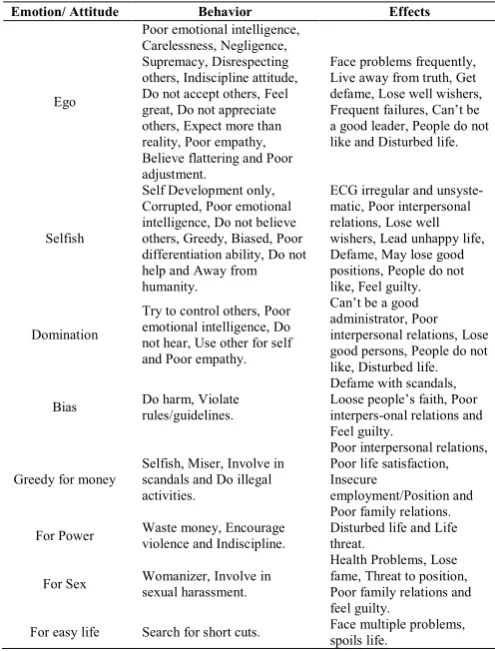
At present, most of the people have surrendered themselves to negative attitudes like ego, selfishness, dominance and bias. Their main goal is to earn money/achieving power/ and or enjoying sex. Some of the effects of the negative attitudes are shown in Table 3.
Table 2 Cause and Effect-Examples
Cause Effect
If a person takes
adulterated food Face health problems If a person addicted to
liquor/drugs Face health problems If a student neglected
the studies Fail in the course If a person has a
negative personality
Suffer with poor mental health
If a person frequently anger with others
Suffer with heart and other problems
If a person is happy Enjoy sound health with satisfactory life
Table 3 Negative Attitudes and Effects on Human Life
Emotion/ Attitude Behavior Effects
Ego
Poor emotional intelligence, Carelessness, Negligence, Supremacy, Disrespecting others, Indiscipline attitude, Do not accept others, Feel great, Do not appreciate others, Expect more than reality, Poor empathy, Believe flattering and Poor adjustment.
Face problems frequently, Live away from truth, Get defame, Lose well wishers, Frequent failures, Can’t be a good leader, People do not like and Disturbed life.
Selfish
Self Development only, Corrupted, Poor emotional intelligence, Do not believe others, Greedy, Biased, Poor differentiation ability, Do not help and Away from humanity.
ECG irregular and unsyste- matic, Poor interpersonal relations, Lose well wishers, Lead unhappy life, Defame, May lose good positions, People do not like, Feel guilty.
Domination
Try to control others, Poor emotional intelligence, Do not hear, Use other for self and Poor empathy.
Can’t be a good administrator, Poor interpersonal relations, Lose good persons, People do not like, Disturbed life.
Bias Do harm, Violate
rules/guidelines.
Defame with scandals, Loose people’s faith, Poor interpers-onal relations and Feel guilty.
Greedy for money
Selfish, Miser, Involve in scandals and Do illegal activities.
Poor interpersonal relations, Poor life satisfaction, Insecure
employment/Position and Poor family relations.
For Power Waste money, Encourage
violence and Indiscipline.
Disturbed life and Life threat.
For Sex Womanizer, Involve in
sexual harassment.
Health Problems, Lose fame, Threat to position, Poor family relations and feel guilty.
For easy life Search for short cuts. Face multiple problems,
Emotions and Health
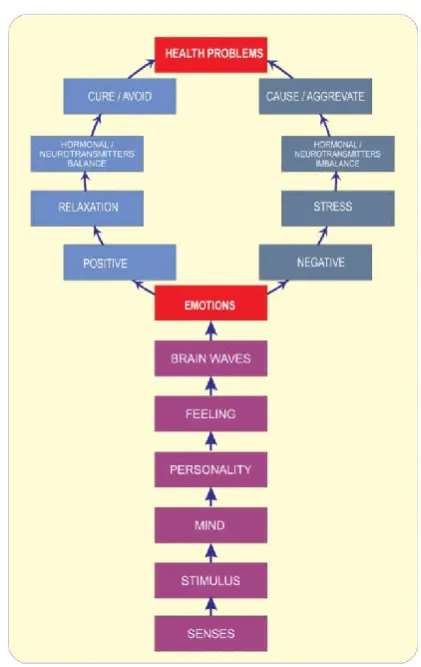
Happiness depends on our health (physical and mental) and the health on emotions. Society with good humans drive toward healthy and peaceful society and unrest in the society questions the purpose of life. Systematic process has been operating in the human body among the senses, mind, personality, brain, emotions, nervous system, hormones, neurotransmitters and health (Sankara Pitchaiah, 2018).
In this section, the relation between Emotions and their impact on human health is discussed. The discussion is presented under the following heads.
Brain waves
Emotions (Positive and Negative) Heart Rate Variability
Hormones/Neurotransmitters Some Human behaviors
Brain Waves
Brainwaves are produced by synchronized electrical pulses from masses of neurons communicating with each other. Our brainwaves change according to what we are doing and feeling.
At the root of all our thoughts, emotions and behaviors is the communication between neurons within our brains. In emotion, the total behavior, including the receptors, effectors nervous systems, and related psychological processes is affected. Brainwaves are produced by synchronized electrical pulses from masses of neurons communicating with each other
(Https:// Brainworksneurotherapy.Com). Different brain waves are shown in figure 2.
Fig 2 Types of Brain waves (https://www.google.co.in)
Meditation and yoga drive your brainwaves into balance. Various types of brain waves and their characteristics are given in Table 4.
The type of brainwave is defined by the frequency at which it is pulsing. The particular rate of pulsation determines the state of the individual mind. There are often several patterns interacting at one time. Brains operate much like a resonance chamber, oscillating pulses and patterns of neural excitations ripple through our brains much likes never-ending waves in a dynamic pond of subtle electrical matter. Brainwave entrainment and binaural beats occurs naturally in our environment (Ved Vyas, 2014). Further details were presented by Sankara Pitchaiah (2018).
Our brainwaves change according to what we are doing and feeling. When slower brainwaves are dominant we can feel tired, slow, sluggish, or dreamy. The higher frequencies are dominant when we feel wired, or hyper-alert.
Fig 1 Relation between Emotions and Health (Sankara Pitchaiah,
2018)
Table 4 Types of Brain waves and their characteristics (Compiled from various sources)
Types/
Frequency Characteristics
Infra-Low <.5HZ
Behind our higher brain functions, Play a major role in brain timing and network function.
Delta (δ) 0.5-3Hz
Slow and loud, Deepest meditation and dreamless sleep, Source of empathy, Healing and regeneration.
Theta(θ) 3-8Hz
Most often in sleep, Dominant in deep meditation, Gateway for learning, memory, and intuition, Senses withdrawn from the external world, Where we hold our ‘stuff’, our fears, troubled history and nightmares.
Alpha (α) 8-12Hz
Dominant during quietly flowing thoughts, Resting of state for the brain, Aid overall mental coordination, calmness, alertness, mind/body integration and learning.
Beta (β) 12-27Hz
Present when we are alert, attentive, engaged in problem solving, judgment, decision making, or focused mental activity, Highly complex thought, integrating new experiences, high anxiety, or excitement, Can translate into stress, anxiety and restlessness.
Gamma(γ) >27Hz
Research has identified brainwave patterns associated with all sorts of emotional and neurological conditions. When our brainwaves are out of balance, there will be corresponding problems in our emotional or neuro-physical health.
Instabilities in brain rhythms correlate with tics, obsessive-compulsive disorder, aggressive behavior, rage, bruxism, panic attacks, bipolar disorder, migraines, narcolepsy, epilepsy, sleep apnea, vertigo, tinnitus, anorexia/bulimia, PMT, diabetes, hypoglycemia and explosive behavior.
Emotions
Emotion is an agitated or excited state of our mind and body. Emotion is any conscious experience characterized by intense mental activity and a certain degree of pleasure or displeasure. The physiology of emotion is closely linked to arousal of the nervous system. Much of the human success will be determined by the effective understanding of emotions under conditions of extreme stress and change. Every emotion stimulates a chemical response in your body. Positive emotions
cause the production of “feel good”
hormones serotonin and dopamine. Negative emotions cause the production of “stress” hormones cortisoland adrenaline.
Emotions are classified into two types
Positive and Negative .The person with a positive outlook is more likely to feel overall life satisfaction. Not because they have more money, beauty, or status – which is rarely the case – but because they journey through life with mindfulness, a sense of purpose, and gratitude for what they have. People who tend to be optimistic deal with daily challenges more effectively, stopping them before they become chronic conditions.
Here, the Impact of Some of Positive Emotions on Human Health is Presented. A greater number of helping behaviors was associated with higher levels of daily positive emotion and better overall mental health (Raposa et al., 2015). Social laughter led to pleasurable feelings and significantly increased release of endorphins and other opioid peptides in the brain areas controlling arousal and emotions (Sandra et al., 2017). Laughing increased pain resistance, whereas simple good feeling in a group setting did not. Pain resistance is used as an indicator of endorphin levels (Dunbar et al., 2011).
The Impact of the Negative Emotions on Health is Presented Here.The negative emotions may come from many issues and be different for each person. Conflicts over beliefs, racism, financial worry, physical ailments, poor living conditions, and toxic relationships are just a few examples of where negative emotions might originate. Everyone experiences small frustrations during daily life that usually lasts for 24 hours or less. This is known as “acute” stress. In this case, negative emotions may ruin our day, but otherwise have little to no effect on our quality of life. If it doesn’t ease after several days or gradually worsens, it is known as “chronic” stress. In such a case they can have devastating and irreparable effects to your physical health (citation needed).
Chronic stress keeps your system unnaturally flooded with cortisol and adrenaline and results in inflammation. We may not know how deeply the stress affects us until we start to experience the physical signs that eventually manifest.
Negative emotions take root in our body, in our cells. We are a being of energy and light. When you infuse yourself with negative, dark emotions, it makes sense that your energy will slowly drain away and your light will dim over time. Sometimes, chronic pain such as muscle soreness, headaches, stomach aches, or tenderness in various places is your body sending you a message. A Person with a generally negative outlook may feel unsatisfied, persecuted, and experience more instances of jealousy, anger, and hatred (citation needed). Staicu and Cutov (2010) studied the health effects of anger. According to them, the anger causes coronary, bulimia and diabetes. Peter Yellowlees found that anger and hostility were associated with increased Coronary Heart Disease events (https:// www.mentalhelp.net). Williams (2010) reviewed primarily prospective population-based studies on the relationship between anger/hostility and Coronary Vascular Disease (CVD). The results from these investigations confirm that trait anger/chronic hostility, anger expression, and acute anger episodes have a positive predictive value for CVD-including new or recurrent events or atherosclerosis.
Heart Rate Variability (HRV)
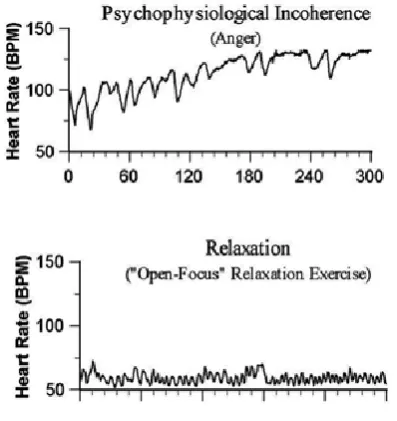
Fig 3 Emotions and heart rhythm patterns (McCraty and Rees, 2011; McCraty and Zayas, 2014)
In contrast, sustained positive emotions, such as appreciation, compassion, and love, generate a smooth, ordered, sine wave-like pattern in the heart’s rhythms. This reflects increased synchronization in higher-level brain systems and in the activity occurring in the two branches of the ANS as well as a shift in autonomic balance toward increased parasympathetic activity.
Hormones/Neurotransmitters
Hormones are used to communicate between organs and tissues for physiological regulation and behavioral activities (Wikipedia). Neurotransmitters are endogenous chemicals that enable neurotransmission. It is a type of chemical messenger which transmits signals across a chemical synapse.
A neurotransmitter imbalance can cause Depression, anxiety, panic attacks, insomnia, irritable bowel, hormone dysfunction, eating disorders, Fibromyalgia, obsessions, compulsions, adrenal dysfunction, chronic pain, migraine headaches, and even early death. Some of the more common neurotransmitters that regulate mood are Serotonin, Dopamine, and Norepinephrine (Wikipedia). Interactions between neurotransmitters, hormones, and the brain chemicals have a profound influence on overall health and well-being. When our concentration and focus is good, we feel more directed, motivated, and vibrant.
Some Human Behaviors
Some fears and phobias: Darkness, heights, blood, journey, noise, bathing, open places, speaking in public, in crowd, men, women, thunder and lightning, failure, crossing streets, accidents, dreams, crossing bridges, dead bodies, water, Animals (ex. insects, cat, dog, chicken, spiders, frogs) etc.
Some anxieties: while alone, anticipating an event, about children, hearing cruelties, about future, menses, etc.
Some suspicions: everybody enemy, people insulting me, all talking about me, somebody calling, building falls while walking, I have an incurable disease, husband neglecting me,
the wife may desert, somebody at my back, people doubt at me, life threat to me, everybody watching me, etc.
Some weaknesses: money, power, sex, family, talking, laughing, stealing, lying, etc.
Life Skills
Goal setting influences the individual’s life positively or negatively. Individuals influence the social values and decide the nature of the society. For proper goal setting we shall have knowledge on the following life skills;
Life Driving Value of life Time value Body Value
Physical and Mental Health
Problem Solving & Decision Making Spiritual Intelligence
Life Driving
To drive a vehicle one needs the following;
Training Driving license
Knowledge on the traffic rules (Helmet, signals, etc.)
If anybody drives a vehicle, without learning the driving and related matters, an accident may occur. In the accident, we or opposite party may lose life or body parts or wounded.
To drive a simple motor vehicle, invented by human being, one has required to learn many things. If it is the case, the human body is equipped with the most complex mind, which is difficult to predict its actions. The personality, emotions and decisions decide the fate of one’s life. One has to very cautious about it and need to take training in Life Skills. Otherwise, similar to the vehicle accidents, in daily life also we met with accidents. Here, we may lose relations, commit mistakes or may face miserable condition.
Value of Life
We can quote a few names of great leaders, those sacrificed their lives for the society (category 1- Ex. Mahatma Gandhi, Mother Teresa, Abraham Lincoln, Nelson Mandela, George Washington, Napoleon Bonaparte). We can give names of crores of people, those dedicated their lives for the sake of family/job/business, etc. (Category 2).
Similarly, we can list out lakhs of names of Terrorists, corrupted, cheaters and anti-social elements (Category 3). All these categories of people are the part of the same society. Whose life is valuable?
Time Value
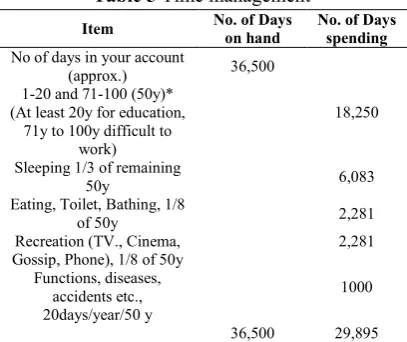
To reach the set goal, one shall understand the time value and time shall be spent cautiously. If not, calculate now using the following example by assuming that your age is 20 years and we live for 100 years (Table 5).
Table 5 Time management
Item No. of Days
on hand
No. of Days spending
No of days in your account
(approx.) 36,500
1-20 and 71-100 (50y)* (At least 20y for education,
71y to 100y difficult to work)
18,250
Sleeping 1/3 of remaining
50y 6,083
Eating, Toilet, Bathing, 1/8
of 50y 2,281
Recreation (TV., Cinema, Gossip, Phone), 1/8 of 50y
2,281
Functions, diseases, accidents etc., 20days/year/50 y
1000
36,500 29,895
Balance Available: 6,605 Days**
* 1-20 yrs learning period
71-100-In many cases energy do not support to do the work ** Even during this time also we have to do some work for a livelihood.
From the above, we can understand that, if a person live for 36,500 days (100 years approx.), he/she have 6,605 days time approximately for self development. So, what is the value of one hour?
Body Value
In addition to the time value, we shall understand the value of our body. Normally, we do not think about our body parts unless some problem arised. If we try to live with one hand or leg for a week, we can understand its value easily. When all body parts function well, we can reach the goal easily. So, we shall take necessary care about all the body parts. Let us count your body value (Table 6).
Physical and Mental Health
We know the present status of physical health throughout the world, i.e., increasing rate of heart problems, sugar, etc. Regarding the mental health, World Health Organization figures, the total cases of depressive disorders as 5,66,75,969 in India, The answer may be ‘not possible to evaluate, means invaluable’.
Table 6 Body Value
Body part Value(Rs. in lakhs)
Brain Heart Nervous system
Lungs Liver Kidneys
Eyes Ears Nose Tongue
Skin Hands
Legs Others
Total
which was 4.5% of the total population in 2015, while total cases of anxiety disorders were 3,84,250,93 which was 3% of the population in the same year period. The WHO organization (The Patient factor, 2017) reported the worldwide mental disorders (Table 7). From this, we can understand that 1876 millions of people suffering from one or other disorder. The health benefits of physical activity are well established and include a lower risk of cardiovascular disease, hypertension, diabetes, and breast and colon cancer. Additionally, physical activity has positive effects on mental health, delays the onset of dementia, and can help the maintenance of a healthy weight (in Regina Guthold et al., 2018; https://www.tctmd.com).
Kaluza et al., (2018) reported that those followed an anti-inflammatory diet had an 18% lower risk of all-cause mortality, a 20% lower risk of cardiovascular mortality, and a 13% lower risk of cancer mortality, when compared with those who followed the diet to a lesser degree. Smokers who followed the diet experienced even greater benefits when compared with smokers who did not follow the diet. Anti-inflammatory foods consist of fruits and vegetables, tea, coffee, whole grain bread, breakfast cereal, low-fat cheese, olive oil and canola oil, nuts, chocolate, and moderate amounts of red wine and beer. Pro-inflammatory foods include unprocessed and processed red meat, organ meats, chips, and soft-drink beverages.
Dose-response analysis showed that even partial adherence to the anti-inflammatory diet may provide a health benefit (Kaluzal et al., 2018).
Pollack et al., (2018) studied a total of 509 urine samples were collected from 143 women aged 18 to 44 years, free of known chronic health conditions and birth control to be measured for environmental chemicals that are found in personal care products, such as parabens, which are antimicrobial preservatives, and benzophenones, which are ultraviolet filters. This multi-chemical approach more closely reflects real world environmental exposures and shows that even low-level exposure to mixtures of chemicals may affect reproductive hormone levels. Another noteworthy finding of the study is that certain chemical and UV filters were associated with decreased reproductive hormones in multi-chemical exposures while others were associated with increases in other reproductive hormones, underscoring the complexities of these chemicals. Further, they said that they have early indicators that chemicals such as parabens may increase estrogen levels. If this finding is confirmed by additional research, it could have implications for estrogen dependent diseases such as breast cancer.
Table 7 Various disorders and share of global population (Source: WHO, The Patient Factor, 2017)
Disorder
Share of population, %
(2016)
Number of people, millions
(2016)
Any mental or substance use 15.5 1100
Depression 4 268
Anxiety disorders 4 275
Bipolar disorder 0.6 40
Eating disorders (clinical anorexia
& bulimia) 0.14 10.5
Schizophrenia 0.3 21
Alcohol use disorder 1.4 100
Drug use disorder (excluding
To explore the association between sitting time and mortality, researchers led by Dr. Patel, analyzed survey responses from 123,216 individuals (53,440 men and 69,776 women) who had no history of cancer, heart attack, stroke, or emphysema/other lung disease enrolled in the American Cancer Society's Cancer Prevention II study in 1992. They examined the amount of time spent sitting and physical activity in relation to mortality between 1993 and 2006. They found that more leisure time spent sitting was associated with higher risk of mortality, particularly in women. Women who reported more than six hours per day of sitting were 37 percent more likely to die during the time period studied than those who sat fewer than 3 hours a day. Men who sat more than 6 hours a day were 18 percent more likely to die than those who sat fewer than 3 hours per day. The association remained virtually unchanged after adjusting for physical activity level. Associations were stronger for cardiovascular disease mortality than for cancer mortality.
When combined with a lack of physical activity, the association was even stronger. Women and men who both sat more and were less physically were 94% and 48% more likely, respectively, to die compared with those who reported sitting the least and being most active. According to them, one of the possible explanations is Time spent sitting has a negative impact on the body’s hormone levels and the way the immune system works. This may be a factor in the link between sitting time and mortality.
Curtailed sleep promotes weight gain and loss of lean mass in humans, although the underlying molecular mechanisms are poorly understood. Cedernaes et al., (2018) have investigated the genomic and physiological impact of acute sleep loss in peripheral tissues by obtaining adipose tissue and skeletal muscle after one night of sleep loss and after one full night of sleep. They found that acute sleep loss alters genome-wide DNA methylation in adipose tissue, and unbiased transcriptome-, protein, and metabolite-level analyses also reveal highly tissue-specific changes that are partially reflected by altered metabolite levels in blood. The findings provide insight into how disruption of sleep and circadian rhythms may promote weight gain and sarcopenia. (Cedernaes et al., 2018). According to Markwald et al., (2013) Insufficient sleep is associated with obesity, yet little is known about how repeated nights of insufficient sleep, influence energy expenditure and balance. We studied 16 adults in a 14- to 15-d-long inpatient study and quantified the effects of 5 d of insufficient sleep, equivalent to a work week, on energy expenditure and energy intake compared with adequate sleep. We found that insufficient sleep increased total daily energy expenditure by ∼5%; however, energy intake—especially at night after dinner—was in excess of energy needed to maintain energy balance. Insufficient sleep led to weight gain, despite changes in hunger and satiety hormones ghrelin and leptin, and peptide YY, which signaled excess energy stores.
Naresh Sen (2018) investigated the impact of listening to yoga music, which is a type of soothing or meditative music, before bedtime on heart rate variability. The study included 149 healthy people who participated in three sessions on separate nights: (1) yoga music before sleep at night; (2) pop music with
a steady beats before sleep at night; and (3) no music or silence before sleep at night.
The researchers found that heart rate variability increased during the yoga music, decreased during the pop music, and did not significantly change during the silence.
Anxiety levels fell significantly after the yoga music, rose significantly post the pop music, and increased after the no music session. Participants felt significantly more positive after the yoga music than they did after the pop music.
Problem Solving & Decision Making
Problems are common in human life. Some may be light and some serious. Each problem has some solution. Some problems may have more than one solution. Decision making is the choosing of right solution.
Humans shall develop problem solving and decision making abilities, since Childhood. Then they are able to face serious problems with stability in future. Otherwise, even for simple problem they have to feel tension. Decision making shall be done within the required time otherwise additional problems may arise. The following steps are useful for decision making.
Step 1: Define the problem: First try to understand the problem.
Step 2: Collection of information: Get the information related to the problem.
Step 3: Solution: Think about the possible solutions
Step 4: Decision making: Decide the best solution.
Step 5: Implementation: Implement the decision timely based on the seriousness.
Spiritual Intelligence
Spiritual intelligence is knowing self and live by the adoption and promotion of values. Values are nothing but positive emotions.
Spiritual intelligence (SI) consists of two words-spirituality and intelligence. Spirit is “the animating or vital principle: that which gives life to the physical organism in contrast to its material elements: the breath of life” (Webster’s dictionary). SI is “the ability to behave with wisdom and compassion, while maintaining inner and outer peace, regardless of the situation” Wigglesworth, (2012). Brewer, (2008) states that “the spiritual intelligence is available to everyone- yet only a handful of people ever take advantage of it.
The idea of spirituality is increasing in prominence among recent publications (Barbara et al., 2009). Zohar and Marshall (2000) believe that SQ gives us the ability to discriminate. It gives us our moral sense, an ability to temper rigid rules with understanding and compassion and an equal ability to see when compassion and understanding have their limits.
analysis showed that variables of spiritual intelligence and emotional intelligence were the predictors of life satisfaction, respectively.
According to Abdullah et al., (2008) living with no pressure, concern, fear, and anxiety, as well as increase of spiritual growth makes individuals stronger and brings about opportunities to take part in innovative activities and do their jobs more clearly meaningfully and purposefully. Spiritual intelligence helps individuals to fight with the fear of a change as the fear of any change originates from the individuals’ own mind and not from their surrounding environment. Development of spiritual intelligence brings about a growth in individuals’ ability to perceive the emotions and to help the others to control their emotions in a deeper way.
The author felt that by learning these aspects, humans can choose a meaningful and purposeful goal and will have a successful life. When the individuals (basic unit of the society) are happy and peaceful, the world to happy and peaceful.
CONCLUSION
Self awareness gives an ability to choose a right goal. It can be obtained by analyzing Life goal, Hurdles to reach the set goal, Strengths and weaknesses, Daily schedule, Emotions and human behavior, Level of emotional intelligence, Health status Financial status and Skills acquired. Human attitude, which is the biggest global challenge and the main cause for the personal and global problems can be modified using self awareness. The knowledge about Science of human body, the Emotions and health and Life skills will guide us to change negative attitudes, the basic cause of personal and global challenges. So, it is suggested to incorporate the material in students’ curriculum at all levels and the Rulers and the Administrators shall encourage the training on above said aspects.
References
Abdullah Zadeh H, Bagher-Pour M, Bvzhmhrany C, Lotfi M. Tehran (2008). Psychometric Publishing Center, Spiritual intelligence.
Barbara B. Howard, Precious Guramatunhu-Mudiwa and Stephen R. White (2009). Spiritual Intelligence and Transformational Leadership: A New Theoretical Framework, Journal of Curriculum and Instruction (JoCI), 3, (2), 54-67.
Bartlett, L., Lovell, P., Otahal, P., Sanderson, K., & Tasmania, H. (2016). Acceptability, feasibility, and efficacy of a workplace mindfulness program for public sector employees: A pilot randomized controlled trial with informant reports. Mindfulness, 1-16. doi:10.1007/s12671-016-0643-4.
Bennett, K., & Dorjee, D. (2016). The impact of a mindfulness-based stress reduction course (MBSR) on well-being and academic attainment of sixth-form students. Mindfulne- ss, 7, 105-114.
Brewer, Mark (2008). What is your spiritual quotient? Destiny Image Publishers.
Cedernaes Jonathan, Milena Schönke, Jakub Orzechowski Westholm, Jia Mi, Alexander Chibalin, Sarah Voisin, Megan Osler, Heike Vogel, Katarina Hörnaeus, Suzanne L. Dickson, Sara Bergström Lind, Jonas Bergquist,
Helgi B Schiöth1, Juleen R. Zierath, Christian Benedict (2018). Acute sleep loss results in tissue-specific alterations in genome-wide DNA methylation state and metabolic fuel utilization in humans, Sci. Adv.4: 8590. Coholic, D. A., & Eys, M. (2016). Benefits of an arts-based
mindfulness group intervention for vulnerable children. Child and Adolescent Social Work Journal, 33, 1-13. doi:10.1007/s10560-015-0431-3.
Dunbar R. I. M., Rebecca Baron, Anna Frangou, Eiluned Pearce, Edwin J. C. van Leeuwin, Julie Stow, Giselle Partridge,Ian Mac Donald, Vincent Barra, Mark van Vugt (2011).
Social laughter is correlated with an elevated pain threshold. Proc. R. Soc. B 279, 1161–1167.
Gallant, S. N. (2016). Mindfulness meditation practice and executive functioning: Breaking down the benefit. Consciousness and Cognition, 40, 116-130. doi:10.1016/j.conc og.2016.01.005.
Harun Yahya (http://en.harunyahya.tven.a9.com .tr).
Heeter Carrie and Rebecca H Lehto (2018) Benefits of Yoga and Meditation for Patients With Cancer, https://www.researchgate. net/publication/328333477, DOI: 10.3389/ fpsyg.2015.00763/abstract.
Honan, D. (2017). Neuroplasticity: You can teach an old brain new tricks. Retrieved from www.bigthink.com Huang, S., Li, R., Huang, F., & Tang, F. (2015). The potential for mindfulness-based interventions in workplace mental health promotion: Results of a randomized controlled trial. PLoS ONE, 10, 1-15. doi:10.1371/journal.pone.0138089.
Kaluza J , N. H_akansson, H. R. Harris, N. Orsini, K. Micha€elsson & A. Wolk (2018). Influence of anti-inflammatory diet and smoking on mortality and survival in men and women: two prospective cohort studies, The Association for the Publication of the Journal of Internal Medicine, doi: 10.1111/joim.12823. Markwalda Rachel R., Edward L. Melansonb, Mark R.
Smitha, Janine Higginsd, Leigh Perreault, Robert H. Eckelb, and Kenneth P. Wright, Jr. (2013) Impact of insufficient sleep on total daily energy expenditure, food intake, and weight gain, Proceedings of the National Academy of Sciences, 110, 14, 5695–5700.
McCraty R, & Robert A. Rees, (2009). The Central Role of the Heart in Generating and Sustaining Positive Emotions, The Institute of Heart Math, From the Oxford Handbook of Positive Psychology.
McCraty R, Zayas MA (2014) Cardiac coherence, self-regulation, autonomic stability, and psychosocial well-being, Front Psychol. 29; 5:1090.
McCraty Rollin (2012) Coherence: Bridging Personal, Social and Global Health, Journal of Nursing, Social Studies, Public Health and Rehabilitation 1–2, 2012, pp. 14–38. Nadery F, Asgari P, Roshani K, Mehri Adryany M. (2008).
The Islamic Azad University of Ahvaz. Relationship and spiritual intelligence emotional intelligence with life satisfaction of elderly; Journal New Findings in Psychology, 127–138.
Pollack Anna Z, Sunni L. Mumfordb, Jenna R. Kralla, Andrea E. Carmichaela, Lindsey A. Sjaardab, Neil J. Perkinsb, Kurunthachalam Kannanc, Enrique F. Schistermanb, Exposure to bisphenol A, chlorophenols, benzophenones, and parabens in relation to reproductive hormones in healthy women: A chemical mixture approach, Environment International, 120 (2018) 137– 144, https://doi.org/10.1016/j.envint.2018.07.028 PowellHarv Alvin ard Staff Writer (2018) Researchers study
how it seems to change the brain in depressed patients, https://news. harvard.edu/gazette/story/2018/04/harvard- researchers-study-how-mindfulness-may-change-the-brain-in-depressed-patients/
Raposa Elizabeth B., Holly B. Laws, and Emily B. Ansell,( 2015) Prosocial Behavior Mitigates the Negative Effects of Stress in Everyday Life, Clinical Psychological Science, 1–8, DOI: 10.1177/2167702615611 073. Regina Guthold, Gretchen A Stevens, Leanne M Riley, Fiona
C Bull (2018) Worldwide trends in insufficient physical activity from 2001 to 2016: a pooled analysis of 358 population-based surveys with 1·9 million participants, www.thelancet.com/lancetgh, http://dx.doi. org/10.1016/S2214-109X(18)30357-7.
Remmers, C., Topolinski, S., & Koole, S. L. (2016). Why being mindful may have more benefits than you realize: Mindfulness improves both explicit and implicit mood regulation. Mindfulness 7, 829-82, doi:10. 1007/s12671-016-0520-1.
Sandra Manninen , Lauri Tuominen , Robin Dunbar, Tomi Karjalainen , Jussi Hirvonen, Eveliina Arponen, Riitta Hari, Iiro P. Jääskeläinen, Mikko Sams and Lauri Nummenmaa (2017) Social Laughter Triggers Endogenous Opioid Release in Humans, J. Neurosci; 10.1523/JNEURO SCI.0688-16.
Sankara Pitchaiah Podila (2018) Why Humans Are Need To Lead Good Life?, International Journal of Recent Scientific Research, Vol. 9, Issue, 9(D), pp. 28925-28931.
Sankara Pitchiah Podila (2019a) Human Attitude-A Biggest Global Challenge, International Journal of Current Advanced Research, Accepted for publication.
Sankara Pitchiah Podila (2019b) Personal Goal Setting, International Journal of Resent Scientific Research, Accepted for publication.
Staicu ML and Cuţov M (2010) Anger and health risk behaviors, J Med Life. 15; 3(4): 372–375.
Taylor, N. Z., & Millear, P. M. R. (2016). The contribution of mindfulness to predicting burnout in the workplace. Personality and Individual Differences, 89, 123-128. doi:10.1016/j.paid.2015.10.005.
The Patient Factor (2017) Canadian Health Care Information, WHO Ranking of the World Health Systems.
Ved Vyas R. A (2014), The study About Brain Wave Extreme Low frequency and Works, International medical Association Expert talk & Conference, India, Paper Id: 1312-0051-0285.
Wigglesworth, Cindy (2012). SQ21, Selectbooks, Inc, New York.
Williams J.E. (2010) Anger/Hostility and Cardiovascular Disease. In:Potegal M., Stemmler g., Spielberger C. (eds) International Handbook of Anger. Springer, New York, NY.
Yaghobi A, Zoghi M, Abdolazadeh H, Mohagheghy H (2008). The relationship between mental health and spiritual intelligence Synahmdan Bouali University academic year 2007-2008, paper presented at the Fourth National Conference on Student Mental Health, Shiraz University.
Zernicke, K. A., Campbell, T. S., Speca, M., Ruff, K. M., Tamagawa, R., & Carlson, L. E. (2016). The eCALM trial: eTherapy for cancer applying mindfulness. Exploratory analyses of the associations between online mindfulness-based cancer recovery participation and changes in mood, stress symptoms, mindfulness, posttraumatic growth, and spirituality. Mindfulness, 7,1071-1081. doi:10.1007/s12671-016-0545-5.
Zhou, Z., Liu, Q., Niu, G., Sun, X., & Fan, C. (2017). Bullying victimization and depression in Chinese children: A moderated mediation model of resilience and mindfulness. Personality and Individual Differences, 104, 137-142. doi:10.1016/j.paid.2016.07.040.
Zohar, Danah & Marshall Ian. (2000). Spiritual intelligence - the ultimate intelligence Bloomsbury Publishing Plc: London.
https://indianexpress.com/article/lifestyle/health/regular-yoga-can-slow-down-ageing-of-brain-5024479/ https://brainworksneurotherapy.com/what-are-brainwaves
https://www.mentalhelp.net/articles/cardiac-heart-disease-chd-and-anger/
https://www.tctmd.com/news/physical-activity-short-supply-worldwide-who-researchers-find
https://www.google.co.in/search?q=2++Types+of+Brain+wa ves+(https://www.google.com)&source=lnms&tbm=isc h&sa=X&ved=0ahUKEwjp9sS8iNLgAhWHF3IKHUx QCHkQ_AUIECgD&biw=1024&bih=678
How to cite this article:
Sankara Pitchaiah Podila K.2019, Knowing Self-A Solution for Personal and Global Challenges. Int J Recent Sci Res. 10(02), pp.30889-30898. DOI: http://dx.doi.org/10.24327/ijrsr.2019.1002.3147