Intelligent Enterprise
Architecture
P. K. Isom S. L. Miller-Sylvia S. Vaidya
Stakeholders in business and information technology (IT) enterprises are faced with challenges that result from technological changes occurring at accelerated paces, economic and environmental issues demanding immediate actions, and a need for more precise collaborative decision making. Consequently, chief executive officers are required to respond with solutions that can only be sustained if built upon solid foundations. This paper introduces Intelligent Enterprise Architecture (IEA) as an architectural style and technique that addresses current and future business and IT trends, along with the technological impacts of a Smarter PlanetTM on enterprise
architecture.The building of a Smarter Planet involves thinking and acting in new ways to make systems more efficient and productive. Thus, we describe an IEA and ways in which foundations can be laid for enterprises to address business complexities that demonstrate Smarter Planet characteristics, including instrumented,
interconnected, and intelligent characteristics. IEA is composed of four entry points, referred to as IEA for Cloud, IEA for Social Computing, IEA for Green & Beyond, and IEA for Information Intelligence. Example applications of IEA are provided and include a utility client that reduces energy use due to data-center architecture improvements. We also discuss the potential economic benefit of IEA.
Introduction
Background information on Smarter Planet
The concept of Smarter Planet* involves a vision to bring a new level ofBintelligence[to the interaction of people, organizations, and both natural and man-made systems to improve efficiency and productivity, among many other goals. One way to understand the term is to review the remarks of IBM Chief Executive Officer (CEO) S. Palmisano. The following introductory description by S. Palmisano serves as a precursor to describing the characteristics of Intelligent Enterprise Architecture (IEA), which may address future business and information technology (IT) trends:
We are all now connectedVeconomically, technically and socially.... The world continues to get Bflatter[and yes, it continues to get smaller and more interconnected. But something is happening that holds even greater potential. In a word, our planet is
becoming smarter. This is not just a metaphor... [I refer to] the infusion of intelligence into the way the world literally worksVthe systems and processes that enable physical goods to be developed, manufactured, bought and sold... services to be delivered... everything from people and money to oil... [1].
S. Palmisano continues by noting that our world is becoming instrumented, and he asks us toBconsider a world in which there are a billion transistors per human, each one costing one ten-millionth of a cent.[He also refers to the billions of mobile phone subscribers and radio-frequency identification tags, and the sensors embedded in ecosystems consisting of supply chains, healthcare networks, and cities [1]. Moreover, systems and objects are becoming increasingly interconnected, as new computing models strive to manage the proliferation of devices, sensors, and actuators, andBconnect them with powerful back-end systems [1].[
Introduction to IEA
Chief information officers (CIOs) are responsible for enabling business and IT enterprises to seize new
ÓCopyright2010 by International Business Machines Corporation. Copying in printed form for private use is permitted without payment of royalty provided that (1) each reproduction is done without alteration and (2) the Journal reference and IBM copyright notice are included on the first page. The title and abstract, but no other portions, of this paper may be copied by any means or distributed
royalty free without further permission by computer-based and other information-service systems. Permission to republish any other portion of this paper must be obtained from the Editor. 0018-8646/10/$5.00B2010 IBM
opportunities while managing efficient, secure, and resilient IT infrastructures [2]. To be effective, the CIO must consider challenges due to the following: 1) customer deliberations in their spending patterns; 2) the fact that citizens are taking steps to preserve the environment; 3) the impacts on IT strategy and investment decisions [3]; 4) the need for global IT systems to provide remote collaborations while ensuring consumer privacy and protection; and 5) the large volumes of data from heterogeneous sources that are available and that must be explored and converted intoBreal-time insights[[4].
While enterprise systems that may address these challenges are emerging, how are stakeholders to choose which IT systems to utilize? What strategies should they employ for short-term realization and longer term value of IT investments? How does the CIO ensure that business and IT infrastructures cohesively evolve while keeping pace with economic challenges and associated uncertain business implications?
As mentioned, IEA is an architectural style and technique that addresses current and future business and IT trends, along with the technological impacts of a Smarter Planet on Enterprise Architecture. IEA addresses each of the three questions in the previous paragraph with a definition, implementation planning, and governance of delivery models that currently exist while providing stakeholders with strategies for purchasing and transforming IT systems that are adaptable to changing business models.
The purpose of this paper is to introduce IEA and describe scenarios on how to apply IEA to address business challenges. In this paper, we refer to three termsVgreen, architecture building blocks (ABBs), andIEA entry
pointsVand we provide definitions to clarify the meaning of these terms. The term green refers to utility (primarily
energy) efficiency and process efficiencies that reduce waste and protect the environment. For example, workload virtualization is considered to be aBgreen[enabler that can optimize employee productivity, consume less energy, and reduce carbon emissions.ABBsare standard reusable elements of the business and IT enterprise architecture (EA). ABBs can be components or nodes (conceptual aggregations of component instances).IEA entry pointsrepresent both a starting point for defining an IEA and its specialized services (e.g., IEA for Social Computing).
IEA entry points
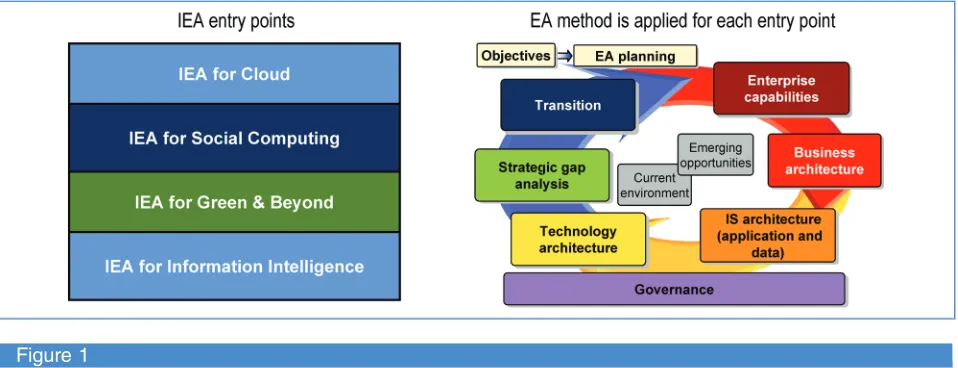
The IEA entry points are depicted at the left inFigure 1. The entry points are IEA for Cloud, IEA for Social Computing, IEA for Green & Beyond, and IEA for Information Intelligence. Each entry point has solution accelerators that facilitate IEA definition and implementation planning activities. Although not pictured, security and mobile technologies affect all of the IEA entry points and are an overall part of the IEA definition. Throughout this paper, we use the termcloudin reference to cloud computing, which is an approach to computing, in which scalable and often virtualized systems are provided as a service over a network.
IEA for Cloud services enable the delivery and
consumption of the following: 1) business processes as cloud services [which are often referred to Business Processes as a Service (BPaaS)], which are predefined business processes that are executed in part or all by the provider on behalf of the consumer (e.g., loan origination processes or help desks); 2)software applications as cloud services(SaaS), which are predefined applications that are also referenced as software as a service(e.g., see Salesforce.com); 3)platforms
Figure 1
as cloud services(PaaS), which are predefined middleware systems such as test platforms; and 4)infrastructure as cloud services(IaaS), which are predefined infrastructure (or technology) components that provide computational and storage infrastructure as a centralized location-independent service (e.g., such as services provided by Google).
IEA for Social Computingservices enable global collaboration among clients, partners, and supply channels, and encompass virtual-world building blocks and design techniques. The capabilities can enable unified collaborations within enterprises and throughout its supply channels.
IEA for Green & Beyondservices enable green capability (as previously defined) within and across the enterprise. The termBbeyond[indicates that the use of IT extends beyond the data center and encompasses activities such as Smart Grid integration, along with process efficiencies such as recycling and reuse. Control and monitoring of utility consumption in buildings within a city is an example of an IEA for Green & Beyond scenario. IEA will be used to describe the dashboard strategies for monitoring the city and contributes to the building management and performance planning that drive IT and security investments.
IEA for Information Intelligenceservices enable analytics and mining of information for faster and more precise decision making. IEA for Information Intelligence supports IBM Information on Demand and Business Analytics and Optimization business intelligence strategies. The next section describes how IEA augments traditional EA.
IEA augments traditional EA
In order to understand the significance of IEA, it is important to discuss the manner in which IEA augments EA. Several artifacts and activities are introduced in this section to illustrate how IEA applies the existing EA method and domains (e.g., domains such as business architecture or information-systems architecture), in combination with specific IEA artifacts and techniques to address emerging business and technological trends. As we mentioned, Figure 1 denotes the IEA entry points on the left and the IBM EA method on the right. In this example, the EA method is utilized by each of the IEA entry points, and new IEA capabilities are added to address business needs. The number of domains (or pillars) can vary, depending on the EA method, and details with respect to each of the domains will vary, depending on the focus (e.g., a social computing governance focus).
Four domains are common across most EA methods, and each domain has a set of work artifacts and activities. To summarize,business architecturedefines the business strategy, governance, organization, and key business processes of the organization.Information system(IS) architectureentails both application and data architecture. Application architectureprovides application systems to be deployed and provides the interactions between the
application systems and business processes.Data architecturedescribes the structure of the logical and physical data assets of organization and management resources.Technology architecturedescribes the hardware, software, and network infrastructure needed to support the deployment of core mission-critical applications.
Governanceinvolves managing, monitoring, and steering a business and IT to deliver business outcomes.
Supplemental IEA work artifacts and activities include business value models (BVMs), insight assessments, the IEA Technology Framework (IEATF), and IEA governance and management (IEAGM).
BVMs and the modeling technique
One of the principles of IEA involves the generation of business value as outcomes of the IEA. Business value modeling is a technique for deriving business value. Business drivers are typically identified with client pain points (i.e., difficulties that motivate clients to seek solutions); therefore, when business drivers are addressed (along with other IEA requirements), the client pain points are mitigated, which means that value is realized. One approach for commencing the BVM process is to reference the business model or component business model (CBM) in order to focus the scope of the business drivers for the selected entry point.
Figure 2illustrates the BVM process in four steps. In step one [Figure 2 (upper left)], a review of the business model or CBM is conducted in which business organization and delivery commitments are identified and IEA value components are determined. In the example, the value component isproduct building management.
In step two, information on the business drivers are captured. For example, here, a business driver involves unexpected spikes in energy expenses that contribute to adverse effects on profit margins. In step three, the BVM is completed, where, in most cases, the business drivers influence the other attributes, including the business goals, key performance indicators (KPIs), benefits, and strategy.
Finally, in step four, the BVM becomes an input to all of the IEA domain designs but, in particular, business architecture and governance. A framework for traceability of each BVM entry to architectural components, and throughout the delivery life cycle, is provided in the BVM work artifact.
IEA Insight Assessment
The IEA Insight Assessment evaluates each of the architecture domains and determines the related actions that are necessary to achieve client objectives based on the entry points selected. As an example, in a case in which the IEA for Social Computing is selected, the Insight Assessment might determine and recommend the use of a dedicated private computing cloud that hosts social computing infrastructures in an effort to standardize the social computing portfolio and enterprise delivery model. The assessment results could include a transition plan for defining and implementing the IEA. The engagement approach for conducting the assessments is collaborative, and workshops and social computing applications are recommended to facilitate innovation and interaction among people. BVM activities are recommended as a part of the assessment process.
IEATF
The IEATF describes the technology services and
infrastructure required to support the business and strategic execution roadmap (i.e., plan) of an enterprise. IEATF is an expansion of the IBM Enterprise Technology Framework that models current and future technology strategies at conceptual, logical, and physical levels. One principle of an IEA is that the ABBs must embody the supported
Smarter Planet characteristics. These characteristics are
documented in the IEATF as specifications for detailed component designs. In addition, the IEATF will contain a portfolio of IS and technology building blocks that support the various entry points (e.g., IEA for Cloud) and that provide the CIO a view of his or her technology landscape. The IEATF building blocks also support a repository of agreed-upon principles, standards, and components and the foundation for the state of future IT systems. Other characteristics include users, interfaces, current and planned implementations, and dependencies. The IEATF will also specify whether an ABB (or its decomposed components) is to be provided as cloud services, consumed from other sources, or both.
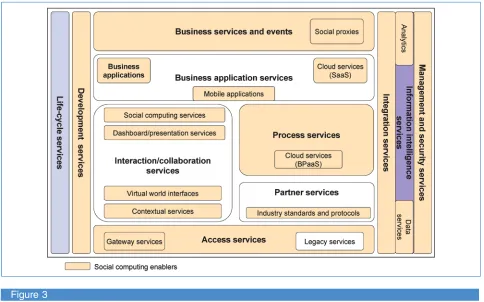
Figure 3illustrates the ABBs of an IEATF, with emphasis on the IS architecture of an IEA for Social Computing. The forthcoming section of this paper entitledBIEA usage scenarios and considerations, per entry point[provides elaborations of two IEATF models with summarized ABB descriptions.
IEAGM
The intent of IEAGM is to enable use, development, and growth of the IEA. IEAGM will add enablers to an existing EA or service-oriented architecture (SOA) [5] governance framework to encourage adherence to IEA principles, policies, and standards. IEAGM will include resource
Figure 2
requirements for stakeholders in an architecture that can maintain the IEA and adopt it across projects.
IEAGM defines organizational structures such as steering committees, architecture review boards, and delivery review techniques for a given entry point. For example, the CIO who assumes responsibility for becoming an environmental sustainability champion [6] can reference his or her IEA for a description of a green governance board along with suggested roles, policies (e.g., system responses to carbon emission safety, yield, and danger zone entry), tooling suggestions (e.g., virtual water [7] instrumentation for measuring the amount of water required to produce goods), and asset and decision management guidelines.
This section described how IEA augments EA and introduced several IEA work artifacts and activities and described how they fit within an EA method. The next section describes IEA principles and characteristics that drive the IEA work artifacts that were just described.
Core principles and characteristics of IEA As mentioned, IEA must exhibit the Smarter Planet characteristics and must also continue to bring business value to the enterprise. When these principles are applied, they become characteristics of an IEA. In this section, we discuss
the Smarter Planet characteristics. The value aspects can be addressed by conducting business value modeling, which is a technique for driving business value as outcomes of the IEA. The BVM technique and work artifact are discussed in the previous section. The process of deconstructing an enterprise into its constituent parts and organizing in new ways also drives business valueVthis can be accomplished by conducting domain analysis while defining the IEA for the various entry points, as described throughout this paper.
In particular, the IEA must exhibit the instrumented, interconnected, and intelligent characteristics of the Smarter Planet. This means that each of the IEA entry points contains ABBs that enable the necessary instrumentation for improved situational awareness of the enterprise.
Additionally, IEA enables global connectivity of people, processes, and IS, which strengthens the enterprise system performance, employee productivity, and the value of the business. As an example, IEA for Social Computing contains ABBs and strategies that can enable collaboration between employees, consumers, and clients, facilitating a team’s ability to work smarter. The IEA entry points that focus on interconnectivity are IEA for Cloud and IEA for Social Computing.
Figure 3
The third characteristic that an IEA must exhibit is intelligence. IEA for Information Intelligence contains ABBs that can enable enterprises to assess different dimensions of information, so that they identify emerging business opportunities and threats, and make pertinent decisions. The next section provides elaborations of IEA usage scenarios in an effort to help the reader understand how to apply IEA.
IEA usage scenarios and considerations, per entry point
This section contains IEA usage scenarios and considerations in order to demonstrate how IEA can be applied to solve current and emerging business challenges. The section commences with key steps required to define an IEA for Cloud, and two examples are provided on how to generate an IEATF with summarized ABB descriptions. The section concludes with a case study and designs of an IEA for Information Intelligence.
IEA for Cloud
In June 2009, theFinancial Timesreported that emerging markets recorded a combined annual growth rate of 5.5% over the past 20 years, whereas developed markets grew at 2.3%. The article specified that emerging markets account for about 80% of the global population [8].
IEA for Cloud augments EA with capabilities that enable organizations to dynamically provision and de-provision IT operations by providing the architectural structure, delivery roadmaps, and guidance for cloud-computing service adoption. IEA for Cloud has the potential to quickly enable clients to expand business and support IT operations in emerging markets; in addition, it aligns business and technology, and identifies the impact of cloud-computing services on all of the architecture domains. Preconfiguring the EA for cloud enables an organization to globally expand by utilizing computing resources as a utility. This also makes an enterprise more adaptable to changing business models.
Recall that the four types of cloud-computing services addressed in this paper are the following: 1) BPaaS; 2) SaaS; 3) PaaS; and 4) IaaS. Each can be enabled by one or more architecture domains. For example, BPaaS may be thought of as residing in the business architecture at design time, whereas, at run time, the capabilities can be enabled by IS architectural components.
Typical steps taken to define an IEA for Cloud are given as follows: First, determine the enterprise capabilities and the types of cloud services that are desired for the enterprise.
Second, define enterprise cloud deployment and consumption strategies, for example, on-premise (private) deployment, externally hosted (public) deployment, or a combination of the two (hybrid).
Third, describe the current and future business and technology ABBs for each of the architectural domains and then identify the candidate cloud ABBs. Components of
IaaS or PaaS may be offered as a cloud service while residing in the infrastructure architecture domain. For example, storage or application hosting services may qualify as cloud candidates based on the Insight Assessment. The IEA helps the stakeholders determine what components to provide or consume from other sources. This same kind of offering may also involve the IS architecture domain components with their associated BPaaS and SaaS. ABB specifications are captured using the IEATF work artifact (described earlier) that, in addition to technological specifications, identifies whether an ABB and its components are intended to be provided as cloud services, consumed from other sources, or both. The IEA for Cloud activities involve preliminary identification and cataloging [9] of cloud services that will be made available as service offerings.
Fourth, capture enterprise service-level requirements, agreements, and performance targets (e.g., enterprise KPIs). Fifth, define or update the IEAGM to include IEA for Cloud principles and standards, and include plans for validating conformance and decision making.
Sixth, produce the transition plan and roadmap for implementing the IEA for Cloud. IEAGM will describe policies that address global distribution of services and, just as with SOA [5], asset management. Entry and exit policy considerations for provisioning and de-provisioning cloud services (e.g., standardized actions that must occur when a cloud service expires) are one of many capabilities of an IEA for Cloud.
Next, IEA for Social Computing, as well as how the IEATF work product can be applied to generate and transform the IS landscape of an enterprise, is discussed.
IEA for Social Computing
The response of a company pand its participation in social computing have become a critical element of growth and innovation. Online collaboration platforms are fundamentally changing the way employees work due to social-computing-based communications and the global spread of information. This section describes how an IEATF was produced to define an IEA for Social Computing. In this particular case, the focus of the IEATF is on the IS (applications and data only) and the ABBs (illustrated in Figure 3) that are necessary for social computing enablement and sustainability. The technology architecture of an IEA for Social Computing (although not pictured) is also required to complete the IEATF. We provide brief descriptions of each ABB, whereas more detailed components and
specifications are in an IEATF deliverable. Here, we use the termdeliverableto denote a work artifact (e.g., use-case diagrams or nonfunctional requirements) that must be delivered to the customer for signature approval or in accordance with an agreement.
collaborations between employees, partners, and consumers; business-to-business enablement between employees and partners; and employee-to-employee collaborations. These patterns are explored in an effort to determine the enablers for social computing deployment (e.g., in a public cloud-computing system).
Social network analysis (SNA) [10], which is a method for analyzing and visualizing the structure of connections between people [11], has evolved as a business activity of the business architecture domain of IEA. IEA for Information Intelligence includes SNA as a component that facilitates decision making.
The intent of Figure 3 is to share an enterprise IS landscape, standard ABBs, and design considerations for defining an IEA for Social Computing. Highlighted are ABBs that enable social computing in the enterprise. The ABB, its components, and the placement of these components can vary, depending on the enterprise standards and the style chosen for graphical presentation. ABB refinements, decomposition, and
relationships between ABBs should be captured in the IEATF deliverable, which is the next step in the evolution of Figure 3. Some common ABBs are illustrated [12].
Business services such as social proxies [13] and events (e.g., a user enters the room) enable enterprise stakeholders to view, depict, and model digital interactions of people, processes, and social activities [Figure 3 (top)].
Business application services such as customer relationship management (CRM) and SaaS cloud services provide application functionality. Organizations may choose SaaS in an effort to optimize software expenses by reusing proven solutions. In their paper, Danis et al. describe their work on mobile applications and the social computing approach that underlies it, noting the growing interest in making use of people and their social practices as critical resources in designing successful information and communication systems [14]. IEA for Social Computing, therefore, includes mobile applications as a core component of business application services.
Interaction/collaboration services facilitate and enhance communications and can be utilized to create digital communities. IEA for Social Computing requires interaction/ collaboration services to view relative information and to monitor business operations and events that emerge from user inputs. For example, a student can view current and past course enrollments while participating in online discussions with the instructors to determine course curriculum and improvements. Here, the phraserelative informationmay refer to student accounts, enrolled courses, courses passed, courses failed, courses dropped, and scores.
Social computing services may reside within an enterprise, or they may be hosted outside of an enterprise. Dashboard services provide visual representations of information according to a user’s preference. Virtual worlds represent
computer-based simulated environments that enable users to interact using avatars. With IEA, contextual services are considered as part of the interaction/collaboration ABB. A contextual service can provide the geographic location of a user (e.g., via Global Positioning System or cell phones), and it can provide theBstatus[of a user in relation to his or her availability for participation (e.g., a user may be in a meeting). A contextual service can also provide information on the customized wants and needs of the user. Enterprise stakeholders should consider each of the listed components when defining the IEA for Social Computing and
plan accordingly.
Process services are generally used by social-computing applications in an effort to fulfill a human workflow or automated business process. The example illustrates BPaaS cloud services as a component and architectural design point in which all or a portion of the social-computing-related business processes of an enterprise (e.g., online service centers) can be offered or used with a cloud-computing model.
Partner services enable integration of business partners in the overall IEA design. Industry standards and protocols such as those provided by the International Society of Automation (ISA) [15] are sample partner services that can be utilized to facilitate information exchange across building systems.
Access services elevate legacy application functions (e.g., customer information control system and transactions) into services in order to fulfill a business process. These services may also be referred to as application modernization services. A gateway server is an example access service that controls and directs entrance into the IEA for Social Computing ecosystem.
Integration services mediate, transform, and direct the flow of information throughout the enterprise for access and display on social computing interfaces. The Smart Grid is an example integration service that has the responsibility of managing and distributing electrical power. Social computing applications (as well as the consumer) can be a provider of information for the Smart Grid.
Information intelligence services (IISs) process data provided by social-computing applications and can apply analytics and decision support techniques to determine real-time insights and actions. As an example, IISs can help people locate resources and team to provide the collective intelligence that is required for solving problems and addressing new market challenges. Data services
Management and security services [Figure 3 (right)] describe the foundational quality-of-service ABBs and components to sustain the social computing environment. Security presents a concern for enterprise stakeholders, particularly when corporate data are housed by others. Companies are asking a question such as,BWho can access data if they are provided using a share infrastructure model?[ BWho owns the data once they are published on social computing sites?[IEA for Social Computing will provide the structure for enterprises to address traditional and emerging security threats early, including authentication and access control, isolation management (intertenant and multitenant administration of systems from different enterprises that are hosted on the same physical hardware), and integrity management.
Development services can be utilized to design the IEA for Social Computing and to generate and test social-computing integration. Life-cycle services (e.g., policy and automated configurations) can be utilized to standardize the building and deployment of the IEA for Social Computing components across the enterprise. IEAGM can be applied for policy enforcement.
In this section, we summarized key ABBs for defining an IEA for Social Computing. This IEA may be considered as part of an enterprise strategy for effectively managing digital-base social communities and as a mechanism to reach energy-efficient objectives. IEA for Green & Beyond is discussed in the next section. The IEATF was derived from a real-life customer scenario.
IEA for Green & Beyond
The following is an excerpt from remarks made by Secretary Chu from the U.S. Department of Energy on June 4, 2009, at a Harvard Commencement Address [16]:
BHow much are we willing to invest, as a world society, to mitigate the consequences of climate change...? Deeply rooted in all cultures, is the notion of generational responsibility. Parents work hard, so that their children will have a better life. Climate change will affect the entire world, but our natural focus is on the welfare of our immediate families. Can we, as a world society, meet our responsibility to future generations?[
IEA will provide business and IT strategies and ABBs for Bgreening[environments, such as data centers and buildings, with respect to waste, carbon output, electricity and water consumption, and management of assets. Note that the term greeningis often used to denote the enhancing of a system or business with respect to environmental protection concerns. The U.S. Environmental Protection Agency (EPA) recently announced that computer servers that earn the Energy Star** label will beB30% more energy efficient than standard
servers[[17]. This section describes the core building blocks of IEA for Green & Beyond from the point of view of a technology architecture domain. Several strategies for greening the IT environment are provided, based on experiences and case studies.
A utility provider consulted with IBM to devise and implement plans to green its IT. The strategy was to start with the IT infrastructure and obtain measurements of energy-efficient opportunities. Effective communications of IT initiatives throughout the enterprise were conducted. Discoveries with respect to energy-efficient tools and data-center improvements were recorded (such as discoveries relating to storage and server virtualization, which partitions the physical characteristics of computing resources [18]). An iterative implementation model was adopted. One IT strategy was to apply server storage virtualization for all new servers, in addition to more efficient cooling, lighting improvements, raised floors, and power optimization. The net effect was that energy consumption was reduced with annual savings predicted to be at least 25% greater than before these data-center improvements were made [18].
Figure 4illustrates an IEATF from a technology architecture (e.g., infrastructure) point of view. The asterisks next to an ABB indicate compliance with industry standards, such as EPA standards for servers. Buildings that have achieved certifications according to the Leadership in Energy and Environmental Design (LEED) [19] standards can contribute to energy savings, and less pollution and carbon impact on the environment.
The use of servers that meet EPA requirements is one way to optimize energy usage. Another way to optimize energy usages is through virtualization. Server virtualization allocates only the server resources required for an application and can save in central-processing-unit utilization, space, and overall energy consumption.
Appliances are hardware performance accelerators that are intended for specific applications. The use of such appliances can save energy if properly utilized. For example, virtual appliances are a set of virtual machines that include optimized operating systems,Bprebuilt[ready-to-run applications, and embedded appliance-specific components. Sensors and meters can be categorized as smart appliances.
Operating systems can be virtualized to save energy consumption and increase operational efficiency. Operating-system-level virtualization occurs when one operating system on a machine is capable of making virtual instances of itself available as a virtual system. AIX* Workload Partitions [20] is an example.
Common system services such as logging or monitoring can contribute to energy savings. For example, visitor patterns that trigger events to control power within a specific building location can be logged.
Storage Area Network (SAN) volume controller (SVC) bring storage devices in a SAN [21] together in a virtual pool. This makes storage appear as one logical device for management. To the connected computers, SVC offers virtual disks as ordinary devices.
Cloud services can be energy efficient and are considered strong enablers for both green and dynamic enterprises. IBM has found that the use of virtual personal computers (a form of PaaS), with little desktop processing or storage, can lead to 70% less power consumption than conventional PCs and reduce technical support costs by up to
40% [22]. In Figure 4, all of the technology architecture and its infrastructure components can be made
available or used (to save energy expenses) as cloud services (IaaS).
Platform services such as blade servers offer different levels of energy efficiency. In general, blade servers provide a smaller form factor than other types of servers. Figure 4 illustrates that some of the platform services, for this particular case study, were identified as cloud services.
Network services are often given little attention, but they also consume power and produce heat. There are several ways to reduce energy in network components, including the consolidation of multiple small switches into a single larger switch.
Data centers, buildings, and facility services [Figure 4 (right side)] guide stakeholders to architect their enterprise IT environments, so that utility consumption and resource capacity are optimized. Sample components within this ABB are building management systems (BMSs) that control and manage building systems, such as heating, ventilating, and air-conditioning; lighting; power; energy; and security and access control [23]. Additional components include standards and integrated BMSs that enable viewing and management of events and operations of building systems from a central dashboard [23]. ISA-95 is a sample automation standard and referred to as theBinternational standard for the integration of enterprise and control systems[[24].
Management and security components are critical for greening the IT since they provide unified and automated approaches to managing IT infrastructure. With IEA, server consolidation is a service management activity and a form of energy and capacity optimization. Monitors are also designed to reduce energy consumption. Security is essential to IEA designs and is viewed as a part of greening the IT infrastructure because of the efficiencies provided when structure and architectural foundations are established before technology implementations. This approach will prevent disruptive integration of security systems and
Figure 4
contribute to more thorough planning throughout the entire IEA life cycle.
Sensing and metering devices are utilized to manage and measure service performance, eliminate outages, and ultimately optimize enterprise costs. As a smart appliance, sensing and metering devices can be used to detect electrical or water leakages and to conduct self-healing (as in the case of self-healing intelligent utility networks that are able to take action and repair themselves).
Life-cycle tools such as power-efficient developer workstations can be utilized to save energy, similar to tools that enable and automate governance of assets, so that service-level agreements remain viable.
This section described IEA for Green & Beyond from a technology-architecture point of view. The intent was to provide practical examples of how to define and apply an IEA for Green & Beyond for an enterprise. In the following section, IEA for Information Intelligence is discussed, along with a corresponding case study.
IEA for Information Intelligence
IEA for Information Intelligence is the final entry point discussed in this paper. This section describes a case study in which IEA for Information Intelligence was defined and used. We also describe an analysis of the six core ABBs that compose the IEA for Information Intelligence. The example shows how social computing was integrated for more effective customer decision making and trend analysis.
IEA for Information Intelligence includes analytics, architectural components, and design patterns. IEA for Information Intelligence empowers clients, partners, suppliers, and employees by increasing insight into ongoing business risks and opportunities. This is accomplished with ABBs and components that enable the transformation of heterogeneous and raw data into predictive models and business decisions.
As indicated in a case analysis with Kraft Australia, one of the principle benefits of producing an IEA for Information Intelligence relates to the fact that enterprises create more business opportunities in the area of CRM, marketing, product development, and risk management.
Kraft Australia engaged IBM to conduct a special study of its customer base when preparing for the biggest advertising campaign for the locally renowned Vegemite** food brand. In the customer’s own testimonials,BThe work we did with IBM fundamentally changed our business strategy and how we look at our own brand[[25]. IEA for Information Intelligence was applied to address their strategy by combining both information intelligence and social computing. IBM partnered with a third-party content provider that reached out to millions of sources of
user-generated content to access and transform daily feeds of message boards, blogs, and news postings around a given set of Vegemite-related keywords. Search and statistical
data-mining algorithms were primarily used to build multiple taxonomies, using automatic clustering techniques,
to extract additional structured fields such as authors and country and to compute sentiment scores for each user posting. The analytics were used to identify emerging topics such asBlove[that were strongly correlated with the Vegemite brand and, through trending and early warning analysis, determined that Vegemite was the only product that had significant mention of the wordsfolateandvitamin. (Folic acid, or vitamin B9, is an important supplement for pregnant women.) IEA for Information Intelligence had a major impact on marketing decisions with respect to Vegemite and the overall project success.
There are six common ABBs that make up an IEA for Information Intelligence, and each should be considered when defining IEA solutions.Data sourcesprovide structured and unstructured raw data from various internal and external sources and physical devices such as internal databases, social media, sensors, meters, and cell phones. Data access servicesprovide support for collecting and federating digital information from various internal and external sources to include social media feeds and user-generated content such as blogs.Algorithms provide the foundations for the analytics layer, with the algorithm categories ofsearchandindexing, and data mining.
Continuing with our list of ABBs,analyticsare text mining and semantics technologies that are used to discover patterns, relationships, and insights into data and events, and include predictive modeling. Sentiment mining will extract opinion-related information from text.
Decision-support services(DSSs) describe analytics applications and/or patterns that enable data-based decision making. Early-warning monitoring is a part of DSSs that provide insights into facts that may be associated with an event (e.g., detection of sudden deterioration in water supplies) and timely responses (e.g., regarding unsuspected threats on water quality). DSS includes SNA in which the nodes represent people and groups, whereas links depict relationships and information flows between the nodes [10]. Organizational network analysis (ONA) [10] is another form of SNA. As mentioned, SNA and ONA are activities that occur during the business architecture definition of the IEA. DSSs should also incorporateBreality mining,[which is a new paradigm of data mining that makes possible the Bmodeling of conversation context, proximity sensing, and temporal special locations throughout large communities of individuals[[26].
Conclusion
This paper has introduced IEA as an architectural style and technique that addresses current and future business and IT trends, and the technological impacts of a Smarter Planet on EA. This paper has started with background information on a Smarter Planet in an effort to set the context for the need for an IEA. The entry points were then discussed, followed by a description of how IEA augments traditional EA. The second half of this paper has provided usage scenarios of IEA and discussed in a manner in which IEA can be applied to address business challenges. The overarching intent of this paper was to provide reference material for individuals defining IEA solutions.
In summary, three value propositions for an IEA have been presented in this paper in response to three questions facing enterprise stakeholders. Let us consider the first question: How are stakeholders to choose which IT systems to utilize, given that numerous enterprise systems are evolving that may address some of the challenges presented by living in a Smarter Planet? One answer is that IEA defines the business and technology architecture that shapes and guides enterprise technology investment strategies and decision making for current and emerging business trends (e.g., IEA for Cloud).
The second question is which strategies should CIOs employ for short-term realization and longer term value of IT investments? An answer is that adoption of techniques such as business value modeling addresses business drivers, customer pain points, and various end-to-end implications at all architecture domains, including governance and management. In addition, applying an iterative approach and EA methodology for each of the IEA entry points drives business value as innovative solutions emerge from decomposition and analysis of the enterprise and its parts.
Finally, how does the CIO ensure that business and IT infrastructures cohesively evolve while keeping pace with economic challenges indicative of uncertain business implications? The intent of each entry point is to prepare the enterprise for Cloud, Social Computing, Green & Beyond, and Information Intelligence solutions, so that
transformations are simplified and the solution process does not become disruptive. Each of the four entry points aligns business and IT strategy, and enables instrumentation, interconnectivity, and intelligence to monitor and maintain the business agility of an enterprise.
Acknowledgments
The authors would like to thank Ana Lelescu and
Eric Andersen for their research and contributions in the IEA for Information Intelligence and IEA for Social Computing areas, and the following individuals for their input: Tina Abdollah, Elza L. Adams, Jim Amsden, Stephen Beever, Sanjay Bose, John Caldwell,
Robert R. Carter, Sherry Comes, Chip Coy, Scott Darlington, Ernie Denninger, Mark Ernest, Terry Escamilla,
Colin Harrison, Peter D. Holm, Sharon Fortune-Bowden, Robert Guillaume, Ray Harishankar, Rob High,
Kerrie Holley, Mamdouh Ibrahim, James Jamison, Claus T. Jensen, Carol Jones, John Lamb, Marvin Laster, Gil Long, Kelly Malone, Ward McGregor, Chris Molloy, Larry Proctor, Ashar Rehman, Jim Rudd, Sheila Thorne, Sri (Sriram) Ramanathan, Sunil R. Dube, Ram Ravishankar, Todd Traver, Matthew Trevathan, Peter (R. P.) Williams, Nevenko Zunic, and Jeff Caldwell (from SonicWALL, Inc.).
* Trademark, service mark, or registered trademark of International Business Machines Corporation in the United States, other countries, or both.
** Trademark, service mark, or registered trademark of U.S. Environmental Protection Agency or Kraft Foods in the United States, other countries, or both.
References
1. IBM Corporation,IBM Smarter Planet. [Online]. Available: http://www.ibm.com/ibm/ideasfromibm/us/smartplanet/20081117/ sjp_speech.shtml
2. IBM Corporation,BIBM Global CIO Study,[inThe New Voice of the CIO: Insights From the Global Chief Officer Study Executive Summary, 2009. [Online]. Available: http://www-935.ibm.com/ services/us/cio/ciostudy/pdf/cio_summary.pdf
3. E. Beinhocker, I. Davis, and L. Mendonca,BThe 10 trends you have to watch: Shifting consumption patterns,[inHarvard Business Review, pp. 55–60, Jul./Aug. 2009.
4. C.-H. Chen-Ritzo, C. Harrison, J. Paraszczak, and F. Parr,
BInstrumenting the planet,[IBM J. Res. & Dev., vol. 53, no. 3, paper 1, pp. 1–16, 2009.
5. BService-oriented architecture,[IBM Syst. J., vol. 44, no. 4, 2005, entire issue.
6. E. Varon,Energy-Efficient IT Leadership. [Online]. Available: http://www.cio.com/article/117258/Energy_Efficient_IT_ Leadership?page=2&taxonomyId=1448
7. IBM Corporation,IBM GIO Water Report, 2009, p. 54. [Online]. Available: http://www.ibm.com/ibm/gio/media/pdf/ibm_gio_ water_report.pdf
8. M. Mobius,Emerging Market Growth. [Online]. Available: http://www.ft.com/cms/s/0/565438ec-55d7-11de-ab7e-00144feabdc0.html?nclick_check=1
9. G. Breiter and M. Behrendt,BLife cycle and characteristics of services in the world of cloud computing,[IBM J. Res. & Dev., vol. 53, no. 4, paper 3, pp. 2–4, 2009.
10. V. Krebs,Social Network Analysis, A Brief Introduction. [Online]. Available: http://www.orgnet.com/sna.html
11. M. Naghshineh, R. Ratnaparkhi, D. Dillenberger, J. R. Doran, C. Dorai, L. Anderson, G. Pacifici, J. L. Snowdon, A. Azagury, M. VanderWiele, and Y. Wolfsthal,BIBM research division cloud computing initiative,[IBM J. Res. & Dev., vol. 53, no. 4, paper 1, pp. 1–4, 2009.
12. R. High, Jr., S. Kinder, and S. Graham,IBM’s SOA Foundation an Architectural Introduction and Overview v.1.0. [Online]. Available: http://download.boulder.ibm.com/ibmdl/pub/software/ dw/webservices/ws-soa-whitepaper.pdf
13. T. Erickson, C. Halverson, W. Kellogg, M. Laff, and T. Wolf,
BSocial translucence: Designing social infrastructures that make collective activity visible,[Commun. ACM, vol. 45, no. 4, pp. 40–44, Apr. 2002.
Billions: A Social Computing Perspective. [Online]. Available: http://www.ics.uci.edu/~nsambasi/hcc4id/Final_Danis.pdf 15. International Society of Automation. [Online]. Available: http://
www.isa.org/Content/NavigationMenu/General_Information/ About_ISA1/About_ISA.htm
16. Secretary Chu Harvard University Commencement Address. [Online]. Available: http://www.energy.gov/news2009/7444.htm 17. EPA Announces Energy Star Label for Computer Servers.
[Online]. Available: http://yosemite.epa.gov/opa/admpress.nsf/ d0cf6618525a9efb85257359003fb69d/
3829e1ce26d173e7852575ba004d9518!OpenDocument/ 18. J. Lamb,The Greening of IT: How Companies Can Make a
Difference for the Environment. Indianapolis, IN: IBM Press, 2009, pp. 152–154.
19. U.S. Green Building Council, IntroVWhat Leed Is. [Online]. Available: http://www.usgbc.org/DisplayPage.aspx? CMSPageID=1988
20. IBM Corporation, IBM Workload Partitions Manager for AIS. [Online]. Available: http://www-03.ibm.com/systems/power/ software/aix/sysmgmt/wpar/index.html
21. M. Silva, M. Banikazemi, M. Butrico, D. Daly, S. Guthridge, J. E. Moreira, and W. V. Ruggiero,BScalable data center provisioning and control,[IBM J. Res. & Dev., vol. 53, no. 4, paper 10, pp. 1–13, 2009.
22. S. Lohr,I.B.M. to Help Clients Fight Cost and Complexity. [Online]. Available: http://www.nytimes.com/2009/06/15/ technology/business-computing/15blue.html?_r=2
23. C. Davis,BIntegrated building management systemsVBringing together data center systems to ensure reliability,[inThe Data Center Journal. [Online]. Available: http://datacenterjournal.com/ content/view/3081/41/
24. International Society of Automation (ISA-95). [Online]. Available: http://www.isa-95.com/
25. Kraft Australia Explores New Frontier of Customer Understanding Through Advanced Analytics. [Online]. Available:
ftp://ftp.software.ibm.com/software/solutions/pdfs/ ODC03129-USEN-00_KraftAust_final_BSP_Apr20-09.pdf 26. Machine Perception and Learning of Complex Social Systems.
[Online]. Available: http://reality.media.mit.edu/
Received July 14, 2009; accepted for publication August 25, 2009
Pamela K. Isom IBM Global Business Services, Denver, CO 80237 USA ([email protected]). Mrs. Isom received a Bachelor of business administration degree in managerial science from Chaminade University of Honolulu, Hawaii, in 1984, and a Masters degree in information systems management with specialization in information management from Walden University. She is a Senior Certified Executive IT Architect and a member of the Enterprise Technology and Architecture organization and service area at IBM. She joined IBM in June 2000, where during her tenure she has received numerous Service Excellence and Outstanding Technical Achievement Awards. She is also the author of several patent disclosures that have been filed with the USPTO (U.S. Patent and Trademark Office). The majority of her experience has been in the area of enterprise architecture and enterprise application delivery, specifically cloud (including green) business strategy, justification, and adoption. External to IBM, Mrs. Isom is a member of the Institute of Electrical and Electronics Engineers (IEEE), member and Distinguished Chief/Lead IT Architect with The Open Group, and a member of the Society for Women Engineers (SWE).
Susan L. Miller-Sylvia IBM Global Business Services, Sacramento, CA 95833 USA ([email protected]).
Ms. Miller-Sylvia received a B.S. degree in mechanical engineering from California Polytechnic State University at San Luis Obispo and an M.B.A. degree in finance from the University of California at Davis. She is an IBM Fellow, Vice President of Application Innovation Services Cross Sector, and a member of the IBM Academy of Technology. She joined IBM in 1994, and prior to that worked for
Andersen Consulting (now Accenture), and a startup company. The majority of her technical experience has been in the area of application development and application architecture. Ms. Miller-Sylvia is a member of the Society for Women Engineers (SWE), member and Master Certified Architect with The Open Group, and member of Women in Technology International (WITI) and the Association for Information and Image Management (AIIM).