T
T
h
h
e
e
r
r
a
a
n
n
o
o
s
s
t
t
i
i
c
c
s
s
2013; 3(6):377-394. doi: 10.7150/thno.5195
Review
Detecting Circulating Tumor Cells: Current Challenges
and New Trends
Bin Hong1 and Youli Zu2
1. TeloVISION, LLC, 1281 Win Hentschel Blvd. West Lafayette, IN 47906, USA;
2. Department of Pathology and Genomic Medicine, The Methodist Hospital, 6565 Fannin, MS205, Houston, TX 77030, USA.
Corresponding author: Bin Hong, Ph.D. TeloVISION, LLC, 1281 Win Hentschel Blvd. West Lafayette, IN 47906. (502) 445-6362. [email protected] or Youli Zu, MD., PhD. Department of Pathology and Genomic Medicine, The Methodist Hospital, 6565 Fannin, MS205, Houston, TX 77030. Tel 713-441-4460 Fax 713-441-1565. [email protected].
© Ivyspring International Publisher. This is an open-access article distributed under the terms of the Creative Commons License (http://creativecommons.org/ licenses/by-nc-nd/3.0/). Reproduction is permitted for personal, noncommercial use, provided that the article is in whole, unmodified, and properly cited.
Received: 2012.09.10; Accepted: 2012.11.01; Published: 2013.04.23
Abstract
Circulating tumor cells (CTCs) in the blood stream play a critical role in establishing metastases. The clinical value of CTCs as a biomarker for early cancer detection, diagnosis, prognosis, pre-diction, stratification, and pharmacodynamics have been widely explored in recent years. How-ever, the clinical utility of current CTC tests is limited mainly due to methodological constraints. In this review, the pros and cons of the reported CTC assays are comprehensively discussed. In addition, the potential of tumor cell-derived materials as new targets for CTC detection, including circulating tumor microemboli, cell fragments, and circulating DNA, is evaluated. Finally, emerging approaches for CTC detection, including telomerase-based or aptamer-based assays and cell functional analysis, are also assessed. Expectantly, a thorough review of the current knowledge and technology of CTC detection will assist the scientific community in the development of more ef-ficient CTC assay systems.
Key words: CTC: Circulating tumor cell; CTM: Circulating tumor microemboli; CTMat: Circulating tumor materials; CTDNA: Circulating tumor DNA; POCT: Point-of-care test.
Introduction
Cancer is the second leading cause of death worldwide [1]. Greater than 90% of deaths in cancer patients are attributed to metastasis [2]. Cancer is considered a localized disease in its early stage; however, it has often become systemic by the time a patient becomes symptomatic and the disease is de-tected by the currently available imaging modalities such as traditional radiography (X-ray), magnetic resonance imaging (MRI), computed tomography (CT), positron emission tomography (PET), or ultra-sound [3]. There is growing evidence that cancer cells are shed from the primary tumor into the circulation prior to the presentation of clinical symptoms [4]. These circulating tumor cells (CTCs) may finally col-onize at distant sites and form metastases (Figure 1).
The presence of CTCs was first reported
ap-proximately 140 years ago [5]. However, it was not a widespread topic in cancer research until recently. Because CTCs are ultra-rare events, with numbers as low as one CTC in 106-107 leukocytes of the peripheral
blood of cancer patients, enrichment and investigation of CTCs have been extremely difficult. It was often akin to pinpointing a needle in a haystack until, in 2004, the CellSearch System (Veridex, Raritan, NJ) was introduced, which is the only medical device currently cleared by the Food and Drug Administra-tion (FDA) for CTC selecAdministra-tion and enumeraAdministra-tion. However, researchers are still facing various chal-lenges, including the methodological constraints im-posed by the CellSearch instrument, physics, and sta-tistics [6], and the translational issues [7], thereby limiting the clinical implementation of CTC tests and
Ivyspring
accurate interpretation of the test results. Require-ment of a multi-step cell preparation and isolation process in the current CTC detection method may lead to loss and damage of tumor cells, and have an adverse impact on the assay accuracy.
The majority of CTC detection methods are de-signed as bench-top instruments, such as flow cy-tometers [8-10], the CellSearch system [11], high-definition fluorescence scanning microscopy [12], fiber-optic array scanning technology (FAST) [13, 14], isolation by size of epithelial tumor cells (ISET) [15, 16], and laser scanning cytometers [17, 18]. Some methods combine bench-top instruments with an ad-ditional assay system, such as the processes of Ficoll [19], OncoQuick [20], and RT-PCR [21, 22]. Interest-ingly, CTC microdevices have undertaken a different approach by providing miniature structure [23-29], microfluidic reaction kinetics [24-26, 28, 29] and inte-grated processes [23, 24, 26]. When compared to bench-top devices, the CTC microdevices demon-strated superior sensitivity [23, 25-28], improved cell recovery [23-25, 29], high purity [24], enhanced en-richment [23, 24, 27, 28], and low cost [23, 24, 26]. More importantly, CTC microdevices are ideal for point-of-care testing [25, 30, 31]. Since CTCs are mainly characterized and identified by their mor-phology and immunostaining pattern, their hetero-geneity is a major obstacle for CTC detection. The CTCs derived from different types of tissues
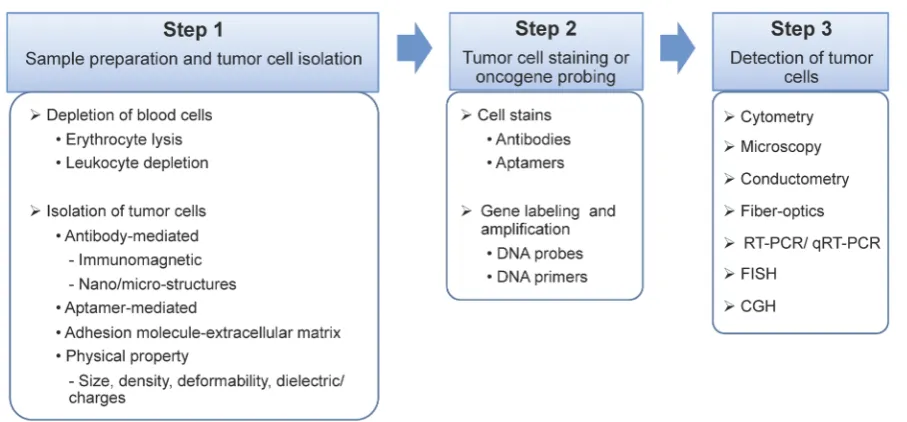
signifi-cantly distinguish from each other with different size, shape, and immunophenotyping profile. However, there is broad morphological and immunophenotyp-ical variation within CTCs derived from the same tissue of origin. During epithelial to mesenchymal transition, the expression of epithelial markers on CTCs, such as epithelial cell adhesion molecule (Ep-CAM) and cytokeratin (CK), may be down-regulated and become undetectable [2, 11]. Therefore, accurate detection of CTCs based on morphological and im-munophenotypical profiling is still challenged. Addi-tionally, CTCs may be damaged and fragmented, in vivo and/or in vitro, due to multi-step cell preparation processes, causing inaccurate detection and misinter-pretation. In addition to the presence of significant heterogeneity, as the biology of CTCs evolves, addi-tional challenges, as well as opportunities, are ex-pected to present. It is also important to note that simple enumeration of CTCs will not contribute sig-nificantly to the development of improved or more personalized cancer treatments. Instead, the contribu-tions of CTCs will stem more from obtaining a better understanding of this cell population through com-plete characterization and functional analysis. From a technical standpoint, almost all CTC assays have three major steps: 1) blood sample preparation and tumor cell separation; 2) cell staining by antibodies or gene probing by DNA probes; and 3) CTC detection (Fig-ure 2).
Figure 2. Schematic illustration of the three major steps of a CTC assay. Step 1. Sample preparation and tumor cell isolation: blood samples may be pre-treated to remove the majority of the erythrocytes and/or leukocytes, and therefore, rare CTCs can be detected at a higher frequency with low background interference. The isolation of CTCs from blood cells can be based on various ligand-receptor interactions, such as antibody-antigen, ap-tamer-receptor, or adhesion molecule-extracellular matrix, and unique physical properties of cancer cells, including cell size, density, deformability, and dielectric/charges. Step 2. Tumor cell staining or oncogene probing: CTCs can be labeled by antibodies or aptamers, or probed by DNA primers. Step 3. CTC detection via cytometry, microscopy, conductometry, fiber-optics, reverse transcription polymerase chain reaction (RT-PCR), quantitative RT-PCR (qRT-PCR), fluorescence in situ hybridization (FISH), and comparative genomic hybridization (CGH).
Although the last step of the CTC detection ap-proach can be rapidly completed, the cell preparation and antibody staining are labor- and time-consuming. Many research and review articles have recently ap-peared covering the technical advances, research progress, and clinical demonstrations related to CTCs [7, 32-38]. This article will not exhaustively review all of the existing literature. Instead, it will focus on an-alyzing several outstanding pitfalls in the current CTC technologies and clinical research, followed by, as an important contribution of this article, a sum-mary of the emerging approaches and powerful tools that have represented the latest trend in the field to better characterize CTCs (Figure 3). The topics to be discussed in this article are as follows: 1) circulating tumor microemboli (CTM), which are tumor cell clusters/aggregates and associated with high meta-static potential; 2) circulating tumor materials (CTMat), which are debris and fragments of dead tumor cells and may possess antigenic or genetic characteristics of intact cells, and, therefore, present independent prognostic value from that of intact and viable CTCs; 3) telomerase-targeted CTC detection, a method that may target the entire CTC subpopula-tion; 4) aptamer-based CTC detection, which could specifically identify and capture the CTCs without knowing the binding sites on them; 5) functional studies on live CTCs to assess their specific role in metastasis development; and 6) mathematical
mod-eling, which is beneficial to CTC research because it can analyze data for precision and accuracy, and dis-play hidden boundaries to expose outsiders.
Challenges in CTC research
CTCs as a disease marker
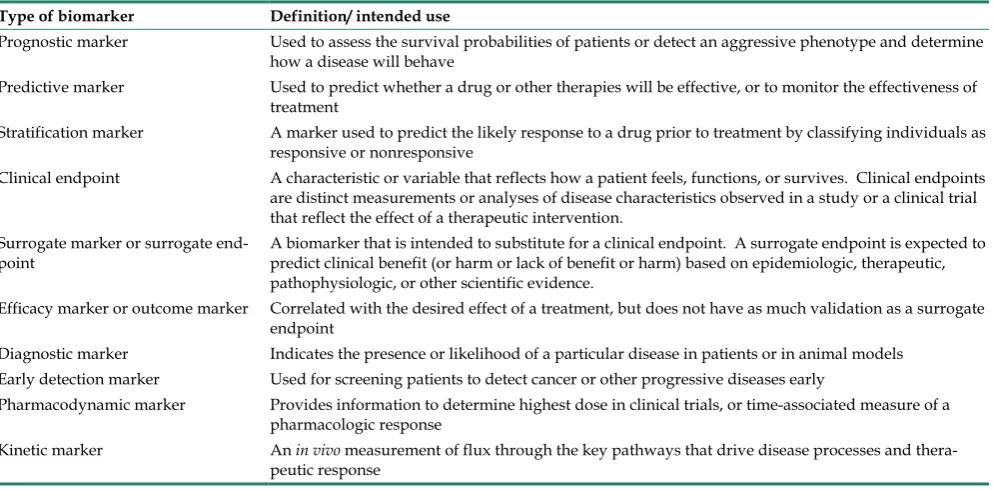
As CTC research expanded rapidly in recent years, data have been accumulated to demonstrate the potential clinical values of CTCs as early detection, diagnostic, prognostic, predictive, surrogate, stratifi-cation, and pharmacodynamic biomarkers [11, 39-42]. However, the role of CTCs as a disease marker may be unique in different clinical conditions and should be carefully interpreted. A good example is the compar-ison between the prognostic and predictive bi-omarkers. Both biomarkers employ progression-free survival and overall survival for data interpretation; however, the prognostic biomarker is independent of specific drug treatment or therapy, and used for the determination of outcomes before treatment, while the predictive biomarker is related to a particular treatment to predict the response [43]. The definitions of all types of biomarkers [44, 45] are summarized in Table 1.
ad-dition to heterogeneity of CTCs, a number of technical factors may also contribute to the discordance, in-cluding the methodological discrepancies and flaws, lack of reference standard, spectrum and selection bias, operator variability and bias, sample size, blurred clinical impact with known clini-cal/pathologic data, use of diverse capture antibodies
from different sources, lack of awareness of the pre-analytical phase, oversimplification of the cyto-pathology process, use of dichotomous decision crite-ria, etc. [48-51]. To minimize the inconsistencies, a standard protocol is indispensable for all CTC assays [52], although the CellSearch system is the only one currently cleared by the FDA.
Figure 3. Schematic representation of CTC enrichment, detection, and characterization. After blood collection, the whole blood is processed by a microdevice, for example, a herringbone-chip tethered with tumor-specific recognition molecules, e.g., aptamers, to isolate the CTCs from the majority of normal blood cells. Enriched CTCs are then identified, enumerated, and characterized via cytopathology, molecular biology, and other examinations. By means of morphology, tumor cells could be categorized into intact CTCs, circulating tumor microemboli (CTM), and circulating tumor materials (CTMat). Each of them may present particular metastatic potential as independent indicators for prediction. Captured CTCs could be cultured ex vivo, followed by additional systemic functional studies. For instance, cultured CTCs are injected into nude mice subcutaneously for a xenograft; and a heavier tumor is found than that induced by the parental cell line.
Table 1. Definition/ intended use for commonly used biomarkers [44, 45].
Type of biomarker Definition/ intended use
Prognostic marker Used to assess the survival probabilities of patients or detect an aggressive phenotype and determine how a disease will behave
Predictive marker Used to predict whether a drug or other therapies will be effective, or to monitor the effectiveness of treatment
Stratification marker A marker used to predict the likely response to a drug prior to treatment by classifying individuals as responsive or nonresponsive
Clinical endpoint A characteristic or variable that reflects how a patient feels, functions, or survives. Clinical endpoints are distinct measurements or analyses of disease characteristics observed in a study or a clinical trial that reflect the effect of a therapeutic intervention.
Surrogate marker or surrogate
end-point A biomarker that is intended to substitute for a clinical endpoint. A surrogate endpoint is expected to predict clinical benefit (or harm or lack of benefit or harm) based on epidemiologic, therapeutic, pathophysiologic, or other scientific evidence.
Efficacy marker or outcome marker Correlated with the desired effect of a treatment, but does not have as much validation as a surrogate endpoint
Diagnostic marker Indicates the presence or likelihood of a particular disease in patients or in animal models Early detection marker Used for screening patients to detect cancer or other progressive diseases early
Pharmacodynamic marker Provides information to determine highest dose in clinical trials, or time-associated measure of a pharmacologic response
Type of biomarker Definition/ intended use
Toxicity marker or safety marker Indicates potentially adverse effects in in vitro, preclinical, or clinical studies Distal marker A marker that reflects disease progression
Screening marker A marker discriminating the healthy state from an early disease state, preferably prior to symptoms Target marker Shows that a drug interacts with a particular molecular target or receptor
Bridging marker or translational
marker Used to measure and compare the same endpoint in preclinical (animal) and clinical studies Authentic marker Reveals the activity of a pathway that is integrally involved in disease activity or therapeutic action Routine marker A marker that is analyzed in laboratories with well-established methods, such as in diagnostic clinical
chemistry
Mechanism marker Provides evidence that a drug affects a desired pathway
Known valid marker A marker that is measured in an analytical test system with well-established performance character-istics and for which there is widespread agreement in the medical or scientific community about the physiologic, toxicologic, pharmacologic, or clinical significance of results; test required
Probable valid marker A marker that is measured in an analytical test system with well-established performance character-istics and for which there is a scientific framework or body of evidence that appears to elucidate the physiologic, toxicologic, pharmacologic, or clinical significance of results; test recommended Exploratory marker A marker that is measured in the exploratory research without well-established performance
charac-teristics and for which there is limited initial information to support the physiologic, toxicologic, pharmacologic, or clinical significance of results; information only
Sample size and sampling probability
It is generally hypothesized that blood samples withdrawn from a vein statistically represent the whole blood of the entire body. However, it may not be true for the detection of CTCs, since they are so rare that the frequency of CTCs obtained may not reflect the entire cell population. Often, in most clini-cal studies, only a small aliquot of sample is pro-cessed; for instance, 7.5 mL aliquot vs. 5 L of total blood in an adult human. It is therefore important to consider: 1) whether the frequency of the CTC popu-lation is large enough to deem the sample size as in-finite; 2) whether cell loss during processing signifi-cantly affects the probability of acquiring CTCs; 3) whether the frequency of the CTC population meas-ured in an aliquot is a statistical representative of the entire sample; and 4) whether the results of one assay correlate with the assays that use a different amount of blood for the sample [53].
The most effective way to increase the CTC de-tection rate in whole blood would be to increase the sample volume within the clinically allowable range. A study has compared the numbers of CTCs in 7.5 mL and 30 mL of blood from the same patient, using the CellSearch System, for a group of 15 patients with colorectal liver metastases [54]. In 7.5 mL of blood, the median number of CTCs was 1 with a range of 0 to 4, while in 30 mL of blood, the median number was 2 with a range of 0 to 9. CTCs were found in 13% and 47% of the patient samples with 7.5 mL and 30 mL blood, respectively. Analyzing 30 mL of blood re-sulted in 20% more patients having detectable CTCs.
A different study also recognized that the volume of blood sample was a limiting factor for the sensitivity of flow cytometry-based CTC assays [8]. Based on a mathematical model using the Poisson distribution, the probability of collecting ≥1 CTCs in one aliquot of 7.5 mL blood from a patient with 500 CTCs in vivo is 50%, and the probability increases with the number of aliquots to 78%, 90% and 95% for 2, 3, and 4 tubes of blood, respectively [55]. It is estimated that, if the frequency of CTCs is 10-6, at least 15,705,214 nucleated
cell events must be acquired by a flow cytometer to pinpoint 10 cells of interest with 95% confidence [56]. It is then a corresponding 13 mL of blood, based on the fact that 1 mL blood has roughly 1.2 million events at medium acquisition rate (~30 µl/min) after lysing the majority of the erythrocytes and gating out debris and dead cells. Twenty mL of whole blood would have to be assessed if the cell event was elevated for lower frequency at 1 CTC in 107 leukocytes [57].
and accurate detection methods are developed, the CTC counts might be evaluated using smaller blood volumes (1 mL of whole blood instead of 7.5 mL), and assays with shorter turnaround time. Small sample amounts and rapid turnaround time are both prereq-uisites when developing microdevices for point-of-care applications.
Point-of-care testing and clinical resistance Point-of-care testing continues to play an ev-er-increasing role in patient diagnosis and manage-ment due to its convenience, rapid results, and low cost [59]. However, barriers remain to the develop-ment of a CTC-based point-of-care test (POCT). First, the clinical significance of screening CTCs needs to be confirmed, although growing evidence has demon-strated that the presence of CTCs in the peripheral blood of cancer patients is an important prognostic factor and the number of the detected CTCs post-treatment is predictive of response to therapy [46, 60-62].
The second factor that needs to be addressed is the simplicity of the CTC assay as a POCT [63]. Cell-Search, for instance, may not be an ideal type of POCT, unless the CTC assignment process could be implemented more simply and automatically. Cell-Search employs a multi-step cell preparation ap-proach and a manual image screening process to identify intact or damaged CTCs. The interpretation of individual CTCs is performed by a trained operator based on the established selection guideline [11, 64]. The morphology identification of CTCs is not as easy as reading the result from a classic POCT, such as a pregnancy test, by showing black and white lines, or a diabetes test, by displaying a digital number. With this test, it is possible that a degree of subjectivity can occur during the CTC assignment process. The in-ter-operator variability of the CellSearch test has been assessed by interpreting 509 blinded images, as well as the inter-laboratory variation from 14 independent laboratories [65]. Results showed that the in-ter-operator variability was the primary cause of the poor inter-laboratory coefficient of variation (CV; 45% ~ 64%), while the inconsistency in CTC assignment, especially when samples contained a large number of apoptotic cells [66], was the leading contributor for inter-operator variability. The presence of apoptotic cells is therefore problematic, and may cause bias. In addition, CTCs have been shown as doublets, clusters, and with irregular shapes, including elongated and multinucleated forms [11, 12]. CTC fragments were also frequently observed [11, 12] as the result of in vivo and/or in vitro cell destruction, probably due to the multi-step preparation [4]. With the large volume of
blood to be processed in a CTC assay, the quantity of cell fragments would be substantial because of the degradation of both CTCs and normal blood cells. In addition, expanding the selection criteria to include widely varying cell size, nuclear size, and nucle-ar-cytoplasmic ratio were could further complicate the assignment process [11]. Hence, identification of CTCs by their morphology can be challenging. To minimize cell misinterpretation, anatomic pathologists may have to participate in the process, helping to differentiate CTCs from cell de-bris/fragments, apoptotic/damaged cells, and tu-mor-like cells [12, 67-69]. Considering the heteroge-neity of the CTC population, and the co-captured white blood cells, immunofluorescence is still the gold standard for CTC counting. Even though CTC isola-tion can be miniaturized and contained within mi-crodevices, a bulky fluorescence microscope for CTC counting and classification is still needed [12, 70]. These would be important in preventing false-positive conclusions when the measured CTC number is close to the threshold. However, a pathologist typically analyzes samples and confirms results in an office separated from the laboratory, or, sometimes at a satellite site. Therefore, inclusion of an anatomic pathologist in the process would preclude the realization of a POCT. So far, many CTC detection platforms share the same variables for CTC identifi-cation. The resolution of the cell images needs to be upgraded [67] and the screening process is ideally automated by an intelligent computer program [64]. The latest advances confirm this trend [12, 70], and a universal standard may soon be developed [52].
Thus, CTC testing is still investigational and should be utilized with caution, and only in specific clinical setting(s) [46]. To prepare for future widespread clin-ical acceptance and use, a comprehensive guideline for all phases of CTC technology development was recently published by the Foundation for the National Institutes of Health (FNIH) Biomarkers Consortium [52]. These guidelines suggest a framework for de-velopment and clinical validation, procedure stand-ardization, context of use, biomarker validation and qualification, and, importantly, the strategies and processes which have been specifically designed for the manipulation of rare CTCs.
Lastly, the turnaround time for a typical POCT is normally within a 1-hour window, but a 30-minute window is preferred to accomplish a truly rapid di-agnosis followed by an immediate clinical manage-ment decision [74, 75]. It seems none of the reported CTC detection systems have fulfilled this require-ment, including the CTC microdevices.
Microdevices
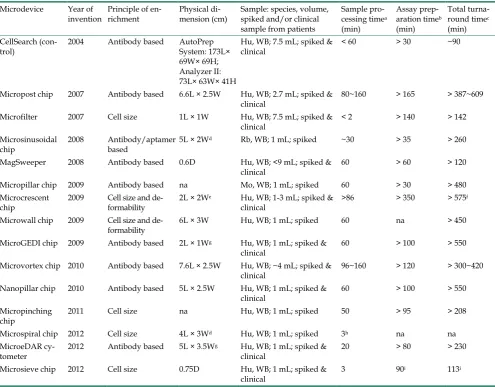
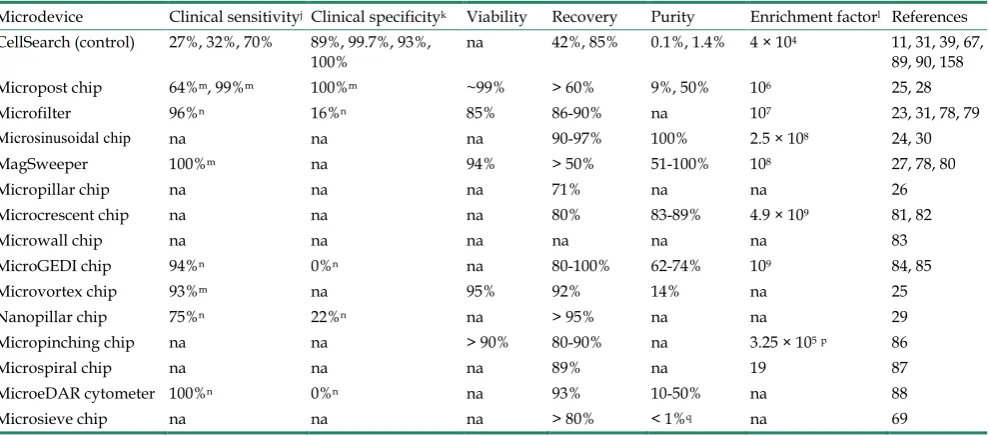
Microdevices have attracted plenty of attention with their unique merits on providing rapid, low-cost, simple, and automated immunoassays [76, 77]. In recent years, microdevices, such as the micro sinus-oidal chip [24, 30], microfilter [23, 31, 78, 79], Mag-Sweeper [27, 78, 80], micropost CTC-chip [25, 28], microvortex herringbone-chip [25], micropillar chip [26], serpentine chaotic nanopillar chip [29], micro crescent chip [81, 82], micro column wall chip [83], micro GEDI (geometrically enhanced differential immunocapture) chip [84, 85], micro pinched flow chip [86], micro double spiral chip [87], micro eDAR (ensemble-decision aliquot ranking) cytometer [88], and microsieve chip [69] have been used to enrich and enumerate rare cells. The physical dimensions and assay characteristics of these microdevices are sum-marized in Tables 2-3. Most microdevices have a planar structure comparable to a glass slide and the capability of processing 1 mL of whole blood in ~ 20 to 60 minutes, not including preparation time for the microdevice, the sample, and the actual detection process. The MagSweeper, microfilter, micro double spiral chip, and microsieve chip, however, present a significantly higher processing capacity or shorter processing time. Human blood has been used for spiking tumor cells in analytical validation studies for all of the microdevices, except the micro sinusoidal chip and the micropillar chip; human patient samples were also tested on nine of 14 microdevices during a pilot trial for clinical validation. Normally, assay preparation consists of microdevice precondition, sample pre-treatment (e.g., dilution and/or plasma
On the other hand, the turnaround time of mi-crodevices is somewhat disappointing. The median of the total time consumed to perform the entire assay (Tables 2-3), if extrapolated for processing a fixed volume of 7.5 mL of blood, is approximately 6 hours (360 min), which does not include the time to image and count each single CTC. Therefore, it may be challenging to complete multiple CTC assays, from loading samples to generating results, in a typical eight-hour shift as worked by most clinical laboratory technicians. Moreover, a long turnaround time may
also have an adverse impact on viability of CTCs and stability of cell immunophenotyping and genotyping profiles, if CTCs are not fixed or permanently stabi-lized upfront. Notably, recent studies have revealed that the actual CTC numbers in patients’ blood could be, at least, 30-100 fold higher than that currently re-ported by the only FDA-cleared CellSearch system [28, 58]. Thus, as more sensitive microdevices are de-veloped, the CTC counts could be evaluated with 1 mL of whole blood, instead of 7.5 mL, and completed within 2-3 hours.
Table 2. Comparison of CTC microdevices: physical dimension and assay performance characteristics. Microdevice Year of
invention Principle of en-richment Physical di-mension (cm) Sample: species, volume, spiked and/or clinical sample from patients
Sample pro-cessing timea
(min)
Assay prep-aration timeb
(min)
Total turna-round timec
(min) CellSearch
(con-trol) 2004 Antibody based AutoPrep System: 173L× 69W× 69H; Analyzer II: 73L× 63W× 41H
Hu, WB; 7.5 mL; spiked &
clinical < 60 > 30 ~90
Micropost chip 2007 Antibody based 6.6L × 2.5W Hu, WB; 2.7 mL; spiked &
clinical 80~160 > 165 > 387~609 Microfilter 2007 Cell size 1L × 1W Hu, WB; 7.5 mL; spiked &
clinical < 2 > 140 > 142 Microsinusoidal
chip 2008 Antibody/aptamer based 5L × 2W
d Rb, WB; 1 mL; spiked ~30 > 35 > 260
MagSweeper 2008 Antibody based 0.6D Hu, WB; <9 mL; spiked &
clinical 60 > 60 > 120 Micropillar chip 2009 Antibody based na Mo, WB; 1 mL; spiked 60 > 30 > 480 Microcrescent
chip 2009 Cell size and de-formability 2L × 2W
e Hu, WB; 1-3 mL; spiked &
clinical >86 > 350 > 575
f
Microwall chip 2009 Cell size and
de-formability 6L × 3W Hu, WB; 1 mL; spiked 60 na > 450 MicroGEDI chip 2009 Antibody based 2L × 1Wg Hu, WB; 1 mL; spiked &
clinical 60 > 100 > 550 Microvortex chip 2010 Antibody based 7.6L × 2.5W Hu, WB; ~4 mL; spiked &
clinical 96~160 > 120 > 300~420 Nanopillar chip 2010 Antibody based 5L × 2.5W Hu, WB; 1 mL; spiked &
clinical 60 > 100 > 550 Micropinching
chip 2011 Cell size na Hu, WB; 1 mL; spiked 50 > 95 > 208 Microspiral chip 2012 Cell size 4L × 3Wd Hu, WB; 1 mL; spiked 3h na na
MicroeDAR
cy-tometer 2012 Antibody based 5L × 3.5W
g Hu, WB; 1 mL; spiked &
clinical 20 > 80 > 230 Microsieve chip 2012 Cell size 0.75D Hu, WB; 1 mL; spiked &
clinical 3 90
i 113i
Hu, Human; Rb, Rabbit; Mo, Mouse; WB, Whole blood; L, Length; W, Width; H, Height; D, Diameter; na, not available a Time to flow a sample through and interact with the microdevice
b Time to prime the microdevice, pre-treat the sample before added to the microdevice, and post-treat the captured tumor cells in or outside the microdevice for identification, which was underestimated by adding the time for each step described in the assay protocol. The time to image and count CTCs was excluded, except the microsieve chip, for lack of information.
c Total consuming time for the entire assay of processing a fixed volume of 7.5 mL blood by combining the sample processing time and the assay preparation
time. Sample processing time was proportionally extrapolated, while assay preparation time was kept constant. d Estimated from the schematic of the chip
e Estimated by the information from the commercial product
f Time by simultaneous processing using multiple microdevices
g Estimated from the real photo of the chip h Estimated by the flow rate of 20 mL/hour
Table 3. Comparison of CTC microdevices: physical dimension and assay performance characteristics (continued). Microdevice Clinical sensitivityj Clinical specificityk Viability Recovery Purity Enrichment factorl References
CellSearch (control) 27%, 32%, 70% 89%, 99.7%, 93%,
100% na 42%, 85% 0.1%, 1.4% 4 × 10
4 11, 31, 39, 67,
89, 90, 158 Micropost chip 64%m, 99%m 100%m ~99% > 60% 9%, 50% 106 25, 28
Microfilter 96%n 16%n 85% 86-90% na 107 23, 31, 78, 79
Microsinusoidal chip na na na 90-97% 100% 2.5 × 10⁸ 24, 30
MagSweeper 100%m na 94% > 50% 51-100% 108 27, 78, 80
Micropillar chip na na na 71% na na 26
Microcrescent chip na na na 80% 83-89% 4.9 × 10⁹ 81, 82
Microwall chip na na na na na na 83
MicroGEDI chip 94%n 0%n na 80-100% 62-74% 109 84, 85
Microvortex chip 93%m na 95% 92% 14% na 25
Nanopillar chip 75%n 22%n na > 95% na na 29
Micropinching chip na na > 90% 80-90% na 3.25 × 10⁵p 86
Microspiral chip na na na 89% na 19 87
MicroeDAR cytometer 100%n 0%n na 93% 10-50% na 88
Microsieve chip na na na > 80% < 1%q na 69
na, not available
j The ratio of true test positive to overall actual positive as defined by the health condition of the human subject or provided by the presumptive gold standard, CellSearch.
k The ratio of true test negative to overall actual negative as defined by the health condition of the human subject or provided by the presumptive gold standard, CellSearch.
l A measure of the enrichment capability of a given microdevice
m The agreement between the test results and the hypothesis that the blood samples from known metastatic cancer patients are true positives, while samples
from healthy subjects are true negatives. The assumption has not been validated by an independent method or CellSearch.
n The agreement between the microdevice and the CellSearch system, assuming CellSearchtest is the gold standard for CTC enumeration, thereby providing true
positives and negatives.
p Only feasible by sequential processing using two devices q Estimated from the patient data
Trends in CTC research and development
Detection of circulating tumor microemboli The role of circulating tumor microemboli (CTM) in metastasis development has been emphasized in recent years in both animal and clinical studies. Oc-curring in blood or lymphatic vessels, CTM are com-posed of at least two tumor cells, and occasionally, normal blood cells. The generation of CTM is believed to result from collective migration of tumor cells [91] and intravasation of tumor cell clusters via a leaky vessel in the primary tumor [91, 92]. The inhibition of VEGF-A could also play a role in this process [93]. Circulating tumor microemboli have been observed in the peripheral blood of metastatic lung [25, 37, 94], liver [95], colorectal [96], renal [36, 93], breast [97] and prostate [25, 98] cancer patients, as well as in the lymphatic vessels of breast cancer patients and an animal model of lymphatic metastasis [99, 100]. The morphology of CTM is highly variable [11, 25, 94, 96]; irregular shapes, such as clusters, circles, and strands, are often seen [94]. It is likely that CTM form as a re-sult of the increased adhesive characteristic of tumor cells in circulation [94]. With greater adhesiveness,
possibly due, in part, to sticky DNA molecules re-leased by dead cells, CTCs might accumulate and form CTM upon collision at low-shear blood flow conditions (Figure 1). However, further study is needed to confirm this process.
Increased evidence has suggested that the pres-ence of CTM could be an indication of higher meta-static potential [95, 96, 98, 101]. In one study, CTM or CTCs were intravenously injected and a higher ten-dency of metastasis was shown for CTM than CTCs [101]. Additionally, more metastatic foci were ob-served by inoculation with larger sized CTM than an equal number of smaller CTM. Another study also suggested that the presence of CTM might be a more relevant prognostic factor for malignancy than that of CTCs alone [95]. In the setting of liver cancer, patients with one CTM or four or more CTCs displayed sig-nificantly shorter survival than those without CTM, or with less than four CTCs [95].
microenvi-ronment and derived growth factors (e.g., EGF and VEGF) could stimulate the proliferation of tumor cells and inhibit the apoptosis [102]. When CTM grow to a certain size and rupture capillary walls, metastasis is formed locally. Hence, extravasation may not be nec-essary in CTM-mediated metastasis [36]. If a cancer stem cell resides in the CTM, the resulting metastatic tumor will grow faster and become more malignant [103]. As a comparison, a solitary CTC has to extrav-asate the capillary wall and form the necessary mi-croenvironment to survive and grow, and according-ly, endure a much longer latency period before it is detected. In addition, the majority of CTCs do not survive for long periods in the circulation, probably due to anoikis [94, 104]. Conversely, CTM maintain the cell-cell contact, which provides a favorable mi-croenvironment for tumor cells to crosstalk and sur-vive. This configuration leaves the innermost cells protected from the immunological assault by lym-phocytes and natural-killer cells [94]. A study recently found that there were no apoptotic tumor cells within the CTM of small cell lung cancer (SCLC) or non-small cell lung cancer (NSCLC) patients [94, 104]. The production of autocrine pro-migratory factors and matrix proteases, the enzymes required for col-lective migration, by CTM might also contribute to their high metastatic potential [101].
The current knowledge for CTM is incomplete due to their extremely low abundance; sensitive and specific detection of CTM could, therefore, expedite the investigative process. Several methods have been used for CTM collection/detection, such as flow cy-tometry [9], immunomagnetic isolation (CellSearch) [37, 94], high-definition fluorescence scanning mi-croscopy [12], size-based filtration (ISET) [37, 94, 104], the microsieve chip [69], and the microvortex her-ringbone-chip [25]. Both CellSearch and ISET were able to detect CTM in blood samples from SCLC pa-tients, although more CTM, especially large sized, were found by ISET; while for NSCLC patients, CTM were detected by ISET, but not by CellSearch [94]. The causes for limited or unsuccessful CellSearch detec-tion might be that: 1) CTM lack sufficient expression of EpCAM and/or CKs for immunomagnetic en-richment and identification [37, 69, 94, 105]; 2) large CTM are not effectively attracted by magnetic forces [94]; 3) dissociation of the CTM occurs during pro-longed manipulation (Figure 1) [106]; or 4) tumor cells within CTM are surrounded by blood cells [69, 105] and, thus, could not be detected or recognized. When compared to CellSearch, ISET minimizes the manip-ulation of the blood sample and excludes the use of epithelial markers for enrichment [37]. As a result, the enrichment of CTM by ISET seems more reliable;
while the burden of CTM measured by CellSearch could be underestimated [12]. Among the existing technologies, flow cytometry is a readily accessible platform for the detection and enumeration of CTM; it distinguishes cell clusters from CTCs by size and flu-orescence intensity. However, large and varia-ble-sized CTM may not be detectable and often block the flow by forming clumps, and sorting out the ac-quired CTM can be a challenge. After successful CTM enrichment, cytopathological and/or cytochemical examination is highly recommended for accurate identification, especially when considering the com-plexity and heterogeneity of CTM. Identifying the cell composition and microenvironmental effect, as well as gene and protein expression profiles, would be critical to further understand the metastatic potential of CTM [107, 108].
Detection of circulating tumor materials CTCs are shed from solid tumors at a daily rate of 3.2 to 4.1x10⁶ per gram of tissue, based on a rat
model study [109]; however, half of these CTCs perish within 2.4 hours [110]. This elimination process initi-ates apoptotic signaling and causes membrane perfo-ration of the CTCs, resulting in leakage of intracellular components, e.g., electrolytes, small molecules, DNA, and chromatin [4]. Extracellular substances, e.g. cy-totoxic anti-cancer drugs used in chemotherapy, can also trigger the cell death via necrosis. In addition to in vivo immunological, apoptotic, and necrotic process-es, surviving CTCs may be further stressed and damaged in vitro during the blood draw and subse-quent sample processing, by temperature shock, flu-idic turbulence, shear force, surface tension, and other harsh conditions. As a result of these destructive processes, damaged cells, fragmented cells, cellular debris, microparticles, and clump-like aggregates are created. Because CTCs are continuously shed and destroyed, such circulating tumor materials (CTMat) can accumulate and present in greater numbers than intact, damaged, and fragmented CTCs in whole blood samples [4, 111]. In 18 blood samples from prostate cancer patients, the intact CTCs, damaged CTCs, and CTC fragments were found to comprise 0% to 22% (mean 4%; smallest sub-population), 1% to 100% (mean 34%), and 0% to 93% (mean 62%; largest sub-population) of the total CTC cell population, re-spectively [4].
were found to predict overall survival similar to intact CTCs (P < 0.001) [64]. Use of CTMat, instead of intact CTCs, could provide flexibility in prognosis due to their high abundance, which is particularly important to patients who have no intact CTCs detectable in the blood. Additionally, the use of CTMat may allow for less stringent target identification, easier enumera-tion, and fully automated image processing [64]. It is therefore speculated that the numbers of intact CTCs and CTMats, as well as their ratio to one another, may provide an important tool for the assessment of tumor burden, the proliferative capability of tumor cells, and therapeutic efficacy [4, 66].
Circulating tumor DNA (CTDNA) is one critical component of CTMat [112-114]. The release of CTDNA into a patient’s blood is thought to derive mainly from the apoptotic and necrotic cells in solid tumors and only modestly from the disintegrated CTCs [4, 112, 115, 116]. Similar to the shedding of CTCs, CTDNA is fed into the blood circulation con-tinuously and the yield is estimated to be 3.3% of tu-mor DNA per 100 gram of solid tutu-mor per day [117]. The level of CTDNA in patients’ blood has been demonstrated correlated with the malignancy status and the therapy response [118, 119]. A study using personalized analysis of rearranged ends (PARE) re-ported that the amount of CTDNA in plasma de-creased immediately after removal of the primary tumor, followed by an increase in subsequent weeks, and then another decrease after chemotherapy and removal of a metastatic tumor in one colorectal pa-tient [113, 114]. It was also found that the plasma CTDNA level was correlated with the tumor stage as demonstrated by the significant difference between localized and metastasized prostate cancer [112]. Telomerase activity and CTC detection
Epithelial markers, such as CK 8, 18, 19, and EpCAM, are the commonly used biomarkers for CTC identification, although they only identify tissue origin and not biological behavior (benign vs. malig-nant). It is known that tumor cells could decrease or lose epithelial marker expression during metasta-sis/dissemination, causing significant heterogeneity [37, 94]. Therefore, the CTCs detected by epithelial markers may not represent the actual or entire CTC population. Telomerase has been found activated in the majority of cancer types and is known to be asso-ciated with malignant properties [120]. Seventy-nine% of patients with localized prostate cancer [121], 100% with stage IV ovarian cancer [122], 84% with stage IV breast cancer [123], 73% with stage IIIB/IV NSCLC [124], 72% with stage C or D (Dukes classification) colon cancer [124], and 90% with metastatic bladder
cancer [125] have demonstrated telomerase activity in blood samples, but no activity was demonstrated in the samples of healthy volunteers [121-125]. Since elevated telomerase activity is one of the hallmarks for stem cell identification/characterization [126], the abovementioned results could be also related to cir-culating cancer stem cells. Although assessing te-lomerase activity may have potential as a method to more accurately detect entire CTC populations, the whole blood sample has to be lysed in order to meas-ure the enzyme activity, thereby destroying all intact CTCs, and precluding enumeration and any other follow-up analysis. This constitutes a significant downside to this method.
Aptamer technology in CTC Detection
Antibody-based immuno-identification has been the mainstream for CTC detection. This strategy, however, is limited by the availability and specificity of the antibodies [30]. Aptamers, single-stranded RNA or DNA molecules, have demonstrated potential as an alternative identification method [30, 127, 128]. The molecular weight of the aptamer is small, about 8 to 15 kDa, leading to rapid tumor penetration and blood clearance. Aptamers also provide high stability, resistance to harsh conditions (pH, urea, organic sol-vents, chaotropic salts, and detergents), reversible denaturation, negligible toxicity and immunogenicity, and oriented surface immobilization. These qualities are typically not found in antibodies. Remarkably, aptamers can be developed directly against the bind-ing targets, rangbind-ing from small compounds to large cell membrane and/or transmembrane proteins, without prior knowledge of these target molecules.
specifically targets differentially expressed rare cell surface proteins without the need for previous infor-mation for the proteins. It is postulated that one ap-tamer binds to one specific surface antigen on the rare cell, while multiple diversified aptamers recognize the fingerprint of a cell phenotype with greater binding avidity, allowing the aptamers to distinguish cell type (e.g., CTC vs. normal cell), cancer type, malignant status, metastatic potential (e.g., epithelial type CTC vs. mesenchymal type CTC), and proliferation capa-bility [127]. Therefore, multivalent CTC enrichment and analysis using aptamers specific to the molecular signature could elucidate the intrinsic heterogeneity of CTCs, and eventually realize the separation of the subpopulation that best represents the metastasis. Moreover, aptamer probes and antibodies could sim-ultaneously bind to the same biomarker molecule by targeting different epitopes.
Perhaps the incorporation of aptamer technology into microdevices has the most potential for the de-velopment of a fast, easy, and accurate method for cell isolation, enrichment and related purposes such as detection, enumeration, and characterization (Figure 3). An aptamer-based, cell-affinity chromatography microdevice has been developed that is capable of isolating tumor cells from a mixture of control cells [132], and simultaneously sorting and enriching mul-tiple distinct cells into independent fractions [133]. The enrichment factor of the microdevice was deter-mined to be ~130 times. The sorted cells were able to grow as well as the cultured cells at 96% purity. A micro-sinusoidal chip tethered with PSMA-specific aptamers also displayed high performance on the detection and enumeration of rare LNCaP cells in whole blood [30]. Results demonstrated a 90% recov-ery and ~100% purity and detection efficiency. A specially structured aptamer also displayed the po-tential for rapid and efficient isolation of CTCs [134]. A microdevice immobilized with long DNA aptamers was developed and each aptamer was prepared by the process of rolling circle amplification [135] and composed of multiple binding sites. A number of these multivalent aptamers were able to capture rare cells via an improved avidity and efficiency. Many of these long DNA aptamers subsequently created a three dimensional network, enabling rapid cell cap-ture under high flow rates.
CTC functional study
It is important to note that research on CTCs has not been limited to detection or enumeration. In many instances, when viable and proliferative CTCs have been successfully isolated, scientists have attempted to investigate their functions in in vivo models (Figure
3). Viable CTCs have been isolated from murine blood, cultured, and implanted into other mice (Fig-ure 3) [78, 80]. Results showed that isolated CTCs displayed a greater capability of colony formation than the parental cultured cells. Moreover, as ex-pected, xenografts generated from isolated CTCs were larger and heavier, and metastasized faster than the original cell line. If CTCs are more aggressive than their parental cell line, a derivative hypothesis could be that CTCs have stem or progenitor cell-like prop-erties.
Because often only a limited number of CTCs are captured in most CTC assays, it is important to ex-pand the isolated CTCs ex vivo and, ideally, in situ in order to perform subsequent functional analyses. A plastic version of the micropost CTC-chip has been developed to capture viable CTCs and culture them directly on the chip [26]. Viable CTCs were found to expand after 24 hr culture using this chip. Cell clusters were observed after five days and, after 12 days, the clusters had expanded and cells were found on top of the microposts. Moreover, the cultured CTCs were found >99% viable.
Chemotherapeutic efficacy is often monitored by radiological imaging and/or the level of the serum tumor markers, in which it could take months to rec-ognize a change [136, 137]. The count of CTCs appears to respond more rapidly to the treatment, in as little as a few weeks [138, 139]. Beyond an in vitro number count, an ex vivo functional study on patient-derived CTCs might provide for an immediate treatment de-cision regarding drug resistance [84]. To reveal the real-time, individualized drug-target interaction, live CTCs, freshly removed from the patient, can be the target for the anti-cancer drug candidates. Lately, the activity of docetaxel and paclitaxel was preliminarily studied on CTCs isolated from castrate-resistant prostate cancer patients using a GEDI microdevice [84]. The interaction between taxane drugs and CTCs was monitored at the molecular level via microtubule bundling. Some patients failed docetaxel, and con-sistently, their CTCs showed no activity when ex-posed ex vivo to docetaxel. Other patients displayed drug-dependent efficacy during chemotherapy, and correspondingly, their CTCs demonstrated aberrant mitotic arrest or apoptotic nuclei in response to paclitaxel, but not to docetaxel.
prostate cancer patients had cells present in blood that secreted tumor antigens mucin 1 and prostate-specific antigen, respectively. These cells were not detected in healthy donors or patients with benign disease. The markers that potentially affect metastasis, such as cathepsin D protease, fibroblast growth factor 2, and cytokeratin-19, were also within the scope of secretion by the tumor cells [141, 142].
Mathematical Modeling
Variation in CTC detection methodologies and clinical data management has created discordance across studies [46, 47, 60] and generated significant disagreement amongst both scientists and clinicians on how to interpret the data and apply it clinically [71]. Mathematical modeling could be a useful tool in differentiating rational results from those that are not, and especially for ruling out data that is outside of the inherent boundaries in rare event measurement [11]; supplementary materials. Three commonly asked boundaries have been demonstrated by mathematical modeling: 1) what is the lowest number of CTCs that would need to be in a 7.5 mL blood sample to allow CellSearch system to detect one CTC at 85% recovery? The minimum is 1.2 ± 0.4 based on the binomial dis-tribution analysis and lower than the limit will cause the failure; 2) what is the theoretical CV for CTC quantification? On the basis of a Poisson distribution, it decreases with the increase of the CTC counts. Therefore, 50%, 24%, 12%, 6%, and 3% are the esti-mated CVs for acquiring 4, 18, 71, 286, and 1142 CTCs, respectively; 3) what is the range of the CTC numbers that might have actually been in that tube of blood, if one obtains 5 CTCs in the clinical study? It is between 2 and 12, with 95% confidence. This range narrows downward when the confidence level decreases.
Mathematical models could also reveal the methodological constraints for the CellSearch system [55] and flow cytometry [56, 57]. When the CellSearch system is used for a patient with 500 CTCs in circula-tion, the probability of collecting ≥1 CTCs in one ali-quot of 7.5 mL blood is 50%, while the probability of detecting 1 CTC is only 18% considering the statistical contribution from each step of the process [55]. As for flow cytometry-based CTC acquisition, the correlation between the sample size (i.e., number of cell events) and detection precision (i.e., CV) is inverse; the smaller the CV, the more events are to be collected. For instance, a 40% CV requires 6.3 x 10⁶ events
(ap-proximately 1 mL blood); while for a reduction to a 10% CV, 109 events needs to be acquired from
ap-proximately 200 mL blood [57].
Dichotomization is a commonly used method in CTC analysis, which is based on a single cutoff; for
instance, 5 CTCs for metastatic breast cancer [90, 144, 145]. The method categorizes cancer patients into two response groups, with favorable or unfavorable prognosis [11, 146-148]. While the use of dichotomi-zation is straightforward, it has its limitations, in-cluding loss of statistical power, loss of nonlinearity, generation of observer bias, origination of discord-ance across studies, and creation of false prognostic factors [149-153]. Analysis with standard categorical survival analysis and spline regression models may resolve the problems [153]. A multivariable spline Cox regression model has been used for the interpre-tation of the relationship between the number of CTCs and the prognosis of metastatic breast cancer. Four categories, 0, 1-4, 5-20, and >20, were applied to illus-trate the relationship. Results showed that, with an increasing number of CTCs, the risks of cancer pro-gression (hazard ratio of propro-gression-free survival) and death (hazard ratio of overall survival) increased continuously. A linear relationship was demonstrated with a small number of CTCs (< 5), however, the in-crease in both risks was then tapered after the number reached 5. When more than 20 CTCs were detected, the risk of progression became slightly changed, while the risk of death was almost constant. Notably, by using more sensitive detection approaches, recent studies demonstrated the presence of at least a 30-100 fold higher number of CTCs, in a variety of cancer patients, than that currently reported by the Cell-Search system [28, 58]. Thus, technology advancing the mathematical modeling of CTCs may need to be refined according to the sensitivity of detection methods and volume of blood samples used for as-says.
Concluding remarks
enhance the power of the CTC assay. Translation of CTC research findings from the laboratory to clinical practice has been slow. Eight years ago, CellSearch system was cleared by FDA for CTC based cancer diagnosis. Until now CellSearch system is still the only one on the market and has not been demanded to the extent that it could be. The main reason well ac-cepted is the unclear benefit of using CTC in treat-ment decision-making, and so to clarify the concern, extended validation has been recommended since 2007 [71]. However, aforementioned methodological constraints, inherent in the CellSearch sytem [28, 40, 58], cannot be neglected. A detection system with in-adequate cell recovery, analytical sensitivity, and sampling accuracy may continue providing mixed results, and cumulatively, further stress the limited utility.
Opportunities frequently come with challenges. Increasing knowledge of CTCs and their tumor cell-associated and/or -derived materials, such as CTM and CTMat (including CTDNA), will likely lead to exciting discoveries and provide novel insight into tumor burden, therapy efficacy, metastatic potential, proliferative capability, and heterogeneity. Measuring elevated telomerase activity might be a promising avenue to target the majority of tumor cell popula-tions in blood. The advances with aptamers and mi-crodevices have succeeded, through a variety of routes, in minimizing the technical constraints. The application of mathematical models could smartly direct the rare event handling and data management. Successful ex-vivo CTC culture methods will allow for subsequent functional studies that are poised as the next important step in CTC research. There are also numerous opportunities to evaluate CTCs systemi-cally and systematisystemi-cally using proteomics and ge-nomics. Most importantly, however, is to move the science forward and beyond simple enumeration, and to view and respect CTCs as a contributing, functional system.
Conflict of Interest
The authors have declared that no conflict of in-terests exists.
Acknowledgment
This project was supported by NIH grants (to
Y.Z.) R01CA151955, R33CA173382, and
5P50CA126752 and Golden Key Alumni Professional Development Grant (to B.H.).
Competing Interests
The authors have declared that no competing interest exists.
References
1. Jemal A, Bray F, Center MM, Ferlay J, Ward E, Forman D. Global cancer
statistics. CA Cancer J Clin. 2011; 61(2): 69-90.
2. Wicha MS, Hayes DF. Circulating tumor cells: not all detected cells are
bad and not all bad cells are detected. J Clin Oncol. 2011; 29(12): 1508-1511.
3. Fass L. Imaging and cancer: a review. Mol Oncol. 2008; 2(2): 115-52.
4. Rao GC, Larson C, Repollet M, Rutner H, Terstappen LW, O'hara SM,
Gross S. Analysis of circulating tumor cells, fragments, and debris. United States Patent 7863012. 2011.
5. Asworth TR. A case of cancer in which cells similar to those in tumors
were seen in the blood after death. Aust Med J. 1869; 14: 146-149.
6. Leary JF. Rare event detection and sorting of rare cells. In: Durack G,
Robinson JP, ed. Emerging tools for cell analysis: advances in optical measurement technology, Wilmington, DE: Wiley-Liss; 2000: 49-72.
7. Attard G, de Bono JS. Utilizing circulating tumor cells: challenges and
pitfalls. Curr Opin Genet Dev. 2011; 21(1): 50-58.
8. Racila E, Euhus D, Weiss AJ, Rao C, McConnell J, Terstappen LW, Uhr
JW. Detection and characterization of carcinoma cells in the blood. Proc Natl Acad Sci USA 1998; 95(8): 4589-4594.
9. Takao M, Takeda K. Enumeration, characterization, and collection of
intact circulating tumor cells by cross contamination-free flow cytome-try. Cytometry A. 2011; 79(2): 107-117.
10. Hong B, Mace M, Crowder R, Coleman T, He W, Szczepanski F, Feczko J,
Lyzak J. Metastatic breast cancer detection and therapy monitoring using folate-targeting flow cytometry. J Clin Oncol. 2011; 29 (Suppl 27):23.
11. Allard WJ, Matera J, Miller MC, Repollet M, Connelly MC, Rao C, Tibbe
AG, Uhr JW, Terstappen LW. Tumor cells circulate in the peripheral blood of all major carcinomas but not in healthy subjects or patients with nonmalignant diseases. Clin Cancer Res. 2004; 10(20): 6897-6904.
12. Marrinucci D, Bethel K, Kolatkar A, Luttgen MS, Malchiodi M, Baehring
F, Voigt K, Lazar D, Nieva J, Bazhenova L, Ko AH, Korn WM, Schram E, Coward M, Yang X, Metzner T, Lamy R, Honnatti M, Yoshioka C, Kunken J, Petrova Y, Sok D, Nelson D, Kuhn P. Fluid biopsy in patients with metastatic prostate, pancreatic and breast cancers. Phys Biol. 2012 9(1): 016003.
13. Krivacic RT, Ladanyi A, Curry DN, Hsieh HB, Kuhn P, Bergsrud DE,
Kepros JF, Barbera T, Ho MY, Chen LB, Lerner RA, Bruce RH. A rare-cell detector for cancer. Proc Natl Acad Sci USA 2004; 101(29): 10501-10504.
14. Hsieh HB, Marrinucci D, Bethel K, Curry DN, Humphrey M, Krivacic
RT, Kroener J, Kroener L, Ladanyi A, Lazarus N, Kuhn P, Bruce RH, Nieva J. High speed detection of circulating tumor cells. Biosens Bioe-lectron. 2006; 21(10): 1893-1899.
15. Pinzani P, Salvadori B, Simi L, Bianchi S, Distante V, Cataliotti L,
Paz-zagli M, Orlando C. Isolation by size of epithelial tumor cells in periph-eral blood of patients with breast cancer: correlation with real-time re-verse transcriptase-polymerase chain reaction results and feasibility of molecular analysis by laser microdissection. Hum Pathol. 2006; 37(6): 711-718.
16. Wong NS, Kahn HJ, Zhang L, Oldfield S, Yang LY, Marks A, Trudeau
ME. Prognostic significance of circulating tumour cells enumerated after
filtration enrichment in early and metastatic breast cancer patients. Breast Cancer Res Treat. 2006; 99(1): 63-69.
17. Rolle A, Günzel R, Pachmann U, Willen B, Höffken K, Pachmann K.
Increase in number of circulating disseminated epithelial cells after
sur-gery for non-small cell lung cancer monitored by MAINTRAC ® is a
predictor for relapse: A preliminary report. World J Surg Oncol. 2005; 3(1): 18.
18. Pachmann K, Camara O, Kavallaris A, Krauspe S, Malarski N, Gajda M,
Kroll T, Jörke C, Hammer U, Altendorf-Hofmann A, Rabenstein C, Pachmann U, Runnebaum I, Höffken K. Monitoring the response of circulating epithelial tumor cells to adjuvant chemotherapy in breast cancer allows detection of patients at risk of early relapse. J Clin Oncol. 2008; 26(8): 1208-1215.
19. Rosenberg R, Gertler R, Friederichs J, Fuehrer K, Dahm M, Phelps R,
Thorban S, Nekarda H, Siewert JR. Comparison of two density gradient centrifugation systems for the enrichment of disseminated tumor cells in blood. Cytometry 2002; 49(4): 150-158.
20. Gertler R, Rosenberg R, Fuehrer K, Dahm M, Nekarda H, Siewert JR.
Detection of circulating tumor cells in blood using an optimized density gradient centrifugation. Recent Results Cancer Res. 2003; 162: 149-155. 21. Bossolasco P, Ricci C, Farina G, Soligo D, Pedretti D, Scanni A, Deliliers
GL. Detection of micrometastatic cells in breast cancer by RT-pCR for the mammaglobin gene. Cancer Detect Prev. 2002; 26(1): 60-63.
22. Zieglschmid V, Hollmann C, Böcher O. Detection of disseminated tumor
23. Zheng S, Lin H, Liu JQ, Balic M, Datar R, Cote RJ, Tai YC. Membrane microfilter device for selective capture, electrolysis and genomic analysis of human circulating tumor cells. J Chromatogr A. 2007; 1162(2): 154-161.
24. Adams AA, Okagbare PI, Feng J, Hupert ML, Patterson D, Göttert J,
McCarley RL, Nikitopoulos D, Murphy MC, Soper SA. Highly efficient circulating tumor cell isolation from whole blood and label-free enu-meration using polymer-based microfluidics with an integrated conduc-tivity sensor. J Am Chem Soc. 2008; 130(27): 8633-8641.
25. Stott SL, Hsu CH, Tsukrov DI, Yu M, Miyamoto DT, Waltman BA,
Rothenberg SM, Shah AM, Smas ME, Korir GK, Floyd FP Jr, Gilman AJ, Lord JB, Winokur D, Springer S, Irimia D, Nagrath S, Sequist LV, Lee RJ, Isselbacher KJ, Maheswaran S, Haber DA, Toner M. Isolation of circu-lating tumor cells using a microvortex-generating herringbone-chip. Proc Natl Acad Sci USA 2010; 107(43): 18392-18397.
26. Helzer KT, Barnes HE, Day L, Harvey J, Billings PR, Forsyth A.
Circu-lating tumor cells are transcriptionally similar to the primary tumor in a murine prostate model. Cancer Res. 2009; 69(19): 7860-7866.
27. Talasaz AH, Powell AA, Huber DE, Berbee JG, Roh KH, Yu W, Xiao W,
Davis MM, Pease RF, Mindrinos MN, Jeffrey SS, Davis RW. Isolating highly enriched populations of circulating epithelial cells and other rare cells from blood using a magnetic sweeper device. Proc Natl Acad Sci USA 2009; 106(10): 3970-3975.
28. Nagrath S, Sequist LV, Maheswaran S, Bell DW, Irimia D, Ulkus L, Smith
MR, Kwak EL, Digumarthy S, Muzikansky A, Ryan P, Balis UJ, Tomp-kins RG, Haber DA, Toner M. Isolation of rare circulating tumous cells in cancer patients by microchip technology. Nature 2007; 450(7173): 1235-1239.
29. Wang S, Liu K, Liu J, Yu ZT, Xu X, Zhao L, Lee T, Lee EK, Reiss J, Lee YK, Chung LW, Huang J, Rettig M, Seligson D, Duraiswamy KN, Shen CK, Tseng HR. Highly efficient capture of circulating tumor cells by using nanostructured silicon substrates with integrated chaotic micromixers. Angew Chem Int Ed Engl. 2011; 50(13): 3084-3088.
30. Dharmasiri U, Balamurugan S, Adams AA, Okagbare PI, Obubuafo A,
Soper SA. Highly efficient capture and enumeration of low abundance prostate cancer cells using prostate-specific membrane antigen aptamers immobilized to a polymeric microfluidic device. Electrophoresis 2009; 30(18): 3289-3300.
31. Lin HK, Zheng S, Williams AJ, Balic M, Groshen S, Scher HI, Fleisher M,
Stadler W, Datar RH, Tai YC, Cote RJ. Portable filter-based microdevice for detection and characterization of circulating tumor cells. Clin Cancer Res. 2010; 16(20): 5011-5018.
32. Sun YF, Yang XR, Zhou J, Qiu SJ, Fan J, Xu Y. Circulating tumor cells:
advances in detection methods, biological issues, and clinical relevance. J Cancer Res Clin Oncol. 2011; 137(8): 1151-73.
33. Swaby RF, Cristofanilli M. Circulating tumor cells in breast cancer: a tool whose time has come of age. BMC Med. 2011; 9: 43.
34. Yu M, Stott S, Toner M, Maheswaran S, Haber DA. Circulating tumor
cells: approaches to isolation and characterization. J Cell Biol. 2011; 192(3): 373-82.
35. Ghadially R. The role of stem and circulating cells in cancer metastasis. J Surg Oncol. 2011; 103(6): 555-7.
36. Paterlini-Brechot P, Benali NL. Circulating tumor cells (CTC) detection:
clinical impact and future directions. Cancer Lett. 2007; 253(2): 180-204.
37. Hou JM, Krebs M, Ward T, Morris K, Sloane R, Blackhall F, Dive C.
Circulating tumor cells, enumeration and beyond. Cancers 2010; 2(2): 1236-1250.
38. Maheswaran S, Haber DA. Circulating tumor cells: a window into cancer
biology and metastasis. Curr Opin Genet Dev. 2010; 20(1): 96-99.
39. Cohen SJ, Punt CJ, Iannotti N, Saidman BH, Sabbath KD, Gabrail NY,
Picus J, Morse M, Mitchell E, Miller MC, Doyle GV, Tissing H, Terstap-pen LW, Meropol NJ. Relationship of circulating tumor cells to tumor response, progression-free survival, and overall survival in patients with metastatic colorectal cancer. J Clin Oncol. 2008; 26(19): 3213-3221.
40. Tanaka F, Yoneda K, Kondo N, Hashimoto M, Takuwa T, Matsumoto S,
Okumura Y, Rahman S, Tsubota N, Tsujimura T, Kuribayashi K, Fuku-oka K, Nakano T, Hasegawa S. Circulating tumor cell as a diagnostic marker in primary lung cancer. Clin Cancer Res. 2009; 15(22): 6980-6986.
41. Devriese LA, Voest EE, Beijnen JH, Schellens JH. Circulating tumor cells
as pharmacodynamic biomarker in early clinical oncological trials. Can-cer Treat Rev. 2011; 37(8): 579-589.
42. Mostert B, Sleijfer S, Foekens JA, Gratama JW. Circulating tumor cells
(CTCs): detection methods and their clinical relevance in breast cancer. Cancer Treat Rev. 2009; 35(5): 463-474.
43. Oldenhuis CN, Oosting SF, Gietema JA, de Vries EG. Prognostic versus
predictive value of biomarkers in oncology. Eur J Cancer 2008; 44(7): 946-953.
44. DeCaprio AP. Introduction to toxicologic biomarkers. In: DeCaprio AP,
ed. Toxicologic Biomarkers, New York: Taylor and Francis Group; 2006: 6-8.
45. Saijo N. Critical comments for roles of biomarkers in the diagnosis and
treatment of cancer. Cancer Treat Rev. 2011; 38(1): 63-7.
46. Nagaiah G, Abraham J. Circulating tumor cells in the management of
breast cancer. Clin Breast Cancer 2010; 10(3): 209-216.
47. Alunni-Fabbroni M, Sandri MT. Circulating tumour cells in clinical
practice: Methods of detection and possible characterization. Methods 2010; 50(4): 289-297.
48. Gion M. Serum tumour markers: from quality control to total quality
management. Breast 2000; 9(6): 306-311.
49. Sturgeon C. Limitations of assay techniques for tumor markers. In:
Diamandis EP, Fritsche HA, Lilja H, Chan DW, Schwartz MK, ed. Tumor markers: physiology, pathobiology, technology, and clinical applica-tions. Washington, DC: AACC Press. 2002: 65-82.
50. Gion M, Daidone MG. Circulating biomarkers from tumour bulk to
tumour machinery: promises and pitfalls. Eur J Cancer 2004; 40(17): 2613-2622.
51. Knottnerus JA, van Weel C, Muris JW. Evaluation of diagnostic
proce-dures. BMJ. 2002; 324: 477-480.
52. Parkinson DR, Dracopoli N, Gumbs Petty B, Compton C, Cristofanilli M,
Deisseroth A, Hayes DF, Kapke G, Kumar P, Lee JS, Liu MC, McCor-mack R, Mikulski S, Nagahara L, Pantel K, Pearson-White S, Punnoose EA, Roadcap LT, Schade AE, Scher HI, Sigman CC, Kelloff GJ. Consid-erations in the development of circulating tumor cell technology for clinical use. J Transl Med. 2012; 10(1): 138.
53. Leary JF. Strategies for rare cell detection and isolation. In: Darzynkie-wicz Z, Robinson JP, Crissman HA, ed. Methods in Cell Biology: Flow Cytometry, San Diego: Academic Press; 1994: 331-358.
54. Lalmahomed ZS, Kraan J, Gratama JW, Mostert B, Sleijfer S, Verhoef C.
Circulating tumor cells and sample size: the more, the better. J Clin On-col. 2010; 28(17): e288-e289.
55. Tibbe AG, Miller MC, Terstappen LW. Statistical considerations for
enumeration of circulating tumor cells. Cytometry A. 2007; 71(3): 154-162.
56. Rosenblatt JI, Hokanson JA, McLaughlin SR, Leary JF. Theoretical basis
for sampling statistics useful for detecting and isolating rare cells using flow cytometry and cell sorting. Cytometry 1997; 27(3): 233-238.
57. Allan AL, Keeney M. Circulating tumor cell analysis: technical and
statistical considerations for application to the clinic. J Oncol. 2010; 2010: 426218.
58. Flores LM, Kindelberger DW, Ligon AH, Capelletti M, Fiorentino M,
Loda M, Cibas ES, Jänne PA, Krop IE. Improving the yield of circulating tumour cells facilitates molecular characterisation and recognition of discordant HER2 amplification in breast cancer. Br J Cancer. 2010; 102(10): 1495-502.
59. Cramb R. Guideline for point-of-care testing. In: Price CP, John A, Hicks J (ed) Point-of-Care Testing, Washington, DC: AACC Press; 2004: 155.
60. Amadori A, Rossi E, Zamarchi R, Carli P, Pastorelli D, Jirillo A.
Circu-lating and disseminated tumor cells in the clinical management of breast cancer patients: unanswered questions. Oncology 2009; 76(6): 375-386.
61. Dotan E, Cohen SJ, Alpaugh KR, Meropol NJ. Circulating tumor cells:
evolving evidence and future challenges. Oncologist 2009; 14(11): 1070-1082.
62. Lianidou ES, Mavroudis D, Sotiropoulou G, Agelaki S, Pantel K. What’s
new on circulating tumor cells? A meeting report. Breast Cancer Res. 2010; 12(4): 307.
63. Drenck N. Point of care testing in Critical Care Medicine: the clinician’s view. Clin Chim Acta 2001; 307(1-2): 3-7.
64. Coumans FA, Doggen CJ, Attard G, de Bono JS, Terstappen LW. All
circulating EpCAM+CK+CD45- objects predict overall survival in cas-tration-resistant prostate cancer. Ann Oncol. 2010; 21(9): 1851-1857. 65. Kraan J, Sleijfer S, Strijbos MH, Ignatiadis M, Peeters D, Pierga JY, Farace
F, Riethdorf S, Fehm T, Zorzino L, Tibbe AG, Maestro M, Gisbert-Criado R, Denton G, de Bono JS, Dive C, Foekens JA, Gratama JW. External quality assurance of circulating tumor cell enumeration using the Cell-Search® system: A feasibility study. Cytometry B Clin Cytom. 2011; 80(2): 112-118.
66. Rossi E, Basso U, Celadin R, Zilio F, Pucciarelli S, Aieta M, Barile C, Sava T, Bonciarelli G, Tumolo S, Ghiotto C, Magro C, Jirillo A, Indraccolo S, Amadori A, Zamarchi R. M30 neoepitope expression in epithelial cancer: quantification of apoptosis in circulating tumor cells by CellSearch analysis. Clin Cancer Res. 2010; 16(21): 5233-43.