Fleet Safety: Benchmarking Good Practice from Collective Insights
Road Safety on Four Continents, Bangkok, 14-16 November, 2007Lori Mooren, Business Manager, International, ARRB Group
Abstract
As fleet safety or work related road safety is a relatively new field, a series of
benchmarking workshops have been conducted in Australia, plus one in Thailand, to explore the research evidence and the practical experience of those involved in fleet safety activities. These workshops addressed a number of specific topics in fleet safety, enabling participants to hear about the latest research in these areas, some case studies from fleet safety practitioners in organizations, and to discuss among peers the challenges and techniques used in advancing fleet safety.
These workshops have produced a wealth of knowledge about effective and ineffective practices as well as encouraged networking between organizations facing similar challenges. They have also generated some lines of further inquiry and opportunity for public policy development.
This paper contains a description of what this program was about and some of the lessons learnt through the process.
Introduction
Road safety is not just the responsibility of governments. Increasingly, employers, both private and public sector, are taking a more active role in influencing safe vehicle use in the work environment and in work related driving tasks.
In order to collectively learn more about good practice in managing fleet safety or work related road safety, it is beneficial to share knowledge and experience. One way of doing this is through benchmarking workshops. A company called Benchmarking Partnerships in association with ARRB, has been conducting such workshops in Australia, since the first one was hosted by BP Australia in March, 2004. The first international fleet safety benchmarking workshop was held in March, 2007 in
Bangkok. In all, 8 workshops have been held, involving participation from well over 100 organisations.
These workshops involved specialist
presentations based on researched topics; case study presentations by organisations that have put in place innovative systems or programs; and structured small group discussions
applicability and feasibility of the practices in different organisational settings.
on
Both heavy and light vehicle safety issues were covered in the workshops. The specific topics were: fleet safety policy frameworks, root cause analysis, key performance indicators, driver
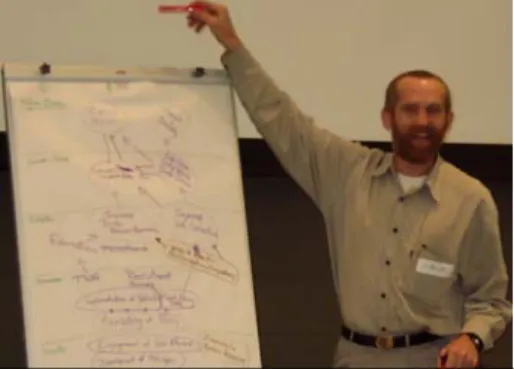
Figure 1 Steven Humphrey, BHP Billiton, reports back with notes of the group
training, behavioural change, OHS and duty of care, driver fatigue, and international fleet safety challenges.
Fleet Safety Policy Framework
In the first of the fleet safety benchmarking workshops, hosted by BP Australia, Melbourne in March, 2004, the focus was broadly on policy frameworks for managing road safety in occupational
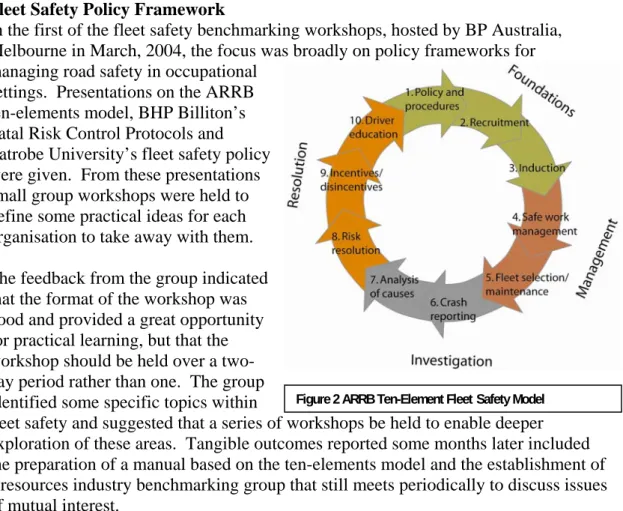
settings. Presentations on the ARRB ten-elements model, BHP Billiton’s Fatal Risk Control Protocols and Latrobe University’s fleet safety policy were given. From these presentations small group workshops were held to define some practical ideas for each organisation to take away with them. The feedback from the group indicated that the format of the workshop was good and provided a great opportunity for practical learning, but that the workshop should be held over a two-day period rather than one. The group identified some specific topics within
fleet safety and suggested that a series of workshops be held to enable deeper exploration of these areas. Tangible outcomes reported some months later included the preparation of a manual based on the ten-elements model and the establishment of a resources industry benchmarking group that still meets periodically to discuss issues of mutual interest.
Figure 2 ARRB Ten-Element FleetSafety Model
Key Performance Indicators and Root Cause Analysis
The workshop on key performance indicators and root cause analysis, hosted by QFleet (Queensland Government’s fleet management agency) in Brisbane, in July, 2004, touched on the importance of assigning fleet safety performance KPIs to responsibilities of various people in the organisation. It also illustrated – in theory and practice – how root cause analysis can identify important systemic risk factors to address. ARRB presented the theoretical basis of KPIs and road cause analysis. Reliance Petroleum presented their approach to root cause analysis and assisted the workshop with a real crash example that was invested so that participants could examine how it worked in practice. Fleet company, LeasePlan presented a collection of cases that showed how performance data can highlight where action needs to be focused. Participants were able to learn from the group exercise, the importance of doing a thorough root cause investigation and analysis of crashes in order to find the systemic problems that could cause a repeat of a similar type of vehicle incident. The feedback from the group suggested a need to delve more deeply in the
establishment of measurement indicators. So, a further workshop on this was planned.
Fleet Safety Metrics and Measurement Workshop
For this Metrics Workshop, hosted by Toyota Australia, Melbourne, November, 2004, a measurement specialist was brought
in to assist with training the group in the essentials of defining appropriate metrics and performance measurement practices. The workshop was jointly guided by an ARRB fleet safety specialist and the metrics and was highly interactive. Group activities focused on setting a vision for a good set of indicators and measurement tools, deciding on important indicators for fleet safety, and how to secure organisational buy-in for fleet safety
performance measurement. Figure 3 Vision of excellent fleet safety measures While quite a number of fleet safety performance indicators were identified in the workshop, most participants agreed that it was best to keep them down to a manageable number of key indicators.
Driver Training and Behaviour Change Interventions
Many benchmarking participants had indicated a strong interest in driver training and other ways to influence safe driving. A workshop on this topic was hosted by and Queensland Department of Emergency Services, Brisbane in May, 2005. This workshop involved specialist presentations from ARRB, and CARRS-Q on the research findings about effective and less effective behavioural interventions in road and fleet safety. Case study presentations of real life organisational trials were given by AGL, BOC Gases, the Emergency Services Department and Reliance Petroleum. Each presentation was followed by group discussions about ways the effective programs might be adapted for use in other participants’ organisations.
The workshop identified where some kinds of driver training can be helpful, though by and large, skills based training isn’t effective. The driver group discussion method of encouraging driver participation in risk identification, analysis and resolution as well as approaches to improve safety culture were showing some very positive results.
Culture Change
A workshop, hosted by Air Services Australia, in Melbourne, was held in July, 2005. This was not specifically about improving fleet safety, but rather more generally about how to improve organisational culture to make it more conducive to safe work practices. While ARRB presented an illustrative case study about how to change and improve safety culture in an organisation, other cases were presented by Air Services Australia, Alcoa and Telstra, The group workshop sessions identified some
important issues and ideas for shifting organisational culture throughout an organisation.
Gaining Buy-in from Managers and Drivers
Safety practitioners within organisations often come up against resistance from their superiors and peers making it difficult to implement safety programs. Then if they do
overcome these barriers, they sometimes encounter resistance from the employee drivers to program participation and policy compliance. A workshop hosted by Australia Post and Australian Air Express in Melbourne in October, 2005 heard and discussed presentations from ARRB, Australia Post, Johnson & Johnson, Reliance Petroleum and Toyota about these topics.
Again, the shared experience of the participating organisations helped to strengthen the collective practical knowledge of the benchmarking group as well as to give encouragement for others to try techniques learned in the workshop. A key theme arising was the importance of providing opportunities for active participation, input to policy and/or feedback for managers and for employee drivers.
OHS Fleet Safety Duty of Care
Increasingly employers in Australia and elsewhere have become concerned about whether their policies and practices comply with legislative requirements for employee and public safety with respect to driving. A workshop hosted by the Queensland Department of Emergency Services, Brisbane in June, 2006, reviewed Australian occupational safety and transport legislation including the application of ‘chain of responsibility’ principles with presentations by ARRB and the Queensland Department of Transport. These discussions were followed by case study
presentations by Elders, Reliance Petroleum/BP and SurePlan. Again small groups were organised so that clarifications and peer group exchange could occur. In addition, a Fleet Safety Maturity Capability Assessment Tool devised by ARRB and Benchmarking Partnerships was used to assist participants to gage how well they were complying with good fleet safety practice.
The Chain of Responsibility concept has been in development in Australia since the mid 1990s. But now all States have adopted regulatory provisions to prosecute companies for their part in serious transport breaches.
Participants with both heavy and light vehicle fleets were able to gain some insights into what they could and should do in order to comply with occupational safety and transport laws.
This workshop clarified some of the employer’s responsibilities to improve and maintain safe practices and illustrated how a policy framework template can be useful in identifying gaps in fleet safety management practices.
Packing Loading Driving Carrying (Operator) Receiving Consigning
Figure 4 Chain of Responsibility, courtesy of Queensland Department of Transport
Driver Fatigue
Together with speeding, fatigue is the biggest factor in work related crashes. This is an important issue for transport operators but the risk affects light vehicle drivers as well. A workshop was held in Sydney, in September, 2006. This workshop involved presentations from the Roads and Traffic Authority of NSW on regulatory provisions for heavy vehicle operators, as well as from specialist providers of tools and systems for managing fatigue risk. Participants also heard and discussed case studies from Shell and Linfox on behavioural programs and technologies being trialled to curb the risk of driver fatigue. Behavioural and engineering solutions were explored by the group. Participants were able to gain some insights into how various tools and programs work in other organisations.
Global Fleet Safety Benchmarking
The first international fleet safety benchmarking workshop, hosted by Traffic and Transport Development and Research Center King Mongkut’s University of
Technology Thonburi (TDRC) and Safe Driver Education Co. Ltd Thailand, was held in Bangkok, March, 2007. It was opened by Khun Chamreon Yutithumsakul, Head of DDPM Inspector Office, Department of Disaster Prevention and Mitigation, who identified some major road safety challenges in Thailand and encouraged an active role for employers in improving road safety.
This workshop had a wider focus than the
Australian based workshops with a broad range of presentations – all leading to the question of how to promote good practice in fleet safety globally. There were presentations from Safe Driver
Education, ARRB, Johnson & Johnson, the World Health Organisation, Shell and the UN Fleet Forum.
The small group discussions enabled each participant to take away some useful ideas that
could assist them to improve fleet safety in their organizations. In addition some insights into the viability of an ongoing network or community of good practice were made. The challenges of benchmarking globally – or locally – is that there are too few organizations taking an active interest in fleet safety for an (ideally industry-segmented) benchmarking group to be easily sustained. However, there is an interest by those that did participate in the Workshop to keep having the opportunity to share practices with one another.
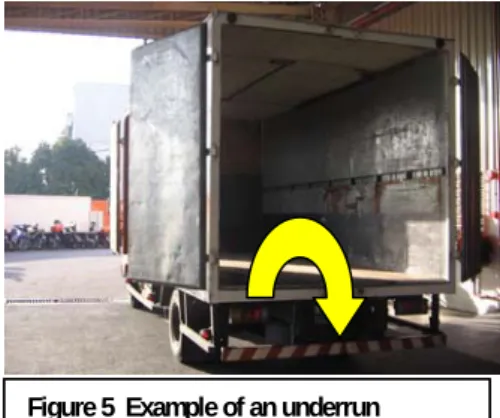
Figure 5 Example of an underrun protection bar on a transport vehicle.
The group concluded that it may be best to aim toward establishing something like an ISO standard for fleet safety to encourage good fleet risk management, but that an informal networking approach, including a series of periodic workshops is the best way to go at this stage.
Observations and Conclusions
It is clear that employers can make a strong contribution to road safety. Employers can access drivers and vehicles in ways that governments can’t; can influence vehicle manufacturers (60% or more vehicles are registered as corporate); and can control journey and driving risk by good policies and practices. There is an interest by some companies to share experience; and peer activities such as benchmarking workshops provide a good and welcomed opportunity to do this.
Governments can influence fleet safety actions by companies. They can do this through passing and enforcing occupational safety and transport laws that target those who can influence people who drive for work purposes. In addition, governments can advance the safety of their own fleets and drivers.
Industries and companies vary widely in their practices. The participants of the Benchmarking workshops came with a wide variety of
experiences and levels of sophistication in their practices. Dangerous goods companies, such as those in the oil and gas industries have best practices with strong policy commitments to safety. Other companies have good practices too, notably, for example, pharmaceutical companies. Government agencies vary in their fleet safety management practices, from doing nothing to doing some leading edge work in fleet safety. But a number of companies are seeking to improve, whereas some are not taking an interest in fleet safety.
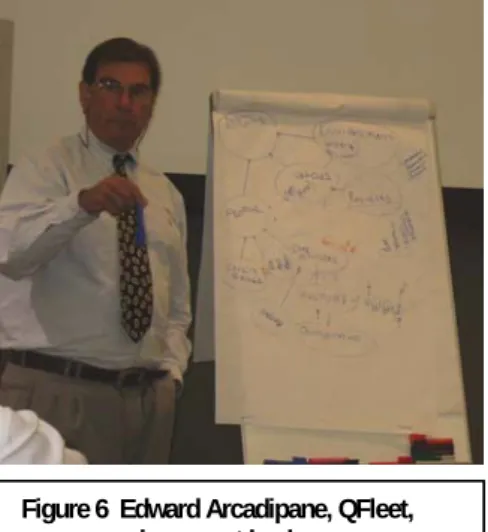
Figure 6 Edward Arcadipane, QFleet, group session report back
Multi-national companies with good practices set good standards but challenged in local markets
• Use of local contractors poses an increased risk
• Competing with local companies who do not invest in safety • Operating in high risk environments
• Uneven regulatory and social conditions So they:
• Want improvements in local markets
• Want legislation for a more even playing field
• Need to assess and mitigate risk in some environments • May contribute to public road safety programs
Local companies in high risk countries that have poor fleet safety practices: • Have operational costs that need to be contained
• Lack of knowledge about safety practices
• Find that staff driving habits are difficult to change • Find that there is poor availability of safer vehicles So they:
• Need to be advised of low cost effective measures
• Need training and education about fleet safety management • Are challenged to change culture and behaviour
Suggestions for governments to improve fleet safety include:
• Convene benchmarking workshops (targeting various industry sectors) • Develop good practice guide(s)
• Introduce fleet safety legislation and standards
• Establishing a website for exchange of practitioner experience • Commission studies into fleet safety capability/practices
• Put strong fleet safety policies and programs in place in their own agencies • Encourage benchmarking in the transport industry
• Produce tools and materials for use by employers
• Arrange to hold a conference on fleet safety, targeting employers and government agencies
References:
Haworth, N., Tingvall, C., & Kowadlo, N. (2000). Review of best practice road safety initiatives in the corporate and/or business environment. Monash University Accident Research Centre (MUARC) Report No. 166: Melbourne, Victoria, Australia.
Murray W., Newnam S., Watson B., Davey J. and Schonfeld C. (2003). Evaluating and improving fleet safety in Australia. Canberra: Australian Transport Safety Bureau (ATSB). [Available online at: http://www.atsb.gov.au/road/research/fleet_safety.cfm] NTC. (2004). Information Bulletin: Chain of Responsibility. National Transport Commission: Melbourne, Victoria, Australia.
Acknowledgements:
Thank you to all of the Benchmarking Workshop participants and presenters including:
ACT AMBULANCE ADVANCE PETROLEUM
AGL (AUSTRALIAN GAS AND LIGHT) AIOI INSURANCE
AIRSERVICES AUSTRALIA AMCOR AUSTRALASIA
ANSTO (AUSTRALIAN NUCLEAR SCIENCE AND TECHNOLOGY ORGANISATION) ARRB GROUP LTD
ASPAC OIL (THAILAND) LTD AURORA ENERGY
AUSTRALIAN AIR EXPRESS AUSTRALIAN FEDERAL POLICE AUSTRALIA POST
BENCHMARKING PARTNERSHIPS BHP BILLITON
BMA BLACKWATER MINE BOC LIMITED
BP AUSTRALIA LIMITED BP INTERNATIONAL LIMITED BRISBANE CITY COUNCIL BRISBANE CITY WORKS BRISBANE TRANSPORT COMALCO
CARRS-Q
CHILD SUPPORT AGENCY CITY OF BELMONT CITY FLEET (BRISBANE) CITY OF WODONGA
CNS THAILAND, THE SHELL COMPANY OF THAILAND LTD COLES MYER
DEPARTMENT OF DISASTER PREVENTION AND MITIGATION (THAILAND) DEPT. OF EMERGENCY SERVICES (QUEENSLAND)
DEPT. OF JUSTICE VICTORIA
DEPT. LOCAL GOVERNMENT, PLANNING, SPORT & RECREATION ELDERS LIMITED
ENFORCEMENT MANAGEMENT DEPT. OF JUSTICE (VIC) ETERNITY GRAND LOGISTICS PLC
FLEET FORUM (UNITED NATIONS) GOLD COAST CITY COUNCIL HANSON
HOLDEN MOTOR COMPANY (AUSTRALIA) HOLDEN PERFORMANCE DRIVING CENTRE HUNTER AREA PATHOLOGY SERVICE HYDRO TASMANIA
INSTITUTE OF ROAD TRAFFIC EDUCATION (INDIA) INTERDYNAMICS PTY LTD
KANGAN BATMAN TAFE
KING MONGKUT’S UNIVERSITY OF TECHNOLOGY THONBURI KODAK AUSTRALASIA PTY LTD
HONGKONG OXYGEN& ACETYLENE CO.LTD.(BOC) JARDINE LLOYD THOMPSON
JOHNSON & JOHNSON AUSTRALIA JOHNSON & JOHNSON INTERNATIONAL JOHNSON & JOHNSON PACIFIC
LA TROBE UNIVERSITY
LAND TRANSPORT DEPT, MINISTRY OF COMMUNICATION (THAILAND) LEASEPLAN AUSTRALIA
LEADERSHIP SOLUTIONS LINFOX AUSTRALIA PTY LTD LOCKWOOD
LUBE SUPPLY CHAIN LOGISTICS THAILAND, THE SHELL COMPANY OF THAILAND LTD MALAYSIA OXYGEN BHD (BOC)
MARITIME SYSTEMS DIVISION – DEFENCE MATERIAL MAYNE PATHOLOGY
MELBOURNE WATER
MONASH UNIVERSITY ACCIDENT RESEARCH CENTRE MT COTTON TRAINING SERVICES
NATIONAL TRANSPORT COMMISSION NRMA MOTORING AND SERVICES OPTUS
PERFORMANCE DIMENSIONS
PH/TH/VT. PILIPINAS SHELL PETROLEUM CORPORATION LTD PHILIP MORIRIS (THAILAND)LTD
POWERLINK QUEENSLAND
PTT EXPLORATION AND PRODUCTION PUBLIC COMPANY LIMITED QFLEET, DEPT OF PUBLIC WORKS, QUEENSLAND
QUEENSLAND DEPT. OF EMERGENCY SERVICES QUEENSLAND FIRE AND RESCUE SERVICE QUEENSLAND HEALTH
QUEENSLAND RAIL
QUEENSLAND TRANSPORT RACQ
RAILCORP
RELIANCE PETROLEUM
ROADCRAFT (EDUCATION QLD SECTION)
ROADS AND TRAFFIC AUTHORITY OF NEW SOUTH WALES ROCHE PRODUCTS PTY LTD
RSL CARE (RETURNED SERVICEMEN’S LEAGUE) RURAL AMBULANCE VICTORIA
SA AMBULANCE
SAFE DRIVER EDUCATION THAILAND SAFE FLEET THAILAND
SAKHALIN ENERGY INVESTMENT COMPANY LTD SANTOS LTD
SCANIA SIAM CO., LTD SCIENCE PARTNERS PTY LTD SMORGAN STEEL
SNOWY HYDRO SHELL AUSTRALIA SHELL DIRECT
SHELL MALAYSIA TRADING SDN BHD STANDFAST CORPORATION
SUREPLAN AUSTRALIA TELSTRA
THAI INDUSTRIAL GASES PUBLIC CO LTD (BOC) THE SHELL COMPANY OF THAILAND LTD TNT EXPRESS
TOYOTA MOTOR CORP. AUST LTD
VOLVO TRUCK & BUS (THAILAND) CO. LTD VTC (VOLVO)
WESTOIL PETROLEUM
WORLD HEALTH ORGANISATION YOUR BETTER FUTURE PTY LTD