Specialisation and Advanced Practice
Discussion Paper
A Select Analysis of the
Language of Specialisation
and Advanced Nursing
and Midwifery Practice
The National Nursing and Nursing Education Taskforce (N3ET) March 2006
2
National Nursing & Nursing Education Taskforce (N3ET) 2006
This publication is copyright. It may be reproduced in whole or part for study or training purposes subject to the inclusion of an acknowledgement of the source. Reproduction for purposes other than those indicated above or not in accordance with the provisions of the Copyright Act 1968, requires the written permission of the National Nursing and Nursing Education Taskforce.
This document may also be downloaded from the N3ET web site at:
http://www.nnnet.gov.au/
Enquiries concerning this document and its reproduction should be directed to: National Nursing & Nursing Education Taskforce Secretariat
C/- The Department of Human Services, Victoria Level 12 – 555 Collins Street
Melbourne VIC 3000 Telephone: (03) 9616-6995 Fax: (03) 9616-7494 E-mail: [email protected] Suggested citation:
Heartfield, M. (2006) Specialisation and Advanced Practice Discussion Paper. Melbourne; National Nursing and Nursing Education Taskforce.
SECTION
Message from N
3
ET Chair
T
his analysis of the language of specialisation and advanced practice is an important step in the journey of challenging and raising awareness of the landscape that surrounds practice of nursing and midwifery in Australia. The National Nursing & Nursing Education Taskforce invited Dr Marie Heartfield to write this paper and we are confident that it will promote and stimulate debate and discussion within the nursing and midwifery community.The paper does not necessarily represent the views of the National Nursing & Nursing Education Taskforce but is intended to stimulate and provoke conversation at this critical juncture. In addition to exploring some of the issues pertinent to the Taskforce’s current work on national consistency in scopes of practice, national standards for nurse practitioners and specialisation in nursing and midwifery, there is also work being undertaken both on national and state/territory level, on decision making frameworks. Much for this work is influenced by language, and perceptions and assumptions about what words mean.
I encourage you to read the paper, consider the issues, and question how they affect and inform your views and the work for which you are responsible. By being well-informed and sharing information and views, we are far more likely to make a truly valuable contribution to the future of nursing and midwifery.
Adjunct Professor Belinda Moyes Chair
National Nursing and Nursing Education Taskforce March 2006
4
Summary
A Select Analysis of the Language of Specialisation and Advanced
Nursing and Midwifery Practice
An important contribution to understanding what nurses and midwives can do is consideration of the plethora of terms used to describe advanced practice and specialisation. These terms include generalist, specialist, advanced, extended, expanded as well as less commonly used titles such as endorsed, enhanced, amended or maximised. Foregrounding local policy, reports and guidelines rather than academic and international discussions, the publications used in this analysis were from government departments, nursing and midwifery regulatory authorities and professional and industrial organisations. The language in these publications was analysed as terminology and as systems of statements that are understood to produce certain constructions or representations of advanced practice and specialisation. Though there is consistency in words and titles, this does not necessarily equate with effective definitions or consistency across the various regulatory or practice dimensions.
Advanced practice and specialisation are present in the publications as various forms of practice promotion, practice containment and practice diversification.
Specialisation and advanced practice are commonly used in professional and industrial publications as indicators of achievement for individual nurses and for the profession of nursing. With midwifery new to recognition as a discipline separate to nursing, it is relatively invisible in this body of literature.
Advanced practice and specialisation now feature in nursing and midwifery regulatory authority scopes of practice and decision making publications. In what might be understood as a shift in regulatory style, these documents encourage and potentially enable all nurses and midwives, both as individuals and as a professional population, to direct or regulate themselves and their practice within the new and particular definitions and boundaries of advanced, expanded and extended practice.
Practice diversification is paramount in government health department publications. A whole of health workforce approach underpinned attention to the health workforce as a group with maximum skill capacity working to provide the best possible practice for consumer health needs.
Introduction
7
Section 1
9
Practice Promotion 9 Practice Containment 9 Practice Diversification 10Section 2
12
Terminology 12The Generalist Nurse and Generalist Practice 13
The Specialist, Specialist Practice, Speciality and Specialisation 13
Extended and Expanded Practice 14
Advanced Practice 15
Section 3
16
Advanced Practice Roles 16
Specialisation 18
Enrolled Nurses and Advanced and Specialist Practice 19
Role and Level Intersection: Generalist, specialist, advanced and extended practice 21
Scope of Practice and Nursing and Midwifery 22
Conclusion 23
References
24
About the Author
28
Tables
29
7
Introduction
I
n most Australian jurisdictions, enrolled nurses, registered nurses, midwives, mental health nurses and nurse practitioners are overtly recognised as regulated nursing and midwifery roles. Additional layers of regulation continue in some jurisdictions for other roles including mothercraft, dental, disability or child and family health nursing. However, there are numerous spaces between these roles – spaces occupied by government, health care providers, professional, industrial and educational organisations and groups. Within these spaces there are many other positions, definitions and interpretations of nursing and midwifery.The reasons for change and development in nursing and midwifery roles are many and already effectively reported elsewhere [1–5]. This paper examines the language of specialisation and advanced practice and the associated issues rather than the reasons for their emergence. The aim is to assist stakeholders engaged in the broader work of the National Nursing and Nursing Education Taskforce (N3ET) around
specialisation, scope of practice and nurse practitioners to better understand developments in nursing and midwifery through an explication of “taken-for-granted” understandings.
While recognising international differences, the focus in this paper is on the current positions or conceptions obtained mostly from the websites and publications of Australian government departments, nursing and midwifery regulatory authorities and professional and industrial organisations. To ensure a range of jurisdictional positions this literature was supplemented through searches of databases including, Austli, Wagenet and Ebsco.
Academic publications and information about education programs for advanced and specialist roles have not been included. With the exception of some relevant key documents, all of the material has been written in the last ten years and most of it within the last five. The literature is not summarised and evaluated as much as analysed for patterns in the construction and/or representation of specialisation and advanced practice nursing within those documents.
It is important and necessary to clarify that some of the documents included in the analysis are only at draft stage. In particular, the Nurses Board of Victoria (NBV) Guidelines: Determining Scope of Nursing and Midwifery Practice, and the Australian Nursing and Midwifery Council (ANMC) Draft National Framework for Decision Making by Nurses and Midwives about Scopes of Practice1, form an important part of this
analysis despite being draft documents distributed for comment only in November 2005 and January 2006 respectively.
Of significance, the ANMC national DMF consultation document has been produced in collaboration with State and Territory nursing and midwifery regulatory authorities, the National Nursing and Nurse Education Taskforce, the Australian and New Zealand Council of Chief Nurses, the Deans of Nursing and Midwifery-Australia and New Zealand, the Midwifery-Australian Nursing Federation, the Australian College of Midwives Inc, the Royal College of Nursing, Australia and the National Enrolled Nurses Association, and builds on work undertaken previously in Queensland, South Australia, Tasmania, Victoria and Western Australia, and as well as overseas2.
With a national consultation series about to commence, comments are offered here in the spirit of collegial deliberation.
Relevant terminology is examined with particular attention to advanced, extended, expanded specialised and generalist practice, with a focus on: • The way terminology is used by particular
stakeholder groups
• The range of advanced practice roles in Australia • How generalist and specialist practice roles relates to notions of advanced and extended practice, including how the various roles relate to each other and what differentiates them, and
• The ways scope of practice is conceptualised in the context of generalist, advanced and specialist practice.
1
The analysis integrates a pragmatic review of where and how these words are used (including in what documents and with what explanations) with a critical engagement with the language as not only as words but also as systems of statements about advanced practice and specialisation in nursing and midwifery. Attention here is given to particular meanings as evident in the intersections and overlapping of definitions and conceptions, as well as the contradictions and absences, all of which have the potential to shape understanding and practice. This paper is in three sections. Section One presents an overview of three approaches or systems of statements about advanced practice and specialisation. These are practice promotion, practice containment and practice diversification.
Section Two introduces the terminology used to describe advanced practice and specialisation for nurses and midwives. Readers are forewarned about difficulties in this section to effectively isolate and present clear definitions of the nominated terms. The discussion starts with generalist as a broad and perhaps ‘first’ or ‘beginning’ place, but from here there is no apparent order of progression in which to sequentially examine these terms.
Further complexity arises as terms are defined variously in relation to function, characteristics, or meaning. For example, sometimes terms refer to persons in the same or different roles (generalist or specialist nurse) and other times the same terms refer to contexts such as the areas of practice and/or activities (speciality or specialisation). Terms are also used to refer to levels that may manifest as time and/or experience in practice (such as beginner), or relate to the evidence of competence for practice (such as advanced or expert).
Section Three presents examples of intersections, overlaps and absences in how advanced roles are written about and connected (or not) with descriptions of generalist, specialist and scopes of practice for nurses and midwives.
In recognising that the word ‘nurse’ applies to two and in some jurisdictions three levels of nurse, this analysis includes some relevant examples of specialist and advanced practice for Enrolled Nurses, however titled.3
8
3
While the title Enrolled Nurse is commonly understood, the regulated title for this group of nurses in Victoria is Registered Nurse, Division 2 and Registered Enrolled Nurse, Division 2 in Western Australia.
Practice Promotion
Documents from professional organisations and industrial groups promote specialisation as an indicator of achievement for individual nurses and for the profession of nursing. Midwifery is not present in this literature. Advanced practice is used in both clinical and non-clinical contexts and is defined as a role in National Nursing Organisations (NNO) members definitions, as well as referred to as a higher level of knowledge, skills and practice [6, 7]. As will be discussed later, there is considerable variation in the focus of specialist organisations and references to speciality, specialist and advanced practice. The various role definitions, standards and competencies produced by the specialist organisations provide a broad scope and multiple pathways for individual nurses to develop career pathways as well opportunities for visibility and recognition of the profession as a group with this specialisation [8, 9].
A second cluster of documents from the various workforce awards and agreements, map similarities in advanced and specialty titles yet demonstrate considerable variation in role descriptions. With 87.2% of nurses identifying themselves as working in clinical positions, including clinical nurses and clinical nurse managers [10], there is an obvious basis for awards and agreements to be locally responsive in nursing roles and accommodate conditions such as what needs to be done as well as who is available to do it [11].
Nursing professional organisations promote advanced and specialist professional roles and skills, while in a different but related manner industrial references focus on recognition and remuneration and strive to make the complexity of practice visible for the purposes of the individual, as well as the profession.
Practice Containment
An alternative and more traditionally regulative approach is evident in the definitions and guidelines for these higher levels of practice and responsibility. Over the last seven or eight years, five jurisdictions have produced documents about scope of practice or decision making frameworks. Originating from authorities focussed on protection of the public, these documents propose principles, definitions and criteria related to advanced and specialist practice in documents designed to assist nurses and midwives, regulatory authorities, as well as service and policy providers [12, p 4].
Internationally there is evidence about the effectiveness of the overlapping roles or advanced and specialist nurses and nurse practitioners [13]. With the exception of recent studies of Nurse Practitioners, there is currently limited Australian evidence about the impact of any nursing and midwifery practice, nor higher levels of practice [14-18]. Research reports due later this year, such as that led by Professor Christine Duffield at the Centre for Health Services Management, University Technology Sydney, may assist in informing future practices for all dimensions of regulation and groups with regulatory function.
Use of the term ‘extended practice’ has evolved with the nurse practitioner role which is internationally recognised to include advanced nurse practice [19]. ANMC documents define advanced practice as separate to expanded and extended, yet it is unclear what this means for the individual other than announcing that such separate levels or roles exist. There is no consistency in how these levels are regulated, or by whom, with the details of what is actually being done by nurses relatively invisible beyond the individual scopes of practice.
Fragmentation of nursing and midwifery into advanced, extended and expanded practice appear to also confound what is surely an obvious requirement of all professional practice that is, independent decision making. Exceptions are where advanced scopes of practice have been articulated and/or competency standards developed such as for critical care and specialist breast care nurses, though there is no consistency in such developments across the nursing and midwifery professions.
A recent national development from nursing and midwifery regulatory authorities has been scopes of practice and decision making frameworks. A permissive approach to determining scopes of practice is promoted with the responsibility for determining the limits of professional practice shifted away from regulatory authorities to individual nurses and midwives [20].
An alternative, and openly political view, of this may be that regulatory strategies or technologies, such as scopes of practice and decision making frameworks, reflect particular features of government in contemporary advanced liberal societies. Through the production and dissemination of documents asserting to assist individuals to make decisions about their practice, regulation may appear to be reduced. These strategies do not prescribe, rule or direct the individual nurses or midwives. Rather than reduce regulation, they use multiple and diverse means to encourage and enable all nurses and midwives both as individuals and as a professional population, to direct or regulate themselves and their practice. Such management takes the form of equipping nurses with the tools and capacities to make individual decisions about what they can and cannot do, while at the same time framing certain boundaries around their practice as ‘nursing’ or ‘midwifery’ — a seemingly more than reasonable thing for a regulatory authority to do. When considered in relation to specialisation and advanced practice, such developments promote certain
definitions or descriptions of practice and, in doing so set new boundaries as attempts to contain the complexity and variability of practice. Implications of this, as identified elsewhere, are potential disparities, inconsistencies, potential conflict over scopes of practice, difficulties in management and less likelihood of meeting the wider needs of flexible workforce delivery for consumers [20 p56, 21]. In such documents there is a presumption of reduced or partial responsibility for the nurse or midwife. They are situated as accepting delegation [12, p 22] in a way that assumes their responsibilities may originate from others rather than through their own capacities and actions (i.e. client assessment). This suggests to the nurse or midwife, as well as to others (e.g. health or workforce professions) that the nurse has some control of over advancing their practice through self-education and self-assessment, but not over extending or expanding their practice. The documents tell nurses (but perhaps not midwives) that delegating activities is internally important to advancement.
Again, recognising that national consultation on the ANMC national DMF consultation document is about to commence, the members of these disciplines are highly likely to be active in seeking answers to questions such as how accepting delegation is a pathway to advanced practice?
Practice Diversification
A third and different approach to advanced practice and specialisation, evident mostly in documents from government health departments is reference to the health workforce as one group working at maximum skill capacity to provide as best practice as possible for consumer health needs.
Terms such as ‘enhanced’ or ‘extended’ are used by some jurisdictions to describe health profession roles, while ‘advanced’ is most commonly used to describe the expanded practice of nurses [22]. Changes to National Competition Policy, aged care and health
workforce reviews and inquiries into hospital and health care services have resulted in a number of reports that review nursing and midwifery in relation to wider public interest [21, 23–25]. Not surprisingly, such reports highlight the variable nature and contexts of nursing practice and the perhaps inevitability that other service providers will at various times provide what appear to be the same services as nurses.
Recognising that various Acts (e.g. Nurses, Poisons and Therapeutic Substances Acts to name just a few) may restrict practice, examples of overlapping practice or practice substitution are as follows: • Registered midwives may provide midwifery
services that may substitute for obstetric services • Registered nurses may provide primary care services that may be substitutes for general practitioner services
• Aboriginal health workers can provide services similar to those of registered nurses
• Nursing assistants, personal care assistants and carers provide some of the services that enrolled and possibly registered nurses also perform, and • Allied health professionals can provide some services that are similar to those provided by nurses. [1]
These reports are relatively silent about the delegation or substitution of midwifery services to others such as nurses, allied health professionals or aboriginal health workers. There would be a number of reasons for this, including that it is only relatively recently that midwifery has gained mainstream professional and public recognition as a health care discipline separate to nursing.
A recent report following two and a half years of consultation and review of regulation of health professionals in Victoria [26] recommends that protection of professional titles is sufficient for public protection. This statement sights a lack of evidence of harm, concerns about interprofessional disputes if additional practice restrictions were applied and difficulty in enforcing and managing practice restrictions as examples of support. The report presents a discussion of specialist registers without detail (other than medicine) of who these groups. Consideration of advanced practice and specialisation are considered elsewhere in health system wide approaches in recommendations for increased efficiency and effectiveness, upskilling or new, advanced and/or expanded roles for all members of the health workforce [4, 22]. A level of government pragmatism is evident in one Queensland paper which recognises the potential for advanced practice roles to be developed and enacted within the existing scopes of nursing practice without the burden of changes to legislation [22].
Terminology
While twenty years ago a worldwide review of nursing titles suggested enormous variation in level, scope, sequence and standards [27], today in Australia, there is a reasonable degree of consistency in nursing and midwifery titles.
Nurse practitioner, registered nurse, midwife, and enrolled nurse have currency across all jurisdictions. Definitions of these roles are often grounded in legislation and detailed in guidelines from the nursing and midwifery regulatory authorities with some variation and additional roles described by professional nursing organisations, such as the members of the NNO4 and employment and
industrial bodies.
There is a strong but not necessarily consistent influence in all of these documents of the International Nursing Council (ICN) definitions of nursing as well as the early work of the Queensland Nursing Council (QNC) on the scope of nursing practice.
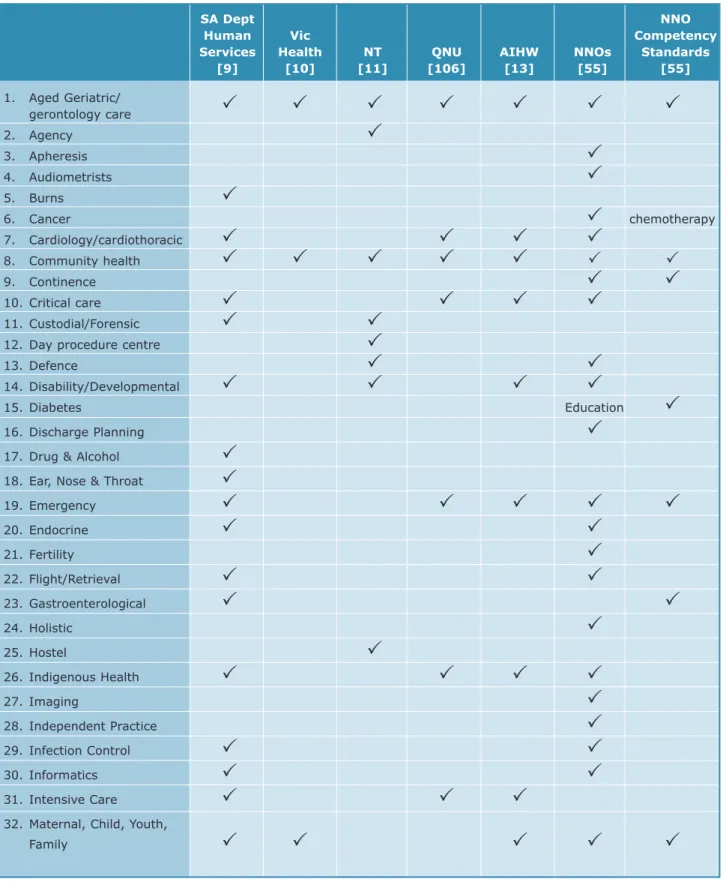
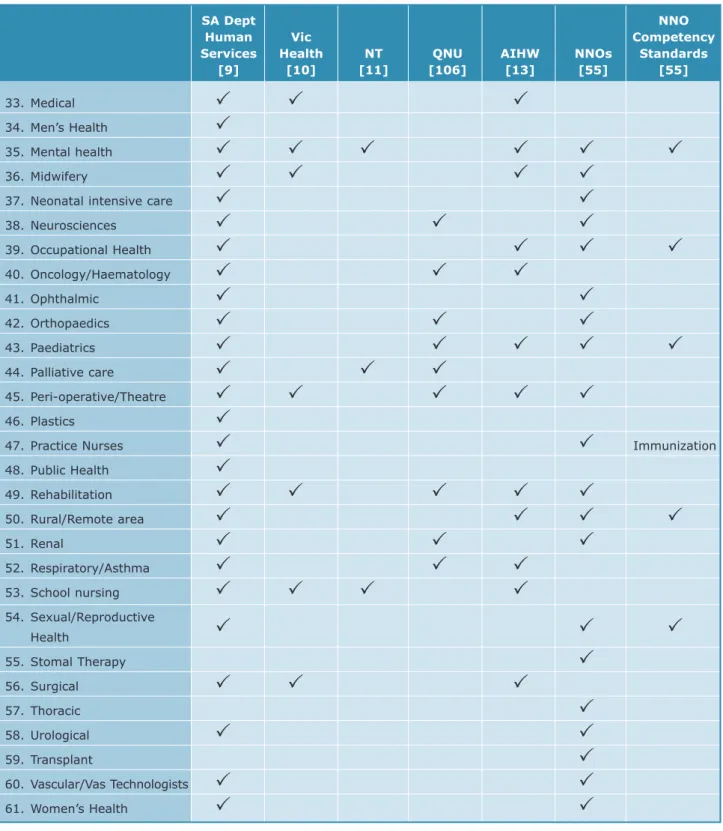
Table 1 provides an overview of the consistency and relatively subtle differences in nursing and midwifery regulatory authorities specialist and advanced definitions taken from scope of practice or decision making frameworks. Further, the following discussion illustrates how consistency in the words used in a definition does not necessarily equate with effective definitions or consistency in practice.
Common terms used to refer to nursing practice include: • Generalist • Specialist • Advanced • Extended • Expanded
Additional related terms also include: • Endorsed5
• Enhanced • Maximised6
• Amended
These seemingly everyday terms take on particular meanings as they are required to act as a grid across which various groups map time or experience in practice, contexts of practice, knowledge, skills, education and authorisation to practice as a nurse or midwife.
While the academic literature dissects the scope of practice for the profession from the practice of individual nurses and midwives, this differentiation is rarely made in the reviewed documents. The intended audience of these documents is also assumed rather than specified, with the style indicative of a professional rather than consumer or layperson readership.
An example of the difficulties with the intersection and overlapping of these terms is where extended and expanded practice are defined separately (such as role development pathways for all or maybe only some nurses who gain nurse practitioner recognition) then used to describe roles that are separate from advanced roles (such as in the ANMC national DMF consultation document) while one professional organisation uses expanded and extended as characteristics of advanced practice [9].
A result of this complexity is that, while every attempt has been made to provide examples of how documents define and use the nominated terms, sometimes these terms are used in the definitions of other terms before they have been defined.
12
Section 2
4
A National Nursing Organisation in Australia is one that has members in four or more States/Territories. Members are either: all enrolled and/or registered nurses; the nursing section of a multidisciplinary group; or a clear network of registered nurses within such groups who can ensure a nurse representative and feedback to nurses in the practice area. A list of current NNO can be found at http://www.anf.org.au/nno
5
Used in a number of health related acts to identify practitioners whose qualifications have been assessed and have been accorded additional rights, such as to prescribe drugs and poisons, or the rights to use protected titles such as nurse practitioner (Victoria Government Department of Human Services (DHS), Regulation of the Health Professions in
Victoria. 2003, Policy and Strategic Projects Division: Melbourne).
6
The Generalist Nurse and Generalist
Practice
Since 1986, the ICN has adopted a consistent definition of the generalist nurse as ‘a nurse prepared for the broad practice of nursing’ [28] and later extended this definition of the nurse generalist as applying to both registered and licensed nurses as follows;
‘In some countries, the nurse on entry to practice after successful completion of her/his country’s initial education is called a Registered Nurse (RN), in others a Licensed Nurse, or qualified nurse. …The scope of preparation and practice enables the generalist nurse to have the capacity and authority to competently practise primary, secondary and tertiary health care in all settings and branches of nurse’ [28, 29 p7].
In more detail, the role of the generalist nurse reflective of nursing definitions includes:
‘…promotion of health, and prevention of illness of individuals of all ages, families and communities: planning and management of individuals of all ages, families and communities with physical or metal illness, disabilities or rehabilitation need in institutional and community settings; and care at the end stage or life’ [29].
References to generalist practice are evident in various government and industrial documents in relation to either the general duties that nurses perform or the variation in providing care across the lifespan or contexts of care [30, 31].
Most nursing and midwifery regulatory authority’s documents mirror the ICN specification of generalist practice as a generic nursing or midwifery role distinguished by broad range of knowledge, experience and skills enacted in a wide range of health care settings and involving a comprehensive spectrum of activities directed towards a diversity of people with different health needs, occurring in a wide range of health care settings [27, 28, 32–38].
Interestingly, references to generalist are no longer included in the current QNC scope of practice documents, nor in the ANMC national DMF consultation document or NBV documents [12, 33, 40]. What has been added are definitions of a beginning nurse as ‘the initial practice for which they are educationally prepared in which they have demonstrated the achievement of beginning level competencies’ [12]. ‘Generalist’ refers to contexts while beginning situated across an axis of time (as a point or perhaps multiple points) along a continuum from beginning to expert or advanced practice [8, 32–34, 36].
The Specialist, Specialist Practice,
Speciality and Specialisation
Though N3ET is currently addressing the absence of
nationally agreed specialities, the influence of ICN and the QNC are again evident in many other Australian references to nursing and/or midwifery specialists, specialist practice, and specialisations. The ICN, in highlighting concerns about the fragmentation of the nursing profession and the need for mechanisms to identify, define, educate and support the major branches of nursing practice [28], defines a nursing specialist as ‘a nurse prepared beyond a level of as nurse generalist and authorised to practise as a specialist with advanced expertise in a branch of the nursing field’ [41].
In Australia, the NNO drawing on the QNC, define specialist practice as following and building on a base of generalist practice and focussed ‘…on a specific area of nursing. It is directed towards a defined population or a defined activity and is reflective of depth of knowledge and relevant skills’ [8]. Further, the ICN definition is used by the NNO, to define specialisation as to ‘… imply a level of knowledge and skill in a particular aspect of nursing which is greater than that acquired during basic nursing education’ [42].
The potential scope of increased specialisation is evident in the membership of the NNO where medical and information technologies are evident in the establishment of nursing specialities such as hyperbaric nurses and nursing informatics [43]. A number of these groups focus on an area of practice that may involve nurses, as well as non-nursing health workers.
In considering the scope of regulation, the ICN has suggested that with safe practice regulated through registration or licensure at the basic level, the credentialing of specialists belongs with professional associations [27, 28]. Some twenty years after this recommendation was made, few speciality fields of practice are regulated by nursing and midwifery regulatory authorities in Australia, while there are over 50 specialty nursing and midwifery groups recognised by the professions, through membership or association with, the NNO.
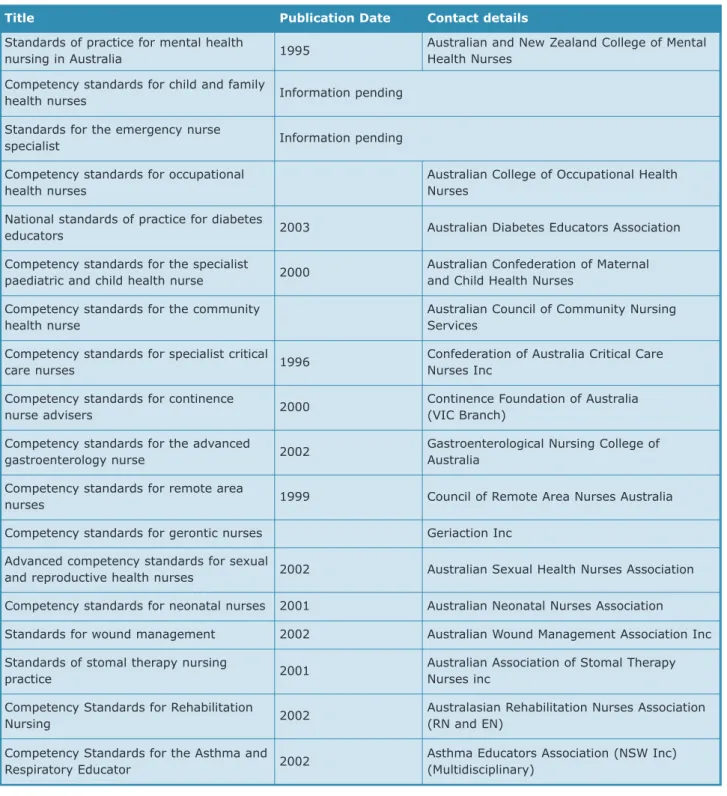
Most of the specialty nursing groups have access to designated education programs and 18 sets of specialist nursing competency standards have been developed [8]. Table 4 details these competency standards. There are many areas of clinical practice as evidenced by the clustering used in government and nursing and midwifery regulatory authorities reports. See table 2
Current national, state and territory nursing and midwifery regulatory authorities documents about scope of nursing practice and decision making suggest that specialist nursing practice occurs at any point on a continuum from beginning to advanced [12, 32 p4, 44 p vii]. However, while specialist practice is stated to involve knowledge beyond the beginning level, there is a ‘becoming’ component of specialisation where a nurse or midwife may work in an area of specialisation, as opposed to being a specialist.
The ANMC national DMF consultation document put forward a cautious position on this in stating that this continuum is not a linear progression and that “when a nurse changes their practice context, their practice will, until they gain experience and education in the new role, be more towards the beginning of the continuum than was the case in their previous position” [12].
Extended and Expanded Practice
Extended and expanded practice is necessitated by the dynamic nature of nursing and midwifery practices, with the demand for nursing and midwifery to respond to workplace changes described in one document as an almost continuous movement along a continuum of practice [45].
With extended practice recognised as the ability of the nurse or midwife to further enhance client outcomes and fill niches in health service delivery [36], expanded practice is available to the nurse or midwife already practicing at the advanced level who may expand their practice by:
• “Incorporating new activities that extend their practice beyond what is viewed as the established, contemporary scope of nursing practice to enhance client health outcomes, or
• Providing or creating services that have not previously been provided” [46], and
• May have been the responsibility of other health professionals [36, p 31].
Nursing and midwifery regulatory authorities describe expanded roles as an extension of advanced practice and different to specialist practice, with extended practice recognised as that of the nurse practitioner. This approach is reflected with some consistency in recent government documents such as the Queensland Health Enhanced Clinical Roles Issues Paper that references QNC documentation on scope of practice [22].
The ANMC Nurse Practitioner Standards Report in describing nurse practitioner practice uses the term ‘extended practice’ in the context of how practice is enabled by the combination of a level (that is advanced) with certain legislative provisions [15]. Alternatively, an industry paper on aged care recommended national consistency in extended scope of practice for enrolled nurses and medication administration [47].
Advanced Practice
The last of these terms, advanced practice is defined similarly by the various nursing and midwifery regulatory authorities. It is characterised by greater and increasing complexity that comes with the integration of knowledge and experience and therefore, exists after the beginning phase of nursing practice [12, 34].
Education, experience and competency development are understood to mark advancing, (or as used by the Nurses Board of South Australia, expert) practice [36].
Acknowledging that the ICN refer to both nurse practitioner and advanced nursing practice roles in their relevant documents and communications, they define advanced nursing practice as ‘…practice by nurses who, having acquired the knowledge base and clinical competencies for specialisation, also posses the depth and breadth of knowledge and competencies to an extent warranting an expanded and more autonomous scope of practice.’ [41].
Advanced practice nursing is therefore undertaken by nurses educationally prepared at post-graduate level and according to the ICN involves practice in a specialist capacity. According to the AMNC these nurses “may work in a specialist or generalist capacity” [12]. The basis of advanced practice is the high degree of knowledge, skill and experience that is applied within the nurse-client relationship to achieve optimal outcomes through critical analysis, problem solving and accurate decision making [9].
The Nursing Board of Tasmania, in the draft stages of a developing a decision making framework uses the alternative term of ‘maximising’ to assist individual registered nurses and midwives when considering their scope of practice [48]. Further, Northern Territory Government describes exemplary roles for nurses, though this is specific to practice in a clinical setting [102].
The following section continues to discuss the terms the intersections and outcomes of their use.
Advanced Practice Roles
Some twenty years ago the ICN defined regulation as ‘…the forms and processes whereby order, consistency and control are brought to an occupation and its practice’ [28 p7.] In nursing, self regulation is generally accepted as directed at protecting and fostering the growth and development of individual and profession boundaries and practice while statutory regulation monitors the uniformity of qualifications, titles and practice in accordance with public interests. Alternative ways to understand regulation, available in the political and social sciences literature, are as forms of government that are not the linear implementation of policy or guidelines where individuals govern themselves because of rules or directives. Rather, government occurs by individuals as a mentality resulting from complex interactions of multiple and various factors [49, 50].
With this in mind, the following section examines how advanced and specialist practice are variously constructed and represented in sometimes complementary yet also competing ways.
In Australia, definitions of advanced and specialist practice continue to flourish while definitions of nurse practitioner consolidate through the work of N3ET and
completions of various pilot projects, trials and implementations following review and/or changes to legislation [51, 52]. As each state and territory implements their version of nurse practitioner, and as organisational and industrial titles for other advanced (including specialist) roles proliferate, the scopes of practice are shaped as much by local assessment of organisational and health population needs and existing services, as by the combination of context, education, experience and competence development for the individual nurse or midwife. Regardless of this variation, the nurse practitioner is gaining recognition as ‘advanced practice nurses who are regulated, educated and prepared to provide comprehensive care in a modern, safe way’ [53].
Reflecting international developments [13], attention has been paid in Australia to ‘advanced nursing practice’ as a term that encompasses many roles and settings, including rural and remote. Most references relate to a wide range of mostly clinical areas, many of which have now merged with nurse practitioner trials and developments [15]. What differentiates the nurse practitioner role is extended practice in certain areas. In Australia, the term ‘nurse practitioner’ is generally used to describe a nurse working in an expanded scope of practice, autonomously yet collaboratively, with other health professionals and exhibiting high levels of clinical expertise and an advanced level of education [54]. These areas are understood to include advanced clinical assessment, prescribing, referral and diagnostics [55] and an ability to ‘…deal in unconventional and innovative ways with complexity and novelty in the delivery of effective health care’ [17]. Despite what appears to be general agreement on the characteristics of nurse practitioners in the published literature, nursing and midwifery regulatory authorities and State and Territory Departments of Health, the considerable differentiation in regulatory, employment and practice throughout Australia [17, 56, 57] is merging with the completion and adoption of national standards for nurse practitioners.
Though a number of new or amended health roles are being proposed by various health departments and employers, Queensland Health has recently generated detailed information about the effectiveness of advanced nursing roles from its experience implementing nursing roles with endorsements for an expanded scope of practice, such as the rural and isolated practice nurse, the sexual health nurse and the nurse with immunisation endorsement [54]. A report issued in association with the Bundaberg Hospital Commission of Inquiry championed enhanced roles for all health professionals though cautioned that in pursuing such opportunities it was important to ensure that the:
16
• Skills of the current workforce are fully utilised • Workforce reflects the diversity within the broader
community and across the State
• Workforce is responsive to the needs of a changing healthcare across the full continuum • Workforce delivers quality clinical patient
outcomes, and
• Changes need to acknowledge the changing social and generational expectations of both the community and workforce. [22]
A similar role, also labelled as enhanced, exists for the midwife in Western Australia to ‘initiate and interpret routine diagnostic tests and initiate and administer certain pharmacological substances during uncomplicated pregnancy, labour, birth and the postnatal period’ [58].
Drawing on an extensive review of international literature from the ICN, British, Canadian and American health departments and professional organisations, including Australian professional
nursing organisations, Bryant-Lukosius et al suggest that advanced nursing practice ‘extends the traditional scope of nursing, involves highly autonomous practice, maximises the use of nursing knowledge, and contributes to the development of the profession ‘[59, 2]. This is in contrast to advancing nursing practice by delegation of activities to others as currently proposed in the existing QNC and current ANMC national DMF consultation document [12, 60, 61].
The perception of an advanced role is also considered to bring an immensely important dimension to any number of nurses not only those in designated nurse practitioner roles [62, 63].
The ANMC national DMF consultation document provides a framework for deciding about practice while nurse practitioner definitions as provided below specify some practices for which this level of nurse is responsible.
These definitions also illustrate the use of contradictory language by the ICN and ANMC.
International Council of Nurses
RN who has acquired the expert knowledge base, complex decision-making skills and clinical competencies for expanded practice, the characteristics of which are shaped by the context and/or country in which s/he is credentialed to practice. A Master’s degree is recommended for entry level.
International Council of Nurses 2005 Scope of Practice, Standards and Competencies of the Advanced Practice Nurse. Final Revision January
Australian Nursing and Midwifery Council
RN educated to function autonomously and collaboratively in an advanced and extended clinical role. The NP role includes assessment and management of clients using nursing knowledge and skills and may include but not be limited to the direct referral of patients to other health professionals, prescribing medications, and ordering diagnostic investigations. The NP role is grounded in the nursing profession’s values, knowledge, theories and practice and provides innovative and flexible health care delivery that complements other health care providers. The scope of practice of the nurse practitioner is determined by the context in which the NP is authorised to practice.
Gardner, Carrier et al 2004 Nurse Practitioner Standards Project, ANMC Canberra p 3.
There is perhaps an inevitable tension between information guidelines sought by individual nurses or midwives, or their employers, to assist in practice and how this information acts to shape or represent the disciplines. For example, the ANMC national DMF consultation document document states that advancement is separate from expanding or extending practice and that it is the nurses and midwives who decide what aspects of care are nursing and midwifery and can be delegated. This document also suggests that registered nurses advance themselves through continuing education, experience and ongoing competency development and enrolled nurses advance through accepting delegation from registered nurses and midwives. By detailing advancement in this way, as either self development or accepting delegations, advancement (in this section of the document) is represented as internal to the professions and tied to tasks or activities in a manner which is local and about the practices of individuals rather than the broader professional advancement. This is in a document that is openly directed at assisting individual nurses, regulatory authorities, service providers and policy makers to manage nursing and midwifery roles. This is also despite changes in nursing practice accepted as ‘everyday phenomena’ as stated in the opening paragraph of the document, which declares that ‘nurses and midwives must frequently incorporate new knowledge and skills into their practice’ [12].
A further example of particular constructions is leadership. The ANMC national DMF consultation document states that as practice becomes more advanced, nurses and midwives demonstrate more effective integration of theory, practice and experiences along the increasing degrees of autonomy in judgements and interventions as advanced practitioners they will potentially take up leadership roles [12, 36, 37]. Such statements, particularly where they are consistent across a number of jurisdictions, imply direct linearity or relationship between leadership and advanced practice.
It is reasonable to suggest that leadership roles can be achieved through development of certain competencies and progression to certain (in this case advanced) roles. However, connecting leadership to roles focuses on the organisation at the expense of contemporary ideas of leadership as personal attributes, available to and actionable by all. With the exception of the nurse practitioner, detailed references or definitions of advanced practice and specialisation in nursing and midwifery are generally absent from health department documents.
Specialisation
The contradictions in use of specialisation and advanced practice varies between having certain knowledge or skills, having a certain role and/or title and/or doing certain work.
The definitions adopted by the various nursing and midwifery regulatory authorities, as illustrated in Table 1, encapsulate two scopes of specialist nursing practice. The first involves nurses educated and trained to practice according to core nursing standards while having a beginning level of knowledge and perhaps also working in a specialised or particular area. The second is where these nurses ‘have effectively integrated theory and practice relating to the specialty area’ and as such are understood to be a specialist practising at an advanced level [12]. It is unclear how graduates of ‘direct entry’ nursing or midwifery courses are situated in relation to such notions of specialist practice.
The New Zealand Health Workforce Taskforce recommended ‘a framework for nursing specialist competencies, linked to nationally consistent titles, so that all nurses using a particular title can be recognised as having particular competencies’ [64, p 38]. The result of this recommendation was the development of a framework which specified the standards for speciality and advanced nursing practice which was understood to involve both specialisation and expansion [65, p 22]. Following
this work, the New Zealand Nursing Council defined specialty nursing as ‘the exercise of higher levels of nursing judgement, discretion and decision making in an area of practice with a specific focus and body of knowledge’ [66].
A review of regulation of health professionals in Victoria in 2005 reported widespread support for a publicly available register of specialists and while most nursing and midwifery regulatory authorities do this, there is no current national consistency in titles or perceived areas of specialisation as evident in the nursing specialist professional organisations [21, 26]. As this Victorian Government report highlighted, national agreement about levels of specialist qualifications for all health professionals would be necessary for registration boards to be able to adopt a public register of specialist qualifications [21, 26]. The rigorous though somewhat limiting definitions used for statistical purposes in the Australian Standard of Classification of Occupations (ASCO) provide an alternative place to continue this analysis. The ASCO framework classifies the skill level of an occupation on the basis of the range and complexity of the tasks performed [67]. Formal education and/or training and previous experience are used to measure the level with the range and complexity of the set of tasks determined by the following: • Breadth/depth of knowledge required • Range of skills required,
• Variability of operating environment, and
• Level of autonomy as determined by the degree of discretion and choice that may be required to perform the set tasks.
The ASCO framework also situates specialisations in relation to types of skills, with skill specialisation involving consideration of the:
• Field of knowledge or subject matter knowledge essential for satisfactory performance of the tasks of the occupation
• Tools and equipment including use of material and intellectual (i.e. personal interaction) tools and equipment
• Concrete and abstract materials that are worked may include people and organisations, and • End product of the performance in the form of
goods or services provided. [67]
Though the current draft Trans Tasman version of the classification of occupations specifies eleven registered nurse occupations related to areas of clinical practice (See Table 2), no justification for this clustering is provided in the available draft materials [68].
Enrolled Nurses and Advanced
and Specialist Practice
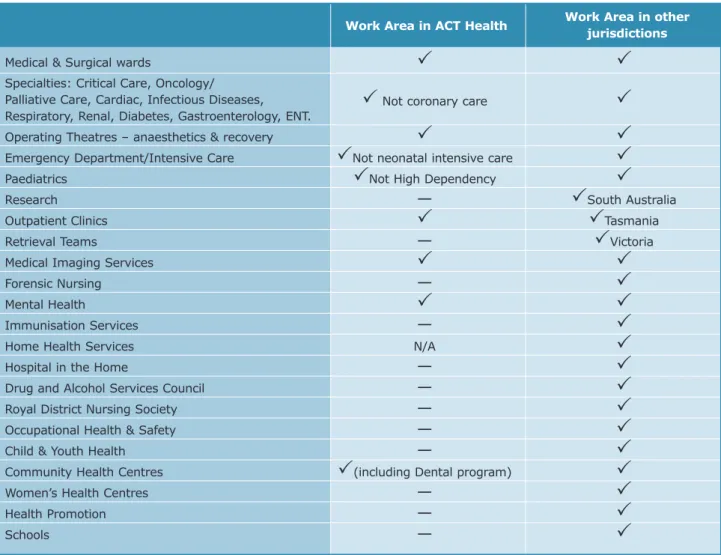
Advanced and specialist practice are also of interest when related to enrolled nurse practice. Table 3 details some of the specialty areas identified where enrolled nurses are working. However, with few exceptions7, levels of nurse other than the registered
nurse do not feature in international discussions of advanced or specialist practice. Over the last five years, in most Australian jurisdictions, agreements have been made between governments, nursing and midwifery regulatory authorities and industry for the introduction of either advanced, special grade, endorsed or exemplary roles for enrolled nurses [70–75].
The skills of medication management are a common requirement of extended enrolled nurse roles, even though appointment to these roles or positions is also stated to require demonstration of leadership qualities, clinical competencies related to a clinical specialty of the unit, and an ability to practice effectively with less direct supervision by a registered nurse [73, 76–85].
19
7
Enrolled nurses working in what were employer recognised advanced roles were included in the trial of the Western Australian decision making framework. This study resulted in an expanded scope of practice where enrolled nurses were typified by the following:
• ‘Willing to undertake additional responsibilities • Has extensive knowledge of the area
• Has worked in the area for extended periods of time
• Willing to practice beyond expectations • Needs less direct supervision
• Provides a higher level of care • Gains trust of other staff • Demonstrates commitment
• Provides leadership for other enrolled nurses, and • Continually updates skills’ [86].
A later Western Australian Health Department document acknowledged both advanced and expanded scopes for enrolled nurses [74], and summarised their characteristics as follows:
• Expert clinical specialisation
• Acting as a resource for other staff or as an adviser
• Involvement with special projects, and • Management and development of less
experienced staff [74, 86, p 3].
In contrast to this level of detail, definitions of the additional or expanded practice for enrolled nurses, such as that offered by the NNO, offer a broader statement and outline role boundaries relevant to enrolled nurses in most jurisdictions rather than describe actual practice8.
The recently completed report into the scope of enrolled nurse practice in Tasmania recommends medication education and administration be incorporated in the core role [48], with other states identifying medication administration as an extended role for enrolled nurses [87].
It is possible to see aspects of specialist, expanded and advanced practice in the requirements for enrolled nurses to administer medications.
It also raises questions about when does an aspect of extended practise, such as the administration of medications, become core and what is the value of continuing to prescribe and map role developments in this way. The ANMC national DMF consultation document would suggest that this is ‘…when the new activity becomes more accepted by the profession, other health team members and health service providers it may eventually become part of usual practice’ [12].
Sometimes legislative differences exist such as in the NBV Discussion Document Guidelines: Determining Scope of Nursing and Midwifery Practice [40], that acknowledges that Registered Nurse Division 2 (enrolled nurses elsewhere) work without the supervision of registered nurses. This may account for the level of sophisticated principles that are proposed for these nurses to delegate and supervise others. Eight criteria are detailed as necessary to protect the public that vary between problem solving and decision making skills (recognised components of all nursing practice) to stated requirement for advanced level practice [40, 88].
20
8An explanation of expanded Practice for the Enrolled Nurse is offered by the NNO as follows ‘The scope of practice of the enrolled nurse encompasses functions appropriate to
their knowledge, skill, education and experience, consistent with the ANC (sic) National Competency Standards for the Enrolled Nurse. Restrictions on the scope of practice only occur as a result of Nurses Acts, regulatory authority guidelines and local policies’.
Enrolled nurses work under the direction and supervision of registered nurses except where legislation or regulations have been amended. That supervision may be direct or indirect according to the nature of the work delegated to the enrolled nurse. The registered nurse is responsible for delegating appropriately to the enrolled nurse within the framework of the enrolled nurses knowledge, skill, education and experience and the context of the nursing care to be provided.
At all times the enrolled nurse retains responsibility for their own actions and remains accountable to the registered nurse for all delegated functions’ From: National Nursing Organisations, A.N.F., Glossary of Terms. Criteria for Specialties in Nursing: Principles of Credentialing for Nurses. 2004: Melbourne.. P8
Role and Level Intersection:
Generalist, specialist, advanced
and extended practice
The growing trend towards specialisation raises questions about the role that 'generalists' play in maintaining and treating the health of the population. There is a view that specialisation is grounded in advanced clinical care as direct nurse-client interaction, hence the broader professional role is left underdeveloped and therefore under legitimated [59, 89]. However, there is no literature to suggest that nursing practice needs the knowledge, experience and skills from a wide range of health care settings and a comprehensive spectrum of nursing and midwifery activities [36] as a basis on which to develop the ‘level of knowledge and skill in a particular aspect of nursing’ [i.e. specialisation] which is greater than that acquired during basic education [8].
More simply, there is a view that advancement is a level of education that may come with experience or a certain role but speciality is the practice based competency [5].
The NNO member organisations have focused on levels of performance in a model of relationships between levels and contexts of practice in a speciality area [35]. The NNO model refers to advanced registered nurse practice as the level of practice between beginning and expert levels in either a specialist or generalist context [35]. It defines the expert nurse as “a person with specialised skills and knowledge, who is an authority in their chosen field of practice” [35], and who demonstrates the features of lateral thinking, challenging, autonomy, a research focus, extensive knowledge, acting as a consultant, views situations globally, and demonstrates leadership, vision and innovation in their practice. With the very clear addition of clinical practice, these characteristics encompass what is now commonly accepted as the standards for the nurse practitioner role evident not only in the Nurse Practitioners
Standards Project [17] but also in the ICN adoption of the nurse practitioner as also the advanced practice nurse [17]
In a typical example, the Tasmanian Public Sector Agreement defines the Clinical Nurse Specialist as an expert registered nurse who works with a significant degree of autonomy and whose role exclusively focuses on a particular aspect or area within nursing [90].
Reference to skills more commonly associated with advanced practice is also found in industrial definitions of the clinical nurse specialist nurse as “as clinical resources and leaders in that field of clinical speciality”. The classification is unit/ward/clinical service based and the clinical nurse specialist is identified as a ‘core person’ in the specialty area of practice. Whilst an experienced registered nurse may also perform the same functions, the clinical nurse specialist is identified as performing them at an “advanced level competently and consistently” [91]. A different focus is evident in the Queensland Nursing Union joint statement with the Australian Nursing Federation (ANF) where each nursing specialisation is seen as a clinical field because it is nursing practice undertaken by qualified nurses in classified nursing positions with identified duties, skills and expertise. This report also states that this is the only acceptable meaning of ‘clinical field’ for nurses in the nursing industry in Queensland [92].
Similarly, health workforce plans commonly map nurse numbers to areas of clinical specialty such as critical care, emergency and renal [93, 94].
The membership of the NNO shows specialist practice as fitting to many different areas of practice or client groups but they do not provide specific criteria for advanced practice. Instead, NNO specify three principles of advanced practice that is: experience can only be used as an indicator of competence, not a measure; knowledge can only be an indicator of advanced practice, not a criterion; and clinical performance is essential [35].
Questions remain about how to evaluate performance in order to regulate certification and authorisation, and how to measure nurse competencies and standards when definitions are not clear.
There is also a view that one of the strengths of nursing in Australia is its capacity to function flexibly in response to the needs of health care or medical developments and that care should be taken that increasing levels of specialisation and subspecialisation do not threaten this generic workforce capability [5].
In contrast to this, the Australian Institute of Health and Welfare defines a medical specialist as a medical practitioner with a qualification awarded by, or which equates to that awarded by, the relevant specialist professional college [95]. This specialisation can be understood to relate to:
• Technique (as in surgeons or physicians)
• Body parts (as in which area of the body is the area of expertise) or
• The target population (such as paediatrics, gerontology, rural and remote medicine as an area of medical speciality [96, 97].
This mode of clustering is also evident in the membership of the NNO. While nursing has national competency standards for three levels of nurse, unlike Australian medical specialists [98], there are no core or common competency standards for specialist nurses, perhaps associated with the fact that there are no recognised specialities.
Specialist medical training in Australia reflects the postgraduate advanced clinical training developed in the United Kingdom where responsibility for conducting the courses, which provide training for medical practitioners who wish to become specialists, lies not with universities but with national specialist medical colleges. They set and control the standards and coordinate the training, education and examination of medical specialists in Australia.
Despite some development and associated contention around ‘special areas of interest’ emerging in general practice [99] this approach to specialist education ensures (for obvious reimbursement reasons) greater consistency in who is identifiable as a specialist.
Perhaps the best place in which to stipulate levels of nurse is within the structure and function of health service organisations. The ANF suggests that it is here that career pathways should be provided for all employees including nurses. They state that career pathways are best provided by the implementation of structures which encourage and reward increased responsibility, depth and breadth of knowledge and skills, and demonstrated expertise, all of which contribute to increased job satisfaction and improved service outcomes [100].
Scope of Practice and Nursing
and Midwifery
The emergence of midwifery as a separate discipline is reasonably recent in Australia as evident by the name changes of many nursing and midwifery regulatory authorities to include midwifery and planned revisions of legislation to address this development in some jurisdictions. The recent development of competency standards for midwives in Australia has been the first major national policy document to overtly address the practice of nurses and midwives as separate but associated disciplines. In the ANMC national DMF consultation document [12] nurses and midwives share some competencies such as a comprehensive approach to consideration of complex physical, mental and emotional needs of the client, being more directly involved with the client when the clients responses are less predictable or changing and/or the client needs frequent assessment, care planning and evaluation.
Subtle but interesting differences in the presentation of nursing and midwifery in the ANMC national DMF consultation document is the statement made in a
footnote on page 17 which declares an ‘underlying assumption that all midwives would be able to demonstrate their competency to practice across the full spectrum of maternity care’ while the descriptions of midwifery scope of practice ‘do not infer that every midwife must practice in the full scope all of the time’ [12].
Perhaps such differentiation will be expanded upon in the consultation processes and may well be associated with the relatively recent articulation of midwifery practice standards in Australia.
A further example of differences in definitions and service delivery is the recent announcement of funding to assist a broader range and number of health workers to provide antenatal checks and care. Though the ANMC national DMF consultation document situates midwifery as a new discipline with definitions of practice consistent with those of the ICN, the recent decision by the Australian Government to fund nurses, midwives and Aboriginal Health Workers in rural and remote settings as the best available health providers to provide antenatal checks and care in these particular settings highlight an alternative approach to practice definitions and guidelines [101].
Conclusion
In some ways this analysis has produced an artefact in seeking out and assuming that a coherency exists between publications from Australian Government departments, nursing and midwifery regulatory authorities and professional and industrial organisations on advanced and specialist practice. The intentionality of bringing together this body of literature for the sole purposes of analysis might make the suggested framings and interpretations questionable.
The representations or constructions of advanced and specialised practice as practice promotion, practice containment and practice diversification could be dismissed as one writer’s indulgence.
Alternatively, this analysis might be understood to illustrate an existing network of definitions and directive and in doing so highlights a need to caution the ongoing proliferation of definitions and directives and assumptions about their functionality and effectiveness. The proposal for vigilance is not necessarily about what definitions or directives might say; rather concern is for what such definitions and directives might do — for in the development of these various directives there is a presumption of use that is at best unpredictable while potentially always unmanageable.
In a paper designed to be expository rather than persuasive, it is more likely that the contribution of this analysis will be highlighting the current consistencies and inconsistencies in nursing and midwifery terminology and their varying perceptions of legitimacy.
Nursing has been challenged for some fifteen years now in how to effectively integrate competency standards across all levels of education, regulation, employment and practice, which may in part account for the current turn to scope of practice and decision making frameworks. Midwifery is about to join this venture.
Changes in how we understand regulation and the growing recognition of health workforce complexity and interdependence signal a requirement for the disciplines of nursing and midwifery to act. This action may be to re-examine and better understand the current situation. It may be to do nothing, or recognise and commit to one set of definitions and descriptors. Alternatively, nursing and midwifery might actively and openly participate in the unfolding of ‘new or amended’ nursing, midwifery and other health workforce roles while revisiting what it is the disciplines want its definitions to do.
Dr Marie Heartfield February 2006
24
1. Australian Health Workforce Advisory Committee,
The Critical Care Nurse Workforce in Australia, in Report 2002.1,. 2002, AHWAC: North Sydney.
2. Australian Health Workforce Advisory Committee,
The Australian Nursing Workforce- An Overview of Workforce Planning 2001-2004, in Report 2004.2.
2004, AHWAC: North Sydney, NSW. p. 1-33. 3. Australian Health Ministers’ Conference, National
Health Workforce Strategic Framework. 2004: North
Sydney.
4. Australian Government Productivity Commission,
Australia’s Health Workforce Productivity Commission Research Report. 2005,
Commonwealth of Australia: Canberra.
5. Heath, P., National Review of Nursing Education
2002: Our Duty of Care. 2002, Commonwealth of
Australia, Department of Education, Science and Training & Department of Health and Ageing: Canberra.
6. Australian Neonatal Nurses Association,
Competency Standards for Neonatal Nurses. 2001:
Canberra. p. 1-56.
7. Confederation of the Australian Critical Care Nurses Inc, Competency Standards for Specialist Critical
Care Nurses (CACCN Inc. 1996). 1996: Hornsby
NSW.
8. National Nursing Organisations, Glossary of Terms
Criteria for Specialties in Nursing | Principles of Credentialling for Nurses. 2004, Australian Nursing
Federation: Kingston ACT.
9. Royal College of Nursing Australia, Position
Statement: Advanced Practice Nursing. 2004:
Canberra.
10. Australian Institute of Health and Welfare, National
Health Labour Force Series No. 29 Nursing Labour Force 2002. 2003: Canberra.
11. NSW Department of Health, Clinical Nurse Specialist
Classification Public Hospital Nurses State Award.
2005 (first issued 1989): Sydney.
12. Australian Nursing and Midwifery Council,
Consultation Document Draft National Framework for Decision-Making by Nurses and Midwives about Scopes of Practice. 2006: Canberra. p. 1-32.
13. Buchan, J. and L. Calman, Skill Mix and Policy
Change in the Health Workforce: Nurses in Advanced Roles. 2004, OECD Health Working
Papers, Organisation for Economic Co-operation and Development: Geneva.
14. Gardner A. and Gardner G., A trial of nurse
practitioner scope of practice. Journal of Advanced
Nursing, 2005. 49(2): p. 135-145.
15. Gardner, G., et al., The ANMC Nurse Practitioner
Standards Project. 2004, Australian Nursing and
Midwifery Council: Canberra.
16. Gardner, G., et al., Nurse practitioner standards
project. 2003, Australian Nursing Council:
Queensland.
17. Gardner, G., et al., Report to Australian Nursing
Council Nurse Practitioner Standards Project. 2004,
Australian Nursing Council and Queensland University of Technology: Queensland.
18. Bryant, R., Regulation Roles and Competency
Development. 2005, International Council of
Nurses: Geneva.
19. International Council of Nurses, Update:
International survey of Nurse Practitioners/Advanced Practice Nursing Roles, R.S.
ICN International Nurse Practitioner/Advanced Practice Nursing Network, Editor. 2001: Geneva. 20. National Nursing and Nursing Education Taskforce
(N3ET), Scopes of Practice Commentary Paper.
2005, Australian Health Ministers’ Advisory Council, c/- The Department of Human Services, Victoria: Melbourne.
21. Victoria Government Department of Human Services (DHS), Regulation of the Health
Professions in Victoria. 2003, Policy and Strategic
Projects Division: Melbourne.
22. Queensland Health, Issue Paper for Bundaberg
Hospital Commission of Inquiry Enhanced Clinical Roles. 2005: Brisbane.
23. Queensland Health, Nursing Act 1992 National
Competition Policy review of nursing and midwifery practice restrictions A Discussion Paper. 2001,
Legislative Projects Unit Queensland Government. 24. Victorian Department of Human Services,
Regulation of Medical Practitioners and Nurses in Victoria A Discussion Paper. 2001: Melbourne.
25. Territory Health Services Northern Territory Government, Health Professional Regulatory Legislation Discussion Paper. 2001: Darwin.
26. Victoria Department of Human Services (DHS),
Review of Regulation of the Health Professions in Victoria. Options for structural and legislative reform. 2005, State Government of Victoria:
Melbourne.