ISSN 1990-9233
© IDOSI Publications, 2013
DOI: 10.5829/idosi.mejsr.2013.16.06.11314
Prognostic Load Balancing Strategy for
Latency Reduction in Mobile Cloud Computing
Mudassar Ahmad and Ibrahim A. Cheema Universiti Teknologi Malaysia (UTM)
Abstract:In Mobile Cloud Computing (MCC), load balancing is essential to distribute the local workload evenly across all the nodes either statically or dynamically. A high level of user satisfaction and resource utilization ratio can be achieved by ensuring an efficient and fair allocation of all computing resources. In the absence of proper load balancing strategy/technique the growth of MCC will never go as per predictions. The appropriate load balancing helps in minimizing resource consumption, implementing fail-over, enabling scalability, avoiding bottlenecks. In this paper, a prognostic load balancing strategy is proposed and implemented for computational latency reduction in MCC. Also the results of proposed technique is compared with existing techniques. Finally this study concludes that the proposed predictive technique reduces associated overheads, service response time and improves performance. There are also Various parameters that are identified and used to compare the existing techniques.
Key words: Mobile Cloud Computing (MCC) Cloud Computing (CC) Load Balancing Strategy Load Balancing Techniques Load Balancing Matrices Experimental Literary Analysis
Survey/Interview
INTRODUCTION strengths of CC can be described in terms of the services In last few years, applications targeted at mobile (SaaS), platform as a service (PaaS) and infrastructure as devices have started becoming abundant with a service (IaaS) [3].
applications in various categories such as entertainment, Cloud computing (CC) has widely been adopted by health, games, business, social networking, travel and the industry, though there are many existing issues like news. The popularity of these is evident by browsing Load Balancing, Virtual Machine Migration, Server through mobile app download centers. The reason for this Consolidation, Energy Management, security, etc. that are is that mobile computing is able to provide a tool to the not fully addressed [4]. Central to these issues is the issue user when and where it is needed irrespective of user of load balancing that is a mechanism to distribute the movement, hence supporting location independence. workload evenly to all the nodes in the whole cloud to Indeed, ‘mobility’ is one of the characteristics of a achieve a high user satisfaction and resource utilization pervasive computing environment where the user is able ratio. The same challenge is addressed by MCC also to continue his/her work seamlessly regardless of his/her where multiple and variable computing requirement comes
movement. on datacenters. The present problem with MCC is that
Recently this problem has been addressed by bottlenecks of the system which may occur due to load researchers though cloud computing (CC). CC can be imbalance, computing resource distribution efficiently and defined as the aggregation of computing as a utility fairly, Minimum resource consumption. So, Proper load and software as a service [1]. where the applications balancing techniques not only helps in reducing costs but are delivered as services over the Internet and the also making enterprises as per user satisfaction [5, 6]. hardware and systems software in data centers Scalability, one of the very important features of MCC, is provide those services [2]. Also called ‘on demand also affected by load balancing. Hence, improving computing’, ‘utility computing’ or ‘pay as you go resource utility and the performance of a distributed computing’, the concept behind CC is to offload system in such a way will reduce the energy consumption computation to remote resource providers. The key require efficient load balancing.
Long-connectivity application as a representative of and the hardware and systems software in the datacenters Web applications is the research object of this study. The that provide those services’’ [2]. A cluster of computer significant features of this type of application are that the hardware and software that offer the services to the users’ requests maintain a long connection with web general public makes up a ‘public cloud’. Computing is server in a period of time, but they take up very little CPU, therefore offered as a utility much like electricity, water, memory and other indicators. Wait until a certain point in gas etc. where you only pay per use. Virtualization of time arrives; the users will access the application almost resources is a key requirement for a cloud provider for it at the same time, when indicators on a web server will is needed to create the illusion of infinite resources to the
increase instantly. cloud user. Ambrust et al. [2] holds the view that
Typical of such application is spike in online ‘‘different utility computing offerings will be shopping services. Spike is a sales promotion that distinguished based on the level of abstraction presented Internet sellers release a number of ultra-low-price goods to the programmer and the level of management of the and buyers snapped up by the network at the same time. resources’’.
In web applications such as Internet auction, how to
ensure that the back-end web server will not downtime Mobile Cloud Computing (MCC): There are several because of overloading? Some of the examples is as the existing definitions of MCC and different research alludes total no of users of web application suddenly increased to different concepts of the ‘mobile cloud’:
for some amount of time such as ‘Tatkal Ticket Scheme’
of Indian Railways where the no of consumers of ticket Commonly, the term MCC means to run an reservation are increased so high leads to increase in application such as Google’s Gmail for Mobile on a server downtime and the web application slows down remote resource rich server while the mobile device regardless of speed of network connectivity and acts like a thin client connecting over to the remote processing capacity of server. At this point, the choice of server through 3G. This paper focuses primarily on load balancing strategies is vital. this type of work.
The paper mainly focuses on implementation of Another approach is to consider other mobile prognostic load balancing strategy named Amplified - devices themselves too as [7] resource providers of ESBWLC which is based on Simple Exponential the cloud making up a mobile peerto- peer network as Smoothing Forecast Technique. A simple exponential in. Thus, the collective resources of the various smoothing forecast model is a very popular model used to mobile devices in the local vicinity and other produce a smoothed Time Series. In simple exponential stationary devices too if available, will be utilized. smoothing, however, a "smoothing parameter" or The cloudlet concept proposed by Satyanarayanan "smoothing constant" is used to determine the weights [8] is another approach to MCC, Where the mobile assigned to the observations. This research shows that device offloads its workload to a local ‘cloudlet’ how the selection of data center based on predicted comprised of several multi-core computers response time of available data centers leads to with connectivity to the remote cloud servers. minimization of load on data centers and reduction in These cloudlets would be situated in common areas latency felt by users. such as coffee shops, college campus etc. so that The rest of the paper is organized as follows: Section mobile devices can connect and function as a thin II, focuses comparison between cloud computing and client to the cloudlet as opposed to a remote cloud MCC. Section III, discusses about the existing load server which would present latency and bandwidth balancing algorithms. Section IV, represents algorithm and issues.
pseudo code of proposed algorithm. Section 5 shows the
implementation details of algorithm and says about MCC is the combination of cloud computing and working environment. Section 6 shows the results and mobile networks to bring benefits for mobile users, comparison analysis. Finally Section 7 concludes the network operators, as well as cloud providers. Cloud paper with future scope. computing exists when tasks and data are kept on the Cloud Computing (CC) vs Mobile Cloud Computing on-demand access. MCC can involve other mobile
(MCC) devices and/or servers accessed via the Internet. MCC
Cloud Computing (CC):‘‘Cloud computing refers to both would also be based under the basic cloud computing the applications delivered as services over the Internet concepts. As discussed by Mei et al. in [9] there are Internet rather than on individual devices, providing
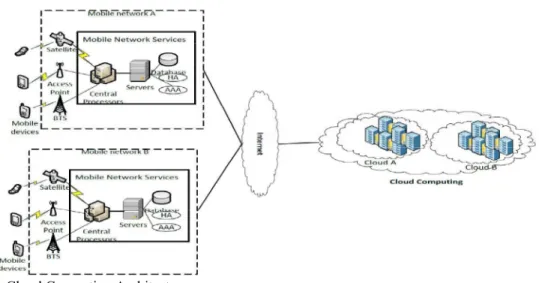
Fig. 1: Mobile Cloud Computing Architecture
certain requirements that need to be met in a mobile Dynamic Load Balancing Algorithm: Dynamic Load cloud such as adaptability, scalability, availability and Balancing Algorithms considers a combination of self-awareness. So Load Balancing [10-12] will play key knowledge based on prior gathered information about the role in MCC to ensure availability and avoidance of nodes in the Cloud and run-time properties collected as
bottleneck. the selected nodes process the task’s components.
Related Work: Load Balancing Algorithms in cloud reassign them to the nodes based on the attributes computing environment generally divide in two gathered and calculated. However, they are more accurate categories [13] as Static Load Balancing and could result in more efficient load balancing than Algorithms and Dynamic Load Balancing Algorithm Static Load Balancing Algorithm. Least Connection (LC)
[14]. and Weighted Least Connection (WLC) are commonly
Static Load Balancing Algorithm: Static Load of connections on server are identified at run time and the balancing algorithms assign the tasks to the nodes incoming request is sent to server with least number of based only on the ability of the node to process connections. However LC does not consider service new requests but they do not consider dynamic capability, the distance between clients and servers and changes of these attributes at run-time, in addition, other factors. WLC considers both weight assigned to these algorithms cannot adapt to load changes service node W(Si) and current number of connection of during run-time. The process is based solely on prior service node C(Si) [15][16]. The problem with WLC is as knowledge of node’s processing power, memory time progresses static weight cannot be corrected and the and storage capacity and most recent known node is bound to deviate from the actual load condition, communication performance. Round Robin (RR) resulting in load imbalance. Xiaona Ren et. al. [17] and Weighted Round Robin (WRR) are most proposed prediction based algorithm called as commonly Static Load Balancing Algorithm Used in Exponential Smoothing forecast- Based on Weighted Cloud Computing. Round Robin Algorithm does Least- Connection (ESBWLC) which can handle not consider server availability, server load, the long-connectivity applications well. In this algorithm the distance between clients and servers and other load on server is calculated from parameters like CPU factors. In this algorithm server selection for upcoming utilization, memory usage, no of connections, size of disk request is done in sequential fashion. The main problem occupation. Then load per processor (Load/p) is with this approach is inconsistent server performance calculated and this algorithm uses (Load/p) as historical which is overcome by WRR. In WRR the weights are training set, establishes prediction model and predicts the added to servers and according to amount of traffic value of next moment. The limitation with this algorithm is directed to servers however for long time connections it this algorithm does not consider the distance between causes load tilt. client and servers, network delay and other factors.
These algorithms assign the tasks and may dynamically
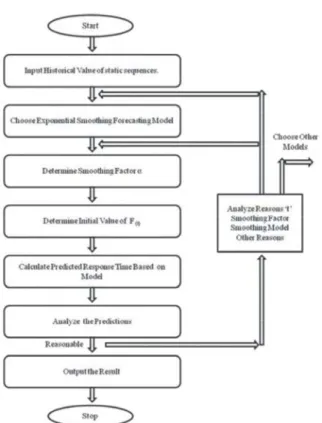
Fig. 2: Flowchart of Proposed Algorithm Amplified - The working environment for cloud computing where
ESBWLC the proposed algorithm is implemented is done using
Paper proposes algorithm named Amplified- “GridSim” and “SimJava”. Cloud-Analyst is built on the ESBWLC which overcomes above limitation. In this top of Cloud-sim. Cloud-sim is developed on the top of algorithm we directly calculate the response time we get the Grid-sim.
at client side. This got response time is store for further
reference. The response time at time instance ‘t+1’ is Application users - There is the requirement of predicted by using current response time at time instance autonomous entities to act as traffic generators and ‘t’ and previously predicted response time for time behavior needs to be configurable.
instance ‘t’. Internet - It is introduced to model the realistically
Proposed Prognostic Algoritm:The presented prediction delays and bandwidth restrictions.
algorithm is based on simple exponential smoothing Simulation defined by time period - In Cloud-sim, the forecast model. Simple exponential smoothing forecasting process takes place based on the pre-defined events. method is one of prediction algorithms based on time Here, in Cloud-Analyst, there is a need to generate series. The algorithm takes advantage of all historical data events until the set timeperiod expires.
and distinguishes them through the smoothing factor to Service Brokers - DataCeneterBroker in CloudSim let recent data make a greater impact on the predictive performs VM management in multiple data centers value than long-term data. We are sending the observed and routing traffic to appropriate data centers. These response time at client side from the current period and two main responsibilities were segregated and the forecast response time from the previous period to assigned to DataCenterController and come up with a forecast response time for the current CloudAppServiceBroker in Cloud-Analyst.
period.
Let Assuming time series as x1, x2, x3 … the formula Pseudo Code for Proposed Prognostic Algorithm: of single exponential smoothing forecasting model is
F = * X + (1- ) * F(t) (t) (t-1) center and store it. In the formula,
F (t) represents prediction value of Response Time at t-period.
X (t) represents observation value of Response Time t-period.
represents the smoothing factor (0 < < 1). The flowchart for Proposed Prediction Algorithm: Algorithm:
Input historical value of statistical Response Time as a training set.
Use single exponential smoothing as a forecasting model.
Determine the smoothing factor .
Determine the initial value of predictive model. Calculate based on the prediction model. Analyze the predictions.
MATERIALS AND METHODS
cloud analyst simulator which is built above “CloudSim”,
data transmission across Internet with network
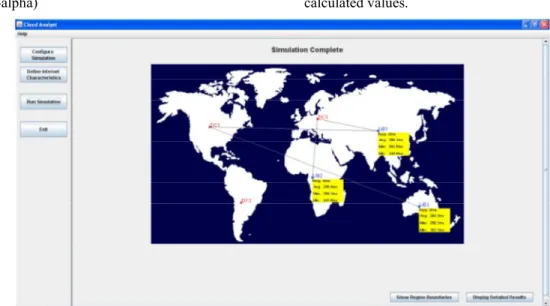
Fig. 3: Cloud-Analyst built on top of Cloud-Sim toolkit min=minlatency;
Fig. 4: Responsibilities- Segregation The scenario is taken where the data centers are located Determine the initial value of prediction model. from different regions. The simulation runs Approximately
for : initial time as,
predicted latency = current latency; In above screen the lines shows that the user base is Calculate the predicted latency for next instance server. The values shown at boxes at each user bases using formula represents the latency observed by respected user base. for : each datacenter side wile requesting service from data center in the
do duration of simulation was running, similarly it shows the
PredictLatencyNew = alpha * CurrLatency + maximum latency and the average latency from above two
(1-alpha) calculated values.
* PreviousPredictedLatency; Store predictLatencyNew Done
Calculte the minimum PredictLatencyNew from available list of datacenters.
for(each DataCenter) do
if(minlatency<min) done
Select datacenter with minimum PredictLatencyNew as choosen data center for upcoming service request. Return choosendatacenter.
RESULTS AND DISCUSSION
As the algorithm Amplified – ESBWLC is implemented using simulation Cloud-Analyst. at different regions with user bases requesting services 60 min amount of time and the final result screen shown
requesting service from corresponding data center or
The values are the minimum latency calculated at client
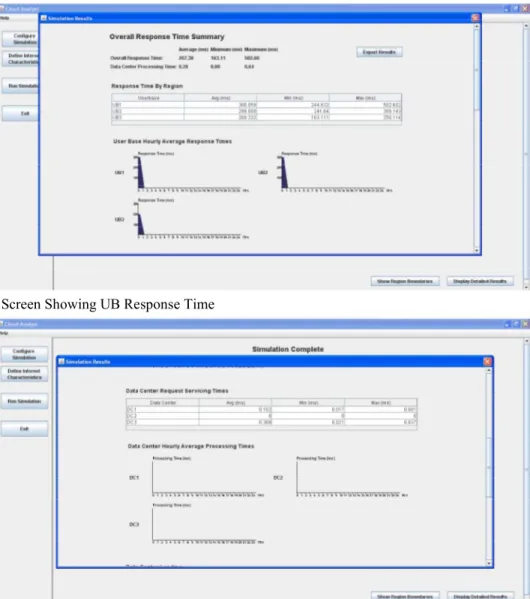
Fig. 6: Result Screen Showing UB Response Time
Fig. 7: Result Screen showing DC Service Timing
The Simulation also shows the user base hourly Comparitive Analysis
average response time plotted on graph as shown in Experiment 1 - Verifying the Prediction of Service
above figure. Capability: Different values of will lead to different
The Simulation calculates the datacenter request predictions. The Experiments is done with different service timing in numbers which is in micro seconds. values of alpha and calculated Response Time is Also it calculates hourly average processing analyzed. The experiment puts the predictive cases for times which are plotted on graph as shown in above different values of such as 0.3, 0.5, 0.7, 0.9 and
figure. observed response time is plotted on graph for different
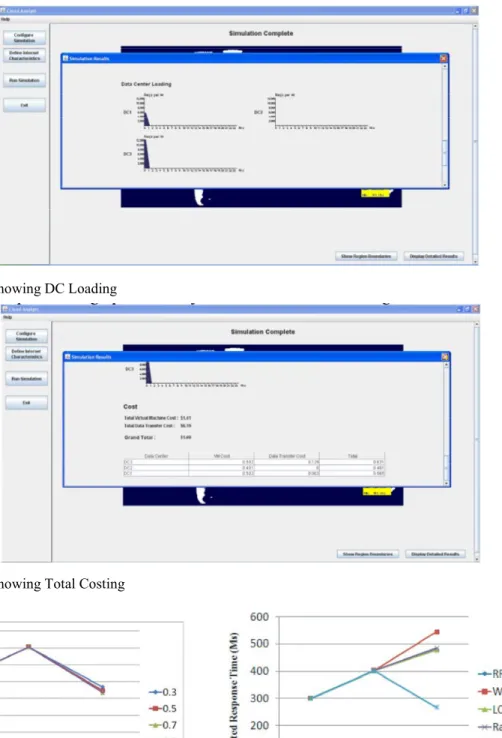
The simulations also shows total loading at each data cases. The resultant graph are shown below.
centers which is plotted on graph on hourly basis as In above graph, abscissa represents different shown in above figure. scenarios and vertical axis represents observed response The total costing at each data center is calculated as time in (Ms). The lines with different colors represent shown above. Total cost inclusive of both virtual machine different values of . It can be seen from the figures that cost and data transfer cost i.e. line with value of is 0.9 represents minimum response Total Cost = Virtual Machine Cost + Data Transfer Cost. prediction accuracy appears when value of is 0.9.time at each scenario, which means that the highest
Fig. 8: Result Screen showing DC Loading
Fig. 9: Result Screen showing Total Costing
Fig. 10: Graph Showing Prediction Accuracy analyzed to find out the algorithm which gives Experiment 2 – Comparison with Different Available uses different Load Balancing algorithms as Algorithm in Terms of Latency:The latency is calculated Round Robin, Weighted Round Robin, for different scenarios using different Load Balancing Least Connection and Weighted Least algorithms. The observed latency is compared and Connection.
In above graph, abscissa represents different 8. Satyanarayanan, M., P. Bahl, R. Caceres and scenarios and vertical axis represents observed
response time in (Ms). The lines with different colors represent different algorithms implemented. It can be seen from the figures that line with algorithm Amplified - ESBWLC represents minimum latency at each scenario, which means that the latency is reduced with the proposed algorithm named Amplified - ESBWLC.
CONCLUSION
Considering the unique features of long-connectivity applications, an algorithm is proposed Amplified -ESBWLC. ESBWLC optimizes the number of connections and adds single exponential smoothing forecasting. Finally, experiments show that prediction accuracy is maximum when value of is 0.9 and Amplified-ESBWLC results in reduction in computational latency at client side. The future work may include prediction based load balancing algorithm for multimedia and live streaming web applications.
REFERENCES
1. Vogels, “A head in the clouds the power of infrastructureas as service”, Proceedings of the 1st Workshop on Cloud Computing and Applications, CCA’08.
2. Armbrust, A. Fox, R. Griffith, A. Joseph, R. Katz, A. Konwinski, G. Lee, D. Patterson, A. Rabkin and I. Stoica, 2009. Above the clouds : A Berkeley view of cloud computing, Technical Report UCB / EECS -2009-28,2009.
3. Carolan, J., S. Gaede, J. Baty, G. Brunette, A. Licht, J. Remmell, L. Tucker and J. Weise, 2009. Introduction to cloud computing architecture, whitepaper, 4. Rimal, B.P., E. Choi and I. Lumb, XXXX. A Taxonomy
and Survey of loud Computing Systems, IEEE 5th International Joint Conference on INC, IMS and IDC, pp: 44-51.
5. Mata-Toledo, R. and P. Gupta, 2010. Cloud Load Balancing Techniques: A Step towards Green, Journal of Technology Research, 2(1): 1-8.
6. Alakeel, A.M., 2010. A Fuzzy Dynamic Load Balancing Algorithm for Homogenous Distributed Systems, International Journal of Computer Science and Network Security, 10(6): 153-160.
7. Marinelli, E., 2009. Hyrax: cloud computing on mobile devices using Map Reduce, Master’s Thesis, Carnegie Mellon University.
N. Davies, 2009. The case for VM-based cloudlets in mobile computing, IEEE Pervasive Computing, 8: 14-23.
9. Mei,W., T. Chan, A. Tse, 2008. “Tale of clouds : paradigm comparis on sandsome thoughtson research issues”, ProceedingsoftheAsia-PacificServices Computing Conference, APSCC’ IEEE, 464-469.
10. Xiaona Ren, Rongheng Lin and Hua Zou, 2011. A dynamic load balancing strategy for cloud computing platform based on exponential smoothing forecast, IEEE ccis2011, pp: 220-225.
11. Qingfeng Liu, Xie Jian and Jicheng Hu, 2009. An optimized solution for mobile environment using mobile cloud computing, IEEE International Conference on Wireless Communications, Networking and Mobile Computing.
12. Qi Cao, Zhi-Bo Wei and Wen-Mao Gong, 2009. An Optimized Algorithm for Task Scheduling Based On Activity Based Costing in Cloud Computing, International Conference on Bioinformatics and Biomedical Engineering, pp: 1-3.
13. Luo Yongjun, Li Xiaole and Sun Ruxiang, 2008. Load Balancing Algorithms Overview, Information Development and Economy, 18: 134-136.
14. Randles, M., D. Lamb and A. Taleb-Bendiab, 2010, A Comparative Study into Distributed Load Balancing Algorithms for Cloud Computing, 2010 IEEE 24th International Conference on Advanced Information Networking and Applications Workshops, pp: 551-556.
15. Tian Shaoliang, Zuo Ming and Wu Shaowei, 2007. An improved load balancing algorithm based on dynamic feedback, Computer Engineering and Design, 28: 572-573.
16. Zheng Qi., 2006. Load balancing algorithm based on dynamic feedback, Computer Age, pp: 49-51. 17. Xiaona Ren, Rongheng Lin and Hua Zou, 2011. A
dynamic load balancing strategy for cloud computing platform based on exponential smoothing forecast, IEEE International Conference on Cloud Computing and Intelligence Systems (CCIS), pp: 220-224. 18. Elghoneimy, E., O. Bouhali and H. Alnuweiri, 2012.
Resource allocation and scheduling in cloud computing, International Conference on Computing,Networking and Communications (ICNC), pp: 309-314.
19. Khazaei, H. and J. Misic, 2012. Performance Analysis of Cloud Computing Centers Using M/G/m/m+r Queuing Systems”, IEEE Transactions on parallel and distributed systems, 23(5): 936-943.
20. Murata, Y., R. Egawa, M. Higashida and 23. Chih-Yung Chen and Tseng Hsiang-Yi, 2012. An H. Kobayashi, 2010. A History-Based Job Scheduling Exploration of the Optimization of Excutive Mechanism for the Vector Computing Cloud, Scheduling in the Cloud Computing, IEEE IEEE/IPSJ International Symposium on Applications International Conference on Advanced Information and the Internet(SAIT), pp: 125-128. Networking and Applications Workshops (WAINA), 21. Chih-Yung, Chen. and Tseng Hsiang-Yi. 2012. An pp; 1316-1319.
Exploration of the Optimization of Excutive 24. Gotoda, S., M. Ito and N. Shibata, 2012. Task Scheduling in the Cloud Computing, IEEE Scheduling Algorithm for Multicore Processor International Conference on Advanced Information System for Minimizing Recovery Time in Case of Networking and Applications Workshops (WAINA), Single Node Fault, IEEE/ACM International
pp: 1316-1319. Symposium Cluster, Cloud and Grid Computing
22. Hu, Wu., Tang. Zhuo and Li Renfa, 2012. A priority (CCGrid), pp: 260-267. constrained scheduling strategy of multiple
workflows for cloud computing, IEEE international conference on Advanced Communication Technology (ICACT), pp: 1086-1089.