Clinical
application
of FR-860
to hemodialysis;
Multicenter
cooperative
study
in Japan
Kazuo Ota, Toshiaki Suzuki, Shinji Naganuma,
Kazuo Takahashi,
Hiroshi Sekino*1, Seinosuke Nakagawa*2, Yoshindo Kawaguchi*3, Shozo Koshikawa*4,
Tadao Akizawa*4, Hiroomi Kojima*4, Eriko Kinugasa*4, Hiroshi Nihei,
Osamu Otsubo*5, Keihachiro Kuzuhara*5, Michio Osaka*6, Toshitsune
Shimada*7,
Noriaki Matsui*8, Yoshihei Hirasawa*9, Sachio Takahashi*9, Yutaka Kannou*10,
Akira Saito*11, Hiroshi Ogawa*11, Masao Nakagawa*12, Katsunori Sawada*12,
Masanobu Maekawa*13, Takeshi Sugimura*13
Tokyo Women's
Medical
College;
Kojin-kai
Centran
Hospital*1;
Tokyo Tama
Metropolitan
Ger
iatric Medical Center*2;
The Jikei University
School of Medicine*3;
Showa
University
Fujigaoka
Hospital*4;
Toranomon
Hospital*5;
Chiba University
School of Medicine*6;
Chiba Social Insurance
Hospital*7;
Tsuchiura
Kyodo
Hospital*8;
Shinrakuen
Hospital*9;
Aizawa
Hospital*10;
Shinseikai
Dai-Ichi
Hospital*11;
Kyoto Prefectural
University
of Medicine*12;
Osaka City University,
Medical
School*13
key word; FR-860, low molecular weight heparin, anticoagulant, hemodialysis, chronic renal failure
<Abstract>
A multicenter cooperative study was designed to evaluate the efficacy and safety of FR-860 as an
anticoagulant in hemodialysis. Sixty-five stable maintenance hemodialysis patients were enrolled into the study
from fourteen institutions in Japan. 4 cases were excluded from the efficacy analysis because of protocol deviation
(a violation of the concomitant drugs). The period of the study was fixed at two weeks. Dosage requirements were
15.0•`20.0 anti-Xa units/kg as a bolus and 7.5•`10.0 anti-Xa units/kg/hr for continuous hourly administration.
Total dosage of FR-860 (F) was 2,505•}127 anti-Xa units compared to that of a conventional heparin (CH) dose
of 6,124•}190 units. No difference in the residual blood in the extracorporeal circuit was observed between the F
and CH groups. The hemostatic time at the puncture site after the completion of dialysis was significantly
shortened in the F group (7.9•}0.7 min) in comparison with the CH group (11.4•}1.1min; p<0.01). The plasma
anti-Xa levels were 0.24•}0.03 and 0.36•}0.04 units/ml 1 hr after the initiation and at the completion of dialysis,
respectively. ACT, measured by the Hemochron method, was not prolonged during dialysis. APTT varied from
34.3•}1.2 before dialysis to 41.0•}1.9 (p<0.01) 1 hr after the start of dialysis and 39.9•}1.6 sec (p<0.01) at
the end of dialysis. Plasma AT ‡V activity increased from 96.8•}2.5 before dialysis to 113.0•}3.2% (p<0.01) at
the end of dialysis. No significant changes were observed in either ADP or collagen-induced platelet aggregation
during dialysis. Dialysis efficiency in the F group was similar to that in the CH group. Slight itching developed in
one of the 65 cases. No abnormal laboratory data were observed during the study.
In conclusion,
FR-860
was
demonstrated
to be a convenient
alternative
to
conventional
heparin
as
an
anticoagulant
in hemodialysis
treatment.
Introduction
Hemodialysis
requires
anticoagulants
to
prevent
fibrin
deposition
and
thrombus
formation
in the
extracorporeal
circuit.
Heparin
has
been
used
as a
conventional
anticoagulant
in this
field
for
a long
timer.
Recently,
many
complications
of heparin
after
Kazuo Ota Department of Surgery, Kidney Center, Tokyo Women's Medical College
8-1 Kawada-cho, Shinjuku-ku, Tokyo 162, Japan Tel. 03-3353-8111
•k
the long-term usage have been documented. They
include platelet dysfunction2), thrombocytopenia3),
potential lipid abnormalities4), allergic reactions,
alopecia and osteoporosis5). However, the major prob
lem associated with heparin usage is the deteriorated
risk of hemorrhage it imposes upon patients who
already have a bleeding tendency secondary to
uremia6). For this reason, we have waited for the
advent of a new alternative anticoagulant to heparin.
Low molecular weight heparin (LMWH) is a candi
date for this purpose. In 1976, Andersson et al.7)found
that this LMWH fractions, which essentially lacked
the ability to prolong the clotting time, were quite
capable of potentiating the inhibition of coagulation
factor Xa. FragminR (FR-860), produced by nitrous
acid depolymerization of unfractionated heparin in
Kabi Vitrum, Stockholm, Sweden, is a product of
LMWH fragment with average molecular weight of
4,400•`5,600 daltons. It has potential advantages over
conventional unfractionated heparin for clinical use.
They include higher specificity of antithrombotic
action possibly without an increased risk of bleeding8),
less influence on platelet function2,3,9) and on lipid
metabolism10•`12.
In this paper, a multicenter cooperative study was
designed to evaluate the efficacy and safety of FR-860
as an anticoagulant in hemodialysis treatment.
Materials and methods
Patients
Between January 27 and April 11, 1987, sixty-five
stable maintenance hemodialysis patients were
enrolled into the study from fourteen institutions in
Japan. 4 cases were excluded from the efficacy analy
sis because of protocol deviation (a violation of the
concomitant drugs). They were 34 males and 27
females, aged at 50.5•}1.60 (mean•}SEM) years. Body
weight of the patients were 52.6•}1.08 (mean•}SEM)
kg. The cause of end-stage renal disease was chronic
glomerulonephritis in 46 patients, diabetic nephropath
y in 4 patients, polycystic kidney disease in 4 patients,
nephrotic syndrome in 2 patients, unknown origin in
one patient and others in 4 patients. The following
patients were excluded from the study: the patients
1) at high risk of bleeding or with active bleeding
lesions, 2) in pregnancy or suspected to be pregnant
and 3) with the age of less than fifteen years. The
protocol
was
approved
by the
institutional
review
boards
of the participating
institutions,
and informed
consent
was obtained
from all patients
who enrolled
in
the study.
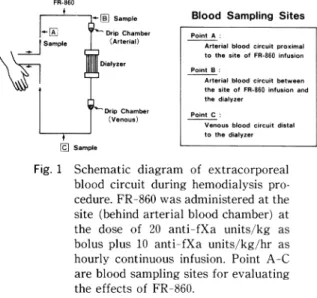
Fig. 1•@ Schematic diagram of extracorporeal
blood circuit during hemodialysis pro
cedure. FR-860 was administered at the
site (behind arterial blood chamber) at
the dose of 20 anti-fXa units kg as
bolus plus 10 anti-fXa units/kg/hr as
hourly continuous infusion. Point A-C
are blood sampling sites for evaluating the effects of FR 860.
Hemodialysis
They
underwent
regular
hemodialysis
treatment
twice (4 patients)
and three times (57 patients)
week
ly, for a mean dialysis
period of 6 .70.56
(mean•}
SEM) years. Each dialysis time was 4.6•}0.03 (mean
SEM) hrs. Extracorporeal
blood (Qb) and dialysate
flow
rate
(Qd)
were
188.2•}1.27
and
495 .3•}1.24
(mean•}SEM)
ml/min,
respectively.
Hollow
fiber
type dialyzers
were used in all cases with the follow
ing membrane
materials:
cuproammonium
rayon in
25 cases, polymethylmetacrylate
(PMMA)
in 18 cases ,
saponified
cellulose
in 11 cases, cellulose acetate in 4
cases, ethylenvynil
alcohol
(EVAL)
in two cases and
polyacrylonitril
(PAN)
in one case.
Preparation
of FR-860 and its administration
proto
col
Preparation
of FR-860, manufactured
and supplied
by Kissei
Pharmaceutical
Co.,
Ltd.,
Matsumoto
,
Japan, contains 10,000 anti-fXa
units of low molecular
weight heparin Na in one mi (one ampoule)
. FR-860
was administered
at the site, behind
arterial
blood
chamber,
of extracorporeal
blood
circuit
(Fig. 1)
during
hemodialysis
procedure.
Starting
dose was
20.0 anti-fXa
units (afXa U)/kg
as bolus, followed by
hourly continuous
infusion dose of 10.0 afXa U/kg/hr
.
A corresponding dose adjustment was made based on
the degree of residual blood in the dialyzer and blood
clot in the drip chambers: When moderate to severe
blood clotting (grade ‡V to ‡W, described below) was
observed, the dose was increased at the next dialysis
session by either initial bolus of 5.0 afXa U/kg or
continuous infusion dose of 2.5 afXa U/kg/hr. When
two consecutive dialysis treatments were performed
with no or slight blood clotting in the extracorporeal
curcuit (grade ‡T to ‡U), the dose was decreased in the
same way. The optimum dosage of FR-860 was then
determined.
The controlled period with conventional (un
fractionated) heparin was followed by the period of
the study with FR-860, which was fixed in two weeks.
Assessment of residual blood and blood clot in blood
circuit
The degree of residual blood in the dialyzer and
blood clot in the drip chambers was observed macros
copically after each dialysis procedure and assessed
with the following classification: ‡T, no or a few (no or a few clot in the dialyzer or drip chambers):‡U, slight
(a small amount of clot in the dialyzer or drip cham
bers):‡V, moderate (about half of fibers plugged by
clots):‡W, severe (difficult to continue extracorpor
eai circulation due to blood clotting in the dialyzer or
drip chambers).
Laboratory methods
Blood samples were collected from arterial and
venous lines of blood circuit (Fig. 1) prior to, at 1 hour
after the start of dialysis and immediately before the
end of dialysis. Complete blood counts were obtained
with Coulter counter. Blood chemistries were deter
mined with an autoanalyzer. Plasma anti-fXa activity
was assayed by an automated amidolytic method13)
using the chromogenic substrate S-2222, bovine factor
Xa and human AT ‡V concentrate (Daiichi Chemical
Pharmaceutical Co., Ltd., Tokyo). Whole blood and
activated coagulation time were measured with Lee
White and Hemochron method, respectively. APTT
and PT were assayed according to the manufacture's
specifications. Antithrombin ‡V (AT ‡V) concentra
tion was assayed immunochemically using Laurell's
rocket technique and its activity was also determined
amidolytically with the chromogenic substrate, S-2238
(Kabi Vitrum AB, Stockholm). Platelet aggregation
tests were performed with a NBS HEMA Tracer ‡X
Aggregometer, using 1.0, 3.0 and 100 microgram/ml
soluble bovine tendon collagen: 1.2, 2.5, 5.0, 10.0 and
50.0 micromole ADP.
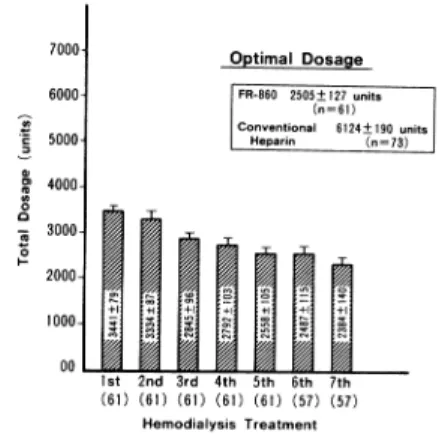
Fig. 2•@ Changes of total dosage of FR-860
during the study.
Dialysis
efficacy
(reduction
ratio
of
solutes)
was
calculated
from
the
following
equation.
Dialysis
efficacy
(%)=(1-post-HD
value/pre-HD
value)•~100
Statistical
Analysis
The
data
were
expressed
as mean+SEM.
The
pair
ed and
unpaired
Student's
t test
were
used
for statisti
cal
analysis.
Statistical
significance
was
defined
as
a
P value
of less
than
0.05.
Results
Optimum
dosage
of
FR-860
Fig.
2 shows
the
changes
of total
dosage
of FR-860
during
the
study.
The
period
of the
study
was
fixed
in
two
weeks.
Total
dosage
of
FR-860
decreased
from
3,441•}79
at the
1st
hemodialysis
treatment
to 2,384•}
140
afXa
U at the
7th
treatment.
Optimum
dosage
of
FR-860
was
2,505•}127
afXa
U
(n=61)
compared
with
that
of conventional
heparin
of 6,124•}190
U (n=
73)
The
distribution
of optimum
dosage
of FR-860
is
shown
in Fig.
3. Distribution
of
optimum
dosage
has
three
peaks:
10.0
afXa
U/kg
(bolus)
plus
5.0 afXa
U/
kg/hr
(continuous
infusion)
in 13 patients
(21.3%),
15.0
afXa
U/kg
plus
7.5 afXa
U/kg/hr
in 14 patients
(23.0
%),
and
20.0
afXa
U/kg
plus
10.0
afXa
U/kg/hr
in 10
patients
(16.4).
It is also
demonstrated
that
91.8%
of
the
patients
could
be dialyzed
in a starting
dose
of FR
-860
without
any
clotting
problem
in the
extracopor
eal blood circuit. Therefore optimum dosage was
estimated to be 15.0•`20.0 afXa U/kg as bolus plus 7.5
•`
10.0 afXa U/kg/hr as hourly continuous infusion.
Fig. 3•@ The distribution of optimum dosage of
FR-860. Starting dose was 20 anti-fXa
units/kg as bolus plus 10 anti-fXa
units/kg/hr as continuous infusion. The
dosage was adjusted based on the status of blood clot in the drip chambers and residual blood in the dialyzer.
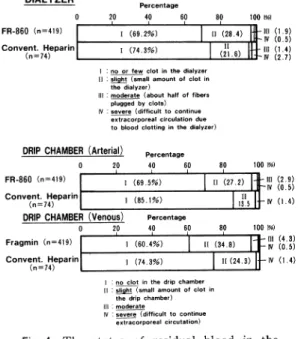
Fig. 4•@ The status of residual blood in the
dialyzer and blood clot in the drip
chambers.
Residual blood and blood clot in blood circuit
Fig. 4 shows the status
of residual
blood
in the
dialyzer
and blood clot in the drip chambers
in both
FR-860
and conventional
heparin
group.
In both
groups, about 95% of dialysis sessions could be perfor
med
with
a few
or
a small
amount
of clot
in the
dialyzer.
No
significant
difference
was
observed
between
two groups.
As shown
in the lower
part
of
Fig. 4, similar
results
in the
drip chambers
could
be
obtained
to those
in the dialyzer.
Fig. 5•@ Changes of plasma anti-fXa activity
during hemodialysis with FR-860.
Plasma anti-fXa level in the blood
circuit (Point B) and in the systemic blood of patients (Point A) increased during dialysis.
Plasma anti-fXa activity
Fig. 5 shows the changes of plasma anti-fXa activ
ity during hemodialysis with FR-860. Plasma anti-fXa
level in the blood circuit (Point B: arterial blood
circuit after FR-860 infusion in Fig. 1) increased to
0.33•}0.04 units/ml at 1 hr after the start of dialysis
and 0.41•}0.04 units/ml immediately before the end of
dialysis. Plasma anti-fXa level in the systemic blood
of the patients (Point A: arterial blood circuit before
FR-860 infusion) also increased to 0.24•}0.03 units/ml
at 1 hr after the start of dialysis and 0.36•}0.04 units/
ml immediatelly before the end of dialysis.
Blood coagulation time
Fig. 6 shows the changes of coagulation parameters
during dialysis with FR-860. ACT did not prolong
during dialysis. But WBCT at Point A during dialysis
prolonged compared with predialysis value (548.3+24.0
vs. 611.4•}16.0 sec/predialysis vs. l hr after the start of
dialysis; p<0.05). No significant changes in WBCT
between Point A and Point B were observed.
APTT and PT
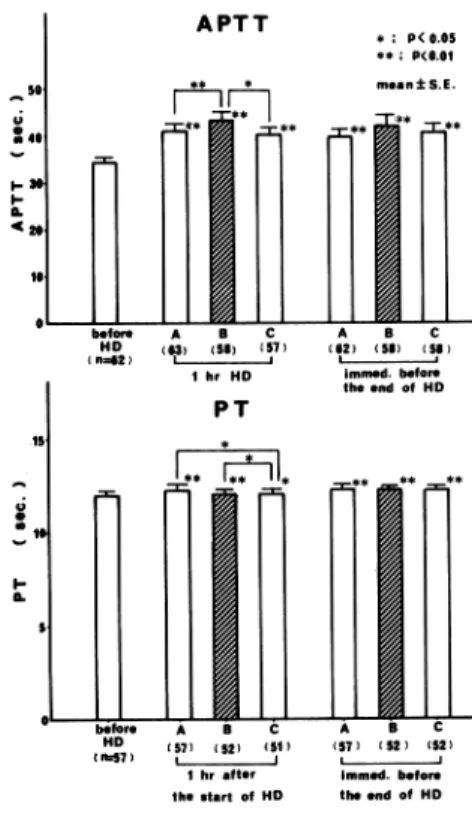
Fig. 7 shows the changes of APTT and PT during
during
dialysis
from
34.3•}1.2
before
dialysis
to 41.0•}
1.9 seconds
(p<0.01)
at lhr
of dialysis.
But
the
incre
ment
did not
exceed
10 seconds
over
predialysis
value.
PT
at
Point
A also
prolonged
significantly
during
dialysis
(12.0•}0.2
vs.
12.4•}0.2
seconds/predialysis
vs.
1 hr
of
dialysis;
p<0.01).
The
increment
did
not
exceed
2 seconds
over
predialysis
value.
Fig. 6•@ Changes of coagulation parameters dur
ing hemodialysis with FR 860. Activat
ed coagulation time (ACT) was not
prolonged, but whole blood coagulation
time (WBCT) at Point A during
dialysis prolonged compared with
predialysis value.
Plasma AT ‡V level
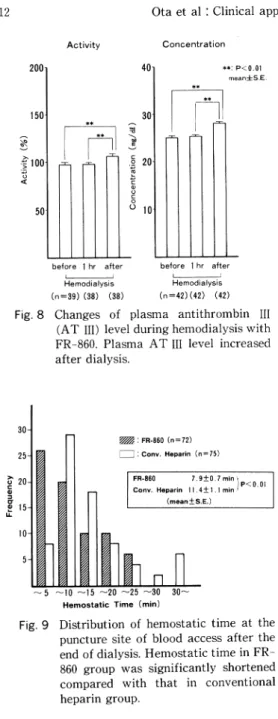
Fig. 8 shows the changes of plasma AT ‡V level
during dialysis. Plasma AT ‡V level was measured in
both activity and concentration. Plasma AT ‡V level
increased only after dialysis. This phenomenon is
suspected to result from the hemoconcentration after
dialysis. There was no significant difference in plasma
AT ‡V level between before dialysis and 1 hr after the
start of dialysis. Platelet aggregation
The changes of platelet aggregation during dialysis
were investigated. There were no significant changes
in both collagen and ADP-induced platelet aggrega
tion during dialysis.
The status of hemostasis at the puncture site
Fig. 7•@ Changes of activated partial thrombo plastin time (APTT) and prothrombin
time (PT) during hemodialysis with
FR-860.
The
status
of
hemostasis
at
the
puncture
site
of
blood
access
was
investigated
after
the
end
of
hemodialysis.
Hemostatic
time
at the
use
of
FR-860
was
shortened
in 265
out
of 438
dialysis
sessions
(60.5
%)
compared
with
that
in conventional
heparin.
The
distribution
of hemostatic
time
at the
puncture
site
is
shown
in
Fig.
9. The
peak
of
frequency
in
FR-860
group
was
observed
at less
than
5 min,
while
obser
vedetween
5
and
10
min
in
conventional
heparin
group.
Hemostatic
time
in FR-860
group
was
signifi
cantly
shortened
compared
with
that
in conventional
heparin
group
(7.9•}0.7
vs.
11.4•}1.1
min:
p<0.01).
Side
effects
of FR-860
Slight
itching
developed
in only
one
of 65 cases.
No
abnormal
laboratory
data
was
observed
during
the
study.
Discussion
Heparin
has
been
used
as
the
most
popular
anticoagulant
for
hemodialysis,
but
its
clinical
use
is
limited
by
its
major
side
effect,
bleeding.
Indeed,
life-threatening
complication
in some
patients
at high
risk of bleeding.
The hemorrhagic
properties
of hepar
in may
be attributed
to heparin
per
se7,8,14' and the
interaction
with
platelets2,15).
Fig. 8•@ Changes of plasma antithrombin ‡V
(AT ‡V) level during hemodialysis with
FR-860. Plasma AT ‡V level increased
after dialysis.
Fig. 9•@ Distribution of hemostatic time at the puncture site of blood access after the end of dialysis. Hemostatic time in FR
-860 group was significantly shortened
compared with that in conventional
heparin group.
The
heparin
preparations
in clinical
use today
are
heterogeneous
with
regard
to molecular
size.
They
consist
of components
with molecular
weights
ranging
from
5,000 to 30,000 daltons.
A molecular-size-depen
dency
of
the
anticoagulant
activity7,8,14)
has
been
demonstrated
by the
studies
on heparin
fractions
of
different molecular weights obtained by gel filtration.
They have shown that its anticoagulant activity is
highly dependent on molecular weight. Thus, its abil
ity to prolong the clotting time-measured by APTT
test-declines sharply with decreasing molecular
weight. On the other hand, the effects of heparin on
the inhibition of factor Xa (fXa) differ from those
observed with thrombin or expressed in the APTT. It
was found that heparin fractions with very low molec
ular weights (<3,000 daltons)) had a limited ability to
prevent experimental thrombosis in rabbit, while they
exhibited a high anti-fXa activity. However, some
what higher molecular weights (4,400•`5,600daltons;
LMWH) fractions produced at least as good an antith
rombotic effect as conventional heparin without
appreciably affecting the clotting time. Anti-fXa
activity/APTT ratio for conventional unfractionated
heparin was close to unity, but the ratio for LMWH
fractions was two or more. It has been concluded that
LMWH fractions possess antithrombotic properties
(anti-fXa activity), but do not significantly prolong
the clotting time (reduced antithrombin activity).
Another fascinating property of LMWH fractions is
that they inhibit platelet aggregation less than conven
tional heparin2,3,9). These properties may lead to the
conclusion that LMWH is a new promising alternative
anticoagulant for hemodialysis. FR-860, produced by
nitrous acid depolymerization of unfractionated he
parin in Kabi Vitrum, Stockholm, Sweden, is a prod
uct of LMWH fragment with average molecular
weight of 4,400•`5,600 daltons.
The present study was performed
in order to estab
lish
the
efficacy
and
safty
of
FR-860
as
an
anticoagulant
in hemodialysis
treatment.
Clinical
study for healthy adult volunteers
preceded this study.
Sixty-five
stable hemodialysis
patients were enrolled
in this study. And the patients at high risk of bleeding
or with active bleeding
lesions were excluded
from
eligible subject$ for the study.
We tried to find the optimum dosage of FR-860 for
hemodialysis
procedure.
Starting
dose in the study
was 20.0 asti-fXa
units/kg
as initial bolus plus 10.0
anti-fXa
units/kg/hr
as hourly continuous
infusion.
The dose was adjusted based on the degree of residual
blood in the dialyzer
and blood clot in the drip cham
bers. On the basis of the dose-response
relationship,
the optimum dosage, which covered 91.8% of the
patients, was estimated to be 15.0•`20.0 anti-fXa
units/kg as initial bolus plus 7.5.10.0 anti-fXa units/
kg/hr as hourly continuous infusion. Total optimum
dosage of FR-860 was 2,505•}127 anti-fXa units
compared with that of conventional heparin of 6,124•}
190 units. It may be suggested that about 4 anti-fXa
units of FR-860 has an equivalent antithrombotic
activity to 10 units of conventional heparin.
The anti-fXa assay has been widely used for assess
ing the potency of LMWH fragments. Desired thera
peutic level of anti-fXa activity, a level needed for
keeping sufficient antithrombotic activity during long
term use, was reported to be above 0.5 units/ml11,12,16).
In our study, plasma peak anti-fXa activity at opti
mum dosage of FR-860 was 0.41•}0.04 units/ml imme
diately before the end of dialysis.
In regard to the changes of coagulation parameters
during dialysis with FR-860, ACT did not prolong as
expected. But WBCT and APTT prolonged during
dialysis. Their increment was smaller than that in
conventional heparin dialysis.
Of another interest in the study is to confirm the
effects of FR-860 on platelet function. No significant
changes in both collagen and ADP-induced platelet
aggregation was observed in conjunction with no
changes in platelet counts (not shown in this text).
This result is consistent with other reports11,12,16).