TRANSLATION AND CULTURAL ADAPTATION OF AUTISM SCREENING TOOLS
Michaela DuBay
A dissertation submitted to the faculty at the University of North Carolina at Chapel Hill in partial fulfillment of the requirements for the degree of Doctor of Philosophy in the Allied
Health Sciences Department in the School of Medicine.
Chapel Hill 2020
ABSTRACT
Michaela DuBay: Translation and Cultural Adaptation of Autism Screening Tools (Under the direction of Linda R. Watson)
Parent-report screening tools for autism spectrum disorder (ASD) are widely used as a way to promote early identification of children with or at risk for ASD. Results from these questionnaires provide information about the presence of early symptoms of ASD and can aid in decisions about referrals for evaluation and treatment. Most of these screening tools were
ACKNOWLEDGEMENTS
I would like to express my deepest gratitude to Linda Watson, who saw the seed of my interest in this topic and expertly cultivated it into a series of distinct research questions. She encouraged me to attempt difficult but rewarding and meaningful work, answered endless questions, revised and refocused, and generally expressed full and complete confidence in my abilities, the impact of which will surely last my whole career.
I owe much gratitude to the rest of my dissertation committee, Grace Baranek, Lucía Mendez, Betsy Crais, and Sharon Williams. They gave me thoughtful guidance and
knowledgeable support throughout this process, and I thank them for granting me their expertise, their perspectives, and their work for this dissertation.
These studies would not have come to fruition without the cooperation and collaboration of many medical practices, community organizations, and families. I am indebted to the nurses and staff at medical practices who meticulously saved M-CHAT forms from their patients and scrubbed names and birthdates. I am eternally grateful to the local community organizations who trusted me, allowed me to work with their families, and helped me find participants for these studies. And I would like to express endless gratitude to the mothers, fathers, grandmothers, and aunts who welcomed us into their homes and helped us understand their perspectives. Y quiero expresar un agradecimiento infinito a las madres, los padres, las abuelas, y las tías que nos
I had the great pleasure of working with many research assistants, translators, and collaborators. Thank you to Danna Smith, Will Brinson, Carolina Rojevic, Nuria Vicens, Mary Jones, Yulieth Peña, Helen Lee, Valentina Vera Carrasquero, Elizabeth Choi, and Allison Phillips. I could not have done this work without your sincere dedication.
Many thanks also to my family. To Kateri for professional moral support and
TABLE OF CONTENTS
CHAPTER 1: INTRODUCTION ...1
References ...4
CHAPTER 2: PSYCHOMETRIC COMPARISON OF ENGLISH AND SPANISH VERSIONS OF THE M-CHAT-R ...6
Introduction ...6
Methods...9
Results ...13
Discussion ...17
References ...28
Supplementary Materials ...32
Supplementary Materials References ...40
CHAPTER 3: TRANSLATION AND CULTURAL ADAPTATION OF PARENT-REPORT DEVELOPMENTAL ASSESSMENTS: IMPROVING RIGOR IN METHODOLOGY ...42
Introduction ...42
Considerations in Equivalence ...47
Translation and Cultural Adaptation Guidelines ...50
A Quality Appraisal Tool...67
Final Considerations ...69
CHAPTER 4: RIGOROUS TRANSLATION AND CULTURAL
ADAPTATION OF AN AUTISM SCREENING TOOL: FIRST YEARS
INVENTORY AS A CASE STUDY ...75
Introduction ...75
Methods...80
Results ...86
Discussion ...100
LIST OF TABLES AND FIGURES
Table 2.1. Respondent Demographics …..……….……….………. 13
Table 2.2. Risk Score and Missingness Comparisons…….………. 14
Table 2.3. Itemized Risk Score and Missingness Comparisons………... 16
Figure 3.1 Representation of the translation and cultural adaptation process……….. 52
Table 3.1 Quality Appraisal Tool for Translated and Adapted Caregiver-Report Developmental Instruments……….. 68
Table 4.1 Patterns of challenges encountered during the translation and cultural adaptation process………... 88
LIST OF ABBREVIATIONS
ASD Autism Spectrum Disorder
ES English Speaking
FYI First Years Inventory
M-CHAT Modified Checklist for Autism in Toddlers
M-CHAT-R Modified Checklist for Autism in Toddlers – Revised (parent-report only) M-CHAT-R/F Modified Checklist for Autism in Toddlers – Revised with Follow Up
SS Spanish Speaking
CHAPTER 1: INTRODUCTION
Autism spectrum disorder (ASD) is a neurodevelopmental disorder impacting social communicative development and restrictive and repetitive behaviors. ASD affects around 1% of the global population (Elsabbagh et al., 2012). Many parent-report ASD screening tools have been developed with the goal of identifying children who are showing early behavioral symptoms of ASD so that they can receive appropriate referrals for evaluation and treatment (Aldridge et al., 2012; Hampton & Strand, 2015; Reznick et al., 2007; Robins et al., 2014; Wiggins et al., 2007). While most of these tools were developed in English, they are frequently translated into other languages to meet the needs of culturally and linguistically diverse global populations (Al Maskari et al., 2018). The traditional methodological approach to these
translations is the “forward-back approach.” In the forward-back approach, one person translates the instrument into the new target language, then a second person translates the new version back into the original language. Finally, this back-translated version is compared to the same-language original version and revisions are made to achieve adequate equivalence between versions
cutoff points, and norms. Knowing these properties allows clinicians to make appropriate referral decisions and provide families with useful information.
Cultural Influence
Culture impacts the way people understand and answer questions (Beaton et al., 2000). The way parents conceptualize their own child’s behaviors, including expectations for timing of developmental milestones and for appropriate child behaviors, is also influenced by culture (van Kleeck, 1994). Additionally, culture often dictates norms around social communication and social interaction, which are core deficit areas in ASD (van Kleeck, 1994). Thus, cultural perspectives around child development and child rearing are likely to influence parents'
understanding of questions and response patterns within the context of ASD screening. Yet, the forward-back approach to translation does not commonly account for cultural differences between the two language populations (Al Maskari et al., 2018; El-Behadli et al., 2015; Soto et al., 2015). Further, psychometric properties may differ across cultures even on culturally adapted measures deemed equivalent on all content. Therefore, re-assessment of local norms, cutoffs, reliability, and validity is required after tools are adapted (Beaton et al., 2000). Professionals in the fields of ASD, early child development, and developmental disorders are beginning to recognize this concern. A small number of research teams have begun to incorporate cultural adaptation methods that are used more widely in other fields (Cuesta-Gomez et al., 2016; Grinker et al., 2015; Kayihan et al., 2015; Magán-Maganto et al., 2018). This alternative approach incorporates rounds of quality checking for initial drafts of the translation as well as pre-testing of the instrument with target population members (DuBay & Watson, 2019).
Aims
REFERENCES
Al Maskari, T., Melville, C., & Willis, D. (2018). Systematic review: Cultural adaptation and feasibility of screening for autism in non-English speaking countries. International Journal of Mental Health Systems, 12(1), 1–19.
Aldridge, F., Gibbs, V., Schmidhofer, K., & Williams, M. (2012). Investigating the clinical usefulness of the Social Responsiveness Scale (SRS) in a tertiary level, autism spectrum disorder specific assessment clinic. Journal of Autism and Developmental Disorders, 42(2), 294–300.
Baranek, G., Watson, L.R., Crais, E., Turner-Brown, L., & Reznik, S. (2013) First Year Inventory (FYI) 3.1. Chapel Hill, NC: University of North Carolina at Chapel Hill. Beaton, D., Bombardier, C., Guillemin, F., & Ferraz, M. (2000). Guidelines for the process of
cross-cultural adaptation of self-report measures. Spine, 25, 3186–3191.
Cuesta-Gomez, J., Manzone, L. A., & Posada-De-la-paz, M. (2016). Modified Checklist for Autism in Toddlers cross-cultural adaptation for Argentina. International Journal of Developmental Disabilities, 62(2), 117–123.
El-Behadli, A., Neger, E., Perrin, E., & Sheldrick, R. (2015). Translations of developmental screening instruments: An evidence map of available research. J Dev Behav Pediatr, 36, 471–483.
Elsabbagh, M., Divan, G., Koh, Y., Kim, Y., Kauchali, S., Marcín, C., … & Fombonne, E. (2012). Global prevalence of autism and other pervasive developmental disorders. Autism Research, 5, 160–179.
Grinker, R., Kang-Yi, C., Ahmann, C., Beidas, R., Lagman, A., & Mandell, D. (2015). Cultural adaptation and translation of outreach materials on autism spectrum disorder. Journal of Autism and Developmental Disorders, 45, 2329–2336.
Hampton, J., & Strand, P. (2015). A review of level 2 parent-report instruments used to screen children aged 1.5–5 for autism: A meta-analytic update. Journal of Autism and
Developmental Disorders, 45, 2519–2530.
Kayihan, H., Akel, B., Salar, S., Huri, M., Karahan, S., Turker, D., & Korkem, D. (2015). Development of a Turkish version of the Sensory Profile: Translation, cross-cultural adaptation, and psychometric validation. Perceptual and Motor Skills: Physical Development and Measurement, 120, 971–986.
Reznick, J., Baranek, G., Reavis, S., Watson, L., & Crais, E. (2007). A parent-report instrument for identifying one-year-olds at risk for an eventual diagnosis of autism: The first year inventory. Journal of Autism and Developmental Disorders, 37, 1691–1710.
Robins, D., Casagrande, K., Barton, M., Chen, C., Dumont-Mathieu, T., & Fein, D. (2014). Validation of the Modified Checklist for Autism in Toddlers, revised with follow-up (M-CHAT-R/F). Pediatrics, 133(1), 37–45.
Soto, S., Linas, K., Jacobstein, D., Biel, M., Migdal, T., & Anthony, B. J. (2015). A review of cultural adaptations of screening tools for autism spectrum disorders. Autism : The International Journal of Research and Practice, 19, 646–661.
van Kleeck, A. (1994). Potential cultural bias in training parents as conversational partners with their children who have delays in language development. American Journal of Speech-Language Pathology, 3(1), 67–78.
Wiggins, L., Bakeman, R., Adamson, L., & Robins, D. (2007). The utility of the Social Communication Questionnaire in screening for autism in children referred for early intervention. Focus on Autism and Other Developmental Disabilities, 22(1), 33–38.
CHAPTER 2: PSYCHOMETRIC COMPARISON OF ENGLISH AND SPANISH VERSIONS OF THE M-CHAT-R
Early identification of autism spectrum disorder (ASD) is of global concern, due to its estimated global prevalence of 1% and associated impairments in social communication and restrictive/repetitive behaviors (Elsabbagh et al., 2012). Consequently, widespread screening efforts have been made to identify children showing early signs of ASD. If identified at a young age, these children may be able to receive early intervention and potentially reduce the cascading impact of neurodevelopmental processes (Dawson, 2008). The American Academy of Pediatrics recommends that all children are screened twice for ASD between 18 and 24 months of age (Johnson & Myers, 2007). A large number of ASD screening tools have been developed to heed these screening recommendations, the vast majority of which utilize a parent-report
questionnaire format (Thabtah & Peebles, 2019). While most of these tools were developed in English-speaking countries, many are being explored internationally as well. At a minimum, these tools require translation in order to be used in linguistically diverse societies, both
predictive validity, factor structure, and norms, are assumed to be equivalent to the original instrument. In the fields of early child development and developmental disabilities, a small body of recent literature recommends an alternative cultural adaptation approach to these translations, including quality checking rounds and pre-testing with target population members, although traditional methods continue to be the most commonly used approach (Al Maskari et al., 2018; DuBay & Watson, 2019; El-Behadli et al., 2015; Soto et al., 2015).
M-CHAT-R/F
The Modified Checklist for Autism in Toddlers – Revised with Follow-Up (M-CHAT-R/F; Robins et al., 2014) is an ASD screening tool used widely in the US and internationally. It was originally developed from the nine-item Checklist for Autism in Toddlers (CHAT), which derived items from behaviors present in 18-month old toddlers who later developed ASD
(Baron-Cohen et al., 1991). In its first version, the Modified Checklist for Autism in Toddlers (M-CHAT; Robins et al., 2001), added 14 items to the CHAT and expanded the age range to 18 to 30 months. Later, the M-CHAT-R/F (Robins et al., 2014) removed 3 items with poor diagnostic predictability, simplified language, added examples within items, and included a structured follow-up interview to minimize false positives. The multi-site validation study of the M-CHAT-R/F showed a sensitivity of .911, a specificity of .955, and a positive predictive value of .138 when using the parent-report questionnaire only among 15,612 toddlers attending well-checkup visits. Adding the follow-up interview increased specificity to .993 and positive predictive value to .475 (Robins et al., 2014).
version was translated specifically for Latin American Spanish-speaking populations. The traditional forward-back approach was used, with one forward translator, one back translator, and additional translators for same-language comparison and revisions. Translators were recruited from a range of Latin American countries in order to represent multiple Spanish dialects (D. Robins, personal communication, Oct. 4, 2019). To date, there have been no published direct assessments of this Spanish translation’s validity or diagnostic predictability, despite its common clinical use in the US. Western-Hemisphere Spanish versions of the M-CHAT and M-M-CHAT-R/F are also commonly used in research, including studies that pool data from both Spanish and English versions (Campbell et al., 2017; Chlebowski et al., 2013). However, there is no empirical evidence to examine whether or not the English and Spanish versions should be treated as equivalent measures. Two studies have psychometrically analyzed data from the Western-Hemisphere Spanish translation of the M-CHAT (Robins et al. 2001), both revealing relatively poor psychometric properties, including lower internal consistency (Scarpa et al., 2013), lower specificity and positive-predictive values, and higher screen positive rates (Guthrie et al., 2019) in comparison to data from the original English version of the M-CHAT.
Study Aim
Spanish or in English. Our aim was to examine the psychometric properties of a parent-report developmental screening tool that was translated using traditional methods. These analyses will also provide empirical evidence of the clinical performance of the SWH M-CHAT-R within a US-based Spanish-speaking population.
Methods
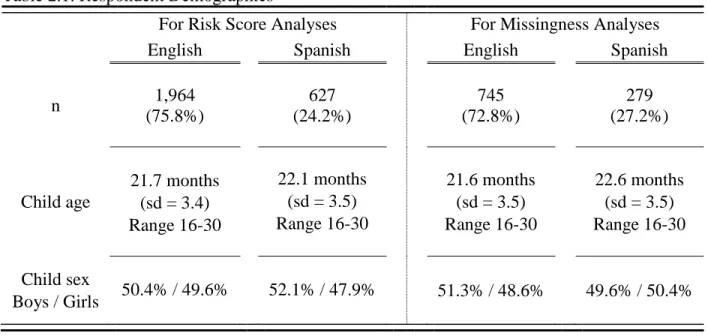
Records were grouped by language of M-CHAT-R. English-speaking (ES) participants are those who completed the original M-CHAT-R (in English) and Spanish-speaking (SS) participants are those who completed the SWH version of the M-CHAT-R (in Spanish). SS participants had children who were statistically significantly older than ES participants by two weeks on average (p < .05). Child gender was approximately evenly split in both language groups. Respondents self-reported their relation to the child in 76% of the records. Of these, 83% reported “mother,” 14% reported “father,” and 2% reported “grandmother.” The remaining caregivers reported that they were foster parents, step-parents, legal guardians, an aunt, a great grandmother, and a social worker. See Table 2.1 for additional demographic information.
Only data from the respondent’s independent completion of the 20 parent-report items of the M-CHAT-R were collected for this study, as information from follow-up interviews was not available. Therefore, initial screen positive rates, defined as total scores > 2 on the parent-report form, were used in analyses instead of actual screen positive rates. Initial screen positive rates for the entire sample of children was 6.0%, including 3.7% of girls and 8.0% of boys.
Measures
accessed here: https://mchatscreen.com/wp-content/uploads/2015/05/M-CHAT-R_F_Western_Spanish.pdf.
The M-CHAT-R/F uses a summated scoring algorithm, where the number of item responses reflecting risk (“no” for all items except 2, 5, and 12, for which the risk response is “yes”) are added together for the total score. Children are considered "low-risk" if their score is 0-2, "medium-risk" if their score is 3-7, and "high-risk" if their score is 8-20. For scores in the “medium-risk” range, there is a set of follow-up questions to be administered in an interview format to clarify the informant’s at-risk responses. For scores in the “high-risk” range, or for scores that remain 2 or higher after the follow-up interview, an evaluation and referral for
intervention are recommended. In the absence of follow-up interview data, initial screen positive rates of > 2 were retained for analysis in this study.
Data Analysis
All statistical analyses were completed in R (R Core Team, 2013). Two main approaches were employed to determine whether caregivers responded to the items on the M-CHAT-R in the same way across languages. The first approach was to compare risk-score means, initial screen positive rates, and variability between groups. Prevalence of autism, and symptoms associated with autism, are theoretically assumed to be equivalent across populations, although no data exist to prove this hypothesis (Bernier et al., 2010; Zaroff & Uhm, 2012). If this assumption is
The second approach was an analysis of data quality, specifically the frequency of items respondents left blank (i.e.; missingness). Significantly more missingness for an individual item in one language group would suggest that that language group may have had difficulty in
understanding or responding to that item. Significantly more missingness overall in one language group would suggest more difficulty understanding or responding to the scale as a whole. To answer these questions, we compared the total number of items left blank per participant
between language groups. To examine individual item differences, we compared the proportion of missingness per item between language groups.
A combination of paper and electronic records was reviewed. Electronic records contained no missingness due to forced-choice settings on electronic records. Paper copies of records, however, allowed for items left blank to be retained for our review. Therefore, “missingness analyses” were performed with the subset of the sample containing only paper copies of records. This subset contained 745 English records and 279 Spanish records.
Table 2.1. Respondent Demographics
Results Risk-Score Analyses
Each participant was assigned a total risk score by summing the number of at-risk
responses across all items. The lowest possible risk score is 0, indicating low likelihood of ASD, and the highest possible score is 20, indicating high likelihood of ASD. Because data came from community-based screening, most children scored at low risk, resulting in a significant negative skew of the risk score data. To address this skew, we employed resampling methods using a bootstrapped t-test and a Welch modification to correct for unequal variances between groups (see Table 2.2). Results indicated that SS respondents had significantly higher total risk scores than ES respondents (t = 4.01, p < .001). We also completed a post hoc negative binomial regression to determine if any demographic factors influenced this difference. SS respondents were 1.4 times more likely to have a higher risk score than ES respondents when controlling for the respondent’s relation to the child, the respondent’s gender, the child’s sex, and the child’s age
For Risk Score Analyses For Missingness Analyses
English Spanish English Spanish
n 1,964
(75.8%) 627 (24.2%) 745 (72.8%) 279 (27.2%) Child age 21.7 months (sd = 3.4) Range 16-30
22.1 months (sd = 3.5) Range 16-30
21.6 months (sd = 3.5) Range 16-30
22.6 months (sd = 3.5) Range 16-30
Child sex
Boys / Girls 50.4% / 49.6% 52.1% / 47.9%
Table 2.2. Risk Score and Missingness Comparisons
Mean (SD) t-value p-value Total
Risk Score
English 0.62 (1.3)
4.01 < .001 Spanish 0.85 (1.5)
Total
Missingness Score
English 0.16 (0.5)
5.05 < .001 Spanish 0.57 (1.4)
Floor rates are the proportion of records with a risk score of 0, where the respondent does not endorse any at-risk responses. The floor rate was 66.1% among ES respondents and 56.0% among SS respondents. A χ2 test revealed that ES respondents had a significantly higher floor
rate than SS respondents (χ2 =20.8, p < .001).
Screen positive rates are the proportion of records with risk scores above the cut-off point for risk level determinations. Because data from follow-up interviews was not available, we used > 2 as the determination for this initial screen positive cut-off. The proportion of records with total risk scores > 2 was 7.9% for SS respondents and 5.5% for ES respondents. A χ2 test
revealed that ES respondents had a significantly lower initial screen positive rate than SS respondents (χ2 =4.4, p < .05).
Itemized Risk-Score Analyses
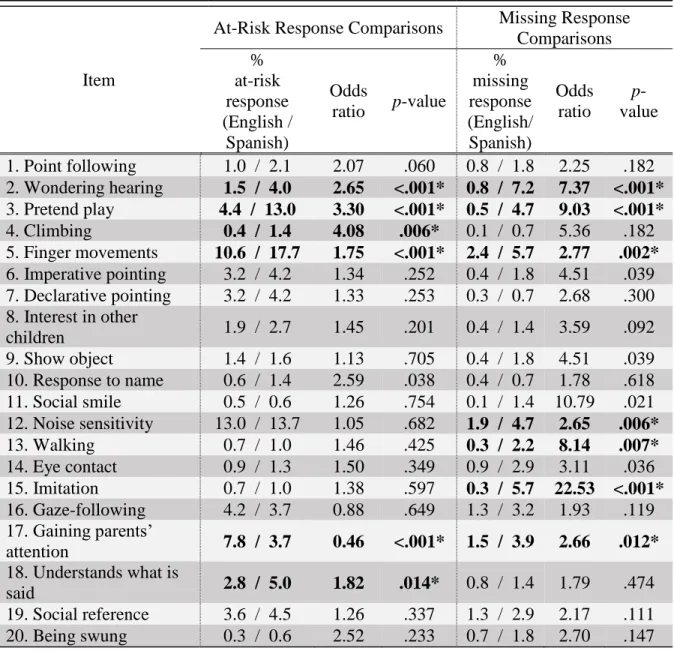
Table 2.3. Itemized Risk Score and Missingness Comparisons
Item
At-Risk Response Comparisons Missing Response Comparisons % at-risk response (English / Spanish) Odds
ratio p-value
% missing response (English/ Spanish) Odds ratio p -value
1. Point following 1.0 / 2.1 2.07 .060 0.8 / 1.8 2.25 .182 2. Wondering hearing 1.5 / 4.0 2.65 <.001* 0.8 / 7.2 7.37 <.001* 3. Pretend play 4.4 / 13.0 3.30 <.001* 0.5 / 4.7 9.03 <.001* 4. Climbing 0.4 / 1.4 4.08 .006* 0.1 / 0.7 5.36 .182 5. Finger movements 10.6 / 17.7 1.75 <.001* 2.4 / 5.7 2.77 .002* 6. Imperative pointing 3.2 / 4.2 1.34 .252 0.4 / 1.8 4.51 .039 7. Declarative pointing 3.2 / 4.2 1.33 .253 0.3 / 0.7 2.68 .300 8. Interest in other
children 1.9 / 2.7 1.45 .201 0.4 / 1.4 3.59 .092
9. Show object 1.4 / 1.6 1.13 .705 0.4 / 1.8 4.51 .039 10. Response to name 0.6 / 1.4 2.59 .038 0.4 / 0.7 1.78 .618 11. Social smile 0.5 / 0.6 1.26 .754 0.1 / 1.4 10.79 .021 12. Noise sensitivity 13.0 / 13.7 1.05 .682 1.9 / 4.7 2.65 .006* 13. Walking 0.7 / 1.0 1.46 .425 0.3 / 2.2 8.14 .007* 14. Eye contact 0.9 / 1.3 1.50 .349 0.9 / 2.9 3.11 .036 15. Imitation 0.7 / 1.0 1.38 .597 0.3 / 5.7 22.53 <.001* 16. Gaze-following 4.2 / 3.7 0.88 .649 1.3 / 3.2 1.93 .119 17. Gaining parents’
attention 7.8 / 3.7 0.46 <.001* 1.5 / 3.9 2.66 .012* 18. Understands what is
said 2.8 / 5.0 1.82 .014* 0.8 / 1.4 1.79 .474
19. Social reference 3.6 / 4.5 1.26 .337 1.3 / 2.9 2.17 .111 20. Being swung 0.3 / 0.6 2.52 .233 0.7 / 1.8 2.70 .147 *Remained significant after false discovery rate reduction for multiple analyses.
See https://www.cpqcc.org/sites/default/files/M-CHAT-R_F_1.pdf (English), and
Missingness Analyses
We created a new variable to represent total missingness by summing the number of items that the respondent selected either no response option or both response options. Similar to total risk scores, total missingness data were also negatively skewed with unequal variances between groups. Therefore, a bootstrapped t-test with a Welch modification was also used to compare total missingness scores between language groups (see Table 2.2). Results indicated that SS respondents left more items blank than ES respondents (t = 5.05, p < .001). In order to determine if any demographic factors influenced this result, we completed an additional post hoc negative binomial regression. SS respondents were 3.6 times more likely to leave more items blank than ES respondents while controlling for the respondents’ relation to the child, the informant’s gender, the child’s sex, and the child’s age (p < .001).
Item-by-Item Missingness Analysis
Similar to itemized analyses of risk scores, Fisher’s Exact Tests were performed on 2 x 2 contingency tables containing frequencies of missing versus not missing responses per item for each language group. False Discovery Rates were also used to correct for multiple comparisons. SS were more likely to contain missing data for items 2, 3, 5, 12, 13, 15, and 17 than ES
respondents (see Table 2.3).
Discussion
assume that the overall actual prevalence of ASD symptoms is the same within the two language populations tested here, these results suggest that the M-CHAT-R SWH translation does not perform the same way as the original English M-CHAT-R. These observed differences possibly reflect the influence of factors that were not addressed adequately in the traditional translation procedures.
Differences in Risk Scores
Other studies of forward-back translations of the CHAT family (CHAT or M-CHAT-R) have found an increased likelihood of higher risk scores and initial screen positive rates among respondents using translated versions. For forward-back Spanish translations of the M-CHAT, two studies have reported higher overall risk scores as well as higher at-risk
endorsement rates on specific items (Kimple et al., 2014; Windham et al., 2014). Unexpectedly high at-risk endorsement rates (>40%) among low-risk samples were also documented on two items of the M-CHAT-R for a forward-back Chinese translation (Guo et al., 2019) and a forward-back Albanian translation (Brennan et al., 2016). In a forward-back Arabic translation for an Egyptian context in a low-risk sample, Mohamed et al. (2016) observed extremely high endorsement rates (>20%) for over half of items.
multiple studies have reported high initial screen positive rates for the SWH translation of the CHAT, including 15.0% (Guthrie et al., 2019), and 30.3% (Windham et al., 2014). For the M-CHAT-R, initial screen positive rates were reported to be 14.4% in China with a Mandarin translation (Guo et al., 2019), 9.75% in Albania with an Albanian translation (Brennan et al., 2016), and 25% in Indonesia with an Indonesian translation (Windiani et al., 2016).
Comparatively, original English M-CHAT and M-CHAT-R validation studies reported initial screen positive rates of 9.1% (Chlebowski et al., 2013) and 7.2% (Robins et al., 2014), respectively, in low-risk community-based samples.
Alternatively, Magán-Maganto et al. (2018) incorporated quality checking and cultural adaptation procedures when translating the M-CHAT-R for a Spanish context rather than using a strictly traditional approach. Their adaptation resulted in what appeared to be typical
endorsement rates of items (respondents selected at-risk responses less than 4% of the time on 18 items), but a lower initial screen positive rate (2.3%). Cuesta-Gomez et al. (2016) also used a cultural adaptation approach for the Spanish M-CHAT in Chile and reported a 4.3% initial screen positive rate. In India, TS et al. (2018) used a rigorous cultural adaptation approach for the M-CHAT-R and achieved a reasonable initial screen positive rate (5.5%), although they did observe an unexpectedly high endorsement rate for one item (35.3%). Improved psychometric characteristics from these studies may suggest that a more rigorous translation and cultural adaptation approach could yield more linguistically and culturally appropriate measures. Differences in Missingness
able to choose between the answer choices provided (Ware & Gandek, 1998; Ware et al., 1996, 1995). Missing data may also be an indication that the linguistic complexity of the tool does not align with the literacy levels of the population sampled (Ware et al., 1995). Because this
missingness pattern was more frequent among the SS respondents, these respondents may have experienced difficulty understanding the translation of the instrument. Amount of missing data is not typically reported in M-CHAT translation studies. However, one research team in India reported some missing responses on three items but otherwise good psychometric properties after translating the M-CHAT-R into Malayalam using a rigorous cultural adaptation approach (TS et al., 2018).
Item-Specific Differences
Items 2, 3, 5, and 17 showed significantly different response patterns between groups, where SS respondents were more likely to leave items blank and were more likely to endorse the at-risk response, with the exception of 17, which showed the opposite trend in endorsement rates. There were two additional items (4 and 18) where SS caregivers were more likely to report at-risk responses. There were three additional items (12, 13, and 15) that SS respondents were more likely to leave blank. Based on itemized results from other translations in the M-CHAT family, items 2, 4, 5, and 12 frequently present problems in endorsement rates and diagnostic
We have identified some patterns across the items observed to show differential responses between groups in this study. While we describe these patterns below, a complete linguistic and cultural analysis of each of these items, along with possible rationales for observed differences, can be found in the Supplementary Materials for this article.
Several linguistic differences between the English and SWH versions were identified within these problematic items. Some of these differences consisted of grammatical or semantic variances that may have differentially influenced respondents’ interpretation of items. For
example, item 5 uses the term “wiggle” in English, while the SWH version reads “mueve/move.” This verb lacks the unique characteristic of the movement that is present in the English version. Additionally, the SWH version does not contain the underlined font for the word “unusual,” as it does in English. These differences may have made it more likely for those reading the SWH version to endorse “yes,” the at-risk response. Similarly, item 15 contains the phrase “copy what you do,” which is translated to “imitar sus movimientos/copy your movements.” “Movements” is more limited in meaning as compared to “what you do,” and fails to encompass the
non-movement example provided for this item (i.e. sounds). These changes, and other similar changes within items that showed differential responses between groups, may have been chosen to simplify the grammar or complexity of the SWH version; however, they appear to have influenced interpretation differentially across language groups.
Differences between the English and SWH versions were also noted in the area of
specific connotations of words. For example, item 3 uses the terms “fantasía” and “imaginación” to describe the concepts “play pretend” and “make-believe.” These Spanish terms are not
“mental-health related delusion,” respectively. Item 12 translates the adjective “everyday” as “cotidiano,” which can contain a connotation more closely aligned with the English terms “customary” or “traditional” as opposed to the intended English connotation “ordinary.” These unintended connotations, along with others present in other items that showed differential responses between groups, may have influenced Spanish speakers’ interpretations differently than English speakers’, leading to differences in endorsement and missingness rates. McClure et al. (2018) noted an unintended connotation in their Nepali translation of the M-CHAT-R which resulted in inaccurate responses and required modification.
There were several instances where the grammar of the Spanish language may have complicated respondents’ interpretation. Verb tense and possessive terms for the third person and formal second person are equivalent in Spanish. In some items, the pronoun is not provided, requiring the reader to interpret whether a phrase refers to the child, the adult, or an object. For example, item 15 could be interpreted as “Does your child try to imitate his/her movements?” instead of “your movements.” These ambiguities in intent may have confused respondents, leading to their increased likelihood to leave these items blank. In a Spanish translation study of a similar ASD screening tool, DuBay, Watson, Lee, et al. (2019) also identified the need to repeat nouns or pronouns in this context to avoid subject misinterpretations.
response bias, increasing their likelihood of leaving the item blank. In fact, these three items typically present problems in most M-CHAT family translation studies, with unexpectedly high endorsement rates for each item (Brennan et al., 2016; Guo et al., 2019; Wong et al., 2018), including Spanish translations (Eugenin et al., 2015; Kimple et al., 2014; Magán-Maganto et al., 2018; Windham et al., 2014). TS et al. (2018) also noted high missingness on each of these three items.
Finally, there may have been some additional cultural factors that differentially influenced response to items. For example, item 4 asks whether the child likes “climbing on things” and includes furniture as an example. Literature suggests that Latin American families hold high behavioral compliance expectations of children (Calzada et al., 2010; Halgunseth et al., 2006). This example may have been interpreted as a non-compliant behavior. SS respondents may have viewed “no” as the more socially appropriate response as compared to ES respondents, increasing their likelihood of choosing this response. Additionally, item 2 asks whether the adult has wondered if their child is deaf. The SWH translation reads “si su hijo es sordo/if your child is deaf.” There is a common expression in Spanish using the term “sordo” to refer to listening compliance. Consequently, SS respondents may have interpreted the item as asking “Have you ever wondered if your child is selectively listening?” These factors, and other similar cultural factors, may significantly change the conceptual meaning of items in this new cultural context, possibly leading to differential responses across groups.
endorsement rates, poor diagnostic discrimination, or initial need to adapt items 16, 19, and 20, although results here did not indicate problems with these items.
Clinical Implications
Differences in the initial screen positive rate between the two language groups, while significant, were lower than previous studies of the SWH version of the M-CHAT. In the current study, 55 of 1,000 children screened positive if their caregiver took the M-CHAT-R in English, where 79 of 1,000 children screened positive if their caregiver took the M-CHAT-R in Spanish. Clinically, our results suggest a potential increased false positive rate in the SS population, a hypothesis that appears to be supported by one recent study. Guthrie et al. (2019) found that specificity and PPV, both of which are lowered by higher rates of false positives, were
may be able to clarify item meaning may help to identify false positive cases and avoid unnecessary referral.
Limitations
We were unable to access data from follow-up interviews for this study. It is possible that the follow-up interviews may have corrected the potentially greater number of false positive initial screens. We were also unable to access diagnostic outcomes for those who went on to receive ASD evaluations. Therefore, we do not know the actual number of true and false positives and negatives to examine differences in diagnostic validity between the language versions. We were also unable to identify repeat administrations of the M-CHAT-R within data collected directly from medical practices or festivals; thus, we may have included a few repeated administrations. Additionally, we were not able to examine missingness among the data collected electronically.
Due to the lack of data on the demographic characteristics of the sample, we were unable to examine how dialect or country of origin, education or income levels, acculturation levels, or other demographic variables may have influenced response patterns for endorsement rates or missingness. Nonetheless, the sample size and data collection procedures are likely to have resulted in a sample that is representative general population of Spanish speakers in this region of the US.
The conclusion that these results indicate a difference in the way these populations are responding to the M-CHAT-R translations is based on the assumption that the actual prevalence of ASD and ASD symptoms is similar across the two populations. This assumption is generally accepted in the literature, though there is no empirical evidence to support it. Observed
2018; Mandell et al., 2009). This observed trend is typically assumed to be explained by
healthcare access differences rather than actual prevalence differences (Mandell et al., 2009). If actual prevalence rates reflect current observed prevalence rates, then the results found here would be in the opposite direction of that trend. Specifically, observed prevalence rates would suggest that fewer ASD symptoms should be observed in the SS sample, when in fact SS caregivers reported more ASD symptoms. Therefore, although a difference in actual ASD prevalence cannot be ruled out as an explanation for these results, this is unlikely due to the opposite direction of the trend observed here.
Conclusions/Future Directions
the SWH version of the follow-up interview to determine if interviews are able to reduce false positives.
We wish to emphasize that although the findings presented here do raise concerns regarding the validity of the SWH M-CHAT-R/F in a US-based population, they do not justify discontinuing the use of this tool. A more adequate alternative screening measure has neither been identified nor developed for this population, which is already at risk of delayed or missed diagnosis (Baio et al., 2018; Mandell et al., 2009; Ratto et al., 2016). A new SWH version (“Spanish – Western Hemisphere version 2”) has been added to the M-CHAT-R/F translations website, which contains modifications to some of the problematic items identified here. It is possible that this version has improved psychometric properties; however, similar to the SWH version, there are no known publications to describe its translation process or to support its clinical use. To avoid exacerbating existing health disparities in this area, we should continue to use available Spanish-language screening tools with the SS population in the US, while
REFERENCES
Al Maskari, T., Melville, C., & Willis, D. (2018). Systematic review: Cultural adaptation and feasibility of screening for autism in non-English speaking countries. International Journal of Mental Health Systems, 12(1), 1–19.
Baio, J., Wiggins, L., Christensen, D. L., Maenner, M. J., Daniels, J., Warren, Z., ... & Durkin, M. S. (2018). Prevalence of Autism Spectrum Disorder among children aged 8 years – Autism and Developmental Disabilities Monitoring Network, 11 Sites, United States, 2014. MMWR Surveillance Summaries, 67(6).
Baron-Cohen, S., Allen, J., & Gillberg, C. (1991). Can autism be detected at 18 months? The needle, the haystack, and the CHAT. British Journal of Psychiatry, 161, 839–843. Bernier, R., Mao, A., & Yen, J. (2010). Psychopathology, families, and culture: Autism. Child
and Adolescent Psychiatric Clinics of North America, 19(4), 855–867.
Brennan, L., Fein, D., Como, A., Rathwell, I., & Chen, C. (2016). Use of the Modified Checklist for Autism, Revised with Follow Up-Albanian to screen for ASD in Albania. Journal of Autism and Developmental Disorders, 46, 3392–3407.
Calzada, E., Fernandez, Y., & Cortes, D. (2010). Incorporating the cultural value of respeto into a framework of Latino parenting. Cultural Diversity and Ethnic Minority Psychology, 16(1), 77–86.
Campbell, K., Carpenter, K., Espinosa, S., Hashemi, J., Qiu, Q., Tepper, M., … & Dawson, G. (2017). Use of a digital Modified Checklist for Autism in Toddlers – Revised with Follow-up to improve quality of screening for autism. Journal of Pediatrics, 183, 133-139.e1. Canal-Bedia, R., García-Primo, P., Martín-Cilleros, M., Santos-Borbujo, J.,
Guisuraga-Fernández, Z., … & Posada-De La Paz, M. (2011). Modified checklist for autism in toddlers: Cross-cultural adaptation and validation in Spain. Journal of Autism and Developmental Disorders, 41, 1342–1351.
Carakovac, M., Jovanovic, J., Kalanj, M., Rudic, N., Aleksic-Hil, O., Aleksic, B., … & Pejovic-Milovancevic, M. (2016). Serbian language version of the Modified Checklist for Autism in Toddlers, Revised, with Follow-Up: Cross-cultural adaptation and assessment of reliability. Scientific Reports, 6, 7–11.
Chlebowski, C., Robins, D. L., Barton, M. L., & Fein, D. (2013). Large-scale use of the modified checklist for autism in low-risk toddlers. Pediatrics, 131(4), e1121 - e1127.
Cuesta-Gomez, J., Manzone, L. A., & Posada-De-la-paz, M. (2016). Modified Checklist for Autism in Toddlers cross-cultural adaptation for Argentina. International Journal of Developmental Disabilities, 62(2), 117–123.
DuBay, M., & Watson, L. R. (2019). Translation and cultural adaptation of parent-report
developmental assessments: Improving rigor in methodology. Research in Autism Spectrum Disorders, 62, 55–65.
DuBay, M., Watson, L.R., Lee, H., Baranek, G. (2019). Cultural adaptation of a parent-report autism screening tool: The First Years Inventory in Spanish. Paper presented at The American Speech-Language-Hearing Association Convention, Orlando, FL.
El-Behadli, A., Neger, E., Perrin, E., & Sheldrick, R. (2015). Translations of developmental screening instruments: An evidence map of available research. J Dev Behav Pediatr, 36, 471–483.
Eldin, A., Habib, D., Noufal, A., Farrag, S., Bazaid, K., Al-Sharbati, M., … & Gaddour, N. (2008). Use of M-CHAT for a multinational screening of young children with autism in the Arab countries. International Review of Psychiatry, 20, 281–289.
Elsabbagh, M., Divan, G., Koh, Y., Kim, Y., Kauchali, S., Marcín, C., … & Fombonne, E. (2012). Global prevalence of autism and other pervasive developmental disorders. Autism Research, 5, 160–179.
Eugenin, M., Moore, R., Martinez-Gutierrez, J., Perez, C., & Valenzuela, P. (2015). Screening for Autism in Santiago Chile: Community Perspectives. International Journal of Child and Adolescent Health, 8, 439–448.
Guo, C., Luo, M., Wang, X., Huang, S., Meng, Z., Shao, J., … & Jing, J. (2019). Reliability and validity of the Chinese version of Modified Checklist for Autism in Toddlers, Revised, with Follow-Up (M-CHAT-R/F). Journal of Autism and Developmental Disorders, 49, 185–196. Guthrie, W., Wallis, K., Bennett, A., Brooks, E., Dudley, J., Gerdes, M., … & Miller, J. (2019).
Accuracy of autism screening in a large pediatric network. Pediatrics, 144(4), e20183963. Halgunseth, L., Ispa, J., & Rudy, D. (2006). Parental control in Latino families: An integrated
review of the literature. Child Development, 77(5), 1282–1297.
Johnson, C., & Myers, S. (2007). Identification and evaluation of children with autism spectrum disorders. Pediatrics, 120, 1183–1215.
Kara, B., Mukaddes, N., Altinkaya, I., Güntepe, D., Gökçay, G., & Özmen, M. (2014). Using the Modified Checklist for Autism in Toddlers in a well-child clinic in Turkey: Adapting the screening method based on culture and setting. Autism, 18(3), 331–338.
Kimple, K., Bartelt, E., Wysocki, K., & Steiner, M. (2014). Performance of the modified checklist for autism in Toddlers in Spanish-speaking patients. Clinical Pediatrics, 53, 632– 638.
validation of the Modified Checklist for Autism in Toddlers, Revised. Journal of Autism and Developmental Disorders, Oct, 1-12.
Mandell, D., Wiggins, L., Carpenter, L., Daniels, J., DiGuiseppi, C., Durkin, M., … & Kirby, R. S. (2009). Racial/ethnic disparities in the identification of children with autism spectrum disorders. American Journal of Public Health, 99, 493–498.
McClure, C., Reines, S., Suchdev, P., Oladele, A., & Goodman, A. (2018). Adapting an autism screening tool for use in the DeKalb County Refugee Pediatric Clinic. Journal of Immigrant and Minority Health, 20(2), 360–369.
Mohamed, F., Zaky, E., Youssef, A., Elhossiny, R., Zahra, S., Khalaf, R., … & Eldin, W. (2016). Screening of Egyptian toddlers for autism spectrum disorder using an Arabic validated version of M-CHAT; report of a community-based study (Stage I). European Psychiatry, 34(2016), 43–48.
Peña, E. (2007). Lost in translation: Methodological considerations in cross-cultural research. Child Development, 78, 1255–1264.
R Core Team (2013). R: A language and environment for statistical computing. R Foundation for Statistical Computing, Vienna, Austria. URL http://www.R-project.org/.
Ratto, A., Reznick, J. S., & Turner-Brown, L. (2016). Cultural effects on the diagnosis of autism spectrum disorder among Latinos. Focus on Autism and Other Developmental Disabilities, 31(4), 275–283.
Robins, D., Casagrande, K., Barton, M., Chen, C., Dumont-Mathieu, T., & Fein, D. (2014). Validation of the Modified Checklist for Autism inToddlers, revised with follow-up (M-CHAT-R/F). Pediatrics, 133(1), 37–45.
Robins, D., Fein, D., Barton, M., & Green, J. (2001). The Modified Checklist for Autism in Toddlers: An initial study investigating the early detection of autism and pervasive
developmental disorders. Journal of Autism and Developmental Disorders, 31(2), 131–144. Scarpa, A., Reyes, N., Patriquin, M., Lorenzi, J., Hassenfeldt, T., Desai, V., & Kerkering, K. W.
(2013). The modified checklist for autism in toddlers: Reliability in a diverse rural American sample. Journal of Autism and Developmental Disorders, 43, 2269–2279. Seung, H., Ji, J., Kim, S., Sung, I., Youn, Y., Hong, G., … & Youm, H. (2015). Examination of
the Korean Modified Checklist of Autism in Toddlers: Item response theory. Journal of Autism and Developmental Disorders, 45, 2744–2757.
Soto, S., Linas, K., Jacobstein, D., Biel, M., Migdal, T., & Anthony, B. J. (2015). A review of cultural adaptations of screening tools for autism spectrum disorders. Autism: The International Journal of Research and Practice, 19, 646–661.
TS, J., Jacob, P., Srinath, S., G, S., L, M., GR, G., … & K, T. (2018). Toddlers at risk for Autism Spectrum Disorders from Kerala, India – A community based screening. Asian Journal of Psychiatry, 31(October 2017), 10–12.
Tsai, J., Lu, L., Jeng, S., Cheong, P., Gau, S., Huang, Y., & Wu, Y. (2019). Validation of the modified checklist for autism in toddlers, revised with follow-up in Taiwanese toddlers. Research in Developmental Disabilities, 85, 205–216.
Ware, J., & Gandek, B. (1998). Methods for testing data quality scaling assumptions, and reliability: The IQOLA Project approach. Journal of Clinical Epidemiology, 51, 945–952. Ware, J., Gandek, B., & Keller, S. (1996). Evaluating instruments used cross-nationally:
Methods from the IQOLA Proyect. In B. Spilker (Ed.), Quality of Life and Pharmacoeconomics in Clinical Trials (2nd ed., pp. 681–692). Lippincott-Raven Publishers.
Ware, J., Keller, S., Gandek, B., Brazier, J., Sullivan, M., & Group, T. I. P. (1995). Evaluating translations of health status questionnaires: Methods from the IQOLA project. International Journal of Technology Assessment in Health Care, 11, 525–551.
Wild, D., Grove, A., Martin, M., Eremenco, S., McElroy, S., Verjee-Lorenz, A., & Erikson, P. (2005). Principles of good practice for the translation and cultural adaptation process for patient-reported outcomes (PRO) measures: Report of the ISPOR task force for translation and cultural adaptation. Value in Health, 8(2), 94–104.
Windham, G., Smith, K., Rosen, N., Anderson, M., Grether, J., Coolman, R., & Harris, S. (2014). Autism and developmental screening in a public, primary care setting primarily serving Hispanics: Challenges and results. Journal of Autism and Developmental Disorders, 44, 1621–1632.
Windiani, T., Soetjiningsih, S., Adnyana, S., & Apik Lestari, K. (2016). Indonesian Modified Checklist for Autism in Toddler, Revised with Follow-Up (M-CHAT-R/F) for autism screening in children at Sanglah General Hospital, Bali-Indonesia. Bali Medical Journal, 5(2), 311–315.
Wong, Y., Yang, C., Stewart, L., Chiang, C., Wu, C., & Iao, L. (2018). Use of the Chinese version modified checklist for autism in toddlers in a high-risk sample in Taiwan. Research in Autism Spectrum Disorders, 49, 56–64.
SUPPLEMENTARY MATERIALS Linguistic and Cultural Analysis of Items Showing Endorsement or Missingness Differences Between Groups Item 2
Item 2 asks whether the parent has ever wondered if their child might be deaf. Spanish-speaking (SS) respondents were more likely to respond “yes” and to leave the item blank. This is the second item that respondents encounter, and the first that is reverse-scored (i.e. a “yes” response to this item increases the risk score). In a qualitative study of SS respondents’ understanding of similar concepts, caregivers frequently had difficulty understanding such reverse-score items (DuBay, Watson, Lee et al., 2019). They assumed all items described typical behaviors and tended to respond positively to all items. Similarly, previous studies of translations of either version of the M-CHAT have encountered high endorsement rates or other poor
performance of reverse-score items (Brennan et al., 2016; Kara et al., 2014; Kimple et al., 2014; Stenberg et al., 2014; TS et al., 2018; Wong et al., 2018). Two translations of the M-CHAT-R/F have documented unusually high endorsement rates for this item, including the Spain Spanish translation (Brennan et al., 2016; Magán-Maganto et al., 2018). One study noted significantly more missing data from this item for the Malayalam translation (TS et al., 2018).
choosing to ignore someone rather than experiencing hearing difficulty. Respondents may have interpreted the item as asking, “Have you ever wondered if your child is selectively listening?” The phrase “es sordo/is deaf” aligns with the syntax used in the common expression, where the inclusion of a qualifier like “might” (tal vez, puede ser, etc.) may have reduced this pattern. Item 3
Item 3 asks about pretend play. SS respondents were more likely to respond “no” and to leave the item blank. Two previous studies have reported less frequency of pretend play
behaviors in Latin American toddlers as compared to English Speaking (ES) toddlers from the US (Farver & Howes, 1993; Göncü et al., 2000). It may be that toddlers of SS caregivers in fact exhibit lower trait levels for this item, causing more respondents to answer “no.” If pretend play is less frequent in this population as a whole, the item is likely to be less predictive of autism diagnoses.
Participants in DuBay et al. (2019) experienced difficulty understanding the concept of pretend play. There was no identified direct translation of the term “pretend play,” and many caregivers reported that they understood the concept as imitation of daily activities. The terms “fantasía/fantasy” and “imaginación/imagination,” are also not frequently used in reference to children’s play. When used with adults, they can contain connotations related to “romantic intimacy” and “mental-health related delusion,” respectively. In DuBay et al. (2019), caregivers sometimes interpreted these terms as referring to more advanced dramatic play, such as play including differing roles, when used in a play context. Both of these potential interpretations would conflict with the original intent of the item.
introduced an unintended connotation to the item, causing confusion or misunderstanding on the part of SS respondents.
Interestingly, Canal-Bedia et al. (2011) reported that parents had difficulty understanding their initial translation of the M-CHAT version of this item. Their resulting modification
included “juegos imaginativos/imaginative games” for “play pretend,” and “hacer como si/act as if” for “pretend” in the examples, as opposed to the term “fingir.” The Spain Spanish M-CHAT-R/F translation includes the same initial description as the SWH M-CHAT-M-CHAT-R/F version, but uses “hacer como que/act as if” for the examples (Magán-Maganto et al., 2018). No other translations of the M-CHAT or M-CHAT-R/F have reported psychometric challenges with this item.
Item 4
Item 4 asks whether the child likes to climb on things. SS respondents were more likely to respond “no.” Because “furniture” is the first example provided, SS respondents may initially consider this item to be related to compliant behaviors. There is some literature to suggest that Latin caregivers place high value on behavioral compliance (Calzada et al., 2010; Farver & Howes, 1993). This could have possibly influenced SS respondents’ interpretation of this item such that they would perceive the appropriate social response to this item to be “no.”
Some other translation studies have reported poor psychometrics of this item, both for the M-CHAT-R/F and for the M-CHAT (Guo et al., 2019; Wong et al., 2018), including in Spanish (Albores-Gallo et al., 2012; Magán-Maganto et al., 2018). Fortunately, this item was meant to be a foil item and was not intended predict ASD, which may explain some of its lower
Item 5
Item 5 asks whether the child makes unusual finger movements near their eyes. SS respondents were more likely to respond “yes” and to leave the item blank. This is the second reverse-scored item that respondents encounter. Similar to findings in item 2, more frequent “yes” responses may be a result of a general positive response bias and lack of reversing that bias for reverse-scored items.
One difference between the two versions is the term “wiggle,” which is translated to “mueve/move,” removing the unique characteristic of the action. Another minor difference between the SWH translation of the M-CHAT-R and the original English version is the lack of underlined font on the word “unusual.” In English, this font likely focuses respondents’ attention to the negative nature of the item, and may cue respondents to reverse their positive response bias. In its absence, SS respondents may perceive this cue less frequently. However, the phrase “de manera inusual/in an unusual way” is added to the SWH version at the end of the example. Theoretically, this change would cue respondents to reverse their positive response bias, though the results here indicate it the addition may not have been sufficient. According to qualitative data of the Chilean Spanish translation, which uses slightly different phrasing, caregivers
specifically reported difficulty understanding the movement described in the item (Eugenin et al., 2015). Caregivers presented with a Nepali translation of this item also reported difficulty
understanding its intent (McClure et al., 2018).
translations (Canal-Bedia et al., 2011; Eugenin et al., 2015; Kimple et al., 2014; Magán-Maganto et al., 2018).
Item 12
Item 12 asks about noise sensitivity. SS respondents were more likely to leave this item blank. This is the third and final reverse-scored item, possibly causing confusion among the respondents. Additionally, the adjective “everyday” is translated as “cotidiano,” which directly translates to “quotidian,” but has connotations more closely related to “customary” or
“traditional.” SS respondents may have had difficulty interpreting the concept of “ruidos cotidianos” if they understood the term as “customary noises” or “traditional noises.”
This item does consistently prove problematic in translation studies, both for the M-CHAT and M-M-CHAT-R/F versions. Specifically, it is frequently endorsed by a large proportion of respondents and does not differentiate well between children with and without ASD (Brennan et al., 2016; Cuesta-Gomez et al., 2016; Eugenin et al., 2015; Guo et al., 2019; Kara et al., 2014; Kimple et al., 2014; Magán-Maganto et al., 2018; Mohamed et al., 2016; Stenberg et al., 2014; TS et al., 2018; Tsai et al., 2019; Wong et al., 2018).
Item 13
Alternatively, this item is only three words long and takes up one line of the
questionnaire, whereas most other items contain many more words and take up at least two lines of text. SS respondents may have missed this item due to formatting, although the formatting is similar in the English version. Fortunately, item 13 is another foil item. Because items left blank typically do not increase the risk score in a clinical setting, this difference may not result in major clinical implications.
Item 15
Item 17
Item 17 asks whether the child attracts the respondent’s attention for social purposes. SS respondents were more likely than ES respondents both to respond “yes” and to leave the item blank. This was the only item endorsement difference where SS respondents were less likely to endorse the high risk response than ES respondents.
The verb “halagar” is used to describe the concept of getting “praise.” Halagar is a fairly uncommon word in Spanish and may have not been understood by respondents with low literacy levels. Additionally, one connotation of this term is “complement,” which introduces a slightly different conceptual meaning than the English version.
TS et al. (2018) reported difficulty initially translating this item to Malayalam and they found that respondents endorsed the at risk response (“no”) more frequently than expected. Caregivers presented with a Nepali translation also reported difficulty with this item due to its length and complexity (McClure et al., 2018).
Item 18
Item 18 asks about receptive language and uses several simple commands as examples. SS respondents were more likely to respond “no.” The same underlying values of behavioral compliance may have influenced this item as well. SS respondents may have had higher expectations for children complying with parents’ directives than ES respondents. Therefore, a “yes” response may have required a higher threshold level of the latent trait among SS
respondents. This item did have higher at-risk endorsement rates in Spanish translations when compared to the English version of the M-CHAT (Kimple et al., 2014).
REFERENCES
Albores-Gallo, L., Roldán-Ceballos, O., Villarreal-Valdes, G., Betanzos-Cruz, B., Santos-Sánchez, C., Martínez-Jaime, M., … & List Hilton, C. (2012). M-CHAT Mexican version validity and reliability and some cultural considerations. ISRN Neurology, 1–7.
Brennan, L., Fein, D., Como, A., Rathwell, I., & Chen, C. (2016). Use of the Modified Checklist for Autism, Revised with Follow Up-Albanian to screen for ASD in Albania. Journal of Autism and Developmental Disorders, 46, 3392–3407.
Calzada, E., Fernandez, Y., & Cortes, D. (2010). Incorporating the cultural value of respeto into a framework of Latino parenting. Cultural Diversity and Ethnic Minority Psychology, 16(1), 77–86.
Canal-Bedia, R., García-Primo, P., Martín-Cilleros, M., Santos-Borbujo, J.,
Guisuraga-Fernández, Z., Herráez-García, L., … & Posada-De La Paz, M. (2011). Modified checklist for autism in toddlers: Cross-cultural adaptation and validation in Spain. Journal of Autism and Developmental Disorders, 41, 1342–1351.
Carakovac, M., Jovanovic, J., Kalanj, M., Rudic, N., Aleksic-Hil, O., Aleksic, B., … & Pejovic-Milovancevic, M. (2016). Serbian language version of the Modified Checklist for Autism in Toddlers, Revised, with Follow-Up: Cross-cultural adaptation and assessment of reliability. Scientific Reports, 6, 7–11.
Cuesta-Gomez, J., Manzone, L. A., Posada-De-la-paz, M., Cuesta-Gómez, J., Andrea Manzone, L., & Posada-De-la-paz, M. (2016). Modified Checklist for Autism in Toddlers cross-cultural adaptation for Argentina. International Journal of Developmental Disabilities, 62(2), 117–123.
DuBay, M., Watson, L.R., Lee, H., Baranek, G. (2019). Cultural adaptation of a parent-report autism screening tool: The First Years Inventory in Spanish. Paper presented at The American Speech-Language-Hearing Association Convention, Orlando, FL.
Eldin, A., Habib, D., Noufal, A., Farrag, S., Bazaid, K., Al-Sharbati, M., … & Gaddour, N. (2008). Use of M-CHAT for a multinational screening of young children with autism in the Arab countries. International Review of Psychiatry, 20, 281–289.
Eugenin, M., Moore, R., Martinez-Gutierrez, J., Perez, C., & Valenzuela, P. (2015). Screening for Autism in Santiago Chile: Community Perspectives. International Journal of Child and Adolescent Health, 8, 439–448.
Farver, J., & Howes, C. (1993). Cultural differences in American and Mexican mother-child pretend play. Merril-Palmer Quarterly, 39, 344–358.
validity of the Chinese version of Modified Checklist for Autism in Toddlers, Revised, with Follow-Up (M-CHAT-R/F). Journal of Autism and Developmental Disorders, 49, 185–196. Kara, B., Mukaddes, N., Altinkaya, I., Güntepe, D., Gökçay, G., & Özmen, M. (2014). Using the
Modified Checklist for Autism in Toddlers in a well-child clinic in Turkey: Adapting the screening method based on culture and setting. Autism, 18(3), 331–338.
Kimple, K., Bartelt, E., Wysocki, K., & Steiner, M. (2014). Performance of the modified checklist for autism in Toddlers in Spanish-speaking patients. Clinical Pediatrics, 53, 632– 638.
Magán-Maganto, M., Canal-Bedia, R., Hernández-Fabián, A., Bejarano-Martín, Á., Fernández-Álvarez, C., Martínez-Velarte, M., … & Posada de la Paz, M. (2018). Spanish cultural validation of the Modified Checklist for Autism in Toddlers, Revised. Journal of Autism and Developmental Disorders, Oct, 1-12.
McClure, C., Reines, S., Suchdev, P., Oladele, A., & Goodman, A. (2018). Adapting an autism screening tool for use in the DeKalb County Refugee Pediatric Clinic. Journal of Immigrant and Minority Health, 20(2), 360–369.
Mohamed, F., Zaky, E., Youssef, A., Elhossiny, R., Zahra, S., Khalaf, R., … & Eldin, W. (2016). Screening of Egyptian toddlers for autism spectrum disorder using an Arabic validated version of M-CHAT; report of a community-based study (Stage I). European Psychiatry, 34(2016), 43–48.
Stenberg, N., Bresnahan, M., Gunnes, N., Hirtz, D., Hornig, M., Lie, K., … & Stoltenberg, C. (2014). Identifying children with autism spectrum disorder at 18 months in a general population sample. Paediatric and Perinatal Epidemiology, 28, 255–262.
TS, J., Jacob, P., Srinath, S., G, S., L, M., GR, G., … & K, T. (2018). Toddlers at risk for Autism Spectrum Disorders from Kerala, India – A community based screening. Asian Journal of Psychiatry, 31(October 2017), 10–12.
Tsai, J., Lu, L., Jeng, S., Cheong, P., Gau, S., Huang, Y., & Wu, Y. (2019). Validation of the modified checklist for autism in toddlers, revised with follow-up in Taiwanese toddlers. Research in Developmental Disabilities, 85, 205–216.
___________________________
1 A version of this chapter previously appeared as an article in the journal Research in Autism
Spectrum Disorders. The original citation is as follows: DuBay, M., Watson, L. R. (2019). CHAPTER 3: TRANSLATION AND CULTURAL ADAPTATION OF PARENT-REPORT DEVELOPMENTAL ASSESSMENTS: IMPROVING
RIGOR IN METHODOLOGY
Parent-report screening and assessment tools are designed to identify children who are showing symptoms associated with various developmental conditions, including autism spectrum disorder (ASD). Diagnosis of these developmental conditions requires knowledge of the way the children function in their everyday life. Because observations in a clinical setting do not always provide a valid representation of a child’s daily functioning, parent report is one of the most common data collection methods for screening and assessment of developmental conditions. Most available tools were created and validated with non-minority English-speaking individuals in western countries such as the United States and England. However, the need to identify children who show signs of developmental difficulties is not unique to these populations. In fact, a resolution of the World Health Organization (WHO, 2014) urged its member states to launch coordinated and comprehensive efforts to build a global capacity to meet the needs of individuals with ASD and other developmental disabilities. Building such capacity requires assessment and screening tools that are valid for use with culturally and linguistically diverse populations.
being translated into new languages. Traditionally, these self-report tools are translated using a basic forward-back methodology that was originally taken from a wider set of recommendations provided by Brislon (1970). However, simple translation methods are not sufficient to begin using an instrument with a new population (Acquadro et al., 2008; Gjersing, Caplehorn, & Clausen, 2010; Guillemin, 1993). Factors such as translation errors and, more importantly, cultural differences complicate the task of translating an instrument. Traditional methods do not sufficiently address these problems (Beaton et al., 2000; Gjersing et al., 2010; Nelson
McDermott & Palchanes, 1994). Culture acts as a lens through which we view the world, including parenting and child development. Cultures often have distinct perspectives around when children learn certain skills, how children should interact with others, and what is valued as appropriate behavior from children (van Kleeck, 1994). Further, culture influences the way people understand and answer questions (Beaton et al., 2000). Cultural perspectives around child rearing will in turn influence parents' understanding of questions as well as their response
patterns. Thus, cultural adaptation should be included in the translation process of parent-report tools. Without appropriate translation and adaptation methods, the translated version of an instrument may differ in over- or under-identification or diagnosis rates as compared to the original instrument (Soto et al., 2015), possibly resulting in a poor quality screener or assessment tool.
designed to be completed independently by a caregiver. Self-report instruments present a specific challenge in measurement. The data collected is completely dependent on the wording of the items themselves (along with instructions and answer choices). No professional with training, expertise, or experience in the constructs of interests, is available to clarify the meaning of items as parents are answering the questions. Thus, the reliability and validity of these instruments is completely dependent upon wording and administration method. A quality translation and cultural adaptation process is required in order to appropriately modify a self-report instrument for use with a new population (Acquadro et al., 2008; Beaton et al., 2000). Brislon (1970) first introduced a translation methodology involving back-translation, among other procedures, in the 1970s. Back-translation was then frequently adopted as the sole step necessary in the translation process, although Brislon himself specifically cautioned against this practice (1970). In this traditional methodology, one person translates the instrument into the new target language, one person takes this target translation and back-translates it into the source language, then compares the two source-language versions and resolves discrepancies. Research and clinical teams
typically begin using the translation once the two source-language versions appear “equivalent,” though most research teams fail to provide a full description in their publications of the way they conceptualize equivalence.