DEMONSTRATING THE IMPORTANCE OF MULTI-WAVE ASSESSMENT OF PEER VICTIMIZATION
Christopher S. Sheppard
A thesis submitted to the faculty at the University of North Carolina at Chapel Hill in partial fulfillment of the requirements for the degree of Master of Arts in the Department of Psychology.
Chapel Hill 2014
© 2014
ABSTRACT
Christopher S. Sheppard: Demonstrating the Importance of Multi-wave Assessment of Peer Victimization
(Under the direction of Mitchell J. Prinstein)
The current study assessed the extent to which chronic victimization is a unique type of peer victimization. This was examined using stability analyses, trajectory analyses, and
comparisons of victimization and adjustment outcomes both concurrently and longitudinally over a 3-year period. A community sample of 652 adolescent (50% females) in Grades 6-8
participated in the study. Participants completed measures of peer-reported victimization and associated adjustment correlates (both self and peer-report) at three time points. Peer
TABLE OF CONTENTS
LIST OF TABLES………..vi
LIST OF FIGURES………...………….vii
LIST OF ABBREVIATIONS……….. viii
Introduction………..1
Method………...10
Participants………...10
Procedure………... 10
Data analytic plan………... 14
Results………... 21
Descriptive statistics………... 21
Reliability analyses of peer victimization across time points………...21
Determination of latent growth classes of growth victimization………...22
Determinants of Peer Victimization: Follow-back analyses………...24
Consequences of Peer Victimization: Follow-forward analyses………... 25
Summary of results……… 28
Discussion………..29
LIST OF TABLES
Table 1 - Descriptive data of study variables………..………...46
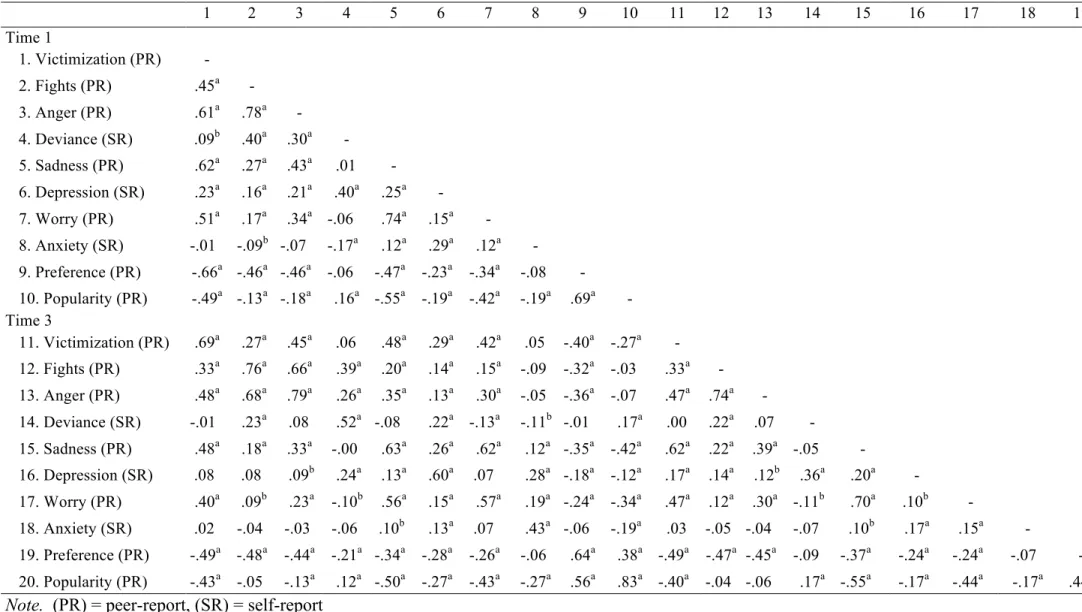
Table 2 - Bivariate correlations among study variables………..………...47
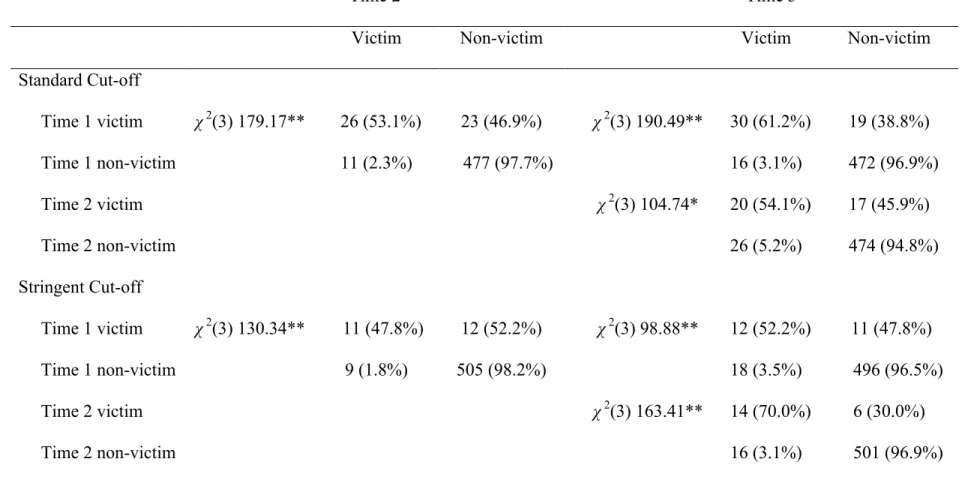
Table 3 - Classification of victims among standard and stringent cut-offs………... 48
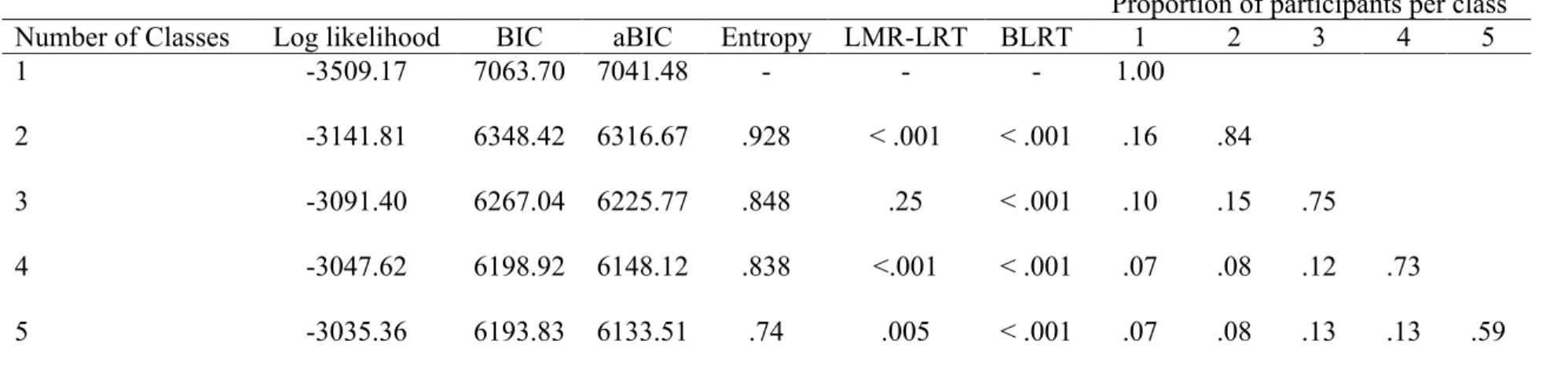
Table 4 - Criteria to determine peer victimization trajectories………...49
Table 5 - Significant differences associated with time 1 internalizing, externalizing, and status variables and likelihood of assignment to trajectory membership…….………..……… 50
LIST OF FIGURES
LIST OF ABBREVIATIONS
CDI Children’s depression inventory
MASC Multidimensional anxiety scale for children DBQ Deviant behavior questionnaire
LCGA Latent class growth analysis BIC Bayesian information criteria
Introduction
Peer victimization is a serious public health concern and has become the topic of substantial media coverage, policy discussion, and research over the last two decades. National attention on peer victimization and its sequelae increased exponentially following the Columbine High School massacre. A PsycInfo search of the phrase “peer victimization” reveals a 5030% increase in peer-reviewed articles published from 1990-1995 as compared to 2007-2012; a search of the Google news archive over the same period reveals a 655% increase in newspaper articles published on the topic. Between 2007 and 2012, one funding source alone, the National Institutes of Health, provided over $5 million in funding for studies of peer victimization (NIH Reporter, 2013), and current research efforts focus on better understanding the causes, correlates, and consequences of peer victimization.
Beginning with the seminal work of Olweus (1978), peer victimization has been linked to myriad psychosocial and interpersonal difficulties, including school maladjustment
victimization predicts later adjustment difficulties (Kochenderfer & Ladd, 1996; Olweus, 1992; Schwartz, McFadyen-Ketchum, Dodge, Pettit, & Bates, 1998), whereas others have shown that adjustment difficulties predict later victimization (Hanish & Guerra, 2002; Schwartz et al., 1993). Still others have found that this relationship is reciprocal (Egan & Perry, 1998; Hodges & Perry, 1999). Surprisingly, however, recent meta-analyses have demonstrated that the strength of these associations is limited.
Counterintuitively, meta-analyses of the relationship between peer victimization and psychosocial maladjustment have yielded surprisingly small effect sizes for both cross-sectional (Hawker & Boulton, 2000) and longitudinal designs (Reijntjes et al., 2011; Reijntjes, Kamphuis, Prinzie, & Telch, 2010).1 One cross sectional meta-analysis (Hawker & Boulton, 2000)
examined peer victimization studies while parsing out the effects of shared method variance. For studies without shared method variance, they found low to medium effect sizes for all examined outcome variables, including depression (r = .29), loneliness (r = .25), social self-esteem (r = .23), global self-esteem (r = .21), generalized anxiety (r = .21), and social anxiety (r = .14). For studies with shared method variance, they found higher effect sizes for all outcome variables: depression (r = .45), loneliness (r = .32), social self-esteem (r = .35), global self-esteem (r = .39), generalized anxiety (r = .25), and social anxiety (r = .25).
Effect sizes for meta-analyses of longitudinal studies of the relationship between peer victimization and psychosocial maladjustment are lower than those found in cross-sectional studies. Reijntjes and colleagues (2010) conducted a meta-analysis evaluating studies of the relationship between peer victimization and internalizing symptoms; taken together, results from
""""""""""""""""""""""""""""""""""""""""""""""""""""""""
studies of peer victimization predicting later internalizing symptoms yielded low effect sizes (r = .18). However, studies of internalizing symptoms predicting later peer victimization failed to reach the threshold for a low effect size (r = .08). Reijntjes and colleagues (2011) conducted another meta-analysis evaluating studies of the relationship between peer victimization and externalizing symptoms. Similar findings emerged; low effect sizes were found for studies of peer victimization predicting later externalizing problems (r = .14) and externalizing behavior predicting later peer victimization (r = .13). As a point of comparison, a meta-analysis of concurrent studies of peer aggression (an inverse to the construct of peer victimization) found large effect sizes for the link between peer aggression predicting symptoms of externalizing (r = .58) and symptoms of externalizing disorders predicting peer aggression (r = .45; Card, Stuck, Sawalani, & Little, 2008).
Based on results from cross-sectional studies, and given the common perception that peer victimization is associated with a host of negative outcomes, the results that have emerged from these meta-analyses are surprising. Perhaps the most parsimonious interpretation of these results is that common perceptions (from both the public and the scientific community) of the
relationship between peer victimization and psychosocial adjustment are wrong – or at least erroneously inflated (e.g., shared method variance, concurrent assessment). Alternatively, however, methodological and conceptual problems in the study or analysis of peer victimization may obfuscate the underlying relationship between these constructs. In fact, the victimization construct has already been revised once; meta-analytic results may herald the need for another reconceptualization.
construct emerged; not surprisingly, overt victimization has been linked to a host of adjustment difficulties (for a review, see Juvonen & Graham, 2001). Over time, however, several researchers observed that the construct was somewhat narrowly defined; in particular, the research literature demonstrated that overt victimization was far more common in boys than girls. In response to this disparity, investigators (see Crick & Bigbee, 1998; Crick & Grotpeter, 1996; Galen & Underwood, 1997) proposed an expanded operationalization of victimization that included “social” or “relational” forms of victimization such as negative gossip and social ostracism. Using this expanded definition, Crick and Nelson (2002) conducted a study in which they
determined that the inclusion of relational forms of victimization captured an additional 71.4% of girls and 21.1% of boys who would have been overlooked if only overt victimization was
considered.
Relational victimization is present in all age groups including preschool/early childhood (Crick, Casas, & Ku, 1999), middle childhood (Crick & Bigbee, 1998; Crick & Grotpeter, 1996; Putallaz et al., 2007), and adolescence (Morales & Cullerton-Sen, 2000; Walker, 2000). Like overt victimization, relational victimization has been linked to a host of adjustment-related difficulties, such as depression (Desjardins & Leadbeater, 2011; Morales & Cullerton-Sen, 2000; Prinstein, Boergers, & Vernberg, 2001; Putallaz et al., 2007; Walker, 2000), externalizing
precluded the ability to draw definitive temporal or causal conclusions. Thus, this has led to the inclusion of both overt and relational victimization in future studies of victimization.
Based on the current state of the literature, greater attention may now be needed to further refine the peer victimization construct. There is a need to better understand how frequency and chronicity of peer victimization impact outcomes. Frequency of peer victimization occurs on a continuum ranging from one-time to chronic victimization; yet, the impact and importance of chronicity has been overlooked in peer victimization research. In fact, under certain
circumstances, low-frequency, low-impact forms of victimization may serve a helpful function by clarifying the norms and expectations of the social group. For example, Gottman and Mettetal (1986) found that self-disclosure in girls was preceded by negative evaluation gossip and
speculated that such gossip could serve to inform children of the social norms of their peer group. By extension, a child who was relationally victimized one time could learn the expected social norms of the peer group without much additional harm or maladjustment. It seems likely that a child who experiences this type of victimization is different from a child who experiences chronic overt or relational victimization. To date, however, this distinction has not been made consistently in the victimization literature. Peer victimization is likely most detrimental to the chronically victimized. A failure to consider the chronicity of victimization can lead to an imperfect operationalization in the research studies. Studies that do not consider victimization severity and chronicity are thus susceptible to categorizing a chronic victim similarly to a one-time victim.
exploring the chronicity of antisocial behavior was it determined that for some youth antisocial behavior is a phase, whereas for others it is chronically present. In a similar manner, the impacts of trauma and resulting post-traumatic stress disorder symptoms are exacerbated if the trauma is repeated or chronically present as opposed to a one-time trauma (Breslau, Chilcoat, Kessler, & Davis, 1999). Following the example set in these areas, studying the chronicity of peer
victimization could help to determine the prevalence, causes, and consequences of chronic peer victimization as opposed to short-term victimization.
Victimization is a relatively common experience, yet it is not a stable peer experience for most youth. A study of the prevalence of peer victimization found that 75% of children and adolescents reported being the subject of victimization over a one-year period (Hoover, Oliver, & Hazler, 1992). In addition, an observational study conducted on a school playground found that a victimization event occurred approximately once every nine minutes (Craig & Pepler, 1997). These studies suggest that victimization itself is not necessarily an abnormal experience. Longitudinal studies, however, have found that victimization is not stable for most victims (Kochenderfer, & Ladd, 1996; Kochenderfer-Ladd & Wardrop, 2001; Zwierzynska, Wolke, & Lereya, 2013). Taking this into account, a more pragmatic approach to the study of peer
victimization is to consider the stability and chronicity of victimization and to evaluate whether these variables are associated with differential outcomes for victims.
distinguish between chronic and one-time victims. Second, trajectory studies examining both children and adolescents have found that three distinct victimization profiles emerge: highly victimized, or chronic victims; moderately victimized, or sporadic victims; and low frequency victims or non-victims (Barker, Arseneault, et al., 2008; Barker, Boivin et al., 2008; Boivin, Petitclerc, Feng, & Barker, 2010; Nylund, Bellmore, Nishina, & Graham, 2007; Sumter, Baumgartner, Valkenburg, & Peter, 2012; Zwierzynska et al., 2013). Third, studies comparing chronic to one-time victims have found that chronic victims report more severe outcomes, including depression (Nylund, et al., 2007; Zwierzynska et al., 2013), non-suicidal self-injury (Barker, Arseneault, et al., 2008), loneliness (Kochenderfer-Ladd, & Wardrop, 2001), harsher parenting (Barker, Boivin et al., 2008), social withdrawal (Boivin et al., 2010), and emotional vulnerability (Boivin et al., 2010). Fourth, chronic and one-time victimization can be
differentiated through observational coding (Kochenderfer & Ladd, 1997; Snyder et al., 2003). These studies suggest that chronic and one-time victims may comprise distinct categories. Studies that examine victimization using only a single time point may be capturing a heterogeneous group by combining chronic and one-time victimization, and as a result dampening the strength of associations between victimization and psychopathology.
and psychopathology. Additionally, adolescence is the developmental stage during which peer approval becomes more strongly linked to self-worth and fifty percent of adolescents have reported that if peers approve of them first, then they will like themselves (Harter, Stocker, & Robinson, 1999). As such, being the subject of peer victimization could more severely impact self-worth during adolescence as compared to earlier in childhood. Taken together, the increased influence of peers and the higher overall prevalence of pathology may alter the social and
psychological impact of peer victimization during adolescence. Notably, longitudinal meta-analyses of victimization (Reijntjes et al., 2010; 2011) were unable to include age as a moderating variable due to an insufficient number of studies of peer victimization in
adolescence, suggesting an increased need for studies of peer victimization during adolescence. To date, few studies have explicitly aimed to demonstrate the differences between chronic and one-time victimization. This study seeks to help fill that gap in the literature by assessing whether chronic victimization is a unique category of victimization. The differential nature of chronic versus one-time victimization is explored by using a longitudinal approach. In order to take advantage of the study design and capture a greater developmental range, trajectory analyses utilized recategorized data, which captured grades six to ten rather than using the observed (Time 1 to Time 3) data. Accordingly, this study has four primary aims. First, examine the test-retest reliability of peer victimization across time points. Second, latent trajectory
concurrent associations (i.e., Time 3) and previous associations (i.e., Time 1) with outcome variables. To compare the association of these latent trajectories to related outcomes, three constructs were selected that are robustly related to peer victimization: (1) social status (i.e., perceived popularity and peer acceptance; Hodges et al., 1997); (2) internalizing symptomology (i.e., depression and anxiety; Hanish & Guerra, 2002; Zwierzynska et al., 2013); and (3)
aggressive behavior (i.e., overt aggression and delinquency; Schwartz et al., 1998). These constructs will be used to determine the differential nature of the longitudinal victimization trajectories.
There are four hypotheses associated with these aims. First, there will be poor test-retest reliability for peer victimization across time points. Second, similarly to results from previous trajectory analyses of peer victimization, three or more distinct profiles of victimization will emerge. Third, chronic victimization will be associated with poorer concurrent and future
psychological adjustment as compared to decreasing victimization. Fourth, chronic victimization will be associated with poorer concurrent and previous psychological adjustment as compared to increasing victimization. Validity analyses will compare victimization trajectory groups at Times 1 and 3 (different possible trajectories are represented in Figure 1). We will first compare
Method
Participants
Participants included 652 children and adolescents (50% female) from a public school who were in sixth grade (39%), seventh grade (26%), or eighth grade (35%) at the initial assessment point. Racially, the sample was 87% white/Caucasian, 2% African American, 4% Asian American, 2% Latino American, and 6% mixed ethnic backgrounds. The study was conducted in a city that comprised a relatively homogenous middle-class socioeconomic status. Neighborhood and school records showed the average adult per capita income was
approximately $30,220, and 11% of children in the city were eligible for free or reduced-price lunch.
Procedure
participants who completed Time 2 assessments, participants not completing assessments at Time 2 had higher levels of Time 1 overt victimization, and variances were not equal, so values with equal variances not assumed are reported (t(40.36) = -2.78, p =.008). This group did not differ with respect to Time 1 relational victimization.
A total of 489 adolescents (86% of Time 2 participants; 75% of Time 1 participants) participated at Time 3. Attrition between Time 2 and Time 3 was primarily due to students moving away from the area (n = 38) or being unavailable during testing (n =40). Compared to participants who completed Time 3 assessments, participants not completing assessments at Time 3 had higher levels of Time 2 overt victimization, and variances were not equal, so values with equal variances not assumed are reported (t(86.89) = -2.26, p = .027). This group did not differ with respect to relational victimization. Missing data were imputed using full information maximum likelihood (FIML), which yielded a sample final of 652 participants.
Parental consent and adolescent assent were obtained for all study participants. Participants were asked to complete all measures at three time points, each one year apart. Measures were completed while students were in their academic “teams,” which were randomly established by school officials and include approximately twice the number of students in a standard classroom (range: 45 - 93). Trained study personnel were present while participants completed study measures. A university institutional review board approved all procedures.
Sociometric nomination procedures.
teammates; they were then asked to list which of their peers fit the description of the particular variable. They were allowed to make an unlimited number of nominations for each item. The order of alphabetized roster names was counterbalanced (e.g., A through Z, Z through A) in order to control for potential ordering effects on nominee selection. For each variable, the total number of nominations for each adolescent was summed and standardized within each academic team to account for differences in sizes of academic teams and the number of nominations each student received on each item. For all sociometric measures, higher scores represent higher levels of the study variable. This procedure allows for an ecologically valid measure of socially related variables, which is not impacted by adolescents’ self-report. This assessment method is a highly valid measure of peer report (Coie & Dodge, 1983).
Sociometric measures.
Peer victimization. For overt victimization, participants nominated academic teammates who get “threatened or physically hurt by others, or have mean things said about them.” For relational victimization, participants nominated academic teammates who get “gossiped about or have rumors told about them behind their back.” These two variables were then standardized and summed together, because of a high baseline correlation (r = .74), as well as a lack of evidence indicating a differential psychological impact of overt and relational victimization (Bellmore & Cillessen, 2006; Ladd & Kochenderfer-Ladd, 2002; Nishina & Juvonen, 2005; Nylund et al., 2007).
perceived popularity, participants nominated peers who were “most popular” and “least popular.” A difference score between standardized “most popular” and “least popular”
nominations was computed and restandardized (Parkhurst & Hopmeyer, 1998). To measure sad affect, participants nominated peers who look “sad and unhappy most of the time”. To assess anxious behavior, participants nominated peers who are “anxious, tense most of the time”. Aggressive behavior was measured by asking participants to nominated peers who “start fights” and get “mad and angry easily”.
Self-report measures.
The Children’s Depression Inventory. The Children’s Depression Inventory (CDI; Kovacs, 1992) is composed of 27 items that assess behavioral and cognitive depressive symptoms. Children endorse statements that best describe their level of depressive symptoms during the previous two weeks. A mean score is then computed, and higher scores indicate higher levels of depressive symptoms. The CDI has been shown to be a reliable and valid measure of depressive symptoms (Saylor, Finch, Spirito, & Bennet, 1984); it has been validated for youth between the ages of 7 and 18 (Kazdin, 1990). In this sample the scale showed good internal consistency at both Time 1 (α = .88) and Time 3 (α = .89). An overall score was calculated for each time point by taking the mean value of all item responses.
The Multidimensional Anxiety Scale for Children. A 14-item short form of the
Multidimensional Anxiety Scale for Children (MASC; March, 1997) was used to measure total anxiety over four domains (i.e., physical symptoms, harm avoidance, social anxiety, and
Sullivan, & Parker, 1999). The MASC had acceptable internal consistency in this sample at Time 1 (α = .72) and Time 3 (α = .78). An overall score was calculated for each time point by taking the mean value of all item responses.
Deviant Behavior Questionnaire. The Deviant Behavior Questionnaire (DBQ) is a 15-item self-report measure that was derived from Elliot’s (1983) delinquency interview, which assesses deviant and violent behavior over the past year (e.g., number of times hit or threatened to hit another student number of times used force to get something from others). Behavior is reported on the DBQ using a 5-point Likert scale ranging from a) zero times to e) 4 or more times. The DBQ had good internal consistency in this sample at Time 1 (α = .88) and acceptable internal consistency at Time 3 (α = .71). An overall score was calculated by taking the mean value of all item responses.
Data Analytic Plan
compared the stability of victimization as a categorical classification variable, and kappa levels were used to determine test-retest reliability.
Hypothesis 2. The second hypothesis was that three or more distinct developmental trajectories of victimization would emerge. Latent class trajectory analysis was initially considered as an appropriate statistical test; however, this approach requires a change in mean score across time points, and, as discussed previously, the sociometric nominations of
victimization were standardized, resulting in a mean level of victimization of zero at each time point. Several potential solutions were considered to address this problem. First, the
unstandardized number of nominations received could have been used as a measure of
A second data management procedure was implemented to recategorize the data from time points to grade levels, which allowed for the maximal utilization of the study design in order to capture a greater developmental range. Upon study entry, participants were in grades six, seven, or eight, and data were collected once yearly for each student over a three-year
period. This data collection procedure yielded three sets of data based on school year at entry: (1) grades six to eight, (2) grades seven to nine, or (3) grades eight to ten. To best utilize this cross-sequential design, data were recoded by grade (rather than by time point). Thus, analyses
examined the trajectory of behavior across the entire timespan captured in the study (i.e., grades 6 through 10). This method assumes missing data for each participant; in general, each
participant was assumed to have data at three grade levels and to be missing data completely at random for two grade levels.
whether the addition of one class improves model fit. Entropy is a measure of classification accuracy that utilizes values between 0 and 1; values above 0.7 indicate adequate classification of individuals in different trajectories. Lastly, usefulness of identified classes was evaluated based on the number of individuals for class (only classes with at least 5% of participants were considered) and the theoretical value of additional classes. Models were fitted using 100 random perturbations of starting values to ensure replications of the best likelihood and avoid local maxima.
Once the appropriate number of trajectories of peer victimization was determined, growth mixture models (GMM) were used to examine predictors and distal outcomes of trajectory membership. The traditional way to estimate a GMM with either predictors or outcomes is to incorporate the latent class model with either the predictor or distal outcome model into one overall model (Asparouhov & Muthen, 2013). As pointed out by Vermunt (2010), there are four potential problems with this approach. First, when using a large number of covariates, the analysis can be impractical, since the addition or subtraction of each covariate requires that both the prediction model and measurement model be reestimated. Second, a researcher must decide to determine trajectory membership with or without the covariates included in the model. Third, for researchers wishing to determine the antecedents or consequences of a phenomenon, this approach is not ideal, because it requires the simultaneous introduction of covariates. As such, this model is not a true theoretical test of antecedents or consequences. Fourth, this approach assumes that the classification model and the class prediction model are constructed in the same step, which is not always the case.
model can still be influenced by the addition of other variables, this approach reduces the likelihood that latent class membership would be affected by the addition of predictor or outcome variables in growth mixture models.2 Using this approach, in step 1 the latent class model is estimated, in step 2 the most likely class membership variable is created, and in step 3 the most likely class variable is used as a latent class indicator variable. The additional benefit of this approach is that it uses probabilities of class membership rather than fixed class assignment, which increases the accuracy of the analysis. The three-step function in conjunction with the Auxilary function in Mplus 7.0 was used to carry out these analyses (for detailed discussion see Asparouhov & Muthen, 2013). The auxiliary function models each variable separately.
Following recommendations by Asparouhov & Muthen (2013), predictor variables (Time 1 variables) were used to predict latent class membership through the use of latent class regression analysis (Guo, Wall, & Amemiya, 2006). Latent class regression analysis is an extension of standard regression analysis, which allows normally distributed latent variables to be used to estimate an outcome. In this case, probability of class membership (calculated in step 2) was used to predict distal outcomes. For these analyses, chronic victims were the reference group for all comparisons in which they were involved, and low stable victims were the reference group for all comparisons in which they were involved. Distal outcome variables (Time 3 variables) were predicted based upon class membership using a nested modeling approach (Marsh, Ludtke, Trautwein, & Morin, 2009), in which the equality of means of covariates across trajectory classes were tested using posterior-based multiple imputations. For this analysis, degrees of freedom are equal to the number of latent classes minus one (k – 1).
""""""""""""""""""""""""""""""""""""""""""""""""""""""""
Hypothesis 3. The third hypothesis was that chronic victims would be associated with poorer concurrent and future psychological adjustment as compared to decreasing victims (see Figure 1). After first testing that levels of victimization between the high chronic trajectory and decreasing trajectory are not significantly different at grade six, this hypothesis was tested using latent class regression analysis to determine differences in predictors of trajectory membership and nested modeling to compare equality of means between trajectory groups for distal
outcomes. This hypothesis would be supported if chronic victimization was associated with higher levels of depression, anxiety, aggression, and deviant behavior, but lower levels of perceived popularity and social preference. Through this hypothesis, it was tested whether a single time point assessment of victimization at grade six would have erroneously collapsed high chronic victims and decreasing victims into a single group, by comparing the association of these two trajectories to concurrent and future adjustment.
Results
Descriptive Statistics
Table 1 displays means and standard deviations of the observed data from Times 1, 2, and 3 for all main study variables. Overall, the means and standard deviations of variables remained stable over time. Correlations of observed data at Time 1 and Time 3 (see Table 2) reveal significant correlations between Time 1 and Time 3 victimization, internalizing,
externalizing, and status variables. Of note, victimization was significantly associated with all variables of interest, with the exception of reported anxiety at Times 1 and 3 and self-reported deviance at Time 3. The directions of all significant correlations between victimization and outcome variables were in the anticipated direction, with higher levels of victimization associated with higher levels of internalizing and externalizing variables and lower levels of peer status variables. The strength of associations between victimization and outcome variables remained relatively stable from Time 1 to Time 3, except for a marked decrease in the strength of association between victimization and externalizing variables.
Reliability Analyses of Peer Victimization Across Time Points
(r = .66, p < .001). Second, chi-square analyses were used to examine the classification of victims over time (i.e., Time 1 to Time 2, Time 1 to Time 3, and Time 2 to Time 3) in order to test the stability of victimization when used to identify victims and non-victims. More in line with these hypothesis, chi-square analyses using a cut-off score of .75 SDs above the mean to categorize victims, revealed modest stability for the classification of victims, wherein the
probability of a youth being categorized at both time points of comparison ranged from .53 to .62 (see Table 3). Analyses using a cut-off score of 1.5 SDs above the mean revealed similar
findings. The probability of a youth being categorized as a victim at both time points ranged from .48 to .70. Overall, classification analyses indicated nearly half of youth classified as victims at the first time point would not be classified as victims at the second time point. Determination of Latent Growth Classes of Peer Victimization
In order to take advantage of the study design and capture a greater developmental range, trajectory analyses utilized recategorized data, which captured grades six-ten rather than using the observed (Time 1 to Time 3) data. As previously noted, to determine the optimal trajectory classification, several model fit indices were used, including BIC, aBIC, LMR-LRT, BLRT, and entropy. For BIC, aBIC, LMR-LRT, and BLRT, lower scores indicate a better fitting model. Entropy values closer to 1.0 indicate greater class precision. Class solutions employing 1 through 5 classes were considered as possible models for use. As seen in Table 4, LMR-LRT and BLRT suggested that the model fit increased with each additional class added. BIC and aBIC
level of .74, which, while still above the desired cut-off value of .70, was substantially lower than the .84 value for the 4-class solution. Taking all criteria together, a 4-class solution was chosen as the best model to represent the trajectories of peer victimization across time in this sample, because model fit indices showed that it was a statistically strong model to represent the sample and it added a theoretically meaningful trajectory class.
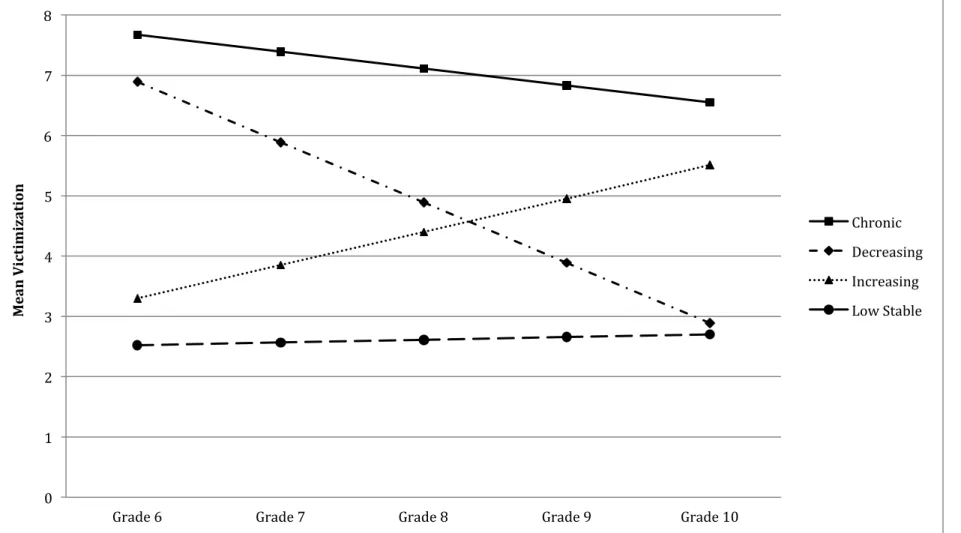
Final latent trajectories of peer victimization are shown in Figure 1. Each of the classes in the four-class solution had adequate prevalence and were interpretable. The four trajectories comprised a group of chronic victims (8.0%), a group of youth with initially high and subsequently decreasing victimization (7.0%), a group of youth with initially low and
subsequently increasing victimization (11.8%), and a group of youth with stable low levels of victimization (73.2%). There were no significant gender differences between the different classes.
Mean differences in peer victimization across trajectories at grades six and ten were conducted using the model test function in M-plus. A Wald chi-square test was used to compare a model in which means were held equal across classes to a model where means were freely estimated across classes. A significant Wald test indicates significant differences in mean levels of victimization.
At grade six, the overall Wald test for mean differences in peer victimization was significant (χ 2 (3) = 863.84, p < .001), which indicated that overall differences exist in the intercepts’ means across trajectory classes. Next, means were compared within trajectory pairs of interest (e.g., high vs. decreasing, low vs. increasing). Results indicated that in grade six, the high chronic victimization trajectory did not differ significantly from the decreasing
between the low stable victimization trajectory and increasing victimization trajectory (χ 2 (1) = 7.65, p < .01).
At grade ten, the overall Wald test emerged to be significant (χ 2 (3) = 512.67, p < .001). Mean comparisons of trajectory pairs of interest revealed that the low stable victimization trajectory did not differ significantly from the decreasing victimization trajectory (χ 2 (1) = 0.62, p = .43); however, significant differences were observed between the high chronic victimization trajectory and increasing victimization trajectory (χ 2 (1) = 15.58, p < .001).
Determinants of Peer Victimization: Follow-Back Analyses
Baseline predictors of likely trajectory membership were examined using latent class regression analysis to determine the extent to which variables of interest were indicative of youths’ longitudinal victimization trajectories.
Externalizing variables.As seen in Table 5, there were no significant differences
between youth with the highest probability of experiencing chronic victimization and youth most likely to be in the decreasing victimization trajectory on any of the externalizing Time 1
predictor variables. Likely chronic victims reported that they engaged in higher levels of
deviance as compared to youth with the highest probability of being in the increasing trajectory; however, peers did not report differences between either of these victimization trajectories for levels of fighting or anger.
Internalizing variables. There were no significant differences between youth with the highest likelihood of being chronic victims and youth with the highest probability of being in the increasing or decreasing trajectory groups for any internalizing Time 1 predictor variables. Similarly, there were no differences between the low stable and increasing or decreasing decreasing trajectories for any measures of internalizing psychopathology.
Status variables. At Time 1, peers reported that youth with the highest likelihood of being chronic victims and youth with the highest likelihood of being in the decreasing trajectory did not have significantly different levels of popularity or preference at Time 1; however, compared to youth with the highest likelihood of being in the increasing trajectory, youth with the highest likelihood of being chronic victims were less well liked by their peers at Time 1.
Peers rated youth with the highest likelihood of being in the decreasing victimization trajectory as less well liked compared to youth with the highest likelihood of being in the low stable level victimization trajectory. Compared to youth in the increasing victimization trajectory, peers rated low stable level victims as being better liked; however, youth in the increasing victimization trajectory were rated as more popular.
Consequences of Peer Victimization: Follow-Forward Analyses
The difference in the mean levels of distal outcomes across trajectory classes was
compared using an equality of means test. Pairwise comparisons of trajectory groups for Time 3 distal outcomes are listed below.
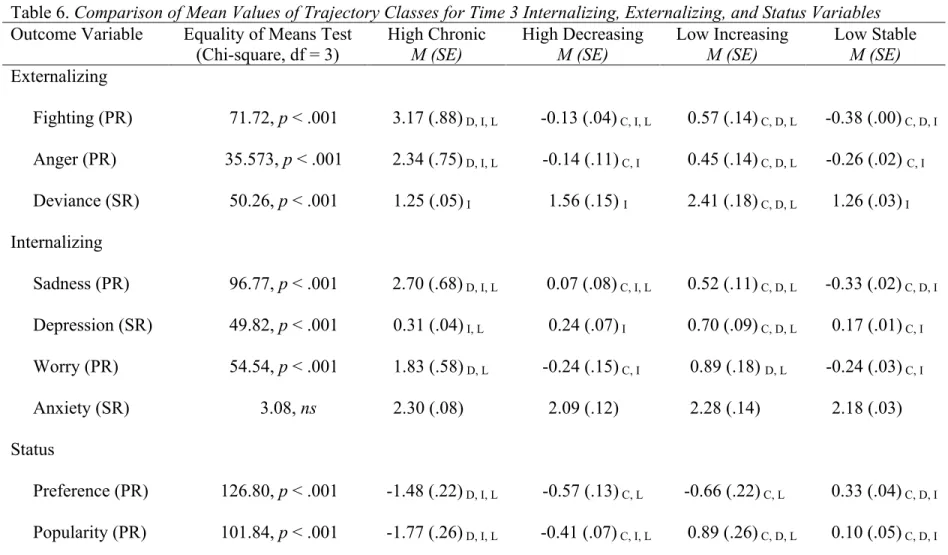
Externalizing variables. As seen in Table 6, peers rated youth with the highest
increasing trajectory (χ2(1) = 8.76, p < .001; χ2(1) = 6.53 p = .011) at Time 3. Contrastingly, youth with the highest likelihood of being in the increasing trajectory reported that they engaged in higher levels of deviance than did chronic victims (χ2(1) = 38.71, p < .001). There was no difference in the levels of deviance between the chronic victim trajectory and the decreasing victimization trajectory.
Peers reported that youth with the highest likelihood of being in the low stable
victimization trajectory engaged in less fighting compared to youth with the highest likelihood of being in both the decreasing (χ2(1) = 42.28, p < .001) and increasing trajectories (χ2(1) = 47.90, p < .001) at the Time 3. Additionally, youth with the highest likelihood of being low stable
victims, as compared to youth with the highest likelihood of being in the increasing trajectory, reported lower levels of deviance (χ2(1) = 12.71, p < .001) and peers reported that they exhibited lower levels of anger (χ2(1) = 14.09, p < .001). No differences existed between youth in the low stable and decreasing victimization trajectories for peer-reported anger or self-reported deviance.
Internalizing variables. At Time 3, peers reported that youth with the highest likelihood of being chronic victims exhibited higher levels of sadness compared to youth with the highest likelihood of being in both the decreasing (χ2(1) = 15.08, p < .001) and increasing (χ2(1) = 10.35, p < .001) trajectories. Peers also reported that youth with the highest likelihood of being
chronically victimized as compared to youth with the highest likelihood of being in the
decreasing victimization trajectory displayed higher levels of worrying (χ2(1) = 13.12, p < .001); however, per their self-reports, these youth did not experience different levels of depression. Conversely, compared to youth with the highest likelihood of being in the increasing
depression (χ2(1) = 15.62, p < .001) but not peer-reported worrying. There were no differences between these three trajectory groups for self-reported anxiety.
Youth with the highest likelihood of experiencing low stable levels of victimization were associated with lower levels of peer-reported sadness, as compared to youth with the highest likelihood of being in both the decreasing (χ2(1) = 23.69, p < .001) and increasing trajectories (χ2(1) = 64.68, p < .001). Compared to youth with the highest likelihood of being in the
increasing victimization trajectory, youth with the highest likelihood of being in the low stable trajectory exhibited lower scores for peer-reported worrying (χ2(1) = 37.92, p < .001) and self-reported depression (χ2(1) = 36.45, p < .001). There were no differences between youth with the highest likelihood of being in the low stable trajectory and youth with the highest likelihood of being in the decreasing trajectory for peer-reported worrying or self-reported depression. In addition, there were no differences between these trajectory groups for self-reported anxiety symptoms.
Status variables. At Time 3, peers reported that youth with the highest likelihood of being chronic victims were less popular compared to youth with the highest likelihood of being in the decreasing (χ2(1) = 25.65, p < .001) and increasing trajectories (χ2(1) = 51.62, p < .001). Additionally, peers reported that chronic victims were less well liked compared to youth in both the decreasing (χ2(1) = 13.06, p < .001) and increasing (χ2(1) = 6.57, p < .001) trajectories.
however, youth in the increasing trajectory were perceived as more popular by their peers (χ2(1) = 8.47, p = .004).
Summary of Results
Discussion
The purpose of the current research was to determine (1) if a methodological assessment of peer victimization at a single time point was sufficient to capture the nature of the
phenomenon; and (2) the extent to which chronicity of peer victimization changes the nature and severity of the impact on a victim. To explore these questions, the chronicity of victimization was examined in three different ways: (1) the test-retest reliability of victimization was determined using both a continuous measure and cut-off score to classify victims; (2) a latent class trajectory analysis was conducted to establish the developmental trajectory of peer victimization from grades six to ten; and (3) the relationship between adjustment correlates of interest (e.g., aggression, depression) and peer victimization class membership was analyzed to determine the extent to which they differentiated class membership.
there is a greater fluctuation in the levels of victimization among highly victimized youth. Results indicate that investigators interested in utilizing victimization as a continuous construct can have confidence that the construct is relatively stable in this form. Conversely, for educators and interventionists, results suggest that caution is warranted when using a single time point assessment to identify youth who may be classified as victims and accordingly at risk for subsequent adjustment difficulties. For example, natural changes in victimization patterns could be conflated with the impact of an intervention or prevention effort. Alternatively, singular time point assessment would likely impact the sensitivity and specificity of targeted intervention and prevention efforts.
Surprisingly few studies have examined peer victimization over multiple time points. The longitudinal course of victimization is not well known; however, the few studies that have
examined this found that the developmental patterns of peer victimization are best classified as chronic victims, victims with changing victimization status, and low stable victims (Barker, Arseneault, et al., 2008, Valkenburg, & Peter, 2012; Zwierzynska et al., 2013). The trajectory of peer victimization from the current study identified that four different types of victims were likely present in the sample, namely: (1) high chronic victims; (2) a group of youth with initially high and subsequently decreasing victimization; (3) a group of youth with initially low and subsequently increasing victimization; and (4) a group of youth with stable, low levels of victimization. While previous trajectory studies found a three-class solution, results from this study support the general findings from previous studies. In addition, the percentage of chronic victims in this sample (8%) was very similar to that of previous studies identifying the
previous findings. First, victimization is stable for a small portion of victims, whereas the majority of victimized youth have non-stable experiences of victimization. Second, these
findings indicate that a single time point assessment may have erroneously classified these youth with very different developmental trajectories of victimization as the same. For example, youth high in victimization at one time point (i.e., chronic victims and high decreasing victims) could have been thought of as highly victimized. This finding indicates that peer victimization is a developmentally nuanced construct, which is composed of many different patterns of victimization, and as such a single time point assessment of victimization cannot adequately capture this phenomenon.
The third set of analyses examined the differential associations between developmental trajectories of peer victimization with both antecedent and outcome variables that have been shown to relate to peer victimization. These analyses evaluated whether conflating different types of victimization trajectories is problematic with regard to adjustment difficulties;
specifically, these analyses were designed to evaluate whether distinct victimization trajectories are associated with unique adjustment profiles. If so, the failure to distinguish individuals with differing peer victimization trajectories could obfuscate the potentially nuanced relationship between victimization and adjustment difficulties.
Past research has found that chronic victims experienced more severe levels of adjustment including depression (Nylund, et al., 2007), emotional vulnerability, and social withdrawal (Boivin, et al, 2010). However, current analyses of the antecedents of peer
differences emerged between chronic victims and youth with the highest likelihood of being in the low increasing victimization trajectory, except that chronic victims reported higher levels of deviance, and peers rated chronic victims as less likeable. Low stable victims were rated as more likeable compared to youth in both the high decreasing trajectory and youth in the low increasing trajectory; however, low stable victims were rated as less popular than youth in the increasing victimization trajectory.
While it was hypothesized that there would be differences between youth with similar levels of victimization at Time 1, the lack of differences indicate several important ideas. First, even with a broad array of correlates it was not possible to differentiate future patterns of victimization; however, there were several differences between adolescents likely to be high in grade six victimization (i.e., chronic, decreasing) and adolescents who were most likely to experience low levels of victimization at grade six (i.e., low stable, increasing). This pattern of findings indicates that, based on the variables assessed, concurrent victimization could be more readily identified than future victimization. This raises an additional question about the construct of victimization. Specifically, is future victimization based upon stable social constructs such as those examined at Time 1, or perhaps are time-varying predictors (e.g, life events, pubertal development, changing mood states) more influential? Further research is needed to elucidate the antecedents of longitudinal patterns of victimization.
be noted that all significant outcomes were based on peer report, which could indicate a reporter bias for this between-group comparison. Compared to youth with the highest likelihood of being in the increasing trajectory, chronic victims were rated higher by their peers on all adjustment outcomes; however, chronic victims reported that their levels of depression and deviance were lower than those reported by youth in the increasing victimization trajectory. These findings are critical for two reasons. First, they demonstrate that if these different trajectory groups were conflated with one another (which could have happened if a single time point assessment was used), the association between victimization and adjustment consequences would have been attenuated. Second, follow-back analyses indicate that chronic victimization is associated with numerous worse adjustment consequences compared to youth in both the high decreasing and low increasing trajectories. Counter to what was hypothesized, this is not the case for the
comparison between chronic victims and youth in the low increasing class for both self-reported depression and deviance. There are several potential explanations for this. First, it is possible that these ratings of externalizing outcomes are capturing two different types of aggression. Peer-reported aggression could be capturing reactive and very visible forms of aggression. Self-reported deviance could be capturing proactive and subtler forms aggression. It is possible that these two types of aggression have a differential impact on victimization. The potential
trajectory are experiencing higher levels of victimization, it is possible that they have habituated to this state, and as such their victimization experiences are not as stressful for them.
Comparisons of consequences of adjustment between youth with the highest likelihood of being low stable victims and youth with the highest likelihood of being in the increasing
victimization trajectory showed that youth in the low stable trajectory had significantly lower levels of externalizing and internalizing adjustment outcomes. Youth with the highest likelihood of being increasing victims were rated by their peers as less likeable; however, they were also perceived as more popular. The higher level of popularity among youth with the highest
likelihood of being in the increasing victimization trajectory is likely explained less by elevated levels of victimization and more by elevated levels of aggression. There has been a strong link established between aggression and perceived popularity in adolescence (Rose, Swenson, Waller, 2004; Cillessen, Mayeux, 2004), which may have a stronger impact than that of victimization on popularity. Time 3 comparisons between youth with the highest likelihood of being in the low victimization trajectory and youth with the highest likelihood of being high decreasing victims revealed that these groups differed in levels of externalizing, internalizing, and status outcomes. As such, a failure to consider the chronicity of victimization could lead to erroneously collapsing youth with different histories or developmental trajectories of
victimization into the same group and in doing so, alter not only future, but also concurrent, estimates of the associations between victimization and outcomes.
maladjustment associated with “non-victims” and simultaneously artificially decrease the levels of maladjustment associated with “victims.” These findings demonstrate one potential
explanation for the low effect sizes comparing adjustment associated with victims and non-victims found in the literature.
Limitations & Future Directions
Future research in this area may benefit by addressing some of the limitations in this study. First, a strength of this study was that it encompassed a broad age range; however,
because peers have been found to have a good understanding of social interactions in the peer group (Coie & Dodge, 1983) and also because being viewed as a victim by peers is likely to make a youth a target for future victimization. Nevertheless, findings from this study should be replicated using a measure of victimization that assesses the frequency of victimization.
Determining the extent to which frequency and chronicity interact with one another or whether one is more important in determining the negative impact of victimization is vital to intervention efforts. Specifically, these data would help identify the most at-risk victims (i.e., chronic victims or short duration intensely victimized youth) to be targeted for intervention. Finally, future studies should seek to determine the extent to which the trajectories of victimization differ depending upon the type of victimization (i.e., overt and relational) or if the developmental trajectories of victimization are different for males and females or different ethnicities.
REFERENCES
Asparouhov, T., Muthén, B (2013). Auxiliary variables in mixture modeling: 3-step approaches using Mplus.
Retrieved from: http://www.statmodel.com/examples/webnotes/webnote15.pdf Barker, E. D., Arseneault, L., Brendgen, M., Fontaine, N., & Maughan, B. (2008). Joint
development of bullying and victimization in adolescence: Relations to delinquency and self-harm. Journal of American Academy of Child and Adolescent Psychiatry, 47(9), 1030-1038. doi: 10.1097/CHI.ObO13e31817eec98
Barker, E. D., Boivin, M., Brendgen, M., Fontaine, N., Arseneault, L., Vitaro, F., Bissonnette, C., & Tremblay, R. E. (2008). Predictive validity and early predictors of
peer-victimization in trajectories in preschool. Archives of General Psychiatry, 65, 1185-1192. doi: 10.1001/archpsyc.65.10.1185
Bellmore, A. D., & Cillessen, A. H. N. (2006). Reciprocal influence of victimization, perceived social preference, and self-concept in adolescence. Self and Identity, 5, 209-229.
doi: 10.1080/15298860600636647
Böjrkvist, K., Ekman, K., & Lagerspetz, K. (1982). Bullies and victims: Their ego picture, ideal ego picture and normative ego picture. Scandinavian Journal of Psychiatry, 23, 307–313. doi: 10.1111/j.1467-9450.1982.tb00445.x
Boivin, M., Hymel, S., & Bukowski, W. M. (1995). The roles of social withdrawal, peer rejection, and victimization by peers in predicting loneliness and depressed mood in childhood. Development and Psychopathology, 7, 765–785.
doi: 10.1017/S0954579400006830
Boivin, M., Petitclerc, A., Feng, B., & Barker, E. D. (2010). The developmental trajectories of peer victimization in middle to late childhood and the changing nature of their behavioral correlates. Merrill-Palmer Quarterly, 56, 231-260. doi: 10.1353/mpq.0.0050
Boulton, M. J., & Underwood, K. (1992). Bully/victim problems among middle school children. British Journal of Educational Psychology, 62, 73–87.
doi: 10.1111/j.2044-8279.1992.tb01000.x
Breslau, N., Cilcoat, H. D., Kessler, R. C., & Davis, G. C. (1999). Previous exposure to trauma and PTSD effects of subsequent trauma: Results from the Detroit area survey of trauma. The American Journal of Psychiatry, 156, 902-907.
Retrieved from: http://ajp.psychiatryonline.org/
Card, N. A., Stucky, B. D., Sawalani, G. M., & Little, T. D. (2008). Direct and indirect aggression during childhood and adolescence: A meta-analytic review of gender
Cillessen, A. H., & Mayeux, L. (2004). From censure to reinforcement: Developmental changes in the association between aggression and social status. Child Development, 147-163.
doi: 10.1111/j.1467-8624.2004.00660.x
Cohen, J. (1992). A power primer. Psychological Bulletin, 112(1), 155-159. doi: 10.1037/0033-2909.112.1.155
Coie, J. D., & Dodge, K. A. (1983). Continuities and changes in children’s social status: A five-year longitudinal study. Merrill-Palmer Quarterly, 29, 261-282.
Retrieved from: http://muse.jhu.edu/journals/mpq/
Coie, J. D., Dodge, K. A., & Coppotelli, H. (1982). Dimensions and types of social status: A cross-age perspective. Developmental Psychology, 18, 557-570.
doi: 10.1037/0012-1649.18.4.557
Craig, W. M., & Pepler, D. J. (1997). Observations of bullying and victimization in the school yard. Canadian Journal of School Psychology, 13(2), 41-60.
doi: 10.1177/082957359801300205
Crick, N. R., Bigbee, M. A. (1998). Relational and overt forms of peer victimization: A multinformant approach. Journal of Consulting and Clinical Psychology, 66, 337-347. doi: 10.1037/0022-006X.66.2.337
Crick, N. R., & Grotpeter, J. K. (1996). Children’s treatment by peers: Victims of relational and overt aggression. Development and Psychopathology, 8, 367-380.
doi: 10.1017/S0954579400007148
Crick, N. R., & Nelson (2002). Relational and physical victimization within friendships: Nobody told me there’d be friends like these. Journal of Abnormal Child Psychology, 30, 599-607. doi: 10.1023/A:1020811714064
Desjardins, T. L., & Leadbeater, B. J. (2011). Relational victimization and depressive symptoms in adolescence: Moderating effects of mother, father, and peer emotional support. Journal of Youth and Adolescence, 40, 531-544. doi: 10.1007/s10964-010-9562-1
Egan, S., & Perry, D. G. (1998). Does low self-regard invite victimization? Developmental Psychology, 34, 299-309. doi: 10.1037/0012-1649.34.2.299
Elliot, D. S. (1983). Interview schedule, National Youth Survey. Boulder, CO: Behavioral Research Institute.
among children. Developmental Psychology, 33, 589-600. doi: 10.1037/0012-1649.33.4.589
Gottman, J. M., & Mettetal, G. (1986). Speculations about social and affective development: Friendship and acquaintanceship through adolescence. In J. M. Gottman & J. G. Parker (Eds.). Conversations of friends: Speculations on affective development (pp. 192-237). New York, NY, US: Cambridge University Press.
Guo, J., Wall, M., & Amemiya, Y. (2006). Latent class regression on latent factors. Biostatistics, 7, 145–163. doi:10.1093/biostatistics/kxi046
Hamilton, J. L., Shapero, B. G., Strange, J. P., Hamlat, E. J., Abramson, L. Y., & Alloy, L. B. (2013). Emotional maltreatment, peer victimization, and depressive versus anxiety
symptoms during adolescence: Hopelessness as a mediator. Journal of Clinical Child and Adolescent Psychology, 1-16. doi: 10.1080/15374416.2013.777916
Hammen, C. (2005). Stress and depression. Annual Review in Clinical Psychology, 1, 293-319. doi: 10.1146/annurev.clinpsy.1.102803.143938
Hanish, L. D., & Guerra, N. G. (2002). A longitudinal analysis of patterns of adjustment following peer victimization. Development and Psychopathology, 14, 69–89. doi: 10.1017/S0954579402001049
Harter, S., Stocker, C., & Robinson, N. S. (19990. The perceived directionality of the link
between approval and self-worth: The liabilities of a looking glass self-orientation among young adolescents. In Lerner, R. M. & Hess, L. E. (Eds.). Adolescence: The development of personality, self, and ego in adolescence (pp. 157-181). New York, NY, US: Taylor & Francis.
Hodges, E. V. E., Malone, M. J., & Perry, D. G. (1997). Individual risk and social risk as interacting determinants of victimization in the peer group. Developmental Psychology, 33(6), 1032-1039. doi: 10.1037/0012-1649.33.6.1032
Hodges, E. V. E., & Perry, D. G. (1999). Personal and interpersonal antecedents and
consequences of victimization by peers. Journal of Personality and Social Psychology, 76(4), 677-685. doi: 10.1037/0022-3514.76.4.677
Hoover, J., Oliver, R., & Hazler, R. (1992). Bullying: Perceptions of adolescent victims in the Midwestern USA. School Psychology International, 13, 5–16.
doi: 10.1177/0143034392131001
Kazdin, A. (1990). Assessment of childhood depression. In A. M. La Greca (Ed.), Through the eyes of the child: Obtaining self-reports from children and adolescents (pp. 189-233). Needham Heights, MA: Allyn & Bacon.
Kochenderfer, B. J., & Ladd, G. W. (1996). Peer victimization: Cause or consequence of school maladjustment? Child Development, 67, 1305–1317. doi: 10.2307/1131701
Kochenderfer, B. J., & Ladd, G. W. (1997). Victimized children’s responses to peers’ aggression: Behaviors associated with reduced versus continued victimization. Development and Psychopathology, 9, 59-73. doi: 10.1017/S0954579497001065 Kochenderfer-Ladd, B., & Wardrop, J. L. (2001). Chronicity and instability of children’s peer
victimization experiences as predictors of loneliness and social satisfaction trajectories. Child Development, 72, 134-151. doi: 10.1111/1467-8624.00270
Kovacs, M. (1992). Children’s Depression Inventory Manual. New York: Multi-Health Systems. Ladd, G. W., & Kochenderfer-Ladd, B. (2002). Identifying victims of peer aggression from early
to middle childhood: Analysis of cross-informant data for concordance, estimation of relational adjustment, prevalence of victimization, and characteristics of identified victims. Psychological Assessment, 14, 74-96. doi: 10.1037/1040-3590.14.1.74
Lopez, C. (1998). Peer victimization: Preliminary validation of a self-report measure for young adolescents. Presented at the Society for Research on Adolescence, San Diego,
California.
March, J. S. (1997). Multidimensional Anxiety Scale for Children. North Tonawanda, NY: Multi-Health Systems.
March, J. S., Parker, J. D. A., Sullivan, K., Stallings, P., & Conners, C. K. (1997). The multidimensional anxiety scale for children (MASC): Factor structure, reliability, and validity. Journal of the American Academy of Child & Adolescent Psychiatry, 36(4), 554-565. doi: 10.1097/00004583-199704000-00019
March, J. S., Sullivan, K., & Parker, J. (1999). Test-retest reliability of the multidimensional anxiety scale for children. Journal of Anxiety Disorders, 13(4), 349-358.
doi: 10.1016/S0887-6185(99)00009-2
Marsh, H., Ludtke, O., Trautwein, U., & Morin, A. (2009). Classical latent profile analysis of academic self-concept dimensions: Synergy of person- and variable- centered approaches to the internal/external frame of reference models. Structural Equation Modeling, 16, 191-225. doi: 10.1080/10705510902751010
Moffitt, T. E. (1993). Adolescence-limited and life-course-persistent antisocial behavior: A developmental taxonomy. Psychological Review, 100(4), 674-701.
Morales, J. R. & Cullerton-Sen, C. (2000, March). Relational and physical aggression and
psychological adjustment in adolescent peer and romantic relationships. Poster presented
at the Biennial Meetings of the Society for Research on Adolescence, Chicago, IL. Muthén, L., & Muthén, B. (2012). MPlus user’s guide. Los Angeles: Muthén & Muthén. Nagin, D. S. (1999). Analyzing developmental trajectories: A semiparametric, group-based
approach. Psychological Methods, 4(2), 139-177. doi: 10.1037/1082-989X.4.2.139 Nagin, D. S. (2005). Group-based modeling of development. Cambridge, MA: Harvard
University Press.
Nansel, T., Overpeck, M., Pilla, R., Ruan, W., Simons-Morton, B., & Scheidt, P. (2001). Bullying behaviors among US youth: Prevalence and association with psychosocial adjustment. Journal of the American Medical Association, 285, 2094–2100.
doi: 10.1001/jama.285.16.2094
National Institutes of Health (2013). Research Portfolio Online Reporting Tools (RePORT). Retrieved from: http://projectreporter.nih.gov/reporter.cfm
Nishina, A., & Juvonen, J. (2005). Daily reports of witnessing and experiencing peer harassment in middle school. Child Development, 76, 435-450.
doi: 10.1111/j.1467-8624.2005.00855.x
Nylund, K., Bellmore, A., Nishina, A., & Graham, S. (2007). Subtypes, severity, and structural stability of peer victimization: What does latent class analysis say? Child Development, 78(6), 1706-1722. doi: 10.1111/j.1467-8624.2007.01097.x
Olweus, D. (1978). Aggression in schools: Bullies and whipping boys. New York, NY: Hemisphere Publication Corporation.
Olweus, D. (1992). Victimization by peers: Antecedents and long-term outcomes. In K. H. Rubin & J. B. Asendorpf (Eds.), Social withdrawal, inhibition, and shyness in childhood (pp. 315–341). Hillsdale, NJ: Erlbaum.
Parkhurst, J. T., & Hopmeyer, A. (1998). Sociometric popularity and peer-perceived popularity: Two distinct dimensions of peer status. The Journal of Early Adolescence, 18, 125-144. doi: 10.1177/0272431698018002001
Paquette, J. A., & Underwood, M. K. (1999). Gender differences in young adolescents’ experiences of peer victimization: Social and physical aggression. Merrill-Palmer Quarterly, 45(2), 242-266. Retrieved from: http://muse.jhu.edu/journals/mpq/ Prinstein, M. J., Boergers, J., & Vernberg, E. M. (2001). Overt and relational aggression in
doi: 10.1207/S15374424JCCP3004_05
Putallaz, M., Grimes, C. L., Foster, K. J., Kupersmidt, J. B., Coie, J. D., & Dearing, K. (2007). Overt and relational aggression and victimization: Multiple perspectives within the school setting. Journal of School Psychology, 45, 523-547.
doi: 10.1016/j.jsp.2007.05.003
Reijntjes, A., Kamphuis, J. H., Prinzie, P., & Telch, M. J. (2010). Peer victimization and
internalizing problems in children: A meta-analysis of longitudinal studies. Child Abuse & Neglect: The International Journal, 34(4), 244-252. doi: 10.1016/j.chiabu,2009.07.009 Reijntjes, A., Kamphuis, J. H., Prinzie, P., Boelen, P. A., van der Schoot, M., & Telch, M. J.
(2011). Prospective linkages between peer victimization and externalizing problems in children: A meta-analysis. Aggressive Behavior, 37(3), 215-222. doi: 10.1002/ab.20374 Roberts, R. E., Attkisson, C., & Rosenblatt, A. (1998). Prevalence of psychopathology among
children and adolescents. American Journal of Psychiatry, 155, 715-725. Retrieved from: http://ajp.psychiatryonline.org/journal.aspx?journalid=13
Rose, A. J., Swenson, L. P., & Waller, E. M. (2004). Overt and relational aggression and perceived popularity: Developmental differences and concurrent and prospective
relations. Developmental Psychology, 40(3), 378-387. doi: 10.1037/0012-1649.40.3.378 Saylor, C. F., Finch, A. J., Spirito, A., & Bennett, B. (1984). The Children’s Depression
Inventory: A systematic evaluation of psychometric properties. Journal of Consulting and Clinical Psychology, 52, 955-967. doi: 10.1037/0022-006X.52.6.955
Schwartz, D. (2000). Subtypes of victims and aggressors in children’s peer groups. Journal of Abnormal Child Psychology, 28, 181–192. doi: 10.1023/A:1005174831561
Schwartz, D., Dodge, K. A., & Coie, J. D. (1993). The emergence of chronic peer victimization in boys’ play groups. Child Development, 64, 1755-1772.
doi: 10.1111/j.1467-8624.1993.tb04211.x
Schwartz, D., McFadyen-Ketchum, S. A., Dodge, K. A., Pettit, G. S., & Bates, J. E. (1998). Peer group victimization as a predictor of children’s behavior problems at home and in school. Development and Psychopathology, 10, 87-99.
Retrieved from: http://journals.cambridge.org/action/displayJournal?jid=DPP
Snyder, J., Brooker, M., Patrick, M. R., Snyder, A., Schrepferman, L., & Stoolmiller, M. (2003). Observed peer victimization during early elementary school: Continuity, growth, and relation to risk for child antisocial and depressive behavior. Child Development, 74(6), 1881-1898. doi: 10.1046/j.1467-8624.2003.00644.x
Sumter, S. R., Baumgartner, S. E., Valkenburg, P. M., & Peter, J. (2012). Developmental trajectories of peer victimization: Off-line and online experiences during adolescence. Journal of Adolescent Health, 50, 607-613. doi: 10.1016/j.jadohealth.2011.10.251 Vermunt, J. K. (2010). Latent class modeling with covariates: Two improved three-step
approaches. Political Analysis, 18, 450-469. doi: 10.1093/pan/mpq025
Vernberg, E. M., Jacobs, A. K., & Hershberger, S. L. (1999). Peer victimization and attitudes about violence during early adolescence. Journal of Clinical Psychology, 28, 386-395. doi: 10.1207/S15374424jccp280311
Walker, K. H. (2000, March). Relational and physical victimization and adjustment in
adolescent females. Poster presented at the Biennial Meeting of the Society for Research
on Adolescence, Chicago, IL.
Figure 1. Unconditional 4-Class Model of Peer Victimization
0" 1" 2" 3" 4" 5" 6" 7" 8"
Grade"6" Grade"7" Grade"8" Grade"9" Grade"10"
M
ea
n
%V
ic
ti
m
iza
ti
on
%
Chronic" Decreasing"
Increasing" Low"Stable"
45
Table 1. Descriptive Data of Study Variables
Time 1 Time 3
N Mean (SD) Range N Mean (SD) Range
Victimization 628 -0.04 (0.91) -0.83 - 7.75 557 -0.01 (0.92) -0.60 - 7.77
Externalizing
Fighting (PR) 652 -0.05 (0.94) -0.52 - 7.97 557 -0.05 (0.96) -0.50 - 10.50
Anger (PR) 652 -0.05 (0.93) -0.84 - 9.54 557 -0.02 (1.06) -0.66 - 14.43
Deviance (SR) 650 1.41 (0.53) 1.00 - 4.20 478 1.40 (0.55) 1.00 - 5.93
Internalizing
Sadness (PR) 628 -0.07 (0.90) -0.63 - 7.66 557 -0.03 (1.03) -0.55 - 12.05
Depression (SR) 652 0.28 (0.26) 0.00 - 1.74 499 0.24 (0.24) 0.00 - 1.33
Worry (PR) 628 -0.03 (0.93) -0.74 - 7.96 557 0.01 (1.00) -0.72 - 9.14
Anxiety (SR) 583 2.36 (0.44) 1.21 - 3.71 440 2.19 (0.46) 1.00 - 3.64
Status
Preference (PR) 652 0.07 (0.95) -4.44 - 3.06 557 0.05 (1.00) -4.86 - 4.19
Popularity (PR) 628 0.03 (0.99) -4.12 - 3.61 557 0.03 (1.00) -4.50 - 4.54
Note. (PR) = peer-report, (SR) = self-report
46