ISSN 1479-4403 281 ©ACPIL
Special Issue on Games-Based Learning
The papers in this volume tackle a range of contemporary issues that reflect the varied interests of the games-based learning community. Topics include the learning and motivational features of games, characteristics of the players and the context in which games are played, as well as methodological issues relating to game evaluation. The papers also reflect the diverse content areas that digital games now address, such as games to teach computer programming to children, games to teach sign language and games to illustrate the interdependent nature of planning operations in a container terminal.
There is recognition in the literature on games for learning of the need to provide a strong evidence base showing that games are more effective than traditional methods of learning. Kamnardsiri et al report a carefully designed evaluation comparing their game for learning American Sign Language (Kinect) with the traditional face-to-face learning that is typically used in sign language skill training for students with hearing impairments. They found that, while both groups improved performance following training, the game group showed higher scores than the control post training.
An important question for games for learning concerns the kind of thinking that they can support. Games that can support higher level thinking such as problem solving are of particular interest. Rose, Habgood and Jay endorse Papert’s view that computational thinking is just as important for children in the 21st century as the 3 Rs – reading, writing and arithmetic. Rose at al. aimed to extend our understanding of how Visual Programming Tools can help to develop computational thinking in children. They found that children using a ScratchJr-like interface performed more program manipulation or ‘tinkering’ than those using a Lightbot style programming interface and that non-verbal reasoning predicted program manipulation, but only for those in the ScratchJr-like condition.
A number of papers addressed the need to consider individual differences between players in designing games. Recognising that different players may enjoy different kinds of games, Lukosch et al examined how gender and cultural differences impact on player experience and game performance while playing a complex problem solving game that aimed to illustrate the interdependent nature of planning operations in a container terminal. They found that females performed better than males on this task and explained this in terms of the superior abilities of females on planning and attention tasks. They also reported cultural differences in performance.
An important advantage offered by the interactivity of games concerns their capacity to adapt to characteristics of the learner. Gardner’s theory of Multiple Intelligences suggests that people exhibit multiple dimensions of intelligence, such as interpersonal, intrapersonal, bodily-kinaesthetic and musical-rhythmic, as well as the more traditionally recognised visual-spatial, linguistic and logical-mathematical intelligences. Sajjadi, Vlieghe and Troyer aimed to map these different intelligences to the fundamental building blocks of games, i. e. game mechanics. They surveyed game experts’ self assessments of their preferred games, categorised these by game genre and game mechanics and linked these to the experts’ self evaluations on multiple intelligences. The authors suggest that these mappings illustrate which game mechanics suit which MI dimensions, and can provide guidelines in designing games for people exhibiting dominance for specific MI dimensions.
Lukosch et al.’s game included a collaborative element where success depended on working together. Collaboration was also examined by Scoular, Care and Awwal who described an Approach to Scoring Student Collaboration in Online Game Environments. Scoring is an important aspect of many games and careful consideration has to be given to how it is implemented. Scoring collaboration between players raises additional issues that do not arise with scoring individual players. Scoular et al. presented a generalised approach to scoring collaboration based on identifying common behaviours across 3 different games.
The immense popularity of entertainment games gave rise to the hope that the features of entertainment games that make them so engaging might also lend themselves to more effective learning. Mozelius, Fagerström and Söderquist examined how motivating factors and intrinsic integration of knowledge in
educational games might be related to players' perceived knowledge acquisition. This paper also addressed the interesting issue of tangential learning, where players find that they enjoy playing a game and are encouraged to follow up on this new interest out-with the gameplay. The key finding was that intrinsic integration of information in games was linked to knowledge acquisition and tangential learning.
The uptake of educational games in the classroom will be influenced by many factors but the Technology Acceptance Model (TAM) emphasises that the perceived ease of use and perceived usefulness of a technology will impact strongly on how well users accept that technology. Sánchez-Mena, Martí-Parreño and Aldás-Manzano used the TAM model to examine teachers’ acceptance of games in the classroom and and they confirmed the links predicted by the TAM model. They also found that age moderated the effect of teachers’ perceived ease of use on perceived usefulness, suggesting that older teachers are less accepting of games as a means of learning.
Collectively these papers provide a snapshot of research in this fast developing area, adding to the evidence that games for learning can provide entertaining and enjoyable gameplay with effective methods of learning in many different content areas, both curricular and non-curricular. The papers also show that there are still many issues to address, especially with respect to how learning outcomes can be supported by different kinds of game mechanics.
Guest Editors:
Elizabeth Boyle and Thomas Connolly University of the West of Scotland, UK
ISSN 1479-4403 283 ©ACPIL Reference this paper as: Kamnardsiri T et al., “The Effectiveness of the Game-Based Learning System for the Improvement
Improvement of American Sign Language using Kinect
Teerawat Kamnardsiri, Ler-on Hongsit, Pattaraporn Khuwuthyakorn and Noppon Wongta
College of Arts, Media and Technology, Chiang Mai University, Chiang Mai, Thailand
[email protected][email protected] [email protected]
Abstract: This paper investigated students’ achievement for learning American Sign Language (ASL), using two different methods. There were two groups of samples. The first experimental group (Group A) was the game-based learning for ASL, using Kinect. The second control learning group (Group B) was the traditional face-to-face learning method, generally used in sign language skill training for students with hearing impairments. This study was separated into two phases. In Phase I: 3D trajectory matching measurement algorithm, the Euclidean distance algorithm was employed to present the similarity between teacher and student datasets. Then, Phase II: Effectiveness of the Game-Based Learning system, showed the proposed framework of the game-based learning for sign language. Moreover, knowledge of sign language together with the corresponding actions were captured from three sign language experts using the knowledge engineering method. Then, the proposed game-based system would be analysed to provide students immediate feedbacks and suggestions based on the knowledge transfer from ASL experts. In the experiment, the students (N=31) were divided into two groups. The first group, Group A (N=17), learnt with the game-based learning while the second group, Group B (N=14), learnt with the traditional face to face learning method. The study result showed a significant difference (p<0.05) on the mean score of the post-tests for both Group A and Group B. It also presented that the game-based learning approach provided a better performance of ASL vocabularies than the traditional face-to-face learning approach. Finally, in the section of Discussion and Conclusion, the effectiveness and the future work opportunity of the proposed game-based learning system were discussed for the improvement of sign language actions.
Keywords: Sign Language; American Sign Language; Recognition System; Kinect; Expert System; Game-Based Learning; Knowledge Engineering;
1.
Introduction
Nowadays, schools for the deaf in Thailand commonly use the traditional teaching method to provide education for deaf people or students with hearing-impairments. These deaf schools use just black and white boards as a teaching tool to transfer knowledge. All communication learning is taught with an emphasis on learning development in Sign Language (SL) using lip-reading, writing, reading, listening, speaking and using SL to communicate with other people (Kamnardsiri et al., 2009).
Sign Language (or Signed Language, SL) is a visual language which is used to communicate with hearing-impaired people. There are two types of sign language: (1) signs and (2) finger spellings (Yang, 2014). As a result, hearing-impaired people can communicate with normal hearing people using sign language. Nonetheless, not everyone uses the same sign language for communication. In order to communicate with foreign people with hearing impairments, a standard sign language is required, for instance, American Sign Language (ASL) is the sign language for communication with hearing-impaired Americans. However, there is a lack of experts to teach American Sign Language a lack of budget to support deaf education for hearing-impaired students. Other learning alternatives are considered as possible ways to help hearing-hearing-impaired students learn Sign Languages best.
There have been developments on sensing technology which are employed in numerous kinds of research studies and also in sign language recognition including motion capture technology, data gloves, colour cameras, Microsoft’s Kinect sensor, etc. (Ren et al., 2013). Many studies have been conducted with different diverse goals, for instance, gesture recognition (Schlömer et al, 2008; Xu et al., 2012; Sreekanth et al., 2017), hand gesture recognition (Cheng et al., 2013; Cheng et al., 2016; Maqueda et al., 2016), physical rehabilitation (Chang et al., 2011; Callejas-Cuervo et al, 2016; Spasojevi , 2017) and interactive displays (Morrison et al, 2005; Zhang et al., 2012; Nathan et al, 2016; Wang et al, 2016) etc. In addition, computer games, especially
serious and educational games, have provided significant successes for learning complex topics. Most Game-Based Learning (GBL) researchers emphasize on the effectiveness of learning such as motivation, learning achievements, strategies, engagement and behavioural patterns (Liang et al., 2010; Hamari et al., 2016; Hsieh et al., 2016; Tsai et al., 2016). There are numerous studies which are associated with effective Game-Based Learning; for example, Papastergiou investigated the learning effectiveness and motivational appeal of a computer game for the learning of Greek high school Computer Science (CS) curriculum (Papastergiou, 2009). Moreover, Cheng and Su developed a game-based learning system to improve self-efficacy for students’ learning. They mapped the course content into the game to provide scenarios for learning (Cheng & Su, 2012). Furthermore, Lester and his colleagues designed a game-based learning environment named “Crystal Island: Uncharted Discovery” for upper elementary science education (Lester et al., 2014). Additionally, Hsiao and Chen developed a gesture interactive game-based learning (GIGL) approach for preschool children (Hsiao & Chen, 2016). Despite the essential aspect of game-based learning approach, in pedagogy or educational research, there are still some problems, namely, a lack of software and application tools to improve students’ skills, especially in deaf schools, to learn Sign Languages.
In this paper, we investigated the effectiveness of the Game-Based Learning system for the improvement of American Sign Language (ASL) skills in students with hearing impairments using Microsoft’s Kinect sensor. Some Knowledge Management and Knowledge Engineering techniques were employed to capture knowledge from teachers (Schreiber et al., 1994). Moreover, the Euclidean Distance algorithm was used to compare the similarity of ASL 3D trajectory data between students and their teachers, and also to calculate the similarity score of each student for the feedback (Kamnardsiri et al., 2016a).
2.
Background and related works
2.1 Sign LanguageSign Language (SL) is one of the languages used to communicate with hearing-impaired people. An Oxford dictionary defines Sign Language as “a system of communication using visual gestures and signs, as used by deaf people” (Oxford, 2017), whereas a Cambridge dictionary defines Sign Language as “a system of hand and body movements representing words, used by and to people who cannot hear or talk” (Cambridge, 2017). Yang classifies Sign Languages into two types of actions: (1) signs and (2) finger spellings. Signs are hand motion sequence movement and hand configurations (Yang, 2014) and finger spellings are codes to represent letters and numbers of the alphabet using standardised finger positions (The Deaf Society, 2015). Sign languages are applied in various countries but they are not a universal language. There are many different Sign Languages in the world; for instance, British Sign Language (BSL), Thai Sign Language (TSL), Japanese Sign Language (or Nihon Shuwa, JSL), Spanish Sign Language (Lengua de signs o señas española, or LSE) and America Sign Language (ASL) (Wfdeaf, 2015).
2.2 Sign Language Recognition
There are many research studies that apply Sign Language recognition to solve problems such as image transformation (affine transformation, rotation, scaling and illumination) and noise and temporal segmentation (Jangyodsuk et al., 2014). Nai and his colleagues proposed a set of fast-computable depth features to classify static hand posture from a single depth image. The proposed features were extracted from pixels on randomly positioned line segments and evaluated with American Sign Language (ASL) finger spelling dataset with two new hand posture datasets. The classification accuracy of the approach was comparable to state-of-the-art methods.Their results also showed that training and testing speed was much faster compared to other methods (Nai et al., 2017). Lim and his colleagues proposed a feature covariance matrix based serial particle filter to isolate sign language recognition system. The fusion of the median and mode filters was used to extract the foreground and perform hand detection, then the region around the tracked hands was extracted to generate the feature covariance matrix of the tracked hand gesture. The results indicated that the hand trajectories as obtained through the proposed serial of hand tracking were closer to the ground truth at an 87.33 percent recognition rate for the ASL (Lim et al., 2016). Yang and his colleagues applied a hierarchical conditional random field (CRF) for recognising hand movement and a Boost Map embedding method to verify the hand shapes in three-dimensional space with the Kinect sensor. The results showed that this method achieved the recognition rate of 90.4 percent from signed sentence data (Yang et al., 2009; Yang & Lee, 2010; Yang, 2014). Jangyodsuk and his colleagues employed dynamic time warping (DTW) for sign trajectory similarity and the histogram of oriented gradient (HoG) features for hand shape representation to develop sign language recognition system. The results revealed that this method could achieve accuracy rate at 82 percent
in ranking signs in the ten matches (Jangyodsuk et al., 2014). Chai and his colleagues used 3D trajectory matching for sign language recognition system using Microsoft Kinect sensor to establish translation system. The system comprises two modes: (1) Translation Mode and (2) Communication Mode. This system focused on the communication between a general person and a hearing-impaired person that could be done via an avatar (Chai et al., 2013).
2.3 Expert System
Oxford dictionary defines an expert system (ES) as “A piece of software which uses databases of expert knowledge to offer advice or make decisions in such areas as medical diagnosis” (Oxford dictionary, 2017). In the field of computer science, an expert system is an artificial intelligent (AI). The basic idea of ES is to transfer human knowledge to a computer system. Knowledge information is then created inferences by many experts in the specific field to support users' problem-solving activities (consider, decide and forecast). Expert systems, for example, DENDRAL expert system, was created to analyse mass spectra (Feigenbaum & Buchanan, 1993), while MYCIN was built to diagnose infectious blood diseases and recommend antibiotics (Shortliffe, 1976). DIPMETER was developed for an Advisor Analysis of Data Gathered During Oil Exploration (Hunt, 1985). CADUCEUS was assembled for blood-borne infectious bacteria (Miller, 1984). Furthermore, R1 (later called XCON, for eXpert CONfigurer) expert system was established for an ordering processing (Kraft, 1984). An expert system generally consists of four components which are (1) users, (2) user interface, (3) knowledge base and (4) inference engine. Figure 1 shows the components of a general expert system; first of all, the users are humans who need to solve problems in a specific field using the expert system. Secondly, the user interface is a display that allows users to interact with the system such as entering problems into the system. Then, the system calculates and shows answers on the display based on the knowledge including facts and rules which are related to the problems. Finally, the inference engine provides a set of reasoning methods from experts, sometimes called axiom (Luconi et al., 1986).
Figure 1: Components of a general expert system, modified from Luconi et al. (1986). 2.4 Knowledge Engineering
Knowledge engineering is the process of knowledge acquisition to generate knowledge-based systems from art into an engineering discipline. Studer and his colleagues defined three of Knowledge engineering frameworks which comprise: (1) CommonKADS, a further development of KADS (Schreiber et al., 1994) as the creation of a collection model that captures particular features of the knowledge-based systems to develop, (2) Model-based and Incremental Knowledge Engineering (MIKE) (Angele, 1996), a method for developing knowledge-based systems that include all steps of designing and implementing via specification from the initial elicitation and (3) PROTÉGÉ-II (Tu et al., 1995) an approach aims to assist the knowledge-based systems development by reusing problem-solving method and ontologies (Studer et al., 1998).
2.5 Game-Based Learning System
Game-Based Learning (GBL) is one type of the games that focus on learning outcomes to combine an effectiveness of learning principles into game environments. The purpose of GBL is to improve self-confidence and problem-solving skills for learners (Liang, et al., 2010). Prensky and Prensky indicated that Game-Based Learning was “about fun and engagement and come together of serious learning as well as interactive entertainment into a newly-emerging and highly-exciting medium” (Prensky & Prensky, 2007). Liang and his colleagues had reviewed and analysed the GBL design process, they suggested eleven preliminary designs which comprises; (1) Constructing an exploratory learning environment, (2) Setting an explicit learning direction, (3) Screening the entire learning process, (4) Applying multimedia, (5) Placing educational challenges, (6) Applying cognitive apprenticeship, (7) Providing appropriate hints and feedback, (8) Ensuring accurate game-play mechanics, (9) Integrating community, (10) Giving learners an appropriate level of control and (11) Designing a user-friendly interface (Liang et al., 2010). Additionally, Garris and his colleagues designed
the Input-Process-Outcome (IPO) game-based learning model to improve a performance of children’s learning as shown in Figure 2 (Garris et al., 2002).
Some studies employed IPO to develop the system for learning, for example, Ghergulescu and Muntean proposed a Motivation Assessment-oriented Input-Process-Outcome (MotIPO) game model to design an educational game (Ghergulescu & Muntean, 2014). Yang and his colleagues, in addition, used the IPO model to improve the English learning of elementary school third graders (Yang et al., 2008).
Figure 2: The Input, Process and Outcome (IPO) game-based Learning model, modified from Garris et al. (2002).
Furthermore, Liang and his colleagues created four extra designs into the game-based learning environment which were (1) to provide opportunities for system thinking, (2) to apply negative game-play mechanics to stimulate motivation, (3) to give learners an alternative experience of role playing and (4) to construct balanced game rules and to incorporate resource exchange mechanisms (Liang et al., 2010). Moreover, Prensky and his colleagues indicated that a game is a form of “organised play” (Prensky, 2001). Kim suggested that “gamification can add an extra level of motivation and incentive to many higher education activities” (Kim, 2015). Heinich and his colleagues stated that a game is “an activity in which participants follow prescribed rules that differ from those of real life while striving to attain a challenging goal” (Heinich, 2002). Deterding and his colleagues addressed that games for education had a huge diversity of objectives for using and the GBL designed serious games which related learning objectives in a game universe with certain cognitive along with visual immersion and gameplay to gamification as “the use of game design elements in non-game contexts” (Deterding et al., 2011). Romero, furthermore, defined that gamification and also serious games pointed at supporting the learning objective through a positive learning as well as gaming experience using the game mechanics and rules such as competitive rules, a scoring system and learning through playing (Romero et al., 2012). Likewise, Romero specified that a methodology for GBL consisted of six-phase methodology containing learning objectives, learning-centered need analysis, game modalities, game mechanics and rules, learning assessment and feedback and gaming and learning experience. This methodology was called HEXA-GBL (Romero, 2015).
2.6 Kinect Characteristic
According to the detail of Kinect, Smisek and his colleagues described that Kinect could be used to recognise both 3D points and images using a depth camera and an RGB colour camera. Kinect is a device for measuring which includes: IR camera and IR projector. IR camera is used to decode the IR projection pattern to triangulate 3D scene. The specification of IR image is 1280 × 1024 for 57 × 45 degrees FOV, 6.1 mm focal length, 5.2 µm pixel size. RGB camera, on the other hand, offers medium quality images with 1280 × 1024 pixel for 63 × 50 degrees FOV, 2.9 mm focal length and 2.8 µm pixel size. Depth image (d) of Kinect is the primary raw output of the depth in the scene that returns inverse depth (d). The depth resolution of Kinect is 0.5m - 15m from a planar target and around 5 of the image centre (Smisek et al., 2013).
Figure 4: Component of Kinect comprises Infra-red (IR) projector, IR camera and RGB camera (Kamnardsiri, 2016a).
2.7 3D Trajectory Matching
Several researchers have been studying the processing of motion recognition and classification using trajectory matching for many years. The Euclidean distance is one of the metric functions for calculating a distance that conforms to the metric properties: non-negativity, identity, symmetry and triangle inequality. Moreover, the Euclidean distance is more competitive than other approaches, especially when dealing with a larger data size. The Dynamic Time Warping (DTW) algorithm (Rabiner & Juang, 1993) is efficient for one-to-one matching with a low computational cost. However, the Continue Dynamic Time Warping (CDTW) algorithm solved an accuracy problem better than both first algorithms (Cassisi et al., 2012).
3.
Methodology
This study was separated into two phases. In Phase I, 3D trajectory matching measurement, a suitable Threshold (Ts) value was obtained for the comparison between training dataset (teachers) and testing dataset (students). Then, in Phase II, the effectiveness of the Game-Based Learning System was calculated to compare between the game-based learning group and the traditional face-to-face learning group.
3.1 Phase I: 3D trajectory matching measurement algorithm
In this phase, we focused on checking the similarity between America Sign Language (ASL) vocabularies of training and testing datasets with the appropriate threshold (Ts) value. The Euclidean distance algorithm was used for similarity checking.
Data Collection
Participants: Three teachers (expert at ASL) from Anusansunthorn School for the Deaf, Chiang Mai, Thailand and ten students from Chiang Mai University were participants in this study.
Procedures: Data consisted of two sections (1) training data captured from three teachers with five ASL vocabularies (bear, butterfly, fish, goat and lion) and (2) testing data captured from ten students using the same set of the ASL vocabularies from the teachers.
Results
Training data: Five ASL vocabularies which were bear, butterfly, fish, goat and lion were collected from each teacher, using only the right hand. In order to check the similarity between training and testing datasets, the captured data from Kinect device were used to collect trajectory path of three teachers with five ASL vocabularies as shown in Figure 5.
(1)
(2)
(3) Figure 5: Graph of 3D-Trajectory dataset captured from three teachers with five ASL vocabularies: (a) Bear, (b) Butterfly, (c) Fish, (d) Goat and (e) Lion.
Testing data: The Euclidean distance algorithm was employed to measure the similarity between training and testing datasets. Euclidean distance algorithm was given as shown in Equation 1 (Cassisi et al., 2012).
where, was time, ( , ) was the distance between teachers ( ) and students ( ) datasets as given in Equation 2.
And also, the similarity between teacher and student datasets is presented in Equation 3.
where, S( , ) was the similarity value between teacher ( ) and student ( ), was time, ( , ) was the distance between teacher ( ) and student ( ) and was the length of data.
In order to give flexibility to the measurement of ASL similarity between teacher and student datasets, threshold ( ) values were set at 0.05 and 0.10.
Table 1: The similarity results from ten students of five ASL vocabularies (Threshold =0.05).
Signs Average Similarity of students compared with teacher (N
=30)at Threshold (Ts=0.05)
Minimum Maximum Mean SD Variance Confidence Level (95.0%)
Bear 0.050 0.637 0.411 0.186 0.035 0.341 0.480
Butterfly 0.087 0.562 0.330 0.114 0.013 0.287 0.373
Fish 0.010 0.462 0.303 0.121 0.015 0.257 0.348
Goat 0.025 0.562 0.338 0.138 0.019 0.286 0.389
Lion 0.175 0.525 0.403 0.079 0.006 0.373 0.433
Note: The maximum similarity value is 1.000.
Table 2: The similarity results from ten students of five ASL vocabularies (Threshold =0.10).
Signs Average Similarity of students compared with teacher (N=30)at Threshold (Ts=0.10)
Minimum Maximum Mean SD Variance Confidence Level (95.0%)
Bear 0.125 0.825 0.588 0.159 0.025 0.528 0.648
Butterfly 0.250 0.725 0.486 0.119 0.014 0.442 0.531
Fish 0.225 0.575 0.425 0.071 0.005 0.398 0.452
Goat 0.025 0.787 0.528 0.175 0.031 0.462 0.593
Lion 0.362 0.625 0.478 0.051 0.003 0.459 0.497
3 .3 3 2 .6 7 0 5 .3 3 0
0 0 0
4 0 1 .3 3 2 0 2 .6 7 0 1 .3 3 1 .3 3 0 2 .6 7 0 2 .6 7 0 0 2 .6 7 0 5 .3 3 1 .3 3
0 0 0
3
.3
3
0 0 0 0
5
.3
3
0 0 0 0
6
0 0 0 0
3 .3 3 2 .6 7 0 3 .3 3 1 .3 3 0 1 2 3 4 5 6 7
Bear (10) Butterfly (10) Fish (10) Goat (10) Lion (10)
A V E RA G E S C O RE
STUDENTS WITH SIGN VOCUBULARIES
Student 1 Student 2 Student 3 Student 4 Student 5
Student 6 Student 7 Student 8 Student 9 Student 10
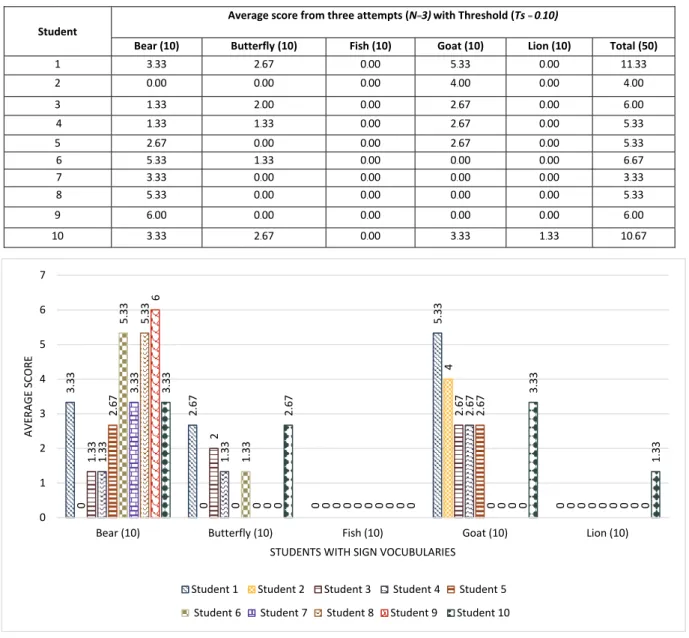
Table 3: Average score results of testing five ASL vocabularies from ten students.
Student
Average score from three attempts (N=3)with Threshold (Ts = 0.10)
Bear (10) Butterfly (10) Fish (10) Goat (10) Lion (10) Total (50)
1 3.33 2.67 0.00 5.33 0.00 11.33
2 0.00 0.00 0.00 4.00 0.00 4.00
3 1.33 2.00 0.00 2.67 0.00 6.00
4 1.33 1.33 0.00 2.67 0.00 5.33
5 2.67 0.00 0.00 2.67 0.00 5.33
6 5.33 1.33 0.00 0.00 0.00 6.67
7 3.33 0.00 0.00 0.00 0.00 3.33
8 5.33 0.00 0.00 0.00 0.00 5.33
9 6.00 0.00 0.00 0.00 0.00 6.00
10 3.33 2.67 0.00 3.33 1.33 10.67
Figure 6: Graph of Average score of testing with five ASL vocabularies comprises: Bear, Butterfly, Fish, Goat and Lion from ten students.
The result of this phase consisted of two measurements which were the similarity testing and the score testing. For the similarity testing, we employed the Euclidean distance algorithm to evaluate between teacher and student datasets with the threshold value (Ts=0.05 and Ts=0.10). Additionally, the score testing used IF-THEN rule for calculating the score and assess the student's test. The results are presented in Table 1, Table2, Table 3 and Figure 6. The results demonstrated that the sign with the most similarity between two datasets was Bear (Mean = 0.59, SD = 0.156, Variance = 0.025 and Confidence Level (95.0%) = 0.056) with Threshold (Ts) = 0.10. For the score testing, moreover, the highest average scores from the student dataset were 11.30 and 10.67 out of the total score of 50.
3.2 Phase II. The Effectiveness of the Game-Based Learning
In this phase, we emphasised on the effectiveness of using the Game-Based system approach to compare with the traditional learning approach. The purpose of this phase was to collect pre-test, post-test data and then evaluate ASL. There were training and testing sections. To do this, ASL vocabularies were collected from teachers for training. Also students were tested with the same set of ASL vocabularies using the Game-Based System.
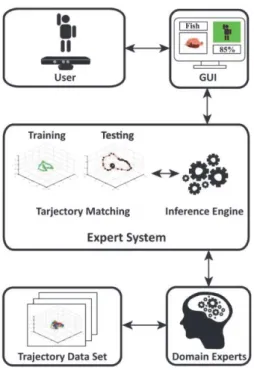
Figure 7 showed the Framework that we designed for the Intelligent Game-Based System for Learning Sign Language. The system comprised of (1) User Interaction, (2) Graphic User Interface (GUI), (3) Expert System (4)
Trajectory Dataset and (5) Domain Experts. The new game-based system was developed to support both normal hearing people and hearing-impaired people in learning American Sign Language (ASL). The system was able to show the percentage of the correct movement actions as well as that of the incorrect actions and also the action scores. Motor-skills (ASL vocabulary) of users could be improved by themselves.
Game-Based Learning System and Environment: The Game-Based System was developed by the Unity 3D-Game Engine and Kinect Xbox 360 from Microsoft Corporation. The Encode JSon format (Peng et al., 2011) was employed to create the data position (X, Y, Z) from both teachers and students. The configuration of the system environment was designed and used in this Phase as shown in Figure 8.
Figure 7: Framework of the Intelligent Game-Based System for Learning Sign Language modified from (Kamnardsiri et al., 2016b).
Figure 8: Configuration of the Game-Based System Environment: Distance between Kinect Xbox 360 and standing point (Kamnardsiri et al., 2016).
Procedures
Participants: In this Phase, three teachers (ASL experts) from Anusansunthorn School for the Deaf, Chiang Mai, Thailand, along with 31 students from the Animation Department, College of Arts, Media and Technology, Chiang Mai University were participants.
Data collection: The experiment was conducted in April 2016. Data comprised of: training data and testing data. Training data were gathered from three teachers with 20 ASL vocabularies: animal, alligator, peacock, zebra, giraffe, cat, tiger, snake, dog, elephant, dolphin, deer, penguin, cow, lion, panda, bear, butterfly, fish
and goat. Testing data were collected from 31 students with 5 ASL vocabularies including bear, butterfly, fish, goat and lion. Furthermore, the students were separated into two groups: (1) Group A using the game-based learning (N=17) and (2) Group B using the traditional face-to-face learning (N=14). Firstly, all students were given a 10-minute pre-test. Secondly, a 30-minute experiment was conducted by letting students in Group A use the game-based learning to practise ASL vocabularies skills. At the same time, students in Group B were taught by an instructor, using the traditional face-to-face learning. Finally, a 10-minute post-test was given to all students. The procedures of the experiment are shown in Figure 9.
Figure 9: The experimental procedures comprise: Group A: Experimental group (17 students) and Group B: Control group (14 students).
Data analysis
Training data: In this Phase, three sequences of 20 ASL vocabularies were collected from three teachers. Four points (the right hand, the left hand, the right shoulder and the left shoulder) were used to check the similarity between training and testing datasets.
Testing data: The Euclidean distance algorithm was used to measure the similarity between training and testing datasets (Cassisi et al., 2012). In order to give flexibility to the measurement of ASL similarity between teacher and student datasets, a threshold (Ts) value was set at 0.10.
Statistical Measurement
To measure potential initial differences of five ASL vocabularies between Group A and Group B, the IBM SPSS 17 Statistics software was used for analysis. For the first step, descriptive statistics such as mean, standard deviation (SD) and paired differences of five ASL vocabularies were analysed. The pre-test with Group A and Group B and the post-test with Group A and Group B were evaluated by using Univariate Analysis of Variance (ANOVA). Secondly, inference statistics for the measurement of the different teaching strategies with the 2 x 2 between-groups analysis of covariance (ANCOVA) was conducted to calculate the effectiveness of the students’ skills. The significance level was set at 0.05.
Results
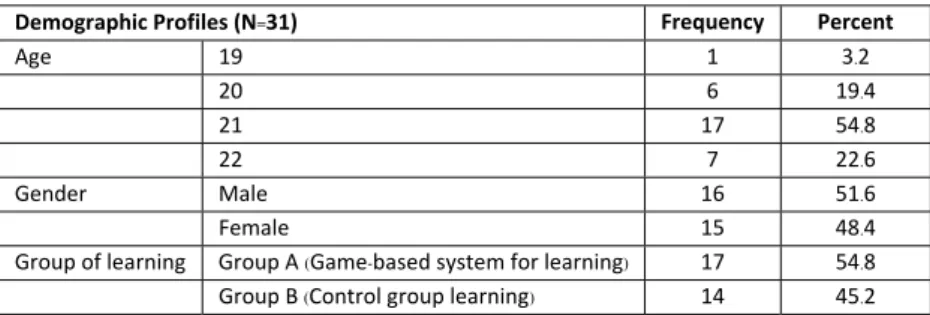
Demographic Characteristics: Table 4 presents the demographic characteristics of student samples. The age of the majority of the students (54.8 percent) was 21 years old. The table also shows the ratio of the student genders which were male: female (52:48) and also the ratio of student groups which were the Game-based system for learning: the Control group learning (55:45).
Group A Group B Group A Group B Table 4: Demographic profiles of students.
Demographic Profiles (N=31) Frequency Percent
Age 19 1 3.2
20 6 19.4
21 17 54.8
22 7 22.6
Gender Male 16 51.6
Female 15 48.4
Group of learning Group A (Game-based system for learning) 17 54.8
Group B (Control group learning) 14 45.2
Descriptive statistics: The mean scores of the learning performance test and ANOVA test which were given to students in both groups (Group A and Group B) as Pre-test and Post-test.
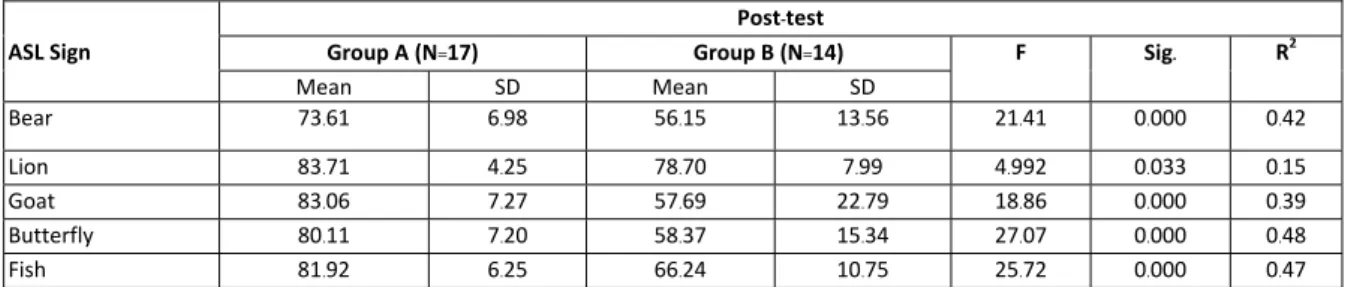
The results included Bear, Lion, Goat, Butterfly and Fish signs. For the Pre-test, the students in Group A (the game-based learning) and the students in Group B (the traditional face-to-face learning) did not provide any significant difference in the mean score. For the Post-test, however, the average results of Group A were higher than those of Group B. According to the ANOVA test results of Group A and Group B, there was a significant difference (p < 0.05) as shown in Figure 10, for example, for the “Lion” sign: the Pre-test of Group A (N=17, Mean=20.38, SD=14.11), and of Group B (N=14, Mean=16.74, SD=10.87). The different results between both groups did not show a significant difference (F=0.626, Sig=0.435, R2=0.021). On the contrary, the Post-test of Group A (N=17, Mean=83.71, SD=4.25), and of Group B (N=14, Mean=78.70, SD=7.99), the results presenting the difference between both groups displayed a significant difference (F=4.992, Sig=0.033<0.05, R2=0.147) as shown in Table 5.
Inference Statistical Measurement: In order to measure the achievement of learning ASL, when using the game-based learning compared to the traditional face-to-face learning, the ANCOVA was used to assess the effectiveness of the student skills via Pre-test and Post-test scores. As shown in the results, the comparison of the mean differences between the Pre-test taken by Group A and Group B demonstrated that the means were not different. This meant that there was no significant difference in the scores for all ASL vocabularies. However, the comparison of the average difference of the Post-test taken by Group A and Group B showed that there was a difference of mean or a significant difference in the scores with the significant level at 5% (P-value < 0.05) as shown in Table 6.
Figure 10: The comparison of Pre-test and Post-test of five vocabularies between Group A (Experimental group) and Group B (Control group).
Table 5: Descriptive statistics and ANOVA test for post-test of five ASL vocabularies.
ASL Sign
Post-test
Group A (N=17) Group B (N=14) F Sig. R2
Mean SD Mean SD
Bear 73.61 6.98 56.15 13.56 21.41 0.000 0.42
Lion 83.71 4.25 78.70 7.99 4.992 0.033 0.15
Goat 83.06 7.27 57.69 22.79 18.86 0.000 0.39
Butterfly 80.11 7.20 58.37 15.34 27.07 0.000 0.48
Fish 81.92 6.25 66.24 10.75 25.72 0.000 0.47
Note: Learning methods: Students in Group A used the game-based system learning while students in Group B used the traditional face-to-face learning. Level of significance was set at 0.05.
Table 6: The comparison of the mean differences between Group A (the game-based system learning) and Group B (the traditional face-to-face learning) of Post-test from testing five ASL vocabularies (N=31).
ASL Sign
The comparison of the mean different of Post-test between Group A and Group B (N=31) F Mean
Difference Std.
Error Sig.
(P-value) R2 Squared
Confidence Interval (95%)
Comparison Lower Bound Upper Bound
Bear 22.11 17.97* 3.82 0.000 0.44 10.14 25.78 A>B
Lion 4.82 5.06* 2.30 0.037 0.15 0.34 9.78 A>B
Goat 16.98 24.78* 6.01 0.000 0.40 12.46 37.12 A>B
Butterfly 26.80 21.99* 4.24 0.000 0.498 13.29 30.69 A>B
Fish 28.20 16.35* 3.07 0.000 0.50 10.04 22.65 A>B
Note: Learning methods: Students in Group A used the game-based system for learning while students in Group B used the traditional face-to-face learning. The sign * indicated significant level at 5% (P-value < 0.05).
4.
Conclusions and Discussion
The study presented in this paper explored the effectiveness of the usability of the intelligent game-based system for learning sign language. First of all, for flow experience, it was concluded that: Phase I was about matching captured data from training (teacher) and testing (student) datasets, using the 3D trajectory matching measurement algorithm. This phase employed the Euclidean distance algorithm to measure the similarity between two datasets. In addition, Microsoft’s Kinect Xbox 360 device was used to collect 3D trajectory data with the threshold value (Ts=0.05 and Ts=0.10). The data of both teachers and students were encoded to create the data position (X, Y, Z) using JSon format (Peng et al., 2011). The results in Phase I showed that the value suitable for checking the similarity between teacher and student data was Ts=0.10. Secondly, in Phase II, the intelligent game-based system for learning sign language was developed by the Unity 3D-Game Engine with Microsoft’s Kinect device. Afterwards, the effectiveness of the game-based learning system was investigated to compare the learning performance between two experimental groups. Group A (17 students) learnt SL with the game-based system. Group B (14 students) learnt SL with the traditional face-to-face learning. The experimental results of Phase II demonstrated that the performance of Group A students was higher than that of Group B students as shown in Figure 10 and Table 5. There was a significant difference in the scores with (P-value < 0.05) as shown in Table 6.
According to the finding in the study, the benefits and limitations of using the intelligent game-based system to learn sign language are further discussed as follows. Firstly, the benefits of the system are the engagement of students to concentrate on ASL vocabularies and the enjoyment of the learning via the game. When the students attempted to gain victory on each vocabulary by achieving a higher score than the other group, the result was that the students had to use the motor skills to practise their movement. Furthermore, the system could offer a suggestion for the correct movement of each vocabulary. The system, moreover, was user-friendly in a sense that it was easy to use, configure and setup. In terms of the pedagogy, the proposed framework of intelligent game-based learning system was used to increase the performance of students to learn ASL vocabulary skills (actions or movements). Regarding the results from bar graph in Figure 10, it demonstrated that the scores of the post-test of each vocabulary were higher than the score of the pre-test. Hence, it implied that the system offered effectiveness for improving sign language skills of students. In addition, the students had the sense of control and concentration while playing the game, along with a good learning achievement as well.
Nevertheless, there were some limitations for this study: (1) The time limitation for the whole process of the proposed system, only six months, resulted in the small number of vocabularies used in the study. In real life situation, the quantity of vocabularies in the school curriculum is so much greater. The vocabularies used in this study were insufficient to be taught in different levels of the school and the system, therefore, the number of ASL vocabularies for the system could be increased, (2) The cost-effectiveness was directly linked to the increased number of ASL vocabularies. The 3D trajectory data from the teachers (experts) had to be collected, along with the suggestion sentences to correct the mistakes of the students’ movements. Consequently, the cost of production would be higher by direct variation of ASL vocabularies.
Finally, for future works, the larger sample size is recommended due to the small sample size in this study. Also, the suggestions and feedbacks from experts have to be considered and added to the game-based system for sign language learning. In addition, the proposed framework can be applied to the studies in other fields, for instance, in the medical field, a game-based system was used in studies helping brain-injured patients practise their movements (Betker et al., 2007; Lange et al., 2011; Molinari et al., 2016; Putnamet et al., 2016). In the sports field, additionally, game-based systems were applied to improve the performance of athletes (Kamnardsiri et al., 2015a; Kamnardsiri et al., 2015b; Eltoukhy et al., 2016). Hence, there are several opportunities to continue the research and/or to conduct new studies in this area.
Acknowledgements
This study was supported by the Embedded Systems & Mobile Application Laboratory, College of Arts, Media and Technology (CAMT), Chiang Mai University, Thailand. We would like to thank Ms. Apichaya Damrongkiattivej, Animation students of CAMT, Mrs. Preeyawan Pattanakul, Ms. Nattakan Choomjai and Ms. Suttinee Saengsaen from Anusansunthorn School for the Deaf in Chiang Mai, Thailand for their kind support in this study.
References
Angele, J., Fensel, D. and Studer, R., 1996. Domain and task modeling in MIKE. In Domain Knowledge for Interactive System Design (pp. 149-163). Springer US.
Betker, A.L., Desai, A., Nett, C., Kapadia, N. and Szturm, T., 2007. Game-based exercises for dynamic short-sitting balance rehabilitation of people with chronic spinal cord and traumatic brain injuries. Physical therapy, 87(10).
Callejas-Cuervo, M., Alvarez, J.C. and Alvarez, D., 2016. Capture and analysis of biomechanical signals with inertial and magnetic sensors as support in physical rehabilitation processes. In Wearable and Implantable Body Sensor Networks (BSN), 2016 IEEE 13th International Conference on (pp. 119-123). IEEE.
Cambridge, 2017. Cambridge Dictionary, Cambridge University Press Incorporated, UK, Retrieved from http
://
dictionary.
cambridge.
org/
dictionary/
english/
sign-
language.
Cassisi, C., Montalto, P., Aliotta, M., Cannata, A. and Pulvirenti, A., 2012. Similarity measures and dimensionality reduction techniques for time series data mining. In Advances in data mining knowledge discovery and applications. Intech. Chai, X., Li, G., Lin, Y., Xu, Z., Tang, Y., Chen, X. and Zhou, M., 2013. Sign language recognition and translation with kinect.
In IEEE Conf. on AFGR.
Chang, Y.J., Chen, S.F. and Huang, J.D., 2011. A Kinect-based system for physical rehabilitation: A pilot study for young adults with motor disabilities. Research in developmental disabilities, 32(6), pp.2566-2570.
Cheng, C.H. and Su, C.H., 2012. A Game-based learning system for improving student's learning effectiveness in system analysis course. Procedia-Social and Behavioral Sciences, 31, pp.669-675.
Cheng, H., Dai, Z. and Liu, Z., 2013. Image-to-class dynamic time warping for 3D hand gesture recognition. In Multimedia and Expo (ICME), 2013 IEEE International Conference on (pp. 1-6). IEEE.
Cheng, H., Dai, Z., Liu, Z. and Zhao, Y., 2016. An image-to-class dynamic time warping approach for both 3D static and trajectory hand gesture recognition. Pattern Recognition, 55, pp.137-147.
Deterding, S., Dixon, D., Khaled, R. and Nacke, L., 2011. From game design elements to gamefulness: defining gamification. In Proceedings of the 15th international academic MindTrek conference: Envisioning future media environments (pp. 9-15). ACM.
Eltoukhy, M., Kelly, A., Kim, C.Y., Jun, H.P., Campbell, R. and Kuenze, C., 2016. Validation of the Microsoft Kinect® camera system for measurement of lower extremity jump landing and squatting kinematics. Sports Biomechanics, 15(1), pp.89-102.
Feigenbaum, E.A. and Buchanan, B.G., 1993. DENDRAL and META-DENDRAL: Roots of knowledge systems and expert system applications. Artificial Intelligence, 59(1-2), pp.233-240.
Garris, R., Ahlers, R. and Driskell, J.E., 2002. Games, motivation, and learning: A research and practice model. Simulation & gaming, 33(4), pp.441-467.
Ghergulescu, I. and Muntean, C.H., 2014. Motivation monitoring and assessment extension for input-process-outcome game model. International Journal of Game-Based Learning (IJGBL), 4(2), pp.15-35.
Hamari, J., Shernoff, D.J., Rowe, E., Coller, B., Asbell-Clarke, J. and Edwards, T., 2016. Challenging games help students learn: An empirical study on engagement, flow and immersion in game-based learning. Computers in Human Behavior, 54, pp.170-179.
Heinich, R., 1996. Instructional media and technologies for learning. Simon & Schuster Books For Young Readers.
Hsiao, H.S. and Chen, J.C., 2016. Using a gesture interactive game-based learning approach to improve preschool children's learning performance and motor skills. Computers & Education, 95, pp.151-162.
Hsieh, Y.H., Lin, Y.C. and Hou, H.T., 2016. Exploring the role of flow experience, learning performance and potential behavior clusters in elementary students' game-based learning. Interactive Learning Environments, 24(1), pp.178-193.
Hunt, V.D., 1985. Smart Robots. In Smart Robots (pp. 83-145). Springer US.
Jangyodsuk, P., Conly, C. and Athitsos, V., 2014. Sign language recognition using dynamic time warping and hand shape distance based on histogram of oriented gradient features. In Proceedings of the 7th International Conference on PErvasive Technologies Related to Assistive Environments (p. 50). ACM.
Kamnardsiri T., Saehaew T., & Wicha S., 2009. Developing 3D Sign Language Software for Enhancing Thai-English Vocabulary Competencies in Hearing Impaired Students: Case study of Anusan Sontorn School for Deaf Chiang Mai Thailand, (pp. 37).
Kamnardsiri, T., Hongsit, L., Wongta, N., 2016a. Designing a Sign Language Intelligent Game-Based Learning Framework With Kinect, in: International Conference on E-Learning. Academic Conferences International Limited, Kidmore End, pp. 64–73.
Kamnardsiri, T., Hongsit, L., Khuwuthyakorn, P., Wongta, N., 2016b. The development of an intelligent game-based system for learning sign language with kinect, in: Proceedings of the European Conference on Games-Based Learning. Kamnardsiri, T.; Janchai, W.; Khuwuthyakorn, P.; Suwansrikham, P.; Klaphajone, J. &Suriyachan, P., 2015a.
Knowledge-Based System Framework for Training Long Jump Athletes Using Action Recognition, Journal of Advances in Information Technology, Vol. 6, No. 4, (pp 182-193).
Kamnardsiri, T., Janchai, W., Khuwuthyakorn, P., Suwansrikham, P., Klaphajone, J., Suriyachan, P., 2015b. Framework of knowledge-based system for practising long jumpers using movement recognition, in: Proceedings of the International Conference on Intellectual Capital, Knowledge Management and Organisational Learning, ICICKM. Kim, B., 2015. Designing Gamification in the Right Way. Library Technology Reports, 51(2),(pp 29-35).
Kraft, A., 1984. XCON: An expert configuration system at Digital Equipment Corporation The AI Business: The Commercial Uses of Artificial Intelligence: MIT Press Cambridge, MA.
Lange, B., Chang, C.Y., Suma, E., Newman, B., Rizzo, A.S. and Bolas, M., 2011. Development and evaluation of low cost game-based balance rehabilitation tool using the Microsoft Kinect sensor. In Engineering in medicine and biology society, EMBC, 2011 annual international conference of the IEEE (pp. 1831-1834). IEEE.
Lester, J.C., Spires, H.A., Nietfeld, J.L., Minogue, J., Mott, B.W. and Lobene, E.V., 2014. Designing game-based learning environments for elementary science education: A narrative-centered learning perspective. Information Sciences, 264, pp.4-18.
Liang, C., Lee, Y.-Z., & Chou, W.-S., 2010. The Design Consideration for Game-Based Learning, Educational Technology, 50(2), (pp 25-28).
Lim, K.M., Tan, A.W. and Tan, S.C., 2016. A feature covariance matrix with serial particle filter for isolated sign language recognition. Expert Systems with Applications, 54, pp.208-218.
Luconi, F.L., Malone, T.W. and Morton, M.S.S., 1986. Expert systems: the next challenge for managers. Sloan Management Review (1986-1998), 27(4), p.3.
Maqueda, A.I., del-Blanco, C.R., Jaureguizar, F. and García, N., 2016. Temporal Pyramid Matching of Local Binary Subpatterns for Hand-Gesture Recognition. IEEE Signal Processing Letters, 23(8), pp.1037-1041.
Miller, R.A., 1984. INTERNIST-1/CADUCEUS: problems facing expert consultant programs. Methods Archive, 23, pp.9-14. Monaghan, D., Honohan, F., Ahmadi, A., McDaniel, T., Tadayon, R., Karpur, A., Morran, K., O'Connor, N.E. and
Panchanathan, S., 2016. A Multimodal Gamified Platform for Real-Time User Feedback in Sports Performance. In Proceedings of the 2016 ACM on Multimedia Conference (pp. 708-710). ACM.
Morrison, G.D., 2005. A camera-based input device for large interactive displays. IEEE Computer Graphics and Applications, 25(4), pp.52-57.
Nai, W., Liu, Y., Rempel, D. and Wang, Y., 2017. Fast hand posture classification using depth features extracted from random line segments. Pattern Recognition, 65, pp.1-10.
Nathan, A. and Gao, S., 2016. Interactive Displays: The Next Omnipresent Technology [Point of View]. Proceedings of the IEEE, 104(8), pp.1503-1507.
Oxford,2017. Oxford Living Dictionaries, Oxford University Press, Incorporated, UK, Retrieved from https://en.oxforddictionaries.com/definition/sign_language.
Papastergiou, M., 2009. Digital game-based learning in high school computer science education: Impact on educational effectiveness and student motivation. Computers & Education, 52(1), pp.1-12.
Peng, D., Cao, L. and Xu, W., 2011. Using JSON for data exchanging in web service applications. Journal of Computational Information Systems, 7(16), pp.5883-5890.
Prensky, M., 2001. Digital natives, digital immigrants part 1. On the horizon, 9(5), pp.1-6.
Prensky, M., 2005. Computer games and learning: digital game-based learning'in Raessens, J. and Goldstein, J.(Eds.): Handbook of Computer Games Studies.
Prensky, M. and Prensky, M., 2007. Digital game-based learning (Vol. 1). St. Paul, MN: Paragon house.
Putnam, C., Cheng, J., Lin, F., Yalla, S. and Wu, S., 2016. 'Choose a Game': Creation and Evaluation of a Prototype Tool to Support Therapists in Brain Injury Rehabilitation. In Proceedings of the 2016 CHI Conference on Human Factors in Computing Systems (pp. 2038-2049). ACM.
Rabiner, L.R. and Juang, B.H., 1993. Fundamentals of speech recognition.
Romero, M., 2012. Learner engagement in the use of individual and collaborative serious games. In Increasing Student Engagement and Retention Using Immersive Interfaces: Virtual Worlds, Gaming, and Simulation (pp. 15-34). Emerald Group Publishing Limited.
Romero, M., 2015. Work, games and lifelong learning in the 21st century. Procedia-Social and Behavioral Sciences, 174, pp.115-121.
Romero, M., Usart, M., Ott, M., Earp, J. and de Freitas, S., 2012. Learning through playing for or against each other? Promoting collaborative learning in digital game based learning. Learning, 5(2012), pp.15-2012.
Schlömer, T., Poppinga, B., Henze, N. and Boll, S., 2008. Gesture recognition with a Wii controller. In Proceedings of the 2nd international conference on Tangible and embedded interaction (pp. 11-14). ACM.
Schreiber, G., Wielinga, B., Akkermans, H., Van de Velde, W. and Anjewierden, A., 1994. CML: The CommonKADS conceptual modelling language. A future for Knowledge Acquisition, pp.1-25.
Shortliffe, E. H., & Lindberg, D. a B., E.H.S., 1976. Computer-Based Medical Consultations: Mycin. Computer-Based Medical Consultations: Mycin, Elsevier, (pp13-16).
Smisek, J., Jancosek, M. and Pajdla, T., 2013. 3D with Kinect. In Consumer depth cameras for computer vision (pp. 3-25). Springer London.
Spasojevi , S., Ili , T.V., Milanovi , S., Potkonjak, V., Rodi , A. and Santos-Victor, J., 2017. Combined Vision and Wearable Sensors-based System for Movement Analysis in Rehabilitation. Methods of information in medicine, 56(2), pp.95-111.
Sreekanth, N.S. and Narayanan, N.K., 2017. Dynamic Gesture Recognition—A Machine Vision Based Approach. In Proceedings of the International Conference on Signal, Networks, Computing, and Systems (pp. 105-115). Springer India.
Studer, R., Benjamins, V.R. and Fensel, D., 1998. Knowledge engineering: principles and methods. Data & knowledge engineering, 25(1-2), pp.161-197.
The Deaf Society, 2015. Sign Language 1,The Deaf Society, Retrieved from http://deafsocietynsw.org.au/documents/SignLanguage1Handouts.pdf
Tsai, M.J., Huang, L.J., Hou, H.T., Hsu, C.Y. and Chiou, G.L., 2016. Visual behavior, flow and achievement in game-based learning. Computers & Education, 98, pp.115-129.
Tu, S.W., Eriksson, H., Gennari, J.H., Shahar, Y. and Musen, M.A., 1995. Ontology-based configuration of problem-solving methods and generation of knowledge-acquisition tools: application of PROTEGE-II to protocol-based decision support. Artificial intelligence in medicine, 7(3), pp.257-289.
Wang, C.H., Zheng, L.J. and Fan, Y.C., 2016. Design of three dimensional gestures interactive displays based on complex background. In Consumer Electronics-Taiwan (ICCE-TW), 2016 IEEE International Conference on (pp. 1-2). IEEE. Wfdeaf, 2015. World Federation of the Deaf, Retrieved from http://wfdeaf.org/our-work/focus-areas/sign-language Yang, H.D. and Lee, S.W., 2010. Simultaneous spotting of signs and fingerspellings based on hierarchical conditional
random fields and boostmap embeddings. Pattern Recognition, 43(8), pp.2858-2870.
Yang, H.D., 2014. Sign language recognition with the kinect sensor based on conditional random fields. Sensors, 15(1), pp.135-147.
Yang, H.D., Sclaroff, S. and Lee, S.W., 2009. Sign language spotting with a threshold model based on conditional random fields. IEEE Transactions on Pattern Analysis and Machine Intelligence, 31(7), pp.1264-1277.
Yang, J.C., Lin, Y.L., Wu, J.J. and Chien, K.H., 2008. Design and evaluation of a physical interactive learning environment for English learning. In Digital Games and Intelligent Toys Based Education, 2008 Second IEEE International Conference on (pp. 36-43). IEEE.
Zhang, S., He, W., Yu, Q. and Zheng, X., 2012. Low-cost interactive whiteboard using the Kinect. In Image Analysis and Signal Processing (IASP), 2012 International Conference on (pp. 1-5). IEEE.
ISSN 1479-4403 297 ©ACPIL Reference this paper as: Rose S P., Habgood J M. P. and Jay T, “An Exploration of the Role of Visual Programming Tools in
Development of Young Children’s Computational Thinking
Simon P. Rose, M. P. Jacob Habgood and Tim Jay
Sheffield Hallam University, Sheffield, UK[email protected] [email protected] [email protected]
Abstract: Programming tools are being used in education to teach computer science to children as young as 5 years old. This research aims to explore young children’s approaches to programming in two tools with contrasting programming interfaces, ScratchJr and Lightbot, and considers the impact of programming approaches on developing computational thinking. A study was conducted using two versions of a Lightbot-style game, either using a ScratchJr-like or Lightbot style programming interface. A test of non-verbal reasoning was used to perform a matched assignment of 40, 6 and 7-year-olds to the two conditions. Each child then played their version of the game for 30 minutes. The results showed that both groups had similar overall performance, but as expected, the children using the ScratchJr-like interface performed more program manipulation or ‘tinkering’. The most interesting finding was that non-verbal reasoning was a predictor of program manipulation, but only for the ScratchJr-like condition. Children approached the ScratchJr-like program differently depending on prior ability. More research is required to establish how children use programming tools and how these approaches influence computational thinking.
Keywords: Visual programming, Education, Computational thinking, K-12, Lightbot, Scratch
1.
Introduction
This paper focuses on two tools used to teach programming to young children, ScratchJr (Flannery et al., 2013) and Lightbot (Lightbot Inc., 2016). Existing literature suggests that both these tools encourage computational thinking, yet there are clear theoretical contrasts in the type of programming interfaces that they use. We describe an exploratory study to investigate whether there was a difference in the way that young children use these tools and consider its relationship to developing computational thinking skills.
We live in a digital age where technology plays a key role in almost everything we do, making it increasingly important for us to understand how it works. Today’s children will go on to live a life dominated by computing, both in the home and at work (Barr and Stephenson, 2011). Computing education is receiving increasing attention in classrooms worldwide, with the aim of developing digital, media and information literacies. The need for children to be effective users of computational tools has led to the re-examination of the concept of ‘computational thinking’. Although the term was originally used by Papert (1980), Wing (2006) describes it as the problem-solving processes used by computer scientists. She stated that it should be taught as a basic skill across the school curriculum (2008). Since Wing reintroduced the concept of computational thinking; many researchers have attempted to clarify what it is and how we can teach it (e.g. Grover and Pea, 2013; Yadav, Hong and Stephenson, 2016).
Programming tools are seen as a means of developing computational thinking skills (e.g. Wilson and Moffat, 2010; Brennan and Resnick, 2012; Berland and Wilensky, 2015). This has led to the release of a variety of new tools, such as ScratchJr, Hopscotch and Kodable. Scratch remains the most widely-used of children’s programming tools. It takes inspiration from constructionism and the LOGO programming language (Papert, 1980). Constructionism is a pedagogical theory based on constructivism (Piaget, 1970), which makes specific use of the construction of artefacts as a basis for building knowledge. Papert theorised that by thinking about programming, learners would learn about the process of thinking, and he believed these skills would transfer to other contexts (1980). Scratch provides a constructionist learning environment through block-based programming, where learners combine instruction blocks to form programs (Resnick et al., 2009). Researchers have identified differing approaches when children program in Scratch (Meerbaum-Salant, Armoni and Ben-Ari, 2011).
Several countries have now introduced computer science into national curricula (Heintz, Mannila and Farnqvist, 2016), meaning that children as young as 5 years old are now learning basic programming skills. Whilst there is evidence to suggest that children can learn to program at this age (Bers, 2010; Fessakis, Gouli and Mavroudi, 2013), there is comparatively little empirical research on children’s use of programming tools under the age of 7. This is particularly important due to the cognitive developments that children undergo around this age (Manches and Plowman, 2015). Some researchers are concerned that younger children struggle to understand fundamental computer science concepts like abstraction (e.g. Armoni, 2012).
2.
Computational thinking
Seymour Papert first described computational thinking as part of his research into how children develop procedural thinking through computer programming (1980). Wing sparked a renewed interest in the topic (2006), suggesting that “to reading, writing, and arithmetic, we should add computational thinking to every child’s analytical ability” (p. 33). Furthermore, Wing suggested that teaching computational thinking enables children to learn to think in an abstract and algorithmic manner relevant to many disciplines, including mathematics and science. She went on to define computational thinking as “solving problems, designing systems, and understanding human behaviour, by drawing on the concepts fundamental to computer science” (Wing, 2006, p. 33), but ten years later there is still no unanimous agreement on a definition (Garcia-Peñalvo, 2016; Weintrop et al., 2016).
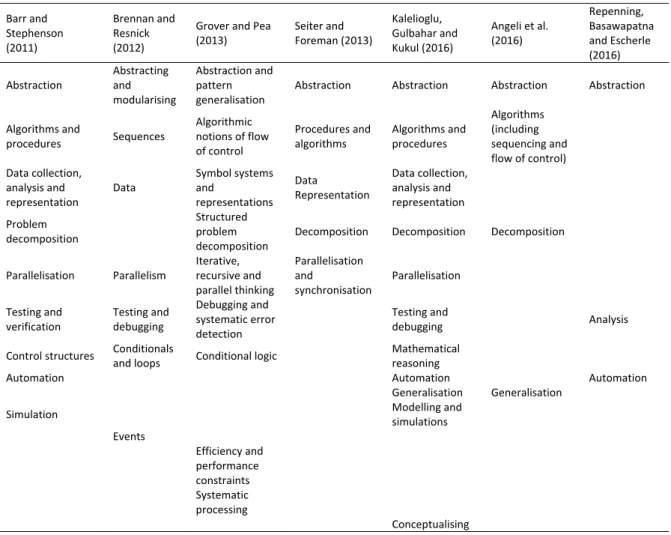
There have been many efforts to clarify what is involved in computational thinking (e.g. Barr and Stephenson, 2011; Grover and Pea, 2013; Kalelioglu, Gulbahar and Kukul, 2016). There is a general agreement that it includes all the concepts that a computer scientist would typically use to solve computational problems (Riley and Hunt, 2014), but the list of concepts is up for debate. Table 1 shows the different concepts used in 7 existing definitions of computational thinking.
Table 1: The concepts included in existing definitions of computational thinking
Barr and Stephenson (2011) Brennan and Resnick (2012)
Grover and Pea (2013) Seiter and Foreman (2013) Kalelioglu, Gulbahar and Kukul (2016)
Angeli et al. (2016) Repenning, Basawapatna and Escherle (2016) Abstraction Abstracting and modularising Abstraction and pattern generalisation
Abstraction Abstraction Abstraction Abstraction
Algorithms and
procedures Sequences
Algorithmic notions of flow of control Procedures and algorithms Algorithms and procedures Algorithms (including sequencing and flow of control) Data collection, analysis and representation Data Symbol systems and representations Data Representation Data collection, analysis and representation Problem decomposition Structured problem decomposition
Decomposition Decomposition Decomposition
Parallelisation Parallelism Iterative, recursive and parallel thinking Parallelisation and synchronisation Parallelisation Testing and verification Testing and debugging Debugging and systematic error detection Testing and
debugging Analysis
Control structures Conditionals
and loops Conditional logic
Mathematical reasoning
Automation Automation Automation
Generalisation Generalisation
Simulation Modelling and
simulations Events Efficiency and performance constraints Systematic processing Conceptualising
For the purposes of this work, we have defined a working definition for computational thinking using the 7 most common concepts included in the definitions above:
• Abstraction and generalisation (removing the detail from a problem and formulating solutions in
generic terms)
• Algorithms and procedures (using sequences of steps and rules to solve a problem)
• Data collection, analysis and representation (using and analysing data to help solve a problem) • Decomposition (breaking a problem down into parts)
• Parallelism (having more than one thing happening at once)
• Debugging, testing and analysis (identifying, removing and fixing errors) • Control structures (using conditional statements and loops)
This process helped to identify individual concepts and provided a deeper understanding of computational thinking. This is the definition of computational thinking used in the rest of the work and will be used to evaluate two programming tools for their potential to develop computational thinking skills.
3.
Programming tools for young children
In the previous section, we defined a working set of computational thinking concepts. This section will analyse two programming tools designed for young children and evaluate their potential to develop computational thinking with respect to this set of concepts.
3.1 ScratchJr
Scratch is a block-based programming tool designed for children aged 8-16. It aims to “support self-directed learning through tinkering and collaboration” (Maloney, Resnick and Rusk, 2010, p. 2) and requires the application of computational thinking concepts (Resnick et al., 2009).
ScratchJr is a version of Scratch redesigned for younger children aged 5-7 (figure 1). It maintains the creative programming elements of Scratch, which allow children to easily create short stories and games. Characters can be added to a scene, and are given behaviours by combining instruction blocks. The interface is entirely symbolic and contains only a third of the original Scratch instruction set because young children can struggle with several levels of decomposition (Flannery et al., 2013). ScratchJr also executes instructions from left to right (the way that the English language is read) instead of the top to bottom approach used in Scratch. It has large buttons for touchscreen use, which apparently compounds difficulties that young children often have with mouse movement. The Cartesian coordinate system used in Scratch has been replaced by a natural coordinate system, and there is a grid that can be overlaid on top of the scene to help children calculate distance. Numerical parameter values have a maximum limit of 25, and children can execute individual instructions simply by pressing on them to help them explore what each instruction does. ScratchJr was developed using several age-appropriate design principles (Flannery et al., 2013). It makes it easy to get started but provides room to use more complex concepts (low floor and high ceiling), it allows many pathways and styles of exploration (wide walls), ideas can be incrementally developed through experimentation (tinkerability), the interface is friendly and playful (conviviality) and it can be used with a wide range of learning outcomes (classroom support).
3.2 Lightbot
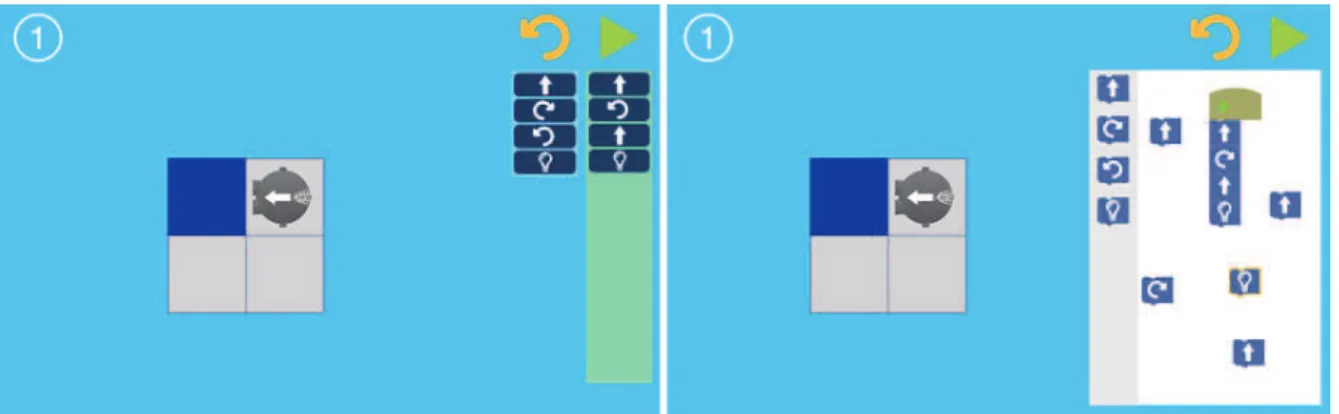
Lightbot is an educational puzzle game. The player must arrange a fixed set of block-based instructions in a finite program space that tell a robot what to do (figure 2). The goal is to program the robot to turn all the blue blocks in a level into illuminated yellow blocks. This is done by navigating the robot to a blue block and executing the light command. Players can decompose a level into different sections, which can then be solved one after the other until they have a complete solution. Some of the later levels can only be completed through the correct use of procedures and conditionals. For procedures, the player is given other program spaces below the main program that can be called using special instructions. Conditionals are implemented using a paint tool that colours the robot so that only instructions of that colour are executed. Gouws, Bradshaw and Wentworth (2013) suggest that Lightbot is useful for practising computational thinking. It concentrates on using computational thinking as a problem-solving process, and players are rewarded for producing optimised solutions.
3.2.1 Non-verbal reasoning
Successful Lightbot players can use mental transformations to predict the movement of the robot, recognise patterns from other levels and implement these patterns using known sequences of instructions (Gouws, Bradshaw and Wentworth, 2013). This is comparable to non-verbal reasoning, which is the ability to analyse information and solve problems using visual information. Non-verbal reasoning contains both abstract (or diagrammatic) and spatial reasoning, which includes spatial transformations, recognising visual sequences, and identifying relationships between shapes and patterns. Non-verbal reasoning is not reliant upon or limited by language ability, and research suggests that it can indicate mathematical ability in children (Halberda, Mazzocco and Feigenson, 2008).
Figure 2: A simple level from Lightbot
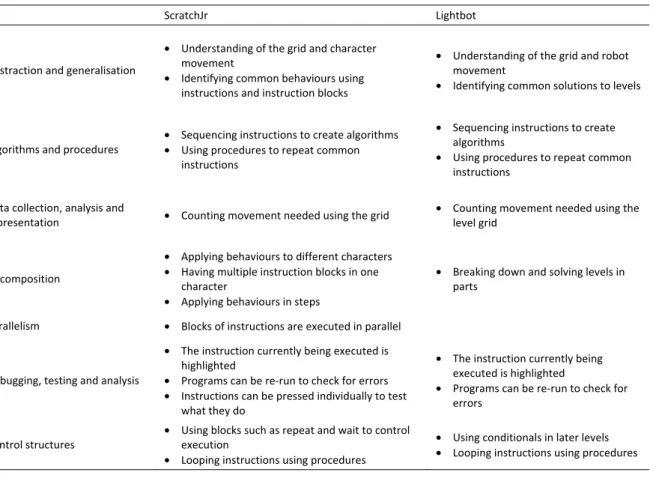
3.3 Comparison of the tools
These tools were analysed for their support of computational thinking using the definition in the previous section (table 2). From this, it is reasonable to conclude that both tools encourage computational thinking. They both use almost all the common computational thinking concepts identified in section 2. The only difference is that Lightbot doesn’t support parallelism.