Sharif University of Technology
Scientia IranicaTransactions F: Nanotechnology www.scientiairanica.com
Electrooxidation of ethanol and acetaldehyde using
PtSn/C and PtSnO2/C catalysts prepared by a
modied alcohol-reduction process
S. Sadeghi, H. Gharibi
and F. Golmohammadi
Department of Chemistry, Faculty of Science, Tarbiat Modares University, Tehran, P.O. Box 14115-175, Iran. Received 16 June 2014; received in revised form 21 January 2015; accepted 27 July 2015
KEYWORDS Tin oxide;
Ethanol oxidation; Acetaldehyde oxidation.
Abstract. Well-dispersed PtSn/C and PtSnO2/C catalysts with an atomic ratio of
Pt:Sn (3:1) were deposited onto carbon using a modied alcohol-reduction process for electrochemical oxidation of ethanol. These materials were characterized using Energy-Dispersive X-ray Spectroscopy (EDX) and X-Ray Diraction (XRD). An electrochemical study in the ethanol and acid medium showed that the PtSnO2/C catalyst had a better
performance compared with the PtSn/C and Pt/C catalysts. The CV analysis indicated that the presence of SnO2 increased the sensitivity of catalyst to oxidation of acetaldehyde
because of its low onset potential for the electrooxidation of adsorbed ethanol and acetaldehyde compared to PtSn/C and Pt/C. Since the activation of C-C bond breaking results in the generation of higher current density (mass activity) at higher potentials, the PtSnO2/C catalyst has been found favourable for the overall oxidation of ethanol.
© 2015 Sharif University of Technology. All rights reserved.
1. Introduction
Low molecular weight alcohols are extensively sug-gested as possible fuel for low temperature fuel cells in portable applications. Among the alcohols, methanol and ethanol have been widely considered in Direct Alcohols Fuel Cells (DAFCs). DEFCs have attracted great attention as a power source in many applications because of their high eciency, nontoxic and environ-mentally friendly characteristics, and straightforward-ness in structure [1-3].
The best binary alloyed catalyst for Ethanol Oxidation Reaction (EOR) in an acid environment is Sn [4]. The catalytic activity of a partly alloyed Pt-Sn catalyst and that of a quasi non-alloyed PtPt-SnOx
cat-alyst were compared. In the analysis of chronoamper-ometry results of DEFC, the PtSnOxcatalyst displayed
higher catalytic activity for ethanol electrooxidation
*. Corresponding author. Tel./Fax: +98 21 82884401 E-mail address: [email protected] (H. Gharibi)
than the Pt-Sn alloy. Jiang et al. inferred that the unchanged lattice parameter of Pt in the PtSnOx catalyst is favourable to ethanol adsorption and the presence of tin oxide, a part of Pt nanoparticles, could simply provide oxygen species to remove the CO-like species of ethanolic residues to free Pt active sites [5]. In another study, PtSnO2 and PtSn alloy catalyst
were synthesized and investigation of the products demonstrated that the addition of SnO2 improved the
total oxidation to CO2 [6]. SnO2 is recognized for
potentially being able to provide OH-species to oxidize, toughly, bound intermediates such as CO [7,8].
Ethanol oxidation involves three key products: acetaldehyde as a main product, acetic acid, and carbon dioxide. The mechanism of oxidation of acetaldehyde shows that acetic acid and CO2 are
the main products, though the type and content of yields depend on catalyst material, electrode potential, temperature, and acetaldehyde concentration [9,10]. Electrooxidation of acetaldehyde was studied on Pt and Rh electrodes in an acid solution by Dierential
Elec-trochemical Mass Spectroscopy (DEMS) techniques. CO2 and acetic acid were detected as electrooxidation
yields and methane and ethane were formed during the reduction of adsorbed species. Ethane was de-tected only on the Pt electrode [11]. FTIR spec-troscopy and High Performance Liquid Chromatogra-phy (HPLC) techniques were applied to investigate the electrooxidation of acetaldehyde on Pt electrodes. The studies have shown that acetic acid is the main product and formic acid and CO2are detected in small
amounts [12].
The oxidation of acetaldehyde on PtSnO2/C has
been studied rarely. In this work, we synthesized SnO2
and made a binary catalyst by adding a tin oxide to Pt; its performance was then compared with PtSn/C and Pt/C. An assembly of techniques, such as Field Emission Scanning Electron Microscopy (FESEM), X-Ray Diraction (XRD), and Induced Coupled Plasma (ICP), were employed to characterize the physical properties of the synthesized catalysts. Then, the electrocatalyst activity in ethanol and acetaldehyde solution on synthesized PtSn/C, PtSnO2/C, and Pt/C
catalysts was investigated. 2. Materials and method 2.1. Materials
Ethylene glycol, H2SO4, H2PtCl6.6H2O, and SnCl2.
2H2O as metal sources, isopropyl alcohol (IPA),
ethan-ol, and acetaldehyde were all purchased as analytically pure reagents from Merck.
2.2. Catalyst synthesis
PtSn/C alloy nanoparticles were deposited on Vulcan XC-72R by using the modied polyol method. The steps involved in the preparation were:
i) Incorporation of a predetermined amount of car-bon, i.e. Vulcan, to 15 cc of ethylene glycol, then sonicating the entire mixture for 30 min;
ii) Addition of the required precursors, i.e. H2PtCl6.
6H2O and SnCl2.2.H2O, to the composite mixture
in the stoichiometric amount required and sonica-tion for 30 min;
iii) Addition of 45 cc of ethylene glycol and sonication again for 30 min;
iv) Increasing the temperature to 120C, and then
keeping it constant for 16 h to allow the nucleation and growth of the alloy metal on the carbon support;
v) Cooling the suspension down to room tempera-ture;
vi) Separation of the solid by ltration, and subse-quent rinsing with water and drying the solid at 80C for 24 h in an oven.
In the case of PtSnO2/C, rst the stoichiometric
amount required of SnCl2.2.H2O was added to 50 cc
ethylene glycol and heated at 195C under an oxygen
atmosphere till a light yellow coloured solution was ob-tained. The solution was cooled to room temperature and the required amount of H2PtCl6.6H2O was added
to the mixture; then, the above preparation steps after \iii" were repeated for the mixture. Atomic ratios of catalysts were Pt:Sn (3:1) with 10% of metal loading. 2.3. Preparation of catalyst electrodes
The Glassy Carbon (GC) electrode (d = 1 mm) was polished with an aluminium oxide paste as a working electrode. A specic amount of prepared catalyst powder was mixed to 1 cc of IPA:H2O (2:1) and
0.1764 mg/ml Naon suspension as a binder. Then, the mixture was sonicated for 20 min to achieve a homogeneous ink-like solution. The ink was embedded onto the surface of GC by Hamilton pipette and dried in the air at 70C.
2.4. Electrochemical characterization
For the electrochemical characterization, a conven-tional three-electrode cell was used. The working electrode was a glassy carbon covered by a thin layer of catalyst detachment in a Naon polymer electrolyte lm. A Pt foil of 1 cm2geometric area was used as the
counter electrode and a saturated calomel electrode as the reference electrode. The electrochemical character-ization was recorded in a 1 M C2H5OH in 0.5 M H2SO4
solution and 0.25 M C2H4O in 0.5 M H2SO4 solution
at room temperature. Most of the electrochemical experiments were carried out at room temperature. The real active electrode area was determined from the CV in acidic media at 50 mV s 1 in a 0.5 M H
2SO4
solution.
2.5. Physical characterization
The samples were characterized with a Field Emis-sion Scanning Electron Microscope (FE-SEM) ZEISS SIGMA VP (Germany). X-Ray powder Diraction (XRD) measurements were performed using a Philips X'pert diractometer with mono chromated Co-K (1.78897 A) radiation.
3. Results and discussion 3.1. Physical measurements
PtSn/C and PtSnO2/C electrocatalysts were prepared
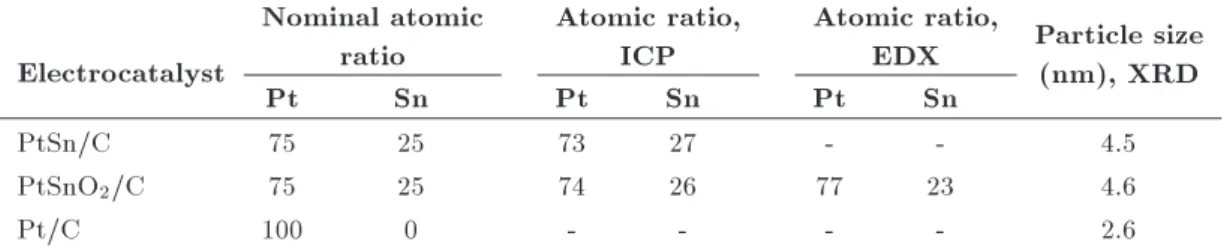
using ethylene glycol as solvent and reducing agent in the presence of carbon Vulcan. The atomic ratio of Pt:Sn obtained was similar to the nominal atomic ratios used in the preparation procedure from ICP, the Energy Dispersive X-ray spectrometry (EDX) is shown in Table 1.
Figure 1 represents the EDX of PtSnO2/C, where
Table 1. Characterization results of carbon supported catalysts.
Electrocatalyst
Nominal atomic ratio
Atomic ratio, ICP
Atomic ratio,
EDX Particle size(nm), XRD
Pt Sn Pt Sn Pt Sn
PtSn/C 75 25 73 27 - - 4.5
PtSnO2/C 75 25 74 26 77 23 4.6
Pt/C 100 0 - - - - 2.6
Table 2. Comparative performance data of PtSnO2/C, PtSn/C, and Pt/C electrodes determined from Figures 3 and 5.
Sample QH (C)
ECSA (m2/g)
For ethanol oxidation (Figure 3) For acetaldehyde oxidation (Figure 5) MSA Eon (V) Ip (A) If=Ib Ip (A) Eon (V)
Pt/C 406 61 1698 0.28 35.9 0.84 1.44 0.25
Pt-Sn/C 360.9 68 2975 0.18 40 0.85 1.96 0.14
Pt-SnO2/C 348.3 65 4364 0.13 50 1.01 3.39 0.01
Figure 1. Energy dispersive X-ray spectra of PtSnO2/C.
Figure 2. XRD patterns of PtSnO2/C, PtSn/C, and
Pt/C catalysts.
appropriate deposition of Pt on the support. Moreover, the catalyst shows an extra Sn peak, which conrms the predeposited SnO2.
The XRD patterns were achieved at a scanning rate of 1/min with a step size in the 2 scan of 0:02
in the range 10 90and demonstrated in Figure 2. All
of the catalysts show three characteristics diraction peaks corresponding to the (111), (200), and (220) crystalline faces of Pt. A broad peak at about 29
is attributed to the (0 0 2) planes of the Vulcan XC72 support material. Two small peaks for SnO2(2 = 39
and 59) were observed in PtSn/C and PtSnO
2/C [13].
The crystallite sizes of the catalysts were calculated and depicted in Table 1, according to the Scherrer formula [14].
3.2. Electrochemical measurements
Cyclic Voltammetry (CV) was applied to investigate the catalytic activity of electrocatalysts. According to the CVs in acid media, the electrochemically active sur-face area (ECSA) was calculated through integration of the anodic current corresponding to the hydrogen desorption reaction with the correction of the double layer region. The ECSA values are shown in Table 2 and can be determined from Eq. (1) [15]:
SECSA (m2g 1) = QH (C/cm 2)
210 LP t(g/m2); (1)
where QH (C cm 2) is the charge corresponding to
hydrogen desorption on the Pt surface, LP t (g m 2)
is the Pt loading in the working electrode, and 210 (C/cm2) represents the charge required to oxidize a
monolayer of hydrogen on the Pt surface. The results show that PtSn/C has a higher ECSA compared to PtSnO2/C and Pt/C. In PtSnO2/C, some tin oxide
particles cover the Pt nanoparticles resulting in ECSA reduction [16]. Then, the catalytic activities of carbon-supported PtSnO2/C, PtSn/C, and Pt/C catalysts for
ethanol electrooxidation were examined at ambient temperature by Cyclic Voltammetry (CV) at a scan rate of 50 mV s 1 in 1 M EtOH + 0.5 M H
2SO4
(aq) solution (Figure 3). It was observed that the PtSnO2/C catalyst exhibited signicantly enhanced
Figure 3. Cyclic voltamograms of the PtSnO2/C,
PtSn/C, and Pt/C in 1 M ethanol + 0.5 M H2SO4
solution at the 50th cycle with a scan rate of 50 mVs 1.
catalytic activities for ethanol oxidation compared to PtSn/C and Pt/C catalysts.
The current densities for ethanol oxidation on PtSnO2/C were higher than those of PtSn/C and
Pt/C. Three synergic reasons including the Pt surface area increase, the change in the \d" band level of the material, and the removal of adsorbed intermediates by a bi-functional mechanism should be mentioned to justify the obtained results [13]. Mass Specic Activity (MSA) was calculated using Eq. (2), according to the required charge density for ethanol oxidation reaction (QEOR) in Figure 3 [17]:
MSA (mC mgP t1) =QLEOR (mC/cm2)
P t (mg/cm2) : (2)
The signicantly higher MSA for PtSnO2/C with
respect to the others is justied based on the three reasons mentioned above (Table 2).
As shown in Figure 3, all catalysts show the same redox characteristics for ethanol oxidation; a distinctive oxidation current peak in the forward scan (If) and an
oxidation peak in the backward scan (Ib). Our research
shows that the ratio of If=Ib is dependent upon CO
tolerance and more complete oxidation of ethanol or methanol to CO2. The ratios of If=Ib values for all
catalysts are given in Table 2. The higher ratio of If=Ib value for PtSnO2/C implies a better oxidation
of ethanol to CO2, less accumulation of carbonaceous
residues on the catalyst surface, and more CO tolerance than PtSn/C and Pt/C [18,19]. The higher ratio of If=Ib for PtSnO2/C compared to the other catalysts
indicates that the presence of SnO2 in a catalyst
increases the C-C bond breaking and reduces the CO poisoning. The peak current density (Ip) and onset
potential (Eon) during ethanol oxidation on composite electrodes conrms the previous results as shown in Table 2. The peak current density on PtSnO2/C is
the highest at 1.4 times of Pt/C. According to Table 2,
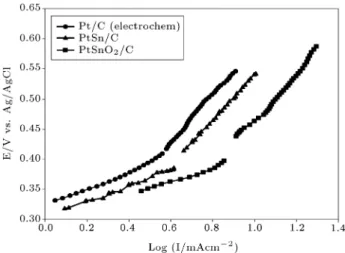
Figure 4. Tafel plots of the PtSnO2/C, PtSn/C, and
Pt/C in 1 M ethanol + 0.5 M H2SO4 at room
temperature; the scan rate is set at 1 mVs 1.
the onset potential on PtSn/C and PtSnO2/C is about
100-150 mV less than Pt/C.
The kinetic data are extracted from the Tafel plots as shown in Figure 6. Tafel slopes of elec-trocatalysts are calculated from Tafel plots as shown in Figure 4. Every plot for each catalyst is tted and separated into two linear sections according to the change of Tafel slopes. The second slopes are considerably higher than the rst ones, demonstrating a possible change of reaction mechanism or at least a change of the rate-determining step at dierent poten-tial ranges. All the Tafel slopes on the three catalysts were almost identical; so, this similarity indicates that the same reaction mechanism operated on the dierent catalysts. The addition of tin or tin oxide into Pt/C extremely improved the activities and shifted the onset potentials towards the negative potentials. The group of data in Table 3 indicates that the reaction starts up earlier on PtSnO2/C. The current densities and
charge transfer coecient on this catalyst are higher than other catalysts (Table 3). The exchange current density can be calculated by extrapolating the Tafel line. As shown in Table 3, the exchange current density on PtSnO2/C was more than one order of magnitude
higher than that on Pt/C.
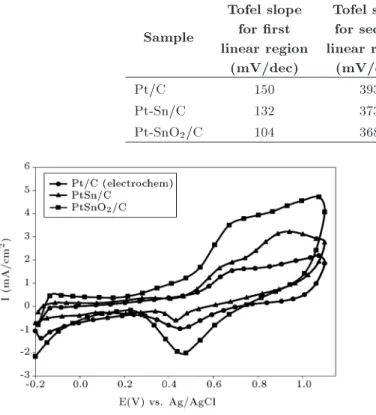
Figure 5 represents the voltammograms of ac-etaldehyde electrooxidation in a 0.25 M CH3CHO
+ 0.5 M H2SO4 solution recorded on PtSnO2/C,
PtSn/C, and Pt/C catalysts. From the CV curves, the hydrogen adsorption/desorption is signicantly depressed by the adsorption of acetaldehyde on the catalysts [20]. The highest mass activity and the lowest onset potential were apperceived on the PtSnO2/C
(Table 2). The improvements of acetaldehyde oxida-tion with the addioxida-tion of SnO2 into Pt are mainly
attributed to the eective elimination of C2 species and inhibition of poison formation. Since the mentioned
Table 3. Tafel slopes, charge transfer coecient, and exchange current density data for PtSnO2/C, PtSn/C, and Pt/C
electrodes extracted from Figure 4. Sample
Tofel slope for rst linear region
(mV/dec)
Tofel slope for second linear region
(mV/dec)
Charge Transfer Coecient
Exchange current density (A cm 2)
Pt/C 150 393 0.39 6 10 6
Pt-Sn/C 132 373 0.45 1 10 5
Pt-SnO2/C 104 368 0.56 5 10 5
Figure 5. Cyclic voltamograms of the PtSnO2/C,
PtSn/C, and Pt/C in 0.25 M acetaldehyde + 0.5 M H2SO4 solution with a scan rate of 10 mVs 1.
improvements do not involve C-C bond breaking, supplying oxygen containing SnO2 species results in
oxidation of acetaldehyde adsorbate (C2) compared to Sn.
3.3. Electrochemical Impedance Spectroscopy (EIS) studies
Figure 6(a) compares the EIS for EOR on Pt/C, PtSn/C, and PtSnO2/C catalysts at 0.3 V in 100
kHz-100 mHz frequency range with the amplitude of the sine wave being 5 mV. The equivalent circuit derived by Zview software to characterize the electrochemical behavior of the catalysts is shown in Figure 6(b) and the obtained charge transfer resistances (Rct) are
depicted in Table 4. The high frequency intercept on the real axis in the circuit is solution resistance (Rs). The CPE in parallel with Rct indicates the double
layer capacitance. At this potential, a large arc is seen in the spectrum of each catalyst. As shown in Table 4, the charge transfer resistance (Rct) of the
Table 4. Charge transfer resistance (Rct) of Pt/C,
PtSn/C, and PtSnO2/C according to the tting of
corresponding Nyquist plots (Figure 6) by Z-view (ver. 2). Electrocatalyst Pt/C PtSn/C PtSnO2/C
Rct ( cm2) 190 62 44
Figure 6. a) EIS Nyquist plots of Pt/C, PtSn/C, and PtSnO2/C in 1 M ethanol + 0.5 M H2SO4 electrolyte at
0.3 V vs. Ag/AgCl at room temperature. The frequencies ranged from 100 kHz to 100 mHz. b) Equivalent circuit for corresponding EIS plots, driven by Z-view software.
PtSnO2/C is much lower than PtSn/C and Pt/C.
Supplying the oxygen containing species on SnO2 for
oxidation of adsorbed intermediate species, such as CHx or CO, the fresh Pt sites for ethanol adsorption are exposed [21].
4. Conclusion
Catalysts of PtSnO2/C and PtSn/C were prepared
through a modied alcohol-reduction process. The EDX analysis showed that the atomic ratio of PtSnO2/C is close to the nominal value of Pt:Sn
(3:1). The electrochemical measurements show that PtSnO2/C has a higher activity of ethanol and
ac-etaldehyde oxidation than the other studied catalysts. XRD spectra indicate that the size of the synthesized nanoparticles on the supports is about 4-5 nm. The kinetic data was calculated and the obtained results
showed that PtSnO2/C was an appropriate promising
material in DEFCs. References
1. Lamy, C., Belgsir, E.M. and Leger, J.M. \Electrocat-alytic oxidation of aliphatic alcohols: application to the direct alcohol fuel cell (DAFC)", Journal of Applied Electrochemistry, 31(7), pp. 799-809 (2001).
2. Tsiakaras, P.E. \PtM/C (M= Sn, Ru, Pd, W) based anode direct ethanol-PEMFCs: structural characteris-tics and cell performance", Journal of Power Sources, 171(1), pp. 107-112 (2007).
3. Parreira, L.S., Rascio, D.C., Silva, J.C.M., De Souza, R.F.B., Villa-Silva, M.D., Calegaro, M.L., Spinace, E.V., Neto, A.O. and Santos, M.C. \APt 3 Sn/C electrocatalyst used as the cathode and anode in a single direct ethanol fuel cell", International Journal of Chemistry, 4(2), pp. 473-484 (2012).
4. Colmati, F., Antolini, E. and Gonzalez, E.R. \Eect of temperature on the mechanism of ethanol oxidation on carbon supported Pt, PtRu and Pt<sub> 3</sub> Sn electrocatalysts", Journal of Power Sources, 157(1), pp. 98-103 (2006).
5. Jiang, L., Sun, G., Sun, Sh., Liu, J., Tang, Sh., Li, H., Zhou, B. and Xin, Q. \Structure and chemical composition of supported Pt-Sn electrocatalysts for ethanol oxidation", Electrochimica Acta, 50(27), pp. 5384-5389 (2005).
6. Zhu, M., Sun, G. and Xin, Q. \Eect of alloying degree in PtSn catalyst on the catalytic behavior for ethanol electro-oxidation", Electrochimica Acta, 54(5), pp. 1511-1518 (2009).
7. De Souza, R.F.B., Parreira, L.S., Rascio, D.C., Silva, J.C.M., Teixeira-Neto, E., Calegaro, M.L., Spinace, E.V., Neto, A.O. and Santos, M.C. \Study of ethanol electro-oxidation in acid environment on Pt<sub> 3</sub> Sn/C anode catalysts prepared by a modied polymeric precursor method under controlled synthesis conditions", Journal of Power Sources, 195(6), pp. 1589-1593 (2010).
8. Hsu, R.S., Higgins, D. and Chen, Zh. \Tin-oxide-coated single-walled carbon nanotube bundles support-ing platinum electrocatalysts for direct ethanol fuel cells", Nanotechnology, 21(16), pp. 38-48 (2010). 9. Beyhan, S., Leger, J.M. and Kadrgan, F. \Adsorption
and oxidation of acetaldehyde on carbon supported Pt, PtSn and PtSn-based trimetallic catalysts by in situ Fourier transform infrared spectroscopy", Journal of Power Sources, 242, pp. 503-509 (2013).
10. Balbuena, P.B. and Subramanian, V.R., Theory and Experiment in Electrocatalysis, pp. 243-274, Springer (2010).
11. Silva-Chong, J., Mendez, E., Rodrguez, J.L., Arevalo, M.C. and Pastor, E. \Reactivity of acetaldehyde at platinum and rhodium in acidic media. A DEMS study", Electrochimica Acta, 47(9), pp. 1441-1449 (2002).
12. Kokoh, K.B., Hahn, F., Belgsir, E.M., Lamy, C., De-Andrade, A.R., Olivi, P., Motheo, A.J. and Tremiliosi-Filho, G. \Electrocatalytic oxidation of acetaldehyde on Pt alloy electrodes", Electrochimica Acta, 49(13), pp. 2077-2083 (2004).
13. Silva, J.C.M., De Souza, R.F.B., Parreira, L.S., Teixeira Neto, E., Calegaro, M.L. and Santos, M.C. \Ethanol oxidation reactions using SnO<sub> 2</sub>@ Pt/C as an electrocatalyst", Applied Catal-ysis B: Environmental, 99(1), pp. 265-271 (2010). 14. Antolini, E., Giorgi, L., Cardellini, F. and Passalacqua,
E. \Physical and morphological characteristics and electrochemical behaviour in PEM fuel cells of PtRu/C catalysts", Journal of Solid State Electrochemistry, 5(2), pp. 131-140 (2001).
15. Zhang, J. and Liu, H., Electrocatalysis of Direct Methanol Fuel Cells: From Fundamentals to Applica-tions, John Wiley & Sons (2009).
16. Tripkovic, A.V., Popovic, K.D.J., Lovic, J.D., Jo-vanovic, V.M., SteJo-vanovic, S.I., Tripkovic, D.V. and Kowal, A. \Promotional eect of Sn<sub> ad</sub> on the ethanol oxidation at Pt<sub> 3</sub> Sn/C catalyst", Electrochemistry Communications, 11(5), pp. 1030-1033 (2009).
17. Paoletti, C., Cemmi, A., Giorgi, L., Giorgi, R., Pilloni, L., Serra, E. and Pasquali, M. \Electro-deposition on carbon black and carbon nanotubes of Pt nanostruc-tured catalysts for methanol oxidation", Journal of Power Sources, 183(1), pp. 84-91 (2008).
18. Zhao, Y., Fan, L., Zhong, H., Li, Y. and Yang, Sh. \Platinum nanoparticle clusters immobilized on multiwalled carbon nanotubes: Electrodeposition and enhanced electrocatalytic activity for methanol oxida-tion", Advanced Functional Materials, 17(9), pp. 1537-1541 (2007).
19. Gharibi, H., Amani, M., Pahlavanzadeh, H. and Kaze-meini, M. \Investigation of carbon monoxide tolerance of platinum nanoparticles in the presence of optimum ratio of doped polyaniline with para toluene sulfonic acid and their utilization in a real passive direct methanol fuel cell", Electrochimica Acta, 97, pp. 216-225 (2013).
20. Wu, G., Swaidan, R. and Cui, G. \Electrooxidations of ethanol, acetaldehyde and acetic acid using PtRuSn/C catalysts prepared by modied alcohol-reduction pro-cess", Journal of Power Sources, 172(1), pp. 180-188 (2007).
21. Sun, H., Zhao, L. and Yu, F. \Synthesis and charac-terization of Pt-V-SnO2/C electrocatalysts for ethanol
oxidation in acidic media", Int. J. Electrochem. Sci., 8, pp. 2768-2777 (2013).
Biographies
Sadegh Sadeghi is a PhD degree student of Physical Chemistry at Tarbiat Modares University, Iran. He received his BSc and MSc degrees from Chemistry
Departments in Mohaghegh Ardebili and University of Tehran, Iran, in 2010 and 2007, respectively. His research interests include Electrochemistry, Catalysts, Fuel cell, and Thermodynamics.
Hussein Gharibi is a Professor of Physical Chemistry in the Department of Chemistry in Tarbiat Modares University, Iran. He received his BSc degree from Shiraz University, Shiraz, Iran. Also, he received his
MSc and PhD degrees from the University of Salford, England, in 1990.
Farhad Golmohammadi is an Assistant Professor of Physical Chemistry at the Department of Chemistry in Tarbiat Modares University, Iran. He received his BSc degree from Bu-Ali Sina University, Hamedan, Iran. Also, he received his MSc and PhD degrees from University of Tarbiat Modares, Iran.