T
HEM
ORALIZATION OFP
OLITICS: C
AUSES, C
ONSEQUENCES,
ANDM
EASUREMENT OFM
ORALC
ONVICTIONKristin N. Garrett
A dissertation submitted to the faculty of the University of North Carolina at Chapel Hill in partial fulfillment of the requirements for the degree of Doctor of Philosophy in the Department of Political Science.
Chapel Hill 2016
Approved by:
Thomas M. Carsey
Andrea Benjamin
Michael B. MacKuen
Timothy J. Ryan
c 2016 Kristin N. Garrett ALL RIGHTS RESERVED
ABSTRACT
Kristin N. Garrett: The Moralization of Politics: Causes, Consequences, and Measurement of Moral Conviction.
(Under the direction of Thomas M. Carsey)
Conflicts in politics often stem from different perspectives about what is right and
wrong, and recent work in moral psychology sheds light on this phenomenon. People
develop unique moral convictions, or perceptions that something is a moral concern, and
these convictions trigger powerful psychological processes that influence political attitudes
and actions in a myriad of ways. Despite all we know about the political effects of moral
conviction, important questions remain to be answered about where it comes from, how it
affects partisan division, and how we measure it. Each empirical chapter of this dissertation
sheds light on one of these puzzles.
The first empirical chapter, “The Moral Roots of Partisan Division,” points to moral
conviction as a driving force of the partisan bias and hostility that increasingly characterize
segments of the American electorate. Using data from a nationally representative sample, I
show that partisans who tend to moralize politics are more likely to express polarized
eval-uations of in-party and out-party leaders, even after I control for partisanship and ideology.
The second empirical chapter, “The Physiology of Moral Conviction,” supports the
previously untested assumption that moral conviction measures actually assess a distinctly
moral way of thinking. Using a lab experiment designed to capture self-reported moral
conviction and physiological arousal, I find that arousal positively predicts conviction about
political objects, but not other dimensions of attitude strength.
in a lab study, I show that prompts designed to heighten emotion evoke stronger moral
conviction and physiological arousal about the issue of human trafficking than prompts
designed to trigger deliberation or appeal to moral foundations.
Together, these results help explain where moralized attitudes come from and why they
are so deep-seated and divisive. They also raise important normative questions about
strate-gies to moralize and demoralize politics. Finally, they invite further research about how
moral convictions develop and persist in close social relationships.
ACKNOWLEDGMENTS
I owe a great debt of gratitude to numerous people, and these brief statements of thanks
cannot fully capture how much I appreciate all the help I have been given. To start off,
I would like to thank a few of the many teachers at Providence Christian Academy who
invested in my life. Don Hart, Brent Csehy, and Kay Mahne encouraged my love of learning
with their challenging classes, interesting lessons, and passion for their students.
Next, I would like to thank three of the many professors at Wheaton College who
in-fluenced my academic development and life trajectory. David Ianuzzo challenged me to
develop stronger critical thinking skills, supervised my first foray into academic research,
encouraged me to pursue graduate school, and invited me to work as a teaching assistant for
his exercise and human physiology classes. The training I received under Dr. I equipped
me with the tools I needed for the physiological response study included in this
disserta-tion. Leah Anderson introduced me to research methods, supervised my internship on the
Hill, and provided helpful recommendations for grad school. Amy Black initially prompted
my interest in studying political science with her fascinating lectures about American
pol-itics, and she further stoked this interest with her books on the intersection of religion and
politics. I am incredibly grateful that Amy mentored me through the grad school
admis-sions process and the academic job market long after I graduated from Wheaton, providing
invaluable advice and wisely helping to steer me toward Chapel Hill.
I am also thankful for friends and faculty in the political science department at UNC.
Chelsea Clark has blessed me as a friend, challenged me in my faith, helped me navigate
grad school, and helped me clarify ideas for this dissertation. Josh Jansa has been a great
friend and colleague, an amazing coauthor, and a big source of encouragement through
the job market process. Members of the State Politics Working Group—Tom Carsey,
Chris Clark, Virginia Gray, Anthony Chergosky, John Cluverius, Derek Epp, Eric Hansen,
Josh Jansa, John Lappie, John Lovett, Kelsey Shoub, Steven Sparks, and Andrew Tyner—
provided feedback on papers, helped me pilot test studies, and listened to practice job talks.
Brice Acree, Martin Caver, Elizabeth Coggins, Claire Greenstein, Jeff Harden, Justin
Kirk-land, Gabriele Magni, Tamar Malloy, Bilyana Petrova, Zoila Ponce de Le´on, Clyde Ray,
Amy Sentementes, Rahim Shiraz, and Mark Yacoub shared resources, provided helpful
ad-vice, and encouraged me along the way. Pam Conover taught me how to be more precise in
the theoretical development of my work. Shannon Eubanks, Susan Heske, Carol Nichols,
Chris Reynolds, and Dana Sadek helped me with grant applications, job applications, my
teaching schedule, and any questions I had around the office.
In addition, I would like to thank several individuals who helped me with the
physi-ological response study included in this dissertation. Brant Nix spent hours training me
on equipment, helping me design and set up the lab space, helping me pilot test the study,
and answering questions I had along the way. Victoria Benson scheduled lab sessions and
readily assisted with any problems I ran into. Eric Hodges helped brainstorm ideas to get
the project going and made sure I had the resources I needed to complete the project. I
am very grateful I got the chance to work with UNC’s Biobehavioral Lab team. Kristyn
Karl, from the University of Michigan, also provided invaluable advice about this study.
She suggested important psychophysiological literature I should look at, shared resources
like example lab protocols, and answered questions I had once the project started.
I would also like to extend a heartfelt thanks to the members of my dissertation
com-mittee. Andrea Benjamin pointed me toward helpful resources for designing my surveys,
contributed insights about party identification that strengthened the first empirical chapter,
and encouraged me to be confident in how I present my work. Mike MacKuen emboldened
my first foray into morality and politics research with feedback he provided on a seminar
morality and self-interest, taught me to account for alternative hypotheses, provided
con-structive comments on multiple papers, and helped me think through my study designs.
I will miss getting to meet with Mike to discuss ideas and work on projects. Tim Ryan
provided invaluable expertise on morality and politics, challenged me to be more precise
in my thinking about the roots of moral conviction, offered helpful suggestions about how
to frame papers, and connected me with Kristyn Karl to get the physiological response
study rolling. Tim’s work is an important part of the literature that lays a foundation for the
puzzles I tackle in this dissertation, and I am thankful that he came to UNC. Jim Stimson
oversaw my first venture into quantitative research at UNC, helped boost my confidence
as a first-year graduate student with the feedback he provided on my work, and graciously
gave funding that enabled me to complete my physiological response study.
My advisor, Tom Carsey, deserves special thanks. He has been an amazing mentor
and has helped me to become a better political scientist. Over the last five years, he has
provided valuable feedback on countless paper drafts, listened to multiple practice talks,
written numerous recommendations, taught me to think about the theory first and the
feasi-bility second, helped equip me with solid methods skills, provided funding to complete my
physiological response study, shared invaluable professional development advice, helped
me navigate the job market process, and exemplified how to do one’s work with kindness
and integrity. When it comes to this dissertation, I am thankful that Tom encouraged my
attempts to tackle big questions, even if they posed methodological challenges, and then he
helped me brainstorm ideas and build connections across campus that I needed to actually
investigate the questions. There is no way I can repay Tom for all that he has done for me,
so I hope to pay it forward by investing in my students the way he invests in all of his.
In addition, I cannot thank my family enough for all of their love and support. My
amazing parents, Doug and Gloria Darr, have blessed me in so many ways over the years,
helping me to identify and develop areas of interest and ability; sharing with me a love of
learning, teaching, ideas, and people; showing me how to work hard, pursue excellence,
and live passionately; and supporting and encouraging me in countless ways since I started
grad school. My special sisters and brothers-in-law, Lindsay and Kyle Hembree, Kara and
Stephen Cary, and Shayna Darr, have loved, encouraged, and prayed for me all along the
way. My grandparents, Bill and Joy Boerop and Norbert and Sonya Darr, have exemplified
a lifelong love of learning, a spirit of tenacity and perseverance, and a passion for sharing
the gospel. My aunts, uncles, and cousins, the Ibachs and the Darrs, have supported me
with their words of encouragement, financial generosity, and continued prayers. My
in-laws, the Garretts, have also loved and encouraged me. I have literally been blessed with
the most amazing family, and they share in the accomplishment of finishing this dissertation
through how they have loved, prepared, encouraged, and invested in me.
I would also like to extend a very special thanks to my husband and best friend, Eric
Garrett, for all of his support during these five years of graduate school. He has driven
me back and forth from campus countless times, helped me pilot test studies, tirelessly
discussed ideas about morality and politics, cleaned the house and cooked dinner, put up
with all the hours of studying and writing, and played intramural sports with me when I
needed a break from school stuff. Life is so much more fun because of the things we get to
do together, whether hosting game nights, exploring around Chapel Hill, serving at church,
riding bikes, playing pick-up basketball, or hanging out with friends and family. I love you
lots, Babe, and the best is yet to come.
Finally and most importantly, I would like to thank Jesus Christ for giving me life, hope,
joy, and peace beyond what I deserve and for weaving together a better story than I ever
could have written. Over the years, God has graciously provided the relationships,
experi-ences, and training that have prepared me to complete this dissertation. He has sustained
TABLE OF CONTENTS
1 MORALITY AND POLITICS . . . 1
1.1 Introduction . . . 1
1.2 Overview of the Dissertation . . . 2
1.3 Terminology . . . 4
2 THE MORAL ROOTS OF PARTISAN DIVISION . . . 6
2.1 Introduction . . . 6
2.2 Affective Polarization. . . 8
2.3 The Moralization of Politics. . . 10
2.4 Partisan Moral Convictions and Affective Polarization . . . 13
2.5 Data and Methods. . . 16
2.6 Results . . . 19
2.7 How the Moralization of Politics Occurs . . . 29
2.8 Discussion . . . 31
2.9 Conclusion . . . 33
3 THE PHYSIOLOGY OF MORAL CONVICTION. . . 35
3.1 Introduction . . . 35
3.2 Moral Cognition . . . 38
3.3 Moral Conviction . . . 39
3.4 The Disconnect Between Moral Cognition and Moral Conviction . . . 40
3.5 Linking Moral Cognition and Moral Conviction . . . 42
3.6 Physiological Response Indicators . . . 44
3.7 Procedures and Measurement . . . 46
3.8 Analyses and Results . . . 53
3.9 Discussion . . . 59
3.10 Conclusion . . . 62
4 EMOTION AND THE MORALIZATION OF POLITICS . . . 64
4.1 Introduction . . . 64
4.2 Morality and Politics . . . 66
4.3 Emotion, Deliberation, and the Moralization of Politics . . . 68
4.4 Moral Foundations and the Moralization of Politics . . . 73
4.5 Procedures and Measurement . . . 75
4.6 Analyses and Results . . . 79
4.7 Discussion . . . 88
4.8 Conclusion . . . 94
5 FUTURE RESEARCH ON THE MORALIZATION OF POLITICS . . . 96
5.1 Introduction . . . 96
5.2 Building on Chapter 2 . . . 96
5.3 Building on Chapter 3 . . . 97
5.4 Building on Chapter 4 . . . 99
A APPENDIX TO CHAPTER 2 . . . 105
B APPENDIX TO CHAPTER 3 . . . 116
LIST OF TABLES
1.1 Definitions of Key Moral Terms . . . 5
2.1 Summary of Key Variables by Party Identification. . . 18
3.1 Estimated Effect of Arousal on Moral Conviction . . . 54
4.1 Estimated Effects of Conditions and Controls on Moral Conviction . . . 82
4.2 Estimated Effects of Conditions and Controls on Arousal . . . 85
4.3 Estimated Effects of Conditions on Emotions . . . 88
A.1 Affect toward Party Leaders . . . 105
A.2 Affect toward Romney Based on Political Knowledge . . . 106
A.3 Affect toward Gingrich Based on Political Knowledge . . . 107
A.4 Affect toward Obama Based on Political Knowledge . . . 108
A.5 Job Approval of Party Leaders . . . 109
A.6 Blame Attributed to Party Leaders . . . 110
B.1 Average Moral Conviction and Arousal for Each Political Prompt . . . 116
B.2 Comparing the Effects of Different Covariates on Moral Conviction . . . 117
B.3 Estimated Effect of Arousal on Different Attitude Dimensions . . . 118
B.4 Estimated Effect of Arousal on Moral Conviction by Political Prompt . . . 120
B.5 Estimated Effect of Moral Conviction on Arousal . . . 121
B.6 Comparing the Effects of Different Covariates on Arousal . . . 122
B.7 Estimated Effects of Different Attitude Dimensions on Arousal . . . 123
B.8 Comparing the Effects of Different Attitude Dimensions on Arousal . . . 124
C.1 Estimated Effect of Each Condition on Moral Conviction . . . 135
C.2 Estimated Effect of Each Condition on Arousal . . . 135
C.3 Estimated Effects of Conditions and Controls on Emotions . . . 136
C.4 Estimated Effect of Each Condition on Emotions . . . 136
LIST OF FIGURES
2.1 Marginal Effect of Propensity to Moralize on Affect toward Obama . . . 21
2.2 Marginal Effect of Propensity to Moralize on Affect toward Romney . . . 22
2.3 Marginal Effect of Moralizing on Affect toward Romney by Knowledge . . . 24
2.4 Marginal Effect of Propensity to Moralize on Job Approval for Obama . . . 26
2.5 Marginal Effect of Moralizing on Blame Attributed to Party Leaders . . . 28
3.1 Examples of Political Prompts Shown During Stimulus Intervals. . . 49
3.2 Order of Survey Pages in Political Issue, Leader, and Party Blocks . . . 50
3.3 Comparing the Effects of Different Covariates on Moral Conviction . . . 56
3.4 Estimated Effect of Arousal on Different Attitude Dimensions . . . 58
4.1 The Path from Emotion and Deliberation to Attitude Moralization . . . 69
4.2 Full Text of Each Treatment Condition Prompt . . . 76
4.3 Full Text of Human Trafficking Prompt . . . 77
4.4 Average Moral Conviction for Each Condition . . . 80
4.5 Average Arousal for Each Condition. . . 84
1 MORALITY AND POLITICS
1.1 Introduction
Conflicts in politics often boil down to divergent perspectives about what is right and
wrong. Citizens hold opposing opinions about which party, which candidate, and which
is-sue positions represent the moral choice. Lawmakers fight over policies that would define
vastly different standards of right and wrong for the nation. Parties and candidates pursue
competing moral visions of the good society. Interest groups and social movements
coa-lesce around conflicting positions on issues they perceive to be matters of right and wrong.
Ethnic and religious groups clash over starkly different sacred values.
Moreover, people’s distinct perceptions of right and wrong often influence divisive
po-litical behaviors that challenge what we might expect under a rational choice or utilitarian
framework. Issue activists refuse to endorse incremental policy gains that would move
them closer toward their stated goals because they believe that settling for anything less
than total victory would contradict their sacred values (Bazerman, Moore and Gillespie
1999; Tetlock and Oppenheimer 2008). Citizens express an increasingly strong preference
for their political leaders to pursue compromise, yet they also vehemently oppose
politi-cians who compromise on specific issues they view as moral concerns (Newport 2013;
Ryan 2016). People willingly accept financial incentives to support policy concessions,
unless they perceive that the policies are linked to their sacred values. In this case,
mone-tary payoffs trigger increased anger and violent opposition to concessions (Atran, Axelrod
and Davis 2007; Atran and Ginges 2015; Dehghani et al. 2010; Ginges et al. 2007).
Studies in moral and political psychology have begun to report that such scenarios
psychological responses. People experience moral convictions as objectively true,
univer-sally applicable, inherently motivating, and immune to social influence in ways that are
fundamentally different from how they experience personal preferences, group norms, and
religious values (Skitka 2010, 2014). Morally convicted attitudes also trigger more
neg-ative emotions, biased perceptions, punitive actions, unwavering opinions, and social
dis-tance than other strong but nonmoral attitudes (Skitka, Bauman and Sargis 2005; Skitka,
Washburn and Carsel 2015). In addition, research continues to uncover important political
effects of moral conviction, which range from issue attitudes to voting behavior, distrust
of political authorities to acceptance of political violence, and increased social activism to
decreased political compromise (Ryan 2014, 2016; Skitka and Morgan 2009, 2014).
The growing list of the distinct political effects of moral conviction raises important
questions about why this construct leads to such passionate, divisive, and often puzzling
political outcomes. Many of these questions stem from deeper puzzles about what moral
conviction is and where it comes from. While extant studies operate on the assumption
that moral conviction is a uniquely moral attitude dimension, we have yet to determine
whether it actually results from a distinctly moral way of thinking. Likewise, we have yet
to discover why moral convictions develop about some issues but not others. Elucidating
the nature and antecedents of moral conviction will allow us to better explain the wide
array of political attitudes and actions that are shaped by people’s sense of morality. In
this dissertation, therefore, I tackle questions about what the moral conviction construct is,
where moralized attitudes come from, and how moral lines divide the American electorate.
1.2 Overview of the Dissertation
This dissertation is organized into three empirical chapters, which are connected by the
common theme of moral conviction but stand alone in their theoretical and methodological
contributions. In chapter 2, I demonstrate how moral conviction drives affective
chapter 3, I report findings from a novel physiological response study, which indicate that
moral conviction is distinctly tied to moral thinking and physiological arousal. In chapter
4, I present experimental evidence that emotion plays an important role in encouraging the
emergence of moral conviction. In chapter 5, I discuss ideas for future research, which
stem from the findings presented in previous chapters.
The main contribution of this dissertation is to shed light on the nature and antecedents
of moral conviction. The results suggest that moral conviction stems from a uniquely moral
way of thinking, which is driven by rules of right and wrong, rather than calculations of
costs and benefits. The findings also indicate that moralized attitudes are tightly linked to
automatic psychophysiological responses of affect and arousal. Finally, the results suggest
that moral conviction is heightened by appeals to emotion and moderated by instructions
to engage in effortful deliberation. These insights about what moral conviction is and
where it comes from help explain why moralized attitudes are so deeply held, so inherently
motivating, so closely connected to emotions, and so impervious to logical arguments,
financial incentives, and tradeoffs. By shedding light on the cognitive and affective roots
of moral conviction, therefore, this dissertation increases our understanding of the many
political attitudes and actions that are influenced by moral conviction.
The results presented in this dissertation also point to the difficult dilemma of what role
moral conviction should play in a democratic society. Other studies have already uncovered
multiple political costs and benefits of a moral way of thinking (e.g., Ryan 2014, 2016;
Skitka and Morgan 2009, 2014). This research builds on those findings by demonstrating
that moralized attitudes are more deep-seated, instinctive, and resistant to logical attempts
at persuasion than previous work has shown, which raises key normative questions about
attempts to moralize and demoralize politics.
1.3 Terminology
The wide array of terms used to specify different facets of morality in the moral
psy-chology literature can be daunting. In this section, therefore, I briefly define the terms that
are pertinent to my research. Table 1.1 summarizes these definitions.
In this dissertation, I concentrate on aspects of morality related to moral conviction,
which is defined as a person’s perception that an attitude is grounded in his or her core
beliefs about right and wrong (Skitka, Bauman and Sargis 2005; Skitka and Morgan 2014).
Moral convictions that form along party lines are termed partisan moral convictions. They
are simply people’s perceptions that the political parties and their affiliates are matters of
right and wrong. Moralized attitudes, morally convicted attitudes, and moral mandates
are all different terms for attitudes that are held with strong moral conviction (Ryan 2014;
Skitka 2014). These attitudes share similar defining characteristics as sacred values, which
are values that are considered to be absolute, transcendent, and protected from trade-offs
(Tetlock et al. 2000; Tetlock 2003). Propensity to moralize refers to a person’s overall
ten-dency to view political objects in moral terms. This indicator is measured by respondents’
average moral conviction score across several political issues (Wisneski, Skitka and
Mor-gan 2011). Attitude moralization is the process by which a morally neutral attitude object
comes to be held with moral conviction (Brandt, Wisneski and Skitka 2015; Rozin 1999).
Finally, I argue in this dissertation that moral conviction stems from moral cognition, which
is the general information processing performed by the human nervous system that leads to
perceptions of morality (Greene 2008; Greene et al. 2004).
Moral convictions are distinct from other constructs discussed in the moral
psychol-ogy literature. While convictions are stable and internalized perspectives that people hold,
moral judgments are short-term reactions about the rightness or wrongness of a given
sit-uation, actor, or behavior (Bauman and Skitka 2009a; Skitka 2014). In contrast, moral
certain moral arguments instinctively more or less appealing to people (Graham, Haidt and
Nosek 2009; Haidt and Graham 2007; Haidt and Joseph 2004). Moral foundations give rise
to moral intuitions, which are the sudden appearances in consciousness of affective moral
evaluations without any conscious awareness of having weighed evidence or inferred a
conclusion (Haidt 2001; Haidt and Bjorklund 2008).
Table 1.1: Definitions of Key Moral Terms
Term Definition
Moral Conviction Perception that an attitude is grounded in one’s core moral beliefs or fundamental sense of right and wrong
Partisan Moral Convictions Perceptions that political parties, party leaders, or party members are matters of right and wrong
Moralized Attitudes Attitudes that are held with strong moral conviction
Sacred Values Values that preclude comparisons or trade-offs because they are considered to be absolute or transcendent
Propensity to Moralize General tendency to hold moral convictions across a range of political issues
Attitude Moralization The process by which moral convictions develop and strengthen
Moral Cognition General information processing performed by the nervous system that leads to perceptions of morality
Moral Judgments Short-term, single-shot reactions about the rightness or wrongness of a given behavior, actor, or situation
Moral Foundations Instinctive psychological systems that give rise to moral intuitions
Moral Intuitions Rapid, automatic, and unconscious mental processes that result in affective moral evaluations
2 THE MORAL ROOTS OF PARTISAN DIVISION
Abstract:Bias, disdain, and hostility toward partisan opponents have increased
substantially over the last few decades in the American electorate. While
stud-ies have suggested different factors that underlie this affective polarization, the
culprit usually relates to partisan strength. I argue in this paper, however, that
partisan moral convictions heighten affective polarization beyond the effects
of partisanship. Individuals are more likely to show aversion to partisan
op-ponents and affinity for partisan allies, irrespective of partisan strength, if they
base their opinions on their beliefs about right and wrong. Testing this
the-ory on data from a nationally representative sample, I find that partisans who
tend to moralize politics are more likely to exhibit polarized feelings toward
and evaluations of in-party and out-party leaders. These results shed light on
the moral lines that divide the American public and raise important normative
questions about moral conviction and electoral politics.
2.1 Introduction
Scholars of American politics have long debated the nature and extent of party
polar-ization in the American electorate, but the majority tend to agree that the mass public has
become more divided along partisan and ideological lines (see Hetherington 2009; Layman,
Carsey and Horowitz 2006). In addition to this partisan-ideological polarization,
Republi-cans and Democrats have come to increasingly dislike and even abhor each other, a distinct
trend labeled affective polarization (Iyengar, Sood and Lelkes 2012; Iyengar and
have escalated substantially over the last few decades among average citizens, leading to
more hostile rhetoric, political activism, discrimination against partisan opponents, and
fa-voritism toward copartisans (Haidt and Hetherington 2012; Iyengar, Sood and Lelkes 2012;
Iyengar and Westwood 2015; Lelkes and Westwood 2016; Mason 2013, 2015).
Evidence clearly suggests that affective polarization is on the rise, and studies show
that individuals who are strong or sorted partisans are more likely to hold negative views
of the opposite party (Iyengar and Westwood 2015; Mason 2015; Pew 2014). Even after
modeling these predictors, however, substantial variance remains in the level of partisan
bias and hostility citizens display. This raises the specific question of why some Americans
hold more divided views than others, despite expressing the same strength of partisanship.
It also highlights the broader question of what drives affective polarization.
While previous work has focused on factors like partisan strength, partisan-ideological
sorting, negative political campaigns, or partisan media as the root cause of affective
po-larization (e.g., Iyengar, Sood and Lelkes 2012; Mason 2015), I theorize in this paper that
the moralization of politics further heightens affective polarization. Recent work in moral
psychology indicates that moral conviction is a distinctive dimension of attitude strength,
which might recruit the type of psychological processes that would induce polarizing
judg-ments (Skitka 2010, 2014; Skitka, Bauman and Sargis 2005; Skitka and Morgan 2014).
Building on this research, I theorize that opinions based on partisan moral convictions—
perceptions that the parties and their affiliates are moral concerns—are more likely to
en-gender polarized views than opinions based on personal preferences or group norms. As a
result, individuals across the range of partisan strength are more likely to show antipathy
to-ward the out-party and favoritism toto-ward the in-party if they base their partisan evaluations
on their deeply held beliefs about right and wrong.
Based on this theory, I hypothesize that people who tend to moralize politics will be
more likely to attribute positive affect, higher approval ratings, and less blame to in-party
leaders and negative affect, lower approval ratings, and more blame to out-party leaders
than individuals who do not moralize politics. To test these predictions, I utilize data from
the 2012 American National Election Studies (ANES) Evaluations of Government and
So-ciety Study (EGSS), and I run models comparing how the propensity to moralize different
political issues influences the feelings, job approval, and attributions of blame that
Demo-cratic and Republican respondents express about party leaders.
The results of this study support my expectations. Higher propensity to moralize scores
predict more polarized affect, job approval, and blame attribution toward copartisans and
opposing partisans. These results suggest that citizens are now divided along moral lines
as well as partisan lines. When I control for partisan strength, Democrats and
Republi-cans who rarely moralize politics barely differ in their evaluations of in-party and out-party
leaders, but partisans who habitually moralize politics are clearly divided in their
assess-ments. These findings are important because they help us understand how moral conviction
contributes to the partisan bias and hostility we see in America today, and they raise key
normative questions about the link between moral conviction and electoral politics.
2.2 Affective Polarization
Traditionally, party polarization has been defined as partisan-ideological or
policy-based divisions between the Democratic and Republican parties. Scholars have assessed
polarization in the mass public based on the extent to which voters have sorted into the
correct party and ideology, or by how much consistency they show in aligning their issue
positions and their party identification across a range of issues (Abramowitz 2006, 2010;
Abramowitz and Saunders 1998, 2005, 2008; Abramowitz and Stone 2006; Brewer 2005;
Fiorina 2013; Fiorina and Abrams 2008; Fiorina, Abrams and Pope 2005, 2008; Fiorina
and Levendusky 2006; Hetherington 2001, 2009; Hill and Tausanovitch 2015; Jacobson
2005, 2007; Layman and Carsey 2002a,b; Levendusky 2009). This partisan-ideological or
extent of polarization in the American electorate.
More recently, however, some political scientists have specified affective polarization
as a separate dimension of partisan division in the mass public. Affective polarization is
defined as “the tendency of people identifying as Republicans or Democrats to view
oppos-ing partisans negatively and copartisans positively” (Iyengar and Westwood 2015, 691).
Whereas polarization typically implies distance on an ideological or policy-preference
scale, affective polarization refers to the growing social distance between the parties.
While scholars might debate the extent of partisan-ideological or policy-based
polar-ization in the mass public, recent studies show that bias, disdain, and hostility toward
partisan opponents have increased substantially over the last several decades among
av-erage citizens (Haidt and Hetherington 2012; Iyengar, Sood and Lelkes 2012; Iyengar and
Westwood 2015; Mason 2013, 2015). This affective polarization predicts greater political
activism, more hostile rhetoric, avoidance of partisan opponents, and a desire for
prefer-ential treatment of one’s own party (Lelkes and Westwood 2016; Mason 2015). Perhaps
most concerning, affective polarization now permeates relationship dynamics and everyday
situations. Partisans are increasingly uncomfortable with their children marrying members
of the opposite party, they attribute negative attributes to average party supporters, and they
are willing to discriminate against opposing partisans when they make decisions in
non-political scenarios (Iyengar, Sood and Lelkes 2012; Pew 2014; Phillips and Carsey 2013).
Iyengar and Westwood (2015) even present evidence that partisan hostility in the American
electorate now exceeds racial animus.
While studies show that affective polarization is on the rise, they also indicate that not
all Americans display such partisan hostility. For example, weak partisans who are
polit-ically unengaged and uninformed are less likely to express negative views of the opposite
party than strong partisans who are politically engaged and knowledgeable (Iyengar, Sood
and Lelkes 2012; Mason 2015; Pew 2014). In order to explain the rise as well as the
variance in partisan hostility, some studies suggest that partisan sorting has driven social
polarization, encouraging stronger political identities and more divided evaluations
(Fio-rina 2013; Mason 2013, 2015). Others indicate that the mere act of identifying with a
political party triggers negative evaluations of the opposite party, which are then reinforced
by exposure to negative political campaigns and partisan media coverage (Iyengar, Sood
and Lelkes 2012; Iyengar and Westwood 2015; Levendusky 2013). These theories
gener-ally ascribe the roots of affective polarization to increasing partisan alignment or strength.
Even when partisanship is modeled, however, substantial variance remains to be explained
in the level of partisan bias and hostility citizens display.
To complement these theories, I posit that another factor besides partisan extremity
in-fluences affective polarization: the moralization of politics. Some citizens develop moral
convictions along party lines, meaning they come to view their party and its affiliates as
right and good and the other side as wrong and immoral. Individuals who base their
opin-ions about the political parties, party leaders, and party members on their fundamental
be-liefs about right and wrong are more likely to show hostility toward opposing partisans and
favoritism toward copartisans than individuals who base their opinions on nonmoral
con-cerns. While stronger partisans might hold more polarized attitudes than weaker partisans,
I expect citizens to display more affective polarization, irrespective of partisan strength, if
their partisan evaluations stem from moral convictions rather than personal preferences or
normative conventions.
2.3 The Moralization of Politics
In recent years, studies have shown that individuals develop political opinions based on
moral convictions, not just personal preferences, group norms, religious beliefs, or personal
values (Ryan 2014; Skitka, Bauman and Sargis 2005; Skitka, Morgan and Wisneski 2015).
Moral conviction is defined as a person’s perception that an attitude is grounded in his
It is a distinct dimension of attitude strength that is different from other dimensions like
extremity, importance, centrality, and personal relevance (Ryan 2014; Skitka, Bauman and
Sargis 2005). The domain theory of attitudes suggests that morally convicted attitudes, or
attitudes held with strong moral conviction, are unique in that people experience them as
objectively true, universally applicable, inherently motivating, strongly tied to emotions,
and uniquely independent of external authority and peer influence (Skitka 2010, 2014).1
When it comes to partisan evaluations, some people base their opinions of the political
parties and party adherents on personal preferences or normative conventions, while others
base their opinions on core moral beliefs. These latter individuals develop what I refer
to as partisan moral convictions, or the perceptions that their attitudes about the political
parties, party leaders, and party members are connected to their fundamental sense of right
and wrong. They come to view their party and its supporters as fundamentally good and
the other party and its adherents as fundamentally bad. Because moralized attitudes trigger
punitive and unyielding responses, people who base their political opinions on partisan
moral convictions are more likely to display affectively polarized evaluations. I expound
upon this point further below.
In order for people to develop partisan moral convictions, the political parties and their
affiliates have to get linked to people’s underlying mental systems for processing morality.2
This means the parties have to be presented in such a way that they trigger moral
emo-tions and evaluaemo-tions, which signal to individuals that they should be considered objects
1Morally convicted attitudes are also frequently referred to as moralized attitudes or moral mandates.
2Studies indicate that moral appraisals emerge from complex interactions between multiple brain regions
and neural networks (e.g., Greene et al. 2001, 2004; Hutcherson et al. 2015; Kaplan et al. 2016; Moll, Eslinger and de Oliveira-Souza 2001; Moll et al. 2002). Humans appear hard-wired with these mental programs that process rules of right and wrong, police adherence to social rules, regulate relationships, and guide our learning about morality (DeScioli and Kurzban 2009, 2013; Rai and Fiske 2011). By just a few months old, infants can already pick up on forms of moral and immoral behavior, and they seem to display marked distaste for wrongdoers (Bloom 2013; Hamlin 2013; Hamlin, Wynn and Bloom 2010; Hamlin et al. 2011). Also, the mental systems that underlie perceptions of morality appear to be similar to the mental programs that process human language (Berns et al. 2012; Mikhail 2007, 2011). This line of work indicates that humans are born equipped with the necessary mental systems to develop moral convictions, and then various socializing factors fill in the content of what objects get encoded as moral concerns.
of moral concern. There are multiple mechanisms by which this process of moralization
might occur in the American political system. First, people often hear the political
par-ties being described by family, friends, and the media in moral terms of right and wrong,
good and bad. Over time, these conversations might build up a mental connection between
an attitude object like a party or a candidate and a sense that the object is moral or
im-moral. Second, political parties and their leaders provide cues about their moral stances
through the positions they take on various issues, which individuals may or may not
per-ceive as moral concerns (Ryan 2014; Wright, Cullum and Schwab 2008). If a party leader
adopts strong and visible positions on issues that people view as matters of right and wrong,
the leader might get linked by association to morality in people’s minds. Third, party
la-bels send moral signals about leaders’ character traits (Clifford 2014). These cues about
whether politicians are honest or dishonest, fair or discriminatory, patriotic or unpatriotic
might influence people to develop the perception that the politicians are moral or immoral.
Fourth, principles from social identity theory suggest that partisans’ desire for a positive
self-concept might drive them to evaluate in-party members as moral and out-party
mem-bers as immoral (Brambilla et al. 2012, 2013; Ellemers et al. 2008; Leach, Ellemers and
Barreto 2007; Leach, Bilali and Pagliaro 2014; Tajfel and Turner 1986). In this case, party
labels would provide enough information by themselves for citizens to classify party
affil-iates as objects of moral concern.3
While the current political environment is ripe for individuals to develop partisan moral
convictions, some people are more likely to base their partisan opinions on their sense of
right and wrong than others. Studies show substantial variance in people’s propensity to
moralize different political issues, causes, and candidates (Ryan 2014; Skitka and Bauman
2008; Skitka, Morgan and Wisneski 2015; Wright, Cullum and Schwab 2008). Individuals
3The structure of our two party system likely encourages people to further celebrate one side as moral and
who express a greater tendency to moralize politics, or to habitually think about politics
in terms of right and wrong, should more readily associate the political parties, party
lead-ers, and party members with their core moral beliefs and convictions. Consequently, they
should be more likely to develop partisan moral convictions, which in turn influence them
to evaluate copartisans more positively and opposing partisans more negatively.
2.4 Partisan Moral Convictions and Affective Polarization
People who develop morally convicted attitudes about the political parties and their
af-filiates are more likely to display the antipathy, anger, bias, and activism that characterize
affective polarization. Moralized attitudes trigger more hostile opinions, negative
emo-tions, and punitive actions than attitudes based on preferences or conventions alone (see
Skitka and Morgan 2009, 2014).4 People who hold strong moral convictions want greater
social and physical distance from, they show greater intolerance towards, and they show
greater willingness to discriminate against those who hold conflicting views (Skitka,
Bau-man and Sargis 2005; Skitka et al. 2012; Wright, Cullum and Schwab 2008). Also, they are
less likely to cooperate or compromise with the opposing side, which often leads to tension
and defensiveness in group interactions (Ryan 2016; Skitka, Bauman and Sargis 2005). In
addition, moral conviction motivates people to action, inspiring political engagement,
so-cial activism, and increased acceptance of violence (Ryan 2014; Skitka and Bauman 2008;
van Zomeren, Postmes and Spears 2012; Zaal et al. 2011). Finally, moralized attitudes
evoke particularly strong negative emotions like anger, disgust, and contempt (Mullen and
Skitka 2006; Skitka 2014; Skitka and Wisneski 2011), and they encourage hostility toward
political foes (Ryan 2014).
Not all of the consequences of moral conviction are negative. While people tend to
dislike and distance themselves from individuals who hold a different moral perspective,
4DeScioli and Kurzban (2013) and Rai and Fiske (2011) suggest that the mental processes that create a
sense of right and wrong developed to facilitate social coordination by regulating relationships and punishing individuals who deviate from norms of cooperation. Consequently, moralized attitudes trigger more hostile and punitive responses.
they seem to like and be drawn toward individuals who hold similar moral beliefs (Leach,
Ellemers and Barreto 2007; Skitka, Bauman and Sargis 2005; Wright, Cullum and Schwab
2008). As a result, at the same time that moral conviction causes people to adopt more
hostile positions toward those on the wrong moral side, it also encourages them to adopt
more favorable stances toward those on the right moral team.
Because morally convicted attitudes lead individuals to respond in more polarized ways
than otherwise strong but nonmoral attitudes, people who base their partisan evaluations
on their beliefs about right and wrong are more likely to display positive feelings toward
copartisans and negative feelings toward opposing partisans than people who base their
partisan evaluations on nonmoral values. Much more is at stake when you think one party
is good and the other is evil than when you think one party is preferable to the other. More
hostility is provoked when a party violates what you hold to be sacred than when a party
violates what you consider to be important. For this reason, I expect that moral convictions
will heighten affective polarization, even after controlling for partisanship and ideology.
If this theory is accurate, it should help explain current indicators of affective
polariza-tion, such as the growing dislike of out-party leaders. Studies show that anger at out-party
presidential candidates has been increasing over the past several decades (Mason 2013,
2015), and partisans have been deeply divided over presidential job performance since
George W. Bush took office in 2000 (Pew 2014). I expect that partisan moral convictions
help drive this phenomenon, and two points from my theory suggest how. First, individuals
who tend to routinely moralize politics are more likely to hold morally convicted attitudes
about different partisan objects, including party leaders. Second, these partisan moral
con-victions should engender polarized feelings and evaluations. This leads me to hypothesize:
H1a: Partisans who display a higher propensity to moralize are more likely to
express negative affect toward out-party leaders than partisans who display a
H1b: Partisans who display a higher propensity to moralize are more likely
to express positive affect toward in-party leaders than partisans who display a
lower propensity to moralize.
H2a: Partisans who display a higher propensity to moralize are more likely to
express lower job approval of out-party leaders than partisans who display a
lower propensity to moralize.
H2b: Partisans who display a higher propensity to moralize are more likely to
express higher job approval of in-party leaders than partisans who display a
lower propensity to moralize.
Recent studies on affective polarization also show that people are more likely to give
their own side the benefit of the doubt, while they assume the worst about the opposition.
They attribute positive stereotypes to the in-party and negative stereotypes to the out-party,
and they are more suspicious of politicians from opposing parties (Iyengar, Sood and Lelkes
2012; Munro, Weih and Tsai 2010). Once again, I expect that people who tend to habitually
think about politics in moral terms are more likely to develop partisan moral convictions,
and individuals who base their political opinions on such convictions are more likely to
display a polarized pattern of letting their political allies off the hook and faulting their
political opponents when things go wrong. As a result, I predict:
H3a: Partisans who display a higher propensity to moralize are more likely
to attribute blame to out-party leaders than partisans who display a lower
propensity to moralize.
H3b: Partisans who display a higher propensity to moralize are less likely to
attribute blame to in-party leaders than partisans who display a lower
propen-sity to moralize.
2.5 Data and Methods
To test these expectations, I utilize data from the 2012 American National Election
Studies (ANES) Evaluations of Government and Society Study (EGSS). To
operational-ize the key explanatory variablepropensity to moralize, I use the EGSS’s Moralization of
Politics (MOP) scale, which is a battery of questions that evaluate respondents’ level of
moral conviction on different political issues. One of the challenges of measuring moral
conviction in political contexts is that a person might moralize one political issue, such as a
union worker moralizing collective bargaining rights, but not politics in general. The MOP
scale is designed to navigate this obstacle by tapping into respondents’ general tendency to
think about different political objects in moral terms.
To start off, respondents are shown a list of ten issues: the budget deficit, the war in
Afghanistan, education, health care, illegal immigration, the economic recession, abortion,
same-sex marriage, the environment, and unemployment. Then, they are asked to report
which issue they think is the most important one facing the country and which issue they
think is the least important. Next, they are asked to answer how much their opinion on an
issue is based on their “moral values” in reference to three issues from the original list of
ten: the issue they identified as most important, the issue they identified as least important,
and one other randomly selected issue. For each of these issues, respondents answer on a
5-point scale ranging from “not at all” to “a great deal.” I take the average of these answers
to get an overall propensity to moralize score for each respondent.5
This score provides a basic measure of respondents’ average tendency to link their
political opinions to their core moral beliefs and convictions, which gives a rough indication
of their proclivity to think about politics in moral terms. For this reason, I expect that the
MOP scale captures a habitual orientation to moralize different political objects. If this is
true, individuals high on the scale should be more likely to hold partisan moral convictions.
They should also be more likely to display the polarized pattern of party leader evaluations
that my theory predicts.
I operationalize the dependent variable affect toward party leadersusing feeling
ther-mometer questions that the EGSS asks about several Democratic and Republican
candi-dates in the 2012 presidential election.6 The candidates include Barack Obama, Mitt
Rom-ney, and Newt Gingrich.7 A rating of 0 reflects a very unfavorable feeling toward the
polit-ical candidate, a rating of 100 reflects a very favorable feeling, and a rating of 50 reflects a
neutral feeling.
To operationalize the dependent variablejob approval of party leaders, I use an EGSS
question asking respondents to what extent they “approve, disapprove, or neither approve
nor disapprove of the way Barack Obama is handling his job as president.” Scores range
from “disapprove extremely strongly” to “approve extremely strongly” on a 7-point scale.
Since this question is only asked about President Obama, I can only assess out-party
disap-proval for Republican respondents and in-party apdisap-proval for Democratic respondents.
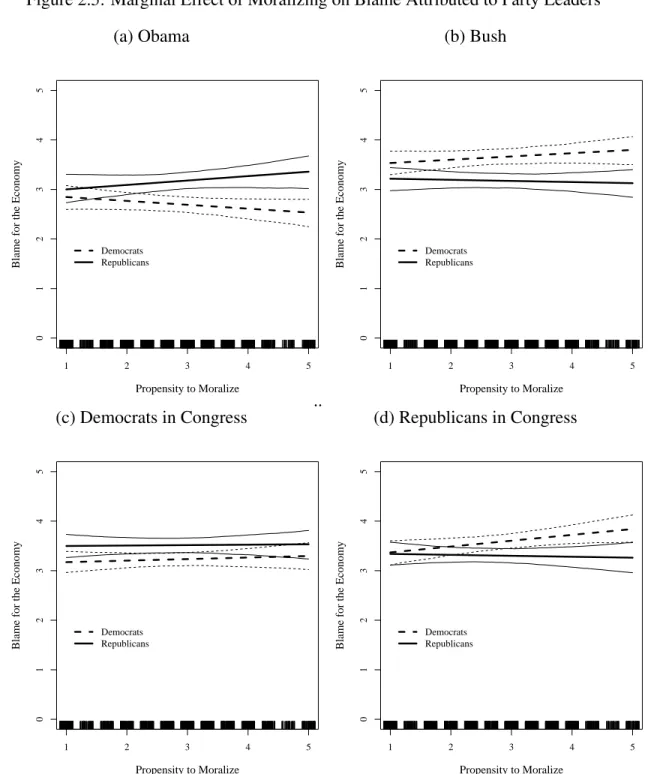
I operationalize the dependent variableblame attributed to party leadersusing a series
of EGSS questions asking respondents how much different political leaders are to “blame
for the poor economic conditions of the past few years.” Scores range from “not at all” to
“a great deal” on a 5-point scale. This question is asked in reference to President Obama,
Democrats in Congress, President Bush, and Republicans in Congress. I rely on responses
to the former two objects to represent blame directed at Democratic leaders and responses
to the latter two objects to represent blame directed at Republican leaders.
To assess affect toward, job approval of, and blame attributed to in-party and out-party
leaders, I include a dichotomous variable for party identification. Republicans and
Republi-can leaners are coded 1, and Democrats and Democratic leaners are coded 0. Independents
6Full question wordings for this and all other variables are included in the appendix for this chapter.
7Both Romney and Gingrich were included because the 2012 GOP presidential primary was undecided at
the time the survey was conducted.
and “other” party identifiers are excluded from the analyses.8 I interact the dichotomous
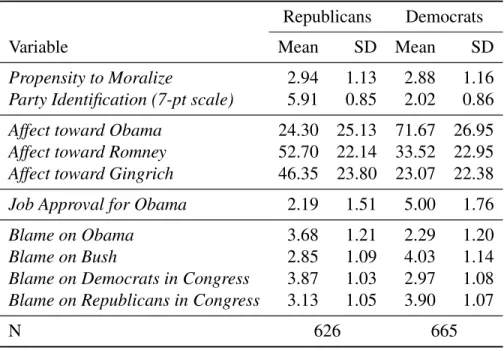
variable for party identification with the propensity to moralize score. Table 2.1 presents an
overview of the data for the key independent and dependent variables used in the analyses,
broken down by Republican and Democratic respondents.
Table 2.1: Summary of Key Variables by Party Identification
Republicans Democrats
Variable Mean SD Mean SD
Propensity to Moralize 2.94 1.13 2.88 1.16
Party Identification (7-pt scale) 5.91 0.85 2.02 0.86
Affect toward Obama 24.30 25.13 71.67 26.95
Affect toward Romney 52.70 22.14 33.52 22.95
Affect toward Gingrich 46.35 23.80 23.07 22.38
Job Approval for Obama 2.19 1.51 5.00 1.76
Blame on Obama 3.68 1.21 2.29 1.20
Blame on Bush 2.85 1.09 4.03 1.14
Blame on Democrats in Congress 3.87 1.03 2.97 1.08 Blame on Republicans in Congress 3.13 1.05 3.90 1.07
N 626 665
In addition, I include several control variables to account for other factors that might
in-fluence views toward in-party and out-party leaders. Regarding demographics, I include a
dummy variable for race (white), a dummy variable for gender (female), and a categorical
variable for income. To capture negative or positive views toward the candidates
stem-ming from the Religious Right, I also include a dummy variable for evangelical religious
affiliation (evangelical Protestant).9 Lastly, I control for political ideology (7-point scale)
and party identification (7-point scale) in order to verify that moral conviction influences
8Only 23 observations are dropped because of this decision.
9I run other models including a religious attendance variable (6-point scale) instead of the evangelical
affective polarization independent of partisan and ideological strength.
I utilize linear regression to test the marginal effect of propensity to moralize on both
Republicans’ and Democrats’ feelings toward party leaders, their approval of President
Obama’s job performance, and their attribution of blame to party leaders. I regress (weighted
OLS) feeling thermometer ratings for the Democratic and Republican candidates, Obama’s
job approval, and blame attributed to Democratic and Republican leaders on dichotomous
party identification (Republican), propensity to moralize, the interaction term between
di-chotomous party identification and propensity to moralize, and the various control
vari-ables.10 Filling in either affect toward, job approval of, or blame attributed to party leaders
as the dependent variable, I model the following equation:
DVi =β0 + β1Republicani + β2P ropensity to M oralizei + β3 (Republicani ∗
P ropensity to M oralizei),+β4Controlsi + ei
2.6 Results
To simplify the presentation of results and help clarify the interpretation of interaction
terms, I only include figures in the body of this paper.11 In each figure, the x-axis shows
the observed range of propensity to moralize, and the y-axis shows either affect toward
party leaders, presidential job approval, or the level of blame attributed to party leaders.
The thick dashed line represents the marginal effect of propensity to moralize on the
de-pendent variable for Democratic respondents, and the thick solid line represents this effect
for Republican respondents. The thin dashed and solid lines represent the 95% confidence
intervals for these estimates. Also, I include a rug plot on the x-axis, which reflects the
distribution of propensity to moralize scores. Since the scores are clumped together, they
are jittered to better reflect the spread of the data.
10The EGSS includes a poststratification weight designed to ensure data is representative of the national
population. All analyses are weighted so that results generalize to the overall population.
11A table of coefficient estimates for each model is included in the appendix for this chapter.
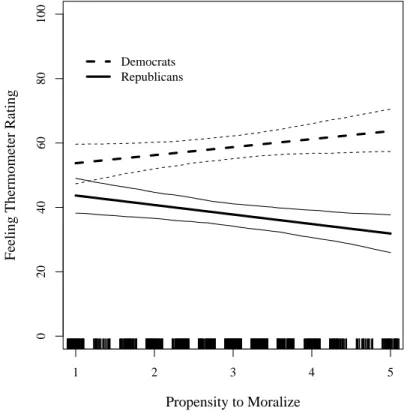
The results illustrated in Figure 2.1 support my first set of hypotheses that people who
display a higher propensity to moralize are more likely to express negative affect toward
leaders from the opposite party and positive affect toward leaders from their own party.
This figure illustrates the estimated marginal effect of propensity to moralize on feeling
thermometer ratings of President Obama among Democratic and Republican respondents,
holding all other control variables constant at their means.12 The solid line shows that
among Republicans, each one point increase in propensity to moralize leads, on average,
to a -2.93 point decrease in how favorably people feel toward President Obama. This
marginal effect represents almost a twelve point decrease in positive affect toward Obama
over the total range of propensity to moralize, suggesting that Republicans with a higher
propensity to moralize tend to show more dislike for an out-party leader. The dashed line
illustrates that among Democrats, each one point increase in propensity to moralize leads,
on average, to a 2.57 point increase in positive feeling toward President Obama. This
marginal effect represents a ten point increase in positive affect toward Obama over the
total range of propensity to moralize, indicating that Democratic moralizers tend to view
an in-party leader more favorably.
As Figure 2.1 shows, the gap in how Democrats and Republicans feel toward President
Obama grows larger as you move from left to right across the propensity to moralize scale.
By the time you get to the right-hand side of the scale, the strongest partisan moralizers
are more than 20 points apart in their feelings toward Obama. This suggests that affective
polarization between partisans increases as propensity to moralize increases, even after
controlling for partisan and ideological strength.
12In this and every other figure, I show the relationship for Democrats and Republicans separately, while
Figure 2.1: Marginal Effect of Propensity to Moralize on Affect toward Obama
1 2 3 4 5
0
20
40
60
80
100
Propensity to Moralize
Feeling Thermometer Rating
Democrats Republicans
Note: The thin dashed and solid lines represent 95% confidence intervals for these esti-mates. N = 1212. R2= 0.52.
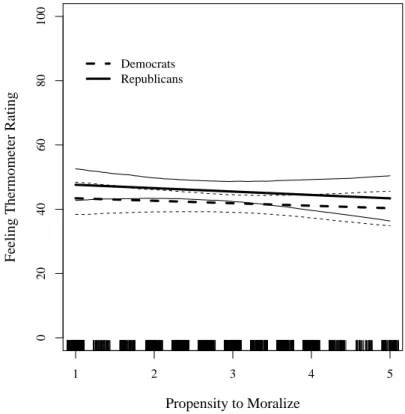
Figure 2.2 illustrates the estimated marginal effect of propensity to moralize on
af-fect toward Mitt Romney among Democrats and Republicans, again holding other control
variables constant at their means. This figure looks different than the previous one for
af-fect toward Obama and actually suggests that both Republican and Democratic moralizers
show a greater tendency to dislike Romney than non-moralizers. Each one point increase in
propensity to moralize leads, on average, to a -0.79 point decrease in positive affect toward
Romney among Democrats and a -1.06 point decrease among Republicans. The results for
the Gingrich model are similar.13 Consequently, increases in propensity to moralize do not
influence more divided feelings about Romney and Gingrich like they do about Obama.
13Because the results for the Gingrich and Romney models are so similar, I only show figures for the
Romney models in this chapter. Results for the Gingrich models are included in the appendix for this chapter.
Figure 2.2: Marginal Effect of Propensity to Moralize on Affect toward Romney
1 2 3 4 5
0
20
40
60
80
100
Propensity to Moralize
Feeling Thermometer Rating
Democrats Republicans
Note: The thin dashed and solid lines represent 95% confidence intervals for these esti-mates. N = 1203. R2= 0.18.
This finding fails to support my first set of hypotheses and raises questions about my
theory, until we stop and consider how much voters actually knew about Romney and
Gingrich when the 2012 EGSS was administered. My theory predicts that individuals who
base their political opinions on partisan moral convictions will be more likely to display
heightened affective polarization. This means that some factor, such as close connections
with a party, moralized media coverage, or prominent policy stances on morally mandated
issues, has to trigger moralized attitudes about party leaders in order for citizens to exhibit
the patterns of partisan bias I expect.
been in office for four years, while neither Romney nor Gingrich had secured the
Repub-lican presidential nomination. Consequently, Romney and Gingrich were less likely to be
perceived as clearly and authentically representing the Republican Party than Obama was
to be perceived as the figurehead of the Democratic Party. Also, when the EGSS was
ad-ministered, neither Romney nor Gingrich had received the same level of media scrutiny
as Obama, and neither Republican candidate had taken as well-publicized policy stances
as Obama. For this reason, average citizens, who display relatively low levels of political
knowledge, might not have picked up on enough signals to associate the Republican
candi-dates with their sense of morality the way they did President Obama. In contrast,
individu-als with higher levels of political knowledge should have possessed sufficient information
to develop partisan moral convictions about Romney and Gingrich. By extension, they
should be more likely to display the type of polarized affect that I predict based on their
propensity to moralize politics.
I can test this expectation by comparing the effect of propensity to moralize on high and
low knowledge respondents’ feelings toward the Republican leaders. The EGSS includes
four general knowledge items to assess respondents’ level of political knowledge. I sum
correct answers to these questions and divide respondents into categories of those who got
two questions or less correct, which represents low knowledge (coded 0), and those who
got three questions or more correct, which represents high knowledge (coded 1).14
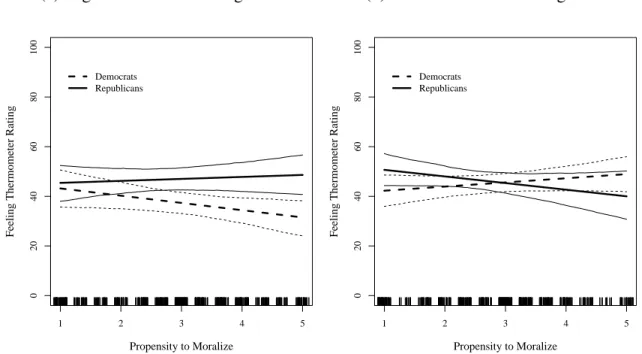
Figure 2.3 shows the estimated marginal effect of propensity to moralize on feeling
thermometer ratings of Romney among high and low knowledge Democrats and
Repub-licans, holding all other control variables constant at their means. Plot A illustrates that
high knowledge respondents display the pattern of polarized affect my theory predicts. The
dashed line shows that each one point increase in propensity to moralize leads, on average,
14I count missing answers as “wrong.” To verify my results, however, I also run models where missing
answers are simply counted as missing. Results from the “missing” models are nearly identical to results from the “wrong” models, including the same coefficient signs and levels of significance. In addition, I get similar results when I define low and high knowledge based on a different number of correct answers.
to a -2.92 point decrease in how much Democrats like Romney, and the solid line shows
that the same increase in propensity to moralize leads, on average, to a 0.75 point increase
in how much Republicans like Romney. Among high knowledge individuals, the partisan
gap in affect toward Romney grows as propensity to moralize increases.
Figure 2.3: Marginal Effect of Moralizing on Affect toward Romney by Knowledge
(a) High Political Knowledge
..
1 2 3 4 5
0
20
40
60
80
100
Propensity to Moralize
Feeling Thermometer Rating
Democrats Republicans
(b) Low Political Knowledge
..
1 2 3 4 5
0
20
40
60
80
100
Propensity to Moralize
Feeling Thermometer Rating
Democrats Republicans
Note: The thin dashed and solid lines represent 95% confidence intervals for these esti-mates. N = 627, R2= 0.26 for High Knowledge. N = 576, R2= 0.16 for Low Knowledge.
In contrast, Plot B shows that low knowledge Democrats and Republicans mix up the
connection between their party identification, moral conviction, and affect toward Romney.
Each one point increase in propensity to moralize actually leads, on average, to a 1.68
point increase in how much Democrats like Romney and a -2.72 point decrease in how
much Republicans like Romney. The high and low knowledge Gingrich models display the
same pattern of results.
ten-moralize are more likely to express positive affect toward out-party leaders and negative
affect toward in-party leaders, so long as they have the political knowledge necessary to
recognize cues that help them develop moral convictions about the leaders. This result
sup-ports my theory that individuals who base their evaluations of political elites on partisan
moral convictions are more likely to report polarized feelings about the elites.
Despite this general trend, propensity to moralize influences feelings about specific
can-didates in distinct ways. A comparison of Figure 2.1 to Plot A in Figure 2.3 shows that the
marginal effect of propensity to moralize on polarized affect toward Obama is stronger than
the marginal effect of propensity to moralize on polarized affect toward Romney among
even high knowledge respondents. Partisan moralizers appear to hold stronger morally
convicted attitudes about the president than about a less prominent political leader.15
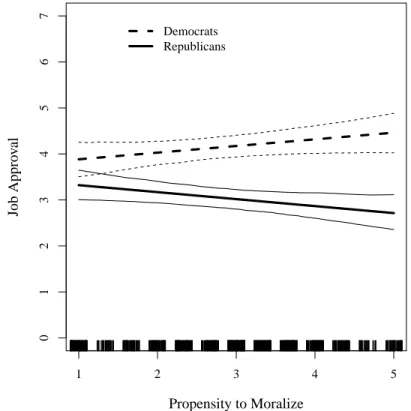
The results illustrated in Figure 2.4 support my second set of hypotheses that partisans
who display a higher propensity to moralize are more likely to express lower job approval
of out-party leaders and higher job approval of in-party leaders than partisans who
dis-play a lower propensity to moralize. This figure shows the estimated marginal effect of
propensity to moralize on President Obama’s job approval among Democratic and
Repub-lican respondents, holding all other control variables constant at their means. The solid line
shows that each one point increase in propensity to moralize leads, on average, to a -0.15
point decrease in how much Republicans approve of the job President Obama is doing in
office. This negative marginal effect represents more than a half point decrease in
presiden-tial job approval over the total range of propensity to moralize. The dashed line illustrates
that each one point increase in propensity to moralize leads, on average, to a 0.15 point
15Some might suggest that racial sentiments are driving the heightened levels of polarized affect toward
President Obama, rather than partisan moral convictions. To address this alternative hypothesis, I run several models testing how propensity to moralize influences feeling thermometer ratings for blacks among blacks and non-blacks, and I find no difference in the effect of propensity to moralize on feeling thermometer ratings between the two groups. Moral conviction does not appear to influence divided racial evaluations the way it does divided political evaluations, casting strong doubt on the premise that moral conviction related to racial sentiments, rather than partisanship, drives polarized affect toward President Obama.
increase in how much Democrats approve of President Obama’s job performance. This
positive marginal effect represents more than a half point increase in job approval across
the propensity to moralize scale.
Figure 2.4: Marginal Effect of Propensity to Moralize on Job Approval for Obama
1 2 3 4 5
0
1
2
3
4
5
6
7
Propensity to Moralize
Job Appro
v
al
Democrats Republicans
Note: The thin dashed and solid lines represent 95% confidence intervals for these esti-mates. N = 1212. R2= 0.50.
As Figure 2.4 shows, the gap in President Obama’s job approval between Democrats
and Republicans grows wider as you move from left to right across the propensity to
moral-ize scale. The strongest partisan moralmoral-izers are farther than one point apart in their
assess-ment of Barack Obama’s job performance. This illustrates that individuals who habitually
think about politics in terms of right and wrong are more divided in their evaluations of a