PAVING THE PATH TO MINDFULNESS: IMPLEMENTATION OF A PROGRAM TO REDUCE STRESS AND BURNOUT IN INPATIENT PSYCHIATRIC NURSES
Kristin Elizabeth Rush
A dissertation submitted to the faculty at the University of North Carolina at Chapel Hill in partial fulfillment of the requirements for the degree of Doctor of Nursing Practice in the School
of Nursing in the University of North Carolina.
Chapel Hill 2018
© 2018
ABSTRACT
Kristin Elizabeth Rush: Paving the Path to Mindfulness: Implementation of a Program to Reduce Stress and Burnout in Inpatient Psychiatric Nurses
(Under the direction of Grace Hubbard)
Background: Inpatient psychiatric nurses experience high levels of stress and burnout contributing to negative healthcare outcomes. Although evidence supports a high prevalence of burnout, very few programs have been implemented to target prevention of stress and burnout in psychiatric nurses.
Purpose: The purpose of project was to evaluate the helpfulness of a four-week mindfulness program designed to reduce stress and burnout in psychiatric nurses working on locked inpatient units.
Methods: This evaluation was formative in nature to assist in the development and implementation of a four-week mindfulness program. The primary outcome measures were the effectiveness of program content and the learning platform. A secondary outcome measure assessed the barriers to and facilitators of the program. These outcomes were measured through collection of quantitative data from an anonymous online survey and qualitative data obtained through a focus group.
ACKNOWLEDGEMENTS
I would like to express deep gratitude to Dr. Grace Hubbard for providing her guidance on the development and execution of this project. Her contributions to this project are very much appreciated and it was a true privilege to work together. I would also like to thank my committee members, Dr. Cheryl Giscombe and Robert Cameron, who provided valuable feedback and support throughout my research.
TABLE OF CONTENTS
LIST OF FIGURES ...x
LIST OF ABBREVIATIONS ... xi
CHAPTER 1: INTRODUCTION ...1
Background and Significance ...1
Problem Statement ...1
Purpose Statement ...2
CHAPTER 2: REVIEW OF LITERATURE ...3
Search Strategy ...3
Background ...4
Effects of Stress and Burnout on Patient Safety ...5
Effects of Stress and Burnout on Nurses ...6
Effects of Stress and Burnout on Healthcare Systems ...7
Mindfulness and Mindful Practice ...7
Mindfulness Feasibility ...10
Mindfulness-Based Interventions ...12
Program Evaluation ...13
Limitations of Existing Research ...14
CHAPTER 3: CONCEPTUAL MODEL...15
CHAPTER 4: PROJECT DESIGN ...19
Setting and Resources ...20
Study Participants ...20
Key Stakeholders ...20
Recruitment ...21
Ethics and Human Subjects Permissions ...21
Data Collection ...21
Procedures for Project Implementation ...22
Program Module Overview...23
Data Analysis ...24
Barriers to Implementation and Sustainability ...25
Anticipated Resources and Budget ...25
CHAPTER 6: RESULTS ...26
Demographics ...26
Helpfulness of Program Content and Learning Platform- Primary Outcomes ...26
Barrier and Facilitators- Secondary Outcome...29
Website and Anecdotal Data ...29
CHAPTER 7: DISCUSSION ...31
Limitations ...32
CHAPTER 8: RECOMMENDATIONS...34
APPENDIX 1: LANGER’S MINDFULNESS-BASED MODULES ...35
APPENDIX 2: WEEKLY TEMPLATE ...36
APPENDIX 3: FLYER ...37
APPENDIX 5: INFORMATION SHEET ...39
APPENDIX 6: QUALTRICS POST-EVALUATION SURVEY ...40
APPENDIX 7: BENNET’S HIERARCHY ...43
APPENDIX 8: FOCUS GROUP QUESTIONS ...44
APPENDIX 9: AVERAGE TIME SPENT COMPLETING MODULES ...45
APPENDIX 10: TYPE OF DEVICE USED TO ACCESS WEBSITE ...46
LIST OF FIGURES
LIST OF ABBREVIATIONS IRB Institutional Review Board
KASA Knowledge, Skills, Attitudes, and Aspirations LPN Licensed Practical Nurse
MBCT Mindfulness-Based Cognitive Therapy MBI Mindfulness-Based Intervention MBSR Mindfulness-Based Stress Reduction PMH Psychiatric-Mental Health
CHAPTER 1: INTRODUCTION Background and Significance
Psychiatric-mental health (PMH) nurses are faced with unique challenges when providing care for patients on locked psychiatric units. These challenges often lead to stress and burnout with 21% to 67% of PMH nurses experiencing high levels of burnout (Morse, Salyers, Rollins, Monroe-DeVita, & Pfahler, 2012). These high levels of stress and burnout may contribute to negative outcomes for patients, nurses, and the healthcare system (Dreison, 2016; Hanrahan, Aiken, McClaine, & Hanlon, 2010; Khamisa, Peltzer, & Oldenburg, 2013; Morse et al., 2012).
Stress and burnout in nurses can significantly impact nursing practice and the quality of health care for patients. In addition, stress and burnout are associated with increased nursing errors, higher patient mortality rates, and decreased patient satisfaction (Brady, O'Connor, Burgermeister, & Hanson, 2012; McHugh, Kutney-Lee, Cimiotti, Sloane, & Aiken, 2011; Welp, Meier, & Manser, 2015). The sustained effects of stress and burnout contribute to physical and psychological symptoms such as depression in nurses who work in hospitals (Letvak, Ruhm, & McCoy, 2012). As a result of these effects, the nurse’s ability to form a therapeutic relationship with patients is decreased (Salyers, Flanagan, Firmin, & Rollins, 2015) potentially resulting in increased risk for adverse patient outcomes, including violent behavior (Bowers, Brennan, Flood, Lipang, & Oladapo, 2006; Salyers et al., 2015).
Problem Statement
2012). Mindfulness training offers promising benefits in reduction of stress and burnout in PMH nurses who work in these settings (Aikens, 2014; Burton, Burgess, Dean, Koutsopoulou, & Hugh-Jones, 2016; Kemper, Mo, & Khayat, 2015).
Purpose Statement
CHAPTER 2: REVIEW OF LITERATURE Search Strategy
The review of literature includes available evidence regarding stress and burnout in PMH nurses and the efficacy of mindfulness to address the problem. Although this literature review is not meant to be exhaustive, PRISMA guidelines were used to direct and guide the literature search (Liberati et al., 2009). Several databases were searched to find relevant articles addressing the identified problem including CINAHL, Google Scholar, MEDLINE, PsycINFO, and
PubMed. Various combinations of key words were used to search for articles to include
“burnout, stress, psychiatric-mental health nurse, healthcare provider, mindfulness, mindfulness-based intervention, MBSR, psychiatric, and safety.” Articles were sorted by relevancy and then screened by title and abstract. The initial search was completed on October 3, 2016 with a date limitation of articles published between the years of 2011 and 2016 which yielded 408 articles after removal of duplicates. Subsequent searches used various combinations of key words relevant to the literature review without a date limiter and the last search was completed on November 17, 2016 and articles were screened by title and abstract. Published, peer-reviewed articles were included if they were relevant to the review of background information,
Background
The demands of professional nursing are inherently stressful regardless of setting. All nurses provide care and support to patients and families who suffer physically and
psychologically to provide care and support (Smith, 2014). Nurses play a major role in multidisciplinary healthcare teams, and they must balance their commitment as advocate for patient needs with both personal values and workplace obligations or policies. The demands of cost reduction in healthcare, patient acuity and complexity, increased workload and nursing shortages also contribute to the work-related stress experienced by nurses (Dreison, 2016; Khoury, 2015; Madathil, Heck, & Schuldberg, 2014). Nurses experience higher levels of stress-related burnout compared to other colleagues in healthcare (Khamisa et al., 2013).
The occurrence of burnout is influenced by situational factors and individual factors. Situational factors include characteristics of the job, occupation and organization; individual factors include characteristics of demographic variables, personality and job attitudes (Bakker & Costa, 2014; Maslach et al., 2001). Nurses who experience persistent stress and lack the ability to effectively manage job demands have a greater propensity to develop burnout (Maslach & Leiter, 1997). Leading situational factors that cause burnout and contribute to job demands include workplace role dilemmas, stressful encounters, workloads and occupational pressure (Bakker & Costa, 2014). Inadequate job resources, such as decreased social support, are associated with higher levels of exhaustion and burnout. However accessible job resources, including performance feedback or opportunities for development, may buffer the effects of burnout (Gandi, Wai, Karick, & Dagona, 2011). Leadership styles of supervisors may protect against (or contribute to) burnout and turnover of nurses (Madathil et al., 2014). Individual factors, such as personality style and socioeconomic status may increase the predisposition to burnout (Bakker & Costa, 2014). Personality characteristics including high self-efficacy, optimism and self-esteem are better protected against development of burnout, whereas people who have an external locus of control or avoidant coping styles have higher levels of burnout (Bakker & Costa, 2014; Maslach et al., 2001). Additionally, individuals who are younger are more likely to experience burnout at the beginning of their career since age is associated with amount of work experience (Maslach et al., 2001).
Effects of Stress and Burnout on Patient Safety
that emotional exhaustion (one dimension of burnout) on intensive care units independently predicted higher standardized mortality ratios (Welp et al., 2015). High levels of stress and burnout have been shown to be related to nursing errors that are provoked by multiple
interruptions, stringent documentation requirements, habitual patterns of thinking, and decreased ability to concentrate or focus (Brady et al., 2012; Hanrahan & Aiken, 2008). Perceived nursing errors have also been attributed to heavy workloads, inexperience, lack of supervision and communication problems (Karga, Kiekkas, Aretha, & Lemonidou, 2011). In addition to patient safety, lower patient satisfaction scores are associated with high levels of nurse burnout
(McHugh et al., 2011). This combined evidence supporting an increase in nursing errors and lower patient satisfaction indicate that nursing stress and burnout may contribute to a reduced quality of care.
Effects of Stress and Burnout on Nurses
According to the American Nurses Association (2011) survey of nurses regarding the health and safety of their work environments, the number one concern was the acute and chronic effects of stress and overwork. The North American Nursing Diagnosis Association states the inability to cope with stressors can result in difficulty in meeting role expectations, organizing information, concentration, problem-solving, and communication patterns (Herdman, 2012).
Effects of Stress and Burnout on Healthcare Systems
The concept of the Triple Aim, an approach to improving health system performance through improved patient satisfaction, cost effective care, and optimal patient outcomes, has spread across health care systems and become the framework of practice. However, the
widespread reports of burnout experienced by health care providers potentially compromises the Triple Aim due to the negative influence of provider burnout on patient satisfaction and health outcomes (Bodenheimer & Sinsky, 2014). This awareness has resulted in the recommendation of a new dimension in which improvement of the work life of healthcare providers is the focus – therefore, the Triple Aim has become the Quadruple Aim (Agency for Healthcare Research and Quality, 2015).
Stress and burnout have been linked to nurse turnover rates which can cost healthcare organizations a substantial amount (Oyeleye, Hanson, O'Connor, & Dunn, 2013). According to the “National Healthcare Retention Survey,” by Nursing Solutions Inc. (2016), PMH nurses have a higher turnover rate compared to other specialty nursing areas and demonstrated a 57.2% turnover rate in 2014 and 2015. The estimated turnover cost associated with each bedside registered nurse ranges from $22,000 to $64,000 (Nursing Solutions Inc., 2016; Oyeleye et al., 2013). It is essential to address the mental health and well-being of PMH nurses as the workforce continues to age and the nursing shortage becomes more critical (Oyeleye et al., 2013).
Mindfulness and Mindful Practice
2015; Mackenzie, Poulin, & Seidman-Carlson, 2006; Shapiro, Astin, Bishop, & Cordova, 2005). Mindfulness is also gaining popularity in many well-known companies who have created
workplace programs to increase mindfulness in their employees including, Google, Aetna, General Mills, Intel, and Target (Schaufenbuel, 2015).
One definition of mindfulness made popular by Kabat-Zinn (2003) is the practice of purposefully paying attention nonjudgmentally in the present moment. Similarly, Langer (1989) defines mindfulness as a flexible state of mind in which one is anchored in the present moment by engaging with novel ideas while paying attention to context and variability.
As mindfulness spreads across a variety of fields and continues to become more
mainstream it is important to discern the nuances of mindfulness. The Mindfulness-Based Stress Reduction (MBSR) program, developed by Kabat-Zinn (2003), is heavily focused on meditation to support mindfulness practice in which one attempts to become aware of thoughts, situations, emotions, and every day experiences. Ellen Langer’s (1989) application of mindfulness is somewhat different. This perspective allows one to register his or her thoughts and actions immediately, mindfully processing the present moment. The term mindful indicates that one approaches a situation taking note of change and is open to new ideas and perspectives (Langer, 2016). Langer (2014) supports the use of meditation, but believes that it is a tool to achieve a post-meditative mindfulness.
general sense of well-being. This study led Langer to question the true value of choice related to health and cascaded her research about mindfulness.
Cultivating a mind-state to decrease stress and burnout can be achieved by a variety of methods. Stress and burnout as described by Maslach et al. (2001) can be caused by a variety of factors including individual and system factors (Bakker & Costa, 2014). The meta-analysis by Dreison (2016) examined the effectiveness of burnout interventions in mental health providers and found person-directed interventions more effective than organizational interventions, supporting the use of an intervention to modify the individual rather than attempting to modify the work environment. Attempting to eliminate stress in the work environment is not realistic and therefore directs investigation to evidence-based research that focuses on individual interventions such as mindfulness.
Randomized controlled studies using the intervention of mindfulness have demonstrated an increase in mindful practice and decreased burnout among nurses (Cohen-Katz et al., 2005; Mackenzie et al., 2006; Shapiro et al., 2005). Mindfulness can transform the response to a stressor by shifting focus to awareness of one’s thoughts, feelings, and bodily sensations in the present moment without self-criticism (Burton et al., 2016). The integration of mindfulness has the potential to allow one to skillfully respond to negative stressors, leading to burnout, while resisting the autopilot reaction conditioned by past experiences (Aikens, 2014; Shapiro et al., 2005).
Aikens (2014) examined the efficacy of a mindfulness workplace program through use of a randomized control study and produced a medium to large effect size on mindfulness,
themes of mindfulness such as focus on breath or body scanning (Aikens, 2014). Khoury (2015) evaluated the use of mindfulness in nonclinical populations in a meta-analysis of 2660
participants and found a small effect size on burnout and a large effect size on stress. A recent meta-analysis evaluating the effectiveness of mindfulness based interventions reported a medium effect size on stress among healthcare providers (Burton et al., 2016). A review of literature specifically examining available evidence regarding mindfulness based stress reduction programs on nurses identified 13 studies of which 6 included practicing registered nurses, identifying the need for future research in this population (Smith, 2014).
A variety of evidence supports the efficacy of mindfulness in reducing the psychological distress of those experiencing stress and burnout. Important consideration must be taken when exploring the various perspectives of mindfulness. To avoid a one size fits all approach, mindfulness-based interventions must be tailored and readily accessible to the population of PMH nurses.
Mindfulness Feasibility
MBSR delivered in an eight-week format is not feasible for many healthcare providers whose work schedules may be restrictive and could result in a high attrition rate (Burton et al., 2016). Furthermore, organizations place high demands by employees to effectively use their time in patient care delivery. Research studying alternative formats and sites have found positive outcomes. For example, a shortened MBSR program of four weeks demonstrated a statistically significant increase (p<.05) in the measurement of mindfulness before (M=28.75, SD=9.6) and two months after (M=36.25, SD=9.6) (Hallman, O'Connor, Hasenau, & Brady, 2014). Similarly, Aikens (2014) study demonstrated that a shortened web-based mindfulness program can produce comparable results to a traditionally delivered, eight-week, in-person MSBR program.
Adaptation of the traditional MBSR format promotes increased access to the intervention. Reasons for attrition in previous studies with healthcare providers include work-related pressures and a shifting work schedule (Burton et al., 2016). Additionally, one study reported that initial engagement in the program was low due to inability to express to participants the value and benefit of participating (Bazarko, Cate, Azocar, & Kreitzer, 2013). In order to combat high attrition and lack of engagement, the meta-analysis by Burton et al. (2016) reported that some studies incentivized participants by offering a gift of low monetary value, education credits, or payment for work time. Based on the previous studies, findings suggest that it may be helpful to identify key champions at the implementation site to educate candidates. These champions will positively influence the desire to participate as others will want to emulate engaging behavior. The use of familiar employees from within the department and face-to-face enrollment strategies produces more favorable response rates (Khamisa, Peltzer, Ilic, &
et al., 2014). Addressing these issues upfront will enable better resolution of the larger issue which is the degree of participant burden (Newington & Metcalfe, 2014).
Mindfulness-Based Interventions
Although many studies evaluating Mindfulness-Based Interventions (MBI)s do not report all details regarding intervention, patterns of study characteristics can still be examined. Many studies use varied lengths of MBSR producing positive results, but this makes it difficult to determine what the minimal effective dose of the intervention should be (Burton et al., 2016; Lamothe et al., 2016; Smith, 2014). Burton et al. (2016) examined nine research studies in their meta-analysis of MBI’s and found a medium effect size on stress in healthcare providers. The length of intervention ranged from 1 day to 10 weeks and included varying study designs of pre-post intervention, quasi-experimental, and randomized control designs. Interventions included mindfulness instruction (8 studies), meditation (6 studies), breathing exercises (3 studies), yoga/stretching (4 studies), group discussion (4 studies), and homework (3 studies). All participants were self-selected which may increase motivation and engagement of participants contributing to positive effects of interventions (Burton et al., 2016).
Lamothe et al. (2016) investigated 39 studies in a systematic review of MBSR
interventions on healthcare providers. They found that MBSR decreased perceived stress in 95% of the studies, decreased burnout in 53% of the studies, and increased mindfulness in 82% of the studies. The length of intervention ranged from 1 week to 12 weeks. The majority of the
interventions were based on traditional MBSR but adapted to differing lengths and delivery methods such as telephonic format (Lamothe et al., 2016).
of delivery included a smartphone application, a virtual online classroom and most commonly web page documentation. Although findings demonstrated a small effect size on mindfulness, the number of exposures to the intervention increased the effect size of mindfulness (Spijkerman et al., 2016). The moderate effect size demonstrated in this meta-analysis for stress is comparable to the traditionally delivered MBSR or MBCT meta-analysis by Gotink et al. (2015).
Overall these results offer promising outcomes for the use of MBI to decrease symptoms of stress and burnout. The adaptions to broaden the range of delivery methods were
demonstrated to be effective and the use of internet platforms may appeal to a broader
population. Furthermore, evidence suggests that shortened mindfulness programs instead of a traditional 8-week program produces comparable positive outcomes—deceasing the burden of time commitment.
Program Evaluation
Program evaluation is defined as “the systematic collection of information about the activities, characteristics, and outcomes of programs to make judgments about that program, improve program effectiveness, and/or inform decisions about future program development” (Centers for Disease Control and Prevention, 2012, p. 4). Types of programs include
interventions, policies, and specific projects. The goal of the program is to improve the health of a population by evaluating what interventions or approach is best to address the problem.
Program evaluation may be guided by theory during development, but it is not intended to prove or disprove the value of the guiding theory (Lowe & Cook, 2012). Further, the evaluation of programs does not have to include randomized trials to be credible or of value. Program
Limitations of Existing Research
There is a large body of evidence supporting prevalence of stress and burnout among various healthcare workers, but most research regarding PMH nurses have been conducted outside the United States limiting generalizability (Hanrahan et al., 2010; Madathil et al., 2014). Further, evidence supports that research regarding interventions to reduce stress and burnout in PMH nurses is significantly lacking (Morse et al., 2012). Inconsistency in research design and methodology make it difficult to generalize results to other populations in healthcare (Khoury, 2015). An additional challenge is the absence of detail in reporting of interventions, which makes it difficult to analyze what components of the intervention have the biggest impact (Burton et al., 2016). The gap in knowledge regarding PMH nurse stress and burnout along with various
CHAPTER 3: CONCEPTUAL MODEL
Ellen Langer, a social psychologist and professor at Harvard University, developed her theory of mindfulness over several decades through application of the theory to various social issues that include: prejudice, diversity, adoption and the art of aging (Demick, 2000; Kawakami, White, & Langer, 2000; Langer, 2009; Langer & Moldoveanu, 2000a, 2000b). Langer’s (1989) definition of mindfulness is a flexible state of mind in which one is anchored in the present moment by engaging with novel ideas, while paying attention to context and variability. Langer’s
(1989) explanatory theory of mindfulness has a substantial base of research supporting the use of her theory to increase mindful behavior (Carson & Langer, 2006; Langer, 1989). Langer’s approach offers increased flexibility, and therefore feasibility, for application in settings with restrictive work schedules like healthcare. Langer’s theory of mindfulness is quite simple, noticing new things allows you to engage in the present moment increasing attention and awareness (Langer, 1989).
those substantive elements that are relevant for the successful resolution of the situation” (Langer, Blank, & Chanowitz, 1978, p. 636). In other words, mindlessness occurs when an individual is “cognitively committed” to a rigid mindset based on previously categorized experiences (Carson & Langer, 2006).
Langer’s mindfulness framework includes the central tenets: novelty seeking, engagement, novelty producing and flexibility (Langer, 1989). Haigh, Moore, Kashdan, and Fresco (2011) describe novelty seeking as the tendency to draw new and different distinctions about one’s environment with an open and inquisitive approach. Open-minded awareness of one’s environment is also associated with engagement so that one is able to notice relevant or novel details which promote one to be focused in the present moment. Novelty producing allows the individual to generate new categories, rather than relying on preconceived notions from past experiences, in order to learn more about the environment. Finally, a flexible awareness
encourages one to welcome multiple perspectives and allows freedom to shift perspective based on context (Haigh et al., 2011). In other words, the application of Langer’s tenets to a stressful situation in which thinking and behavior have a tendency to become increasingly rigid, offers a feasible approach to refocus on mindfulness, and allowing new and different perspectives for conceptualizing one’s situation.
anxiety, a higher ability to cope and requested pain relievers and sedatives less frequently compared to the control group.
Following this theory, interventions to increase mindfulness must encourage the participant to identify new ideas to increase engagement in the present moment. This can be done by simply identifying five new things about an object or person, which in turn makes it easier to pay
attention or adjust focus to what is being noticed. For example, patients often experience varying levels of emotions throughout the day which can go unnoticed if the focus is solely on the task at hand. Taking the time to notice five new things about how a patient might appear different from the last interaction can help identify escalating behavior or a change in mood and challenge habitual thinking. The mindful interaction with the patient makes the therapist appear more charismatic and authentic, producing genuine communication in which the patient feels cared for (Carson & Langer, 2006; Langer, 1989). An example of how mindfulness can lead to a positive outcome is the mistake made by a company called 3M when they were trying to make glue. The glue failed to adhere which could be viewed as a mistake or failure, but instead the company engineers began to problem solve what could be done with a glue that does not completely adhere. Noticing how the product was different from their intention, they were able to creatively problem solve leading to the successful invention of Post-it notes (Langer, 1989).
down the body in a non-judgmental way. The body scan allows one to experience sensation of different parts of the body, alternating between a wide and narrow focus of attention without trying to change anything (Sauer-Zavala, Walsh, Eisenlohr-Moul, & Lykins, 2013).
CHAPTER 4: PROJECT DESIGN
This Doctor of Nursing Practice scholarly project was a formative program evaluation of a four-week mindfulness program that addressed stress and burnout. The formative evaluation design was chosen as being the most useful during the development and implementation of a new program. This type of evaluation facilitates determination of feasibility and provides feedback for future improvements (Taylor-Powell, Jones, & Henert, 2003). A logic model was used as a graphic depiction to conceptualize preliminary planning and the process of
implementation. The logic model served to articulate understanding of the current situation, the changes desired through the program effort, the activities planned to promote the change, the resources needed for the initiative, and external factors that might influence outcomes (Appendix 1). In addition, Bennett’s Hierarchy was utilized to guide overall program evaluation, with an emphasis on linkage of program outcomes to evaluation questions (Bennett, 1976; Radhakrishna & Relado, 2009). Program outcomes included the extent to which (1) the program increased awareness of Ellen Langer’s tenets of mindfulness, (2) modules feasibly delivered content, and (3) knowledge gained from the program was demonstrated through integration of mindfulness practice in the work site. Outcome measures included participant evaluation of content
CHAPTER 5: METHODOLOGY
The four-week mindfulness program included online content with specific mindfulness practice strategies supported by Ellen Langer’s (Langer, 1989) four central tenets of mindfulness (novelty seeking, engagement, novelty producing and flexibility). A new module was developed by the Project Lead and made available to participants for each of the four weeks through Google Sites with access from any desktop or smart device. Each module was designed to have an
approximate duration of thirty minutes with a progressively building lesson plan (Appendix 2). Setting and Resources
The setting for this project was three locked psychiatric units with 53 behavioral health beds located in a large hospital in the Southeastern United States. The inpatient behavioral health department serves child, adolescent, and adult patients who may be admitted under voluntary or involuntary status. There were approximately 59 nurses (RN-49; LPN-10) staffing the units. Other behavioral health staff included certified nursing assistants, social workers, recreational therapists, physician assistants, nurse practitioners and psychiatrists.
Study Participants
Targeted study participants were licensed practical nurses (LPN) or registered nurses (RN) working in a part-time or full-time capacity, who agreed to participate in the program, and complete the data collection information process.
Key Stakeholders
need for additional resources to nursing staff experiencing stress and burnout. A second
champion was the corporate nurse scientist who served as a liaison between the hospital research council and assisted in obtaining IRB approval. Additionally, a strong nurse leader on the unit served as a champion to help with enrollment and buy-in from participants.
Recruitment
Participants were recruited from the pool of nurses assigned to these three units using flyers on the unit, face-to-face interaction, and work email communication (See Appendices 3 & 4). The participants were provided with an information sheet to serve as consent to participate (See Appendix 5). The nurse manager served as the onsite champion and strongly supported buy-in from all leadership to encourage participant enrollment buy-in the program.
Ethics and Human Subjects Permissions
Approval for this program evaluation was received from the Institutional Review Boards (IRB) at Novant Health and the University of North Carolina at Chapel Hill.
Data Collection
Quantitative and qualitative data were collected. Quantitative data was obtained through Qualtrics (2017), an online anonymous survey to collect data related to demographic profiles of the participants, adherence to module instruction, content of the program, and evaluation of the program’s helpfulness (See Appendix 6). Participants were asked to rate various aspects of the modules to assess the impact of the program based on outcomes identified using Bennett’s Hierarchy (Bennett, 1976) (See Appendix 7). Application of Bennett’s Hierarchy is discussed further in the Program Module Overview section.
common themes about participants’ experiences and develop of recommendations for improvements (See Appendix 8).
Procedures for Project Implementation
Project implementation spanned a period of four weeks consisting of weekly lesson plans designed to engage and immerse participants in mindfulness. Each module focused on different aspects of Ellen Langer’s central tenets of mindfulness and provided a skill for participants to practice during that week. The weekly template for instruction consisted of an overview of the consequences of stress and burnout, Langer’s four tenets of mindfulness, using mindfulness in everyday life, and integration of mindfulness into the workplace setting. The online modules were delivered electronically via Google Sites. The modules provided suggestions for self-reminders to practice mindfulness such as a smart phone application that could be downloaded at no cost. Although initial email communication to recruit participants were sent through work email, participants were given the option to provide a personal email address if they choose to participate due to the lack of access to work email at home. Participants email addresses were stored on a locked password protected laptop only accessible by the Project Lead. The
Program Module Overview
The content outline for this program (Appendix 2) was developed based on the basic tenets of mindfulness by Ellen Langer. Each week was designed for the participant to practice a skill that would enhance understanding of that week’s content. Week one presented participants with the consequences associated with emotional, mental, and physical forms of stress and burnout. The participants were also introduced to Ellen Langer’s four central tenets of
mindfulness through an engaging 22-minute video. The first concept for participants to practice and apply was demonstrated through a hypothetical scenario in which highlighted the importance of considering multiple perspectives. Participants were then asked to practice brainstorming at least two different ways to interpret a stressful situation. Week two focused in greater detail on the two tenets of novelty seeking and engagement. The concept of mindlessness, leading to autopilot decision-making, was covered and explained the strategies of novelty seeking and engagement as a solution behavior. Three strategies for implementation of novelty seeking and engagement were provided - a rainbow walk noticing different colors, a walk in which different sounds are noticed, and a brief body scanning exercise. All skills were designed to help the participants practice making small shifts in their attention to become engaged with new details of the environment. The third week discussed the tenets of novelty producing and flexibility to assist participants with learning the concept of creating new categories of information while welcoming multiple perspectives. Participants practiced strategies to transform the way they view
stress - changing bad stress to enhancing stress. The fourth and final week discussed integration of mindfulness into the workplace. Provided with an example of how companies encourage innovation, participants were introduced to strategies for integration of creativity in the
nursing assignment. Other examples for practice included making a mundane routine new in small ways and noticing five new things about a patient encounter.
The logic model (Appendix 1) served as a graphic depiction which allowed the Project Leader to consider input, activities and participation to develop the program modules. These three components comprise the first steps in process evaluation of Bennet’s Hierarchy to examine the ultimate impact of the program (See Appendix 7). Conceptualization of the logic model guided the development of the four modules and determination of actual participants. Additionally, the logic model allowed planning for short-term, intermediate and long-term
outcomes related to the Project. Both the logic model and Bennet’s Hierarchy were used to create and plan the survey questions that were used to measure primary outcomes. Nine statements (11-19) were designed to gather information regarding the primary outcome of content helpfulness. These statements focused on knowledge, skills, attitudes, and aspirations (KASA) of the
participants related to mindfulness and Ellen Langer’s four tenets of mindfulness. Six statements (20-25) were designed to collect data about the primary outcome of learning platform
helpfulness and the participant’s perceptions regarding ease of using the program. Data Analysis
or part-time status (Appendix 6). Tables and graphs were developed from the results to display patterns in the data.
Qualitative analysis of data from the focus group examined the secondary outcome, identification of barriers to and facilitators for the program format and content. These data were reviewed for the presence of themes addressing the ease of use of the program.
Barriers to Implementation and Sustainability
It was anticipated two key barriers were participant engagement and demanding
healthcare productivity requirements. Participation in this program evaluation occurred through self-selection and was not mandated. The Project Lead utilized key champions consisting of the nurse manager and a strong nurse leader to promote the program. The learning platform and self-paced module format were designed to increase potential for sustainability with a long-term goal of inclusion in the hospital-based education program and the hospital’s intranet for on-going staff development.
Anticipated Resources and Budget
CHAPTER 6: RESULTS Demographics
Twenty-two nurses consented to participate in the program evaluation. Sixteen of the 22 nurses completed the post-implementation Qualtrics survey. Of these 16 nurses, 15 completed all four modules. The nurse participants ranged in age from 20 to 61+ years old. The majority of the sample was female (87.5%) and worked primarily on day shift (81.25%). There was no
representation from nightshift. Further, the majority (87.5%) of participants worked full time (36-40 hours/week) and had 15 or less years of experience as a nurse in the psychiatric-mental health field.
Helpfulness of Program Content and Learning Platform - Primary Outcomes
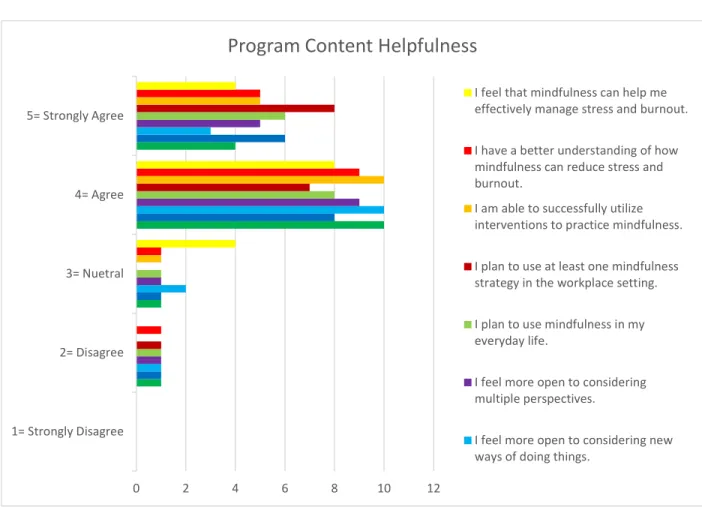
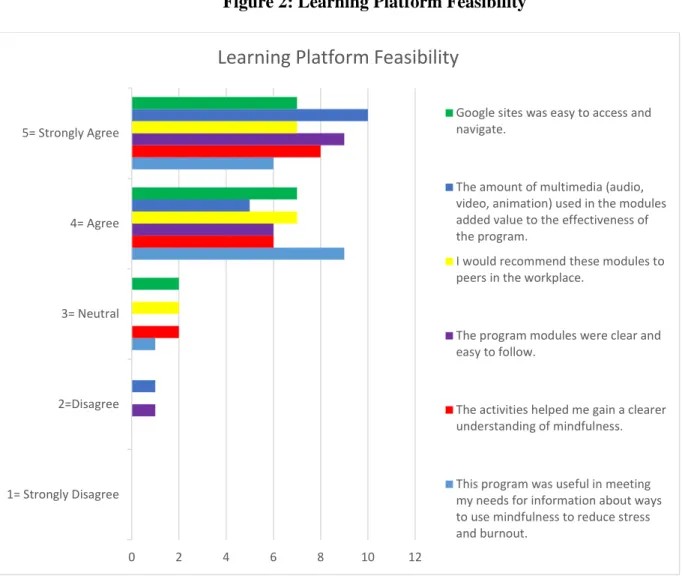
Statements 11-19 on the Qualtrics Survey asked participants to rate (strongly disagree-strongly agree) whether the program content was helpful for increasing curiosity, paying attention to small details, using multiple perspectives, and engaging in mindfulness practice. Responses strongly supported content helpfulness with outcomes of strongly agree (32%) and agree (55%) (See Figure 1). Statements 20-25 asked participants to rate (strongly agree-strongly disagree) the ease of use of Google Sites, multimedia, type of information to promote
Participants indicated they practiced mindfulness approximately four days a week during and after the program.
Figure 1: Program Content Helpfulness
* The degree to which each participant agreed with statements related to helpfulness of the program content.
0 2 4 6 8 10 12
1= Strongly Disagree 2= Disagree 3= Nuetral 4= Agree 5= Strongly Agree
Program Content Helpfulness
I feel that mindfulness can help me effectively manage stress and burnout.
I have a better understanding of how mindfulness can reduce stress and burnout.
I am able to successfully utilize interventions to practice mindfulness.
I plan to use at least one mindfulness strategy in the workplace setting.
I plan to use mindfulness in my everyday life.
I feel more open to considering multiple perspectives.
Figure 2: Learning Platform Feasibility
* The degree to which each participant agreed with statements related to the feasibility of the learning platform.
The modules were designed to require approximately 30 minutes or less each week. The majority of the participants indicated they spent between 10 and 30 minutes on average
completing each module (See Appendix 9). Five participants downloaded and used one of the smartphone applications that would send “be mindful” reminders at various times. Eighty-six percent of the participants responded “agree” or “strongly agree” to a positive change in attitude, because of working with Langer’s tenets of mindfulness (statements 11-14). Twelve participants thought mindfulness could assist with management of stress and burnout (statement 19). Finally,
0 2 4 6 8 10 12
1= Strongly Disagree 2=Disagree 3= Neutral 4= Agree 5= Strongly Agree
Learning Platform Feasibility
Google sites was easy to access and navigate.
The amount of multimedia (audio, video, animation) used in the modules added value to the effectiveness of the program.
I would recommend these modules to peers in the workplace.
The program modules were clear and easy to follow.
The activities helped me gain a clearer understanding of mindfulness.
91% of the participants agreed the program increased their knowledge and use of mindfulness to decrease stress and burnout and felt capable of practicing mindfulness interventions (statements 17 and 18).
Barriers and Facilitators - Secondary Outcome
The goal of the focus group was to gather information related to barriers to and
facilitators of the program. Two of the sixteen nurse participants attended the 30-minute focus group. This group occurred the first week after implementation of the four-week module implementation. The discussion did not reveal any barriers to participation in the program. A valuable suggestion was offered to combine all the practice skills into one printed document for easy reference. Major facilitators of the program identified by the focus group participants included the brief length of the modules, reminder emails, easy use of Google Sites, and increased accessibility from multiple types of devices. One of the participants described practicing the mindfulness skills either early in the morning or later in the evening when everything was quiet and there were fewer distractions.
Website and Anecdotal Data
Based on Google Analytics for the Paving the Path to Mindfulness Website, there were 380 “page views” during implementation. Thirteen minutes was the average duration of
engagement with the website during a single session. Participants used hand-held smart devices to access the website approximately 53% of the time (See Appendix 10).
CHAPTER 7: DISCUSSION
The data suggests that most participants found the content and learning platform of the program to be helpful and useful. Further, the majority expressed a desire to integrate
mindfulness into their practice and believed that mindfulness could assist with management of stress and burnout. Overall, the participants agreed that the program increased their knowledge and capability to practice mindfulness. Most of the nurses who chose to participate in this program had 15 years or less of psychiatric nursing experience and would recommend the modules to other peers in the workplace. This is a valuable outcome of the mindfulness program as the literature supports individuals were more likely to experience burnout earlier in their career (Maslach et al., 2001).
The number of page views indicates participants frequently engaged with the website during implementation. Although the focus group did not yield information related to barriers to participation in the program, based on the Project Leader’s knowledge of the implementation site, possible barriers can be suggested. Many of the nurse-participants were either working or on vacation at the time of the focus group, which limited participation. The units participating in this program experienced significant transitions contributing to increased workplace demands. For example, during the first week of recruitment, one of the nursing units was closed for construction and all patients were transferred to a newly constructed larger unit. This space was also unfamiliar to nursing staff. Prior to, during, and after implementation, several new
the degree of success of the program. Situational factors of this type are reflected in the literature as contributors to the development of stress and burnout (Bakker & Costa, 2014) and can be mediated with management-level support (Khamisa et al., 2014). This was exemplified by the leadership on the units involved with this innovation.
The literature highlighted work-related demands and a shifting work schedule as reasons for attrition in previous healthcare studies (Burton et al., 2016). This was considered in the program design related to distribution of information to the participants while respecting the limited flexibility in shift work schedules. The short duration of modules and easy access to the program were efforts to address barriers to participation, and they were identified by focus group participants as facilitators of the program. Learning platform accessibility is imperative to promote increased number of exposures to an online mindfulness intervention (Spijkerman et al., 2016) and this was accomplished by desktop, mobile phone and tablet access. Quantitative and qualitative data gathered from this program evaluation support participants’ favorable perception of platform accessibility permitting increased exposure to the modules. This was evidenced by the high number of webpage views. The information derived from this formative evaluation will provide guidance for continued development of the program and plans for the next
implementation period. The intent is to make the program available through the hospital intranet. Limitations
CHAPTER 8: RECCOMENDATIONS
Expanding this program to other nurses will provide the opportunity to further refine the program. To ensure maximum participation in the focus group it would be advantageous to consider offering a virtual focus group or other modalities for feedback from participants. Many of the participants commented about the ability to access the program on any smart phone device. This is key to ensuring participant engagement for future programs. Inclusion of night shift and nurses working off-shifts is important as stress and burnout may be experienced differently from the participants in this program evaluation. New graduate nurses might also benefit from this program as they enter their nursing career and begin to develop self-care skills.
Creation of a system change to increase staff satisfaction and work-life balance requires healthcare organizations to support all levels of leadership, as indicated by the Quadruple Aim (Agency for Healthcare Research and Quality, 2015). It is recommended that further assessment of this program occur overtime to link consistent implementation of the program with a change in individual nurse factors of stress and burnout such as rates of physical injuries, nursing call outs, and medication errors. The implementation and evaluation of this program offers a
APPENDIX 1: LANGER’S MINDFULNESS-BASED MODULES
Program: Mindfulness Modules Goal: Increase mindfulness
INPUTS ACTIVITIES OUTCOMES
What we
invest What we do
Why this project: short-term results Why this project: intermediate results Why this project: long-term results • Time
• Materials – modules • Technology
– Google based website • Equipment
- computer
• Educate • Develop
curriculum • Facilitate
access to information • Conduct
focus group • Program
evaluation survey
Learning
• Increase awareness of Langer’s tenets of mindfulness • Knowledge gained
from the program is demonstrated through integration of
mindfulness in the work site
• Knowledge about impact of stress and burnout on health and quality of life
• New skills for mindfulness practice • Motivation to engage
in new behaviors • Change in attitude
Action
• Willingness to practice new behaviors • Integrate feedback from program evaluation and develop recommendati ons for future improvements • Program repeated annually as part of required training • Program added to hospital intranet Conditions
• Successful program could influence attitudes about work, improve work environment, decrease callouts
Who we reach
• Nurses on psychiatric inpatient units • Supervisors
Assumptions
• Stress and burnout can be reduced through mindful practice
External Factors
• Understaffing, frequent staff callouts
APPENDIX 2: WEEKLY TEMPLATE Week 1
Key Topics:
• Discussion of key objectives of the program • Overview of stress and burnout consequences
• Introduction to Langer’s approach to mindfulness vs. mindlessness, website and reminder cues
o Langer’s theory of mindfulness, central components, video of Ellen Langer discussing mindfulness
o Skill practice for considering multiple perspectives Week 2
Key Topics:
• Novelty Seeking- ways to prevent mindlessness
• Engagement- noticing details or changes in the environment • Using mindfulness in everyday life
o The rainbow walk- go for a walk and look for something red, orange, yellow, green, blue, indigo and violet (ROYGBIV)
o Counting sounds walk- go for a walk and count how many sounds you hear (ie: cars, animals, people, wind, footsteps on leaves etc.)
Week 3
Key Topics:
• Novelty Producing: process stimuli to create new categories or information • Flexibility: consider multiple perspectives & use environment as feedback • Rethinking Thinking Video
Week 4
Key Topics:
• Using mindfulness in the workplace setting- creative solutions to challenges
o Example: 3M Post-It Notes
• Participants will practice noticing five new things
APPENDIX 3: FLYER
PAVING THE PATH TO MINDFULNESS
We want your participation!
The purpose of this program is to evaluate a four-week program
designed to help reduce stress and burnout in psychiatric-mental
health nurses through the use of mindfulness. To participate you
must be a registered nurse or licensed practical nurse and work
in a part-time or full-time capacity.
ONLINE MODUES FOR NURSES
DECREASE STRESS AND BURNOUT
INCREASE MINDFULNESS
INFLUENCE PROGRAM EVOLVEMENT
HAVE QUESTIONS? CONTACT THE PROJECT LEAD!
PROJECT LEAD:
APPENDIX 4: RECRUITMENT SCRIPT
I invite you to partake in the opportunity to experience and evaluate a four-week program
designed to help reduce stress and burnout in psychiatric-mental health nurses through the use of mindfulness. To be eligible to participate you must be either a registered nurse or licensed
practical nurse and work in a part-time or full-time capacity. This program consists of four online modules designed to equip you with skills related to mindfulness that you can use in your
APPENDIX 5: INFORMATION SHEET
You are being asked to participate in a research study being conducted by Kristin Rush. Purpose: To evaluate the effectiveness of a four-week mindfulness program designed to help reduce stress and burnout in PMH nurses working on locked inpatient units.
Procedure: You will participate in the evaluation of a mindfulness program consisting of four modules that take approximately 30 minutes each to complete. After completing the modules, you will be asked to complete one survey that will take less than 15 minutes to complete. The survey asks questions regarding your experience of the program. You will also be asked to participate in a focus group that will take less than 30 minutes to discuss barriers and facilitators of the program.
Voluntary participation: Participation in the research study is voluntary. Should you choose to participate in this research study, you have the right to withdraw at any time without
consequence. Additionally, you have the right to refuse to answer any questions for any reason, without consequence.
Risks and benefits: The researchers conducting this study have determined that participation in this study poses minimal risk to participants. If you, as an employee, experience any type of distress from participating in this study, please speak with either researchers, your nurse manager, or contact the Employee Assistance Program at Novant Health at 1-800-828-2778. The benefits associated with this research are possible improved employee satisfaction, retention rate, job performance, patient care and patient satisfaction.
If you have any questions or want more information regarding the research and study, you may contact the researcher at [email protected]. If you have concerns about your rights or treatment, or the risks and benefits related to this study, you may contact the Presbyterian Healthcare IRB at 704-384-8898 and the Novant Health nurse scientist (Gloria Walters) at [email protected].
Confidentiality: Your participation and responses to the survey questions will be anonymous and confidential. Please do not disclose identifying information on the surveys. The surveys are electronic and will be submitted to an electronic database. Data collected through the focus group will be anonymous and used only for identifying common themes.
Consent to Participate:
Please retain a copy of this consent form for your records.
By completing this survey and attending the focus group, you are voluntarily consenting to participate in this portion of the research study.
APPENDIX 6: QUALTRICS POST-EVALUATOIN SURVEY 1) How many modules did you complete?
a. None b. One c. Two d. Three e. Four
2) Did you utilize a phone application with reminder cues to help you remember to practice mindfulness techniques?
a. Yes b. No
3) What was the average amount of time you spent each week completing the modules? a. Less than 10 minutes
b. 10-20 minutes c. 21-30 minutes d. 31-40 minutes
e. Greater than 40 minutes
4) What is the average amount of days per week you practiced mindfulness during and after the program?
a. One b. Two c. Three d. Four e. Five f. Six g. Seven 5) What is your age?
a. 20-30 years b. 31-40 years c. 41-50 years d. 51-60 years e. 61+ years 6) What is your gender?
a. Male b. Female c. Other
7) What shift do you primarily work? a. 7a-3p
b. 7a-7p c. 3p-11p d. 7p-7a e. 11p-7a f. Other
c. 41-50 hours d. 51-60 hours e. 61+ hours
9) How many years have you worked as a RN or LPN? a. 0-5 years
b. 6-10 years c. 11-15 years d. 16-20 years e. 21-25 years f. 26-35 years g. 35+ years
10) How many years have you worked in the field of psychiatric-mental health? a. 0-5 years
b. 6-10 years c. 11-15 years d. 16-20 years e. 21-25 years f. 26-35 years g. 35+ years
As a result of participating in this program, please indicate the degree to which you agree with each statement:
Strongly Disagree, Disagree, Neutral, Agree, Strongly Agree (Likert Scale 1-5)
11. I feel a curiosity to learn new things in situations.
12. I feel an increased ability to pay attention to small details in the environment.
13. I feel more open to considering new ways of doing things.
14. I feel more open to considering multiple perspectives.
15. I plan to use mindfulness in my everyday life.
1= Strongly Disagree 2= Disagree 3= Neutral 4= Agree 5= Strongly Agree
1= Strongly Disagree 2= Disagree 3= Neutral 4= Agree 5= Strongly Agree
1= Strongly Disagree 2= Disagree 3= Neutral 4= Agree 5= Strongly Agree
1= Strongly Disagree 2= Disagree 3= Neutral 4= Agree 5= Strongly Agree
16. I plan to use at lead one mindfulness strategy in the workplace setting.
17. I am able to successfully utilize interventions to practice mindfulness.
18. I have a better understanding of how mindfulness can reduce stress and burnout.
19. I feel that mindfulness can help me effectively manage stress and burnout.
Please indicated the degree to which you agree with each statement:
Strongly Disagree, Disagree, Neutral, Agree, Strongly Agree (Likert Scale 1-5)
20. This program was useful in meeting my needs for information about ways to use mindfulness to reduce stress and burnout.
21. The activities helped me gain a clearer understanding of mindfulness.
22. The program modules were clear and easy to follow.
23. I would recommend these modules to peers in the workplace.
24. The amount of multimedia (audio, video, animation) used in the modules added value to the effectiveness of the program.
25. Google sites was easy to access and navigate.
1= Strongly Disagree 2= Disagree 3= Neutral 4= Agree 5= Strongly Agree
1= Strongly Disagree 2= Disagree 3= Neutral 4= Agree 5= Strongly Agree
1= Strongly Disagree 2= Disagree 3= Neutral 4= Agree 5= Strongly Agree
1= Strongly Disagree 2= Disagree 3= Neutral 4= Agree 5= Strongly Agree
1= Strongly Disagree 2= Disagree 3= Neutral 4= Agree 5= Strongly Agree
1= Strongly Disagree 2= Disagree 3= Neutral 4= Agree 5= Strongly Agree
1= Strongly Disagree 2= Disagree 3= Neutral 4= Agree 5= Strongly Agree
1= Strongly Disagree 2= Disagree 3= Neutral 4= Agree 5= Strongly Agree
1= Strongly Disagree 2= Disagree 3= Neutral 4= Agree 5= Strongly Agree
APPENDIX 7: BENNETT’S HIERARCHY
End Results
:
Social, economic, environmental conditions (SEEC)--ultimate
effect of the program
Practice Change: Practices adopted as a result of participation in program
KASA Change: Change in knowledge, skills, attitude, and aspirations
Reactions: Particpant reactions to involvement in the program
Participation: Types and number of persons involved
Activities: Program activties--meetings, newsletters etc.
APPENDIX 8: FOCUS GROUP QUESTIONS
1. What were the best things about the modules?
2. What could have been done differently that would have improved the modules? 3. What were the biggest barriers to participation?
APPENDIX 9: AVERAGE TIME SPENT COMPLETING MODULES
6%
38%
31% 25%
0%
Average Time Spent Completing Modules
REFERENCES
Agency for Healthcare Research and Quality. (2015). Quadruple aim proposed to address workforce burnout. Retrieved from https://integrationacademy.ahrq.gov/resources/new-and-notables/quadruple-aim-proposed-address-workforce-burnout
Aikens, K. (2014). Mindfulness goes to work: Impact of an online workplace intervention. Journal of Occupational and Environmental Medicine, 56(7), 721-731.
doi:10.1097/JOM.0000000000000209
American Nurses Association. (2011). Health and safety survey. Retrieved from
http://www.nursingworld.org/MainMenuCategories/WorkplaceSafety/Healthy-Work-Environment/Work-Environment/2011-HealthSafetySurvey.html
Bakker, A. B., & Costa, P. L. (2014). Chronic job burnout and daily functioning: A theoretical analysis. Burnout Research, 1(3), 112-119.
doi:http://dx.doi.org/10.1016/j.burn.2014.04.003
Baum, A. (1990). Stress, intrusive imagery, and chronic distress. Health Psychology, 9(6), 653-675. doi:10.1037/0278-6133.9.6.653
Baum, A., & Posluszny, D. (1999). Health psychology: Mapping biobehavioral contributions to health and illness. Annual Review of Psychology, 50(1), 137-163.
doi:10.1146/annurev.psych.50.1.137
Bazarko, D., Cate, R. A., Azocar, F., & Kreitzer, M. J. (2013). The impact of an innovative mindfulness-based stress reduction program on the health and well-being of nurses employed in a corporate setting. Journal of Workplace Behavioral Health, 28(2), 107-133. doi:10.1080/15555240.2013.779518
Bennett, C. (1976). Analyzing impacts of extension programs, ESC-575. Washington, D.C.: Extension Service-U.S. Department of Agriculture.
Bodenheimer, T., & Sinsky, C. (2014). From triple to quadruple aim: Care of the patient requires care of the provider. The Annals of Family Medicine, 12(6), 573-576.
doi:10.1370/afm.1713
Bowers, L., Brennan, G., Flood, C., Lipang, M., & Oladapo, P. (2006). Preliminary outcomes of a trial to reduce conflict and containment on acute psychiatric wards: City Nurses. Journal of Psychiatric and Mental Health Nursing, 13(2), 165-172. doi:10.1111/j.1365-2850.2006.00931.x
Brown, K. W., Ryan, R. M., & Creswell, J. D. (2007). Mindfulness: Theoretical foundations and evidence for its salutary effects. Psychological Inquiry, 18(4), 211-237.
doi:10.1080/10478400701598298
Burton, A., Burgess, C., Dean, S., Koutsopoulou, G. Z., & Hugh-Jones, S. (2016). How effective are mindfulness-based interventions for reducing stress among healthcare professionals? A systematic review and meta-analysis. Stress Health. doi:10.1002/smi.2673
Carson, S. H., & Langer, E. J. (2006). Mindfulness and self-acceptance. Journal of Rational-Emotive & Cognitive-Behavior Therapy, 24(1), 29-43. doi:10.1007/s10942-006-0022-5
Centers for Disease Control and Prevention. (2012). Improving the use of program evaluation for maximum health impact: Guidelines and recommendations november 2012. Retrieved from
https://www.cdc.gov/eval/materials/finalcdcevaluationrecommendations_formatted_1204 12.pdf
Cohen-Katz, J., Wiley, S. D., Capuano, T., Baker, D. M., Kimmel, S., & Shapiro, S. (2005). The effects of mindfulness-based stress reduction on nurse stress and burnout, Part II: A quantitative and qualitative study. Holistic Nursing Practice, 19(1), 26-35.
Demick, J. (2000). Toward a mindful psychological science: Theory and application. Journal of Social Issues, 56(1), 141-159. doi:10.1111/0022-4537.00156
Dreison, K. C. (2016). Job burnout in mental health providers: A meta-analysis of 35 years of intervention research. Journal of Occupational Health Psychology.
doi:http://dx.doi.org/10.1037/ocp0000047
Gandi, J. C., Wai, P. S., Karick, H., & Dagona, Z. K. (2011). The role of stress and level of burnout in job performance among nurses. Mental Health in Family Medicine, 8(3), 181-194.
Gotink, R. A., Chu, P., Busschbach, J. J. V., Benson, H., Fricchione, G. L., & Hunink, M. G. M. (2015). Standardised mindfulness-based Interventions in healthcare: An overview of systematic reviews and meta-analyses of RCTs. PLoS ONE, 10(4), 1-17.
doi:10.1371/journal.pone.0124344
Haigh, E. A. P., Moore, M. T., Kashdan, T. B., & Fresco, D. M. (2011). Examination of the factor structure and concurrent validity of the Langer Mindfulness/Mindlessness Scale. Assessment, 18(1), 11-26. doi:10.1177/1073191110386342
Hanrahan, N., & Aiken, L. (2008). Psychiatric nurse reports on the quality of psychiatric care in general hospitals. Quality Management in Health Care, 17(3), 210-217.
doi:10.1097/01.QMH.0000326725.55460.af
Hanrahan, N., Aiken, L., McClaine, L., & Hanlon, A. (2010). Relationship between psychiatric nurse work environments and nurse burnout in acute care general hospitals. Issues in Mental Health Nursing, 31(3), 198-207. doi:10.3109/01612840903200068
Herdman, T. H. (2012). NANDA International nursing diagnoses: Definitions and classification 2012-14. Chichester, U.K; Ames, Iowa: Wiley-Blackwell.
Institute of Medicine. (2000). To err is human: Building a safer health system. In L. T. Kohn, J. M. Corrigan, & M. S. Donaldson (Eds.), To Err is Human: Building a Safer Health System. Washington, D.C.: National Academies Press
Kabat-Zinn, J. (2003). Mindfulness-based interventions in context: Past, present, and future. Clinical psychology: Science and Practice, 10(2), 144-156. doi:10.1093/clipsy/bpg016
Karga, M., Kiekkas, P., Aretha, D., & Lemonidou, C. (2011). Changes in nursing practice: Associations with responses to and coping with errors. Journal of Clinical Nursing, 20(21-22), 3246-3255. doi:10.1111/j.1365-2702.2011.03772.x
Kawakami, C., White, J., & Langer, E. (2000). Mindful and masculine: Freeing women leaders from the contraints of gender roles. Journal of Social Issues, 56(1), 49-63.
Kemper, K. J., Mo, X., & Khayat, R. (2015). Are mindfulness and self-compassion associated with sleep and resilience in health professionals? Journal of Alternative and
Complementary Medicine, 21(8), 496-503. doi:10.1089/acm.2014.0281
Khamisa, N., Peltzer, K., Ilic, D., & Oldenburg, B. (2014). Evaluating research recruitment strategies to improve response rates amongst south african nurses. SA Journal of Industrial Psychology, 40(1), 1-7. doi:http://dx.doi.org/10.4102/sajip.v40i1.1172
Khamisa, N., Peltzer, K., & Oldenburg, B. (2013). Burnout in relation to specific contributing factors and health outcomes among nurses: A systematic review. International Journal of Environmental Research and Public Health, 10(6), 2214-2240.
doi:10.3390/ijerph10062214
Khoury, B. (2015). Mindfulness-based stress reduction for healthy individuals: A meta-analysis. Journal of Psychosomatic Research, 78(6), 519.
doi:http://dx.doi.org/10.1016/j.jpsychores.2015.03.009
Lamothe, M., Rondeau, E., Malboeuf-Hurtubise, C., Duval, M., & Sultan, S. (2016). Outcomes of MBSR or MBSR-based interventions in health care providers: A systematic review with a focus on empathy and emotional competencies. Complementary Therapies in Medicine, 24, 19-28. doi:10.1016/j.ctim.2015.11.001
Langer, E. (2009). Counterclockwise: Mindful health and the power of possibility. New York, NY: Ballantine Books.
Langer, E. (2014). Mindfulness 25th anniversiary edition. Boston, MA: Da Capo Press. Langer, E. (2016). The power of mindful learning (2nd ed.). Boston, MA: Da Capo Press. Langer, E., Blank, A., & Chanowitz, B. (1978). The mindlessness of ostensibly thoughtful
action: The role of 'placebic' information in interpersonal interaction. Journal of Personality and Social Psychology, 36(6), 635-642. doi:10.1037/0022-3514.36.6.635
Langer, E., & Rodin, J. (1976). The effects of choice and enhanced personal responsibility for the aged: A field experiment in an institutional setting. Journal of Personality and Social Psychology, 34(2), 191-198. doi:10.1037/0022-3514.34.2.191
Langer, E. J., Janis, I. L., & Wolfer, J. A. (1975). Reduction of psychological stress in surgical patients. Journal of Experimental Social Psychology, 11(2), 155-165.
doi:http://dx.doi.org/10.1016/S0022-1031(75)80018-7
Langer, E. J., & Moldoveanu, M. (2000a). The construct of mindfulness. Journal of Social Issues, 56(1), 1-9. doi:10.1111/0022-4537.00148
Langer, E. J., & Moldoveanu, M. (2000b). Mindfulness research and the future. Journal of Social Issues, 56(1), 129-139. doi:10.1111/0022-4537.00155
Letvak, S., Ruhm, C., & McCoy, T. (2012). Depression in hospital-employed nurses. Clinical Nurse Specialist, 26(3). doi:10.1097/NUR.0b013e3182503ef0
Liberati, A., Altman, D., Tetzlaff, J., Mulrow, C., Gotzsche, P., Ioannidis, J., . . . Moher, D. (2009). The prisma statement for reporting systematic reviews and meta-analyses of studies that evaluate health care interventions: Explanation and elaboration. Annals of Internal Medicine, 151(4), W-65-W-94. doi:10.7326/0003-4819-151-4-200908180-00136
Lowe, N. K., & Cook, P. F. (2012). Differentiating the scientific endeavors of research, program evaluation, and quality improvement studies. Journal of Obstetric, Gynecologic & Neonatal Nursing, 41(1), 1-3. doi:http://dx.doi.org/10.1111/j.1552-6909.2011.01319.x
Mackenzie, C. S., Poulin, P. A., & Seidman-Carlson, R. (2006). A brief mindfulness-based stress reduction intervention for nurses and nurse aides. Applied Nursing Research, 19(2), 105-109. doi:10.1016/j.apnr.2005.08.002
Madathil, R., Heck, N. C., & Schuldberg, D. (2014). Burnout in psychiatric nursing: Examining the interplay of autonomy, leadership style, and depressive symptoms. Archives of Psychiatric Nursing, 28(3), 160-166. doi:10.1016/j.apnu.2014.01.002