FREIGHT PLANNING AND THE METROPOLIS: THE ROLE OF METROPOLITAN PLANNING ORGANIZATIONS IN REGIONAL FREIGHT TRANSPORTATION
PLANNING
Marc Alan Howlett
A dissertation submitted to the faculty of the University of North Carolina at Chapel Hill in partial fulfillment of the requirements for the degree of Doctor of Philosophy in the
Department of City and Regional Planning
Chapel Hill 2015
ABSTRACT
MARC ALAN HOWLETT: Freight Planning and the Metropolis: The Role of Metropolitan Planning Organizations in Regional Freight Transportation Planning
(Under the direction of Daniel Rodríguez)
The efficient and reliable movement of goods undergirds the United States economy, yet the freight transportation network faces increasing threats from congestion, aging
infrastructure, and limited public funds. Addressing these challenges is complicated by the multimodal nature of freight transportation and the direct involvement of public sector, private sector, quasi-governmental and non-profit organizations. One policy response has focused on strengthening the freight planning of metropolitan planning organizations (MPOs), the federally mandated entities responsible for transportation planning in
metropolitan regions. Despite policies to bolster MPO freight planning, numerous studies indicate that overall MPO freight planning capacity is low although select MPOs maintain robust freight planning programs.
ACKNOWLEDGEMENTS
My heartfelt thanks and gratitude goes out to Dr. Daniel Rodríguez who served as my advisor and mentor at the University of North Carolina at Chapel Hill. I grew enormously as an academic, professional, and person during my doctoral studies and Daniel’s guidance was integral to that growth. I am grateful to have Daniel as my PhD advisor and mentor.
I am very thankful for the support, encouragement, and critiques of my dissertation committee members, Dr. Noreen McDonald, Dr. Nikhil Kaza, Dr. Steve Appold, and Dr. Rachel Willis. I took my first transportation course with Noreen, and the intellectual rigor with which she approached the material contributed in large part to my pursuit of a PhD in City and Regional Planning. I benefited immensely from Nikhil’s combination of expertise in planning theory and quantitative analysis. Steve helped push me along from the first time I met him when I wandered into his office on the other side of campus to years later at my dissertation defense, even if my path between those points was not exactly linear. Rachel not only helped guide my dissertation to completion but also helped guide me to a visit to the Panama Canal with an international group of maritime engineers.
My dissertation research relied on the graciousness of many hundreds of
professionals in transportation and other fields who volunteered their time by completing my survey, talking with me in person, answering my e-mails, and offering me guidance. I am humbled by the generosity of others.
liberties with defining a cohort, but I very much appreciate sharing this experience with Hye-Sung Han, Ward Lyles, Augustus Anderson, Mary Donegan, Tab Combs, Danielle Spurlock, and Louis Merlin.
The Writing Center and The Learning Center were central to my time as a doctoral student. I am especially grateful for the support and guidance of Dr. Kim Abels and Dr. Vicki Behrens. The Learning Center helped me tremendously in growing as a professional and completing my dissertation. Dr. Theresa Maitland served as my primary academic coach during my final twelve months as a PhD student where I went from still needing to collect data to being completely finished. I am so thankful for all of my Learning Center friends and colleagues, Kristen Rademacher, Robin Blanton, Billie Shambley, Christina Perry, and Dr. Bob Pleasants.
I met many of my friends and fellow students through the Writing Center and Learning Center. I am thankful for the friendship of Anne Berler, Jill Peterfeso, Brandon Sams, Brandi Denison, Ben Shields, Erin Nelson, and Claire Novotny. Erin, Claire, Martha King, and the Anthropology Department in general deserve tremendous credit and thanks for creating and welcoming me into such a supportive environment in Alumni Hall where I wrote most of my dissertation (at least the portions of my dissertation not written while riding on trains).
My dissertation journey included a yearlong stretch at the University of New Orleans. I am thankful to have such an incredible extended academic family in New Orleans including Dr. John Renne, Dr. Bethany Stich, Jim Amdal, Dr. Kate Lowe, Carol Short, Dr. Renia Ehrenfeucht, Dr. Marla Nelson, Kyle Griffith, and Babs Mollere.
my survey in an exceedingly short amount of time and at a very low cost. I owe you both. The unconditional love and support of my parents mean so much to me. Thank you, Mom and Dad. Thank you also to my brother Lars for showing me the strength and courage for both of us to walk our own paths.
TABLE OF CONTENTS
1 Introduction: Freight, Planning, and the Metropolis ... 1
1.1 Freight Transportation in 21st Century America ... 4
1.2. Study Objectives ... 7
1.3 Study Overview ... 9
1.4 Study Organization ... 9
2 Literature Review and Conceptual Framework ... 11
2.1 Public Sector Freight Planning ... 11
2.1.a. Justifications for and Objectives of Public Sector Freight Planning ... 12
2.1.b United States Federal Policy and Freight Transportation Planning ... 14
2.1.c MPO Freight Planning since ISTEA ... 16
2.2 Planning Capacity and the Study of Organizational Capacity ... 18
2.2.a What is Capacity? ... 18
2.2.b Planning Capacity Definitions ... 20
2.2.c Planning Capacity and Planning Outcomes ... 21
2.2.d Determinants of Planning Capacity ... 23
2.3 Federal Transportation Policy ... 23
2.3.a Transportation Management Areas ... 26
2.3.b Other Federal Policies ... 27
2.3.c Intergovernmental Transportation Planning ... 28
2.4 Governance and Multisector Planning ... 29
2.4.a Political Economy ... 30
2.4.b Urban Regime Theory ... 31
2.4.c Regional Policy and Issue Champions ... 33
2.5 Research Questions ... 34
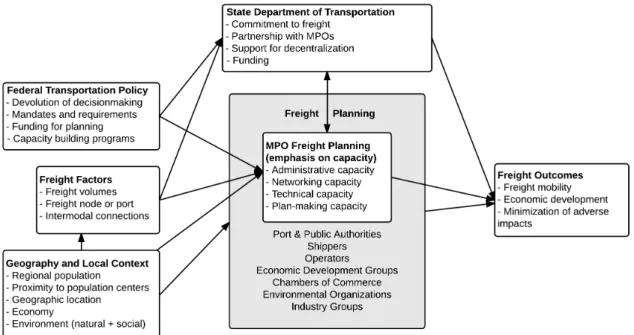
2.6 Conceptual Framework ... 36
2.6.a Hypothesized Explanations for MPO Freight Planning Capacity ... 37
2.6.a.2 Multisectoral Regional Freight Planning ... 38
2.6.a.3 Urban Transportation Planning Process ... 38
2.6.a.4 State, Regional, and Local Contexts ... 39
2.6.b Conceptual Framework and Historical Waves of Regionalism ... 40
2.7 Conclusion ... 41
3 Research Design and Methodology ... 42
3.1 Research Design ... 42
3.2 National Study Design and Sample Selection ... 43
3.2.a Regression Discontinuity Design ... 43
3.2.b Full Study and Regression Discontinuity Populations ... 45
3.3 National Study Data Collection ... 45
3.4 National Study Methods of Analysis ... 47
3.4.a Descriptive Statistics ... 47
3.4.b Regression Discontinuity ... 47
3.4.c Multiple Regression ... 49
3.5 National Study Variables and Measurement ... 49
3.5.a Outcome Variables ... 49
3.5.a.1 MPO Freight Planning Capacity Indicators ... 50
3.5.a.2 MPO Freight Planning Capacity Index ... 51
3.5.b Explanatory Variables ... 52
3.6 Case Study Design and Sample Selection ... 52
3.6.a Case Study Design ... 53
3.6.b Case Selection ... 53
3.7 Case Study Data Collection ... 56
3.7.a. Interview Guide and A-Scheme ... 56
3.7.b Interview Sample ... 57
3.7.c Pilot Case Study Interviews ... 57
3.7.d Case Study Interviews ... 57
3.7.e Documentary Data Collection ... 58
3.8 Case Study Analytical Methods ... 59
3.9.a Construct Validity ... 60
3.9.b Internal Validity ... 61
3.9.c External Validity ... 62
3.9.d Statistical Conclusion Validity ... 63
4 Results from a National Survey of MPO Freight Planning ... 65
4.1 Characteristics of MPOs ... 65
4.1.a Variations in MPO Regional Population ... 66
4.1.b Comparison between Responding and Non-responding MPOs ... 67
4.2 Metropolitan Goods Movement: Issues and Planning Motivations ... 69
4.2.a Metropolitan Freight Issues ... 69
4.2.b Motivations for MPO Freight Planning ... 72
4.3 Freight Planning Capacity at MPOs ... 74
4.3.a MPO Organizational Structure and Staffing (Administrative Capacity) ... 74
4.3.b MPO Freight Planning and Other Stakeholders (Networking Capacity) ... 77
4.3.c MPO Freight Data and Modeling (Technical Capacity) ... 78
4.3.d MPO Freight Planning and Studies (Plan-making Capacity) ... 79
4.4 Aggregate Measures of MPO Freight Planning Capacity ... 81
4.4.a Relationships between Indicators of MPO Freight Planning Capacity ... 81
4.4.b Index of MPO Freight Planning Capacity ... 82
4.4.c Freight Planning Capacity and Regional Population ... 83
4.5 Trends in MPO Freight Planning ... 85
4.6 Conclusion ... 86
5 Determinants and Predictors of MPO Freight Planning Capacity ... 90
5.1 Examining the Effects of TMA Designation Using Regression Discontinuity ... 91
5.1.a Standard RD Models with Treatment and Assignment Variables ... 92
5.1.b Expanded RD with Covariates ... 97
5.2 Examining Other Predictors of MPO Freight Planning Capacity ... 100
5.2.a Multiple Regression Models of MPO Freight Planning Capacity ... 101
5.2.b Multiple Regression Models for Subsets of Full Study Population ... 107
5.3 Conclusion ... 109
6.1 Regional Contexts ... 115
6.1.a Geography and Population ... 115
6.1.b Economy ... 117
6.1.c Freight Volumes and Infrastructure ... 119
6.1.d MPO Characteristics ... 121
6.2 Greenville, South Carolina ... 122
6.3 Grand Rapids, Michigan ... 126
6.4 Honolulu, Hawaii ... 132
6.5 Fort Myers, Florida ... 137
6.6 Cross-Case Analysis and Discussion ... 144
6.6.a Regional Freight Champions and MPO Freight Planning Capacity ... 144
6.6.b Kent County, Michigan and the Challenges of Long-Range Planning ... 147
6.6.c Future Case Study Examinations ... 149
6.7 Conclusion ... 151
7 Conclusion ... 153
7.1 Freight, MPO Planning, and the Metropolis ... 153
7.1.a The Limited Role of MPOs in Metropolitan Freight Planning ... 155
7.1.b Minimal Effects of Federal Policy ... 156
7.1.c The Importance of State Government ... 158
7.1.d Freight Champions and Coalitions May Elevate MPO Freight Planning ... 158
7.1.e The Less Important Effects of Regional Geography ... 159
7.2 Study Contributions ... 159
7.3 Avenues of Future Research ... 161
7.4 Policy Implications and Recommendations ... 163
7.4.a Unimodal Funding Spurs Unimodal Planning ... 163
7.4.b Federal Policy, Federalism, and Devolution ... 165
7.4.c MPOs in the post-ISTEA Era ... 165
7.4.d Is Regional Transportation Planning Still Important Federal Policy? ... 166
7.4.e Does Long-Range Planning Still Make Sense? ... 168
7.5 The Private Sector Case for Public Sector Transportation Planning ... 169
Appendix A Scope of the Metropolitan Planning Process ... 174
Appendix B Survey Instrument ... 175
Appendix C Interview A-Schemes ... 184
LIST OF TABLES
Table 3.1 Full Study and Regression Discontinuity Populations ... 45
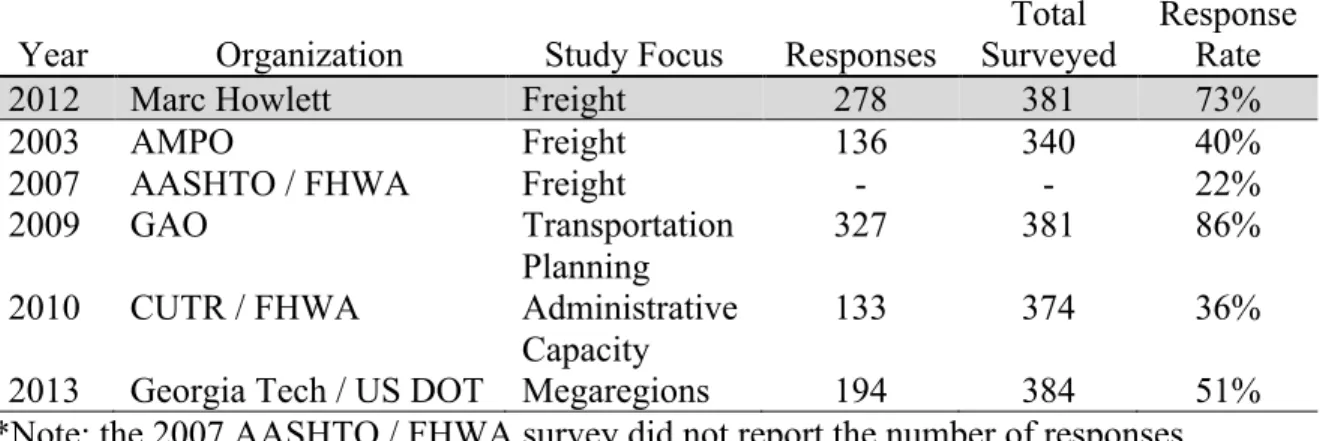
Table 3.2 National Surveys of MPOs with Associated Response Rates ... 47
Table 3.3 Components of Index of MPO Freight Planning Capacity ... 51
Table 3.4 Explanatory Variables and Regression Discontinuity Variables ... 52
Table 3.5 Total Eligible Cases by Selection Criteria ... 54
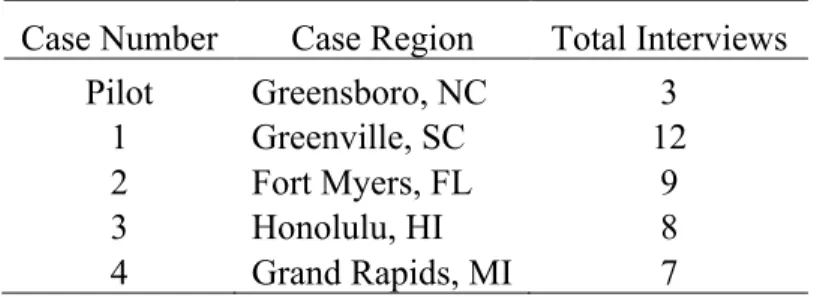
Table 3.6 Final Case Study Sample ... 56
Table 3.7 Summary of Case Study Interviews ... 58
Table 4.1 Number and Population of MPOs by MPO Size, 2010 ... 67
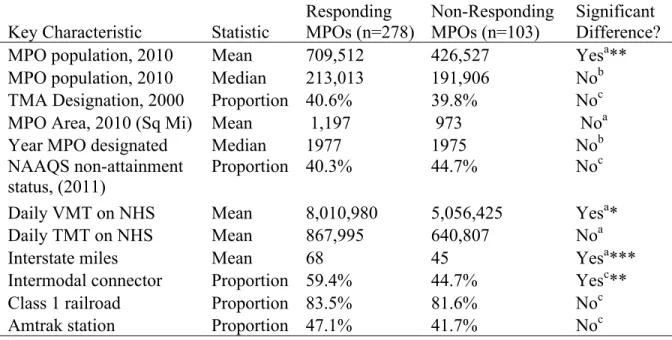
Table 4.2 Comparisons between Responding and Non-responding MPOs ... 68
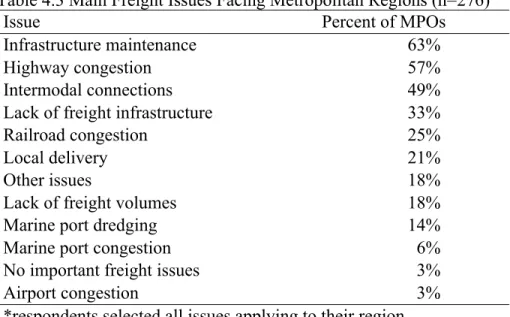
Table 4.3 Main Freight Issues Facing Metropolitan Regions ... 71
Table 4.4 Primary Motivations for MPO Regional Freight Planning ... 73
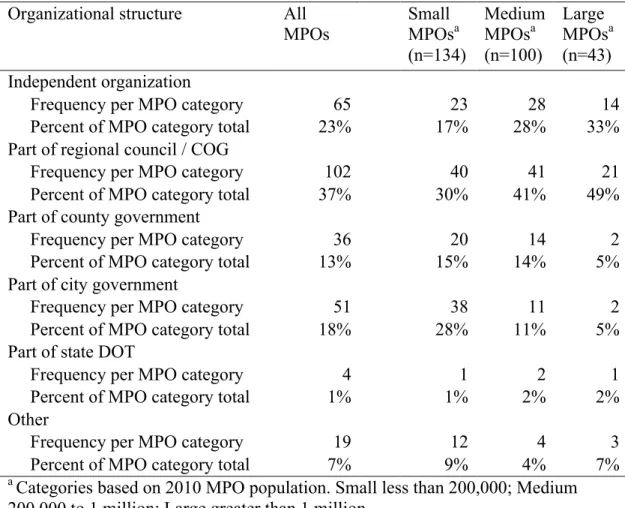
Table 4.5 MPO Organizational Structure ... 75
Table 4.6 MPO Staffing: Overall Full-time Staff and Freight FTE Staff ... 76
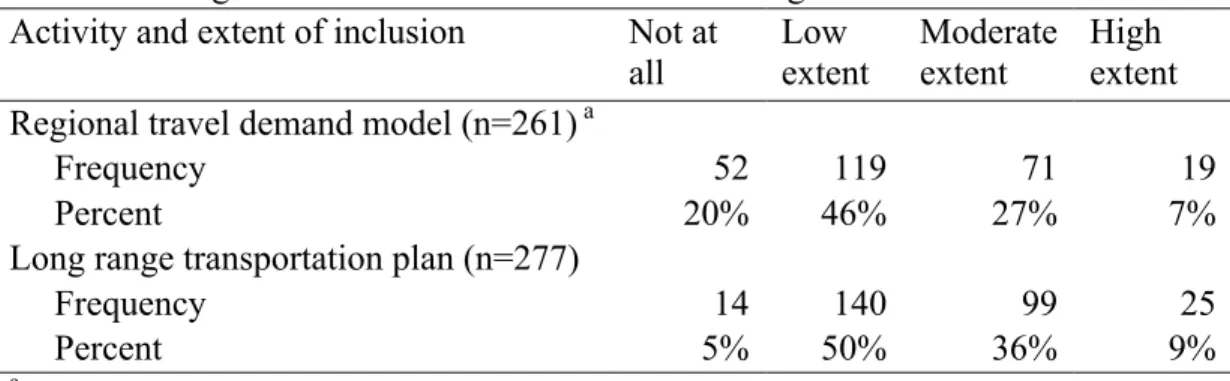
Table 4.7 Freight Inclusion in Common MPO Planning Activities ... 80
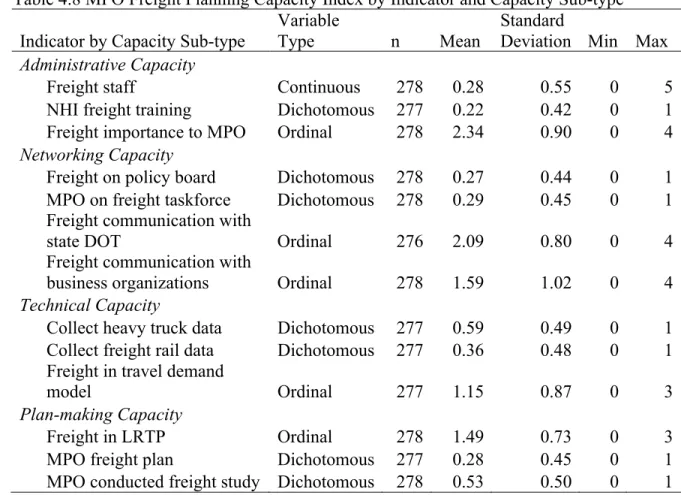
Table 4.8 MPO Freight Planning Capacity Index by Indicator and Capacity Sub-type ... 82
Table 4.9 Mean Capacity Score by MPO Size and Freight Planning Capacity Type ... 85
Table 5.1 Results from Standard RD Analyses for All MPOs and Subsets of MPOs ... 93
Table 5.2 Standard RD Models of Sub-indices of MPO Freight Planning Capacity ... 97
Table 5.3 Results from RD Models with Covariates for Selected Population Subsets ... 99
Table 5.4 External, Internal, and Combined Multiple Regression Models ... 104
Table 5.5 Multiple Regression Models without TMA Designation and Population ... 106
Table 6.1 Overview of Case Study Regions ... 116
Table 6.2 Location Quotients for Case Regions by Major Occupational Group, 2013 ... 118
Table 6.3 Major Freight Infrastructure and Facilities by Case Region ... 119
Table 6.4 Airport Freight and Passenger Volumes by Case Region, 2013 ... 120
Table 6.5 Location Quotients and Employment for Select Occupations, 2013 ... 121
Table 6.6 Born in State Population by Case Study Region, 2010 ... 132
Table 6.7 MPO Planning Capacity: Florida and Rest of USA ... 142
Table 6.8 Combined Regression Model from Chapter 5 with Addition of Florida ... 143
LIST OF FIGURES
Figure 2.1 Conceptual Framework of Regional Freight Transportation Planning ... 36
Figure 3.1 Regression Discontinuity Design ... 44
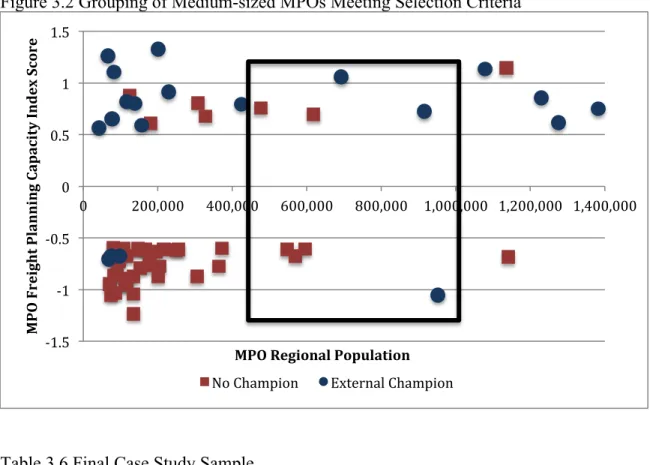
Figure 3.3 Grouping of Medium-sized MPOs Meeting Selection Criteria ... 56
Figure 3.4 Pattern Matching Analytical Method ... 59
Figure 4.1 Geography of MPOs in 2012 by Survey Respondent Type ... 70
Figure 4.2 MPO Freight Planning Capacity by 2010 Regional Population ... 84
Figure 5.1 RD Models with Full Population and Less than One Million Population ... 95
Figure 5.2 RD Models with 150,000 and 100,000 Population Bands ... 96
Figure 6.1 Pattern Matching and Case Study Selection Matrix ... 114
Figure 6.2 Map of Greenville, South Carolina Metropolitan Region ... 128
Figure 6.3 Map of Grand Rapids, Michigan Metropolitan Region ... 128
Figure 6.4 Map of Honolulu, Hawaii Metropolitan Region ... 139
Figure 6.5 Map of Fort Myers, Florida Metropolitan Region ... 139
Figure C.1 Interview A-Scheme for MPOs ... 184
LIST OF COMMON ABBREVIATIONS AMPO Association of Metropolitan Planning Organizations
AASHTO American Association of State Highway and Transportation Officials
ATA American Trucking Association CFR Code of Federal Regulations COG council of governments DOT Department of Transportation
FDOT Florida Department of Transportation FTA Federal Transit Administration
FTE fulltime equivalent
FHWA Federal Highway Administration
GAO Government Accountability Office / General Accounting Office
GHG greenhouse gas
GPATS Greenville-Pickens Area Transportation Study GVMC Grand Valley Metropolitan Council
HTA Hawaii Transportation Association
HTF Highway Trust Fund
ISTEA Intermodal Surface Transportation Efficiency Act JAPA Journal of the American Planning Association JPER Journal of Planning Education and Research LRTP Long Range Transportation Plan
NAAQS National Ambient Air Quality Standards
OMB United States Office of Management and Budget
RD Regression Discontinuity
RPA Regional Plan Association
SAFETEA-LU Safe, Accountable, Flexible, Efficient Transportation Equity Act: A Legacy for Users
SCTA South Carolina Trucking Association SOC Standard Occupational Classification STIP State Transportation Improvement Program TEA-21 Transportation Equity Act for the 21st Century TMA Transportation Management Area
TMT truck miles traveled
US United States
US EPA United States Environmental Protection Agency US DOT United States Department of Transportation
UZA urbanized area
1 Introduction: Freight, Planning, and the Metropolis
Metropolitan New York has a freight transportation problem. And the problem began more than a century ago. By 1914 and the beginning of the first World War, railroads had expanded throughout the United States, creating a vast infrastructure for moving freight. New York City, then and now the largest metropolis in the country, was separated from that
network by the Hudson River. A freight train entering or leaving the region had to travel more than one hundred miles north near Albany to traverse the river.
The Hudson River proved challenging for the city of New York, and that challenge was compounded by the fact that a different state, New Jersey, was on the other side of the river. Confronted with this situation, while recognizing the importance of a direct rail connection across the Hudson, businessmen and politicians undertook the difficult proposition of creating a multi-state organization that would be somewhat shielded from political influence with the objective of addressing regional freight transportation problems. In 1921, the Port of New York Authority became the first public authority in the United States (Doig 2001).
to the Commerce Club in Chicago and their renowned 1909 "Burnham Plan" (Smith 2006), the RPA had influential leadership and access to great financial resources. While the regional planning entity had broader concerns than transportation, metropolitan New York’s freight and passenger systems comprised a central element of their work. In his book on the history of the RPA and their famous 1929 regional plan, Johnson (1996) contends that the immediate difficulty the Port of New York Authority experienced in carrying out their plans,
specifically the lack of progress in building a freight rail connection across the Hudson River, was the primary motivating factor to establish the RPA and develop their comprehensive regional plan. More than three decades later, the RPA released Freight and the Metropolis, one of the first monographs on regional freight planning (Chinitz 1960).
Beginning in the 1960s, a new type of organization emerged to conduct regional
transportation planning in the United States. Federal policy established and provided funding
for these metropolitan planning organizations (MPOs) while also mandating that they
perform transportation planning for all projects utilizing federal funds in regions with
populations greater than 50,000. The geographic jurisdiction of metropolitan New York’s
MPO initially mirrored the multi-state arrangement of the RPA. Significant disagreements in
the early 1980s, however, led to the dissolution of the organization into multiple MPOs, none
of which currently cross state boundaries (Solof 1998).
One century since problem of regional freight transportation led to the creation of the
nation’s first public authority and one of the first non-governmental regional planning
organizations, there is still no freight rail connection across the Hudson River in metropolitan
New York. Rail freight must either be offloaded onto trucks, travel more than one hundred
barges that carry rail cars. The float barges represent a method of goods movement deemed
“the epitome of 19th-century technology” by a prominent local official (McGeehan 2014).
The Port of New York Authority could construct, own, and operate the World Trade Center,
the tallest building on the planet when it opened in the 1970s but not a freight rail connection
between New Jersey and New York.
Yet, plans for a Hudson River freight rail tunnel endure. In 2014, a first
Environmental Impact Statement (EIS) for the Cross-Harbor Tunnel was completed (Jaeger
2015). The port authority, now known as the Port Authority of New York and New Jersey
serves as the primary organization leading this project. The MPO for New York City, the
New York Metropolitan Council (NYMTC), features the rail tunnel prominently in its most
recent long-range transportation plan (New York Metropolitan Transportation Council 2013).
In contrast, the cross-Hudson freight rail project is conspicuously absent from the long range
plan of the northern New Jersey MPO (North Jersey Transportation Planning Authority
2013). The RPA expresses concerns on prioritizing the Hudson River freight rail tunnel over
other large-scale transportation infrastructure projects (Rubinstein 2013; Testimony on Cross
Harbor Freight Study 2015).
The problem and paradox of regional freight planning persists. The challenges of
freight mobility provided the impetus for many of the first regional plans and organizations
in the United States, yet freight planning today is an emerging area for researchers and
professionals. This study seeks to advance the understanding of regional freight planning and
specifically the role of MPOs within these efforts as policymakers, members of the business
community, stakeholder organizations, and the American public continue to grapple with
1.1 Freight Transportation in 21st Century America
The efficient and reliable movement of goods provides the foundation for economic activity in the United States. While freight transportation generally remains in the
background of daily existence, the volume and value of goods moved on the freight
transportation system are staggering. Every day in 2012, 54 million tons of goods worth $48 billion were transported on the US freight transportation network (US DOT 2013, 3).
The movement of goods and its supporting systems are also complex. Freight transportation, which may be defined as “the movement of material goods…rather than people” (Woudsma 2001, 2440), incorporates a vast range of transportation activities from trucking gravel within a small town to flying pharmaceuticals across the globe. Trucking, marine and maritime shipping, railroad, airplane, and pipeline constitute the primary freight transportation modes.
The US faces numerous challenges to sustaining an efficient and reliable freight transportation system. The growth in goods movement volumes threatens to exceed system capacity. International trade increased in value by 8 percent per year from 1990 to 2008 (US DOT 2009). While freight volumes grew, US transportation network capacity did not keep pace. Between 1990 and 2007, vehicle miles traveled (VMT) on the nation’s highways increased by 41 percent while highway system mileage only rose by 4 percent (US DOT 2009). Freight trucks are responsible for 9 percent of US highway VMT (US DOT 2013, 29). In the past three decades, commercial truck VMT grew at a faster rate than passenger VMT (National Surface Infrastructure Financing Commission 2009).
Railroad Administration (FRA) estimates that each year every American requires
approximately 40 tons of goods moved on the nation’s freight transportation network (FRA 2010), and continuing population growth directly translates into expanding freight volumes. With the US Department of Transportation projecting the value of domestic freight, exports, and imports to more than double between 2007 and 2040, congestion will likely continue to threaten US freight mobility (US DOT 2013).
The movement of goods generates tremendous externalities both positive and negative, although costs tend to be concentrated locally with the benefits more broadly distributed. The wide array of consumer goods available to the American public has largely resulted from a tremendous decline in freight transportation costs. Glaeser and Kohlhase (2004), for example, show that in constant dollars the cost to move one ton of freight one mile by railroad declined 87 percent from 1890 to 2001. Freight transportation creates jobs, directly and indirectly. More than 2.3 million Americans work as commercial truck drivers; truck driving alone accounts for almost 2 percent of all US employment.1
Negative externalities produced by the movement of goods include congestion, noise, air quality, and other impacts related to health and safety. Freight transportation not only contributes to congestion but system delays directly affect the costs of logistics. In the widely-cited Texas Transportation Institute (TTI) Mobility Report, for example, the authors note the disproportionate impacts of trucking, concluding, “While trucks only account for about 7 percent of the miles traveled in urban areas, they are almost 23 percent of the urban ‘congestion invoice’” (Shrank, Eisele, and Lomax 2012, 9). Many of the negative
externalities are geographically proximate to major infrastructure and freight facilities. A
tractor-primary reason why there has been only one new airport built in a US metropolitan area in the four decades between 1975 and 2015 is because of intense public opposition to
transportation infrastructure that generates intensely localized costs despite substantial metropolitan benefits (Altshuler and Luberoff 2003; Erie 2004; Giuliano 2004).
Freight transportation and the movement of goods also influence land use patterns and the spatial structure of metropolitan areas. In many areas of the United States, the businesses and activities related to freight transportation have been decentralizing, resulting in what has been termed “logistics sprawl” (Dablanc 2014; Dablanc and Ross 2012). Freight transportation and logistics land use patterns, however, are complex and in some
metropolitan areas there have been trends toward the concentration of warehousing and
logistics activities (Cidell 2010). The high-volume trading relationships between the United
States, Mexico, and Canada have increased the importance of cross-border goods movement,
north-south transportation routes, and metropolitan areas near border crossings (Bradbury
2002).
The nation’s infrastructure is aging, and maintenance needs vastly exceed available funding. The American Society of Civil Engineers (ASCE) regularly releases an
infrastructure report card, and in 2013 the United States received an overall infrastructure grade of D+. The organization estimates that a $3.6 trillion investment is needed by 2020 to fully address the widespread deficiencies (ASCE 2013). The popular television news show 60 Minutes showcased the crisis in transportation infrastructure in a 2014 feature titled
“Falling Apart: America’s Neglected Infrastructure” (Kroft 2014). While infrastructure issues extend beyond freight transportation, the movement of goods is central to many of the
Rail, and Roads. 1.2. Study Objectives
The combination of the centrality of freight transportation to economic activity, increasing negative externalities, rising freight volumes, limited public funds, and aging infrastructure has generated general agreement about the need to address freight mobility challenges. As Rosenbloom and Wachs (2012, xi) contend, “There is widespread consensus that there are serious problems in the U.S. supply chain network that threaten the nation’s economy and productivity.” However, much less agreement exists on how to address these challenges. As the cross-harbor freight rail problem in New York illustrates, freight planning responses may emerge from organizations in multiple sectors as well as varying geographic scales. Freight planning initiatives are often complex and challenging to implement.
Many governmental, non-profit, and private organizations have recently called for an expanded federal role in freight transportation (e.g. ASCE 2013; Bonney 2010; GAO 2008; Hillestad, Van Roo, and Yoho 2009; National Surface Infrastructure Financing Commission 2009; National Transportation Policy Project 2009; Rosenbloom and Wachs 2012).
Historically, the planning and provision of transportation infrastructure has been closely linked with the federal government, especially for interurban and interstate transportation networks. Transportation planning for metropolitan areasas delineated by the US
Government is a standardized process of intergovernmental cooperation between states and regions. State departments of transportation (state DOTs) work with regional metropolitan planning organizations in a process that proceeds from setting “regional vision and goals” to project implementation and performance monitoring (US DOT 2007).
metropolitan areas since 1962, the 1991 federal transportation legislation Intermodal Surface Transportation Efficiency Act (ISTEA) sought to broaden transportation planning efforts into an integrated, multimodal practice as well as increase the authority of MPOs relative to state DOTs (Dilger 1992; Gage and McDowell 1995; Solof 1998; Weiner 2013). Per federal law, states and regions must incorporate goods movement into their planning processes. Although some MPOs carry out robust freight planning practices by integrating goods movement into their travel demand models, creating stand-alone freight plans, and maintaining
institutionalized committees of freight stakeholders, many MPOs have no or limited ability to conduct freight planning (AMPO 2003; Bond, Kramer, and Seggerman 2010; GAO 2003; GAO 2009; Schank, Hirschman, and Elliott 2008).
The disjuncture between the primary role of MPOs in federally-mandated regional transportation planning and relatively low levels of MPO capacity to conduct freight planning, generates questions forming the overarching analytical framework for this study:
−Why are some MPOs better able to plan for freight than others?
−What are the effects of federal policy on MPO freight planning capacity? −How do freight stakeholder organizations from multiple sectors influence MPO
freight planning?
This study focuses on understanding how freight transportation planning occurs at the regional level in the United States with an emphasis on the role of metropolitan planning organizations. A focus on MPOs allows for an examination of public sector freight planning efforts as well as an evaluation of federally mandated urban transportation planning carried out by MPOs. This study also contends that public, private, non-profit, and
1.3 Study Overview
To examine the role of MPOs in regional freight planning within the contexts of federal policy and the planning of regional freight stakeholder organizations, this study adopts a sequential mixed-methods research design (Creswell and Plano-Clark 2007). The first phase of the study consists of a national survey of MPOs that is then analyzed
quantitatively to better understand and answer questions related the effects of federal policy. The findings from the quantitative analysis of the national survey provide the basis for case study research that seeks to better understand MPO freight planning within the regional context of multisector freight stakeholders. Whereas the national survey facilitates the collection of data from a large number of the same type of organization, the case studies provide the opportunity to collect data from organizations representing multiple sectors and interests.
1.4 Study Organization
This monograph consists of seven chapters organized in the following manner. After the introduction, Chapter 2 features an interdisciplinary review of pertinent literature. The literature review’s major areas of focus include public sector freight planning, organizational and planning capacity, federal policy, regional champions, and regional regime or coalitions. Based on that literature review as well as the study objectives from Chapter 1, the main research questions are presented toward the end of Chapter 2, which also includes a
conceptual framework that models the regional freight planning with an emphasis on the role of MPOs.
national survey of MPOs. Chapter 4 covers results that emerged from an analysis of
2 Literature Review and Conceptual Framework
The purpose of this chapter is to provide the theoretical foundation for examining regional freight planning by focusing on MPOs in relationship to both federal policy and the efforts of other freight stakeholder organizations. One of the primary aims of this study is to better explain why some MPOs have a greater ability to plan for freight than others, which can be defined is an MPO’s freight planning capacity. The chapter begins with a review of theory on public sector freight planning. Planning capacity is then considered within the broader organizational capacity literature. Findings from empirical studies of planning capacity are also reviewed. The literature review continues with an overview of two potential explanations for variations of MPO freight planning capacity: the effects of federal
transportation policy and an MPO’s relationships with other regional organizations that also plan and make decisions about freight transportation. Building off the review of literature, the chapter concludes with the formulation of research questions and a conceptual framework to model an MPO’s role in regional freight transportation planning.
2.1 Public Sector Freight Planning
In order to gain a greater understanding of how and why regional freight planning occurs as well as to address questions concerning the role of MPOs in regional freight planning, an examination of what it means to conduct freight transportation planning will first be addressed. While some academic disciplines and fields have studied freight
2013; Sciomachen, Acciaro, and Liu 2009), and geography (e.g. Rodrigue, Comtois, and Slack 2013), within urban planning and urban transportation planning both the empirical and theoretical research on freight transportation is much more limited. In these academic fields, the movement of goods has traditionally been the focus of less research and literature than the movement of people (Woudsma 2001).
The Atlantic Cities highlighted the general disregard of freight transportation within urban planning in a May 2013 news article featuring the arresting headline: “The Forgotten Urban Transportation Problem We Should Be Trying to Fix” (Jaffe 2013). The article details how freight transportation has traditionally been absent within planning for cities and
regions. In reference to the paucity of attention given to freight, the article quotes Dr.
Genevieve Giuliano of The University of Southern California remarking, “It’s fascinating to me that it’s never been a part of city planning” (Jaffe 2013). The Atlantic Cities article was prompted by the publication of a research synthesis on urban freight transportation planning by Giuliano et al. (2013), which includes extensive references on urban freight planning work done in Europe where the field is much more developed.
2.1.a. Justifications for and Objectives of Public Sector Freight Planning
Since most freight transportation is conducted by private, for-profit companies, the role of the public sector can be unclear. It is entirely reasonable to ask the questions: what are the justifications for public sector involvement in freight planning and what are the
objectives of these planning efforts?
Kenneth Ogden in his 1992 monograph Urban Goods Movement: A Guide for Policy and Planning provides one of the few contemporary in-depth examinations of the
aims of public sector freight planning into three categories: economic development, transport efficiency, and minimization of adverse impacts (Ogden 1992, 5). When discussing the role of the public sector in urban goods movement policy and planning, Ogden focuses primarily on what he terms its “social costs” (1992, 70). However, his categorization of social costs also includes positive externalities. Ogden’s framework for understanding the main objectives for public sector freight policy and planning may be summarized as improving freight transport efficiency while balancing economic development considerations and minimizing adverse social and environmental impacts. It should be noted that the while the balancing of economic development, freight mobility, and the minimization of adverse impacts is presented within this framework as the overarching objective of public sector freight planning, these elements are often not complementary and that furthering one aim may negatively impact another.
the aims of social justice and environmental protection.
A differing view of the objectives of public sector freight transportation planning, particularly in relationship to urban freight, has recently been advanced by Giuliano (2011). Expanding on that 2011 work, Giuliano et al. (2013) write that the primary role of the public sector in freight planning is “ensuring safety, monitoring competition, regulating for
environmental protection, imposing taxes and fees, and, in some cases, providing
infrastructure and various services.” This understanding of the public sector’s role in freight planning aligns much more closely with the view of government that functions as regulator and becomes involved in private market activities to minimize negative externalities and protect the public interest. Economic development, often synonymous with freight planning, is mostly absent from this conception. Even infrastructure provision is presented with the qualification of being only an occasional public sector function. The role of the public sector in freight planning advanced by Giuliano et al. (2013) is almost the opposite of Chatterjee (2004), underscoring the disagreement and variation in conceptions of the role of the public sector in freight transportation planning and suggests potentially varying roles for freight planners in metropolitan areas. Depending on “who plans?,” to borrow a term from Dahl’s seminal work (1961), the organizational freight planning objectives may differ dramatically or even be in direct conflict.
2.1.b United States Federal Policy and Freight Transportation Planning
The U.S. Constitution establishes both authority and justification for public sector involvement in freight planning. In addition to the providing Congress the ability to regulate interstate commerce, a section commonly known as the “Commerce Clause,” the
movement of goods. Article I, Section 8 designated the ability for Congress to “To establish Post Offices and post Roads.” That clause is the primary mention of transportation in the U.S. Constitution.
Contemporary federal transportation policy emerged in the decades following World War II and the passage of the Interstate Highway Act in 1956. The massive public works project dramatically reshaped transportation as well as urban and metropolitan form. In a survey of urban planning academics, Fishman (2000) found an overall consensus among respondents that the American metropolis in the second half of the twentieth century was more greatly affected by the interstate highway system and the automobile than any other event, technology, or historical development. The impacts of interstate highways on the United States are not confined to passenger travel and related historical trends such as suburbanization and metropolitan decentralization. The national network of publicly-financed highways coupled with relatively inexpensive fuel helped establish trucking as a primary form of freight transportation, even when moving goods over long distances. One study found that the benefits of the interstate highway system in relationship to improved efficiencies for trucking from 1950 to 1973 are equal to between one-third and one-half of the system’s massive costs (Keeler and Ying 1988).
The scope and spending of the U.S. Government increased dramatically during the 1950s and 1960s with tremendous effects on the nation and its cities. The expansion of federal programs was countered with an increasing call for local control over decision-making (Weiner 2013). Federal transportation policy moved to decentralize authority to state and local levels. Beginning in 1962, U.S. policy required what was termed “urban
federal funds. As the U.S. Government generally provided 90 percent of the funds for projects such as highway expansion, the federal mandate for planning applied to many transportation infrastructure projects. MPOs, the entities required to conduct urban
transportation planning in these regions, were provided a dedicated source of federal funding for planning and administrative activities in 1973 (Solof 1998; Weiner 2013).
2.1.c MPO Freight Planning since ISTEA
While the work of MPOs largely centered on the movement of passengers and the allocation of resources between highways and transit, since the passage of ISTEA in 1991, freight has increasingly become a larger part of MPO planning efforts. The policy changes initiated by ISTEA and subsequent federal legislation will be reviewed in greater detail in section 2.3.
The most recent federal legislation contains eight planning factors to shape the MPO planning process. Many of these planning factors directly address goods movement; the first states that metropolitan transportation planning, “Support the economic vitality of the metropolitan area, especially by enabling global competitiveness, productivity, and
efficiency” (23 C.F.R § 450.306, 2014). Two of the other factors specifically mention freight in reference to increasing freight mobility and improving connections between freight
transportation modes (see Appendix A for complete list of the eight metropolitan planning factors).
Association of Metropolitan Planning Organizations (AMPO 2003) found that that more than 80 percent of responding MPOs dedicated less than 5 percent of staff time to freight issues. The AMPO survey also showed that only 22 percent of MPOs had one more staff members dedicated to freight planning. In a survey conducted by GAO (2009), only 8 out of 326 responding MPOs (2%) reported incorporating rail freight data into their regional travel demand models, although 73 (22%) did include freight truck trips.
Studies also demonstrate that MPOs want and need the ability to better plan for goods movement. Eighty percent of responding MPOs in the 2003 AMPO study identified freight data as an area where they needed greater organizational resources. A joint study conducted by the Federal Highway Administration (FHWA) and the American Association of State Highway and Transportation Officials (AASHTO) came to the unanimous conclusion that freight planning organizations at all state and regional levels necessitated greater training, technical assistance, education and outreach (Quinn and Symoun 2007). GAO (2009) concluded that the main challenges that MPOs face when it comes to all forms of transportation planning center on funding, staffing, authority, and technical capacity.
Efforts to build freight planning capacity have also been a focus of research. AASHTO and FHWA have underscored the connection between freight champions and organizations to form partnerships and augment freight planning abilities (Quinn and Symoun 2007). Goldman and Deakin (2000) emphasized the importance of MPO
the Capacity of Metropolitan Planning Organizations to Help Implement National Transportation Policies. Efforts such as the ACIR (1995) report led the creation of the Transportation Planning Capacity Building program in 1998 (Weiner 2013).
2.2 Planning Capacity and the Study of Organizational Capacity
While the US Government has created both the Transportation Planning Capacity Building and Freight Planning Capacity Building Programs, the concept of planning capacity related to transportation has been mostly unexamined in the literature. The Government Accountability Office (GAO) also raises questions about the efficacy of federal efforts to build planning capacity in MPOs, stating that “Little is known…about what has been achieved by the federal government’s investment in metropolitan transportation planning” (2009, 2). Despite the current uncertainties surrounding conceptions of transportation planning capacity and the effectiveness of federal policy, systematic research on
organizational capacity dates back to at least the 1970s and the US Government’s efforts on capacity building within intergovernmental organizations.
2.2.a What is Capacity?
reflection, and analysis. (e.g. Macaluso 1975; Scott and Macdonald 1975; Study Committee on Policy Management Assistance 1975). It is therefore unsurprising that most of this literature focused on the management capacity of governments or governmental
organizations. The official recommendations on federal efforts to bolster state and local governmental capacity promulgated by the OMB4 in 1975 defined capacity as comprising three components: policy management, resource management, and program management (Study Committee on Policy Management Assistance 1975).
Writing in response to the work on capacity building from the 1970s, Gargan (1981) critiqued this focus on governmental capability and stressed the importance of including the resources of the local community. Honadle (1981) sought to further define organizational capacity by excluding capacity from organizational survival and instead focusing on the organization’s work. She also discussed how capacity can refer both to an organization’s processes as well as its outcomes and that the means and the ends are not necessarily connected.
However, what if the planner has never taken any paddling lessons? What if the paddle she or he holds is lacking a blade?
Like canoeists, a planner's ability to act is shaped not only by external conditions but also by personal experience, ability, and resources. Just because a planning organization exists does not mean that it is capable of planning, just as being in a canoe does not make one a river canoeist.
2.2.b Planning Capacity Definitions
The area within urban planning where planning capacity has received greater attention is environmental and land use planning with a particular emphasis on hazards mitigation. An examination of this literature reveals a wide variety of definitions of planning capacity. One standard measure of planning capacity is the number of planners that work on a given plan. May and Burby (1996) utilized this measure in their research on hazard
mitigation plan quality in Florida and New South Wales, Australia. Brody, Highfield, and Carrasco (2004) created an index to measure planning capacity comprised of three items: adequacy of budget, technical expertise, and authority to enforce rules and regulations. In research on coastal zone land use plan quality in California, Tang (2008) adopted a broader definition of planning capacity. Instead of combining measures of planning capacity into an index, he utilized five separate measures including the number of planners, how recently the plan was updated, and technical abilities such as the use of GIS.
indicators of planning capacity measured on an ordinal scale from 0 to 5. These 13 indicators were then combined into an overall index of organizational planning capacity.
While most commonly researched within environmental and land use planning, planning capacity a central concept for other areas within planning. The work of Glickman and Servon (2003) represents one of the most direct considerations of planning capacity that has appeared within the pages of either the Journal of the American Planning Association (JAPA) or the Journal of Planning Education and Research (JPER), the two most prominent urban planning journals.2 Glickman and Servon (1998; 2003) researched planning capacity within the context of community development corporations (CDCs), which are often quasi-governmental entities. The authors divided the concept of planning capacity into five sub-categories: resource capacity, organizational capacity, networking capacity, political
capacity, and programmatic capacity. Resource capacity refers to a CDC’s financial means, organizational primarily to staffing, networking to relationships with other organizations, programmatic to delivering services, and political to advocating for constituents within the larger political arena. The approach to planning capacity by presented by Glickman and Servon (1998; 2003) differs from approaches in the land use and environmental planning literature that focus primarily on staffing measures and in contrast conceptualizes planning capacity in terms of multiple organizational attributes, potentially offering a more holistic understanding of an organization’s capacity to plan.
2.2.c Planning Capacity and Planning Outcomes
found a significant effect of staff capacity and commitment on the adoption of development restrictions in hazardous areas by local governments. Brody, Highfield, and Carrasco (2004) showed that planning capacity was highly correlated with plan quality. Burby and May (1998) found that planning capacity was statistically significant and positively associated with increased plan quality in Florida but not in New South Wales, although a small sample size (n=20) could have influenced the absence of a statistically significant finding in the second location. Tang (2008) found statistically significant associations between capacity and two of the five measures of coastal zone land use plan quality: the number of planners involved and whether a jurisdiction within a coastal zone had also adopted a coastal land use plan or effort.
The research of Brody, Kang, and Bernhardt (2010) differed from previous studies in that the outcome variable shifted from plan quality to plan implementation. Their research demonstrated a strong relationship between the level of organizational planning capacity and the implementation of flood mitigation strategies in Florida and Texas. In research on hazard mitigation related to transmission pipelines, Osland (2013) found that planning capacity in the form of availability and access to information was positively associated with the adoption of hazard mitigation tools.
The study of planning capacity within the transportation planning literature is limited but has increased in recent years. Deyle and Wiedenman (2014) studied the capacity building of MPO Technical Advisory Committee (TAC) members during the long range
knowledge, authority, and relationships with other participants and resulting long range transportation plan quality in terms of the efficient movement of people and goods. 2.2.d Determinants of Planning Capacity
While the work of Glickman and Servon (1998, 2003) suggests that financial commitment, political leadership, organizational structure and program implementation all affect an organization’s planning capacity, there are few studies within the planning literature that empirically examine the determinants of planning capacity. Since the conclusions of many studies that connect planning capacity to planning outcomes suggest implementing policies of organizational capacity building (e.g. Brody, Kang, and Bernhardt 2010; Burby and May 1998), understanding the factors that account for higher levels of planning capacity are an important, yet understudied, area of research.
Empirical studies of the predictors and determinants planning capacity have mostly focused on policy mandates, especially as they pertain to intergovernmental coordination. As May and Burby (1996) note, federalism often requires the implementation of policies and regulations at lower levels of government relative to where they were devised and legislated. These lower level organizations are generally seen as lacking the ability to carry out these intergovernmental policies. In their study of hazard mitigation planning, May and Burby (1996) found a positive relationship between state mandates and local planning capacity. 2.3 Federal Transportation Policy
The 1991 federal transportation legislation ISTEA sought to broaden transportation planning efforts into an integrated, multimodal practice as well as increase the authority of MPOs relative to state DOTs. For the first time, ISTEA mandated a defined
ISTEA legislation was seen as a triumph for MPOs, especially “large MPOs” with
populations greater than 200,000 (Dilger 1992; Gage and McDowell 1995; Goetz, Dempsey, and Larson 2002; McDowell 2003). Federal policy, it was seen, devolved and decentralized an unprecedented level of transportation planning authority and decision-making to local and regional levels.
Since the passage of ISTEA in 1991 numerous authors have evaluated ISTEA-era legislation3. One primary focus of analysis has been the effects of decentralization of transportation decision-making and policymaking on MPOs. In an early assessment, Dilger (1992, 67) called ISTEA a “landmark piece of legislation” that “significantly strengthens the role of [MPOs] in project selection” and “greatly revises the relationships between MPOs and state departments of transportation.” Multiple later studies supported the initial
judgment. Wachs (2004, 148) maintained that MPOs “gained considerable influence with the passage of [ISTEA].” Goetz, Dempsey, and Larson (2002, 87) argued that the 1990s was a period of “empowerment” for MPOs and that their role in transportation planning increased markedly. Rusk (2003, 119) emphasized the federal legislation’s potential for expanding regional planning and increasing citizen participation, articulating, “for most metropolitan areas, multigovernmental, designated Metropolitan Planning Organizations are the only bodies where grassroots movements can lobby for regional reforms.”
Some authors such as Wolf and Farquhar (2005) noted the expanded powers of MPOs while arguing that the organizations still possessed limited abilities to influence regional transportation initiatives. In Edner and McDowell’s (2002) assessment, the authors offered a
3 The subsequent federal surface transportation legislation after ISTEA, TEA-21 in 1998,
tempered view on the transformational qualities of ISTEA-era legislation for MPOs. They concluded that “ISTEA did little to change the decision making role of MPOs” and that “ISTEA did little to enhance the authority and autonomy of MPOs as independent
institutional entities” (2002: 18). The authors contended that although ISTEA expanded the powers of MPOs (and especially the larger MPOs) in terms of project selection, that MPOs were still beholden to the interests of their state DOT. State DOTs retained control of federal dollars and remained responsible for project implementation. Edner and McDowell (2002) also noted that MPOs remained unable to raise their own funds and generate revenue, an issue later explored in greater detail by Sciara and Wachs (2007). Funding levels often impact organizational capacity in terms of staffing levels, organizational resources, and organizational specialization as well as in terms of relative influence with organizations from multiple sectors.
A paradox exists at the center of metropolitan transportation planning. Numerous authors advocate for a more regional approach to planning issues (e.g. Calthorpe and Fulton 2001; Downs 1994; Katz, Puentes, and Bernstein 2005; Rusk 2003). Although some regional planning organizations receive a wide amount of attention in areas such as Seattle and
Minneapolis, these efforts are seen as exceptions rather than commonplace (Wallis 1994a). It is in transportation with its almost 400 MPOs where regional planning is thought to exist, but Giuliano (2004) maintains that these entities have often been ineffective in achieving
assumption that greater decentralization of federal transportation policy decision-making will result in more effective transportation planning.
2.3.a Transportation Management Areas
ISTEA in 1991 created two categories of MPOs: transportation management areas (TMAs) representing urbanized areas with populations greater than 200,000 and MPOs with populations between 50,000 and 200,000. McDowell (2003) specifically distinguished between TMAs and smaller MPOs when assessing the effects of ISTEA-era transportation policy, contending that larger MPOs (TMAs) and state DOTs must rely on each other for success while smaller MPOs have a more imbalanced relationship with their state DOT. When Goetz, Dempsey, and Larson (2002) asserted that ISTEA-era legislation led to MPO “empowerment” they specifically used this term in relation to TMAs and their elevated role in project selection.
For project selection, TMAs are given authority over a portion of surface
transportation program (STP) funds. Puentes and Bailey (2005) estimated that MPOs are suballocated approximately 6 percent of all federal transportation dollars. The amount of federal funds suballocated to MPOs, however, varies widely. States are also allowed to suballocate other transportation funds to MPOs, including congestion mitigation and air quality (CMAQ) and transportation enhancement (TE) funds. California has increased its suballocation of STP, CMAQ and other federal funds, although sometimes decision-making is even further devolved to the county level (Giuliano 2004; Lewis and Sprague 1997; Sciara and Wachs 2007). Differences in suballocation may indicate varying commitment by states and state DOTs to the decentralization of transportation decision making.
more-balanced relationship with their state DOT, and this responsibility comes with additional requirements. TMAs can veto projects selected by the state (Katz, Puentes, and Bernstein 2005, 21). The organizations must implement a congestion management system and must also be federally certified every three years (Weiner 2013, 178). Even though the additional authority and responsibility granted to TMAs may seem small, authors cite this level of decentralization as highly significant. McDowell (2003, 75), for example, concluded that the authority granted to TMAs “sets a precedent that the smaller MPOs and other federal-aid recipients envy.”
There is limited empirical research into the differences work and planning
effectiveness between TMAs and non-TMA MPOs. However, Puentes and Bailey (2005) have studied differences between the usage of STP funds in metropolitan areas by TMAs and state DOTs. The authors found that between 1998 and 2002 state DOTs utilized only 2.5 percent of the STP funds they controlled in urbanized areas for transit projects, while TMAs dedicated 9.3 percent of STP funds to transit. The authors concluded that the disparity in STP usage in the same geographic areas suggested different transportation priorities for the state DOTs and TMAs.
2.3.b Other Federal Policies
program or TIP) must conform to air quality standards (see Wachs and Dill 1999; Weiner 2013).
2.3.c Intergovernmental Transportation Planning
planning in Boston, writes, “The MPO-led rational planning process also creates the impression that MPO planning is the regional decision site. Such tension between the
planning process design and actual sites of decisions might occur in other multijurisdictional planning efforts.” In this conceptualization, an MPO might seem like the place of regional transportation planning, but the actual planning and decisions are actually occurring somewhere else. If MPOs are not doing the regional planning, who is?
2.4 Governance and Multisector Planning
Literature about the practice of planning often implicitly assumes that the planning discussed is being carried out by the public sector. Planning in this framework is viewed as public intervention into private sector activities (Alexander 1994). Hopkins (2001, xiii), for example, begins his book with the statement: “Urban planning is used loosely to refer to intentional interventions in the urban development process, usually by local government.” Hopkins later counters that assertion by detailing how multiple actors make plans affecting both public and private decisions, blurring the distinction between intervention and
interaction.
In the past two decades, the urban politics literature has made theoretical distinctions between government and governance (see Feiock 2004; Stoker 1998). Whereas government refers to the traditional public sector role, governance represents a multisectoral
includes not only formal governments but also “voluntary, not-for-profit, and private organizations, as well as intergovernmental linkages” (Feiock 2004, 3). While the urban politics literature has transitioned from government to governance, much of the planning literature still associates the implicit adjective phrase “public-sector” with the term planning. Some planning scholars have come to reject the division between public and private sectors as a false dichotomy and instead examine planning within a multisectoral context (e.g. Alexander 1992, 1994; Fainstein and Fainstein 1981).
2.4.a Political Economy
For several decades, scholars in urban politics have concentrated on answering the question “who governs? (e.g. Dahl 1961; Hunter 1953; Peterson 1981). This research created large debates, essentially pitting two theoretical sides against each other: the business elites where private interests dominated government decision making and the pluralists who argued that the government still maintained the central role in governing (for a review, see Hamilton 2002; Vogel 1992). Vogel (1992) argues that the political economy approach could help resolve these debates and allow for a basis to study the question of “who governs” urban areas. Political economy examines the relationship between the public and private sectors without adopting an economic determinism. Fainstein (2000) contends that the main questions asked by political economists are “who dominates?” and “who benefits?”
Political economy may be particularly suited for the study of freight planning because almost all freight transportation is conducted by private companies (the US Postal Service and the military are prominent exceptions) and yet is affected by public-sector organizations through laws, regulation, public funding, and the provision of infrastructure. With an
in the federal fuel tax and the creation of a federal office for freight planning (Bonney 2010; Mongelluzzo 2010), it is difficult to construe freight planning as a deliberate governmental intervention in which there exists a clear distinction between public and private sectors. Instead of a binary division between public and private, for freight planning the perspective of a system of freight stakeholders likely more adequately describes planning processes.
Goldman and Deakin (2000) examined how by partnering with other organizations MPOs may become more effective planning organizations. The authors write that “it can be argued that the aggressive pursuit of partnerships represents MPOs' best hope for being able to fulfill their roles under ISTEA” (2000, 52). Business organizations including chambers of commerce may become partners on freight transportation issues. While Wolf and Farquhar (2005, 1067) contend that, “The freight industry, in particular, has been slow to request a seat at the MPO planning table,” Wilbur Smith Associates (2010, 3-1) asserts that “economic development agencies and chambers of commerce can be key allies in freight planning initiatives.”
2.4.b Urban Regime Theory
objectives, has a discernible policy focus, and exists on a longstanding rather than temporary basis.4
While Stone’s work specifically focused on the city as the unit of analysis, Hamilton (2002, 2004) expanded urban regime theory to regional regimes. Mossberger and Stoker (2001, 827) in their review of the evolution of regime theory asserted, “the use of the regime concept at the regional level is promising.” In Stone’s (1989, 4) seminal work, he wrote that the informal arrangements that undergird regimes “are by no means peculiar to cities, or, for that matter, to government.” The application of regime theory to a study of regional
coalitions based on a planning and policy subject is consistent with this literature.
Leo (1998) applied regime theory to the study of regional planning and the how a multisector coalition came together to achieve what is often-considered a desirable planning outcome: growth management. In contrast to Stone’s (1989) analysis of regimes in Atlanta where the governing coalition often undermined public sector planning efforts, Leo (1998) found that in Portland, Oregon a coalition comprised of both business groups and
environmental organizations worked together to help implement and maintain growth
management policies and programs. Both the Atlanta and Portland cases show, in contrasting ways, how governing coalitions directly affect planning processes and outcomes.
One critique of urban regime theory is that it should be considered as a concept instead of a theory because of its limited explanatory power (Mossberger and Stoker 2001). Hamilton (2004), however, offered a proposition related to the civic sector’s role in the formation of regional regimes. The civic sector refers to non-profit organizations that are
largely funded and guided by business interests (Hamilton 2004, 458-459). Hamilton asserted that many public sector organizations lack the ability to form regional coalitions and instead it is the civic sector that often takes the lead role. He wrote, “Without an active civic sector and a dedicated [civic] agency involved in regional governance issues, the capacity for private sector involvement in regional governance is greatly diminished regardless of what other favorable elements are present” (Hamilton 2004, 459-460). This assertion provides a theoretical foundation to help explain the formation of regional regimes.
2.4.c Regional Policy and Issue Champions
An individual or organization may influence metropolitan governance as a participant within a coalition or act more independently as a policy or issue champion. A body of
literature focuses on the roles of champions or advocates in relationship to bicycle and pedestrian planning. As planning organizations tend to begin specializing in bicycle and pedestrian planning after the more traditional areas of highway and transit planning (Bond, Kramer, and Seggerman 2010), experiences with bicycle and pedestrian planning may be particularly relevant to metropolitan freight planning.
city, state, and federal organizations; advocacy organizations; community residents; engineers; planners; local businesses; utility companies; and others” (425-426).
The importance of regional champions to MPO planning has been studied by Handy and McCann (2011) in reference to bicycle and pedestrian planning. Using Edner and McDowell (2002) as a theoretical framework, the authors contend that advocates may become involved in MPO planning because of the potential for the MPO to direct resources to an issue or mode. The six metropolitan case studies performed by Handy and McCann (2011) supported this assertion as they found that the presence and participation of advocacy groups was critical in an MPO allocating greater resources to bicycle and pedestrian
planning. The authors also demonstrated a relationship between regional advocacy groups and the support of local governments, concluding “None of the regions has supportive local governments without also having strong local or regional advocacy groups” (2011, 35).
In addition to research showing the connection between champions and planning outcomes, there is emerging work on the relationship between a policy champion and
planning capacity. Smith, Lyles, and Berke (2013) highlighted the importance of a champion within an organization for the successful building of hazard mitigation planning capacity. Salvesen et al. (2008) found that a combination of strong champion along with organizational capacity, commitment, intergovernmental coordination was important for implementing policies to promote physical activity in Montgomery County, Maryland.
2.5 Research Questions
since the passage of ISTEA in 1991, the literature is inconclusive about whether these policies have bolstered MPO freight planning capacity. The objectives of freight planning, even when confined to public sector efforts, are varied and may often conflict. Freight transportation is a relatively new area of work for many MPOs, and the role of MPOs in regional freight planning remains unclear. Freight planning is not limited to the efforts of public sector organizations such as MPOs, and it is possible that a region could have an active coalition of freight stakeholders while concurrently having an MPO with limited ability to plan for freight.
Emerging from the review of literature, I developed a set of research questions to structure my study. The research questions are
Why are some MPOs better able to plan for freight transportation than others? 1. What are the effects of federal policy on MPO freight planning capacity?
1a. Has the federal policy of designating larger MPOs as transportation management areas (TMAs) increased MPO freight planning capacity?
1b. Do other federal policies and initiatives (e.g. air quality standards) influence an MPO’s freight planning capacity?
1c. Although federal policy mandates MPO freight planning, why are many MPOs doing little freight planning?
1d. What are other potential determinants of MPO freight planning capacity? 2. How do freight stakeholder organizations from multiple sectors influence MPO freight planning?
2a. Are higher levels of MPO freight planning capacity linked to regional coalitions of freight stakeholders or the presence of a regional freight champion?
2b. If many MPOs do minimal freight planning then who plans?
2c. Why do some regions and not others have coalitions of freight stakeholders or a freight champion?
2d. Do the objectives and motivations for MPO freight planning differ from those of other organizations? If yes, how do those differences influence regional freight transportation planning activities?