A STRONG
ASSOCIATION
BETWEEN
MEFLOQUINE
AND
HALOFANTRINE
RESISTANCE
AND AMPLIFICATION,
OVEREXPRESSION,
AND MUTATION
IN THE P-GLYCOPROTEIN
GENE
HOMOLOG
(pfindr)
OF PLASMODIUM
FALCIPARUM
IN VITRO
SHEILA A. PEEL, PATRICIA BRIGHT, BOYD YOUNT, JEAN HANDY, ANDRALPH S. BARIC
Department of Epidemiology, School of Public Health, University of North Carolina at Chapel Hill, Chapel Hill, North Carolina: Department of Microbiology and Immunology. School of
Medicine, University of North Carolina at Chapel Hill, Chapel Hill, North Carolina
Abstract. Stepwise selection for increased mefloquine resistance in a line of Plasmo
dium falciparum in vitro resulted in increased resistance to halofantrine and quinine, in creased sensitivity to chloroquine, and amplification and overexpression of the P-glyco
protein gene homolog (pfmdrl). A point mutation (tynosine to phenylalanine) noted at
amino acid 86 in pfmdrl in the mefloquine-nesistant line W2mef was amplified in more
resistant lines derived from it by in vitro selection pressure with mefloquine. Conversely, lines selected for increased chloroquine resistance exhibited a nevertant phenotype that was
sensitive to mefloquine and halofantrine. These lines also demonstrated increased sensitiv
ity to quinine, loss of amplification of pfindrl. loss of the mefloquine/halofantrine phe nylalanine-86 mutation, and selection for a tyrosine-86 mutation previously associated with chlonoquine resistance. These findings provide strong evidence for pfindrl mediating cross
resistance to halofantrine and metloquine in P. falciparum in vitro.
Plasmodium falciparum, the most lethal hu
man malaria parasite, has become increasingly difficult to control since strains have emerged that are resistant not only to established anti malanials such as chloroquine and quinine, but also to newer therapeutic agents such as meflo quine, halofantnine, and artemisinin.' 2 Although
the mechanism(s) of resistance to these drugs
has not been elucidated, resistance may be sim ilar to the multidrug-resistant (MDR) phenotype
observed in mammalian tumor cell lines, which
is characterized by decreased intracellular drug accumulation, increased cellular drug efflux, and cross-resistance to a variety of structurally di verse lipophilic cyclic compounds.3 In MDR tu mon cells, this phenotype is mediated by the en
hanced expression of a 120—180 kD plasma
membrane glycoprotein, termed P-glycoprotein, which functions as a putative ATP-dependent ef flux pump.3 Drug efflux is inhibited by calcium antagonists, tricyclic antidepressants, and anti
histaminics.4
Although the classic MDR phenotype has not
been demonstrated in P. falciparum, resistance derived to one quinoline-containing antimalarial in vitro resulted in altered susceptibilities to oth
en quinoline-containing compounds.5 @‘Sensitive and resistant parasites accumulate chloroquine at similar rates while chlonoquine-resistant para
sites eliminate drug 40—50 times more rapidly.7
It is not known whether mefloquine is rapidly
eliminated from the parasite since efflux studies with this extremely lipophilic drug have not yet
been successful. Agents that reverse the MDR
resistant phenotype have also been successfully used to inhibit drug efflux from chloroquine-re sistant parasites, but not from chlonoquine-sen sitive ones.8'° Penflunidol, a neuroleptic drug, reversed mefloquine and halofantrine resistance
in P.falciparum in vitro―'2 and mefloquine re
sistance in P. yoelii in vivo.'3 No compound, however, has been identified that modulates re sistance to all the quinoline-containing antima
larials; thus, the mechanisms may be indepen
dent.
Two MDR-like P-glycoprotein gene homo
logs, pfmdrl and pfmdr2, have been identified
in P. falciparum, 4. 5 and they share predicted structural motifs associated with the superfamily
of AlP-binding cassette (ABC) transporter pro
teins.'6 Gene amplification and ovenexpression
of pfmdrl have been demonstrated in some chlo
roquine-resistant isolates,'4 7 in a mefloquine-re sistant line in vitro,'5 and in MDR isolates from Thailand;'7 however, direct linkage of pfmdrl to
resistance to these antimalarials has not been
proven. Point mutations in pfmdrl have also
been associated with chloroquine and mefloqui ne resistance,hl 8 but it has not been determined
whether these mediate resistance since results
from different laboratories have been contradic tony. Neither chloroquine nor mefloquine nesis
tance was linked to the pfmdrl gene following
restriction fragment length polymorphism anal
ysis of a laboratory cross of chloroquine-sensi tive and -resistant parasites;'9 20 rather, chlono
quine resistance was mapped to a locus on
chromosome 7 that was independent of the
pfmdrl allele.2° In support of these findings, se
lection for increased chloroquine resistance in an
MDR parasite containing
three copies of the
pfmdrl allele resulted in loss of amplification ofthis allele. Increased sensitivity to mefloquine
was also noted, suggesting a relationship of
pfindrl with mefloquine resistance.2' In this pa
pen, we have examined the role of pfmdrl in the acquisition of mefloquine resistance in a series of highly resistant/sensitive parasite lines.
MATERIALS AND METHODS
Parasite lines. The parasites W2 and W2mef
were derived in our laboratory from the Indo
china III strain,5 and strain FCR3-Gambia was
obtained from Dr. William Tragen (Rockefeller
University, New York, NY). The lines Mef 55,
Mef 100, Mef 300, and Mef 2.4 were derived
from W2mef by high-dose relapse drug pressure
and were grown using standard methods of in
vitro cultivation as previously described.6 Selec tion protocols for derivation of increased chlo
noquine resistance from W2mef were as pnevi
ously described.6
Drug susceptibility profiles. The index of an timalarial activity was assessed using 3H-hypo
xanthine incorporation microdilution assays as
previously described.6 22 The 50% inhibitory
concentrations (IC50) of chloroquine diphosphate
(Sigma, St. Louis, MO), mefloquine hydrochlo
ride (Walter Reed Army Institute Research
[WRAIR],
Washington,
DC), quinine
sulfate
(Sigma), halofantrine hydrochloride (WRAIR),
and artemisinin (WRAIR) were determined by
nonlinear regression analysis of dose-response data for 5—Il independent assays.22 All inhibi
tory concentration measurements were statisti
cally analyzed and are presented as the mean ± standard deviation. Statistical signi ficance of
measurements was determined by a one-way
analysis of variance with a post hoc contrast to
compare group means.
Nucleic acid extraction. Parasites were iso
lated from asynchronous cultures by saponin ly sis, and genomic DNA was extracted essentially
as described.23 Stage-specific parasites were en
nched by sedimentation through Percoll gradi
ents,24 and total RNA was extracted by acid
guanidi nium thiocyanate phenol-chloroform
methods.25
DNA probes. Gene probes were generated by
polymerase chain reaction (PCR) methodology
using the following deoxyoligonucleotide prim
ens derived from known plasmodial sequences:
1) CCAGGAATACCAGTGC and CTTTACC
TTCACGACC for PCR of the circumsporozoite
protein (CSP);26 2) GGAGGATFATATCCCG
and CAGCTGCAACAATI'GG for pfmdrl; and
3) GCTGAAGGAGAAGATACG and GGTTT
TCCAGATTCTTC for the glycophorin binding
protein (GBP) gene.27 Radiolabeled probes spe
cific for either the CSP, GBP, on pfmdrl genes
were obtained using Qiagen gel extraction pro
tocols (Qiagen Inc., Chatsworth, CA). The DNA
was extracted with phenol:chloroform:isoamyl alcohol, precipitated, and radiolabeled using the
Random Primers DNA Labeling System (Gibco
BRL, Gaithensburg, MD). Free nucleotides were
removed by spin-column chromatography.28
Analysis of gene copy number. Genomic
DNA was restricted with the appropriate restnic tion endonuclease, electrophoresed on 0.7% aga nose gels, then transferred to nitrocellulose
(Schleicher and Schuell, Keene, NH).29 Blots
were hybridized at 42°C with 2 X l0@ cpm/ml
of probe in 50% formamide (Sigma), 5X SSPE
(0.9 M NaC1, 50 mM sodium phosphate, pH 7.7,
5 mM EDTA), 5 x Denhardt's solution (0.1%
Ficoll, 0. 1% bovine serum albumin, 0. 1% po
lyvinylpyrolidone), I 00 pg/ml of polyadenylic
acid (Sigma), and 0.2% Tween 20 (Sigma). The
nonspecific background was removed by wash
ing the blots with 0. 1 X SSPE, and 0. 1% sodium dodecyl sulfate at 65°C.Filters were exposed to
XAR film (Eastman Kodak, Rochester, NY) at
—70°C.Gene copy number was computed using
AMBIS@,
a radioanalytical
imaging
system
(AMBIS Systems, Inc., San Diego, CA). Blots
for pfmdrl were counted, and background signal
was subtracted. Blots were then stripped of
probe by immersion in 10 mM Tris, pH 8.0, 1
mM EDTA, 0. 1x Denhardt's solution for 2 hr
at 75°C,rinsed with 0. 1 X SSPE at room tem
peratune, drained, and then exposed to XAR film
to ensure removal of probe. The blots were re
probed with the CSP gene probe, scanned with
AMBIS, and the ratios of signal for pfindrl to
csP were calculatedfor eachline and normal
ized to the ratios obtained for W2, which dem onstrates a single copy of pfindrl.
DNA cloning and sequencing.
The PCR am
plified gene fragments of pfindrl (5' primer:
497-514; 3' primer: 1002-983; 5' primer:
497-514; 3' primer: 1138-1121) were ligated into
either PCR 1000 (Invitrogen, San Diego, CA) or
pGEM-T (Promega, Madison, WI) using the TA
cloning systems (Invitrogen and Promega),l4
transformed into INVaF' (PCRI000) (Invitro
gen) or DH5-a (pGEM-T), and selected with ei
ther kanamycin or ampicillin (Sigma). Double
stranded sequencing was performed using the
dideoxy chain termination method with Sequen
ase Version 2.0 (United States Biochemical,
Cleveland, OH). The sequence of both strands
was obtained using M13 forward and reverse
primers. Direct sequencing of the PCR product
was performed as follows. Amplified product
was concentrated using Centricon 30 concentra tors (Amicon, Inc., Beverly, MA), 4 p.1 of sam
ple was used as template in an asymmetric PCR
with a primer ratio of I .0 pmol of limiting prim
er: 50 pmol of excess primer, 5 U of Taq poly
merase (Promega), and 1 p.M of dNTP. Asym
metric product was purified from excess primer
and dNTPs by PCR spin-column chromatogra
phy (Qiagen), and dideoxy sequencing was per
formed using 8 p.1 of purified product with 10
pmol of primer (the opposite primer used in the asymmetric reaction).
Expression levels of RNA and Northern
analysis. The mRNA expression levels were de
termined by slot-blot hybridization analysis,@°
and RNA transcription analysis was determined by formaldehyde gel electrophoresis.28
RESULTS
Selection for increased chioroquine resis
tance in W2mef. Previously, we isolated a se
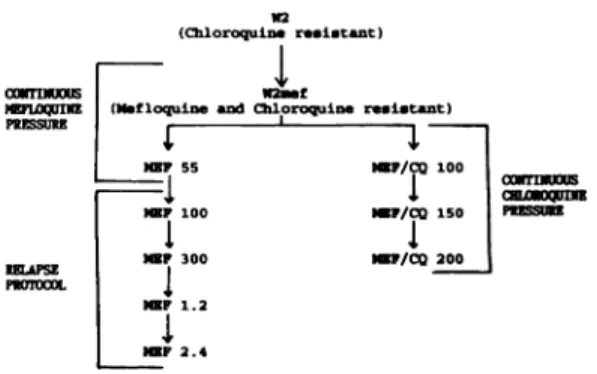
ries of mefloquine-resistant lines from the mul tidrug-resistant line W2mef (Figure l).6 Since
(chloroquin. r..i.tant)
‘if
w2@f
(Nsfloquine and thl3roquin. rs.i.tant)
F
N.p/r too
,I
@
I
Ng.P/cQ @F55
=@
p@F 100
III, 300
‘I
MEF 1.2
NRF 2.4
FIGURE 1. Selection protocols for the derivation of Plasmodium falciparum lines resistant to mefloquine
hydrochloride (MEF) and chloroquine diphosphate (CQ) (ng/ml). Parasites were selected for increasing resistance to MEF and CQ as described previously@ and in the text. Parasite lines shown were stabilated and used in the current study.
selection for increased mefloquine resistance also resulted in lines exhibiting increased sen sitivity to chloroquine,6 we reasoned that selec
tion for increased chloroquine resistance in
W2mef may result in the isolation of revertant lines, providing a model to study the molecular basis of drug resistance. The selection protocol initiated with chloroquine is shown in Figure 1. Continuous drug pressure was initiated with 100
ng/ml of chloroquine, and concentrations were
then increased in 50 ng/ml increments until
lines that were resistant to 100 ng/ml
(W2mefCQlOO), 150 ng/ml (W2mefCQl 50),
and 200 ng/ml (W2mefCQ200) of chloroquine
were derived over a I 2-month period.
Microdilution assays based on 3H-hypoxan
thine incorporation into parasite DNA were used
to determine the drug susceptibility of
W2mefCQ200 to chloroquine, mefloquine, hal
ofantrine, quinine, and artemisinin (Table 1).
As expected, the IC50 of chloroquine for
W2mefCQ200
(I 02.34 ±9.69 ng/ml) was sig
nificantly increased above that of W2mef (62.61 ±5. 18 ng/ml) (Table 1; P < 0.01). Interestingly,
W2mefCQ200
was now extremely
susceptible
to mefloquine with an IC@ of 2.06 ± 1.18 ng/
ml as compared with 14.49 ± 3.49 ng/ml for
W2mef (Table I ; P < 0.001), and was signifi
cantly more sensitive to mefloquine than W2,
the progenitor clone of W2mef at the IC@ (3.08 ±0.16 ng/ml versus 1 1.61 ±0.67 ng/ml; P < 0.001 ), IC95 (4.34 ±0.49 ng/ml versus 15.74 ±
1.46 ng/ml; P < 0.001), and IC99 (9.35 ±2.33
Clone/lineIC,@,*ChloroquineMefloquineHalofantrineQuinineArtemisininW2
W2mef Mef 2.4 W2mefCQ200 Sensitivet91.70
±8.14 62.61 ±5.18 48.35 ±4.57 102.34 ±9.69 <10.04.35
±0.89 14.49 ±3.49 20. 17 ±7.21
2.06 ± 1.18 <8.00.37
±0.01 1.48 ±0.19 3.42 ± 1.86 0.18 ±0.05 <NEt83.50
±5.43 56.32 ±4.17 97.54 ±9.49 48.88 ± 8.24 <25.01.97
±0.46 3.46 ±0.38 3.59 ±0.45 3.20 ±0.40 NEt
TABLE I Drug susceptibility profiles
a nfs@ percent inhibitory concentration (IC,@) determinations (ng/ml) for chloroquine disphosphate, quinine sulfate. mefloquine hydrochloride. halofantrine hydrochloride. and atiemisinin with Plasmodium fakiparum W2, W2mef, Mef 2.4. and W2mefCQ200. values are means ± SD of at least five separate determinations (two separate dilutions per determination).
t Drugreferencelevelsfor sensitiveparasitesarecorrelatesof clinicalandin vitro dataestablishedby theWalterReedArmy Instituteof Research
and in reference34.
@ NE = not yet established.
pressed as the ratio of pfindrl to CSP and reflect at least two separate experiments. In agreement
with previous findings, pfmdrl was amplified
three-fold in the W2-mef clone.lS The Mef 55
line, selected with continuous pressure protocols to 55 ng/ml, also demonstrated a three-fold am plification of the pfindrl allele. Interestingly, an eight-fold amplification of pfmdrl was noted in the Mef 100, Mef 300, and Mef 2.4 lines, which
were selected by discontinuous drug pressure
with 100, 300, and 2,400 ng/ml of mefloquine,
respectively (Figures 1 and 2 and Table 2).6 The mefloquine-halofantrmne—sensitive revertant line
W2mefCQ200 contained a single copy of
pfmdrl,
losing the three-fold amplification of
pfindrl that had been acquired during the induc
tion of mefloquine resistance in W2mef. As ex
pected, a single copy of the pfindrl gene was
noted in the chloroquine-resistant, mefloquine
sensitive parasites W2 and FCR3 (Figure 2 and
Table 2).
Expression of mRNA and Northern analy
sis. Previous studies have demonstrated enhanced
pfindrl transcript prevalence in mefloquine-resis
tant clones and [email protected] hybridization analysis was used to determine mRNA ex
pression levels of pfindrl in W2, W2mef, Mef
2.4, and W2mefCQ200 (Figure 3). Direct scan
ning of nitrocellulose membranes indicated that
equivalent amounts of total RNA were analyzed
as indicated by hybridization with the GBP gene
control. An approximate three-fold increased
pfmdrl mRNA expression was detected in
W2Mef, and an eight-fold enhanced expression
was detected in Mef 2.4 as compared with low
level expression in the mefloquine-sensitive clone
W2 and the mefloquine-halofantrine revertant
line W2mefCQ200 (Figure 3 and Table 2). North
ng/ml versus 33.76 ± 5.22 ng/ml; P < 0.001) levels. The IC@ of halofantrine was also signif
icantly reduced, 0. 18 ± 0.05 ng/ml for
W2mefCQ200 as compared with 1.48 ± 0.19
ng/ml for W2mef (P < 0.001), indicating in creased sensitivity to this antimalarial as well
(Table 1). The IC@ values for W2mefCQ200 to
quinine indicated a slight decrease (P < 0.05
versus W2mefl, while repeated assays (n = 5)
with Mef 2.4 indicated a slight increase in the
IC@ as compared with W2 and W2mef (P <
0.01; Table 1). The IC@ to artemisinin for
W2mefCQ200 had not significantly changed
from that of W2mef.
Amplification of pfmdrl in highly meflo
quine-resistant lines. To determine pfindrl gene
copy number, Southern blot hybridization anal
ysis was performed on W2 and W2mef, the me
floquine passage lines Mef 55, Mef 100, Mef
300, Mef 2.4, and the mefloquine-halofantnine
revertant line W2mefCQ200. A 390-basepair
(bp) pfindrl DNA fragment was used to probe
Southern blots of a Bgl H digest of genomic
DNA. In vitro selection for increasing meflo
quine resistance resulted in a corresponding am plification of the pfindrl gene in the mefloquine passage lines (Figures 2A and B) in comparison
with the known single copy CSP gene (Figures
2C and D). Dihydrofolate reductase was also
found to be single copy in W2, Mef 300, and
Mef 2.4. The gene copy number of each of these
lines (Table 2) was obtained following Southern blot analysis by direct scanning of the nitrocel
lulose membranes using a radioanalytical quan
tification imaging system since the linear capac
ity of radiographic film is rapidly exceeded,
making densitometric determinations of copy
A
7
8
B
1
2
3
4
@
6
D
12,21*
.7,12*
C.
FIGURE 2. Southern blot analysis of the P-glycoprotein gene homolog (pfmdrl) in the Plasmodiumfalciparum
passage lines. Four micrograms of genomic DNA of FCR3 (lane I), W2 (lane 2), W2mef (lane 3), Mef 55 (lane 4), Mef 100 (lane 5), Mef 300 (lane 6), Mef 2.4 (lane 7), and W2mefCQ200 (lane 8) was digested with Bgl II, separated by electrophoresis on 0.7% agarose gels, transferred to nitrocellulose, and hybridized with either a 32P-labeled pfindrl (A, 24-hr exposure; B, 36-hr exposure) or a circumsporozoite gene (C, 24-hr exposure; D, 36-hr exposure) DNA probe as described in the experimental procedures. Values on the left side of A are in basepairs.
em analysis of agarose formaldehyde gels of late
stage trophozoites of W2, W2mef, and Mef 2.4
also demonstrated the two major transcripts of the expected size that were significantly increased in
amount in W2-mef and Mef 2.4 as compared
with W2 (Figure 4).
Sequence analysis of pfmdrl. One to four
amino acid changes have been correlated with
the chlonoquine resistance phenotype. The pu
tative mutation reported for W2 and W2mef in
resulting in an asparagine (AAT) to tyrosine
(TAT) change at amino acid 86.
@ Since a tyro
sine (TAT) to phenylalanine (ITT) change at po sition I 84 has also been reported,'7 oligonucle otide primers were constructed to amplify a 502-or 63 l-bp fragment spanning the point mutations at either nucleotides 754 or 1049, respectively.
Extensive sequence analysis was performed on
the PCR product and genomic subclones from
W2, W2mef, Mef2.4, and W2mefCQ200. Direct
sequencing of the asymmetric PCR product re
vealed the expected TAT at position 86 in W2
Parasite lineGene copy/ mRNA levels'Nucleotide
at position 75Sf l@9tAmino
acid at position 86t l84fW2
W2mefI/I 3/3TAT
TAT
TAT TAT
1T1'Tyr
Tyr
Tyr Tyr
PheMef 55 Mef 100 Mef 3003/ND
8/ND 8/NDND
ND
ND ND
ND NDND
ND
ND ND
ND NDMef
2.4
W2mefCQ2008/8 I/I‘ITI'
TAT
TAT TATPhe
Tyr
Tyr Tyr
TABLE 2
Gene copy number, mRNA expression levels, and Se quence comparisons in the P-glycoprotein gene ho
molog (pfmdrl) gene among Plasmodium falcipa rum clones and lines
1 2 3
,— _.
S All values are rounded to the nearest integer. Gene copy number is expressed as a ratio of lpfmdrl/circumsporozoite proteini and mRNA Icy els as a ratio of lpfmdrl/glycophorin binding proteini.
f Chloroquine-sensitivelinesencodeAAT(Asn)at nucleotide755.and TAT (Tyr) at nucleotide 049.―
(Figure 5A); however, an additional A to T mu
tation at nucleotide 755 (liT) was also noted in
W2mef and Mef 2.4 (Figures SB and C). Close
inspection of the results revealed a faint band in
the A lane of W2mef (see arrow, Figure SB),
which indicated a mixed sequence population at
this locus. Since quantitative PCR was not used
to obtain gene fragments for DNA sequencing,
and since both W2mef and Mef 2.4 contained
FIGURE 4. Northern analysis of the P-glycoprotein
gene homolog (pfmdrl) in Plasmodium falciparum
lines W2 (lane 1), W2mef (lane 2), and Mef 2.4 (lane 3). Five micrograms of total cellular RNA from tro phozoite stage parasites was applied to Immobilon N (Millipore Corp., Bedford, MA) and hybridized to a
pfmdrl gene probe.
multiple copies of pfmdrl, sequence analysis
was performed on plasmid subclones of the PCR
product isolated from these lines. The putative chloroquine-associated allele, TAT, was noted in
10 of 10 subclones of W2; however, analysis of
this region in W2mef demonstrated only four of
16 subclones with the expected TAT sequence
(Figure SE), while the remainder had mutated to
Tfl' (Figure SD), resulting in an amino acid
change from tyrosine (TAT) to phenylalanine
(TIT). This mixed locus in W2mef was con
firmed in clones that had been maintained in fro zen storage since 1984, while sequence analysis of 24 plasmid subclones of Mef 2.4 demonstrat ed only 1T@I'at this position. If the pfmdrl gene, 5.Oug
2
—
3
4
O.5ug
FIGURE 3. Slot-blot analysis of the P-glycoprotein
gene homolog (pfmdrl) in Plasmodium falciparum
lines W2 (lane 1), W2mef (lane 2), Mef 2.4 (lane 3), and W2mefCQ200 (lane 4). Total cellular RNA was isolated by the guanidinium isothiocyanate method, and S and 0.5 jig of total RNA was applied to Im mobilon N (Millipore Corp., Bedford, MA) and hy bnidized to a pfindr! or a glycophonin binding protein gene probe.
C
F
A
D
B
E
GA TC GAT C
4-FIGuRE5. Variant allele in the P-glycoprotein gene homolog (pfmdrl) gene in the Plasmodium falciparum lines. Genomic DNA was amplified across a 502-basepair region encompassing the putative chloroquine (CQ)— specific allele at nucleotide position 754. Direct sequencing of the polymerase chain reaction product of A, W2; B, W2mef; and C, Mef 2.4, and double-stranded sequencing of representative independent plasmid clones of D and E, W2mef; and F, W2mefCQ200 demonstrate the variability at position 754/5. The arrows indicate the variant allele TAT or TIT The gels are read from the bottom, G (lane 1), A (lane 2), T (lane 3), and C (lane 4).
and in particular this region of the gene, is under strong selective pressure and confers resistance
to mefloquine, W2mefCQ200, which was sen
sitive to mefloquine and halofantrine, should re flect sequence changes at this allele. A 502-bp
fragment encompassing this region was ampli
fled by PCR, subcloned, and eight of eight plas
mid subclones were sequenced and found to
contain the putative chloroquine mutation (TAT) at position 86 (Figure 5).
Sequence analysis of the 63l-bp PCR product
and eight of eight genomic subclones of W2,
W2mef, Mef 2.4, and W2mefCQ200 across nu
cleotide 1049 revealed tyrosine (TAT) at this po sition (Table 2). Thus changes at this position could not be correlated with mefloquine or hal ofantrmne resistance in our lines.
DISCUSSION
Selection for enhanced mefloquine resistance
from W2 to W2mef to Mef 2.4 resulted in lines
demonstrating increased halofantrine resistance and increased chloroquine sensitivity. The slight
increase in quinine resistance noted for these
lines, and its decrease (albeit slight) following selection for chloroquine resistance, suggests that selection for high levels of resistance to me floquine may also modulate levels of quinine re sistance. Interestingly, increased mefloquine and quinine resistance were noted following selec tion for halofantrine resistance in vitro in both chloroquine-sensitive and -resistant parasites.32 Current observations with clinical isolates from Africa and Thailand also indicate that responses
GA T C
to mefloquine and halofantrine demonstrate a
positive correlation with each other and an in
verse correlation with chloroquine resistance.3@ 36 Whether or not quinine susceptibility varies in
any consistent way with responses to mefloquine and halofantrine is less clear; however, in vivo studies suggest that quinine demonstrates a pos itive correlation with these drugs, and an inverse correlation with chloroquine resistance.33 @“Se lection for increased chloroquine resistance in W2mef resulted in a line demonstrating a never tant sensitive phenotype to mefloquine and hal ofantrine. These results are consistent with those reporting a two-fold decrease in the IC@ of me floquine following selection for increased chlo roquine resistance in W2mef,2l although the ab
solute values of IC50 cannot be compared
because of the different assay methodology. Sus ceptibility to halofantrine for these lines was not reported. The apparent lack of modulation of ar temisinin resistance by quinoline-containing methanols suggests that pfmdrl may not mediate a truly classic MDR phenotype in P. falciparum.
Increased resistance to mefloquine and halo fantrine correlated with amplification and over expression of pfrndrl; however, lines selected
with mefloquine concentrations of 100 ng/ml or
greater did not demonstrate proportionately
higher levels of pfmdrl amplification and over
expression. Analysis of the W2mefCQ200 line
revealed that the three-fold amplification of
pfindrl noted in the progenitor line, W2mef, had
been lost. The W2mefCQ200 line now con
tamed a single copy of the gene that was not
overexpressed. These results are consistent with studies that indicate that amplification of pfmdrl does not correlate with increased chloroquine re sistance,'7' 2l.37as well as with studies suggesting
that pfindrl amplification correlates with in
creased mefloquine and halofantrine resistance)7 Examination of the intragenic allele at amino acid 86, previously associated with chloroquine resistance,18 suggested that a specific hydropho
bic domain mutation was derived depending
upon the antimalarial used in the selection pro
tocol. The identification in W2mef of a mixed
sequence population with TAT at position 754,
and a previously unidentified mutation TTF at
position 755, emphasizes a potential problem as sociated with the current technique of consensus
sequencing of the PCR product since all se
quence changes may not be identified. This un
derscores the importance of sequencing individ ual clones from genes that are amplified.
That stepwise selection with mefloquine re
suIts in the specific amplification ofpfindrl with
only the mefloquine-associated mutation
(86-Phe) in Mef 2.4 is significant and not without precedent. Cross-resistance in human KB carci noma cells was found to result from a cluster of point mutations in the MDRI gene that resulted
in a Gly-185 to Val-l85 substitution in the P
glycoprotein.38 The mutations were identified in
a cell line where the wild-type MDR1 was am
plified, yet selection for the next level of resis tance resulted in all amplified copies of the gene carrying the same mutations.39 While the IC@ of chloroquine has decreased in Mef 2.4, the par asite remains resistant to chloroquine, suggest ing that either 86-Tyr is not critical for resis
tance, or that the 86-Phe change remains a
competent allele for chloroquine resistance.
The loss of amplified genes carrying the me
floquine-halofantrine—associated mutation, 86-Phe (TV!'), subsequent reversion to a mefloqui
ne-halofantrine—sensitive phenotype, and
selection for an allele (TAT) associated with
chloroquine resistance in W2mefCQ200 suggest
that this area of the gene is under heavy selec
tive pressure from quinoline-containing corn
pounds. While appearing to support a role for
the KI allele in chloroquine resistance,18 these results seem to contradict those that suggested that there was no link between pfindrl and chlo roquine resistance, but implicated an allele on chromosome 7.@°In support of these findings, chloroquine-resistant isolates from Thailand did not demonstrate the putative chloroquine nesis tance—associated KI allele (TAT).17 In both stud ies, however, the clones and isolates used con
tamed multiple copies of the pfmdrl gene. For
example, although it is clear that chloroquine re sistance maps to a locus on chromosome 7,@°the resistant clone D2d, derived from W2rnef, likely contained two alleles, one previously associated with chloroquine resistance (86@Tyr),lR and the
newly identified mutation (86-Phe) associated
with mefloquine and halofantrine resistance.
Since the genotype of all pfindrl copies of the parents or progeny of the genetic cross has not
been determined, pfindrl cannot be excluded as
a genetic determinant modulating mefloquine
and/or chloroquine resistance.
Although the 86-Tyr to 86-Phe mutation lo
and 2 in pfmdrl in our passage lines is the strongest link, to date, of a membrane-associated mutation with mefloquine and halofantrine resis
tance, the high gene copy number of Mef 2.4
has made mutational analysis difficult. Clearly, additional mutations in pfmdrl on yet unrecog
nized genes may also function in resistance.
Studies using clinical isolates from Thailand in
dicated that mefloquine resistance may be as
sociated with an A to T mutation at nucleotide 1049 resulting in a Tyr to Phe change between
TM2 and 317 That this mutation was also noted
in the lone mefloquine/halofantrine sensitive line
(TM335) suggests that this mutation does not
necessarily correlate with resistance to these drugs. While our data support this interpretation, it should be noted that mutations within TM do
mains of other ABC gene family members, such
as TMII of rodent mdrl and mdr3 and TMI,
TM6, and TM 10 of the human cystic fibrosis
transmembrane conductance regulator protein
(CFTR), have also been correlated with specific ity to various compounds.@°4' Although analysis
of chimenic MDRI/MDR2 genes has indicated
that neither point mutations nor specific amino acid sequences encoded drug-resistance profiles, drug binding and recognition seemed to involve higher-order structure affected by multiple, in dependent parts of the molecule.42 Recent stud ies have indicated that the first cytoplasmic loop
of MDRI , and in particular residues 165, 166,
168, and 169, appear to confer functional mul tidrug transporter activity.43 If drug recognition and binding involves the participation of mem brane domains from both halves of the pfindrl
protein product, P-glycoprotein homolog I
(Pgh I ), in P. falciparum, mutations in on near
one or more tnansmembnane domains may be
critical determinants of resistance to mefloquine and halofantnine.
Although the results presented provide strong support for pfmdrl mediating cross-resistance to mefloquine, halofantnine, and perhaps quinine in
P. falciparum, it is also not yet clear how Pghl
could modulate resistance to these drugs. In
MDR cells, the most important determinant of
transport by the putative export pump is a com
pound's relative hydrophobicity.3 Compounds
concentrated in plasma membranes are thought
to be detected and expelled as they partition into
the membrane in a manner similar to a hydro
phobic vacuum cleaner,@ as well as through the channel of the transporter.43 In contrast, Pghl
has been localized principally to the surface of the digestive vacuole of the parasite,37 the pro posed site of action of these drugs.45
@ Although
the protein may be positioned to directly affect drug levels within this vacuole, its actual ori entation (export versus import) within the vac
uole membrane is not known. If pfmdrl func
tions in a manner similar to P-glycopnotein in
MDR cells, mefloquine and halofantnine, which
are more tightly associated with membranes than chloroquine or quinine, may be better substrates for transport. With only minor amounts of Pghl
localized to the plasma membrane of the para
site,37 however, the mechanism by which these
drugs could then move from the digestive vac
uole, through the parasite plasma membrane, the parasitophonous vacuole membrane, and finally
through the cytoplasm and plasma membrane of
the erythrocyte, remains unknown.
Alternatively, studies with MDR tumor cells
suggest that P-glycopnotein may function as a
proton/chloride pump.3 Since quinoline-contain ing antimalarials as weak bases are concentrated by the acidic digestive vacuole,4546 regulation of pH of this organelle has also been suggested as a possible function of Pgh 1.“@In support of these
studies, Bray and others have suggested that
changes in chloroquine accumulation (presum
ably due to increased vacuole pH), and not ef
flux from the food vacuole, may determine re
sistance.48
Analysis of our progressively more drug-re
sistant parasite lines indicated that a single mu tation in Pghl could not alone be responsible for high levels of resistance since the Mef 100, Mef 300, and Mef 2.4 lines contained equivalently
amplified and overexpressed pfmdrl genes, and
yet Mef 2.4 is significantly more resistant.6 In addition, selection for the revertant line with chloroquine resulted in hypersensitivity to me floquine and halofantnine and decreased quinine resistance as compared with the progenitor clone W2. Since this revertant line retained the puta tive chloroquine-associated allele (TAT) found
in pfmdrl of W2, yet was more sensitive than
W2 to these compounds, additional genetic
changes must have occurred. The availability of
an in vitro model with lines demonstrating in
creased resistance, as well as revertant lines, should allow us not only to begin to dissect the
complex mechanisms of drug resistance in P.
function of Pgh 1 in the parasite and its potential role in mediating resistance to antimalarials.
Acknowledgments: We thank Dr. Lorraine K. Alex ander for help with the statistical analyses. We are grateful to the North Carolina branch of the American Red Cross for the provision of blood and plasma.
Financial support: This work was supported by re search grants from the John Reed Trust to Sheila A. Peel, and the North Carolina Biotechnology Center (92 13-ARG-0405) to Ralph S. Baric and Jean Handy. Ralph S. Baric is a recipient of an established inves tigator award from the American Heart Association (AHA-89-0l93).
Authors' addresses: Sheila A. Peel, Patricia Bright, Boyd Yount, and Ralph S. Baric, Department of Epi demiology, CB 7400, McGavran-Greenberg Hall, Uni versity of North Carolina at Chapel Hill, Chapel Hill, NC, 27599-7400. Jean Handy, CB 7600, Clinical Mi crobiology and Immunology Laboratories, UNC Hos pitals, Chapel Hill, NC 27599-7600.
REFERENCES
I . Peters W, 1985. The problem of drug resistance
in malaria. Parasitologv 90: 705—7 15.
2. Oakes SC, Mitchel VS. Pearson GW, Carpenter CCJ, 1991. Malaria. Obstacles and opportuni
ties. A Report of the Committee for the Stud's' on Malaria Prevention and Control: Status Review and Alternative Strategies. Washington, DC: Di
vision of International Health, Institute of Mcd
icine, National Academy Press, 144—166.
3. Gottesman MM, Pastan I, 1993. Biochemistry of multidrug resistance mediated by the multidrug transporter. Annu Rev Biochem 62: 385—427. 4. Endicott JA, Ling V 1989. The biochemistry of
P-glycoprotein-mediated multidrug resistance.
Anna Rev Biochem 58: 137—171.
5. Oduola AJ, Milhous WK, Weatherly NF, Bowdre JH, Desjardins RE, 1988. Plasmodium fa/cipa
rum: induction of resistance to melloquine in
cloned strains by continuous drug exposure in vitro. Exp Parasitol 67: 354—360.
6. Peel SA, Merritt SC, Handy J, Baric RS, 1993. Derivation of highly metloquine-resistant lines from Plasmodium falciparum in vitro. Am J
Trop Med. Hyg 48: 385—397.
7. Krogstad DJ, Gluzman IY, Kyle DF, Oduola AMJ, Martin 5K, Milhous WK, Schlesinger PH, 1987. Efflux of chioroquine from P. falciparum: mechanisms of chloroquine resistance. Science
238: 1283—1285.
8. Martin SK, Oduola AMJ, Milhous WK, 1987. Re versal of chloroquine resistance in Plasmodium
falciparum by verapamil. Science 235: 899—
901.
9. Bitonti AJ, Sjoerdsma A, McCann PP. Kyle DE, Oduola AMJ, Rossan RN, Milhous K, Davidson DE, 1988. Reversal of chloroquine resistance in the malarial parasite Plasmodium falciparum by desipramine. Science 242: 130 1—1303.
10. Peters W, Ekong R, Robinson BL, Warhurst DC, Pan XQ, 1989. Antihistaminic drugs that re verse chloroquine resistance in Plasmodium fal
ciparum. Lancet ii: 334—335.
I 1. Kyle DE, Oduola AM J, Martin 5K, Milhous WK, 1990. Plasmodium falciparum: modulation by calcium antagonists of resistance to chloroquine, desethylchloroquine, quinine, and quinidine in vitro. Trans R Soc Trop Med Hyg 84: 474—478.
12. Oduola AMJ, Omitowoju GO, Gerena L, Kyle
DE, Milhous WK, Sowunmi A, Salako LA, I993. Reversal of mefloquine resistance with penfluridol in isolates of Plasmodium falcipa
rum from south-west Nigeria. Trans R Soc Trop Med Hvg 87: 8 1—83.
13. Peters W, Robinson BL, 1991 . The chemotherapy of rodent malaria. XLVI. Reversal of mefloqui ne resistance in rodent Plasmodium. Ann Trop
Med Parasitol 85: 5—10.
14. Foote SJ, Thompson JK, Cowman AF, Kemp Di, 1989. Amplification of the multidrug resistance gene in some chloroquine-resistant isolates of P.
falciparum. Cell 57: 92 1—930.
15. Wilson CM, Serrano AE, Wasley AM, Bogen
schutz MR Shankar AH, Wirth DF, 1989. Am plification of a gene related to mammalian mdr genes in drug resistant Plasmodium falciparum.
Science 244: 1184—1186.
16. Hyde SC, 1990. Structural model of ATP-binding proteins associated with cystic fibrosis, multi drug resistance, and bacterial transport. Nature
346: 362—365.
17. Wilson CM, Volkerman 5K, Thaithong 5, Martin RK, Kyle DE, Milhous WK, Wirth DF, 1993. Amplification of pfmdrl associated with meflo
quine and halofantnine resistance in Plasmodium falciparum from Thailand. Mo! Biochem Par
asitol 57: 151—160.
18. Foote Si, Kyle DE, Martin RK, Oduola AMJ, For syth K, Kemp Di, Cowman AF, 1990. Several alleles of the multidrug resistance gene are closely linked to chloroquine resistance in P/as
modium falciparum. Nature 345: 255—258.
19. Wellems TE, Panton U, Gluzman IY, do Rosario VE, Gwadz RW, Walker-Jonah A, Krogstad Di,
1990. Chloroquine resistance not linked to mdr
like genes in a Plasmodium falciparum cross. Nature 345: 253—255.
20. Wellems TE, Walker-Jonah A, Panton Li, 1991. Genetic mapping of the chloroquine resistant lo cus on Plasmodium falciparum chromosome 7.
Proc Nat! Acad Sci USA 88: 3382—3386.
21 . Barnes DA, Foote Si, Galatis D, Kemp Di, Cow man AF, 1992. Selection for high-level chloro quine resistance results in deamplification of the
pfmdrl gene and increased sensitivity to meflo quine in Plasmodium falciparum. EMBO J 11:
3067—3075.
22. Desjardins RE, Canfield Ci, Haynes JD, Chulay JD, 1979. Quantitative assessment of antima lanaI activity in vitro by a semiautomated mi crodilution techn ique. Antimicrob Agents
Chemother 16: 710—718.
of the calmodulin gene of Plasnwdium falcipa
rum. Mo! Biochem Parasito! 46: 19—34.
24. Kunter 5, Breuer WV, Ginsburg H, Aley SB, Ca bantchik ZI, 1985. Characterization of perme
ation pathways in the plasma membrane of hu
man erythrocytes infected with early stages of
Plasmodium fa!ciparwn: association with pam
site development. J Ce!! Physiol 125: 52 1—527.
25. Chomczynski P. Sacchi N, 1987. Single-step
method of RNA isolation by acid guanidinium thiocyanate-phenol-chloroform extraction. Anal
Biochem 162: 156—159.
26. Lockyer MJ, Schwartz RT, 1987. Strain variations in the circumsporozoite protein gene of P/as
modiumfalciparum. Mol Biochem Parasito! 22:
101—108.
27. Kochan J, Perkins M, Ravetch JV, 1986. A tan demly repeated sequence determines the binding domain for an erythrocyte receptor binding pro tein of P. falciparum. Cell 44: 689—696. 28. Sambrook J, Fritsch EF, Maniatis T, 1989. Molec
u/ar Cloning: A Laboratory Manual. Second Edition. Cold Spring Harbor, NY: Cold Spring Harbor Press.
29. Southern EM, 1975. Detection of specific se quences among DNA fragments separated by gel electrophoresis. J Mo! Biol 98: @03—517. 30. Kafatos FC, Jones WC, Efstratiadis A, 1979. De
termination of nucleic acid sequence homolo gies and relative concentrations by dot blot hy bridization procedure. Nucleic Acids Res 7:
1541—1552.
31. Volkerman 5K, Wilson CM, Wirth DF, 1993. Stage specific transcripts of the Plasmodiumfal
ciparum pfindrl gene. Mo! Biochem Parasito! 57: 203—212.
32. Nateghpour M, Ward SA, Howells RE, 1993. De velopment of halofantrine resistance and deter mination of cross-resistance patterns in Plas
modium falciparum. Antimicrob Agents
Chemother 37: 2337—2343.
33. Webster HK, Thaithong 5, Pavanand K, Yongvan itchit K, Pinswasdi C, Boudreau EF, 1985. Cloning and characterization of mefloquine-re sistant Plasmodium fakiparum from Thailand.
Am J Trop Med Hyg 34: 1022—1027.
34. Webster HK, Boudreau EF, Pavanand K, Yongvan itchit K, Pang LW, 1985. Antimalarial drug sus ceptibility testing of Plasmodium falciparum in Thailand using a microdilution radioisotope method. Am J Trop Med Hyg 34: 228—235. 35. Basco LK, Le Bras J, 1992. In vitro activity of
halofantrine and its relationship to other stan dard antimalarial drugs against African isolates and clones of Plasmodium falciparum. Am J Trop Med Hyg 47: @21—527.
36. Childs GE, Boudreau EF, Wimonwattratee T, Pang L, Milhous WK, 1991. In vitro and clinical cor
relates of mefloquine resistance of Plasmodium
fa!ciparum in eastern Thailand. Am J Trop Med Hyg 44: 553—559.
37. Cowman AF, Karcz 5, Galatis D, Culvenor JO, 1991. A P-glycoprotein homologue of Plasmo
diumfalciparum is located on the digestive vac
uole. J Ce!! Biol 113: 1033—1042.
38. Choi K, Chen C, Kriegler M, Roninson lB. 1988. An altered pattern of cross-resistance in multi
drug resistant human cells results from sponta
neous mutations in the mdrl (P-glycoprotein) gene. Ce!! 53: 5 19—529.
39. Roninson lB. 1992. The role of the MDR1 (P glycoprotein) gene in multidrug resistance in vitro and in vivo. Biochem Pharmaco! 43: 95— 102.
40. Gros P, Dhir R, Croop J, Talbot F, 1991. A single amino acid substitution strongly modulates the activity and substrate specificity of the mouse mdrl and mdr3 efflux pumps. Proc Nat! Acad
Sd USA 88:7289—7293.
41. Anderson MP, Gregory Ri, Thompson S. Souza
DW, Sucharita P. Mulligan RC, Smith AE,
Welsh Mi, 1991. Demonstration that CFTR is a chloride channel by alternation of its anion specificity. Science 253: 202—205.
42. Dhir R, Gros P. 1992. Functional analysis of chi
meric proteins constructed by exchanging ho
mologous domains of two P-glycoprotein con ferring distinct drug resistance profiles.
Biochemtry 31: 6103—6110.
43. Curnier SJ, Kane SE, Willingham MC, Cardarelli CO. Pastan I, Gottesman MM, 1992. Identifi cation of residues in the first cytoplasmic loop of P-glycoprotein involved in the function of
chimeric human MDRI-MDR2 transporters. J
Biol C/oem267: 25153—25159.
44. Raviv Y, Pollard RB, Bruggemann EP, Pastan I, Gottesman MM, 1990. Photosensitized labeling of a functional multidrug transporter in living drug resistant tumor cells. J Biol Chem 265: 3975—3980.
45. Yayon A, Cabantchik ZI, Ginsburg H, 1984. Iden tification of the acidic compartment of Plas
modium falciparum-infected human erythro
cytes as the target of the antimalarial drug chloroquine. EMBO J 3: 2695—2700. 46. Krogstad DJ, Schlesinger PH, Gluzman IY, 1985.
Antimalarials increase vesicle pH in Plasmodi
urn falciparum. J Ce!! Biol 101: 2302—2309.
47. Ginsberg H, Krugliak M, 1992. Quinoline-con taming antimalarials-mode of action, drug resis tance and reversal. An update with unresolved puzzles. Biochem Pharmaco! 43: 63—70. 48. Bray P0, Howells RE, Ritchie GY, Ward SA,
1992. Rapid chloroquine efflux phenotype in both chloroquine-sensitive and chloroquine-re sistant Plasmodium fa!ciparum@ Biochem Phar