Antiretroviral Treatment of Adult HIV Infection
2014 Recommendations
of the International Antiviral Society–USA Panel
Huldrych F. Günthard, MD; Judith A. Aberg, MD; Joseph J. Eron, MD; Jennifer F. Hoy, MBBS, FRACP; Amalio Telenti, MD, PhD; Constance A. Benson, MD; David M. Burger, PharmD, PhD; Pedro Cahn, MD, PhD; Joel E. Gallant, MD, MPH; Marshall J. Glesby, MD, PhD; Peter Reiss, MD, PhD; Michael S. Saag, MD; David L. Thomas, MD, MPH; Donna M. Jacobsen, BS; Paul A. Volberding, MD
IMPORTANCE
New data and antiretroviral regimens expand treatment choices in
resource-rich settings and warrant an update of recommendations to treat adults infected
with human immunodeficiency virus (HIV).
OBJECTIVE
To provide updated treatment recommendations for adults with HIV,
emphasizing when to start treatment; what treatment to start; the use of laboratory
monitoring tools; and managing treatment failure, switches, and simplification.
DATA SOURCES, STUDY SELECTION, AND DATA SYNTHESIS
An International Antiviral
Society–USA panel of experts in HIV research and patient care considered previous data and
reviewed new data since the 2012 update with literature searches in PubMed and EMBASE
through June 2014. Recommendations and ratings were based on the quality of evidence and
consensus.
RESULTS
Antiretroviral therapy is recommended for all adults with HIV infection. Evidence for
benefits of treatment and quality of available data increase at lower CD4 cell counts.
Recommended initial regimens include 2 nucleoside reverse transcriptase inhibitors (NRTIs;
abacavir/lamivudine or tenofovir disoproxil fumarate/emtricitabine) and a third single or
boosted drug, which should be an integrase strand transfer inhibitor (dolutegravir,
elvitegravir, or raltegravir), a nonnucleoside reverse transcriptase inhibitor (efavirenz or
rilpivirine) or a boosted protease inhibitor (darunavir or atazanavir). Alternative regimens are
available. Boosted protease inhibitor monotherapy is generally not recommended, but
NRTI-sparing approaches may be considered. New guidance for optimal timing of monitoring
of laboratory parameters is provided. Suspected treatment failure warrants rapid
confirmation, performance of resistance testing while the patient is receiving the failing
regimen, and evaluation of reasons for failure before consideration of switching therapy.
Regimen switches for adverse effects, convenience, or to reduce costs should not jeopardize
antiretroviral potency.
CONCLUSIONS AND RELEVANCE
After confirmed diagnosis of HIV infection, antiretroviral
therapy should be initiated in all individuals who are willing and ready to start treatment.
Regimens should be selected or changed based on resistance test results with consideration
of dosing frequency, pill burden, adverse toxic effect profiles, comorbidities, and drug
interactions.
JAMA. 2014;312(4):410-425. doi:10.1001/jama.2014.8722
Related articlepage 390 Supplemental contentat jama.com
Author Affiliations:Author affiliations are listed at the end of this article.
Corresponding Author:Huldrych F. Günthard, MD, University Hospital Zurich, Rämistrasse 100, 8091 Zürich, Switzerland (huldrych.guenthard @usz.ch).
A
ntiretroviral therapy (ART) consists of a combination of
drugs targeting the human immunodeficiency virus (HIV)
life cycle with the aim of stopping HIV replication and
pre-serving or restoring immune function. Since publication of the last
recommendations in 2012,
1there is more evidence supporting the
initiation of ART regardless of CD4 cell count. New cohort data
pro-vide compelling epro-vidence for the effectiveness of treatment to
pre-vent transmission in heterosexual and same-sex couples.
2-4In
ad-dition, morbidity and mortality from non–AIDS-defining illness did
not differ from that of the general population if CD4 cell counts of
greater than 500/μL were achieved.
5Several reports suggest that
if ART is started early during acute infection, prolonged virologic
sup-pression after discontinuation of ART may be achievable in rare
cases.
6,7New drugs with high potency, low toxicity, and good
tol-erability increase the feasibility of early, lifelong treatment. Even
pa-tients with prior treatment failure and multidrug resistance can
usu-ally be treated with suppressive ART. Recommendations provided
herein for the optimal management of adults with HIV infection are
based on the latest developments and available evidence.
Methods
These recommendations were developed by a volunteer, international
panel of experts in HIV research and patient care selected by the
Inter-national Antiviral Society–USA and vetted for suitability, expertise,
con-formance to the group’s conflict of interest criteria, and ability to work
toward consensus. The panel convened in person and by conference
calls in 2013 and 2014. Section leaders and teams evaluated evidence
and summarized draft recommendations for full-panel review.
Evidence used was published in the scientific literature,
pre-sented at major peer-reviewed scientific conferences, or released
as safety reports by regulatory agencies or data and safety
moni-toring boards since 2012.
1Literature searches in PubMed and
EMBASE by reference librarians were designed to capture
publica-tions relevant to ART in HIV infection since the 2012 iteration
1through June 2014. Approximately 400 relevant citations were
iden-tified. Relevant abstracts publicly presented at scientific
confer-ences were identified by panel members. Manufacturers of
antiret-roviral drugs submitted lists of recent publications or abstracts
meeting the established criteria.
These recommendations are focused on adults with HIV
infec-tion living in settings in which antiretroviral drugs are generally
avail-able (approved by regulatory bodies or in expanded access) or in
late-stage development (new drug application filed). Recommendations
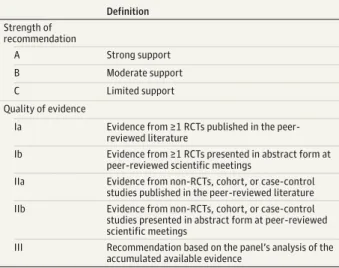
were made by full-panel consensus and rated (
Table 1
). For areas in
which recommendations have not changed substantially or no or few
new data are available, the reader is referred to the previous report.
1Further details about the process, the selection of panel members,
the sponsor (International Antiviral Society–USA), and its policies are
included in the eMethods, in eBoxes 1-4, and in eTables 1-3 in the
Supplement.
Recommendations for When to Start
Additional evidence for initiating ART in all adults with HIV
infec-tion has emerged from continued observainfec-tional cohort data,
5,9-11the
lack of demonstrated harm with early initiation, cost-effectiveness
modeling, and data from a randomized clinical trial showing that ART
reduced the likelihood of HIV transmission while providing clinical
benefit to the individual.
2-4,12-15Recommendations for when to start
ART appear in
Box 1
. The strength of the recommendations and the
quality of the evidence increase as CD4 cell counts decrease and in
the presence of certain concurrent conditions
.
The World Health
Or-ganization recommends ART be initiated regardless of CD4 cell count
for a number of clinical and programmatic indications.
16The
pa-tient must be willing and ready to initiate therapy. Medication
coun-seling and adherence support should be offered. However,
pa-tients who do not choose or are not ready to start ART should remain
in clinical care with regular monitoring and ongoing discussion about
the need for ART.
The evidence for initiating ART in patients termed
elite
control-lers
(ie, those with an HIV-1 RNA level of less than the level of
detec-tion without ART) is stronger than in the past,
17-19but still
insuffi-cient to warrant recommending routine treatment.
Acute HIV Infection
ART is recommended for persons with acute HIV infection, and
should be started as soon as possible to maximize benefit.
7New
data have demonstrated additional benefits of ART, namely
reduction of proviral DNA and plasma viral load,
20,21lower viral
set point,
22robust immune reconstitution,
21and CD4 cell count
increases greater than 900/μL.
23Patients in these trials received
ART for a limited period ranging from 12 to 60 months. None of
the above benefits lasted for more than 24 months after
treat-ment discontinuation.
24ART did not prevent persistent T-cell
activation,
25but did reduce the generation of latently infected
cells,
26and in anecdotal cases, led to prolonged viral suppression
after discontinuation of ART.
6,7ART should be offered to all patients with acute or early
infection. Planned discontinuation of ART after a specific duration
of treatment is not recommended except in research settings.
Table 1. Definitions for Strength of the Recommendation and the Quality of the Evidencea
Definition
Strength of recommendation
A Strong support
B Moderate support
C Limited support
Quality of evidence
Ia Evidence from ≥1 RCTs published in the peer-reviewed literature
Ib Evidence from ≥1 RCTs presented in abstract form at peer-reviewed scientific meetings
IIa Evidence from non-RCTs, cohort, or case-control studies published in the peer-reviewed literature
IIb Evidence from non-RCTs, cohort, or case-control studies presented in abstract form at peer-reviewed scientific meetings
III Recommendation based on the panel’s analysis of the accumulated available evidence
Abbreviation: RCT, randomized clinical trial.
a
The benefits of short-term ART are time limited, and treatment
d i s c o n t i n u a t i o n w i t h v i ra l r e b o u n d i s a s s o c i a t e d w i t h
transmission.
20,22,27Opportunistic Infections
The evidence for immediate initiation of ART during treatment for
an acute opportunistic infection was reviewed previously,
1although controversy continues on the best timing to start ART in
persons with acute cryptococcal meningitis. An observational
cohort study of 501 patients with cryptococcal meningitis treated
in resource-limited settings found that time to initiation of ART
was not associated with early or overall mortality.
28A small
ran-domized trial showed that early ART in the setting of cryptococcal
meningitis did not improve cerebrospinal fluid fungal clearance,
and was associated with increased risk of immune reconstitution
inflammatory syndrome (IRIS) but not with increased mortality
compared with delayed initiation of ART.
29A Cochrane Database
analysis reported no significant difference in mortality in early vs
delayed ART (relative risk, 1.40; 95% CI, 0.42-4.68).
30The
recently published COAT trial demonstrated higher mortality in
the 2- to 5-week period after randomization in those receiving
early vs delayed ART, with the most pronounced difference
observed in those with CD4 cell counts of less than 50/μL and
severe cryptococcal meningitis with white blood cell counts of
less than 5/μL in cerebrospinal fluid.
31The excess mortality was
not explained by other differences, including the occurrence of
Box 1. Recommendations for Antiretroviral Therapy (ART)aWhen to Start ART
ART is recommended for the treatment of human immunodeficiency vi-rus (HIV) infection and for the prevention of transmission of HIV (AIa). ART is recommended regardless of CD4 cell count (AIa-BIII). The strength of the recommendation increases as the CD4 cell count decreases and in the presence of certain conditions, with the following ratings:
For CD4 cell counts ofⱕ500/μL: AIa For CD4 cell counts of >500/μL: BIII
Ratings for specific conditions with CD4 cell counts of >500/μL: Pregnancy: AIa
Chronic hepatitis B virus co-infection: AIIa HIV-associated nephropathy: AIIa
ART is recommended and should be offered to persons during the acute phase of primary HIV infection, regardless of symptoms (BIII). ART should be started as soon as possible, preferably within the first 2 weeks of diagnosis, in patients with opportunistic infections (AIa) and other opportunistic diseases and AIDS-defining illnesses (including all lym-phomas and human papillomavirus–related cancers) (AIa-BIII). The optimal timing for patients with cryptococcal meningitis is less cer-tain, but initiating ART early during cryptococcal treatment should be con-sidered when expert management of both cryptococcal and HIV infec-tion is available (BIII).
ART is recommended in all HIV-infected persons with tuberculosis (TB) and should be started within 2 weeks of TB treatment when the CD4 cell count is <50/μL, and by 8 to 12 weeks for those with higher CD4 cell counts (AIa). The optimal timing for patients with TB meningitis is less certain, but ART should be started within the first 2 to 8 weeks of diagnosis and managed in consultation with experts (BIII).
Recommendations for ART Monitoring
HIV-1 RNA level should be monitored at about 4 weeks after treatment is initiated or changed, and then every 3 months to confirm suppression of viremia below the limit of quantification of sensitive commercial as-says (AIa).
CD4 cell count should be monitored at least every 3 months after initia-tion of therapy, especially among patients with cell counts of <200/μL, to determine the need for initiation or discontinuation of primary oppor-tunistic infection prophylaxis (BIII).
Once HIV-1 RNA level is suppressed for 1 year and CD4 cell count is stable atⱖ350/μL, viral load and CD4 cell count can be monitored at intervals ofⱕ6 months in patients with dependable adherence (CIII).
Once viral load is demonstrated to be suppressed consistently for more than 2 years and CD4 cell counts are persistently >500/μL, monitoring CD4 cell counts is optional unless virologic failure occurs or there are in-tercurrent immunosuppressive treatments or conditions (CIII). Detectable HIV-1 RNA level (>50 copies/mL) during therapy should be con-firmed within 4 weeks in a subsequent sample prior to making manage-ment decisions (BIII).
HIV-1 RNA level >200 copies/mL should prompt evaluation of factors lead-ing to failure and consideration of switchlead-ing ART (AIIa).
Baseline genotypic testing for resistance should be performed in all treat-ment-naive patients (AIIa) and in cases of confirmed virologic failure (AIa). Therapeutic drug monitoring is not recommended in routine care; how-ever, selected patients might benefit from this intervention (BIII). Laboratory monitoring for ART toxicity is recommended. In the absence of new abnormalities after week 16 of treatment, the frequency of moni-toring, which is generally between 3 and 6 months, should be guided by the presence or absence of comorbidities, and by the components of the regimen (CIII).
Recommendations for Changing the ART Regimen in Treatment-Experienced Patients
Design of a new regimen should consider previous antiretroviral therapy exposure, previous resistance profile, drug interactions, and history of intolerance or toxic effects (AIIa).
Depending on the resistance profile, viral tropism, and options available for patients with multidrug resistance, inclusion of a boosted protease inhibitor and agents from newer drug classes (eg, an integrase strand transfer inhibitor or maraviroc) should be considered (AIa).
Monotherapy with a boosted protease inhibitor is not recommended when other options are available (AIa).
Maintenance of virologic suppression is paramount when switching the regimen to improve tolerability, reduce toxicity, and improve conve-nience (AIa).
Switching or regimen simplification in virologically suppressed individu-als is generally safe if prior treatment and resistance profile are consid-ered and full activity of the nucleoside reverse transcriptase inhibitors can be ensured for switches from a ritonavir-boosted protease inhibitor to drugs with low barriers to resistance (nonnucleoside reverse transcrip-tase inhibitors, unboosted protease inhibitors, or integrase strand trans-fer inhibitors) (AIa).
IRIS between the 2 groups. Most deaths were attributed to
pro-gressive cryptococcal meningitis, although it was not possible to
differentiate IRIS from progressive cryptococcal disease. These
data suggest that caution when initiating ART in the setting of
cryptococcal meningitis is warranted. Earlier initiation of ART
(be-fore 5 weeks) might be considered in settings in which there is
access to appropriate antifungal therapy (including flucytosine),
32frequent monitoring, appropriate management of high
intracra-nial pressure, and careful management of other underlying
condi-tions that might influence mortality.
Cost
The cost of ART varies globally, but even in resource-rich countries
ART is highly cost-effective.
33-35In the United States, cost of care
for patients with more advanced disease (eg, CD4 cell count <50/
μL) is 2.5-fold higher (expenditure/patient/year) than for those with
higher (>350/μL) CD4 cell counts.
36In resource-limited settings, ART
is even more cost-effective because of much lower medication
costs.
13In the next 4 years, more than 20 drugs are expected to
be-come available in generic form (eTable 4 in the Supplement). A
mod-eling study has estimated substantial reductions in expenditures and
improved cost-effectiveness will occur when generic drugs are
used.
14However, some of the newer agents have efficacy or
toler-ability advantages over drugs that will soon become generic. In
ad-dition, the use of generic drugs may require that patients switch from
single-tablet regimens to multiple-pill regimens, which could
ad-versely affect adherence.
Recommendations for What Treatment to Start
Data that inform choices for initial ART continue to accrue, and
options for ART-naive patients include several single-tablet
regi-mens and other efficacious regimen choices (
Table 2
and
Table 3
). Large studies have expanded knowledge of ART
anchored by integrase strand transfer inhibitors (INSTIs),
37-45and
several INSTI-based regimens are now recommended. At present,
ART is considered lifelong, and sustained viral suppression is the
foundation for immune recovery, optimal health, and prevention
of resistance and transmission. Thus, maximizing adherence and
minimizing toxicity is paramount; the goal is to treat with an
effective therapy that is well tolerated and convenient, and has
limited drug interactions and effects on comorbid conditions. In
Table 2. Recommended Initial Antiretroviral RegimensaType of Regimen Antiretroviral Drug Combination Rating Comments
Integrase strand transfer inhibitor plus 2 nucleoside reverse transcriptase inhibitors
Dolutegravirbplus tenofovir/emtricitabine AIa Dolutegravir is dosed once daily. Associated with modest
increases in creatinine level due to inhibition of creatinine secretion.
Dolutegravirbplus abacavirc/lamivudine AIa No evidence that abacavir/lamivudine performs less well at
HIV-1 RNA levels >100 000 copies/mL when given with dolutegravir. A fixed-dose combination is in late-stage development.
Elvitegravirb/cobicistat/tenofovir/emtricitabine AIa Once-daily fixed-dose combination. Cobicistat is associated
with modest increases in creatinine level due to inhibition of creatinine secretion; has similar drug interactions to ritonavir.
Raltegravirbplus tenofovir/emtricitabine AIa Raltegravir is taken twice daily.
Nonnucleoside reverse transcriptase inhibitor plus 2 nucleoside reverse transcriptase inhibitors
Efavirenzd/tenofovir/emtricitabine AIa Efavirenz central nervous symptoms may persist beyond 2-4
weeks but is no longer contraindicated for use in pregnant women.
Efavirenzdplus abacavirc/lamivudinee AIa Efavirenz central nervous symptoms may persist beyond 2-4
weeks but is no longer contraindicated for use in pregnant women.
Rilpivirinef/tenofovir/emtricitabine AIa Once-daily fixed-dose combination. Rilpivirine-based
therapy is not recommended in patients with baseline HIV-1 RNA levels >100 000 copies/mL.
Ritonavir-boosted protease inhibitor plus 2 nucleoside reverse transcriptase inhibitors
Atazanavirg,hplus tenofovir/emtricitabine AIa Atazanavir is associated with nephrolithiasis, cholelithiasis,
and chronic kidney injury.
Atazanavirg,hplus abacavirc/lamivudinee AIa Atazanavir is associated with nephrolithiasis, cholelithiasis,
and chronic kidney injury.
Darunavirgplus tenofovir/emtricitabine AIa During initial therapy, 800 mg of darunavir is given once
daily with 100 mg of ritonavir given once daily.
aRegimen classes and drugs within these classes are listed in alphabetic order
by the anchor (third) drug and not in order of preference. Ratings of the strength of the recommendations and quality of evidence are described in Table 1.
bSimultaneous administration with antacids or other medications with divalent
cations (Ca2+
, Mg++, Al++, Fe++) should be avoided due to chelation of the integrase strand transfer inhibitor by the cation, thereby reducing absorption.
cAbacavir has been associated with increased cardiovascular risk, although data
are conflicting; use with caution in patients with high cardiovascular risk. Should only be used in HLA-B*5701–negative patients.
dShould be taken on an empty stomach, and preferably at bedtime.
eThe combination of abacavir and lamivudine was less efficacious with baseline
HIV-1 RNA level above 100 000 copies/mL than the combination of tenofovir and emtricitabine when these agents were given with efavirenz or ritonavir-boosted atazanavir.
fRilpivirine should not be given with proton pump inhibitors and should be
taken consistently with a full meal.
g
Should be taken with food.
hCo-administration with H2-blockers or proton pump inhibitors should be
resource-rich regions, individualization of therapy is common,
46whereas in resource-limited settings, a public health approach as
described in the World Health Organization guidelines
47has been
adopted. Ideally, definitive studies to determine the optimal
regi-men for the majority of ART-naive patients would simplify
treat-ment strategies. However, such studies would be costly and are
unlikely to be conducted. Wider availability of effective generic
drugs
14and the development of comorbid conditions as patients
age will have a strong influence on initial ART choice.
Initial ART, selected based on baseline resistance testing and
pa-tient characteristics and preference, continues to be based on a
com-bination of 2 nucleoside reverse transcriptase inhibitors (NRTIs) and
a third agent, either an INSTI, a nonnucleoside reverse
transcrip-tase inhibitor (NNRTI), or a boosted protease inhibitor (PI). Since the
2012 recommendations,
1several large trials have expanded and
re-fined initial ART choices.
37-44,48-51In addition, data from
well-powered comparative studies of combinations that limit or spare
NRTI exposure
52,53provide evidence for ART choices when
inclu-sion of an NRTI poses a substantial toxic effect risk. In settings in
which the use of generic drugs is not required, 3 (and soon to be 4)
co-formulated, once-daily, single-tablet regimens are now
avail-able. Recommended and alternative regimens are listed in Table 2
and Table 3. The clinical situations in which alternative regimens are
needed are limited.
Nucleoside Reverse Transcriptase Inhibitors
Two fixed-dose, NRTI combinations (in alphabetic order), abacavir/
lamivudine and tenofovir disoproxil fumarate/emtricitabine, were
generally chosen as the NRTI components in randomized trials of
ini-tial therapy in the recent past.
Recommended
Abacavir should only be used in HLA-B*5701
–
negative individuals.
Whether this drug carries an increased risk of myocardial infarction
(MI) remains uncertain. An association of abacavir with MI has been
demonstrated in some observational studies,
54,55but not in others.
56A US Food and Drug Administration meta-analysis of randomized
clinical trials found no appreciable risk of MI compared with
alter-native NRTIs in patients with low cardiovascular risk initiating
aba-cavir-containing therapy with a median follow-up of 1.5 years.
57An
updated analysis from the cohort collaboration that originally
re-ported the association of abacavir with MI in 2008 recently
recon-firmed the results with data updated through 2012, despite
evi-dence that those at higher risk for cardiovascular disease were less
Table 3. Alternatives to Recommended Initial RegimensaType of Regimen
Alternative Antiretroviral Drug
Combinations Rating Comments
Integrase strand transfer inhibitor plus 2 nucleoside reverse transcriptase inhibitors
Raltegravirbplus
abacavirc/lamivudine BIa No evidence that abacavir/lamivudine performs less well at HIV-1 RNAlevels >100 000 copies/mL when taken with raltegravir.
Nonnucleoside reverse
transcriptase inhibitor (NNRTI) plus 2 nucleoside reverse transcriptase inhibitors
Nevirapine plus 2 nucleoside reverse transcriptase inhibitors
BIa Severe hepatotoxicity may occur in initial therapy when CD4 cell count is >250/μL in women and >400/μL in men. Severe rash is more common than with other NNRTIs.
Rilpivirinedplus abacavirc/lamivudine AIa Rilpivirine-based therapy is not recommended in patients with baseline
HIV-1 RNA levels >100 000 copies/mL.
Protease inhibitor plus 2 nucleoside reverse transcriptase inhibitors
Atazanavire/cobicistatfwith 2
nucleoside reverse transcriptase inhibitors
BIa Atazanavir plus cobicistat as a fixed-dose combination achieves atazanavir levels similar to those with ritonavir boosting. As separate agents, they were noninferior to ritonavir-boosted atazanavir, both in combination with tenofovir/emtricitabine.
Darunavire/cobicistatfwith 2
nucleoside reverse transcriptase inhibitors
BIII Darunavir plus cobicistat as a fixed-dose combination achieves darunavir levels similar to those with ritonavir boosting.
Darunavire,gplus
abacavirc/lamivudine BIb Comparative clinical data from a subset of patients from a single,randomized study.
Lopinavirgfixed-dose combination
with 2 nucleoside reverse transcriptase inhibitors
BIa Main advantage is fixed-dose combination. May have increased cardiovascular risk and be less tolerable than recommended options.
Nucleoside reverse transcriptase inhibitors limiting or sparingh
Darunavire,gplus raltegravir BIb Raltegravir taken twice daily, ritonavir-boosted darunavir taken once
daily. Less effective at CD4 cell counts of <200/μL and possibly HIV-1 RNA levels >100 000 copies/mL.
Lopinavirgplus lamivudine BIa Single study; comparator nucleoside reverse transcriptase inhibitor
included zidovudine (53.9%), tenofovir (36.6%), and abacavir (9.4%), each with lamivudine.
Lopinavirgplus raltegravir BIa Both medications taken twice daily; single study with relatively small
sample size and low baseline plasma HIV-1 RNA level.
aRegimen classes and drugs within these classes are listed in alphabetic order by
the anchor (third) drug and not in order of preference. Ratings of the strength of the recommendations and quality of evidence are described in Table 1.
bSimultaneous administration with antacids or other medications with
divalent cations (Ca2+
, Mg++, Al++, Fe++) should be avoided due to chelation of the integrase strand transfer inhibitor by the cation, thereby reducing absorption.
c
Abacavir has been associated with increased cardiovascular risk, although data are conflicting; use with caution in patients with high cardiovascular risk. Should only be used in HLA-B*5701–negative patients.
dRilpivirine should not be given with proton pump inhibitors and should be
taken consistently with a full meal.
e
Should be taken with food.
f
US Food and Drug Administration approval of the fixed-dose combination is anticipated in 2014.
gRitonavir-boosted regimen.
h
likely to have been prescribed abacavir since the original report.
58Paired with efavirenz or ritonavir-boosted atazanavir, abacavir/
lamivudine had lower rates of viral suppression in persons with
base-line HIV-1 RNA levels of greater than 100 000 copies/mL than did
tenofovir/emtricitabine.
59However, this difference was not
ob-served with abacavir/lamivudine paired with dolutegravir or
raltegravir.
37-39,60Tenofovir and emtricitabine are available in 3 single-tablet
regi-mens in addition to the fixed-dose combination of the 2 NRTIs. This
combination is well tolerated but, as outlined in the previous
rec-ommendations, long-term use of tenofovir is associated with
in-creased risk of kidney injury, which is accentuated by concomitant
use of boosted PIs and is typically but not always reversible with
dis-continuation if detected early.
61Patients should be monitored
regu-larly for glomerular and tubular injury. Although most ART
regi-mens are associated with an early and nonprogressive decrease in
bone mineral density (BMD), this decrease is more pronounced with
tenofovir. Long-term efficacy and safety data have continued to
ac-cumulate for emtricitabine, and no new or unexpected adverse
events have been reported
.
Alternative
Twice-daily fixed-dose combination zidovudine/lamivudine may be
considered for the individual who is unable to receive abacavir or
tenofovir for tolerability or safety reasons and for whom an NRTI is
considered necessary.
Integrase Strand Transfer Inhibitors
Dolutegravir once daily, elvitegravir with cobicistat once daily, and
raltegravir twice daily are potent antiretroviral drugs that are well
tolerated in combination with NRTIs. Compared with NNRTI-based
or boosted PI-based regimens, these agents have consistently shown
higher rates of viral suppression, which in several studies reached
statistical superiority.
37,44,62The drugs are discussed in alphabetic
order.
Recommended
Dolutegravir is a once-daily INSTI that does not require
pharmaco-logical boosting and has similar activity and safety to raltegravir when
combined with tenofovir/emtricitabine or abacavir/lamivudine.
38,39Dolutegravir plus abacavir/lamivudine was superior to the
fixed-dose combination of efavirenz/tenofovir/emtricitabine with the
dif-ference driven by nonvirologic end points.
37,63Dolutegravir was
su-perior to ritonavir-boosted darunavir in an open-label study when
combined with either recommended NRTI combination.
45Dolute-gravir appears to have a higher barrier to resistance than
raltegra-vir or elvitegraraltegra-vir. Resistance to INSTIs has not yet been reported in
trials of dolutegravir in treatment-naive individuals. A fixed-dose
combination with abacavir/lamivudine is expected to be available
in the near future.
Elvitegravir has only been studied as initial therapy in a
fixed-dose combination with cobicistat/tenofovir/emtricitabine, which has
comparable efficacy with efavirenz-based and ritonavir-boosted
atazanavir–based therapies over 3 years,
40-43with similar rates of
resistance as raltegravir and 2 NRTIs. Variants of HIV resistant to
ralte-gravir or elviteralte-gravir should be considered cross-resistant.
Cobici-stat, a pharmacokinetic booster with no antiretroviral activity, has
drug interactions similar to ritonavir. Cobicistat causes a reversible
small increase in serum creatinine level because it inhibits tubular
creatinine secretion, but does not affect glomerular filtration.
64Other
drugs, including dolutegravir, rilpivirine, and ritonavir, also
de-crease tubular creatinine secretion.
Raltegravir has durable efficacy, superior to efavirenz at 4 years
and 5 years,
62with similar overall rates of resistance as those
ob-served with efavirenz-based therapy
.
Over 96 weeks, twice-daily
raltegravir was superior to once-daily ritonavir-boosted darunavir
and ritonavir-boosted atazanavir when each third agent was
com-bined with once-daily tenofovir/emtricitabine.
44Nonnucleoside Reverse Transcriptase Inhibitors
Efavirenz and rilpivirine are each available as a single pill for
once-daily use and are available in fixed-dose combinations with
tenofo-vir and emtricitabine.
Recommended
Efavirenz has long-term efficacy and safety data but is inferior to
some INSTI-based regimens,
37,62predominantly because of
toler-ability. The more recent blinded trials show that the early central
ner-vous system adverse effects of efavirenz
37,42may persist longer than
initially thought. An analysis of patients randomized to
efavirenz-containing vs non–efavirenz-efavirenz-containing regimens found a 2.3-fold
increased risk of suicidality (suicidal ideation, suicide attempt, or
com-pleted suicide) with efavirenz.
65However, an analysis of
spontane-ous adverse event reports to the US Food and Drug Administration
did not show a strong signal for an association between efavirenz
use and suicidality.
66Rilpivirine in a fixed-dose combination with tenofovir/
emtricitabine is recommended for individuals with pretreatment
plasma HIV-1 RNA levels of less than 100 000 copies/mL.
50,51Risk
of NRTI- and NNRTI-class resistance with virologic failure is greater
with failure of rilpivirine-based than with efavirenz-based therapy,
and rilpivirine-resistant variants are likely to be cross-resistant to all
available NNRTIs.
67Alternatives
Rilpivirine with abacavir/lamivudine is an alternative regimen. A
400-mg dose of efavirenz may have reduced adverse effects with
similar efficacy.
68Nevirapine-based ART remains an alternative if
baseline CD4 cell count criteria are met.
1Protease Inhibitors
Protease inhibitors are used in combination with 2 NRTIs for initial
ART. In most cases, co-administration with either ritonavir or
cobi-cistat is required to boost PI levels through inhibition of the
cyto-chrome P450 3A4 (CYP3A4) enzyme. As a class, PIs are associated
with mild to moderate nausea, diarrhea, and dyslipidemia.
How-ever, these adverse effects occur less frequently with newer PIs. All
PIs may be associated with cardiac conduction abnormalities,
par-ticularly PR prolongation.
69Recommended
recommended, although unlike darunavir, atazanavir can be given
without boosting in patients who are unable to tolerate ritonavir or
cobicistat, if tenofovir is not used. Atazanavir can cause
cholelithiasis
70and nephrolithiasis,
71and has been associated with
renal impairment.
61,72It is the only ritonavir-boosted PI shown to be
noninferior to efavirenz in a large randomized trial
73and was not
as-sociated with MI in a large cohort analysis.
74However,
ritonavir-boosted atazanavir was inferior to ritonavir-ritonavir-boosted darunavir and
raltegravir in a large randomized open-label trial, primarily because
of discontinuations due to increased bilirubin.
44Ritonavir-boosted darunavir is used once daily in initial
regi-mens. Darunavir contains a sulfa moiety, and rashes occurred in
ap-proximately 10% of patients during clinical trials. Darunavir should
be used with caution in patients with severe sulfa allergies.
Alternative
Ritonavir-boosted lopinavir is an alternative that has more adverse
effects than darunavir or atazanavir and is associated with
in-creased cardiovascular risk.
1Following the expected availability of
cobicistat as a stand-alone booster, it will be possible to use it as an
alternative to ritonavir to boost darunavir and atazanavir, and
co-formulations of cobicistat with either PI are expected to follow. In a
randomized trial comparing cobicistat with ritonavir as boosters for
atazanavir, efficacy and tolerability were comparable.
75NRTI-Sparing Therapy
There are clinical situations in which minimizing or eliminating NRTI
exposure is desirable (eg, a patient with high risk of cardiovascular
disease or a positive HLA-B*5701 assay who also has chronic
kid-ney disease or osteoporosis). Results from well-powered,
con-trolled studies comparing NRTI-sparing or NRTI-limiting regimens
with standard combination therapy are now available.
Alternatives
Ritonavir-boosted darunavir once daily with raltegravir twice daily
was noninferior to ritonavir-boosted darunavir plus tenofovir/
emtricitabine in a large randomized study.
53However, in patients
with CD4 cell counts of less than 200 cells/μL, ritonavir-boosted
darunavir plus raltegravir was less efficacious.
53Twice-daily
boosted lopinavir plus lamivudine was compared with
ritonavir-boosted lopinavir plus lamivudine and another NRTI, and
demon-strated comparable viral suppression at 48 weeks.
52Of the patients
in the comparator group, 53.9% received zidovudine as the second
NRTI, which limits the study’s applicability to resource-rich
set-tings. Twice-daily ritonavir-boosted lopinavir with raltegravir is an
NRTI-sparing alternative that had similar efficacy to
ritonavir-boosted lopinavir with tenofovir/emtricitabine in a small trial in which
only 16.5% of patients had HIV-1 RNA levels of greater than 100 000
copies/mL.
76A large study comparing ritonavir-boosted darunavir
plus maraviroc with ritonavir-boosted darunavir plus tenofovir/
emtricitabine was stopped due to the inferior efficacy of the
mara-viroc group,
77a reminder that any NRTI-sparing regimen must be
evaluated carefully.
Special Considerations
Pregnancy
ART should be initiated in all HIV-infected women who became
preg-nant. The rate of congenital birth defects following exposure to ART
during pregnancy is not higher than that reported in the general
population and is not greater with exposure during the first
trimes-ter than latrimes-ter during the pregnancy. Enough first trimestrimes-ter
expo-sure data have accrued on numerous individual antiretroviral drugs,
including efavirenz and tenofovir, to detect a 2-fold increase in risk,
but no such increases have yet been detected.
78Clinical
experi-ence and pharmacokinetic data support initiation with zidovudine/
lamivudine plus either boosted lopinavir or
ritonavir-boosted atazanavir. Total plasma drug concentrations decline during
pregnancy, but free drug concentrations of PIs are not reduced to
the same degree, suggesting that dose adjustment during
preg-nancy may not be necessary,
79,80except possibly with
ritonavir-boosted atazanavir given with tenofovir or acid reducers. Tenofovir/
emtricitabine is a better-tolerated alternative NRTI, although BMD
in infants may be lowered,
81and efavirenz may have fewer adverse
effects and result in faster virologic suppression than PI-based
therapy.
82Comorbid Diseases
The choice of initial regimens is influenced by chronic and acute
morbid conditions. Specific antiretroviral drugs may exacerbate
co-morbid conditions or increase the risk of negative clinical
out-comes. Comorbidities may increase the likelihood of antiretroviral
drug toxicity, and treatment for these conditions may have
substan-tial 1- or 2-way interactions with ART.
Cardiovascular, Renal, and Bone Diseases
As noted in the 2012 recommendations,
1consideration should be
given to avoiding use of abacavir, ritonavir-boosted lopinavir, and
ritonavir-boosted fosamprenavir in persons at high risk for
cardio-vascular disease because these regimens have been associated
with increased risk of cardiovascular events in some studies. In a
large randomized trial of treatment-naive patients, raltegravir had
less adverse effects on lipids than either ritonavir-boosted
atazanavir or ritonavir-boosted darunavir combined with
tenofovir/emtricitabine.
83Similarly, dolutegravir plus abacavir/
lamivudine was associated with fewer adverse lipid changes than
efavirenz/tenofovir/emtricitabine,
37and elvitegravir/cobicistat/
t e n o f ov i r/e m t r i c i t a b i n e h a d l e s s e f f e c t o n l i p i d s t h a n
efavirenz/tenofovir/emtricitabine.
40Taken together, these data
suggest that INSTI-based regimens may be a good option for
patients with preexisting dyslipidemia.
Patients with reduced renal function should generally avoid
te-nofovir, especially in combination with a boosted PI.
61,84Initiation
of elvitegravir/cobicistat/tenofovir/emtricitabine is not
recom-mended for patients with an estimated creatinine clearance of less
than 70 mL/min, and discontinuation is recommended if
creati-nine clearance is less than 50 mL/min.
85efficacious with other ART regimens and whether both vitamin D
and calcium are necessary are not known. In patients at elevated
risk for fracture (eg, postmenopausal women, known
osteoporo-sis, or chronic hepatitis C virus [HCV] infection), avoiding
tenofo-vir, especially in combination with a boosted PI, may be prudent.
Opportunistic Infections
Drug interactions and tolerability are important considerations
when determining which antiretroviral drugs to use in the context
of acute opportunistic infections. Azole antifungals and rifamycins
are of principal concern. When starting ART in the setting of
rifampin-based tuberculosis (TB) therapy, a standard 600 mg
dose of efavirenz plus 2 NRTIs is recommended.
89-94If efavirenz
cannot be used, rifabutin-based therapy with a boosted PI plus 2
NRTIs is an alternative. Recent data indicate that rifabutin should
be given in a daily dose of 150 mg in this setting.
95-97Rifampin
decreases raltegravir concentrations, and an increase in the dose
of raltegravir to 800 mg twice daily has been suggested. However,
in a randomized clinical trial of raltegravir given at 400 mg or 800
mg twice daily in patients with TB and receiving rifampin, virologic
response was similar to that seen with efavirenz in combination
with 2 NRTIs.
98Dolutegravir may be used together with rifampin
or rifabutin based on a pharmacokinetic study of rifamycin
admin-istered with 50 mg of dolutegravir given twice daily in healthy
volunteers.
99However, dolutegravir has not been studied in
HIV-infected individuals with active TB. There are no data on
elvitegravir/cobicistat with rifamycin drugs, but these drugs
should not be used together because of a likely interaction.
A 3-month, once-weekly regimen of isoniazid with
rifapen-tine for treatment of latent TB infection is as effective as 9
months of isoniazid alone.
100This regimen has now also been
shown to be equally effective in HIV-infected individuals.
101As
with rifampin, pharmacokinetic data from an ongoing study
indi-cate that high-dose daily rifapentine can be safely administered
with efavirenz, suggesting that the 3-month regimen of weekly
isoniazid and rifapentine for latent TB infection can also be given
together with efavirenz-based ART.
102Bedaquiline, a diarylquinoline antimycobacterial drug, has
re-cently been approved by the US Food and Drug Administration for
treatment of multidrug-resistant TB,
103in combination with other
active agents. There are no data on bedaquiline use in HIV-infected
persons receiving ART. If bedaquiline use is anticipated in an
HIV-infected patient receiving ART, expert consultation is
recom-mended.
Hepatitis B Virus Infection
Recommended ART for persons co-infected with HIV and hepatitis
B virus includes tenofovir and emtricitabine (or lamivudine) as the
fundamental NRTI. If a co-infected patient has moderate kidney
dis-ease (creatinine clearance, 30-49 mL/min/1.73 m
2), then tenofovir/
emtricitabine may be used every other day provided the kidney
in-jury is not secondary to tenofovir. Entecavir is an alternative to
tenofovir if used with suppressive ART.
Malignancy and Immunosuppressive Treatment
Anticancer and immunosuppressive drugs (including long-acting
cor-ticosteroids) and ART often have overlapping toxic effects, and there
is potential for substantial drug interactions. Because of their
favor-able drug interaction profiles, dolutegravir- or raltegravir-based
regi-mens are recommended in this setting.
Hepatitis C Virus Infection
In the setting of co-infection with HIV and HCV, selection of
opti-mal ART is determined by potential drug interactions between ART
and HCV treatments. Drug interactions between ART and
direct-acting antivirals for HCV are common because many of these drugs
are substrates of CYP450 or membrane transporters such as
P-glycoprotein. Also, many of these agents are either inhibitors or
in-ducers of these systems, leading to increased or decreased plasma
concentrations.
104With numerous new direct-acting antiviral drugs
becoming available for the treatment of HCV, it is beyond the scope
of this analysis to make specific recommendations. Instead,
guid-ance from the American Association for the Study of Liver
Dis-eases, the Infectious Diseases Society of America, and the
Interna-tional Antiviral Society–USA, which is frequently updated,
105should
be followed. In addition, a list of known drug interactions among HIV
and HCV agents is maintained by the Liverpool HIV and Hepatitis
Pharmacology Group.
106Recommendations for Monitoring
Specific recommendations for patient monitoring appear in Box 1.
Suppression of plasma HIV-1 RNA levels to below detection limits
(<20-75 copies/mL) should occur by 24 weeks regardless of prior
treatment experience. Level of HIV-1 RNA is the primary marker of
treatment success
107and adherence.
108A retrospective
evalua-tion indicated that persons with HIV-1 RNA levels of less than 200
copies/mL and CD4 cell counts of greater than 300/μL had a 97%
probability of maintaining durable CD4 cell counts of greater than
200/μL for 4 years.
109Other data
110suggest that CD4 cell count can
be monitored yearly or not at all in patients with documented viral
suppression and a high CD4 cell count,
107a change that could lead
to substantial cost savings.
111Assays to detect HIV-1 RNA levels can
report qualitative RNA detection below the limit of quantification.
The concordance between commercial assays is lower at low HIV-1
RNA levels.
112,113Research-based assays identify many treated
pa-tients with residual viremia of 1 to 10 copies/mL despite optimal ART
adherence.
114New resistance mutations were detected in 16% to 65% of
par-ticipants with persistent HIV-1 RNA levels of less than 1000
copies/mL.
1,120Drug resistance in that setting is strongly
associ-ated with subsequent virologic failure.
121Genotyping of low-level
vi-remia samples can be performed with a reasonably high success
rate,
122,123which has led some to recommend resistance testing in
such circumstances.
123All newly diagnosed patients should have reverse
transcrip-tase and protease resistance performed as soon as possible after
di-agnosis and before initiation of ART. Transmitted resistance may be
underestimated if testing is not performed early after infection.
124Patients with mutations detected prior to ART initiation have a
3-to 5-fold greater risk of virologic failure if a drug 3-to which the virus
is resistant is used.
125Routine integrase genotyping is not
gener-ally recommended but should be considered if there is widespread
use of this drug class and a lack of surveillance data for primary
in-tegrase resistance. For confirmed virologic failure, resistance
test-ing is essential and should be performed while the patient is still
re-ceiving the failing regimen when possible.
Routine use of therapeutic drug monitoring is not
recom-mended. However, measurement of drug concentrations may help
evaluate treatment response or toxicity
126in some settings,
includ-ing in pregnant women,
127children,
128patients with organ
dysfunc-tion, and in cases of potential drug interactions. Therapeutic drug
monitoring may serve to confirm nonadherence in cases of
viro-logic failure without resistance.
129Target values for the
therapeu-tic range can be found in eTable 5 in the Supplement. Despite early
promise, few applications of pharmacogenetics have reached
clini-cal care; screening for HLA-B*5701 prior to abacavir use is a notable
exception.
Monitoring for toxic effects due to treatment is
recom-mended during ART generally every 3 to 6 months. However,
with safer drugs, there is interest in less frequent monitoring. A
recent study found that among patients within normal ranges
within 1 year prior to ART initiation, new abnormalities decreased
after week 16 of treatment. Taiwo et al
130concluded that
subse-quent monitoring should be guided by the presence or absence of
comorbidities. However, the components of the ART regimen
should be considered because extending monitoring intervals
could delay detection of late-occurring toxic effects.
Retrospec-tive analyses concluded that clinicians are able to make
appropri-ate decisions to safely extend follow-up intervals in virologically
suppressed patients.
131Clinicians should actively contribute
pharmacovigilance-relevant information.
132As the prognosis of
HIV infection continues to improve, patients should also be
moni-tored for relevant age- and sex-specific health problems.
Evidence-based guidelines on general monitoring have been
recently published.
133Specific recommendations for ART
moni-toring are summarized in Box 1.
Treatment-Experienced Patients
Management of Virologic Failure
Recommendations for changing the regimen in
treatment-experienced patients appear in Box 1. With increased availability
of new drugs and regimens, the goal of sustained suppression
should be achievable in most individuals. The principles and
approach to virologic failure are unchanged from the 2012
guidelines.
1When constructing a new regimen in the setting of
virologic failure, the potential reasons for failure should be
con-sidered, including adverse effects, exacerbation of comorbidities,
drug interactions, pill burden, and dosing frequency, all of which
can affect adherence. New regimens are constructed based on
treatment history, reasons for nonadherence, and the results of
previous and current resistance tests. Interpretation of mutations
and cross-resistance can be complex and expert advice should be
sought.
Failure of Initial ART Regimen
The approach to virologic failure of an initial NNRTI-based or
PI-based regimen has been addressed previously.
1The approach
to initial failure of an INSTI-based regimen is similar, but an
inte-grase genotype (or combined genotype) should be included prior
to discontinuation of the INSTI. Raltegravir- and
elvitegravir-based regimens should be discontinued as soon as virologic
fail-ure is confirmed and resistance testing ordered to minimize
accu-mulation of further mutations that may cause cross-resistance to
dolutegravir.
134Rates of virologic failure are comparable at 1 year for NNRTI
and boosted PI regimens; however, NNRTI-based regimens were
associated with more NNRTI and NRTI mutations than PI-based
regimens.
135,136Higher rates of treatment failure were also
reported in patients receiving a second regimen,
137suggesting
that patients receiving second-line therapy were often
nonadher-ent to their initial regimen. The second regimen should generally
include a boosted PI because of the high barrier to resistance,
especially when there is evidence of a compromised NRTI
back-bone. A boosted PI should be used with at least 1 fully active
agent (NRTI, INSTI, or NNRTI). New evidence emerged for the use
of an active NRTI backbone plus a boosted PI, an INSTI plus a
boosted PI, or an INSTI plus a boosted PI after initial failure of an
NNRTI-based regimen.
138,139Multidrug Resistance
Multidrug resistance typically occurs after failure of several
regi-mens, especially after extensive treatment with older, less potent
antiretroviral drugs. Transmission of multidrug-resistant HIV is
rare. Because thymidine analog NRTIs and unboosted PIs are
rarely used today, extensive NRTI and PI resistance has become
uncommon.
drug interactions.
141Dolutegravir should be dosed twice daily
when combined with tipranavir, regardless of prior INSTI use.
ART drugs typically used with a boosted PI in regimens for
multidrug-resistant HIV include etravirine,
142dolutegravir,
mara-viroc, and in exceptional circumstances the fusion inhibitor
enfu-virtide. Susceptibility of etravirine is predicted by genotype or
phenotype. Etravirine retains good activity against HIV with the
K103N mutation, similar to activity against wild-type virus, but
the presence of 3 or more etravirine mutations substantially
reduces its activity, particularly the Y181C mutation. Specific
mutation-weighted scoring systems to predict etravirine activity
should be used.
143,144Dosing of uncommon combinations should
be checked against drug interactions and prescribing information
for each drug.
Studies have confirmed a role for INSTIs in patients with
viro-logic failure and triple-class–resistant virus (ie, NRTI, NNRTI, and PI).
Elvitegravir and raltegravir have comparable activity in
treatment-experienced, INSTI-naive patients.
145,146Dolutegravir has better
ac-tivity than raltegravir in ART-experienced, INSTI-naive patients, and
is dosed once daily.
147Dolutegravir should be dosed twice daily in
patients who experienced treatment failure with a raltegravir- or
elvitegravir-containing regimen.
148Activity of dolutegravir is
sub-stantially reduced in the presence of the Q148 mutation plus
addi-tional INSTI mutations, including the G140 mutation.
148,149If maraviroc is being considered, tropism should be
deter-mined because maraviroc is only active against exclusively
CCR5-tropic virus. If CXCR4 or dual-mixed tropism is present, maraviroc
is not suitable.
150Maraviroc dosing varies depending on the other
antiretroviral drugs in the regimen because of its metabolism by
he-patic CYP 3A4 enzymes; the dose should be determined using drug
interaction resources.
106Including NRTIs with partial or no anticipated activity in a
new regimen has been a common practice, but recent data
sug-gest that omitting NRTIs from the regimen, guided by results
from resistance testing, does not compromise regimen efficacy if
the phenotypic susceptibility score of the drugs in the regimen is
greater than 2.
151There is no role for adding a single active agent
to a failing regimen.
Switching Regimens for Toxicity, Tolerability, or Convenience
Several ART switch strategies are available to reduce or prevent
tox-icity and improve adherence in suppressed individuals. Switching 1
Box 2. Summary of Selected New Recommendations and Those for Which Strength or Quality of Evidence Has Changed SubstantiallyaChanges in Recommendations for When to Start ART
Antiretroviral therapy (ART) is recommended for the treatment of HIV infection and for the prevention of transmission of HIV regardless of CD4 cell count (AIa-BIII).
ART should be started as soon as possible, preferably within the first 2 weeks of diagnosis, in patients with opportunistic infections (AIa) and other opportunistic diseases and AIDS-defining illnesses (including all lym-phomas and human papillomavirus–related cancers) (AIa-BIII). Optimal timing of ART initiation in patients with cryptococcal meningi-tis is less certain, but initiating ART early during cryptococcal treatment should be considered when expert management for both cryptococcal and HIV infection is available (BIII).
Changes in Recommendations for What Treatment to Start
Dolutegravir-based regimens and co-formulated elvitegravir/cobicistat/ tenofovir/emtricitabine have been added to the list of recommended regi-mens for initial ART (AIa).
Co-formulated rilpivirine/tenofovir/emtricitabine has been added as an initial recommended ART regimen in patients with HIV-1 RNA levels <100 000 copies/mL (AIa).
Raltegravir plus abacavir/lamivudine has been added as an alternative ini-tial regimen (BIa).
Atazanavir/cobicistat plus 2 nucleoside reverse transcriptase inhibitors was added as an alternative initial regimen (BIa).
Darunavir/cobicistat plus 2 nucleoside reverse transcriptase inhibitors was added as an alternative initial regimen (BIII).
Ritonavir-boosted darunavir plus abacavir/lamivudine was added as an alternative initial regimen (BIb).
Ritonavir-boosted darunavir plus raltegravir has been added as an nucleo-side reverse transcriptase inhibitor–sparing alternative regimen only to be used in certain circumstances (BIb).
Ritonavir-boosted lopinavir plus lamivudine has been added as an nucleo-side reverse transcriptase inhibitor–limiting alternative regimen only to be used in certain circumstances (BIb).
Changes in Recommendations for Monitoring
Level of HIV-1 RNA should be monitored approximately 4 weeks after treatment is initiated or changed, and then every 3 months to confirm suppression of viremia below the limit of quantification of sensitive com-mercial assays (AIa).
Once viral load has been suppressed consistently for >2 years and CD4 cell counts are consistently >500/μL, monitoring CD4 cell counts is op-tional unless virologic failure occurs or there are intercurrent immuno-suppressive treatments or conditions (CIII).
Level of HIV-1 RNA of >200 copies/mL should prompt evaluation of fac-tors leading to failure and consideration of switching ART (AIIa). Laboratory monitoring for ART toxicity is recommended. In the absence of new abnormalities after week 16 of treatment, the frequency of moni-toring, which is generally between 3 and 6 months, should be guided by the presence or absence of comorbidities, and by the components of the regimen (CIII).
Changes in Recommendations for Treatment-Experienced Patients
Depending on resistance, viral tropism, and available options, inclusion of a boosted protease inhibitor and agents from newer drug classes should be considered in patients with multidrug resistance (AIa).
Maintenance of virologic suppression is paramount when switching the regimen to improve tolerability, reduce toxicity, and improve conve-nience (AIa).
Switching or regimen simplification in virologically suppressed individu-als is generally safe if prior treatment and resistance profile are consid-ered. Full activity of the nucleoside reverse transcriptase inhibitors is im-portant when switching from a boosted ritonavir-boosted protease inhibitor to a drug with a lower barrier to resistance (AIa).
aRatings of the strength of the recommendations and quality of evidence are described in Table 1. The recommendations described herein were chosen because the recommendation is new compared with the 2012
agent to reduce or prevent toxicity (eg, switching from efavirenz for
central nervous system effects, or switching from a boosted PI for
hyperlipidemia and high cardiovascular risk) is generally safe and
ef-fective in virologically suppressed patients.
1Studies using a switch
strategy from a boosted PI to raltegravir have shown substantial
im-provement in lipids and a small but substantial increase in BMD.
152-155Switching from a multiple-tablet regimen to a fixed-dose
combi-nation pill is likely to improve convenience and maintain adherence and
may also reduce cost to the patient (eg, lower co-payments). However,
not all switches are successful because the activity of the
accompany-ing drugs is a key determinant of outcome. The major consideration in
switching is maintenance of potency and suppression; knowledge of
archived resistance is crucial, as demonstrated in switch studies from
a boosted PI to raltegravir, in which a compromised NRTI backbone
in-creased the risk of treatment failure.
156Although switching for reduced
pillburdentofixed-dosecombinationsgenerallymaintainsvirologicsup-pression,thereisariskofadverseeffectsfromthenewregimen;patients
require close monitoring after the switch.
When switching therapy in patients with virologic suppression, the
pretreatment viral load is less important than in ART-naive patients.
Switching from efavirenz/tenofovir/emtricitabine to rilpivirine/
tenofovir/emtricitabine to relieve efavirenz-associated central nervous
system adverse effects appears safe in suppressed individuals,
with-out loss of virologic control despite the potential for subtherapeutic
ril-pivirine concentrations from the effect of efavirenz on CYP 3A4
en-zymes in the first 2 weeks of treatment change.
157Switches to improve
dosing convenience in treatment-experienced patients include
twice-daily raltegravir or a boosted PI-based or efavirenz-based regimen to
once-daily elvitegravir/cobicistat/tenofovir/emtricitabine
158-160or
rilpivirine/tenofovir/emtricitabine single-tablet regimens.
161Switching
a twice-daily boosted PI to once-daily boosted darunavir (800 of
darunavirwith100mgofritonavir)issafeinsuppressedindividualswith
no baseline darunavir mutations.
140,162Treatment Simplification Strategies
Few data support the efficacy of induction-maintenance strategies
in which treatment is deintensified after virologic suppression has
been achieved. Selection criteria for boosted PI monotherapy
applied to a clinic population in Spain identified only 17% of
patients suitable for this approach.
163Some studies have
demon-strated maintenance of virologic suppression with boosted PI
monotherapy after suppression with a standard regimen, but
oth-ers have shown increased low-level viremia, virologic failure, and
detectable virus in the cerebrospinal fluid.
164-168Therefore,
boosted PI monotherapy is not recommended for initial or
mainte-nance therapy. In addition, dual-therapy strategies intended to take
advantage of drug interactions, such as the combination of
unboosted atazanavir and raltegravir, are still investigational and
not recommended for clinical practice.
Conclusions and Future Directions
New recommendations or those with increased strength,
com-pared with the 2012 recommendations,
1are summarized in
Box 2
.
Despite the success of ART and its potential for reduction of HIV
transmission, the incidence of new infections in resource-rich
set-tings remains relatively stable.
169To date, 30% to 35% of newly
diagnosed patients in high-income countries present with a CD4
cell count of less than 200/μL at diagnosis.
170Therefore, to fully
exploit the potential of ART, efforts are needed to diagnose and
treat HIV infection as early as possible. In particular, diagnosis and
treatment of acute and recent infection is crucial because it is a
major driver of the epidemic.
171-173The availability of new, less toxic
drugs with convenient dosing facilitates widespread acceptance of
early therapy. In addition, new strategies must be pursued to
elimi-nate the HIV-associated stigma and discrimination that persist in
many countries and are partially responsible for delayed care. The
ultimate goal is global availability of ART for everyone in need. This
is the prerequisite to reduce HIV morbidity and mortality on a
global scale and to achieve control of the pandemic. Early,
intensi-fied, widespread, and uninterrupted treatment has the greatest
potential to control the pandemic because a vaccine and cure are
not yet within reach.
ARTICLE INFORMATION
Author Affiliations:University Hospital Zurich, Zurich, Switzerland (Günthard); Icahn School of Medicine at Mount Sinai, New York, New York (Aberg); University of North Carolina School of Medicine, Chapel Hill (Eron); Alfred Hospital and Monash University, Melbourne, Australia (Hoy); University Hospital of Lausanne, Lausanne, Switzerland (Telenti); University of California School of Medicine, San Diego (Benson); Radboud University Medical Center, Nijmegen, the Netherlands (Burger); Hospital Juan Fernandez/ University of Buenos Aires Medical School and Fundacion Huesped, Buenos Aires, Argentina (Cahn); Southwest CARE Center, Santa Fe, New Mexico (Gallant); Weill Cornell Medical College, New York, New York (Glesby); Academic Medical Center, University of Amsterdam, Amsterdam, the Netherlands (Reiss); University of Alabama at Birmingham (Saag); Johns Hopkins University School of Medicine, Baltimore, Maryland (Thomas); International Antiviral Society–USA, San Francisco, California (Jacobsen); University of California, San Francisco (Volberding).
Author Contributions:Dr Günthard had full access to all of the data in the study and takes
responsibility for the integrity of the data and the accuracy of the data analysis.
Study concept and design:Günthard, Aberg, Eron, Telenti, Benson, Burger, Gallant, Reiss, Saag, Thomas, Volberding.
Acquisition, analysis, or interpretation of data: Günthard, Aberg, Eron, Hoy, Telenti, Benson, Burger, Cahn, Glesby, Reiss, Saag, Jacobsen, Volberding.
Drafting of the manuscript:Günthard, Aberg, Eron, Hoy, Telenti, Benson, Burger, Cahn, Gallant, Glesby, Saag, Jacobsen, Volberding.
Critical revision of the manuscript for important intellectual content:Günthard, Aberg, Eron, Hoy, Telenti, Benson, Burger, Cahn, Gallant, Glesby, Reiss, Saag, Thomas, Volberding.
Administrative, technical, or material support:All authors.
Study supervision:All authors.
Conflict of Interest Disclosures:The authors have completed and submitted the ICMJE Form for Disclosure of Potential Conflicts of Interest. Dr