I
mage-Processing System LSI for
Digital Cameras Milbeaut M-4 Series
MB91680
MB91680 is the first product from M-4 Series to use the latest 90nm technology and
4th generation color conversion algorithm to deliver high image quality at high speed.
Full hardware processing using the 90nm technology dramatically increases the
processing speed with only a very low power consumption.
Overview
Ever since its debut as M-1 Series in 2000, Milbeaut has been adopted widely in digital cameras of many varieties, from single-lens reflex and compact cameras to the camera modules of cell phones.
Over the last six years of evolving digital camera technologies, FUJITSU has upgraded the core color processing engines of four generations of digital devices. With each generation, our devices have satisfied consumer demand for more pixels, faster processing speed, improved image quality, high-function developments, reduced power consumption, and lower cost. We have also improved overall efficiency, sped up operating frequencies, upgraded various functions to enhance image quality (such as noise-reduction and edge enhancement), and perfected the functionality of multimedia technologies such as MPEG-4 and audio processing. All of these improvements culminate in our new major upgrade, MB91680 debuted in the spring of 2006.
MB91680, the first product targeted for single-lens reflex and prestige-class compact cameras from FUJITSU, is fully capable of processing large, 2-line output CCD, and HDTV signals. MB91680 mounts 16-bit high-speed DSP to enable advanced image processing and audio processing by software. This year, FUJITSU plans to enhance its lineup of digital
management functions for compact cameras, and reducing costs to ensure that FUJITSU products can be adopted for compact digital cameras at low prices.
FUJITSU is also planning to introduce products functionally configured with H.264, the latest moving image compression technology applied in digital terrestrial broadcasting.
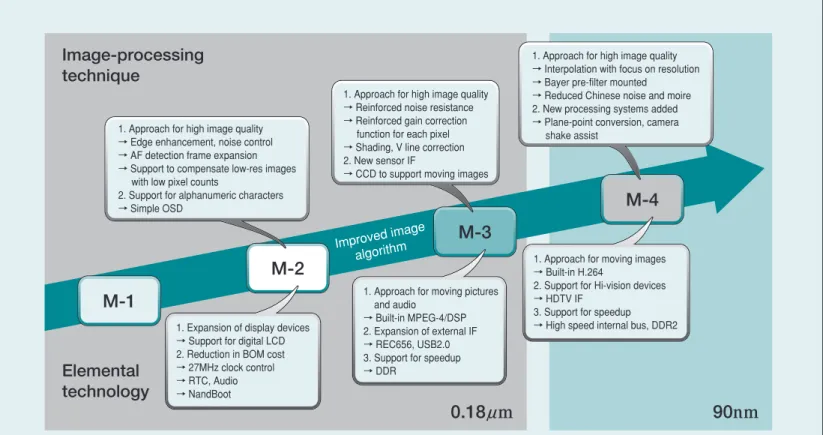
Fig. 1outlines the history of Milbeaut technology.
Product Features
■Fidelity reproduction of vivid colors
MB91680 employs the original color interpolation technology from 1-plane image with Bayer assignment output from general sensors as hardware. Beautiful full-color images are rapidly generated by a complex algorithm only executable on a hardware platform.
Single-lens reflex digital cameras have been renowned for their speed and fidelity resolution since the second generation M-2 Series.
The fourth generation M-4 is now capable of generating clear, vivid images with 14-bit Bayer input and drastically improved resolution. These technologies extend the powerful capabilities of the color reproduction technologies used in earlier generations up to M-3.
hardware processing.
■New free color conversion function
Even with highly faithful color reproduction, the colors perceived by the human eye and collected by the CCD are sometimes slightly different. Recent digital cameras are beginning to incorporate techniques for expressing colors more vividly than they appear in real life. They also can express
“memory color,”or colors closer to what people remember than what they actually see.
It used to be a challenge to convert the colors of blue sky, green grass, and human skin alongside each other using conventional color conversion functions. A color-enhanced sky weakened the color of the skin of portrait subjects, or a field of enhanced green diluted the color of the fine blue sky.
The color conversion function introduced in MB91680 solves this color conflict for digital camera manufacturers. Colors can now be magnificently converted: blue color enhancements are possible without affecting greens or the tones of human skin, and green enhancements without affecting the colors of blue sky or human skin. The combination of these
functions naturally gives uses the capability to convert colors freely.
■High noise-reduction performance
Fig. 2shows a sample image.
Recent CCD and CMOS sensors are bombarded by profuse data noise. This is an unwanted side effect of the complex circuit to support moving images and the more sophisticated and miniaturized designs for multiple pixel support and higher-speed processing. The demands for miniaturization and price reduction have also forced many device designers to create cameras based on irrational optical designs.
FUJITSU uses a proprietary technology to integrate appropriate noise-reduction functions in the steps before and after color interpolation.
Strong noise-reduction usually sacrifices resolution. Not so with MB91680: FUJITSU,s original technology efficiently removes only the noise remaining the resolution.
MB91680 integrates robust noise-reduction functions that work effectively against lattice-shaped noise, uneven colors, the color moire effect unique to Bayer, and noise from sensors
M-1
0.18μm 90nm
M-2
M-3
M-4 1. Approach for high image quality
→ Edge enhancement, noise control → AF detection frame expansion → Support to compensate low-res images with low pixel counts
2. Support for alphanumeric characters → Simple OSD
Improved image algorithm
1. Expansion of display devices → Support for digital LCD 2. Reduction in BOM cost → 27MHz clock control → RTC, Audio → NandBoot
1. Approach for moving pictures and audio
→ Built-in MPEG-4/DSP 2. Expansion of external IF → REC656, USB2.0 3. Support for speedup → DDR
1. Approach for moving images → Built-in H.264
2. Support for Hi-vision devices → HDTV IF
3. Support for speedup → High speed internal bus, DDR2 1. Approach for high image quality
→ Reinforced noise resistance → Reinforced gain correction function for each pixel → Shading, V line correction 2. New sensor IF
→ CCD to support moving images
1. Approach for high image quality → Interpolation with focus on resolution → Bayer pre-filter mounted
→ Reduced Chinese noise and moire 2. New processing systems added → Plane-point conversion, camera shake assist
Image-processing technique
Elemental technology
and other hardware. These functions remove color moire by detecting the color moire itself instead of shading off the color. Similarly, the direct detection of the lattice-shaped noise itself enables the removal of noise without sacrificing resolution.
As with the color interpolation function and other processing tasks, the noise-reduction functions of MB91680 are hard-wired into the hardware, enabling the execution of advanced and complex processes in real time.
■Other image-processing functions
The three functions described earlier are executed sequentially in real time using Bayer data directly retrieved from the CCD. For completed full-color images, the following tasks can be added by hardware processing at a later time:
●Resolution converter convenient for saving images and digital zooming (bicubic, bilinear, etc.)
●Filtering functions capable of space filtering and color conversion
●90-degree image rotation function (for switching the vertical and horizontal direction of the image)
●Two-screen synthesis function (allows operation on two different images)
●Lossless data compression functions for both RAW data and JPEG
●Real-time VGA30fps encoding/decoding for devices that process moving images
(supports VGA30fps motion JPEG even for devices incapable of processing moving images.)
■CPU core“FR80”with drastically improved bus speed
Milbeaut is configured with FUJITSU,s high-performance 32-bit RISC microcontroller“FR.”FR optimizes system control while delivering advanced operation-processing capabilities for the devices to be mounted from the architecture stage.
The bus speed efficiency, the Achilles heel of the conventional FR70 series, is nearly quadrupled in FR80 adopted in M-4. Large amounts of data can now be rapidly transferred to the USB2.0 and high-speed flash media required in digital camera systems, and the execution of advanced software processing is possible as well.
MB91680 is also equipped with a built-in 16-bit DSP independent from FR80 to rapidly process the product-sum operations of media systems. The efficient use of these two CPUs concurrently enables more advanced software processing as well.
■Rich peripheral circuits
external single functions.
* The peripheral functions supported vary from model to model.
USB2.0 (High Speed) interface
MB91680 supports High Speed USB2.0 for the USB interface, which has now been virtually equipped. The integrated FR80 in M-4 series confers an extremely high bus speed which can be fully utilized at any time.
Flash card media interface
MB91680 supports Compact Flash, SD Card (ver 1.1), MMC, Memory Stick (PRO), and NAND Flash interface. System booting from NAND flash are also supported.
As with USB, M-4 Series is equipped with a high-speed CPU bus. Better still, the CPU transfer speed never restricts the increased speed of card media.
Digital LCD interface
The device can be directly connected to delta type LCDs by Casio, AUO, etc., as well as ITU-R601 and ITU-R656 type LCDs. It can also be connected to most of digital camera LCDs.
TV interface
M-4 TV interface supports HDTV output in addition to the conventional NTSC/PAL for HDTV output, (an external encoder is required separately).
Other control functions
This product incorporates PWM, a technology capable of controlling lens motors and electronic flashes, serial interfaces
■ Effect of reduction in Chinese noise and moire
M3
M4
PWM is capable of outputting both simple waveforms and pairs of alternate waveforms automatically. This enables the execution of more complex motor control.
■Leading-edge processing technology of the 90 nanometer
Up to the year 2005, all products employed the 0.18μm process (for cost reasons). FUJITSU has now shifted its products up to the leading-edge 90nm process.
This 90nm process sets new precedents for high integration and low power consumption in conventional products.
Rich Support System
Enhanced development environmentSOFTUNETM, the FR-integrated development environment for
Milbeaut, comprises a real-time OS, libraries, an in-circuit emulator (ICE), and an evaluation kit. The evaluation kit includes a free library and sample software to operate the evaluation kit that supports most of the camera functions in the manner of a real camera.
■Software development tools
SOFTUNEintegrated development tools
SOFTUNEis an integrated development environment equipped
with the following tools. The environment is configured with an interface common to all FUJITSU,s microcontrollers, from 8-bit to 32-bit.
[Package contents]
●C/C++ compiler, assembler
●Emulation debugger, monitor debugger, simulator ●C checker, C analyzer 2002 2003 2004 2005 2006 M-2 M-2 Series standard product M-2H M-2L
Low price & reinforced peripheral functions M-3 M-3 series standard product M-3MM MPEG-4 VGA 30fps M-3MML MPEG-4 VGA 30fps REC656 I/O Multimedia application MPEG-4 or H.264 M-4 M-4 algorithm FR80 core+16-bit DSP Reinforced peripheral functions
M-3MMA MPEG-4 VGA 30fps For compact DSC M-3A for Multi-Media for Multi-Media for Mobile for Mobile
STANDARD & Low cost STANDARD & Low cost STANDARD
STANDARD
New M-3 series standard product
M-2A
Low price & reinforced peripheral functions
M-2Mobile
For mobile devices
For mobile devices
M-3Mobile
For mobile devices MPEG-4 MC-1Mobile M-3MobileM Next-generation image algorithm Next-generation
moving image model
SDRAM-less solution
Next-generation SDRAM-less model
Models for next-generation mobile devices Next-generation low-budget model
M-2 Series high function version
■REALOSTM
real-time OS
●Conforms toμITRON 3.0 or 4.0
●Debugging possible using SOFTUNEdebugger
■Libraries
AE/AWB library (free)
●An AE (automatic exposure) library capable of real-time processing by detection signals.
●An AWB (automatic white balance) library capable of judging light sources. A PC tool for adjustment is also offered.
FAT32 file system library (free)
Supports both FAT32 and FAT16 file systems
USB mass storage library (free)
Use of the USB mass storage class library allows simple connection to PCs. A PictBridge library is currently being developed.
■Sample software
Covers most of the camera functions. [Major functions]
●Automatic exposure, automatic focusing, automatic white balance
●Motion JPEG ●USB control
●Screen display (OSDC)
●Application examples of each macro ●Application examples of each library
Optimal sample software is released for each model.
■In-circuit emulator
MB2198-01+MB2198-10
A debugging function is available via direct communication with the CPU core via the DSU (debugging support unit) built into the CPU (together with several dedicated signal wires).
■Milbeaut evaluation kit
An evaluation kit is provided with each product to monitor the digital camera functions, from actual image collection (shooting) to recording into Flash card media.
Strong tie-ups with various parts manufacturers
FUJITSU provides optimal support in strong cooperation with the manufacturers of lenses, lens modules, CCDs, AFEs, LCDs, and so on.
Flexible Support for
Various Applications
Fig. 3outlines the product roadmap for Milbeaut.
■Optimal solution for high-performance single lens reflex
The single-lens reflex function requires the combination of a high-performance lens, a sensor with large and stable signals, and maximum color reproduction and resolution capabilities in the processing of the vivid data from the sensor.
The image expression capabilities of M-4 Series take full advantage of the optical performance of the sensor and the latest single-lens reflex digital cameras. The newest and best solution is MB91680 (code name: M-4).
■Optimal solution for low-price, compact digital cameras
The miniaturized lenses of low-priced compact cameras tend to have compromised optical features. The devices are also susceptible to noise due to the higher pixel counts and moving image support. Milbeaut incorporates robust noise-reduction and color conversion functions as well as the color interpolation process developed for single-lens reflex and compact cameras at the high end. This sophisticated integration of high functions enables the creation of crisp and beautiful images with reduced noise, enhanced resolution, and superb colors even in compact digital cameras.
Even for products requiring moving image functions, FUJITSU offers a lineup of products integrated with MPEG-4 to allow VGA 30fps processing.
■Optimal solution for camera units of cell phones
Two types of camera modules are integrated in the cell phones now on the market. One is very much like an actual digital camera, with the camera unit nearly identical to DSC and a multi-pixel CCD mounted. The other is mounted with a small CMOS sensor of 2M to 3M class.
FUJITSU offers MC-1Mobile in its lineup as a specialized device for cell phones mounted with 2M to 3M CMOS.
New Product
■MB91680 (code name: M-4)
A standard product of M-4 Series. Applies the leading-edge 90nm process and adopts M-4 algorithm for image processing and FR80 as the CPU core. Supports 14-bit Bayer input. Operation at the FR-core, 132MHz; image-processing block,
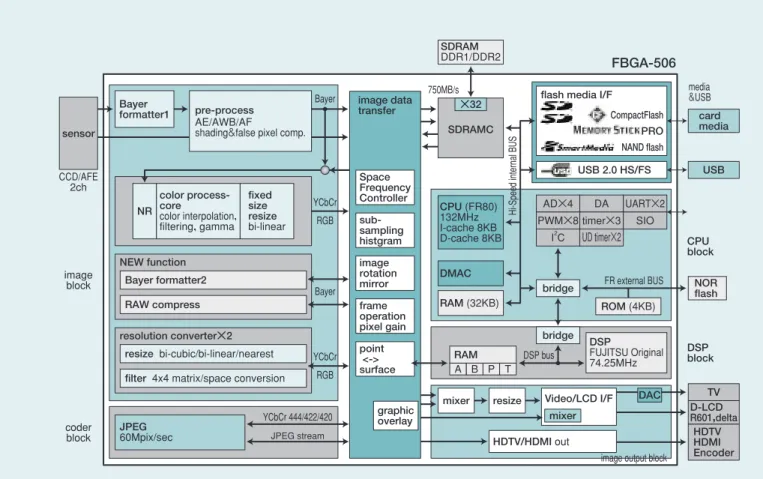
Fig. 4shows the internal block diagram for M-4.
Conventional Products
■MB91386 (M-3MML)
The highest-performance product in M-3 Series, mounted with the MPEG-4 codec engine capable of encoding/decoding at VGA 30fps. Equipped with 16-bit DSP and REC656 input/ output terminal suitable for multimedia applications. Operation at the FR-core, 108MHz; image-processing block, 54MHz.
■MB91396 (M-3MMA)
A product with optimized peripheral functions for compact cameras with the MPEG-4 macro (performs identically to the
M-3MML). Capable of startup from NAND Flash, with a real-time clock incorporated. Operation at the FR-core, 108MHz; image-processing block, 54MHz.
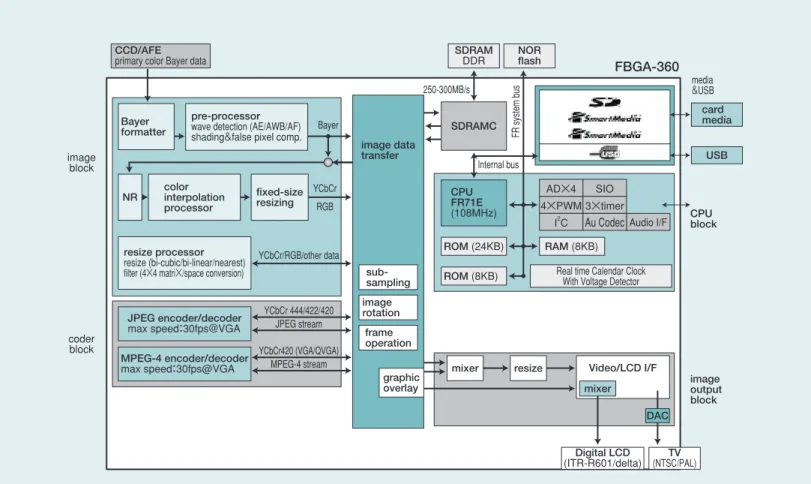
Fig. 5shows the internal block diagram for the M-3MMA.
■MB91384 (M-3A)
A standard new product of M-3 Series. Equipped with various card/digital LCD IFs and USB2.0 capability. Operation at the FR-core, 108MHz; image-processing block, 54MHz.
■MB91392 (M-2A)
A standard new product in M-2 Series. Delivers sufficient cost performance for a digital LCD and reinforced peripheral functions on the conventional M-2 base. Operation at the FR-core, 96MHz; image-processing block, 48MHz.
sensor Bayer formatter1 NEW function Bayer formatter2 RAW compress resolution converter×2 JPEG 60Mpix/sec resize bi-cubic/bi-linear/nearest
filter 4x4 matrix/space conversion
Bayer 750MB/s
media &USB
Hi-Speed internal BUS
Bayer YCbCr
FR external BUS
image output block DSP bus RGB YCbCr RGB YCbCr 444/422/420 JPEG stream NR pre-process AE/AWB/AF
shading&false pixel comp.
image data transfer
SDRAM
DDR1/DDR2
flash media I/F CompactFlash USB 2.0 HS/FS card media USB CPU block DSP block NOR flash TV D-LCD R601,delta HDTV HDMI Encoder NAND flash CPU (FR80) 132MHz I-cache 8KB D-cache 8KB DSP FUJITSU Original 74.25MHz AD×4 DA UART×2 PWM×8 timer×3 SIO I2 C UD timer×2 DMAC RAM (32KB) HDTV/HDMI out RAM ×32 SDRAMC bridge mixer mixer DAC resize Video/LCD I/F
bridge A B P T FBGA-506 Space Frequency Controller sub-sampling histgram image rotation mirror frame operation pixel gain point <-> surface graphic overlay color process-core color interpolation, filtering, gamma fixed size resize bi-linear CCD/AFE 2ch image block coder block PRO ROM (4KB)
■MB91388 (M-3MOM)/MB91394 (M-3MO)
A product capable of operating as a peripheral for camera processing when a second CPU is installed for overall system control (as in cell phones). The product has a built-in slave IF and image data output bus to allow communication with the host CPU. An optimal device for camera functions in cell phones, etc.
■MB91395 (MC-1Mobile)
A product configured without an external SDRAM, for optimal image buffering for camera modules in cell phones, etc. Capable of transmitting the Bayer image from the image capture device to the host CPU in YUV (YCbCr) format. Operation at the FR-core, 62.5MHz; image-processing block, 36MHz.
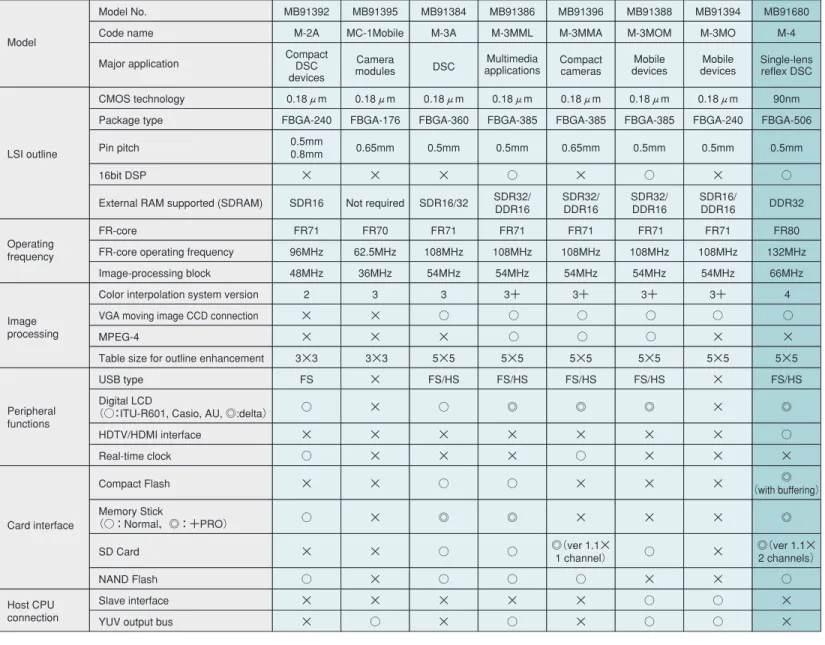
Table 1compares the various functions of these products. ✱
NOTES
*SOFTUNEand REALOS are trademarks of FUJITSU LIMITED. *Other company titles and product names described in this article
are trademarks or registered trademarks of the corresponding companies.
Bayer formatter CCD/AFE
primary color Bayer data
resize processor
resize (bi-cubic/bi-linear/nearest) filter (4×4 matri×/space conversion)
JPEG encoder/decoder max speed:30fps@VGA MPEG-4 encoder/decoder max speed:30fps@VGA Bayer 250-300MB/s Internal bus media &USB FR system bus YCbCr/RGB/other data YCbCr 444/422/420 JPEG stream YCbCr420 (VGA/QVGA) MPEG-4 stream YCbCr
Real time Calendar Clock With Voltage Detector RGB
NR
pre-processor
wave detection (AE/AWB/AF) shading&false pixel comp.
image data transfer SDRAM DDR NORflash card media USB CPU block image output block CPU FR71E (108MHz) AD×4 SIO 4×PWM 3×timer Audio I/F I2 C Au Codec ROM (24KB) ROM (8KB) RAM (8KB) Digital LCD (ITR-R601/delta) (NTSC/PAL)TV SDRAMC mixer mixer DAC resize Video/LCD I/F
FBGA-360 sub-sampling image rotation frame operation graphic overlay color interpolation processor fixed-size resizing image block coder block
Model
MB91392 MB91395 MB91384 MB91386 MB91396 MB91388 MB91394 MB91680 Model No.
M-2A MC-1Mobile M-3A M-3MML M-3MMA M-3MOM M-3MO M-4 Code name
LSI outline
0.18μm 0.18μm 0.18μm 0.18μm 0.18μm 0.18μm 0.18μm 90nm CMOS technology
FBGA-240 FBGA-176 FBGA-360 FBGA-385 FBGA-385 FBGA-385 FBGA-240 FBGA-506 Package type 0.5mm 0.8mm 0.65mm 0.5mm 0.5mm 0.65mm 0.5mm 0.5mm 0.5mm Pin pitch × × ○ × ○ × ○ 16bit DSP SDR16 Not required SDR16/32 SDR32/DDR16 SDR32/DDR16 SDR32/DDR16 SDR16/DDR16 DDR32 External RAM supported (SDRAM)
Compact DSC devices Camera modules DSC Multimedia
applications Compactcameras
Mobile
devices devicesMobile Single-lensreflex DSC Major application Operating frequency FR71 FR70 FR71 FR71 FR71 FR71 FR71 FR80 FR-core 96MHz 62.5MHz 108MHz 108MHz 108MHz 108MHz 108MHz 132MHz FR-core operating frequency
48MHz 36MHz 54MHz 54MHz 54MHz 54MHz 54MHz 66MHz Image-processing block Host CPU connection × × × × ○ ○ × Slave interface ○ × ○ × ○ ○ ×
YUV output bus Image
processing MPEG-4 × × ○ ○ ○ × ×
3×3 3×3 5×5 5×5 5×5 5×5 5×5 5×5
Table size for outline enhancement
× ○ ○ ○ ○ ○ ○
VGA moving image CCD connection
Peripheral functions
FS × FS/HS FS/HS FS/HS FS/HS × FS/HS
USB type
2 3 3 3+ 3+ 3+ 3+ 4
Color interpolation system version
× ○ ◎ ◎ ◎ × ◎
Digital LCD
(○:ITU-R601, Casio, AU, ◎:delta)
× × × × × × ○ HDTV/HDMI interface × × × ○ × × × Real-time clock Card interface × ○ ○ × × × ◎ (with buffering) Compact Flash × ◎ ◎ × × × ◎ Memory Stick (○:Normal,◎:+PRO) × ○ ○ ◎(ver 1.1× ○ 1 channel) × ◎(ver 1.1× 2 channels) SD Card × ○ ○ ○ × × ○ NAND Flash × × × × × ○ × ○ × ○ × ○