doi: 10.17700/jai.2015.6.3.190 24 Rebekka Syiem, Saravanan Raj: Access and Usage of ICTs for Agriculture and Rural Development by the tribal farmers in Meghalaya State of North-East India
Hungarian Association of Agricultural Informatics
European Federation for Information Technology in Agriculture, Food and the Environment
Journal of Agricultural Informatics. 2015 Vol. 6, No. 3 journal.magisz.org
Access and Usage of ICTs for Agriculture and Rural Development by the tribal
farmers in Meghalaya State of North-East India
Rebekka Syiem1, Saravanan Raj2
I N F O
Received: 5 June 2015 Accepted: 21 Aug 2015 Available on-line: 12 Oct 2015 Responsible Editor: M. Herdon
Keywords:
ICTs, accessibility, usage, mobile phones, Meghalaya
A B S T R A C T
A study was conducted to find out the level of access and usage of ICTs among farmers of Meghalaya state of India. A total of 120 farmers were randomly selected for the study during November 2013 to May 2014. The results showed that majority of the farmers owned mobile phones as well as television and radio. The most frequently used ICT was mobile phone. Mobile phones were widely used by the farmers for social communication, contacting middle men for the marketing of produce and contacting experts on real time basis for getting agricultural advisories. Farmers also reported that mobile phones proved to be useful during health emergencies. Information services on availability of inputs, quality of inputs, and pest and disease management of crops were also used by the farmers through ICTs. Major problems in the use of ICTs by the farmers were lack of confidence in operating ICTs, erratic power supply, low network connectivity and lack of awareness of the benefits of ICTs.
1.
Introduction
The desire to promote better information access to improve the socio-economic condition of the farmers has always been the top priority of agricultural extensionists and rural advisory service providers. According to FAO (2011), exchanging information is critical for the stakeholders in agriculture value chain in order to reduce the asymmetries in information and communication as well as to reduce the vicious circle of poverty. Further, the role of ICTs in accessing more information in order to enhance food security and support rural livelihoods has also been increasingly recognised and officially endorsed at the World Summit on the Information Society (WSIS) 2003-2005 (IICD, 2007). With agriculture being regarded as the backbone of the Indian economy, having a marked increase of 56.6 per cent of the Indian population dependent on agriculture (GoI, 2011b), agricultural growth is, therefore, essential for fostering economic development and feeding the growing population (Datt and Ravallion, 1996). However, one component which can boost agricultural production is the contribution of information and knowledge. Since agricultural extension depends to a large extent on information exchange on the one hand and a broad range of other actors on the other (Mabe and Oladele, 2012), ICTs therefore can be used as a medium in bridging the information gap. There is also a growing recognition of farmers and members of rural communities realising the importance of knowledge, information and appropriate learning methods (Greenridge 2003, Lightfoot 2003) in order to move towards development. Therefore, in order to benefit the rural people, extensionists are grappling with the question of how to harness ICTs to improve rural livelihoods in order to contribute towards better information exchange and access. In this regard, extension practitioners are also interested in experimenting with innovative e-extension initiatives (Saravanan, 2010).
The role of ICTs as an instrument for progress and development has been widely acknowledged in this ‘Global Information age’, and it has been observed that people with all walks of life are being impacted by the IT sector directly or indirectly. Among other ICTs, mobile telephony has emerged as the technology of choice of the majority of the urban and even the rural masses (Ansari and Pandey,
1 Rebekka Syiem
Research Scholar, College of Post-Graduate Studies, Central Agricultural University (CAU), Umiam, Meghalaya, INDIA.
2 Saravanan Raj
Associate Professor (Extension Education and Rural Sociology), College of Horticulture and Forestry, Central Agricultural University (CAU), Pasighat, Arunachal Pradesh, INDIA.
2013). The possession of mobile phones particularly has become a necessity in the contemporary society irrespective of age, status, profession, income groups or place of residence. As such, mobile phones have been regarded as the widely accessed tool among the farmers for communication and also accessing agriculture-related information particularly for the marketing of produce (Chhachar et al., 2014). In this context, mobile technologies can offer the means for development in developing countries (Rashid and Elder, 2009). ICTs, therefore, offer opportunities to reach more people through easy access to local or global information and knowledge. Hence, with the new emerging paradigm of agricultural development, old ways of delivering important services to citizens are being challenged; traditional societies are also being transformed into knowledge societies all over the world which makes people living in the villages think and do things differently (Meera et al., 2004). For instance, Jabir (2011) reported that ICT-based information delivery has helped the livestock farmers of Uttar Pradesh in India in making significantly better quality decisions on various livestock practices as compared to ICT non-users. Further, the application of ICT among farmers of Madhya Pradesh, Uttar Pradesh and Tamil Nadu of India reported that information acquisition and facilitating transactions in input and output markets by ICT-based initiatives have also helped farmers in reducing transaction cost (Adhiguru and Devi, 2012).
2.
Statement of the problem
With regard to agriculture and rural development occupying an important place in the economy of Meghalaya, the researcher has attempted to study the level of accessibility, availability, usage of ICTs and also the problems faced by the farmers in accessing ICTs. In fact, there is a need to realize that in order to reach the farming and rural development community in an efficient manner, it is important to study the type of communication media and ICTs owned and accessed by the farmers, their frequency of usage as well as the degree of usefulness of various ICTs as knowledge of the use of different ICTs will be helpful in drawing a suitable extension strategy as well as to provide improved ICT extension services to uplift the socio-economic status of the farmers and the rural people. It is in this context that the objectives of the study were designed as follows:
1. To measure the level of access, availability and usage of ICTs among farmers. 2. To find out the constraints in the use of ICTs among the farmers.
3. To find out the association between accessibility and usage of ICTs with independent variables.
3.
Review of literature
3.1. Accessibility of ICTs
Anecdotal evidence of research findings pointed that mobile phones, radio and television are the most important tools of communication which can be accessed by farmers for agricultural related information and knowledge (Olaniyi, 2013; Chhachar et al., 2014). Particularly, telephone facility (including mobile phones) has been reported to increase the opportunity of getting access to the people living in rural areas (Gupta, 2005). Ferris et al., 2008 also reported that 86 per cent of the farmers had access to a mobile phone which therefore contributed towards developing farmer’s linkage with other people including extension experts (Gupta, 2005). The presence of e-village centers in East Siang District of Arunachal Pradesh has also helped people from surrounding villages to access IT infrastructure and knowledge (One World Foundation, 2012). Another significant use of new ICTs is also the World Wide Web or the Internet which enables people to access information (Munyua, 2000).
3.2. Availability of ICTs
doi: 10.17700/jai.2015.6.3.190 26 Rebekka Syiem, Saravanan Raj: Access and Usage of ICTs for Agriculture and Rural Development by the tribal farmers in Meghalaya State of North-East India
3.3. Usage of ICTs
The use of mobile phones is setting an unprecedented pace despite the poorly developed rural electrification. Mobile technology has provided multi-dimensional benefits to the rural people. Its importance in usage is clear in sense of urgency and emergency (Sife et al., 2010). For instance, farmers also reported to use ICTs to know the market days, to know where products could be sold and identifying different market location for efficient marketing of produce (Oyeyinka and Bello, 2013). However, traditional ICTs viz., radio and television have also been reported to be used by farmers in accessing agriculture related information (Batte et al., 1990; Nazari and Hasbullah, 2008; Shetto, 2008; Emmanuel, 2010; Nakweya, 2013). However, ICT applications such as calls and Short Messaging Services have been found to be used often by farmers (Mtega and Msungu, 2013). This indicates that the use of mobile phones are increasing and gaining importance in the lives of the people to further contribute to development and better communication. Computers and internet have also been shown to be used for agricultural information and sharing (Shetto, 2008). For instance, Internet kiosks in Tamil Nadu, India were reported to be owned by rural women to encourage savings and form credit groups (Narender and Anandaraja, 2008). Farmers in Tanzania also used internet to access agricultural information (Mtega and Msungu, 2013).
3.4. Constraints in the usage of ICTs
The research findings of various researchers revealed that inconsistent power supply and low network connectivity are the major constraints in the use of ICTs among the farmers (Chilimo, 2008; Ajani and Agwu, 2012; Sharma et al., 2012;Shankariah and Swamy, 2012 and Oyeyinka and Bello,2013). For instance, the usage of mobile phones entirely on availability of mobile phone infrastructure and power of recharging batteries (Mtega and Msungu, 2013). Further, limited television viewing in rural areas is due to limited power supply (Kerr et al., 2007). Poor electrification in villages has always been a common problem which has restricted development in different aspects of life. In-fact, the low level of electricity coverage has also been found to inhibit the expansion of ICT services to rural areas (UNDP,2012). The lack of confidence in operating ICTs among farmers also hindered the farmers in using ICTs (Agwu et al., 2008). However, the low awareness of opportunities and benefits in using ICTs for agriculture and rural development purposes among the farmers is also another problem faced by the farmers in using ICTs (Asian Development Bank, 2008). Other problems faced by the farmers in using ICTs are lack of practical exposure (Shankariah and Swamy,2012), long distance to maintain and repair ICT tools (Asian Development Bank, 2004) and high cost of hardware and software (Agwu et al., 2008 and Oyeyinka and Bello, 2013).
4.
Methodology
The study was conducted in the state of Meghalaya, North-East India on account of the coverage and implementation of various ICT initiatives viz., AGRISNET, Common Service Centers (CSCs), Intelligent Advisory System for Farmers (IASF), Knowledge Innovation Repository for Agriculture in North-East (KIRAN), and Mobile Based Agro-Advisory System for North-East India (m4agriNEI). Two districts of Meghalaya viz., East Khasi Hills and Ri-Bhoi District were purposively selected through criterion sampling due to the presence of maximum number of households possessing ICTs in these districts as per the census report of the Government of India, 2011. Further, due to better coverage of ICT initiatives as compared to other districts of the state, East Khasi Hills and Ri-Bhoi District were selected. A total of 120 respondents registered under ICT initiatives being implemented were randomly selected for the study from the selected blocks and villages of East Khasi Hills and Ri-Bhoi District, respectively.
4.1. Description of study area
households having ICTs is also the highest in East Khasi Hills District with 58 per cent of households possessing mobile phones, 49 per cent of households having Television, 29 per cent having radio and 12 per cent having Computer/Laptop (GoI, 2011a). There are 27 numbers of Common Service Centres in the district. With regard to the availability of ICTs, Ri-Bhoi District has 45.3 per cent of the households possessing mobile phones, 32 per cent of households having Television, 33 per cent having radio and 4.2 per cent having Computer/Laptop (GoI, 2011a). It was also found out that ICT related services are being used in disseminating agricultural information to the farmers through various ICT initiatives such as mobile based agro-advisory system for farmers in North-East India (m4agriNEI), Knowledge Innovation Repository for Agriculture in North-East (KIRAN), Intelligent Advisory System for Farmers (IASF), Meghalaya AGRISNET and Common Service Centres (CSCs).
4.2. Selection of variables and measurement techniques 4.2.1. Dependent variables:
The dependent variables included in the study were access, availability and usage of ICTs. The indicators used in measuring the dependent variable were ICT tools accessed, ICT tools availability, frequency of usage and purpose of usage based on the interview schedule developed by ITU and UNCTAD (Partnership on measuring ICT for development,2005).
Operational definition of dependent variables
1. Accessibility of ICTs
It is operationalised as the degree to which an individual respondent is able to use ICTs or its applications for the purpose of agriculture and rural development. A scoring of 1 and 0 was given to the respondents accessing ICTs and not accessing ICTs respectively.
2. Availability of ICTs
It is operationally defined as the degree to which an individual respondent possess ICTs or its applications for the purpose of agriculture and rural development. A scoring of 1 and 0 was given to the respondents accessing ICTs and not accessing ICTs respectively.
3. Usage of ICTs
It is operationally defined as the degree of frequency and purpose of use of ICTs by the individual respondents for agriculture and rural development at the time of investigation. The various dimensions to study the usage of ICTs among the individual respondents under rural development were Agriculture, Rural Health, Rural Education and Rural Governance etc. For frequency of usage, Very frequently is defined in terms of its usage of ICTs ‘hourly’ and ‘daily,’. Frequently in terms of its usage of ICTs ‘three times a week’ and ‘once a week’, Occasionally in terms of its usage of ICTs ‘once a month’, Rarely in terms of usage of ICTs ‘once in three months’ and ‘never’ in terms of using ICTs in terms of not using ICTs at all. For the purpose of usage of ICTs in agriculture and rural development, a scoring of 5,4,3,2 and 1 was given for CSCs/kiosk, Internet, Mobile phones, TV and radio in order to identify the type of traditional and modern ICTs being used by the farmers included in the study.
4.2.2. Independent variables
Six independent variables were selected for the study viz., age, education, annual income, social participation, attitude towards ICTs and cosmopoliteness. The age of the respondent was measured as per the chronological age of the farmer. The level of education was measured by the number of years of formal education. Annual income was measured according to the categorization given by NCAER, 2001. The variable of social participation was measured by a scale developed by Sulthana (2001) with modification and the variable of attitude towards ICTs was measured by a scale developed by Kumar and Ratnakar (2011) with modification. The variable of cosmopoliteness was measured with the help of an interview schedule.
4.2.3. Data collection and analysis of data
doi: 10.17700/jai.2015.6.3.190 28 Rebekka Syiem, Saravanan Raj: Access and Usage of ICTs for Agriculture and Rural Development by the tribal farmers in Meghalaya State of North-East India
State Department, experts of Central Agricultural University and farmers. Statistical tools such as frequency, percentage, Garrett ranking technique, chi-square. Statistical Package of Social Sciences (SPSS) and Microsoft Excel were used for analysis of data.
5.
Results and discussion
5.1. Accessibility. Availability and Usage of ICTs
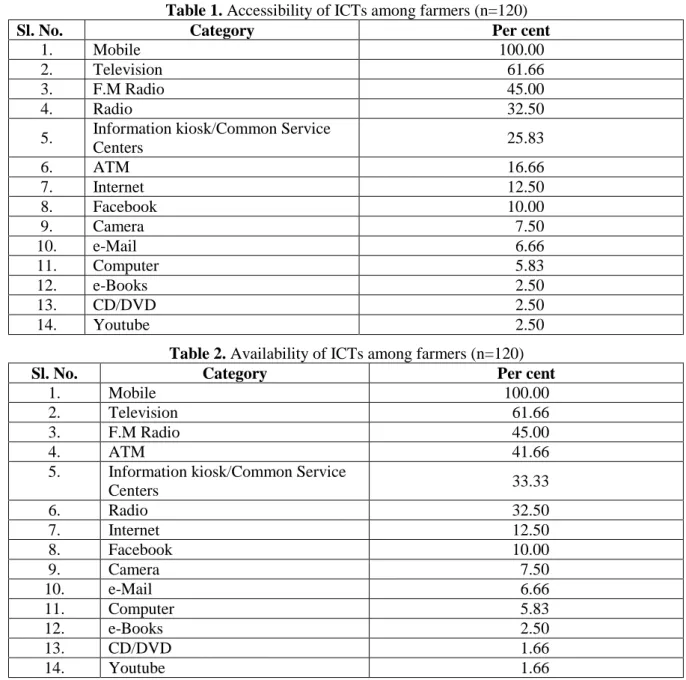
Table 1. Accessibility of ICTs among farmers (n=120)
Sl. No. Category Per cent
1. Mobile 100.00
2. Television 61.66
3. F.M Radio 45.00
4. Radio 32.50
5. Information kiosk/Common Service
Centers 25.83
6. ATM 16.66
7. Internet 12.50
8. Facebook 10.00
9. Camera 7.50
10. e-Mail 6.66
11. Computer 5.83
12. e-Books 2.50
13. CD/DVD 2.50
14. Youtube 2.50
Table 2. Availability of ICTs among farmers (n=120)
Sl. No. Category Per cent
1. Mobile 100.00
2. Television 61.66
3. F.M Radio 45.00
4. ATM 41.66
5. Information kiosk/Common Service
Centers 33.33
6. Radio 32.50
7. Internet 12.50
8. Facebook 10.00
9. Camera 7.50
10. e-Mail 6.66
11. Computer 5.83
12. e-Books 2.50
13. CD/DVD 1.66
14. Youtube 1.66
The data for the level of availability and that of accessibility of ICTs among the farmers surveyed were found to be similar, except for the data on availability and accessibility of ATM and CSCs. This is due to the fact that all the farmers availing ICTs could also access it. As ATM and CSCs could not be availed by the farmers individually, they are, therefore, accessed by all the farmers together in the village. As such, the availability of ATMs and CSCs was measured in terms of their number and location in the villages while their accessibility was measured in terms of the number of farmers who could access and use them.
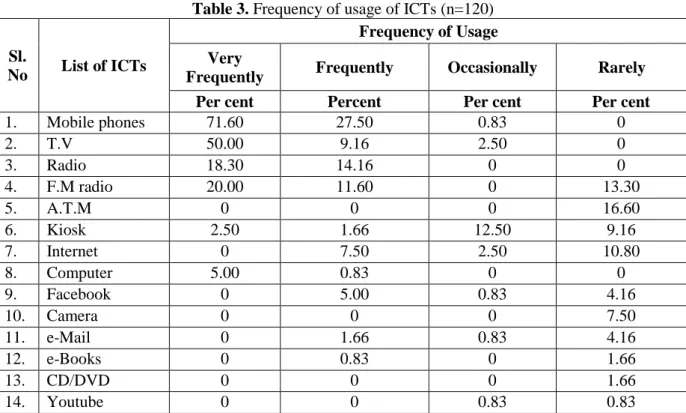
accessibility of mobile phones is higher as compared to other ICT tools is that it is affordable, portable as well as useful during emergencies. This is in accordance with the findings of Mascarenhas (2010) and Sife et al., (2010). Besides mobile phones, television was also reported to have been accessed by majority of the farmers included in the study of both the selected districts. Radio was also found to be accessed by the farmers included in the study. This is also in line with the findings of Nakweya (2013), Nazari and Hasbullah (2008), and Shetto (2008). Even though the availability of CSCs is higher in both the selected districts, they were accessed by only few of the farmers included in the study. This is due to lack of awareness of the farmers regarding the presence of Common Service Centers at the village level and how it functions and the difficulty of the farmers in locating CSCs as they are not located at a point where farmers could easily identify it. It was also found that FM radio was accessed by almost half of the respondents included in the study. This indicated that the presence of radio applications in mobile phones could help in educating the farmers, especially if programmes on agriculture and rural development are broadcast as most of the farmers have access to FM radio via mobile phones. The availability of ATM was reported to be higher, but it was accessed by only few of the respondents included in the study as most of the farmers included in the study did not have ATM cards. Moreover, since ATMs in the villages surveyed are not located in proximity to the study area, only few farmers had access to them. Further, as there are few young farmers who are educated, the level of access to internet and other web-based services such as Facebook, Youtube, e-mail, and e-books is also very low among the farmers of both the selected districts included in the study.
Table 3. Frequency of usage of ICTs (n=120)
Sl.
No List of ICTs
Frequency of Usage
Very
Frequently Frequently Occasionally Rarely
Per cent Percent Per cent Per cent
1. Mobile phones 71.60 27.50 0.83 0
2. T.V 50.00 9.16 2.50 0
3. Radio 18.30 14.16 0 0
4. F.M radio 20.00 11.60 0 13.30
5. A.T.M 0 0 0 16.60
6. Kiosk 2.50 1.66 12.50 9.16
7. Internet 0 7.50 2.50 10.80
8. Computer 5.00 0.83 0 0
9. Facebook 0 5.00 0.83 4.16
10. Camera 0 0 0 7.50
11. e-Mail 0 1.66 0.83 4.16
12. e-Books 0 0.83 0 1.66
13. CD/DVD 0 0 0 1.66
14. Youtube 0 0 0.83 0.83
doi: 10.17700/jai.2015.6.3.190 30 Rebekka Syiem, Saravanan Raj: Access and Usage of ICTs for Agriculture and Rural Development by the tribal farmers in Meghalaya State of North-East India
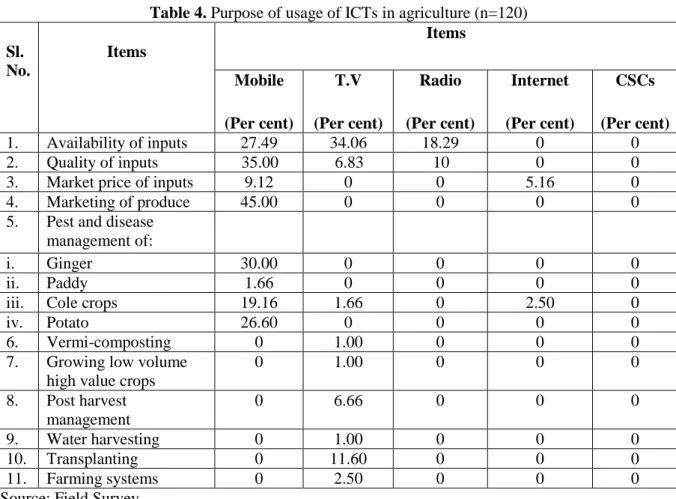
Table 4. Purpose of usage of ICTs in agriculture (n=120)
Sl. No.
Items
Items
Mobile
(Per cent)
T.V
(Per cent)
Radio
(Per cent)
Internet
(Per cent)
CSCs
(Per cent)
1. Availability of inputs 27.49 34.06 18.29 0 0
2. Quality of inputs 35.00 6.83 10 0 0
3. Market price of inputs 9.12 0 0 5.16 0
4. Marketing of produce 45.00 0 0 0 0
5. Pest and disease management of:
i. Ginger 30.00 0 0 0 0
ii. Paddy 1.66 0 0 0 0
iii. Cole crops 19.16 1.66 0 2.50 0
iv. Potato 26.60 0 0 0 0
6. Vermi-composting 0 1.00 0 0 0
7. Growing low volume high value crops
0 1.00 0 0 0
8. Post harvest management
0 6.66 0 0 0
9. Water harvesting 0 1.00 0 0 0
10. Transplanting 0 11.60 0 0 0
11. Farming systems 0 2.50 0 0 0
Source: Field Survey
The usage of ICTs for availability of inputs was mainly through television followed by mobile phones and radio. The findings of the study indicated that farmers preferred to watch the television programmes broadcasted through Kissan TV channel at 6:30 p.m. in local dialect via Doordarshan Kendra Shillong to gather information services on availability of inputs. For quality of inputs among the farmers, mobile phones had maximum usage followed by radio and television. Farmers reported that through IASF, information services on fertilizer management were being used through their mobile phones in order to receive advisory service via SMS. Mobile phones were also reported to be used by the farmers to contact experts/extension personnel to enquire about the recommended fertilizer dose in crops. Few farmers used ICTs for getting information on market price of inputs in which mobile phones and internet were used. Since majority of the farmers are unaware of usage of ICTs for getting market information on different commodities via the Meghalaya agricultural marketing portal, therefore very few farmers could derive the benefits on getting better market information. The reports on maximum usage of ICTs by the farmers were found to be the highest for marketing of the produce. Mobile phone was regarded as the most widely used ICT tool used for the purpose of marketing of produce. The findings of the study showed that farmers mainly used the mobile phones to communicate with the middlemen in the markets to communicate efficiently and to prevent the middlemen from cheating them as through the use of mobile phones they could track in which market and at what price they are selling from time to time. This is also in line with the findings of Hielig (2003); Kameswari et al., (2011) and Oyeyinka and Bello (2013).
doi: 10.17700/jai.2015.6.3.190 32 Rebekka Syiem, Saravanan Raj: Access and Usage of ICTs for Agriculture and Rural Development by the tribal farmers in Meghalaya State of North-East India
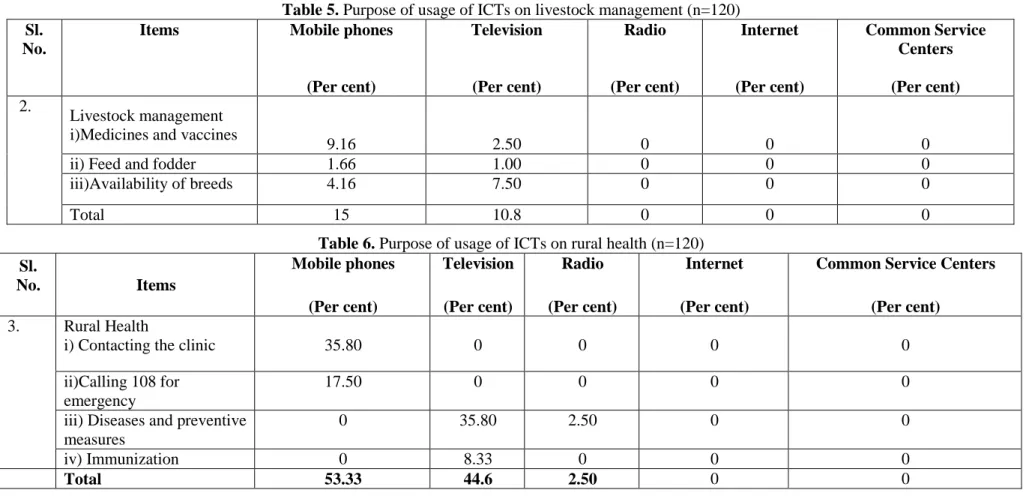
Table 5. Purpose of usage of ICTs on livestock management (n=120)
Sl. No.
Items Mobile phones
(Per cent)
Television
(Per cent)
Radio
(Per cent)
Internet
(Per cent)
Common Service Centers
(Per cent)
2.
Livestock management i)Medicines and vaccines
9.16 2.50 0 0 0
ii) Feed and fodder 1.66 1.00 0 0 0
iii)Availability of breeds 4.16 7.50 0 0 0
Total 15 10.8 0 0 0
Table 6. Purpose of usage of ICTs on rural health (n=120)
Sl.
No. Items
Mobile phones
(Per cent)
Television
(Per cent)
Radio
(Per cent)
Internet
(Per cent)
Common Service Centers
(Per cent)
3. Rural Health
i) Contacting the clinic 35.80 0 0 0 0
ii)Calling 108 for emergency
17.50 0 0 0 0
iii) Diseases and preventive measures
0 35.80 2.50 0 0
iv) Immunization 0 8.33 0 0 0
Table 7. Purpose of usage of ICTs on rural education (n=120)
Sl. No.
Items Common Service
Centers (Per cent)
Internet
(Per cent)
Mobile phones (Per cent)
Television
(Per cent)
Radio
(Per cent)
4. Rural Education i) Employment and job prospects
11.60 0 0 0 0
ii)Educational institutions 9.16 0 0 0 0
iii) Accessing educational materials
12.50 0 0 0 0
iii)Computer courses 11.60 0 0 0 0
Total
45 0 0 0 0
Table 8. Purpose of usage of ICTs on rural governance (n=120)
Sl. No.
Items Television
(Per cent)
Mobile Phones (Per cent)
Common Service Centers (Per cent)
Radio (Per cent)
Internet (Per cent)
5. Rural Governance
i) Government schemes and services 16.60 15 0.83 0 0
ii) Online loan/Banking 0 0 7.50 0 0
doi: 10.17700/jai.2015.6.3.190 34 Rebekka Syiem, Saravanan Raj: Access and Usage of ICTs for Agriculture and Rural Development by the tribal farmers in Meghalaya State of North-East India
Table 9. Purpose of usage of ICTs on social purposes (n=120)
Sl. No. Items
Mobile Phones (Per cent)
Television
(Per cent)
Radio
(Per cent)
Internet
(Per cent)
Common Service Centers
(Per cent)
7. Social
i)Contacting family, relatives and friends
87.50 0 0 0 0
ii) Social networking 8.33 0 0 0 0
The purpose of usage of ICTs for livestock management, rural health, rural education, rural governance, commercial services and social purposes as provided in the above tables is discussed below:
According to the findings of the study, services on livestock vaccination and availability of breeds of livestock management were reported to have maximum usage by the farmers in the study followed by information services on feed and fodder. Mobile phones were the major ICT tool used for livestock management followed by television. Farmers reported that they mainly contacted m4agriNEI for getting diagnostic services on livestock management services such as vaccination, artificial insemination and availability of breeds. Even though livestock is reared by majority of the farmers in the state, still livestock information services are used by few farmers. This is due to the reason that farmers are still unaware of the information services on livestock provided through ICTs. Another reason is also the limited ICT initiatives which are focussed on livestock information services meant for the livestock farmers.
For rural health, farmers used ICTs mainly for the purpose of contacting clinic, calling the dial health initiative of 108 for ambulance services during emergencies as well as obtaining information services on diseases and preventive measures. The major ICT tool used by the farmers for rural health was mobile phones followed by television and radio. Mobile phones was used for the purpose of contacting the clinic and calling 108 while television was used for availing information services on disease and preventive measures of rural health. The reason mobile phones have a maximum usage as compared to other ICTs was that mobile phones proved beneficial and useful especially in times of emergencies.
The study also found that CSCs was widely used by the few young educated farmers in the area of rural education for searching educational materials, learning basic computer courses, photocopying, printing and browsing internet for employment and job prospects. Young and educated farmers who visited the CSCs for the purpose reported that CSCs acted as a one-stop-shop in providing services for rural education, rural governance and commercial services. They further added that with the presence of CSCs, they do not need to go to the town to avail the same services since they are readily and easily available at the village.
The farmers of both selected districts included in the study used ICTs for getting information services on government schemes and services followed by online loan banking. The most widely used ICT in rural governance in order of priority was television followed by mobile phones and CSCs. CSCs was visited by the farmers mainly for the purpose of online loan banking i.e., registering via CSCs with affiliated banks in order to avail loans and to open bank accounts. This is done in order to encourage thrift and banking among the farmers.
The findings of the study showed that majority of the farmers in rural areas used mobile phones as a tool of connecting with people and friends. Thus ICTs are widely used mainly for the purpose of social communication. This study is also in accordance with the findings of Mittal and Mehar (2012).
5.2 Constraints in the use of ICTs
doi: 10.17700/jai.2015.6.3.190 36 Rebekka Syiem, Saravanan Raj: Access and Usage of ICTs for Agriculture and Rural Development by the tribal farmers in Meghalaya State of North-East India
Table 12. Constraints in the use of ICTs among farmers
Sl. No Item Mean score Rank
1. Lack of confidence in operating ICTs 64.77 I
2. Erratic power supply 60.02 II
3. Low Network connectivity 58.43 III
4. Lack of awareness of benefits of ICTs 58.00 IV
5. Lack of skill in handling ICTs 57.58 V
6. Low ICT literacy 50.14 VI
7. Lack of repairing facilities and centres in
villages 47.80 VII
8. Negative attitude towards ICTs 46.07 VIII
9. Poor Finance 41.77 IX
10. Lack of training and practical exposure
towards ICTs 40.22 X
11. High cost of repairing ICTs 38.19 XI
12. Insufficient regional specific language 33.97 XII
5.3 Association between accessibility, availability and usage of ICTs with independent variables
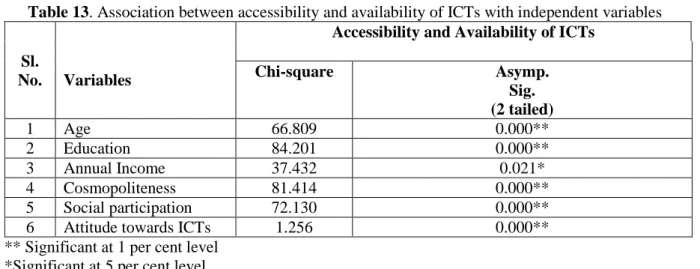
The following table showed that all the variables viz., age, education, annual income, cosmopoliteness, social participation and attitude towards ICTs had a significant association with the level of accessibility of ICTs of the farmers.
Table 13. Association between accessibility and availability of ICTs with independent variables
Sl.
No. Variables
Accessibility and Availability of ICTs
Chi-square Asymp.
Sig. (2 tailed)
1 Age 66.809 0.000**
2 Education 84.201 0.000**
3 Annual Income 37.432 0.021*
4 Cosmopoliteness 81.414 0.000**
5 Social participation 72.130 0.000**
6 Attitude towards ICTs 1.256 0.000**
** Significant at 1 per cent level *Significant at 5 per cent level
This was evident as majority of young farmers included in the study with high level of education were found to have more degree of availability and accessibility of ICTs as compared to old aged farmers with low level of educational qualification. The study also reported that farmers with higher level of income had higher purchasing ability of ICTs. The higher degree of orientation of farmers towards outside the social system, extent of social participation and favourable attitude of farmers towards ICTs also influenced the farmers to avail and access ICTs. This implied that the variables included in the study had a significant association that led to the increase or less accessibility and availability of ICTs among the farmers.
Table 14. Association between usage of ICTs with independent variables
Sl.
No. Variables
Usage of ICTs
Chi-square Asymp.
Sig. (2 tailed)
1 Age 65.500 0.000**
2 Education 69.266 0.000**
3 Annual Income 68.897 0.000**
4 Cosmopoliteness 59.571 0.000**
5 Social participation 72.260 0.000**
6 Attitude towards ICTs 1.132 0.000**
** Significant at 1 per cent level *Significant at 5 per cent level
doi: 10.17700/jai.2015.6.3.190 38 Rebekka Syiem, Saravanan Raj: Access and Usage of ICTs for Agriculture and Rural Development by the tribal farmers in Meghalaya State of North-East India
7.
Conclusion
The results of the study revealed that the level of availability and accessibility of ICTs was the highest for mobile phones followed by television and radio respectively. Mobile phones were also regarded as the most frequently used ICT tool as compared to other ICTs. The reason mobile phones was highly accessed and most frequently used by majority of the respondents is that it is easily affordable and could be easily used by even illiterate farmers. The areas where ICTs are widely used in agriculture is information services on availability of inputs, quality of inputs, contacting middlemen for marketing of produce, pest and disease management of ginger, pest and disease management of cole crops, pest and disease management of potato and market price of inputs. CSCs were also used by the few young educated youths in the area of rural education i.e., obtaining information services on employment and job prospects, accessing educational materials and learning basic computer courses. However, the study has found that lack of confidence in operating ICTs, erratic power supply, low network connectivity, lack of awareness of benefits of ICTs, lack of skill in handling ICTs, low ICT literacy, lack of repairing facilities, attitudinal barriers towards ICTs, poor finance, lack of training and practical exposure, high cost of repairing ICTs and insufficient regional language were the major constraints faced by the farmers in the effective use of ICTs. Since there is an increased penetration in the level of availability and accessibility of ICTs among the farmers of the state, there is a need to ensure that the problems of the farmers are being met in order to enable the farming community derive maximum benefits on better access to information services through the use of ICTs for agriculture and other developmental purposes. Based on the findings of the study, the following recommendations were also made:
1. Dissemination of agriculture-related information through F.M radio programmes would be recommended.
2. Better infrastructural facilities in CSCs should be improved with prominent locations for farmers to be easily accessible.
3. More awareness-cum-training programmes on ICTs should be encouraged among farmers by agricultural state departments, research organizations and its allied departments in order to increase the confidence, competence and skill in using ICTs for development.
4. Use of renewable energy such as solar panels would be recommended in order to overcome erratic and fluctuating power supply in the state particularly in rural areas.
5. Increased engagement in social media among rural youths on farming in order to enhance the communication pattern among themselves and extension personnel.
6. Since there is lack of repairing centres of ICTs at the village level, vocational training for the youths on ICT infrastructure would be recommended.
References
Adhiguru, P. and Devi, S.V. (2012) ICT in Indian Agriculture: Learnings and way ahead. International Journal of Extension Education, 8:1-4.
Agwu, A.E., Uche-Mba, U.C and Akinnagbe, O.M. (2008) Use of Information and Communication Technologies among researchers, extension workers and farmers in Abia and Enugu states: Implications for a national agricultural extension policy on ICTs. Journal of Agricultural Extension, 12 (1):37-48., doi:
10.4314/jae.v12i1.47025
Ajani, E.N. and Agwu, A.E. (2012) Information Communication Technology needs of small scale farmers in Anambra state, Nigeria. Journal of Agricultural and Food Information, 13(2):144-156., doi:
10.1080/10496505.2012.663694
Ansari, M.A. and Pandey, N. (2011) Assessing the potential and use of mobile phones by the farmers in Uttarakhand (India): A special project report. G.B. Pant University of Agriculture and Technology, Pantnagar, India.
Asian Development Bank. (2004) Building e-Community centers for rural development: Report of the regional workshop, Bali, Indonesia. http://www.adbi.org/files/2004.12.08.cpp.proceedings.building. ecommunity.pdf.
Batte, M.T. Schnitkey, G.D. and Jones, E. (1990) Sources use and adequacy of marketing information for commercial mid western cash grain farmers, North Central Journal of Agricultural Economics, 12 (2):187-196., doi: 10.1093/aepp/12.2.187
Chhachhar, A.R., Querestic, B., Khushk, G.M. and Ahmed, S. (2014) Impact of ICTs in Agriculture Development. Journal of Basic Applied Scientific Research, 4(1):281-288.
http://www.textroad.com/pdf/JBASR/J.%20Basic.%20Appl.%20Sci.%20Res.,%204(1)281-288,%202014.pdf.
Chilimo, W.L. (2008) Information and communication technologies and sustainable livelihoods: A Case of selected rural areas of Tanzania. Unpublished PhD thesis of University of Kwazulu-Natal, Pietermaritzburg, South Africa.
Datt, G and Ravillion, M. (1996) Why have some Indian states done better than others at reducing rural poverty?” World Bank Policy Research Working paper 1594 on April1996.
Ekoja, I. (2003) Farmer's access to agricultural information in Nigeria. Bull. American Society of Information and Science Technology, 29(6): 21- 23., doi: 10.1002/bult.293
Emmanuel, C.O. (2010) Differential mass media usage among rice farmers in Nigeria. Evidence from Benue State. Journal of Communication, 1(1): 33-36.
FAO. (2011) The role of Information and Communication Technologies (ICTs) in the improvement of Agricultural value chains. http://www.fao.org/docrep/017/ap851e/ap851e.pdf.
Ferris, S., Engoru, P. and Kaganzi, E. (2008) Making market information services work better for the poor in Uganda. CAPRi Working Paper No. 77: CGIAR System wide Program on Collective Action and Property Rights (CAPRi), Washington DC., doi: 10.2499/capriwp77
GoI. (2011a) Census Info India. Houses, Household Amenities and Assets. Government of India.
GoI. (2011b) Economic activity. Government of India.
Green ridge, C. (2003) Welcome Address: ICTs transforming Agricultural Extension. Presentation to CTAs sixth consultative experts of its observatory on ICTs Wageningen, the Netherlands.
Gupta, D.K. (2005) Modern encyclopedia of media and mass communication. Rajat Publications, New Delhi, India.
Hassan, M.S., Hassan, M.A., Samah, B.A., Ismail, N. and Shafrill, H.A.M. (2008) Use of Information and
Communication Technologies among agri-based entrepreneurs in Malayasia.
http://www.cabi.org/gara/FullTextPDF/2008/20083298158.pdf.
Heilig,G. (2003) Information Society and the countryside: can internet based system bring income alternatives to rural areas? (in:) J.Banski; J. Oswinski (eds.). Alternatives for European Rural Areas, Rural Areas and Development,1,ERDN,Warszawa,65-79.
IFPRI. (2013) Global Policy Food Report. Farmers markets and power of connectivity.
www.ifpri.org/gfpr/2013/ict.
IICD. (2007) How ICT can make a difference in agricultural livelihood. The Common Wealth Ministers Reference Book-2007. http://www.iicd.org/files/ICT%20and%20agricultural%20livelihoods.pdf.
Jabir, A. (2011) Use of quality information for decision -making among livestock Farmers: Role of ICT .Livestock Research for Rural Development, 23 (3).
Kameswari, V.L.V., Kishore, D. and Gupta, V. (2011) ICTs for Agricultural Extension: A study in the Indian Himalayan region. The Electronic Journal on Information Systems in Developing Countries, 48(3):1–12.
https://www.ejisdc.org/ojs2/index.php/ejisdc/article/view/847/372.
Kerr, C., Pettit, B., Roland, K., Steffens, C., Tunning, M. And Whitsett, A. (2007) Communication channels in the Sahel using Mauritania, Mali, Niger and Chad as a case. http://www.dtic.mil/dtic/tr/fulltext/u2/a517002.pdf.
Kumar, G. and Ratnakar, R. (2011) A scale to measure farmer’s attitude towards ICT-based extension services. Indian Research Journal of Extension Education, 11(1): 109-112.
doi: 10.17700/jai.2015.6.3.190 40 Rebekka Syiem, Saravanan Raj: Access and Usage of ICTs for Agriculture and Rural Development by the tribal farmers in Meghalaya State of North-East India
Mabe, L.K. and Oladele, O.I. (2012) Awareness level of use of Information and Communication Technologies among Extension Officers in the North-West Province, South Africa. Life Science Journal, 9(3):440-444.
http://www.lifesciencesite.com/lsj/life0903/062_9547life0903_440_444.pdf.
Mascarenhas, O. (2010) Broadening the agenda for ICTs for poverty reduction: PICTURE-Africa. Information Technologies & International Development, 6: 37–44.
Meera, S.N., Jhamtani, A., & Rao, D.U.M. (2004) Information and Communication Technology in agricultural development: A comparative analysis of three projects from India. Agricultural Research and Extension Network Paper,(134). http://www.odi.org.uk/sites/odi.org.uk/files/odi-assets/publications-opinion-files/5186.pdf.
Mittal, S. and Mehar. M. (2012) How mobile phones lead to growth of small farmers? Evidence from India. Quarterly Journal of International Agriculture 51 (3):227-244.
http://ageconsearch.umn.edu/bitstream/155478/2/2_Mittal.pdf.
Mittal, S. and Mehar. M. (2013) Agricultural information networks, information needs and risk management strategies: a survey of farmers in Indo-Gangetic plains of India. Socio-economic working paper 10. Mexico, D.F.:CIMMYT. http://libcatalog.cimmyt.org/download/cim/98167.pdf.
Mtega, W.P and Msungu, A.C. (2013) Using Information and Communication Technologies for enhancing the accessibility of agricultural information for improved agricultural production in Tanzania. The Electronic Journal on Information Systems in Developing Countries 56 (1):1-14.
http://www.ejisdc.org/ojs2/index.php/ejisdc/article/viewFile/1110/457.
Munyua, H. (2000) Information and Communication Technologies for rural development and food security: Lessons from field experiences in developing countries. Sustainable Development Department (SD), FAO of the United Nations. .
Nakweya (2013) Radio, mobile phones could boost African farm yields. http://www.scidev.net/sub-saharan-africa/icts/news/radio-mobile-phones-could-boost-african-farm-yields.html.
Narender, K. and Anandaraja, N. (2008) Information and Communications Technology for women experience of women managed internet kiosks at Melur, Tamil Nadu. In: extension of technologies from lab to farm. Ed. Anandaraja, N., Chandrakandan, K. and Ramasubramaniam, M., New India Publishing Agency, pp 453.
Nazari M.R. and Hasbullah, A.H. (2008) Farmers’ approach and access to information and communication technology in the efficient use of modern irrigation methods. European Journal of Scientific Research,. 21(1): 38-44.
NCAER. (2001) NCAER report on income levels of Indian households. National Council of Applied Economic Research, New Delhi.
Okello., Juma, J., Okello, R.M. and Adera, O.E. (2010) Awareness and the use of mobile phones for market linkage by smallholder farmers in Kenya. In: B. M. Maumbe, (ed) e-Agriculture and e-Government for Global Policy Development: Implications and Future Direction. Hershey: Information Science Reference, pp: 1–18., doi:
10.4018/978-1-60566-820-8.ch001
Olaniyi, O.A. (2013) Assessment of utilization of Information and Communication Technologies (ICTs) among poultry farmers in Nigeria: an Emerging Challenge. Journal of Animal Science Advances, 3(7):361-369.
One World Foundation India (2012) Model e-villages in North-East India: An ICT project for development in remote tribal areas. http://www.indiagovernance.gov.in/files/e-model-village_gkc.pdf.
Oyeyinka, R.A. and Bello, R.O. (2013) Farmers Use of ICTs for Marketing Information Outlets in Oyo State, Nigeria. Journal of Agricultural Science, 5 (11):150-158. , doi: 10.5539/jas.v5n11p150
Partnership on Measuring ICT for Development (2005) Core ICT Indicators, New York/Geneva.
http://www.itu.int/ITU-D/ict/partnership/material/CoreICTIndicators.pdf.
Rashid, A.T. and Elder, L. (2009) Mobile Phones and Development: An Analysis of IDRC- Supported Projects. The Electronic Journal on Information Systems in Developing Countries, 36 (2):1-16.
https://www.ejisdc.org/ojs2/index.php/ejisdc/article/viewFile/529/265.
Reddi, U.V. and Sinha, V. (2009) ICT use in Education: National policies, strategies and programmes. UNESCO Meta-survey on the use of technologies in Education.
http://unesdoc.unesco.org/images/0013/001349/134960e.pdf.
Central Agricultural University. http://www.earik.in/index.php?option=comcontent&view=article&id=65:e-arik-report-no2&catid=41:reports&Itemid=55.
Saravanan, R. (2010) India. In: Saravanan, R. (Ed.), ICTs for Agricultural Extension. Global Experiment, Innovations and Experiences. New Delhi, New India Publishing Agency,pp.115-168.
Shabong, C.S. (2012) Intelligent Advisory System for farmers in North-East India.
http://aesagfras.net/goodpractice.aspx?id=30&title=Intelligent%20Advisory%20System%20for%20Farmers%20 in%20North%20East%20India.
Shankaraiah, N. and Swamy, B.K.N. (2012) Mobile communication as a viable tool for Agriculture and Rural Development. Proceedings of Mobiles for Development held on 2012. Department of Agricultural Extension, University of Agricultural Sciences, Bangalore.
Sharma, M., Kaur, G. and Gill, M.S. (2012) Use of Information and Communication Technology in agriculture by farmers of Kapurthala District Journal of Krishi Vigyan Kendra, 1 (1):82-89.
Shetto, M.C. (2008) Assessment of agricultural information needs In African, Caribbean and Pacific (ACP) States Eastern Africa Country Study: Tanzania. Ministry of Agriculture, Food Security and Cooperatives on behalf of the Technical Centre for Agricultural and Rural Cooperation (CTA).
http://icmpolicy.cta.int/filesstk/Tanzania_Final-report-081209.pdf.
Sife, A., Kiondo, E. and Lyimo-Macha, J. G. (2010) Contribution of mobile phones to rural livelihoods and poverty reduction in Morogoro Region, Tanzania. The ElectronicJournal on Information Systems in Developing Countries 42 (3): 1-15. http://www.ejisdc.org/ojs2../index.php/ejisdc/article/viewFile/660/323.
Sulthana, T.D. (2001) Impact of selected non-government organizationson on rural women. M.H.Sc. Thesis, University of Agricultural Sciences, Dharwad.