ORIGINAL RESEARCH ARTICLE
Sexual and Reproductive Health among High School Adolescents in
West Shoa zone, Oromia Region in Ethiopia
DOI: 10.29063/ajrh2019/v23i1.7
Daba B. Furry
1, Yohana Mashalla
1,2* and Gloria T. Tshweneagae
1University of South Africa1; University of Botswana2
*For Correspondence: Email: [email protected]; Phone: +267 355 5752
Abstract
Adolescent‘s sexual and reproductive health is a challenge in many low and middle-income countries. We assessed the knowledge and attitude towards sexual and reproductive health among adolescents in West Shoa zone, Oromia region, Ethiopia. The study was cross-sectional using simple multi-stage random sampling and a structured questionnaire was used to collect data among adolescents aged 15 – 19 years. Frequency distribution of dependent and independent variables were computed and Odds ratios were calculated to determine association between variables. Most participants were from poor and illiterate families. Slightly over half of them had heard about sexual and reproductive health and the knowledge of emergency contraceptive was limited. About 80% of the girls who had become pregnant ended the pregnancy with an abortion and discussion between parents and adolescents on sexuality issues were poor. Effort to empower adolescents and communities with correct sexual and reproductive health is required; academic curricula should be reviewed and health facilities should be engaged to provide sexuality education. (Afr J Reprod Health 2019; 23[1]: 65-72).
Keywords: Adolescents, knowledge, communication on sexual and reproductive health
Résumé
La santé sexuelle et de la reproduction des adolescents est un défi dans de nombreux pays à revenu faible ou intermédiaire. Nous avons évalué les connaissances et les attitudes vis-à-vis de la santé sexuelle et de la reproduction chez les adolescents de la zone de Shoa Ouest, dans la région d‘Oromia, en Éthiopie. L‘étude était transversale et reposait sur un simple échantillonnage aléatoire à plusieurs degrés. Un questionnaire structuré a été utilisé pour collecter des données sur les adolescents âgés de 15 – 19 ans. La distribution de fréquence des variables dépendantes et indépendantes a été calculée et les rapports de cotes ont été calculés pour déterminer l'association entre les variables. La plupart des participants étaient issus de familles pauvres et illettrées. Un peu plus de la moitié d'entre eux avaient entendu parler de la santé sexuelle et de la reproduction et la connaissance de la contraception d'urgence était limitée. Environ 80% des filles qui étaient enceintes ont mis fin à leur grossesse par un avortement et les discussions entre parents et adolescents sur les questions de sexualité ont été médiocres. Un effort visant à responsabiliser les adolescents et les communautés en matière de santé sexuelle et de la reproduction est nécessaire; les programmes universitaires devraient être revus et les établissements de santé devraient être engagés pour dispenser une éducation sexuelle. (Afr J Reprod Health 2019; 23[1]: 65-72).
Mots-clés: Adolescents, connaissances, communication sur la santé sexuelle et de la reproduction
Introduction
Global estimates indicate that approximately half of the world population is aged below 25 years with majority (90%) living in low- and middle-income countries (LMICs)1. Global trends on sexual initiation and sexual activity among young people indicate an increase because of early puberty onset and increased age at marriage2-4.
burden of disease related to pregnancy and childbirth, and about 11% of all births annually occur to young women aged 15 - 19 years mostly in developing countries5-6.
that globally, approximately 30% of adolescent girls become victims of partner violence annually and young women make up more than 60% of all young people living with HIV11-13.
Over 65% of the population in Ethiopia is aged below 25 years, experiencing gender inequality, early sexual debut, unwanted/unplanned pregnancy, abortion and sexually transmitted infections including HIV14. In a health system with low capacity to address adolescent-specific needs, engagement of parents, community members and other stakeholders is crucial in improving the health of the young people15. This study aimed to explore the knowledge and attitudes about sexuality and reproductive health among rural and urban high school adolescents in the West Shoa zone, Oromia region in Ethiopia with a view to provide evidence-based data needed for planning and developing strategic interventions to reverse the situation.
Methods
Study population
The target population was grade 9 – 10 day-school adolescents aged 15-19 years at an urban and a rural high school in West Shoa zone, Oromia region, Ethiopia. Only adolescents willing to participate in the study were included after the purpose and the methods were clearly explained to them.
Sampling
Simple multi-stage systematic random sampling technique was used in a quantitative cross-sectional comparative study to determine the sample size. In the first stage of sampling, the list of all urban and rural high schools was obtained from the Zonal Education Department. From the list two high schools, one from an urban and another from rural settings were selected using a lottery approach. In the second sampling stage, the list of the high school adolescents was obtained. Probability proportionate to sample size was then used to determine the sample proportion for each grade (grades 9-10). Fifty per cent from each grade were identified using simple random sampling and the final sample size was 449 after a 10% adjustment
was made for potential non-response and reporting errors.
Data collection
Demographic, family education, economic status, knowledge on sexual and reproductive health data were collected using a structured questionnaire. The questionnaire was translated into Afan Oromo the local language used in West Shoa zone, Oromia region. About a month prior to administration, the questionnaire was pilot-tested on 14 adolescents that had similar characteristics with the study population but were not included in the study. These measures were taken to ensure validity and reliability of the data collection tool. The process of data collection was completed in all participants and the tool demonstrated that it can be used to produce reliable results.
Ethical clearance was obtained from the Ethics Committee of the University of South Africa Higher Degrees Committee and permission to carry out the study at the schools was obtained from the Regional Educational Authority. Written and verbal informed consent and assent (for those below 18 years) was obtained from each participant.
Data analysis
Responses were coded and captured using EPI info version 3.5.1, checked for consistency and Statistical Package for Social Sciences (SPSS) version 19 was used to analyse the data. Frequency distribution of dependent and independent variables were computed, and Odds ratios were calculated to determine the strength of the associations between variables. Logistic regression was used to control the effects of variables on the outcome variables, and at 95% confidence interval, P < 0.05 was considered statistically significant.
Results
Table 1: Demographic and socio-economic characteristics of rural and urban high school adolescents in West Shoa zone, Oromia Region in Ethiopia
Variables Rural (n=223) Urban (n=226) Total (n=449)
Number % Number % Number %
Gender
Male Female
112 111
50.2 49.2
131 95
54.1 45.9
243 206
54.1 45.9
Age
10–14 15–18 >18 < 20
0 213 10
0.0 95.5 4.5
3 216 7
1.3 95.6 3.1
3 429 17
0.66 95.54 3.78
Ethnicity
Oromo Amhara
219 4
98.20 1.79
217 9
96.01 3.98
436 13
97.10 2.89
Educational level
9th 10th
128 95
57.39 42.60
131 95
57.96 42.03
259 190
57.7 42.3
Fathers’ educational status
Illiterate 46 20.63 28 12.39 74 16.48
Can read and write 23 10.31 16 7.08 39 8.69
Elementary education 88 39.46 76 33.63 164 36.53
High school 48 21.52 47 20.80 95 21.16
Diploma 14 6.28 30 13.27 44 9.80
BA/BSc 3 1.35 10 4.42 13 2.90
MSc/MA and above 1 0.45 19 8.41 20 4.45
Mothers’ educational status
Illiterate 92 41.26 54 23.89 146 32.52
Can read and write 21 9.42 27 11.95 48 10.69
Elementary education 89 39.91 76 33.63 165 36.75
High school 13 5.83 36 15.93 49 10.91
Diploma 6 2.69 24 10.62 30 6.68
BA/BSc 1 0.45 7 3.10 8 1.78
MSc/MA and above 1 0.45 2 0.88 3 0.67
Living most of the time with
Father & mother 168 75.34 164 72.57 332 73.94
Father 15 6.73 21 9.29 36 8.02
Mother 6 2.69 5 2.21 11 2.42
Relatives and friends 21 9.42 31 13.72 52 11.58
Alone 13 5.83 5 2.21 18 4.02
Perceived family economic status
Poor 44 19.73 21 9.29 65 14.48
Medium 144 64.57 153 67.70 297 66.11
Rich 35 15.70 52 23.01 87 19.38
and 19 years from the rural and urban high school respectively participated in the study. About 54.1% and 45.9% were males and females respectively, the average mean age was 16.79 (+1.15 SD) years and the median ages for the females and males were 15 (mean=15.01 SD ±1.43) and 15 (mean=15.24 SD ±1.42) respectively. The distribution of the pupils by grade was 259 (57.7%) and 190(42.3%) in grade 9 and 10 respectively. The predominant ethnic group was Oromo 436 (97.1%) and nearly half were Orthodox Christians.
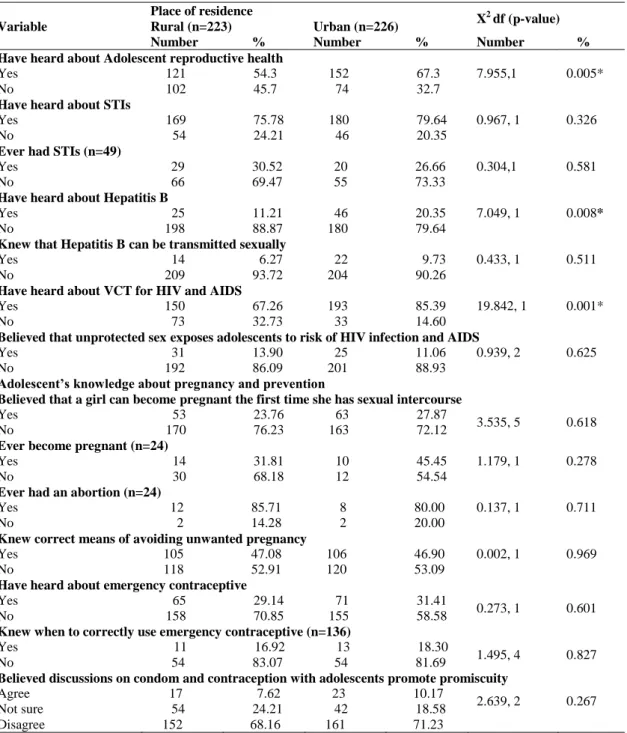
Table 2: The knowledge, attitude, and reproductive and sexual health services utilisation among adolescents in West Shoa Zone, Oromia region, Ethiopia.
Variable
Place of residence
X2 df (p-value)
Rural (n=223) Urban (n=226)
Number % Number % Number %
Have heard about Adolescent reproductive health
Yes 121 54.3 152 67.3 7.955,1 0.005*
No 102 45.7 74 32.7
Have heard about STIs
Yes 169 75.78 180 79.64 0.967, 1 0.326
No 54 24.21 46 20.35
Ever had STIs (n=49)
Yes 29 30.52 20 26.66 0.304,1 0.581
No 66 69.47 55 73.33
Have heard about Hepatitis B
Yes 25 11.21 46 20.35 7.049, 1 0.008*
No 198 88.87 180 79.64
Knew that Hepatitis B can be transmitted sexually
Yes 14 6.27 22 9.73 0.433, 1 0.511
No 209 93.72 204 90.26
Have heard about VCT for HIV and AIDS
Yes 150 67.26 193 85.39 19.842, 1 0.001*
No 73 32.73 33 14.60
Believed that unprotected sex exposes adolescents to risk of HIV infection and AIDS
Yes 31 13.90 25 11.06 0.939, 2 0.625
No 192 86.09 201 88.93
Adolescent’s knowledge about pregnancy and prevention
Believed that a girl can become pregnant the first time she has sexual intercourse
Yes 53 23.76 63 27.87
3.535, 5 0.618
No 170 76.23 163 72.12
Ever become pregnant (n=24)
Yes 14 31.81 10 45.45 1.179, 1 0.278
No 30 68.18 12 54.54
Ever had an abortion (n=24)
Yes 12 85.71 8 80.00 0.137, 1 0.711
No 2 14.28 2 20.00
Knew correct means of avoiding unwanted pregnancy
Yes 105 47.08 106 46.90 0.002, 1 0.969
No 118 52.91 120 53.09
Have heard about emergency contraceptive
Yes 65 29.14 71 31.41
0.273, 1 0.601
No 158 70.85 155 58.58
Knew when to correctly use emergency contraceptive (n=136)
Yes 11 16.92 13 18.30
1.495, 4 0.827
No 54 83.07 54 81.69
Believed discussions on condom and contraception with adolescents promote promiscuity
Agree 17 7.62 23 10.17
2.639, 2 0.267
Not sure 54 24.21 42 18.58
Disagree 152 68.16 161 71.23
*Statistically significant
Knowledge,
attitude
and
sexual
and
reproductive health services uptake
Over half (54.3% and 67.3%) of the rural and urban adolescents respectively had heard about sexual and reproductive health and urban
knowledge about Hepatitis B was statistically significantly different (P < 0.05).
Adolescents‘ knowledge of Voluntary Counselling and Testing (VCT) for HIV and AIDS was higher among urban than rural high school adolescents (p < 0.05). However, only 68(30.1%) urban and 55(24.7%) rural adolescents had tested for HIV. Less than half (40.6%) of all participants of which 107(47.4%) and 75(33.7%) were urban and rural adolescents respectively knew that there is likelihood that a girl would become pregnant the first time she had sexual encounter. Almost similar percentages 47.1% and 46.9% of the rural and urban adolescents respectively knew the correct means of avoiding unwanted pregnancy and 65(29.1%) and 71(31.4%) of the rural and urban adolescents respectively had heard about emergency contraceptive. Only small percentages (16.9% and 18.3%) of the urban and rural adolescents respectively knew when to use emergency contraception.
Out of the 206 girls, 66 (32.0%) admitted they were sexually active among which 24 (36.4%) had become pregnant. Of those who had become pregnant, 15(65.2%) had become pregnant once and the remaining 9(34.8%) had become pregnant more than once. Among those who had become pregnant 20(83.3%) reported history of abortion of which 12(60.0%) had an abortion once and the remaining 8(40.0%) twice or more times. STIs was reported in 170(28.8%) of the male and female adolescents and were more prevalent among males (73.5%) than among females (26.5%) (Table 2).
Bivariate analysis was carried out to assess the association of some variables with adolescent‘s knowledge on contraceptive. Table 3 shows that adolescents who had information about sexual and reproductive health were 2.7 times
more knowledgeable about emergency
contraception than those who did not [AOR = 2.760, 95% CI: (1.776, 4.289)]. Females were less knowledgeable about emergency contraception than males [OR = 0.378, 95% CI: (0.151, 0.935)]. Residence, school grade, discussion about sex and related issues with families and knowledge about prevention of unwanted pregnancy did not show association with the knowledge of emergency contraception. In addition, adolescents were likely
to discuss sex related issues more freely with friends and relatives than with parents.
Sources of information of adolescents on
sexual and reproductive health
Two hundred seventy-three (60.8%) adolescents of which 152 (67.3%) and 121 (54.3%) were from urban and rural high school respectively reported that they had sources of information about sexual and reproductive health (P < 0.05). Radio, families, teachers and friends were sources of sexual and reproductive health information to adolescents (Figure 1).
Discussion
Understanding a subject that one acquires by experience or study (knowledge) is a very powerful tool needed in life because it empowers people to deal with different situations. Young people in Ethiopia constitute over one third of the total population16. Studies in the country however indicate that most youth have limited access to information on SRH which has led to low health seeking behaviour on sexual and reproductive health17-18.
Discussions between adolescents and their families on issues related to sexual and reproductive health produce positive results in reducing sexual risky behaviour among adolescents19. We found only small percentages (15% and 22.3%) of the adolescents discussed sexuality issues with their parents and friends respectively. These findings are lower than previous reports in Ethiopia20-21 and much lower than 83.1% reported in Mexico22. Majority of the adolescents in this study came from poor and illiterate families which may partly explain the low level of engagement of families with adolescents because of families‘ inability to provide correct and age-specific information about sexual and reproductive health. This is an area where attempts should be made to educate parents and families on the importance of effective communication with young people on sexuality and adolescent health in reducing consequences of sexual risky behaviour. Different approaches including community
Figure 1: Sources of information to adolescents on sexual and reproductive health in West Shoa zone, Oromia, Ethiopia
pictorial images should be used to educate communities and raise community awareness on the challenges affecting adolescents. The meetings should focus on ensuring that communities understand that adolescence is a developmental process challenged by desire for experimentation on sex, alcohol, drug and substance use which expose them to diseases and complications related to sexual and reproductive health; and to build the capacity and confidence of families to regularly discuss sexual and reproductive health issues with adolescents.
The findings in this study support earlier reports that adolescents receive sexual and reproductive health information from a variety of sources including radio, television, printed media, families, friends and relatives23. We found about one third of the participants did not have any information sources on the subject while radio was listed as the major source of information followed by schools. The absence of health facilities from the list of major sources of information on the subject was shocking because it is anticipated that health care providers have the capacity to engage with adolescents and communities in providing accurate and age-specific information on adolescents‘ sexual and reproductive health. These findings raise important questions on the accuracy and reliability of the information that
adolescents receive from the radio, friends and relatives, suggesting that there could be weaknesses in the school curricula and ability of teachers to teach sexuality education. Revision of academic curricula and regular auditing of teacher‘s capacity to teach sexuality education and assessment of community‘s engagement with adolescents are likely to improve on sexual and reproductive health of the adolescents.
More than 220 million women in low- and middle-income countries have an unmet need for family planning24. Among the major outcomes of unmet family planning need is unwanted pregnancy and associated high rates of unsafe abortion. In Nigeria, adolescents account for up to 74% of all induced abortions and about 50% of adolescent patients seeking abortions in Tanzania were aged 17 years or younger25-26. We found only 20.9% believed that a girl can become pregnant the first time she had sexual encounter; 11.7% of the sexually active girls had become pregnant once or more times of which 80.0% of the pregnancies ended with abortion. Similarly, less than 50% of rural and urban adolescents knew about avoiding unwanted pregnancy and only about a third of the rural and urban adolescents knew about the ways of avoiding unwanted pregnancy. The proportion of those who knew when to correctly use emergency contraceptive was much less, 16.9%
0.0 10.0 20.0 30.0 40.0 50.0
Radio Family Friends & relatives Teachers TV Others No source of information
and 18.3% among rural and urban adolescents respectively. These findings indicate that unmet need for family planning; unwanted pregnancy and abortion are major public health challenges among adolescents requiring urgent attention to reverse these trends.
The knowledge about STIs including HIV and AIDS is of importance to adolescents because of their risky sexual behaviour. Understanding how to prevent the transmission is necessary towards prevention of STIs. Studies in Ethiopia have reported 65% and 80% of males and females respectively had utilised VCT services27-28 and much higher values have been reported among high school adolescents in Jima, Ethiopia29. We found that the knowledge about STIs and VCT for HIV and AIDS was moderately high among rural and urban adolescents but VCT services uptake was however low in both urban and rural adolescents. Compared to previous reports on VCT uptake in the country, the low VCT uptake in this study suggests either a sharp decline in VCT utilisation, low access and availability of the service or low knowledge level about the benefits of VCT in the prevention of STIs including HIV transmission. These trends should be reversed and institutions offering sexual and reproductive health services should regularly audit their service delivery to determine successes and barriers to successful service delivery and introduce targeted interventions to ensure populations in need receive the services.
Conclusion
This study showed inadequate knowledge on aspects of sexual and reproductive health among adolescents and low percentages of adolescents who communicated with their families on issues related to sexuality. Small percentages of the participants believed that a girl can become pregnant at first sexual encounter and the knowledge on emergency contraception as a way of preventing unwanted pregnancy was limited therefore, the likelihood of occurrence of unwanted pregnancies is high. Majority of the girls who had become pregnant ended the pregnancy with an abortion.
Recommendations
Key sectors including health and education should conduct sustainable campaigns targeting parents and communities on adolescent sexual and reproductive health. Schools should develop age-specific sexual and reproductive health content at all school grades and appropriate measures to monitor and evaluate implementation and success of sexuality education should be developed and implemented.
Acknowledgements
The authors are grateful to the Ethics Committee of the University of South Africa and the Ethiopian Education authority for granting ethical clearance and permission to conduct the study. Thanks to all adolescents who willingly accepted to participate in the study.
Conflict of interest
The authors declare that they have no competing interest.
Author’s contributions
DBF developed the study protocol collected, analysed the data and reported the findings under supervision of YM and T-TG. YM and T-TG read the protocol, facilitated ethical clearance, assisted in manuscript writing and proof-read the manuscript. All authors read and approved the final manuscript.
References
1. UNFPA. Adolescent and youth demographics: A brief overview.
http://www.unfpa.org/resources/adolescent-and-youth-demographicsa-brief-overview.
2. Chandra-Mouli V, McCarraher DR, Phillips SJ, Williamson NE and Hainsworth G. Contraception for adolescents in low- and middle-income countries: needs, barriers, and access. Reprod Health 2014; 11(1):1 – 8.
3. Bearinger LH, Sieving RE, Ferguson J and Sharma V. Global perspectives on the sexual and reproductive health of adolescents: patterns, , and potential. Lancet 2007; 369(9568):1220–31.
5. Patton GC, Coffey C, Sawyer SM, Viner RM, Haller DM, Bose K, Vos T, Ferguson J and Mathers CD. Global patterns of mortality in young people: A systematic analysis of population health data. Lancet 2009; 374: 881e92.
6. Sawyer SM, Afifi RA, Bearinger LH, Blakemore SJ, Dick B, Ezeh AC and Patton GC. Adolescence: A foundation for future health. Lancet 2012; 379:1630e40.
7. Patton GC, Coffey C, Cappa C, Currie D, Riley L, Gore F, Degenhardt L, Richardson D, Astone N, Sangowawa AO, Mokdad A and Ferguson J. Health of the world‘s adolescents: A synthesis of internationally comparable data. Lancet 2012; 379:1665e75.
8. Blanc AK, Winfrey W and Ross J. New findings for maternal mortality age patterns: Aggregated results for 38 countries. PLoS One 2013; 8:e59864. 9. Nove A, Matthews Z, Neal S and Camacho AV.
Maternal mortality in adolescents compared with women of other ages: Evidence from 144 countries. Lancet Glob Health 2014; 2:e155e64.
10. Shah IH and Ahman E. Unsafe abortion differentials in 2008 by age and developing country region: High burden among young women. Reprod Health Matters 2012; 20:169e73.
11. World Health Organisation. Global and regional estimates of violence against women: Prevalence and health effects of intimate partner violence and non-partner sexual violence. Geneva: World Health Organisation, 2013.
12. Garcia-Moreno C, Jansen HA, Ellsberg M, Heise L and Watts CH. Prevalence of intimate partner violence: Findings from the WHO multi-country study on women‘s health and domestic violence. Lancet. 2006; 368:1260e9.
13. World Health Organisation. Preventing intimate partner and sexual violence against women: Taking action and generating evidence. Geneva: World Health Organisation, 2010.
14. Mengistu TS and Melku AT. Sexual and Reproductive Health Problems and Service Needs of University Students in South East Ethiopia: Exploratory Qualitative Study. J Publ Health 2013; 1(4): 184 – 188. DOI: 10.11648/j.sjph.20130104.13.
15. USAID/Ethiopia: Assessment of Youth Reproductive Health Programs in Ethiopia, 2004. Ethiopia: USAID/Ethiopia, April 2004.
16. Ministry of Youth, Sports & Culture of Ethiopia (MYSC): Youth policy, 2005. http://www.mysc.gov.et/youth.html.
17. Federal Ministry of Health of Ethiopia: Standard on youth friendly reproductive health services: service delivery guidelines and Minimum service delivery package on YFRH services. Adds Ababa: FMOH 2005; 9–26.
18. FMOH of Ethiopia: Assessment of reproductive health needs and youth friendliness of public health facilities in selected urban areas of the Oromia,
Amhara, Southern people, and Tigray Regional States. Ethiopia: FMOH, AA; 2006;10.
19. Guilamo-Ramos V, Bouris A, Jaccard J, Gonzales B, McCoy W and Aranda D. A parent-based intervention to reduce sexual risk behaviour in early adolescence: Building alliances between physicians, social workers and parents. J Adolesc Health 2011; 48: 159 – 163.
20. Tesso DW, Fantahun MA and Enquselassie F. Parent- young people communication about sexual and reproductive health in Wollega zone, West Ethiopia: Implications for interventions. Reproductive Health 2012; 9:13.http://www.reproductive-health-journal.com/content/9/1/13.
21. Taffa N, Haimanot R, Desalegn S, Tesfaye A and Mohammed K. Do parents and young people communicate on sexual matters? The situation of family life education (FLE) in rural town of Ethiopia. Ethiop J. Health Dev 1999; 13(2):107– 113.
22. Atienzo EE, Walker DM, Campero L, Lamadrid- Figueroa H and Gutie´rrez JP. Parent- adolescent communication about sex in Morelos, Mexico: does it impact sexual behaviours? The Eur J of Contracep and Repro Health Care 2009; 14(2):111–119. http://informahealthcare.com/doi/pdf/10.1080/1362 5180802691848.
23. Huebner AJ and Howell LW. Examining the relationship between adolescent sexual risk-taking and perceptions of monitoring, communication and parenting styles. J Adolesc Health 2003; 33: 71 – 78.
24. Singh S and Darroch JA. Adding it up: Costs and benefits of contraceptive services. Estimates for 2012.New York: Guttmacher Institute and UNFPA 2012; http://www.guttmacher.org/pubs/AIU-2012-estimates.pdf.
25. World Health Organisation. Adolescent pregnancy. Fact Sheet No. 364, September 2014. http://www.who.int/mediacentre/factsheets/fs364/en 26. Grimes DA, Benson J, Singh S, Romeo M, Ganatra B,
Okonofua FE, Shah IH.. Unsafe abortion: the preventable pandemic. Lancet 2006; 368(9550): 1908 – 1919.
27. Gatta AA and Thupayagae-Tshweneagae G. Knowledge of and attitudes towards Voluntary HIV counselling and testing services among adolescent high school students in Addis Ababa, Ethiopia. MPH thesis (Health studies), UNISA, Pretoria RSA, 20012. 28. Feleke SA, Koye DN, Demssie AF and Mengesha ZB.
Reproductive health services utilisation and associated factors among adolescents (15 – 19 years old) in Gondar town, North West Ethiopia. BMC Health Services Research 2013; 13: 294. http://www.biomedcentral.com/1472-6963/13/294-. 29. Fentahun N and Mam A. Risky sexual behaviours and