Breaking the link between Poverty and Poor Health:
A Program and Evaluation Plan of Associação Saúde Criança (Brazil Child Health) based in Rio de Janeiro, Brazil
By
Neeti Doshi
A Master’s Paper submitted to the faculty of the University of North Carolina at Chapel Hill
in partial fulfillment of the requirements for the degree of Master of Public Health in
the Public Health Leadership Program. Chapel Hill
2012
____________________________
Advisor,
____________________________
Date
____________________________
Second Reader,
____________________________
TABLE of CONTENTS
Acknowledgements
I. Introduction ………. 4
II. Systematic Review ………. 7
Introduction ……… 7
Search Strategy ………... 8
Results ……… 9
Discussion ……… 18
III. Program Plan ……….. 21
Overview ……….. 21
Program Context ……….. 22
Program Theory ………... 27
Goals and Objectives ………... 29
Program Implementation ………. 31
IV. Evaluation Plan ………32
Rational for the Evaluation ……….. .32
Approach to the Evaluation ………. .33
Evaluation Study Design ……….. 36
Evaluation Methods ………. .40
Evaluation Planning Tables ………. .41
Dissemination Plans ………. 45
V. Discussion ……… 47
VI. References ……….. 50
VII. Appendix ……….. 52 Figure 1 Social Determinants of Health Framework
Table 1 Summary of Programs included in Systematic Review Appendix A: Family Action Plan
Acknowledgements
This paper would not have been possible without the generous support, encouragement, and inspiration of many, many people. Thank you, Diane Calleson and Phil Sloane, for your guidance and patience throughout the development of this thesis, the never-ending grant
applications, and a reflective writing process (my sanity is grateful!).
Muito obrigada, Martha Scodro and Dr. Vera Cordeiro, for welcoming me to the Saúde Criança family first in 2009 and several times since. Vera: your vision, energy, and innovativeness are contagious. I have seen and felt the difference Saúde Criança creates for the livelihood of a population otherwise ignored, and am a firm believer in its potential to end the misery that is
all-too- often entangled with poverty.
My thanks extend to the dedicated staff and volunteers (Rosangela, Deusa, Izilda, Marta, Marta G., Marie Alice, Tiago, Cris, Leticia, Teresa, Marcia, Tatiana, Maria Eugenia, Vania, Elisangela,
Cibeli, Denise, Bruna, Mariana, Eugenia, Francis, Luna, and Hank!) at Parque Lage and 86 Rua Jardim Botanico who embody the collaborative and optimistic spirit that is the foundation
beneath the magic.Tenho muito saudade de vocês, mas eu vou a voltar sempre! I would also like to thank the Perkins Burke Global Health Fellowship Program, the Public Health Leadership Department, and the Tinker Foundation for financing my field work in Rio. I
am undoubtedly a better person, and will be a better physician and public health practitioner because of my experiences in Brazil.
Lastly, this paper is dedicated to the hundreds of families who travel to Saúde Criança every month for an opportunity to feel empowered, actively change their reality, and promote their
community’s well being.
“Whatever you can do or dream you can, begin it. Courage has genius, power, and magic in it. Begin it now.”
I. INTRODUCTION
It is well established that health follows a social gradient, i.e. better health with
increasing socioeconomic status1. Not surprisingly, health outcomes and poverty continue to exist in an inverse relationship. In its most recent report, the World Bank estimates 1.29 billion people, or 22 percent of developing countries’ population, lived below the extreme poverty line
of $1.25 a day in 2008, down from 1.94 billion people, or 52 percent of developing countries’ population, in 19812. While the proportion of individuals living in extreme poverty has declined,
progress has been slower at the $2 a day poverty line, around which many people in lower middle-income economies live. The number of people living below $2 a day fell from 2.59 billion in 1981 to 2.47 billion in 2008, a decrease of only 120 million. The number of people
living on $1.25–$2 a day almost doubled to 1.18 billion in 20082. This aggregation just above the extreme poverty line indicates the vulnerabilities faced by a great many people in the world.
Fortunately, health equity has increasingly been on the agenda of the World Health Organization (WHO) in recent years. As part of a comprehensive effort to promote greater equity in global health and in a spirit of social justice, the WHO convened a Commission on Social
Determinants of Health (CSDH) to gather and review evidence on what needs to be done to reduce health inequities and provide guidance on how to reduce those avoidable, unfair and
remediable differences in health outcomes between population groups, both within and among countries3. The CSDH submitted its report in 2008 with overarching recommendations to close the equity gap in a generation by improving daily living conditions, tackling inequitable
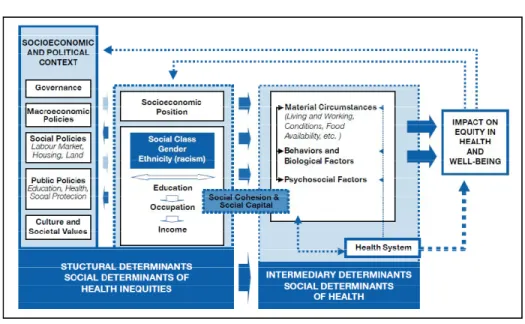
A focal point of this report included a new conceptual framework to address poverty and
health outcomes. The CSDH framework shows how social, economic and political mechanisms give rise to a set of socioeconomic positions, whereby populations are stratified according to income, education, occupation, gender, race/ethnicity and other factors; these socioeconomic
positions in turn shape specific determinants of health status (intermediary determinants) reflective of people’s place within social hierarchies; based on their respective social status,
individuals experience differences in exposure and vulnerability to health-compromising
conditions. Illness can “feed back” on a given individual’s social position, e.g. by compromising employment opportunities and reducing income; certain epidemic diseases can similarly “feed
back” to affect the functioning of social, economic and political institutions5. This framework is presented in this section and also in the Appendix (Figure 1).
Figure 1: Social determinants of health (SDH) framework
To have meaning in public health, ideas and concepts need to be translated into concrete
action, and interventions need to be implemented at the scale of populations. The purpose of this paper is to introduce the innovative non-governmental organization Saúde Criança based in Rio de Janeiro, Brazil, and provide a comprehensive overview of the organization’s activities,
context, and future directions. The first section of this paper is a systematic review to identify existing literature of current programs that adopt a “social determinants of health” framework to
improve health outcomes in the developing world. This section attempts to describe lessons learned from the strengths and weaknesses of each study. The second section describes Saúde Criança from the perspective of an official program plan, providing an overview, context,
theoretical basis for future implementation, and detailed goals and objectives of the NGO’s current activities in Rio de Janeiro, Brazil. The third section of the paper outlines a process
evaluation of Saúde Criança, including the rationale for the evaluation, the approach to the evaluation, the study design, methods, and detailed evaluation tables. The evaluation plan concludes with a discussion of potential avenues for disseminating the results of the evaluation.
II. SYSTEMATIC REVIEW Introduction
Historically, public health efforts have achieved considerable success in reducing
mortality and morbidity. However few actively include means that address the social context and
conditions in which people live, i.e. interventions that have a potential to contribute to greater health equity and address the root causes of illness. Even simple and effective tools, such as
vaccines against childhood diseases, are unable to reach those most in need due to several social and structural factors6.This disparity mandates a broader approach that harnesses the social determinants of health framework presented in the introduction to reduce inequities and improve
health outcomes. Intersectoral action (i.e. treating education, income and sanitation as equally important components for overall well-being as health), community participation, and
empowerment of populations that are most vulnerable to health threats are necessary means for a healthier, more just society7. These three aspects are essential components conceptual framework to improve health outcomes.
Saúde Criança is a well-established program actively leveraging this approach for over twenty years. The purpose of this literature review is to systematically identify and evaluate
programs that implement a social determinants approach similar to Saúde Criança. As the focus of this paper is to guide evaluation and future implementation of the Saúde Criança model, particularly as the organization expands beyond Brazil’s borders, this review was carried out
with the following research question in mind: (1) how can Saúde Criança learn from health
Search Strategy
In order to identify potential programs, I consulted with Mellanye Lackey, the library liaison for the UNC Gillings School of Global Public Health. It is important to note that the overall evidence base for programs addressing health through social determinants is very limited,
and not surprisingly both “social determinants of health” and “global health” are not yet MeSH terms. With Mellanye’s guidance, I used the search terms ((“social determinants of health” OR
poverty OR “social welfare”)) AND ((intervention OR assessment OR program OR evaluation)) AND “developing countries” AND ((pediatrics OR child)). I applied this search strategy in two main databases: MEDLINE and the WHO Global Health Library. I identified 196 articles in
MEDLINE and 91 in the WHO Global Health Library. I then reviewed the titles and abstracts of each article in order to determine which ones met the inclusion criteria (described below). I paid
particular attention to articles that focused on evaluation efforts to stay true to the focus of this paper and purposefully excluded case studies to strengthen the value of this evidence review. Inclusion criteria included:
1. The program described or evaluated addresses a health issue from a structural or intersectoral approach
2. The program takes place in the developing world
3. The article is published from 1991-2012 to correlate with the founding year of Saúde Criança
4. The article is available in English 5. The article is in full text format
Results
Newman, et al. (2002). The Bolivian Social Investment Program8
The Bolivian Social Investment Program, formally known as the Social Investment Fund (SIF), was established in 1991 as a financial institution promoting sustainable investment in the
social sectors, notably health, education and sanitation. The initiative’s and ultimate policy goal is to direct investments to areas that have been historically neglected by public service networks,
notably poor communities. SIF funds are therefore allocated according to a municipal poverty index, but within municipalities the program is demand-driven, responding to community
requests for projects at the local level. While the fund is not a formal “program” in the traditional
sense, I included this study because the Fund directs its efforts from a social determinants
framework. It finances programs that provide infrastructure in not only health, but also water and
education in order to improve a community’s overall well-being.
The study8, carried out jointly by the World Bank and SIF, began in 1991. The study features baseline (1993) and follow-up (1997) survey data that combine to allow a
before-and-after impact assessment. It includes separate evaluations of education, health and water projects and is unique in that it applies a range of evaluation techniques and examines the benefits and
drawbacks of these alternative methodologies. The overall study includes separate evaluations of education, health and water projects that assess the effectiveness of the program’s targeting to the poor. It also assesses the impact of its social service investments on desired community
outcomes such as improved school enrolment rates, health conditions and water availability. The evaluation is also innovative in that it applies two alternative evaluation methodologies,
randomization (random selection of program beneficiaries within an eligible group) is widely
viewed as the more statistically robust method, and yet matched comparison (using a non-random process to select a control group that most closely “matches” the characteristics of program beneficiaries) is more widely used in practice.
The 1993 baseline and 1997 follow-up surveys were applied to both the institutions that received SIF funding and the households and communities that benefit from the investments.
Similar data were also collected from comparison (control group) institutions and households. The household survey gathered data on a range of characteristics, including consumption, access to basic services, and each household member’s health and education status. There were separate
samples for health projects (4,155 households, 190 health centers), education projects (1,894 households, 156 schools), water projects (1,071 households, 18 water projects) and latrine
projects (231 households, 15 projects).
To analyze how well SIF investments were actually targeted to the poor, the study used the baseline (pre-SIF investment) data and information on where SIF investments were later
placed to calculate the probability that individuals would be SIF beneficiaries conditional on their income level. The study then combined the baseline and follow-up survey data to estimate
the average impact of SIF in those communities that received a SIF investment, using regression analysis. In addition to average overall impact, it explored whether the characteristics of
communities, schools, or health centers associated with significantly greater than average
impacts could be identified.
In education, where SIF investments were randomly assigned among a larger pool of
“instrumental variable” method to compensate for the lack of a direct counterfactual.
Instrumental variables as defined in the study are correlated with the intervention but do not have a direct correlation with the outcome.
SIF-financed education projects either repaired existing schools or constructed new ones
and usually also provided new desks, blackboards, and playgrounds. The study showed that these SIF investments in education resulted in a clear improvement in infrastructure and equipment,
i.e. the condition of classrooms and classroom space per student. However education projects had little impact on school dropout rates, but school achievement test scores among sixth graders were significantly higher in SIF schools. In health, SIF investments provided health centers with
medicines, furniture and medical equipment; a motorcycle to allow health personnel to conduct more home visits; and a radio to call for ambulances and keep in contact with other health
centers. They also provided solar panels in areas without electricity and made drinking water available. These efforts raised health service utilization rates and reduced under-age-five mortality. SIF water projects involved small-scale potable water systems whose design varied
depending upon the geographical location. These investments were associated with little improvement in water quality but did improve water access and quantity and also reduced
mortality rates.
A comparison of the randomized versus matched-comparison results in education showed that the matched-comparison approach yielded less comparable treatment and comparison groups
and therefore less robust results in discerning program impact. For example, evidence of improvements in school infrastructure (which one would expect to be present in SIF schools) is
Health and sanitation projects benefited households that were relatively better off in terms of per
capita income, and there was no relationship between per capita income and SIF education benefits.
The results on targeting reveal an inherent conflict between the goal of targeting the poor
and the demand-driven nature of SIF. It appears that better off, more organized communities, rather than the poorest, are those most likely to obtain SIF investments. This is an important
reflection for Saúde Criança in terms of best practices for targeting the most appropriate communities in order to yield the greatest impact.
Rivera, et al. (2004). Progresa Program 9
Progresa is a large-scale incentive-based welfare program created by the Mexican federal
government. The program started in 1997 in rural areas, expanded to semi-urban areas in 2001, and lastly to urban areas in 2002. As cited in the article, the program’s coverage is
comprehensive: 4.5 million low-income families in 2004 (about 20% of all families in Mexico)
across urban and rural areas. The program’s principal aim is to develop human capital in low-income households. Similar to the Social Investment Fund, the creators believe that investments
in nutrition, health, and education in young children who live in low-income environments will improve their chances of accessing higher education, better jobs, and in turn a better quality of life in adulthood. Investment in these 3 basic needs is considered central to breaking the
intergenerational continuation of poverty, a goal shared by Saúde Criança.
Families enrolled in Progresa receive 2 types of cash transfers every 2 months: a
secondary school. In order to receive these cash transfers, however, families must prove
compliance with specific health care appointments in health centers for all family members, including immunizations, well baby care and growth monitoring of children, prenatal and postnatal care and education for women, check-up visits for other family members, and a
mandatory session on nutrition and health education. This system of built-in accountability on behalf of families receiving benefits is an important component of social determinants
implementation. As cited by the study authors, only about 1% of households were denied the cash transfers for noncompliance during the evaluation period, suggesting high-rates of compliance due to a well-designed incentive.
The authors of this study focused specifically on the short-term impact of Progresa on nutritional outcomes, measured by height increments and anemia rates via blood hemoglobin
levels in participating children9. They also included an intermediate outcome of papilla intake, a micronutrient fortified food provided by Progresa to participating families along with cash transfers. The study was conducted in 6 states in the central region of the country (Guerrero,
Hidalgo, Puebla, Queretaro, San Luis Potosı, and Veracruz), representing the largest area in which the program operated. With a randomized effectiveness study design, 506 communities
were randomly selected to participate, with 320 assigned to begin receiving Progresa benefits immediately and 186 scheduled to begin receiving benefits two years from the start date, therefore acting as controls for 2 years. However the enrollment of the 186 communities
occurred one year earlier than planned and led to a high number of crossovers. Children participants were thus followed and monitored for two consecutive years, from 1998-2000.
imperative for accurate evaluation results. These methods included corroborating verbal
information with official documents (i.e. vaccination cards or birth certificates) and collecting comprehensive socioeconomic information in each household, including household
characteristics (construction materials used for floors, walls, and ceilings), possession of
household goods (radio, television, VCR, telephone, refrigerator laundry machine, and hot water heater), and household services (water and sanitation facilities and type of fuel used for cooking).
Researchers then combined data to generate a composite socioeconomic score for statistical analysis.
The study produced impressive results: Age- and length-adjusted height was greater by
1.1 cm (26.4 cm in the intervention group vs 25.3 cm in the crossover intervention group) among infants younger than 6 months at baseline and who lived in the poorest households. After 1 year,
mean hemoglobin values were higher in the intervention group (11.12 g/dL; 95% CI, 10.9-11.3 g/dL) than in the crossover intervention group (10.75 g/dL; 95% CI, 10.5-11.0 g/dL) who had not yet received the benefits of the intervention (p=.01). There were no differences in
hemoglobin levels between the 2 groups at year 2 after both groups were receiving the
intervention. The age-adjusted rate of anemia (hemoglobin level 11 g/dL) in 1999 was higher in
the crossover intervention group than in the intervention group (54.9% vs 44.3%; p=.03), whereas in 2000 the difference was not significant (23.0% vs 25.8%, respectively; p=.40).
There are two significant weaknesses to the study: the risk of selection bias due to loss of
follow-up and the number of crossovers from control to intervention arm due to political pressure to accelerate the program in Mexico. In turn, the results may underestimate the real effects of
calculate this hypothetical magnitude of difference. The study provides an example of not only
direct health benefits from a social determinants framework, but also an important model of the impact a social determinants intervention can have on a large scale such as a federal program.
Victora, et al. (2006). The Integrated Management of Childhood Illness10
The Integrated Management of Childhood Illness (IMCI) program was designed by
WHO and UNICEF to reduce infant mortality and the incidence and seriousness of illnesses that affect children under five, as well as improve their growth and development. IMCI was proposed as a strategy to unify the vertical child health programs that were prevalent at that time, such as
the Control of Diarrheal Diseases or Acute Respiratory Infections programs. IMCI has three, albeit ambitious, main components: improving the performance of health workers in first-level
facilities through a training course addressing leading causes of infant and child mortality; ensuring health systems support for child health (including drug and vaccine supply, supervision and health information systems); and the strengthening of family practices needed to prevent
disease, to stimulate appropriate utilization of health services, and to improve home care for sick children. The IMCI objectives were designed to address major causes of child mortality
including pneumonia, diarrhea, malaria, measles and malnutrition in countries with mortality rates in children younger than 5 years (U5MRs) of 40 per 1000 live births or greater. This program adopts more of health systems approach to improving child health rather than a specific
community based intervention, however their perspective and respective objectives align within a social determinants framework.
areas with greatest child health needs. The study was carried out through interviews with key
stakeholders at the national and district levels, as well as an ecological study of factors associated with health worker training in IMCI. The baseline mortality rates in children under five years old before IMCI implementation were assessed. Also included were district characteristics
(population, distance from the capital or main city, urbanization rate), environmental variables (water supply), and socioeconomic indicators (literacy, income and Gross Domestic Product).
Similar to the Progresa study, the authors included context-specific data points for analysis. The district Human Development Index, which combines data on GDP per capita, education
(weighted average of adult literacy rate and gross school enrollment ratio) and life expectancy at
birth was calculated.
The researchers found that in Brazil, IMCI was less likely to be implemented in
municipalities with low scores on the Human Development Index, low per capita income, small populations, and located further away from the state’s capital. Indicators of literacy,
urbanization, water supply and baseline under five mortality rate (U5MR) were not associated
with IMCI implementation. In Peru, no significant correlations were found between coverage of training of health workers in IMCI and any of the indicators studied. Though correlations were
weak, IMCI coverage tended to be lower in departments with higher values of the Human Development Index, larger populations and poorer water supply.
In Tanzania, the only significant correlation was the earlier introduction of IMCI in
districts that were close to Dar es Salaam. None of the other correlations, including the baseline U5MR, were statistically significant. Of note, even though the WHO recommended clear criteria
capital or main city, with a strong experience in previous vertical child health programs,
managed by motivated teams and with sufficient funding available and IMCI tended to be adopted by other districts with similar characteristics. However, as the authors highlight “these characteristics are likely to be found in districts where the U5MRs are lower than the national
average” 10. This raises an important disconnect between top-down strategies and ground-level realities; there was a substantial time lag between the development of new concept and
guidelines and their application at country level and below.
The authors acknowledge an important limitation to this study that detailed information on IMCI implementation, particularly on coverage of training for health workers, was very
difficult to obtain. Also, another drawback was that, except for in Brazil, the number of study units available for analyses was limited, resulting in relatively low statistical power for detecting
significant associations. Also, several likely determinants of implementation were hard to measure objectively. For example, key informants in all countries mentioned that motivation of the district health team was a major determinant of IMCI uptake. This important variable can be
difficult to measure in large-scale studies without proper resources in place for evaluation. In an ideal world, IMCI would be strongly implemented in districts with high U5MRs
and lower standards of living, and among these, priority would be given to districts with a large population of children younger than five years old. The researchers are not shy to admit that this was not the case in any of the three countries studied. They urge that WHO officials should work
together with countries to guide selection of the districts in which programs and strategies are deployed, to ensure that high-risk geographical areas are not left behind. Admittedly, this is
interventions where they are most needed, inequalities in child health may widen as a result of
new programs.
Discussion
The articles reviewed here8,9,10provide a picture of existing efforts that aim to improve well-being from a social determinants approach. Each of the programs described measured
aspects of child health and/or mortality as outcomes of targeted interventions or strategies for low-income communities in developing world contexts. Although more programs undoubtedly exist, evidence-based approaches addressing their impact and evaluation are still missing in the
literature. Many studies “explain” or “describe” why an integrated approach could improve health outcomes, yet few provide complete examples of how. This review attempts to fill that
gap and more importantly, offer lessons for future programming and evaluation as Saúde Criança continues to grow.
With regards to effective evaluation, both author groups of the Bolivian Social
Investment Fund and Mexico’s Progresa program portray that the randomized research design, in which a control group is selected at random from among potential program beneficiaries, is far
more effective at detecting program impact than the matched comparison method of generating a control group. Randomization must be built into program design from the outset in determining the process through which program beneficiaries will be selected, and random selection is not
always feasible. However, when program funds are insufficient to cover all beneficiaries, a commonly affronted problem in NGO field, an argument can be made for random selection from
an ongoing randomized effectiveness study of long term impact for their model in Brazil (to be
completed in September 2012); and 2) it is an important element to build into future implementation projects as the model expands outside of Brazil.
Also evident from this review is that evaluations can be extremely complex and time
consuming. The Bolivia evaluation was carried out over the course of seven years in an attempt to rigorously capture project impact, and achieved important results in this regard. However, the
evaluation was difficult to manage over this length of time and with the range of different actors involved (government agencies and financing institutions). A potential alternative for
management and implementation of an evaluation effort can be streamlined by incorporating
these processes into the normal course of local ministerial activities from the beginning. Further, extensive evaluation efforts may be best limited to only a few programs – for example, large
programs in which there is extensive uncertainty regarding results – in which payoffs of the evaluation effort are likely to be greatest.
With regards to future program implementation, the Progresa program evaluation offers
two key lessons of value to Saúde Criança: 1) shared accountability between program
participants and program stakeholders is essential to program success; and 2) the inclusion of
intermediate outcomes in evaluation efforts. As currently implemented in Brazil, Saúde Criança does maintain a high standard of accountability with their participants, i.e. they do not consider their efforts as “charity work” and in order to receive benefits participants must attend monthly
sessions to keep a check on their progress. This element must cross country borders as the program expands outside of Brazil, not only for program success, but also for methodology
currently does not measure. Possible intermediate outcomes could include: child nutritional
intake or sense of self-capacity from participants while receiving benefits.
Actions on the social determinants of health must involve sectors other than health, must involve meaningful partnerships both horizontally (between program participants and
stakeholders) and vertically (between international foundations and on-the-ground realities), and must focus on the whole spectrum of the population, taking account of the needs of different
groups. This must be based on accurate descriptions of the social structure and must recognize the dynamic nature of that social structure. To date, there is no literature describing programs or program evaluations that aim to improve health outcomes by addressing allfive domains central
to Saúde Criança’s methodology: health, housing, education, citizenship, and income generation. The articles included in this review exemplify efforts in the developing world that include
several of those same components. While it is encouraging to see the impact they achieve, the evidence-base for a social determinants framework approach used in interventions remains limited. Nonetheless, incorporating lessons from the programs described here will hopefully
III. PROGRAM PLAN Overview
Grounded in principles presented in the social determinants of health conceptual
framework, Associacao Saúde Criança is a program that tackles the social context and conditions
in which low-income families live in Rio de Janeiro, Brazil, in order to improve health outcomes and empower communities. The ultimate aim of Saúde Criança is to reduce pediatric
hospitalizations in low-resource areas by empowering families and providing tools for self-sustainability. This section describes Saúde Criança’s inception, contextual factors and program theory relevant to program development, and lastly the goals, objectives, and implementation of
the program itself.
Millions of citizens in Rio live in urban slums (favelasin Portuguese) that lack decent
housing, clean water, or proper sanitation. Rocinha, a massive hillside expanse of cinderblock, wood, and tin, is one of several and the largest favela in Latin America, juxtaposed directly against the wealthy beachside enclaves of Ipanema and Leblon. Children are stunted as a result
of malnutrition, and often admitted to the hospital for both infectious (e.g. preventable) etiologies and complex chronic conditions. In the late 1980s and early 1990s while treating patients at the
public Hospital da Lagoa in Rio de Janeiro, pediatrician Dr. Vera Codeiro encountered the by-products of families living in the slums: children with pneumonia, tuberculosis, rheumatic fever, anemia, birth defects, and other ailments. Many children suffered from leptospirosis, a disease
caused by bathing in or drinking water contaminated with rat urine, with symptoms of fever, jaundice, vomiting, and diarrhea11.
Most concerning to Cordeiro, however, was a then accepted pattern of admission
investing any resources from a government-run hospital equipped with the best medical
equipment and doctors was in effect useless when the larger socioeconomic context at hand was in fact the root cause of illness. Cordeiro needed others to acknowledge that childhood illnesses among the poor occur within a larger socioeconomic context in which the conditions of poverty
instigate and perpetuate the symptoms of disease. Thus, is 1991, with the initial financial support of fifty colleagues totaling $100 USD in incorporation fees, she created Associacao Saúde
Criança, an organization that would begin where hospital care ended11. Cordeiro had witnessed the multidimensional nature of poverty and understood how one child’s disease affected an entire family’s well-being. Thus, in a bottom-up approach, she developed a multidimensional strategy
known as the Family Action Plan addressing five areas for low income families with children at risk for multiple hospitalizations: health, education, housing, income generation, and citizenship.
Today, Saúde Criança works in a holistic and integrated manner, refusing to accept poverty as a reason for any child’s death.
Program Context
In the last decade, Brazil as a country has experienced unprecedented economic and
technological growth, particularly in the large cities of Sao Paolo and Rio de Janeiro. A testament to this growth, Brazil was selected to host the 2012 United Nations Sustainable Development Conference (Rio+20), the 2014 World Cup, and the 2016 Summer Olympic
Games. However, despite a fruitful economy and growing international recognition, these cities continue to struggle in overcoming persistent problems of poverty and a low quality of
calls for a renewed focus on an ecological approach in health programming that recognizes that
individuals are embedded within social, political, and economic systems that shape behavior and access to resources necessary to maintain health13. This reality is not a new phenomenon in Rio de Janeiro Brazil, where upwards of 2 million of the city’s population of 6 million live in
slums14. While non-governmental organizations such as Saúde Criança are fighting to change this reality by empowering families, there remain context aspects that are important to consider
for ongoing and future program planning.
Funding: A foreseeable problem common to the non-profit and development sector is a lack of funds available to finance various projects. Currently, the majority of funds to maintain
Saúde Criança derive from international, corporate, and individual donations. To ensure the future sustainability of the organization, Saúde Criança has created a permanent trust fund,
headed by Arminio Fraga, Brazilian economist and former president of the Central Bank of Brazil. The establishment of such an endowment is a first for any Brazilian NGO. To promote donations to the fund, Saúde Criança is exploring other forms of media and e-commerce
development, beginning with a major logo-rebranding campaign organized pro-bono by the international advertising agency DM9 to increase the organization’s visibility through several
media avenues.
Political Environment: Another major obstacle is complications within the bureaucracy of Brazil. Saúde Criança aims ultimately to influence public policy, yet the unfortunate reality
amongst local, state, and national politics is that bureaucracy is slow and internal contentions exist between departments that obstruct the development of programs. One of the major
influential people within Rio such as Armínio Fraga, and internationally such as Graca Machel
(Mozambique politician, humanitarian, and advocate of women’s and children’s rights) and Mohammed Yunus (Bangladeshi economist and Noble Peace Prize winner), more visibility will give the organization greater political clout and the ability to effect influential change.
Since its foundation in 1991, Saúde Criança has transformed itself into a pioneer in the social development sector and to date has established ten other chapters throughout Brazil. The
organization has most recently launched a chapter in Sao Paolo, the largest city in Brazil. In addition, the municipality of Belo Horizonte in Minas Gerais has officially adopted Saúde Criança’s methodology (the Family Action Plan) into its new health policy, “Família Cidada:
Cidade Solidaria.” Saúde Criança is currently working with the municipalities of Rio de Janeiro, R.J. and Florianopolis, S.C., on similar pilot programs that will elevate their methodology to a
policy implementation level. Mobilizing local and state political leaders behind Saúde Criança as a public health intervention increases the community’s ability to see the program as an extension of the political environment, thereby bolstering faith in government while raising awareness and
providing support for the increasing need of a holistic health intervention to break the link between poverty and poor health in Rio, and potentially in settings outside of Brazil.
Besides Saúde Criança’s official partnership with the municipality of Belo Horizonte and with pilot programs in Rio de Janeiro and Florianópolis, it also supports and advises 23 other NGOs that have replicated its methodology. Both of these activities help spread and attest to the
strength of its work. Moreover, Saúde Criança collaborates closely with the businesses with which it is partnered. For instance, it worked intimately with McKinsey to develop its data
Future Partnerships and Public Policy: CEDAPS (Centro de Promacao da Saude), or as
they go in English, the Network of Healthy Communities of Rio de Janeiro, is a Brazilian foundation created in 2004 that advocates for equity, health promotion, and community development in the context of increasing numbers of slums in Rio. They are supported by the
Dreyfus Health Foundation, the Ministry of Health, the Municipal Health Secretariat, PAHO, Ford Foundation, and universities15, therefore represent several points of view and a diverse
range of potential incentive to support interventions that empower communities within Rio. As an organization, they state:
“By providing people with more opportunities to develop their skills, talents, and potentials, offering them more chances of participation and interaction with the civil society and the state, social capital will increase and residents will expand their ability to transform the economic, social, and cultural structure of their communities.”
In addition to being scarce, public services (particularly in health and education) to low-income communities are almost always based on vertical programs, implemented without taking into account local needs, and use directive processes that “teach” participants what their
problems are and the best way to solve them16. Residents are seen as simple recipients of
programs, have few opportunities to participate in public policies, and to contribute to solve their
own problems. Thus, many talents, skills, and especially, much of the available resources are wasted. Without the involvement of the community, the effectiveness of social interventions is reduced. The lack of openness of public policies to community involvement also results in
reduced ownership and sustainability of social initiatives. This is a potential realm of program planning for Saúde Criança.
programs. In this context, networking of community groups can increase their political strength
and become an important strategy to develop the autonomy and build the capacity of low-income communities to search for solutions for their development, to participate in the decisions and programs that affect them, and to enable them to obtain more resources and programs from the
state.
National Health System: When executing an intervention targeting population health
outcomes it is important to consider the structures and policies in place with regards to health services. The National Health Policy of Brazil has been developed taking into account the 1988 Federal Constitution, which established health as a right for all citizens and a duty of the State17.
In order to translate this basic right into practice, the Brazilian Unified Health System (Sistema Unico de Saude or SUS) was created, based on the principles of universal and egalitarian access to comprehensive care, to ensure promotion, protection and recovery of health, integrated into a regionalized and hierarchical network of services under the responsibility of the three levels of government (Federal, State and Municipal)18. The private healthcare sector contributes to and
supplements this effort. The purpose of the principle network of public institutions is to provide, finance and manage health services; the SUS provides complete coverage for 75% of the
Brazilian population. The remaining 25% of the population – covered by the Supplementary System – also has the right to access services provided by the SUS. In addition, the SUS is responsible for the provision of collective services such as sanitation, disease control and
regulation of the sector. Services of the SUS are provided through federal, state and municipal public networks, including private or philanthropic entities contracted by the system. The
Minister of Health, at the State and Municipal level by the respective Secretaries of Health. To
facilitate the negotiation and agreement of policies and programs, the SUS has associate agencies: the National, State and Municipal Health Councils. Different spheres of the government, besides representatives from segments of the health sector and civil society
participate in these councils18.
In Rio de Janeiro specifically, the main program providing basic care to the population is
the Family Health Program (Plano de Saude Familiaror PSF), covering 73 million people in 2005 (40% of the population) in 4,837 cities through the support of 22,683 multi-professional teams19. Since 2002, the Ministry of Health, in cooperation with the Pan-American Health
Organization and the World Health Organization, has been working towards the development and strengthening of the PSF Teams20. SUS medical services are classified into basic health care
(promotion, prevention, basic specialties and disease control), specialized medium-complexity health care, and high- complexity health care. In 2003, the system reported 2.4 medical
consultations per capita/year in urban areas, 1.8 in rural areas20. Significant disparities in access
to benefits continue to exist from region to region, particularly in the urban slums of Rio de Janeiro. Given these disparities and the complex nature of social health services in Rio de
Janeiro, helping families navigate their rights to health care and ensuring proper delivery is an important component of Saúde Criança and the Family Action Plan Model.
Program Theory
Program theories have great utility in designing public health interventions. They provide
Janeiro, Brazil) by addressing injustices and disparities within a family’s socio-environmental
context. After twenty years, their powerful impact has potential to create national policy change and development for Brazil, and potentially beyond. Their approach necessitates an ecological perspective. As stated in the Theory at a Glance Guide, an ecological perspective “emphasizes
the interaction between, and interdependence of, factors within and across all levels of a health problem”22. The ecological perspective recognizes multiple avenues of “change” to lead to an
improved health outcome, which I believe is a core concept to the ongoing success of Saúde Criança – health is multi-faceted, and creating well-being (as the WHO defines) requires efforts outside hospital or clinic walls. The Ecological perspective I feel also aligns well with the
literature supporting (and in some lights, mandating) a Social Determinants of Health Framework to tackle health inequities, particularly in developing world contexts. The
Commission has raised awareness of similar programs in Latin America that will inform future program development in Brazil, and beyond.
At the interpersonal level, I will apply Social Learning Theory, which assumes that
people are influenced by and influence their social environments, to better understand and replicate the organizational successes of Saúde Criança. As the goal of my program and
evaluation paper will focus on how to translate a model to another context or how to best inform future program development, it will be important for me to understand the organizational aspects of the NGO which lead to its success – leadership, team dynamics, shared responsibility,
interpersonal interactions, etc. The volunteers and staff members of Saúde Criança who interact daily with program participants foster an environment of support, accountability, and
Lastly, but perhaps most relevant, I intend to contextualize this program plan with the key
attributes of Diffusion of Innovations theory23. Diffusion expands the number of people who are exposed to and reached by successful interventions, strengthening their public health impact22. This concept is the focus of my program planning and evaluation paper. I am most interested in
the dissemination of the Saúde Criança method (the Family Action Plan) to contexts/settings outside of Brazil. I will treat the methodology itself as the innovation: can this methodology
translate? How can lessons learned by the leaders in Brazil inform future program development? What are the key elements of the program that are essential to its success (e.g. reducing
preventable pediatric hospitalizations)? How do you account for local context? I plan to guide
my program planning and future fieldwork by the questions presented in the Diffusion of Innovation Theory regarding relative advantage, compatibility, complexity, trialability, and
observability23. These respective aspects will be further addressed in the evaluation objectives of this paper.
Goals and Objectives
The overall goals of Associacao Saúde Criança are as follows:
1. To end the vicious cycle of poverty hospital admission discharge poverty re-hospitalization for children of families living below the poverty line in Rio de Janeiro, Brazil
2. To transform the lives of families trapped in poverty by promoting self-sustainability and biopsychosocial development
3. To disseminate the Family Action Plan methodology in similar contexts throughout the world that face a high disease burden due to poverty
impact. Each family’s FAP is created by a Saúde Criança staff member after the completion of
the initial evaluation and upon the first return of the family and the responsible party for the assisted child. The goals, commitments, responsibilities, and action steps are customized to the needs of each family, and are monitored and evaluated on a monthly basis (see Appendix A for
detailed steps in creating a Family Action Plan). The respective short and long-term objectives based on the FAP per household are as follows:
Short Term (1-3 years):
By the end of one year of participation:
o All children ages 0-10 up to date on vaccinations
o All children 0-10 enrolled in a primary or secondary school
o All household adults consulted for enrollment in vocational training courses o All household adults completed psychosocial assessment by staff psychologist By the end of three years of participation:
o Adequate nutrition status of all children
o Improved housing conditions so that each household has a home meeting basic living requirements including: running water, treated sewage, painted walls, roof without leakages, and a bathroom with flush toilet, sink, and shower.
o All household members up to date with the citizenship documents in order to claim governmental welfare benefits
o Increased sense of agency and self-esteem for head(s) of household
Long Term (3-5 years):
o By the end of five years of participation: All children enrolled or graduated from secondary schools
o Each family is self-sustained and no longer requires assistance from Saúde Criança o Increased awareness and importance to education and psychological support within
families
o Families will make healthier lifestyle choices
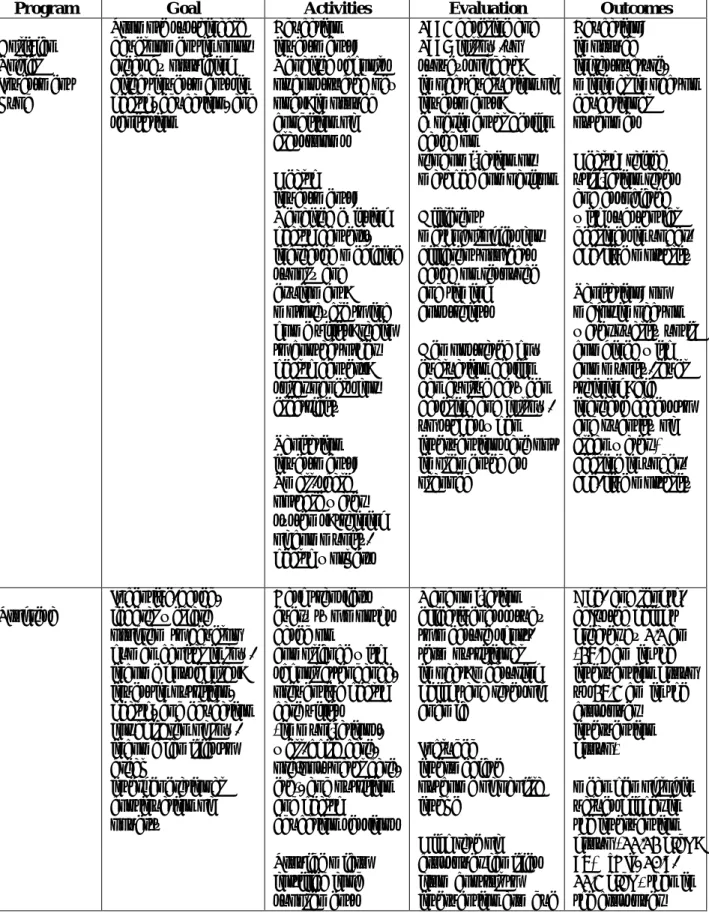
Logic Model
Program Implementation
Saúde Criança is an innovative program that addresses health inequities by addressing a family or household’s greater social conditions. To have meaning when addressing social determinants in public health, ideas and concepts need to be translated into concrete action, and
interventions need to be implemented at the scale of populations. For Saúde Criança, this action is embodied in the Family Action Plan. The Plan’s detailed steps are the crux of the activities and
resources needed for each individual component (see Appendix A). In contrast to the majority of social programs that see their “beneficiaries” as passive receivers of benefits, Saúde Criança considers the families admitted to the program as partnersin reaching the goals defined in the
FAP. Therefore, the responsibilities for achieving activities outlines on the FAP are not restricted to Saúde Criança, both rather shared with the families who are constantly reminded of these
commitments and encouraged to keep them. This approach will continue to contribute to successful program implementation as prospective families, often accustomed to adversity and loss, become engaged as co-participants on a trajectory of success and gains. While difficult to
measure, this partnership may in fact increase self-esteem and efficacy of household leaders as outlined in the program objectives, which in turn contributes to improved health outcomes. The
IV. EVALUATION PLAN Rationale for the Evaluation
Saúde Criança should be evaluated for several reasons. Primary reasons focus on how the program is reaching its evident impact (i.e. reducing rates of pediatric hospitalizations in areas
with high rates of poverty such as Rio de Janeiro, Brazil) and how the current program implementation can be improved. These evaluation objectives fall within the realm of an
implementation or process evaluation. Secondary reasons focus on impact and dissemination, taking lessons from the primary objectives to inform future efforts to replicate the program in settings outside of Brazil. Both efforts (and their respective objectives) I believe warrant the use
of an external evaluator in slightly different capacities. An advantage of external evaluators not funded by the program itself is that they maintain a level of objectivity that allows them to act as
advocates for the program25.
However, it is important that the evaluator balances distance with support for the program. A process evaluation will require a more participatory and interactive approach with
program staff and stakeholders, as the evaluation will focus on activities within the program itself and will benefit greatly from an “insider” perspective. This may involve recruiting an
internal evaluator to help or work alongside an external evaluator to ensure communication of findings, understand greater political and/or cultural influence on behaviors, etc. A summative evaluation which focuses on program replication would greatly benefit from a team of external
evaluators to track population impact over a period of time. Saúde Criança has already partnered with a team of research evaluators from the Public Policy Institute at Georgetown University
Approach to the Evaluation
Patton describes four main features of a successful and useful evaluation: utility,
feasibility, propriety, and accuracy26. These features will guide my evaluation plan. As the mini-systematic literature review revealed, there is little data published on the effectiveness of
programs that improve health outcomes by addressing social determinants of health. While there is a plethora of literature justifying the need for such programs, how to execute and subsequently
evaluate these efforts is missing in the literature outside of selected WHO and CDC resources. Therefore, systematically evaluating this program could not only benefit Saúde Criança, but also a greater audience of program planners. Additionally, Saúde Criança has built partnerships in
order to launch pilot programs outside of Brazil. Evaluation is imperative for the establishment and success of future dissemination efforts. The results of an implementation and summative
evaluation combined would be invaluable to this program.
Key skills of an effective evaluator include: an “ability to listen, negotiate, bring together multiple perspectives, and assist in developing an evaluation design that will lead to the most
useful and important information and final products”; is flexible and able to problem solve; and skilled in evaluation research and methods25. Particular to Saúde Criança, sensitivity to the
bureaucratic and political context of Brazil is essential. Communication skills and an ability to interact with a range of individuals, from low-income program participants to affluent sponsors is also a necessary skill. Qualitative research methods will be of great use in identifying strengths
and weaknesses of the program activities themselves, and how the specific activities outlined in the Family Action Plan – the core of the program’s methodology – lead to better health
have experience with qualitative data analysis. A qualitative lens will allow the evaluator to
engage with program stakeholders while also maintaining objectivity.
Stakeholders: There are multiple stakeholders involved in the current success of Saúde Criança therefore their respective perspectives are imperative for a useful evaluation. These
stakeholders include: Founder and CEO Dr. Vera Cordeiro; current COO Cristiana Velloso; former COO Martha Scodro; director of dissemination Teresa Sanchol; Site Directors of satellite
Saúde Criança sites within Brazil; physicians at the public Hospital da Lagoa who refer families to Saúde Criança; Arminio Fraga, economist and president of the Saúde Criança Trust Fund; Rick Martinez, Director of Corporate Contributions at Johnson & Johnson, a financial partner of
Saúde Criança for the last six years; program staff, particularly Leticia Isnard, director of methodology; program volunteers; and selected program participants. If possible, it would also
be ideal to speak to a representative from the Ashoka Foundation as Ashoka has awarded several international awards to Saúde Criança over the last twenty years. Key questions for each of the stakeholder groups will be different based on their perspective. It will be important for the
evaluator to not only hear the individual perspectives of the different groups, but also maintain an overarching question of understanding the essence of Saúde Criança that contributes to both
strengths and weaknesses of the program, as the intention is to replicate this program in settings outside of Brazil. Key questions for each group are outlined below. It is important to note that the nature of this evaluation is qualitative (therefore iterative) and ongoing, therefore questions
For the CEO/Founder, COO, and Program/Site Directors: What are the strengths of Saúde Criança? What are the current weaknesses? How is Saúde Criança supposed to work? What do they see as the most crucial components of the program that lead to tangible impact? What would
they change?
For physicians at referring hospitals: Why did they choose to refer a family to Saúde Criança?
What is Saúde Criança’s role in patient care? How does Saúde Criança make a difference from a clinical perspective? What is the next-best alternative to Saúde Criança?
For funders/financial directors: What motivated them to donate to Saúde Criança? How are the
funds mainly used? Were the funds used effectively to their knowledge? How will funds maintain future efforts?
For the program staff: How are activities executed? How are different components of the Family Action Plan recorded? How are they communicated between staff members? How can activities be improved? How are areas of need for families identified? What is unique about the range of
activities that leads to tangible impact for participants?
For program volunteers: What motivates you to volunteer? How is your role evaluated? How do
you communicate potential problems with monthly evaluations to program staff
members/coordinators? What are the strengths of Saúde Criança? What are the weaknesses of Saúde Criança?
For program participants: How long have you been receiving support from Saúde Criança? What have you gained? What do you feel that you are missing or not receiving from Saúde Criança? If
Challenges are inherent to any evaluation, particularly if or when it occurs in a foreign
context to the evaluator. I envision the greatest challenge to be time. Useful and quality
evaluations of a program in existence for twenty years could take years in itself, especially when multiple stakeholders are involved. Ensuring independent perspectives from program staff
members versus program volunteers I also envision as a challenge as the organizational culture of the program is extremely collaborative. How to capture potential intermediate outcomes of
participants/families that occur along a spectrum or are not necessarily quantifiable (i.e. self-capacity, internal family infrastructure) may prove challenging as well.
Additionally, the evaluation plan laid forth will ideally cross countries and potentially
function in a range of contexts beyond Rio de Janeiro, Brazil, as the program disseminates. While the role of an internal evaluator familiar with context at each site is invaluable, an external
evaluator will wrestle with the realities of executing the program in low-resource settings. Compromises and at times conflict will be inevitable however quality and sustainability should remain priorities of any evaluator. An awareness of these challenges will contribute to Saúde
Criança’s ongoing success.
Evaluation Design
Successful and useful evaluations are sensitive to available resources, the input of
stakeholders, and feasibility of evaluation activities. Evaluation of the implementation of Saúde Criança will be completed using a qualitative study design. This type of study design will provide detailed, descriptive information about what the program is doing and how the program
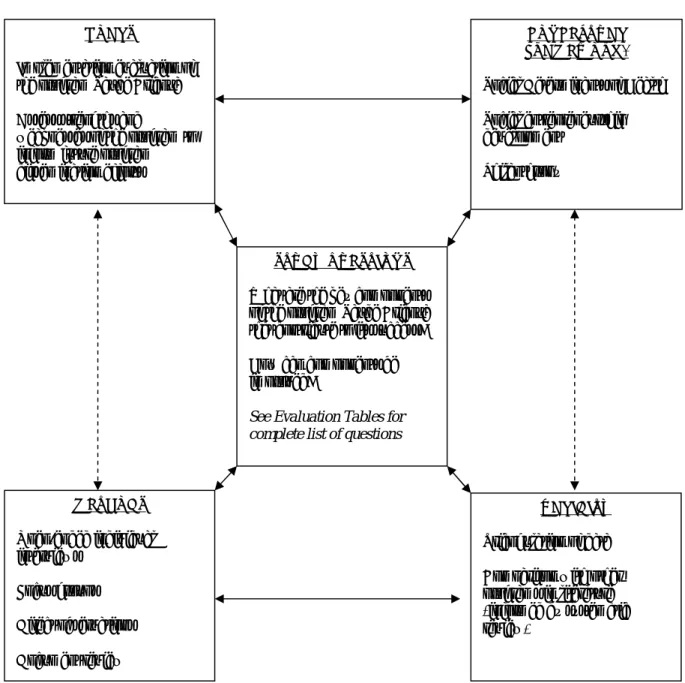
is depicted below in Figure 2. This model is borrowed from John Maxwell’s Interactive Model of
Qualitative Research Design and consists of five components: Goals, Conceptual Framework, Research Questions, Methods, and Validity28. I selected this model to guide the evaluation design because it emphasizes the interactive nature of a qualitative approach in two distinct
ways: First, the design model itself is interactive; each of the components has implications for the others, rather than the components being in a linear, unidirectional relationship with one
another. Second, the design allows for change in response to the circumstances under which the evaluation is being conducted, rather than simply being a fixed determinant of research practice. To increase the validity of this evaluation, data will be collected from multiple sources and
* may evolve as evaluation unfolds
Figure 2: Design Map for the Evaluation of the Saúde Criança Program
SOURCE: Adapted from Qualitative Research Design: An Interactive Approach, by J. A. Maxwell, 2005. Copyright by SAGE.
CONCEPTUAL FRAMEWORK*
Social Determinants of Health
Social entrepreneurship development
Philanthropy GOALS
Implementation evaluation of the program Saúde Criança
Assess strengths and
weaknesses of the program to inform future program dissemination efforts
STUDY QUESTIONS
What are the key components of the program Saúde Criança that contribute to its success?
How can components be improved?
See Evaluation Tables for complete list of questions
VALIDITY
Triangulation of data
Comparison with other programs in literature (informed by systematic review)
METHODS
Open-ended individual interviews
Focus groups
Direct observations
Evaluation Methods
Qualitative methods lie at the core of this implementation evaluation. They provide an understanding beyond numbers of howthe program achieves its level of impact. These methods include open-ended individual interviews, focus groups, direct observations, and document
review. The skill and experience of the evaluator cannot be underestimated to execute a detailed and involved evaluation.Open-ended interviewswith program participants and members of program staff will provide the majority of data to assess how the components of the Family Action Plan (FAP) function and interact to create improved outcomes for program participants. These interviews must be open-ended to capture different perspectives without predetermining
them through selection of questionnaire categories27. They will also provide insight into what the local personnel identify as strengths or weaknesses of the different program components. Focus
groupswith the individual coordinators (i.e. Social Work, Nutrition, Psychology, Legal Services) will “take advantage of the group dynamic…[and] lead to discussions and revelations of new information”21. As mentioned in previous sections, the nature of the Saúde Criança staff is
collaborative. Focus groups will allow the evaluator to not only gain a holistic perspective of the group dynamic, but also provide a separate means to confirm or disconfirm data collected in
individual interviews. All interviews and focus groups will be audio recorded and transcribed for content analysis.
Direct observationsinclude description of activities as they occur, behaviors, interpersonal and organizational processes within the program. By nature, observations are subjective therefore familiarity with the Saúde Criança model and physical space will help
These observations will capture a sense of “program culture” that is inherent to process-related
outcomes. Lastly, document reviewrefers to reviewing program-related material. These
documents may range from activity logs (i.e. visits with particular services within the program), program literature written for public distribution, and Nutrition, Psychology, or Social Work
reports of or for participants. Document review may also include each participant’s log of visits as maintained by the Attendance Team Coordinator.
In two specific instances, quantitative methods will be used to provide objective measurements alongside qualitative data. These include: 1) pre/post test surveys to measure sense of self-efficacy of participants as well as to measure if participants have an increased
commitment to education and psychological support before and after participation in the program Saúde Criança; and 2) reviewing numerical trends of pediatric hospitalizations of program
participants from the affiliated hospital health records or database. The method or combination of methods is assigned to specific evaluation questions as indicated in the Evaluation Tables.
IRB Considerations
The implementation evaluation to be conducted in June 2012 was submitted to the UNC
Institutional Review Board in April 2012 for review by the principal evaluator. The study was determined to be exempt from further review according to the regulatory category under 45 CFR
Evaluation Planning Tables
Short Term Objective 1:
All children ages 0-10 years up to date on vaccinations.
Evaluation Questions Participant Method(s)
Are all children 0-10 years up to date on vaccinations?
Attendance Team Open-ended interviews; document review What resources are available
to complete vaccinations for participants?
Attendance Team; Program Participant
Open-ended interviews
How long does it take to achieve completed vaccination status?
Attendance Team Open-ended interviews
How are vaccinations recorded? How is a child’s immunization status
communicated to other staff members?
Attendance Team; Social Work Coordinator
Open-ended interviews; document review; direct observation
Are there barriers to completing vaccinations?
Social Work Coordinator; Program Participant
Open-ended interviews
What can be improved to ensure appropriate vaccinations?
Attendance Team; Social Work Coordinator
Open-ended interviews
Short Term Objective 2:
Adequate nutrition status of all children.
Evaluation Questions Participant Method(s)
Have all children obtained adequate nutrition status? If no, why not?
Nutritionist Open-ended interviews; document review
How is nutrition status monitored and recorded?
Nutritionist Open-ended interviews; Document review How do participants receive
adequate nutrition supplies?
Nutritionist; Program Participant
Open-ended interviews
Who decides allocation of nutrition supplies?
Nutritionist Open-ended interviews
How are concerns about nutrition status communicated between staff members?
Nutritionist; Social Work
Coordinator Open-ended interviews; direct observations
What can be improved to ensure adequate nutrition status?
Nutritionist; Attendance Team; Program Participant
Short Term Objective 3:
Improved housing conditions so that each household has a home meeting basic living requirements including: running water, treated sewage, painted walls, roof without leakages,
and a bathroom with flush toilet, sink, and shower.
Evaluation Questions Participant Method(s)
Does each household have adequate housing conditions? If no, why not?
Social Work Coordinator; Program Participant
Open-ended interviews
How are housing assessments addressed?
Social Work Coordinator Open-ended interviews
Who completes housing improvements?
Social Work Coordinator Open-ended interviews
How are housing projects monitored and completed?
Social Work Coordinator; Attendance Team
Open-ended interviews
Are there barriers to
completing housing projects?
Social Work Coordinator; Program Participant
Open-ended interviews
How can housing projects be improved?
Social Work Coordinator Open-ended interviews
Short Term Objective 4:
Increased sense of self-efficacy for head(s) of household
Evaluation Questions Participant Method(s)
Does the head of household have an increased sense of self-efficacy?
Program Participant Pre- and post-test surveys
How often is self-efficacy measured or monitored?
Psychologist; Attendance Team
Direct observations
How can each head of household receive more self-efficacy support?
Psychologist Open-ended interviews
How are concerns of participant self-efficacy communicated amongst staff members?
Psychologist; Attendance Team; Social Work Coordinator
Long Term Objective 1:
Each family is self-sustainable and no longer requires assistance from SAÚDE CRIANÇA.
Evaluation Questions Participant Method(s)
Has the family “graduated” from Saúde Criança (i.e. independent of Saúde Criança support)? If no, why not?
Attendance Team; Social Work Coordinator
Open-ended interviews
How do the different Family Action Plan (FAP)
components combine to create self-sustained families? Provide examples.
Program Director; Referring Physician; Program Staff (Nutritionist, Psychologist, Legal Services Consultant, Social Work Coordinator)
Open-ended interviews; Direct observation
How are unmet FAP goals addressed?
Program Director; Social Work Coordinator
Open-ended interviews
What strategies have been successful in encouraging participant graduation?
Program Staff (Nutritionist, Psychologist, Legal Services Consultant, Social Work Coordinator)
Open-ended interviews
What strategies have been unsuccessful in encouraging participant graduation?
Program Staff (Nutritionist, Psychologist, Legal Services Consultant, Social Work Coordinator)
Open-ended interviews
Are there gaps in services provided?
Program Director; Social Work Coordinator
Open-ended interviews
What program
resources/activities are most essential for successful family graduation?
Program Director; Program Staff (Nutritionist,
Psychologist, Legal Services Consultant, Social Work Coordinator)