Social Context Buffers The Activating Effects of Caffeine on State Hostility Zachary T. Tucker
University of North Carolina, Chapel Hill Spring, 2016
A thesis presented to the faculty of The University of North Carolina at Chapel Hill in partial fulfillment of the requirements for the Bachelor of Science degree with Honors in
Psychology
Committee Chair: Michael Christian, Ph.D.
Acknowledgments
First, I would like to express my sincere gratitude to my advisors, Dr. Michael Christian and Dr. Kristen Lindquist, for their continuous support of my thesis and also for their patience,
motivation, and immense knowledge. Their guidance helped me in all the time of research and writing of this thesis. I would also like to acknowledge Ph.D. candidate Erin Cooke Long of Kenan-Flagler Business School for serving as a member of my defense committee and acting as the second reader of this thesis. I express sincere thanks to her for providing me with her
valuable comments and words of encouragement. This thesis was made possible by funding accompanying the Dunlevie Honors Undergraduate Research Award from the University of North Carolina at Chapel Hill College of Arts and Sciences.
Abstract
Caffeine is often used as an energy booster in the workplace. Although caffeine increases activation and energy (Welsh, Ellis, Christian, & Mai, 2014), it may also have deleterious effects. In this thesis, I argue that caffeine use in the workplace may lead to experiences of state hostility. Specifically, I integrate aspects of self-regulatory models and psychological
constructionist theories of emotion to argue that caffeine consumption will lead to experiences of state hostility through activation when the social context is perceived as negative. In a field study of 171 nurses from a major medical center in the Southwestern United States, employees
Social Context Buffers The Activating Effects of Caffeine on State Hostility Many Americans in today’s fast-paced, sleep-deprived society use caffeine as an energy booster. More than 90 percent of adults in the United States use caffeine regularly, and, on average, they consume about 200 mg (over two cups of coffee) each day (Frary, Johnson, & Wang, 2005). The drug has become such a norm in Western society that its potential negative consequences on individuals’ thoughts, emotions, and actions are often overlooked. Caffeine use is particularly prevalent in the workplace, as it helps employees of all backgrounds, from the sleepless parent of a newborn to the college student who partied too hard the night before, feel more alert and energized. Existing organizational literature suggests that experiences of negative emotions at work may precede aggressive interpersonal behaviors (Christian & Ellis, 2011). Therefore, investigating the negative emotional consequences that may result from the
neuropsychological actions of caffeine is crucial in expanding modern knowledge of workplace behavior. The present study aimed to examine the effects of caffeine on negative emotions in the workplace. Specifically, I investigated the effects of caffeine on state hostility, a negative
emotion often studied in organizational research (Christian & Ellis, 2011; Judge, Scott, & Ilies, 2006).
The remainder of this thesis unfolds as follows. First, I will discuss the mechanisms by which caffeine induces cognitive stimulation. Then, by drawing from theories of the
psychological construction of emotion,I will argue that caffeine use in the workplace may ultimately result in experiences of state hostility. Specifically, I will argue that caffeine
workplace. I will hypothesize that higher levels of activation will lead to state hostility. Thus, I will ultimately propose a mediated moderation model, suggesting that caffeine leads to state hostility through activation when social context is perceived as negative.
The Effects of Caffeine on State Hostility
Caffeine stimulates the nervous system. The neurotransmitter adenosine binds to specific receptors in the brain, presynaptic A1 and A2 receptors, to induce a state of fatigue and sleepiness via a cascade of events occurring within the central nervous system (Snel & Lorist, 2011). Caffeine acts directly on the central nervous system in an opposite manner, inhibiting the effects of adenosine by binding to its receptors so that adenosine cannot. In doing so, caffeine stimulates neural activity and reverses perceptions of fatigue facilitated by adenosine; therefore, it is an adenosine agonist (Wardle, Treadway, & de Wit, 2012). However, the effects of caffeine on cognition go far beyond reversing the effects of fatigue. Existing caffeine literature has indicated that it affects many psychological processes, including those associated with mood, concentration, working memory, and psychomotor performance (Bruce, Werner, Preston, & Baker, 2014; Favila & Kuhl, 2014; Nehlig, 2010; Penetar et al., 1993; Souissi et al., 2012; Wardle et al., 2012). Further, caffeine has been shown to induce a series of physiological
changes throughout the body such as increased pulse and sweating which often precede a mental state of arousal or activation (Snel & Lorist, 2011). The present study emphasized the role of caffeine in producing physiological changes that are perceived as a state of activation. Further, the present study investigated how perceptions of activation resulting from caffeine may ultimately constitute experiences of state hostility.
behavior research (Christian & Ellis, 2011; Fox & Spector, 1999). State hostility is an emotional state that indicates how hostile towards others an individual is currently feeling. It is a
fundamental affect state in organizational behavior research because experiences of state hostility are often associated with aggressive interpersonal behavior in the workplace (Bunk & Magley, 2013; Judge et al., 2006; Weiss & Cropanzano, 1996; Welsh et al., 2014). Aggressive interpersonal behaviors have drastic, deleterious effects on organizations’ productivity, revenue, and success (Bradfield, 1999; Skarlicki & Folger, 2005; Thau & Mitchell, 2010). Therefore, understanding potential precursors of such behavior in context of the workplace is critical for organizational success.
Caffeine reverses self-regulatory depletion. Self-regulatory models suggest that individuals have a limited, finite amount of cognitive “resources” used as fuel in executing cognitive processes required for consciousness such as those involved in attention, vision, and hearing (Muraven, Tice, & Baumeister, 1998; Muraven & Baumeister, 2000; Welsh et al., 2014). In addition to the aforementioned processes essential for consciousness, individuals’ cognitive resources sustain non-essential self-regulatory processes (e.g., self-control, emotion regulation). Emotions are often constructed via a series of stored rules and heuristics associated with
automatic processing (MacCormack & Lindquist, in press). Automatic processing may lead to the inappropriate development of negative emotions in response to a genuinely neutral or positive stimulus. Self-regulatory processes provide individuals with additional controlled
exhausted from intense exercise), a larger amount of cognitive resources is required to sustain processes essential for consciousness, and an individual’s pool of available resources becomes depleted. In such situations when resources are scarce, an individual’s self-regulatory capacity may fail (Baumeister & Heatherton, 1996; DeWall, Baumeister, Stillman, & Gailliot, 2007; Gailliot et al., 2007). The absence of self-control, emotion regulation, and other self-regulatory processes leaves individuals with automatic processing alone. Without additional controlled processing, individuals are more prone to making errors when interpreting stimuli and constructing emotions in response to them. For instance, individuals may have a much lower threshold for which stimuli warrant a negative emotional response. Reckless formation of negative emotions in the workplace is concerning because it often precedes workplace deviance (Judge et al., 2006; Lee & Allen, 2002; Spector & Fox, 2002), which consists of “voluntary behavior that violates significant organizational norms, and in doing so, threatens the well-being of the organization and/or its members” (Robinson & Bennett, 1995, p. 556).
A self-regulatory model proposed by Welsh et al. (2014) indicates that caffeine provides neurological stimulation that allows self-regulatory capacities to operate in full even when
emotions (Kawachi, Willett, Colditz, Stampfer, & Speizer, 1996; Souissi et al., 2012). Moreover, caffeine has been shown to increase experiences of state hostility, specifically (Veleber &
Templer, 1984). Conflicting data supports two strikingly different notions regarding the effects of caffeine on negative emotion regulation, and there remains an incomplete understanding of potential risks or benefits of caffeine use in the workplace. Thus exists a need for a more refined, consensus understanding of the mechanisms by which caffeine influences negative emotion regulation. The present study aims to refine aspects of the relationship between caffeine and state hostility in the workplace. I approach this aim by integrating aspects of the self-regulatory model proposed by Welsh et al. (2014) with principles of social psychology pertaining to the
construction of emotion. To date, existing self-regulatory models have not thoroughly incorporated models of emotion. However, understanding how emotions develop in social environments such as the workplace requires a holistic understanding of emotion, social context, and their intersection. Therefore, my approach integrates models of emotion construction with existing models of self-regulation to assess the effects of caffeine in the workplace (Welsh et al., 2014).
The Effects of Caffeine on Activation
Psychological constructionist models. Schachter’s classic model of emotion (Schachter & Singer, 1962) suggests that physiological arousal (e.g., increased heart rate) can become associated with the experience of emotion. Although Schachter and Singer’s (1962) psychological constructionist model of emotion, thenotion that physiological arousal is a
modern emotion models, and recent theorists have further proposed specific mechanisms by which representations of bodily and physiological changes may constitute emotion (Craig, 2009; Critchley & Nagai, 2012; Damasio, 2001; Laird & Lacasse, 2014; Lindquist, 2013; Lindquist & Barrett, 2008; Oosterwijk et al., 2012). Psychological constructionism suggests that individuals form emotions by combining multiple constitutive counterparts including one’s conceptual knowledge of emotions, the context of one’s current social environment, and representations of an individual’s current bodily state (MacCormick & Lindquist, in press). A specific process of how these counterparts are summed together to constitute emotion is proposed by Lindquist (2013) and referred to as situated conceptualization. Although emotions are developed as a summation of multiple counterparts that each play a unique role, many psychological
constructionist theorists have recently emphasized the state of arousal or activation associated with physiological changes and changes in bodily state, specifically (MacCormack & Lindquist, in press; Oosterwijk et al., 2012).
Changes in physiology and bodily state are detected subconsciously via mechanisms executed by the nervous system. After these changes are subconsciously detected, an individual experiences a feeling of activation (Lindquist, 2013; MacCormack & Lindquist, in press). People are able to subconsciously sense a wide range of bodily changes from those as simple as
increased heart rate to those as complex and distal as low blood sugar (MacCormack & Lindquist, in press). This ability to detect one’s own inner bodily changes is referred to as interoceptive sensitivity (Pollatos, Traut-Mattausch, Schroeder, & Schandry, 2007).
detailed summary of the precise location and extent of physiological alterations travels via afferent nerve fibers of the peripheral nervous system (through the spinal cord) to the brain, where the sensory information is then projected to the insula, a paralimbic structure that interprets this sensory input to conclusively identify a general, overall sense of an individual’s current body condition (Barrett & Simmons, 2015; Craig, 2009, 2011; Critchley, 2004, 2009). Although the identification and assessment of bodily changes described above occur
subconsciously via automatic processing, individuals become consciously aware of the conclusive end result, a state of activation (Lindquist & Barrett, 2008). Crucially, this state of arousal or activation is experienced as ambiguous, as it is the first conscious perception of any change in bodily state (Schachter & Singer, 1962). Individuals perceive this state of activation independently of its precursory processes, of which they have no conscious knowledge.
The cognitive perception of arousal or activation that results from bodily sensations is referred to as core affect in emotion research (Russell & Barrett, 1999). This perception of activation is given many other names (e.g., “affect,” “arousal,” “ambiguous stimulation”) in extant literature, albeit a single, invariant construct. In effort to conserve clarity and consistency, I will refer to the construct as activation throughout the remainder of this thesis.
negative. Consistent with aforementioned aspects of psychological constructionist models, the activation one feels after consuming caffeine (often described as “WIRED!”) is first presented as an ambiguous perception of neural stimulation, and it is not yet associated with an emotion. How this feeling of activation, merely a single component of emotion, interacts with other constitutive counterparts of emotion (e.g., conceptual knowledge of emotions, environmental context)
determines which (if any) emotion experience it will help compose. Hypothesis 1: Caffeine increases perceptions of activation.
Figure 1. Hypothesized model. The Effects of Social Context
Social context. Social context is an individual’s overall perception of the social stimuli in their environment. Perceptions of social context vary between and within individuals. Moreover, individuals will generally perceive the social context around them to be of a certain valence (i.e. somewhere on the scale of “good” to “bad”). The construct organizational justice involves employees’ perceptions of fairness in their workplace in terms of outcomes, procedures, and interpersonal treatment. Specifically, organizational justice indicates how fair or unfair individuals perceive the social environment of their workplace to be (Ambrose & Schminke, 2009). Reports of organizational justice are indicative of whether individuals perceive the social
Caffeine
Social
,
Context
context of their work environment as positive or negative. Therefore, in the present study, social context was operationalized by employees’ ratings of organizational justice. Previous studies have also utilized organizational justice scales to assess how positive or negative employees perceive the social context of their workplace to be (Cropanzano & Folger, 1989; Fox & Spector, 1999; van den Bos, 2003).
As argued above, psychological constructionist models propose that a perceived state of activation is ambiguous when it is first detected but then given meaning immediately after it emerges (MacCormack & Lindquist, in press; Schachter & Singer, 1962). Specifically,
constructionist theorists propose that the perceived activation is transformed into the experience of a particular emotion by drawing from conceptual knowledge of emotions and considering the social context of the present environment (Kirkland & Cunningham, 2011; Lindquist, 2013). The classic constructionist work of Singer and Schacter (1962) suggests that ambiguous perceptions of activation arise from physiological changes, and, just after an individual detects this state of activation, they have cognitions such as: “why do I feel this activation?” Individuals proceed to identify a responsible “cause” for the state of activation by assessing the input stimuli from their environment (Schachter & Singer, 1962). Psychological constructionist models suggest that individuals engage in “meaning making” to assign the perceived state of cognitive activation a label (MacCormack & Lindquist, in press). These models propose that individuals go about “meaning making” via situated conceptualization, the process of summing together multiple counterparts of emotion such as one’s schematic knowledge of emotions and information
Specifically, I am interested in the social context of the environment and the role it plays in making meaning of the perceived state of activation. Psychological constructionist theorists propose that individuals draw from aspects of their current social environment in order to “make meaning” of activation. Specifically, individuals make both causal attributions (e.g., “I am feeling jittery because…”) and social intent attributions (e.g., “What are the people in my surrounding doing? What are their intentions?”) directed at individuals in their environment (Bohner, Bless, Schwarz, & Strack, 1988; Lindquist & Barrett, 2008; Russell, 2003). These attributions influence how the cognitive activation is interpreted, or what “meaning” it is given.
For the sake of this thesis, I will investigate the role of positive versus negative social contexts in the workplace in determining how subconsciously-detected physiological changes, such as those resulting from caffeine, are interpreted and presented as conscious perceptions of activation.
Hypothesis 2: The effects of caffeine on activation will be moderated by social context such that perceptions of activation will be higher when the social context is negative than when it
is positive.
The Effects of Activation on State Hostility
Welsh et al. (2014) illustrate that caffeine may compensate for insufficient cognitive resources, thus enabling self-regulatory functions such as self-control and emotion regulation to operate when resources are depleted. Increased self-control and emotion regulation may inhibit the development of negative emotions like state hostility associated with interpersonal aggressive behaviors. Similar findings suggest that caffeine facilitates experiences of positive moods
moods and emotions (Souissi et al., 2012). More specifically, previous studies have reported that caffeine consumption may increase experiences of state hostility (Veleber & Templer, 1984). However, all previous studies failed to consider the mediating effects of activation and the moderating effects of social context when examining the relationship between caffeine and state hostility. In the present study, I expand the self-regulatory model proposed by Welsh et al. (2014) by further refining the relationship between caffeine and experiences of negative emotion (state hostility, specifically). I have already discussed my hypothesis that the relationship
between caffeine and state hostility is mediated by perceptions of activation. Further, I have hypothesized that the effect of caffeine on perceptions of activation is moderated by social context. In this portion of my thesis, I will discuss the final component of my proposed model – the effect of caffeine on state hostility when considering the aforementioned mediating and moderating conditions.
Hypothesis 3:Caffeine will lead to state hostility through activation when social context
is negative.
Methods
The present study examined the cognitive effects of caffeine consumption in the
Sample
The study sample consisted of 171 registered nurses from a medical center in the Southwestern region of the United States. Eighty-two percent of the sample was female, and eighteen percent was male. Seventy-five percent of the sample was Caucasian. Forty-two percent was between 21 and 30 years of age (M = 36,SD = 11.79).
Procedures
A brief study description was written by researchers and given to the medical center’s director of nursing research. The director presented the study overview to head nurses, each of whom led their own group of nurses, employed at the medical center. Head nurses then
explained the study to their team of nurses and offered them the chance to participate. All employees were explicitly told that participation in the study was entirely optional and that opting not to participate would not result in any adverse consequences. Nurses who consented to participate in the study were informed that completion of the surveys would result in monetary compensation of $20 per participant. Participating nurses were asked to arrive to work ten minutes prior to the beginning of their shift on the day of data collection.
Measures
Caffeine. The amount of caffeine consumed during the shift was assessed as a continuous variable using a 6-item scale. Participants were asked to indicate how many “caffeinated
beverages (coffee/tea/12 oz. soda)” they had consumed that day selecting either “none,” “one,” “two,” “three,” “four,” or “five or more.”
“indicate the extent to which [they agreed] with the following statements.” Sample items
included, “In general, the treatment I receive around here is fair,” “Usually, the way things work in this organization are not fair,” and “Most of the people who work here would say they are often treated unfairly.” Participants responded to each of the 6 items using a 5-point Likert scale ranging from 1, strongly disagree to 5, strongly agree.
Activation. In the present study, activation was defined as a construct pertaining to a perceived state of physiological arousal or a sense of increased cognitive energy. Perceived activation is precisely the opposite of perceived fatigue. Therefore, activation is often measured by reverse-coding items pertaining to fatigue (Callegaro, Shand-Lubbers, & Dennis, 2009; Neuberger, 2003; Patterson et al., 2014; Sagherian & Brown, 2016).
The present study assessed perceptions of activation as a continuous variable by reverse-coding item responses of the State Self-Control Capacity Scale that measured perceptions of fatigue (Ciarocco, Twenge, Muraven, & Tice, 2004). This portion of the scale included 18 items. Instructions at the beginning of the scale read: “Indicate how much each of the following
statements reflects how you feel TODAY.” Participants responded to each item using a 5-point Likert scale ranging from 1, not true to 5, very true. Sample items included, “My mental energy is running low” and “My mind feels unfocused right now.”
State hostility. State hostility was assessed as a continuous variable using the 6-item hostility subscale of the Positive and Negative Affect Schedule-Expanded Form (Watson & Clark, 1994). Instructions at the beginning of the scale read: “Indicate the extent to which you have felt the following emotions TODAY.” Items included “angry,” “hostile,” “irritable,” “scornful,” “disgusted,” and “loathing.” Participants responded using a 5-point Likert scale ranging from 1, very slightly or not at all to 5, very much.
Control variables. I controlled for a number of individual differences that may have acted as confounding variables for the effects I aimed to measure. In order to maximize the likelihood that any observed effects on caffeine were in response to caffeine, social context, and activation alone, I controlled for five variables. First, I controlled for other affect states besides that of state hostility. I did this by controlling for trait positive affect and trait negative affect, which I assessed using the PANAS-X (Watson & Clark, 1994). In addition to accounting for all other affect states, controlling for trait positive and negative affect reduced the likelihood of common method effects (Podsakoff, MacKenzie, Lee, & Podsakoff, 2003). It is suggested that men are more likely to experience state hostility than women in the workplace (Berry, Ones, & Sackett, 2007). Therefore, I also controlled for gender. Recent findings indicate that inadequate sleep may interfere with perceptions of activation and development of negative emotion
Table 1
Means, Standard Deviations, and Correlations Among Variables
Variable N Mean SD 1 2 3 4 5 6 7 8
1. Positive Affect 171 3.63 .74 –
2. Negative Affect 171 1.80 .54 -.41*** –
3. Gender 171 1.82 .38 .02 .01 –
4. Age 171 3.11 1.18 -.06 .08 .13† –
5. Sleep Quantity 171 6.72 1.56 -.16* .08 -.07 -.08 –
6. Caffeine 171 2.89 1.32 -.18* .16* -.05 .15† .15† –
7. Activation 171 2.53 1.17 -.26** .30*** .08 -.04 -.11 .21** –
8. Social Context 171 3.72 .65 .26** -.27*** .03 -.02 .02 -.12 -.25** –
9. State Hostility 171 4.35 .69 -.31*** .47*** .02 .02 -.05 .07 .32*** -.39***
Table 2
Coefficient Estimates for Main and Interaction Effects on Activation
Activation
Step 1 Step 2 Step 3
Variable B SE t B SE t B SE t
Constant 3.38*** .90 3.75*** 3.76*** 1.00 3.77*** 1.96 1.30 1.50
Positive Affect -.31* .13 -2.50* -.24† .13 -1.91† -.28* .13 -2.20*
Negative Affect .51** .17 2.95** .41* .17 2.42* .42* .17 2.46*
Gendera .26 .22 1.17 .31 .22 1.42 .28 .22 1.28
Age -.09 .07 -1.24 -.12 .07 -1.64 -.11 .07 -1.58
Sleep Quantity -.12* .06 -2.22* -.13* .05 -2.45* -.15** .05 -2.75**
Caffeine .17* .07 2.56* .83* .32 2.61*
Social Context -.24† .13 -1.80† .33 .30 1.10
Caffeine X Social Context -.18* .09 -2.13*
R2
.15*** .20*** .22***
ΔR2 .05* .02*
Note.N = 171. Listwise deletion used for missing data. Unstandardized regression coefficients are reported. All predictors were centered prior to analysis.
Table 3
Results for Conditional Indirect Effects on State Hostility
95% CI
Variable Injustice Indirect
Effect
SE LL UL
Conditional Indirect Effects: Activation
Negative Social Context (-1 SD) -.65 .03 .01 .006 .063
Mean Social Context .00 .02 .01 .003 .047
Positive Social Context (+1 SD) .65 .00 .01 -.012 .033
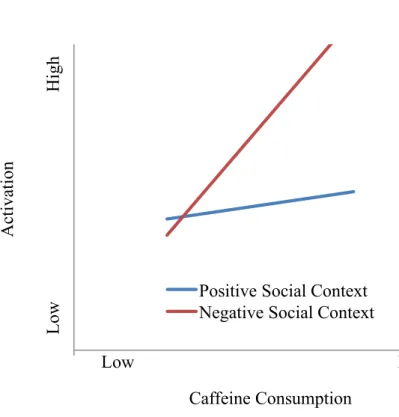
Figure 2. Interactive effects of caffeine and social context on activation. Lines are simple slopes plotted at +1 standard deviation and -1 standard deviation levels of caffeine consumption on the basis of values of mean-centered predictors.
A
ct
iva
ti
on
Caffeine Consumption Positive Social Context Negative Social Context
Low High
L
ow
H
Results
Intercorrelations and descriptive statistics are reported in Table 1. Table 2 shows the
results of the hierarchical regression analyses testing my hypotheses. In the first step, I entered
control variables, finding that positive affect (B = -.31, p < .05), negative affect (B = .51, p <
.01), and sleep quantity (B = -.12, p < .05) significantly affected activation.
Tests of Hypotheses
Effects of caffeine on activation. Hypothesis 1 proposed that caffeine would increase
perceptions of activation. When caffeine was entered in the second step of the hierarchical
regression, I found that it had a significant relationship with activation (B = .17, ΔR2= .05, p <
.05) above and beyond control variables (See Table 2). Thus, Hypothesis 1 was supported.
Social context moderates the effects of caffeine on activation. Hypothesis 2 proposed
that the effects of caffeine on activation would be moderated by social context such that
perceptions of activation would be higher when social context was negative. As shown in Table
2, there was a significant Caffeine X Justice interaction effect on activation (B = -.18, ΔR2= .02,
p < .05). Simple slopes tests revealed that negative social context was associated with increased
perceptions of activation in response to caffeine (B = .24, p < .01), while this effect was
mitigated when social context was positive (B = .07, p > .10) (see Figure 2). These findings
support Hypothesis 2.
Test of mediated moderation hypothesis. Hypothesis 3 predicted that caffeine would
lead to state hostility through activation when social context was perceived as negative (see
Figure 1). The first condition for mediated moderation was met by finding support for
Hypotheses 1 and 2. As shown in Table 3, the indirect effect on state hostility through activation
However, there was a significant effect on state hostility through activation when social context
was perceived as negative (coefficient = .03, p < .05). These results support Hypothesis 3.
Discussion
The purpose of this research was to integrate aspects of psychological constructionist
models of emotion with aspects of self-regulatory models that exist in organizational behavior
literature to better understand the effects of caffeine in the workplace. Specifically, the present
study tested my proposed model that caffeine leads to increased perceptions of activation when
social context is negative, which ultimately leads to state hostility in the workplace. I examined
caffeine consumption, social context, and state hostility in a field study in order to observe these
variables in the natural setting of the workplace. The results converged to support my
hypothesized model.
Theoretical Implications
Findings of the present study have several theoretical implications. First, the study
advanced theories of the psychological effects of caffeine by examining the mediating and
moderating roles of activation and social context. Prior to this thesis, some literature suggested
that caffeine consumption leads to the development of negative emotions including state hostility
(Kawachi et al., 1996; Souissi et al., 2012; Veleber & Templer, 1984). However, other studies
reported divergent findings that indicated that caffeine may inhibit the construction of negative
emotions (Penetar et al., 1993; Welsh et al., 2014). Thus, the present study proposes a refined
model of caffeine’s effect on negative emotion (state hostility, in particular) that explains
findings of both aforementioned notions, so that they are no longer considered conflicting but
Further, I expanded existing self-regulatory models that may explain the beneficial
effects of caffeine at work when cognitive resources are depleted (Christian & Ellis, 2011; Welsh
et al., 2014). In evaluating the effects of caffeine on state hostility with activation as a mediator
and social context as a moderator, I found novel evidence that may suggest that caffeine’s
beneficial effects in the workplace are specific to the presence of a positive social context.
Moreover, my study contributes to existing organizational behavior literature in two
ways. First, my findings add to the emerging evidence supporting the role of negative social
context in constructing negative emotions at work (Aquino, Lewis, & Bradfield, 1999; Berry et
al., 2007; Judge et al., 2006; van den Bos, 2003). Second, my findings identify a novel dependent
variable in research on caffeine consumption in the workplace. Although previous studies have
assessed the effects of caffeine on variables such as deceptive behavior (Welsh et al., 2014), my
study is the first to examine the effects of caffeine on experiences of negative emotions,
specifically state hostility, in the workplace. My finding that caffeine has a significant effect on
state hostility when social context is perceived as negative highlights the importance of state
hostility as a dependent variable and suggests that it should be further investigated as a
dependent variable in future studies.
The present study also contributes to social psychology literature on the construction of
emotion. My findings converge with existing psychological constructionist models that suggest
multiple counterparts including a perceived state of cognitive activation (i.e., core affect), social
context of the environment, and schematic knowledge of emotions, are summed together via
situated conceptualization to result in an emotion experience (Lindquist & Barrett, 2008;
Lindquist, 2013; MacCormack & Lindquist, in press; Schachter & Singer, 1962). Specifically,
physiological and bodily states, which often occur in response to a stimulus such as caffeine, are
interpreted in specific ways based on the social context of one’s current environment and may
result in experiences of specific emotions (Critchley, 2004; Lindquist & Barrett, 2008;
MacCormack & Lindquist, in press; Russell, 2003, 2009; Schachter & Singer, 1962). My
findings also provide evidence supporting the existing notion of interoceptive sensitivity, an
individual’s ability to subconsciously identify physiological changes that impact the central
nervous system (Barrett & Simmons, 2015; Critchley, 2004, 2009; Critchley, Wiens, Rotshtein,
Öhman, & Dolan, 2004; Pollatos et al., 2007).
The present study found that caffeine had a significant indirect effect on state hostility
through activation when social context was negative (coefficient = .03, p < .05), but not when
social context was positive (coefficient = .00, p > .05). These findings may be explained by a
general bias among humans to give greater weight to negative entities known as the negativity
bias (Baumeister, Bratslavsky, Finkenauer, & Vohs, 2001; Kanouse & Hanson, 1971; Rozin &
Royzman, 2001). Generally, people have much more knowledge of constructs of negative
valence than those of positive valence. People focus on negative stimuli more intensely and for
longer periods of time. Further, people and are much more likely to remember negative events
(Baumeister et al., 2001). Evidence for a universal, neurological basis of the negativity bias
exists. Negative events have been shown to elicit much larger event-related potentials than
positive events (Ito, Larsen, Smith, & Cacioppo, 1998). Moreover, a previous study illustrated
that three-month-old infants show a negativity bias in their social evaluations (Hamlin, Wynn, &
Bloom, 2010). Therefore, my finding that caffeine resulted in higher perceptions of activation
when the social context was negative rather than positive is unsurprising. This finding is likely
more intensely on (negative) social stimuli in their environment for longer periods of time.
Further, it is possible that these subjects made more causal attributions and other interpretations
about social stimuli as a result of their rumination on them. Consistent with this logic and
findings of the present study, existing literature suggests that the negativity bias is especially
evident when individuals are interpreting social stimuli (Hamilton & Zanna, 1972).
Practical Implications
The majority of working Americans use caffeine in the workplace although many of its
potential consequences remain unknown (Frary et al., 2005). The present study investigated the
effects of caffeine in work environments with negative social contexts. My findings are novel in
that they suggest potential deleterious effects of caffeine in the workplace. Thus, it may be
beneficial for organizations to determine how positive or negative employees perceive the social
context of their work environment to be using a scale similar to the one used in the present study.
If employees perceive the social context as negative, organizations may consider prohibiting the
use of caffeine at work until the perceived social context is positive.
My findings support a universal, inherent negativity bias. Further, these findings indicate
that individuals may subconsciously draw from this bias when developing emotions at work.
Organizations may consider holding mandatory employee workshops focused on unconscious
biases such as the negativity bias. Teaching employees about biases may help them become
cognizant of their inherent tendencies and learn to avoid drawing from biases such as the
negativity bias when evaluating social stimuli.
Perhaps most importantly, my findings indicate the profound significance of negative
social context in the workplace. Converging with existing literature (Aquino et al., 1999; Long &
negative social context including the construction of negative emotions. Extant literature
suggests that negative emotions such as state hostility often occur as a precursor to aggressive
interpersonal behaviors in the workplace (Bunk & Magley, 2013; Judge et al., 2006; Weiss &
Cropanzano, 1996; Welsh et al., 2014). Therefore, maintaining a positive social context in the
work environment should be among organizations’ top priorities, as it may inhibit the many
deleterious attitudes, emotions, and behaviors associated with social contexts that are negative.
Limitations
Alongside its strengths, the present study contains limitations that future research may
address. First, the nature of the study sample may have accounted for some of my findings.
Observing individuals in the workplace setting enabled me to maximize external validity.
Therefore, I am more certain that my findings exist outside of the laboratory and can be expected
to exist in genuine workplace settings. However, as with any field study, the present study faced
a tradeoff associated with the study design. The nature of this study did not allow for maximum
control over potential confounding variables, and the internal validity of the study was
compromised as a result. Therefore, it is possible that unidentified confounding variables
existing in the workplace explain the present study’s findings.
It is also possible that my findings are due to methodological errors pertaining to data
collection. The main variables of this study – caffeine, activation, and state hostility – were all
measured via self-report. Thus, it is possible that my findings are explained by response bias and
the information subjects reported did not accurately depict reality.
Finally, it is possible that my results are explained by methodological errors pertaining to
the sequence of events associated with the main study variables. Subjects reported the amount of
survey administered at the end of the 12 hours. All variables were measured simultaneously, and
subjects did not indicate the order in which events (e.g., caffeine consumption, perceptions of
activation, feelings of hostility) occurred. Therefore, a major weakness of my study is that my
results are interpreted under the assumption that reported amounts of caffeine consumption
preceded reported perceptions of activation and feelings of hostility, respectively.
Future Research
Future laboratory studies may eliminate the aforementioned internal validity issues.
Testing my proposed model in a more controlled environment would provide further evidence
either supporting or disputing it. Further, future laboratory studies should control for the
sequence of events so that perceptions of activation are measured after caffeine consumption and
before measures of state hostility.
Although the present study investigates the role of caffeine on state hostility, it disregards
the effects of caffeine on deviant and aggressive behaviors in the workplace that often follow
experiences of state hostility. Recent self-regulatory models suggest that caffeine may play an
important role in interpersonal workplace behaviors (Welsh et al., 2014). Therefore, future
studies may test my proposed model using workplace deviance or other behavioral constructs as
a dependent variable in addition to the emotional variable of state hostility. The social
information-processing theory, a fundamental theory of social psychology that explains how
individuals interpret and respond to social stimuli, is similar to the psychological constructionist
view in that it accounts for both internal (e.g., physiological arousal induced by caffeine) and
external (e.g., social context) stimuli in explaining the construction of emotion (Crick & Dodge,
1994; MacCormack & Lindquist, in press). However, social information-processing models go a
external stimuli are combined to constitute experiences of emotion, social
information-processing models explain the cognitive processes that drive subsequent behaviors following
experiences of specific emotions (Crick & Dodge, 1994). As mentioned in the introduction of
this thesis, existing literature has identified that experiences of state hostility often precede
aggressive interpersonal behaviors in the workplace (Bunk & Magley, 2013; Judge et al., 2006;
Weiss & Cropanzano, 1996; Welsh et al., 2014). The present study did not examine potential
behavioral effects of caffeine, and psychological constructionist models of emotion were
sufficient for the purposes of testing my hypotheses. Previous studies neglected how caffeine
may affect construction of emotion, but did examine the effects of caffeine on aggressive
interpersonal behavior in the workplace (Welsh et al., 2014). Ideally, a future study would test a
model that includes both the effects of caffeine on state hostility as well as the subsequent effects
on aggressive interpersonal behavior. Social information-processing models seem to offer a
complete theoretical foundation for future studies that may examine both the emotional and
behavioral effects of caffeine in the workplace.
On average, subjects in the study sample consumed about three caffeinated beverages the
day of the study (M = 2.89). This is consistent with the national average of daily adult caffeine
consumption in the United States (Frary et al., 2005). The present study did not investigate the
effects of caffeine at higher doses. Existing literature suggests that the effects of caffeine are
curvilinear, such that they are mitigated or reversed upon reaching a certain dosage (Benowitz,
1990). Future studies may investigate the potential for a curvilinear effect of caffeine associated
with the construction of state hostility by administering various levels of caffeine to subjects in a
Finally, although my research is novel in that it emphasizes the important of considering
social context when studying the effects of caffeine on state hostility in the workplace, it does
not examine the role of caffeine in subjects who are sleep-deprived or otherwise depleted of
cognitive resources. Future studies may investigate whether the mediated moderated effects of
caffeine on state hostility proposed by the present study exist in resource-depleted populations as
References
Ambrose, M. L., & Schminke, M. (2009). Assessing roadblocks to justice: A model of fair
behavior in organizations. Research in Personnel and Human Resource Management, 28,
219–263.
Aquino, K., Lewis, M. U., & Bradfield, M. (1999). Justice constructs, negative affectivity, and
employee deviance: A proposed model and empirical test. Journal of Organizational
Behavior, 20(7), 1073–1091.
Barrett, L. F., & Simmons, W. K. (2015). Interoceptive predictions in the brain. Nature Reviews
Neuroscience, 16, 419–429.
Baumeister, R. F., Bratslavsky, E., Finkenauer, C., & Vohs, K. D. (2001). Bad is stronger than
good. Review of General Psychology, 5(4), 323–370.
Baumeister, R. F., & Heatherton, T. F. (1996). Self-regulation failure: An overview.
Psychological Inquiry, 7(1), 1–15.
Benowitz, N. L. (1990). Clinical pharmacology of caffeine. Annual Review of Medicine, 41,
277–288.
Berry, C. M., Ones, D. S., & Sackett, P. R. (2007). Interpersonal deviance, organizational
deviance, and their common correlates. Journal of Applied Psychology, 92, 410–424.
Bohner, G., Bless, H., Schwarz, N., & Strack, F. (1988). What triggers causal attributions? The
impact of valence and subjective probability. European Journal of Social Psychology,
18(4), 335–345.
Bradfield, M. (1999). The effects of blame attributions and offender likableness on forgiveness
and revenge in the workplace. Journal of Management, 25(5), 607–631.
concentration, working memory and sustained attention following consumption of a natural
citicoline-caffeine beverage. International Journal of Food Sciences and Nutrition, 65(8),
1003–1007.
Bunk, J. A., & Magley, V. J. (2013). The role of appraisals and emotions in understanding
experiences of workplace incivility. Journal of Occupational Health Psychology, 18(1), 87–
105.
Callegaro, M., Shand-Lubbers, J., & Dennis, J. M. (2009). Presentation of a single item versus a
grid: Effects on the vitality and mental health scales of the SF-36v2 health survey. In
AAPOR (pp. 5887–5897).
Christian, M. S., & Ellis, A. P. J. (2011). Examining the effects of sleep deprivation on
workplace deviance: A self-regulatory perspective. Academy of Management Journal,
54(5), 913–934.
Ciarocco, N., Twenge, J., Muraven, M., & Tice, D. (2004). The state self-control capacity scale:
Reliability, validity, and correlations with physical and psychological stress.
Craig, A. D. (2009). How do you feel — now? The anterior insula and human awareness. Nature
Reviews Neuroscience, 10(1), 59–70.
Craig, A. D. B. (2011). Significance of the insula for the evolution of human awareness of
feelings from the body. Annals of the New York Academy of Sciences, 1225(1), 72–82.
Crick, N. R., & Dodge, K. A. (1994). A review and reformulation of social information
processing mechanisms in children’s social adjustment. Psychological Bulletin, 115(1), 74–
101.
Critchley, H. D. (2004). The human cortex responds to an interoceptive challenge. Proc Natl
Critchley, H. D. (2009). Psychophysiology of neural, cognitive and affective integration: fMRI
and autonomic indicants. International Journal of Psychophysiology, 73(2), 88–94.
Critchley, H. D., & Nagai, Y. (2012). How emotions are shaped by bodily states. Emotion
Review, 4(2), 163-168.
Critchley, H. D., Wiens, S., Rotshtein, P., Öhman, A., & Dolan, R. J. (2004). Neural systems
supporting interoceptive awareness. Nature Neuroscience, 7(2), 189–195.
Cropanzano, R., & Folger, R. (1989). Referent cognitions and task decision autonomy: Beyond
equity theory. Journal of Applied Psychology, 74(2), 293–299.
Damasio, A.R. (2001). Fundamental feelings. Nature, 413, 781.
DeWall, C. N., Baumeister, R. F., Stillman, T. F., & Gailliot, M. T. (2007). Violence restrained:
Effects of self-regulation and its depletion on aggression. Journal of Experimental Social
Psychology, 43(1), 62–76.
Favila, S. E., & Kuhl, B. a. (2014). Stimulating memory consolidation. Nature Neuroscience,
17(2), 151–2.
Fox, S., & Spector, P. E. (1999). A model of work frustration-aggression. Journal of
Organizational Behavior, 20(6), 915–931.
Frary, C. D., Johnson, R. K., & Wang, M. Q. (2005). Food sources and intakes of caffeine in the
diets of persons in the United States. Journal of the American Dietetic Association, 105(1),
110–113.
Gailliot, M. T., Baumeister, R. F., DeWall, C. N., Maner, J. K., Plant, E. A., Tice, D. M., &
Schmeichel, B. J. (2007). Self-control relies on glucose as a limited energy source:
Willpower is more than a metaphor. Journal of Personality and Social Psychology, 92(2),
Hamilton, D. L., & Zanna, M. P. (1972). Differential weighting of favorable and unfavorable
attributes in impressions of personality. Journal of Experimental Research in Personality,
6(2-3), 204–212.
Hamlin, J. K., Wynn, K., & Bloom, P. (2010). Three-month-olds show a negativity bias in their
social evaluations. Developmental Science, 13(6), 923–929.
Ito, T. A., Larsen, J. T., Smith, N. K., & Cacioppo, J. T. (1998). Negative information weighs
more heavily on the brain: The negativity bias in evaluative categorizations. Journal of
Personality and Social Psychology, 75(4), 887–900.
Judge, T. A., Scott, B. A., & Ilies, R. (2006). Hostility, job attitudes, and workplace deviance:
Test of a multilevel model. The Journal of Applied Psychology, 91(1), 126–138.
Kanouse, D., & Hanson, L. (1971). Negativity in evaluations. In E. Jones, D. Kanouse, H.
Kelley, R. Nisbett, S. Valins, & B. Weiner (Eds.), Attribution: Perceiving the causes of
behavior (pp. 47-62). Morristown, N.J. General Learning Press.
Kawachi, I., Willett, W. C., Colditz, G. A., Stampfer, M. J., & Speizer, F. E. (1996). A
prospective study of coffee drinking and suicide in women. Arch Intern Med, 156(5), 521–
525.
Kirkland, T., & Cunningham, W. A. (2011). Neural basis of affect and emotion. Wiley
Interdisciplinary Reviews: Cognitive Science, 2, 656-665.
Laird, J. D., & Lacasse, K. (2014). Bodily influences on emotional feelings: Accumulating
evidence and extensions of William James' theory of emotion. Emotion Review, 6, 27-34.
Lee, K., & Allen, N. J. (2002). Organizational citizenship behavior and workplace deviance: The
role of affect and cognitions. Journal of Applied Psychology, 87(1), 131–142.
psychological constructionist model. Emotion Review, 5(4), 356–368.
Lindquist, K. A., & Barrett, L. F. (2008). Constructing emotion: The experience of fear as a
conceptual act. Psychological Science, 19(9), 898–903.
Long, E. C., & Christian, M. S. (2015). Mindfulness buffers retaliatory responses to injustice: A
regulatory approach. Journal of Applied Psychology, 100(5), 1409–1422.
MacCormack, J., & Lindquist, K. A. (in press). Bodily contributions to emotion: Schachter’s
legacy for a psychological constructionist view on emotion. Emotion Review.
Muraven, M., & Baumeister, R. F. (2000). Self-regulation and depletion of limited resources:
Does self-control resemble a muscle? Psychological Bulletin, 126(2), 247–259.
Muraven, M., Tice, D. M., & Baumeister, R. F. (1998). Self-control as limited resource:
regulatory depletion patterns. Journal of Personality and Social Psychology, 74(3), 774–
789.
Nehlig, A. (2010). Is caffeine a cognitive enhancer? Journal of Alzheimer’s Disease, 20,
S85-S94.
Neuberger, G. B. (2003). Measures of fatigue. Arthritis Care & Research, 49(5S), S175–S183.
Oosterwijk, S., Lindquist, K. A., Anderson, E., Dautoff, R., Moriguchi, Y., & Barrett, L. F.
(2012). States of mind: Emotions, body feelings, and thoughts share distributed neural
networks. NeuroImage, 62(3), 2110–2128.
Patterson, P. D., Buysse, D. J., Weaver, M. D., Suffoletto, B. P., McManigle, K. L., Callaway, C.
W., & Yealy, D. M. (2014). Emergency healthcare worker sleep, fatigue, and alertness
behavior survey (SFAB): Development and content validation of a survey tool. Accident
Analysis and Prevention, 73, 399–411.
(1993). Caffeine reversal of sleep deprivation effects on alertness and mood.
Psychopharmacology, 112(2-3), 359–365.
Podsakoff, P. M., MacKenzie, S. B., Lee, J. Y., & Podsakoff, N. P. (2003). Common method
biases in behavioral research: A critical review of the literature and recommended remedies.
The Journal of Applied Psychology, 88(5), 879–903.
Pollatos, O., Traut-Mattausch, E., Schroeder, H., & Schandry, R. (2007). Interoceptive
awareness mediates the relationship between anxiety and the intensity of unpleasant
feelings. Journal of Anxiety Disorders, 21(7), 931–943.
Robinson, S. L., & Bennett, R. J. (1995). A typology of deviant workplace behaviors: A
multidimensional scaling study. Academy of Management Journal, 38(2), 555–572.
Rozin, P., & Royzman, E. B. (2001). Negativity bias, negativity dominance, and contagion.
Personality and Social Psychology Review, 5(4), 296–320.
Russell, J. A. (1980). A circumplex model of affect. Journal of Personality and Social
Psychology, 39(6), 1161–1178.
Russell, J. A. (2003). Core affect and the psychological construction of emotion. Psychological
Review, 110(1), 145–72.
Russell, J. A. (2009). Emotion, core affect, and psychological construction. Cognition &
Emotion, 23(7), 1259–1283.
Russell, J. A., & Barrett, L. F. (1999). Core affect, prototypical emotional episodes, and other
things called emotion: Dissecting the elephant. Journal of Personality and Social
Psychology, 76(5), 805–819.
Sagherian, K., & Brown, J. G. (2016). In-depth review of five fatigue measures in shift workers.
Schachter, S., & Singer, J. (1962). Cognitive, social, and physiological determinants of
emotional state. Psychological Review, 69(5), 379–399.
Skarlicki, D. P., & Folger, R. (2005). Broadening our understanding of organizational retaliatory
behavior. In R. W. Griffin & A. M. O’Leary-Kelly (Eds.). The Dark Side of Organizational
Behavior. San Francisco: Jossey-Bass.
Snel, J., & Lorist, M. M. (2011). Effects of caffeine on sleep and cognition. Progress in Brain
Research, 190, 105-117.
Souissi, M., Abedelmalek, S., Chtourou, H., Atheymen, R., Hakim, A., & Sahnoun, Z. (2012).
Effects of morning caffeine ingestion on mood states, simple reaction time, and short-term
maximal performance on elite judoists. Asian Journal of Sports Medicine, 3(3), 161–168.
Spector, P. E., & Fox, S. (2002). An emotion-centered model of voluntary work behavior.
Human Resource Management Review, 12(2), 269–292.
Thau, S., & Mitchell, M. S. (2010). Self-gain or self-regulation impairment? Tests of competing
explanations of the supervisor abuse and employee deviance relationship through
perceptions of distributive justice. Journal of Applied Psychology, 95(6), 1009–1031.
van den Bos, K. (2003). On the subjective quality of social justice: The role of affect as
information in the psychology of justice judgments. Journal of Personality and Social
Psychology, 85(3), 482–498.
Veleber, D. M., & Templer, D. I. (1984). Effects of caffeine on anxiety and depression. Journal
of Abnormal Psychology, 93(1), 120–122.
Wardle, M. C., Treadway, M. T., & De Wit, H. (2012). Caffeine increases psychomotor
performance on the effort expenditure for rewards task. Pharmacology Biochemistry and
Watson, D., & Clark, L. A. (1994). The PANAS-X: Manual for the Positive and Negative Affect
Schedule - Expanded Form. Iowa City, IA: University of Iowa.
Weiss, H. M., & Cropanzano, R. (1996). Affective events theory: A theoretical discussion of the
structure, causes and consequences of affective experiences at work. Research in
Organizational Behavior, 18, 1-74.
Welsh, D. T., Ellis, A. P. J., Christian, M. S., & Mai, K. M. (2014). Building a self-regulatory
model of sleep deprivation and deception: The role of caffeine and social influence. The