An Evaluation of Risk Factors for Repeat Chlamydia trachomatis Infections:
Ten Years of Surveillance Data
By
B. Denise Stokich
A Master’s Paper submitted to the faculty of
the University of North Carolina at Chapel Hill
In partial fulfillment of the requirements for
the degree of Master of Public Health in
the Public Health Leadership Program.
Chapel Hill
2010
Advisor signature/printed name
Date
Second Reader Signature/printed name
AN EVALUATION OF RISK FACTORS FOR REPEAT CHLAMYDIA TRACHOMATIS INFECTION 2
Abstract
Background: Chlamydia trachomatis infection is the most frequently reported notifiable
disease in the United States and in Washoe County, Nevada. This disease is associated with a
variety of complications and sequelae, and these risks increase with repeated infections.
Objective: To evaluate existing local data to identify risk factors associated with repeat
Chlamydia trachomatis infections and make appropriate recommendations for prevention.
Study Design: A retrospective study of patients reported with Chlamydia trachomatis infection
from 1999 through 2008 included in the local application of the national STD surveillance
system.
Results: Among 9,551 unique cases diagnosed with Chlamydia trachomatis during the ten
year surveillance period, 1,173 (12.3%) had repeat infections. Females were more likely than
males to have a repeat infection (odds ratio [OR] 1.8, 95% confidence interval [CI] 1.4, 2.4).
Subjects less than 20 years of age and those 20 – 24 years of age were more likely than their
older counterparts to have a repeat infection (OR 1.9, 95% CI 1.3, 2.6 and OR 1.5, 95% CI 1.1,
2.1 respectively). Subjects seen in STD Clinic settings (OR 1.6, 95% CI 1.2, 2.2)or by all other
providers including drug treatment, other clinic, Job Corps, mental health or Indian Health
Services (OR 1.4, 95% CI 1.0, 2.0) were more likely to develop a repeat infection than those
seen in other settings. Repeat infection was not associated with race/ethnicity, length of time
from diagnosis to treatment, treatment regimen, a history of multiple sexual partners; any
acknowledged risk or a history of sex with males.
Conclusions: Repeat infection was relatively common among this population. The results of
persons less than 25 years of age, all persons seen in an STD clinic, and any person with a prior
history of a sexually transmitted disease. Missing risk factor data on more than one-third of
study subjects suggest the need for a more comprehensive review of available risk factor data,
perhaps through the use of the electronic medical record used in the STD clinic. Implementing
a patient reminder system to return to the clinic for rescreening using new and innovative
methods of communication such as email or text messages may help to identify repeat
infections earlier and reduce the burden of disease. Additional prevention opportunities
include increased staff for disease investigation, enhanced public education utilizing new forms
of communication and social marketing, implementation of partner therapy and streamlined
AN EVALUATION OF RISK FACTORS FOR REPEAT CHLAMYDIA TRACHOMATIS INFECTION 4
Introduction
Chlamydia is a sexually transmitted disease (STD) caused by the bacterium, Chlamydia
trachomatis (1) for which humans are the only reservoir. (2) Although poorly defined, the
incubation period is thought to be seven to fourteen days or longer. (2) In males the sexually
transmitted genital infection presents as urethritis with symptoms including mucopurulent
discharge, urethral itching and burning on urination, while in females infection presents in the
cervix and results in mucopurulent endocervical discharge. (2) Infection is asymptomatic in up
to 25% of males and up to 70% of females. (2)
Chlamydia can result in a variety of complications and sequelae, including pelvic
inflammatory disease (PID), a major cause of infertility, ectopic pregnancy and chronic pelvic
pain. (2; 3) Complications of infection during pregnancy include premature rupture of
membranes resulting in preterm delivery as well as passing the infection to the newborn in the
form of ophthalmia and pneumonia. (2) Less common complications include “Bartholinitis,
urethral syndrome with dysuria and pyuria, perihepatitis (Fitz-Hugh-Curtis syndrome) and
proctitis.” (2) Additionally, Chlamydia infection is known to facilitate Human Immunodeficiency
Virus (HIV) infection transmission, as are other inflammatory STDs. (3)
Diagnosis of urethral Chlamydia infection in males is performed by testing a urethral
swab or urine specimen; in females a urine specimen or swab collected from the endocervix or
vagina is tested. (4) Rectal swabs can also be tested for persons who participate in receptive
anal intercourse. (4) Multiple tests are available for the detection of C. trachomatis including
culture, direct immunofluorescence, enzyme immune-assay (EIA), nucleic acid hybridization
one of the factors contributing to the increase in reported Chlamydia infections in the past 20
years. (3)
Chlamydial infections not only comprise the largest proportion of all STDs reported to
the Centers for Disease Control and Prevention (CDC) but are also the most frequently reported
notifiable disease in the United States. (3) In 2008 there were over 1.2 million chlamydial
infections reported to CDC, corresponding to a rate of 401.3 cases per 100,000 population. This
figure represented a 9.2% increase over the rate seen in 2007. The national rate per 100,000
population has increased from 102.5 in 1989 to 402.3 in 2008, an increase of 292%. (3)
Chlamydial infections are also the most frequently reported notifiable disease in
Washoe County. In Washoe County, between 796 and 1509 cases of Chlamydia have been
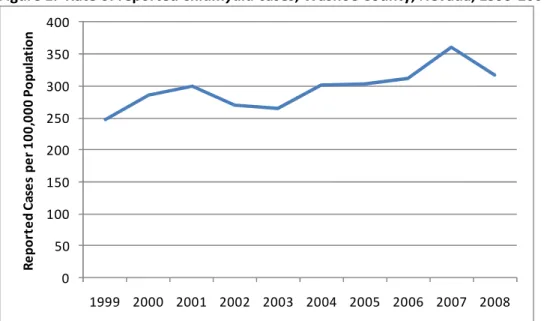
reported annually between 1999 and 2008. The 2008 rate per 100,000 population was 316, a
27 percent increase from the 1999 rate of 248 (Figure 1). The highest rate occurred in 2007 at
361 reported cases per 100,000 population (Washoe County, unpublished data, 2008).
Figure 1. Rate of reported Chlamydia cases, Washoe County, Nevada, 1999-2008.
0 50 100 150 200 250 300 350 400
1999 2000 2001 2002 2003 2004 2005 2006 2007 2008
R e p o rt e d C a se s p e r 1 0 0 ,0 0 0 P o p u la ti o n
AN EVALUATION OF RISK FACTORS FOR REPEAT CHLAMYDIA TRACHOMATIS INFECTION 6
Repeat Chlamydia infection is associated with increased risk of sequelae, including
ectopic pregnancy and pelvic inflammatory disease (PID), when compared with the initial
infection. (4; 5) CDC does not recommend repeat testing for cure three to four weeks after
completing therapy due to the effectiveness of recommended regimens and the potential for
false positive test results. However, due to the complications associated with repeat Chlamydia
infection and the fact that most post treatment infections are the result of sex with untreated
partners or new partners, CDC does recommend that all women with chlamydial infection be
retested 3 months after treatment, or at the next medical visit occurring within 3 – 12 months
of the initial infection. (4)
Although various studies currently exist in the literature examining repeat Chlamydia
infection, many of these studies focus on a particular clinical setting, such as STD clinics (6; 7; 8;
9; 10; 11), or a particular segment of the population such as adolescents (12), females (13; 14;
15), or persons serving in the military (16). Few studies exist that examine comprehensive
population-based data from STD registries (17; 18). An extensive analysis of local level data in
Washoe County has not previously been performed. However, a preliminary analysis
conducted in 2005 did recommend that additional studies should be undertaken (Washoe
County, unpublished data, 2005). The purpose of this study was to evaluate existing local data
to identify risk factors for repeat Chlamydia trachomatis infection and make appropriate
Methods
Data Source
Chlamydia trachomatis infection of the genital tract has been a reportable condition in
the state of Nevada since 1992. (19) Laboratories, health care providers, and medical facilities
are required to report laboratory-confirmed chlamydial infections to the local health authority
within one business day. (19) Washoe County Health District is the local health authority for
the county of Washoe, which consists of the cities of Reno and Sparks in northern Nevada. The
estimated population of Washoe County in 2008 was 423,833. (20) Cases reported are referred
to one of two Disease Intervention Specialists (DISs) for investigation to confirm the diagnosis,
identify contacts, and ensure that the case and any identified contacts have received
appropriate testing and treatment. (19) All cases are entered by the DISs into a database called
STD*MIS. STD*MIS is a voluntary application provided to state and local health departments by
CDC to facilitate the management of data received from laboratories, health care providers,
clinics, etc. It also allows for the transmission of “non-named case morbidity data” to be
transmitted to CDC. (21) Data for this study was obtained from the local application of
STD*MIS.
Definitions
A repeat infection was defined as a Chlamydia trachomatis infection detected greater
than thirty days after appropriate treatment of a previous infection. Treatment was considered
appropriate if it was consistent with the current CDC recommendations that were available at
the time of diagnosis. (4; 22; 23) The thirty-day interval was measured from the date on which
AN EVALUATION OF RISK FACTORS FOR REPEAT CHLAMYDIA TRACHOMATIS INFECTION 8
The thirty-day minimum interval was used due to the possibility of false-positive results with
some diagnostic tests (including nucleic acid amplification tests or NAATs) when performed less
than three weeks after successful treatment. (4) For persons with multiple repeat infections,
only the first repeat infection was included in the final data set, all subsequent repeat infections
as well as the initial infection for these subjects were excluded from the final data set employed
for further analysis.
Statistical Methods
Data was exported from STD*MIS into four separate Excel files: laboratory module,
morbidity module, treatment module and risk module. The Excel files were then de-identified.
The laboratory, morbidity and treatment modules were imported into PASW Statistics 17.0
(SPSS Inc., Chicago, IL) and linked by patient ID and event ID. This main database was reviewed
to identify infections as repeat or non-repeat infections. The risk module was imported into
PASW Statistics 17.0 and restructured so that there was only one row per event, with the risk
factors listed in columns. Finally, the risk data was linked with the main data in PASW Statistics
17.0 to create the final database for analysis. All statistical analyses were completed using
PASW Statistics 17.0. Bivariate analysis was performed to assess the association between
outcome variable and the different indicator variables. Chi-square was used except when a
cell’s expected value was smaller than five in which case Fisher’s exact test was used. All
variables with a p value of 0.10 or less were included in the binary logistic regression for the
Results
Between 1999 and 2008, a total of 11,743 episodes of urogenital chlamydial infection
were reported to the Washoe County Health District. Of these 11,743 episodes, 9,551 unique
cases remained in the final cohort for analysis after excluding 1,173 initial infections for persons
with more than one infection, 532 subsequent infections for persons with more than one
repeat infection, and 487 infections that were either too close to a previous infection to be
counted as a repeat case (i.e. thirty days or less), or were one of more than one episode for a
case but were either not treated, or were not treated with one of the CDC recommended
treatment regimens. The annual rate of reported Chlamydia cases ranged from 196 to 324
cases per 100,000 population (Figure 2). The rates in Figure 2 will be slightly lower than those
shown in Figure 1 because Figure 2 represents unduplicated subjects. The rate in 1999 was the
lowest at 196 cases per 100,000 population. In 2008 the rate decreased from its peak in 2007
of 324 to 294 cases per 100,000 population.
Figure 2. Rate of reported unduplicated Chlamydia cases, Washoe County, Nevada, 1999-2008.
0 50 100 150 200 250 300 350
1999 2000 2001 2002 2003 2004 2005 2006 2007 2008
R e p o rt e d c a se s p e r 1 0 0 ,0 0 0 p o p u la ti o n
AN EVALUATION OF RISK FACTORS FOR REPEAT CHLAMYDIA TRACHOMATIS INFECTIONS 10
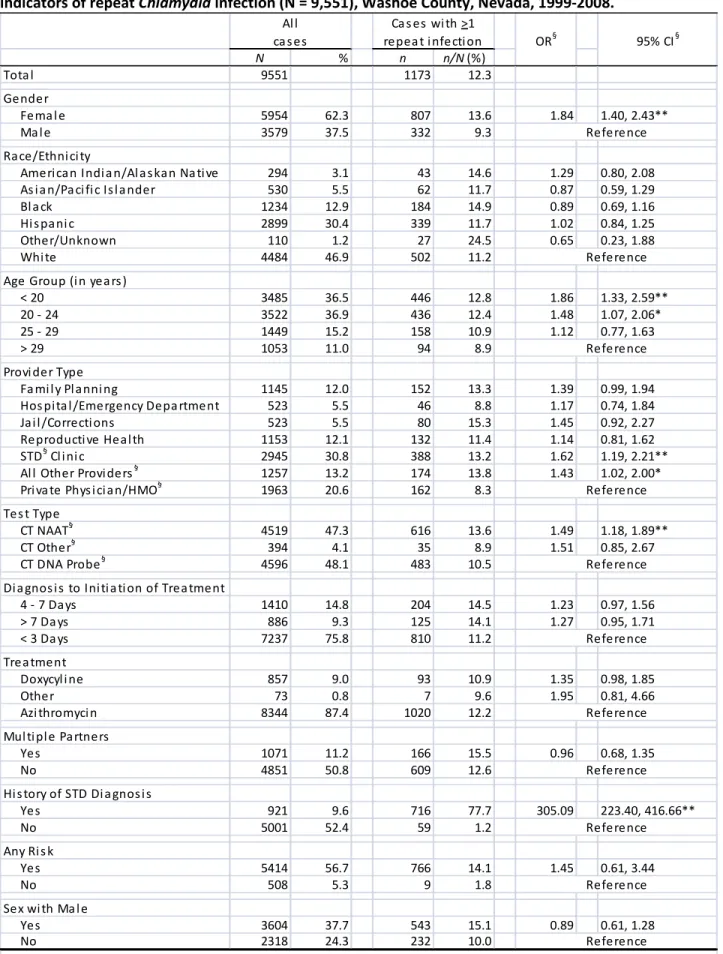
Table 1. Characteristics of subjects, adjusted odds ratio (OR) and 95% confidence interval (CI) for indicators of repeat Chlamydia infection (N = 9,551), Washoe County, Nevada, 1999-2008.
N % n n/N(%)
Tota l 9551 1173 12.3
Gender
Fema l e 5954 62.3 807 13.6 1.84 1.40, 2.43**
Ma l e 3579 37.5 332 9.3
Ra ce/Ethni ci ty
Ameri ca n Indi a n/Al a s ka n Na ti ve 294 3.1 43 14.6 1.29 0.80, 2.08 As i a n/Pa ci fi c Is l a nder 530 5.5 62 11.7 0.87 0.59, 1.29
Bl a ck 1234 12.9 184 14.9 0.89 0.69, 1.16
Hi s pa ni c 2899 30.4 339 11.7 1.02 0.84, 1.25
Other/Unknown 110 1.2 27 24.5 0.65 0.23, 1.88
Whi te 4484 46.9 502 11.2
Age Group (i n yea rs )
< 20 3485 36.5 446 12.8 1.86 1.33, 2.59**
20 - 24 3522 36.9 436 12.4 1.48 1.07, 2.06*
25 - 29 1449 15.2 158 10.9 1.12 0.77, 1.63
> 29 1053 11.0 94 8.9
Provi der Type
Fa mi l y Pl a nni ng 1145 12.0 152 13.3 1.39 0.99, 1.94 Hos pi ta l /Emergency Depa rtment 523 5.5 46 8.8 1.17 0.74, 1.84
Ja i l /Correcti ons 523 5.5 80 15.3 1.45 0.92, 2.27
Reproducti ve Hea l th 1153 12.1 132 11.4 1.14 0.81, 1.62
STD§ Cl i ni c 2945 30.8 388 13.2 1.62 1.19, 2.21**
Al l Other Provi ders§ 1257 13.2 174 13.8 1.43 1.02, 2.00* Pri va te Phys i ci a n/HMO§ 1963 20.6 162 8.3
Tes t Type
CT NAAT§ 4519 47.3 616 13.6 1.49 1.18, 1.89**
CT Other§ 394 4.1 35 8.9 1.51 0.85, 2.67
CT DNA Probe§ 4596 48.1 483 10.5
Di a gnos i s to Ini ti a ti on of Trea tment
4 - 7 Da ys 1410 14.8 204 14.5 1.23 0.97, 1.56
> 7 Da ys 886 9.3 125 14.1 1.27 0.95, 1.71
< 3 Da ys 7237 75.8 810 11.2
Trea tment
Doxycyl i ne 857 9.0 93 10.9 1.35 0.98, 1.85
Other 73 0.8 7 9.6 1.95 0.81, 4.66
Azi thromyci n 8344 87.4 1020 12.2
Mul ti pl e Pa rtners
Yes 1071 11.2 166 15.5 0.96 0.68, 1.35
No 4851 50.8 609 12.6
Hi s tory of STD Di a gnos i s
Yes 921 9.6 716 77.7 305.09 223.40, 416.66**
No 5001 52.4 59 1.2
Any Ri s k
Yes 5414 56.7 766 14.1 1.45 0.61, 3.44
No 508 5.3 9 1.8
Sex wi th Ma l e
Yes 3604 37.7 543 15.1 0.89 0.61, 1.28
No 2318 24.3 232 10.0
Reference Reference Reference Reference Reference Reference Reference §
OR, odds ratio; CI, confidence interval; STD, sexually transmitted disease; All Other Providers: Drug Treatment, Other Clinic, Job Corps, Mental Health, Indian Health Services, Other; HMO, health maintenance organization; CT NAAT, Chlamydia trachomatis nucleic acid amplification test; CT Other, Chlamydia trachomatis Other includes culture & PCR; CT DNA Probe, Chlamydia trachomatis DNA probe. * p < 0.05; ** p < 0.01
Reference Reference
Reference Al l
ca s es
Ca s es wi th >1
repea t i nfecti on OR§ 95% CI§
Characteristics for all subjects in the final data set are included in Table 1. All
characteristics were measured at the time of the included infection. The median age of all
cases was 21 years with 37 percent of cases less than 20 and 37 percent between 20 and 24
years of age. The median age of repeat cases was also 21 years. Sixty-two percent of all cases
were female; 47 percent were white, non-Hispanic. Almost half (48.3%) of all cases were seen
in publicly funded clinics, including STD clinics, family planning clinics, HIV testing sites, and
jail/correctional settings. Ninety-five percent of cases were tested with either CT DNA probe or
CT NAAT. The majority of cases (87%) were treated with azithromycin and most cases (76%)
were treated within three days of diagnosis.
In the final data set 12.3 percent of cases (1173 of 9551) were repeat infections. Of
demographic characteristics, only gender and age were statistically significant associated with
repeat infection after adjusting for the confounding effects from other variables, including
race/ethnicity, provider type, test type, length of time from diagnosis to treatment, multiple
partners, history of STD diagnosis, any acknowledged risk and sex with males. Females were
more likely than males to have a repeat infection (odds ratio [OR] 1.8, 95% confidence interval
[CI] 1.4, 2.4). Subjects less than 20 years of age and those 20 – 24 years of age were more likely
than their older counterparts to have a repeat infection (OR 1.9, 95% CI 1.3, 2.6 and OR 1.5,
95% CI 1.1, 2.1 respectively). Other/unknown race ethnicity saw the highest rate of repeat
infection at 24.5 percent, followed by Blacks at 14.9 percent and American Indian/Alaskan
Native at 14.6 percent. The remaining groups were similar with Asian/Pacific Islander and
Hispanics at 11.7 percent and whites at 11.2 percent; however, race/ethnicity was not a
AN EVALUATION OF RISK FACTORS FOR REPEAT CHLAMYDIA TRACHOMATIS INFECTION 12
Provider type was statistically significant associated with repeat infection after adjusting
for the confounding effects from other variables including age group, gender, race/ethnicity,
test type, length of time from diagnosis to treatment, multiple partners, history of STD
diagnosis, any acknowledged risk and sex with males. Subjects seen at an STD Clinic (OR 1.6,
95% CI 1.2, 2.2) or at All Other Providers including drug treatment, other clinic, Job Corps,
mental health or Indian Health Services (OR 1.4, 95% CI 1.0, 2.0) were more likely to develop a
repeat infection than those seen in other settings. Although subjects seen in jail/corrections
had the highest rate of repeat infection at 15.3 percent, this was not statistically significant.
Test type was statistically significant associated with repeat infection after adjusting for
the confounding effects from other variables including age group, gender, race/ethnicity,
provider type, length of time from diagnosis to treatment, multiple partners, history of STD
diagnosis, any acknowledged risk and sex with males. Subjects tested by nucleic acid
amplification were more likely to have a repeat infection (OR 1.5, 95% CI 1.2, 1.9) than those
tested by other methods.
An obvious statistically significant indicator was that of a prior history of STD diagnosis.
After adjusting for the confounding effects from other variables including age group, gender,
race/ethnicity, test type, provider type, length of time from diagnosis to treatment, multiple
partners, any acknowledged risk and sex with males, subjects with a history of STD diagnosis
were more likely than those without to develop a repeat infection (OR 305.1, 95% CI 223.4,
416.7). Sexual behavior, specifically history of multiple partners, any acknowledged risk or sex
with male, was not associated with repeat infection in multivariate analysis. All statistically
Figure 3. Adjusted odds ratio (OR) and 95% confidence interval (CI) for indicators of repeat Chlamydia
infection, Washoe County, Nevada, 1999-2008.
1.8 1.9
1.5 1.6 1.4
0.0 0.5 1.0 1.5 2.0 2.5 3.0
Female Age <20 Age 20-24 STD Clinic All Other
Providers
A
d
ju
st
e
d
O
d
d
s
R
a
ti
o
Indicators
The yearly rate of repeat infection for all cases ranged from 3.6 to 14.1 percent (Figure
4). Males ranged from 2.6 to 11.4 percent while females ranged from 4.0 to 16.2 percent.
Almost one-third (30.5%) of cases with repeat infection were diagnosed within six months of
the initial infection (Table 2). The median length of time between initial and repeat infection
was 11.5 months (range 1 month to 9 years). The total number of reported infections per
AN EVALUATION OF RISK FACTORS FOR REPEAT CHLAMYDIA TRACHOMATIS INFECTION 14
Figure 4. Percent of repeat Chlamydia infections by year and gender, Washoe County, Nevada, 1999-2008.
0.0 2.0 4.0 6.0 8.0 10.0 12.0 14.0 16.0 18.0
1999 2000 2001 2002 2003 2004 2005 2006 2007 2008
All Cases Males Females
Table 2. Time from initial Chlamydia infection to first repeat infection, Washoe County, Nevada, 1999-2008.
Time between initial & 1st repeat infection
# of Repeat Infections
% of Repeat
Infections % of all Cases
< 6 months 358 30.5 3.7
6 - 18 months 392 33.4 4.1
> 18 months 423 36.1 4.4
Total 1173 100.0 12.3
Table 3. Total number of repeat Chlamydia infections, Washoe County, Nevada, 1999-2008. Total # of Infections # of Repeat
Infections
% of Repeat
Infections % of all Cases
2 942 80.3 9.9
3 182 15.5 1.9
4 34 2.9 0.4
5 10 0.9 0.1
6 4 0.3 0.0
7 1 0.1 0.0
Total 1173 100.0 12.3
Also of note is the shift from DNA probe testing to nucleic acid amplification testing for
Chlamydia trachomatis (Figure 5). In 1999, only 11 percent of cases were identified through
testing. By 2008, nucleic acid amplification testing had increased to 68 percent, while DNA
probe testing had decreased to 29 percent.
Figure 5. Test type for Chlamydia cases represented as percent of total cases, Washoe County, Nevada, 1999-2008.
0% 10% 20% 30% 40% 50% 60% 70% 80% 90% 100%
1999 2000 2001 2002 2003 2004 2005 2006 2007 2008
P
e
rc
e
n
ta
g
e
CT NAAT CT DNA CT Other
CT NAAT: Chlamydia trachomatis nucleic acid amplification test CT DNA: Chlamydia trachomatis DNA probe
CT Other: Chlamydia trachomatis culture and Chlamydia trachomatis PCR
Discussion
This study demonstrated a substantial increase in rate of Chlamydia trachomatis
infections during the ten year surveillance period. The 1999 rate of 196 cases per 100,000
population increased to 294 cases per 100,000 population in 2008, an increase of 50 percent.
This increase is similar to that seen at the national level. (3) As with the national level data,
there are a number of possible explanations for this increase, including expansion of Chlamydia
screening activities, use of more sensitive tests and more complete reporting. (3) Annual
screening of all sexually active women under 26 years of age and women over 25 with risk
factors as is currently recommended by CDC (4) contributes to increased screening for this
AN EVALUATION OF RISK FACTORS FOR REPEAT CHLAMYDIA TRACHOMATIS INFECTION 16
not currently exist (4), the increased availability of urine testing for this infection has resulted in
increasing numbers of men being tested for Chlamydia as well. (3) The new generation of
molecular diagnostic STD tests provides superior performance without being invasive (12), and
has improved sensitivity. Both the increased emphasis on provider and laboratory reporting
and the advancements in the information systems used for reporting have also contributed to
the increase in rate. Finally, the increase in incidence of Chlamydia trachomatis in Washoe
County may reflect a true increase in morbidity for this infection, as is suspected with national
level data. (3)
The overall repeat Chlamydia trachomatis infection rate for this study was 12.3 percent;
slightly higher for females at 13.6 percent and lower for males at 9.3 percent. This overall rate
of 12.3 percent is comparatively lower than that seen in several previous studies which ranged
from 13.4 to 16.4 percent. (12; 13; 18) This is understandable given the passive nature of this
study, as subjects were not required to return at specific intervals for repeat testing as with
some prospective studies. However, this rate is also higher than that seen in multiple other
previous studies which ranged from 7.5 to 11.9 percent. (9; 11; 16; 24; 25) Since this study
used ten years of surveillance data it afforded a longer follow up period than that of most
studies, providing more time for subjects to be reinfected. In addition, limitations were not
placed on the time from initial to repeat infection as in some previous studies.
The magnitude of association between age group and repeat infection is smaller in this
study than that found in a similar study conducted by Xu et al. using Washington state
surveillance data from 1993 to 1998. (17) Xu et al. found that females aged 10-14 years were
times more likely to develop a repeat infection compared to females 30-44 years of age.
Although the present study found subjects less than 20 years of age more likely to develop
repeat infection when compared with subjects 30 years of age and older, the magnitude of that
association was only 1.9. This difference in strength of association is likely due to differences in
study design. While the present study analyzed characteristics at the time of the included
infection, in the Washington study all characteristics with the exception of clinic type were
measured at the time of the initial infection. (17) It may also be that this variation in magnitude
is the result of differences in the populations under surveillance.
A surprising finding was that behavioral risk factors such as history of multiple partners,
any acknowledged risk and sex with males were not associated with development of repeat
Chlamydia trachomatis infection. However, this finding is most likely related to the fact that
risk factor data was missing for 38 percent of cases in the cohort (3629/9551).
The key strengths of this study are related to the source of data. Using readily available
surveillance data allowed for a long study period of ten years as well as provided
population-based data. As stated by Xu et al., studies that are limited to specific clinic-population-based settings may
underestimate the frequency of repeat infection, since women change their source of care
regularly. (17) This study included all clinical settings where Chlamydia trachomatis was
diagnosed, including both the public and private sector.
This study has several limitations. Since the data source consisted of previously
collected surveillance data, it was passive in nature and there was no active follow up effort.
Subjects were not recruited and followed up at predetermined intervals for rescreening.
AN EVALUATION OF RISK FACTORS FOR REPEAT CHLAMYDIA TRACHOMATIS INFECTION 18
appropriate testing. As with the Washington state study, the number of repeat Chlamydia
infections may have been underestimated since repeat infections in subjects who moved out of
Washoe County would have been missed. Because the study was based on surveillance data,
the reason for clinic visit was not available. In addition, risk factor data was missing on more
than one-third of cases. Finally, it may have been helpful to use smaller age groups for analysis,
for example 10-14, 15-19, 20-24, 25-29, and 30-44, as well as to have analyzed males and
females separately.
Recommendations
The results of this study support more frequent screening of sexually active females, all
sexually active persons less than 25 years of age, all persons seen in an STD clinic, and any
persons with a prior history of a sexually transmitted disease. However, since risk factor data
was missing for more than one-third of cases in this study, additional studies of local level data
should be taken. Since those cases that were missing risk factor data in this study were likely
those cases that were not interviewed by STD prevention and control staff, an analysis of STD
clinic data from the electronic medical record used for documenting clinic visits at Washoe
County Health District would provide a much more in-depth evaluation of potential risk factors.
This additional analysis may help to refine the present recommendations further. Building
canned reports into the clinic database to enable the routine analysis of risk factors would
provide real-time data to target prevention and control measures.
A call-back system in which cases are reminded at three months and then again at six
months post-infection (if no response to the first reminder) to return to the clinic for repeat
dependent on the patient to return on their own for follow-up. Email addresses and cell phone
numbers could be collected as part of the clinic visit and entered into the database. Clients
could be asked how they would prefer to receive reminder messages to return for follow-up
appointments, with the understanding that the messages would be generic and not contain any
confidential information. Confidentiality issues would require that the patient’s name not be
included in the message, that emails be sent from a generic address, and that the email itself
not contain any protected health information. A statement such as “Please contact us at
775-328-2170 to schedule your next appointment” would be generic enough to not breach
confidentiality but specific enough to convey the message. Exploration of acceptable and
effective methods for reminders should be explored with age-appropriate focus groups.
Implementing a patient reminder system to return to the clinic for rescreening using new and
innovative methods of communication may help to identify and treat repeat infections earlier,
thereby decreasing the length of time individuals are infected and transmitting the disease to
partners and ultimately reduce the burden of disease.
The analysis and interpretation of local level data is just one tool in an effort to better
understand the transmission of Chlamydial infections. Many other opportunities exist to
improve the prevention and control of this disease. For example, only two Disease Intervention
Specialists are responsible for investigating more than 1200 annual Chlamydia cases. This is in
addition to the gonorrhea and syphilis cases they are also responsible for, as well as providing
coverage in the STD clinic. Increased staff may help to identify and treat more cases and their
contacts, thereby reducing disease burden. Implementation of partner therapy and
AN EVALUATION OF RISK FACTORS FOR REPEAT CHLAMYDIA TRACHOMATIS INFECTION 20
explored to determine potential benefits. Increased funding for public education campaigns to
emphasize how common this disease is, the potential sequelae that result from infection such
as PID, and to reinforce the asymptomatic nature and importance of screening may also be
beneficial in reducing disease burden. The rapid advancement of technology provides
numerous new methods of communication which could be used to provide public health
education regarding STDs. Various social networking methods exist as well as traditional media
forms such as television or radio through which social marketing campaigns could be launched.
Although current budget restraints make the possibility of increased funding for staff and public
education efforts unlikely, funding through acquisition of grants could be explored.
Unfortunately, as with many diseases, to a great extent public health and health care efforts
focus on treatment of the disease once it is diagnosed. The focus needs to be shifted to
primary prevention methods so that as much if not more effort is put into preventing the
References
1. Centers for Disease Control and Prevention.Chlamydia fact sheet. CDC Web site. [Online] 2007. [Cited: February 15, 2010.] http://www.cdc.gov/std/chlamydia/STDFact-Chlamydia.htm..
2. Chlamydial infections. [ed.] D. L. Heymann. Control of Communicable Diseases Manual. 19th Edition. Washington : American Public Health Association, 2008, pp. 116-119.
3. Centers for Disease Control and Prevention.Sexually Transmitted Disease Surveillance, 2008. Atlanta, GA : U.S. Department of Health and Human Services, November 2009.
4. Centers for Disease Control and Prevention. Sexually Transmitted Diseases Treatment Guidelines.
MMWR Recommendations and Reports. 2006, Vol. 55, RR-11.
5. Hillis, S. D., et al. Recurrent Chlamydia infections increase the risks of hospitalization for ectopic pregnancy and pelvic inflammatory diseases. American Journal of Obstetrics and Gynecology. 1997, Vol. 176, 1, pp. 103-107.
6. Richey, C. M., Macaluso, M and Hook, E. W. Determinants of reinfection with Chlamydia trachomatis.
Sexually Transmitted Diseases. 1999, Vol. 26, 1, pp. 4-11.
7. Gunn, R. A., Fitzgerald, S and Aral, S. O. Sexually transmitted disease clinic clients at risk for subsequent gonorrhea and Chlamydia infections: Possible 'core' transmitters. Sexually Transmitted
Diseases. 2000, Vol. 27, 6, pp. 343-349.
8. Orr, D. P., et al. Subsequent sexually transmitted infection in urban adolescents and young adults.
Archives of Pediatric Adolescent Medicine. 2001, Vol. 155, pp. 947-953.
9. Rietmeijer, C. A., et al. Incidence and repeat infection rates of Chlamydia trachomatis among male and female patients in an STD clinic: Implications for screening and rescreening. Sexually Transmitted
Diseases. 2002, Vol. 29, 2, pp. 65-72.
10. Edgardh, K., et al. Repeat infection with Chlamydiatrachomatis: a prospective cohort study from an STI-clinic in Stockholm. BMC Public Health. 2009, Vol. 9, 198.
11. Peterman, T. A., et al. High incidence of new sexually transmitted infections in the year following a sexually transmitted infection: a case for rescreening. Annals of Internal Medicine. 2006, Vol. 145, 8, pp. 564-572.
12. Burstein, G. R., et al. Adolescent Chlamydia testing practice and diagnosed infections in a large managed care organization. Sexually Transmitted Diseases. 2001, Vol. 28, 8, pp. 477-483.
AN EVALUATION OF RISK FACTORS FOR REPEAT CHLAMYDIA TRACHOMATIS INFECTION 22
14. R., Burstein. G., et al. Predictors of repeat Chlamydia trachomatis infections diagnosed by DNA amplification testing among inner city females. Sexually Transmitted Infections. 2001, Vol. 77, pp. 26-32.
15. Skjeldestad, F. E., et al. Incidence and risk factors for genital Chlamydia trachomatis infection: A 4-year prospective cohort study. Sexually Transmitted Diseases. 2009, Vol. 36, 5, pp. 273-279.
16. Barnett, S. D. and Brundage, J. F. Incidence of recurrent diagnoses of Chlamydia trachomatis genital infections among male and female soldiers of the US army. Sexually Transmitted Infections. 2001, Vol. 77, pp. 33-36.
17. Xu, F., Schillinger, J. A., et al. Repeat Chlamydia trachomatis infection in women: Analysis through a surveillance case regsitry in Washington State, 1993-1998. American Journal of Epidemiology. 2000, Vol. 152, 12, pp. 1164-1170.
18. Eberhart, M., et al.The relationship between repeat infections and behavioral risk factos and
clinician counseling: Findings from a Philadelphia STD clinic. 2002. PowerPoint Slides.
19. Nevada Legislature. Chapter 441A - Communicable Diseases. Nevada Administrative Code. [Online] May 2008. [Cited: March 22, 2010.] http://leg.state.nv.us/NAC/NAC-441A.html.
20. Chen, Lei and Clodfelter, Sharon. Washoe County and Nevad Population 1990-2008. Reno, NV : s.n., 2008.
21. Centers for Disease Control and Prevention (2007). STD*MIS. Retrieved from . Centers for Disease
Control and Prevention. [Online] August 16, 2007. [Cited: February 16, 2010.]
http://www.cdc.gov/std/std-mis/.
22. Centers for Disease Control and Prevention. Sexually Transmitted Diseases Treatment Guidelines.
MMWR Recommendations and Reports. 2002, Vol. 51, RR-6.
23. Centers for Disease Control and Prevention. 1998 Guidelines for Treatment of Sexually Transmitted Diseases. MMWR Recommendations and Reports. 1998, Vol. 47, RR-1.
24. Burstein, B. R., et al. Predictors of repeat Chlamydia trachomatis infections diagnosed by DNA amplification testing among inner city females. Sexually Transmitted Infections. 2001, Vol. 77, pp. 26-32.
25. Veldhuijzen, I. K., et al. Reinfections, persistent infections, and new infections after general population screening for Chlamydia trachomatis infection in The Netherlands. Sexually Transmitted