Julia R. Glauberman. Academic Integrity Policies: Content, Context, and Implications for Academic Librarians. A Master’s Paper for the M.S. in L.S degree. April, 2016. 45 pages. Advisor: Paul Jones
Instruction librarians are often expected to promote academic integrity. However, the content and implementation of institutional academic integrity policies may vary greatly from one university to another. This study employed a mixed methods approach, combining content analysis of policies and a survey of librarians involved with instruction. The policies analyzed and the librarians surveyed were from UNC and its fifteen peer institutions. The results of the document analysis identified at least three distinct types of policies defined by their length, use of legal language, and overall purpose. The survey results suggest that although academic librarians understand and are cognizant of their universities’ academic integrity policies, they are not strongly influenced by these documents. This study contributes to the existing literature on academic integrity policies while also beginning to bridge the gap between that body of literature and our understanding of the roles played by librarians in supporting academic integrity.
Headings:
Academic integrity
Academic libraries
Universities & colleges
Content analysis (Communication)
ACADEMIC INTEGRITY POLICIES:
CONTENT, CONTEXT, AND IMPLICATIONS FOR ACADEMIC LIBRARIANS
by
Julia R. Glauberman
A Master’s paper submitted to the faculty of the School of Information and Library Science of the University of North Carolina at Chapel Hill
in partial fulfillment of the requirements for the degree of Master of Science in
Library Science.
Chapel Hill, North Carolina
April 2016
Approved by
_______________________________________
Table of Contents
1. Introduction ...2
2. Literature Review...4
2.1. On the Efficacy of Academic Integrity Policies ...4
2.2. On the Rhetoric of Academic Integrity and Plagiarism ...8
3. Methods...11
4. Results ...14
4.1. Survey ...14
4.2. Document Analysis ...17
5. Discussion ...27
6. Conclusion ...31
Bibliography ...33
Appendix A: Institutions Included in Study ...35
Appendix B: Systematic Method for Policy Harvesting...36
Appendix C: Readability Metrics ...38
Appendix D: Survey Materials ...39
1. Introduction
Academic libraries are often charged with the responsibility of teaching
undergraduate students how to cite sources in their academic work in order to “avoid
plagiarism.” Much of the rhetoric surrounding these lessons tends to position librarians and
professors as authority figures whose ultimate goal is to detect plagiarism and mete out
punishments to those offenders who are caught (Zwagerman, 2008). The main alternative
to this law-and-order approach is to teach students that giving credit to others for their ideas
(and expressions of those ideas) by using appropriate citations is both a norm of the
scholarly community and even an inherently good thing to do. For instance, Fox (2004)
encourages educators to “tell your students what they can and should do as well as what
they cannot do…. [Tell them that] intellectual work is about developing and sharing your
ideas, and it’s about taking note of and praising other people who have shared good ones
with you” (p. 1346). Of course, these two approaches represent extreme ends of a spectrum,
so the approaches taken by many academic librarians will likely fall somewhere between
the two.
At the institutional level, many colleges and universities address the issue of
plagiarism in academic integrity policies which may also be steeped in the sort of moralistic
rhetoric mentioned above (Gallant, 2008, p. 34). These policies include honor codes, codes
student handbooks, faculty handbooks, and so on. If academic librarians are indeed
expected to play a role in enforcing academic integrity policies by providing instruction
related to citations, they are, to some degree, being asked to choose one of three options:
champion existing policies, advocate for policy reform, or passively accept a status quo
with which they disagree. In order for this choice to be an informed one, it is essential for
librarians to understand the policies at their universities. Unfortunately, there is a great deal
of variation in the content as well as the implementation of academic integrity policies from
one university to another (Sabloff & Yeager, 1989). This study aims to gain deeper insight
into the nature of academic integrity policies by examining their content and context as
well as their degree of influence on academic librarians’ pedagogy in instructional
2. Literature Review
The literature on student cheating is quite extensive and covers a wide variety of
issues including frequency, motivations, and potential preventative measures (Simha &
Cullen, 2012). In contrast, the published research on issues related to academic integrity
policies is not nearly as comprehensive, and much of it only examines honor codes rather
than all varieties of academic integrity policies (Gallant, 2008, pp. 97-98). Moreover, there
is a significant gap in the literature on academic integrity policies with regard to academic
librarians’ attitudes toward, understanding of, or reactions to these types of policies (Drinan
& Gallant, 2008; Wood, 2004). Within the literature on academic integrity policies,
researchers tend to focus on either the efficacy or the rhetoric of policies (Gallant, 2008,
7-9). As such, this literature review is organized around that thematic division.
2.1. On the Efficacy of Academic Integrity Policies
Much of the literature on academic integrity focuses on identifying students’
motivations for cheating. This trend is also present in the literature on academic integrity
policies, especially in studies of the effectiveness of policies as a means for deterring
students from engaging in academic misconduct. McCabe, Trevino, and Butterfield (1999,
2002) have investigated the effects of honor codes and modified honor codes, framing these
absolute explanations for students’ behavior and attitudes. The findings that McCabe et al.
have reported support the notion that students in honor code and modified honor code
environments are less likely to participate in academic dishonesty. McCabe has written
extensively on the relationship between institutional characteristics and academic
misconduct, and has been referred to as the “founder of the modern academic integrity
movement” (Drinan & Gallant, 2008). However, McCabe’s published research focuses on
honor codes and modified honor codes and does not address other types of academic
integrity policies.
The vast majority of studies that have attempted to ascertain whether honor codes
or other academic integrity policies can discourage or prevent academic misconduct rely
upon a combination of student or faculty perceptions of academic dishonesty and
self-reporting by students on their own academically dishonest behaviors. Employing this
sort of approach, both Sims (2002) and Von Dran, Callahan, and Taylor (2001) found
that after the adoption of some form of academic integrity policy, students were more
likely to regard plagiarism and other forms of academic misconduct as dishonest and
engaged in those behaviors less frequently according to self-reported data. However,
these findings are complicated by a variety of concerns regarding the validity of these
sorts of studies (Gallant, 2008, pp. 7-9). The three main issues brought up in critiques
of research on cheating and the efficacy of academic integrity policies are dependence
on inherently unreliable self-reported data, use of ambiguous terminology and
inconsistent definitions, and excessively value-laden language in the reporting of
Exploring the efficacy of academic integrity policies from a behavioral economics
perspective while also avoiding the potential pitfalls of relying on self-reported data,
Mazar, Amir, and Ariely (2008) found that students who are asked to sign an honor code
statement prior to completing a task are less likely to cheat on that particular task. Mazar
et al. conducted this experiment at honor code and non-honor code institutions and found
identical results. The notion of students being deterred from cheating by references to a
non-existent honor code suggests that the actual deterrent was the reminder of morality
rather than the honor code itself or its implied threat of systematic punishment (Mazar et
al., 2008, p. 637).
Taking a more exploratory approach to research on the efficacy of academic
integrity policies, Sabloff and Yeager (1989) produced a report on existing policies,
procedures, and guidelines for action at institutions belonging to the American Association
of Universities (AAU). Forty-two institutions responded to Sabloff and Yeager’s
questionnaire and request for information on university policies (p. 4*). Based on these
responses, Sabloff and Yeager found great variation in reporting structures from one
institution to another both in theory and in practice. Sabloff and Yeager (1989) further
concluded that “Most of the responding universities claim that their academic integrity
procedures work effectively…. Few have revised or are planning to revise the procedures
in the near future…. Yet comments written at the end of the questionnaire suggest some
concern about procedures” (p. 4). The concerns to which Sabloff and Yeager refer include
* The pagination for Sabloff and Yeager (1989) is inconsistent, so the page numbers referenced here are
policy compliance and questions about whether reporting and disciplinary procedures can
actually reduce the number of policy violations.
Kibler, Nuss, Paterson, and Pavela (1988) addressed the legal implications of
college and university policies regarding academic misconduct. In delving into the legal
ramifications, Kibler et al. explain that the distinction between disciplinary offenses and
academic judgments becomes complicated by a number of issues including “campus
jurisdictional boundaries” (p. 37) and concerns about liability. Although differentiating
between disciplinary offenses and academic judgments may seem like an issue of
semantics, the courts have spent a great deal of time trying to clarify this issue because of
the implications for students’ due process rights. Kibler et al. (1988) cite the majority
opinion in Board of Curators of the University of Missouri v. Horowitz in which Justice
Rehnquist explained that academic judgments are inherently “subjective and evaluative”
as compared to disciplinary offenses which “automatically bring an adversarial flavor to
the normal student-teacher relationship” (p. 38). Along with the varied effects that
academic integrity policies and proceedings can have on relationships between students,
educators, and administrators, this issue is of great importance because students accused of
disciplinary offenses have due process rights that must be protected. Kibler et al. (1988)
also describe how various court rulings over the last several decades have effectively
provided institutions of higher education with a relatively great degree of freedom in
devising disciplinary systems that afford students their due process rights. Although this
conflict resolution procedures that generally avoid the established adversarial framework,
very few have taken advantage of this opportunity (Kibler et al., 1988, pp. 44-45).
One significant gap in the existing literature on academic integrity is research on
the effects of academic misconduct on student learning (Gallant, 2008, p. 111). This is
particularly problematic because many studies on the efficacy of academic integrity
policies either imply or explicitly claim that academic dishonesty has an unequivocally
negative effect on learning (Gallant, 2008, pp. 111-112). Another area in the literature on
the efficacy of academic integrity policies that has not been thoroughly researched is the
potential connection between student academic dishonesty and faculty academic
dishonesty (Gallant, 2008, p. 110-111). One explanation for this absence is that during the
second half of the twentieth century “academic integrity” and all its accompanying terms
came to be understood only in relation to students rather than anyone involved in academia
(Gallant, 2008, p. 28). This distinction between student conduct and faculty conduct will
be discussed further in the following section.
2.2. On the Rhetoric of Academic Integrity and Plagiarism
The rhetoric of academic integrity in general is clearly reflected in the two dominant
strategies employed by institutions of higher education when drafting and implementing
academic integrity policies and systems. These two strategies are rule compliance and
integrity, and though they are often considered opposites due to their differing rationales
Before examining the similarities between the two strategies, it is important to understand
how each originated and currently functions.
The rule compliance strategy emerged in the late 1980s in response to concerns
about academic misconduct’s negative effects on public perceptions of an institution’s
reputation as well as fear of litigious students (Gallant, 2008, p. 36). Rule compliance
attempts to control student behavior by taking a disciplinarian approach to handling
academic misconduct cases and emphasizing harsh punishments as a deterrent against
future academic misconduct. The rather authoritarian nature of the rule compliance strategy
becomes especially clear in situations where it is applied to students’ expressions of free
speech (Gallant, 2008, p. 37).
The integrity strategy which gained popularity in the mid-1990s differs from the
rule compliance strategy in its emphasis on disciplinary action as a corrective measure
rather than a preventative or punitive measure (Gallant, 2008, pp. 38-39). As such, the
defining characteristic of academic integrity policies developed within the framework
created by the integrity strategy is a central focus on reforming students who have engaged
in academic misconduct. Additionally, the integrity strategy tends to be more common at
smaller institutions and liberal arts schools as compared to the rule compliance strategy
which is more prevalent at large universities (Gallant, 2008, p. 38).
Although there are clear differences between the rule compliance strategy and the
integrity strategy in terms of their approach to solving the problem of academic
misconduct, they are extremely similar in how they define that problem. Both strategies
(Gallant, 2008, p. 34). Moreover, neither strategy relies on teaching or educational
outcomes as either an explanation for or a solution to the apparent problem of academic
dishonesty (Gallant, 2008, pp. 41-42, 44).
Another major similarity between the rule compliance and integrity strategies is
their emphasis on academic integrity as a student issue rather than an institutional issue
(Gallant, 2008, pp. 28-29). This issue becomes especially apparent when examining the
procedures put in place to handle violations of academic integrity policies. In developing
these procedures, debates often arise over whether students should be afforded the same
treatment and opportunity to defend their actions that faculty members would be afforded
if they found themselves accused of plagiarism, fabrication, or falsification in their own
research (Kibler et al., 1988, pp. 41-43). Moreover, the focus on students as the main actors
involved in violations of academic integrity policies allows for certain forms of faculty
academic misconduct, such as “inattentive planning and a cynical attitude toward teaching”
and “unarticulated or ambiguous expectations and personal disregard” (Gallant, 2008, p.
11), to frequently go ignored.
Overall, the published research on both the efficacy and the rhetoric of academic
integrity policies reflects the framing of academic dishonesty as an issue of student
morality rather than as a nuanced issue directly tied to institutions’ educational missions.
Informed by the existing literature as well as the various gaps in the literature mentioned
above, this study aims to understand the content and context of universities’ academic
3. Methods
This study employed a mixed-methods approach in order to gain greater insight
into the content, context, and influence of academic integrity policies. The methods used
were qualitative content analysis of policy documents and a survey of academic librarians.
In order to narrow the scope of this paper, the policies analyzed and the librarians surveyed
were from the University of North Carolina at Chapel Hill (UNC) and its system-defined
peer institutions (see Appendix A for the full list of schools).
Qualitative content analysis was chosen as a research method for this study because
it tends to focus more on describing the object of the analysis in great detail rather than
proving or disproving a particular hypothesis (Schreier, 2014, p.173). Moreover, the rigidly
systematic nature of qualitative content analysis “counteracts the danger of looking at the
material only through the lens of one’s assumptions and expectations” (Schreier, 2014,
p.171) which is of particular importance when researching an issue that one has been
exposed to frequently over an extended period of time. Lastly, qualitative content analysis
was selected because it allows for and even encourages researchers to engage with “latent
and more context-dependent meaning” (Schreier, 2014, p.173) which in the case of
academic integrity policies may include the following characteristics:
Language (Is the policy written in plain English? Does the policy include complex legal terminology?);
Visibility (How aware are students, librarians, and faculty of the existence and content of the policy?); and
Connections to other university policies.
The policies were harvested from each institution’s website in a systematic way
(see Appendix B for more detail). The content analysis of policy documents was based on
a “grounded, a posteriori, inductive, context-sensitive [coding] scheme” (“Coding,” 2007,
pp. 33-34) which was developed during the data collection phase of the study. Additionally,
the language of the policies was also evaluated using a variety of pre-established readability
measures. These included the Flesch-Kincaid Grade Level, the Gunning-Fog Index, the
Coleman-Liau Index, the SMOG (Simple Measure of Gobbledygook) Grade, and the
Automated Readability Index (DuBay, 2004) (see Appendix C for more detail). Rather
than using limited samples of each document to assess readability, each policy was
evaluated in its entirety by using an online tool based on code from an open source project
called Text Statistics (Child, 2015).
The survey used for this study aimed to ascertain librarians’ level of awareness of
existing academic integrity policies at their institutions as well as the degree to which they
believe these policies affect their pedagogy. In order to increase the likelihood of a high
response rate, the survey was brief and the questions were concise (see Appendix D for the
full text of the survey and recruitment email). This survey was sent via email to librarians
at UNC and its system-defined peer institutions who are directly involved with library
instruction and undergraduate or first-year experience. Staff directories and organizational
survey included appropriate informed consent information, and it was approved by the
4. Results
4.1. Survey
Invitations to complete the survey were sent via email to 76 librarians. Of that
group, 24 librarians completed the survey for a 32% response rate. An additional 6
librarians began the survey but did not finish it, and those partial responses have been
excluded from the results. All respondents indicated that their universities do have
academic integrity policies of some sort.
As can be seen in Figure 1, more than half of respondents believe that their
university’s academic integrity policy has a positive effect on campus culture and norms,
while nearly a third of the respondents believe that the effect is neutral.
0 2 4 6 8 10 12 14
Don't Know/Unsure Neutral Negative Positive
Figure 1. “The influence of my university’s academic integrity policy on the campus's culture and norms is generally _____.”
The remainder of the respondents indicated that they are unsure of what effect their
university’s academic integrity policy has on campus culture and norms. Not one of the
respondents believes that their university’s academic integrity policy has a negative effect
on campus culture and norms.
According to the survey responses, which are displayed in Figure 2, 83% of
respondents agree or strongly agree that they have a thorough understanding of their
university’s academic integrity policy. Of the remaining respondents, only 1 indicated that
they do not believe they have a thorough understanding of their university’s academic
integrity policy.
0 5 10 15 20
My approach to designing and/or delivering library instruction is directly influenced by my university’s academic
integrity policy.
When I work directly with students, I'm aware of my university’s academic
integrity policy.
When designing library instruction, I'm aware of my university’s academic
integrity policy.
I have a thorough understanding of my university’s academic integrity policy.
Figure 2. Librarian Perceptions of Academic Integrity Policies
With regard to librarians’ awareness of academic integrity policies, 83% of
respondents agree or strongly agree that they are aware of their university’s academic
integrity policy when they are designing library instruction, while 88% of respondents
agree or strongly agree that they are aware of their university’s academic integrity policy
when they work directly with students. However, in contrast to those high percentages of
respondents who agree or strongly agree that they understand and are aware of their
universities’ academic integrity policies, only 42% of respondents agree or strongly agree
that their approach to designing and/or delivering library instruction is directly influenced
by their universities’ academic integrity policy. 25% neither agree nor disagree, and the
remaining 33% disagree or strongly disagree.
Of the 24 librarians who completed the survey, 7 chose to respond to the final
open-ended question. Those responses covered a variety of issues related to understanding a
university library’s role in encouraging academic integrity. Several respondents expressed
a preference for educational approaches over punitive strategies with one respondent
specifically emphasizing the importance of working with faculty to design assignments
that are “plagiarism-proof” in order to shift away from an authoritarian dynamic in which
students bear all of the blame. Several respondents questioned the efficacy of referring to
academic integrity policies in course syllabi without taking any further steps. Other topics
that were mentioned by respondents included the influence of other cultures’ academic
norms on international students, the effect of a decentralized university environment on
understanding and acceptance of institutional policies, and use of licensing agreements and
4.2. Document Analysis
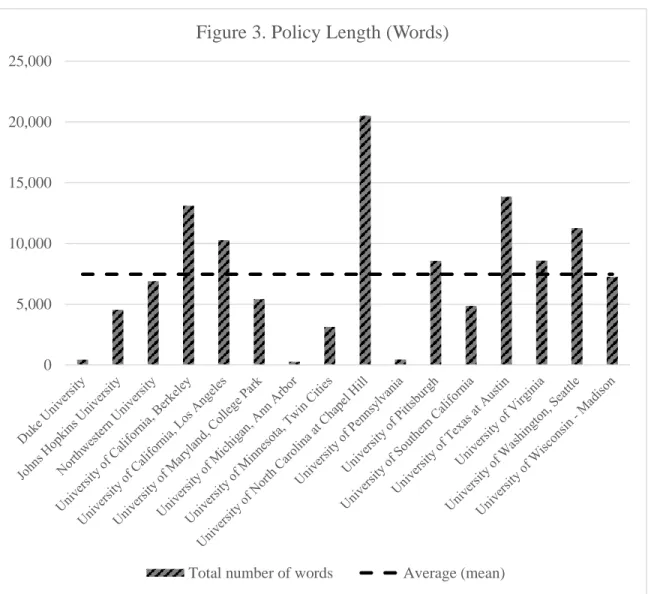
As can be seen in Figures 3 and 4, the academic integrity policies analyzed in this
study varied greatly in length. The longest policy, which measured 20,518 words or 1,145
sentences, was from UNC. This policy was significantly longer than any of the others with
48% more words than the policy with the next highest number of words (UT) and 49%
more sentences than the policy with the next highest number of sentences (UC Berkeley).
In contrast, Michigan’s policy, which was the shortest in both words and sentences, was
only 181 words or 2 sentences shorter than the policy with the next lowest number of words
and sentences (Duke).
0 5,000 10,000 15,000 20,000 25,000
Figure 3. Policy Length (Words)
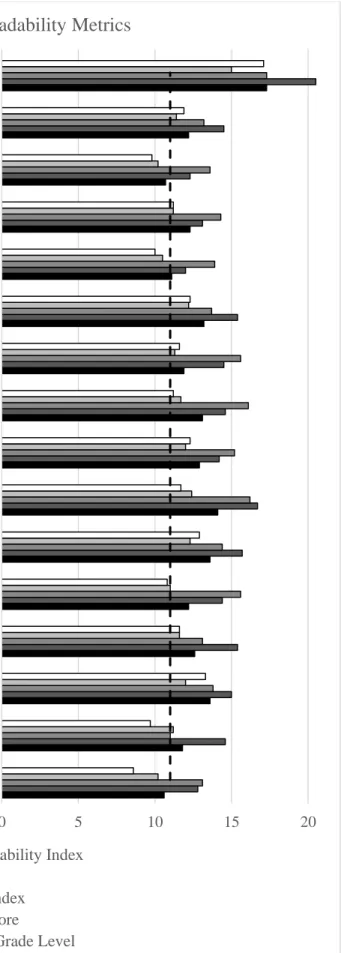
Figure 5 illustrates each policy’s readability scores as measured by several different
metrics. (The formulae for each of these readability metrics can be found in Appendix C).
The scoring scheme for these metrics is based on the American education system’s grade
levels (DuBay, 2004). The dotted line shows the threshold for approximate reading level
upon completion of high school. The policies from Northwestern and Wisconsin scored
below this threshold on 3 of the 5 readability metrics, UCLA scored below this threshold
on 2 of the 5 readability metrics, and USC and UW scored below this threshold on 1 of the
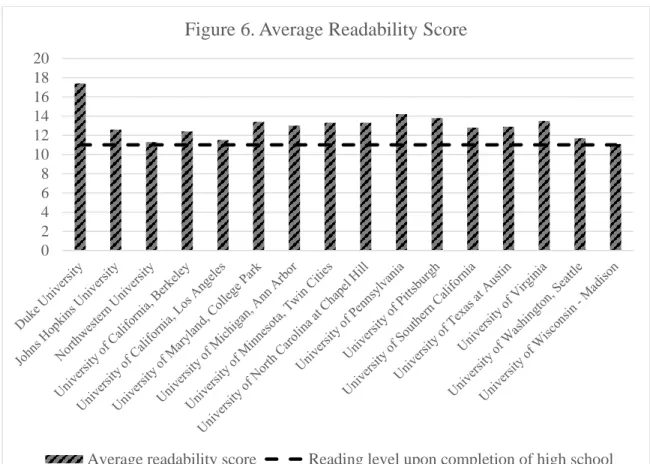
5 readability metrics. However, as can be seen in Figure 6, each policy’s average
readability grade level was at or above this threshold. 0
200 400 600 800 1,000 1,200
Figure 4. Policy Length (Sentences)
0 5 10 15 20 University of Wisconsin - Madison
University of Washington, Seattle University of Virginia University of Texas at Austin University of Southern California University of Pittsburgh University of Pennsylvania University of North Carolina at Chapel Hill University of Minnesota, Twin Cities University of Michigan, Ann Arbor University of Maryland, College Park University of California, Los Angeles University of California, Berkeley Northwestern University Johns Hopkins University Duke University
Figure 5. Readability Metrics
Automated Readability Index SMOG Index
Coleman-Liau Index Gunning-Fog Score
Flesch-Kincaid Grade Level
With regard to the content of the documents, this study examined instances in which
policies provided definitions of academic integrity violations, used legal language, referred
to specific laws, included honor pledges or statements, or mentioned students’ rights.
Tables 1 and 2 along with Figures 7, 8, and 9 show the results of these inquiries.
As can be seen in Table 1, there were several different ways in which policies went
about providing definitions of terms used to describe academic integrity violations. Policies
in the first two categories succeed in presenting readers with clear definitions of academic
integrity infractions including cheating, plagiarism, lying, stealing, fabrication, multiple
submission, misrepresentation, unfair advantage, and so on. The main difference between
the policies in these two categories can be seen in the proportion of the document that is
devoted to providing definitions. In the first category, the definitions account for the vast 0
2 4 6 8 10 12 14 16 18 20
Figure 6. Average Readability Score
majority of each policy. In contrast, the policies in the second category provide the
definitions in the context of more extensive descriptions of the processes and procedures
that follow allegations of infractions. The definitions provided by policies in the third
category are similar to those in provided by policies in the first two categories in terms of
the degree of clarity and thoroughness. However, the policies in the third category situate
the definitions of academic integrity violations within the context of rather legalistic
definitions of basic words.
Policies in the fourth category provide thorough definitions, but they do so without
making explicit reference to the terms that are being defined. Even without naming
infractions, these policies manage to provide readers with clear definitions of relevant
terms rather than simply listing items that constitute academic integrity violations. In
contrast, the approach to providing definitions taken by policies in the fifth category is the
exact opposite. Policies in the fifth category list types of academic integrity violations
without clearly defining them for readers. Finally, policies in the sixth category do not list
specific academic integrity violations or provide explanations of what they might be.
As Figure 7 illustrates, the degree to which policies made use of legal language
varied greatly. For the purpose of this analysis, legal language included the following
terms: “appeal,” “complainant,” “defendant,” “due process,” “evidence,” “evidentiary,”
“hearing,” “judicial,” “jurisdiction,” “law,” “legal,” “proof” as well as words that use any
of these terms as stems. The policies from Duke, Michigan, and Penn did not use any of
these terms. Policies from the third category of Table 1 (i.e., policies that provided
usage. With the exception of Minnesota, this category accounted for 4 of the 6 policies
with the highest levels of legal language.
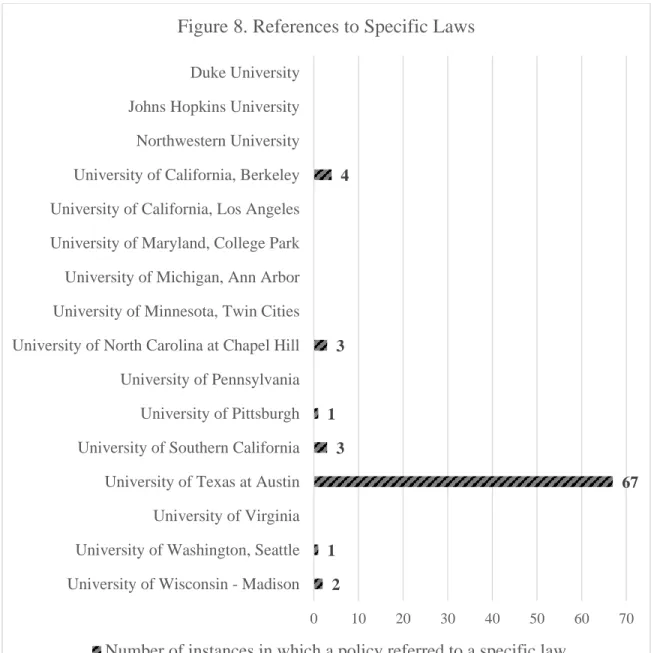
Unlike the use of legal language, references to specific laws were quite rare in
almost every policy. As can be seen in Figure 8, the exception to this trend was the policy
from UT which made 67 references to specific laws. It should be noted that these were not
unique references, but rather the same few specific laws were referenced repeatedly.
References to the Family Educational Rights and Privacy Act of 1974 (FERPA) and Title 259 272 43 428 51 138 374 29 53 142 306 12 92
0 50 100 150 200 250 300 350 400 450 University of Wisconsin - Madison
University of Washington, Seattle University of Virginia University of Texas at Austin University of Southern California University of Pittsburgh University of Pennsylvania University of North Carolina at Chapel Hill University of Minnesota, Twin Cities University of Michigan, Ann Arbor University of Maryland, College Park University of California, Los Angeles University of California, Berkeley Northwestern University Johns Hopkins University Duke University
Figure 7. Use of Legal Language
IX of the Education Amendments of 1972 (Title IX) account for the vast majority of
references to specific laws. Excluding UT, only 6 policies referred to specific laws. Of
those 6 policies, each had fewer than 5 references to specific laws. These references were
also largely focused on FERPA and Title IX, though the Americans with Disabilities Act
of 1990 and Section 504 of the Rehabilitation Act of 1973 were both mentioned as well.
While honor codes, pledges, and statements are often grouped together with
academic integrity policies, it is important to note that honor pledges and statements 2 1 67 3 1 3 4
0 10 20 30 40 50 60 70
University of Wisconsin - Madison University of Washington, Seattle University of Virginia University of Texas at Austin University of Southern California University of Pittsburgh University of Pennsylvania University of North Carolina at Chapel Hill University of Minnesota, Twin Cities University of Michigan, Ann Arbor University of Maryland, College Park University of California, Los Angeles University of California, Berkeley Northwestern University Johns Hopkins University Duke University
Figure 8. References to Specific Laws
function differently from codes and policies. Honor pledges and statements are specific
declarations that students must sign in order to affirm their intent to comply with codes or
policies. As can be seen in Table 2, more than half of the institutions included in this study
do not have university-wide honor pledges or honor statements. Of the 7 institutions that
do have university-wide honor pledges or honor statements, 5 mention them in their
academic integrity policies while the other 2 do not.
Table 2. Inclusion of Honor Pledges or Honor Statements
Category Approach Institutions
1
A university-wide honor pledge or honor statement exists and is mentioned in the academic integrity policy
UCLA, UMD, UNC, UT, UVA
2
A university-wide honor pledge or honor statement exists but is not mentioned in the academic integrity policy
Duke, UC Berkeley
3
No university-wide honor pledge or honor statement exists
JHU, Madison, Michigan, Minnesota, Northwestern, Penn, Pitt, USC, UW
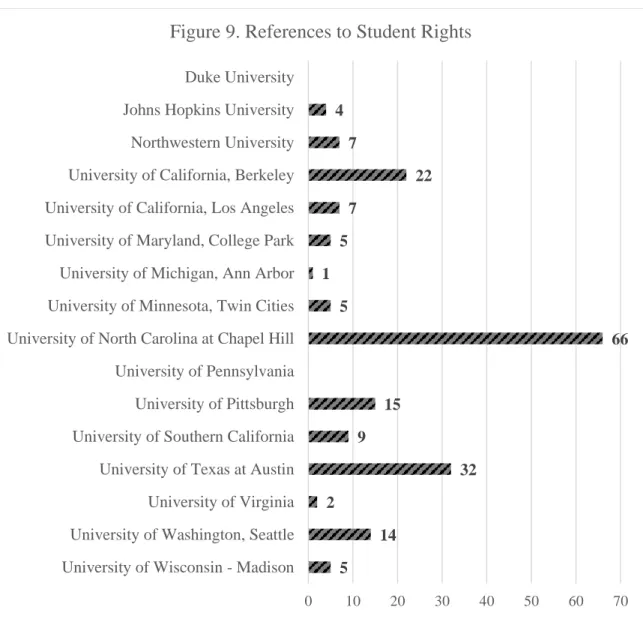
Figure 9 shows the number of instances in which each policy specifically referred
to students’ rights. The policy from UNC mentioned students’ rights significantly more
often than any of the other policies with more than twice as many references as the policy
with the next highest frequency of references to students’ rights (UT). The first category
of Table 1 (i.e., policies in which thorough definitions of academic integrity violations
comprised the majority of the document) accounts for the only policies that did not refer to
students’ rights at all. This omission can likely be attributed to the concurrent absence of
any references to sanctions or disciplinary procedures that would ordinarily prompt a
5 14 2 32 9 15 66 5 1 5 7 22 7 4
0 10 20 30 40 50 60 70
University of Wisconsin - Madison University of Washington, Seattle University of Virginia University of Texas at Austin University of Southern California University of Pittsburgh University of Pennsylvania University of North Carolina at Chapel Hill University of Minnesota, Twin Cities University of Michigan, Ann Arbor University of Maryland, College Park University of California, Los Angeles University of California, Berkeley Northwestern University Johns Hopkins University Duke University
Figure 9. References to Student Rights
5. Discussion
The survey results suggest that although academic librarians understand and are
cognizant of their universities’ academic integrity policies, they are not strongly influenced
by these documents. This attitude may be particular to librarians, or it may be prevalent
throughout campus communities or at least within certain subsets of those communities.
Additionally, though most respondents indicated that they had a thorough understanding
of their universities’ academic integrity policies, it is impossible to know whether this is
actually the case based on self-reported data alone. Evaluating librarians’ actual knowledge
of their universities’ academic integrity policies would be an interesting area for further
research.
With regard to the document analysis, certain aspects of the quantitative results may
be less meaningful than they initially appear to be. In terms of the varied length of the
policies, some of the disparity could be accounted for by differences in scope. The briefest
policies certainly did not aim to convey the same amount of information or even address
as many issues as the lengthiest policies did. This is particularly evident when comparing
policies that only define academic integrity violations to policies that cover every detail of
the processes for handling allegations of these violations as well as non-academic rule
infractions. While the decision to address the issue of academic integrity in a broader policy
Similarly, the assessment of policy readability is not particularly informative. The
readability metrics are designed for assessing documents written in full sentences. As a
result, these measures do not account for section headings, bulleted or numbered lists, or
other formatting elements particularly well. In consequence, the readability grade levels,
indices, and scores for policies that make significant use of these types of elements were
artificially inflated. This is especially problematic for the policies from Duke, Penn, and
Michigan due to their brief overall length (434, 451, and 253 words, respectively).
Nevertheless, the other aspects of the document analysis did shed light on the
clusters of common traits present in the academic integrity policies examined for this study.
As the various elements of the documents were analyzed, four main policy types emerged.
These categories, which can be seen in Table 3, are primarily shaped by policy length, use
of legal language, and purpose or intent.
Table 3. Policy Types
Category Description Institutions
1
Policies that delegate responsibility for creating academic integrity policies to individual colleges or departments within the university
Michigan, Pitt
2
Brief policies that focus on defining academic integrity violations while using a conversational tone and avoiding legal language
Duke, Penn
3 Mid-length policies that contain low levels of legal language
JHU, Minnesota,
Northwestern, USC, UVA
4 Lengthy policies that contain a great deal of legal language
Madison, UC Berkeley, UCLA, UMD, UNC, UT, UW
The issue of purpose is especially clear in the first category because rather than
establishing specific definitions, rules, or procedures as the policies in the other 3
units within their universities. For instance, Pitt’s academic integrity policy is actually a
set of policy guidelines. At Pitt, responsibility is delegated to individual academic units
(e.g., colleges, regional campuses, etc.) that are expected to adopt their own academic
integrity policies. Pitt’s policy guidelines provide a “suggested code” template that covers
student obligations as well as faculty obligations and student rights. In framing academic
integrity as a collection of rights and responsibilities pertaining to students and faculty, Pitt
is one of the few universities included in this study that explicitly acknowledges academic
integrity as an institutional issue rather than a student issue.
It would be interesting to know whether policies like those at Pitt and Michigan are
connected to concerns expressed by one of the survey respondents regarding the effect of
a decentralized university environment on campus norms regarding academic integrity.
Because the survey responses were anonymized, it is impossible to know whether there is
a connection, but it certainly suggests an area for further study.
The policies that comprise the second category in Table 3 were particularly notable
for their brevity and narrow focus. At fewer than 500 words each, these policies could
presumably be read and understood without a significant time commitment. The concise
nature of the policies in this category is facilitated by their emphasis on a single objective:
explaining what academic integrity violations look like. Neither policy in this category
makes any mention of the process for dealing with allegations of these sorts of violations
or the potential sanctions that might result from that process. In addition to distinguishing
the policies in this category from those in the third and fourth categories, the omission of
disciplinary procedures prevents these policies from being associated with either the rule
With regard to purpose, the policies from the third and fourth categories of Table 3
are actually quite similar. The policies in both of these categories outline in great detail the
procedures for disciplinary actions related to academic and non-academic rule infractions.
The categories differ in that the policies in the fourth category rely more heavily on legal
language in order to communicate this information. However, the higher sentence and word
counts for the policies in category 4 may account for this disparity. Further analysis that
normalizes the values for use of legal language in relation to policy length would be useful
in determining the actual significance of the distinction between categories 3 and 4.
Irrespective of the degree of difference between the third and fourth categories of
Table 3, it is worth noting that together they account for 75% of the policies analyzed in
this study. The vast majority of the policies focus on describing procedures, possibly in
reaction to a mostly unfounded fear of litigious students (Kibler et al., 1998). However,
even with more information about institutions’ approaches to disciplinary action, it is
difficult to effectively judge whether they subscribe to the rule compliance strategy or the
integrity strategy without knowing more about how campus communities perceive these
policies or how they are enforced. While document analysis does shed light on certain
facets of the issues surrounding academic integrity, it cannot present a full picture of how
6. Conclusion
In analyzing academic integrity policies and surveying librarians from sixteen
universities, this study aimed to answer two related questions. The first question asked,
what are the different ways that institutions from a fairly homogenous group have codified
their approaches to promoting academic integrity? The results of the document analysis
identified at least three distinct types of policies defined by their length, use of legal
language, and overall intent. These results are consistent with the observations made nearly
three decades ago by Sabloff and Yeager (1989) in their study of reporting structures for
academic integrity violations at AAU member institutions.
The second question for which this study sought an answer asked, how do academic
librarians perceive these varied policies and how are they influenced by them? The vast
majority of the survey respondents agreed that they understand and are aware of their
universities’ academic integrity policies and that those policies do not exert a negative
influence on campus culture and norms. However, the respondents were quite divided on
the matter of whether these policies affect their pedagogical decisions in the context of
library instruction.
This study contributes to the existing literature on academic integrity policies while
also beginning to bridge the gap between that body of literature and our understanding
of the roles played by librarians in supporting academic integrity. Moreover, the results
methods employed here. Such research might be approached through an in-depth study that
explores a particular university’s academic integrity policy holistically in order to gain a
sense of how the policy has been implemented, how it fits with other institutional policies,
and how it is understood and perceived by various stakeholders. Research that can connect
the perceptions of librarians and other stakeholders to specific policies while also gauging
Bibliography
Child, D. (2015). Text Statistics. GitHub. https://github.com/DaveChild/Text-Statistics. [open source].
Coding. (2007). In T. A. Schwandt (Ed.), The SAGE Dictionary of Qualitative Inquiry. (3rd ed., pp. 33-34). Thousand Oaks, CA: SAGE Publications, Inc. Retrieved from http://srmo.sagepub.com.prox.lib.ncsu.edu/view/the-sage-dictionary-of-qualitative-inquiry/SAGE.xml.
Drinan, P. M., & Gallant, T. B. (2008). Plagiarism and academic integrity systems. Journal Of Library Administration, 47(3/4), 125-140.
Dubay, W. H. (2004). The Principles of Readability. Costa Mesa, California: Impact Information.
Fox, R. W. (2004). A Heartbreaking Problem of Staggering Proportions. The Journal of American History, 90(4), 1341-1346.
Gallant, T. B. (2008). Academic integrity in the twenty-first century: A teaching and learning imperative. ASHE Higher Education Report, 33(5).
Gallant, T. B., & Drinan, P. M. (2006). Institutionalizing academic integrity: Administrator perceptions and institutional actions. Journal of Student Affairs Research and Practice, 43(4), 1257-1277.
Kibler, W. L., Nuss, M. N., Paterson, B. G., & Pavela, G. (1988). Academic integrity and student development: Legal issues and policy perspectives. D. D. Gehring & D. P. Young (Eds.). Asheville, N.C.: College Administration Publications.
Mazar, N., Amir, O., & Ariely, D. (2008). The dishonesty of honest people: A theory of self-concept maintenance. Journal of Marketing Research, 45(6), 633-644.
McCabe, D., Trevino, L. K., & Butterfield, K. D. (2002). Honor Codes and Other Contextual Influences on Academic Integrity: A Replication and Extension to Modified Honor Code Settings. Research in Higher Education, 43(3), 357-378.
Sabloff, P. W., & Yeager, J. L. (1989). Building a Workable Academic Integrity System: Issues and Options. [Report for the U.S. Department of Education].
Schreier, M. (2014). Qualitative content analysis. In U. Flick (Ed.), The SAGE handbook of qualitative data analysis. (pp. 170-184). London: SAGE Publications Ltd. doi: 10.4135/9781446282243.n12.
Simha, A., & Cullen, J. B. (2012). A Comprehensive Literature Review on Cheating. Cyber Ethics in Education, 2(4), 24-44.
Sims, R. L. (2002). The effectiveness of a plagiarism prevention policy: a longitudinal study of student views. Teaching Business Ethics, 6(4), 477-482.
Sledge, S., & Pringle, P. (2010). Assessing Honor Code Effectiveness: Results of a Multipronged Approach from a Five Year Study. Research & Practice in Assessment, 5, 4-12.
University of North Carolina at Chapel Hill, Office of Institutional Research & Assessment. (n.d.). UNC System-Defined Peer Group. Retrieved from
http://oira.unc.edu/institutional-effectiveness/institutional-performance-measures/peer-groups/unc-system-defined-peer-group/.
Von Dran, G. M., Callahan, E. S., & Taylor, H. V. (2001). Can students’ academic integrity be improved? Attitudes and behaviors before and after implementation of an academic integrity policy. Teaching Business Ethics, 5(1), 35-58.
Wood, G. (2004). Academic original sin: Plagiarism, the Internet, and librarians. Journal of Academic Librarianship, 30(3), 237-242.
Appendix A: Institutions Included in Study
The institutions included in this study are the University of North Carolina at Chapel Hill
and its system-defined peer group. As of 2011, that group is comprised of the following
universities:
Duke University (“Duke”)
Johns Hopkins University (“JHU”)
Northwestern University (“Northwestern”)
University of California, Berkeley (“UC Berkeley”)
University of California, Los Angeles (“UCLA”)
University of Maryland, College Park (“UMD”)
University of Michigan, Ann Arbor (“Michigan”)
University of Minnesota, Twin Cities (“Minnesota”)
University of Pennsylvania (“Penn”)
University of Pittsburgh (“Pitt”)
University of Southern California (“USC”)
University of Texas at Austin (“UT”)
University of Virginia (“UVA”)
University of Washington, Seattle (“UW”)
University of Wisconsin-Madison (“Madison”)
Appendix B: Systematic Method for Policy Harvesting
Policies were located on institutional websites using two main strategies outlined below.
Navigate - The following tabs/sections of each institution’s website were explored in the order listed (if a particular tab/section did not appear on an institution’s website, it was skipped over). Within each tab/section, the page was scanned for the phrases “academic integrity”, “academic honesty”, “academic dishonesty”, “academic misconduct”, “honor”, “conduct”, “cheating”, and “plagiarism” using the browser’s “Find…” function.
Academics
(Office of the) Dean of Students Student Affairs
Campus Life/Student Life
Center for Teaching and Learning
Search – Policies that could not be located by navigating an institutional website were then identified using the website’s search function and/or Google. (Many institutional websites have search functions powered by Google, so in some cases it was not necessary to use both).
Search terms to enter in institutional website search function o Academic integrity
o Academic honesty o Academic dishonesty o Academic misconduct o Honor code
o Code of conduct o Cheating
o Plagiarism
Search terms to enter in Google
o Institution name + [search terms listed above]
Student Affairs, Office of the Provost or Dean of Academics, and any other relevant offices or departments.
For each policy harvested, the following steps were taken:
1. The policy was downloaded as a PDF file.
2. Adobe Acrobat’s OCR text recognition tool was applied to the PDF file to ensure that the text was machine-readable.
Appendix C: Readability Metrics
Appendix D: Survey Materials
Recruitment email
[The following email was sent to 76 librarians at UNC and its system-defined peer institutions who are directly involved with library instruction and undergraduate or first-year experience. Staff directories and organizational charts available on the libraries’ websites were used to identify these individuals.]
Re: Academic integrity policies survey
Dear [recipient name],
My name is Julia Glauberman, I’m a grad student at UNC Chapel Hill’s School of Information and Library Science, and I’m currently researching several universities’ academic integrity policies. As part of this research, I’ve created a brief survey in order to gain a better understanding of librarians’ perceptions of these policies. Your participation in this survey would be greatly appreciated. The survey can be accessed by clicking here [link to Qualtrics survey].
The survey contains 4 questions and should only take about 5-7 minutes to complete. Your participation is voluntary, and your responses will be completely anonymous. There are no risks or benefits to you for participation, and no one will know whether you did or did not complete the survey.
If you have any questions about the study, please contact me at [email address]. If you have questions about your rights as a research participant, you can contact the UNC Institutional Review Board by emailing [email protected] or calling (919) 966-3113 and referencing study number 15-3343.
Thank you very much for your time,
Julia Glauberman
Survey questions
1. Does the university you work at have an academic integrity policy? (Such a policy may be included in honor codes, codes of student conduct, statements on academic honesty, statements on academic dishonesty, student handbooks, faculty handbooks, etc.).
Yes No
I’m not sure
[Based on each subject’s answer to the first question, they were directed to answer one of the following two sets of questions listed below.]
Questions for subjects who select “Yes” for question 1
2. Select one of the options listed below to complete the following statement.
The influence of my university’s academic integrity policy on the campus’s culture and norms is generally ________.
Positive Negative Neutral
Other [space provided to explain]
3. Please indicate the degree to which you agree or disagree with the following statements.
Strongly Disagree
Strongly Agree
1 2 3 4 5
I have a thorough understanding of my university’s academic integrity policy.
4. If you have any other thoughts on your university’s academic integrity policy or how it influences your work, your library, or your campus as a whole, please share them in the space below.
Questions for subjects who select “No” or “I’m not sure” for question 1
2a. Select one of the options listed below to complete the following statement.
The absence of an academic integrity policy at my university has a generally ________ influence on the campus’s culture and norms.
Positive Negative Neutral
Other [space provided to explain]
3a. Please indicate the degree to which you agree or disagree with the following statements.
Strongly Disagree
Strongly Agree
1 2 3 4 5
If my university were to adopt an academic integrity policy, I would be interested in gaining a thorough understanding of it. If my university were to adopt an academic integrity policy, my approach to designing and/or delivering library instruction would be directly influenced by it.
Appendix E: Links to Academic Integrity Policies
The following list provides links to archived snapshots of the policies analyzed in this study. The snapshots were captured using the Internet Archive’s Wayback Machine (https://archive.org/web/) and show the policies as they appeared in April 2016.
Duke University (“Duke”)
https://web.archive.org/web/20160411040434/https://studentaffairs.duke.edu/conduct/z-policies/academic-dishonesty
Johns Hopkins University (“JHU”)
https://web.archive.org/web/20160411041031/http://e-catalog.jhu.edu/undergrad-students/student-life-policies/
Northwestern University (“Northwestern”)
https://web.archive.org/web/20160411041530/http://www.northwestern.edu/provost/docs /academic-integrity-basic-guide.pdf
University of California, Berkeley (“UC Berkeley”)
https://web.archive.org/web/20160411041443/http://sa.berkeley.edu/sites/default/files/U CB-Code-of-Conduct-new%20Jan2012_0.pdf
University of California, Los Angeles (“UCLA”)
https://web.archive.org/web/20160411042030/http://www.deanofstudents.ucla.edu/Stude nt-Conduct-Code (This links to the page above the UCLA Student Conduct Code because the policy document itself has a robots.txt script which prevents it from being archived)
University of Maryland, College Park (“UMD”)
https://web.archive.org/web/20160411042920/http://president.umd.edu/policies/docs/III-100A.pdf
University of Michigan, Ann Arbor (“Michigan”)
https://web.archive.org/web/20160411043107/http://www.provost.umich.edu/faculty/han dbook/8/8.D.html
University of Minnesota, Twin Cities (“Minnesota”)
University of Pennsylvania (“Penn”)
https://web.archive.org/web/20160411043511/https://provost.upenn.edu/policies/pennboo k/2013/02/13/code-of-academic-integrity
University of Pittsburgh (“Pitt”)
https://web.archive.org/web/20160411043413/http://www.provost.pitt.edu/info/acguideli nespdf.pdf
University of Southern California (“USC”)
https://web.archive.org/web/20160411043600/http://policy.usc.edu/student/scampus/part-b/
University of Texas at Austin (“UT”)
https://web.archive.org/web/20160411043838/http://catalog.utexas.edu/general-information/appendices/appendix-c/student-discipline-and-conduct/
University of Virginia (“UVA”)
https://web.archive.org/web/20160411044144/http://www.virginia.edu/honor/wp-content/uploads/2013/09/Green-Book-PDF-2013-for-Recruitment.pdf
University of Washington, Seattle (“UW”)
https://web.archive.org/web/20160411044532/http://apps.leg.wa.gov/WAC/default.aspx? cite=478-120&full=true
University of Wisconsin-Madison (“Madison”)