Introduction
Burns are the fourth most common trauma worldwide with more than 1 million
associated injuries and 265,000 deaths reported annually (Scher, 2014; Williams et al, 2011).
There are several types of burn injury, including chemical, electrical, thermal and inhalation;
each has a different mechanism of action. Substances such as strong acids and alkali
compounds cause chemical burns, while both high voltage and low voltage currents cause
electrical burns (University of New Mexico (UNM) Hospitals, no date (n.d)). There are numerous
categories of thermal burns, including flash, flame, scald and contact. Flash burns often occur
after the explosion of flammable liquids; they are defined as burns caused by exposure to
intense heat for a brief amount of time (UNM Hospitals, n.d). Flame burns develop after
exposure to prolonged, intense heat and are common after house fires and automobile
accidents (UNM Hospitals, n.d). Hot liquids cause scald burns while hot metals, glass, plastic
and other solid compounds cause contact burns; the severity of scald and contact-burn injuries
vary based on the temperature of the caustic substance and the total length of time exposed
(UNM Hospitals, n.d). While there are several mechanisms for burn injury, characterization and
mapping of burns are the same regardless of cause.
Burns are classified into four separate categories according to depth: first, second, third
and fourth degree. First-degree burns are limited to the epidermis; the skin is typically red and
painful and wounds take an average of three to five days to heal completely (UNM hospitals,
n.d). Second-degree burns are divided into two categories – partial and full thickness. Partial
thickness burns involve the whole epidermis and the upper layer of the dermis, while full
thickness burns permeate through the majority of the dermis (UNM hospitals, n.d). Third-degree
burns destroy all layers of the skin and extend into the subcutaneous tissues, while
fourth-degree burns extend deep into the muscle and bone (UNM hospitals, n.d). Partial thickness
fourth-degree burns typically require excision and grafting in the operating room (UNM
Hospitals, n.d).
In order to assess the percentage of total body surface area affected by a burn, the Rule
of Nines and Lund-Browder chart (as shown in Appendix A) are commonly used. The Rule of
Nines, which involves dividing the body into 9% total body surface area (TBSA) sections, is
used to provide a quick, rough estimate. The sections include the head, each arm, the upper
and lower leg, the upper and lower back, the chest and the abdomen. The total size of the injury
is calculated by summing up the sections of burned tissue. While the Rule of Nines is beneficial
for providing rapid estimations, the Lund-Browder chart is the most accurate method of burn
mapping (Hettiaratchy et al, 2004). It accounts for variability in body shape and age, which
makes it applicable for both children and adults. The risk for infection and intensity of both
medical and nutritional treatment is higher as the size and depth of the burn increase.
Nutrition and Burns
While victims of burn injury require extensive medical intervention, nutrition is paramount
to healing and recovery. In Nutrition in Burns: Galveston Contributions, the authors state that
severe burn injury leads to a prolonged and persistent hypermetabolic response, which causes
“twice-normal metabolic rate, whole-body catabolism, muscle wasting and severe cachexia.”
Without adequate nutrition there is an increased risk for impaired wound healing, organ
dysfunction, infection and death, which makes nutrition support “essential to ensure adequate
burn care” (Rodriguez et al, 2011).
Metabolic changes, including a hyperdynamic circulatory response, increased body
temperature and elevated rates of glycolysis, proteolysis, and substrate cycling lead to
hypercatabolism and detrimental muscle wasting in all critically ill patients (Williams et al, 2011).
However, the severity, length and magnitude of these changes are the most significant in
catecholamines, glucocorticoids, glucagon and dopamine, can last for up to two years after
injury (Williams et al, 2011; Rodriguez et al, 2011). Severely burned patients, identified as those
with burns to greater than 40% TBSA, can lose up to 25% of their lean body mass within three
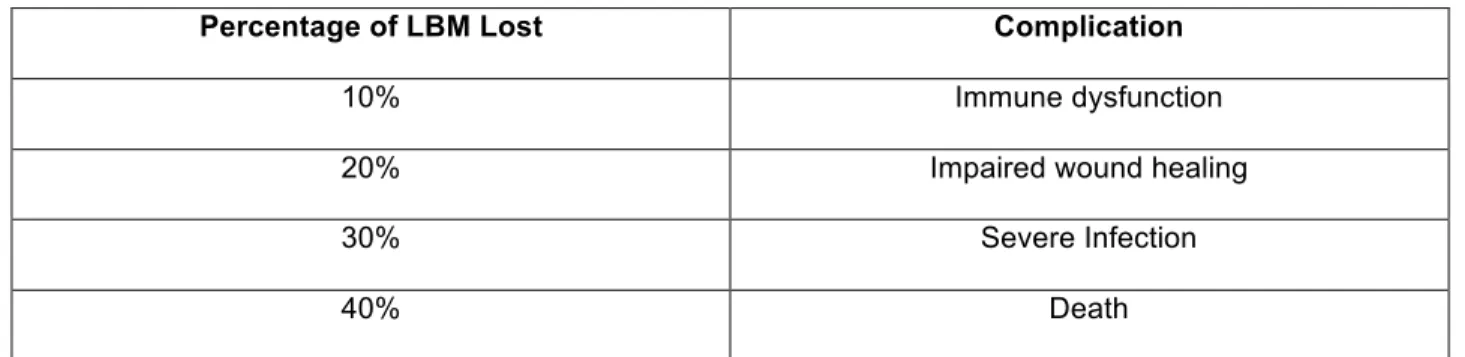
weeks (Williams et al, 2011). The complications of losing lean body mass vary depending upon
percentage loss, as shown in Table 1 below.
Table 1. Complications Associated with Loss of Lean Body Mass (LBM)
Percentage of LBM Lost Complication
10% Immune dysfunction
20% Impaired wound healing
30% Severe Infection
40% Death
Williams et al, 2011
While aggressive nutrition therapy is essential to attenuate the hypermetabolic response and
optimize wound healing, a gold standard for nutritional management has yet to be
established; many challenges to adequately feed burn patients exist.
Methods for assessing nutrient needs and determining a nutrition plan of care vary from
hospital to hospital and from patient to patient. However, indirect calorimetry is often considered
the ideal approach (Rodriguez et al, 2011). Indirect calorimetry is the most accurate method for
assessing energy expenditure; it measures oxygen consumed and carbon dioxide produced to
determine a patient’s baseline calorie needs (Haugen et al, 2007). It provides a
“scientifically-based approach to customize a patient’s energy needs…to maximize the benefits of nutrition
therapy” (Haugen et al, 2007). While utilizing indirect calorimetry on all burned patients is
desirable, the high cost of equipment and skill required to conduct the study make it an
equations, including the Curreri, Harris-Benedict, Schofield-HW and WHO formulas as
described in Appendix A (Rodriguez et al, 2011). These equations are used to calculate the
metabolic resting energy expenditure (mREE). Once this baseline value is established, an
energy goal is often set at 120% to 140% of the mREE (Rodriguex et al, 2011).
Per the authors of What, How and How Much Should Burn Patients Be Fed?, a patient’s
energy and protein needs can likely be met using the equation [25 kcal/kg + (40 kcal/ % TBSA
burn)] for total calories and 1.5-2 g/kg for protein (Williams et al, 2011). The diet should
comprise no more than 30% of energy from fat, as the catabolic response that burn patients
experience after injury limits the body’s ability to utilize fat as a source of fuel(Williams et al,
2011). Catecholamines, which are released after injury, increase the concentration of circulating
free fatty acids (Demling et al, 2000). However, less than 30% of these fatty acids are oxidized
for energy and more than 70% are reesterified in the liver and stored as fat (Demling et al,
2000). While it may seem beneficial to feed burned patients more energy and protein than is
required, research has shown that feeding over 140% of the mREE is ineffective and also likely
to increase complications like hyperglycemia, carbon dioxide retention and azotemia, which is
defined as an elevated blood urea nitrogen and serum creatinine (Williams et al, 2011).
Adequate quantities of macronutrients are crucial to the healing of a burn patient, but the
importance of micronutrients cannot be discounted. Severe burn injury can lead to decreased
levels of vitamins A, C and D, and minerals iron, zinc and selenium (Williams et al, 2011). Iron
serves as an essential cofactor in oxygen-carrying proteins, selenium improves cell-mediated
immunity, and zinc aids in wound healing, DNA replication and white blood cell function
(Williams et al, 2011). Vitamin C is essential for the synthesis of collagen; burn patients can
require up to twenty times the recommended daily dose (Williams et al, 2011). Burn patients are
at high risk for immune suppression and delayed wound healing from their injuries alone;
inadequate amounts of the aforementioned vitamins and minerals would place patients at even
supplementing their diets with the essential micronutrients may decrease the morbidity and
mortality associated with severe injury. However, gastrointestinal complications like delayed
gastric emptying and impaired intestinal motility frequently interfere with the ideal course of
nutritional treatment (Sallam et al, 2011).
Gastrointestinal Complications Following Burn Injury
The catabolic stress and inflammation associated with severe burn injury has been
shown to alter the function and cellular configuration of the gastrointestinal (GI) tract in more
than 60% of patients (Hegazi et al, 2011; Scher 2014). Common alterations include increased
intestinal permeability and bacterial translocation, high incidence of gastric ulcer formation, and
GI bleeding (Scher, 2014). While these complications are not insignificant, burn-induced GI
dysmotility and delayed gastric emptying are major limiting factors in the oral feeding and
nutrient resuscitation of burned victims (Sallam et al, 2011).
Based on a study conducted in burned rats in 1995, gastric emptying was delayed after
experiencing both partial and full thickness burns. Researchers hypothesized that this was likely
related to a decrease in mesenteric blood flow after burn injury. Catecholamines, which constrict
blood vessels, are released in a stress response. As the blood vessels of the gut become
constricted, gastric electrical and mechanical activity so too decreases, suppressing gastric
emptying and impairing tolerance to feedings (Alican et al, 1995). A more comprehensive
version of the 1995 study was conducted in 2011 and similar results were found (Sallam et al,
2011). Gastric emptying of enteral formulas (with varying consistencies and nutrient
compositions) was consistently delayed, as was intestinal transit (Sallam et al, 2011). This data
supported the results found in the 1995 study and also showed that burn-induced gastric
inhibition, and therefore feeding intolerance, occurs early after initial burn injury and persists
Because impaired gastric emptying and feeding intolerance occurs frequently in the burn
population, several strategies exist to overcome these obstacles. These strategies include
placement of post-pyloric feeding tubes, continuing feeds until gastric residuals are above 500
milliliters, and provision of a promotility agent such as Reglan (metoclopramide) to reduce the
gastric residual volume (Hegazi et al, 2011). Promotility agents act by releasing acetycholine, a
hormone that can initiate a peristaltic reflex in the stomach and intestines either directly or
indirectly (Jiang et al, 2014). Release of acetylcholine and the subsequent secretory response
results in an enhanced rate of stomach emptying and decreased colonic transit time (Jiang et al,
2014).
Description of the Patient
The patient, Patient X, is a 38-year-old African American female with a past medical
history significant for chronic obstructive pulmonary disorder, anxiety, depression, irregular
heartbeat, gastro esophageal reflux disorder, and history of marijuana usage. Her toxicology
report was positive upon admission for cannabinoids. She is a Medicaid beneficiary and was
unemployed at the time of the accident, although family reported she was actively looking for
work. She was living with her two children, ages sixteen and twelve, her sister, and her sister’s
two children. Since discharge, Patient X has returned home and her mother, who lives down the
street, has been her primary caregiver.
Patient X was admitted with a diagnosis of 18% total body surface area mixed second
and third degree flame burns to the face, upper chest, back, and bilateral upper extremities after
a propane tank exploded in her car. The burns on her bilateral upper extremities were
Course of the Patient
Patient X presented by Emergency Medical Services (EMS) to an outside hospital on
September 2nd, 2015 status post a motor vehicle explosion. A propane tank in the trunk of her
car ignited after she lit a cigarette; it was unclear upon admission if the incident was an accident
or suicide attempt. She presented with 18% total body surface area mixed second and third
degree flame burns to her face, chest, back and bilateral upper extremities.
She was intubated at the outside hospital and received fluid resuscitation via peripheral
IVs. She was transferred to UNC hospital for further management and had two episodes of
ventricular tachycardia during transport. She arrived intubated and sedated to the UNC Burn
ICU (BICU) and was neurovasculary intact with her heart rate in sinus rhythm.
After being admitted to the BICU, Patient X was bathed and her wounds were debrided.
While her burns originally appeared to cover only 18% of her body, they later spread to cover
28%. She received a bronchoscopy in order to rule out an inhalation injury, as she presented
with singed eyelashes and nose hairs. Fortunately, results were unremarkable, but
ophthalmology planned to follow closely in the event of vision loss or presentation of corneal
burns. She was prescribed vitamin C, zinc, a multivitamin with minerals and oxandrolone, in
addition to fentanyl and propofol for sedation and pain management.
One day after admission, clinical nutrition was consulted for a nutrition assessment and
tube feeding recommendations. Patient X presented with no obvious signs of malnutrition and
an enteral nutrition regimen of Calorie Dense (Impact Peptide 1.5) @ 10 mL/hr (advancing by
10 mL/hr every 4 hours) towards goal 75 mL/hr was recommended. Further details are provided
in Nutrition Evaluation and Treatment below. Both occupational and physical therapies were
also consulted on this day. They both began passive treatments and scheduled visits several
times per week.
On hospital day five, Patient X was taken to the OR for excision and autografting of her
using donor skin from her bilateral thighs. There were no reported complications and Patient X
returned to the BICU intubated, sedated and in stable condition after surgery. Because of the
gravity of Patient X’s procedure, it became especially important that she receive adequate
protein and calories for healing.
On hospital day six, Patient X underwent a percutaneous tracheostomy secondary to
prolonged mechanical ventilation due to acute respiratory failure. Case management was
consulted for an assessment and to assist with discharge planning. It became evident during
this visit that Patient X would not require home health or an inpatient rehabilitation facility given
her large network of social support.
Over the next few days, the patient’s white blood cell count trended upwards and her
electrolytes trended down. Her electrolytes were repleted using IV fluids as needed and several
cultures were ordered. The Infectious Disease team was consulted due to a bronchoscopy
culture positive for Haemophilus influenza.While the etiology of infection was uncertain -
contaminant versus pneumonia - the patient was started on broad-spectrum antibiotics as a
course of treatment.
The patient recovered well over the next several weeks, although she had another
recurrence of pneumonia with cultures positive for Enterobacter Aerogenes. Her infection was
treated, her electrolytes were stabilized within normal limits, her ventilator requirements
continuously decreased and her donor sites and burns were deemed to be healing
appropriately. She worked closely with physical and occupational therapies in order to increase
her range of motion and was eventually extubated and able to breathe on her own on hospital
day 23.After extubation, the patient continued to improve. She began to tolerate a regular oral
diet and was discharged on September 29th, twenty-seven days after admission.
Progress and Prognosis
The Burn Surgery team evaluated Patient X on the day of her discharge. Her vital signs
and deemed to be healing adequately. Both physical and occupational therapy cleared her and
she was said to have satisfactory range of motion. She received several educational handouts
from physical and occupational therapy for at-home treatment exercises. She demonstrated
capacity and ability to complete her wound care, as did several members of her family. In
summary, the patient was ambulating freely, tolerating a regular diet, completing her own wound
care and having regular bowel movements. Her pain was well controlled with oral medications
and she was discharged with several clinic appointments scheduled in the following weeks.
Patient X presented to her clinic visit on October 8th with “excellent interval healing” per
the doctor. She had no signs of infection, but she was experiencing some psychosocial and
sleep-related issues secondary to her injury. Her wounds and grafts were primarily closed,
although the donor sites on her bilateral thighs had been scratched open during sleep. Pain at
her injury sites made ambulation challenging, however Patient X reported continuing to work
with physical and occupational therapies and continued to show signs of improvement. The
Burn Clinic team signed off on the patient on October 29th, 2015, almost two months after injury.
Nutrition Evaluation and Treatment
As Patient X arrived to the BICU intubated and sedated, she was unable to provide
information pertaining to recent weight loss, decreased appetite, and other symptoms of
malnutrition. However, family reported no concerns regarding the patient’s oral intake prior to
admission. Patient X’s nutrition status was assessed as normal, as her anthropometrics all fell
within the normal range: admit weight = 65 kg, ideal body weight (IBW) = 65.9 kg, % IBW =
98.6%, height = 175.3 cm, BMI = 21.15 (normal: 18.5-24.9). As indirect calorimetry could not be
completed upon admission secondary to the patient’s clinical instability, these anthropometrical
values were used to determine a nutritional course of treatment.
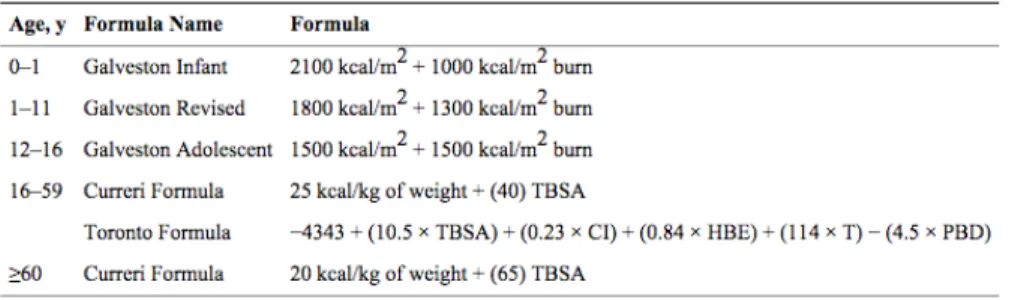
The patient’s initial diet order was determined using the Curreri Formula as shown in
since injury, average temperature, caloric intake x 24 hours) were considered in estimating this
patient’s actual needs. Based on these variables, it was determined that Patient X’s nutrient
needs could best be met between 100 and 120% of the Curreri Formula estimate [2345-2814
kcal per day (Curreri x 1-1.2)] with 25% of calories provided by protein [147-176 grams per day
(2.3-2.7 g/kg @ 65 kg)].
Patient X’s fluids were managed by the medical team, as burned patients require
high-volume fluid resuscitation within the first 24 hours following thermal injury. The high-volume of fluid
required for adequate resuscitation is calculated using the Parkland Formula (% TBSA burned x
Wt (kg) x 4mL). The first half of the total fluid requirement is to be provided within the first eight
hours after injury and the second half is to be provided over the following sixteen hours (Bak et
al, 2009). The patient’s initial diet order was an enteral nutrition regimen of Calorie Dense
(Impact Peptide 1.5) at goal rate 75 mL/hr in order to provide 1575 total mL, 2363 kilocalories,
148 grams of protein, and 1213 mL of free water over 24 hours. See full nutrition care plan
included in Appendix A.
Progressive Description of Dietary Management
Patient X was prescribed vitamin C, zinc and a multivitamin with minerals upon
admission, as is common practice on the UNC BICU for the reasons described in the
introduction above. Patient X was also prescribed oxandrolone, which is given to those with
20% TBSA burns or larger. Oxandrolone is a testosterone analog that serves to enhance
protein synthesis, improve wound healing and attenuate the loss of lean body mass (Williams et
al, 2011).
On Hospital Day 2, tube feedings of Calorie Dense (Impact Peptide 1.5) at 10 mL/hr
(“trickle feeds”) were initiated via a Corpak with tip successfully placed within the gastric body.
The plan was to advance the rate of feedings as tolerated towards a final goal of 75 mL/hr. The
residuals overnight (>250 mL of tube feeding in the stomach) prevented the feeding rate from
exceeding 40 mL/hr.
Upon the first nutrition visit on Hospital Day 3, the patient’s gastric residuals had
decreased to 100 mL (appropriate gastric residual volume for continuing feeds) and the plan to
advance tube feeds towards goal of 75 mL/hr was reinstated. A bowel regimen was also
recommended, as the patient had not had a bowel movement since prior to admission. Pertinent
labs upon the initial visit were: sodium 133 mEq/L (low), potassium 3.5 mEq/L (low-normal),
Magnesium 1.1 mEq/L (low) and Phosphorous 2.6 mEq/L (low), which had decreased from 3.2
the day before. The electrolyte abnormalities were attributed to the high-volume fluid
resuscitation the patient continued to receive, although a repletion protocol was implemented to
keep Potassium above 4 mEq/L, Magnesium above 2 mEq/L and Phosphorous above 3 mEq/L.
Stabilization of Patient X’s electrolytes was crucial, as imbalances are associated with increased
morbidity and mortality among critically ill patients (Lee, 2010). For further information, see
Table 2 in Appendix A. The medical nutrition therapy plan was assessed as appropriate,
although it was not meeting nutrient needs at the time of visit. We, the nutrition team,
recommended continuing to advance the tube feeds as tolerated towards 75 mL/hr and to hold
enteral nutrition only if Patient X met ASPEN criteria for withholding feeds (two consecutive
residual checks >250 mL and/or one residual check > 500 mL).
Five days after admission, Patient X went to the operating room for autografting and had
yet to have a bowel movement. Prior to being made NPO the midnight before her surgery,
Patient X had elevated gastric residuals (750 mL) and her tube feedings were subsequently
held. We hypothesized that the patient may have been experiencing elevated gastric residuals
due to a lack of bowel movement. A more aggressive bowel regimen was recommended and
the initial enteral order of Calorie Dense (Impact 1.5) @ goal rate 75 mL/hr remained
Six days after admission, indirect calorimetry was completed with results as follows:
mREE 1763, RQ (respiratory quotient) 0.92, Covar (coefficient of variability) 2. The study was
deemed valid, as the RQ fell within the accepted range of 0.7-1.2 and the Covar was less than
the maximum accepted value of 10. Based on these findings, an EN regimen to meet 120% of
the patient’s mREE was recommended with an energy goal equal to 2115 kcal per day. We
suggested an enteral regimen of Calorie Dense (Impact Peptide 1.5) @ goal rate 67 mL/hr in
order to provide 1407 total mL, 2110 kcal, 132 g pro, and 1083 mL free water. Patient X had still
not had a bowel movement upon follow up, so magnesium citrate was provided in order to
facilitate one.
Eight days after admission, Patient X continued to experience elevated gastric residuals
despite provision of magnesium citrate and Miralax resulting in two significant bowel
movements. Tube feeds had been held since the day prior due to gastric residuals between 300
and 400 mL. They were restarted at trickles the morning of follow-up and advanced to 30 mL/hr
throughout the day. Residuals remained elevated (220 mL), although tube feedings were
continuously advanced towards goal. At this point, Patient X had a history of elevated gastric
residuals and her tube feeds had been held frequently over the course of her admission. Her
tube-feeding rate had yet to reach goal due to worsening signs of enteral intolerance, even eight
days after admission. We recommended placement of a post-pyloric Corpak in order to facilitate
tube-feeding tolerance. Post-pyloric feeding tubes bypass the pylorus of the stomach and
deposit enteral nutrition straight into the intestine; this method of feeding has proven effective in
reducing elevated gastric residuals in the burn population (Niv et al, 2009). We also
recommended the initiation of a prokinetic agent in order to improve gastric motility, although
this recommendation was not implemented.
Four days later, Patient X had a repeat indirect calorimetry study completed. The results
were: mREE 2440, RQ 1.01, Covar 6. The study was deemed valid and the tube feeding
meet 120% of the patient’s mREE; the new energy goal was equal to 2928 kcal per day. At the
goal rate of 93 mL/hr, this order would provide 1953 total mL, 2929 kcal, 183 g pro, 1503 mL
free water. After the previous nutrition follow-up, the medical team placed a post-pyloric Corpak
via EGD. Despite that, the patient continued to have elevated gastric residuals. The tube
feedings were infusing at 20 mL/hr at the time of our visit with plan to advance towards 40 mL/hr
that evening. An abdominal XRay on the same day had findings concerning for a paralytic ileus,
although the patient had two bowel movements earlier that day. We encouraged the team to
initiate a prokinetic agent once more, as the patient had persistently high residuals even after
post-pyloric Corpak placement.
Three days later, the patient’s grafts were closed and both her wounds and donor sites
were assessed as healing appropriately and progressing well. However, the patient was septic
and her tube feeds had been held for approximately 12 hours due to continued elevated
residuals. A CT scan of the abdomen was ordered due to concern for a small bowel obstruction
versus a gastric outlet obstruction. CT findings later showed gaseous distension of the stomach
without any obstruction. Tube feedings were restarted at 40 mL/hr and Reglan was added to the
patient’s medication regimen. Upon follow-up the next day, the patient had maximum gastric
residuals of 55 mL. Patient X’s tube feeds were increased to a rate of 50 mL/hr, the highest rate
achieved since admission. Tube feeds were subsequently advanced towards a goal of 93 mL/hr
that same day. As the patient was more awake and alert, we recommended modifying her IV
multivitamin to a by-mouth variation in order to promote PO intake and improve swallowing
function. We also recommended continuation of weekly indirect calorimetry testing in order to
best estimate Patient X’s energy needs.
Four days later, Patient X was tolerating tracheostomy collar trials and tube feedings at
goal. Tracheostomy collar trials are employed as part of a mechanical ventilation weaning
protocol; patients are disconnected from the ventilator and allowed to breathe independently
consulted to evaluate her swallowing capability. Patient X showed no overt signs and symptoms
of aspiration or dysphagia per the speech therapist and her diet was advanced to Regular with
all level liquids. The patient’s level of nutrition risk decreased from acute/high risk to moderate
and a up date was scheduled seven days later. Patient X was discharged prior to
follow-up and was said to be eating well and having regular bowel movements.
Several obstacles to a successful nutrition treatment plan were overcome throughout
Patient X’s hospital stay. She had a history of elevated gastric residuals and did not reach her
goal tube-feeding rate for the majority of her admission. We recommended a post-pyloric
Corpak in order to improve her enteral tolerance, as this has been proven effective in the burn
population, but it was unsuccessful. When the patient continued to have elevated residuals
despite having a post-pyloric tube, we recommended initiation of a prokinetic agent (i.e.
Reglan). This recommendation was not implemented initially and the patient continued to suffer
from impaired enteral tolerance. After recommending Reglan once more, it was initiated and the
patient’s gastric residuals significantly improved.
Progress and Prognosis – Nutritional
Upon discharge, the patient was tolerating an oral diet and consuming approximately
100% of her provided meals. She was also drinking SuperShakes, which provide 623 calories
and 12.6 grams of protein, and Boost Plus (360 kcal, 14 g pro) for added nutritional support.
The patient lost a considerable amount of weight over the course of her admission (12
pounds, 8.3% weight loss), as seen in Figure 1 below. This weight loss was attributed primarily
to the hypermetabolic state resultant from her burns and poor enteral tolerance throughout the
Despite the patient’s weight loss, there were no concerns about her desire, willingness, and
ability to eat after discharge.
Summary & Discussion
This case was incredibly challenging from a nutritional standpoint. Early and aggressive
nutritional intervention is crucial in the burn population for several reasons. It has been shown to
attenuate the hypermetabolic response, enhance wound healing, minimize severe catabolism
and cachexia, and decrease morbidity and mortality (Rodriguez et al, 2011). Despite consistent
follow-up and employment of several different strategies, this patient did not receive adequate
nutrition throughout the majority of her hospital stay. Her poor nutritional status was secondary
to persistently elevated gastric residuals and subsequent holding of enteral nutrition and was
evidenced by the significant 8.3% weight loss four weeks after initial burn injury.
Several approaches were utilized in an attempt to decrease Patient X’s gastric residual
volume. The first step was an aggressive bowel regimen, as it was hypothesized that the
patient’s enteral intolerance and elevated residuals were caused by lack of bowel movement.
The next strategy was a post-pyloric Corpak feeding tube, which was placed by the surgical
team in an EGD-guided procedure. This strategy was employed based on positive results
depicted in the most recent, albeit minimal, literature. Despite the post-pyloric feeding tube,
which releases enteral formula past the pylorus and into the intestines, elevated gastric
residuals persisted. After several weeks of impaired enteral tolerance, the prokinetic agent,
Reglan, was provided. Fortunately, the patient’s condition improved thereafter, although she
remained on Reglan until discharge as a precaution.
If given the opportunity to work with this patient again, I would advocate more strongly
for the initiation of Reglan or a similar medication. I recommended the drug verbally during
rounds and in my documentation, but I never pushed strongly for it. My recommendation was
ultimately perceived as a suggestion and my patient’s nutritional status was compromised
because of it.
The nutritional course of this patient highlighted an important and unresolved issue in the
approach to feeding burned patients. If the prokinetic agent had been ineffective at improving
the patient’s enteral tolerance, there would not have been another evidenced-based strategy to
employ. Enteral intolerance, which is likely due to impaired gastric emptying, is commonplace
on burn units across the country. Despite this fact, minimal research about the cause of delayed
emptying and impaired tube-feeding tolerance exists. One major study was completed in 1995,
but a more comprehensive follow-up study was not published until 2011. Strategies for
overcoming the issue are limited as well, because the mechanism behind enteral intolerance is
not well understood. In order to provide adequate nutrition to and improve outcomes for patients
who have suffered severe burn injury, it is important to understand the limitations to feeding.
Without further research into this area, the nutritional status and overall prognosis for burned
REFERENCES
Acosta, A., & Camilleri, M. (2015). Prokinetics in Gastroparesis. Gastroenterology Clinics of
North America, 44(1), 97–111. http://doi.org/10.1016/j.gtc.2014.11.008
Alican, I., Coşkun, T., Yeğen, C., Aktan, A. O., Yalin, R., & Yeğen, B. C. (1995). The effect of thermal injury on gastric emptying in rats. Burns: Journal of the International Society for
Burn Injuries, 21(3), 171–174.
Bak, Z., Sjöberg, F., Eriksson, O., Steinvall, I., & Janerot-Sjoberg, B. (2009). Hemodynamic changes during resuscitation after burns using the Parkland formula. The Journal of
Trauma, 66(2), 329–336. http://doi.org/10.1097/TA.0b013e318165c822
Chung, D. H., & Herndon, D. N. (2004). Multiple converging mechanisms for postburn intestinal barrier dysfunction*: Critical Care Medicine, 32(8), 1803–1804.
http://doi.org/10.1097/01.CCM.0000133695.76081.63
Ellis, R. J. B., & Fuehne, J. (2015). Examination of Accuracy in the Assessment of Gastric Residual Volume A Simulated, Controlled Study. Journal of Parenteral and Enteral
Nutrition, 39(4), 434–440. http://doi.org/10.1177/0148607114524230
Gottschlich, M. M., Warden, G. D., Michel, M., Havens, P., Kopcha, R., Jenkins, M., & Alexander, J. W. (1988). Diarrhea in Tube-Fed Burn Patients: Incidence, Etiology, Nutritional Impact, and Prevention. Journal of Parenteral and Enteral Nutrition, 12(4), 338–345. http://doi.org/10.1177/0148607188012004338
Hall, K. L., Shahrokhi, S., & Jeschke, M. G. (2012). Enteral Nutrition Support in Burn Care: A Review of Current Recommendations as Instituted in the Ross Tilley Burn Centre.
Nutrients, 4(11), 1554–1565. http://doi.org/10.3390/nu4111554
Hegazi, R. A., & Wischmeyer, P. E. (2011). Clinical review: optimizing enteral nutrition for critically ill patients - a simple data-driven formula. Critical Care, 15(6), 234. http://doi.org/10.1186/cc10430
Hersch, M., Krasilnikov, V., Helviz, Y., Zevin, S., Reissman, P., & Einav, S. (2015). Prokinetic drugs for gastric emptying in critically ill ventilated patients: Analysis through breath testing. Journal of Critical Care, 30(3), 655.e7–655.e13.
http://doi.org/10.1016/j.jcrc.2014.12.019
Hettiaratchy, S., & Papini, R. (2004). Initial management of a major burn: II—assessment and resuscitation. BMJ : British Medical Journal, 329(7457), 101–103.
Lee, J. W. (2010). Fluid and Electrolyte Disturbances in Critically Ill Patients.Electrolytes & Blood Pressure : E & BP, 8(2), 72–81. http://doi.org/10.5049/EBP.2010.8.2.72
Mh, D., Dn, H., Rl, R., S, A., & Ha, L. (1991). Ischemic intestinal complications in patients with burns. Surgery, Gynecology & Obstetrics, 172(4), 257–261.
Ph.D, G. A. C. (2015). Nutrition Support for the Critically Ill Patient: A Guide to Practice, Second
Edition. CRC Press.
Reglan Uses, Dosage & Side Effects - Drugs.com. (n.d.). Retrieved November 11, 2015, from http://www.drugs.com/reglan.html
Rodriguez, N. A., Jeschke, M. G., Williams, F. N., Kamolz, L.-P., & Herndon, D. N. (2011a). Nutrition in Burns Galveston Contributions. Journal of Parenteral and Enteral Nutrition, 35(6), 704–714. http://doi.org/10.1177/0148607111417446
Rodriguez, N. A., Jeschke, M. G., Williams, F. N., Kamolz, L.-P., & Herndon, D. N. (2011b). Nutrition in Burns Galveston Contributions. Journal of Parenteral and Enteral Nutrition, 35(6), 704–714. http://doi.org/10.1177/0148607111417446
Sallam, Hanaa S, Kramer, George C., Chen, Jiande D.Z. (2011). Gastric Emptying and Intestinal Transit of Various Enteral Feedings Following Severe Burn Injury. Springer. Dig Dis Sci (2011) 56:3172–3178.
Trauma - New Evidence and New Challenges. Springer-Verlag, 2014. Web. 1 Nov. 2015.
University of New Mexico Hospitals. (n.d.). Types of Burn Inury. UNM Hospitals. Retrieved from http://hospitals.unm.edu/burn/types.shtml
Van der Meer, Y. G., Venhuizen, W. A., Heyland, D. K., & van Zanten, A. R. (2014). Should we stop prescribing metoclopramide as a prokinetic drug in critically ill patients? Critical Care, 18(5). http://doi.org/10.1186/s13054-014-0502-4
Xiao, S.-C., Zhu, S.-H., Xia, Z.-F., Lu, W., Wang, G.-Q., Ben, D.-F., … Cheng, D.-S. (2008a). Prevention and treatment of gastrointestinal dysfunction following severe burns: A summary of recent 30-year clinical experience. World Journal of Gastroenterology : WJG, 14(20), 3231–3235. http://doi.org/10.3748/wjg.14.3231
Xiao, S.-C., Zhu, S.-H., Xia, Z.-F., Lu, W., Wang, G.-Q., Ben, D.-F., … Cheng, D.-S. (2008b). Prevention and treatment of gastrointestinal dysfunction following severe burns: A summary of recent 30-year clinical experience. World Journal of Gastroenterology : WJG, 14(20), 3231–3235. http://doi.org/10.3748/wjg.14.3231
Zanten, A. R. H. van, Meer, Y. G. van der, Venhuizen, W. A., & Heyland, D. K. (2015). Still a Place for Metoclopramide as a Prokinetic Drug in Critically Ill Patients? Journal of
Parenteral and Enteral Nutrition, 39(7), 763–766.
Appendix A
Rodriguez et al, 2011
Table 2. Signs and Symptoms of Electrolyte Imbalance
Electrolyte Signs & Symptoms
Potassium (hypokalemia) Weakness, fatigue, muscle cramps, fatal arrhythmias
Phosphorous (hypophosphatemia) Anorexia, dizziness, bone pain, muscle weakness
Magnesium (hypomagnesaemia) Muscle cramps, abnormal heart rhythm, death Biochemistry slides (to cite)
Initial Consult
Adult Nutrition Consult
Consult Type: MD Consult
Reason for Consult: Nutrition Assessment Enteral Nutrition
Nutrition Assessment:
Her PMH includes anxiety, COPD, GERD, irregular heart beat. She was cannabis, opoid and benzo positive on admission.
Currently intubated in the BICU. No inhalation injury - will likely extubate soon. However, plan to begin EN prior to extubation.
Labs/Meds: Mg 1.2, vitamin C, MVI with minerals, zinc sulfate.
Patient is at a normal BMI and %IBW per anthropometrics.
Estimated Nutrient Needs:
Energy: 2345-2814 kcal (Curreri x 1-1.2) Protein: 147-176 g (25% of energy needs) Fluids: per MD team
Nutrition History:
Current nutrition therapy order: Calorie Dense @ 10mL/hr x 24 hours via NGT
Nutrition Orders
Adult Enteral Nutrition Calorie Dense starting at 09/03 1154 NPO Strict; Medically necessary starting at 09/02 1722
Current Medical Nutrition Therapy is appropriate although not meeting nutrient needs at this time. Recommend to continue Calorie Dense EN and to advance to goal of 75mL/hr as
tolerated. This will provide: 1575 mL/2363 kcal/148g protein/1213mL free water daily. Flush with 20mL FWF every 4 hours to maintain tube patency.
Agree with continuing MVI, vitamin C and zinc sulfate to promote wound healing.
Nutrition Diagnosis:
Increased Nutrient Needs (energy, protein, micronutrients) as related to demands of wound healing as evidenced by burns to ~18% TBSA.
Nutrition Goals:
Patient will be at goal tube feeding rate within 3 days and show evidence of tolerance
Provide a minimum of 50% to 65% of goal calories via enteral feeds by the end of the first week of ICU admission.
Nutrition Interventions: Enteral Nutrition
Nutrition related medication management
Dietitian Action/Recommendations:
Monitor NPO status, medical nutrition therapy advancement and tolerance
Recommend initiation of tube feeding with Calorie Dense (Impact Peptide 1.5) advanced as tolerated to goal rate of 75mL/hr.
Request weekly weight(s)
Nutrition Monitoring and Evaluation:
Monitor enteral nutrition intake for formula, rate, progress toward goal regimen Monitor weight for trends
Changes made to Enteral Nutrition (See new order(s))
Risk Protocols:
Acute High Risk / Level III
Adult Nutrition Follow-Up Note – 5 days after admission
Reason for Follow Up: Enteral Nutrition
Nutrition Progress:
goal with residuals of 750 mL prior to NPO at midnight last night. No BM documented since admission; more aggressive bowel regimen will be started when pt returns from OR. Will continue to monitor pt's tolerance to TFs and adjust EN regimen if high residuals persist. 9/4: Began EN of Calorie Dense yesterday via corpak with tip in gastric body. Elevated residuals overnight and EN only advanced to 40mL/hr. Now improved to 100mL, plan to advance EN to goal tonight. Bowel regimen started.
Assessment: Patient is a 38 year old female who presents with 18% TBSA mixed 2nd and 3rd degree flame burns to the face, upper chest, back and bilateral upper extremities on 9/2/15 after catching the interior of her car on fire while smoking.
Her PMH includes anxiety, COPD, GERD, irregular heart beat. She was cannabis, opoid and benzo positive on admission.
Pt is at a normal BMI and % IBW per anthropometrics.
Labs/Meds: Labs reviewed. MVI, Vit C, Zinc (beneficial for wound healing), colace, miralax (no documented BM since admission), oxandrolone, LR @ 100.
Current nutrition therapy order: Calorie Dense @ 75 mL/hr Nutrition Orders
NPO Sips with meds; Operating room; Stop Tube Feeding starting at 09/08 0001 Adult Enteral Nutrition Calorie Dense starting at 09/03 1241
Current Medical Nutrition Therapy is appropriate although not meeting nutrient needs at this time. Per RN, pt has high residuals (750 mL PM of 9/7) and has been NPO since midnight last night for OR. Will closely monitor pt's tolerance to TFs.
Nutrition Diagnosis:
Inadequate Oral Intake as related to mechanical intubation as evidenced by need for EN to meet needs
Increased Nutrient Needs (energy, protein, micronutrients) as related to demands of wound healing as evidenced by burns to ~18% TBSA.
Nutrition Goals:
Patient will be at goal tube feeding rate within 3 days and show evidence of tolerance
Nutrition Intervention: Enteral Nutrition
Nutrition related medication management Dietitian Action/Recommendations:
Recommend continue current nutrition therapy of Calorie Dense (Impact Peptide 1.5) advanced as tolerated to goal of 75mL/hr
Monitor NPO status, medical nutrition therapy advancement and tolerance Request weekly weight(s)
Nutrition Monitoring and Evaluation:
Monitor effectiveness of current nutrition therapy order(s)
Monitor enteral nutrition intake for formula, rate, progress toward goal regimen Risk Protocols:
Acute High Risk / Level III
Adult Nutrition Follow-Up Note
Reason for Follow Up: Enteral Nutrition
Nutrition Progress:
9/11: Metabolic calorimetry completed 9/9. Results: mREE 1763/RQ 0.92/Covar 2. EN regimen modified to Calorie Dense (Impact 1.5) @ goal rate 67mL/hr to meet energy goal of 2115 kcal/day (120% mREE). Pt has been experiencing high gastric residuals; Mag Citrate + Miralax provided in order to facilitate BM. While pt had large BM 9/9 and medium BM PM of 9/10 (per RN), residuals remain elevated. TFs held yesterday 2/2 residuals 300-400 and restarted at trickles. TF currently running @ 30mL/hr with residuals of 220mL per RN. Per discussion on rounds this AM, team will attempt to get Corpak post-pyloric in order to improve TF tolerance. Will continue to monitor and adjust regimen as necessary.
Assessment: Patient is a 38 year old female who presents with 18% TBSA mixed 2nd and 3rd degree flame burns to the face, upper chest, back and bilateral upper extremities on 9/2/15 after catching the interior of her car on fire while smoking.
Labs/Meds: Labs reviewed. MVI, Vit C, Zinc (beneficial for wound healing), colace, miralax (bowel regimen), oxandrolone, LR @ 100.
Current nutrition therapy order: Calorie Dense @ 30mL/hr advancing towards goal of 67mL/hr
Nutrition Orders
Adult Enteral Nutrition Calorie Dense starting at 09/09 1411
Current Medical Nutrition Therapy is appropriate although not meeting nutrient needs at this time. Pt has had consistently high residuals (300-400 mL 9/10) and TFs have been held at various times over the course of pt's admission. TFs have yet to reach goal rate due to signs of intolerance. Team will attempt post-pyloric corpak placement today to improve TF tolerance. Will continue to monitor and adjust regimen as necessary.
Nutrition Diagnosis:
Inadequate Oral Intake as related to mechanical intubation as evidenced by need for EN to meet needs
Increased Nutrient Needs (energy, protein, micronutrients) as related to demands of wound healing as evidenced by burns to ~18% TBSA.
Nutrition Goals:
Patient will be at goal tube feeding rate within 3 days and show evidence of tolerance - not met Provide a minimum of 50% to 65% of goal calories via enteral feeds by the end of the first week of ICU admission. - progressing
Nutrition Intervention: Enteral Nutrition
Nutrition related medication management Dietitian Action/Recommendations:
Recommend continue current nutrition therapy of Calorie Dense (Impact Peptide 1.5) advanced as tolerated to goal of 67mL/hr
Consider prokinetic agent to facilitate TF tolerance Nutrition Monitoring and Evaluation:
Monitor effectiveness of current nutrition therapy order(s)
Monitor enteral nutrition intake for formula, rate, progress toward goal regimen Risk Protocols:
Acute High Risk/Level III
Adult Nutrition Follow-Up Note
Reason for Follow Up: Enteral Nutrition
Nutrition Progress:
9/15: Metabolic calorimetry completed 9/14. Results: mREE 2440/RQ 1.01/Covar 6. Valid Study. Recommend modifying EN regimen to Calorie Dense (Impact Peptide 1.5) @ goal rate
93 mL/hr to meet energy goal of 2928 kcal per day (120% mREE). Pt continues to experience
high gastric residuals despite attempt at EGD-guided corpak placement. TFs @ 20mL/hr overnight with minimal residuals per RN. Per discussion this AM, plan to advance TFs to 40mL/hr today. Per MD, findings from abdominal XRay this AM may represent paralytic ileus. Last BM 9/15 x 2. Will continue to monitor and adjust EN regimen as necessary.
Calorie Dense @ 93mL/hr will provide 1953 mL, 2929 kcal, 183 g pro, 1503 mL free water 9/11: Metabolic calorimetry completed 9/9. Results: mREE 1763/RQ 0.92/Covar 2. EN regimen modified to Calorie Dense (Impact 1.5) @ goal rate 67mL/hr to meet energy goal of 2115 kcal/day (120% mREE). Pt has been experiencing high gastric residuals; Mag Citrate + Miralax provided in order to facilitate BM. While pt had large BM 9/9 and medium BM PM of 9/10 (per RN), residuals remain elevated. TFs held yesterday 2/2 residuals 300-400 and restarted at trickles. TF currently running @ 30mL/hr with residuals of 220mL per RN. Per discussion on rounds this AM, team will attempt to get Corpak post-pyloric in order to improve TF tolerance. Will continue to monitor and adjust regimen as necessary.
advance EN to goal tonight. Bowel regimen started.
Assessment: Patient is a 38 year old female who presents with 18% TBSA mixed 2nd and 3rd degree flame burns to the face, upper chest, back and bilateral upper extremities on 9/2/15 after catching the interior of her car on fire while smoking.
Labs/Meds: Labs reviewed. Liquid MVI, Vit C, Zinc (beneficial for wound healing), colace, miralax (bowel regimen), oxandrolone, LR @ 100.
Current nutrition therapy order: Calorie Dense @ 20mL/hr advancing towards goal of 67 mL/hr
Nutrition Orders
Adult Enteral Nutrition Calorie Dense starting at 09/14 2100
Current Medical Nutrition Therapy is appropriate although not meeting nutrient needs at this time. Pt has had consistently high residuals and TFs have been held at various times over the course of pt's admission. TFs have yet to reach goal rate due to signs of intolerance. Will continue to monitor and adjust EN regimen as necessary.
Nutrition Diagnosis:
Inadequate Oral Intake as related to mechanical intubation as evidenced by need for EN to meet needs - continues
Increased Nutrient Needs (energy, protein, micronutrients) as related to demands of wound healing as evidenced by burns to ~18% TBSA. - continues
Nutrition Goals:
Patient will be at goal tube feeding rate within 3 days and show evidence of tolerance - not met Provide a minimum of 50% to 65% of goal calories via enteral feeds by the end of the first week of ICU admission. - progressing
Nutrition Intervention: Enteral Nutrition
Nutrition related medication management Dietitian Action/Recommendations:
Recommend continue current nutrition therapy of Calorie Dense (Impact Peptide 1.5) advanced as tolerated to goal of 93mL/hr
Consider prokinetic agent to facilitate TF tolerance Nutrition Monitoring and Evaluation:
Monitor effectiveness of current nutrition therapy order(s)
Monitor enteral nutrition intake for formula, rate, progress toward goal regimen Risk Protocols:
Acute High Risk / Level III
Adult Nutrition Follow-Up Note
Reason for Follow Up: Enteral Nutrition
Nutrition Progress:
9/18: Per team, pt's grafts are closed and healed with donor sites progressing well. However, pt septic as of 9/17. Pt's TFs held yesterday and CT abdomen ordered d/t concern for small bowel obstruction vs gastric outlet obstruction. Per MD, CT findings normal with gaseous distention of the stomach.
Pt received TFs @ 40mL/hr overnight with max residuals of 40-55 mL. TFs advanced to 50mL/hr this AM; continue advancing towards goal of 93mL/hr as tolerated. Prokinetic agent ordered to start today. Per RN, pt had small, loose BM during bath on 9/17. Will continue to monitor and adjust EN regimen as necessary.
9/15: Metabolic calorimetry completed 9/14. Results: mREE 2440/RQ 1.01/Covar 6. Valid Study. Recommend modifying EN regimen to Calorie Dense (Impact Peptide 1.5) @ goal rate
93 mL/hr to meet energy goal of 2928 kcal per day (120% mREE). Pt continues to experience
high gastric residuals despite attempt at EGD-guided corpak placement. TFs @ 20mL/hr overnight with minimal residuals per RN. Per discussion this AM, plan to advance TFs to 40mL/hr today. Per MD, findings from abdominal XRay this AM may represent paralytic ileus. Last BM 9/15 x 2.
trickles. TF currently running @ 30mL/hr with residuals of 220mL per RN. Per discussion on rounds this AM, team will attempt to get Corpak post-pyloric in order to improve TF tolerance. 9/8: Pt currently in OR for auto-grafting; pump check deferred. Per RN, pt was receiving TFs at goal with residuals of 750 mL prior to NPO at midnight last night. No BM documented since admission; more aggressive bowel regimen will be started when pt returns from OR. Will continue to monitor pt's tolerance to TFs and adjust EN regimen if high residuals persist. 9/4: Began EN of Calorie Dense yesterday via corpak with tip in gastric body. Elevated residuals overnight and EN only advanced to 40mL/hr. Now improved to 100mL, plan to advance EN to goal tonight. Bowel regimen started.
Assessment: Patient is a 38 year old female who presents with 18% TBSA mixed 2nd and 3rd degree flame burns to the face, upper chest, back and bilateral upper extremities on 9/2/15 after catching the interior of her car on fire while smoking.
Labs/Meds: Labs reviewed. Reglan (hx of high residuals), Liquid MVI, Vit C, Zinc (beneficial for wound healing), colace, miralax (bowel regimen), oxandrolone, LR @ 100.
Current nutrition therapy order: Calorie Dense @ 50mL/hr advancing towards goal of 93mL/hr
Nutrition Orders
Adult Enteral Nutrition Calorie Dense starting at 09/18 0746
NPO Strict; Procedure/Test; Stop Tube Feeding starting at 09/17 0831
Current Medical Nutrition Therapy is appropriate although not meeting nutrient needs at this time. Pt has hx of high residuals and TFs have been held at various times over the course of pt's admission. TFs have yet to reach goal rate, although they were increased this AM and are currently running @ 50mL/hr. Per RN, maximum residuals overnight were 40-55mL. Reglan started today in order to promote EN tolerance, as well.
Nutrition Diagnosis:
Inadequate Oral Intake as related to mechanical intubation as evidenced by need for EN to meet needs - continues
Increased Nutrient Needs (energy, protein, micronutrients) as related to demands of wound healing as evidenced by burns to ~18% TBSA. – continues
Nutrition Goals:
Provide a minimum of 50% to 65% of goal calories via enteral feeds by the end of the first week of ICU admission. - progressing
Nutrition Intervention: Enteral Nutrition
Nutrition related medication management Dietitian Action/Recommendations:
Recommend continue current nutrition therapy of Calorie Dense (Impact Peptide 1.5) advancing as tolerated towards goal of 93mL/hr
Continue prokinetic agent (Reglan) to promote TF tolerance Continue weekly indirect calorimetry testing
Change MVI from liquid to PO MVI with minerals Nutrition Monitoring and Evaluation:
Monitor effectiveness of current nutrition therapy order(s)
Monitor enteral nutrition intake for formula, rate, progress toward goal regimen Risk Protocols:
Acute High Risk / Level III
Adult Nutrition Follow-Up Note
Reason for Follow Up: Enteral Nutrition
Nutrition Progress:
9/22: Tolerating TCT. Plan for 24 hours today. Patient will then receive SLP consult for PMV and swallow. Last BM x 1 yesterday. Work-up for C.diff 2/2 multiple ABX. However, more likely that this is resolution of constipation. Tolerating EN at goal.
9/18: Per team, pt's grafts are closed and healed with donor sites progressing well. However, pt septic as of 9/17. Pt's TFs held yesterday and CT abdomen ordered d/t concern for small bowel obstruction vs gastric outlet obstruction. Per MD, CT findings normal with gaseous distention of the stomach.
9/15: Metabolic calorimetry completed 9/14. Results: mREE 2440/RQ 1.01/Covar 6. Valid Study. Recommend modifying EN regimen to Calorie Dense (Impact Peptide 1.5) @ goal rate
93 mL/hr to meet energy goal of 2928 kcal per day (120% mREE). Pt continues to experience
high gastric residuals despite attempt at EGD-guided corpak placement. TFs @ 20mL/hr overnight with minimal residuals per RN. Per discussion this AM, plan to advance TFs to 40mL/hr today. Per MD, findings from abdominal XRay this AM may represent paralytic ileus. Last BM 9/15 x 2.
Calorie Dense @ 93mL/hr will provide 1953 mL, 2929 kcal, 183 g pro, 1503 mL free water 9/11: Metabolic calorimetry completed 9/9. Results: mREE 1763/RQ 0.92/Covar 2. EN regimen modified to Calorie Dense (Impact 1.5) @ goal rate 67mL/hr to meet energy goal of 2115 kcal/day (120% mREE). Pt has been experiencing high gastric residuals; Mag Citrate + Miralax provided in order to facilitate BM. While pt had large BM 9/9 and medium BM PM of 9/10 (per RN), residuals remain elevated. TFs held yesterday 2/2 residuals 300-400 and restarted at trickles. TF currently running @ 30mL/hr with residuals of 220mL per RN. Per discussion on rounds this AM, team will attempt to get Corpak post-pyloric in order to improve TF tolerance. 9/8: Pt currently in OR for auto-grafting; pump check deferred. Per RN, pt was receiving TFs at goal with residuals of 750 mL prior to NPO at midnight last night. No BM documented since admission; more aggressive bowel regimen will be started when pt returns from OR. Will continue to monitor pt's tolerance to TFs and adjust EN regimen if high residuals persist. 9/4: Began EN of Calorie Dense yesterday via corpak with tip in gastric body. Elevated residuals overnight and EN only advanced to 40mL/hr. Now improved to 100mL, plan to advance EN to goal tonight. Bowel regimen started.
Assessment: Patient is a 38 year old female who presents with 18% TBSA mixed 2nd and 3rd degree flame burns to the face, upper chest, back and bilateral upper extremities on 9/2/15 after catching the interior of her car on fire while smoking.
Labs/Meds: Labs reviewed. Reglan (hx of high residuals), Liquid MVI, Vit C, Zinc (beneficial for wound healing), oxandrolone.
Pump Check: 48 hours: 3841 mL 72 hours: 5382 mL
Average Daily Intake: 1857mL (93mL/hr over 19.9 hours daily)
Adult Enteral Nutrition Calorie Dense starting at 09/18 0746
NPO Strict; Procedure/Test; Stop Tube Feeding starting at 09/17 0831
Current Medical Nutrition Therapy is appropriate and likely meeting nutrient needs at this time. Pt has hx of high residuals and TFs have been held at various times over the course of pt's admission. However, per pump check EN is meeting 95.1% of patient's needs.
Agree with continuing MVI, vitamin C, zinc sulfate and oxandrolone to promote wound healing and lean mass accretion.
Nutrition Diagnosis:
Inadequate Oral Intake as related to mechanical intubation as evidenced by need for EN to meet needs - continues
Increased Nutrient Needs (energy, protein, micronutrients) as related to demands of wound healing as evidenced by burns to ~18% TBSA. - continues
Nutrition Goals:
Patient will be at goal tube feeding rate within 3 days and show evidence of tolerance - not met Provide a minimum of 50% to 65% of goal calories via enteral feeds by the end of the first week of ICU admission. - met
Nutrition Intervention: Enteral Nutrition
Nutrition related medication management (continues on reglan) Dietitian Action/Recommendations:
Recommend continue current nutrition therapy of Calorie Dense (Impact Peptide 1.5) at goal of 93mL/hr
Continue prokinetic agent (Reglan) to promote TF tolerance Continue weekly indirect calorimetry testing
Change MVI from liquid to PO MVI with minerals Nutrition Monitoring and Evaluation:
Monitor effectiveness of current nutrition therapy order(s)
Monitor enteral nutrition intake for formula, rate, progress toward goal regimen Risk Protocols: