LONG-CHAIN POLYUNSATURATED FATTY ACIDS IN BREAST MILK AND INFANT FORMULA, MATERNAL PERINATAL MENTAL HEALTH, AND INFANT
DEVELOPMENT
Sarah Ann Keim
A dissertation submitted to the faculty of the University of North Carolina at Chapel Hill in partial fulfillment of the requirements for the degree of Doctor of Philosophy in the
Department of Epidemiology.
Chapel Hill 2009
Approved by: Julie Daniels
Anna Maria Siega-Riz Nancy Dole
ABSTRACT
SARAH ANN KEIM: Long-chain Polyunsaturated Fatty Acids in Breast Milk and Infant Formula, Maternal Perinatal Mental Health, and Infant Development
(Under the direction of Julie Daniels)
This study examined the associations between maternal perinatal mental health or exposure to long-chain polyunsaturated fatty acids (LCPUFAs) in relation to infant
development in the Pregnancy, Infection, and Nutrition Study (2002-2006) (n=358). Certain LCPUFAs have been shown to benefit visual acuity, while maternal mental health may negatively affect child development. Women completed questionnaires during pregnancy to assess trait anxiety and depressive symptoms. A home visit in the fourth postpartum month assessed perceived stress and depressive symptoms, collected infant feeding data, and obtained breast milk samples. Infant development was assessed at 12 months using the Mullen Scales of Early Learning. Multivariable linear regression was used to examine the associations between trait anxiety, perceived stress, and depressive symptoms in relation to Mullen scores. Similar techniques were used to examine LCPUFA exposure in relation to Mullen scores and whether women with elevated depressive symptoms had lower breast milk docosahexaenoic acid (DHA) concentration.
arachidonic acid (AA) content 0.57% (SD=0.20). Women with elevated depressive
symptoms before 20 weeks gestation had 25% lower breast milk DHA than women with few symptoms. Upon adjustment for preterm birth, smoking, race and ethnicity, and education, no differences in development were observed in relation to breastfeeding exclusivity. No association was observed between the LCPUFA content of breast milk and formula and development.
ACKNOWLEDGEMENTS
The PIN Study, PIN Postpartum and PIN Babies were supported by grants from the Eunice Kennedy Shriver National Institute of Child Health and Human Development
(HD37584, HD39373), the National Institute of Diabetes and Digestive and Kidney Diseases (DK61981, DK56350), and the National Institute of Environmental Health Sciences
(P30ES10126) of the National Institutes of Health. I thank the Carolina Population Center for their support including Kathryn Carrier for technical assistance and Diane Kaczor for programming support. I thank the women and children in the PIN studies.
I thank my dissertation committee, Julie Daniels, Nancy Dole, Amy Herring, Peter Scheidt, and Anna Maria Siega-Riz, for their encouragement and wisdom throughout. I especially thank Julie Daniels, my chair and advisor, who dedicated considerable time, attention, and guidance throughout this process. I thank her for her patience and willingness to work with me from two states away. A thank you to the NICHD which granted me an alternative work schedule and partial funding and to Peter Scheidt for making it happen.
Several people took time to provide assistance or comments on draft manuscripts (Barbara Goldman, Ann Keim). Finally, I thank my husband, Mark, who inspires and challenges me to be a better epidemiologist; my parents, siblings, and siblings-in-law who encouraged me along the way and set good examples with their graduate work; my
TABLE OF CONTENTS
LIST OF TABLES……….. x
LIST OF FIGURES……… xii
LIST OF ABBREVIATIONS……… xiii
Chapter I. INTRODUCTION………..…………... 1
II. REVIEW OF THE LITERATURE………..……….... 5
a. Introduction……….. 5
b. Long-chain polyunsaturated fatty acids and infant development………... 6
i. Background and significance………... 6
ii. Critical review of the literature……….. 12
1. Randomized studies……… 14
2. Observational studies………. 19
3. Maternal supplementation studies……….. 23
iii. Opportunities for future research………...… 29
c. Maternal perinatal depressive symptoms, trait anxiety, and perceived stress and infant development………..… 30
i. Background and significance………... 30
ii. Critical review of the literature……….. 33
d. Perinatal depressive symptoms and docosahexaenoic acid status……….... 38
i. Background and significance………... 38
ii. Critical review of the literature……….. 40
iii. Opportunities for future research………... 42
III. SPECIFIC AIMS, HYPOTHESES, AND CONCEPTUAL MODEL…..…….. 43
IV. METHODS……….…..…….. 45
a. Study design……….……….... 45
i. Participant identification…...………... 45
b. Methods for study……….……….... 47
i. Data collection………...………... 47
ii. Exposure measurement...…...……….... 49
1. Breastfeeding and LCPUFAs…...……….. 49
2. Maternal perinatal depressive symptoms, trait anxiety and perceived stress……..…………...……….. 52
iii. Outcome measurement: infant development…..……….... 54
iv. Covariates………..……….... 55
v. Data analysis………..……….... 59
1. Overview……… 59
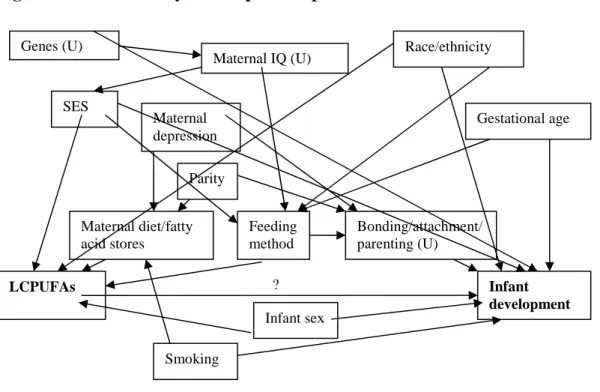
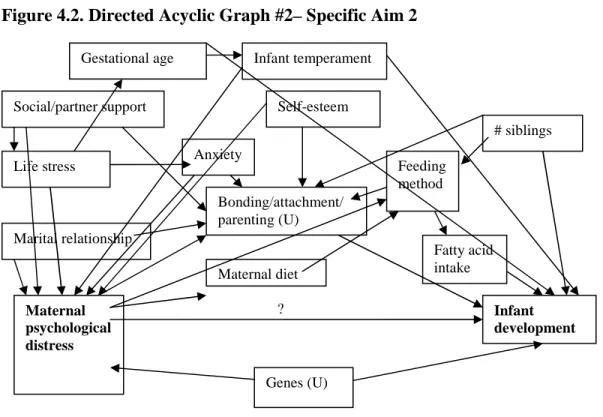
2. Directed acyclic graphs……….. 60
V. RESULTS – Specific Aim 1 – Long-chain polyunsaturated fatty acids in breast milk and formula and infant cognitive development………...…... 64
a. Introduction……….. 64
b. Methods……….... 66
ii. Exposure measurement..…...………... 67
iii. Outcome measurement…...………...………... 70
iv. Covariate measurement...………...………... 70
v. Statistical analysis…...………...………... 71
c. Results………... 72
d. Discussion………... 75
e. Conclusion………... 80
VI. RESULTS – Specific Aim 2 – A prospective study of maternal anxiety, perceived stress, and depressive symptoms in relation to infant cognitive development………...………... 86
a. Introduction……….. 86
b. Methods……….... 87
i. Study population…………...………... 87
ii. Data collection.…...………... 88
iii. Statistical analysis…...………...………... 90
c. Results………... 92
d. Discussion………... 95
e. Conclusion………... 98
VII. RESULTS – Specific Aim 3 – Perinatal depressive symptoms and the concentration of docosahexaenoic acid in breast milk………... 104
a. Introduction……….. 104
b. Methods……….... 105
i. Study population…………...………... 105
iii. Depressive symptoms..………...………... 107
iv. Covariate measurement.………...………... 108
v. Statistical analysis..………...………... 108
c. Results………... 109
d. Discussion………... 110
e. Conclusion………... 113
VIII. CONCLUSIONS……….…..……... 117
a. Overview……….. 117
b. Strengths and limitations……….. 118
i. LCPUFA exposure measurement..………. 118
ii. Outcome measurement – infant development………... 120
iii. Study design and study population..………...………... 121
c. Implications……….. 122
d. Directions for future research………... 123
APPENDICES a. Appendix 1. DHA and AA content of common infant formulas in powder form, 2002-2006………...……….. 125
b. Appendix 2. Participants for the present study from the PIN, PIN Postpartum, and PIN Babies Studies, 2002-2006………... 126
LIST OF TABLES
Table
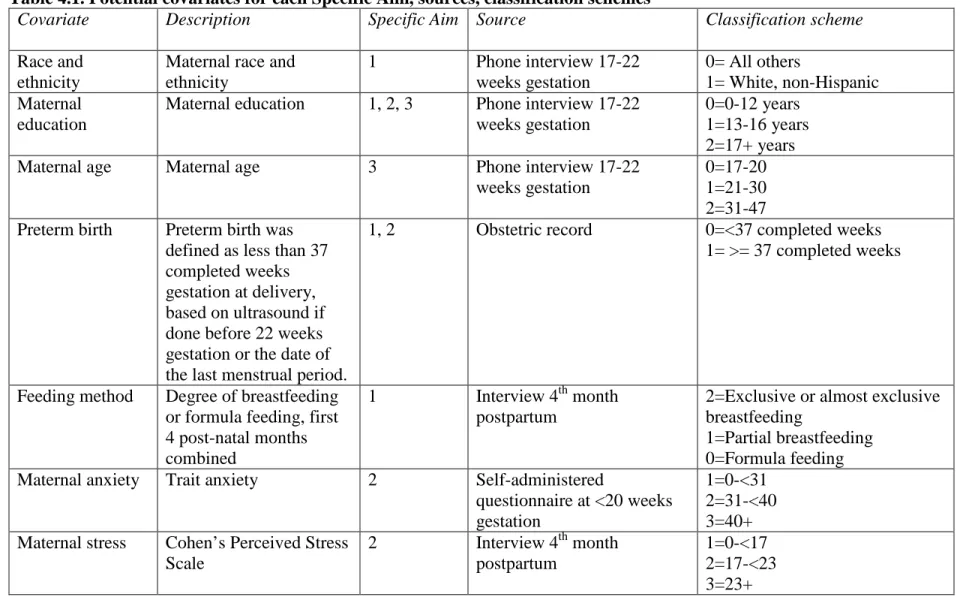
2.1. Previous studies of LCPUFA supplementation and infant development...16 2.2. Previous studies of breastfeeding and infant development………...20 2.3. Previous studies of LCPUFA supplementation in pregnant and lactating women and infant development...24 2.4. Previous studies of maternal depressive symptoms, anxiety, and stress and infant development...34 2.5. Previous Observational Studies of Perinatal Depressive Symptoms and DHA Status...41 4.1. Potential covariates for each Specific Aim, sources, and classification
schemes………57 5.1. Infant feeding characteristics in the PIN Babies Study, 2002-2006...81 5.2. Characteristics of Infants in the PIN Babies Study and Associations with Breast Milk DHA and AA Concentrations, Feeding Method, and Mullen Scales of Early Learning Composite Score, 2002-2006...82 5.3. Association between feeding method for the first four postnatal months and scores on the Mullen Scales of Early Learning, PIN Babies study, 2002-2006...83 5.4. Association between DHA, AA in breast milk and scores on the Mullen Scales of Early Learning among infants exclusively breastfed (n=183) the first 4 postnatal months, PIN Babies Study, 2002-2006...84 5.5. Association between DHA, AA in breast milk and infant formula weighted by feeding method for the first four postnatal months and scores on the Mullen Scales of Early Learning, PIN Babies Study, 2002-2006...85 6.1. Characteristics of mothers and infants in the Pregnancy, Infection, and Nutrition (PIN), PIN Postpartum and PIN Babies Studies and associations with maternal
depressive symptoms, trait anxiety, and perceived stress, 2002-2006...99 6.2. Results of linear regression models for the association between maternal trait anxiety score and scores on the Mullen Scales of Early Learning: Pregnancy, Infection, and Nutrition (PIN), PIN Postpartum and PIN Babies Studies,
6.3. Results of linear regression models for the association between maternal
depressive symptoms and scores on the Mullen Scales of Early Learning: Pregnancy, Infection, and Nutrition (PIN), PIN Postpartum and PIN Babies Studies,
2002-2006………....102 6.4. Results of linear regression models for the association between maternal
perceived stress score in the fourth postpartum month and scores on the Mullen Scales of Early Learning: Pregnancy, Infection, and Nutrition (PIN), PIN Postpartum and PIN Babies Studies, 2002-2006………..103 7.1. Characteristics of Women in the PIN Postpartum Study and Associations with Depressive Symptoms and Breast Milk DHA Concentration, 2002-2006...114 7.2. Breast milk fatty acid concentration (logDHA) by depressive symptoms
LIST OF FIGURES
Figure
2.1. DHA accretion in the fetal and infant brain ………...………8
3.1. Conceptual Model for Each Specific Aim and the Hypothesized Relationships Between the Factors...44
4.1. Directed Acyclic Graph #1– Specific Aim 1...61
4.2. Directed Acyclic Graph #1– Specific Aim 2...62
4.3. Directed Acyclic Graph #1– Specific Aim 3...63
ABBREVIATIONS
AA arachidonic acid
AIMS Alberta Infant Motor Scale ALA α-linoleic acid
BMI body mass index CAT Clinical Adaptive Test
CES-D Centers for Epidemiologic Studies Depression Scale CLAMS Clinical Linguistic and Auditory Milestone Scale DHA docosahexaenoic acid
EPA eicosapentaenoic acid
EPDS Edinburgh Postnatal Depression Scale ERG electroretinographic
FA fatty acid
FDA Food and Drug Administration FFQ Food frequency questionnaire
GM General Movements
LCPUFA long-chain polyunsaturated fatty acid LA linoleic acid
MDI Mental Development Index
n-6 omega-6
n-3 omega-3
PDI Psychomotor Development Index
CHAPTER 1
INTRODUCTION
Healthy neurodevelopment during gestation and infancy can provide a foundation for positive behavioral and cognitive outcomes later in childhood and beyond. Infants who are born at term and at a healthy weight, unexposed to substances like tobacco and alcohol, to a mother with a healthy diet, and into a supportive home environment are likely to see these advantages reflected in their intelligence and behavior, school performance, and mental health later in life.1-6 Meanwhile, infants born without these advantages may not attain their full developmental potential. Identifying and better understanding the factors that promote or impede healthy development during gestation and infancy can help inform obstetric and pediatric practice as well as public health policy to optimize outcomes.
The particular role of certain dietary long-chain polyunsaturated fatty acids (LCPUFAs) in healthy brain development has been of interest for several decades. Fatty acids are important constituents of cell membranes, and LCPUFAs accumulate in large concentration in the developing brain, particularly in the gray matter (especially the synaptic membranes) and in the rod photoreceptors of the retina.7-10 Docosahexaenoic acid (DHA) has been of primary interest for these reasons. DHA and other LCPUFAs like arachidonic acid (AA) are present in human breast milk and are also added to enhance some
development has been suggested but remains uncertain as well.16-19 Lack of clear
associations may be because of the variation in the type of formulas or supplements fed to participants or differences in the outcome measurements used; also, many previous studies have been hampered by sample size constraints, limited length of follow-up, or poor control of confounding. Most studies in this area have been feeding or supplementation trials, which have the advantage of a randomized design but may have limited generalizability.
Observational studies have been challenged by issues of confounding since choices about breastfeeding and formula feeding are intertwined with factors like socioeconomic status. Improved understanding of the role of LCPUFAs in development could help refine guidance about infant feeding practices and the content of infant formulas. The present study will examine the association between feeding method, infant exposure to DHA and AA during the first 4 months of life and developmental outcomes at 12 months of age, using detailed
information about feeding patterns and breast milk content and accounting for key confounders.
Depression affects between 6 and 17 percent of women at some point during their lifetime.20-22 The life stages corresponding to pregnancy and new motherhood may be particularly susceptible periods; postpartum depression affects up to 19 percent of new mothers, and an estimated 12 to 18 percent of women are depressed during pregnancy.23, 24 Anxiety, stress, and depressive symptoms are inter-related phenomena; women who perceive their circumstances as highly stressful are also likely to experience more depressive
with mother-child interaction, with consequences for infant temperament and cognition.36-39 However, few studies have reported negative effects as early as infancy, and those results have been inconsistent.29, 40, 41
Additionally, depressed adults have been shown to have lower circulating levels of DHA, and depressed women may have inadequate supplies of fatty acids to pass
transplacentally to their fetus or to feed them via breast milk.42-44 The present study will explore the association between maternal depressive symptoms, trait anxiety, and perceived stress during pregnancy and postpartum and infant developmental outcomes at 12 months of age. Whether women with elevated depressive symptoms have lower concentrations of DHA in their breastmilk will also be examined.
The present study is an opportunity to address questions about the role of LCPUFA exposure and maternal psychological health in infant development. Women and their
children (n=358 children) who were followed prospectively from early pregnancy to one year of age and completed assessments of maternal depressive symptoms, trait anxiety, and
perceived stress; infant development; and infant feeding practices will be included in the present study. The study has several advantages over previous research. First, no other observational studies of infant development have incorporated detailed information about the fatty acid content of both breast milk and infant formula (both formulas with LCPUFAs added and those without LCPUFAs). Second, few studies assess women for depressive symptoms during pregnancy and postpartum, and this study assessed depressive symptoms at three time points. Third, this study uses the Mullen, an assessment of multiple
CHAPTER 2
REVIEW OF THE LITERATURE
Introduction
For several decades intense research efforts have been placed on uncovering the factors that underlie healthy development of the human brain during gestation and infancy. Likewise substantial effort has gone toward identifying exposures that are harmful to
neurodevelopment with the goal of eliminating those exposures. It is clear that children who experience a healthy start to life and live in a nurturing early environment are more likely to achieve educationally, be productive adults, bear healthy children themselves, and live free of mental illness.
shown to be harmful to the developing brain. For instance, during the third trimester, fetal exposure to alcohol has been associated with cerebral growth restriction and neuronal loss and exposure to lead with reduced intelligence.5, 50 From a psychosocial perspective, it is apparent from studies like the Infant Health and Development Program that positive influences like presence of caregivers and interventions like home visiting during infancy result in better cognitive and behavioral outcomes.2, 51
Long-chain polyunsaturated fatty acids and infant development
Background and Significance
Various aspects of diet play important roles in brain development, both during pregnancy and in infancy. Appropriate maternal weight gain during pregnancy has been shown to be important for fetal growth which is directly related to brain development.52 Iron deficiency during pregnancy and in childhood has been shown to adversely effect behavior in childhood.53-55 And, inadequate supplies of choline and folate during fetal development can result in neural tube defects.56, 57 Iodine seems important for cognition and motor
development in childhood.58 Over the past two decades much research has focused on the role of dietary omega-6 (n-6) and omega-3 (n-3) polyunsaturated fatty acids in infant neurodevelopment. Some members of these classes of fatty acids can be produced
endogenously, but dietary sources are essential for certain fatty acids. Linoleic acid (LA) and α-linoleic acid (ALA) are the predominant forms present in the human diet and are
group of fatty acids known as LCPUFAs because of their structure consisting of more than 18 carbon atoms.49, 59 DHA and AA are themselves present in a range of food sources as well as produced endogenously from ALA and LA.49 DHA is found in abundance in seafood like atlantic salmon, pacific cod, and tuna and also in certain oils and nuts; AA is found particularly in egg yolks and animal fats and organ meats.60, 61 Human breast milk also contains DHA and AA, and many infant formulas are enhanced with DHA and AA.62-65
In the human body, LCPUFAs play a number of roles including as components of membrane phospholipids and as precursors of prostaglandins, thromboxanes, and
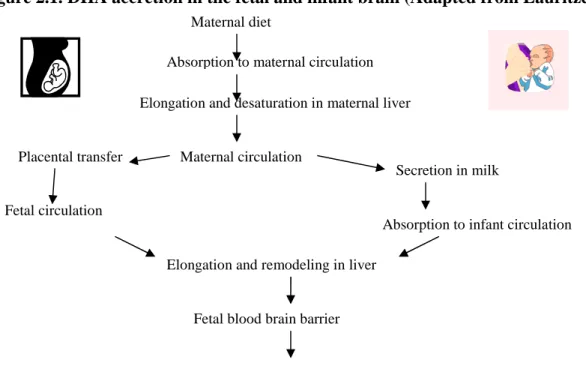
Figure 2.1. DHA accretion in the fetal and infant brain (Adapted from Lauritzen 49)
During gestation the fetal liver and adipose tissues store DHA, to provide a postnatal source for ongoing brain development.70, 71 Thus, the main reason why infants born preterm might require more dietary DHA than term infants is because they have lower internal stores to draw from.49 Lauritzen et al. estimates the difference in the DHA stores of an infant born at 30 weeks versus a term infant to be 4.5 g DHA.49 Clandinin et al. estimated that term infants have approximately 3.6 grams of total fatty acids in total brain tissue at birth, while preterm infants have an average of 1.1 grams.70 Both preterm and term infants can transform LA to AA and ALA to DHA.72 However, rates of transformation vary across individual infants and preterm infants may be unable to acquire or produce enough DHA and AA during infancy to make up for their deficit.73, 74
Several factors affect the amount of LCPUFAs that the developing fetus obtains via the placenta or breast milk, and this may affect the amount of LCPUFAs available to the
Maternal diet
Absorption to maternal circulation Elongation and desaturation in maternal liver
Maternal circulation Placental transfer
Secretion in milk Fetal circulation
Absorption to infant circulation Elongation and remodeling in liver
Fetal blood brain barrier
developing brain. First, the third trimester of pregnancy generally corresponds to a natural increase in the amount of circulating fatty acids so more DHA is available during the period of rapid brain development. Second, birth order plays a role. Maternal stores of DHA are not completely replenished between pregnancies, so later children may receive less DHA than first births.75 While internal stores of DHA can help fuel postnatal brain development, dietary sources of DHA are likely the larger source for the infant.73 Human breast milk contains DHA in varying amounts depending on maternal diet, smoking, body mass index (BMI) and weight gain, parity, duration of lactation, adipose stores, and hepatic metabolism of fatty acids. AA levels tend to be more consistent than DHA levels.73 Estimates of DHA concentration in the breast milk of women from the U.S. range from 0.06 to 0.29 percent of total fatty acids (FA%), and are lower on average than for other populations with high
seafood intake.62, 63 For instance, Idota et al. estimated the DHA concentration in breast milk from a sample of Japanese women to be 1.00 FA%, and Jørgensen et al. found the
is in contrast to a few older studies that suggested a possible decrease over time, but these studies relied on samples collected at fewer time points.82, 83 Among women who smoke during lactation, breast milk LCPUFA levels tend to be lower than for non-smoking women.84 Maternal BMI and weight gain during pregnancy are also positively associated with the concentration of fatty acids in breast milk.85, 86 Maternal hepatic activity also contributes to breast milk fatty acid concentration, since the amount in breast milk exceeds the amount found in adipose stores and diet combined.49
Infant formula manufacturers have strived to produce formulas as similar as possible to breast milk in how infants digest them and in their composition.87 Current
recommendations for the content of essential fatty acids for infant formulas vary. The U.S. Food and Drug Administration (FDA) issued nutrient requirements in 1985 including a requirement for at least 2.7 percent of total fatty acids to be from LA.88 The FDA convened an expert panel via the Life Sciences Research Office that provided recommendations for at least 8 percent of total fatty acids from LA, 1.75 percent from ALA, and a LA to ALA ratio of greater than 6 but less than 16.89 The 1991 report from the European Society for
Paediatric Gastroenterology and Nutrition contained recommendations for formula LA content of 4.5 percent up to 10.8 percent.90 There is no consensus about the necessity of adding LCPUFAs to formula products. However, a workshop involving many of the leading investigators in this field recommended that formulas for preterm infants contain 0.35 FA% as DHA and 0.4 FA% as AA, 0.2 FA% as DHA and 0.35 FA% as AA for term infants.91 In 2002, the first infant formula product with DHA and AA added became available to
1990s that suggested neurodevelopmental benefits of LCPUFAs were influential in
manufacturers’ decisions to add DHA and AA to many of their products. Most of the new formulas were based on existing products but with DHA and AA added, and in most cases both versions co-existed on the market for several years. By 2007, many infant formulas were available in the enhanced version only. The amount of DHA and AA added varies slightly by manufacturer (Appendix 1).
Until formulas were modified to contain DHA and AA, formula-fed infants obtained DHA and AA by metabolizing LA and ALA.94 Studies based on postmortem examinations of formula or breastfed infants found that breastfed infants had a higher proportion of cerebral cortex fatty acids as DHA than infants fed formula with no added DHA and AA.94 Also, the concentration of DHA in the brain increased across infancy for the breastfed infants but was constant for infants fed traditional formulas, suggesting that without a dietary source of DHA, the infant is not able to meet the needs of its rapidly developing brain.94 However, DHA concentrations in the infant retina did not vary between the groups nor did AA
noted differences in LCPUFA concentrations in various infant tissues when comparing breastfed to formula fed infants, there remains uncertainty about whether differences in daily functioning (e.g., cognition, motor skills) result.
Critical Review of the Literature
Numerous studies have examined associations between various aspects of
breastfeeding or LCPUFA supplementation and visual development, cognition and behavior ever since the first report by Hoefer and Hardy in 1929.97 Much of the evidence for a beneficial effect on neurodevelopment comes from studies comparing preterm infants fed formulas containing LCPUFAs to infants fed a control formula or breastfed.11, 12, 98 Many of these studies found a positive association between LCPUFA formulas or breast milk and plasma phospholipid or red blood cell DHA content and performance on tests of visual acuity. Faldella et al. compared infants who received a formula with LCPUFAs to infants who received a traditional formula for preterm infants and infants who were breastfed.98 They found that infants received the traditional formula lagged in the development of visual evoked potentials (VEPs), a measure of optic and brain visual processing maturation.98 A study by Uauy et al. measured electroretinographic (ERG) responses in very low birthweight infants to assess retinal maturity. The infants were assigned to either human milk, formula low in n-3 fatty acids, formula with ALA, or formula with ALA and marine oils.99 They found that rod function was similar for the infants who received the formula containing DHA from marine oils or the human milk, and the other infants showed less well-developed
development between infants fed human milk and infants fed formula containing marine oils.11 Infants fed a traditional LA-containing formula performed the worst, while infants on a formula with ALA and LA performed in the intermediate range.11 In similar work led by Carlson, 33 preterm infants fed a marine-oil supplemented formula containing
eicosapentaenoic acid (EPA), a LCPUFA, demonstrated better visual acuity as measured by the Teller Acuity Card test up until at least 6 months of age as compared to 34 infants on a traditional formula.12 However, no statistically significant differences were detected at subsequent ages.12 Also, it was found that the marine oil formula impeded infant growth and AA status, possibly due to the presence of EPA.74, 100 The DHA-formula fed infants had better visual acuity at term and 2 months (but not beyond 4 months) as measured by the Teller Acuity Card test.13 All of these studies were limited in size to approximately 10 to 35 infants per experimental group, but all found some positive effects of DHA supplementation on visual development of preterm infants, even if the effect was transient.
A number of other studies found no difference between supplemented and
unsupplemented infants. These include a study by Innis et al. that employed Teller cards at 2 and 4 months.14 A study by O’Connor et al. found no effect on acuity using Teller cards at 2, 4 and 6 months, but did see an advantage using swept-parameter VEP at 6 months.15
A common finding for some of these studies is that effects seen at very young ages are no longer seen beyond 4 months of age.12, 13 It seems that LCPUFAs may accelerate very early visual development but unexposed infants eventually catch up. One outstanding
functioning. Further studies have attempted to answer this question by following children into later infancy and assessing global development.
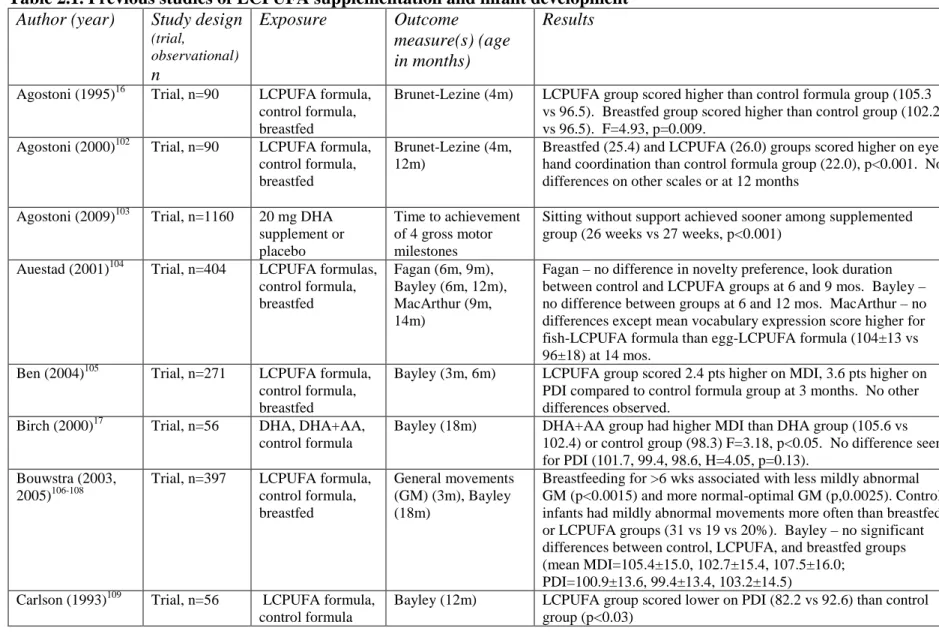
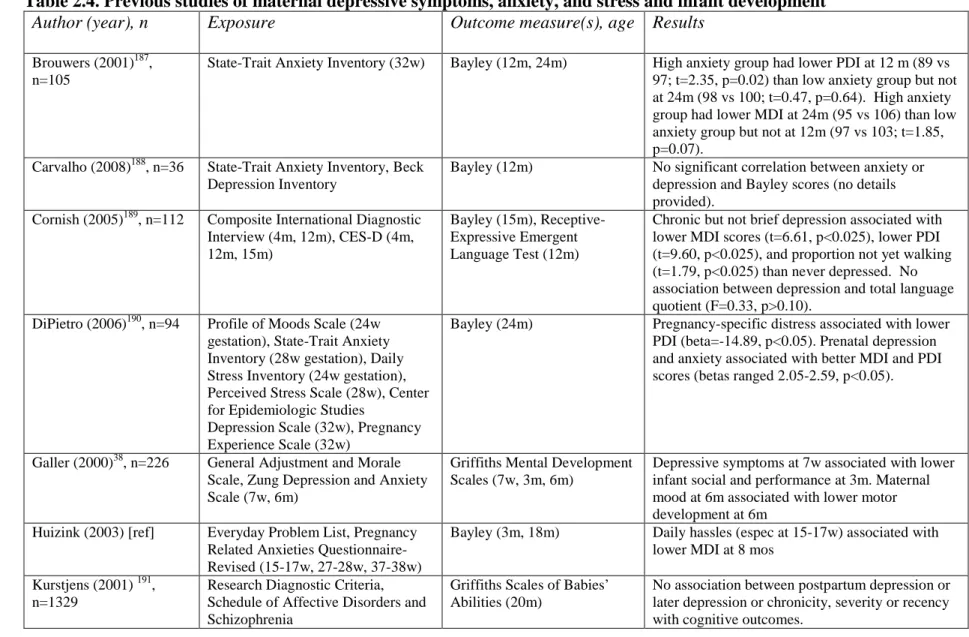
Tables 2.1-2.3 include studies from developed countries that assessed cognition (including language development), visual development (except acuity) or motor skills in children 18 months of age or younger. This includes randomized and observational studies involving infants born at term or preterm.
Researchers have taken several approaches to addressing the question of whether infants benefit from either breastfeeding or LCPUFA supplementation in terms of development of cognitive, visual or motor skills. A number of studies have employed randomized designs while others have been observational. Based on early indications that preterm infants might benefit more than term infants from breastfeeding or LCPUFA supplementation, some studies have continued to study preterm infants. Others have
attempted to detect effects in term infants. Meanwhile, a small number of studies have tested supplements in pregnant or lactating women and looked for effects in their breastfed
children.
1. Randomized studies
1
6
Table 2.1. Previous studies of LCPUFA supplementation and infant development Author (year) Study design
(trial, observational) n
Exposure Outcome
measure(s) (age in months)
Results
Agostoni (1995)16 Trial, n=90 LCPUFA formula, control formula, breastfed
Brunet-Lezine (4m) LCPUFA group scored higher than control formula group (105.3 vs 96.5). Breastfed group scored higher than control group (102.2 vs 96.5). F=4.93, p=0.009.
Agostoni (2000)102 Trial, n=90 LCPUFA formula, control formula, breastfed
Brunet-Lezine (4m, 12m)
Breastfed (25.4) and LCPUFA (26.0) groups scored higher on eye-hand coordination than control formula group (22.0), p<0.001. No differences on other scales or at 12 months
Agostoni (2009)103 Trial, n=1160 20 mg DHA supplement or placebo
Time to achievement of 4 gross motor milestones
Sitting without support achieved sooner among supplemented group (26 weeks vs 27 weeks, p<0.001)
Auestad (2001)104 Trial, n=404 LCPUFA formulas, control formula, breastfed
Fagan (6m, 9m), Bayley (6m, 12m), MacArthur (9m, 14m)
Fagan – no difference in novelty preference, look duration between control and LCPUFA groups at 6 and 9 mos. Bayley – no difference between groups at 6 and 12 mos. MacArthur – no differences except mean vocabulary expression score higher for fish-LCPUFA formula than egg-LCPUFA formula (104±13 vs 96±18) at 14 mos.
Ben (2004)105 Trial, n=271 LCPUFA formula, control formula, breastfed
Bayley (3m, 6m) LCPUFA group scored 2.4 pts higher on MDI, 3.6 pts higher on PDI compared to control formula group at 3 months. No other differences observed.
Birch (2000)17 Trial, n=56 DHA, DHA+AA, control formula
Bayley (18m) DHA+AA group had higher MDI than DHA group (105.6 vs 102.4) or control group (98.3) F=3.18, p<0.05. No difference seen for PDI (101.7, 99.4, 98.6, H=4.05, p=0.13).
Bouwstra (2003, 2005)106-108
Trial, n=397 LCPUFA formula, control formula, breastfed
General movements (GM) (3m), Bayley (18m)
Breastfeeding for >6 wks associated with less mildly abnormal GM (p<0.0015) and more normal-optimal GM (p,0.0025). Control infants had mildly abnormal movements more often than breastfed or LCPUFA groups (31 vs 19 vs 20%). Bayley – no significant differences between control, LCPUFA, and breastfed groups (mean MDI=105.4±15.0, 102.7±15.4, 107.5±16.0;
PDI=100.9±13.6, 99.4±13.4, 103.2±14.5) Carlson (1993)109 Trial, n=56 LCPUFA formula,
control formula
1
7
Clandinin (2005)110 Trial, n=361 LCPUFA formula (DHA, AA), LCPUFA formula (plus EPA), control formula
Bayley (18m) LCPUFA groups 6-10 points higher on MDI (p≈0.05) 6 points on PDI than controls (p<0.05)
Fang (2005)111 Trial, n=27 LCPUFA formula, control formula
Bayley (6m, 12m) LCPUFA group scored higher on MDI (mean=96.1±8.6) then control group (91.7±10.4) at 6 mos. And at 12 mos (98.7±80, 90.5±6.9). For PDI at 6 mos (102.2±10.5, 95.4±13.2) and 12 mos (98.0±5.8, 86.7±11.1). Repeated measures ANOVA for MDI p=0.02, PDI p=0.008.
Fewtrell (2002)112 Trial, n=240 LCPUFA formula, control formula, breastfed
Knobloch (9m), Bayley (18m)
No difference between LCPUFA and control groups on Knobloch (1.5 pts higher for LCPUFA group, CI: -1.8-4.7) or Bayley MDI (control group 2.6 pts lower, CI: 7.392.28) or PDI (2.1 pts, CI: -6.8-2.67). Breastfed group performed better on Knobloch than formula groups (5.7 to 7.2 pts higher, p<0.005) and on Bayley MDI (8.9 to 11.5 pts, p<0.005) and PDI (4.6-6.6 pts, p<0.005) Fewtrell (2004)113 Trial, n=238 LCPUFA formula,
control formula
Bayley (18m) No difference between LCPUFA and control group on Bayley except for boys on MDI (control group 5.7 pts lower, CI: 0.3-11.1) Lucas (1999)18 Trial, n=241 to
250
LCPUFA formula, control formula
Bayley (18m), Knobloch (9m)
Bayley – no difference between LCPUFA group and control group (difference in MDI=0.5, CI: -2.7-3.8; PDI=0.6, CI: -1.8-3.0). Knobloch – no difference overall (difference=0.5, CI: -1.6-2.7) or on subscales
Makrides (2000)19 Trial, n=68 DHA, DHA+AA, control formula, breastfed
Bayley (12m) No differences between breastfed (mean MDI=114+-13, mean PDI=101+-21) and DHA+AA group (MDI=108+-16, PDI=103+-22) or any other group
Makrides (2009)114 Trial, n=657 High DHA formula, standard DHA formula
1
8
O’Connor (2001, 2003)15, 115
2001 – trial, 2003 - cohort from RCT, n=470
2001 – LCPUFA fish oil formula, LCPUFA egg formula, breast milk, control formula. 2003 - predominantly breast milk, ≥50%, <50%,
predominantly formula fed
2001 - Fagan (6m, 9m), Bayley (12m), MacArthur (9m, 14m); 2003 - Bayley (12m)
Fagan – LCPUFA egg group scored higher (59.4±7.7) than LCPUFA fish group (57.0±7.5) and control group (57.5±7.4) on novelty preference (6), no difference at 9 mos. Bayley - No difference between groups in trial. Increasing breastfeeding duration associated with higher MDI at 12 mos. MacArthur – no differences at 9 mos. in the trial, LCPUFA infants had better Vocabulary Comprehension than control infants (14) and increasing duration associated with higher Vocabulary Comphrension (9)
Scott (1998)116 Trial, n=197 DHA formula, DHA+AA formula, control formula, breastfed
Bayley (12m), MacArthur (14m)
Bayley – no difference, Vocabulary Comprehension lower in DHA group than breastfed (92 vs 101, p=0.017), Vocabulary Production lower in DHA group than control formula group (91 vs 101, p=0.052), no differences between DHA+AA group and breastfed group
Van Wezel-Meijler (2002)117
Trial, n=42 LCPUFA formula, control formula
Bayley (3m, 6m, 12m)
No difference in Bayley MDI or PDI at any time point Werkman (1996),
Carlson (1996)118, 119
Trial, n=51-67 DHA formula, control formula
Fagan (6.5m, 9m, 12m)
No difference in novelty preference but greater number of looks and shorter duration in DHA infants
Willats (1998)120 Trial, n=44 LCPUFA formula, control formula
Infant Planning Test (10m)
2. Observational studies
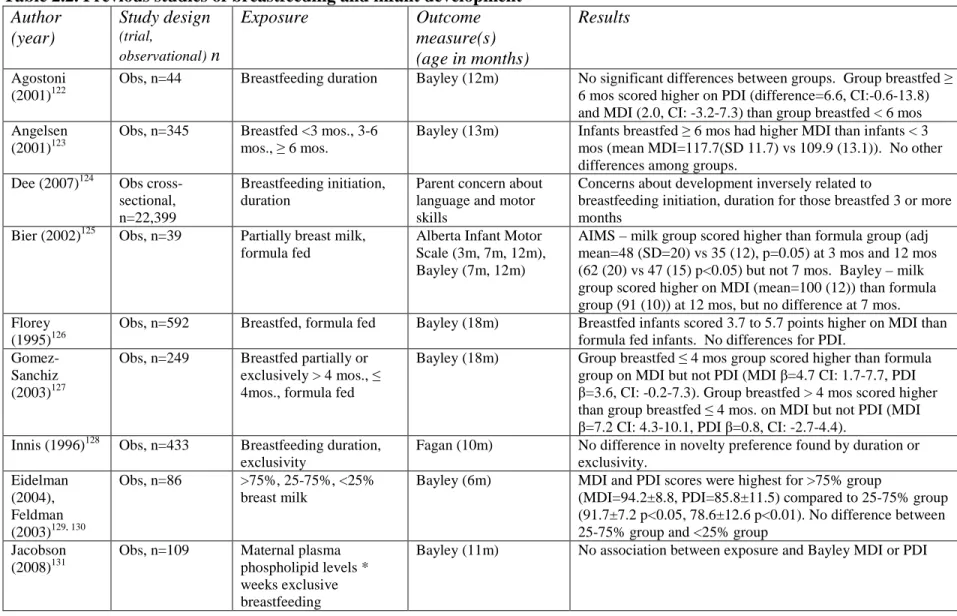
Twenty-one observational studies are detailed in Table 2.2. These studies varied widely in how they defined their exposure groups. Some compared a breastfed group to formula fed groups, while others made comparisons among breastfed infants only. Outcome measures likewise varied widely; 15 studies used the Bayley, 1 used the Denver
Developmental Screening Test, 1 the Fagan, 1 used the Knobloch, 1 used the Alberta Infant Motor Scale, 1 used a measure of parent concern about the developmental progress of their child, 1 used a neurobehavioral score, and 1 used a customized measure of gross and fine motor skills and language. Because of the varying definitions of the exposure groups and choice of outcome measures, it is difficult to compare results across studies. The largest of these studies found that the odds of gross motor delay decreased with increasing duration of breastfeeding in a representative sample of infants from the United Kingdom, after adjusting for maternal age, birth weight, gestational age, maternal smoking, social class, maternal education, maternal employment, single parenthood, Malaise Inventory, postnatal
attachment, parenting views, number of siblings, child care, and hours cared for by others 121. Many of the other studies found some benefit to longer breastfeeding. However, the studies varied widely in the ability to control for important confounders, and the results are
2
0
Table 2.2. Previous studies of breastfeeding and infant development Author
(year)
Study design (trial,
observational) n
Exposure Outcome
measure(s) (age in months)
Results
Agostoni (2001)122
Obs, n=44 Breastfeeding duration Bayley (12m) No significant differences between groups. Group breastfed ≥ 6 mos scored higher on PDI (difference=6.6, CI:-0.6-13.8) and MDI (2.0, CI: -3.2-7.3) than group breastfed < 6 mos Angelsen
(2001)123
Obs, n=345 Breastfed <3 mos., 3-6 mos., ≥ 6 mos.
Bayley (13m) Infants breastfed ≥ 6 mos had higher MDI than infants < 3 mos (mean MDI=117.7(SD 11.7) vs 109.9 (13.1)). No other differences among groups.
Dee (2007)124 Obs cross-sectional, n=22,399
Breastfeeding initiation, duration
Parent concern about language and motor skills
Concerns about development inversely related to
breastfeeding initiation, duration for those breastfed 3 or more months
Bier (2002)125 Obs, n=39 Partially breast milk, formula fed
Alberta Infant Motor Scale (3m, 7m, 12m), Bayley (7m, 12m)
AIMS – milk group scored higher than formula group (adj mean=48 (SD=20) vs 35 (12), p=0.05) at 3 mos and 12 mos (62 (20) vs 47 (15) p<0.05) but not 7 mos. Bayley – milk group scored higher on MDI (mean=100 (12)) than formula group (91 (10)) at 12 mos, but no difference at 7 mos. Florey
(1995)126
Obs, n=592 Breastfed, formula fed Bayley (18m) Breastfed infants scored 3.7 to 5.7 points higher on MDI than formula fed infants. No differences for PDI.
Gomez-Sanchiz (2003)127
Obs, n=249 Breastfed partially or exclusively > 4 mos., ≤ 4mos., formula fed
Bayley (18m) Group breastfed ≤ 4 mos group scored higher than formula group on MDI but not PDI (MDI β=4.7 CI: 1.7-7.7, PDI β=3.6, CI: -0.2-7.3). Group breastfed > 4 mos scored higher than group breastfed ≤ 4 mos. on MDI but not PDI (MDI β=7.2 CI: 4.3-10.1, PDI β=0.8, CI: -2.7-4.4).
Innis (1996)128 Obs, n=433 Breastfeeding duration, exclusivity
Fagan (10m) No difference in novelty preference found by duration or exclusivity.
Eidelman (2004), Feldman (2003)129, 130
Obs, n=86 >75%, 25-75%, <25% breast milk
Bayley (6m) MDI and PDI scores were highest for >75% group
(MDI=94.2±8.8, PDI=85.8±11.5) compared to 25-75% group (91.7±7.2 p<0.05, 78.6±12.6 p<0.01). No difference between 25-75% group and <25% group
Jacobson (2008)131
Obs, n=109 Maternal plasma phospholipid levels * weeks exclusive breastfeeding
2
1
Lucas (1994)132
Trial, n=114 Donor breast milk, formula fed
Bayley (18m) Breast milk group scored lower than formula group on MDI (0.5 pts, CI: -6.2-7.1) and PDI (1.2 pts, CI: -4.4-6.8) Lucas
(1989)133
Trial, n=502 Donor breast milk, formula fed
Knobloch (9m) Formula group scored higher on Knobloch than donor breast milk group (3.0 pts, CI: 0.5-5.6).
Morley (1988)134
Obs, n=771 Breastfed, formula fed Bayley (18m) Breast milk group scored higher on MDI (7.9 pts, p<0.01) and PDI (6.8 pts, p>0.001).
Pinelli (2003)135 Cohort from RCT, n=148 Exclusively breastfed, partially breastfed, formula fed
Bayley (6m, 12m) Infants >80% breastfed scored 1 points higher on MDI and PDI at 6 mos. and 1 point higher on PDI and MDI at 12 mos. (all p<0.05)
Rogan (1993)136
Obs, n=855 Breastfed ≥ 20 wks + weaned ≥ 50 wks, 5-19 or 20 wks + weaned 19-49 wks, ≤ 4 or 5-19 wks + weaned 9-19 wks, ≤ 4 wks + weaned ≤ 9 wks, formula fed
Bayley (6, 12, 18) No significant differences at 6, 12, 18 mos
Sacker (2006)121
Obs, n=14,660 Breastfeeding duration, exclusivity
Denver (9m) Odds of gross motor delay lower for prolonged exclusive breastfed group vs never breastfed group (OR=0.67, CI: 0.54-0.84), fine motor delay (OR=0.93, CI: 0.74-1.16)
Strain (2008)137
Obs, n=229 Maternal serum fatty acids
Bayley (9m) PDI positively associated with total n-3 levels.(beta=28.26, p=0.03)
Vohr (2006)138 Prospective cohort from RCT, n=1,035
Some breast milk, no breast milk
Bayley (18m) Breast milk group scored higher on MDI and PDI (MDI=79.9±18, PDI=84.6±19) than no breast milk group (75.8±16, 81.3±17) (p=0.07, 0.02)
Morrow-Tlucak (1988)139
Obs, n=219 Breastfed >4 mos, ≤ 4 mos, formula fed
Bayley (6m, 12m) Breastfeeding duration positively associated with Bayley score at 12 mos. (>4 mos: 121.3, ≤4 mos: 116.0. formula: 111.2, F=3.24, p=0.04), No significant differences at 6 mos. (114.0, 113.1, 110.8, F=0.55, NS).
Ounsted (1988)140
Obs, n=307 Breastfed 2, 6, 12 months, bottlefed
Neurobehavioral score (2m, 6m, 12m)
No differences at 2 mos. Breastfed babies had higher neurobehavioral scores at 6 mos (F=4.5, p<0.05) and 12 mos (4.3, p<0.05). Breastfed babies had higher motor scores at 12 mos (F=4.8, p<0.01) but not social scores (F=1.5).
Temboury (1994)141
Obs, n=229 Breastfed ≤ 3 mos, formula fed or breastfed ≤ 1 mo
2
2
Vestergaard (1999)142
Obs, n=1656 Breastfeeding duration, exclusivity
General motor skills, fine motor skills, language (8m)
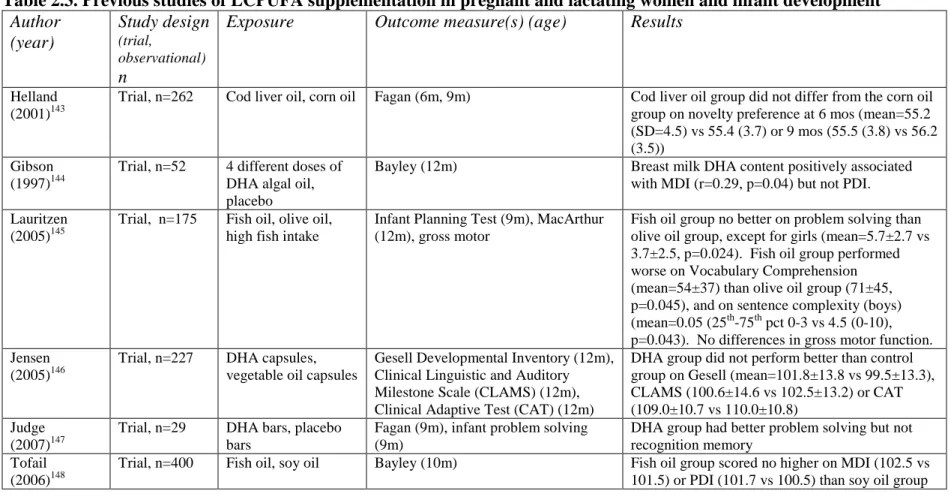
3. Maternal supplementation studies
Another way to examine the association between LCPUFA intake and infant
2
4
Table 2.3. Previous studies of LCPUFA supplementation in pregnant and lactating women and infant development Author (year) Study design (trial, observational) n
Exposure Outcome measure(s) (age) Results
Helland (2001)143
Trial, n=262 Cod liver oil, corn oil Fagan (6m, 9m) Cod liver oil group did not differ from the corn oil group on novelty preference at 6 mos (mean=55.2 (SD=4.5) vs 55.4 (3.7) or 9 mos (55.5 (3.8) vs 56.2 (3.5))
Gibson (1997)144
Trial, n=52 4 different doses of DHA algal oil, placebo
Bayley (12m) Breast milk DHA content positively associated with MDI (r=0.29, p=0.04) but not PDI. Lauritzen
(2005)145
Trial, n=175 Fish oil, olive oil, high fish intake
Infant Planning Test (9m), MacArthur (12m), gross motor
Fish oil group no better on problem solving than olive oil group, except for girls (mean=5.7±2.7 vs 3.7±2.5, p=0.024). Fish oil group performed worse on Vocabulary Comprehension (mean=54±37) than olive oil group (71±45, p=0.045), and on sentence complexity (boys) (mean=0.05 (25th-75th pct 0-3 vs 4.5 (0-10), p=0.043). No differences in gross motor function. Jensen
(2005)146
Trial, n=227 DHA capsules, vegetable oil capsules
Gesell Developmental Inventory (12m), Clinical Linguistic and Auditory Milestone Scale (CLAMS) (12m), Clinical Adaptive Test (CAT) (12m)
DHA group did not perform better than control group on Gesell (mean=101.8±13.8 vs 99.5±13.3), CLAMS (100.6±14.6 vs 102.5±13.2) or CAT (109.0±10.7 vs 110.0±10.8)
Judge (2007)147
Trial, n=29 DHA bars, placebo bars
Fagan (9m), infant problem solving (9m)
DHA group had better problem solving but not recognition memory
Tofail (2006)148
It remains an unresolved question whether breastfeeding duration or supplementation with LCPUFAs has a beneficial effect on infant neurodevelopment, despite the large number of studies that have addressed this issue. A range of challenges confront studies in this area, including issues of study design, exposure measurement, outcome measurement, and
appropriate consideration of confounders.
Several aspects of study design may be partly responsible for the equivocal results of previous studies. One challenge for the randomized studies in particular is generalizability. The vast majority of the research on the potential benefits of LCPUFA intake has adopted a randomized design at least in part to eliminate issues of confounding. Many of these studies tested formulas that were specially developed for research purposes and not for wide
consumption. Infants who were compliant with the study protocols would have been fed exclusively the assigned formula product and not breast milk or other formulas. Also, studies that include a breastfed comparison group do not randomize infants into breastfed or
consume the supplemented formulas long enough or were not followed long enough. Given that fetuses accrue fatty acids through the placenta over a period of months during gestation and then most continue to take in fatty acids through breast milk or formula over the first weeks and months postnatally, it may not be surprising that supplement studies of short duration are unable to detect an effect.
In terms of exposure, studies have varied widely in their choice of formulas fed to study infants, leading to incomparability across studies. Formulas with low fatty acid content have been used in some studies, possibly limiting their ability to observe an effect. Also, the balance of ingredients in the formulas used can affect how much of the LCPUFAs are
available to the infant since n-3 and n-6 fatty acids compete for the same enzyme
substrates.150 Overabundance of one fatty acid can suppress production of another. As a result, the DHA content must be considered along with the content of other fatty acids when comparing studies. Previous observational studies have generally employed fairly crude measures of exposure. They have not thoroughly taken into account the wide variation in the extent to which infants are breastfed or formula fed and the differences in LCPUFA content. By extension, no previous studies have had the benefit of very detailed information about breastfeeding and formula use (formula with and without LCPUFAs) to examine
Previous studies have been challenged in terms of outcome measurement. The choice of outcome measures has varied widely across studies, so it is difficult to compare them. Studies have focused variously on mental or motor development, language development, visual attention, problem-solving, behavior, or intelligence and employed a variety of instruments to measure each. In some studies, developmental outcomes were not measured using validated and reliable instruments. Assessments of especially young infants are often not predictive of later outcomes like IQ or behavior, and some instruments are not designed to pinpoint variations within the normal range of cognition or behavior151, 152; low predictive value is one drawback of using an instrument like the Bayley Scales of Infant Development 153-155
. Another challenge is the timing of assessment. Some instruments are only valid when applied to a narrow age window, and sometimes they are administered outside that window. Also, some previous studies employed tests of global development (e.g., Bayley) which may be insensitive to specific aspects of development that may be affected by LCPUFA intake or breastfeeding.
A major challenge for previous studies has been control of confounding factors. Studies that compare breastfed children to formula-fed children are subject to criticism because of inadequate control of important confounding variables. And, this is not just a problem for the observational studies. Because it is generally considered unethical to randomize infants to breastfeeding versus formula feeding, most randomized studies only randomize within the formula fed group (to a LCPUFA formula or a control formula). Thus, those studies are subject to some of the same confounding issues as observational studies.
their composition in more ways than just the fatty acid content. For instance, human breast milk contains a variety of hormones, immunoglobulins, antibodies, antioxidants, proteins, and other substances.156 Infant formulas are designed to mimic some of these components but do not contain some of them or contain them in different form.156 It is possible that many of these substances could contribute to healthy neurodevelopment. Second, the practice of breastfeeding itself involves enhanced opportunities for mother-infant bonding, not just a transfer of nutrients to the infant. Strong bonds between mother and infant are important for optimal neurodevelopment. Therefore, an association between the LCPUFA content of breast milk and enhanced development could be explained by bonding. Third are the
potential confounding factors underlying whether and how long an infant is breastfed versus formula-fed. Whether an infant is exclusively breastfed, exclusively formula fed, or partially breastfed is determined by a number of factors, only some of which may be under the
mother’s direct control. These include attitudes about breastfeeding held by the woman and her family, counseling by health care providers, workplace policies, availability of
These factors do influence breastfeeding initiation.158, 160-162 These psychosocial factors might be associated with the development of the infant as well and so could confound the association between LCPUFA intake and infant development. And, a range of other factors (e.g., maternal diet, parity, depression) might be related to the composition of breast milk. These can confound an association between LCPUFA intake and developmental outcomes if they are associated with development as well.
Opportunities for Future Research
The limitations in previous studies leave a number of opportunities for future
research. Most previous studies of LCPUFA intake and infant neurodevelopment employed measures of visual acuity as the main outcome measures of interest. However, recent studies have focused more on measures of global development. This can help assess whether the effects observed on visual acuity translate into lasting effects on cognition, but this approach cannot ascertain whether specific aspects of development are differently affected. Studies that assessed cognitive development most often employed the Bayley Scales of Infant Development even though the Bayley is a global measure of development and has limited predictive value. No studies have examined the effect of fatty acid intake on the
development of cognitive, visual and motor development using the Mullen Scales of Early Learning (Mullen). Future studies should employ developmental measures like the Mullen that assess specific aspects of development, not global development, to help pinpoint what aspects of development may be affected.
intake or from breastfeeding. Addtionally, studies should be large enough to be able to detect an effect if one exists. Exposure measurement methods should be enhanced to account for the variability in breast milk concentrations of LCPUFAs and the variety of infant
formulas available.
These opportunities are taken by the present study (Specific Aim 1). The present study employs a prospective design and includes over 350 infants in follow-up to 12 months of age. It employs very detailed exposure measurement techniques that incorporate breast milk LCPUFA content as well as formula LCPUFA content on a month-by-month basis. Finally, the developmental exams measure a number of specific developmental domains (e.g., language, motor, cognitive development).
Maternal perinatal depressive symptoms, trait anxiety, and perceived stress and infant
development
Background and Significance
psychoemotional milestones, and women may be more susceptible to psychological distress if they lack supportive influences or are experiencing other major life stresses at the same time. Some of the strongest risk factors for elevated psychological distress during or after pregnancy include: low self-esteem, life stress, social support, marital relationship/status, history of depression, socioeconomic status, unplanned pregnancy, and infant
temperament.167
Anxiety and stress during pregnancy have been associated with more somatic complaints, low birth weight, preterm birth, and impaired infant orientation and self-regulation.168-171 The physiologic pathways that connect these have not yet been well-characterized but likely involve the interaction of cortisol and other hormones and the activity of the hypothalamic-pituitary-adrenal axis.172
A number of studies have addressed the association between maternal perinatal psychological health and infant developmental outcomes. The impetus for this area of research is the recognition that infant development is sensitive to the psychosocial environment and that these maternal symptoms may interfere with optimal care-giving. Several mechanisms could underlie this association and each is discussed below. First, common genetic factors could underlie both psychological health and abnormal
development, although research has yet to uncover any specific genetic factors. Second, depressive symptoms, anxiety or stress can serve as a direct, negative psychosocial exposure for the infant.
First, it is possible that common genetic factors underlie mood and stress responses and abnormal development. Mother and child may share particular genotypes that
identified possible genetic contributors to depression, although it is thought that
environmental factors play a larger role; thus, gene-environment interactions make research in this area challenging.173 As examples, studies of depression have focused on the
polymorphisms HTTPLR and BDNF V66M, and on a mutation for TPH2.174-176 Progress in understanding the genetic underpinnings of depressive symptoms has been disappointing; results of most studies have not been reproducible. Nevertheless, it is conceivable that genotypes that affect neurotransmitter function, for instance, could contribute to the risk of mood disorders or elevated anxiety in adulthood as well as behavior during childhood.
Second, it is possible that maternal affect and anxiety inhibit healthy bonding between mother and child which in turn inhibits healthy development. The postpartum period is marked with major life changes and stresses for the new mother, most of which are offset by the great satisfactions a new baby also brings. But some women experience difficulty with this transition due to a lack of or misplaced expectations, other stressful life events, or lack of social support.177-179 Conversely, women who exhibit many symptoms of depression are more likely to have low self-efficacy which can inhibit their ability to successfully serve in the maternal role.180, 181 In addition, a difficult or unhealthy child can exacerbate these circumstances.182, 183 Women who have trouble adapting to the maternal role may not interact optimally with their infant. Previous studies have found that mothers who were depressed or anxious tended to be more irritable and hostile, display less
Critical review of the literature
3
4
Table 2.4. Previous studies of maternal depressive symptoms, anxiety, and stress and infant development
Author (year), n Exposure Outcome measure(s), age Results
Brouwers (2001)187, n=105
State-Trait Anxiety Inventory (32w) Bayley (12m, 24m) High anxiety group had lower PDI at 12 m (89 vs 97; t=2.35, p=0.02) than low anxiety group but not at 24m (98 vs 100; t=0.47, p=0.64). High anxiety group had lower MDI at 24m (95 vs 106) than low anxiety group but not at 12m (97 vs 103; t=1.85, p=0.07).
Carvalho (2008)188, n=36 State-Trait Anxiety Inventory, Beck Depression Inventory
Bayley (12m) No significant correlation between anxiety or depression and Bayley scores (no details provided).
Cornish (2005)189, n=112 Composite International Diagnostic Interview (4m, 12m), CES-D (4m, 12m, 15m)
Bayley (15m), Receptive-Expressive Emergent Language Test (12m)
Chronic but not brief depression associated with lower MDI scores (t=6.61, p<0.025), lower PDI (t=9.60, p<0.025), and proportion not yet walking (t=1.79, p<0.025) than never depressed. No association between depression and total language quotient (F=0.33, p>0.10).
DiPietro (2006)190, n=94 Profile of Moods Scale (24w gestation), State-Trait Anxiety Inventory (28w gestation), Daily Stress Inventory (24w gestation), Perceived Stress Scale (28w), Center for Epidemiologic Studies
Depression Scale (32w), Pregnancy Experience Scale (32w)
Bayley (24m) Pregnancy-specific distress associated with lower PDI (beta=-14.89, p<0.05). Prenatal depression and anxiety associated with better MDI and PDI scores (betas ranged 2.05-2.59, p<0.05).
Galler (2000)38, n=226 General Adjustment and Morale Scale, Zung Depression and Anxiety Scale (7w, 6m)
Griffiths Mental Development Scales (7w, 3m, 6m)
Depressive symptoms at 7w associated with lower infant social and performance at 3m. Maternal mood at 6m associated with lower motor development at 6m
Huizink (2003) [ref] Everyday Problem List, Pregnancy Related Anxieties Questionnaire-Revised (15-17w, 27-28w, 37-38w)
Bayley (3m, 18m) Daily hassles (espec at 15-17w) associated with lower MDI at 8 mos
Kurstjens (2001) 191, n=1329
Research Diagnostic Criteria, Schedule of Affective Disorders and Schizophrenia
Griffiths Scales of Babies’ Abilities (20m)
3
5
Lyons-Ruth (1986)192, n=NA
Center for Epidemiologic Studies Depression Scale (between 0-12m, 18m)
Bayley (12m) CES-D associated with MDI (r=-0.32) and PDI (r=-0.30)
Murray (1993, 1996, 1999)29, 31, 40, n=59
Edinburgh Postnatal Depression Scale (6w), Research Diagnostic Criteria, Schedule of Affective Disorders and Schizophrenia (18m), psychiatric interview (2m)
Piaget object concept (9m, 18m), Reynell (18m), Bayley (18m)
Many previous studies support the conclusion that perinatal depressive symptoms negatively affect cognition in children at least up to age 7, although whether effects can be seen during infancy remains unclear. Also, it seems that chronic depressive symptoms continuing well into childhood may affect cognition concurrently, but perinatal symptoms may continue to exert a detectable effect itself as the child grows older. Another theme apparent in previous research is that depressive symptoms may interact with other
psychosocial contextual factors like socioeconomic status to produce the observed cognitive deficits. A common theme in several studies is the interaction between postpartum
depressive symptoms and infant sex; boys might be more vulnerable to the effects of postpartum depression.27, 29, 40, 191 However, large studies and more representative samples could help clarify whether this interaction is real.
In contrast with depressive symptoms which often increase and subside over time, trait anxiety is a fairly stable characteristic of the individual.193 This is in contrast to state anxiety which is situational. As a result, it is difficult to separate out the critical exposure period for trait anxiety since it may continue to affect the infant from before birth into childhood.
It is important to consider the potential confounding role of the other maternal psychological factors (trait anxiety, perceived stress, depressive symptoms) in addition to factors like infant temperament, maternal self-esteem, and presence of the father or partner in studies of maternal psychological health and infant development. Psychosocial factors like anxiety and stress have some shared biologic underpinnings with depressive symptoms. Some studies have taken a thorough look at the role of contextual factors like marital
at least part of what appears to be the long-term effect of perinatal depressive symptoms.194 Some studies also looking for long-term effects have found that the effects of perinatal depressive symptoms are mediated by attachment during infancy—those who were insecure infants tended to become children with cognitive deficits or behavioral problems.194 And, the potential effect of anxiety seems to operate through parent-child interaction.37, 38
Opportunities for Future Research
The limitations in previous research leave a number of opportunities for future research. First, new studies should focus on development during infancy to determine whether there are observable effects during this early stage and should involve a sample size large enough to be able to detect an effect if one exists. They should consider potential confounders like partner support and anxiety, which some previous studies did not consider. Another opportunity is to use developmental tests like the Mullen which examine specific aspects of development and have not been applied previously in this context. The present study employs a prospective design and measures maternal psychological health during pregnancy and postpartum and follows infants to 12 months of age. Finally, the study assesses infants using the Mullen to explore aspects of development that have not been previously examined in this context.
Perinatal depressive symptoms and docosahexaenoic acid status
Background and Significance
Depression has been associated with low levels of n-3 fatty acids, particularly DHA, in red blood cell membranes and brain orbitofrontal cortex tissue of adults.43, 44, 195
Pregnancy may exacerbate low DHA status because maternal stores of DHA are mobilized to support the rapid development of the fetal brain.49 If depressed women have lower
only recently becoming better understood; DHA and EPA are involved in neural function (phospholipase A2 activity, neurotransmitter function, regulation of enzyme activity, inflammatory response, oxidative stress, and gene expression).197 The direction of the association between fatty acid levels and depressive symptoms is debatable. It could be explained by diet (depressed individuals may consume a less healthy diet), by underlying abnormalities in how fatty acids are produced or utilized that both reduce fatty acid levels and induce depressive symptoms, by reduced synthesis or increased elimination of fatty acids among depressed individuals, or by deficiencies in fatty acid levels due to pregnancy or lactation that could trigger depressive episodes.197, 198 Ecologic studies have shown that populations with high levels of fish consumption tend to have lower rates of depressive symptoms, and within populations those with higher fish intake may be at lower risk.199-201 The fatty acid content of breast milk is correlated with the content in the maternal diet.202 Whether women who experience elevated perinatal depressive symptoms also have lower breast milk DHA levels has been examined in only one study; an ecologic study by Hibbeln found the average DHA content of breast milk to be strongly associated with national
Critical Review of the Literature
4
1
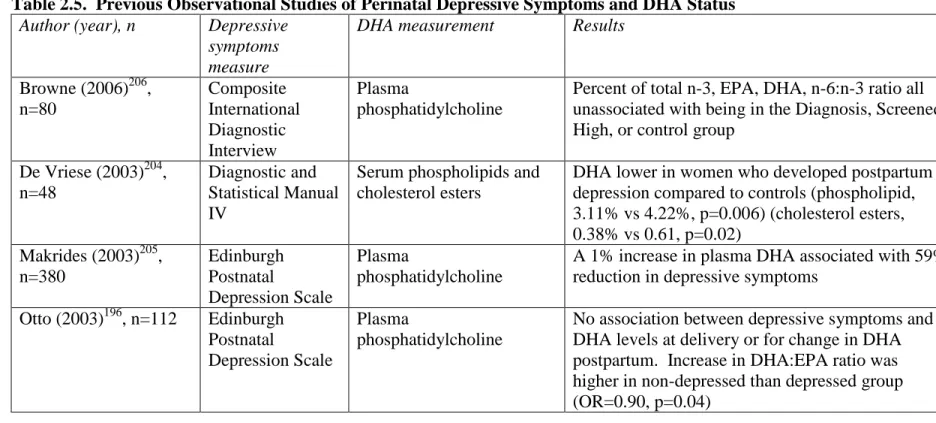
Table 2.5. Previous Observational Studies of Perinatal Depressive Symptoms and DHA Status
Author (year), n Depressive
symptoms measure
DHA measurement Results
Browne (2006)206, n=80 Composite International Diagnostic Interview Plasma phosphatidylcholine
Percent of total n-3, EPA, DHA, n-6:n-3 ratio all unassociated with being in the Diagnosis, Screened High, or control group
De Vriese (2003)204, n=48
Diagnostic and Statistical Manual IV
Serum phospholipids and cholesterol esters
DHA lower in women who developed postpartum depression compared to controls (phospholipid, 3.11% vs 4.22%, p=0.006) (cholesterol esters, 0.38% vs 0.61, p=0.02)
Makrides (2003)205, n=380 Edinburgh Postnatal Depression Scale Plasma phosphatidylcholine
A 1% increase in plasma DHA associated with 59% reduction in depressive symptoms
Otto (2003)196, n=112 Edinburgh Postnatal
Depression Scale
Plasma
phosphatidylcholine
Opportunities for Future Research
CHAPTER 3
SPECIFIC AIMS, HYPOTHESES, AND CONCEPTUAL MODEL
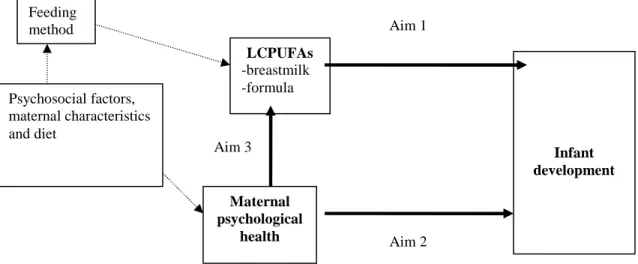
The following Specific Aims and Hypotheses build on previous research in this area and are presented with the goal of advancing understanding about the roles of LCPUFAs and maternal psychological health in infant development. The Specific Aims and their corresponding hypotheses are reflected in the Conceptual Model in Figure 3.1:
1- Examine the association between exposure to LCPUFAs, whether from breast milk or formula, and visual reception, language, and motor skills, and overall cognitive development at 12 months of age.
Hypothesis – Infants exposed to low levels of certain LCPUFAs (i.e., DHA, AA) exhibit less advanced visual reception, language, and motor skills, and overall cognitive development at 12 months of age than infants exposed to high levels. 2- Examine the association between:
a. maternal trait anxiety b. perceived stress
c. perinatal depressive symptoms
and visual reception, language, and motor skills, and overall cognitive development at 12 months of age.
months of age than infants of women who demonstrate low levels of trait anxiety, perceived stress, or depressive symptoms.
3- Examine whether women who experience elevated perinatal depressive symptoms have lower levels of DHA in their breast milk.
Hypothesis – Women who have elevated depressive symptoms have lower DHA breast milk concentrations than women with fewer depressive symptoms.
Figure 3.1. Conceptual Model for Each Specific Aim and the Hypothesized Relationships Between the Factors
LCPUFAs -breastmilk -formula
Maternal psychological
health
Infant development Feeding
method
Psychosocial factors, maternal characteristics and diet
Aim 1
CHAPTER 4
METHODS
Study Design
Participant identification
The study population is derived from the PIN Study and the offspring of a portion of the women participants (Appendix 2).45 The goal of the PIN Study was to identify factors associated with preterm birth. The goal of PIN Postpartum is to identify
modifiable behaviors associated with high gestational weight gain and postpartum weight retention. The present study employs a prospective cohort design. (However, a
component of Specific Aim 3 is cross-sectional in design.) PIN Babies focuses on child developmental outcomes in relation to the prenatal and early childhood environment.
All protocols were approved by the University of North Carolina (UNC) Biomedical Institutional Review Board; all participants provided written informed consent. The dataset is property of the University of North Carolina at Chapel Hill Carolina Population Center and is provided for analysis only in de-identified form. The University of North Carolina at Chapel Hill Public Health and Nursing Institutional Review Board and the National Institutes of Health Office of Human Subjects Research govern human subjects aspects of the present study. An exemption from full IRB review was obtained from both entities.
if they were pregnant with multiple fetuses, could not communicate in English, were under age 16, had no access to a telephone, or were intending to go elsewhere for future care or delivery. Since the present study focuses largely on the infants resulting from pregnancies of women participating in PIN and because only the infants from the third wave of PIN enrollment (PIN3) were followed, the present study includes only women from PIN3.
Women (n=1,169) were eligible for PIN Postpartum if they completed the third wave of the PIN Study, agreed to be contacted after delivery and lived in the study area. Medical constraints (n=24), inability to recontact (n=207) or schedule (n=62), and refusal (n=187) resulted in 689 women who participated in a visit scheduled in the fourth
postpartum month. The 305 women who provided a breast milk sample at this visit were eligible for the analysis pertaining to Specific Aim 3. Before the 12-month data
collection visit, 45 became pregnant again and were ineligible to continue, 62 were unreachable, 29 moved from the study area, and 20 requested to leave the study. The PIN Babies protocol began after PIN Postpartum began and 125 infants were ineligible to complete the protocol because they reached 12 months of age before the study began conducting the infant assessments in homes.