“IT’S A BAD THING…BUT IT’S A GOOD THING TOO”:
A MIXED METHODS EXAMINATION OF TECHNOLOGY USE AND CYBER DATING ABUSE PERPETRATION IN ADOLESCENT ROMANTIC RELATIONSHIPS
Christine Baillie Agnew-Brune
A dissertation submitted to the faculty at University of North Carolina at Chapel Hill in partial fulfillment of the requirements for the degree of Doctor of Philosophy in the Department of
Health Behavior in the Gillings School of Global Public Health.
Chapel Hill 2016
Approved by:
Clare Barrington Vangie A. Foshee
H. Luz McNaughton Reyes Beth Moracco
©2016
ABSTRACT
Christine Baillie Agnew-Brune: “It’s a bad thing…but it’s a good thing too”: A mixed methods examination of technology use and cyber dating abuse perpetration in adolescent romantic
relationships
(Under the direction of Clare Barrington)
Background: Technology use among adolescents is ubiquitous as are romantic relationships. While there is increasing concern that adolescents use technology to abuse their romantic partners, there has been limited research examining this phenomenon. The aims of this mixed-methods dissertation were to: 1) qualitatively examine adolescent perceptions of
technology use in romantic relationships and; 2) quantitatively examine the risk and protective factors associated with technology-based communications used to abuse romantic partners.
Methods: I conducted 10 focus groups with 55 adolescents between 16 and 18 years of age in Metro Atlanta, GA and analyzed data using thematic coding procedures. Quantitative data for the second aim came from a national dating abuse prevention RCT entitled Moms and Teens for Safe Dates. I used a generalized estimating equation (GEE) approach to examine if cyber dating abuse (CDA) perpetration- psychological and sexual abuse that occurs via technology- shared risk and protective factors previously identified as being associated with dating abuse perpetration conceptualized as occurring in-person (IPDA).
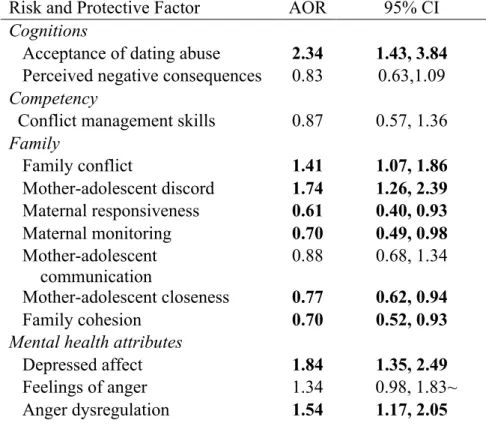
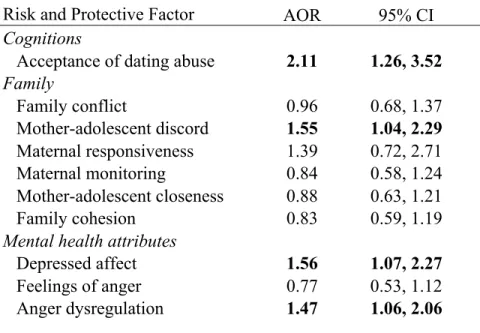
on their romantic relationships. These influences may also contribute to CDA perpetration. For example, participants explained that they felt it was easier to be aggressive and verbally abusive through technology-based communications compared to in-person communications. In Aim 2, I found that CDA and IPDA perpetration shared four risk factors: acceptance of dating abuse, mother-adolescent discord, depressed affect, and anger dysregulation. There were no unique risk and protective factors for either mode of abuse suggesting that these two modes of abuse may share a similar etiology.
Conclusion: This dissertation contributes important formative knowledge about
ACKNOWLEDGEMENTS
Many people contributed to the successful completion of this dissertation. I would like to extend my deepest gratitude to my dissertation advisor, Dr. Clare Barrington for her support throughout this process. I would also like to thank my academic adviser, Dr. Vangie Foshee, whose mentorship supported me over the past five years. Their generous advice and instruction are much appreciated. I am also grateful to the other members of my committee for their wisdom and guidance: Drs. Luz McNaughton-Reyes, Beth Moracco, and Lisa Hightow-Weidman.
I want to thank my partner, husband, and favorite high school English teacher, Chris. After three years living apart and two more of me being locked away in our office your love, patience, kindness, and encouragement carried me through. To my writing partner and dog, Nigel: Thank you for sitting by me and taking me on regular walks. To my family: Thank you for endlessly loving, supporting, and putting up with me for over 30 years.
Thank you to the Cobb County school district and high school administrators. My qualitative data collection was supported in part by by the University of North Carolina Injury Prevention Research Center, which is partly supported by a grant (R49/CE000196) from the National Center for Injury Prevention and Control, Centers for Disease Control and Prevention and by the North Carolina Translational Research Center (NC TraCs), which is supported by a grant (1UL1TR001111) from the National Center for Advancing Translational Sciences
study for the quantitative data used in my dissertation was supported by the Centers for Disease Control and Prevention (5 R01/CE001867-02 PI Dr. Vangie Foshee). Thank you the UNC Graduate School and the Royster Society of Fellows for their support through the Jesse Ball DuPont Dissertation Completion award.
TABLE OF CONTENTS
LIST OF TABLES ... xi
LIST OF ABBREVIATIONS ... xii
CHAPTER 1: INTRODUCTION AND DISSERTATION OVERVIEW ... 1
1.1 Problem Statement ... 1
1.2 Specific Aims ... 3
1.3 Significance and Organization of Dissertation ... 4
CHAPTER 2: BACKGROUND ... 6
2.1 Technology-Based Communication Among Adolescents ... 6
Technology-based communication ... 8
Digital platforms and Internet access ... 9
2.2 Technology Use in Adolescent Romantic Relationships ... 12
Electronic aggression ... 17
2.3 Adolescent Dating Abuse ... 18
In-person adolescent dating abuse ... 18
Health consequences and correlates of adolescent dating abuse ... 19
Cyber dating abuse ... 19
2.4 Theoretical Base Used to Examine Past Research on Dating Abuse ... 22
Extension of theories to CDA perpetration ... 25
2.6 Background Summary ... 33
CHAPTER 3: “IT’S A BAD THING…BUT IT’S A GOOD THING TOO”: EXAMINING TECHNOLOGY USE AND ABUSE IN ADOLESCENT ROMANTIC RELATIONSHIPS (MANUSCRIPT #1) ... 35
3.1 Introduction ... 35
Digital technology and adolescents ... 36
Romantic relationships, adolescents, and technology ... 37
Current Study ... 38
3.2 Methods... 39
Procedure ... 39
Participants/ Study Sample ... 41
3.3 Findings ... 44
3.4 Discussion ... 53
3.5 Conclusion ... 57
CHAPTER 4: SHARED OR UNIQUE: EXAMINING THE RISK AND PROTECTIVE FACTORS ASSOCIATED WITH IN-PERSON AND CYBER DATING ABUSE PERPETRATION AMONG ADOLESCENTS (MANUSCRIPT #2) ... 59
4.1 Introduction ... 59
Risk and protective factors for dating abuse perpetration examined ... 61
IPDA and CDA perpetration: Similar or distinct etiologies? ... 63
Current Study ... 66
4.2 Methods... 67
Study Design ... 67
Participant Recruitment ... 67
Study Sample ... 68
4.3 Results ... 75
Dating abuse mode prevalence ... 75
Results from the single-factor GEE models ... 76
Results from the multivariable GEE model ... 77
4.4 Discussion ... 78
4.5 Conclusion ... 84
CHAPTER 5: DISCUSSION & CONCLUSIONS ... 85
5.1 Summary of Findings ... 85
5.2 Potential Limitations ... 86
5.3 Implications for Research and Future Directions ... 88
5.4 Conclusions ... 93
APPENDIX: AIM 1 FOCUS GROUP DISCUSSION GUIDE ... 95
LIST OF TABLES
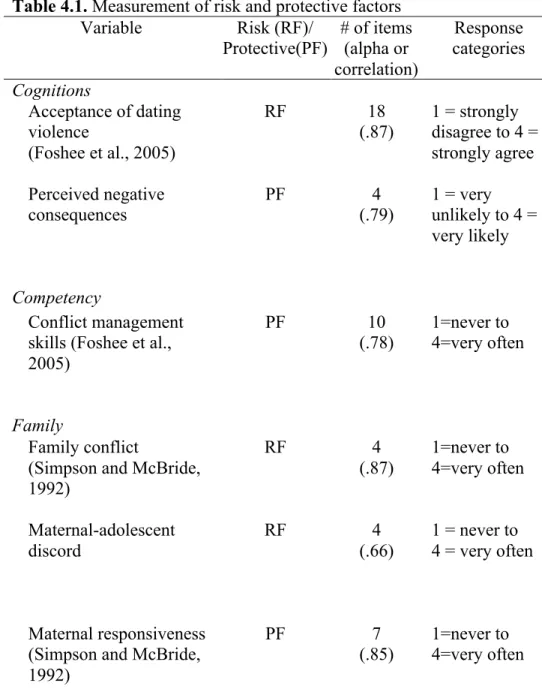
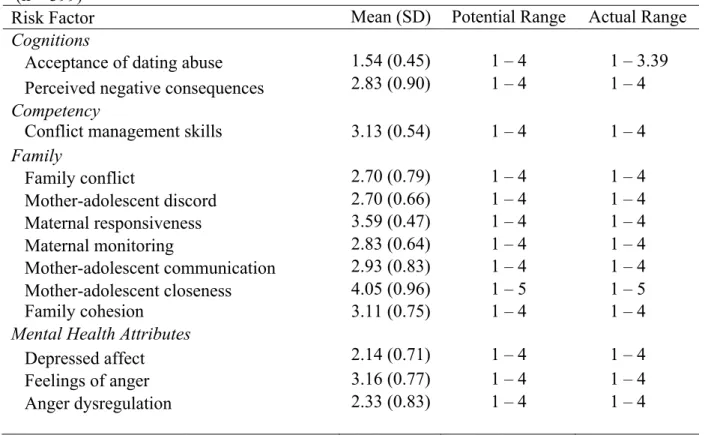
Table 2.1 Review of key technology terms……….………7 Table 3.1 Participant demographic information for Aim 1………...………41 Table 4.1 Measurement of risk and protective factors for Aim 2……….………....71 Table 4.2 Means, standard deviation and ranges of examined
LIST OF ABBREVIATIONS
AOR Adjusted odds ratio CI
Confidence interval CDA Cyber dating abuse CDC
GEE
Centers for Disease Control and Prevention Generalized estimating equations
CHAPTER 1: INTRODUCTION AND DISSERTATION OVERVIEW 1.1 Problem Statement
Over the past decade, technology use among adolescents has rapidly expanded. In 2004, 45% of adolescents reported having a cellphone and 59% reported having access to a personal computer at home. By 2014, 88% reported having a cellphone (of which 73% were smartphones) and 87% reported having access to a personal computer at home (Lenhart et al., 2015). With this increased use of technology has come the recognition that these technologies (e.g. computers, cellphones, and other online social networking mechanisms) may play an important role in the development of romantic relationships (Subrahmanyam & Smahel, 2011; Valkenburg & Peter, 2011). Previously, romantic relationships developed primarily through in-person interactions (Reed, Tolman, & Safyer, 2015). However, technology provides adolescents with a significant new space to initiate, maintain, and end their romantic relationships. Technology also affords adolescents the opportunity to move previously private interactions into more public spaces, constant access to partners regardless of geographic distance, and the ability to share information about romantic relationships with large social networks instantly (Draucker & Martsolf, 2010; Reed et al., 2015).
that adolescents use technologies to psychologically and sexually abuse the people with whom they are romantically involved (Cutbush, Williams, Miller, Gibbs, & Clinton-Sherrod, 2012; Zweig et al., 2013a). There is a lack of a common definition for this new mode of abuse. Researchers have referred to it as cyber dating abuse (Borrajo, Gamez-Guadix, & Calvete, 2015a; Dick et al., 2014; Zweig et al., 2013a), cyber-aggression (Schnurr, Mahatmya, & Basche, 2013), electronic dating violence/aggression (Cutbush et al., 2012; Hinduja & Patchin, 2013), and technology-assisted dating abuse (Stonard, Bowen, Lawrence, & Price, 2014). In this dissertation, I use the term cyber dating abuse (CDA) to refer to both psychological and sexual abuse delivered through technology-based communications because it is the term most
frequently used in the literature (Borrajo, Gamez-Guadix, Pereda, & Calvete, 2015b). A wide range of behaviors are considered indicators of CDA. Psychological CDA indicators include monitoring a romantic partner’s whereabouts and activities via technology (Burke, Wallen, Vail-Smith, & Knox, 2011; Lyndon, Bonds-Raacke, & Cratty, 2011), controlling a partner through excessive contact or harassment (Stonard et al., 2014), sending mean, rude or hurtful messages (Hinduja & Patchin, 2013). Sexual CDA indicators include sending sexually threatening or coercive messages (Zweig et al., 2013a), and spreading sexual rumors or sharing private pictures or videos that include nudity or are otherwise of a sexual nature publicly through social networks (Hinduja & Patchin, 2013; Lyndon et al., 2011).
relationships in young adulthood (Exner-Cortens, Eckenrode, & Rothman, 2012; Halpern, Spriggs, Martin, & Kupper, 2009; Smith, White, & Holland, 2003).
Although numerous studies have been conducted on the etiology of dating abuse, there has been very little research conducted on the specific etiology of CDA. Previous research on the etiology of dating abuse perpetration has almost exclusively focused on psychological, physical, and sexual abuse occurring in-person. However, the extent to which findings from this previous research on dating abuse can be generalized to CDA, a different mode of abuse, is not known. 1.2 Specific Aims
In response to the gaps in knowledge surrounding technology use in adolescent romantic relationships, I designed a dissertation using both qualitative and quantitative approaches to better understand the factors influencing technology use in romantic relationships as well as to examine what factors contribute to or protect adolescents from using technology to abuse their romantic partners. My study aims are:
Aim 1: Explore how adolescents use technology to communicate in their romantic relationships. Also, examine their perceptions of what influences adolescent use of technology and its impact on adolescent romantic relationships (Chapter 3).
Aim 2: Examine whether risk and protective factors are shared by CDA and IPDA perpetration, or whether they differ for the two modes of dating abuse in an effort to build a better
understanding of CDA perpetration etiology (Chapter 4).
al., 2015a). The design and methods used in each study are described in the respective manuscripts.
1.3 Significance and Organization of Dissertation
Taken together, this dissertation fills two important gaps in research on adolescent romantic relationships and dating abuse. First, while there is a general understanding that technology plays a large role in adolescent lives, there is limited research examining how technology influences their romantic relationships. Particularly, there is a paucity of research on adolescent perceptions of how technology influences their romantic relationships. This research is key in order to better understand the opportunities and risks adolescents’ technology use poses to the development of their romantic relationships (Van Ouytsel, Van Gool, Walrave, Ponnet, & Peeters, 2016). Findings from such research can also better inform relationship interventions and offer insights for future research on adolescent romantic relationships. Second, no study to date has examined risk and protective factors for CDA perpetration. However, knowledge of such factors and whether they differ from the factors associated with in-person dating abuse
perpetration (IPDA) is required for informing and tailoring prevention interventions. A first step in closing this gap is to examine whether risk and protective factors associated with previous research on dating abuse are shared by CDA perpetration to determine if this new mode of abuse may share a common etiology with IPDA. CDA will likely persist unless we develop evidence-based interventions that target all modes of abuse. In order to be effective, it is important that prevention programs accurately reflect both the influence technology has on adolescent dating behaviors and target risk and protective factors associated with CDA perpetration.
informed this dissertation. Chapter 3 presents the manuscript addressing Aim 1. Chapter 4
CHAPTER 2: BACKGROUND
This chapter (Chapter 2) reviews the key areas examined across the two aims of this dissertation focused on the following empirical areas: technology-based communication among adolescents, technology use in adolescent romantic relationships, and adolescent dating abuse. I then describe the relevant theoretical base used to guide past research on dating abuse and the theory that suggests there may be differences between in-person and cyber behavior to provide a rationale for the examination of cyber dating behaviors.
2.1 Technology-Based Communication Among Adolescents
Table 2.1. Review of key technology terms
Term Definition
Computer-Mediated Communication
Human communication that occurs through the use of two or more electronic devices.
Cyberbullying The use digital platforms by an individual or group of people to deliberately and repeatedly harass or threaten another individual or group.
Cyber Dating Abuse Relationship abuse that occurs electronically via
computers, blogs, mobile phones and other online social networking mechanisms.
In-person Dating Abuse The physical, sexual, and psychological abuse that occurs within a dating relationship including stalking. Previous research on dating abuse has tended to conceptualize this abuse as occurring in-person. Electronic Aggression Encompasses a large number of digitally based
behaviors including bullying, harassment, teasing, spreading rumors, making threatening or aggressive comments, and making rude or hurtful comments. Digital Device Devices such as computers, tablets, and cell phones that
are used to access the Internet. Can be used for a variety of purposes including seeking information, consuming media, or communication.
Digital Platform Software and applications. Primarily used in two ways: 1) one on one platforms to communicate with one other person and 2) social networking platforms where one person can share information and communicate with a large audience of other people.
personal autonomy apart from their parents (Borca, Bina, Keller, Gilbert, & Begotti, 2015). The Internet and digital devices such as computers, tablets, and cell phones that are used to access it, can be used for a variety of purposes including seeking information, consuming media, or communication. This dissertation is concerned with the third of these uses, technology-based communication.
Technology-based communication
The current generation of adolescents has grown up with almost constant access to digital technologies as a means of communicating (Gardner & Davis, 2013; Joiner et al., 2013).
digital environment, it is not clear whether this change has resulted in changes (increases or decreases) in face-to-face or voice to voice communication; but it is clear that the largest proportion of communication is now conducted through digital platforms (Lenhart et al., 2015). Below is a more detailed explanation of the types of digital platforms, their prevalence, and an examination of the current state of Internet access among adolescents in order to demonstrate how widespread access to digital technology has become.
Digital platforms and Internet access
Technology-based communication platforms can be grouped into two broad categories: platforms used to communicate with one other person, and social networking platforms where one person can share information and communicate with a large audience of other people. Types of digital platforms typically used to communicate with one other person (dyadic) include text messaging, email, and instant messaging. The Pew Research Internet Project examined the most popular types of dyadic communication choices among a sample of 1,060 adolescents between 13 and 17 years of age and reported that 91% of adolescents with cell phones use text messaging (Lenhart et al., 2015). The same study reported that 33% of adolescents use text messaging applications (such as WhatsApp and Kik) (Lenhart et al., 2015). Technology-based
Snapchat, 33% use Twitter, 33% use Google+, 24% use Vine, 14% have a Tumblr page, and 3% use Google Plus (Lenhart et al., 2015).
In terms of the prevalence of devices used to access technology-based communication platforms, 87% of adolescents report having a computer or access to one at home, 58% have a tablet computer, and 88% of adolescents report owning a cell phone (Lenhart et al., 2015). Evidence suggests that cell phones are emerging as the most common device used by adolescents as a means of communication (Lenhart et al., 2015; Madden et al., 2013). Though almost all technology-based communication mechanisms were originally developed for single hardware platforms, such as a computer, cross hardware platforms are now extremely common
(Valkenburg, Schouten, & Peter, 2005). Cross hardware platforms allow adolescents to use any digital platform on any digital device like cell phones, tablets, or computers. For example, though email was originally designed for computers, people can now use their cell phone or tablet to send and receive messages driving up the use of devices like smartphones. Indeed, as of 2013 of the 88% of adolescents who have their own cell phone, 73% own smartphones, which provide access to the Internet (Lenhart et al., 2015). According to the same study, 91% of adolescent use smart phones to access the Internet (Madden et al., 2013). This is particularly the case among girls between 15 and 17 years of age where 95% use smartphones to access the Internet (Lenhart et al., 2015).
Hispanic and Latino adolescents and 72 % of Black adolescents reported having regular access to the Internet compared to 80% of White adolescents. Whereas, as of 2012, 88% of Hispanic and Latino adolescents and 92% of Black adolescents reported having regular access to the Internet compared to 98% of White adolescents (Lopez et al., 2013). As of 2014, 85% of Black
adolescents and 71% of Hispanic and Latino adolescents report having a smartphone with Internet access compared to 71% of White adolescents (Lenhart et al., 2015). Additionally, trends in technology-based communication platform use are similar across race and ethnic groups. For example, there is no statistically significant difference between racial and ethnic groups in terms of cell phone ownership and no significant differences in the rates of technology-based communication (Lenhart et al., 2010). However, divides do still exist between low-income adolescents and those in higher income brackets. Among the parents of adolescents between 13 and 17 years of age reporting an annual income of less than $30,000, only 73% of the
adolescents report regular access to the Internet compared to those who reported annual incomes over $30,000 where over 90% report regular Internet access (Madden et al., 2013). In sum, though some disparities still exist, the data available indicate that the vast majority of adolescents across the United States enjoy regular access to and use of digital technologies.
Taken together the research cited above demonstrates that there is a range of digital platforms available to adolescents as a means of communicating with others. Further, it
2.2 Technology Use in Adolescent Romantic Relationships
Adolescence is a key time for a number of developmental tasks including establishing relationships among peers and with romantic partners (Valkenburg et al., 2005). Research suggests that young people identify romantic relationships as important to their lives (Collins, Welsh, & Furman, 2009; Grover & Nangle, 2003). Prior to the growth of digital platforms, adolescents formed and reinforced these relationships in-person or over the telephone. These relationships now include a digital component. Less is known about technology-based
communication and its role in romantic relationships, as previous research has tended to focus on its role in peer relationships (Subrahmanyam & Greenfield, 2008). However, the available
research suggests that adolescents are using digital platforms to develop romantic relationships in a number of ways.
Recent research suggests that adolescents use digital platforms as a means of seeking out and researching potential romantic partners that they plan on later connecting with in-person. For example, approximately 24% of adolescents who report dating said that they had met a romantic partner online (Lenhart et al., 2015). Of those reporting meeting a partner online, the majority found these partners through social networking sites such as Facebook (Lenhart et al., 2015). Often, digital platforms serve as a means for identifying potential romantic partners and initiating contact with them digitally without the social anxiety that often accompanies approaching people in-person to establish contact. Indeed, mitigating social anxiety is often cited as one of the
become more familiar with potential partners, as social networking pages contain a large amount of personal information. Using digital platforms as a means of locating romantic partners before seeking them out in person is one of the reasons that researchers have recently claimed that contrary to earlier research on social isolation, that suggested digital technology increased
adolescent feelings of isolation, digital platforms also afford opportunities for decreased isolation (Gardner & Davis, 2013; Pierce, 2009; Valkenburg et al., 2005). Thus, in addition to playing a role in the development of romantic relationships, digital platforms may offer opportunities for adolescents to feel less socially isolated.
Though limited, current research suggests that adolescents use digital spaces and platforms to also experiment with romantic relationship development by forming relationships digitally (Valkenburg et al., 2005). Adolescents who know each other in-person may choose to formally enter into a dating relationship using digital platforms (Draucker & Martsolf, 2010; Van Ouytsel et al., 2016). For example, adolescents may text or instant message a potential romantic partner to ask them on a date because there is a reduced fear of reaction or rejection than asking in-person. Recent research lends support to this idea with 50% of teens between 13 and 17 years of age letting someone know they were romantically interested in them through a social
networking site (Lenhart et al., 2015). Digital platforms are making it easier for some
more common in the earlier years of the Internet (Subrahmanyam & Greenfield, 2008). This suggests that adolescents are using digital platforms to engage in romantic relationships with people they know in-person. Approximately 76% of adolescents between 13 and 17 years of age report only dating romantic partners they met first in-person (Lenhart et al., 2015).
Though used to seek out and establish relationships, research suggests that adolescents may use digital platforms primarily to reinforce existing romantic relationships, as these
platforms afford adolescents almost constant accessibility to their romantic partners (Lenhart et al., 2015; Subrahmanyam & Greenfield, 2008; Van Ouytsel et al., 2016). Digital platforms allow adolescents to transcend geographic and temporal boundaries in order to connect and
communicate with romantic partners in order to reinforce their romantic ties (Gardner & Davis, 2013). Researchers are quick to note that due to the limited research on technology-based communication between romantic partners, there are little data examining how this
communication occurs, under which types of circumstances, and through which types of digital platforms (Subrahmanyam & Greenfield, 2008). However, a recent study indicates that 92% of adolescents in a romantic relationship text their partners regularly, 70% spent time posting on each other’s social media sites, and 69% spent time instant messaging with their partner (Lenhart et al., 2015). The frequency of technology-based communication may be explained in part by recent qualitative focus group studies from Gardner and Davis (2013), which suggest that
resulted in adolescents becoming dependent on their digital devices in order to feel a part of their social circles and connected to their romantic partners (Ling & Yttri, 2002). Thus,
microcoordination may increase feelings of connectedness but also further increases adolescent dependence on digital devices as a means of staying in touch with romantic partners. The second mechanism to reinforce relationships has been dubbed “virtual taps on the shoulder” (Gardner & Davis, 2013). This means that adolescents establish and maintain a sense of connection with romantic partners when physically apart from one another. For example, adolescents report carrying on conversations via text throughout the day, checking in on each other to get updates on what the other person is up too (Gardner & Davis, 2013). These conversations are often characterized by breaks while the adolescents are in school or during meals but are picked back up as soon as other activities cease. Prior to constant access to digital devices, conversations between romantic partners were typically limited temporally and often geographically. Some evidence suggests that these constant technology-based communications can increase adolescent feelings of belonging and intimacy, which are both beneficial to forging social bonds during adolescence and later in life (Gardner & Davis, 2013). Recent research lends support to Gardner & Davis’s (2013) findings. Lenhart et al. (2015) found that 44% of adolescents feel that social media makes them emotionally closer to their romantic partner and 65% of boys and 52% of girls think technology-based communication makes them feel more connected with what their romantic partners are doing when they aren’t with them.
in a series of focus groups with adolescents, Gardner & Davis (2013) found that they regularly used text messages or Facebook to end relationships rather than in-person. In-person break-ups were seen as being socially difficult and emotionally trying. Digital platforms help adolescents avoid the discomfort that accompanies in-person break-ups where they might have to manage their romantic partner’s unfiltered and potentially unexpected response. As of 2015,
approximately 27% of adolescents between 13 and 17 years of age report breaking up with a romantic partner through text message (Lenhart et al., 2015). Just as digital platforms may provide avenues for the development of intimacy and self-disclosure, they also present opportunities to avoid emotional risks, which may be detrimental to adolescent development. Some argue that romantic experiences offer important developmental opportunities among adolescents for maturation of intimacy, sexuality, identity, and autonomy (Collins et al., 2009). In the same way, ending relationships is connected to adolescent development as the emotional risks posed by ending relationships often inform subsequent relationships (Connolly & McIsaac, 2009). This interpretation suggests that by avoiding emotional risks, adolescents are losing out on developing skills to help them build healthy relationships across their developmental trajectory. It is clear that though digital platforms can play a positive role in adolescent
development of romantic relationships, they also pose risks to adolescent development and well-being. In addition to the risk that adolescents are not learning important social skills with respect to taking emotional risks, there are other risks posed by these mediated forms of communication and interaction. One of the biggest risks posed by technology-based communication is its
Electronic aggression
Electronic aggression is often defined to encompass a large number of digitally based behaviors including bullying, harassment, teasing, spreading rumors, making threatening or aggressive comments, and making rude or hurtful comments (David-Ferdon & Hertz, 2007). The role technology-based communication and technology play in adolescent health is still an
emerging field of investigation, but there have been numerous studies examining the prevalence of electronic aggression between adolescents and their peers, often referred to as cyberbullying. Cyberbullying occurs when an individual or a group of people use digital platforms to
deliberately and repeatedly harass or threaten another individual or group (Ybarra & Mitchell, 2004). Due to measurement variations, researchers estimate that between four and 21% of adolescents perpetrate cyberbullying (Kowalski & Limber, 2007; Williams & Guerra, 2007; Ybarra, Espelage, & Mitchell, 2007). In addition to being fairly common, with up to 34% of adolescents reporting experiencing cyberbullying, being a victim of cyberbullying is associated with a number of negative psychosocial and health issues including emotional distress, increased social anxiety, weapon-carrying at school, and depression (Hawker & Boulton, 2000; Ybarra et al., 2007). Researchers examining electronic aggression between peers suggest that this form of abuse has the potential to cause great harm to the health and well-being of adolescents (Hawker & Boulton, 2000). In a recent study, adolescents described having to manage a number of
However, in terms of adolescent romantic relationships, the majority of previous research has conceptualized dating abuse as occurring in-person. In turn, this previous research has not measured dating abuse in such a way as to determine mode of delivery.
2.3 Adolescent Dating Abuse In-person adolescent dating abuse
Adolescent dating abuse is a serious problem in the United States. The CDC (2012) defines dating abuse perpetration as the use of physical, sexual, psychological abuse within a dating relationship. Although dating abuse can occur in-person and through technology, dating abuse researchers have previously focused on abuse occurring in-person or conceptualized as occurring in-person in the case of psychological abuse and sexual coercion (Saltzman, Fanslow, McMahon, & Shelley, 2002). In the 2011 Youth Risk Behavior Survey (YRBS), 9.4% of
Health consequences and correlates of adolescent dating abuse
In addition to being common during adolescence, dating abuse is associated with multiple negative health outcomes. Several longitudinal studies highlight the consequences of
victimization which include physical injury (O'Leary et al., 2008), depression (Ackard et al., 2007), cigarette use (Foshee et al., 2013), suicidal ideation, substance use (Roberts et al., 2003), and subsequent abusive relationships in young adulthood (Exner-Cortens et al., 2012; Halpern et al., 2009; Smith et al., 2003). A recent study using a longitudinal approach suggests that
depression is a consequence of both dating abuse perpetration and victimization (Johnson, Giordano, Longmore, & Manning, 2014). Cross-sectional studies suggest that dating abuse perpetration is associated with suicidal thoughts (Banyard & Cross, 2008), sexual behavior, and unhealthy weight control (Kim-Godwin, Clements, McCuiston, & Fox, 2009).
Cyber dating abuse
year (Zweig et al., 2013a). This prevalence rivals that of in-person psychological abuse (for review see Foshee & Matthew, 2007). Similar to IPDA, there is evidence to suggest that CDA is also associated with negative health outcomes such as depression and risky sexual behavior (Zweig, Lachman, Yahner, & Dank, 2013b).
While there has been over twenty years of research on the etiology of IPDA including psychological, sexual, and physical abuse, there has been little research on the etiology of CDA. The first study to identify IPDA among adolescents as a problem was published in 1981 (Henton, Cate, Koval, Lloyd, & Christopher, 1983; Makepeace, 1981), whereas the first study to
recognize CDA was not published until 2012 (Bonomi et al., 2012). The paucity of attention to CDA has also contributed to the lack of a common definition or terminology. Researchers have referred to this new mode of dating abuse as CDA (Borrajo et al., 2015a; Dick et al., 2014; Zweig et al., 2013a), cyber-aggression (Schnurr et al., 2013), electronic dating
violence/aggression (Cutbush et al., 2012; Hinduja & Patchin, 2013), technology-assisted dating abuse (Stonard et al., 2014), and digital dating abuse (Reed, Tolman, Ward, & Safyer, 2016). Throughout this dissertation, I use the term CDA to refer to both psychological and sexual abuse delivered through technology-based communications because it is the term most frequently used in the literature (Borrajo et al., 2015a). Similar to IPDA, CDA is comprised of several types of dating abuse including psychological and sexual abuse. A wide range of behaviors including monitoring a romantic partner’s whereabouts and activities via technology (Burke et al., 2011; Lyndon et al., 2011), controlling a partner through excessive contact or harassment (Stonard et al., 2014), sending mean, rude or hurtful messages (Hinduja & Patchin, 2013), sending
private pictures or videos with social networks (Hinduja & Patchin, 2013; Lyndon et al., 2011) are considered indicators of CDA.
Some researchers posit that CDA is new mode of psychological and sexual abuse executed through new modalities, and point to the co-occurrence of in-person and cyber psychological abuse as evidence to support this assertion (Borrajo et al., 2015a). A number of studies have identified CDA perpetration as a correlate of IPDA perpetration (Cutbush et al., 2012; Dick et al., 2014; Hinduja & Patchin, 2013; Zweig et al., 2013a). For example, Zweig et al. (2013) found that 58% of adolescents who reported perpetrating in-person physical dating abuse also perpetrated CDA. Additionally, evidence suggests CDA and IPDA share other similarities. For example, as with IPDA (O'Leary et al., 2008) adolescents are more likely to report CDA victimization than perpetration (Cutbush et al., 2012; Temple et al., 2016).
Others suggest that though they may share features in common, abuse that occurs through technology may be a qualitatively different phenomenon than abuse that occurs in-person
(Stonard et al., 2014). While adolescents report perpetrating both IPDA and CDA in previous studies examining the prevalence of IPDA and CDA, there is a significant number of adolescents who report perpetrating only CDA (Cutbush et al., 2012; Hinduja & Patchin, 2013; Zweig et al., 2013a). For example, Zweig et al. (2013) examined the co-occurrence of CDA perpetration and IPDA finding that 25% of adolescents who reported perpetrating non-sexual CDA only
abusing a partner that cannot occur in-person. Specifically, certain dimensions of CDA perpetration, such as the ability to perpetually monitor one’s partner, may have different
underlying motivations than IPDA perpetration. For example, there is some evidence to suggest that monitoring a partner or potential partner is driven by a desire to build intimacy or a
relationship with that individual rather than in an effort to control them (Lowry, Zhang, Wang, Wu, & Siponen, 2013). Additionally, technology-based communication differs from in-person or telephone/voice communication since it can easily migrate from what is arguably private
interactions into public spaces along with giving romantic partners constant access to one another without geographic or temporal constraints and spread information instantly across social networking sites (Draucker & Martsolf, 2010; Reed et al., 2016). These differences in capabilities and motivations suggest that CDA may be a new type of abuse rather than mode. 2.4 Theoretical Base Used to Examine Past Research on Dating Abuse
There are a number of theories that have guided research on IPDA. As described above, several researchers suggest that CDA may operate as a new mode of dating abuse rather than as a qualitatively different phenomenon (Borrajo et al., 2015a; Stonard et al., 2014). If CDA is a new mode of dating abuse, then it is appropriate to use the same theories to examine and inform intervention development. Below are descriptions of several of the theories frequently used in dating abuse research and used to develop the intervention evaluated in the Moms and Teens for Safe Dates RCT which inform the risk and protective factors examined in Aim 2.
abuse, research suggests that exposure to violence and associated rewards internalize norms that are more accepting of violence (Carr & VanDeusen, 2002; Ehrensaft et al., 2003a; Foshee, Bauman, & Linder, 1999; Kinsfogel & Grych, 2004; Narayan, Englund, Carlson, & Egeland, 2014; Reitzel-Jaffe & Wolfe, 2001; Rosenbaudm & O'Leary, 1981). Social learning theory is also consistent with the intergenerational transmission of intimate violence which explains that through observational learning processes and witnessing violence among family members, a child is more likely to use violence as an adult (Dodge, Pettit, Bates, & Valente, 1995; Mihalic & Elliott, 1997). If a child sees a parent use violence in order to address conflict or to control or dominate another person, social learning theory suggests they may internalize this behavior and subsequently model it in their own relationships (Bandura, 1977; Brendgen, Vitaro, Tremblay, & Lavoie, 2001). Social learning theory also acknowledges media as well as cultural factors also exert influence on an individual’s perception of violence in romantic relationships. For example, some researchers suggest that through media such as film, video games, and television
adolescents are exposed to unhealthy models of romantic relationships (Anderson et al., 2003; Barongan & Hall, 1995). Peers also play a key role in dating abuse per social learning theory. Evidence suggests that exposure to friends who have experience with dating abuse is associated with both dating abuse perpetration and victimization as well as predictive of subsequent relationship violence (Arriaga & Foshee, 2004).
subsequently not exposed to the positive consequences associated with constructive conflict resolution techniques because adults who typically use violence to resolve conflict do not have such skills (Gottman, 1993; Schwartz, Hage, Bush, & Burns, 2006). One of the most consistent predictors of IPDA perpetration is family violence (Jouriles, McDonald, Mueller, & Grych, 2012; Wolfe, Wekerle, Scott, Straatman, & Grasley, 2004). Alongside social learning theory, researchers suggest that emotion dysregulation (i.e. anger and anger dysregulation) are also linked with family violence. Specifically, adolescents exposed to family violence struggle to cope with the emotional dysfunction in the home and in turn have difficulty controlling their behaviors (Gratz et al., 2009). There is evidence to suggest that emotional dysregulation mediates the relationship between exposure to family violence and IPDA perpetration for girls (Wolf & Foshee, 2003) and boys (Kinsfogel & Grych, 2004). Some have suggested that there are additional factors that lead to IPDA (Follette & Alexander, 1992). Such factors draw from other theories including social control theory.
including IPDA (Dishion & McMahon, 1998; Swahn et al., 2008). Without attachment to family, peers, or school adolescents may not be able to internalize prosocial norms against delinquent behavior and that disapprove of dating abuse (Hirschi, 1969).
Unlike either social learning theory or social control theory, feminist theory suggests that dating abuse is a result of underlying power and control inequities between men and women resulting in a patriarchal societal system (Dobash, Dobash, Wilson, & Daly, 1992). Researchers suggest that power inequality caused by a prevailing power structure of male dominance and female subservience leads to the manifestation of dating abuse (Lloyd, 1991). For example, there is evidence suggesting gender stereotypes- attitudes relating to how men and women should behave- are associated with dating abuse perpetration (Foshee, Karriker-Jaffe, Reyes, Ennett, & Suchindran, 2008).
Extension of theories to CDA perpetration
2.5 Theoretical Explanation for Potential Differences Between Digital and In-Person Behaviors
While there is empirical evidence that suggests IPDA and CDA may share a similar etiology, such as the strong correlation between the two modes of dating abuse (Dick et al., 2014; Zweig et al., 2013a), there is also theoretical support for an argument suggesting that adolescents behave differently in digital environments than they do in-person. Therefore, adolescents who perpetrate CDA may have different motivations from those that perpetrate IPDA. In turn, these differences may point to differences in the etiology of CDA. Specifically, the Online Disinhibition Effect suggests that different factors contribute to differences between in-person and digital behavior.
Online Disinhibition Effect
individuals exploring new dimensions of their personalities (Suler, 2002). However, toxic disinhibition is characterized by negative digitally based behaviors. For example, when
individuals use digital platforms to hurt others via criticism or threats, or explore territory such as crime or violence that they would usually never explore in-person, they are engaged in toxic disinhibition. Whereas benign disinhibition provides opportunities for individuals to better understand and develop their identities, toxic disinhibition does not result in any personal growth and can be harmful to self and others (Suler, 1999). CDA is an example of toxic disinhibition. Specifically, an adolescent may experience toxic disinhibition in that though they would not perpetrate IPDA, they feel comfortable perpetrating CDA.
Suler (2004) is quick to point out that the conceptual dichotomy of benign and toxic disinhibition can often be complex and difficult to disentangle empirically. For example, in the case of romantic relationships, an adolescent may use digital platforms to quickly share intimate secrets with a romantic partner but then become overwhelmed by the rapidity of their intimacy, which may result in feelings of anxiety that produce more abusive reactions/communications. So what began as benign disinhibition, an individual using digital platforms to share their feelings that they would otherwise keep to themselves, quickly devolves into a somewhat toxic situation where they are left with emotional issues that they are ill equipped to manage.
an explanation for dating abuse resulting from the disinhibition effect, are described in detail below.
Dissociative Anonymity. Digital platforms allow a certain level of anonymity, or the
ability for an individual to hide their true identity. For example, it is possible to create fake email accounts or IP addresses (which operate like digital addresses telling others where you are located) in an effort to mask one’s true identity. Suler (2004) suggests that the anonymity afforded by digital platforms allows people to disassociate their digital actions from their in-person identity. In effect, dissociative anonymity allows individuals to be unaccountable for their online actions, with some people going as far as creating an entirely different online identity that is completely separate from their in-person identity.
Dissociative anonymity is an unlikely explanation for dating abuse due to a toxic disinhibition effect when adolescents know one another in-person, but may be more of an explanation when dating relationships occur purely online. Adolescents may have romantic relationships that occur both in-person and online or relationships that occur entirely online. Though there is limited previous research on adolescent relationships occurring entirely online, there is some evidence to suggest adolescents may seek out strangers to form romantic
The term was derived from a 2010 documentary film titled “Catfish”, where the filmmaker learned that his online girlfriend was not a 19-year old model as he believed but rather a married middle aged woman (Joost & Schulman, 2010). Since the release of “Catfish”, there have been multiple media stories about individuals who discover their romantic partners online are in fact completely different people than those they pretend to be digitally. In these types of digitally based romantic relationships, dissociative anonymity may promote CDA as an individual can invent an abusive online persona.
Invisibility. People typically cannot physically see or hear each other when using digital
such as an adolescent hacking into their partner’s Facebook account to read their messages or email accounts because they cannot be seen when they would never participate in similar in-person behaviors.
Asynchronicity. When using digital platforms, the communication is often not happening
Solipsistic Introjection. In the absence of visual cues, people tend to project
characteristics or personality traits to interactions with others on digital platforms. For example, in reading an email from a stranger, one’s imagination might begin to put together a picture of who sent the message, what they look like, and how they sound when talking. Individuals may also project their own voice onto the message received in effect “talking to themselves” which Suler suggests promotes disinhibition as talking to oneself is psychologically easier than talking to others. Solipsistic introjection can often lead to benign disinhibition, as individuals feel more comfortable sharing information and expressing their feelings when they believe they are talking to themselves. Solipsistic introjection may encourage adolescents to project their own voice, desire, and needs onto their romantic partners when they are in relationships that occur entirely online or those where the adolescents rarely see each other and thus their relationship has
developed digitally rather than face-to-face. These projections may lead to problems, as they are inventions of one’s mind rather than reality. For example, a romantic partner may become upset or aggressive when their partner fails to match up to the traits they have projected on to them leading to CDA.
Dissociative Imagination. Dissociative imagination occurs when people feel that a
character or persona they created in their mind exists only in a digital space and not in real life (Suler, 2004). Individuals, consciously or unconsciously split the online world from the real world and the online world does not need to conform to the rules that govern real-world
2006). With dissociative imagination an individual is creating a full-fledged online identity not attempting to hide their identity, as is the case of dissociative anonymity. In the case of a romantic relationship, an individual who does not perpetrate dating abuse in-person may do so because they are adhering to norms that say dating abuse is wrong. However, the same individual may feel that they do not have to adhere to the rules or norms that govern their in-person
behavior when interacting digitally. Thus they may adopt an abusive persona digitally that does not exist in-person as they feel unchained from face-to-face social norms and structures. This factor may explain why certain individuals perpetrate CDA but do not perpetrate in-person abuse as they have two distinct identities.
Minimization of Status and Authority. The final factor described by Suler (2004) as a key
contributor to online disinhibition is minimization of status and authority in online relationships where there is a lack of visual cues that typically mark authority in face-to-face relationships, such as the manner in which a person is dressed, their body language or other similar
environmental cues, thereby reducing the effect of that person’s authority or status as a partner or equal. This last factor is less related to dating abuse than the previous factors since it focuses more on power dynamics with authority figures.
Digital platforms may provide the convenient circumstance for certain individuals to lash out at their romantic partners when they otherwise would not. This idea lines up with the theoretical framework set forth by Subrahamanyan and Greenfield (2008) about adolescent online
communication that contends that in-person and digital worlds are psychologically connected but the digital world can often serve as a “playground” for identity development where a teen may try out an identity that differs from their in-person identity. This online identity may in turn be abusive whereas the in-person identity is not.
2.6 Background Summary
Taken together, this background suggests several things. First, while we know that adolescents are using technology-based communications as a central means of communicating, we know little about the role technology plays in adolescent romantic relationships. In order to understand how adolescents may be using technology in unhealthy or harmful ways, we first must have a clear understanding of its role in romantic relationships. This information can also be used to inform interventions targeting adolescent romantic relationships. Second, evidence suggests that adolescents are using technology to abuse one another in their romantic
relationships (Zweig et al., 2013a). However, we cannot design effective interventions to prevent such abuse without an understanding of the risk and protective factors associated with CDA. There is literature to suggest that CDA perpetration both may or may not share a similar etiology with IPDA (Cutbush et al., 2012; Zweig et al., 2013a). If CDA and IPDA perpetration share a similar etiology, it is likely that CDA is a new mode of dating abuse rather than a new type of dating abuse and therefore IPDA and CDA perpetration will likely share similar risk and
CHAPTER 3: “IT’S A BAD THING…BUT IT’S A GOOD THING TOO”: EXAMINING TECHNOLOGY USE AND ABUSE IN ADOLESCENT ROMANTIC RELATIONSHIPS
(MANUSCRIPT #1) 3.1 Introduction
Adolescence is a key time for many developmental tasks, including the formation of romantic relationships. While it is difficult to clearly define what constitutes “dating” among adolescents, it is estimated that the majority of adolescents in the US have been involved in a romantic or dating relationship by the end of high school (Lenhart et al., 2015; Manning, Longmore, Copp, & Giordano, 2014). Further, evidence shows that adolescent romantic relationships form the “scaffolding” that supports the development of subsequent romantic relationships during adulthood (Meier & Allen, 2009; Rauer, Pettit, Lansford, Bates, & Dodge, 2013). Romantic experiences offer important opportunities to adolescents for maturation of intimacy, sexuality, identity, and autonomy, which are all key developmental tasks (Collins, 2003; Furman, 2002). At the same time, in the past decade there has been a rapid expansion in the use of technology-based communication, which provides new contexts to undertake key developmental tasks including the development of romantic relationships (Davis, 2012). In fact, recent research suggests that text messaging has become the dominant form of adolescent communication (Lenhart et al., 2015; Lenhart et al., 2010).
adolescent romantic relationships. In this paper, we first review the literature on technology use among adolescents and technology use in romantic relationships. We then use data collected from focus groups to explore how adolescents use technology in their relationships and how communication technology influences these relationships. Findings can inform subsequent research on adolescent use of technology in romantic relationships and also be used to ensure programs encouraging healthy romantic relationships accurately reflect both how adolescents use technology and how it influences their romantic relationships.
Digital technology and adolescents
Digital technology (e.g. smartphones, computers, tablets, etc.) is an integral part of everyday life for adolescents throughout the United States (Subrahmanyam & Greenfield, 2008). For example, 87% of adolescents report having a computer or access to one at home, 58% have a tablet computer, and 88% of adolescents report owning a cell phone (Lenhart et al., 2015). Of the 88% of adolescents who have their own cell phone, 73% own smartphones, which provide access to the Internet (Lenhart et al., 2015). In 2011, only 23% of adolescents had smartphones (Lenhart et al., 2015). Adolescents are increasingly using technology as their central means of
communication. More than half (56%) of adolescents report going online several times a day and exchange an average of 30 text messages per day (Lenhart et al., 2015). As of 2014, over 90% of adolescents in the U.S. between 13 and 17 years of age with cellphones report text messaging daily and approximately 71% of adolescents report having accounts with more than one social network site (Lenhart et al., 2015).
to adolescent identity construction (Subrahmanyam & Smahel, 2011; Valkenburg et al., 2005). Others suggest that technology-based communications can help enable self-disclosure (see Valkenburg & Peter, 2009 for review). Whereas other evidence suggests that technology-based communication is associated with social isolation (Sander, Field, Diego, & Kaplan, 2000), loneliness and depression (Morahan-Martin & Shumacher, 2003), and cyberbullying (Fogel & Nehmad, 2009). Researchers suggest that both positive and negative influences of technology on adolescent lives is related to decreased inhibition also referred to as emotional detachment (Mehari, Farrell, & Le, 2014). Specifically, technology supports disinhibition in such a way that individuals are able to separate their in-person interactions from their technology-based ones (Suler, 2004). However, no previous studies have examined how disinhibition/emotional detachment may influence adolescent romantic relationships.
Romantic relationships, adolescents, and technology
The role technology-based communication plays in adolescent romantic relationships is still an emerging topic of investigation. However, available research suggests that adolescents frequently use technology in their romantic relationships (Torres, Robles, & De Marco, 2013). In terms of the dynamics between partners, some researchers hypothesize that technology-based communication may be helpful in fostering intimacy between romantic partners (Blais et al., 2008; Caughlin & Sharabi, 2013). Torres et al. (2013) found that adolescents frequently use instant messaging devices as a means of feeling connected to their romantic partners.
2013a). This mode of abuse has only recently begun to be examined however research suggests that it creates new mechanisms for abuse. For example, Hinduja and Patchin (2011) found that around 10% of adolescents reported that their partner told them what they should or should not do online. A recent study reported that 26% of adolescents experienced CDA in the previous year (Zweig et al., 2013a). This prevalence rivals that of in-person psychological abuse which local studies estimates ranged from 14% to 82% (Foshee & Matthew, 2007). Further, researchers have begun exploring cyberstalking wherein an individual perpetrates a series of obsessive and intrusive behaviors aimed at spying on a romantic partner through technology (Logan, 2010; Fox et al., 2015; Marshall, 2012). While stalking is not a new phenomenon, technologies provide a myriad of new tools such as smartphones with GPS software and social networking websites, which may facilitate stalking (Spitzberg & Cupach, 2007; Botuck et al., 2009; Lyndon, Bonds-Raacke, & Cratty, 2011). While no studies have specifically examined the longitudinal health outcomes of abuse that occurs through technology, several studies highlight the consequences of dating abuse victimization which include physical injury (O'Leary et al., 2008), depression (Ackard et al., 2007), cigarette use (Foshee et al., 2013), suicidal ideation, substance use
(Roberts et al., 2003), and subsequent abusive relationships in young adulthood (Exner-Cortens et al., 2012; Halpern et al., 2009; Smith et al., 2003).
Current Study
relationships along with their perceptions what influences their use and its respective impact on their relationships.
3.2 Methods Procedure
We conducted 10 focus groups with adolescents from a large public high school in metro Atlanta from March to May 2015. As the goal of the current study was to understand adolescent perspectives on the role technology plays in adolescent romantic relationships, focus groups were an appropriate data collection method. This is due in part to the nature of technology being a social phenomenon, which lends itself to group discussion. Further, focus groups also allow access to participant who may find one-on-one interviews intimidating (Morgan, 1988). Focus groups also allow insights in to one’s personal and social life (Kitzinger, 1995), both of which are of interest in the current study.
We posted fliers around the high school advertising the study that detailed the inclusion criteria: 1) Participants need to be between 16 and 18 years of age and 2) Use technology to communicate with others. All students in junior and senior classes were given a study packet that contained a parental informed consent form along with a study flier which had the study website address on which there was a detailed description of the study and a contact information sheet so we could call the potential participant once they returned a signed parental informed consent. A total of 568 packets were distributed to students.
technology. More girls returned signed parental consent forms than boys; therefore, there were two more all female focus groups than the number of all male focus groups. Once a participant was scheduled, the principal investigator briefly described the study (e.g. time commitment, structure of focus group, and location) and texted them a reminder the day before their focus group. Prior to the start of the focus group, participants read and signed an assent (or informed consent if the participant was 18 years old) as well as a confidentiality agreement to help ensure they would not share information from the group with others. Participants also completed an anonymous demographics sheet. Participants and their parent/guardian provided consent to be audio-recorded. Each participant received a $20 incentive for participating.
The focus groups lasted an average of 74 minutes, ranging between 54 and 112 minutes, and took place in an empty classroom at the high school. We used a semi-structured interview guide in all of the focus groups to help steer the discussion. The guide was based on an extensive review of the extant literature on adolescent dating behaviors and edited following a pilot focus group with three adolescents from the recruitment high school for flow. Questions were open-ended. Questions did not ask about individual adolescent behavior but rather what the
participants believe is true among all adolescents in order to also get at participant beliefs about technology use in romantic relationships and to best answer the research questions of interest. For example, we asked, “how do teens let people know they are interested in them
audio-recorded and transcribed by the first-author. Two participants did not attend their scheduled focus groups and could not be reached to reschedule. All study materials were reviewed and approved by the Institutional Review Board at the University of North Carolina at Chapel Hill, County School Research Board, and high school administration prior to the start of the study. Participants/ Study Sample
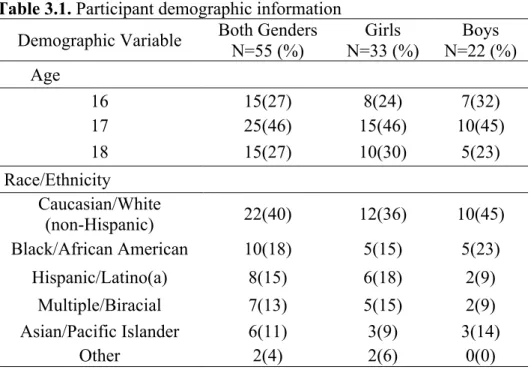
We had a total of 55 participants (girls=33, boys=22) between 16 and 18 years of age across the 10 (six with girls and four with boys) focus groups. Groups had between four and seven participants with an average of five participants per group. We provide additional demographic information on the participants in Table 3.1.
Table 3.1. Participant demographic information
Demographic Variable Both Genders N=55 (%) N=33 (%) Girls N=22 (%) Boys Age
16 15(27) 8(24) 7(32)
17 25(46) 15(46) 10(45)
18 15(27) 10(30) 5(23)
Race/Ethnicity Caucasian/White
(non-Hispanic) 22(40) 12(36) 10(45)
Black/African American 10(18) 5(15) 5(23)
Hispanic/Latino(a) 8(15) 6(18) 2(9)
Multiple/Biracial 7(13) 5(15) 2(9)
Asian/Pacific Islander 6(11) 3(9) 3(14)
Other 2(4) 2(6) 0(0)
There were also some other group characteristics of note apart from demographics. First, in two of the female groups and one of the male groups participants explained that they
people in his respective group. However, the nature and content of the discussions did not vary based on the closeness of the participants in their respective groups. Second, the ages of
participants within groups were mixed. Two female groups were composed of participants who were all 17 or 18 years of age. In the remaining eight groups the ages ranged from 16 to 18. Data Analysis
The focus group data were managed using word-processing software and Atlas.ti. We transcribed the audio recordings within 72 hours of each focus group. Analysis was iterative and began after the first focus group. Additionally, immediately following the conclusion of each focus group, we wrote up brief summaries using the observational notes and the transcripts to identify early themes that emerged during the focus group discussions. Some questions and probes were modified in response to these observations for subsequent focus groups. Once all of the groups were complete, we went back through the transcripts to ensure they were all
transcribed verbatim.
data (Saldaña, 2009). Codes were also discussed with the research assistant who aided with data collection. Repetitive codes that captured the same concepts were condensed into singular codes. For example, the codes “texting to break-up” and “break-up texts” were combined into the single code “text break-up”. The data were then recoded using the updated codes.
Focus groups were coded in chronological order to aid in determining the progression to thematic saturation and document variability between groups. We compared groups paying attention to similarities and differences that emerged in order to group codes into larger
categories. We also paid special attention to the group interaction and not just what was said out loud by participants in order to take full advantage of the focus group environment (Kitzinger, 1995). For example, interactions where there was consensus versus points in the discussion where participants disagreed with or challenged other group members were coded alongside what was said. Descriptions of nonverbal behavior based on the notes taken by the research assistant present at all of the focus groups were also included in the analyses and coded. Sample codes for non-verbal behaviors included “consensus”, “avoiding eye contact”, and “closed body language”. These additional analyses allow insights into the group dynamics and help illustrate the context in which participants shared their thoughts (Crossley, 2002; Kitzinger & Faqhuar, 1999; Myers & McNaughten, 1999). This is also why we present larger segments of transcripts in order to more accurately share the social interactive nature of the groups (Myers &
McNaughten, 1999).
Following an in-depth review of the code outputs, summaries, and memos we identified several key themes, which are detailed in the findings below. In order to protect the
3.3 Findings
We first describe participant technology use broadly and in the context of their romantic relationships. Next, we detail several technology-related behaviors in romantic relationships (e.g. finding partners, keeping in touch with partners). Finally, we describe the positive (benefits) and negative (consequences) ways in which emotional detachment and the absence of emotional context affect romantic relationships.
Participant technology use
Every participant in the study had a cell phone; 52 of the 55 participants had a
smartphone. The three without a smartphone primarily communicated with others through text messages or in-person, and were not as actively engaged on social networking platforms. The rest of the participants were about evenly split between those that described themselves as
constantly connected (i.e. using multiple applications and devices to communicate with peers and friends) or technology users with a large amount of down-time where they are disconnected from technology. Despite different amounts of technology use, across groups, participants emphasized that technology-based communication was ubiquitous among their peers and adolescents in general.
Hannah, a 17-year old senior, articulated a reoccurring sentiment across the groups that technology-based communication, while ubiquitous, and was both liked and disliked by
participants:
“Yeah it’s kind of like it’s a bad thing that you can always be in contact with them [romantic partners] and are expected to always be around but it’s a good thing that you can always be in contact with them too, it’s complicated.”
frequently said there was a social expectation that they engage with their friends and romantic partners through technology.
Staying constantly connected to peers and partners
Participants frequently described that they felt an expectation to be constantly connected through technology to peers and partners. Participants became animated and spoke passionately about the perceived pressure to stay connected and active via text and on social media
demonstrated in this quote from Daniel:
“Like…I can’t do anything, I can’t just have my own experience because I need to be attached at the hip with social media cuz like that is the expectation.”
Daniel, 16- year old male sophomore
Despite the expectation that they should stay constantly connected through technology, participants frequently discussed their perception that this resulted in adolescents being “too connected” to one another and their romantic partners. Participants described how the expectation to stay connected contributed to a need to be in constant communication with romantic partners. Joseph and Victor articulated the frustration at the expectations of constant communication that came up repeatedly in several groups:
“Joseph: So it gives the expectation that you have to always text the person. Once you’ve started texting if you get tired of it, it is hard to just be like “alright I don’t want to text you anymore” or something, you get locked into it and then people’s feelings get hurt when you don’t text back. It creates the expectation that you are going to be in constant connection and then if for some reason you are not, even if it’s a serious thing like your phone died or you are at work, people just freak out, “Where are you!” “You’re ignoring me!” it’s like, no I just couldn’t get to my phone.
Victor: Yeah like you’re talking or in class, they keep messaging you like nonstop like, “where are you” “what’s going on”, I’m in school, I’m in class, like come on.”
Joseph, 18-year old male senior Victor, 17-year old male senior