QUALITY INDICATORS FOR COLLEGIATE PROFESSIONAL PILOT TRAINING PROGRAMS:
A DELPHI STUDY
By
DOVIE (DEE) M. BROWN Bachelor of Business Administration
University of Central Oklahoma Edmond, Oklahoma
1975
Master of Natural and Applied Sciences Oklahoma State University
Stillwater, Oklahoma 2000
Submitted to the Faculty of the Graduate College of Oklahoma State University
in partial fulfillment of the requirements for
the Degree of
DOCTOR OF PHILOSOPHY May, 2007
QUALITY INDICATORS FOR COLLEGIATE PROFESSIONAL PILOT TRAINING PROGRAMS:
A DELPHI STUDY Dissertation Approved: Lynna J. Ausburn Dissertation Adviser Mary J. Self Committee Member Mary N. Kutz Committee Member
Charles Robert Davis Committee Member
A. Gordon Emslie
TABLE OF CONTENTS
Chapter Page
I. INTRODUCTION ... 1
Background ... 1
Theoretical and Conceptual Framework... 2
Standards ... 3
Best Practices ... 4
Statement of the Problem... 6
Purpose of the Study ... 7
Research Question ... 7
Population and Sample ... 8
Assumptions and Limitations ... 9
Delimitations ... 9
Definition of Terms ... 10
Significance of the Study ... 12
II. REVIEW OF LITERATURE Quality Standards and Best Practices in Business and Industry ... 14
Historical Perspective ... 14
Best Practices: What Does It Mean? ... 16
Best Practices: How Are They Useful? ... 18
Best Practices: What Issues Surround Their Application? ... 20
Accreditation of Institutions and Programs in Higher Education ... 22
Historical Perspective ... 22
Accreditation as a Guarantee of Quality ... 25
Accreditation and Accountability ... 29
Rating and Ranking of Institutions in Higher Education ... 31
History of Professional Pilot Programs in Higher Education ... 36
Past Attempts to Rate Aviation Programs with Quality Indicators ... 40
Reasons for Interest in Identifying Exceptional Programs ... 42
Summary and Conceptual Link to This Study ... 45
General Research Approach ... 47
Specific Research Model: Delphi Method ... 47
Mixed-Method Delphi Design ... 49
Methodology ... 52
Population and Sample: The Delphi Panel ... 52
Procedures ... 53
Instrumentation and Data Collection ... 56
Data Analysis Techniques ... 57
IV. FINDINGS ... 60
Summary of the Study ... 60
Research Question ... 60
Summary and Integration of Findings ... 103
V. SUMMARY, CONCLUSIONS, AND RECOMMENDATIONS ... 110
Introduction ... 110
Summary of Purpose and Research Methodology ... 112
Summary of Findings ... 114
General Conclusions ... 115
Summary of Categorized Conclusions ... 116
Discussion ... 145
Implications and Recommendations for Future Research ... 148
REFERENCES ... 150
APPENDICES ... 167
APPENDIX A – SOLICITATION LETTER FOR NOMINEES AND NOMINATION FORM ... 168
APPENDIX B – LIST OF NOMINEES ... 171
APPENDIX C – REQUEST FOR PARTICIPATION LETTER ... 174
APPENDIX D – PARTICIPANT CONSENT FORM ... 176
APPENDIX E – ROUND ONE QUESTIONNAIRE ... 178
APPENDIX G – ROUND THREE QUESTIONNAIRE ... 185 APPENDIX H – IRB APPROVAL FORM ... 187 APPENDIX I – COPYRIGHT PERMISSION ... 189
LIST OF TABLES
Tables Page
I. Final Analysis of All Categories………64 II. Final Analysis – Faculty Category………65 III. Final Analysis – Equipment and Technology Category…………68 IV. Final Analysis – Curriculum and Instructional Delivery
Category………...72 V. Final Analysis – Government (FAA) Compliance Category…….78 VI. Final Analysis – Facilities Category……….82 VII. Final Analysis – Assessment/Evaluation Category………86 VIII. Final Analysis – Flight/Administrative/Staff Support
Category………90 IX. Final Analysis – Completion Rates Category………..95 X. Final Analysis – Student Organizations Category………..99 XI. Categories in Descending Order of Perceived Importance
by Delphi Panel……….….103 XII. Categories by Tier Level in Order of Importance………..114
LIST OF FIGURES
Figure Page
1. Intellectual Capital as Best Practice……… 16
2. Sequential Exploratory Research Model……….50
3. Location of Delphi Panel of Experts by State……….54
NOMENCLATURE
99s Ninety-Nines – an international organization of women pilots founded in 1929 by 99 licensed women pilots for mutual support and advancement of aviation
AAAE American Association of Airport Executives
Advisory Circular Publications intended to provide advice and guidance to illustrate a means, but not necessarily the only means, of complying with the regulations, or to explain certain regulatory requirements by providing informative, interpretative and explanatory material
AFD Airport Facility Directory – a publication listing information of operational importance about airports including
communications data, navigation aids and special notices and procedures
AHP Alpha Eta Rho – international collegiate professional aviation fraternity established in 1929
AIAA American Institute of Aeronautics and Astronautics AOPA Aircraft Owners and Pilots Association
Avionics The electronic instrumentation and control equipment used in airplanes and space vehicles
CRM Crew Resource Management – aviation training that encompasses a wide range of knowledge, skills, and attitudes including communications, situational awareness, problem solving, decision making and teamwork; CRM is primarily concerned with making optimum use of all available resources both technical and non-technical
DME Distance Measuring Equipment – provides accurate and continuous monitoring of correct progress on the ILS to the pilot
DUATS Direct User Access Terminal Services – a weather
information and flight plan processing service contracted by the FAA for use by U.S. civil pilots
EAA Experimental Aircraft Association
FAR Part 61 Federal Aviation Regulation that prescribes the requirements for issuing pilot, flight instructor, and ground instructor
certificates and ratings
FAR Part 141 Federal Aviation Regulation that prescribes the requirements for issuing pilot school certificates, provisional pilot school certificates, and associated ratings
FAR Part 142 Federal Aviation Regulation that prescribes the requirements governing the certification and operation of aviation training centers
FBO Fixed Base Operator – a service center at an airport offering a variety of services such as refueling, aircraft rental,
deicing, aircraft towing, etc., and which may include flight training as a service
FITS FAA-Industry Training Standards – a program partnership between FAA, Industry, and Academia designed to enhance general aviation safety by developing flight training programs that are more convenient, more accessible, less expensive, and more relevant to today‘s users of the National Airspace System
GPS Global Positioning System – a satellite navigation system transmitting signals to a receiver to determine the receiver‘s location, speed, and direction
ILS Instrument Landing System – an instrument approach system which provides precise guidance to an aircraft approaching a runway
MAAP Multicultural Association of Aviation Professionals NAFI National Association of Flight Instructors
NDB Non-Directional Beacon – a radio broadcast station used as an aviation or marine navigation aid (less sophisticated than VOR)
NOTAM(s) Notice to Airmen – an announcement issued by aviation authorities to alert aircraft pilots of any hazards en route or at a specific location
PAMA Professional Aviation Maintenance Association
POI Principal Operations Inspector – an FAA designated Aviation Safety Inspector experienced in piloting and management in FAA Part 121, Part 135, and/or Part 141 operations
TSA Transportation Security Administration – a component of the Department of Homeland Security, formed following 9/11 and responsible for security of all the nation‘s transportation systems
UAA University Aviation Association – the voice of collegiate aviation education educators, industry, government, and the public in advancing degree-granting aviation programs for all segments of the aviation industry; originated the movement for curricula accreditation of aviation training programs that eventually resulted in the formation of the CAA (1992), now the AABI.
VOR VHF Omni-directional Range – a type of radio signal navigation system for aircraft
CHAPTER I
INTRODUCTION
Background
According to the Aircraft Owners and Pilots Association (AOPA), there are more than 200 institutions that offer aviation majors: 93 offer bachelor‘s degrees and 112 offer associate (two-year) degrees (Kitely, n.d.). In the United States and Canada, there are approximately 114 educational institutions at the two-year and four-year level that offer professional pilot training as an area of
specialization (University Aviation Association, 2004). However, within the field of aviation in the United States there are no commonly agreed-upon
characteristics that are identified with exceptional professional pilot training programs. A cursory review of the literature revealed that standards exist for institutional accreditation, such as the National Council for Accreditation of Teacher Education (NCATE) and the North Central Association of Colleges and Schools (NCA). Within the field of aviation education, the Council on Aviation Accreditation (CAA) is a nonprofit organization that sets standards for aerospace programs taught in colleges and schools around the United States and Canada. The CAA adopted as one of its goals for collegiate aviation accreditation the
establishment of uniform minimum educational quality standards (CAA Form 101, p.6). Although the CAA standards afford certification of professional pilot
programs under its Flight Education option, the minimum standards are below what some programs at four-year institutions aspire to reach and maintain. For example, this position has been voiced by several aviation educators at
Oklahoma State University (OSU). Specific programs within a subject area, such as professional pilot training, do not necessarily address the specific
characteristics that actually define a top-rated program, particularly within the aviation field. Further, in light of the occurrence of September 11, 2001 and the averted British terrorist plot of August 2006, public concern for air safety has caused a greater awareness of the need for accountability. These factors provided the researcher with the impetus to conduct this study.
This study was specifically designed to determine the quality indicators of an exceptional professional pilot flight training program in higher education as perceived by professional aviation educators. Establishment of such a set of quality indicators could prove useful for future development of a rating and/or ranking system for professional pilot training programs in colleges and
universities and for raising the overall quality of these training programs.
Theoretical and Conceptual Framework
The theoretical support for this study was derived from the concept of Total Quality Management (TQM) principles. TQM was the quality business strategy put forward by W. Edwards Deming and Joseph Duran as a philosophy for the successful development, use, and maintenance of all aspects of an
operation in order to achieve excellence. TQM was the precursor to many quality initiatives and helped lay the foundation for other concepts such as best practices and benchmarking.
Standards
In a contemporary world setting, standards exist which are unique in many realms such as business, industry, education, health care, environmental, and others. According to one dictionary definition of ―standard,‖ a standard is ―something considered by an authority or by general consent as a basis of comparison; a rule or principle that is used as a basis for judgment‖ (Webster’s College Dictionary, 1995, p. 1303). For example, in education, standards make it possible for the public to see what schools are trying to teach and what
students are being required to learn. Regardless of the domain, standards exist for a variety of reasons: to provide focus, promote consistency, improve
performance, increase credibility, and ensure success (Schray, 2006).
The use of standards has a clear history in business and industry to guarantee the consumers of products and services that certain levels of
reliability, safety, efficiency and interchangeability are present. As far back as medieval Europe, craftsmen and merchants organized into unions called guilds, for the purposes of ensuring that guild members maintained standards for product and service quality. The common practice of placing a special mark or symbol on the items produced attested to the guild member‘s responsibility to satisfy the consumer and uphold the standards of the guild. This approach to sustaining manufacturing quality through applied standards remained essentially
the same until the early nineteenth century and the beginning of the Industrial Revolution (American Society for Quality, 2004).
With the onset of rapidly changing technology during the 1980s came the realization that improvement in internal business processes was necessary to assure long-term survival and growth in a global market (Camp, 1995). In order to identify the best practices of their competitors, businesses began to use standards or benchmarking as a way ―to determine who else does a particular activity the best and emulating what they do to improve performance‖ (Blakeman, 2002, ¶ 1). It is a premise of this study that standards or benchmarks exist within the field of professional pilot training, that these standards can be identified by professionals in the field, and that identification of these standards can be beneficial to the field.
Best Practices
Using benchmarking to identify best practices, businesses were able to systematically arrange or codify standards in a given area and to identify effective professional practices frequently referred to as ―best practices.‖
Common throughout the literature is the notion that there is no universally accepted definition of best practice (Agur, 2006; Maire, Bronet, & Pillet, 2005). However, according to Sacket, Rosenberg, Gray, Haynes and Richardson (1996), there are several themes that run through all of the definitions: ―The practice must demonstrate success or have an impact, and the practice must be able to be replicated‖ (¶ 9).
Buyukozkan and Maire (1998) offered one definition of best practices as ―those techniques the best companies have adopted to achieve superior results‖ (p. 101). Ultimately, best practices are primarily designed and implemented to assure operational and organization success (Agur, 2006). In the field of education, Krueger (1993) identified best practice as answering the question of how to improve teaching and learning in higher education. The federal
government also publishes best practices for use in health delivery, highway construction, welfare reform and education initiatives (Patton, 2001).
Benchmarking was the first process that involved looking outside the organization to identify best practices by comparing performance measures with other organizations that perform the same duties or processes. Recently, quality indicators of best practices have been useful to help benchmark best practices in Web-based nursing courses (Billings, Connors & Skiba, 2001), in programs for students with handicaps (Kleinert, Smith & Hudson, 1990), in healthcare
performance (Czarnecki, 1996; Higgins, 1997), and in assessment of educational improvement (Highett, 1994). Similar efforts have not been made in professional pilot training programs. Therefore, this study proposes that identification of a set of quality indicators for professional pilot training programs could assist in the development of benchmarks for best practices in aviation education. Further, identifying quality indicators could be useful for future development of a ranking system for professional pilot training programs in colleges and universities. This study assumed the existence, identifiability, and efficacy of best practices or quality indicators for collegiate professional pilot training programs. It sought to
identify quality indicators as perceived by professionals in the field and present these perceptions in a best practices model.
Statement of the Problem
Aviation education programs that offer professional pilot training vary from institution to institution, and the cost associated with this training is high. Hourly costs for flight training range from $70 to $160 per flight hour depending on the type of aircraft being used. It is not uncommon for professional pilot students to invest up to $30,000 over and above regular college tuition in order to meet the degree requirements of a professional pilot program at a four-year university. Students as consumers seek to obtain the best value for their money and must choose between programs offered at various institutions. Without a common understanding of what constitutes an exceptional professional pilot training program, students have no basis for justifying comparison among institutions. In addition, aviation educators are faced with the task of convincing prospective students that their programs are good and meet the needs of the aviation industry. This is difficult without identified quality indicators to serve as
benchmarks and bases for comparison. Therefore, the problem for this study is lack of available information to answer the question: ―What do aviation educators at four-year institutions perceive to be quality indicators for an exceptional
professional pilot program in higher education?‖ The findings of the study could be useful in eventually developing criteria for rating professional pilot programs and could assist in the development of standards for those programs.
Purpose of the Study
The purpose of this study was to describe the quality indicators that identify an exceptional collegiate professional pilot program as identified by a panel of experts in aviation education.
Research Question The following question guided this research:
What are the perceived quality indicators that identify an exceptional professional pilot program in higher education in the following areas:
1. Facilities
2. Equipment and technology 3. Faculty
4. Flight/Administrative/Staff Support 5. Government (FAA) compliance 6. Student organizations
7. Completion rates
8. Assessment/Evaluation
9. Curriculum and instructional delivery 10. Miscellaneous
These areas were derived from aviation-related literature, CAA accreditation guidelines, and FAA regulations.
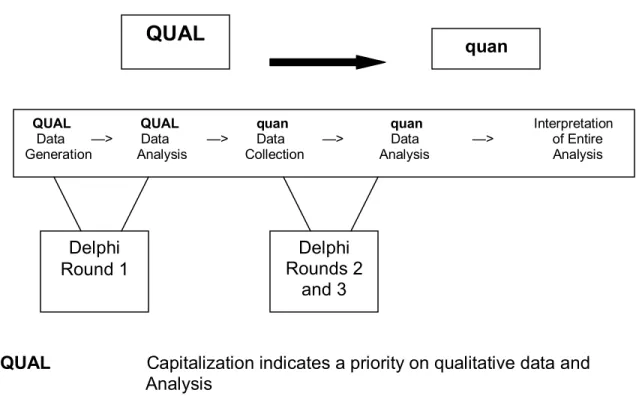
The research question was addressed by using the Delphi technique to collect and converge the opinions of experts regarding quality indicators for
of experts consisting of aviation educators from 4-year institutions who had been nominated by their peers and had met the criteria for participation. The typical Delphi technique involves three rounds of surveys. The first round input asked panelists to state their perceptions of quality indicators in nine specific categories and one miscellaneous category. Responses to the first round of input were analyzed and synthesized using the constant comparison method. The constant comparison method was used within and between the categories. The resulting statements were provided as feedback to the panelists. In round two, panelists were asked to rate and rank both the categories and the comments within the categories. The top eight to ten comments within each of the categories were provided as feedback in round three and panelists were asked to complete a final rating and ranking to identify perceived importance of both criterion categories and items within each category.
Population and Sample
The Delphi technique utilizes a non-random sample of expert panelists. In the Delphi, the expertise of the panel is more important than its
representativeness (Ausburn, 2002). For the purposes of this study, heads of aviation departments with professional pilot training programs at 58 institutions of higher education across the United States were identified as the population and were requested to nominate potential participants as panel experts based on specific criteria provided by the researcher. The potential participant pool included 37unique nominations. To maintain both expertise and
this study. The volunteer sample agreeing to participate totaled 13 panelists representing 11 states within the continental United States.
Assumptions and Limitations
For purposes of this study, the following assumptions and limitations were accepted:
1. It was assumed the panelists who participated in the Delphi responded honestly.
2. It was assumed the panelists, who were recommended by their professional peers, had expertise to identify quality indicators accurately.
3. The time restrictions imposed on the panelists to respond may have resulted in some panelists dropping out before completing all three rounds of the Delphi, which may have biased the data.
4. There was a possibility that the qualitative, open-ended input provided by the panelists was misinterpreted by the researcher.
Delimitations Delimitations of the study included:
1. This study did not develop or propose a formal set of standards for assessing professional pilot training programs. It was limited to identifying the quality indicators that were perceived by peer-identified aviation experts to
characterize an exceptional professional pilot training program. These indicators might or might not be adopted by individual institutions, but they might be used by the profession in the future to develop formal program standards.
2. This study did not include panelists from non-educational organizations. Thus, findings are not generalizable or applicable to other sectors.
Definition of Terms
The following definitions were applied in this study to provide, as nearly as possible, clear and concise meanings of terms:
Conceptual Definitions
Aviation education – a program designed to prepare students for careers in the aerospace industry in commercial aviation and related businesses as FAA-certified pilots, fixed-base operations managers, airport managers, airline
management personnel and other positions in the aviation industry (adapted from Oklahoma State University Catalog, p. 118 and Ohio State University,
Assessment Report, p.1).
Professional pilot program – an option that includes all flight requirements for private pilot, commercial pilot with instrument rating, may include
multi-engine, and certified flight instructor ratings, and is specifically designed to lead to a bachelor‘s degree at a four-year institution of higher learning (adapted from Oklahoma State University Catalog, p. 118).
Delphi study – a technique for eliciting and refining the perspectives of a homogeneous panel of experts through several rounds of questioning with controlled feedback (Lindstone & Turoff, 1975; Turoff & Hiltz, 1995).
Constant comparison method – an analytical strategy that involves taking one piece of data (one statement, one theme, etc.) and comparing it with all
others that may be similar or different in order to develop conceptualizations of the possible relations between various pieces of data (Thorne, 2000).
Operational Definitions
Delphi panel – a purposively selected panel of 13 aviation experts
consisting of aviation educators at four-year institutions who have a minimum of five years of university experience in a professional pilot training program, and who were identified by their professional peers as having expertise to represent the aviation field.
Delphi instruments – the three iterative questionnaires administered to the panel of aviation experts.
Quality indicators – the characteristics of exceptional collegiate
professional pilot programs as identified by the Delphi panel in 10 categories: 1. Facilities
2. Equipment and technology 3. Faculty
4. Flight/Administrative/Staff Support 5. Government (FAA) compliance 6. Student organizations
7. Completion rates
8. Assessment/Evaluation
9. Curriculum and instructional delivery 10. Miscellaneous
Sigma rank score (Rank) – the total of a Delphi item‘s raw rankings. Sigma rank point score (RankPoint) – the point values assigned to summed rankings of Delphi items by reversing ranks and point values (e.g., rank 1 = 10 points, rank 10 = 1 point) so that higher ranked items have more points.
Tier analysis – the identification by major break points in the RankPoint scores of Delphi items and the point ranges within and between each tier level. Rating – a numerical indication of perceived importance for Delphi items from 1 to 5 with rating 1 as ―not important; 2 as ―somewhat important; 3 as ―moderately important; 4 as ―important‖; and 5 as ―very important.‖
Ranking – a numerical score of Delphi items for relative importance among items, with rank 1 being the most important to rank n being least important.
Significance of the Study
Within the field of aviation there are no agreed upon or recognized qualities and elements that are identified with exceptional aviation programs. The researcher has served on the Aviation Advisory Council for the past five years, and during this time board members from various institutions and private industry have expressed concern about the curriculum at Oklahoma State
University, the quality of the students being trained, and whether the students are meeting the needs of 21st century aviation. This concern has been specifically geared toward the preparation of students in the professional pilot degree program. This research provided a description of quality indicators that knowledgeable aviation educators believe characterize an exceptional
professional pilot program at four-year institutions. The results of this study could serve as the basis for development of standards, strengthening of training
programs, and eventual development of an assessment tool for professional pilot training programs in four-year institutions.
CHAPTER II
REVIEW OF LITERATURE
Quality Standards and Best Practices in Business and Industry
Historical Perspective
The early twentieth century gave birth to the idea that quality was relevant for the manufacturing processes that create consumer products. Business and industry needed quality standards in order to create a common understanding or meaning and to enhance levels of competence as a way to promulgate best practice or accreditation (Skyrme, 2002). Kujala and Lillrank (2004) stated that the quality movement originated with the statistical quality control (SQC) of manufacturing processes, commonly known as quality control. According to the American Society for Quality (2004), statistician Walter Shewhart for Bell
Laboratories originated the concept of controlling all the activities or ―processes‖ that are essential to the quality of the final product.
After World War II, the Japanese aggressively adapted the Total Quality Management (TQM) principles developed from the quality management model advocated by American experts W. Edwards Deming and Joseph Duran. The Japanese took TQM a step farther and developed a quality business strategy called ―kaizen‖ which literally means ―change‖ and ―good or for the better.‖
For the first time, all levels of the organization and not just management emphasized quality.
In response to the success of the Japanese in the global marketplace, the United States government created the Malcolm Baldrige National Quality Award in 1987 to help revitalize the economy. The award established criteria for
excellence in business performance based on Japanese quality management practices and provided applicants with self-assessment and improvement tools. The award process also set up criteria to help improve performance practices and to facilitate communication and sharing of best practices among U.S. organizations of all types (Baldrige National Quality Program, 2006).
Beginning in 1981, in an effort to improve organizational performance, Motorola Incorporated combined the concepts of TQM and SQC to develop target performance measures called Six Sigma. By combining quality
management principles with statistical analysis, Motorola succeeded in improving the company‘s operational performance and in identifying and preventing defects in manufacturing and service-related processes (Vitalo, 2005). Motorola
received the first Malcolm Baldrige National Quality Award in 1987 for its quality efforts.
During the 1980s, the methods used in TQM to analyze internal business processes proved too slow to keep up with external business competitors
(Blakeman, 2002). As a result, benchmarking became the first process that involved looking outside the organization to identify best practices by comparing performance measures with other organizations that perform the same duties or
processes. Buyukozkan and Maire (1998) referred to benchmarking as a comparative analysis conducted to measure the gap between an organization‘s current performance level and what other organizations do better. Weller (1996) described benchmarking as ―competitive intelligence gathering‖ that allowed one organization to understand how another organization‘s best practices contributed to exemplary performance (p. 24).
Best Practices: What Does It Mean?
With the emergence of a global economy, business and industry have come to value ―intellectual capital‖ as that knowledge which can provide an organization with a competitive edge in the marketplace (Patton, 2001). To further show how the application of best practices becomes an integral part of intellectual capital, Patton outlined a chronology of capitalist economic evolution (Figure 1).
Age Commodity Asset
Agricultural age Land Tenure Wealth Industrial age Financial Capital Wealth Knowledge age Intellectual Capital Wealth
Best Practices Figure 1. Intellectual Capital as Best Practice
Based on Evaluation, Knowledge Management, Best Practices, and High Quality by Michael Q. Patton, 2001.
As businesses focused on intellectual capital to increase productivity and spur innovation, they looked to best practices as a form of knowledge having the potential to impact success. By looking at other winning organizations and adapting their proven practices, businesses hoped to improve their own performance. In other words, identifying best practices can make process improvement possible without having to ―reinvent the wheel‖ (Elmuti &
Kathawala, 1997). Camp (1989) further defined best practices as those ―that will lead to the superior performance of a company‖ (p. xi). Davies and Kochhar (2002) described best practices as ―Those that lead to improvement in
performance. That is, they help a low performing company become a medium performer, a medium performer become a high performing company, and a high performer stay successful‖ (p. 302). Thus, best practice is most often associated with higher levels of performance.
Pursuing best practices by looking outside an organization for process and performance improvements can also show a company different ways of thinking that shed new light on old processes. Hiebeler, Kelly and Ketteman (1998) stated the purpose of best practices is to ―disturb you with new ideas and insights. We mean ‗disturb‘ in a positive way‖ (p.28). For example, a similar or familiar process viewed without bias to the past may have a unique application other than its current use. Therefore, a different perspective has the potential to be a catalyst for growth, in terms of both customers and profitability. Higgins (1997) described best practices as representing ―innovative practices that contribute improved performance through leadership and shared vision,
customer focus, knowledge of best practices, resources and support systems, innovative human resource management, work organization, and effective and strategic external relationships‖ (p.61).
Businesses may increase opportunities for identifying and implementing successful best practices by maintaining close communications with customers to identify and understand what they want and how they define quality
(Blakeman, 2002). Just as organizations are dynamic in nature, the techniques identified as best practices are also dynamic and can be an indicator of changing customer demands. Blakeman (2002) reported that best practices perpetually evolve with changes in customer expectations, as well as improvements in the general knowledge base. Staying attuned to current trends in the marketplace and implementing timely changes to best practices may provide the competitive edge that differentiates the winners from the losers.
In summary, best practices means that organizations have evolving standards, know their customers‘ needs, and are willing to make the effort to continuously search for ways to improve processes and performance.
Best Practices: How Are They Useful?
Best practices that are highly respected often become a synthesized framework or codification of standards. For example, ISO 9000 quality standards have evolved over the past decade (Skyrme, 2002). ISO quality standards
helped establish compatibility and interchangeability, particularly among manufactured components. Adherence to common standards enhanced efficiency and allowed for the application of proven practices to new situations
and/or organizations. Through the use of standards, competitiveness among businesses led to enhancing product quality and reducing prices, accompanied by higher levels of safety. In the end, standards enhanced levels of competence through promulgation of best practice (Skyrme).
One of the primary uses of benchmarking to identify best practices is to make best practices a vehicle for change to quality. Elmuti, et al. (1997) concluded that the target of the change can vary from the general, such as increasing productivity (process oriented), or to the specific, such as improving the design of an instrument (product oriented). By looking outside the company or organization at similar processes or products, new opportunities may arise for breakthrough solutions.
By identifying best practices, a company or organization may gain a better understanding of where it stands in relation to others. Learning from others who are more successful and sharing information will enable a company to
understand its own operations better and be able to identify target areas for improvement. Additionally, using benchmarking to identify best practices can eliminate waste and help to improve a company‘s market share (Elmuti, et al., (1997).
Organizations that implement best practices frequently benefit from the team-building efforts of those involved in the implementation process, who are working toward a common goal—to improve performance. Blakeman (2002) reiterated that implementation of best practices is frequently smoother and more
successful when the ideas and concerns of affected team members have been considered.
Welsh and Metcalf (2003) wrote about the usefulness of best practices that resulted from the increased emphasis on accountability. They indicated that stakeholders in both the public and private sectors expect those in charge of increasingly constrained resources to be cognizant of the need for the
efficiencies and effectiveness brought about by using best practices. They concluded that public and private sector organizations can use best practices as a starting point for developing effective and efficient business processes that conform to their own organization‘s structure and goals.
Best Practices: What Issues Surround Their Application?
One problematic issue hindering the use of best practices relates to the focus on data only (Elmuti, et al, 1997; Maire, Bronet, & Pillet, 2005). Adding to that problem, when statistical precision or metrics is assigned to the data, the processes used to arrive at the resulting data are frequently ignored. The value of best practices involves understanding the processes that produced the data and formulating ways to adopt those practices into the organization. Maire, et al. expanded on this idea by concluding that knowing that an organization is worse than the competition is of no value if the organization does not know why the competition is better.
There is a tendency for some organizations to look within the industry to identify best practices as opposed to learning from organizations that have similar processes but are not competitors (Fry, Humphreys, & Francis, 2005).
Fry, et al. emphasized that identifying best practices from outside an industry may overcome issues of competitive sensitivity that makes access to certain information unethical or even illegal. Codling (1997) warned that concentrating on learning from one industry fails to take into account the potential for significant breakthroughs suggested by best practices in other industries.
Identifying differences or variations to best practices requires the use of performance measures. The research literature suggests that both quantitative and qualitative data can contribute to these measures. While quantifiable performance measures can allow for the detection of variation to best practices, qualitative measures (nonmetric data) enhance the knowledge of quantifiable measures (metric data) by offering reasons for variations and possible solutions to ensure best practices (Buyukozkan & Maire, 1998; Higgins, 1997). However, Anderson and Gurney (1993) espoused the importance of quantifiable measures but acknowledged the difficulty of determining which variations in inputs resulted in which outputs.
Concern in recent research has focused on the appropriate transfer of best practices. According to Davies, et al. (2002), emphasis has shifted from identification of best practices to the need to manage and transfer best practices. Best practices literature is primarily descriptive of the practices that successful organizations have implemented. Much of the information is limited to
identification and dissemination rather than an in-depth analysis of the specific practices, their uses, and implications for performance. A more detailed
whether a best practice is transferable or appropriate for its use. Davies et al. addressed this need by examining several studies that provided an analysis of best practices. However, they found that the ―links with performance are general and there is little cause and effect analysis of the impact of the practices on performance‖ (p. 290).
The literature indicates that identifying best practices is a dynamic, evolving process not to be confused with a one-shot, quick-fix solution. It is a never-ending, learning process that should be integrated into an organization‘s culture and business practices. Once an organization has taken on the task of identifying and integrating best practices into its operations, the task does not end. Best practice advocates have claimed that results of performance and process improvements should continually be observed and opportunities for improvement should be sought out by all levels of the organization. For example, Weller (1996) reiterated that best practices, regardless of their potential for
positive performance results, cannot promote the necessary changes to quality without the support and continuous involvement of the entire organization.
Accreditation of Institutions and Programs in Higher Education Historical Perspective
While the search for quality has been a hallmark of business and industry, it has also been a part of higher education. The quality movement in American higher education began in the late nineteenth century with the establishment of private accrediting bodies that endorsed colleges and universities volunteering to participate in the accreditation process. These private accrediting bodies
evolved into several sectors including eight Regional agencies in six regions that now accredit entire institutions within their region; 48 Specialized or
Programmatic agencies that accredit specific programs, such as healthcare management and social work; Faith-Based agencies that accredit religiously-affiliated or doctrinally-based institutions; and Private Career agencies that accredit institutions focused on a single purpose, such as business and information technology. These accreditors are recognized by the Council for Higher Education Accreditation (CHEA) and/or the United States Department of Education (USDE) (CHEA, 2006a; Morse, 2004). As of April 2006, the numbers of institutions and programs accredited by CHEA and/or USDE recognized accreditors included 6,814 institutions and 18,152 programs (CHEA, 2006b).
According to the CHEA (2006c), accreditation is defined as ―a collegial process based on self- and peer-assessment for public accountability and
improvement of academic quality‖ (p. 19). Both the USDE and the CHEA stated that the purposes of accreditation included:
1. Assuring academic quality to students and the public;
2. Allowing access to Federal funds such as student grants and loans and other federal support;
3. Easing transfer of courses and programs among colleges and universities; and
4. Engendering private sector confidence for employers who evaluate credentials of job applicants and who may be providing financial
support to current employees seeking additional education. (CHEA, 2006c, p.2)
There are other accrediting bodies that are not recognized; they either choose not to be recognized or do not meet the prescribed requirements for accreditation. For example, the Accrediting Council for Colleges and Schools, the American Federation of Colleges and Schools, the Central States Consortium of Colleges and Schools, and the Middle States Accrediting Board lack
recognition from the USDE or the CHEA (CHEA, 2006d).
According to Wellman (2003), ―Accreditation of higher education is a distinctively American invention, substituting for direct governmental regulation of academic standards…‖ (p. 58). While private accreditation has a long history as an accepted activity in the field of education in the U.S., most other countries rely on governmental supervision and control. U.S. institutions of higher learning initially implemented formal private accreditation as a means of differentiating themselves from less respected institutions such as art schools, normal schools, technical schools, music conservatories, and others (Leef & Burris, 2002; Times Higher Education Supplement, 2004).
Since its inception, higher education accreditation has been defined in a variety of ways, but consistently includes the following elements:
1. Accreditation is a voluntary process.
2. Accreditation is a process of external review against a set of pre-determined standards.
3. Accreditation is used by higher education for quality assurance and quality improvements. (Arnold, Kozel, & Velarde, 2004; Dodd, 2004; Leef, et al., 2002; Wellman, 2003)
Establishing minimum standards for admissions and course equivalencies (transfer of credits between institutions) further expanded the role of accreditation in higher education after World War II. In addition, with the passage of the
Servicemen’s Readjustment Act in 1944 (also known as the G.I Bill), state education agencies were required to determine the eligibility of institutions for federal research and financial funds. In 1952, Congress amended the G.I.Bill to authorize state education agencies to rely upon private accreditation to
determine eligibility for financial aid (Leef, et al., 2002). At the same time, Congress passed the Higher Education Act (HEA) that created a link between eligibility for Federal student aid funds and accreditation. The HEA, under Title IV, required only institutions accredited by federally recognized accrediting bodies be allowed to accept and distribute student aid funds (Dodd, 2004).
Accreditation as a Guarantee of Quality
While institutional accreditation was often viewed as a guarantee that institutions and programs met certain standards, some researchers have
questioned whether this guarantee assures quality. Based on their review of the literature in 2002, the American Council of Trustees and Alumni (ACTA)
concluded that accreditation has not served to ensure the quality of programs or departments. The ACTA characterized the accreditation process as one that is
processes rather than at how institutions teach or what students learn.
According to Lezberg (1999), accreditation cannot guarantee quality but can give reasonable assurance of the content and quality of the education being offered. Leef (2003) found that accreditation did not ensure academic quality because of the lack of academic rigor brought about by deterioration of the curriculum at many institutions. However, Eaton (2003) offered that accreditation does provide the public with access to considerable information in the form of a
comprehensive listing of accredited institutions and the standards and processes used to determine accredited status. Further, Harvey (2004) asserted that
accreditation is not separable from issues of quality because the underlying premise of accreditation intertwines with audit, assessment, and other forms of quality evaluation. Eaton (2003) and Kristoffersen, Sursock and Westerheijden (1998) surmised that accreditation may be more indicative of assuring a
threshold [italics added] for quality; that is, accreditation sets norms and criteria which represent minimum standards for quality.
The U.S. system of accreditation represents a vast array of institutions and programs. Bollag (2004) discussed how the U.S. system of accreditation is widely praised for promoting quality in highly diverse educational settings. Volkwein, Lattuca, Caffrey and Reindl (2003) concluded that this diversity of educational institutions and programs may make a prescriptive set of quality standards non-responsive to the needs of students and industry. Although each accrediting agency establishes its own standards by which institutions and
faculty, services and academic support for students, curriculum, and financial capacity. Any efforts to standardize accreditation in order to ensure quality may be too complex an endeavor considering the numbers of institutions involved and their differing missions (Volkwein, et al., 2003; Wergin, 2005).
In 2001, the Council of Regional Accrediting Commissions (CRAC) studied each of the regional accrediting commissions and their approach to assessing student learning. One product of that study was the adoption of the ―Principles for Good Practices‖ in 2003 which dealt with accreditation assuming responsibility for evaluating the quality of student learning. This study concluded that:
1. The quality of student learning was defined differently by different institutions and depended on the specific learning mission.
2. Accreditation should not dictate a common set of learning outcomes but rather learning goals must relate to institutional mission and to the certificate or degree awarded.
3. Collective evidence of learning outcomes should be in multiple forms and interpreted from multiple perspectives.
4. Accreditation functions not only to assure academic quality but to help institutions make educational improvements.
5. Accreditation should focus on examining how well institutions align mission with learning goals, learning goals with learning activities, learning activities with learning evidence, and learning evidence with improvement of educational practice. (p. 32)
In contrast to the conclusions of the ACTA (2002), the CRAC (2001) praised and encouraged the role of accreditation and its responsibility for evaluating the quality of student learning. Along with responsibility for student learning, the CRAC advocated a role for accreditation that respects the diverse missions and goals of higher education institutions. Further, Contreras (2005) stated that adopting a culture of sameness may mean that standards are ―pushed down,‖ and not maintained at a high level (p.1). Even the U.S. Department of Education (USDE) referred to the goal of accreditation as ensuring that education provided by institutions of higher education meet ―acceptable levels of quality‖ (USDE, Overview of Accreditation, n.d., ¶ 1). However, Dodd (2004) concluded that accreditation standards can be used as a guide for assessment, planning, and resource allocation and that higher
education can look at accreditation standards as representing best practices. Along with accreditation standards, a number of higher education
institutions have used the Malcolm Baldrige National Quality Award criteria as a framework for self-assessment, planning, and improvement initiatives. Some regional accrediting agencies allow the use of the Baldrige criteria as an alternative format for accreditation. In 1999, the North Central accrediting
agency initiated an alternative accreditation format entitled the Academic Quality Improvement Project (AQIP) which is modeled on the Baldrige award. The AQIP criteria differ from traditional accreditation criteria in that they focus on process, results, and continuous improvement (Dodd, 2004).
In summary, accreditation of institutions and programs in higher education functions as an individualized process taken on by institutions to establish
educational credibility. It was never intended to be a method for rating one institution against another.
Accreditation and Accountability
Accreditation in higher education has typically been tied to educational accountability through accreditors‘ established recognition standards.
Accreditors were first mandated to look at student learning outcomes as a condition of recognition, in the USDE rules established in 1989. In 1992, in the reauthorization of the Higher Education Act, the USDE added the criteria that accreditors were required to look at student achievement as a measure of academic quality (Farrell, 2003). However, lacking specific directives,
accreditors focused on external peer review, self-reviews, and certification as proof of academic quality. Daigle and Cuocco (2002) found that those efforts seldom resulted in sustained or long-term improvements leading to increased accountability. In light of decreasing resources beginning in the 1980s, public officials and the general public demanded greater accountability in higher education, particularly in terms of return on investment and added value. With this growing demand for accountability, in 1989 accreditors adopted formal policy language used in their recognition standards that specifically stated the following: ―Demonstrate accountability: Accreditors have standards that call for institutions and programs to provide consistent, reliable information about academic quality
(CHEA, 2006b, p. 3). This policy is still reflected in the current recognition standards of both the CHEA and the USDE as revised in January, 2006. What remains unclear and controversial is how to demonstrate student learning as an outcome of higher education—what constitutes acceptable evidence of student learning. Accountability systems vary from program reviews, accreditation
reviews, data submission, financial audits, and regular trustee or governing board oversight. To further address what constitutes acceptable evidence of student learning, in November, 2005, the CHEA established the Award for Institutional Progress in Student Learning Outcomes. The purpose of the award was to acknowledge outstanding institutional progress in developing and applying evidence of student learning outcomes either institution-wide, within a specific program, or in a specific major. What is significant about the award criteria is that institutions had to provide evidence that articulated and demonstrated successful student learning outcomes, evidence that the public was informed, and evidence that outcomes were used for institutional improvement (CHEA Chronicle, 2006). In addition, evidence had to be relevant to the claims and verifiable through replication or third-party inspection. Examples of direct evidence included: comprehensive or capstone examinations, performance on licensure or external examinations, and authentic performances or
demonstrations. Ewell (2002) agreed that direct evidence of student learning outcomes should be ―relevant, verifiable, representative, cumulative, and
actionable‖ (p. 2). According to Wellman (2002) nearly all states claimed to have some kind of accountability system for higher education that required evidence of
student learning outcomes, but the systems overall proved inadequate in
addressing the public‘s need for more information on how institutions perform in relation to each other. However, accreditation of institutions and programs in higher education functions as an individualized process taken on by institutions to establish educational credibility and was never intended to be a method for rating one institution against another. Instead of a competitive function,
Wellman (2002) called for accountability systems that help the public understand how higher education uses scarce resources to increase productivity and create added-value. Similarly, the CHEA (2006) considered their efforts to require evidence of accountability a clear indication that higher education was being proactive in addressing the challenges of how to demonstrate student learning outcomes.
Rating and Ranking of Institutions of Higher Education
A more competitive approach to quality in higher education is found in systems of institutional and program rating and ranking. As early as 1886, the United States Bureau of Education grouped women‘s colleges into two
classifications of academic quality, Division A and Division B. Those institutions placed in Division A were considered the traditional liberal arts colleges; all others were classified as Division B (Webster, 1984). This practice continued until 1911 when the United States Bureau of Education undertook a more complex classification process that stratified men‘s and coeducational colleges and universities as well as women‘s colleges. The Report of the Commissioner
proposed to rank institutions of higher learning based on academic quality. Of the 602 American colleges and universities in existence at that time, 344 were divided into five levels of quality. The sole criterion for comparison consisted of one variable: the performance of each institution‘s graduates after they entered graduate school (Webster, 1984; 1992). In some cases, the ranking given a school was limited to only some of its programs or to its more recent programs. Under protest from many deans and college presidents, little support existed for approving this ranking system. The major criticism was that the overall ranking of an institution was based only on the one criterion. Webster (1984) theorized that this attempt at ranking was viewed by the academic community as a form of government interference and reported that subsequently, both Presidents Taft and Wilson refused to sign the order approving release of the report and it was never officially published. The Bureau of Education made no further attempts to rank American colleges and universities according to its one criterion of quality. However, Hattendorf (1996) stated, ―There is no question that these early
rankings influenced greatly the thinking of educators concerning quality assessment‖ (p. 2).
Ranking of American colleges and universities remained an ongoing phenomenon primarily concerned with what specific criteria should be used to determine quality rankings. Webster (1986) asserted that academic quality ranking should include two components:
1. It [quality ranking] must be arranged according to some criterion or set of criteria, which the compiler(s) of the list believed measured or reflected academic quality.
2. It [quality ranking] must be a list of the best colleges, universities, or departments in a field of study, in numerical order according to their supposed quality, with each institution or department having its own individual rank, not just lumped together with other schools into a handful of quality classes, groups, or levels. (p. 5)
A recent study (Wissenschaftsrat, 2004) completed for the Federal Government of Germany agreed with Webster (1986) that ordinal rankings can only make sense if a certain set of specific conditions or criteria are fulfilled.
Even critics of academic quality rankings have agreed that ranking criteria are necessary. However, differences in the methodologies used to determine the criteria have resulted in much debate. A primary concern has been whether education rankings should be statistics-based (inherently factual), opinion-based (subjectively judgmental), or a combination of both (Carter, 1998; Dean, 2000; Graham & Diamond, 1999; Hattendorf, 1996; Kirk & Corcoran, 1995; Lederman, 2006; Thompson, 2000; Webster & Skinner, 1996).
At the center of this debate is the use of opinion-based reputational rankings or peer assessments as a criterion for determining education quality (Arenson, 1997; Clark, 2002; Crissey, 1997; Ehrenberg, 2001; Graham, et al., 1999; Hattendorf, 1996; Hodges, 2002; Holub, 2002; Kirk, et al. 1995; Ray, 1997; Thompson, 2000; Time Magazine, 2006; University of Illinois, 2005; West &
Rhee, 1995). Astin (1988) referred to the reputational view of quality as a type of folklore in which ―excellence is whatever people think it is‖ (p. 25). The primary criticism of reputational rankings has been the lack of a clear definition or direct measurement of quality. Notwithstanding these criticisms, Tan (1986) and Conrad and Blackburn (1985) argued for the merit of reputational rankings, provided that the methodology is continuously improved, that quality is based on multiple criteria, and that standards for quality are specified.
Among the most frequently criticized, yet widely read, college ranking publications is U.S. News & World Report’s (USNWR) yearly rankings of America‘s Best Colleges and rankings of graduate programs in many specific majors. USNWR, in its 2007 rankings, applied 25 percent of an undergraduate school‘s weighted ranking to a formula that used a subjective measure of
academic quality determined by a peer assessment survey, while 75 percent was based on objectives measures. USNWR (2006) defended their formula by
claiming that graduation from a distinguished or more selective college helps graduates get better jobs and provides an advantage to students seeking admission to first-rate graduate programs. However, Dale and Krueger (2002) found that students who were accepted at highly selective colleges but chose to attend less selective schools were earning about the same 20 years later as their peers from the more selective colleges. Gibbs, et al. (2006) noted that the value of graduating from a prestigious school has diminished in the global environment where the economy has become increasingly performance-based. Despite the criticism that reputational ranking is a subjective criterion based on opinion,
numerous publications (including The Gourman Report, Money magazine, Barron’s, and Time/Princeton Review) continue to see value in its inclusion as a valid quality indicator in their education rankings. Even when more than one variable has been used in the ranking process, the variables used by different ranking publications varied among the reports (West, et al., 1995).
The research literature suggests that objective measures for ranking academic quality have a higher rate of acceptance and credibility among most educators. To enhance its standing among education experts, USNWR designed its survey to attribute 75 percent of its weighted ranking score to variables such as retention (20 percent), faculty resources (20 percent), student selectivity (15 percent), financial resources (10 percent), graduation rate
performance (5 percent), and alumni giving rate (5 percent). The magazine justified this ranking methodology by claiming that its judgment was based on years of experience about ―how much a measure matters‖ (U.S. News & World Report, 2006, p. 78). Although several of USNWR‘s indicators have been used traditionally to measure quality, the fact that USNWR assigns weights to the categories and indicators within categories to produce a composite score, differentiates its ranking methodology from most others. Educators and others have been critical of this methodology because they felt that the USNWR rankings have the appearance of scientific objectivity without any defensible empirical or theoretical basis (Ehrenberg, 2001; National Opinion Research Council, 1997).
Webster (1992) concluded that magazine rankings were successful because few other sources provide useful information about institutions‘
comparative quality. Accrediting agencies, college catalogs, and most published guidebooks provide detailed descriptive information such as information about campus organizations, housing availability, local sights, and transportation, but offer far less perspective on the overall college experience and other factors affecting academic success.
In summary, although the rating and ranking of institutions of higher learning continues to be highly debated, it shows no indication of diminishing in its role of providing information to those seeking some basis for differentiating one college or university from another.
History of Professional Pilot Programs in Higher Education
Professional pilot training programs in higher education have their roots in wartime training of military pilots. Prior to World War II, most flight training
schools were commercially operated, and a few colleges and universities had programs that combined the study of aeronautics with engineering (Mangrum, 2003). Beginning in 1927 and preceding wartime training efforts, the Daniel Guggenheim Fund for the Promotion of Aeronautics provided grants for aviation education through New York University. This endeavor was aimed primarily at persuading young Americans to take up flying and further to build up the young aviation industry. Other efforts to promote air age education were initiated by the Air Cadets of America, establish in 1933 by the American Legion; the Junior Birdmen of America, founded in 1934 and sponsored by the Hearst newspaper
chain; and the Air Youth of America, founded in 1940 by Laurence S. and Winthrop Rockefeller (Pisano, 1993). However, according to Kiteley (n.d.), the majority of today‘s collegiate aviation programs originated with the Civilian Pilot Training Program (CPTP) authorized under the Civil Aeronautics Act of 1938. In an effort to boost general aviation, 13 colleges and universities received
government funding under this Act beginning in 1939 to provide flight training to 20,000 college students a year. Among those original institutions were Purdue University, University of Michigan; Georgia Institute of Technology, Pomona Junior College, San Jose State Teachers college, and the Tuskegee Institute. By October, 1939, the Civil Aeronautics Authority had authorized over 300 colleges and universities in 47 states to participate in civilian pilot training under the CPTP (Pisano, 1993).
However, the threat of the onset of World War II provided the CPTP added opportunities to train pilots when the U. S. Army Air Corps and the Navy decided to accept CPTP graduates directly into military pilot training. After the attack on Pearl Harbor and the U.S. entrance into World War II, the CPTP became the War Training Service (WTS) and from 1942 to 1944 functioned primarily as the
screening program for potential military pilots. During this same period,
President Roosevelt called for the building of 60,000 aircraft in 1942 and another 100,000 aircraft in 1943 (Craft, n.d.).
At this point, the involvement of educational institutions in pilot flight training was deemed a necessity and grew to approximately 1,132 colleges and universities that contracted with the Federal government to incorporate the CPTP
curriculum (Guillemette, n.d.). Students received 240 hours of ground training at a college or university and up to 35 hours of flight instruction, either at the college or university or through a flying school sub-contracted by the college. Upon completion of the required courses and 200 or more accumulated flying hours, a student obtained a commercial pilot license and agreed to sign a contract to enter the military following graduation (Craft, n.d.; Guillemette, n.d.; Millbrooke, 1999). Although the CPTP/WTS was phased out beginning in 1944, over 435,000 people had been trained as airplane pilots. Following World War II, flight training programs continued to expand, partly because Reserve Officer Training Corps (ROTC) programs at colleges and universities included flight orientation as part of their required training (Kiteley, n.d.). Mangrum (2003) stated, ―The CPTP did more in terms of cementing aviation as a university-level academic pursuit than anything before or since its time‖ (p. 43).
While few major airlines require a college degree for employment, more than 95 percent of the pilots hired over the past several years have at least a bachelor‘s degree (Spangler, n.d., ¶ 4). Applicants with a degree have a definite advantage over those who do not. This focuses issues of quality and standards on pilot training programs in higher education institutions.
A review of degree programs in catalogues indicates that present day baccalaureate aviation programs frequently consist of 120-130 semester hours and include options such as professional pilot, aviation management, and technical services (maintenance or avionics). Within these baccalaureate aviation programs, professional pilot training curricula at most colleges and
universities specifically focuses on flight operations leading to the commercial pilot certificate and instrument rating, with options for multi-engine and/or flight instructor certificates. For example, the professional pilot training option at Oklahoma State University consists of 120 semester hours of study leading to a Bachelor of Science degree in Aviation Sciences (Professional Pilot Degree Sheet, 2005-2006). The professional pilot option includes certification as a Commercial Pilot with Instrument Rating (single and multi-engine) and Certified Flight Instructor. At Kent State University, undergraduates can obtain a
Bachelor of Science degree in Aeronautics with an option in Flight Technology (professional pilot training) upon completing 128 semester hours of coursework (Flight to Success, n.d.). Purdue University offers a Bachelor of Science degree in Professional Flight Technology (professional pilot training) consisting of 128 semester hours (Professional Flight Technology Plan of Study, n.d.). To
complete an undergraduate professional pilot training program at Kansas State University, a student must take 124 semester hours of coursework (K-State Undergraduate Catalog, 2006). In reviewing course requirements, the
researcher found that little difference exists among various college and university professional pilot training curricula. The one program area that occasionally varied was the requirement for the certified flight instructor rating and/or the multi-engine rating, which were optional for a bachelor‘s degree at some schools and mandatory at others. However, in general, professional pilot training
programs at four-year institutions were found to be consistently uniform due to the nature of compliance required under Federal Aviation Regulation Part 141,
which determines the requirements for operation and certification as an approved flight school.
The history of flight training in higher education is long and enduring and shows no signs of diminishing. With the ongoing decline in the U.S. military as a source of trained pilots, industry‘s reliance on collegiate aviation programs is expected to be stronger than ever (Kiteley, n.d.).
Past Attempts to Rate Aviation Programs Using Quality Indicators After World War II, collegiate aviation students were often confused by the variety of aviation training programs being offered in colleges and universities. The advent of the jet age in the 1960s required new training programs to accommodate the development of advanced aircraft types. Information concerning the quality of various programs was not available to guide the
aspiring professional pilot in choosing or evaluating a specific program‘s merit or worth (Kiteley, n.d.). The first attempt that enabled prospective students to compare various collegiate flight programs was in 1976 with the publication of College Aviation Accreditation Guidelines. These guidelines established standards for curricula, courses, and credits; they were primarily designed to provide guidance to colleges and universities concerning curricula accreditation, that is, evaluating and authenticating aviation academic programs for formal accreditation (Collegiate Aviation Accreditation Guidelines, 1976; Council on Aviation Accreditation, Inc., 2005). Prospective aviation students could look at the guidelines and get a sense of whether a particular institution met uniform standards with regards to curricula, faculty qualifications, administrative support,