Rethinking mobile learning for development:
Using the Capability Approach and a mixed-methods
systematic review to conceptualise the application of
mobile technologies as an educational tool in Low- and
Middle-Income Countries
Submitted for the degree of
Doctor of Philosophy
Laurenz Langer
Declaration
I, Laurenz Langer, confirm that the work presented in this thesis is my own. Where information has been derived from other sources, I confirm that this has been indicated in the thesis.
Word count (excluding references and appendices): 95,901. [signature removed for online repository]
Abstract:
Mobile technologies are now ubiquitous in Low- and Middle-Income Countries (LMICs). Education in LMICs is among the latest disciplines set out to explore how mobile
technologies’ particular affordances can be used to support programme interventions and practice. However, neither the effectiveness of mobile learning programmes, nor the causal mechanisms and contexts through which teaching and learning with mobile technologies is assumed to support education and development in LMICs, have been systematically reviewed and conceptualised. Notwithstanding, learning and teaching with mobiles is regularly attributed as having the potential to change and improve education in LMICs. This thesis assesses the effectiveness and underlying theory of change of mobile learning programmes in LMICs through a mixed-methods systematic review, including meta-analysis and thematic synthesis. Building on the findings of the systematic review, it presents the Capability Approach as a theoretical lens through which to conceptualise the effects of mobile technologies on education and development in LMICs.
Reviewing the evidence-base and theory of change of the application of mobile technologies as an educational tool in LMICs, I find little evidence to support claims to mobile learning’s potential to support development outcomes. These systematic review findings are then expanded in a qualitative case study of a mobile learning project in rural South Africa exploring teachers’ use of mobile technologies from the perspective of the Capability Approach. The case study finds that teachers’ use of mobile technologies can best be understood as an expansion in four dimensions of capabilities: informational, educational, societal, and economic capabilities, which taken together can enhance teachers’ well-being and human development. I use the combined case study and systematic review findings to reposition mobile learning’s role in international development. I argue that conceptualising mobile learning for development through the Capability Approach supports a focus on an endogenous transformation of education in LMICs anchored in the primary objective of enhancing the capabilities and agency of actors in the education system. In the absence of evidence supporting mobile learning’s impact on development outcomes, a focus on the role of mobile technologies to expand teachers’ and learners’ valued functionings and
Table of contents
Chapter 1. Introduction to the thesis ... 11
1.1 Research background ... 13
1.2 Research outline and questions ... 19
1.3 Contribution of the thesis ... 23
1.4 Structure of the thesis ... 25
1.5 Key terminology ... 27
PART I: a systematic review of the empirical and conceptual evidence-base for
mobile learning’s contribution to development outcomes ... 28
Chapter 2. Literature review 1: Mobile Learning for Development ... 29
Introduction ... 29
2.1 Mobile learning ... 31
2.1.1 An introduction to mobile learning ... 31
2.1.2 Definitions of mobile learning ... 32
2.1.3 Mobile learning’s pedagogical contribution ... 34
2.2 Mobile learning in LMICs ... 36
2.2.1 An introduction to mobile learning in LMICs ... 36
2.2.2 Defining mobile learning for development ... 38
2.2.3 Mobile learning’s assumed contribution to development ... 39
2.3 Critiques of mobile learning’s positioning as a development intervention ... 45
2.3.1 Critique 1: Mobile learning’s empirical performance in LMICs ... 45
2.3.2 Critique 2: Simplistic causalities between mobile technologies, education, and development ... 47
2.3.3 Critique 3: A techno-centric approach to ML4D and its risks ... 49
Conclusion ... 52
Chapter 3. Literature review 2: the Capability Approach ... 53
Introduction ... 53
3.1 Introducing the Capability Approach to ML4D ... 54
3.1.1 The Capability Approach: theory and key concepts ... 54
3.2 Investigating technology and development from a capabilities perspective ... 60
3.3 Capabilities, mobile technologies, and education in LMICs ... 64
3.4 ML4D and the Capability Approach ... 67
Conclusion ... 68
Chapter 4. Research design and methodologies ... 69
Introduction ... 69
4.1 Research design: overall thesis ... 70
4.2 Research design: systematic review ... 73
4.2.1 Introduction to systematic review as a research methodology ... 73
4.2.2 Mixed-methods reviews ... 75
4.2.3 Mixed-methods review design ... 77
4.2.4 Summary of systematic review steps ... 80
4.2.5 Ethics in conducting the systematic review research ... 88
4.2.6 Limitations of the systematic review ... 88
4.3 Research design: case study research ... 90
4.3.1 Introduction to case study research as a research methodology ... 90
4.3.2 Qualitative case study design ... 91
4.3.4 Ethics in conducting the case study research ... 99
4.3.5 Limitations of the qualitative case study ... 101
Conclusion ... 103
Chapter 5. The aggregate effects of mobile technologies on education in
LMICs ... 104
Introduction ... 104
5.1 What research evidence do we have on mobile learning in LMICs? A descriptive map of the evidence ... 106
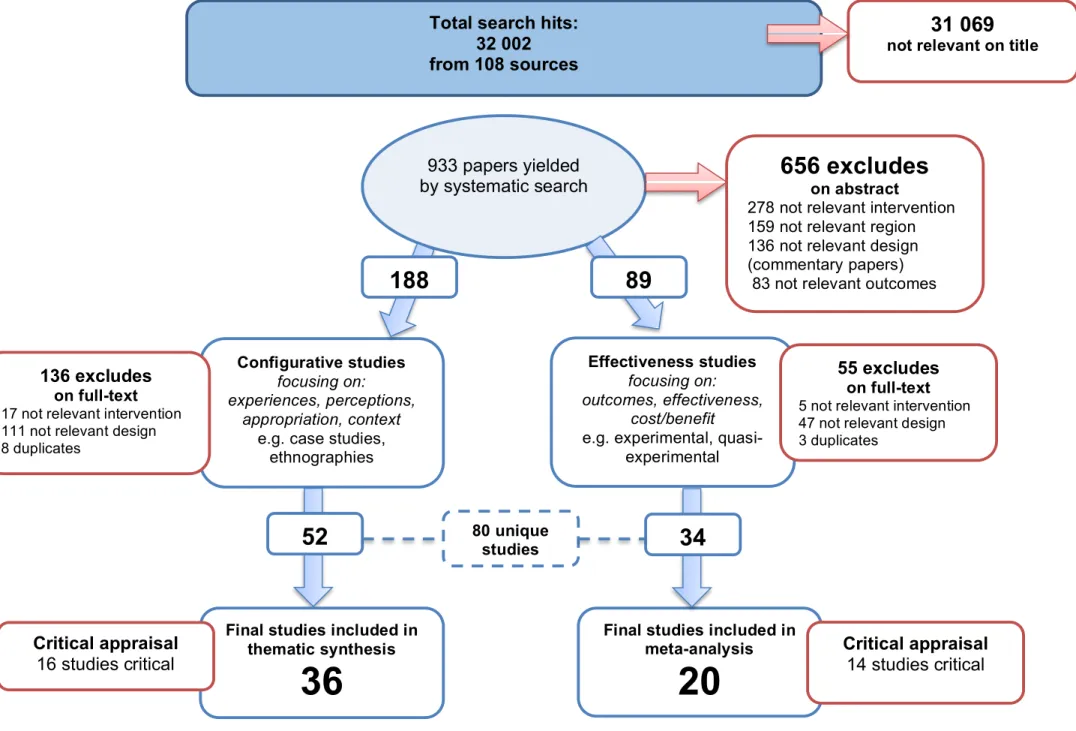
5.1.1 What research evidence did I identify? (systematic search results) ... 106
5.1.2 Socio-economic contexts within the available evidence-base ... 108
5.1.3 Types of mobile learning interventions within the evidence-base ... 111
5.1.4 Mobile technologies used in mobile learning interventions ... 113
5.1.5 The design of ML4D interventions ... 114
5.1.6 Assumptions about how ML4D interventions facilitated educational change ... 118
5.2 Meta-analysis findings: aggregate effects of ML4D interventions ... 122
5.2.1 How trustworthy is the quantitative evidence? ... 122
5.2.2 Do mobile learning interventions improve learning outcomes in LMICs? ... 123
5.2.3 Do mobile learning interventions improve teaching practice in LMICs? ... 134
5.2.4 Do mobile learning interventions improve EMIS in LMICs? ... 136
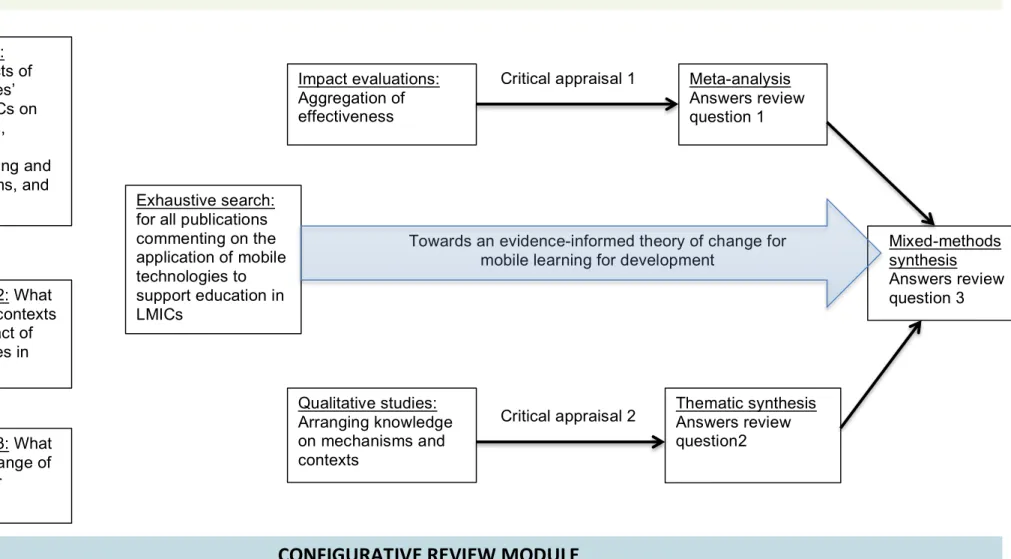
5.2.5 Do mobile learning interventions increase empowerment in LMICs? ... 137
5.2.6 Are mobile learning interventions a cost-effective approach to support education in LMICs? ... 139
Conclusion ... 142
Chapter 6. Configuring a theory of change for the use of mobile technologies
to support education in LMICs ... 146
Introduction ... 146
6.1 Thematic synthesis: contexts and mechanisms configuring the impact of ML4D interventions ... 148
6.1.1 An overview of the included qualitative evidence ... 148
6.1.2 How trustworthy is the qualitative evidence (critical appraisal of studies)? ... 149
6.1.3 Thematic synthesis findings: What mechanisms and contexts mitigate and reinforce the effects of ML4D interventions? ... 151
6.2 A theory of change for ML4D drawing on my mixed-methods synthesis ... 168
6.2.1 Developing a theory of change for ML4D interventions ... 168
6.2.2 Putting the theory of change to work: assessing Mobile Learning ‘for’ Development? ... 171
6.3 What have we learnt from the evidence-base? Discussion of systematic review findings ... 179
6.3.1 A mobile revolution? Claims to ML4D’s impact ... 179
6.3.2 The limitations of access to technologies ... 181
6.3.3 Appropriate technologies? ... 183
6.3.4 Education as a broken service? ... 185
Conclusion ... 188
PART II:
Developing a capabilities conceptualisation of mobile learning’s
contribution to development ... 190
7.3.1 Informational capabilities ... 199
7.3.2 Educational capabilities ... 204
7.3.3 Economic capabilities ... 208
7.3.4 Societal capabilities ... 212
Conclusion ... 219
Chapter 8. Conceptualising mobile learning for development from a
capabilities perspective ... 220
Introduction ... 220
8.1 A framework of teachers’ use of mobile technologies as an educational tool from a capabilities perspective ... 222
8.1.1 Introducing the capabilities framework ... 222
8.1.2 How to interpret and apply the framework ... 226
8.2 Development as freedom and ML4D ... 228
8.2.1 Vignette: Building the nation ... 232
8.2.2 Vignette: Alternative ways to conceptualise what being a teacher means ... 234
8.2.3 Vignette: We are moving with time—we are in demand ... 236
8.3 Towards a capabilities conception of ML4D ... 238
Conclusion ... 243
Chapter 9. Rethinking ML4D—positioning mobile learning in international
development ... 245
Introduction ... 245
9.1 Comparing the capabilities conception of ML4D with my systematic review findings ... 246
9.2 Finding a space for mobile learning in international development ... 249
9.2.1 Opportunity-focused ML4D ... 250
9.2.2 People-focused ML4D ... 251
9.2.3 Education-focused ML4D ... 251
9.2.4 Transformation-focused ML4D ... 252
9.3 Defending the argument for my conception of ML4D ... 255
9.3.1 Transformation from within, undermining structural changes? ... 255
9.3.2 Mobile learning pedagogies and development as freedom ... 259
9.3.3 Meta capabilities: A quest for the magic bullet capability? ... 262
9.3.4 Revisiting the gap in existing capabilities frameworks ... 264
9.3.5 In defence of human capital and economic growth ... 267
Conclusion ... 269
Chapter 10. Conclusion of the thesis ... 270
Introduction ... 270
10.1 Limitations of the research ... 270
10.2 Summary of findings and contribution of the thesis ... 270
10.2.1 Summary of findings and argument ... 271
10.2.2 Review of thesis contributions ... 273
10.3 Implications of the research findings for policy and practice ... 274
10.3.1 Implications of my systematic review findings ... 274
10.3.2 Implications of my capabilities conception of ML4D ... 276
10.4 Implications of the thesis for future research ... 279
Conclusion ... 281
References ... 283
Appendices ... 298
Appendix 4.1: Search strategy and report ... 299
Appendix 4.2: Mixed-methods critical appraisal tool ... 315
Appendix 4.3: Effect size calculations ... 326
Appendix 4.5: Observation schedule ... 330
Appendix 5.1: List of included studies ... 332
Appendix 5.2: Overview of included studies ... 338
Appendix 5.3: Detailed overview of studies included in the meta-analysis ... 349
Appendix 5.4: More detailed analysis of mobile learning pedagogies ... 356
Appendix 6.1: Overview of mechanism and context themes ... 360
Appendix 6.2: Example of analysis in thematic synthesis ... 367
Appendix 6.3: A narrative summary of the best available aggregative evidence ... 373
Appendix 7.1: On the absence of negative case study findings ... 377
List of figures
Figure 1.1 Overlap of ML4D with related bodies of literature ... 15
Figure 4.1 Visual overview of the research design and methodologies ... 72
Figure 4.2 Systematic review approach ... 78
Figure 4.3 Geographical location of the ICT4RED ... 94
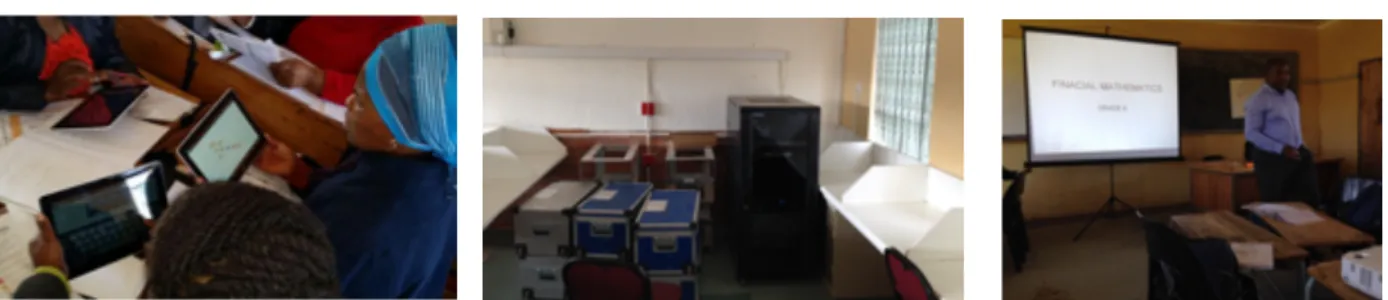
Figure 4.4 Examples of ICTs provided to schools and teachers ... 95
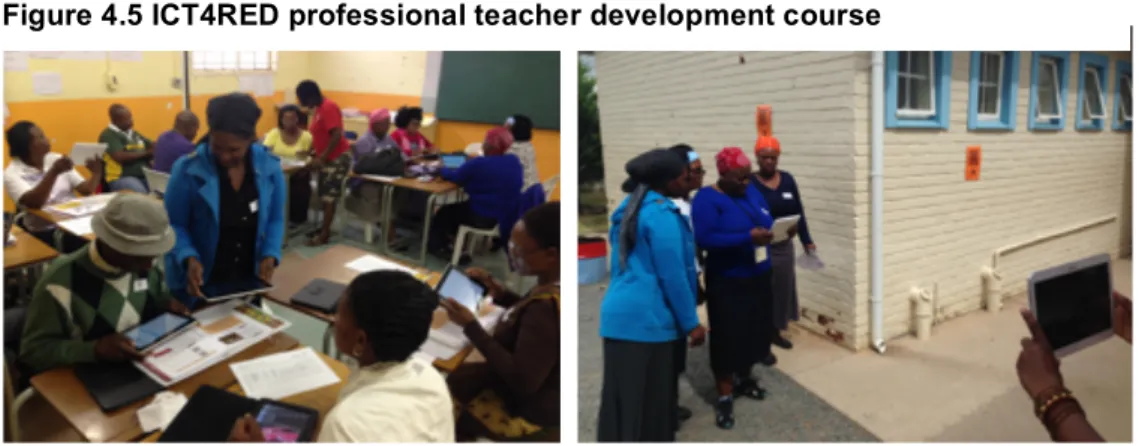
Figure 4.5 ICT4RED professional teacher development course ... 96
Figure 5.1 Search results ... 107
Figure 5.2 Geographical location of included studies ... 110
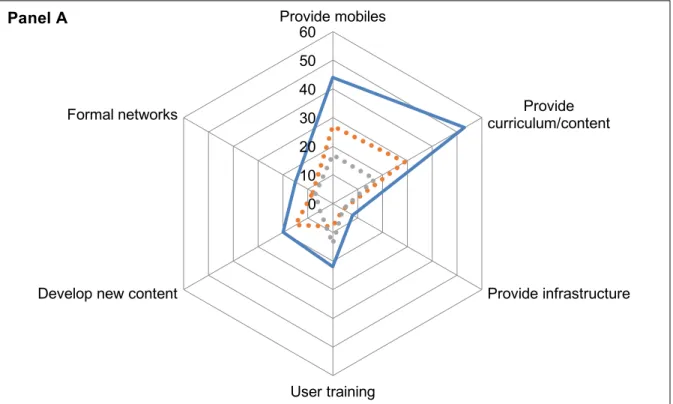
Figure 5.3 Design characteristics of ML4D programmes (technological/educational) ... 116
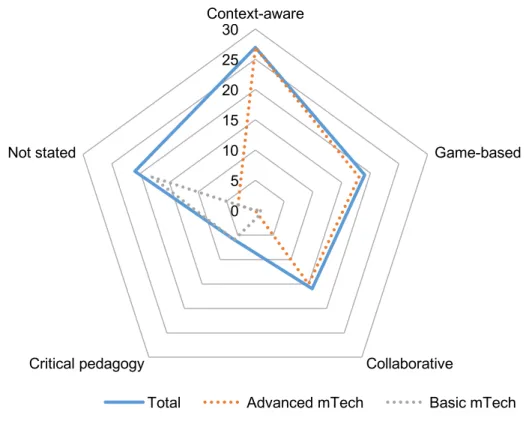
Figure 5.4 Targeted pedagogies and mobile technologies applied ... 120
Figure 5.5 Overview of risk of bias assessment ... 123
Figure 5.6 Forest plot: Average effect of mobile learning programmes on learning outcomes in LMICs ... 124
Figure 6.1 Overview of critical appraisal: qualitative research ... 151
Figure 6.2 A theory of change for ML4D ... 170
Figure 8.1 A framework of teachers’ use of mobile technologies as an educational tool from a capabilities perspective ... 224
Figure 8.2 Capabilities configuration for ‘building the nation’ ... 232
Figure 8.3 Capabilities configuration for ‘alternative ways to conceptualise what being a teacher means’ ... 234
List of tables
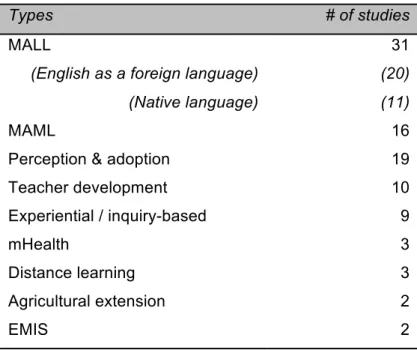
Table 5.1 Overview of mobile learning programme types ... 112
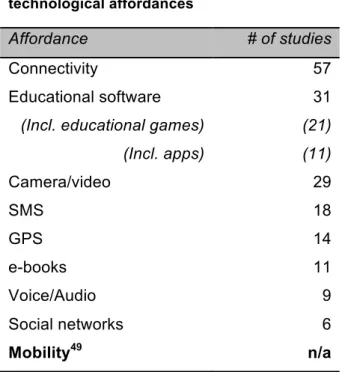
Table 5.2 Overview of mobile devices’ technological affordances ... 114
Table 5.3 Sensitivity analyses ... 127
Table 5.4 Moderator analyses ... 130
Table 5.5 Overview of cost-effectiveness calculations ... 139
Table 5.6 Overview of meta-analysis results ... 144
Table 6.1 Summary of mechanism themes ... 153
Acknowledgements
My PhD was a beautiful journey.
It would not have been possible if not for the two most amazing and supportive travel guides, Ruth Stewart and Niall Winters, without who’s guidance, motivation, kindness, humour, and intellect, I’d still be wondering where to go.
This journey also would not have been possible if not for my parents and grandparents, whose travels and sacrifices in life created the foundation for my own journey and adventure.
Along the journey, I met many travel companions whose ideas and advice manoeuvred me out of dead ends and helped me sustain the joy in the journey—thank you colleagues at the Africa Centre for Evidence and UCL EPPI-Centre for providing an intellectual home
throughout.
I went on this journey because I believe that research can make a difference. I found a wealth of existing knowledge, the producers of which I am heavily indebted to. My research would have not been possible without the daily work of educational policy-makers and practitioners in South Africa and elsewhere. I am immensely grateful to the teachers, policy-makers, and ICT geeks who made time to meet and talk to me, and allowed me access to their schools and classrooms.
Of course, any journey is only worth it if there is someone to listen to the stories and
adventures, to walk with me on particular tricky roads, and to provide a home to come back to once the journey ends—thank you, Londeka Mahlanza, for providing each of these and much more over the last four years.
Chapter 1: Introduction
Chapter 1. Introduction to the thesis
Mobile technologies are an integral part of our daily lives. Mobiles’ ubiquity and penetration of most aspects of social and economic structures have left them the defining technology of the Information Age in the early 21st century—to an extent that a Mobile Age or Mobile Area has been proposed (Castells & Himanen 2014; UNESCO 2014). In this thesis, I am
concerned with mobile technologies in one particular setting, education in Low- and Middle-Income Countries (LMICs), and to one particular end, their conceptualisation as a tool that can support development outcomes such as poverty reduction. As I will show in more detail below, there is a diverse set of interests that, for better or worse, have positioned mobile technologies as an intervention with vast potential to improve education and subsequently development in LMICs. It is my objective to examine the empirical validity of these claims, that is that mobile technologies as an educational tool can bring about development; and to propose a conceptualisation of the links between mobile technologies, education, and development in LMICs. To do so, I used the tools of research synthesis and Amartya Sen’s Capability Approach (Sen 1999) to navigate the thesis’s contribution in this contested area. In this, I position the thesis to approach the above three themes from a development perspective. That is, this thesis’s angle of investigation is grounded in the domain of international development and its associated literature and theories, rather than in the domain of technology studies or educational research. Throughout the thesis, I will use the term ‘Mobile Learning for Development’ (ML4D) to underline the thesis’s positioning and to place boundaries around its empirical investigation and contribution.
The point of departure for this thesis were a series of reports by international development and mobile vendors organisations operating in LMICs that claimed large-scale development and education outcomes through the use of mobile technologies to support teaching and learning1. To give a flavour of the tone of the narrative on the educational use of mobile technologies in LMICs, UNESCO (2014) ascribed a ‘revolution’ in education in LMICs to be
Chapter 1: Introduction
development in LMICs. National governments in LMICs, too, have announced large-scale investments in educational mobile technologies, including in South Africa where I live and work.
At the same time, however, researchers concerned with the pedagogical underpinning of using mobiles to support teaching and learning as well as researchers concerned with the use of Information and Communication Technology (ICT) for development more broadly raised doubts about this strongly positive framing of the contribution of mobile technologies to education and development in LMICs2. My thesis enters these debates both from an empirical and conceptual angle aiming to understand the evidence-base behind the claims for mobile learning’s contribution to education and development in LMICs as much as how such a potential contribution of mobile technologies can be conceptualised and positioned. This inquiry has gained much currency throughout the time of research. From
Facebook.org’s rejected attempt to connect millions of Indians to the internet, to the spread of Bridge International Academies across Africa using scripted lesson plans that teachers access and read of tablet devices, and major development funder’s experimentation with classrooms delivered in a box full of digital technologies to learners in LMICs, the perceived promise of mobile technologies, largely driven by top-down initiatives, continues to prevail3. Through this thesis, I contribute a more empirically- and conceptually-grounded perspective to this debate with a particular focus on using mobile technologies in educational settings in LMICs.
2 For example, Winters (2013; 2015), Traxler (2013a; 2013b), Kleine (2013), Gigler (2015). 3 Facebook.org: http://tinyurl.com/rejectfborg; Bridge International Academies:
Chapter 1: Introduction
1.1 Research background
As of 2017, there are 6.1 billion mobile phone subscriptions in LMICs resulting in 99 subscriptions per 100 people in LMICs (ITU 2017). While this does not necessarily mean that each individual in LMICs has access to a mobile phone or another mobile device, it indicates the ubiquity of mobile devices in LMICs more broadly. This is further underlined when taking into consideration the historic trend of these numbers. A mere 10 year ago, mobile subscriptions in LMICs stood at 39 subscriptions per 100 people and in 2002 only 2.2 billion subscriptions were recorded in LMICs (ibid). This rapid growth of mobile technologies has also affected the nature of the mobile devices and their technological abilities. For example, since 2015 the majority of phones sold in LMICs is made up of feature and smart phones (GSMA 2017) contributing to a more powerful application of mobile devices. This reflects in numbers such as ITU’s recent announcement that 67% of youth in LMICs are able to accesses the internet (ITU 2017).
While stark inequalities in access and use to mobile devices remain, this trend of increasing access and use is reaching the poorest part of the world’s population too. In the most disadvantaged quintile of households in LMICs, close to 7 out of 10 households own a mobile phone; and these households are more likely to own a mobile device than to have access to sanitation or clean water (World Bank 2016). Again, this increasing access to mobiles is correlated with more powerful applications of the technology and 30% of mobile users in the group of least developed countries can access the internet using their devices (ITU 2017; GSMA 2017). Though, these numbers do not control for within country inequality in internet access (Donner 2016).
Against the background of rapidly increasing access to and use of mobile devices in LMICs, mobile technologies have become a popular platform to host various types of development interventions (World Bank 2012; Donner 2008). By just one count, this includes different development priorities such as using mobiles to support health outcomes (mHealth), financial inclusion (mFinance), gender empowerment (mEmpower/mWomen), agriculture (mFarm), and good governance (mGovernance) (World Bank 2012). This plethora of
Chapter 1: Introduction
the best market prices for their daily catch4, or the World Bank’s finding that almost three-quarters of Kenyan mobile phone users would skip a meal in order to finance mobile phone usage (World Bank 2012), fuel this narrative that mobile technologies are already integrated and valued in people’s daily lives and therefore provide potent tools to host development interventions. Further, there is a range of well-covered success stories of mobile applications that have supported development outcomes such as Kenya’s mobile payment systems MPESA5 and the use of SMS reminders to enhance HIV/AIDS medication adherence (e.g. Lester et al 2010).
Given education’s high profile within international development debates (Unterhalter et al 2015; Pritchett 2013), it is little surprise then that the education sector in LMICs has been positioned as to benefit from the potential of mobile technologies too. For example, the UNESCO is hosting an annual mobile learning week and has invested in a portfolio of work around the potential of learning and teaching with mobiles in LMICs6. USAID and other major development donors maintain an mEducation alliance aiming to reduce barriers to “access appropriate, scalable, and low-cost mobile technologies to help improve learning outcomes in formal and non-formal education” (mEducation Alliance 2017).
This high-level interest of development actors into the educational use of mobile
technologies in LMICs has nurtured a vibrant and diverse body of development projects and programmes that aim to apply mobiles to support education and development in LMICs. As of 2015 the mEducation’s Alliance database of mobile learning programmes in LMICs comprised 123 entries7. Some of these projects have rapidly gained scale. For example, the One Laptop Per Child (OLPC) programme claims to have reached over 2 million children and teachers in 42 countries and the Worldreader programme estimates to have provided 6.3 million people in LMICs with access to e-books on mobile devices (OLPC 2017; Worldreader 2017). Throughout 2013-2014, national governments in a range of LMICs (Thailand, Turkey, South Africa, Kenya) also announced investments in tablet devices at scale in order to support their education systems (Tamim et al 2015).
From an academic perspective, the introduction of mobile learning into the domain of
international development overlaps with a number of existing discourses and research areas on education, development, and ICTs (Figure 1.1). First, ML4D enters existing conversations
4 This portrayal persists despite ongoing critiques of this narrow and linear framing of technology usage and socio-economic outcomes (e.g. Donner 2016; Srinivasan& Burrell 2013; Vrasidas et al 2009)
5 MPESA: http://tinyurl.com/7vgj6hx
6 UNESCO Mobile Learning: http://tinyurl.com/unesco-ml
Chapter 1: Introduction
around development and education. Education and development form a symbiotic
relationship in which enhanced education both contributes to development processes and presents a development outcome in its own right (Unterhalter 2015; Pritchett 2013). Education constituted a major development priority in the former Millennium Development Goals (MDGs) and continues to do so in the 2015 Sustainable Development Goals (SDGs). Moreover, supporting global progress in education presented an international standalone goal pursued by the UNESCO-led Education for All (EFA) movement and its six EFA goals, which is now taken forward in the Incheon Declaration as a framework for action for
education in 2030 (UNESO 2016).
The global development policy interest on education has supported an unprecedented expansion in access to education (Evans & Yuan 2017). In 2015, primary education enrolment rates in LMICs stood at 91% (EFA 2015). Learners’ average years of schooling have also increased significantly up from 3.9 years in 1980 to 7.5 years in 2010 (Lee & Lee 2016). This hides, however, regional and population-based inequalities in access to
Chapter 1: Introduction
What is more, despite the large progress, on aggregate, to increase access to schooling, improvements in education outcomes such as learning gains are lagging behind. A learning gap or learning crisis has been diagnosed to describe the discrepancy between a rise in access to schooling and a stagnation in learning outcomes (e.g. EFA 2014; Pritchett 2013; Evans & Yuan 2017). For example, it was estimated in 2014 that of the 650 million children attending primary school, at least 250 million did not gain basic proficiency in reading and mathematics (EFA 2014). Increased access to schooling thus has not automatically translated into improved learning outcomes and if the current rate of progress on learning outcomes is maintained, LMICs will require at least a century to achieve similar learning outcomes as high-income countries (Evans & Yuan 2017; Robinson & Winthrop 2016). A complex and overlapping set of causes for this learning gap has been suggested such as a lack of funding for education systems (EFA 2014), teacher education and professional conduct (Chaudhury 2006), insufficient learning environments and pedagogical approaches (Westbrook et al 2014), and systematic challenging such as school governance and
leadership (Carr-Hill et al 2016). In this context, mobile technologies are positioned as a means to remedy unequal access to education and to improve learning outcomes more broadly (e.g. UNESCO 2012a; 2012b). Learners without access to formal education
services, for instance, are assumed to be able to access such services through their mobile devices. And, the integration of learning content, for example videos and e-books, as well as instant access to information on mobiles are framed as tools to support learners’ educational attainment (e.g. USAID 2014; GIZ 2015)
Second, the use of mobile technologies to support teaching and learning also relates to ongoing debates about the educational use of ICTs in LMICs (edTech). Investments in ICTs have featured prominently on the educational agenda of policy-makers in LMICs driven by the assumption that IT skills are required for countries to meaningfully participate in the information age (infoDev 2012; UNESO 2009; Vrasidas et al 2009). As a result, a majority of LMICs government have adopted and implemented national ICT in education policies
(Hennessey et al 2010; World Bank 2013). Some of these initiatives even extend to a regional scope such as the New Partnership for Africa’s Development e-schools initiative (NEPAD 2013) and ICTs are also positioned as a tool for achieving the education SDG targets related to numeracy and literacy (World Education Forum 2016).
However, there remains controversy on whether investment in ICT in education in LMICs presents a cost-effective approach to support learning outcomes (Trucano 2013; Evans 2017). Impact evaluations and systematic reviews of ICT in education programmes
Chapter 1: Introduction
contribute mixed results to technologies’ impact and cost-effectiveness (e.g. Snilstveit 2016; McEvan 2015; Kremer et al 2013). This includes a range of evaluations of the OLPC
programme at scale, which find learning outcomes to vary from insignificant effects (e.g. Cristia et al 2012) to small positive effects (e.g. Mo et al 2013)8. Reviews and syntheses of evidence on the barriers and facilitators to the effective use of ICT in education in LMICs, though, show more agreement. These suggest factors such as appropriate pedagogy, institutional readiness, teacher training competencies, leadership and management, and long-term financing models are important variables for the effective integration of ICTs into education systems (e.g. Sharmin et al 2017; Hennessey et al 2010; Gulati 2008).
Mobile technologies and mobile learning enter this debate on educational technology in LMICs as a sub-set of a more developed discourse. In this discourse, mobiles are assumed to contribute new technological abilities that fixed ICTs cannot contribute such as mobility, connectivity and social networking, and personalisation (Unwin 2015). The affordability of mobiles also means that educational actors are more familiar with their use and that
technology investments are less cost-intensive. Mobiles are also seen as supporting a set of unique mobile-specific pedagogies such as context-crossing (Wali et al 2004) and ubiquitous learning (Ogata 2004), which cannot be implemented using fixed ICTs.
Third, the research and practice on the educational use of mobile technologies in LMICs relates strongly to an existing body of literature exploring the role and contribution of ICTs to development more broadly. Under the umbrella term Information and Communication Technologies for Development (ICT4D) (Unwin 2009), a diverse set of research strands has explored the conceptual and empirical relations between access to and use of ICTs in LMICs and development outcomes (e.g. Avgerou 2010; Zheng 2009; Kleine 2013; Heeks 2010). This literature and discourse also includes mobile ICTs, in particular mobile phones (e.g. Donner 2008; 2016; Galperin & Viecens 2017; Porter et al 2016).
A key feature of this body of literature is a vibrant debate about the nature of the contribution of ICTs to development in LMICs. A range of scholars largely frame ICTs’ contribution in terms of economic outcomes such as increased productivity and rates of economic growth. The 2016 World Development Report, for example, investigates the digital dividends of ICTs
Chapter 1: Introduction
This framing is in line with earlier much-cited research on the economic contribution of ICTs in LMICs in terms of an 1.38% increase in GDP growth for every 10% increase in broadband connectivity and access to ICTs (Qiang et al 2009; World Bank 2009). More recent research subscribes to a similar line of argument in order to conceptualise the use of ICTs to support development in LMICs (e.g. Galperin & Viecens 2017; Cirera et al 2015).
This economic framing of development in ICT4D has been challenged on empirical and conceptual grounds. Systematic reviews and in-depth investigations of ICT4D programmes at a more micro-level have found mixed effects of ICT4D programmes (e.g. Geldof et al 2011; Brown & Skelly 2017; Adera et al 2014). Conceptually, too, scholars have developed a richer understanding of how ICTs might support development outcomes in LMICs taking into account structural inequalities and people’s abilities to use ICTs in a self-determined manner and to self-determined ends (e.g. Kleine 2013; Andersson et al 2012; Zheng 2009). The latter discussions are of particular relevance to the literature on ML4D and the conceptual rigour of debating ICT4D’s positioning within theories of development contributes a range of analytical lenses in order to position the educational use of mobile technologies in relation to development in LMICs.
Chapter 1: Introduction
1.2 Research outline and questions
As indicated above, this thesis commences on the premise that there is large interest in the use of mobile technologies to support education and development in LMICs, but that proponents of ML4D have not offered convincing empirical evidence or conceptual models for the claimed transformational potential of mobiles on education in LMICs and subsequent development. Rather, the potential of mobile learning is understood in a techno-centric manner in which the wide-spread access and use of mobiles in LMICs and mobiles’ powerful technological features justify mobile learning’s positioning as a development intervention. However, neither the effectiveness of mobile learning programmes, nor the causal
mechanisms and contexts through which teaching and learning with mobile technologies is assumed to support education and development in LMICs, have been systematically reviewed and conceptualised.
This absence of a convincing evidence-base on mobile learning’s effectiveness and of a thorough logic model for how the use of mobiles technologies can contribute to education and development presents a serious challenge to the field of ML4D. Mobile technologies cannot uncritically be positioned as a benevolent input in education in LMICs with
guaranteed positive impacts on poverty reduction and human development. First, any social intervention or policy has as much potential to do good as to cause harm (Chambers 2002; Oakley 2000). This naturally applies to the educational use of mobile technologies in LMICs too, which might disrupt education processes and cause conflict among educational actors. Investments into mobile technologies also divert scarce public resources away from other educational inputs in LMICs, which could leave education systems at a net loss if mobile technologies do not contribute proportionally to learning outcomes. Unequivocally
advocating for the use of mobiles devices in education without a detailed evidence-base is thus not ethical and runs the risk of hindering, rather than supporting, development
processes.
Second, a linear and techno-centric understanding of the use of mobiles to support teaching and learning in LMICs risks introducing reductionist notions of education and development, which carries negative implications for the actors and institutions involved in both.
Chapter 1: Introduction
structural inequalities that mitigate how different education actors can translate access to inputs into meaningful educational experiences and outcomes.
The above are but two illustrations of why generating an evidence-base and detailed
conceptualisation of ML4D cannot be an afterthought in the pursuit of providing teachers and learners in LMICs with mobile technologies. To be clear, I am not negating that mobile learning can make a positive and important contribution to development in LMICs9. Rather, I am questioning whether the current thinking and modus operandi in the international
development domain regarding the educational use of mobile technologies have sufficiently engaged with the more challenging aspects of mobile learning; in particular, whether the practice and understanding of ML4D has gone beyond the question of access and beyond strong claims to positive impacts based on anecdotes, good intentions, and simple theories. As a result, the main research question for my thesis and subsequent sub-questions refer to: 1. How can the use of mobile technologies as an educational tool in LMICs be
conceptualised as to contribute to development outcomes?
1.1 What are the effects of the educational use of mobile technologies in LMICs on learning outcomes, teaching practice, and empowerment?
1.2 What is the programme-level theory of change for mobile learning for development? 1.3 Does the Capability Approach serve as an effective analytical framework to
investigate ML4D?
In order to answer the above research questions, I divide my thesis into two parts: in part 1, I investigate the empirical and conceptual evidence-base for mobile learning’s impact on development outcomes; in part 2, having found an absence of such evidence in part 1, I then develop my own conceptualisation of mobile learning’s contribution to development using the CA. Both parts of the thesis are concerned with the same overall objective of
investigating how the use of mobile technologies as an educational tool in LMICs can be conceptualised as to contribute to development outcomes. In part 1, I assess how the existing empirical and conceptual research on ML4D has positioned mobile learning’s contribution to development and whether this positioning is empirically justified given the existing evidence-base. In part 2, having rejected the existing claims to mobile learning’s contribution to development outcomes based on a lack of evidence, I then assess
Chapter 1: Introduction
prospectively whether and how an alternative conception of mobile learning’s contribution to development from a capabilities perspective can be constructed. Combining both parts of the thesis, i.e. the assessment of ML4D’s empirical and conceptual evidence-base and the development of an alternative conception of ML4D, allows me to suggest a rethinking of mobile learning’s contribution to development.
I use a range of different research methods across both parts of the thesis. Taken together these research methods give rise to three main investigations: (1) a mixed-methods
systematic review to appraise and synthesise the existing evidence-base on mobile learning to assess its effects on development outcomes; (2) a qualitative case study of a mobile learning programme in rural South Africa using the CA as an analytical lens; and (3) a conceptual inquiry to develop a conceptualisation of ML4D from a capabilities perspective. Each investigation makes its distinct contribution to my rethink of ML4D as outlined below. My research commences with the mixed-methods systematic review of existing primary research that has investigated the educational use of mobile technologies in LMICs. The review serves two purposes: examining the impact of mobile learning on education and development outcomes and examining how ML4D programmes have outlined the processes and causal links between the use of mobiles, education, and development in LMICs. Taken together, the systematic review therefore allows me to conclude whether empirical and conceptual claims to mobile learning’s contribution to development are warranted. The review thereby constitutes my first key empirical component in rethinking ML4D based on an assessment of its current evidence-base.
Empirically speaking, the mixed-methods systematic review of ML4D interventions presents the departure point of this thesis. However, while its findings support an assessment and deconstruction of current conceptions of mobile learning’s impact on education and development, the review is bound to assessing existing research on mobile learning. As a result, the systematic review findings cannot support me in developing a new
conceptualisation of mobile learning’s role and contribution in international development. For this inquiry—the development of a new conceptualisation of ML4D—I first require an
Chapter 1: Introduction
need to test it through new primary research for its validity and relevance10. I identified Amartya Sen’s Capability Approach as a potent conceptual framework to guide a conceptualisation of ML4D. The choice for the CA was informed by its application as a conceptual lens in related bodies of research, the ICT4D domain in particular (c.f. Kleine 2013; Zheng 2009).
Having identified the CA, I then use a qualitative case study of a mobile learning programme in rural South Africa to apply the CA as a conceptual lens in practice. This serves to test whether the CA can be operationalised as a conceptual framework in research on ML4D. I then apply the findings of my case study research to develop an explicit conceptualisation of ML4D based on the CA. This enquiry is purely of conceptual nature but uses the empirical validation of the CA as a useful analytical lens to assess mobile learning’s contribution to development outcomes as a starting point. The developed capabilities conception
constitutes my second key component in rethinking ML4D based on a small empirical case study and subsequent conceptual inquiry.
In a last step, I then combine my developed capabilities conception of ML4D with my
systematic review findings of the empirical evidence on ML4D. This constitutes my rethink of ML4D and explores how a conceptualisation of ML4D based on the CA and the empirical evidence-base on ML4D’s impacts changes the understanding and positioning of mobile learning’s contribution to development.
10 An alternative approach could have been to rely on the theoretical validity and relevance of a new conceptual framework rather than testing it empirically. However, given the detailed review of existing empirical evidence to justify the need for a new conceptual framework, this approach does not seem justified.
Chapter 1: Introduction
1.3 Contribution of the thesis
This thesis offers a range of contributions to the research and practice of using mobile technologies to support education and development in LMICs. In terms of empirical research findings, this thesis contributes knowledge on what works, how and why in using mobile technologies as an educational tool in LMICs. It systematically collects, appraises, and synthesises the available primary research evidence on the educational use of mobile
devices in LMICs. The thesis thereby collates an evidence-base on ML4D and then uses this evidence-base to assess the impact of ML4D. This investigation goes beyond individual impact evaluations of mobile learning programmes in LMICs and allows for conclusions to be drawn on mobile learning’s effectiveness that are based on the body of evidence available.
The collated evidence-base further allows me to systematically unpack the specific manner and approach in which mobile learning programmes in LMICs have attempted to contribute to education and development outcomes. That is, I can investigate the processes,
mechanisms, and contexts that facilitate the effects of mobile learning programmes. Based on this, my thesis constructs a theory of change for the use of mobile technologies as an educational tool in LMICs. This theory of change makes the assumed links between mobile technologies, education, and development explicit allowing for a detailed investigation of their empirical and conceptual validity. This contrasts with most of the literature on mobile learning and development produced by international development and mobile vendor organisations in which the link between technologies, education, and development is largely implicit and not detailed.
The thesis also contributes empirical primary research findings on the investigation of a mobile learning programme from a capabilities perspective. To my knowledge, my case study presents the first attempt to analyse the educational use of mobile technologies in LMICs using the CA. I use the case study findings to construct an analytical framework for teachers’ use of mobile technologies based on the CA. The case study research primarily illustrates that the CA can be operationalised to investigate mobile learning programmes in
Chapter 1: Introduction
literature on the understanding and positioning of using mobiles to support education and development in LMICs. This investigation highlights a range of empirical and conceptual gaps, which I then fill through my systematic review findings. Based on this, I reject existing suggestions that mobile learning, in its current form and practice, can be positioned to contribute to development outcomes. Second, I then use the CA to develop a detailed definition and conceptualisation of how the educational use of mobile technologies could contribute to development in LMICs. Third, I review this capabilities conception of ML4D against the existing evidence-base and highlight how it changes the positioning of mobile learning in international development towards a more opportunity-, people-, education-, and transformation-focused understanding of ML4D.
In terms of methodological developments, my thesis contributes to a nascent body of work on mixed-methods systematic reviews of development policies and programmes (e.g. Langer & Stewart et al 2014; Snilstveit & Langer 2016; Oya et al 2017). I conduct a two-module mixed-methods review comprising distinct review two-modules to synthesise quantitative and qualitative primary research. My thesis also makes a minor methodological contribution to the operationalisation of the CA as an analytical lens by illustrating the CA’s versatility in a body of research in which it had not been applied before.
Chapter 1: Introduction
1.4 Structure of the thesis
The remainder of the thesis is structured as follows:
PART I: A systematic review of the empirical and conceptual evidence-base for mobile learning’s contribution to development outcomes, including chapters 2–6.
Chapter 2 presents a literature review of ML4D to indicate the gaps in the empirical and conceptual evidence-base on the use of mobile technologies to support education and development in LMICs. It outlines how ML4D has been positioned as a development intervention and questions whether the claimed development impacts are reflected in the available research evidence. It also illustrates that mobile learning’s contribution to development is largely framed in a techno-centric manner and motivates the need for a detailed conceptualisation of the links between using mobiles in LMICs, education outcomes, and development impacts.
Chapter 3 presents an introduction to the CA as a theoretical framework to conceptualise the contribution of mobile technologies to education and development in LMICs. It outlines the CA and reviews literature on its application in ICT4D and education in LMICs in order to justify the relevance of the CA to guide a conceptualisation of ML4D.
Chapter 4 presents the research design and methodologies applied in this thesis. It outlines the methods followed for my mixed-methods systematic review of the effects of using
mobiles to support education and development in LMICs as well as the methods followed for my qualitative case study of a mobile learning programme in rural South Africa.
Chapter 5 presents the first set of findings of my mixed-methods systematic review. It provides a systematic map of the empirical research on the application of mobiles in LMICs to support education and development outcomes in order to describe the nature and design of ML4D programmes. I then synthesise the quantitative effects of these programmes using statistical meta-analysis to understand the impact of mobile learning on education and
Chapter 1: Introduction
contexts and mechanisms with the results from the systematic map and meta-analysis to construct a theory of change for the use of mobile technologies to support education and development. Based on the combined systematic review results, I then question the claims laid to ML4D’s impacts in the existing literature and how this perceived contribution of mobile learning to development has been framed.
PART II: Developing a capabilities conceptualisation of mobile learning’s contribution to development, including chapters 7–9.
Chapter 7 presents the results of my qualitative case study of a mobile learning programme in rural South Africa. The case study uses the CA as an analytical lens to explore teachers’ perceptions of how the educational use of tablet devices has supported their professional and personal development and agency. The case study introduces four dimensions of capabilities that teachers valued and explored using the tablets.
Chapter 8 presents an analytical framework for teachers’ use of mobile technologies to illustrate the interplay between the four identified dimensions of capabilities. The chapter then develops the case study findings further into a conceptualisation of ML4D that is informed by the CA. This capabilities conception of ML4D is then proposed as a foundation to define mobile learning’s contribution to development in LMICs.
Chapter 9 presents a synthesis of my systematic review findings, my case study findings, and the capabilities conception of ML4D. It reviews the consistency between my systematic review findings and the developed conceptualisation of ML4D. It then highlights how the positioning of mobile learning’s role in international development changes following my capabilities conception. This rethink of ML4D is then defended against selected lines of possible critique.
Chapter 10 concludes the thesis. It recounts the main findings presented and arguments developed before highlighting some of the implications thereof. It also indicates areas for future research.
Chapter 1: Introduction
1.5 Key terminology
I briefly introduce key terminology used in this thesis. This excludes definitions of mobile learning and mobile learning for development, which are discussed in detail in chapter 2, section 2.1–2.2, as well as definitions related to the CA, which are provided in chapter 3, section 3.1.1. In this thesis I define ‘development’ following Sen’s (1999) definition of
development as freedom or, in other words, as an expansion of people’s capabilities to live a life they have reason to value. However, this definition does not prevail in most of the
literature on ML4D, which defines development largely in terms of reductions in national poverty rates and other national and international economic and social indicators. There is therefore a mismatch between my conceptualisation of development and definitions of development in the secondary literature reviewed and synthesised in this thesis. In chapters 2–6, I rely largely on the prevailing definitions of development in the reviewed literature, while chapters 7–9 rely on my definition of development provided above. I indicate
throughout each chapter what definitions of development are used and how these affect the development of my argument.
When referring to country’s levels of development, I adopt the World Bank’s classification of economies which groups countries according to four groups of economic development (World Bank 2017). This terminology is preferred over alternative terms such as
developing/developed countries or global north/global south as it seems most empirically grounded and more nuanced in terms of possible grouping of countries. The terms ‘impact’ and ‘effectiveness’ are adopted in the context of evaluating programme and policy effects and connote a methodological understanding of using counter-factual evaluation designs to establish causality between the applied intervention and the observed effects (White 2009). The term mobile learning ’programme’ is used interchangeably with the term mobile learning ‘intervention’ and refers to a deliberate design of an activity or set of actives that directly intervene and affect participants lives. Lastly, I use the female pronoun throughout the thesis rather than mixed expressions such as she/he. This is to support clarity and consistency of the text.
PART I:
A SYSTEMATIC REVIEW OF THE EMPIRICAL
AND CONCEPTUAL EVIDENCE-BASE FOR
MOBILE LEARNING’S CONTRIBUTION TO
DEVELOPMENT OUTCOMES
Chapter 2: Literature review of ML4D
Chapter 2. Literature review 1: Mobile Learning for
Development
Introduction
The literature review is presented in two chapters: the first focuses on mobile learning and the second on the Capability Approach (CA). The aim of the two chapters is to outline the wider discourse on the use of mobile technologies as an educational tool in Low- and Middle-Income Countries (LMICs). The literature review discusses relevant research and concepts related to mobile learning for development (ML4D) and the CA in order to set up the space for the specific contribution of the thesis in the context of the current knowledge base on ML4D. In doing so, the chapters specifically detail conceptual and empirical gaps in the current literature on mobile technologies, their application to support education in LMICs, and their relationship to development outcomes11.
The literature review on ML4D presented in this chapter provides the background to how research and practice on the educational application of mobile technologies have
developed12. It covers relevant research on the empirical performance of the use of mobiles to support education and further discusses how the educational use of mobile technologies has been justified and understood. In investigating this understanding, I pay particular
attention to how different actors have positioned and outlined mobile learning’s potential as a development intervention. I then contextualise these different positionings in the light of the empirical research and discuss their implications for the practice of mobile learning to support education and development. This then sets up the space for the CA as an analytical framework to guide a conceptualisation of ML4D.
Chapter 2: Literature review of ML4D
different definitions and understandings of this use. I next outline three approaches to conceptualise the contribution of mobile learning to development and how they vary in their positioning of the developmental potential of teaching and learning with mobiles. This discussion includes examples of applied interventions and their relation to development initiatives such as Education for All. I lastly illustrate three key critiques that explore a range of gaps and shortcomings in the understanding and positioning of ML4D as a development intervention. The chapter concludes with a brief summary to set up for the review of the CA.
Chapter 2: Literature review of ML4D
2.1 Mobile learning
2.1.1 An introduction to mobile learning
Mobile learning in its broadest sense refers to the use of mobile technologies to support educational processes, in particular learning and teaching activities (Ally 2009; Sharples et al 2007). The research domain has largely been driven by academics and practitioners based at US and European research institutions, which influences its research tradition and concepts (Traxler 2013a; Winters 2013). The idea of the educational use of hand-held devices that combine advanced computing powers and communication abilities has been conceptualised as early as 1972 (Kay 1972), but only gained currency with the near
universal uptake of mobile technologies since the early 2000s (Sharples et al 2007; Pachler et al 2010; Unwin 2015). As mobile technologies have become ubiquitous and started to influence most aspects of our lives, in particular how we communicate and access information, the presumed potential to use these technologies to support education has grown (Castells & Himanen 2014; Toyama 2015; Donner 2016). Though, this presumed positive potential of mobiles is certainly not without critique (e.g. Turkle 2016; Elliot & Urry 2010).
Learners’ social realities are increasingly shaped by constant connectivity, instant access to information, and a contextualised and customised experience of using this information (Sharples 2007; Traxler 2009). Consequently, children’s learning activities are already being influenced by mobiles, regardless of formal education interventions (Ally 2009). The ubiquity, appeal, and wide applicability of mobile devices therefore necessary affect established processes of learning and teaching (Pachler et al 2010). The theory and practice of mobile learning, at its core, aims to investigate how these mobile technologies can be used to support informal and formal learning activities and how the technological affordances13 of mobiles can be integrated within teaching and learning processes (Sharples et al 2007). However, this acknowledges that learners differ in their individual abilities and social opportunities to access and apply mobile technologies for educational purposes. Socio-economic contexts and structures and practices do shape mobile learning and need to be carefully considering when designing teaching and learning opportunities with mobiles
Chapter 2: Literature review of ML4D
Learning processes, to some extent, have always been mobile (Wali et al 2008). Learners have read books inside and outside of classrooms and interactions between teachers and learners have rarely been fixed to a single context. Humans have for the most part of our history developed tools and artefacts to allow us to learn ‘on the move’ or access information across different contexts (Wali et al 2008; Unwin 2015). What is new then about current understandings of mobile learning is the increased technological abilities that mobile technologies provide; and how these abilities can be harnessed to support learning and teaching activities.
As a result, conceptions of mobile learning distinguish it from other educational technologies by means of the applied devices. For example, whereas initial e-learning activities using desktop computers required fixed educational infrastructure such as computer labs, mobile technologies can be used without special educational infrastructure being in place. The most common referenced unique affordances associated with mobile technologies compared to other educational technologies are: mobility of devices (size and battery life), constant connectivity (either using fixed or mobile internet connections), ubiquity (based on their accessibility and ease of use), and mobiles being more personally adaptable than fixed educational technologies (e.g. Unwin 2015; Ally 2009; Winters 2007). These affordances have led mobile phones, tablets, personal digital assistants (PDAs), and laptop computers to be positioned as the main technologies associated with mobile learning (Wali et al 2008; Ally 2009).
2.1.2 Definitions of mobile learning
Definitions of mobile learning have changed over time from a device-based, techno-centric conception towards a learning activity-based, pedagogical conception (Pachler et al 2010; Winters 2013; 2015; Traxler 2013a). Changing definitions of mobile learning also influenced the practice and research agenda of using mobile technologies to support learning and teaching, which evolved in line with definitions and conceptions of mobile learning. Pachler and colleagues (2010) identify three broad phases in the evolution of mobile learning: (1) a focus on the technical feasibility of mobile devices in an educational context from the mid-1990s; (2) a focus on the use of devices to guide learning ‘anytime, anywhere’ outside the classroom from the mid-2000s; and (3) a current focus on the mobility of the learner and the learning activities supported by mobiles.
In the first phase, mobile learning in essence was equated with the mere use of mobile devices to support educational activities. Research and practice of mobile learning focused
Chapter 2: Literature review of ML4D
narrowly on assessing the technical feasibility of the educational use of emerging devices such as PDAs and the first mobile phones without much attention being paid to the
pedagogical underpinnings of such use. This reflected in techno-centric definitions of mobile learning such as Traxler and Leach (2006: 1): “’Mobile learning’ is the term increasingly being applied to the use of small, portable, handheld and lightweight electronic devices used for educational activities in classrooms, in fieldwork, at home, at work and when travelling”. With the increase in the technological abilities of mobiles starting in the early 2000s, this conception of mobile learning shifted. Mobile devices now allowed for a much broader range of applications, and research interest and practice clustered around the use of smart phones and PDAs to support learning activities outside the classroom such a field trips. Mobile learning came to be understood as a “personal, unobtrusive, spontaneous, ‘anytime, anywhere’ way to learn and to access educational tools and materials” (Kukulska-Hulme & Traxler: 2005: 1). However, this understanding of mobile learning remains techno-centric merely shifting the emphasis on a new set of technological affordances of the devices (Wali et al 2008).
In the third and current phase, a range of scholars provided strong critiques of device-based, techno-centric definitions of mobile learning, which were seen as, first, unstable and in need of constant updating due to the pace of technological innovation (e.g. Traxler 2009;
Kukulska-Hulme 2009), and, second, were not integrated with formal theories of learning (e.g. Sharples 2007; Wali et al 2008). Many of these critiques can be traced back to Roschelle’s (2003) seminal paper on unlocking the learning value of mobiles. Investigating the educational use of mobile technologies from an explicit pedagogical perspective, he showed that while mobiles “preform a small, well-defined function uniquely well, much of the rest of teaching and learning is left to social practice” (Rochelle 2003: 8-9). His critique emphasised the potential of these small and well-defined functions that mobile technologies do uniquely well, but stressed that these functions only become powerful educational interventions through their interplay with and embeddedness in social practices. On the back of this critique a diverse body of literature has offered different models and theories of how mobiles’ particular affordances can best be integrated with theories of
Chapter 2: Literature review of ML4D
interactive technologies” (Sharples et al 2007: 4). This definition presents a large shift away from applying a device-based conception of mobile learning focusing on the role of mobiles to support conversation, interactions, and context-crossing which are positioned as the channels through which learning occurs. Similar shifts in definitions can be observed in Pimmer’s (2010) conception of mobile learning from a socio-cognitive perspective and Bell’s (2010) use of actor network theory to conceptualise mobile learning.
For the purpose of my thesis, I will follow Wali and colleagues’ (2007: 55) definition of mobile learning as: “learning that occurs as a result of pursuing learning activities that are directed towards achieving the same objective across multiple contexts (both physical and social)”. This definition refines Sharples and colleagues’ theory of learning in a mobile age. It defines mobile learning in terms of context-crossing allowing for a shift away from the use of mobile technologies towards a focus on the forms of learning practices supported by mobiles and how these practices are mediated by social and physical contexts. In the context of my thesis on ML4D, however, the intricacies of current definitions of mobile learning are less of a concern. What is more important here, is the outlined shift of definitions of mobile learning from a device-based, techno-centric understanding towards a learning activity-based, pedagogical understanding.
2.1.3 Mobile learning’s pedagogical contribution
The progression of mobile learning’s definition towards a learning-activity, pedagogical understanding of mobile learning has led to an exploration of a range of rich mobile learning pedagogies. I define pedagogies here in line with Watkins and Mortimor (1999: 3) as: “any conscious activity by one person designed to enhance learning in another”. There is now consensus among mobile learning scholars in the educational domain that mobile learning can best be understood as a socio-cultural form of practice (Winters et al 2017; Pimmer et al 2014; Kearney et al 2012; Frohberg et al 2009; Koole 2010). Based on a review of 102 Mobile Learning projects, Frohberg and peers (2009), for example, identify the following underlying pedagogical approaches to mobile learning as most frequently applied:
constructivist, situated, collaborative, and informal and life-long learning. However, this hides a rich field of specialised mobile learning approaches that have emerged such as ‘context-aware ubiquitous mobile learning’ (Chen & Li 2010) and ‘RFID-supported immersive ubiquitous mobile learning’ (Liu et al 2009).
The benefits that learners might derive from these mobile learning pedagogies, that is mobile learning’s pedagogical contribution, have been outlined in different ways (e.g.
Chapter 2: Literature review of ML4D
Winters 2007; Kukulska-Hulme 2009; Ally 2009). Kearny and colleagues’ (2010) framework for viewing mobile learning from a pedagogical perspective provides a helpful synthesis of these benefits. The authors define the three distinctive features of mobile learning as fostering personalisation, authenticity, and collaboration in the learning process across time and space. Each of these three features can enrich the learning experience of students. Personalisation of learning supported by mobiles is assumed to enhance learners’ choice, agency, self-regulation and customisation. Authenticity of the learning is linked to an educational use of mobiles to facilitate learning tasks of real world relevance and personal meaning to the learner. Collaboration, lastly, links to learning fostered by social interaction and conversation as assumed by socio-cultural perspectives on learning as referenced above. Notable sub-domains from Kearney and colleagues’ framework refer to mobile learning approaches using mobiles to support game-based learning, augmented reality learning, and learning analytics (Kearney et al 2010).
All in all, Kearney and colleagues’ framework reflects a wider agreement in the literature that mobile learning can be positioned to support more learner-centred educational activities (e.g. Traxler 2009; Pachler et al 2010; Winters et al 2017). From an educational perspective, mobile learning has centred around how mobile technologies can support learners to create and acquire knowledge through an interaction with their socio-cultural contexts and
practices. This positioning is perhaps best captured by Pachler and colleagues (2010: 6): ”Mobile learning—as we understand it—is not about delivering content to mobile devices but, instead, about the processes of coming to know and being able to operate successfully in, and across, new and ever changing contexts and learning spaces. And, it is about understanding and knowing how to utilise our everyday life-worlds as learning spaces. Therefore, in case it needs to be stated explicitly, for us mobile learning is not primarily about technology.”
Chapter 2: Literature review of ML4D
2.2 Mobile learning in LMICs
I next discuss the application and development of mobile learning in LMICs. In this, it is important to keep in mind that the origins of the research and practice on mobile learning are predominately from US and European institutions. Concepts and models of mobile learning are thus contextualised by this research tradition and it is crucial to keep this in mind when investigating the application of mobile learning in LMICs. Within HICs themselves, there are large inequalities in learners’ abilities to use the full pedagogical potential of mobile learning. This is even more so in LMICs and discourses around ‘connected learners’ and learners developing agency to take control of learning activities, for example, need to be carefully interrogated for their applicability across contexts. The values embedded in mobile learning and its assumed educational contribution cannot be uncritically positioned to apply to
marginalised learners with different educational needs. Mobile learning needs to be reflexive of its origins; and its theory and practice requires adaptation in LMICs contexts, in particular when attempting to influence development outcomes. My thesis is only concerned with the latter aspect of mobile learning’s conceptual adaptation in LMICs—i.e. to support
development outcomes—with the conceptualisation of a pedagogical theory of mobile learning adapted for LMICs being beyond my scope.
2.2.1 An introduction to mobile learning in LMICs
As mobile technologies have become ubiquitous in most parts of the world, so has the rationale to use mobile devices to support education. The initial uptake of mobile learning in LMICs followed the above-outlined conceptual development (Traxler 2013a; 2013b). Early mobile learning projects applied a device-based and techno-centric approach. The first mobile learning projects reported in LMICs in the mid-2000s focused on providing access to mobile devices in order to enhance the reach of education programmes, distance learning in particular (e.g. Brown 2005; Matthee & Liebenberg 2007; Traxler 2005). However, in line with conceptual developments in HICs, mobile learning projects in LMICs soon began to apply more pedagogically-rich project designs exploiting the whole range of technological affordances provided by mobile devices. Prominent examples of early mobile learning programmes in LMICs with rich pedagogical underpinnings can be found in Zurita and Nussbaum’s research in Chile on mobile computer-supported collaborative learning systems based on Activity Theory (Zurita & Nussbaum 2004; 2007); Kim’s mobile learning model of literacy development for underserved migrant indigenous children in Peru and Bolivia (Kim