• No results found

ONTARIO LIBRARY INVESTMENT PROJECT

N/A
N/A
Protected

Academic year: 2021

Share "ONTARIO LIBRARY INVESTMENT PROJECT"

Copied!
39
0
0

Loading.... (view fulltext now)

Full text

(1)

MARKETING CANADIAN BOOKS FOR

ONTARIO CHILDREN

PREPARED BY

Barbara Howson

WITH ASSISTANCE FROM

(2)


Made


possible


with


the


support


of


the


Ontario


Media


Development


Corporation


on


behalf


of


the


Ministry


of


Culture.


Any opinions, findings, conclusions or recommendations expressed in this material are those of the 

authors and do not necessarily reflect the views of Ontario Media Development Corporation or the 

Government of Ontario. The Government of Ontario and its agencies are in no way bound by the 

recommendations contained in this document.


©


2009,


Association


of


Canadian


Publishers


All


rights


reserved.


Association


of


Canadian


Publishers


174


Spadina


Avenue,


Suite


306


Toronto,


Ontario


M5T


2C2


(3)

various Canadian children’s books they had read, mentioned specific landscapes, 

experiences, geography, regions, symbols such as flags and historical elements. 

They get it. Do we?” 


From the report: The Crisis in Canada’s School Libraries by Dr Ken Haycock 


Introduction


During


the


last


election,


the


Premier


of


Ontario


announced


a


commitment


to


spend


$80


million


in


additional


funding


for


elementary


school


libraries.


The


funding


is


intended


to


help


all


elementary


schools


add


books


and


alternative


formats


of


print

based


resources


to


their


kindergarten


to


grade


8


library


collections.


In


moving


the


Library


Investment


Project


(LIP)


forward,


during


the


summer


of


2008


the


Ontario


Ministry


of


Education


consulted


about


purchasing


processes,


the


intricacies


of


the


book


publishing


industry,


and


product


pricing


with


all


stakeholders,


which


included,


amongst


others,


wholesalers,


library


consultants,


school


boards


and


publishers.


One


stakeholder


group


is


Canadian


children’s


publishers,


who


are


recognized


for


the


excellence


of


their


authors


and


illustrators,


and


consistently


publish


a


high


number


of


award

winning


and


internationally


acclaimed


books


each


year.


There


are


approximately


25


English

language


publishers


across


the


country


that


produce


books


appropriate


for


elementary


school


libraries,


the


bulk


of


which


are


based


in


the


province


of


Ontario.


Most


of


these


are


Canadian

owned


and

 ‐

controlled


companies,


and


most


Canadian


authors


are


published


by


these


firms.

With


a


large


number


of


students,


Ontario


schools


1
 

In


preparing


this


study,


definitions


established


by


the


Department


of


Canadian


Heritage


(DCH)


were


used.


They


are


available


at


http://www.pch.gc.ca/pgm/padie

bpidp/

.


DCH


defines


Canadian

authored


books


as


those


written


by:


(a)

“a


citizen


within


the


meaning


of


the

 Citizenship Act 

who


is


ordinarily


resident


in


Canada


(b)

a


permanent


resident


within


the


meaning


of


the

 Immigration and Refugee Protection Act 

(c)

a


Canadian


corporation


(d)

a


not

for

profit


organization


in


which


75


percent


of


its


members


are


persons


referred


to


in


paragraphs


a)


or


b)


(e)

a


partnership,


trust


or


joint


venture


in


which


a


person


or


any


combination


of


persons


referred


in


paragraphs


a),


b),


c),


or


d)


beneficially


owns


or


controls,


directly


or


indirectly,


interests


representing


in


value


at


least


75


percent


of


the


total


value


of


the


assets


of


the


partnership,


trust


or


joint


venture,


as


the


case


may


be.”


A


Canadian

owned


and


–controlled


firm


is


defined


as:


“A


firm:


(a)

that


is


a


sole


proprietorship,


partnership,


cooperative


or


a


corporation


(for


profit


or


not

for

profit)


established


under


the


laws


of


Canada


or


a


province


(b)


whose


activities


are


based


primarily


in


Canada


(4)

and


school


boards


represent


an


important


segment


of


the


Canadian


school


library


market.


This,


along


with


the


announcement


of


the


LIP


in


the


province,


accounts


for


publishers’


interest


in


research


on


the


Ontario


school


library


market


to


focus


their


marketing


efforts.


On


September


5,


2008,


the


Ministry


released


its


Request


for


Qualifications


(RFQ)


of


Vendors


(publishers,


wholesalers,


retailers,


etc.)


who


would


provide


library


books


and


value

added


services


to


school


boards


under


the


LIP.


The


RFQ


indicated


that


the


Ministry


had


committed


$15


million


for


2008/2009


fiscal


year


and


$15


million


for


2009/2010,


a


significant


amount


of


money


especially


in


the


midst


of


an


economic


downturn.


The


vendor


qualification


process


for


the


LIP


was


closed


October


3,


2008.


Unfortunately


the


results


were


not


announced


until


January


20,


2009,


which


meant


that


all


publishers,


whether


they


were


vendors


or


not,


had


to


act


swiftly


because


the


first


$15


million


had


to


be


spent


by


March


31,


2009,


in


just


two


short


months.


In


the


RFQ


a


number


of


principles


were


outlined


by


the


Ministry


to


guide


this


investment


in


library


resources.


These


principles


were:


a


qualification


process


that


is


fair,


open,


and


transparent;


achieves


value


for


money;


ensures


accountability;


and


improves


elementary


library


resource


collections.


This


much

needed


infusion


of


funding


into


the


beleaguered


school


library


system


was


applauded


by


all


stakeholders


including


the


Association


of


Canadian


Publishers


(ACP).

2


Many


studies


on


schools


and


school


libraries


over


the


past


ten


years,


including


the


Haycock


report


cited


above,


have


advocated


that


a


strong


school


library


system


is


a


cornerstone


of


an


effective


educational


system.


Also


stressed


in


all


of


these


reports,


is


the


importance


of


providing


children


access


to


Canadian


books


that


tell


Canadian


stories


with


Canadian


settings,


and


celebrate


Canadian


values.


What


was


missing


from


the


Ministry


of


Education’s


objectives


was


the


establishment


of


a


principle


for


buying


Canadian


books,


meaning


books


written


and


illustrated


by


Canadian


authors


and


illustrators.


This


meant


that


members


of


the


ACP,


who


publish


a


large


proportion


of


Act 


(d)


that


is


a


corporation


with


share


capital,


of


which


Canadians


beneficially


own


or


control,


other


than


by


way


of


shares


held


only


as


security,


directly


or


indirectly,


in


the


aggregate


at


least


75


percent


of


all


the


issued


and


outstanding


voting


shares


representing


at


least


75


percent


of


the


paid

up


capital


(e)


that


is


a


corporation


without


share


capital,


of


which


Canadians


beneficially


own


or


control,


directly


or


indirectly,


interests


representing


in


value


at


least


75


percent


of


the


total


value


of


the


assets.”


2

(5)

Canadian

authored


and

 ‐

illustrated


books,


but


have


limited


resources


for


marketing,


had


to


compete


against


lower

priced


imported


books.


From


the


time


that


the


Premier


made


his


first


announcement


about


this


initiative


during


the


election


campaign,


Canadian


publishers


wanted


to


position


themselves


as


an


important


source


of


Canadian

authored


and

 ‐

illustrated


books.


ACP


members


felt


it


was


important


to


gather


the


following


market


intelligence


in


order


to


see


that


a


significant


portion


of


the


$15


million


for


2008/2009


and


$15


million


for


2009/2010


flow


to


sales


of


Canadian

authored


books:


1)


Information on school boards and individual schools, in particular:


a)


What


are


the


boards


of


education,


public


and


separate,


French


and


English,


in


Ontario?


b)


What


are


the


schools


in


each?


c)


What


are


their


enrollments?


(LIP


funding


will


be


allocated


in


equal


base


portions,


with


top

up


based


on


enrollment.)


d)


What


are


the


top


10


boards


by


population?


How


does


each


one


select


library


materials:


At


the


board


level?


At


the


school


level?


2)


How and what purchases will be made?


a)


Board


selection


or


by


school?


b)


The


percentage


of


curriculum

tied


materials


versus


general


materials


suitable


for


libraries.


c)


The


percentage


of


new


titles


versus


backlist


titles.


d)


The


percentage


of


books


versus


magazines,


digital


materials


and


any


other


materials


that


might


appear


in


a


library.


3)


What is the most efficient and targeted way to market Canadian content 

available from ACP members to boards and/or schools? 


a)


Catalogues,


e

newsletters,


lists


of


the


top


100


titles?


b)


Should


material


be


teacher

librarian


vetted?


c)


When


should


the


marketing


begin


and


how


often


should


efforts


be


repeated?


After


the


first


round


of


purchasing,


which


was


complete


by


March


31,


2009,


the


consultant


evaluated


the


purchasing


process


and


released


an


overview


of


publishers’


successes


and


challenges.


This


information


was


used


to


improve


marketing


to


wholesalers


and


library


staff


for


the


next


release


of


funding,


which


was


announced


in


June


2009,


with


spending


to


be


complete


by


March


31,


2010.


However,


timing


once


again


worked


against


vendors


and


publishers,


because


the


Ministry


requested


that


school


boards


spend


most


of


the


second


release


of


funds


by


September


30,


2009.


This


report


is


an


overview


of


market


research


that


was


carried


out


from


October


2008


to


(6)

Canadian


publishers.


Many


of


these


recommendations


have


already


been


acted


upon;


please


see


Appendices


3


and


4


for


details.


Primary


research


was


conducted


by


interviewing


stakeholders


such


as


library


staff,


wholesalers


and


publishers.


As


data


was


gathered,


interim


reports


were


released


to


ACP


members


so


that


publishers


were


able


to


act


quickly,


given


the


short


period


in


which


Ministry


funds


could


be


spent.


The


report


is


divided


into


five


parts:


Part


1—The


Books:


An


overview


of


the


type


of


books


library


staff


expressed


an


interest


in


acquiring.


Part


2—The


Clients:


Who


they


are,


how


they


spend


the


funds


from


this


program,


what


book


information


sources


and


selection


tools


they


use.


Part


3—Sales


and


Marketing


Options:


An


overview


of


a


number


of


sales


and


marketing


options


open


to


ACP


members.


Part


4—Recommendations:


Recommendations


to


publishers


based


on


market


research


conducted


between


October


2008


and


June


2009.


Part


5—Next


Steps:


Present


and


future


recommendations.


Part


1


The


Books


Library


consultants


from


nine


of


the


largest


school


boards


were


interviewed


about


the


types


of


books


they


were


interested


in


adding


to


their


collections


with


the


money


from


this


program.


A


list


of


the


boards


represented


in


these


interviews


is


included


in


Appendix


1.There


are


some


consistencies


in


the


interviews


with


library


staff


that


are


important


to


highlight:


1)

They are keen to buy Canadian authored/illustrated books

.


One


library


coordinator


said


it


was


mandated;


however,


she


is


not,


nor


are


other


library


staff


interviewed,


concerned


with


who


the


publisher


is


of


these


books.


She


recently


did


a


bulk


purchase


from


Nelson


of


leveled


reading


material


that


was


Canadian

authored.


2)

Curriculum tie‐in and leveling are very important

.


Time


and


time


again


we


heard


from


librarians


that


75

100%


of


their


buying


would


be


curriculum


related


and/or


leveled


reading


material.


The


school


libraries


are


there


to


support


teachers


and


the


curriculum.


The


feeling


consistently


expressed


is


that


general

reading


books


can


be


had


through


the


public


library


system.


The


wholesalers


and


library


staff


interviewed


want


publishers


to


supply


information


about


their


books


that


highlight


age


level,


themes


and/or


curriculum


ties.


A


(7)

supply


information


on


themes


in


the


book.


This


is


especially


true


for


picture


books


and


novels,


because


it


is


harder


to


find


this


kind


of


information


from


a


catalogue


listing.


Non

fiction


is


obviously


easier


to


tie


to


curriculum.


3)

There is a shortage of good material on certain topics. 


There


is


a


shortage


of


material


on


aboriginal


studies,


high/low


(books


for


reluctant


readers


with


high


interest,


but


low


or


easy


vocabulary,


which


are


easily


read


and


build


confidence


in


young


readers),


and


instructional


materials


such


as


activity


books


or


cookbooks.


4)

New books will be chosen first.


All


library


staff


we


interviewed


said


that


their


collections


were


so


old


that


they


would


focus


their


purchasing


on


the


most


recent


titles,


meaning


2008


and


2009,


publications.


However,


if


an


older


title


has


been


reissued


(for


example,


an


atlas)


this


would


be


considered.


This


is


not


to


say


that


backlist


will


not


be


bought,


just


that


it


will


be


purchased


at


a


much


lower


volume.


The


percentages


we


heard


from


buyers


were


anywhere


from


75%


frontlist/25%


backlist,


to


100%


frontlist.


Part


2


The


Clients


Appendix


2


contains


a


complete


list


of


Ontario


school


boards.


It


is


recommended


that,


given


time


constraints,


ACP


members


concentrate


on


reaching


out


to


the


ten


boards


with


the


highest


enrolment.


This


would


give


the


greatest


return


on


investment.


Kate


Edwards


and


Barbara


Howson


interviewed


a


number


of


contacts


at


board


level


(see


Appendix


1


for


a


list


of


boards


contacted).


At


the


time


of


our


initial


research,


money


had


not


been


allocated


and


boards


did


not


know


how


much


money


per


school


would


be


available


or


whether


buying


would


be


local


or


centralized.


Research


continued


after


the


first


release


of


funding


with


key


library


and


wholesaler


contacts.


At


this


time


there


was


a


sense


of


panic


at


school


boards


because


of


the


limited


time


period


in


which


the


funds


could


be


spent.


The


Toronto


District


School


Board


alone


spent


over


$2


million


dollars


at


one


show


sponsored


by


Saunders


Book


Company.


This


meant


there


was


little


time


for


coordinated


direct


marketing


by


publishers


to


library


staff,


because


of


the


short


timelines.


Also,


if


books


were


not


available


during


the


purchasing


period,


no


matter


how


important


they


were


to


a


library


collection,


they


could


not


be


bought


until


the


next


release


of


funds


from


the


Ministry


of


Education.


With


the


second


release


of


funding,


though


there


is


still


a


limited


time


period


in


which


the


funds


can


be


spent,


there


seems


to


be


less


feeling


of


panic.


Library


staff


is


looking


for


materials


that


will


be


available


by


August


2009.


Finally,


wholesalers


are


the


gatekeepers


to


many


of


the


district


school


boards.


They


are


(8)

rely


on


the


wholesalers


for


advice


and


other


services


that


cannot


be


supplied


by


publishers.


This


means


that


publishers


are


limited


in


their


contact


with


school


boards.


Part


3


Sales


and


Marketing


Options 

Most


publishers


are


already


using


the


following


channels


to


market


their


books,


however


it


is


good


to


have


it


reaffirmed


by


research


that


these


channels


are


important


to


the


library


and


wholesaling


sectors.


It


is


important


to


note


that


publishers


need


to


highlight


curriculum


tie

ins,


leveling


when


available,


and


new


titles.


Book Information Sources: 

All


of


the


library


staff


interviewed


read


and


used


the


following


as


sources


for


information


on


new


books:


Recommendations


through


OLA


www.libraryng.com


Globe


and


Mail


School


Library


Journal


Quill


and


Quire

 ‐ 

www.quillandquire.com


CM


Magazine

 ‐ 

www.umanitoba.ca/cm/


Canadian


Children’s


Book


News

 ‐ 

www.bookcentre.ca


A


number


of


library


staff


noted


that


there


are


no


selection


tools


readily


available


for


Canadian


front


and


backlist


titles.


When


asked


about


the


British


Columbia


publishers’


BC


Books


for


BC


Schools


project,


a


catalogue


written


by


library


staff


for


library


staff


but


funded


and


organized


by


publishers,


all


library


staff


were


very


positive


about


such


an


initiative.


One


library


consultant,


Rose


Dotten,


a


member


of


TALCO


(Association


of


Library


Consultants


of


Ontario),


recommended


the


development


of


just


such


an


initiative,


but


thought


that


the


resource


would


be


invaluable


if


online.


This


information


was


reported


back


immediately


to


the


ACP,


which


was


working


on


a


new


online


source


for


Canadian


books,


Canadianbookself.com.


This


resource


is


being


developed


now


with


the


needs


of


library


staff


in


mind


(see


Appendix


3


for


an


introduction


to


the


canadianbookself.com


website).


The


site


is


expected


to


launch


in


2010,


and


promoting


it


to


Ontario


library


coordinators


and


library


staff


as


a


selection


tool


for


Canadian

authored


material


for


both


the


LIP


and


regular


library


purchases


is


encouraged.


When


interviewed


more


recently,


library


staff


indicated


that


they


are


being


inundated


with


catalogues,


email


blasts,


and


other


marketing


tools.


It


is


important


for


ACP


(9)

Wholesalers and Stores: 

Canadian


wholesaler


catalogues


are


available


to


library


staff:


Tinlids


(

www.tinlids.ca

):


will


have


a


new


searchable


website


in


early


2009


S


&


B


(

www.sbbooks.com

):


responsible


for


managing


the


Forest


of


Reading


awards.


Goodminds


(

www.goodminds.com

):


distributors


of


educational


resources


for


First


Nation


studies.


Chapters:


One


Northern


school


said


she


uses


www.chapters.indigo.ca


as


a


source


for


fiction


titles


because


of


the


ease


and


speed


in


ordering.


Conferences and Book Fairs: 

Library


staff


go


to:


OLA Super Conference 

http://www.accessola.com/ola/bins/content_page.asp?cid=5


February


24

27,


2010,


Metro


Toronto


Convention


Centre


Reading for the Love of It


www.readingfortheloveofit.com


February


11


&


12,


2010,


Sheraton


Centre,


Toronto


Take‐away shows organized by wholesalers: 

There


are


book


fairs


for


school


boards


organized


by


wholesalers


throughout


the


year.


The


following


are


some


of


the


shows


that


will


be


held


during


fall


2009:


Ottawa:


September


8

9


Durham:


September


10

11


London


Catholic:


September


15

16


Peel:


September


17

18


York


Region:


September


24

25


Hamilton:


September


29

29


Niagara:


September


30


Toronto


District


School


Board:


October


1

2


Guelph:


October


5

6


Once


again


publishers


should


be


working


with


wholesalers


to


facilitate


marketing


of


their


books


to


the


library


community


through


these


fairs


if


they


are


not


doing


so


already.


(10)

Part


4


Recommendations


The


following


is


a


summary


of


recommendations


that


have


come


from


both


market


research


over


the


year


and


a


review


of


the


ACP


member


sales


results


from


the


first


release


of


Library


Investment


Project


funding


($15


million)


by


the


Ministry


in


January


2009.


1)

Lobby


to


have


every


third


release


of


monies


be


strictly


for


Canadian

authored/illustrated


books.


This


means


that


library


staff


don’t


have


to


take


on


the


onerous


task


of


making


sure


they


are


compliant


with


a


percentage


of


Canadian


purchasing,


especially


given


that


they


have


no


apparent


tracking


system.


All


Canadian

authored


titles


could


be


included


in


such


an


initiative,


and


both


Canadian

owned


and


multinational


firms


could


take


part.


2)

Work


with


CANSCAIP,


Writers’


Union,


People


for


Education,


Dominion


Institute,


and


other


associations


to


broaden


lobby


efforts


to


encourage


the


Ministry


of


Education


to


set


a


minimum


for


Canadian


content.


3)

Target


the


wholesalers.


They


are


going


to


book


fairs


at


schools


and


creating


reading


lists.


Supply


them


with


easy

to

use


information


on


books


that


highlights


curriculum


tie

ins,


themes


and


age


levels.


This


is


especially


important


for


novels


and


picture


books


that,


as


mentioned


earlier


in


this


report,


are


more


difficult


for


both


school


library


staff


and


wholesalers


to


place


from


catalogue


copy.


4)

Create


new


selection


tools,


especially


those


that


are


web

based.


Canadianbookshelf.com


should


concentrate,


in


the


short


term,


on


the


library


market.


Information


should


be


searchable


by


author,


keyword,


curriculum


area,


language


(French/English),


target


age/grade


level,


and


themes.


This


will


indicate


to


all


parties


that


we


are


looking


at


tools


for


change


over


the


long


term.


5)

Develop


a


print


catalogue,


Canadian


Books


for


Ontario


Schools,


using


the


BC


Books


for


BC


Schools


catalogue


published


by


the


Association


of


Book


Publishers


of


British


Columbia


as


a


model.


Alternatively


or


additionally,


work


more


closely


with


the


Canadian


Children’s


Book


Centre


to


make


sure


the


Canadian


Children’s


Book


News


gets


into


decision


makers’


hands.


6)

Incentives.


This


is


difficult


as


the


only


incentive


of


interest


to


purchasers


is


increased


discount


and


that


is


already


on


offer.


However,


a


suggestion


has


been


made


to


review


the


possibility


of


reviving


the


much

loved


Wintario


Halfback


program,


in


which


losing


lottery


tickets


became


vouchers,


at


half


their


face


value,


for


the


purchase


of


Canadian

authored


books.


7)

Meet


with


BookNet


Canada


to


discuss


the


timing


of


its


Biblioshare


project


and


Figure

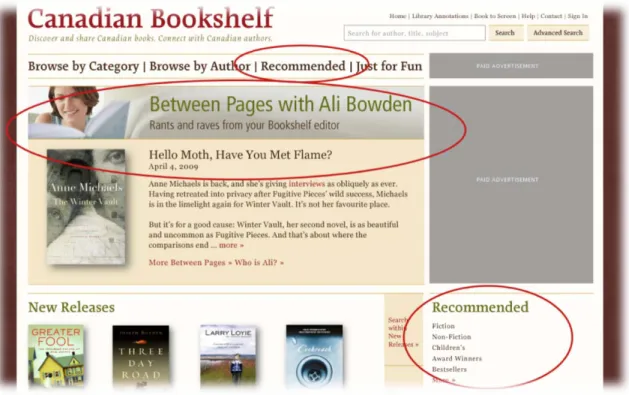
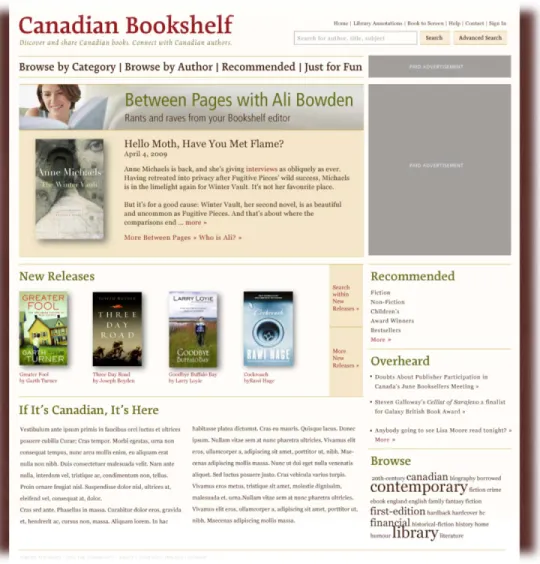
Figure 1. A design model for the Bookshelf homepage.
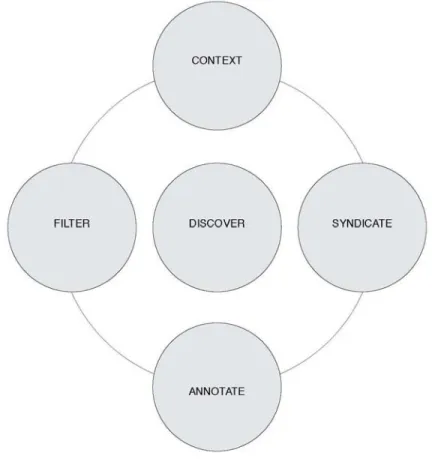
Figure 2. The major functions of the Bookshelf platform.
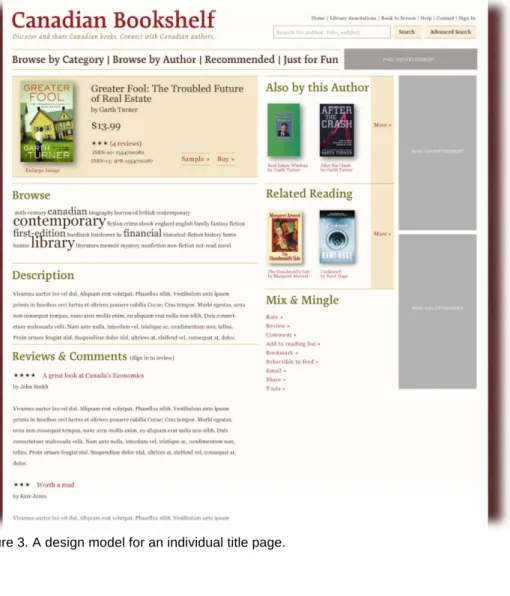
Figure 3. A design model for an individual title page.
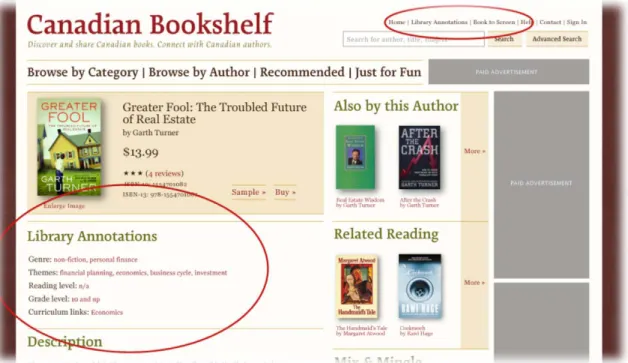
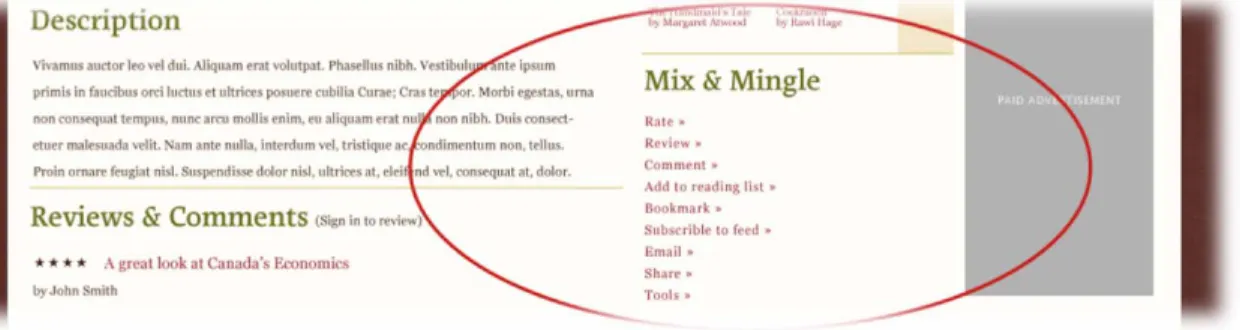
Figure 4. A modified title page model with the site controls for annotations and sample library annotations  highlighted
+3

References

Related documents

In that context, we follow a research methodology (see Figure 1) that leads to extending the Generic Idea and Innovation Management Ontology (Gi2MO) [4] towards establishing links

In a related study by the National Audit Office (NAO) assessing the skill requirements for public sector in delivering large government infrastructure projects, they observed that

As the distant sound of thunder rolled in, Dave closed his eyes, and

collections of Jefferson's letters and personal papers, as well as published editions, such as: Edwin Betts's Thomas Jefferson's Farm Book; Betts and James Bear's

The main purpose of the case interview is to show the way in which you analyze a problem, so let the interviewer hear your thought process and any assumptions you make..

Speaking different languages fluently did not make him an idiot, Speaking different languages fluently did not make him an idiot, Instead, he was acclaimed as the most

It should be noted that because of thermal decomposition, which has been observed for monomers as well (Stark et al., 2017), the mwavg and mwSOA calculated using the FIGAERO-CIMS

(Oxford, Oxford University Press), pp. The polypyrimidine tract binding protein binds upstream of neural cell- specific c-src exon Nl to repress the splicing of the intron